
#beginner
beginner
153,813 vistas
425 están debatiendo
Hot
Lo último

·
--
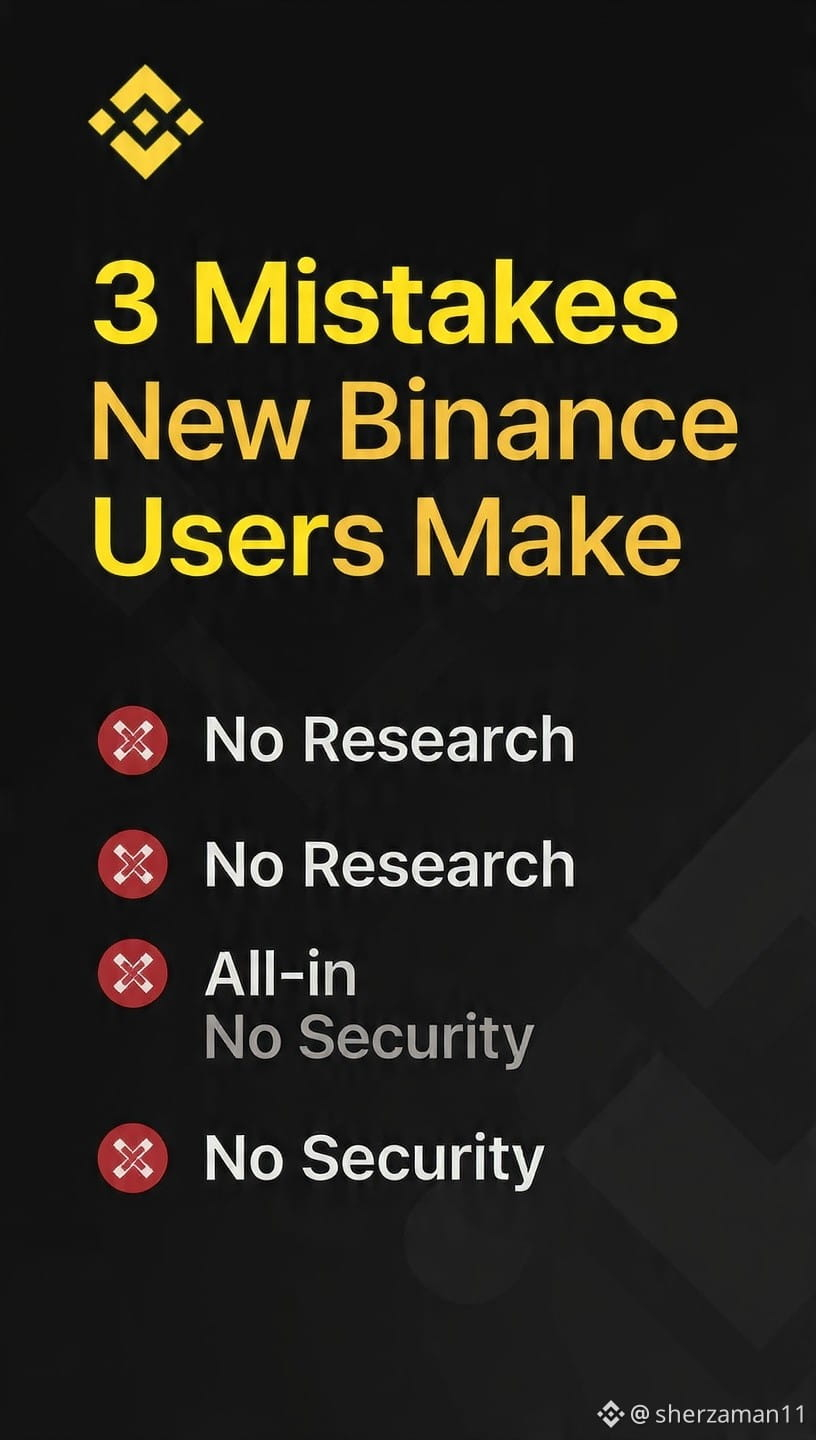
--- *`¿Eres nuevo en Binance?`* No cometas estos 3 errores Parte 6 ❌
El 90% de los principiantes pierde dinero en su primer mes. ¿La razón?
*`Error #1: Hacer trading sin aprender`*
Ves YouTube y pones 100x directamente.
Resultado: `Liquidation` 💸
*`Error #2: Poner todo el dinero en una sola Coin`*
Si `BTC` cae, todo el portafolio se hunde.
Regla: Nunca pongas todo tu dinero en un solo lugar
*`Error #3: Dejar el 2FA y el Anti-Phishing OFF`*
Los hackers apuntan primero a los nuevos.
Activa obligatoriamente la Configuración de Seguridad de Binance.
*`Solución:`*
Aprende primero con un demo. Empieza con una cantidad pequeña.
La paciencia = la clave del éxito en Crypto 🔑
¿Cuál error cometiste al principio? Escríbelo en los comentarios 👇
#Binance #CryptoPakistan #TradingMistakes #BTC #CryptoTips #Beginner
--- *`¿Eres nuevo en Binance?`* No cometas estos 3 errores Parte 6 ❌
El 90% de los principiantes pierde dinero en su primer mes. ¿La razón?
*`Error #1: Hacer trading sin aprender`*
Ves YouTube y pones 100x directamente.
Resultado: `Liquidation` 💸
*`Error #2: Poner todo el dinero en una sola Coin`*
Si `BTC` cae, todo el portafolio se hunde.
Regla: Nunca pongas todo tu dinero en un solo lugar
*`Error #3: Dejar el 2FA y el Anti-Phishing OFF`*
Los hackers apuntan primero a los nuevos.
Activa obligatoriamente la Configuración de Seguridad de Binance.
*`Solución:`*
Aprende primero con un demo. Empieza con una cantidad pequeña.
La paciencia = la clave del éxito en Crypto 🔑
¿Cuál error cometiste al principio? Escríbelo en los comentarios 👇
#Binance #CryptoPakistan #TradingMistakes #BTC #CryptoTips #Beginner
El 90% de los principiantes pierde dinero en su primer mes. ¿La razón?
*`Error #1: Hacer trading sin aprender`*
Ves YouTube y pones 100x directamente.
Resultado: `Liquidation` 💸
*`Error #2: Poner todo el dinero en una sola Coin`*
Si `BTC` cae, todo el portafolio se hunde.
Regla: Nunca pongas todo tu dinero en un solo lugar
*`Error #3: Dejar el 2FA y el Anti-Phishing OFF`*
Los hackers apuntan primero a los nuevos.
Activa obligatoriamente la Configuración de Seguridad de Binance.
*`Solución:`*
Aprende primero con un demo. Empieza con una cantidad pequeña.
La paciencia = la clave del éxito en Crypto 🔑
¿Cuál error cometiste al principio? Escríbelo en los comentarios 👇
#Binance #CryptoPakistan #TradingMistakes #BTC #CryptoTips #Beginner
1
67

¿Nuevo en Cripto en 2026? Empieza solo con estas 3 monedas:
$BTC $ETH $BNB
{future}(BTCUSDT)
{future}(ETHUSDT)
{future}(BNBUSDT)
Si eres nuevo en cripto, ignora el ruido.
Solo necesitas entender estas 3 para empezar:
1. BTC - Bitcoin = Oro digital
La primera y la más grande cripto. La gente la compra para mantenerla a largo plazo. Piensa en ella como "dinero de internet que no se puede imprimir".
2. ETH - Ethereum = La App Store de las Cripto
Aquí es donde funcionan DeFi, NFTs y la mayoría de las apps. Si BTC es oro, ETH es el petróleo que lo impulsa todo.
3. BNB - Binance Coin = El token de la bolsa
Se usa para comisiones de trading más bajas en Binance + impulsa la cadena BNB. Es súper útil si planeas operar activamente.
Regla para principiantes: No persigas 100 monedas al azar. Aprende primero estas 3, entiéndelas y luego amplía.
¿Cuál comprarías primero si tuvieras que elegir hoy?
Deja BTC, ETH o BNB en los comentarios 👇
#Crypto101 #Beginner #Binancesquare
¿Nuevo en Cripto en 2026? Empieza solo con estas 3 monedas:
$BTC $ETH $BNB
Si eres nuevo en cripto, ignora el ruido.
Solo necesitas entender estas 3 para empezar:
1. BTC - Bitcoin = Oro digital
La primera y la más grande cripto. La gente la compra para mantenerla a largo plazo. Piensa en ella como "dinero de internet que no se puede imprimir".
2. ETH - Ethereum = La App Store de las Cripto
Aquí es donde funcionan DeFi, NFTs y la mayoría de las apps. Si BTC es oro, ETH es el petróleo que lo impulsa todo.
3. BNB - Binance Coin = El token de la bolsa
Se usa para comisiones de trading más bajas en Binance + impulsa la cadena BNB. Es súper útil si planeas operar activamente.
Regla para principiantes: No persigas 100 monedas al azar. Aprende primero estas 3, entiéndelas y luego amplía.
¿Cuál comprarías primero si tuvieras que elegir hoy?
Deja BTC, ETH o BNB en los comentarios 👇
#Crypto101 #Beginner #Binancesquare
$BTC $ETH $BNB
Si eres nuevo en cripto, ignora el ruido.
Solo necesitas entender estas 3 para empezar:
1. BTC - Bitcoin = Oro digital
La primera y la más grande cripto. La gente la compra para mantenerla a largo plazo. Piensa en ella como "dinero de internet que no se puede imprimir".
2. ETH - Ethereum = La App Store de las Cripto
Aquí es donde funcionan DeFi, NFTs y la mayoría de las apps. Si BTC es oro, ETH es el petróleo que lo impulsa todo.
3. BNB - Binance Coin = El token de la bolsa
Se usa para comisiones de trading más bajas en Binance + impulsa la cadena BNB. Es súper útil si planeas operar activamente.
Regla para principiantes: No persigas 100 monedas al azar. Aprende primero estas 3, entiéndelas y luego amplía.
¿Cuál comprarías primero si tuvieras que elegir hoy?
Deja BTC, ETH o BNB en los comentarios 👇
#Crypto101 #Beginner #Binancesquare
97
·
--
día 1 intentando leer las velas.
aprendí sobre soportes/resistencias, zonas de oferta/demanda y líneas de tendencia hoy. mi pantalla actualmente parece que un niño pequeño se volvió loco con unos crayones neón.
seamos honestos: ¿realmente funcionan estas líneas mágicas, o todos estamos alucinando colectivamente?
drop tu consejo de charting #1 para un novato 👇
#Crypto #Trading #Beginner #BinanceSquare #Bitcoin $BTC $ETH $SOL
{spot}(SOLUSDT)
{spot}(ETHUSDT)
{spot}(BTCUSDT)
día 1 intentando leer las velas.
aprendí sobre soportes/resistencias, zonas de oferta/demanda y líneas de tendencia hoy. mi pantalla actualmente parece que un niño pequeño se volvió loco con unos crayones neón.
seamos honestos: ¿realmente funcionan estas líneas mágicas, o todos estamos alucinando colectivamente?
drop tu consejo de charting #1 para un novato 👇
#Crypto #Trading #Beginner #BinanceSquare #Bitcoin $BTC $ETH $SOL
aprendí sobre soportes/resistencias, zonas de oferta/demanda y líneas de tendencia hoy. mi pantalla actualmente parece que un niño pequeño se volvió loco con unos crayones neón.
seamos honestos: ¿realmente funcionan estas líneas mágicas, o todos estamos alucinando colectivamente?
drop tu consejo de charting #1 para un novato 👇
#Crypto #Trading #Beginner #BinanceSquare #Bitcoin $BTC $ETH $SOL
1
164
🚨 POST 1 – Mito vs Realidad
❌ Mito: Necesitas Miles de Dólares para Empezar a Invertir en Cripto
Uno de los mayores mitos en el mundo cripto es que necesitas una gran cantidad de dinero para empezar.
Realidad:
Muchas plataformas de intercambio te permiten comenzar con una cantidad pequeña. Lo que importa más que tu saldo inicial es crear buenos hábitos:
✔️ Aprende continuamente.
✔️ Gestiona tu riesgo.
✔️ Invierte de acuerdo con tu situación financiera.
Hacer crecer tu conocimiento es igual de valioso que hacer crecer tu cartera.
💬 Pregunta: ¿Cuál fue la primera criptomoneda que compraste?
#crypto #bitcoin #beginner #financialeducation $BTC $ETH $USDT
📌 Sigue a @Makaveli Crypto para obtener información diaria sobre cripto, análisis del mercado, educación para trading y actualizaciones de Binance Square. ¡Crezcamos juntos! 🚀
🚨 POST 1 – Mito vs Realidad
❌ Mito: Necesitas Miles de Dólares para Empezar a Invertir en Cripto
Uno de los mayores mitos en el mundo cripto es que necesitas una gran cantidad de dinero para empezar.
Realidad:
Muchas plataformas de intercambio te permiten comenzar con una cantidad pequeña. Lo que importa más que tu saldo inicial es crear buenos hábitos:
✔️ Aprende continuamente.
✔️ Gestiona tu riesgo.
✔️ Invierte de acuerdo con tu situación financiera.
Hacer crecer tu conocimiento es igual de valioso que hacer crecer tu cartera.
💬 Pregunta: ¿Cuál fue la primera criptomoneda que compraste?
#crypto #bitcoin #beginner #financialeducation $BTC $ETH $USDT
📌 Sigue a @Makaveli Crypto para obtener información diaria sobre cripto, análisis del mercado, educación para trading y actualizaciones de Binance Square. ¡Crezcamos juntos! 🚀
❌ Mito: Necesitas Miles de Dólares para Empezar a Invertir en Cripto
Uno de los mayores mitos en el mundo cripto es que necesitas una gran cantidad de dinero para empezar.
Realidad:
Muchas plataformas de intercambio te permiten comenzar con una cantidad pequeña. Lo que importa más que tu saldo inicial es crear buenos hábitos:
✔️ Aprende continuamente.
✔️ Gestiona tu riesgo.
✔️ Invierte de acuerdo con tu situación financiera.
Hacer crecer tu conocimiento es igual de valioso que hacer crecer tu cartera.
💬 Pregunta: ¿Cuál fue la primera criptomoneda que compraste?
#crypto #bitcoin #beginner #financialeducation $BTC $ETH $USDT
📌 Sigue a @Makaveli Crypto para obtener información diaria sobre cripto, análisis del mercado, educación para trading y actualizaciones de Binance Square. ¡Crezcamos juntos! 🚀
30

·
--
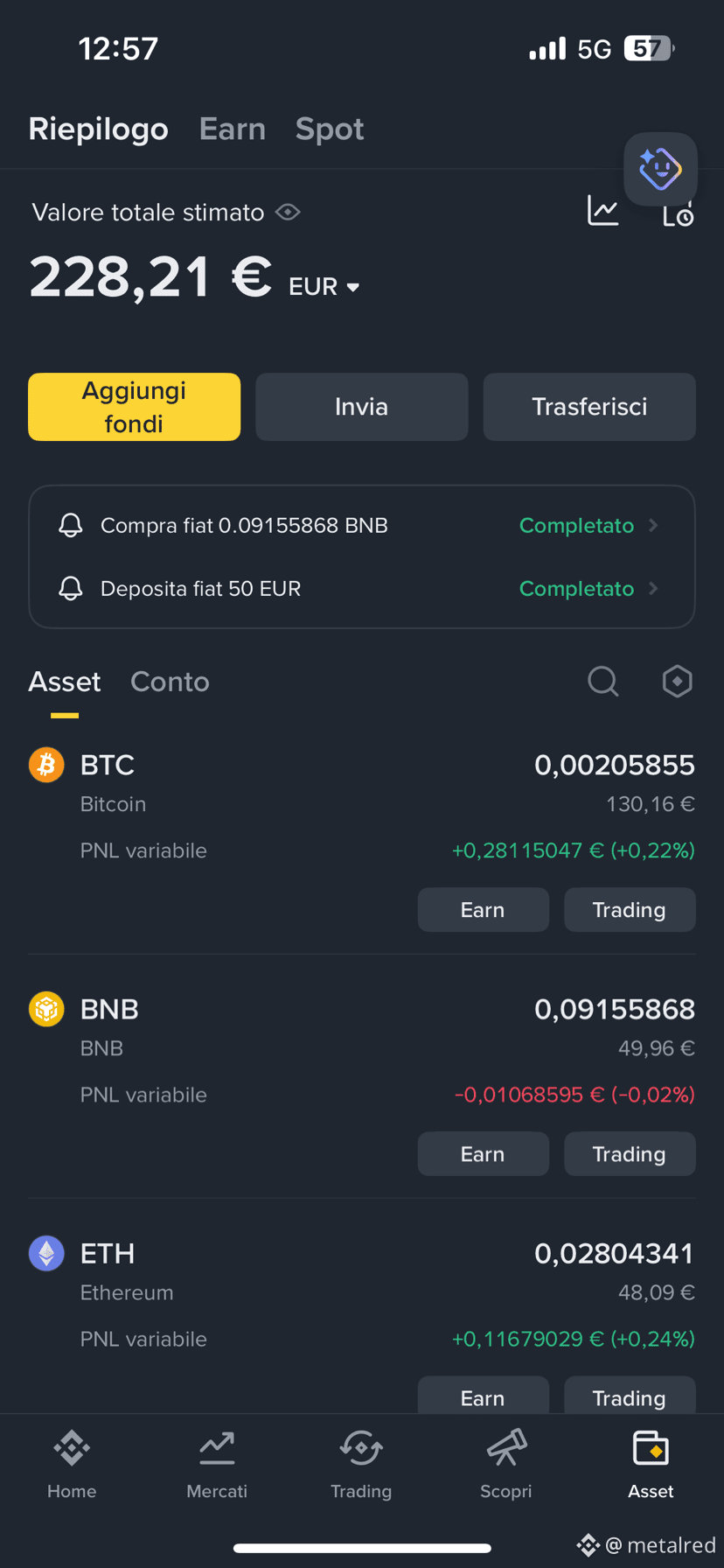
Hola a todos, soy nuevo en este mundo. Estoy buscando consejos útiles de los más experimentados.
Como primer paso, compré las 3 monedas principales tratando de diversificar. ¿Cómo debo operar para intentar obtener ganancias con el tiempo?
#beginner #SeniorCrypto $BTC $ETH $BNB
Hola a todos, soy nuevo en este mundo. Estoy buscando consejos útiles de los más experimentados.
Como primer paso, compré las 3 monedas principales tratando de diversificar. ¿Cómo debo operar para intentar obtener ganancias con el tiempo?
#beginner #SeniorCrypto $BTC $ETH $BNB
Como primer paso, compré las 3 monedas principales tratando de diversificar. ¿Cómo debo operar para intentar obtener ganancias con el tiempo?
#beginner #SeniorCrypto $BTC $ETH $BNB
9
895

·
--
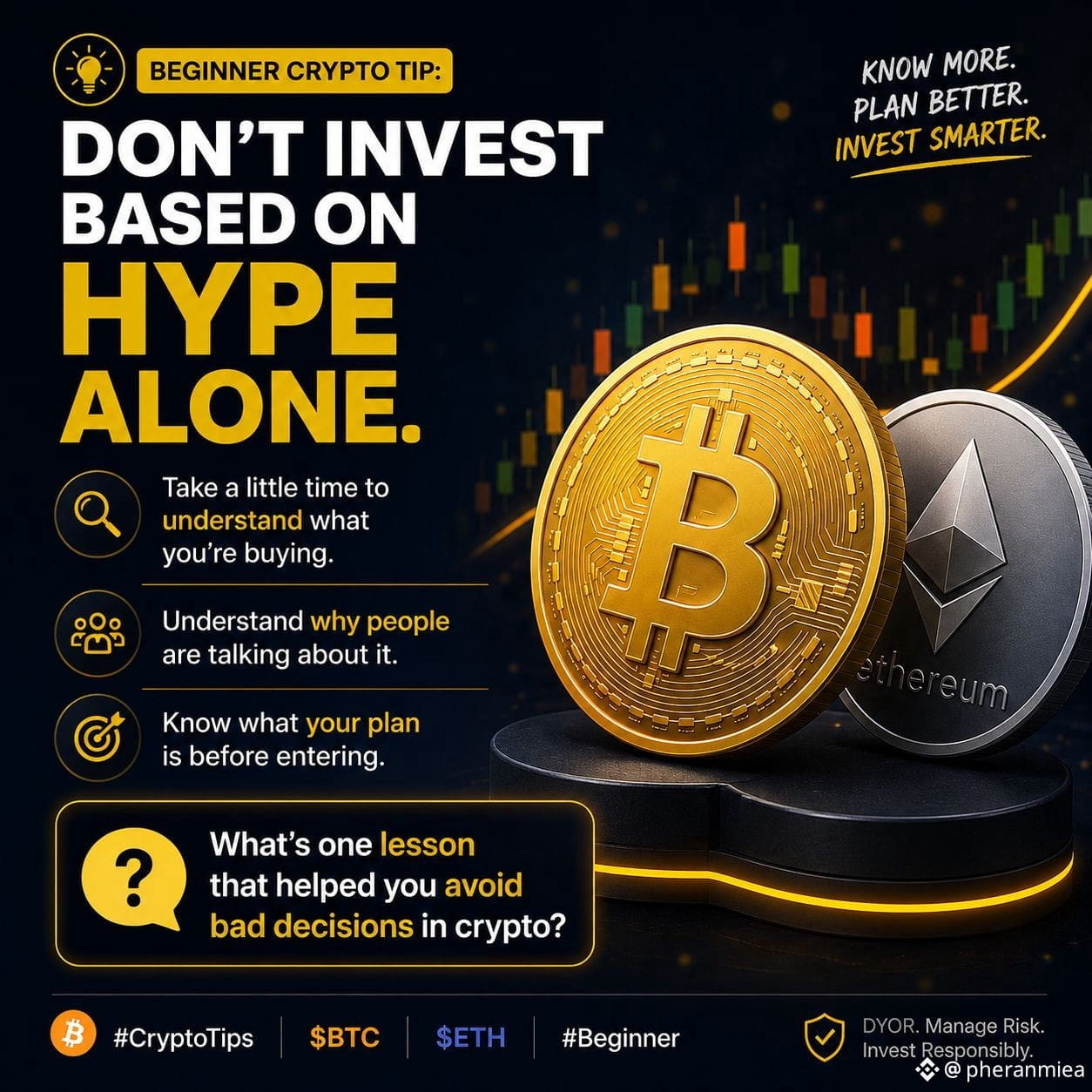
Consejo de cripto para principiantes: siempre ten una razón para entrar en una operación.
Comprar solo porque todos los demás están comprando puede salir mal rápidamente. Incluso un plan sencillo es mejor que no tener ningún plan.
¿Cuál es una regla que todo principiante debería seguir en cripto?
#ConsejosDeCripto $ETH $BTC #ViajeCrypto #Beginner
Consejo de cripto para principiantes: siempre ten una razón para entrar en una operación.
Comprar solo porque todos los demás están comprando puede salir mal rápidamente. Incluso un plan sencillo es mejor que no tener ningún plan.
¿Cuál es una regla que todo principiante debería seguir en cripto?
#ConsejosDeCripto $ETH $BTC #ViajeCrypto #Beginner
Comprar solo porque todos los demás están comprando puede salir mal rápidamente. Incluso un plan sencillo es mejor que no tener ningún plan.
¿Cuál es una regla que todo principiante debería seguir en cripto?
#ConsejosDeCripto $ETH $BTC #ViajeCrypto #Beginner
75
#beginner #begginermistake #ProTraderSetup #ProTraderSecrets #protrader
¡hey! soy principiante por aquí, ¿alguna guía o errores o advertencias de algún pro por ahí que deba tener en cuenta?
Gracias de antemano, mis queridos amigos pro bros o hermanas/sis de Binance y trading.
#beginner #begginermistake #ProTraderSetup #ProTraderSecrets #protrader
¡hey! soy principiante por aquí, ¿alguna guía o errores o advertencias de algún pro por ahí que deba tener en cuenta?
Gracias de antemano, mis queridos amigos pro bros o hermanas/sis de Binance y trading.
¡hey! soy principiante por aquí, ¿alguna guía o errores o advertencias de algún pro por ahí que deba tener en cuenta?
Gracias de antemano, mis queridos amigos pro bros o hermanas/sis de Binance y trading.
97

·
--
🚀 ¡Hola Binance Square!
Este es mi primer post aquí. Soy nuevo en las criptomonedas y estoy emocionado de aprender más sobre blockchain, trading y Web3.
Compartiré mi proceso de aprendizaje, haré preguntas y espero ayudar a otros mientras yo crezco. Si tienes experiencia, agradecería cualquier consejo para un principiante.
¿Cuál es la única recomendación que desearías haber sabido cuando empezaste? 👇
#BinanceSquareTalks #crypto #Web3 #beginner
🚀 ¡Hola Binance Square!
Este es mi primer post aquí. Soy nuevo en las criptomonedas y estoy emocionado de aprender más sobre blockchain, trading y Web3.
Compartiré mi proceso de aprendizaje, haré preguntas y espero ayudar a otros mientras yo crezco. Si tienes experiencia, agradecería cualquier consejo para un principiante.
¿Cuál es la única recomendación que desearías haber sabido cuando empezaste? 👇
#BinanceSquareTalks #crypto #Web3 #beginner
Este es mi primer post aquí. Soy nuevo en las criptomonedas y estoy emocionado de aprender más sobre blockchain, trading y Web3.
Compartiré mi proceso de aprendizaje, haré preguntas y espero ayudar a otros mientras yo crezco. Si tienes experiencia, agradecería cualquier consejo para un principiante.
¿Cuál es la única recomendación que desearías haber sabido cuando empezaste? 👇
#BinanceSquareTalks #crypto #Web3 #beginner
82

·
--
¿Tienes 100 dólares en mano pero no sabes en qué invertir?No te pongas tenso. Todos los principiantes cometen aquí el mismo error.
3 No hagas exactamente esos tres errores:
1. Dar todo el dinero a una sola hoja en monedas. Si una se desploma, se acabó todo.
2. Comprar por FOMO cuando el precio está en la cima. Luego vender en pánico.
3. No poner un stop loss. No tener el valor para cortar las pérdidas.
¿Tienes 100 dólares en mano pero no sabes en qué invertir?
No te pongas tenso. Todos los principiantes cometen aquí el mismo error.
3 No hagas exactamente esos tres errores:
1. Dar todo el dinero a una sola hoja en monedas. Si una se desploma, se acabó todo.
2. Comprar por FOMO cuando el precio está en la cima. Luego vender en pánico.
3. No poner un stop loss. No tener el valor para cortar las pérdidas.
3 No hagas exactamente esos tres errores:
1. Dar todo el dinero a una sola hoja en monedas. Si una se desploma, se acabó todo.
2. Comprar por FOMO cuando el precio está en la cima. Luego vender en pánico.
3. No poner un stop loss. No tener el valor para cortar las pérdidas.
1
98

·
--
Total principiante aquí 👋
No he hecho ni una sola operación Spot todavía, jaja
Quiero aprender TODO desde cero.
Poco a poco. Sin prisa.
Los expertos, por favor enséñenme:
1. ¿Qué debería aprender primero?
2. ¿Cuál es la forma más segura de empezar con $10?
3. 1 error que debería evitar
También tengo null en mi billetera..
¿Hay algún experto por ahí para ayudarme?..
😢🙏🥲
¿Ayudas a un principiante? 🙏
#Binance #Beginner #learncrypto
Total principiante aquí 👋
No he hecho ni una sola operación Spot todavía, jaja
Quiero aprender TODO desde cero.
Poco a poco. Sin prisa.
Los expertos, por favor enséñenme:
1. ¿Qué debería aprender primero?
2. ¿Cuál es la forma más segura de empezar con $10?
3. 1 error que debería evitar
También tengo null en mi billetera..
¿Hay algún experto por ahí para ayudarme?..
😢🙏🥲
¿Ayudas a un principiante? 🙏
#Binance #Beginner #learncrypto
No he hecho ni una sola operación Spot todavía, jaja
Quiero aprender TODO desde cero.
Poco a poco. Sin prisa.
Los expertos, por favor enséñenme:
1. ¿Qué debería aprender primero?
2. ¿Cuál es la forma más segura de empezar con $10?
3. 1 error que debería evitar
También tengo null en mi billetera..
¿Hay algún experto por ahí para ayudarme?..
😢🙏🥲
¿Ayudas a un principiante? 🙏
#Binance #Beginner #learncrypto
86
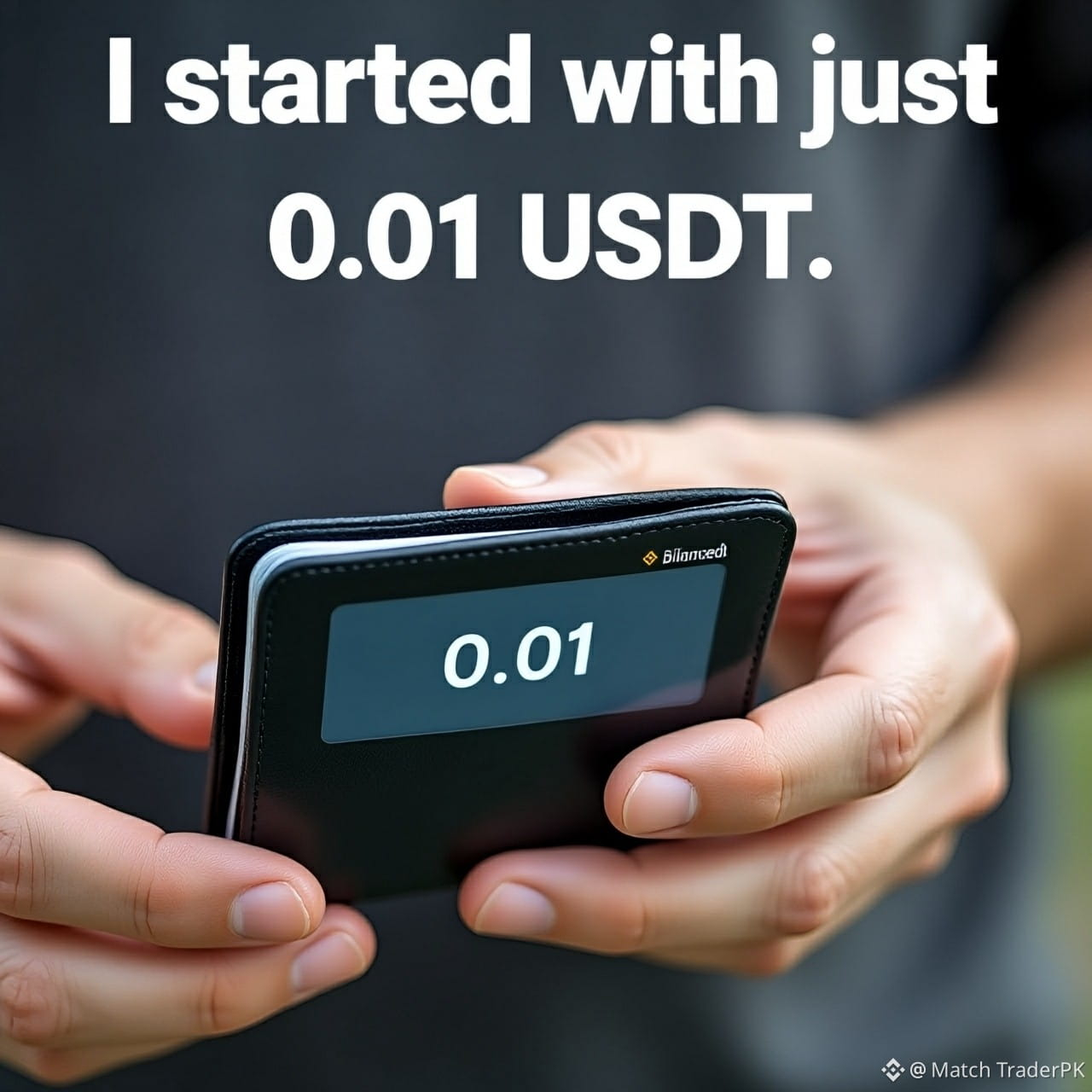
mi viaje en cripto con solo 0.01 USDT 😅
Asalamualaikum a todos 👋
Para ser honesto, hace 1 semana ni siquiera sabía qué era Binance.
Todos decían "puedes ganar con cripto".
Pensé que era solo para personas ricas.
Entonces di un paso 👇
1. Creé mi cuenta de Binance
2. Compré 10$ USDT vía P2P
3. Me uní a CreatorPad con todo el miedo
Hoy todavía solo tengo 0.01 USDT en mi monedero 😂
Pero estoy aprendiendo algo nuevo cada día.
Gana, Gana Sharia, Escribe para ganar...
Mi objetivo es simple: 1 publicación por día + aprender 1 cosa nueva al día
Si puedo aprender, tú también puedes 💪
¿Cómo empezaste tu viaje en cripto?
Comparte tu historia en los comentarios 👇
#Binance #CryptoPakistan #WriteToEarn #Beginner # Match Tradepk#CreatorPad
mi viaje en cripto con solo 0.01 USDT 😅
Asalamualaikum a todos 👋
Para ser honesto, hace 1 semana ni siquiera sabía qué era Binance.
Todos decían "puedes ganar con cripto".
Pensé que era solo para personas ricas.
Entonces di un paso 👇
1. Creé mi cuenta de Binance
2. Compré 10$ USDT vía P2P
3. Me uní a CreatorPad con todo el miedo
Hoy todavía solo tengo 0.01 USDT en mi monedero 😂
Pero estoy aprendiendo algo nuevo cada día.
Gana, Gana Sharia, Escribe para ganar...
Mi objetivo es simple: 1 publicación por día + aprender 1 cosa nueva al día
Si puedo aprender, tú también puedes 💪
¿Cómo empezaste tu viaje en cripto?
Comparte tu historia en los comentarios 👇
#Binance #CryptoPakistan #WriteToEarn #Beginner # Match Tradepk#CreatorPad
Asalamualaikum a todos 👋
Para ser honesto, hace 1 semana ni siquiera sabía qué era Binance.
Todos decían "puedes ganar con cripto".
Pensé que era solo para personas ricas.
Entonces di un paso 👇
1. Creé mi cuenta de Binance
2. Compré 10$ USDT vía P2P
3. Me uní a CreatorPad con todo el miedo
Hoy todavía solo tengo 0.01 USDT en mi monedero 😂
Pero estoy aprendiendo algo nuevo cada día.
Gana, Gana Sharia, Escribe para ganar...
Mi objetivo es simple: 1 publicación por día + aprender 1 cosa nueva al día
Si puedo aprender, tú también puedes 💪
¿Cómo empezaste tu viaje en cripto?
Comparte tu historia en los comentarios 👇
#Binance #CryptoPakistan #WriteToEarn #Beginner # Match Tradepk#CreatorPad
1
1
40
·
--
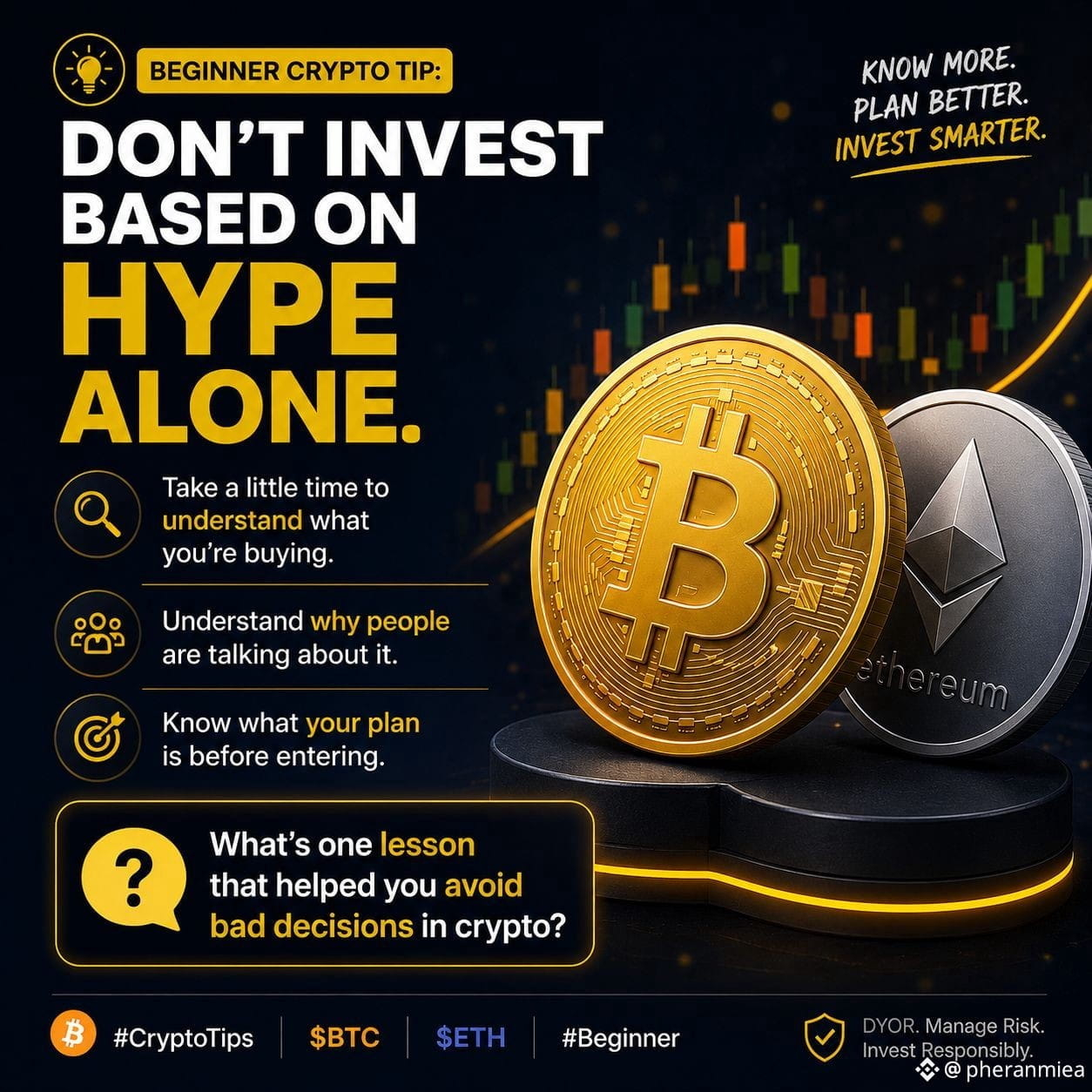
Consejo de cripto para principiantes: mantén expectativas realistas.
La cripto tiene oportunidades, pero no es un atajo mágico. Aprender a mantener la paciencia y la constancia importa mucho más que intentar volverse rico rápidamente.
¿Cuál es la mejor mentalidad para alguien nuevo en cripto?
#CryptoTips $ETH $BTC #CryptoJourney #Beginner
Consejo de cripto para principiantes: mantén expectativas realistas.
La cripto tiene oportunidades, pero no es un atajo mágico. Aprender a mantener la paciencia y la constancia importa mucho más que intentar volverse rico rápidamente.
¿Cuál es la mejor mentalidad para alguien nuevo en cripto?
#CryptoTips $ETH $BTC #CryptoJourney #Beginner
La cripto tiene oportunidades, pero no es un atajo mágico. Aprender a mantener la paciencia y la constancia importa mucho más que intentar volverse rico rápidamente.
¿Cuál es la mejor mentalidad para alguien nuevo en cripto?
#CryptoTips $ETH $BTC #CryptoJourney #Beginner
96

·
--
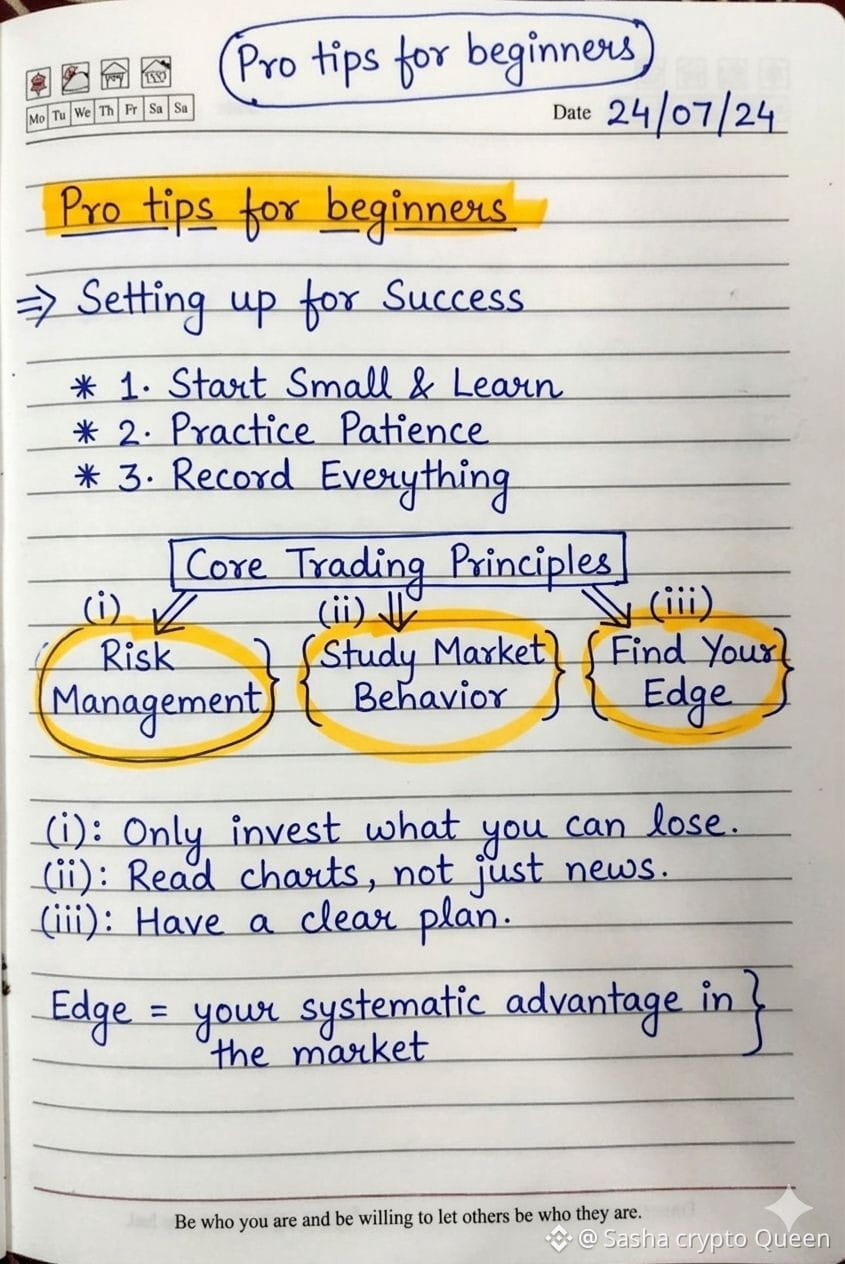
🛑 para... para... para 🛑 🚨
Atención principiantes aquí.
1. Domina la Gestión del Riesgo
La Regla del 1%-2%: Nunca arriesgues más del 1% al 2% de tu capital total en una sola operación. Por ejemplo, con una cuenta de $1,000, tu riesgo máximo por operación debería ser de $10.
Siempre Usa Stop-Loss: Siempre define tu estrategia de salida antes de entrar en una operación. Coloca un stop-loss para cortar automáticamente tus pérdidas si el mercado se mueve en tu contra.
Mantén el Riesgo Uniforme: No arriesgues $50 en una operación y $300 en la siguiente. Un tamaño de riesgo uniforme asegura que puedas absorber pérdidas inevitables sin arruinar tu cuenta.
2. Trata el Trading Como un Negocio
Registra Cada Operación: Mantén un registro detallado de tu precio de entrada, precio de salida, criterios de configuración y estado emocional. Revisar tu diario es la forma más rápida de aprender de los errores.
Enfócate en el Proceso: Los principiantes se obsesionan con las ganancias diarias. Los profesionales se enfocan en ejecutar su plan de trading a la perfección.
Comienza Con Trading en Papel: Antes de arriesgar capital real, practica tu estrategia en una cuenta de trading en papel/simulación hasta que seas consistentemente rentable.
3. Estrategia y Psicología
Mantenlo Simple: No atiborres tus gráficos con docenas de indicadores. Aprende a leer la estructura básica del mercado, la acción del precio, soporte y resistencia.
Domina Una Configuración: En lugar de intentar operar todos los patrones, encuentra una o dos configuraciones confiables y domínalas para diferentes condiciones del mercado.
Acepta Estar Equivocado: El trading es un juego de probabilidades. No necesitas tener razón en cada operación; solo necesitas ganar más cuando tienes razón que lo que pierdes cuando te equivocas.
¿qué opinas? 🤔
$BTW $BEAT $DOGE
#beginner #btc70k #Attention_News
🛑 para... para... para 🛑 🚨
Atención principiantes aquí.
1. Domina la Gestión del Riesgo
La Regla del 1%-2%: Nunca arriesgues más del 1% al 2% de tu capital total en una sola operación. Por ejemplo, con una cuenta de $1,000, tu riesgo máximo por operación debería ser de $10.
Siempre Usa Stop-Loss: Siempre define tu estrategia de salida antes de entrar en una operación. Coloca un stop-loss para cortar automáticamente tus pérdidas si el mercado se mueve en tu contra.
Mantén el Riesgo Uniforme: No arriesgues $50 en una operación y $300 en la siguiente. Un tamaño de riesgo uniforme asegura que puedas absorber pérdidas inevitables sin arruinar tu cuenta.
2. Trata el Trading Como un Negocio
Registra Cada Operación: Mantén un registro detallado de tu precio de entrada, precio de salida, criterios de configuración y estado emocional. Revisar tu diario es la forma más rápida de aprender de los errores.
Enfócate en el Proceso: Los principiantes se obsesionan con las ganancias diarias. Los profesionales se enfocan en ejecutar su plan de trading a la perfección.
Comienza Con Trading en Papel: Antes de arriesgar capital real, practica tu estrategia en una cuenta de trading en papel/simulación hasta que seas consistentemente rentable.
3. Estrategia y Psicología
Mantenlo Simple: No atiborres tus gráficos con docenas de indicadores. Aprende a leer la estructura básica del mercado, la acción del precio, soporte y resistencia.
Domina Una Configuración: En lugar de intentar operar todos los patrones, encuentra una o dos configuraciones confiables y domínalas para diferentes condiciones del mercado.
Acepta Estar Equivocado: El trading es un juego de probabilidades. No necesitas tener razón en cada operación; solo necesitas ganar más cuando tienes razón que lo que pierdes cuando te equivocas.
¿qué opinas? 🤔
$BTW $BEAT $DOGE
#beginner #btc70k #Attention_News
Atención principiantes aquí.
1. Domina la Gestión del Riesgo
La Regla del 1%-2%: Nunca arriesgues más del 1% al 2% de tu capital total en una sola operación. Por ejemplo, con una cuenta de $1,000, tu riesgo máximo por operación debería ser de $10.
Siempre Usa Stop-Loss: Siempre define tu estrategia de salida antes de entrar en una operación. Coloca un stop-loss para cortar automáticamente tus pérdidas si el mercado se mueve en tu contra.
Mantén el Riesgo Uniforme: No arriesgues $50 en una operación y $300 en la siguiente. Un tamaño de riesgo uniforme asegura que puedas absorber pérdidas inevitables sin arruinar tu cuenta.
2. Trata el Trading Como un Negocio
Registra Cada Operación: Mantén un registro detallado de tu precio de entrada, precio de salida, criterios de configuración y estado emocional. Revisar tu diario es la forma más rápida de aprender de los errores.
Enfócate en el Proceso: Los principiantes se obsesionan con las ganancias diarias. Los profesionales se enfocan en ejecutar su plan de trading a la perfección.
Comienza Con Trading en Papel: Antes de arriesgar capital real, practica tu estrategia en una cuenta de trading en papel/simulación hasta que seas consistentemente rentable.
3. Estrategia y Psicología
Mantenlo Simple: No atiborres tus gráficos con docenas de indicadores. Aprende a leer la estructura básica del mercado, la acción del precio, soporte y resistencia.
Domina Una Configuración: En lugar de intentar operar todos los patrones, encuentra una o dos configuraciones confiables y domínalas para diferentes condiciones del mercado.
Acepta Estar Equivocado: El trading es un juego de probabilidades. No necesitas tener razón en cada operación; solo necesitas ganar más cuando tienes razón que lo que pierdes cuando te equivocas.
¿qué opinas? 🤔
$BTW $BEAT $DOGE
#beginner #btc70k #Attention_News

2
127

·
--
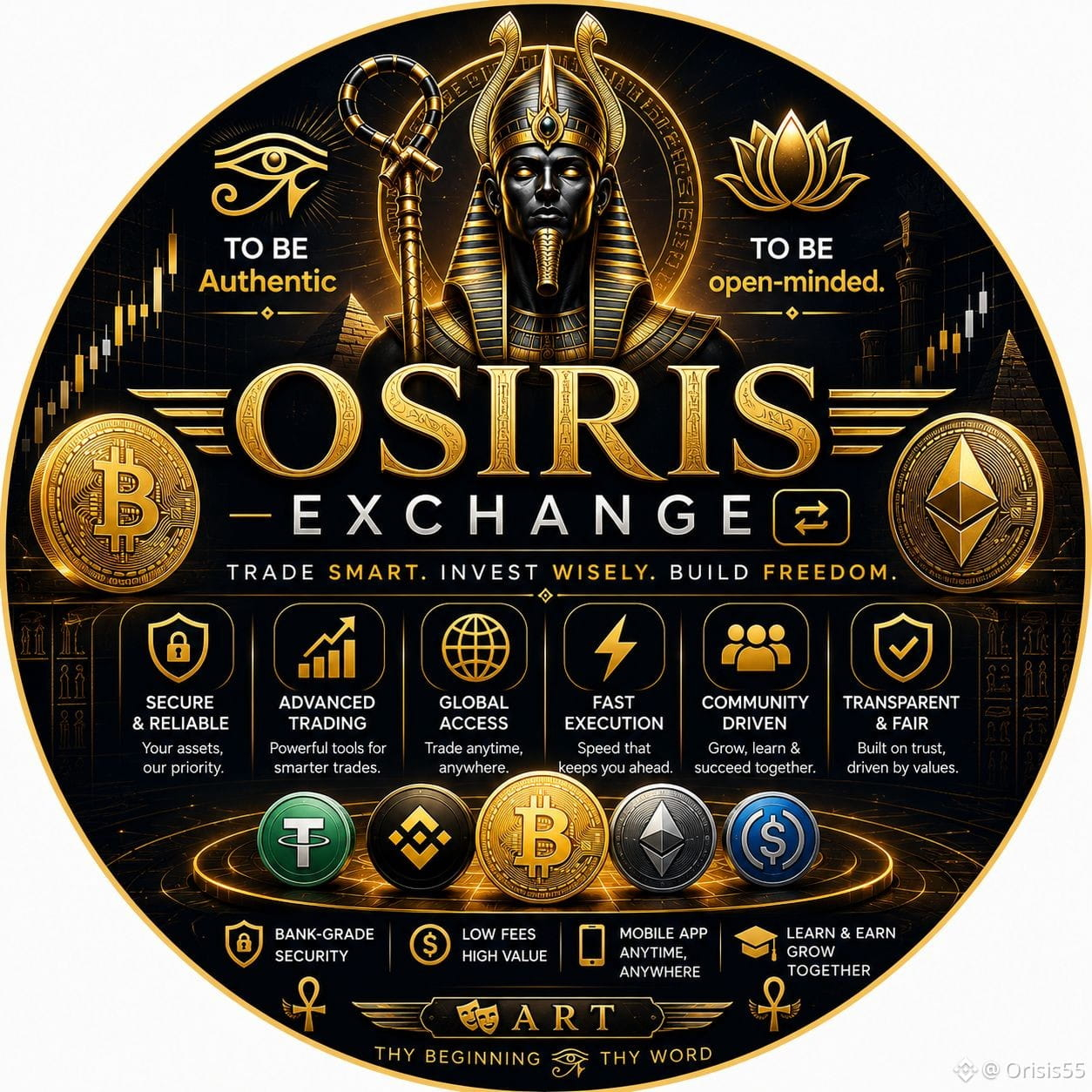
🚀 Lección 1 del Intercambio Osiris
Todo experto alguna vez fue un principiante.
Hoy empezamos desde CERO, sin palabras confusas, sin suposiciones, solo lecciones simples que cualquiera puede entender.
📘 Lección 1: ¿Qué es la Criptomoneda?
Piensa en la criptomoneda como dinero digital. No puedes sostenerla en tu mano, pero puedes enviarla a cualquier persona del mundo usando internet. En lugar de que un banco lleve los registros, miles de computadoras trabajan juntas para mantener cada transacción segura.
💡 Idea clave:
El cripto es dinero digital asegurado por una red global, no por un solo banco.
📝 Tarea:
1️⃣ ¿La criptomoneda es dinero físico?
2️⃣ ¿Qué es Bitcoin?
3️⃣ ¿Qué es una blockchain?
4️⃣ ¿Por qué las personas usan criptomonedas?
Deja tus respuestas en los comentarios y aprendamos juntos. Mañana continuaremos con la Lección 2: ¿Qué es un Exchange de Cripto y por qué existe?
📈 Sigue esta serie si estás listo para construir una base sólida antes de empezar a operar. #learncrypto #beginner #Web3
🚀 Lección 1 del Intercambio Osiris
Todo experto alguna vez fue un principiante.
Hoy empezamos desde CERO, sin palabras confusas, sin suposiciones, solo lecciones simples que cualquiera puede entender.
📘 Lección 1: ¿Qué es la Criptomoneda?
Piensa en la criptomoneda como dinero digital. No puedes sostenerla en tu mano, pero puedes enviarla a cualquier persona del mundo usando internet. En lugar de que un banco lleve los registros, miles de computadoras trabajan juntas para mantener cada transacción segura.
💡 Idea clave:
El cripto es dinero digital asegurado por una red global, no por un solo banco.
📝 Tarea:
1️⃣ ¿La criptomoneda es dinero físico?
2️⃣ ¿Qué es Bitcoin?
3️⃣ ¿Qué es una blockchain?
4️⃣ ¿Por qué las personas usan criptomonedas?
Deja tus respuestas en los comentarios y aprendamos juntos. Mañana continuaremos con la Lección 2: ¿Qué es un Exchange de Cripto y por qué existe?
📈 Sigue esta serie si estás listo para construir una base sólida antes de empezar a operar. #learncrypto #beginner #Web3
Todo experto alguna vez fue un principiante.
Hoy empezamos desde CERO, sin palabras confusas, sin suposiciones, solo lecciones simples que cualquiera puede entender.
📘 Lección 1: ¿Qué es la Criptomoneda?
Piensa en la criptomoneda como dinero digital. No puedes sostenerla en tu mano, pero puedes enviarla a cualquier persona del mundo usando internet. En lugar de que un banco lleve los registros, miles de computadoras trabajan juntas para mantener cada transacción segura.
💡 Idea clave:
El cripto es dinero digital asegurado por una red global, no por un solo banco.
📝 Tarea:
1️⃣ ¿La criptomoneda es dinero físico?
2️⃣ ¿Qué es Bitcoin?
3️⃣ ¿Qué es una blockchain?
4️⃣ ¿Por qué las personas usan criptomonedas?
Deja tus respuestas en los comentarios y aprendamos juntos. Mañana continuaremos con la Lección 2: ¿Qué es un Exchange de Cripto y por qué existe?
📈 Sigue esta serie si estás listo para construir una base sólida antes de empezar a operar. #learncrypto #beginner #Web3
90

Nuevos traders: No cometan este 1 error ❌
Usando un apalancamiento de 50x - 100x.
1 vela mal y se acabó tu cuenta 💸$BTC
✅ Solución:
1. Usa como máximo 5x - 10x de apalancamiento
2. Usa siempre Stop Loss
3. Riesga solo el 2% de tu cuenta por operación
Guarda esta publicación. La necesitarás más tarde.
¿Quieres más consejos? Comenta 👇
#tradingtips #beginner #crypto #BinanceSquare #btc
{spot}(BTCUSDT)
Nuevos traders: No cometan este 1 error ❌
Usando un apalancamiento de 50x - 100x.
1 vela mal y se acabó tu cuenta 💸$BTC
✅ Solución:
1. Usa como máximo 5x - 10x de apalancamiento
2. Usa siempre Stop Loss
3. Riesga solo el 2% de tu cuenta por operación
Guarda esta publicación. La necesitarás más tarde.
¿Quieres más consejos? Comenta 👇
#tradingtips #beginner #crypto #BinanceSquare #btc
Usando un apalancamiento de 50x - 100x.
1 vela mal y se acabó tu cuenta 💸$BTC
✅ Solución:
1. Usa como máximo 5x - 10x de apalancamiento
2. Usa siempre Stop Loss
3. Riesga solo el 2% de tu cuenta por operación
Guarda esta publicación. La necesitarás más tarde.
¿Quieres más consejos? Comenta 👇
#tradingtips #beginner #crypto #BinanceSquare #btc
1
69

·
--
Cómo invertir en el mercado de valores para principiantes: una guía sencilla paso a pasoInvertir en el mercado de valores es una de las mejores formas de construir riqueza con el tiempo. Tanto si eres estudiante, un joven profesional o simplemente tienes curiosidad, esta guía te mostrará lo esencial: qué es el mercado, cómo empezar, cómo elegir inversiones y hábitos inteligentes que te ayudan a hacer crecer tu dinero con menos estrés.
Qué es el mercado de valores
El mercado de valores es un lugar donde los inversores compran y venden acciones, unidades de propiedad, en empresas públicas. Tener una acción te convierte en parte de esa empresa. Cuando la empresa crece y obtiene ganancias, los accionistas pueden beneficiarse mediante la apreciación del precio y los dividendos. Ejemplo: comprar una acción de Tata Motors te convierte en un pequeño propietario de Tata Motors.
Cómo invertir en el mercado de valores para principiantes: una guía sencilla paso a paso
Invertir en el mercado de valores es una de las mejores formas de construir riqueza con el tiempo. Tanto si eres estudiante, un joven profesional o simplemente tienes curiosidad, esta guía te mostrará lo esencial: qué es el mercado, cómo empezar, cómo elegir inversiones y hábitos inteligentes que te ayudan a hacer crecer tu dinero con menos estrés.
Qué es el mercado de valores
El mercado de valores es un lugar donde los inversores compran y venden acciones, unidades de propiedad, en empresas públicas. Tener una acción te convierte en parte de esa empresa. Cuando la empresa crece y obtiene ganancias, los accionistas pueden beneficiarse mediante la apreciación del precio y los dividendos. Ejemplo: comprar una acción de Tata Motors te convierte en un pequeño propietario de Tata Motors.
Qué es el mercado de valores
El mercado de valores es un lugar donde los inversores compran y venden acciones, unidades de propiedad, en empresas públicas. Tener una acción te convierte en parte de esa empresa. Cuando la empresa crece y obtiene ganancias, los accionistas pueden beneficiarse mediante la apreciación del precio y los dividendos. Ejemplo: comprar una acción de Tata Motors te convierte en un pequeño propietario de Tata Motors.
95



·
--
⚠️ NADIE TE AVISÓ SOBRE ESTO
Perdí $200 en mi primer retiro por culpa de 1 clic incorrecto.
El error: Enviar USDT de la red BEP20 a una dirección de la red ERC20.
Resultado: Las monedas desaparecieron. Adiós dinero.
CÓMO EVITAR ESTO EN 10 SEGUNDOS:
1. Confirma SIEMPRE la RED antes de la dirección
2. USDT tiene BEP20, ERC20, TRC20... no son iguales
3. Haz una prueba con $1 primero
Regla de oro: Red de envío = Red de recepción
¿Tú ya pasaste por esto o conoces a alguien que ya haya perdido cripto así?
Cuéntanos aquí para que aprendamos juntos 👇
#CryptoHelp #Beginner #BinanceSquare #USDT$
#USDT🔥🔥🔥
⚠️ NADIE TE AVISÓ SOBRE ESTO
Perdí $200 en mi primer retiro por culpa de 1 clic incorrecto.
El error: Enviar USDT de la red BEP20 a una dirección de la red ERC20.
Resultado: Las monedas desaparecieron. Adiós dinero.
CÓMO EVITAR ESTO EN 10 SEGUNDOS:
1. Confirma SIEMPRE la RED antes de la dirección
2. USDT tiene BEP20, ERC20, TRC20... no son iguales
3. Haz una prueba con $1 primero
Regla de oro: Red de envío = Red de recepción
¿Tú ya pasaste por esto o conoces a alguien que ya haya perdido cripto así?
Cuéntanos aquí para que aprendamos juntos 👇
#CryptoHelp #Beginner #BinanceSquare #USDT$
#USDT🔥🔥🔥
Perdí $200 en mi primer retiro por culpa de 1 clic incorrecto.
El error: Enviar USDT de la red BEP20 a una dirección de la red ERC20.
Resultado: Las monedas desaparecieron. Adiós dinero.
CÓMO EVITAR ESTO EN 10 SEGUNDOS:
1. Confirma SIEMPRE la RED antes de la dirección
2. USDT tiene BEP20, ERC20, TRC20... no son iguales
3. Haz una prueba con $1 primero
Regla de oro: Red de envío = Red de recepción
¿Tú ya pasaste por esto o conoces a alguien que ya haya perdido cripto así?
Cuéntanos aquí para que aprendamos juntos 👇
#CryptoHelp #Beginner #BinanceSquare #USDT$
#USDT🔥🔥🔥
1
281
·
--
Queridos nuevos traders de cripto
Es posible obtener ganancias siguiendo mis pasos para nuevos traders. 🚀
Comienza con una sugerencia de 10$ a 100$ para nuevos traders.
#CryptoMarketCapNears2.6T
#Cryptotraders
#NewTraders
#beginner
$BTC $ETH $XRP
Queridos nuevos traders de cripto
Es posible obtener ganancias siguiendo mis pasos para nuevos traders. 🚀
Comienza con una sugerencia de 10$ a 100$ para nuevos traders.
#CryptoMarketCapNears2.6T
#Cryptotraders
#NewTraders
#beginner
$BTC $ETH $XRP
Es posible obtener ganancias siguiendo mis pasos para nuevos traders. 🚀
Comienza con una sugerencia de 10$ a 100$ para nuevos traders.
#CryptoMarketCapNears2.6T
#Cryptotraders
#NewTraders
#beginner
$BTC $ETH $XRP
110
Inicia sesión para explorar más contenidos
Únete a usuarios globales de criptomonedas en Binance Square
⚡️ Obtén información útil y actualizada sobre criptos.
💬 Avalado por el mayor exchange de criptomonedas en el mundo.
👍 Descubre perspectivas reales de creadores verificados.
Email/número de teléfono
Temas populares
1
#NEARRisesNearly80%InAWeek
15,510 vistas
624 están debatiendo
2
#MultiversXPlansHardForkRecovery
15,036 vistas
488 están debatiendo
3
#CircleLaunchesInstitutionalBTCBackedBorrowing
15,721 vistas
621 están debatiendo
4
#BitcoinHits$85K
20,884 vistas
259 están debatiendo
5
#ZetaChainVotesToMigrateZETAToSolana
13,271 vistas
387 están debatiendo
6
#ECBStartsBlockchainEuroSettlement
31,474 vistas
683 están debatiendo
7
#SouthAfricaProposesCryptoExchangeControls
43,578 vistas
847 están debatiendo
8
#SolanaCutsTargetSlotTimeTo250ms
46,401 vistas
771 están debatiendo
9
#EthereumSurpasses$2700
27,226 vistas
230 están debatiendo
10
#CanaryFilesSecondAmendmentForStakedSEIETF
59,870 vistas
1,088 están debatiendo