

z1soo
216 Posts

z1soo
Report
Block User
15 Following
544 Followers
61 Liked
Posts
All
Quotes
Videos
·
--
🚨 RED MONEY GIVEAWAY WARNING! 🚨
✨ HOW TO RECEIVE YOUR GIFT:🎁
1️⃣ Follow our community
2️⃣ Like & Share this post to spread the information.
3️⃣ Leave a comment below with the altcoin you love for 2026 (Suggestion: Bnb)
Let’s win together in this bull run! 📈
🚨 RED MONEY GIVEAWAY WARNING! 🚨
✨ HOW TO RECEIVE YOUR GIFT:🎁
1️⃣ Follow our community
2️⃣ Like & Share this post to spread the information.
3️⃣ Leave a comment below with the altcoin you love for 2026 (Suggestion: Bnb)
Let’s win together in this bull run! 📈
✨ HOW TO RECEIVE YOUR GIFT:🎁
1️⃣ Follow our community
2️⃣ Like & Share this post to spread the information.
3️⃣ Leave a comment below with the altcoin you love for 2026 (Suggestion: Bnb)
Let’s win together in this bull run! 📈
1
2
·
--
#termmax @termmax
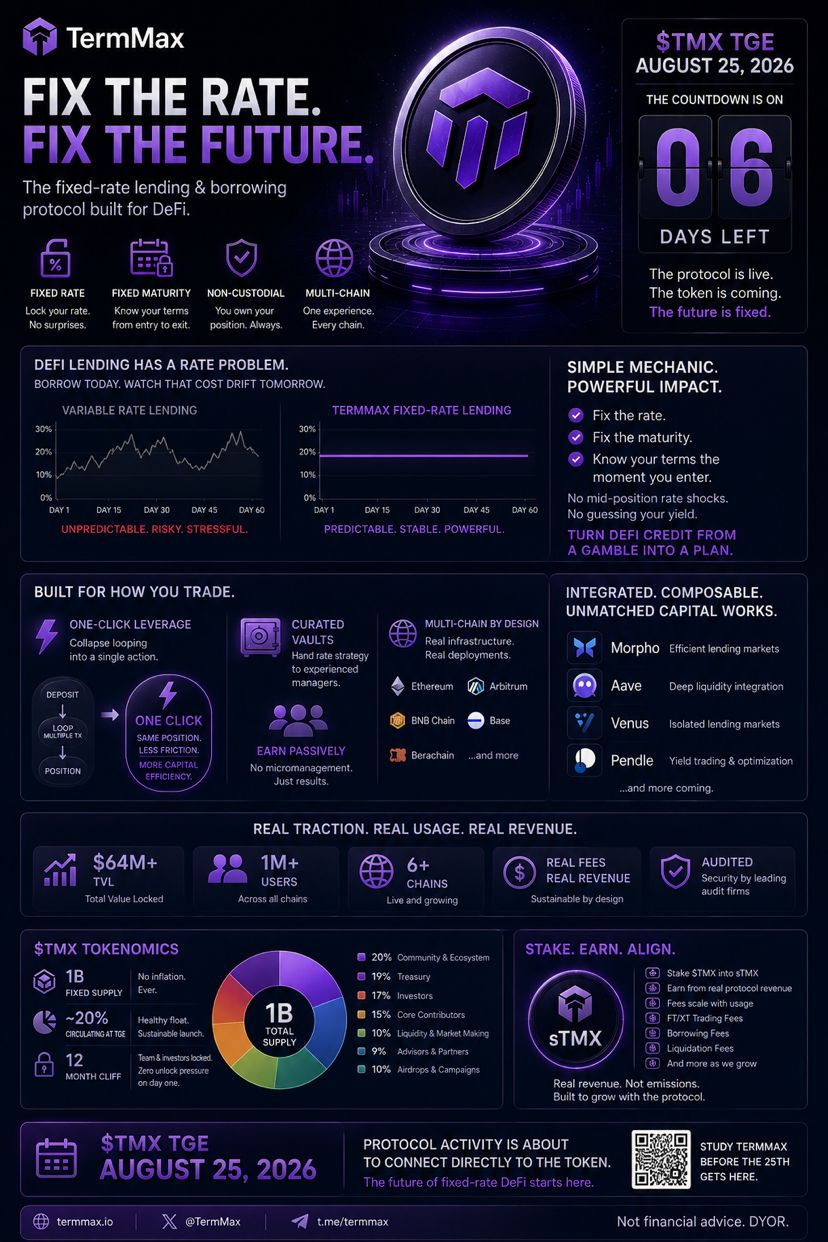
DeFi lending has a rate problem. Borrow today, watch that cost drift tomorrow. TermMax is one of the rare protocols actually built to solve it, not just talk about it.
The mechanic is simple: fix the rate, fix the maturity, know your terms the moment you enter. No mid-position rate shocks, no guessing what your yield looks like next week. That kind of predictability is exactly what turns DeFi credit from a gamble into something you can actually plan around.
It's not a one-trick feature either. One-click leverage collapses looping into a single action. Curated vaults hand rate strategy to experienced managers so you can earn passively without micromanaging. And the infrastructure spans real chains, Ethereum, Arbitrum, BNB Chain, Base, Berachain and more, wired into Morpho, Aave, Venus and Pendle so unmatched capital still earns instead of sitting still.
What makes this worth watching isn't hype, it's the numbers already on-chain. Solid TVL, real fee revenue, active users across every deployed chain, well before anyone was talking tokens.
That conversation starts now: $TMX TGE is confirmed for August 25, 2026. Protocol activity is about to connect directly to the token.
Study TermMax before the 25th gets here.
Not financial advice. DYOR.
#termmax @TermMax
DeFi lending has a rate problem. Borrow today, watch that cost drift tomorrow. TermMax is one of the rare protocols actually built to solve it, not just talk about it.
The mechanic is simple: fix the rate, fix the maturity, know your terms the moment you enter. No mid-position rate shocks, no guessing what your yield looks like next week. That kind of predictability is exactly what turns DeFi credit from a gamble into something you can actually plan around.
It's not a one-trick feature either. One-click leverage collapses looping into a single action. Curated vaults hand rate strategy to experienced managers so you can earn passively without micromanaging. And the infrastructure spans real chains, Ethereum, Arbitrum, BNB Chain, Base, Berachain and more, wired into Morpho, Aave, Venus and Pendle so unmatched capital still earns instead of sitting still.
What makes this worth watching isn't hype, it's the numbers already on-chain. Solid TVL, real fee revenue, active users across every deployed chain, well before anyone was talking tokens.
That conversation starts now: $TMX TGE is confirmed for August 25, 2026. Protocol activity is about to connect directly to the token.
Study TermMax before the 25th gets here.
Not financial advice. DYOR.
DeFi lending has a rate problem. Borrow today, watch that cost drift tomorrow. TermMax is one of the rare protocols actually built to solve it, not just talk about it.
The mechanic is simple: fix the rate, fix the maturity, know your terms the moment you enter. No mid-position rate shocks, no guessing what your yield looks like next week. That kind of predictability is exactly what turns DeFi credit from a gamble into something you can actually plan around.
It's not a one-trick feature either. One-click leverage collapses looping into a single action. Curated vaults hand rate strategy to experienced managers so you can earn passively without micromanaging. And the infrastructure spans real chains, Ethereum, Arbitrum, BNB Chain, Base, Berachain and more, wired into Morpho, Aave, Venus and Pendle so unmatched capital still earns instead of sitting still.
What makes this worth watching isn't hype, it's the numbers already on-chain. Solid TVL, real fee revenue, active users across every deployed chain, well before anyone was talking tokens.
That conversation starts now: $TMX TGE is confirmed for August 25, 2026. Protocol activity is about to connect directly to the token.
Study TermMax before the 25th gets here.
Not financial advice. DYOR.
1
239
·
--
#termmax @termmax
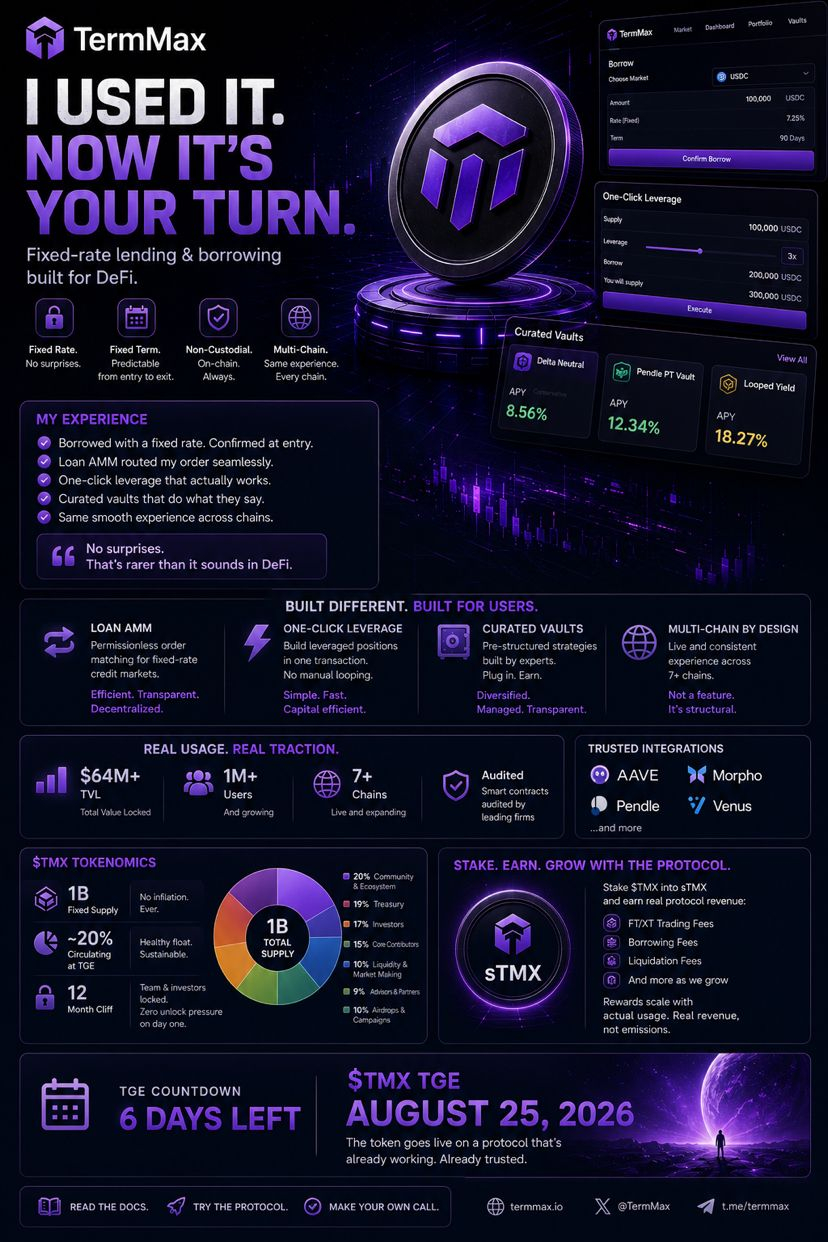
I actually used TermMax last week. Not to write about it — just to test it. And that's when the pitch stopped being theoretical.
I've borrowed on Aave, Compound, a handful of others. The variable rate thing always felt like a background risk I'd learned to live with. Open a position, check the rate daily, hope nothing spikes while you sleep in a different timezone. That's not a strategy. That's anxiety management dressed up as yield farming.
TermMax felt different from the first transaction. Fixed rate, fixed term, confirmed at entry. The Loan AMM routed my position without the clunky multi-step flow I expected. One-click leverage that actually worked the way it was described — not a simplified label on a complicated process. I put capital into one of the curated vaults and watched it do exactly what it said it would do. No surprises. That's rarer than it sounds in this space.
The multi-chain deployment isn't cosmetic either. It's the same experience across chains, not a degraded version ported over as an afterthought.
Here's where it gets timely. The $TMX TGE is August 25, 2026. Six days from now. The token goes live on a protocol that's already running, already audited, already being used by people who found it before the noise starts.
That gap — between "working product" and "everyone knows about it" — is usually where the most interesting moments happen.
Read the docs. Try the protocol. Make your own call.
#termmax @TermMax
I actually used TermMax last week. Not to write about it — just to test it. And that's when the pitch stopped being theoretical.
I've borrowed on Aave, Compound, a handful of others. The variable rate thing always felt like a background risk I'd learned to live with. Open a position, check the rate daily, hope nothing spikes while you sleep in a different timezone. That's not a strategy. That's anxiety management dressed up as yield farming.
TermMax felt different from the first transaction. Fixed rate, fixed term, confirmed at entry. The Loan AMM routed my position without the clunky multi-step flow I expected. One-click leverage that actually worked the way it was described — not a simplified label on a complicated process. I put capital into one of the curated vaults and watched it do exactly what it said it would do. No surprises. That's rarer than it sounds in this space.
The multi-chain deployment isn't cosmetic either. It's the same experience across chains, not a degraded version ported over as an afterthought.
Here's where it gets timely. The $TMX TGE is August 25, 2026. Six days from now. The token goes live on a protocol that's already running, already audited, already being used by people who found it before the noise starts.
That gap — between "working product" and "everyone knows about it" — is usually where the most interesting moments happen.
Read the docs. Try the protocol. Make your own call.
I actually used TermMax last week. Not to write about it — just to test it. And that's when the pitch stopped being theoretical.
I've borrowed on Aave, Compound, a handful of others. The variable rate thing always felt like a background risk I'd learned to live with. Open a position, check the rate daily, hope nothing spikes while you sleep in a different timezone. That's not a strategy. That's anxiety management dressed up as yield farming.
TermMax felt different from the first transaction. Fixed rate, fixed term, confirmed at entry. The Loan AMM routed my position without the clunky multi-step flow I expected. One-click leverage that actually worked the way it was described — not a simplified label on a complicated process. I put capital into one of the curated vaults and watched it do exactly what it said it would do. No surprises. That's rarer than it sounds in this space.
The multi-chain deployment isn't cosmetic either. It's the same experience across chains, not a degraded version ported over as an afterthought.
Here's where it gets timely. The $TMX TGE is August 25, 2026. Six days from now. The token goes live on a protocol that's already running, already audited, already being used by people who found it before the noise starts.
That gap — between "working product" and "everyone knows about it" — is usually where the most interesting moments happen.
Read the docs. Try the protocol. Make your own call.
89
·
--
#binancep2pantoan @Binance_Vietnam
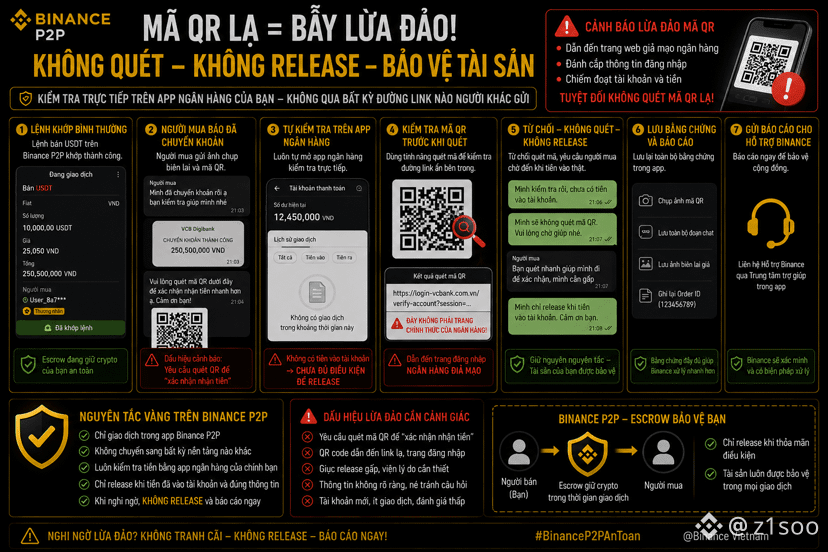
The QR code the buyer sent me to "confirm the receipt of payment" led to a fake bank login page. I only noticed when I looked closely at the link.
I sell USDT, and the order matches normally in the Binance P2P app. The buyer said they had transferred the money and sent along a QR code, asking me to scan it to "verify the transaction faster." I didn’t scan it, because for every payment confirmation before, I always do it by directly opening my own banking app—never through any link someone else sends.
I opened my own banking app and checked directly—no money had been deposited. That QR code had nothing to do with confirming the payment; it was a form of deception to steal my login information.
I didn’t release or scan anything; I kept the order unchanged in the system. The entire exchange remained within the app, exactly as Binance requires, and I didn’t move to any other platform even though the buyer urged me a few times.
I took screenshots of the QR code image, the chat, and the order ID, and reported it to Binance Support right afterward.
Have you ever been sent a strange QR code during a transaction?
#binancep2pantoan @Binance Vietnam
The QR code the buyer sent me to "confirm the receipt of payment" led to a fake bank login page. I only noticed when I looked closely at the link.
I sell USDT, and the order matches normally in the Binance P2P app. The buyer said they had transferred the money and sent along a QR code, asking me to scan it to "verify the transaction faster." I didn’t scan it, because for every payment confirmation before, I always do it by directly opening my own banking app—never through any link someone else sends.
I opened my own banking app and checked directly—no money had been deposited. That QR code had nothing to do with confirming the payment; it was a form of deception to steal my login information.
I didn’t release or scan anything; I kept the order unchanged in the system. The entire exchange remained within the app, exactly as Binance requires, and I didn’t move to any other platform even though the buyer urged me a few times.
I took screenshots of the QR code image, the chat, and the order ID, and reported it to Binance Support right afterward.
Have you ever been sent a strange QR code during a transaction?
The QR code the buyer sent me to "confirm the receipt of payment" led to a fake bank login page. I only noticed when I looked closely at the link.
I sell USDT, and the order matches normally in the Binance P2P app. The buyer said they had transferred the money and sent along a QR code, asking me to scan it to "verify the transaction faster." I didn’t scan it, because for every payment confirmation before, I always do it by directly opening my own banking app—never through any link someone else sends.
I opened my own banking app and checked directly—no money had been deposited. That QR code had nothing to do with confirming the payment; it was a form of deception to steal my login information.
I didn’t release or scan anything; I kept the order unchanged in the system. The entire exchange remained within the app, exactly as Binance requires, and I didn’t move to any other platform even though the buyer urged me a few times.
I took screenshots of the QR code image, the chat, and the order ID, and reported it to Binance Support right afterward.
Have you ever been sent a strange QR code during a transaction?
108
·
--
#termmax @termmax
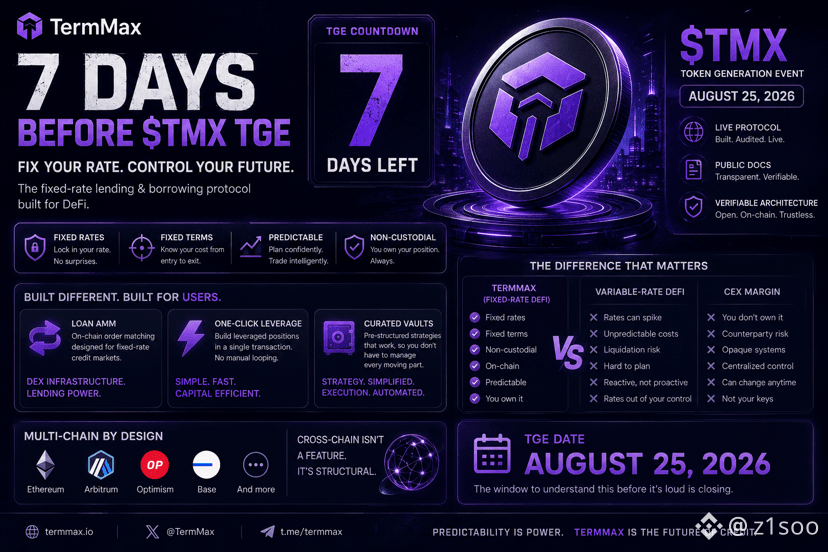
Seven days. That's how long before the $TMX TGE and I'm genuinely surprised this isn't in every feed right now.
I've been in DeFi long enough to know the difference between a protocol built around a narrative and one built around a real problem. Variable-rate lending is a real problem. You've felt it. Everyone has. A position that made sense at 6% stops making sense at 28% — and by the time you react, the damage is done.
TermMax solves this at the architecture level, not the UI level. The Loan AMM is purpose-built for fixed-rate credit markets — on-chain, non-custodial, no centralized matching engine sitting between you and your position. Fixed rates, fixed terms, predictable from entry to exit.
But what actually caught my attention beyond the rate model is the product depth. One-click leverage without manual looping. Curated vaults that package strategy without requiring you to manage every component. Multi-chain infrastructure that doesn't treat cross-chain as a feature — it's structural.
Compare that to CEX margin products where you never actually own your position, or variable-rate DeFi where the rate is someone else's problem until suddenly it's yours.
$TMX TGE drops August 25, 2026. The protocol is live. The docs are public. The architecture is verifiable.
I'm not here to tell you what to do with your capital. I'm here to tell you the window to understand this before it's loud is closing.
#termmax @TermMax
Seven days. That's how long before the $TMX TGE and I'm genuinely surprised this isn't in every feed right now.
I've been in DeFi long enough to know the difference between a protocol built around a narrative and one built around a real problem. Variable-rate lending is a real problem. You've felt it. Everyone has. A position that made sense at 6% stops making sense at 28% — and by the time you react, the damage is done.
TermMax solves this at the architecture level, not the UI level. The Loan AMM is purpose-built for fixed-rate credit markets — on-chain, non-custodial, no centralized matching engine sitting between you and your position. Fixed rates, fixed terms, predictable from entry to exit.
But what actually caught my attention beyond the rate model is the product depth. One-click leverage without manual looping. Curated vaults that package strategy without requiring you to manage every component. Multi-chain infrastructure that doesn't treat cross-chain as a feature — it's structural.
Compare that to CEX margin products where you never actually own your position, or variable-rate DeFi where the rate is someone else's problem until suddenly it's yours.
$TMX TGE drops August 25, 2026. The protocol is live. The docs are public. The architecture is verifiable.
I'm not here to tell you what to do with your capital. I'm here to tell you the window to understand this before it's loud is closing.
Seven days. That's how long before the $TMX TGE and I'm genuinely surprised this isn't in every feed right now.
I've been in DeFi long enough to know the difference between a protocol built around a narrative and one built around a real problem. Variable-rate lending is a real problem. You've felt it. Everyone has. A position that made sense at 6% stops making sense at 28% — and by the time you react, the damage is done.
TermMax solves this at the architecture level, not the UI level. The Loan AMM is purpose-built for fixed-rate credit markets — on-chain, non-custodial, no centralized matching engine sitting between you and your position. Fixed rates, fixed terms, predictable from entry to exit.
But what actually caught my attention beyond the rate model is the product depth. One-click leverage without manual looping. Curated vaults that package strategy without requiring you to manage every component. Multi-chain infrastructure that doesn't treat cross-chain as a feature — it's structural.
Compare that to CEX margin products where you never actually own your position, or variable-rate DeFi where the rate is someone else's problem until suddenly it's yours.
$TMX TGE drops August 25, 2026. The protocol is live. The docs are public. The architecture is verifiable.
I'm not here to tell you what to do with your capital. I'm here to tell you the window to understand this before it's loud is closing.
1
1
87
·
--
#binancep2pantoan @Binance_Vietnam
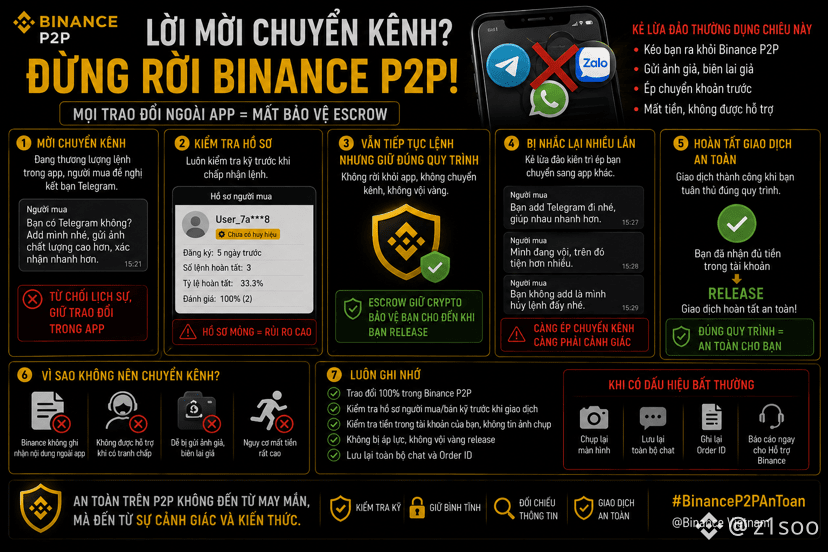
I once received a Telegram friend request right in the middle of negotiating an order in the app. It wasn’t to chat more, but to pull me away from Binance P2P.
The buyer messaged saying that Telegram was more convenient for sending higher-quality images and that it was faster to confirm. I refused and continued the entire transaction within the app, because I understood that only there does Binance record and protect me if any dispute arises later.
Before accepting the order, I reviewed the profile. The account had no merchant badge, was registered for less than a week, and had a low completion rate. With an account that thin, plus a channel-switch invitation like that, I immediately knew I needed to be more cautious than usual.
I still proceeded with the order, but followed every step exactly according to procedure, and didn’t leave the app for a second— even when I was reminded a few times. The final transaction still completed normally, but I knew that if anything unusual happened, I already had the full history ready to send to Binance Support.
After that, I realized: a channel-switch invitation is never random.
Have you ever been invited to switch to another messaging app in the middle of a transaction?
#binancep2pantoan @Binance Vietnam
I once received a Telegram friend request right in the middle of negotiating an order in the app. It wasn’t to chat more, but to pull me away from Binance P2P.
The buyer messaged saying that Telegram was more convenient for sending higher-quality images and that it was faster to confirm. I refused and continued the entire transaction within the app, because I understood that only there does Binance record and protect me if any dispute arises later.
Before accepting the order, I reviewed the profile. The account had no merchant badge, was registered for less than a week, and had a low completion rate. With an account that thin, plus a channel-switch invitation like that, I immediately knew I needed to be more cautious than usual.
I still proceeded with the order, but followed every step exactly according to procedure, and didn’t leave the app for a second— even when I was reminded a few times. The final transaction still completed normally, but I knew that if anything unusual happened, I already had the full history ready to send to Binance Support.
After that, I realized: a channel-switch invitation is never random.
Have you ever been invited to switch to another messaging app in the middle of a transaction?
I once received a Telegram friend request right in the middle of negotiating an order in the app. It wasn’t to chat more, but to pull me away from Binance P2P.
The buyer messaged saying that Telegram was more convenient for sending higher-quality images and that it was faster to confirm. I refused and continued the entire transaction within the app, because I understood that only there does Binance record and protect me if any dispute arises later.
Before accepting the order, I reviewed the profile. The account had no merchant badge, was registered for less than a week, and had a low completion rate. With an account that thin, plus a channel-switch invitation like that, I immediately knew I needed to be more cautious than usual.
I still proceeded with the order, but followed every step exactly according to procedure, and didn’t leave the app for a second— even when I was reminded a few times. The final transaction still completed normally, but I knew that if anything unusual happened, I already had the full history ready to send to Binance Support.
After that, I realized: a channel-switch invitation is never random.
Have you ever been invited to switch to another messaging app in the middle of a transaction?
107
·
--
#binancep2pantoan @Binance_Vietnam
The buyer changed the display name three times within a single conversation. I noticed it late, but maybe it’s not too late.
I sell ETH, and the orders match quickly with an account that seems normal. While chatting, I glanced and saw the display name change from what it was at the beginning, then change again one more time. The number of completed orders shown on the profile is also unusually low compared to the professionalism implied by the way they message.
The buyer said they had transferred the payment and urged me to release urgently because “I’m about to run out of lunch break time.” I opened my banking app to check first—nothing had come into my account, even though the receipt image they sent looks very convincing.
I refused to release and asked directly why they changed the display name multiple times. There was no reasonable answer—only more urging. Continuous name changes combined with a fake-looking receipt are enough for me to stop the transaction altogether.
I took screenshots of the entire display-name change history, the chat segment, and the order ID, and sent a complete report to Binance Support.
Have you noticed whether your trading partner’s display name gets changed midway?
#binancep2pantoan @Binance Vietnam
The buyer changed the display name three times within a single conversation. I noticed it late, but maybe it’s not too late.
I sell ETH, and the orders match quickly with an account that seems normal. While chatting, I glanced and saw the display name change from what it was at the beginning, then change again one more time. The number of completed orders shown on the profile is also unusually low compared to the professionalism implied by the way they message.
The buyer said they had transferred the payment and urged me to release urgently because “I’m about to run out of lunch break time.” I opened my banking app to check first—nothing had come into my account, even though the receipt image they sent looks very convincing.
I refused to release and asked directly why they changed the display name multiple times. There was no reasonable answer—only more urging. Continuous name changes combined with a fake-looking receipt are enough for me to stop the transaction altogether.
I took screenshots of the entire display-name change history, the chat segment, and the order ID, and sent a complete report to Binance Support.
Have you noticed whether your trading partner’s display name gets changed midway?
The buyer changed the display name three times within a single conversation. I noticed it late, but maybe it’s not too late.
I sell ETH, and the orders match quickly with an account that seems normal. While chatting, I glanced and saw the display name change from what it was at the beginning, then change again one more time. The number of completed orders shown on the profile is also unusually low compared to the professionalism implied by the way they message.
The buyer said they had transferred the payment and urged me to release urgently because “I’m about to run out of lunch break time.” I opened my banking app to check first—nothing had come into my account, even though the receipt image they sent looks very convincing.
I refused to release and asked directly why they changed the display name multiple times. There was no reasonable answer—only more urging. Continuous name changes combined with a fake-looking receipt are enough for me to stop the transaction altogether.
I took screenshots of the entire display-name change history, the chat segment, and the order ID, and sent a complete report to Binance Support.
Have you noticed whether your trading partner’s display name gets changed midway?
96
·
--
#termmax @termmax
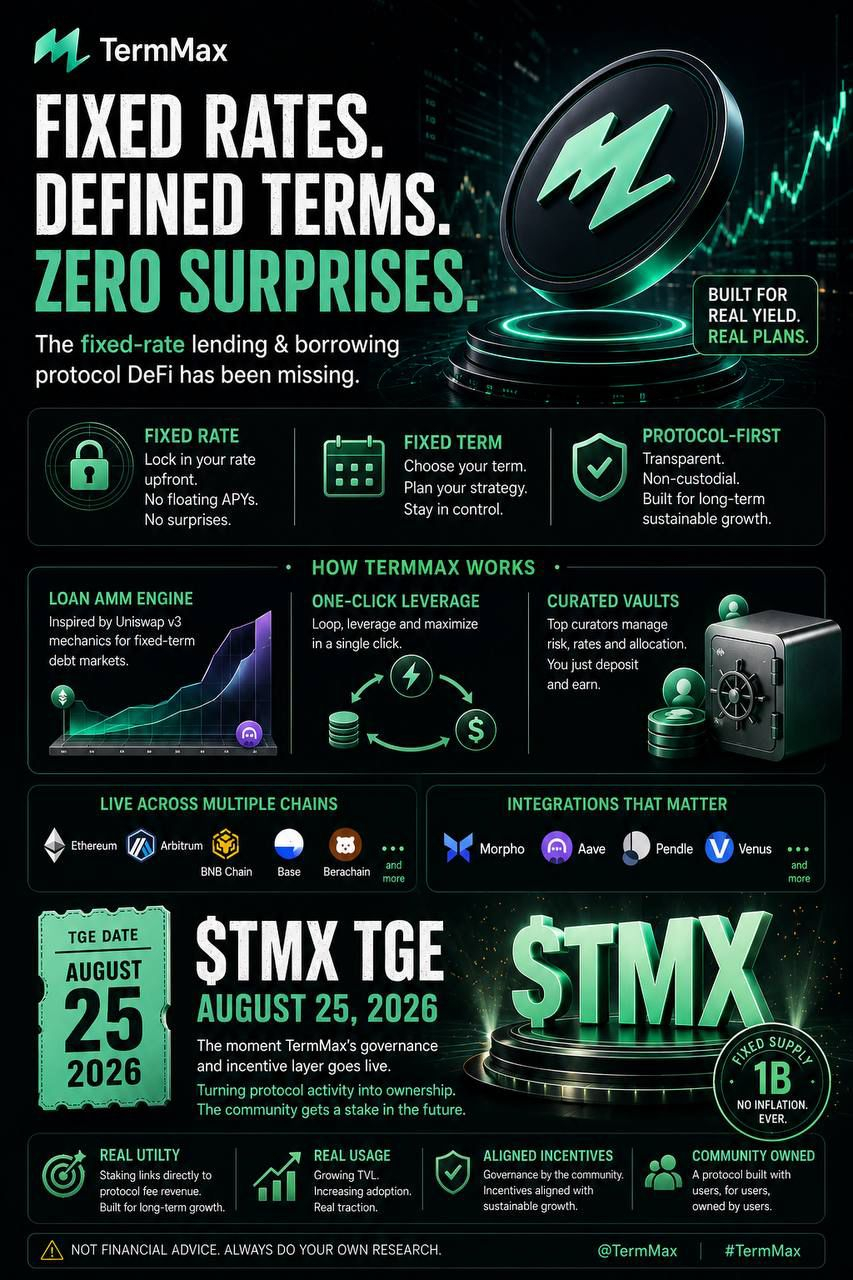
I don't usually post about something this close to TGE. But TermMax is one of those protocols where the more I dig, the more I think most people are going to regret not paying attention earlier.
Here's the thing about DeFi lending right now. Variable rates sound fine until they don't. You open a position at 8%, wake up to 34%, and your entire strategy falls apart. TermMax fixes that at the protocol level. Fixed rates. Fixed terms. You know exactly what you're working with from the moment you enter.
The $TMX TGE is August 25, 2026. That's eight days away.
What I keep coming back to is the Loan AMM. Most fixed-rate protocols feel clunky — lots of steps, lots of manual management. TermMax built an AMM specifically for loan markets, so the experience is closer to swapping on a DEX than filling out a credit application. One-click leverage. Curated vaults. Multi-chain from day one.
This is the kind of infrastructure that doesn't get loud until it gets used at scale. And the window before a TGE is exactly when most people are still sleeping on it.
Do your research. Read the docs. Understand what you're looking at.
August 25 is coming fast.
#termmax @TermMax
I don't usually post about something this close to TGE. But TermMax is one of those protocols where the more I dig, the more I think most people are going to regret not paying attention earlier.
Here's the thing about DeFi lending right now. Variable rates sound fine until they don't. You open a position at 8%, wake up to 34%, and your entire strategy falls apart. TermMax fixes that at the protocol level. Fixed rates. Fixed terms. You know exactly what you're working with from the moment you enter.
The $TMX TGE is August 25, 2026. That's eight days away.
What I keep coming back to is the Loan AMM. Most fixed-rate protocols feel clunky — lots of steps, lots of manual management. TermMax built an AMM specifically for loan markets, so the experience is closer to swapping on a DEX than filling out a credit application. One-click leverage. Curated vaults. Multi-chain from day one.
This is the kind of infrastructure that doesn't get loud until it gets used at scale. And the window before a TGE is exactly when most people are still sleeping on it.
Do your research. Read the docs. Understand what you're looking at.
August 25 is coming fast.
I don't usually post about something this close to TGE. But TermMax is one of those protocols where the more I dig, the more I think most people are going to regret not paying attention earlier.
Here's the thing about DeFi lending right now. Variable rates sound fine until they don't. You open a position at 8%, wake up to 34%, and your entire strategy falls apart. TermMax fixes that at the protocol level. Fixed rates. Fixed terms. You know exactly what you're working with from the moment you enter.
The $TMX TGE is August 25, 2026. That's eight days away.
What I keep coming back to is the Loan AMM. Most fixed-rate protocols feel clunky — lots of steps, lots of manual management. TermMax built an AMM specifically for loan markets, so the experience is closer to swapping on a DEX than filling out a credit application. One-click leverage. Curated vaults. Multi-chain from day one.
This is the kind of infrastructure that doesn't get loud until it gets used at scale. And the window before a TGE is exactly when most people are still sleeping on it.
Do your research. Read the docs. Understand what you're looking at.
August 25 is coming fast.
155
·
--
#termmax @termmax
Something I've been quietly watching for months is finally getting its moment.
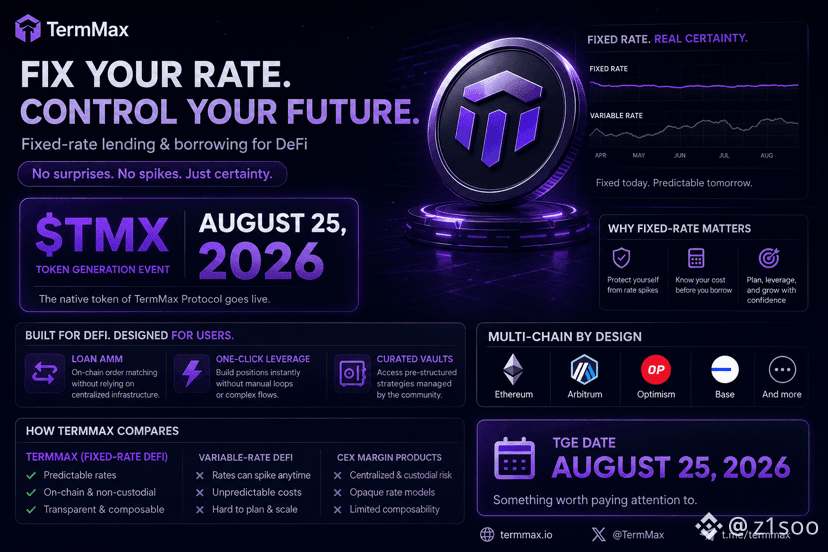
TermMax is a fixed-rate lending and borrowing protocol — and if you've ever been wrecked by a variable rate spiking overnight, you already understand exactly why that matters. You lock in your rate. You know your cost. No surprises.
The TGE for $TMX drops on August 25, 2026. That's the moment the protocol's native token goes live, and it's worth understanding what you're actually looking at before then.
What makes TermMax different isn't just the fixed-rate pitch. It's the execution. Their Loan AMM handles order matching on-chain without relying on centralized infrastructure — so it behaves more like a DEX than a lending desk. One-click leverage lets you build a position without manually looping collateral across multiple transactions. Curated vaults let you deploy capital into pre-structured strategies without managing each moving part yourself.
It's multi-chain by design, not as an afterthought. And compared to variable-rate DeFi protocols or CEX margin products, the predictability is a genuine structural difference — not just a feature checkbox.
I'm not telling you what to buy. I'm telling you what I'm paying attention to before August 25.
Worth doing your own research before the TGE. The fixed-rate DeFi narrative has been building for a while — TermMax is one of the more serious attempts I've seen at making it actually usable.
#termmax @TermMax
Something I've been quietly watching for months is finally getting its moment.
TermMax is a fixed-rate lending and borrowing protocol — and if you've ever been wrecked by a variable rate spiking overnight, you already understand exactly why that matters. You lock in your rate. You know your cost. No surprises.
The TGE for $TMX drops on August 25, 2026. That's the moment the protocol's native token goes live, and it's worth understanding what you're actually looking at before then.
What makes TermMax different isn't just the fixed-rate pitch. It's the execution. Their Loan AMM handles order matching on-chain without relying on centralized infrastructure — so it behaves more like a DEX than a lending desk. One-click leverage lets you build a position without manually looping collateral across multiple transactions. Curated vaults let you deploy capital into pre-structured strategies without managing each moving part yourself.
It's multi-chain by design, not as an afterthought. And compared to variable-rate DeFi protocols or CEX margin products, the predictability is a genuine structural difference — not just a feature checkbox.
I'm not telling you what to buy. I'm telling you what I'm paying attention to before August 25.
Worth doing your own research before the TGE. The fixed-rate DeFi narrative has been building for a while — TermMax is one of the more serious attempts I've seen at making it actually usable.
Something I've been quietly watching for months is finally getting its moment.
TermMax is a fixed-rate lending and borrowing protocol — and if you've ever been wrecked by a variable rate spiking overnight, you already understand exactly why that matters. You lock in your rate. You know your cost. No surprises.
The TGE for $TMX drops on August 25, 2026. That's the moment the protocol's native token goes live, and it's worth understanding what you're actually looking at before then.
What makes TermMax different isn't just the fixed-rate pitch. It's the execution. Their Loan AMM handles order matching on-chain without relying on centralized infrastructure — so it behaves more like a DEX than a lending desk. One-click leverage lets you build a position without manually looping collateral across multiple transactions. Curated vaults let you deploy capital into pre-structured strategies without managing each moving part yourself.
It's multi-chain by design, not as an afterthought. And compared to variable-rate DeFi protocols or CEX margin products, the predictability is a genuine structural difference — not just a feature checkbox.
I'm not telling you what to buy. I'm telling you what I'm paying attention to before August 25.
Worth doing your own research before the TGE. The fixed-rate DeFi narrative has been building for a while — TermMax is one of the more serious attempts I've seen at making it actually usable.
91
·
--
#binancep2pantoan @Binance_Vietnam
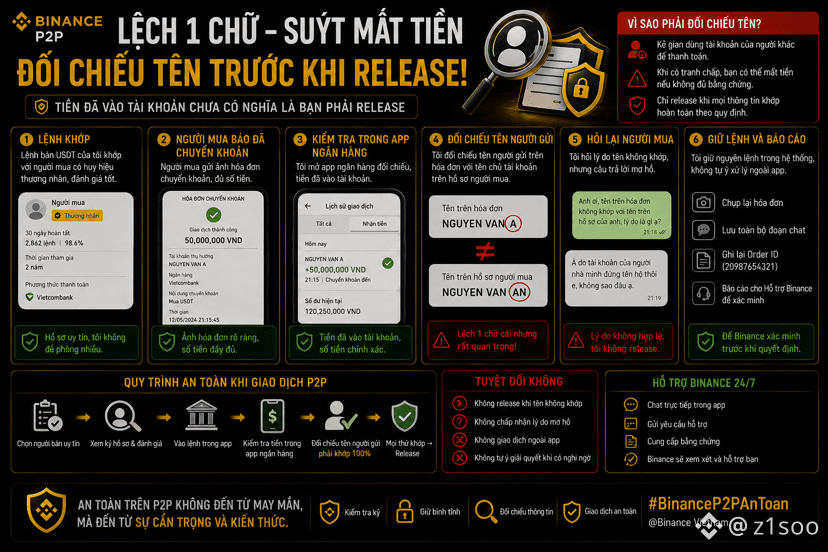
The name on the bank transfer invoice does not match the name on the buyer’s profile documents; it’s off by exactly one letter. I almost missed it because I thought the bank might have abbreviated it.
My USDT sell order matched an account with a merchant badge and good ratings, so I wasn’t very cautious. The buyer reported that they had transferred the funds, and sent a clear invoice image showing the full amount.
I opened the banking app to verify and saw the money had indeed been credited and the amount was correct. However, I still checked the sender name on the invoice and compared it with the account holder name on the profile in the Binance P2P app. It differed by one letter—an easy mistake to overlook if you rush to release once you see the funds arrive.
I asked the buyer why the names didn’t match. The answer was vague: they said it was because their relative’s account was in their relative’s name and the relative acted on their behalf, which is a reason not mentioned in the transaction rules. I didn’t release the order; I left it unchanged in the system and didn’t handle anything outside the app.
I saved the invoice image, the chat messages, and the order ID, then forwarded everything to Binance Support for verification before making any decision.
Do you check the sender’s name every time you receive a payment?
#binancep2pantoan @Binance Vietnam
The name on the bank transfer invoice does not match the name on the buyer’s profile documents; it’s off by exactly one letter. I almost missed it because I thought the bank might have abbreviated it.
My USDT sell order matched an account with a merchant badge and good ratings, so I wasn’t very cautious. The buyer reported that they had transferred the funds, and sent a clear invoice image showing the full amount.
I opened the banking app to verify and saw the money had indeed been credited and the amount was correct. However, I still checked the sender name on the invoice and compared it with the account holder name on the profile in the Binance P2P app. It differed by one letter—an easy mistake to overlook if you rush to release once you see the funds arrive.
I asked the buyer why the names didn’t match. The answer was vague: they said it was because their relative’s account was in their relative’s name and the relative acted on their behalf, which is a reason not mentioned in the transaction rules. I didn’t release the order; I left it unchanged in the system and didn’t handle anything outside the app.
I saved the invoice image, the chat messages, and the order ID, then forwarded everything to Binance Support for verification before making any decision.
Do you check the sender’s name every time you receive a payment?
The name on the bank transfer invoice does not match the name on the buyer’s profile documents; it’s off by exactly one letter. I almost missed it because I thought the bank might have abbreviated it.
My USDT sell order matched an account with a merchant badge and good ratings, so I wasn’t very cautious. The buyer reported that they had transferred the funds, and sent a clear invoice image showing the full amount.
I opened the banking app to verify and saw the money had indeed been credited and the amount was correct. However, I still checked the sender name on the invoice and compared it with the account holder name on the profile in the Binance P2P app. It differed by one letter—an easy mistake to overlook if you rush to release once you see the funds arrive.
I asked the buyer why the names didn’t match. The answer was vague: they said it was because their relative’s account was in their relative’s name and the relative acted on their behalf, which is a reason not mentioned in the transaction rules. I didn’t release the order; I left it unchanged in the system and didn’t handle anything outside the app.
I saved the invoice image, the chat messages, and the order ID, then forwarded everything to Binance Support for verification before making any decision.
Do you check the sender’s name every time you receive a payment?
104
·
--
#dusk $DUSK @Dusk_Foundation
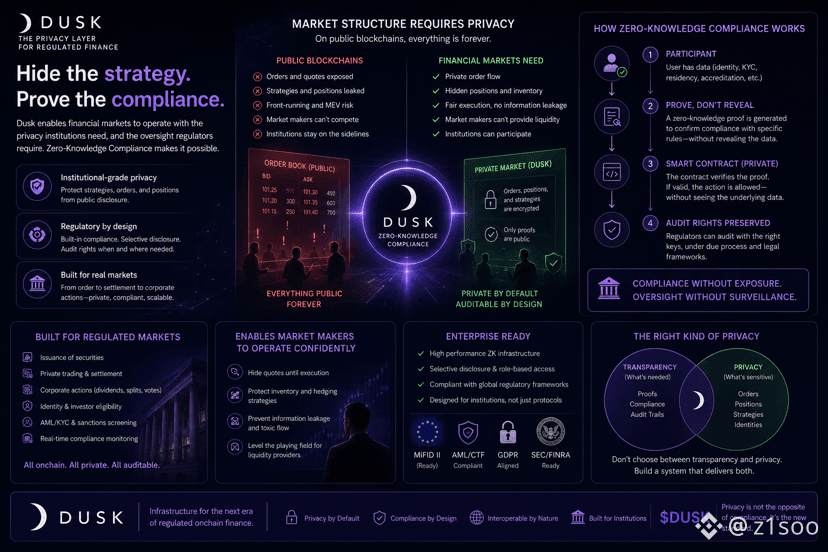
A market maker cannot operate if all buy/sell orders are permanently publicly disclosed onchain. This is an issue most public blockchains overlook when discussing regulated finance.
I thought about this after reading how @dusk redefines privacy for financial markets. Typical public blockchains require investors to expose their entire portfolio and strategies every time they settle, forcing market makers to reveal their bid-ask immediately upon placing orders. In a regulated market, this is not a minor risk—it is the reason institutions cannot participate.
Dusk solves this with a Zero-Knowledge Compliance framework instead of choosing between transparency and privacy. Participants prove that they meet regulatory requirements, such as AML or KYC, without revealing personal details or transactions. Private smart contracts allow businesses to issue securities, settle trades, and handle corporate actions in silence, while regulators still retain the right to audit when needed.
The hard part is not in hiding data. The hard part is hiding exactly what needs to be hidden without breaking the ability to supervise.
#dusk $DUSK @Dusk
A market maker cannot operate if all buy/sell orders are permanently publicly disclosed onchain. This is an issue most public blockchains overlook when discussing regulated finance.
I thought about this after reading how @dusk redefines privacy for financial markets. Typical public blockchains require investors to expose their entire portfolio and strategies every time they settle, forcing market makers to reveal their bid-ask immediately upon placing orders. In a regulated market, this is not a minor risk—it is the reason institutions cannot participate.
Dusk solves this with a Zero-Knowledge Compliance framework instead of choosing between transparency and privacy. Participants prove that they meet regulatory requirements, such as AML or KYC, without revealing personal details or transactions. Private smart contracts allow businesses to issue securities, settle trades, and handle corporate actions in silence, while regulators still retain the right to audit when needed.
The hard part is not in hiding data. The hard part is hiding exactly what needs to be hidden without breaking the ability to supervise.
A market maker cannot operate if all buy/sell orders are permanently publicly disclosed onchain. This is an issue most public blockchains overlook when discussing regulated finance.
I thought about this after reading how @dusk redefines privacy for financial markets. Typical public blockchains require investors to expose their entire portfolio and strategies every time they settle, forcing market makers to reveal their bid-ask immediately upon placing orders. In a regulated market, this is not a minor risk—it is the reason institutions cannot participate.
Dusk solves this with a Zero-Knowledge Compliance framework instead of choosing between transparency and privacy. Participants prove that they meet regulatory requirements, such as AML or KYC, without revealing personal details or transactions. Private smart contracts allow businesses to issue securities, settle trades, and handle corporate actions in silence, while regulators still retain the right to audit when needed.
The hard part is not in hiding data. The hard part is hiding exactly what needs to be hidden without breaking the ability to supervise.
70
·
--
#binancep2pantoan @Binance_Vietnam
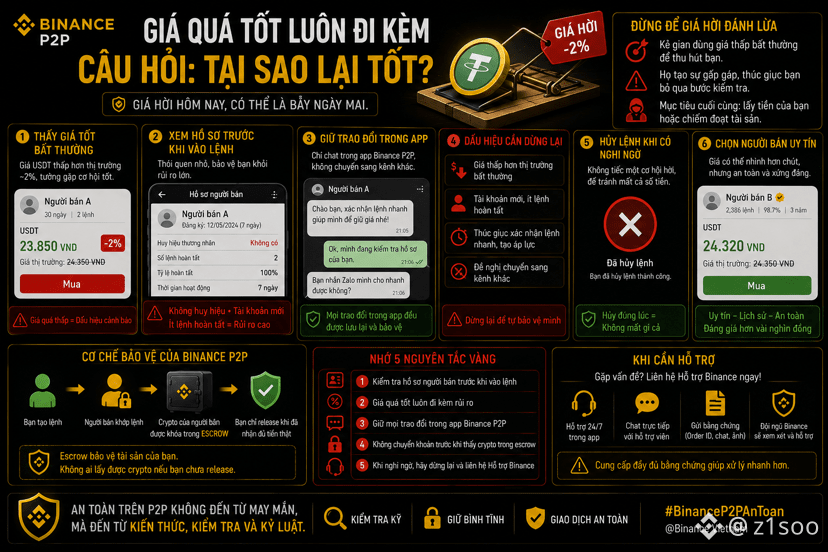
The USDT selling price is two percent lower than the market. I thought I had gotten lucky. Turns out it was bait.
I needed to buy urgently, and when I saw an order price that was unusually good, I clicked right away. The seller messaged me warmly, offering to confirm the order quickly to lock in the price. I was about to place the order immediately, then I remembered an old habit: always review the profile before trusting what someone says.
That account had no merchant badge, was newly registered that week, and had only completed two orders. An unusually good price from a brand-new account was the sign to stop—not something to be happy about.
I kept all communication within the Binance P2P app and didn’t message through any other channel, even though the seller suggested it a few times. If anything went wrong, only the in-app chat history would be something Binance could review.
I cancelled the plan to trade and chose another seller with a long trading history. The price was slightly higher, but it was much safer.
After that, I understood: a deal that’s too good always comes with the question of why it’s so good.
Have you ever skipped a seemingly great order because it felt suspicious?
#binancep2pantoan @Binance Vietnam
The USDT selling price is two percent lower than the market. I thought I had gotten lucky. Turns out it was bait.
I needed to buy urgently, and when I saw an order price that was unusually good, I clicked right away. The seller messaged me warmly, offering to confirm the order quickly to lock in the price. I was about to place the order immediately, then I remembered an old habit: always review the profile before trusting what someone says.
That account had no merchant badge, was newly registered that week, and had only completed two orders. An unusually good price from a brand-new account was the sign to stop—not something to be happy about.
I kept all communication within the Binance P2P app and didn’t message through any other channel, even though the seller suggested it a few times. If anything went wrong, only the in-app chat history would be something Binance could review.
I cancelled the plan to trade and chose another seller with a long trading history. The price was slightly higher, but it was much safer.
After that, I understood: a deal that’s too good always comes with the question of why it’s so good.
Have you ever skipped a seemingly great order because it felt suspicious?
The USDT selling price is two percent lower than the market. I thought I had gotten lucky. Turns out it was bait.
I needed to buy urgently, and when I saw an order price that was unusually good, I clicked right away. The seller messaged me warmly, offering to confirm the order quickly to lock in the price. I was about to place the order immediately, then I remembered an old habit: always review the profile before trusting what someone says.
That account had no merchant badge, was newly registered that week, and had only completed two orders. An unusually good price from a brand-new account was the sign to stop—not something to be happy about.
I kept all communication within the Binance P2P app and didn’t message through any other channel, even though the seller suggested it a few times. If anything went wrong, only the in-app chat history would be something Binance could review.
I cancelled the plan to trade and chose another seller with a long trading history. The price was slightly higher, but it was much safer.
After that, I understood: a deal that’s too good always comes with the question of why it’s so good.
Have you ever skipped a seemingly great order because it felt suspicious?
85
·
--
#dusk $DUSK @Dusk_Foundation
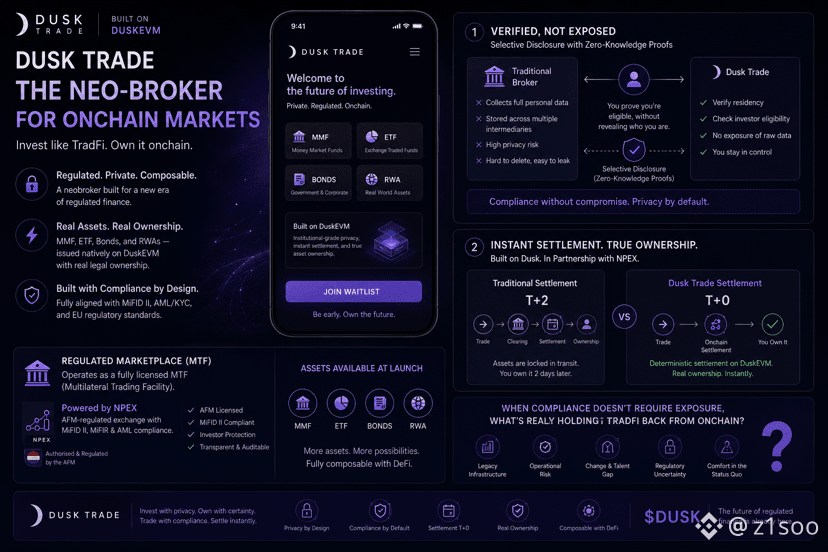
Dusk Trade opens a waitlist, and what I pay attention to is not the list of assets, but how it verifies investors.
Traditional brokers that want to sell you MMFs, ETFs, or bonds have to check your residency and investment eligibility, which leads to your personal records being stored and shared across multiple intermediary parties. Dusk Trade, a neobroker built on DuskEVM, uses selective disclosure to solve exactly this: the app verifies whether you meet residency requirements or investor eligibility without disclosing your original personal data.
The second difference is settlement. Traditional brokers run T+2, meaning assets get stuck between placing an order and actual ownership. Dusk Trade uses Dusk’s deterministic settlement, in collaboration with NPEX—a venue licensed by AFM—bringing MMFs, ETFs, bonds, and RWA onto the chain with real ownership and direct composability with DeFi.
No extra paperwork. No waiting two days. But it still operates like a fully regulated MTF.
The question I’m still keeping is: when compliance no longer requires data disclosure, what truly keeps TradFi from going onchain?
#dusk $DUSK @Dusk
Dusk Trade opens a waitlist, and what I pay attention to is not the list of assets, but how it verifies investors.
Traditional brokers that want to sell you MMFs, ETFs, or bonds have to check your residency and investment eligibility, which leads to your personal records being stored and shared across multiple intermediary parties. Dusk Trade, a neobroker built on DuskEVM, uses selective disclosure to solve exactly this: the app verifies whether you meet residency requirements or investor eligibility without disclosing your original personal data.
The second difference is settlement. Traditional brokers run T+2, meaning assets get stuck between placing an order and actual ownership. Dusk Trade uses Dusk’s deterministic settlement, in collaboration with NPEX—a venue licensed by AFM—bringing MMFs, ETFs, bonds, and RWA onto the chain with real ownership and direct composability with DeFi.
No extra paperwork. No waiting two days. But it still operates like a fully regulated MTF.
The question I’m still keeping is: when compliance no longer requires data disclosure, what truly keeps TradFi from going onchain?
Dusk Trade opens a waitlist, and what I pay attention to is not the list of assets, but how it verifies investors.
Traditional brokers that want to sell you MMFs, ETFs, or bonds have to check your residency and investment eligibility, which leads to your personal records being stored and shared across multiple intermediary parties. Dusk Trade, a neobroker built on DuskEVM, uses selective disclosure to solve exactly this: the app verifies whether you meet residency requirements or investor eligibility without disclosing your original personal data.
The second difference is settlement. Traditional brokers run T+2, meaning assets get stuck between placing an order and actual ownership. Dusk Trade uses Dusk’s deterministic settlement, in collaboration with NPEX—a venue licensed by AFM—bringing MMFs, ETFs, bonds, and RWA onto the chain with real ownership and direct composability with DeFi.
No extra paperwork. No waiting two days. But it still operates like a fully regulated MTF.
The question I’m still keeping is: when compliance no longer requires data disclosure, what truly keeps TradFi from going onchain?
1
90
·
--
#binancep2pantoan @Binance_Vietnam
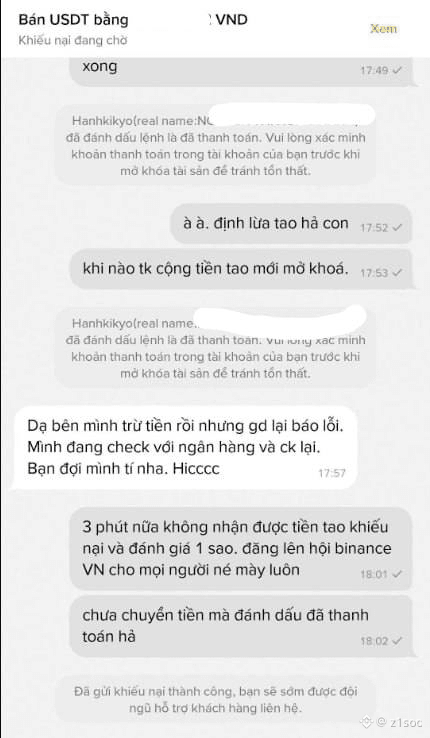
The notification popped up right when I was making coffee. "The buyer has confirmed the payment." I almost believed it—just because I saw that button get pressed faster than the money could move.
I set the cup down and opened my banking app before doing anything else. There were no transactions in my account. The "Paid" button was just a status in the app; it wasn’t proof the funds had arrived.
I messaged the buyer again, asking for the transaction code to cross-check. The reply was delayed, and then they pushed me to "release first—your bank is just slow." A real person who actually transferred money rarely avoids providing a transaction code.
I kept the order as-is, didn’t release, and only requested clear, unambiguous proof. The entire exchange stayed within the Binance P2P app, never switching to any other channel, because escrow is holding my crypto safely until I voluntarily confirm.
Ten minutes later, the buyer left the chat. I captured the entire conversation, saved the order ID, and reported it to Binance Support.
From then on, I understood: button-click speed is never proof.
Have you checked the transaction code before releasing?
#binancep2pantoan @Binance Vietnam
The notification popped up right when I was making coffee. "The buyer has confirmed the payment." I almost believed it—just because I saw that button get pressed faster than the money could move.
I set the cup down and opened my banking app before doing anything else. There were no transactions in my account. The "Paid" button was just a status in the app; it wasn’t proof the funds had arrived.
I messaged the buyer again, asking for the transaction code to cross-check. The reply was delayed, and then they pushed me to "release first—your bank is just slow." A real person who actually transferred money rarely avoids providing a transaction code.
I kept the order as-is, didn’t release, and only requested clear, unambiguous proof. The entire exchange stayed within the Binance P2P app, never switching to any other channel, because escrow is holding my crypto safely until I voluntarily confirm.
Ten minutes later, the buyer left the chat. I captured the entire conversation, saved the order ID, and reported it to Binance Support.
From then on, I understood: button-click speed is never proof.
Have you checked the transaction code before releasing?
The notification popped up right when I was making coffee. "The buyer has confirmed the payment." I almost believed it—just because I saw that button get pressed faster than the money could move.
I set the cup down and opened my banking app before doing anything else. There were no transactions in my account. The "Paid" button was just a status in the app; it wasn’t proof the funds had arrived.
I messaged the buyer again, asking for the transaction code to cross-check. The reply was delayed, and then they pushed me to "release first—your bank is just slow." A real person who actually transferred money rarely avoids providing a transaction code.
I kept the order as-is, didn’t release, and only requested clear, unambiguous proof. The entire exchange stayed within the Binance P2P app, never switching to any other channel, because escrow is holding my crypto safely until I voluntarily confirm.
Ten minutes later, the buyer left the chat. I captured the entire conversation, saved the order ID, and reported it to Binance Support.
From then on, I understood: button-click speed is never proof.
Have you checked the transaction code before releasing?
136
·
--
#dusk $DUSK @Dusk_Foundation
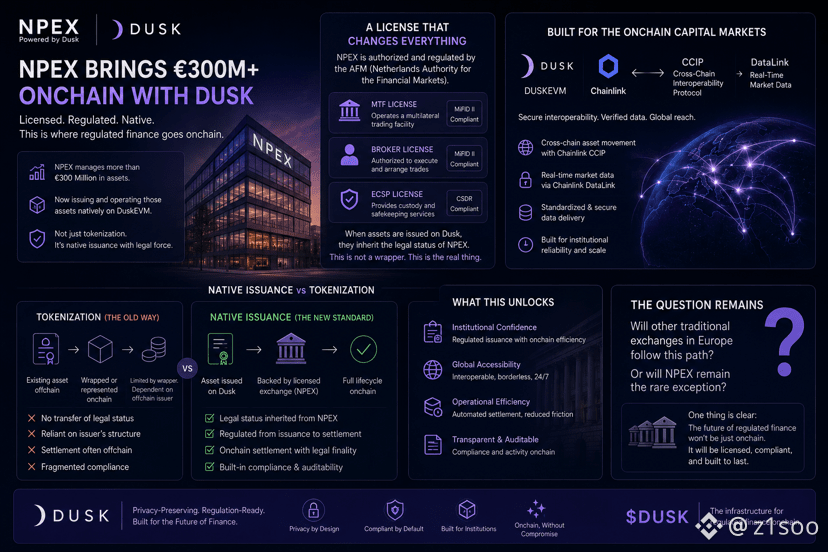
NPEX manages over 300 million EUR in assets, and they’re moving all of it on-chain via @dusk.
What I find different isn’t the numbers, but the kind of NPEX license they carry. NPEX is a trading venue licensed by the AFM; it is both an MTF and a broker, and it also holds an ECSP license. When assets are issued through Dusk, they don’t just get tokenized by wrapping an already-existing security—they directly inherit the legal status of that licensed venue.
This is the difference between tokenization and native issuance that many RWA projects often lump together. Tokenization packages assets that already exist. Native issuance moves the entire asset lifecycle, from issuance to settlement, onto the chain from the very beginning.
Dusk also integrates Chainlink CCIP and DataLink to standardize cross-chain interoperability and real-time market data for NPEX assets issued on DuskEVM.
I’m still leaving one question open: will other traditional securities venues across Europe follow this direction, or will NPEX remain a rare exception?
#dusk $DUSK @Dusk
NPEX manages over 300 million EUR in assets, and they’re moving all of it on-chain via @dusk.
What I find different isn’t the numbers, but the kind of NPEX license they carry. NPEX is a trading venue licensed by the AFM; it is both an MTF and a broker, and it also holds an ECSP license. When assets are issued through Dusk, they don’t just get tokenized by wrapping an already-existing security—they directly inherit the legal status of that licensed venue.
This is the difference between tokenization and native issuance that many RWA projects often lump together. Tokenization packages assets that already exist. Native issuance moves the entire asset lifecycle, from issuance to settlement, onto the chain from the very beginning.
Dusk also integrates Chainlink CCIP and DataLink to standardize cross-chain interoperability and real-time market data for NPEX assets issued on DuskEVM.
I’m still leaving one question open: will other traditional securities venues across Europe follow this direction, or will NPEX remain a rare exception?
NPEX manages over 300 million EUR in assets, and they’re moving all of it on-chain via @dusk.
What I find different isn’t the numbers, but the kind of NPEX license they carry. NPEX is a trading venue licensed by the AFM; it is both an MTF and a broker, and it also holds an ECSP license. When assets are issued through Dusk, they don’t just get tokenized by wrapping an already-existing security—they directly inherit the legal status of that licensed venue.
This is the difference between tokenization and native issuance that many RWA projects often lump together. Tokenization packages assets that already exist. Native issuance moves the entire asset lifecycle, from issuance to settlement, onto the chain from the very beginning.
Dusk also integrates Chainlink CCIP and DataLink to standardize cross-chain interoperability and real-time market data for NPEX assets issued on DuskEVM.
I’m still leaving one question open: will other traditional securities venues across Europe follow this direction, or will NPEX remain a rare exception?
1
79
·
--
#binancep2pantoan @Binance_Vietnam
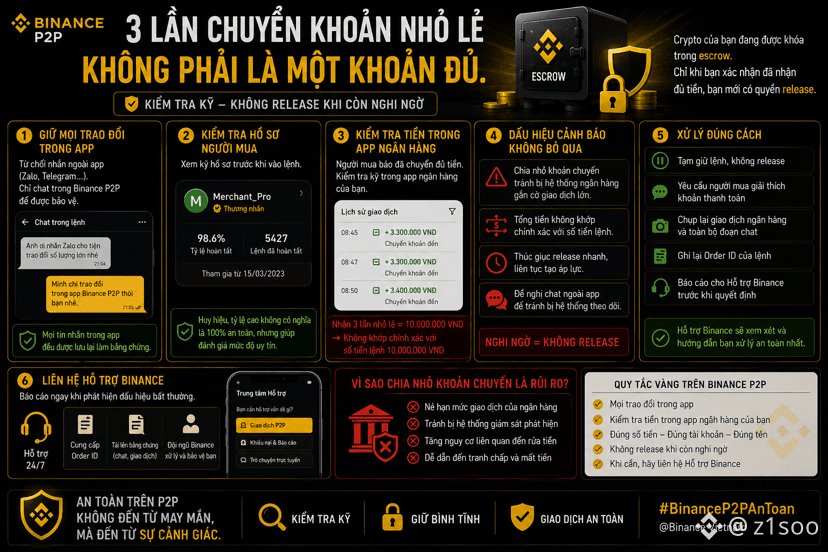
I once received three small transfers instead of one complete payment, and I almost didn’t notice the anomaly.
I sold USDT, and the order matched with a buyer who seemed normal. Right from the start, they suggested messaging on Zalo “for convenience when dealing with large quantities.” I refused and kept all communication within the Binance P2P app, because only there does the system record and protect me if anything goes wrong.
Before proceeding with the trade, I checked the buyer’s profile. The account has a merchant badge, a high number of completed orders, and generally looks trustworthy. I felt slightly more at ease.
The buyer claimed they had transferred the full amount, but when I opened my banking app to check, I only saw three small transactions that added up to roughly the right total—yet did not match the order amount exactly. Splitting the payment into smaller transfers is a way to avoid the banking system flagging large transactions, a sign I couldn’t ignore.
I paused the order, asked the buyer to explain, and then reported the situation to Binance Support before deciding whether to release.
Have you ever seen a payment that was split into unusually small parts?
#binancep2pantoan @Binance Vietnam
I once received three small transfers instead of one complete payment, and I almost didn’t notice the anomaly.
I sold USDT, and the order matched with a buyer who seemed normal. Right from the start, they suggested messaging on Zalo “for convenience when dealing with large quantities.” I refused and kept all communication within the Binance P2P app, because only there does the system record and protect me if anything goes wrong.
Before proceeding with the trade, I checked the buyer’s profile. The account has a merchant badge, a high number of completed orders, and generally looks trustworthy. I felt slightly more at ease.
The buyer claimed they had transferred the full amount, but when I opened my banking app to check, I only saw three small transactions that added up to roughly the right total—yet did not match the order amount exactly. Splitting the payment into smaller transfers is a way to avoid the banking system flagging large transactions, a sign I couldn’t ignore.
I paused the order, asked the buyer to explain, and then reported the situation to Binance Support before deciding whether to release.
Have you ever seen a payment that was split into unusually small parts?
I once received three small transfers instead of one complete payment, and I almost didn’t notice the anomaly.
I sold USDT, and the order matched with a buyer who seemed normal. Right from the start, they suggested messaging on Zalo “for convenience when dealing with large quantities.” I refused and kept all communication within the Binance P2P app, because only there does the system record and protect me if anything goes wrong.
Before proceeding with the trade, I checked the buyer’s profile. The account has a merchant badge, a high number of completed orders, and generally looks trustworthy. I felt slightly more at ease.
The buyer claimed they had transferred the full amount, but when I opened my banking app to check, I only saw three small transactions that added up to roughly the right total—yet did not match the order amount exactly. Splitting the payment into smaller transfers is a way to avoid the banking system flagging large transactions, a sign I couldn’t ignore.
I paused the order, asked the buyer to explain, and then reported the situation to Binance Support before deciding whether to release.
Have you ever seen a payment that was split into unusually small parts?
1
234
·
--
#dusk $DUSK @Dusk_Foundation
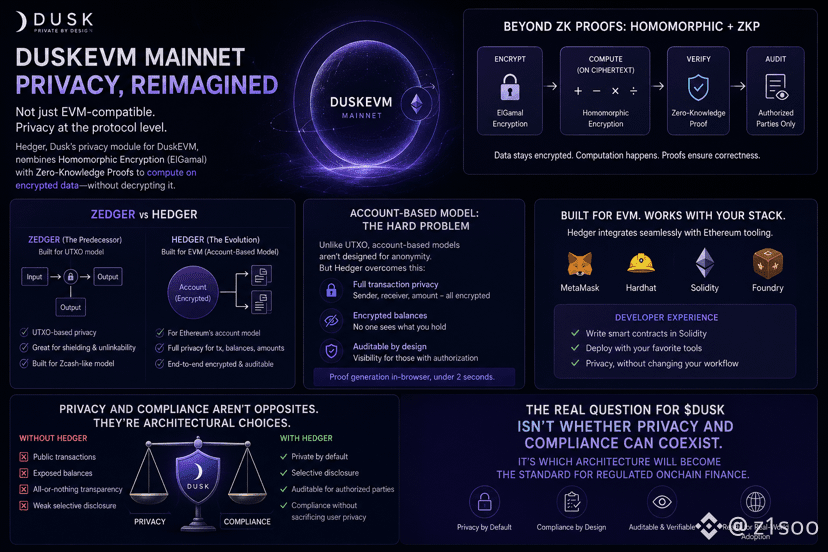
DuskEVM mainnet is about to launch, and the notable details aren’t about whether it’s compatible with EVM, but about how it handles privacy.
Most of the privacy systems in DeFi today rely solely on zero-knowledge proofs. Hedger, the privacy module of @dusk for DuskEVM, takes a different approach: it combines ElGamal-based homomorphic encryption with ZKP to compute on encrypted data without needing to decrypt it.
Zedger, Hedger’s predecessor, was built for the UTXO model. Hedger, in contrast, is built specifically for the account-based model of the EVM, integrating directly into standard Ethereum tooling such as MetaMask and Hardhat.
The challenge is that the account-based model doesn’t allow anonymity as completely as UTXO does. But Hedger still provides full transaction privacy: balances and transferred amounts are encrypted end-to-end, while remaining auditable by authorized parties. Proofs are generated directly in the browser, in under 2 seconds.
With $DUSK, the real question isn’t whether compliance and privacy contradict each other, but which architecture will become the standard for governed onchain finance.
#dusk $DUSK @Dusk
DuskEVM mainnet is about to launch, and the notable details aren’t about whether it’s compatible with EVM, but about how it handles privacy.
Most of the privacy systems in DeFi today rely solely on zero-knowledge proofs. Hedger, the privacy module of @dusk for DuskEVM, takes a different approach: it combines ElGamal-based homomorphic encryption with ZKP to compute on encrypted data without needing to decrypt it.
Zedger, Hedger’s predecessor, was built for the UTXO model. Hedger, in contrast, is built specifically for the account-based model of the EVM, integrating directly into standard Ethereum tooling such as MetaMask and Hardhat.
The challenge is that the account-based model doesn’t allow anonymity as completely as UTXO does. But Hedger still provides full transaction privacy: balances and transferred amounts are encrypted end-to-end, while remaining auditable by authorized parties. Proofs are generated directly in the browser, in under 2 seconds.
With $DUSK , the real question isn’t whether compliance and privacy contradict each other, but which architecture will become the standard for governed onchain finance.
DuskEVM mainnet is about to launch, and the notable details aren’t about whether it’s compatible with EVM, but about how it handles privacy.
Most of the privacy systems in DeFi today rely solely on zero-knowledge proofs. Hedger, the privacy module of @dusk for DuskEVM, takes a different approach: it combines ElGamal-based homomorphic encryption with ZKP to compute on encrypted data without needing to decrypt it.
Zedger, Hedger’s predecessor, was built for the UTXO model. Hedger, in contrast, is built specifically for the account-based model of the EVM, integrating directly into standard Ethereum tooling such as MetaMask and Hardhat.
The challenge is that the account-based model doesn’t allow anonymity as completely as UTXO does. But Hedger still provides full transaction privacy: balances and transferred amounts are encrypted end-to-end, while remaining auditable by authorized parties. Proofs are generated directly in the browser, in under 2 seconds.
With $DUSK , the real question isn’t whether compliance and privacy contradict each other, but which architecture will become the standard for governed onchain finance.
65
·
--
#binancep2pantoan @Binance_Vietnam
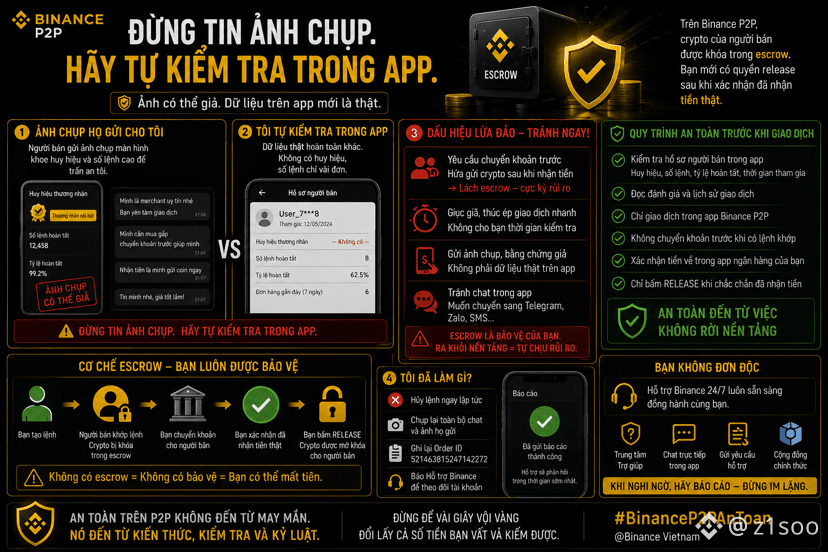
I once almost believed a screenshot of a merchant badge until I checked it again in the app.
I urgently needed to buy some USDT and noticed a price order that looked unusually good. The seller sent me a screenshot showing off a merchant badge, with a high number of completed orders—like a way to reassure me before I placed the order. I almost fell for it because the image looked very professional.
Then I stopped and opened the seller’s profile in the app instead of trusting what they sent. The real account had no badges at all, and the number of completed orders was only a few—most were new that week. The screenshot and the actual data were completely different.
The seller kept urging me to make the transfer first, promising they would “send crypto as soon as they receive the money,” as a way to bypass Binance P2P’s escrow mechanism. I immediately recognized this as a scam sign, because escrow always holds the crypto in advance—not waits for me to transfer money.
I canceled the order, re-captured the entire chat as evidence, and reported it to Binance Support so they could track that account.
Have you ever been asked to transfer money before you see the crypto in escrow?
#binancep2pantoan @Binance Vietnam
I once almost believed a screenshot of a merchant badge until I checked it again in the app.
I urgently needed to buy some USDT and noticed a price order that looked unusually good. The seller sent me a screenshot showing off a merchant badge, with a high number of completed orders—like a way to reassure me before I placed the order. I almost fell for it because the image looked very professional.
Then I stopped and opened the seller’s profile in the app instead of trusting what they sent. The real account had no badges at all, and the number of completed orders was only a few—most were new that week. The screenshot and the actual data were completely different.
The seller kept urging me to make the transfer first, promising they would “send crypto as soon as they receive the money,” as a way to bypass Binance P2P’s escrow mechanism. I immediately recognized this as a scam sign, because escrow always holds the crypto in advance—not waits for me to transfer money.
I canceled the order, re-captured the entire chat as evidence, and reported it to Binance Support so they could track that account.
Have you ever been asked to transfer money before you see the crypto in escrow?
I once almost believed a screenshot of a merchant badge until I checked it again in the app.
I urgently needed to buy some USDT and noticed a price order that looked unusually good. The seller sent me a screenshot showing off a merchant badge, with a high number of completed orders—like a way to reassure me before I placed the order. I almost fell for it because the image looked very professional.
Then I stopped and opened the seller’s profile in the app instead of trusting what they sent. The real account had no badges at all, and the number of completed orders was only a few—most were new that week. The screenshot and the actual data were completely different.
The seller kept urging me to make the transfer first, promising they would “send crypto as soon as they receive the money,” as a way to bypass Binance P2P’s escrow mechanism. I immediately recognized this as a scam sign, because escrow always holds the crypto in advance—not waits for me to transfer money.
I canceled the order, re-captured the entire chat as evidence, and reported it to Binance Support so they could track that account.
Have you ever been asked to transfer money before you see the crypto in escrow?
104
·
--
#binancep2pantoan @Binance_Vietnam
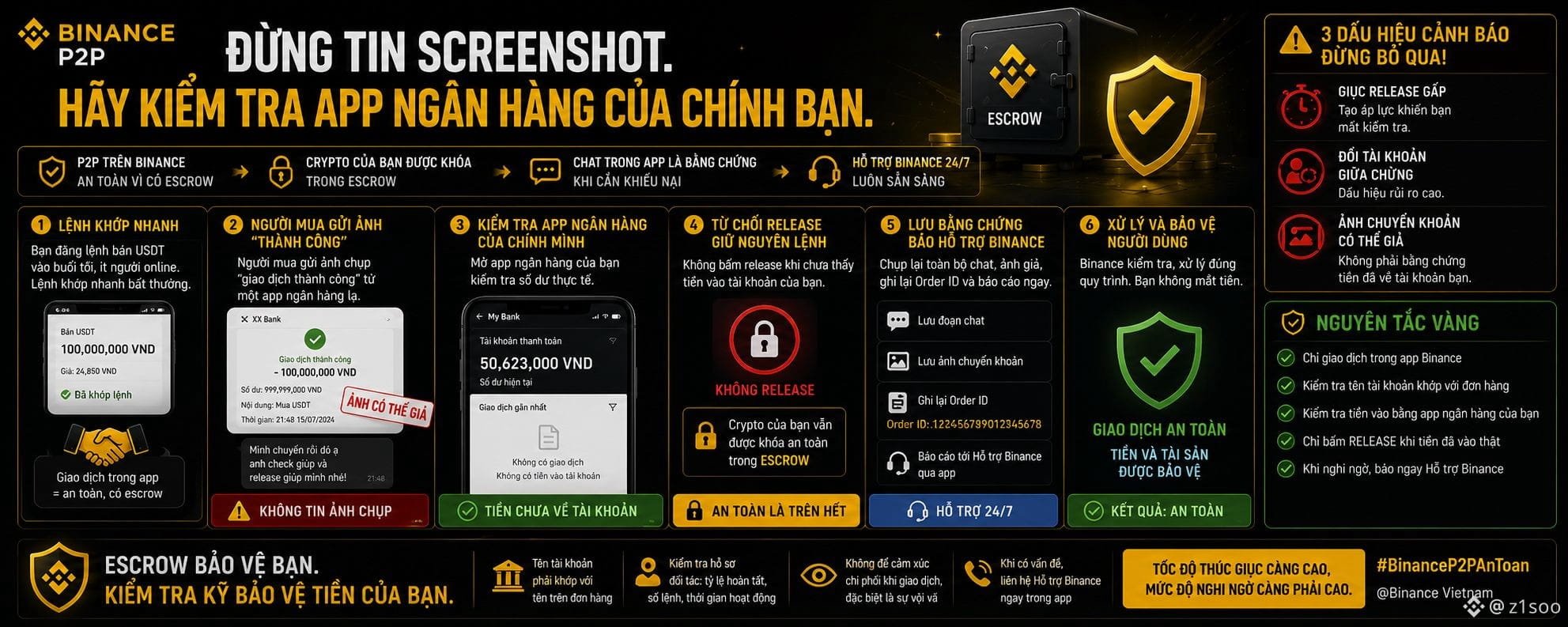
I used to think that a banking app displaying “transaction successful” was enough to feel reassured. One time, a mistaken release taught me otherwise.
I sold USDT to a buyer who seemed familiar with P2P. Their communication was professional, and they responded quickly. I kept the entire exchange within the Binance app—never moved to any other channel—because I knew that only there my order would be protected by escrow and that there would be evidence if needed.
The buyer sent a screenshot of “transaction successful” from a strange banking app, not the bank I use. I was about to release right away because the screenshot looked very real. Luckily, I stopped, opened my own banking app, and checked my balance. There was nothing in it.
I refused to release, kept the order unchanged, took screenshots of the entire chat and those fake images, and then sent a report through Binance Support along with the order ID. A few hours later, the order was processed correctly according to the proper procedure, and I didn’t lose any money.
Since then, I’ve only trusted my own banking app and not any other screenshots.
Do you check your banking app before releasing?
#binancep2pantoan @Binance Vietnam
I used to think that a banking app displaying “transaction successful” was enough to feel reassured. One time, a mistaken release taught me otherwise.
I sold USDT to a buyer who seemed familiar with P2P. Their communication was professional, and they responded quickly. I kept the entire exchange within the Binance app—never moved to any other channel—because I knew that only there my order would be protected by escrow and that there would be evidence if needed.
The buyer sent a screenshot of “transaction successful” from a strange banking app, not the bank I use. I was about to release right away because the screenshot looked very real. Luckily, I stopped, opened my own banking app, and checked my balance. There was nothing in it.
I refused to release, kept the order unchanged, took screenshots of the entire chat and those fake images, and then sent a report through Binance Support along with the order ID. A few hours later, the order was processed correctly according to the proper procedure, and I didn’t lose any money.
Since then, I’ve only trusted my own banking app and not any other screenshots.
Do you check your banking app before releasing?
I used to think that a banking app displaying “transaction successful” was enough to feel reassured. One time, a mistaken release taught me otherwise.
I sold USDT to a buyer who seemed familiar with P2P. Their communication was professional, and they responded quickly. I kept the entire exchange within the Binance app—never moved to any other channel—because I knew that only there my order would be protected by escrow and that there would be evidence if needed.
The buyer sent a screenshot of “transaction successful” from a strange banking app, not the bank I use. I was about to release right away because the screenshot looked very real. Luckily, I stopped, opened my own banking app, and checked my balance. There was nothing in it.
I refused to release, kept the order unchanged, took screenshots of the entire chat and those fake images, and then sent a report through Binance Support along with the order ID. A few hours later, the order was processed correctly according to the proper procedure, and I didn’t lose any money.
Since then, I’ve only trusted my own banking app and not any other screenshots.
Do you check your banking app before releasing?
111
·
--
#binancep2pantoan @Binance_Vietnam
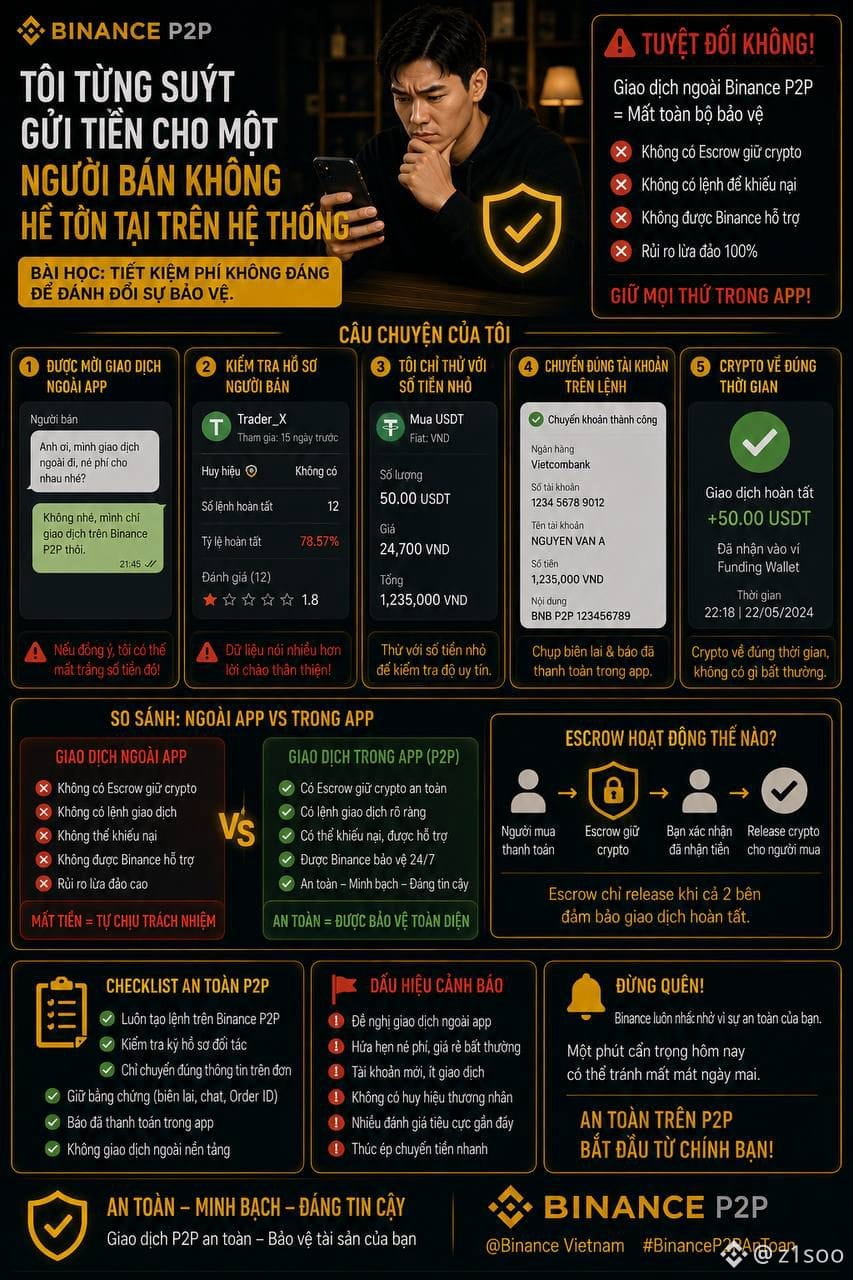
I almost sent money to a seller who didn’t exist at all on the system. That was when I finally understood why Binance always reminds users to keep everything inside the app.
I was buying USDT. The seller proactively messaged me privately, suggesting we place an order outside of Binance P2P to avoid fees. I almost agreed because the amount of money I could save sounded reasonable. Then I thought it through: if the transaction isn’t inside the system, there’s no escrow to hold the crypto, and there’s no order in place to file a complaint if the money is lost. So I refused and insisted on creating an official order.
Before making the transfer, I reviewed the seller’s profile. The account had no merchant badge, had very few completed orders, and had a few recent negative reviews. That information said a lot more than the friendly greeting in the chat.
I still tried with a small amount. I transferred exactly the account number shown on the order, took a screenshot of the receipt, and only then marked it as paid in the app. The crypto arrived on time, with nothing unusual.
My takeaway is that saving on fees isn’t worth risking the protection.
Have you ever been invited to trade outside the app?
#binancep2pantoan @Binance Vietnam
I almost sent money to a seller who didn’t exist at all on the system. That was when I finally understood why Binance always reminds users to keep everything inside the app.
I was buying USDT. The seller proactively messaged me privately, suggesting we place an order outside of Binance P2P to avoid fees. I almost agreed because the amount of money I could save sounded reasonable. Then I thought it through: if the transaction isn’t inside the system, there’s no escrow to hold the crypto, and there’s no order in place to file a complaint if the money is lost. So I refused and insisted on creating an official order.
Before making the transfer, I reviewed the seller’s profile. The account had no merchant badge, had very few completed orders, and had a few recent negative reviews. That information said a lot more than the friendly greeting in the chat.
I still tried with a small amount. I transferred exactly the account number shown on the order, took a screenshot of the receipt, and only then marked it as paid in the app. The crypto arrived on time, with nothing unusual.
My takeaway is that saving on fees isn’t worth risking the protection.
Have you ever been invited to trade outside the app?
I almost sent money to a seller who didn’t exist at all on the system. That was when I finally understood why Binance always reminds users to keep everything inside the app.
I was buying USDT. The seller proactively messaged me privately, suggesting we place an order outside of Binance P2P to avoid fees. I almost agreed because the amount of money I could save sounded reasonable. Then I thought it through: if the transaction isn’t inside the system, there’s no escrow to hold the crypto, and there’s no order in place to file a complaint if the money is lost. So I refused and insisted on creating an official order.
Before making the transfer, I reviewed the seller’s profile. The account had no merchant badge, had very few completed orders, and had a few recent negative reviews. That information said a lot more than the friendly greeting in the chat.
I still tried with a small amount. I transferred exactly the account number shown on the order, took a screenshot of the receipt, and only then marked it as paid in the app. The crypto arrived on time, with nothing unusual.
My takeaway is that saving on fees isn’t worth risking the protection.
Have you ever been invited to trade outside the app?
95
Log in to explore more content
Join global crypto users on Binance Square
⚡️ Get latest and useful information about crypto.
💬 Trusted by the world’s largest crypto exchange.
👍 Discover real insights from verified creators.
Email / Phone number
Trending Topics
BitcoinSpotETFsNetInflow$191M
1,264 views
92 Discussing
🚨 WALL STREET IS STILL BUYING BITCOIN.
U.S. spot Bitcoin ETFs pulled in another $191M in net inflows on Sept. 24, extending their positive streak to 6 straight trading sessions.
And the biggest buyer?
BlackRock’s IBIT — roughly $163M in a single day.
Fidelity’s FBTC added another $12.9M, while total net assets across U.S. spot Bitcoin ETFs climbed to about $108.9B.
The bigger picture is even more interesting:
Over the last 6 sessions, Bitcoin ETFs have absorbed more than $2.8 BILLION — even as BTC cooled after briefly trading above $87K.
That means institutional demand hasn’t disappeared with the pullback.
The pace has slowed from Monday’s massive ~$999M inflow, but money is still moving into Bitcoin instead of running for the exits.
Now the question is simple:
If ETF demand keeps absorbing supply while BTC consolidates… what happens when momentum returns? 👀
$BTC $ZEC $XAU
#BitcoinSpotETFsNetInflow$191M #CFTCUpdatesGuidanceOnTokenizedAssets #BitgetSays$352MAffectedInHack #BinanceWillListHyperliquid(HYPE) #FedProposesRulesForBankIssuedStablecoins
KimHotbae
·0 Likes
·25 views
CFTCUpdatesGuidanceOnTokenizedAssets
13,774 views
606 Discussing
BitgetSays$352MAffectedInHack
3,429 views
49 Discussing