
火星之路
210 Posts
火星之路
Report
Block User
坚定看好spacex
16 Following
22 Followers
28 Liked
Posts
All
Quotes
Videos
·
--
$SPCX
【Launch Department Competitor Updates】
At 14:26 on September 15, 2026, Beijing time, the upgraded Zhaque-2 Yao-7 launch vehicle lifted off from the Dongfeng Commercial Aerospace Innovation Test Area. It carried a total of 10 satellites from the Qianfan polar-orbit 19-group, and successfully placed them into their designated orbits. The mission was a complete success.
$SPCX
【Launch Department Competitor Updates】
At 14:26 on September 15, 2026, Beijing time, the upgraded Zhaque-2 Yao-7 launch vehicle lifted off from the Dongfeng Commercial Aerospace Innovation Test Area. It carried a total of 10 satellites from the Qianfan polar-orbit 19-group, and successfully placed them into their designated orbits. The mission was a complete success.
【Launch Department Competitor Updates】
At 14:26 on September 15, 2026, Beijing time, the upgraded Zhaque-2 Yao-7 launch vehicle lifted off from the Dongfeng Commercial Aerospace Innovation Test Area. It carried a total of 10 satellites from the Qianfan polar-orbit 19-group, and successfully placed them into their designated orbits. The mission was a complete success.
126
·
--
$SPCX
【Launch Department Competitor Updates】
At 09:21 Beijing time on September 15, 2026, Avio will use a Vega-C rocket at the ELV launch facility at the Spaceport in French Guiana to carry out the VV30 mission, delivering the Sentinel-3C and FLEX satellites to the SSO.
Sentinel-3C is an Earth observation satellite constellation developed by the European Space Agency in response to the Copernicus programme. The Copernicus programme (formerly known as “Global Monitoring for Environment and Security”) is aimed at establishing Europe’s Earth observation capability, providing accurate and timely information to European policymakers and public institutions to better manage the environment and understand and mitigate the impacts of climate change.
The European Space Agency’s fluorescence detector (FLEX) will provide information on the health status of global vegetation. FLEX will carry a fluorescence imaging spectrometer named Floris to map global vegetation fluorescence and quantify photosynthetic activity and plant stress conditions. It will detect and measure the light emitted by plants when they convert sunlight and carbon dioxide from the atmosphere into energy. Although this photosynthetic activity is not visible to the naked eye, the instrument will observe vegetation fluorescence, thereby providing important information about plant health. The collected data will be used to deepen our understanding of how carbon transfers between plants and the atmosphere, and how photosynthesis affects the carbon cycle and the water cycle.
$SPCX
【Launch Department Competitor Updates】
At 09:21 Beijing time on September 15, 2026, Avio will use a Vega-C rocket at the ELV launch facility at the Spaceport in French Guiana to carry out the VV30 mission, delivering the Sentinel-3C and FLEX satellites to the SSO.
Sentinel-3C is an Earth observation satellite constellation developed by the European Space Agency in response to the Copernicus programme. The Copernicus programme (formerly known as “Global Monitoring for Environment and Security”) is aimed at establishing Europe’s Earth observation capability, providing accurate and timely information to European policymakers and public institutions to better manage the environment and understand and mitigate the impacts of climate change.
The European Space Agency’s fluorescence detector (FLEX) will provide information on the health status of global vegetation. FLEX will carry a fluorescence imaging spectrometer named Floris to map global vegetation fluorescence and quantify photosynthetic activity and plant stress conditions. It will detect and measure the light emitted by plants when they convert sunlight and carbon dioxide from the atmosphere into energy. Although this photosynthetic activity is not visible to the naked eye, the instrument will observe vegetation fluorescence, thereby providing important information about plant health. The collected data will be used to deepen our understanding of how carbon transfers between plants and the atmosphere, and how photosynthesis affects the carbon cycle and the water cycle.
【Launch Department Competitor Updates】
At 09:21 Beijing time on September 15, 2026, Avio will use a Vega-C rocket at the ELV launch facility at the Spaceport in French Guiana to carry out the VV30 mission, delivering the Sentinel-3C and FLEX satellites to the SSO.
Sentinel-3C is an Earth observation satellite constellation developed by the European Space Agency in response to the Copernicus programme. The Copernicus programme (formerly known as “Global Monitoring for Environment and Security”) is aimed at establishing Europe’s Earth observation capability, providing accurate and timely information to European policymakers and public institutions to better manage the environment and understand and mitigate the impacts of climate change.
The European Space Agency’s fluorescence detector (FLEX) will provide information on the health status of global vegetation. FLEX will carry a fluorescence imaging spectrometer named Floris to map global vegetation fluorescence and quantify photosynthetic activity and plant stress conditions. It will detect and measure the light emitted by plants when they convert sunlight and carbon dioxide from the atmosphere into energy. Although this photosynthetic activity is not visible to the naked eye, the instrument will observe vegetation fluorescence, thereby providing important information about plant health. The collected data will be used to deepen our understanding of how carbon transfers between plants and the atmosphere, and how photosynthesis affects the carbon cycle and the water cycle.
1
·
--
$SPCX
【Launch Department Updates】
At 02:49 Beijing Time on September 14, 2026, SpaceX launched the SES O3b mPOWER mission from Space Launch Complex 40 (SLC-40) at the Cape Canaveral Space Force Station in Florida, placing it into medium Earth orbit.
The first-stage booster used for this mission is B1080, marking the 29th flight of this booster. Previously, it has flown on the Ax-2, Euclid, Ax-3, CRS-30, SES ASTRA 1P, NG-21 and NG-22 Starlink missions.
After stage separation, the first-stage booster landed on the “Of Course I Still Love You” unmanned drone ship located in the Atlantic Ocean.
$SPCX
【Launch Department Updates】
At 02:49 Beijing Time on September 14, 2026, SpaceX launched the SES O3b mPOWER mission from Space Launch Complex 40 (SLC-40) at the Cape Canaveral Space Force Station in Florida, placing it into medium Earth orbit.
The first-stage booster used for this mission is B1080, marking the 29th flight of this booster. Previously, it has flown on the Ax-2, Euclid, Ax-3, CRS-30, SES ASTRA 1P, NG-21 and NG-22 Starlink missions.
After stage separation, the first-stage booster landed on the “Of Course I Still Love You” unmanned drone ship located in the Atlantic Ocean.
【Launch Department Updates】
At 02:49 Beijing Time on September 14, 2026, SpaceX launched the SES O3b mPOWER mission from Space Launch Complex 40 (SLC-40) at the Cape Canaveral Space Force Station in Florida, placing it into medium Earth orbit.
The first-stage booster used for this mission is B1080, marking the 29th flight of this booster. Previously, it has flown on the Ax-2, Euclid, Ax-3, CRS-30, SES ASTRA 1P, NG-21 and NG-22 Starlink missions.
After stage separation, the first-stage booster landed on the “Of Course I Still Love You” unmanned drone ship located in the Atlantic Ocean.
247
·
--
$RKLB
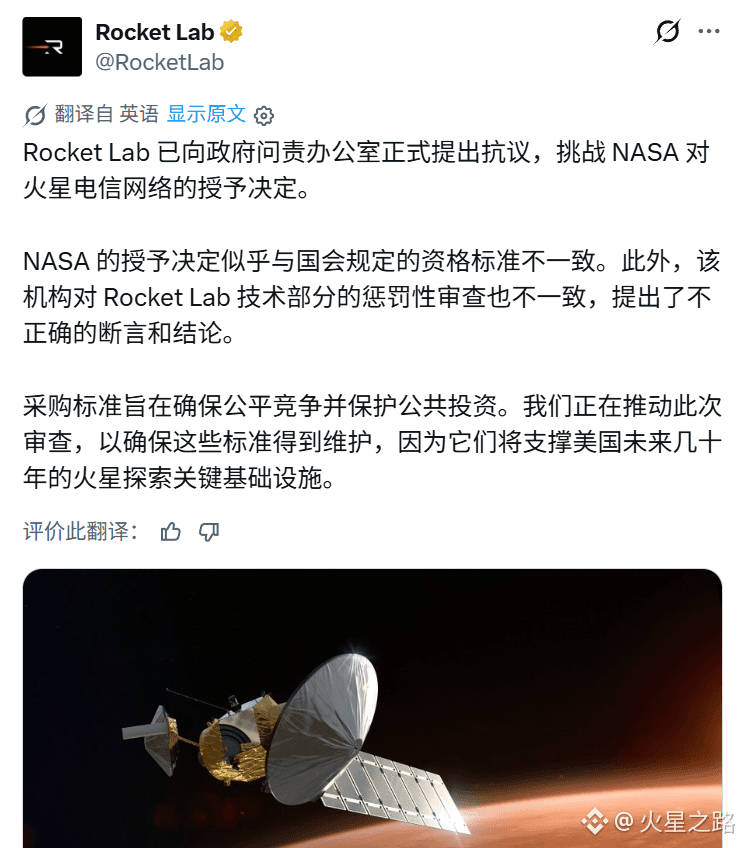
Rocket Lab has submitted a protest to the GAO regarding the previous contract of the Mars network.
I support Rocket Lab filing a protest, but I don’t think Rocket Lab will be able to get what it wants.
My support is based on the principle that, as the contractor, the company is able to raise an objection to the client on equal terms—possibly even to take the matter to court. This is precisely one of the important reasons why American commercial spaceflight has been able to develop. This is also why, in regions outside the United States, compared with the U.S., it will be much more difficult in this regard.
Because the establishment of this kind of “precedent” in the U.S. commercial space industry also has a certain element of happenstance. If, at the time, the Obama administration hadn’t pushed commercial spaceflight, if, at the time, Elon Musk hadn’t been stubborn enough to take the dispute with the military to court, and if NASA hadn’t internally had an idea—at the time—of supporting small businesses, the U.S. would likely have been unable to build the industry consensus that exists today.
Of course, supporting the filing of a protest doesn’t mean I believe Rocket Lab can get back the contract or secure another one with similar requirements. Even if Blue Origin is currently still rebuilding its launch capability, Rocket Lab would still be hard-pressed to form comprehensive competitiveness under the conditions of this contract.
$RKLB
Rocket Lab has submitted a protest to the GAO regarding the previous contract of the Mars network.
I support Rocket Lab filing a protest, but I don’t think Rocket Lab will be able to get what it wants.
My support is based on the principle that, as the contractor, the company is able to raise an objection to the client on equal terms—possibly even to take the matter to court. This is precisely one of the important reasons why American commercial spaceflight has been able to develop. This is also why, in regions outside the United States, compared with the U.S., it will be much more difficult in this regard.
Because the establishment of this kind of “precedent” in the U.S. commercial space industry also has a certain element of happenstance. If, at the time, the Obama administration hadn’t pushed commercial spaceflight, if, at the time, Elon Musk hadn’t been stubborn enough to take the dispute with the military to court, and if NASA hadn’t internally had an idea—at the time—of supporting small businesses, the U.S. would likely have been unable to build the industry consensus that exists today.
Of course, supporting the filing of a protest doesn’t mean I believe Rocket Lab can get back the contract or secure another one with similar requirements. Even if Blue Origin is currently still rebuilding its launch capability, Rocket Lab would still be hard-pressed to form comprehensive competitiveness under the conditions of this contract.
Rocket Lab has submitted a protest to the GAO regarding the previous contract of the Mars network.
I support Rocket Lab filing a protest, but I don’t think Rocket Lab will be able to get what it wants.
My support is based on the principle that, as the contractor, the company is able to raise an objection to the client on equal terms—possibly even to take the matter to court. This is precisely one of the important reasons why American commercial spaceflight has been able to develop. This is also why, in regions outside the United States, compared with the U.S., it will be much more difficult in this regard.
Because the establishment of this kind of “precedent” in the U.S. commercial space industry also has a certain element of happenstance. If, at the time, the Obama administration hadn’t pushed commercial spaceflight, if, at the time, Elon Musk hadn’t been stubborn enough to take the dispute with the military to court, and if NASA hadn’t internally had an idea—at the time—of supporting small businesses, the U.S. would likely have been unable to build the industry consensus that exists today.
Of course, supporting the filing of a protest doesn’t mean I believe Rocket Lab can get back the contract or secure another one with similar requirements. Even if Blue Origin is currently still rebuilding its launch capability, Rocket Lab would still be hard-pressed to form comprehensive competitiveness under the conditions of this contract.
379
·
--
$SPCX
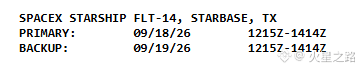
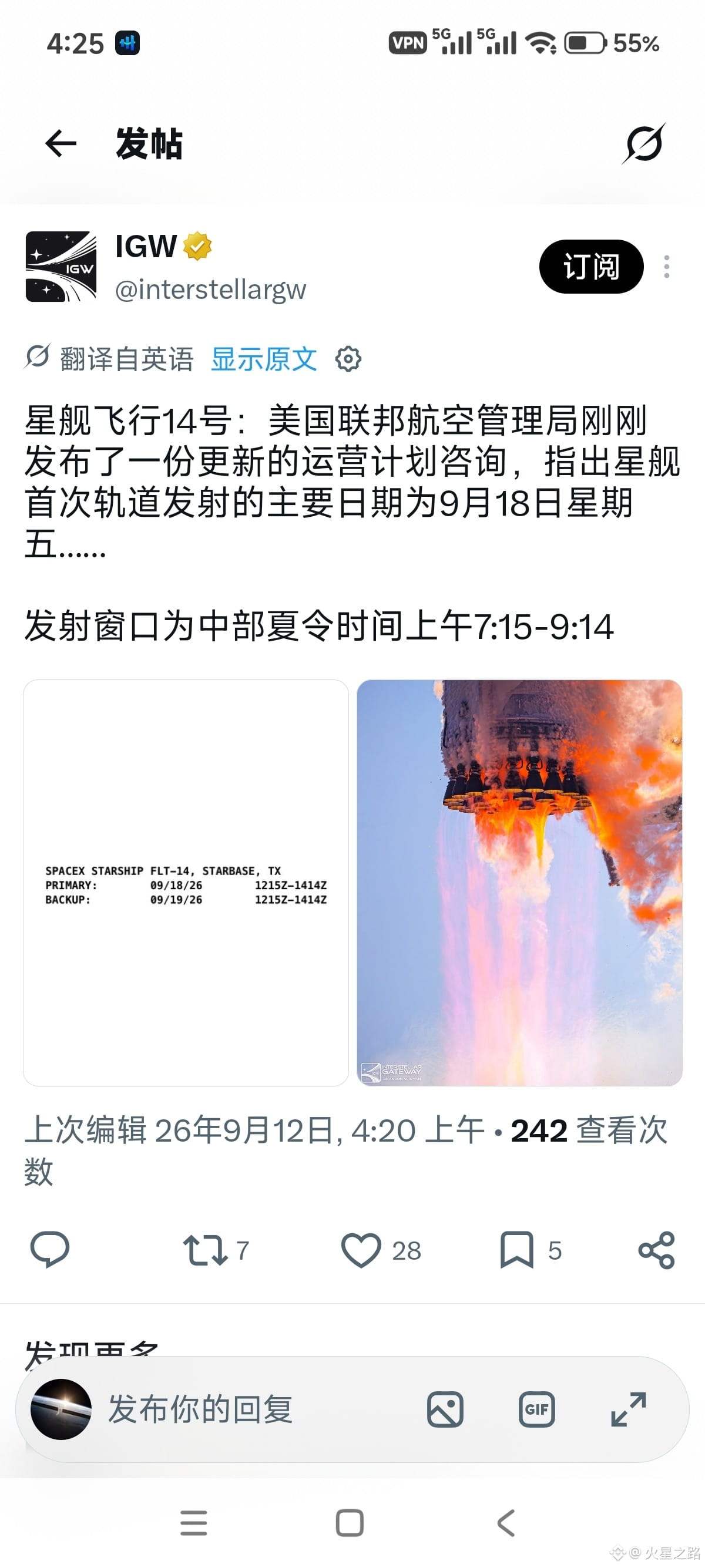
The FAA officially released it, and Starship’s 14th test flight will take place on September 18 local time!
In this flight, Starship will deploy Starlink V3 satellites to form a network
$SPCX
The FAA officially released it, and Starship’s 14th test flight will take place on September 18 local time!
In this flight, Starship will deploy Starlink V3 satellites to form a network
The FAA officially released it, and Starship’s 14th test flight will take place on September 18 local time!
In this flight, Starship will deploy Starlink V3 satellites to form a network
372
·
--
$SPCX $RKLB
【Launch Department Competitor Updates】
At 11:28 Beijing time on September 11, 2026, Rocket Lab launched from the LC-1A launch pad in New Zealand using its Electron rocket, successfully placing BlackSky’s BlackSky Gen-3 Mission 5 satellites into their planned orbit.
$SPCX $RKLB
【Launch Department Competitor Updates】
At 11:28 Beijing time on September 11, 2026, Rocket Lab launched from the LC-1A launch pad in New Zealand using its Electron rocket, successfully placing BlackSky’s BlackSky Gen-3 Mission 5 satellites into their planned orbit.
【Launch Department Competitor Updates】
At 11:28 Beijing time on September 11, 2026, Rocket Lab launched from the LC-1A launch pad in New Zealand using its Electron rocket, successfully placing BlackSky’s BlackSky Gen-3 Mission 5 satellites into their planned orbit.
241
·
--
$SPCX
【AI Department News】
According to an interview with SpaceX CFO Bret Johnsen at the Goldman Sachs conference, SpaceX has completed a new compute power leasing agreement. The agreement will begin in December and will contribute USD 1.11 billion per month
$SPCX
【AI Department News】
According to an interview with SpaceX CFO Bret Johnsen at the Goldman Sachs conference, SpaceX has completed a new compute power leasing agreement. The agreement will begin in December and will contribute USD 1.11 billion per month
【AI Department News】
According to an interview with SpaceX CFO Bret Johnsen at the Goldman Sachs conference, SpaceX has completed a new compute power leasing agreement. The agreement will begin in December and will contribute USD 1.11 billion per month
165
·
--
$SPCX
【Launch Department Updates】
At 23:42 Beijing Time on September 10, 2026, SpaceX used a Falcon 9 rocket to carry out the USSF-153 mission from Vandenberg Air Force Base’s SLC-4E.
The first-stage serial number for this mission was B1087.21. It had previously flown on Crew-7, CRS-29, PACE, Transporter-10, EarthCARE, NROL-186, Transporter-13, TRACERS, NROL-48, the COSMO-SkyMED Second Generation FM3 mission, and 16 Starlink missions. After completing the mission, the booster returned to the OCISLY unmanned recovery vessel.
$SPCX
【Launch Department Updates】
At 23:42 Beijing Time on September 10, 2026, SpaceX used a Falcon 9 rocket to carry out the USSF-153 mission from Vandenberg Air Force Base’s SLC-4E.
The first-stage serial number for this mission was B1087.21. It had previously flown on Crew-7, CRS-29, PACE, Transporter-10, EarthCARE, NROL-186, Transporter-13, TRACERS, NROL-48, the COSMO-SkyMED Second Generation FM3 mission, and 16 Starlink missions. After completing the mission, the booster returned to the OCISLY unmanned recovery vessel.
【Launch Department Updates】
At 23:42 Beijing Time on September 10, 2026, SpaceX used a Falcon 9 rocket to carry out the USSF-153 mission from Vandenberg Air Force Base’s SLC-4E.
The first-stage serial number for this mission was B1087.21. It had previously flown on Crew-7, CRS-29, PACE, Transporter-10, EarthCARE, NROL-186, Transporter-13, TRACERS, NROL-48, the COSMO-SkyMED Second Generation FM3 mission, and 16 Starlink missions. After completing the mission, the booster returned to the OCISLY unmanned recovery vessel.
1
203
·
--
$SPCX
【Launch department competitor updates】
At 17:00 Beijing time on September 10, a Long March 4C rocket ignited and took off from the Jiuquan Satellite Launch Center, after which it placed the Yaogan-53 01-03 satellites and the Yaogan-56 01-03 satellites into their planned orbits. The launch mission was a complete success.
The Yaogan-53 01-03 satellites and the Yaogan-56 01-03 satellites were developed under overall coordination by the Fifth Academy of the China Aerospace Science and Technology Corporation. They are mainly used for scientific experiments, comprehensive surveys of land and resources, estimates of agricultural product yields, and disaster prevention and mitigation.
$SPCX
【Launch department competitor updates】
At 17:00 Beijing time on September 10, a Long March 4C rocket ignited and took off from the Jiuquan Satellite Launch Center, after which it placed the Yaogan-53 01-03 satellites and the Yaogan-56 01-03 satellites into their planned orbits. The launch mission was a complete success.
The Yaogan-53 01-03 satellites and the Yaogan-56 01-03 satellites were developed under overall coordination by the Fifth Academy of the China Aerospace Science and Technology Corporation. They are mainly used for scientific experiments, comprehensive surveys of land and resources, estimates of agricultural product yields, and disaster prevention and mitigation.
【Launch department competitor updates】
At 17:00 Beijing time on September 10, a Long March 4C rocket ignited and took off from the Jiuquan Satellite Launch Center, after which it placed the Yaogan-53 01-03 satellites and the Yaogan-56 01-03 satellites into their planned orbits. The launch mission was a complete success.
The Yaogan-53 01-03 satellites and the Yaogan-56 01-03 satellites were developed under overall coordination by the Fifth Academy of the China Aerospace Science and Technology Corporation. They are mainly used for scientific experiments, comprehensive surveys of land and resources, estimates of agricultural product yields, and disaster prevention and mitigation.
213
·
--
$SPCX
【Launch Department Competitor Updates】
At the International Space Summit held in Paris, Ariane 6 announced several new launch contracts, including:
6 Amazon Leo launch missions, beginning in 2029
2 Eutelsat OneWeb launch missions, scheduled for 2027 and 2028 respectively
Koreasat 9 launch mission, earliest implementation in the second half of 2027
All the above missions will be launched by the Ariane 64 rocket.
$SPCX
【Launch Department Competitor Updates】
At the International Space Summit held in Paris, Ariane 6 announced several new launch contracts, including:
6 Amazon Leo launch missions, beginning in 2029
2 Eutelsat OneWeb launch missions, scheduled for 2027 and 2028 respectively
Koreasat 9 launch mission, earliest implementation in the second half of 2027
All the above missions will be launched by the Ariane 64 rocket.
【Launch Department Competitor Updates】
At the International Space Summit held in Paris, Ariane 6 announced several new launch contracts, including:
6 Amazon Leo launch missions, beginning in 2029
2 Eutelsat OneWeb launch missions, scheduled for 2027 and 2028 respectively
Koreasat 9 launch mission, earliest implementation in the second half of 2027
All the above missions will be launched by the Ariane 64 rocket.
164
·
--
$SPCX
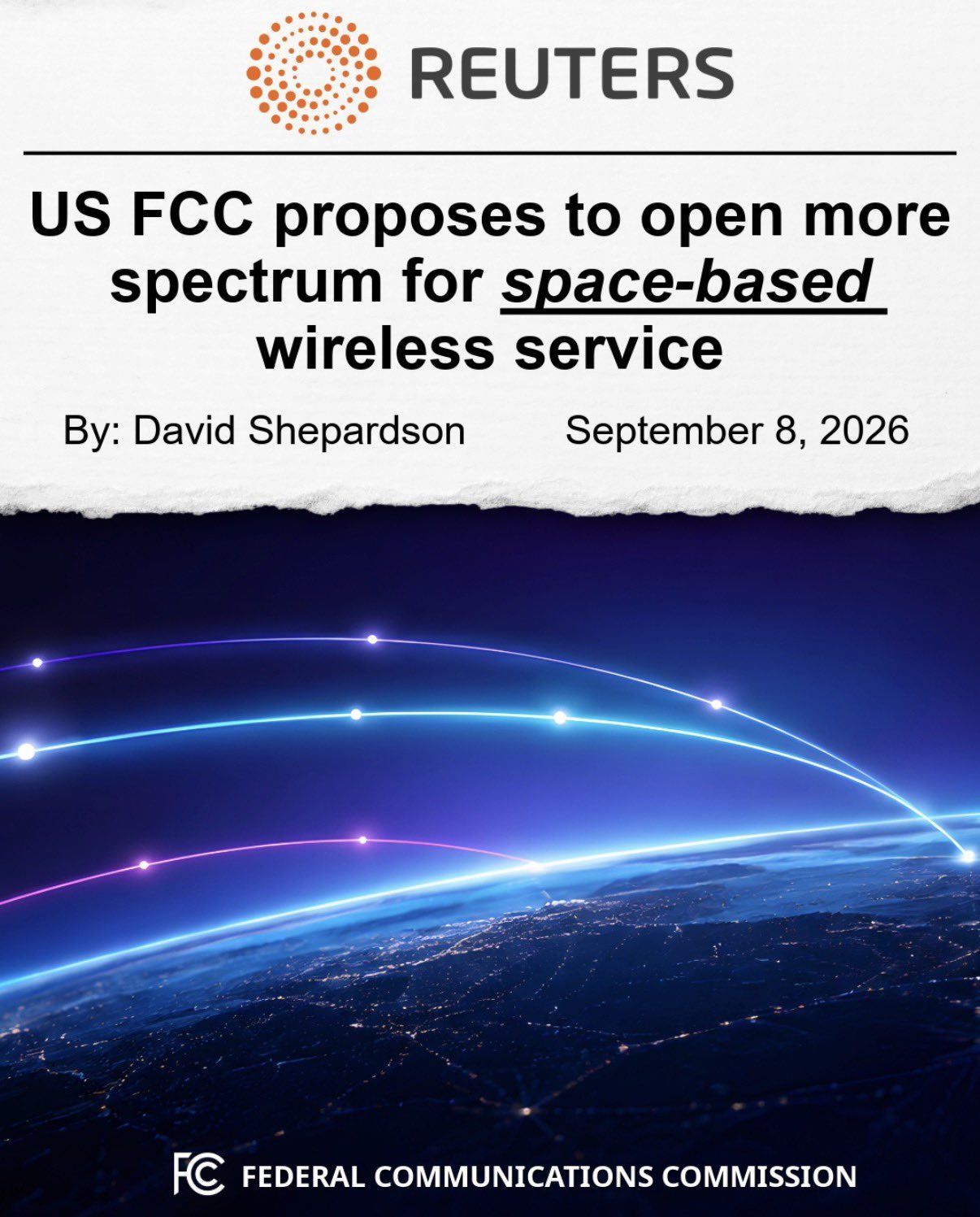
FCC proposes to open more spectrum to support space wireless transmissions
This is directly beneficial for commercial space companies such as SpaceX
$SPCX
FCC proposes to open more spectrum to support space wireless transmissions
This is directly beneficial for commercial space companies such as SpaceX
FCC proposes to open more spectrum to support space wireless transmissions
This is directly beneficial for commercial space companies such as SpaceX
460
·
--
$SPCX
The UK government is also increasing investment in space
The plan is to make space a core focus of UK defense and growth, coordinated by “one government.” By the 2029/30 fiscal year, investment will exceed £7.8 billion, concentrating resources on space-domain awareness, on-orbit servicing, assembly and manufacturing, satellite communications, launch and in-orbit insertion, positioning, navigation and timing, Earth observation, and space science discoveries—along with supporting industry, regulation, alliances, and resilience building
$SPCX
The UK government is also increasing investment in space
The plan is to make space a core focus of UK defense and growth, coordinated by “one government.” By the 2029/30 fiscal year, investment will exceed £7.8 billion, concentrating resources on space-domain awareness, on-orbit servicing, assembly and manufacturing, satellite communications, launch and in-orbit insertion, positioning, navigation and timing, Earth observation, and space science discoveries—along with supporting industry, regulation, alliances, and resilience building
The UK government is also increasing investment in space
The plan is to make space a core focus of UK defense and growth, coordinated by “one government.” By the 2029/30 fiscal year, investment will exceed £7.8 billion, concentrating resources on space-domain awareness, on-orbit servicing, assembly and manufacturing, satellite communications, launch and in-orbit insertion, positioning, navigation and timing, Earth observation, and space science discoveries—along with supporting industry, regulation, alliances, and resilience building

172
·
--
$SPCX
Starlink’s main rival, Amazon Leo, may be facing a series of problems
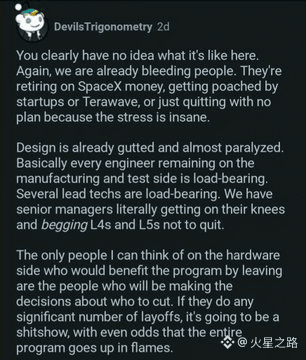
A leak on Reddit指出 that Amazon Leo is currently facing a brain drain crisis among engineers and technical staff, with the issue reportedly triggered mainly by two external factors
First, Blue Origin’s low-Earth-orbit internet constellation project Terawave and other startups are aggressively poaching talent, and employees from the Amazon Leo project are among those being targeted
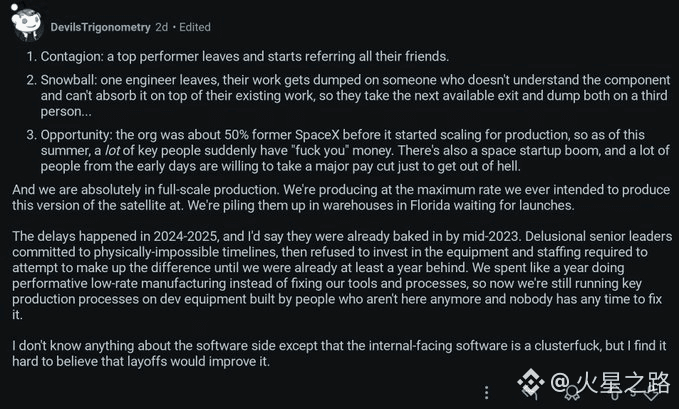
Second, about half of the employees on the Amazon Leo project came from SpaceX. Many of these employees hold incentive stock from SpaceX, so after SpaceX’s IPO in June this year, many key staff suddenly had enough money to “sit back and do nothing,” and many chose to leave
The leak claims that some employees were even willing to take lower-paying jobs because the pressure was too great, just to “escape” the Amazon Leo project. The wave of resignations has also intensified due to a “contagion effect” and a “snowball effect”: once a top-performing employee resigns, they naturally recommend their friends to leave and switch jobs together. At the same time, when one employee leaves, their original work is handed over to employees who are unfamiliar with it and unable to complete the work based on the current foundation, causing pressure within the team to spread and leading even more employees to quit.
$SPCX
Starlink’s main rival, Amazon Leo, may be facing a series of problems
A leak on Reddit指出 that Amazon Leo is currently facing a brain drain crisis among engineers and technical staff, with the issue reportedly triggered mainly by two external factors
First, Blue Origin’s low-Earth-orbit internet constellation project Terawave and other startups are aggressively poaching talent, and employees from the Amazon Leo project are among those being targeted
Second, about half of the employees on the Amazon Leo project came from SpaceX. Many of these employees hold incentive stock from SpaceX, so after SpaceX’s IPO in June this year, many key staff suddenly had enough money to “sit back and do nothing,” and many chose to leave
The leak claims that some employees were even willing to take lower-paying jobs because the pressure was too great, just to “escape” the Amazon Leo project. The wave of resignations has also intensified due to a “contagion effect” and a “snowball effect”: once a top-performing employee resigns, they naturally recommend their friends to leave and switch jobs together. At the same time, when one employee leaves, their original work is handed over to employees who are unfamiliar with it and unable to complete the work based on the current foundation, causing pressure within the team to spread and leading even more employees to quit.
Starlink’s main rival, Amazon Leo, may be facing a series of problems
A leak on Reddit指出 that Amazon Leo is currently facing a brain drain crisis among engineers and technical staff, with the issue reportedly triggered mainly by two external factors
First, Blue Origin’s low-Earth-orbit internet constellation project Terawave and other startups are aggressively poaching talent, and employees from the Amazon Leo project are among those being targeted
Second, about half of the employees on the Amazon Leo project came from SpaceX. Many of these employees hold incentive stock from SpaceX, so after SpaceX’s IPO in June this year, many key staff suddenly had enough money to “sit back and do nothing,” and many chose to leave
The leak claims that some employees were even willing to take lower-paying jobs because the pressure was too great, just to “escape” the Amazon Leo project. The wave of resignations has also intensified due to a “contagion effect” and a “snowball effect”: once a top-performing employee resigns, they naturally recommend their friends to leave and switch jobs together. At the same time, when one employee leaves, their original work is handed over to employees who are unfamiliar with it and unable to complete the work based on the current foundation, causing pressure within the team to spread and leading even more employees to quit.
10
·
--
$SPCX
[Launch Department Update]
At 22:26 Beijing time on September 6, 2026, SpaceX conducted the Starlink Group 15-24 mission from SLC-4E at Vandenberg Space Force Base using Falcon 9, sending 27 Starlink satellites to LEO. Booster B1088.19 has previously flown NROL-126, Transporter-12, SPHEREx, NROL-57, USSF-366, and 13 Starlink missions. After first-stage separation, it will land on the drone ship “Of Course I Still Love You,” stationed in the Pacific.
$SPCX
[Launch Department Update]
At 22:26 Beijing time on September 6, 2026, SpaceX conducted the Starlink Group 15-24 mission from SLC-4E at Vandenberg Space Force Base using Falcon 9, sending 27 Starlink satellites to LEO. Booster B1088.19 has previously flown NROL-126, Transporter-12, SPHEREx, NROL-57, USSF-366, and 13 Starlink missions. After first-stage separation, it will land on the drone ship “Of Course I Still Love You,” stationed in the Pacific.
[Launch Department Update]
At 22:26 Beijing time on September 6, 2026, SpaceX conducted the Starlink Group 15-24 mission from SLC-4E at Vandenberg Space Force Base using Falcon 9, sending 27 Starlink satellites to LEO. Booster B1088.19 has previously flown NROL-126, Transporter-12, SPHEREx, NROL-57, USSF-366, and 13 Starlink missions. After first-stage separation, it will land on the drone ship “Of Course I Still Love You,” stationed in the Pacific.
288
·
--
$SPCX
【Launch Department Competitor Update】
Europe has completed its first commercial space launch into orbit.
At around 4:00 a.m. Beijing time on September 6, 2026, Isar Aerospace successfully launched the Spectrum rocket from Andøya Spaceport in Norway and successfully placed it into orbit.
The mission, code-named “Onward and Upward,” was the first payload flight of the Spectrum rocket. The rocket carried 5 CubeSats from several universities, including the Technical University of Berlin and the Norwegian University of Science and Technology, as well as one technology demonstration. The mission was supported by the German Aerospace Center’s microlauncher competition and ESA’s Boost! program.
This was Spectrum’s second launch attempt — the first took place on March 30, 2025, but about 30 seconds after liftoff it crashed into the sea due to a loss of attitude control stability. Since then, the second flight mission experienced multiple launch aborts: canceled in January 2026 due to a pressurization valve issue, canceled in April due to a pressure vessel leak, and canceled in June due to an anomaly in the liquid propulsion system. It ultimately achieved orbit on September 5.
The Spectrum rocket is a small two-stage liquid launch vehicle developed by Isar Aerospace. It is 28 meters long, 2 meters in diameter, made of carbon composite materials, and uses liquid oxygen and liquid propane as propellants. The first stage is equipped with nine Aquila engines, and the second stage with one Aquila vacuum engine. Its payload capacity to low Earth orbit is 1,000 kilograms.
$SPCX
【Launch Department Competitor Update】
Europe has completed its first commercial space launch into orbit.
At around 4:00 a.m. Beijing time on September 6, 2026, Isar Aerospace successfully launched the Spectrum rocket from Andøya Spaceport in Norway and successfully placed it into orbit.
The mission, code-named “Onward and Upward,” was the first payload flight of the Spectrum rocket. The rocket carried 5 CubeSats from several universities, including the Technical University of Berlin and the Norwegian University of Science and Technology, as well as one technology demonstration. The mission was supported by the German Aerospace Center’s microlauncher competition and ESA’s Boost! program.
This was Spectrum’s second launch attempt — the first took place on March 30, 2025, but about 30 seconds after liftoff it crashed into the sea due to a loss of attitude control stability. Since then, the second flight mission experienced multiple launch aborts: canceled in January 2026 due to a pressurization valve issue, canceled in April due to a pressure vessel leak, and canceled in June due to an anomaly in the liquid propulsion system. It ultimately achieved orbit on September 5.
The Spectrum rocket is a small two-stage liquid launch vehicle developed by Isar Aerospace. It is 28 meters long, 2 meters in diameter, made of carbon composite materials, and uses liquid oxygen and liquid propane as propellants. The first stage is equipped with nine Aquila engines, and the second stage with one Aquila vacuum engine. Its payload capacity to low Earth orbit is 1,000 kilograms.
【Launch Department Competitor Update】
Europe has completed its first commercial space launch into orbit.
At around 4:00 a.m. Beijing time on September 6, 2026, Isar Aerospace successfully launched the Spectrum rocket from Andøya Spaceport in Norway and successfully placed it into orbit.
The mission, code-named “Onward and Upward,” was the first payload flight of the Spectrum rocket. The rocket carried 5 CubeSats from several universities, including the Technical University of Berlin and the Norwegian University of Science and Technology, as well as one technology demonstration. The mission was supported by the German Aerospace Center’s microlauncher competition and ESA’s Boost! program.
This was Spectrum’s second launch attempt — the first took place on March 30, 2025, but about 30 seconds after liftoff it crashed into the sea due to a loss of attitude control stability. Since then, the second flight mission experienced multiple launch aborts: canceled in January 2026 due to a pressurization valve issue, canceled in April due to a pressure vessel leak, and canceled in June due to an anomaly in the liquid propulsion system. It ultimately achieved orbit on September 5.
The Spectrum rocket is a small two-stage liquid launch vehicle developed by Isar Aerospace. It is 28 meters long, 2 meters in diameter, made of carbon composite materials, and uses liquid oxygen and liquid propane as propellants. The first stage is equipped with nine Aquila engines, and the second stage with one Aquila vacuum engine. Its payload capacity to low Earth orbit is 1,000 kilograms.
245
·
--
$SPCX $MARSCOIN
In the past two days, I’ve seen quite a few token projects that are incentivized based on on-chain tokenized stock trading pairs getting listed on exchanges.
For example, for a token project like Marscoin, whose incentive mechanism is “use trading tax fees to buy $SPCX and then distribute them,” once it gets listed on an exchange, how can it ensure the sustainability of those incentives when on-chain trading is being siphoned off by centralized exchanges? Is it possible to reach an agreement with the exchange so that part of the trading fees for the coin on the centralized exchange can also go into the incentive pool? After all, for this kind of on-chain incentive-based project, if there is no mechanism to ensure incentives after trading volume is siphoned away once it is listed on a centralized exchange, it would be no different from slow suicide.
Although for centralized exchanges, sharing trading fees is no different from taking money away from them, maybe there is still a chance? @heyi @CZ Is this possible?
$SPCX $MARSCOIN
In the past two days, I’ve seen quite a few token projects that are incentivized based on on-chain tokenized stock trading pairs getting listed on exchanges.
For example, for a token project like Marscoin, whose incentive mechanism is “use trading tax fees to buy $SPCX and then distribute them,” once it gets listed on an exchange, how can it ensure the sustainability of those incentives when on-chain trading is being siphoned off by centralized exchanges? Is it possible to reach an agreement with the exchange so that part of the trading fees for the coin on the centralized exchange can also go into the incentive pool? After all, for this kind of on-chain incentive-based project, if there is no mechanism to ensure incentives after trading volume is siphoned away once it is listed on a centralized exchange, it would be no different from slow suicide.
Although for centralized exchanges, sharing trading fees is no different from taking money away from them, maybe there is still a chance? @Yi He @CZ Is this possible?
In the past two days, I’ve seen quite a few token projects that are incentivized based on on-chain tokenized stock trading pairs getting listed on exchanges.
For example, for a token project like Marscoin, whose incentive mechanism is “use trading tax fees to buy $SPCX and then distribute them,” once it gets listed on an exchange, how can it ensure the sustainability of those incentives when on-chain trading is being siphoned off by centralized exchanges? Is it possible to reach an agreement with the exchange so that part of the trading fees for the coin on the centralized exchange can also go into the incentive pool? After all, for this kind of on-chain incentive-based project, if there is no mechanism to ensure incentives after trading volume is siphoned away once it is listed on a centralized exchange, it would be no different from slow suicide.
Although for centralized exchanges, sharing trading fees is no different from taking money away from them, maybe there is still a chance? @Yi He @CZ Is this possible?
257
·
--
$SPCX $MARSCOIN
I have a question: if one of the core incentives of Marscoin is to use the buy and sell transaction tax fees to purchase SpaceX stock tokens and distribute the proceeds, then these buy and sell tax fees are mainly obtained through on-chain transactions. If the token gets listed on exchanges, on-chain trading volume will actually decrease. So how will this part of the project be handled? Also, if the tokens are held in an exchange address, will they be eligible for future distributions as well?
$SPCX $MARSCOIN
I have a question: if one of the core incentives of Marscoin is to use the buy and sell transaction tax fees to purchase SpaceX stock tokens and distribute the proceeds, then these buy and sell tax fees are mainly obtained through on-chain transactions. If the token gets listed on exchanges, on-chain trading volume will actually decrease. So how will this part of the project be handled? Also, if the tokens are held in an exchange address, will they be eligible for future distributions as well?
I have a question: if one of the core incentives of Marscoin is to use the buy and sell transaction tax fees to purchase SpaceX stock tokens and distribute the proceeds, then these buy and sell tax fees are mainly obtained through on-chain transactions. If the token gets listed on exchanges, on-chain trading volume will actually decrease. So how will this part of the project be handled? Also, if the tokens are held in an exchange address, will they be eligible for future distributions as well?
2
670
·
--
$SPCX
Judging from Russia’s Starlink version on tablet-based satellite networking, it’s not as simple a technology as many people think
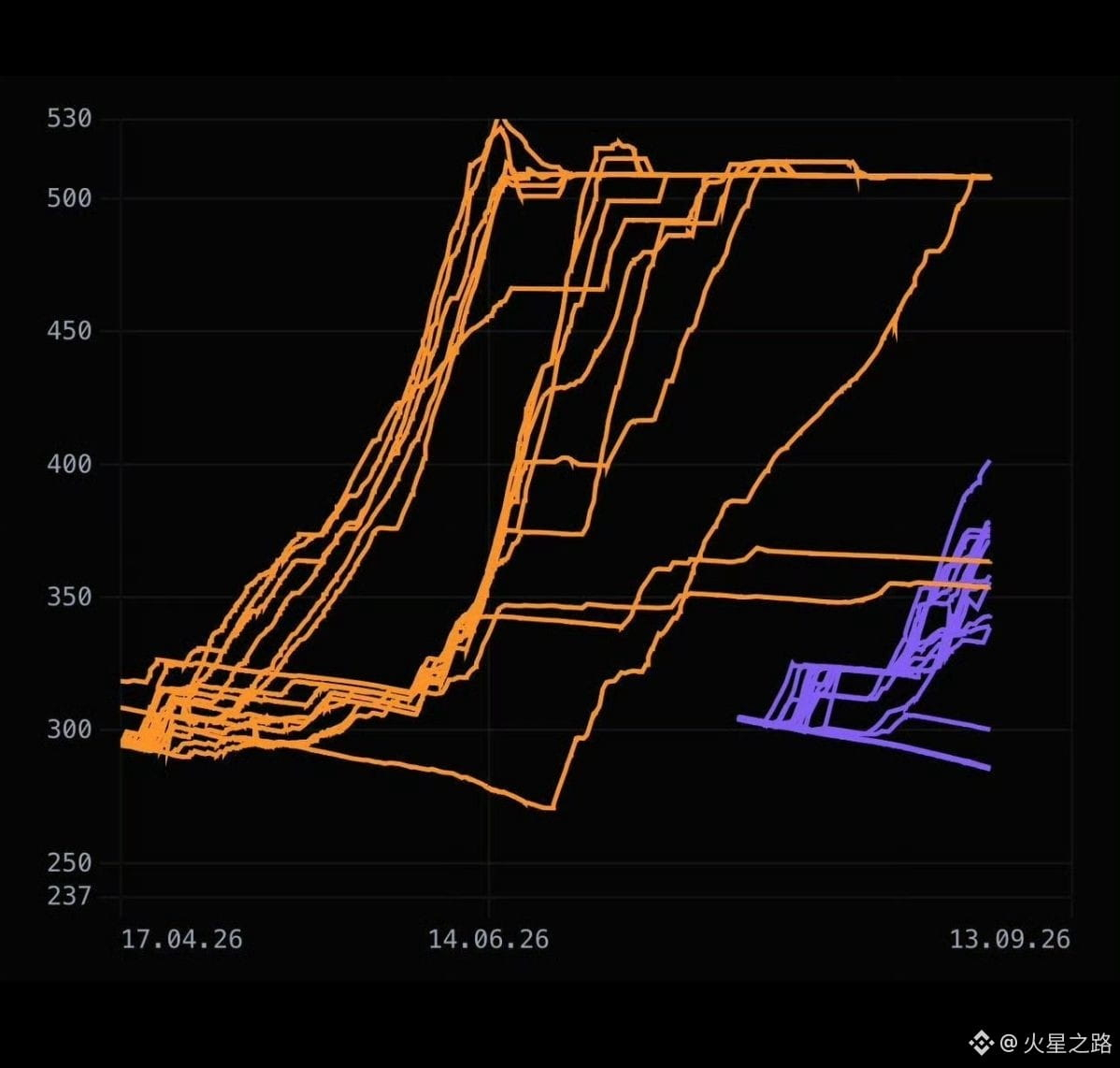
The first batch of “Russian Starlink” satellites—16 in total—was launched on March 23 this year. As of now, none of the satellites has been raised into its operational orbit by about 800 km. Most of them remain at an orbital altitude of around 520 km. Of these, one satellite failed to complete the orbital raising, entered the atmosphere, and burned up. Another two satellites are staying at about 350 km altitude.
The second batch was launched on July 19 this year. Most of the satellites’ orbits are around 350 km, and even two of them have orbital decay below 300 km, facing the risk of reentry and burn-up.
And during China’s Qianfan constellation buildup, group-satellite failures have also occurred. The main issue is with the Qianfan 02 group satellites. At present, this batch of satellites is mainly being used to fill gaps via 15 satellites.
$SPCX
Judging from Russia’s Starlink version on tablet-based satellite networking, it’s not as simple a technology as many people think
The first batch of “Russian Starlink” satellites—16 in total—was launched on March 23 this year. As of now, none of the satellites has been raised into its operational orbit by about 800 km. Most of them remain at an orbital altitude of around 520 km. Of these, one satellite failed to complete the orbital raising, entered the atmosphere, and burned up. Another two satellites are staying at about 350 km altitude.
The second batch was launched on July 19 this year. Most of the satellites’ orbits are around 350 km, and even two of them have orbital decay below 300 km, facing the risk of reentry and burn-up.
And during China’s Qianfan constellation buildup, group-satellite failures have also occurred. The main issue is with the Qianfan 02 group satellites. At present, this batch of satellites is mainly being used to fill gaps via 15 satellites.
Judging from Russia’s Starlink version on tablet-based satellite networking, it’s not as simple a technology as many people think
The first batch of “Russian Starlink” satellites—16 in total—was launched on March 23 this year. As of now, none of the satellites has been raised into its operational orbit by about 800 km. Most of them remain at an orbital altitude of around 520 km. Of these, one satellite failed to complete the orbital raising, entered the atmosphere, and burned up. Another two satellites are staying at about 350 km altitude.
The second batch was launched on July 19 this year. Most of the satellites’ orbits are around 350 km, and even two of them have orbital decay below 300 km, facing the risk of reentry and burn-up.
And during China’s Qianfan constellation buildup, group-satellite failures have also occurred. The main issue is with the Qianfan 02 group satellites. At present, this batch of satellites is mainly being used to fill gaps via 15 satellites.
563
·
--
$SPCX
Just looking purely at the financial statement figures, without any understanding of the company itself, it’s completely normal to have such questions.
As for so-called “financial statement losses,” this is actually clearly explained in the report as well. The losses mainly come from investments in AI and the Starship project. For these two investments, the AI compute infrastructure investment has already been recouped—based on the contracts with OpenAI and Google, for example. Meanwhile, demand for compute capacity, especially compute that can be used immediately, is becoming increasingly tight. SpaceX is currently the fastest company in the U.S. to move from confirming an investment to deploying compute capacity onto the market. So what’s so hard to understand about spending this money?
And as for the Starship project, that really doesn’t need much explanation. As a core capability supporting multiple future SpaceX business lines, it is also humanity’s most advanced space transportation system project so far. Up to now, it has cost just over $10 billion—less than $10 billion, and it has not even used as much of SLS’s old technology as one might expect. The next test flight can basically be confirmed to begin executing the formal Starlink in-orbit networking mission. It fully deserves the “spend a little to do big things” assessment.
As you can see, these two matters that drive the “losses” are all described in the financial report. But if you only look at the financial statements, you can’t derive a concrete evaluation of these two investment projects.
Also, regarding the claim of “no stable profitability”—if you really went to understand the Starlink business, including what I’ve said on my account many times—this business’s demand is far stronger than what many people who supposedly think “there’s no demand” imagine. What mainly holds back Starlink user growth right now is network capacity and terminal production. User numbers basically track SpaceX terminal production. And regional network capacity can only be addressed by the next generation of Starlink satellites, i.e., the satellites that will begin正式 (formally) building the network this very month.
And beyond this ultra-high growth that grows in step with production capacity, Starlink also has an extremely low customer churn rate. This is a “super cash cow” business that contributes a large amount of cash flow every month and keeps increasing the cash flow contribution day by day.
As for the compute leasing business, there’s no need to repeat it again: in the AI era, how scarce “spot compute” is probably doesn’t need further elaboration.
$SPCX
Just looking purely at the financial statement figures, without any understanding of the company itself, it’s completely normal to have such questions.
As for so-called “financial statement losses,” this is actually clearly explained in the report as well. The losses mainly come from investments in AI and the Starship project. For these two investments, the AI compute infrastructure investment has already been recouped—based on the contracts with OpenAI and Google, for example. Meanwhile, demand for compute capacity, especially compute that can be used immediately, is becoming increasingly tight. SpaceX is currently the fastest company in the U.S. to move from confirming an investment to deploying compute capacity onto the market. So what’s so hard to understand about spending this money?
And as for the Starship project, that really doesn’t need much explanation. As a core capability supporting multiple future SpaceX business lines, it is also humanity’s most advanced space transportation system project so far. Up to now, it has cost just over $10 billion—less than $10 billion, and it has not even used as much of SLS’s old technology as one might expect. The next test flight can basically be confirmed to begin executing the formal Starlink in-orbit networking mission. It fully deserves the “spend a little to do big things” assessment.
As you can see, these two matters that drive the “losses” are all described in the financial report. But if you only look at the financial statements, you can’t derive a concrete evaluation of these two investment projects.
Also, regarding the claim of “no stable profitability”—if you really went to understand the Starlink business, including what I’ve said on my account many times—this business’s demand is far stronger than what many people who supposedly think “there’s no demand” imagine. What mainly holds back Starlink user growth right now is network capacity and terminal production. User numbers basically track SpaceX terminal production. And regional network capacity can only be addressed by the next generation of Starlink satellites, i.e., the satellites that will begin正式 (formally) building the network this very month.
And beyond this ultra-high growth that grows in step with production capacity, Starlink also has an extremely low customer churn rate. This is a “super cash cow” business that contributes a large amount of cash flow every month and keeps increasing the cash flow contribution day by day.
As for the compute leasing business, there’s no need to repeat it again: in the AI era, how scarce “spot compute” is probably doesn’t need further elaboration.
Just looking purely at the financial statement figures, without any understanding of the company itself, it’s completely normal to have such questions.
As for so-called “financial statement losses,” this is actually clearly explained in the report as well. The losses mainly come from investments in AI and the Starship project. For these two investments, the AI compute infrastructure investment has already been recouped—based on the contracts with OpenAI and Google, for example. Meanwhile, demand for compute capacity, especially compute that can be used immediately, is becoming increasingly tight. SpaceX is currently the fastest company in the U.S. to move from confirming an investment to deploying compute capacity onto the market. So what’s so hard to understand about spending this money?
And as for the Starship project, that really doesn’t need much explanation. As a core capability supporting multiple future SpaceX business lines, it is also humanity’s most advanced space transportation system project so far. Up to now, it has cost just over $10 billion—less than $10 billion, and it has not even used as much of SLS’s old technology as one might expect. The next test flight can basically be confirmed to begin executing the formal Starlink in-orbit networking mission. It fully deserves the “spend a little to do big things” assessment.
As you can see, these two matters that drive the “losses” are all described in the financial report. But if you only look at the financial statements, you can’t derive a concrete evaluation of these two investment projects.
Also, regarding the claim of “no stable profitability”—if you really went to understand the Starlink business, including what I’ve said on my account many times—this business’s demand is far stronger than what many people who supposedly think “there’s no demand” imagine. What mainly holds back Starlink user growth right now is network capacity and terminal production. User numbers basically track SpaceX terminal production. And regional network capacity can only be addressed by the next generation of Starlink satellites, i.e., the satellites that will begin正式 (formally) building the network this very month.
And beyond this ultra-high growth that grows in step with production capacity, Starlink also has an extremely low customer churn rate. This is a “super cash cow” business that contributes a large amount of cash flow every month and keeps increasing the cash flow contribution day by day.
As for the compute leasing business, there’s no need to repeat it again: in the AI era, how scarce “spot compute” is probably doesn’t need further elaboration.

啊发——反指
·
--
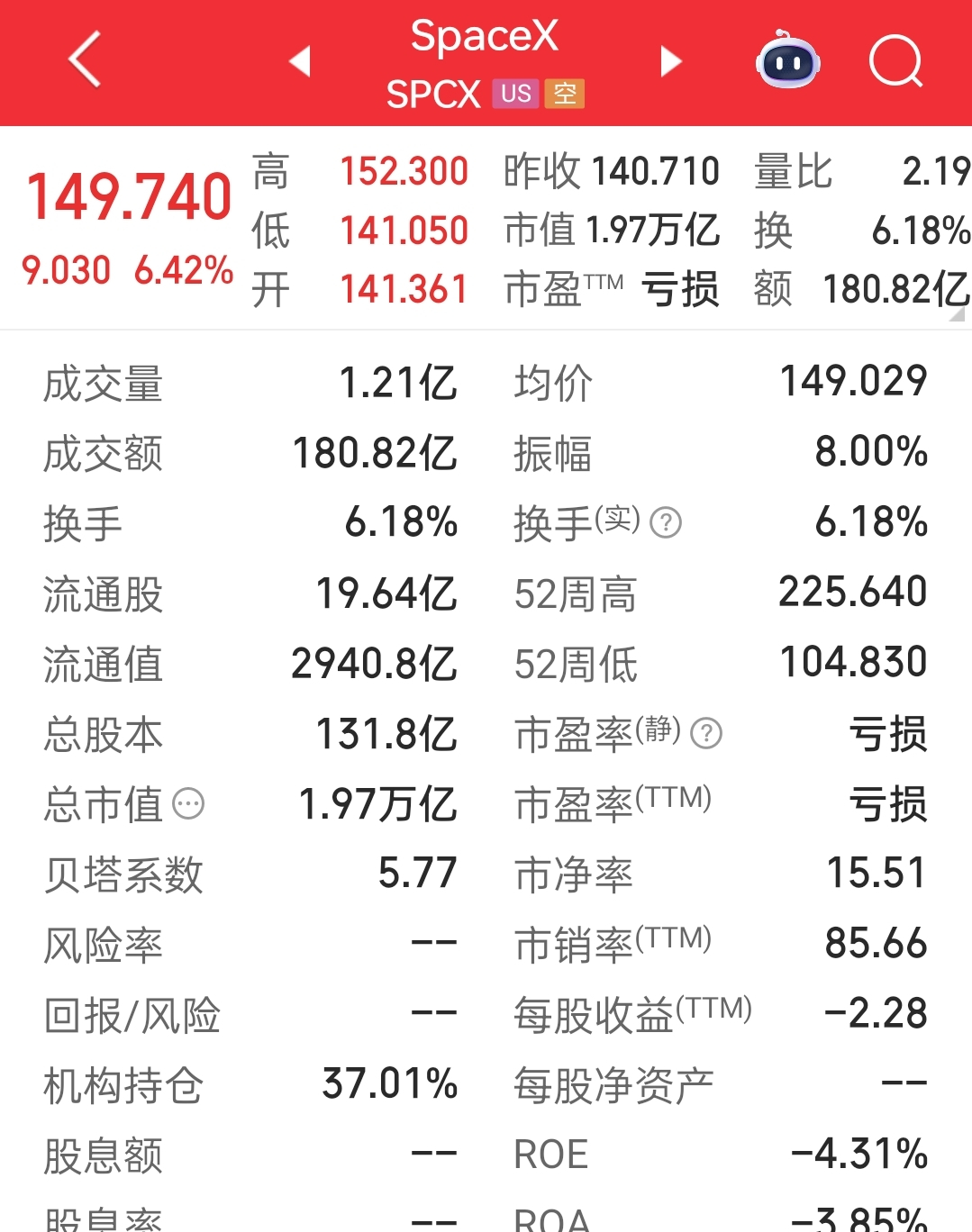
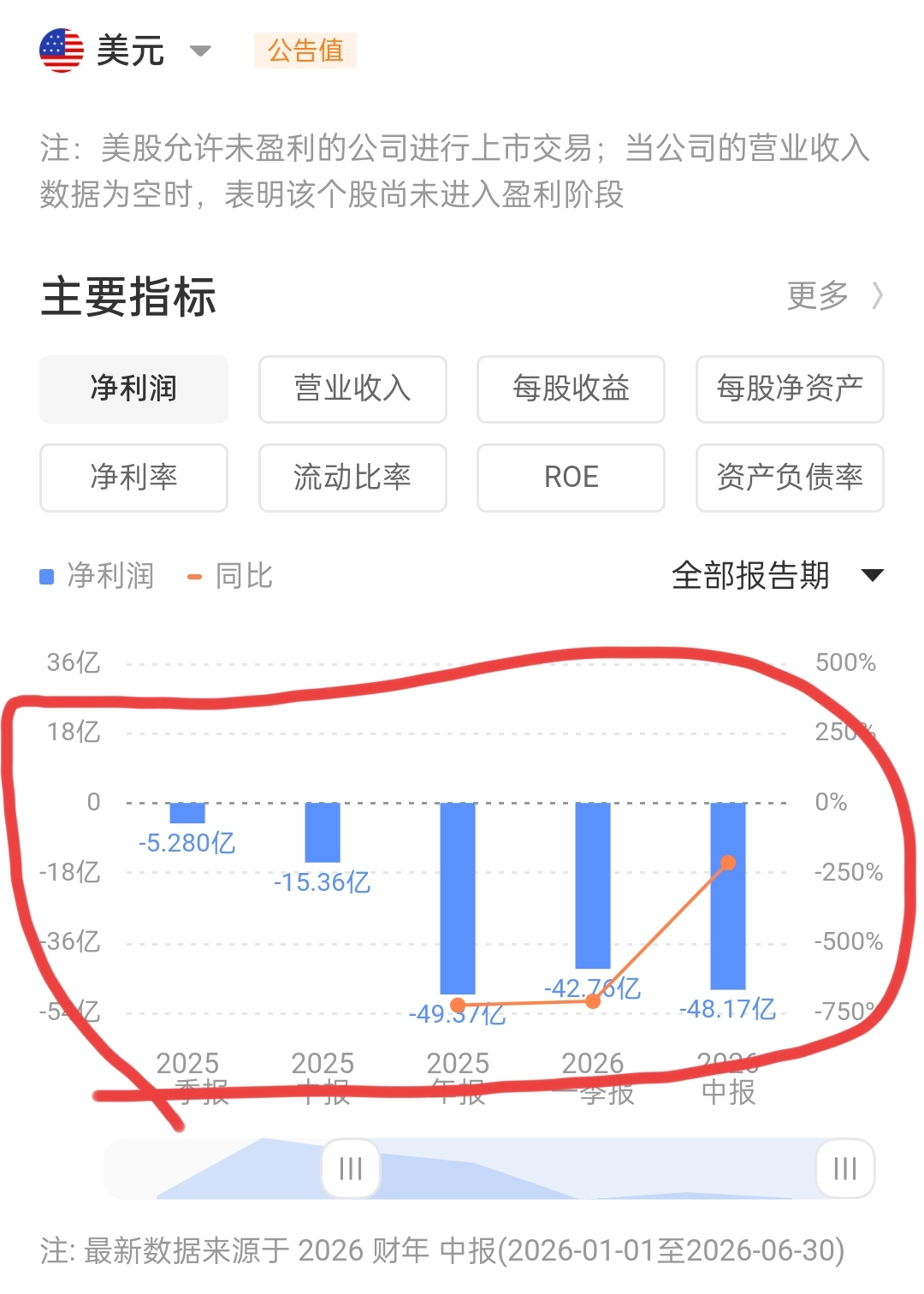
$SPCX It’s really hard to understand—how can its market value surge to nearly two trillion!
The financial reports show losses that worsen year by year; the latest period saw a huge loss of 4.8 billion. It has been bleeding money continuously over the long term, with no ability to achieve stable profitability—it's completely in a money-burning state.
Its price-to-sales ratio is as high as 85x. The valuation is seriously detached from actual operating data, inflated by nothing but hype from the industry outlook, creating a massive bubble.
The financial reports show losses that worsen year by year; the latest period saw a huge loss of 4.8 billion. It has been bleeding money continuously over the long term, with no ability to achieve stable profitability—it's completely in a money-burning state.
Its price-to-sales ratio is as high as 85x. The valuation is seriously detached from actual operating data, inflated by nothing but hype from the industry outlook, creating a massive bubble.
147
·
--
$SPCX
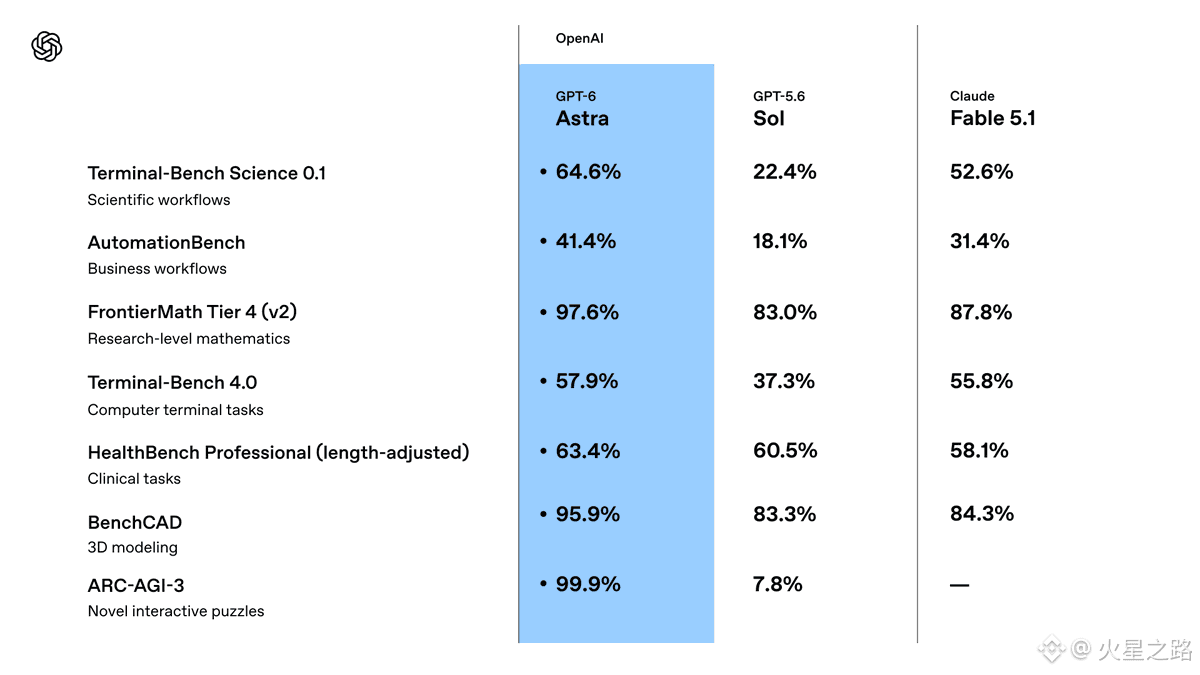
【AI Department Competitor Updates】
OpenAI releases GPT-6 Astra, calling it a key milestone toward achieving general artificial intelligence, with model performance leading in multiple benchmark tests
$SPCX
【AI Department Competitor Updates】
OpenAI releases GPT-6 Astra, calling it a key milestone toward achieving general artificial intelligence, with model performance leading in multiple benchmark tests
【AI Department Competitor Updates】
OpenAI releases GPT-6 Astra, calling it a key milestone toward achieving general artificial intelligence, with model performance leading in multiple benchmark tests
133
Log in to explore more content
Join global crypto users on Binance Square
⚡️ Get latest and useful information about crypto.
💬 Trusted by the world’s largest crypto exchange.
👍 Discover real insights from verified creators.
Email / Phone number
Trending Topics
FedRateWatch
37,913 views
254 Discussing
Share & Win Traffic Reward in our Trending Hashtag Campaign
✨Topic: FOMC September, What's The Fed's Next Move?
👉How to Join:
Publish a short post or article with hashtag #FedRateWatch
Create content based on the below angles:
- August core CPI rose 0.3% month-over-month, and the odds of a 25bp hike this week are now close to 90%. Do you anticipate a rate hike this week? Is it a one-off, or the start of a longer hiking cycle?
- If the hike lands, how does it play out for BTC, tech stocks, and gold? Bullish or bearish?
- How are you planning to trade next? Share your BTC, stocks or gold trade/holdings with our trade sharing widget.
⏰Campaign Period:
- 2026-09-15 11:00 - 2026-09-17 3:00 UTC
🎁Reward:
- Qualified posts that comply with the above guidelines and contain more than 100 words will be reviewed and may receive a random traffic boost of 500 to 3,000 views. You will receive a notification from your feed secretary if your post is selected.
- Get a chance to have your article featured on Binance Square Official
Need ideas for your post? Visit the topic page #FedRateWatch or the Square Guide on How to Post for Better Reach.
Binance Square Official
·77 Likes
·117.8k views
BitcoinReboundsTo$79K
35,363 views
289 Discussing
BessentEndorsesFinalClarityActDraft
3,168 views
141 Discussing