

天佑交易悟道
2.5k Posts
天佑交易悟道
Report
Block User
与时间做朋友,利润是耐心的产物!金融市场慢就是快,做一个情绪稳定的交易员
48 Following
704 Followers
1.6K+ Liked
Posts
All
Quotes
Videos
·
--
Bitcoin Futures Market Data Analysis:
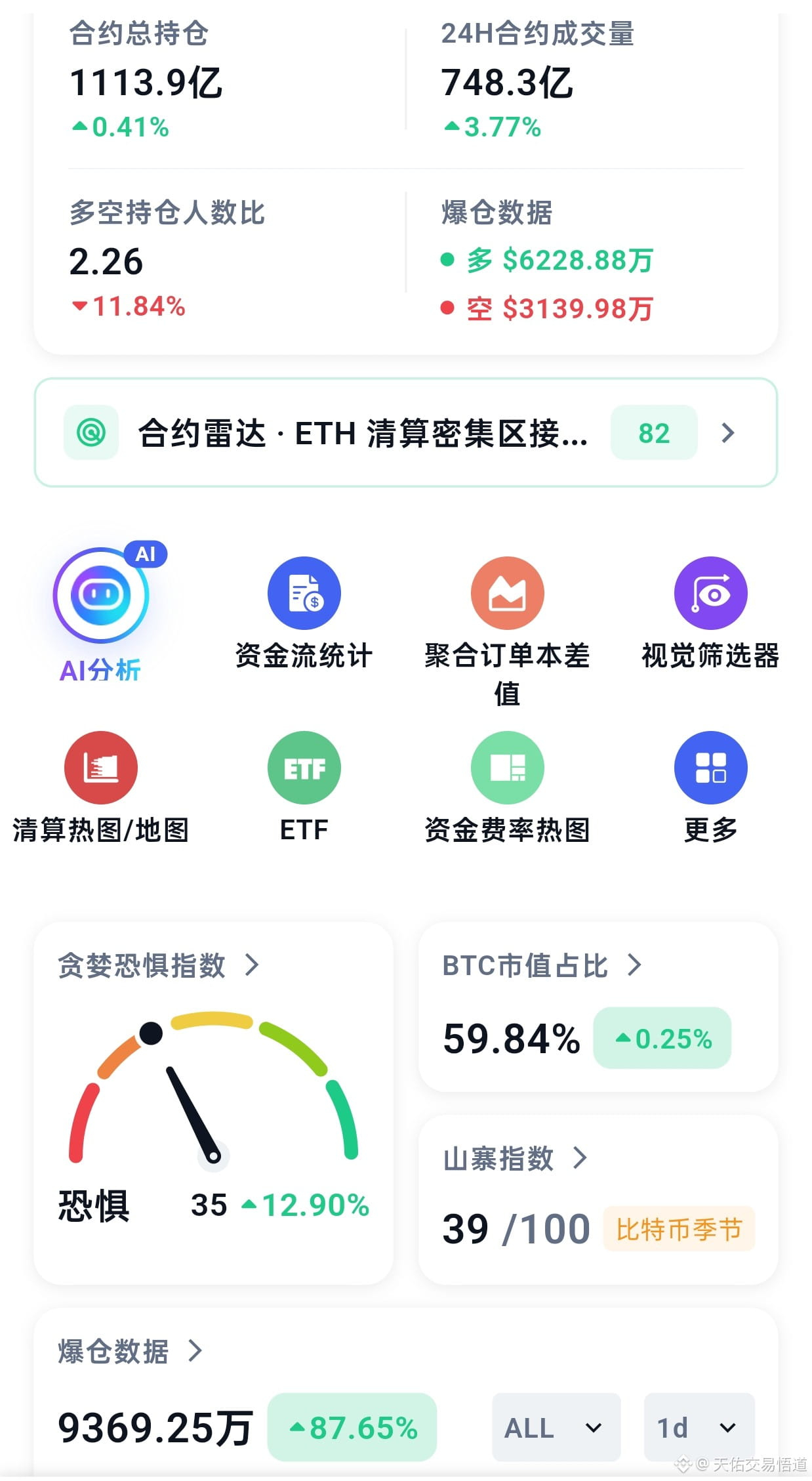
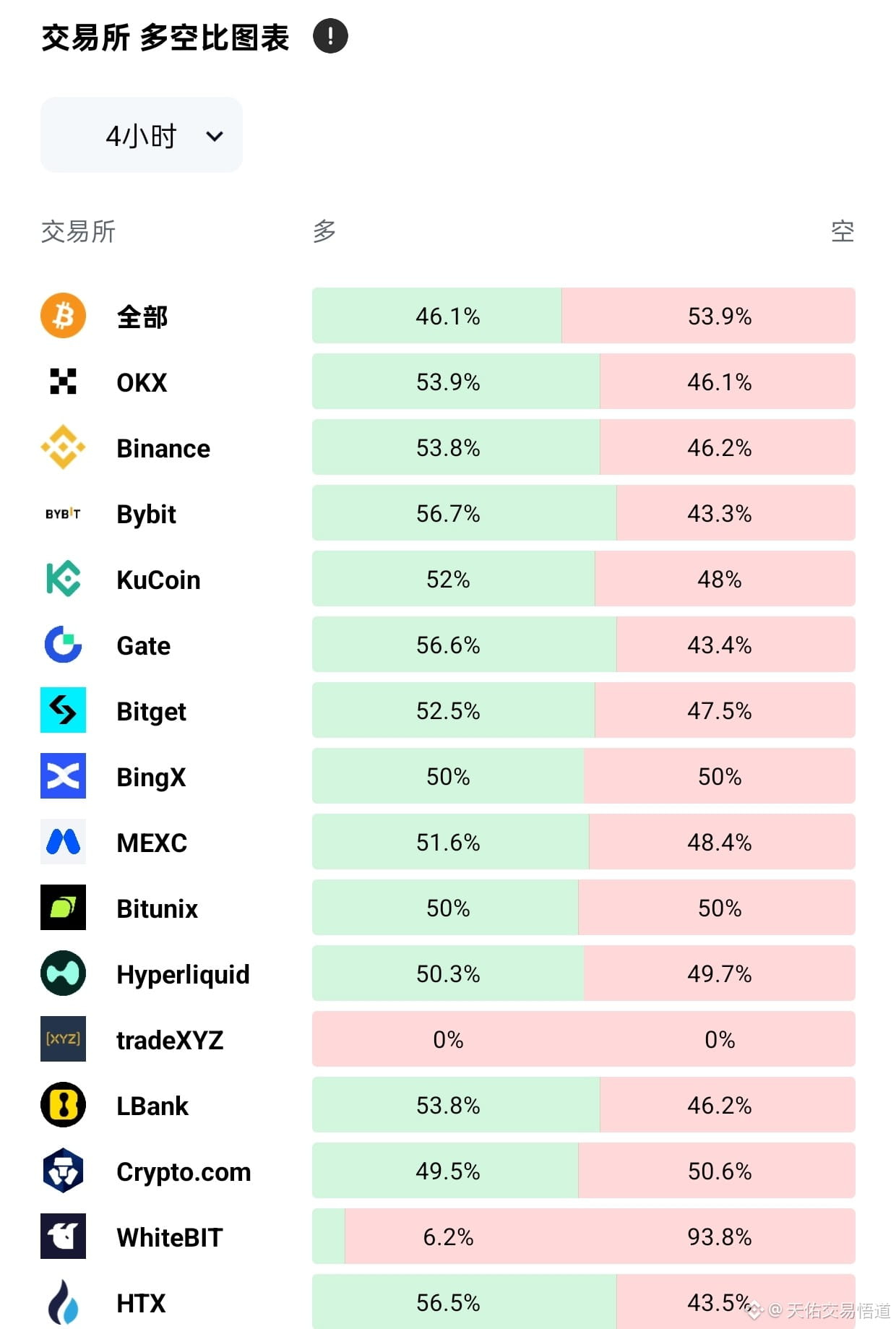
The market is now in a clear fear phase, with the Fear & Greed Index at just 35 and overall confidence subdued. Open interest and trading volume in futures are both rising, and the divide between bulls and bears is widening, making sharp volatility likely. The market as a whole is leaning bearish, but many traders are still holding long positions on major exchanges like Binance and OKX. These opposing flows are colliding, making the market prone to choppy moves that shake traders out.
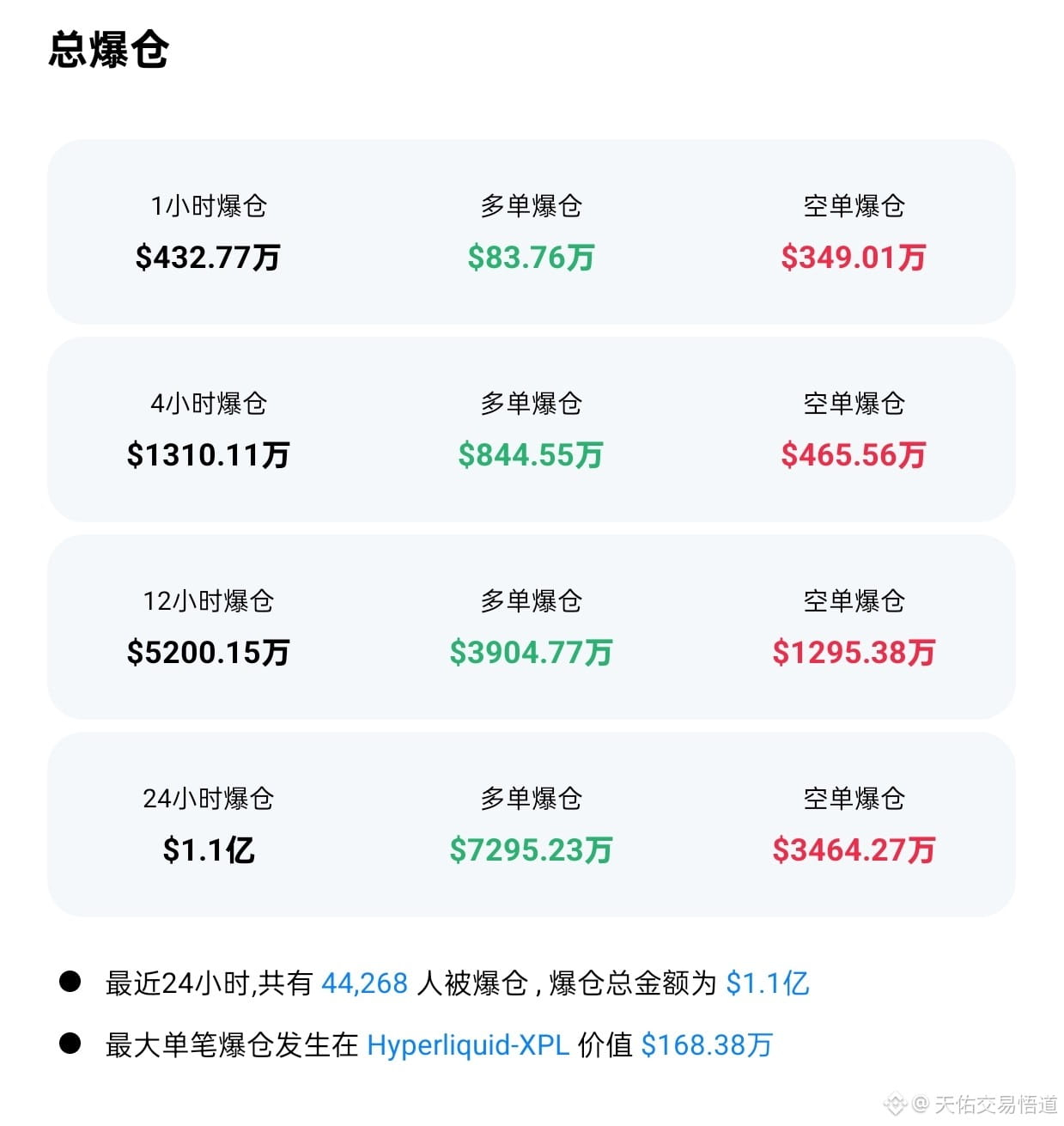
This round is mainly targeting long positions. About $110 million in positions were liquidated over the past 24 hours, with long liquidations far exceeding short liquidations. Over shorter time frames, short positions are also starting to get liquidated—a classic two-way squeeze: a drop wipes out longs, then a rebound shakes out those chasing shorts, repeatedly harvesting leveraged funds on both sides.
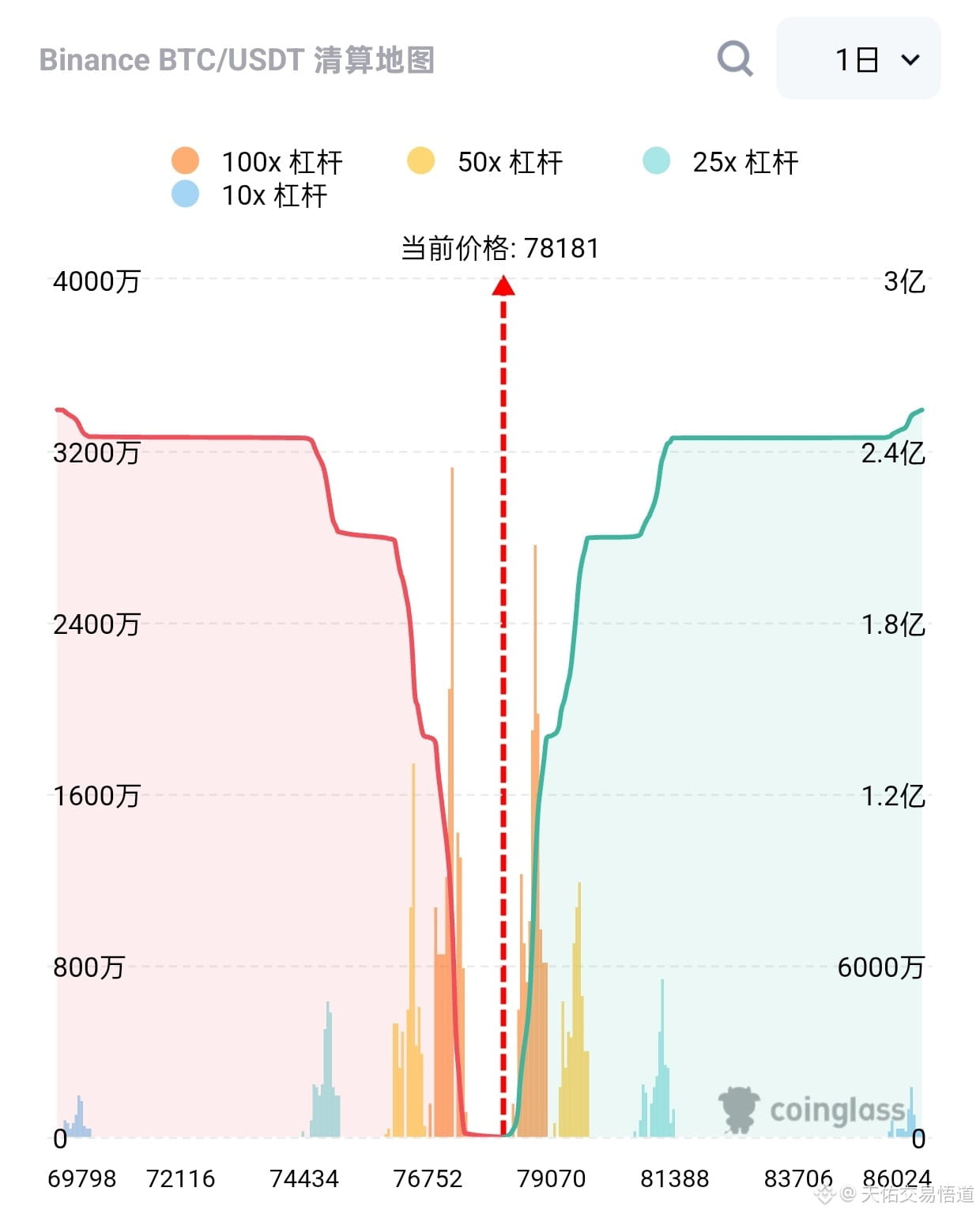
The liquidation map shows the current price at 78,181. Below, a large concentration of long liquidations is clustered between approximately 69,798 and 76,700. If the price continues to fall, this could trigger cascading liquidations and accelerate the decline. Above, a broad zone of short liquidations stretches from approximately 79,000 to 86,024. If the price rebounds and pushes higher, it could liquidate these shorts in succession and spark a rapid rally. Avoid using high leverage at this stage, and don't stubbornly bet on a one-way move. Waiting for the price to decisively break out of these two dense liquidation zones before confirming a direction would be much safer.
196
·
--
Global financial news for November 2:
I. Crypto and virtual assets
1. Domestic regulatory stance: Central authorities have made clear that they will resolutely crack down on all forms of corruption involving virtual currencies.
2. Binance hack: The hackers transferred 486,900 SOL and exchanged it for BTC via Relay Protocol. The FBI identified the “TraderTraitor” group (North Korea) as responsible for stealing over $6 billion in assets from Binance, and urged the entire industry to block transactions involving related addresses.
3. Institutional developments and products: Michael Saylor’s Strategy will continue accumulating Bitcoin, with its holdings set to surpass 850,000 BTC; the Moscow Exchange plans to launch pilot trading in BTC, ETH and USDT on December 1; the UK’s FCA reached a settlement with HTX, which will exit the UK market; TORN surged briefly, gaining over 11% in 24 hours; Aptos continues to burn tokens, destroying 170,100 over 30 days and bringing the cumulative total to over 2 million; the SEC sued BG Wealth and DSJ Exchange, alleging that they raised over $130 million through false filings.
II. Macroeconomics, commodities and overseas finance
1. Gold and the Reserve Bank of Australia: Spot gold rose above $3,900 per ounce, posting a modest gain for the day. Markets broadly expect the Reserve Bank of Australia to raise rates by 25 basis points to 4.85%, a nearly 18-year high, to curb elevated inflation.
2. The yen and hedge funds: Amid coordinated US-Japan pressure on the yen’s depreciation, hedge funds sharply cut their short yen positions, which now stand at only about one-eighth of their previous peak. USD/JPY volatility narrowed significantly in October.
3. US stocks and earnings: Dozens of companies, including Cipher, Tempus AI, Marriott and Estée Lauder, are releasing earnings reports around the same time. The United States has switched to standard time, shifting trading hours for CME Group, US stock futures and US equities later.
4. Share buybacks by domestic listed companies: The wave of buybacks by domestic listed companies continues. More than 200 companies announced buyback plans in October, with a huge combined planned value, and activity surged particularly in the latter part of the month. The first batch of actively managed ETFs has begun building positions, bringing incremental capital to A-shares.
412
·
--
During the first 9.5 hours after Binance resumed withdrawals, it processed $4.649 billion in withdrawals and $1.01 billion in deposits, for a net outflow of about $3.64 billion, or 2.1% of its total assets under management at the time. After peaking, the withdrawal rush gradually subsided, while substantial funds continued to flow in, preventing panic-driven withdrawals from escalating.
The platform began resuming withdrawals in phases at 6:00 a.m. UTC on November 1. By 12:36 p.m., all of the first 15 major networks were open, including those for key assets such as BTC, ETH, USDT, BNB, SOL, and XRP. The remaining channels are still being tested and will be opened in subsequent phases.
Overall, the withdrawal rush was a short-term, concentrated outflow. Outflows accounted for a relatively small share, withdrawals gradually stabilized, and deposits remained steady. Binance also signaled publicly that it believes the market has stabilized, but this reflects only a temporary easing of sentiment and should not be taken as evidence that the market has definitively turned bullish.
350
·
--
Binance delivered on its target, restoring withdrawals for major assets on schedule and then opening withdrawals on another batch of networks: ZEC on Zcash, USDT and GRAM on TON, and SUI on the Sui network.
The networks already reopened cover the vast majority of popular assets, including BTC, Ethereum, BNB Chain, Base, OP, Arbitrum, Tron, Solana, Polygon, Avalanche, and other major chains. They support core assets such as ETH, various stablecoins, XRP, DOGE, ARB, TRX, SOL, and AVAX.
The overall process is still proceeding in batches with security checks. The remaining channels that have yet to reopen are still being reviewed, and all further updates will be shared through official announcements.
418
·
--
See translation
美国FBI网络部门正式发文,认定朝鲜黑客组织制造了10月29日币安超60亿美元资产被盗案件,并将本次攻击行动命名为“TraderTraitor”。本次调查由FBI联合美国特勤局、国税局刑事调查部门共同跟进,锁定了作案主体。
执法机构监测到,黑客正把盗来的大量资产统一兑换成以太坊。后续还会借助DeFi协议、即时兑换平台层层划转,开展链上洗钱,规避资产追踪,为资金洗白铺路。
三家机构向全行业发出拦截通知,要求节点服务商、兑换平台、DeFi项目、区块链分析机构等所有加密服务商,冻结拦截该黑客地址所有关联交易。FBI已经对外公布涉案钱包地址清单,方便全行业共同封堵赃款转移通道。
美国FBI网络部门正式发文,认定朝鲜黑客组织制造了10月29日币安超60亿美元资产被盗案件,并将本次攻击行动命名为“TraderTraitor”。本次调查由FBI联合美国特勤局、国税局刑事调查部门共同跟进,锁定了作案主体。
执法机构监测到,黑客正把盗来的大量资产统一兑换成以太坊。后续还会借助DeFi协议、即时兑换平台层层划转,开展链上洗钱,规避资产追踪,为资金洗白铺路。
三家机构向全行业发出拦截通知,要求节点服务商、兑换平台、DeFi项目、区块链分析机构等所有加密服务商,冻结拦截该黑客地址所有关联交易。FBI已经对外公布涉案钱包地址清单,方便全行业共同封堵赃款转移通道。
执法机构监测到,黑客正把盗来的大量资产统一兑换成以太坊。后续还会借助DeFi协议、即时兑换平台层层划转,开展链上洗钱,规避资产追踪,为资金洗白铺路。
三家机构向全行业发出拦截通知,要求节点服务商、兑换平台、DeFi项目、区块链分析机构等所有加密服务商,冻结拦截该黑客地址所有关联交易。FBI已经对外公布涉案钱包地址清单,方便全行业共同封堵赃款转移通道。
7
·
--
U.S. spot Ethereum ETFs have recorded net outflows for 23 consecutive trading days, setting a new record for the longest streak of withdrawals since the products launched. Leading funds such as BlackRock’s ETHA and Grayscale’s ETHE continue to reduce their holdings and exit, clearly reflecting a sharp decline in traditional financial institutions’ confidence in allocating to Ethereum. Risk-averse investors are now rushing to liquidate their positions.
Nearly a month of sustained outflows has directly dried up incremental buying, leaving the market with noticeably weak support. These persistent outflow figures are circulating throughout the on-chain community, further amplifying a wait-and-see attitude and prompting copycat selling. As a result, Ethereum continues to underperform the broader market, and short-term downward pressure is building. The market alarm has sounded: keep a close eye on critical price levels, manage positions strictly, and prepare for risks.
Nearly a month of sustained outflows has directly dried up incremental buying, leaving the market with noticeably weak support. These persistent outflow figures are circulating throughout the on-chain community, further amplifying a wait-and-see attitude and prompting copycat selling. As a result, Ethereum continues to underperform the broader market, and short-term downward pressure is building. The market alarm has sounded: keep a close eye on critical price levels, manage positions strictly, and prepare for risks.
75
·
--
See translation
这一轮盗走币安六十多亿美元资产的朝鲜黑客,整套选拔培养体系从少年阶段就已经启动。早在小学、初中阶段,有天赋的孩子就会被筛选,送入平壤重点学校,比如平壤第一中学,专门强化数学与计算机基础;当中的尖子生在高中毕业之后,再进入金策工业综合大学、金日成综合大学,或是自动化大学深造。自动化大学正是朝鲜军方专门打造的网络战摇篮,前身就是知名的美林大学,课程集中在编程、网络攻防与黑客技术,整体学制大约五年。学成之后,这批学员统一分配进朝鲜人民军侦察总局下属网络部队,大名鼎鼎的 Lazarus(拉撒路)组织就隶属于这套体系,据韩国情报机构估算,这支网络作战队伍规模在数千至上万人。不少骨干还会外派到中国沈阳、丹东,以及俄罗斯、东南亚各地,伪装成普通 IT 外包人员,一边承接项目赚取外汇,一边伺机发起网络攻击。入选这套体系的人员连同家属,可以落户平壤,获得更好的住房与物资配给;但凡是被外派出境执行任务的人,家人都必须留在国内,相当于一种人质绑定,用来约束人员,防止出现叛逃或者泄密。
这一轮盗走币安六十多亿美元资产的朝鲜黑客,整套选拔培养体系从少年阶段就已经启动。早在小学、初中阶段,有天赋的孩子就会被筛选,送入平壤重点学校,比如平壤第一中学,专门强化数学与计算机基础;当中的尖子生在高中毕业之后,再进入金策工业综合大学、金日成综合大学,或是自动化大学深造。自动化大学正是朝鲜军方专门打造的网络战摇篮,前身就是知名的美林大学,课程集中在编程、网络攻防与黑客技术,整体学制大约五年。学成之后,这批学员统一分配进朝鲜人民军侦察总局下属网络部队,大名鼎鼎的 Lazarus(拉撒路)组织就隶属于这套体系,据韩国情报机构估算,这支网络作战队伍规模在数千至上万人。不少骨干还会外派到中国沈阳、丹东,以及俄罗斯、东南亚各地,伪装成普通 IT 外包人员,一边承接项目赚取外汇,一边伺机发起网络攻击。入选这套体系的人员连同家属,可以落户平壤,获得更好的住房与物资配给;但凡是被外派出境执行任务的人,家人都必须留在国内,相当于一种人质绑定,用来约束人员,防止出现叛逃或者泄密。


84
·
--
10/31 Mid-term Strategy Reference:
I. BTC:
①: Go long at 75000
②: Go long at 73000
参考 stop-loss: 72000
①: Go short at 79500
②: Go short at 82500
Stop-loss reference: 83500
II. ETH:
①: Go long at 2135
②: Go long at 2070
Stop-loss reference: 2020
①: Go short at 2340
②: Go short at 2420
Stop-loss reference: 2470
III. Narrow Trading Range
ETH: 2170--2280
BTC: 76000--79000
IV. Recent Support and Resistance
ETH: 2170, 2285
BTC: 76000, 78750
V. During the day, the market was hit by the sudden Binance theft incident and quickly entered panic selling. The Fear Index fell to a new low since July, and prices plunged directly into oversold territory before shifting into narrow-range bottom consolidation. Although the pace of the decline has eased somewhat in the short term, overall risks have not been fully dispelled, and the aftershocks in market sentiment are ongoing.
Binance announced that it expects to reopen deposit and withdrawal services within 48 hours. If this goes smoothly, it could ease the current concerns about a bank run and the panic, bringing some temporary relief to the market. However, this would mainly be a sentiment recovery and would not directly change the medium- to long-term trend structure.
Looking at the broader timeframes, the daily, weekly, and monthly charts show a clear bearish alignment. The current movement looks more like a brief pause during a downtrend, and another downward move to shake out positions is likely, allowing selling pressure to be fully absorbed and weak holders to be flushed out. In this environment, don't rush to buy the dip. Stay mindful of the risks, manage position sizes strictly, and put risk management first. Wait for clearer market signals before making decisions. Taking a break tomorrow—have a great weekend, and see you Monday.
35
·
--
Bitcoin Futures Market Analysis:
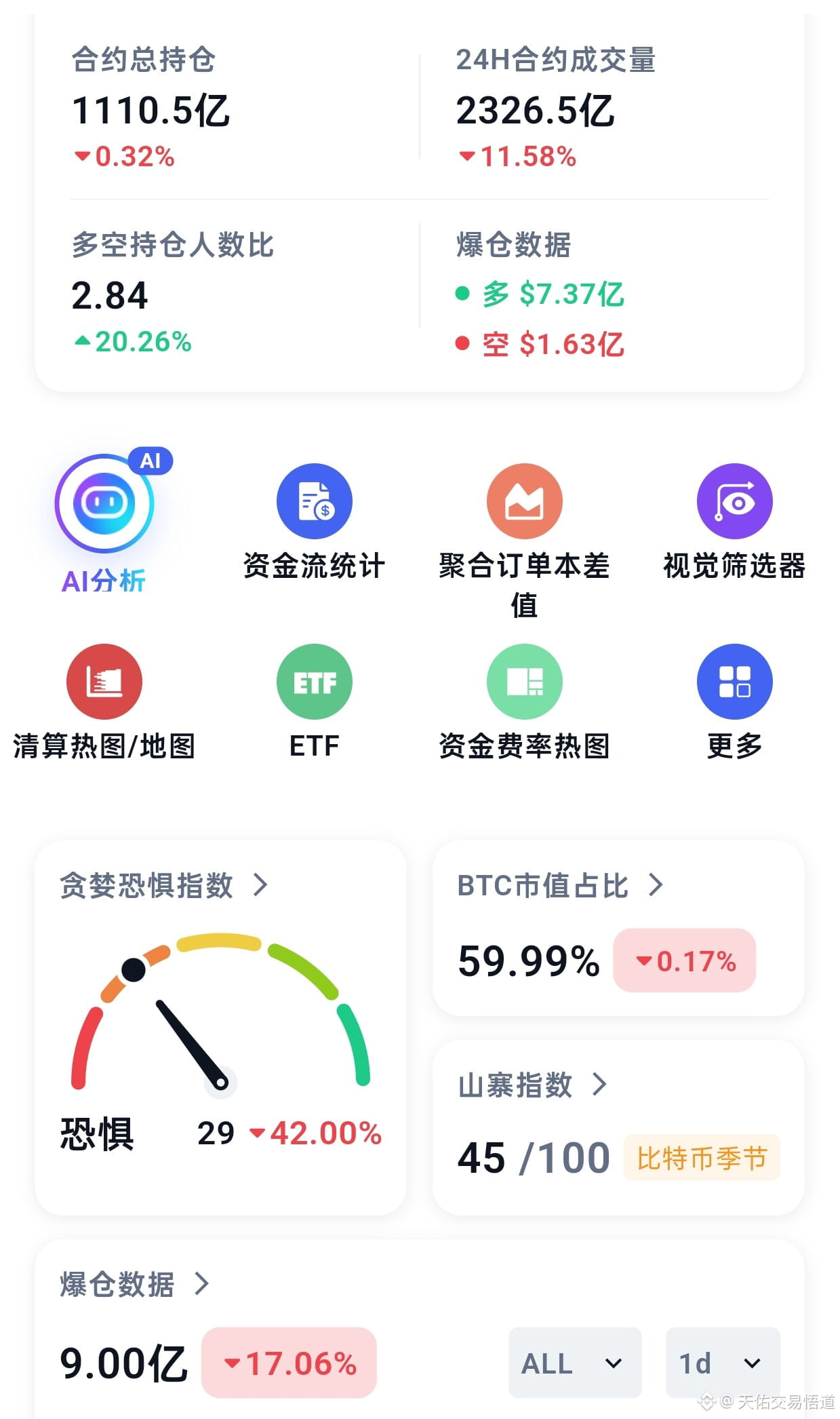
The overall market is cautious, with trading activity cooling. Total open interest in futures stands at 111.05 billion, while 24-hour trading volume is down more than 11%. The Fear & Greed Index is just 29, in the fear zone. Investors are seeking safety, with funds concentrated in Bitcoin.
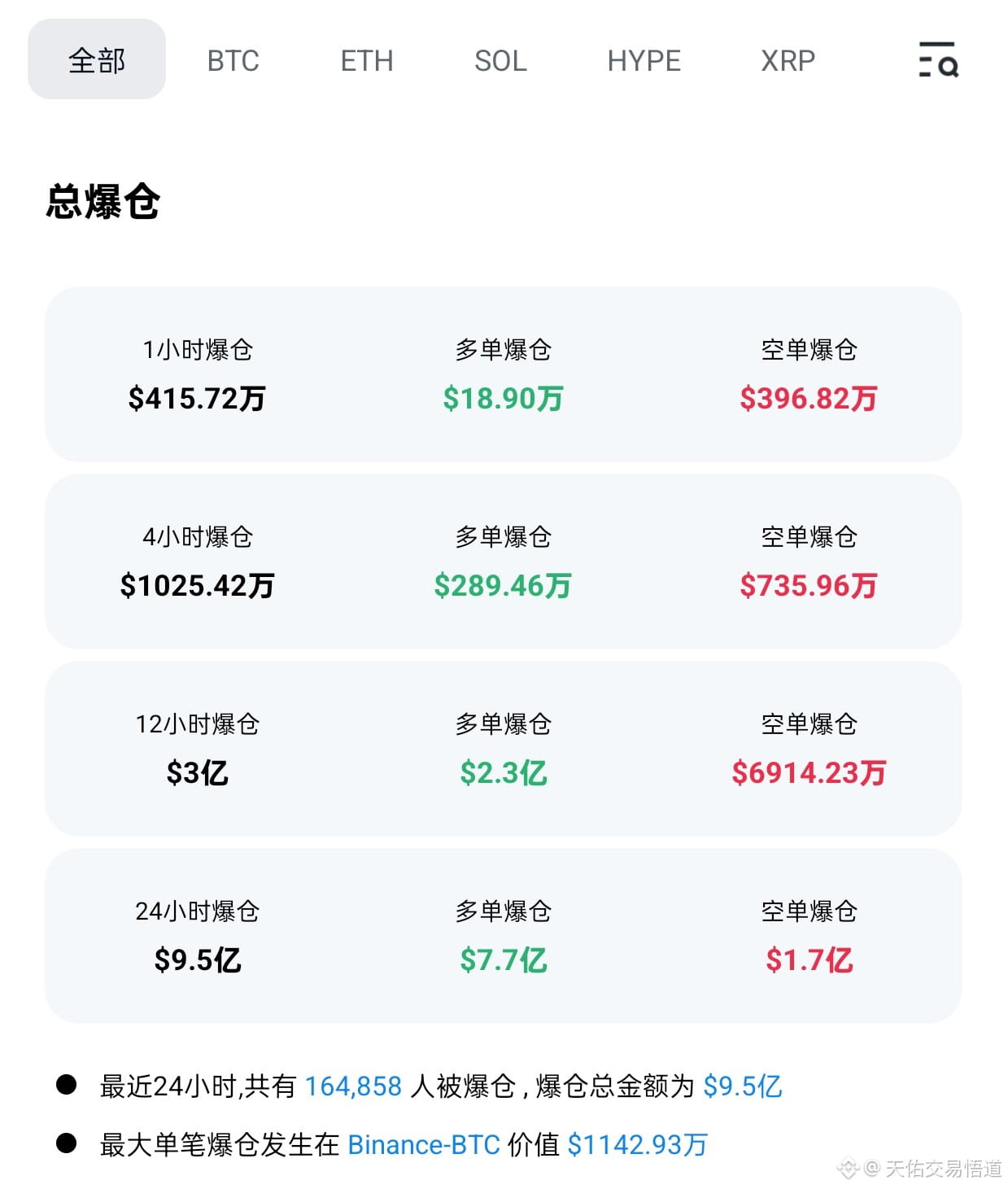
Over the past 24 hours, liquidations totaled $950 million, and more than 160,000 accounts were liquidated, primarily long positions. A large amount of leveraged long positions has been wiped out. Although short liquidations have fueled a short-term rebound, long positions have continued to be squeezed over a longer timeframe.
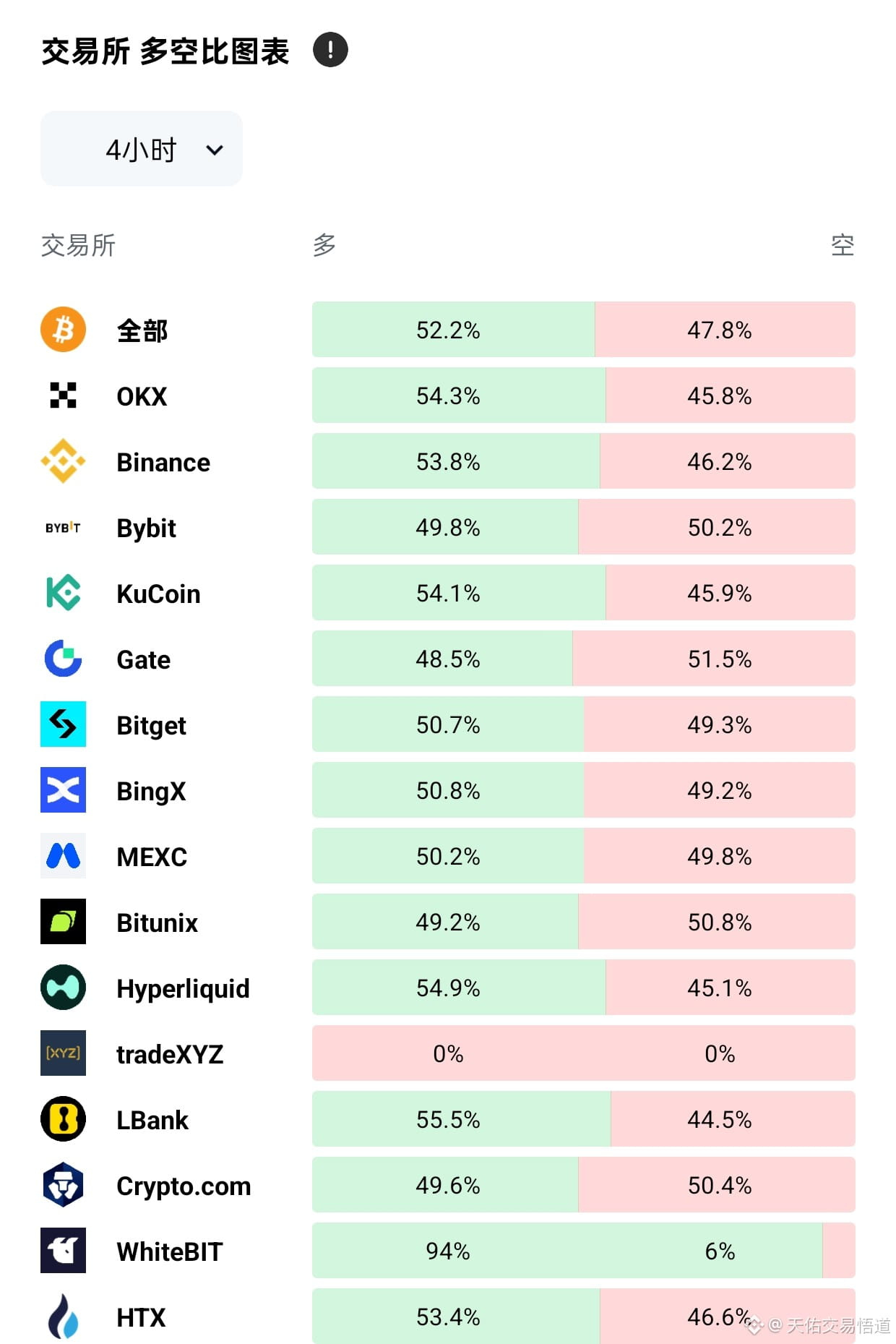
Long and short positions are diverging: longs account for 52.2% across all exchanges, suggesting retail traders lean bullish. However, shorts are dominant on some exchanges, and there is no clear consensus on market direction.
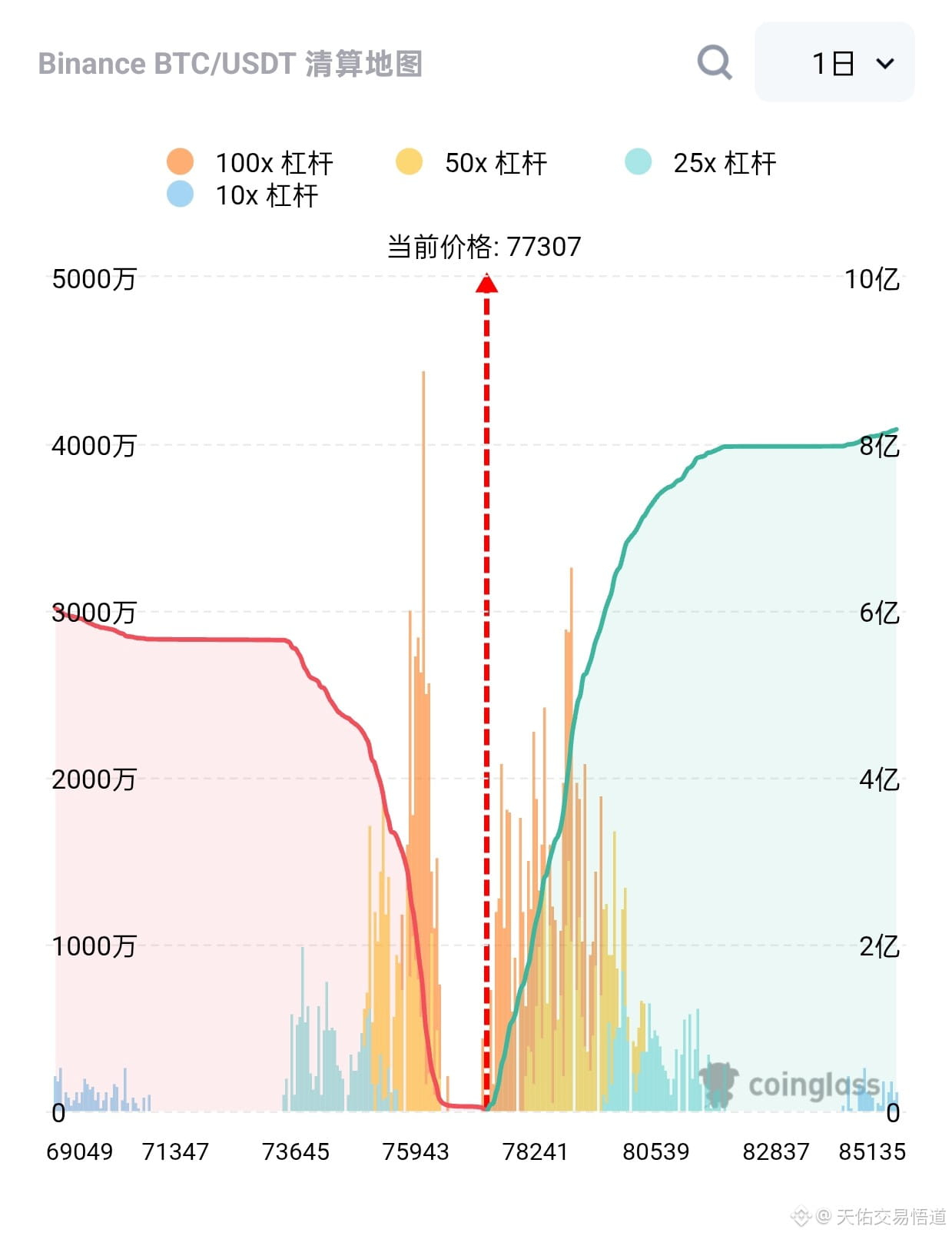
Binance is currently trading at 77,307, with dense liquidation zones above and below. A breakout above could trigger short liquidations and a short squeeze, while a drop could wipe out more longs. Repeated sharp wicks and stop hunts are likely.
Summary: Many traders want to go long, but long positions are still being flushed out. Although the market has entered the fear zone and shows signs of being oversold, a sustained, smooth trend is unlikely until the market has been thoroughly cleared out. Beware of sharp wicks in either direction, and avoid aggressively betting on one side.
3
·
--
10/31 Global Financial News:
I. Cryptocurrency
1. Binance hack: The U.S. Secret Service is working with Circle to trace and recover the stolen funds. The estimated shortfall is approximately $3.34–6.3 billion. Binance will cover compensation with its own funds. Deposits and withdrawals have been temporarily suspended and are expected to resume within 48 hours. Trump has ordered an investigation into the largest crypto heist in history.
2. Institutional holdings: BlackRock transferred 37,500 ETH to Coinbase Prime; the Morgan Stanley Bitcoin ETF transferred 1,387 BTC to Coinbase.
3. Exchange and platform updates: Hyperliquid continues to earn revenue from interest on USDC; Balancer has changed most of its liquidity pools to withdrawals-only; IPX filed a patent for a new bond protection product.
4. Regulation and investigations: U.S. senators wrote to two prediction market platforms, asking them to explain how they will prevent insider trading ahead of Election Day.
II. Macroeconomy & the Federal Reserve
1. Rate hike expectations: Logan said the Fed will need to raise rates at least twice more, by 25 basis points each time.
2. U.S. GDP: Real GDP grew at an annualized quarter-over-quarter rate of 3.4% in the third quarter, fueling expectations of a December rate hike.
3. U.S. Treasury supply pressure: U.S. Treasury issuance is expected to continue expanding, putting considerable pressure on the market to absorb the supply.
4. Foreign exchange and commodities: The U.S. dollar index edged lower; spot gold fell below $3,900, down approximately 3% on the day; international oil prices rose amid supply concerns.
III. U.S. and Global Stock Markets
1. U.S. stocks plunged: All three major U.S. stock indexes closed lower, with the Nasdaq, S&P 500, and Dow all declining. Their combined market capitalization briefly fell by $850 billion after the opening bell. Crypto-related stocks tumbled, with Coinbase and Circle posting notable losses.
2. Rating changes: Fitch lowered France’s sovereign credit outlook to negative; S&P lowered Meta’s rating outlook to negative.
3. Index changes and delisting: Okta will be added to the S&P 500; SVRN received a Nasdaq delisting notice and is applying for a hearing.
4. Chinese stocks listed in the U.S.: The Nasdaq Golden Dragon China Index closed lower, with several stocks suffering steep declines.
1
·
--
Uniswap and a16z Push Illinois to Reassess DeFi Tax Rules
A new development has emerged in U.S. digital finance regulation. Weighed down by panic across the broader market, UNI suffered a sharp sell-off yesterday, falling to a low of around $6.55. As the positive news gained traction, investors quickly bought back in, and the price rebounded to around $7.46, marking a classic “sharp sell-off followed by a news-driven recovery.”
Institutions including Uniswap and a16z are pushing Illinois to reassess its current rules for implementing DeFi taxes. This is about more than simply seeking tax relief. At its core, the debate is addressing a fundamental question: how can decentralized finance be appropriately incorporated into traditional regulatory frameworks?
In traditional finance, banks, brokers, and service providers are clearly identifiable. DeFi, by contrast, runs on smart contracts, with users connecting their wallets and trading directly, and assets not necessarily held by a single platform. If regulators cannot clearly distinguish between “software tools, financial intermediaries, and user-directed transactions,” compliance costs for developers could rise significantly, while innovative projects may become especially cautious when launching and operating.
Of course, this does not mean DeFi should become a regulatory blind spot. Baseline rules on anti-money laundering, user protection, risk disclosure, and accountability must remain in place. Regulation and innovation should not be at odds: a well-designed framework can protect ordinary participants while giving projects with genuine technical capabilities the confidence to grow. What the blockchain industry truly needs is not a completely hands-off “regulation-free zone,” but a regulatory approach that understands the underlying technology, balances fairness, and can be effectively implemented.
196
·
--
Solana adds a Hong Kong dollar stablecoin, with licensing at the heart of it
Everyone is focused on Solana’s new Hong Kong dollar stablecoin, HKDAP. But the key issue is really the issuer’s credentials: Anchorpoint Financial Technology, a joint venture between Standard Chartered, HKT, and Animoca Brands, holds a Hong Kong stablecoin issuance licence.
The parties signed a memorandum of understanding to enable native minting and redemption on Solana. They aim to use this solution to build a compliant channel for Hong Kong dollar payments and tokenized assets, connecting global capital with the market. The design keeps the public blockchain focused solely on settlement, while all compliance responsibilities remain with the licensed institution.
The risk is that if assets are merely moved on-chain without implementing the full set of regulatory requirements across the entire process, this channel may not go far. Only when compliance safeguards accompany the assets from start to finish can it potentially become a genuine bridge between traditional finance and the on-chain world.
77
·
--
Sudden crypto theft triggers a liquidation wave, devastating leveraged longs across the market
Binance’s hot wallet was hacked, with estimated losses of around $6.3 billion. Market rumors point to a North Korean hacking group, and the entire heist reportedly took only about 20–40 minutes. In response, the platform urgently suspended withdrawals and announced that it would fully reimburse users using its insurance fund and its own funds. But panic immediately swept through the market: BTC quickly plunged to around $76,000, while ETH followed suit with a sharp drop.
The sudden sell-off triggered forced liquidations of large numbers of highly leveraged long positions, some leveraged dozens of times. According to CoinGlass data, total liquidations across the market over the past 24 hours ranged from $1.5 billion to $1.65 billion. Long positions accounted for over 80% of the total, at around $1.29 billion, while short liquidations amounted to only $100–200 million. By asset, Bitcoin-related liquidations approached $500 million, Ethereum exceeded $300 million, and more than $80 million in Solana positions were also liquidated.
This was a classic event-driven market panic, with short-term fear triggering a wave of concentrated liquidations. Even if sentiment improves later, highly leveraged markets remain extremely vulnerable to sudden risks. Be sure to manage leverage, protect your positions, and remain sufficiently cautious of unexpected risks when trading.
396
·
--
Countdown to the U.S. midterm elections: Market positioning begins
With just four days until the U.S. midterm elections, voting is scheduled for November 3. Beyond keeping a close eye on which party will control Congress, markets are more concerned about the direction of future tax policy, tech regulation, and fiscal spending.
Historical data offers some guidance: JPMorgan data shows that, since 1950, the S&P 500 has risen in the 12 months following every midterm election, with an average gain of about 15%. Charles Schwab data indicates that since 1974, the index has gained an average of 5.7% in the three months after an election. The logic is simple: policy uncertainty hangs over the election period. Once the results are in, the outlook becomes clearer, giving investors the confidence to return to the market.
But this year is different. On the eve of the election, U.S. tech stocks have already faced a wave of concentrated selling. Google and Amazon’s massive AI investments have raised concerns, Intel’s earnings guidance fell short of expectations, and semiconductor stocks have come under pressure as well. On October 30, the Nasdaq plunged about 2.9%, while the S&P 500 fell around 1.8%. This suggests that market pressure stems not only from election uncertainty, but also from a reassessment of tech stock valuations and the returns on AI investment.
As for strategy, it may be prudent to stay cautious in the short term ahead of the election. Even after voting ends, that does not necessarily mean the market has bottomed; corporate earnings and fund flows will need to be monitored closely. For crypto markets, major assets such as BTC and ETH are indirectly influenced by risk appetite in U.S. equities. If sentiment in U.S. stocks recovers, the crypto market may also find support from outside. Consider waiting for signals from post-election fund flows before choosing an entry point.
160
·
--
10/30 Mid- to Long-Term Strategy Reference:
I. BTC:
①: Go long at 74300
②: Go long at 72200
Stop-loss reference: 71200
①: Go short at 82300
②: Go short at 84500
Stop-loss reference: 85500
II. ETH:
①: Go long at 2120
②: Go long at 2050
Stop-loss reference: 2000
①: Go short at 2420
②: Go short at 2525
Stop-loss reference: 2575
III. Trading Ranges
ETH: 2130--2330
BTC: 74300--80300
IV. Recent Support and Resistance
ETH: 2170, 2325
BTC: 76000, 79750
V. Short sellers drove a sharp, high-volume sell-off during the day. Late at night, two separate major crypto theft incidents suddenly emerged. Binance was suspected of being hacked, with a huge amount of assets involved. The hackers' transfers of assets triggered selling, and the platform suspended withdrawals, directly igniting panic-driven, run-like selling across the market. Around the same time, a crypto theft case was also reported on Polymarket. These double blows caused fear to spread rapidly, sending the broader market and altcoins tumbling in tandem, with altcoin losses widening further. The panic has yet to fully subside, and there are no signs that prices have bottomed. On top of that, pressure from the settlement of BTC options worth approximately $10.9 billion this Friday could make the market highly prone to repeated, sharp swings, with room for further downside. For now, the recommended approach is to favor shorting rallies. Do not blindly try to catch the bottom; manage position sizes strictly, follow comprehensive risk controls, and beware of the broader market dragging altcoins into another synchronized sell-off.
38
·
--
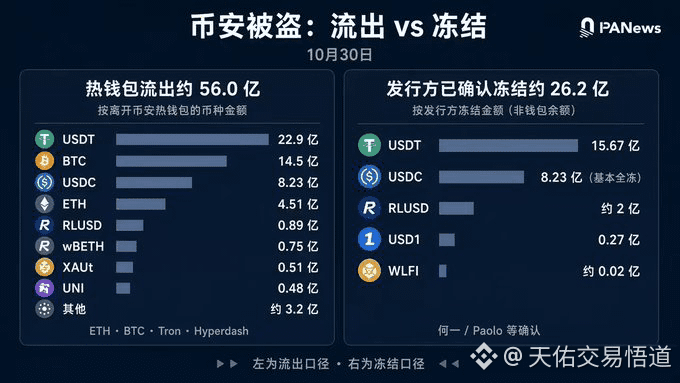
The Binance hack took place around 4 or 5 a.m., and the timing is very significant. Looking back at major crypto thefts in the industry, almost all of them have happened in the early hours of the morning—a time window hackers commonly use to launch surprise attacks.
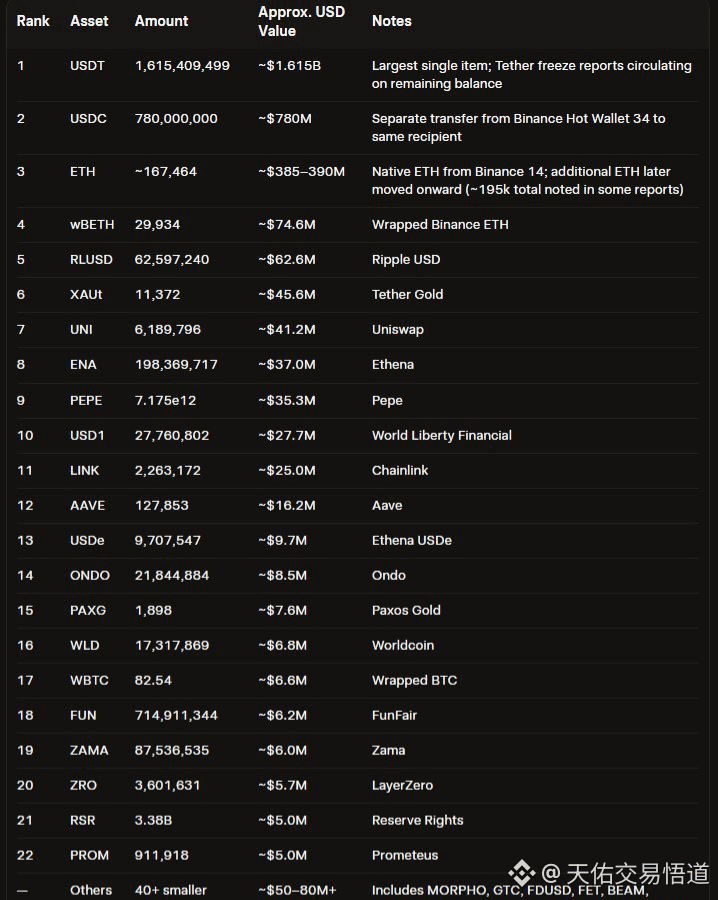
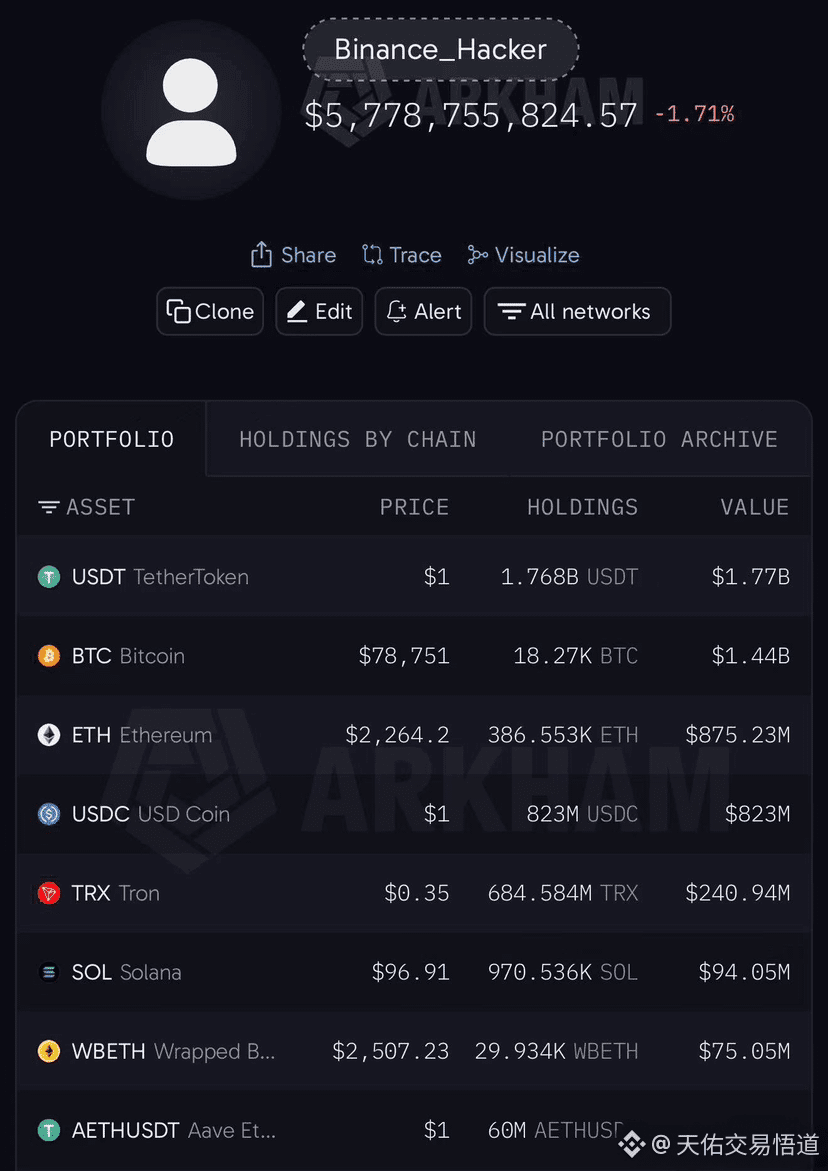
According to statistics, the total amount stolen from Binance in this incident reached as much as $5.6 billion. Tether froze $1.6 billion, while USDC froze $800 million. CZ publicly stated that, after the team’s emergency response and asset-freezing operations, they successfully intercepted and froze approximately $4 billion in stolen assets, leaving the actual loss from the incident at just $1 billion.
A wide variety of coins were stolen, including several popular ones. You can check the list of stolen assets to see whether any of the coins you hold are included.
If even the world’s top-ranked exchange can be breached by hackers, it makes you wonder: Are the hackers simply exceptionally skilled, or does the exchange’s security system have serious vulnerabilities?
61
·
--
Breaking late-night news!! A barrage of black swan events! The broader market plunges, altcoins crash across the board
Binance hit by shocking theft, massive freezes trigger a panic sell-off
Odaily reports that Binance may have suffered a major hack, with the total value of associated frozen stablecoins surging to around $2.107 billion. This includes 313 million newly frozen USDT on the Tron network, in addition to USDT and USDC previously frozen by Tether and Circle. So far, Binance has not fully disclosed the actual losses or the source of the attack.
The news immediately sparked market panic, unleashing a wave of sell orders and triggering mass liquidations of long positions. BNB plunged first, while Bitcoin, Ethereum, and other major assets quickly followed suit. High-risk altcoins were hit even harder as investors abandoned them, with losses far outpacing those of the broader market. Many smaller-cap coins suffered cliff-like drops. Although stablecoin issuers urgently froze the stolen funds, preventing the hacker from dumping them directly onto the market, market fears are unlikely to subside quickly. The risks of exchange custody and the authority to freeze stablecoins have also become ticking time bombs worrying everyone.
Another crypto theft scandal adds to the gloom
At nearly the same time, Polymarket revealed that a third-party service provider had been hacked and funds stolen. More than 700 users were affected, with around $2.7 million in funds stolen. The hacker converted the proceeds into POL and transferred them out. A monitoring platform also exposed a hoax: trader Car falsely claimed to have lost around $800,000 in the theft, in what was a deliberate fabrication. The relevant posts have since been deleted.
Although the value of this theft is far below that of the Binance incident, it further undermines already fragile confidence. Investors have completely lost patience with the security of small and mid-sized projects and outsourced services. Altcoins, already in decline, faced another wave of selling, with risk-averse investors dumping many niche tokens entirely.
Market outlook: Under pressure across the board; be extremely cautious about buying the dip
Two black swan events have struck in rapid succession, sending the entire crypto market into a synchronized panic. Major assets continue to retreat, while altcoin losses are significantly steeper—a classic case of “dumping small caps and avoiding risk.” Market sentiment is on edge, with rumors both true and false swirling, and another sharp sell-off could happen at any moment. Until the panic has been fully absorbed, don’t rush to buy the dip. In particular, avoid high-risk altcoins, keep position sizes under tight control, and put risk management first.
330
·
--
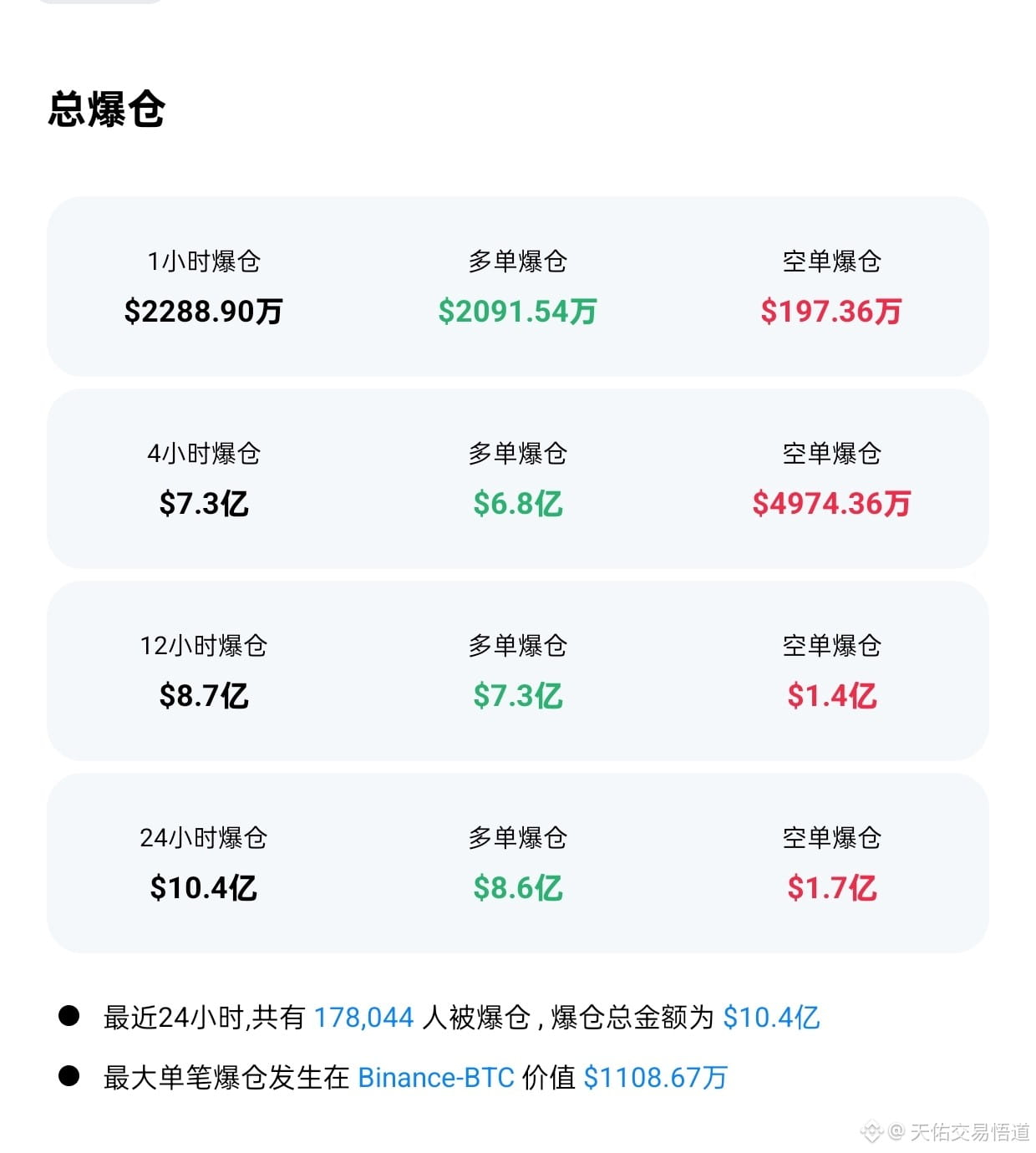
A wave of liquidations coincides with a massive options expiry, opening a high-risk volatility window
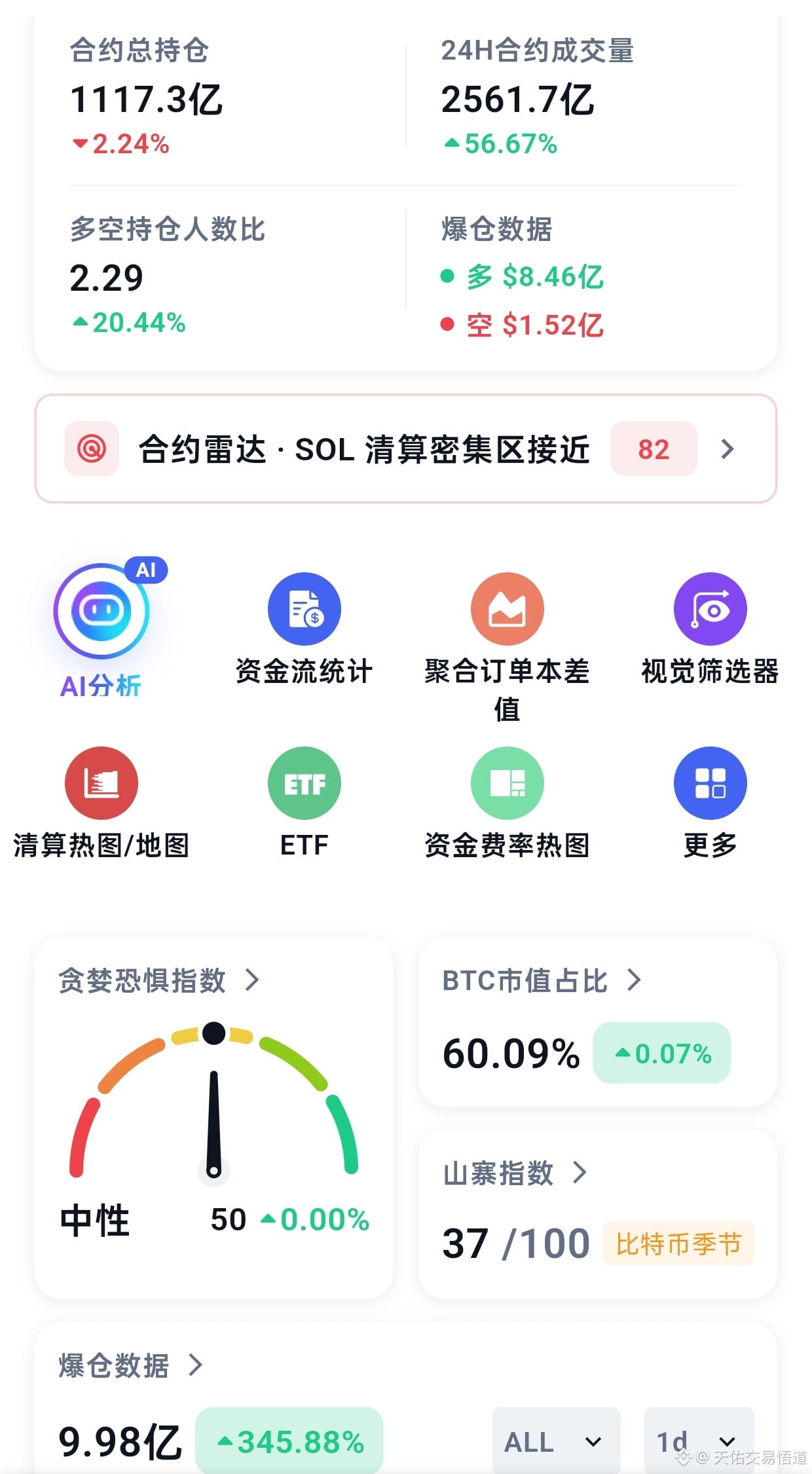
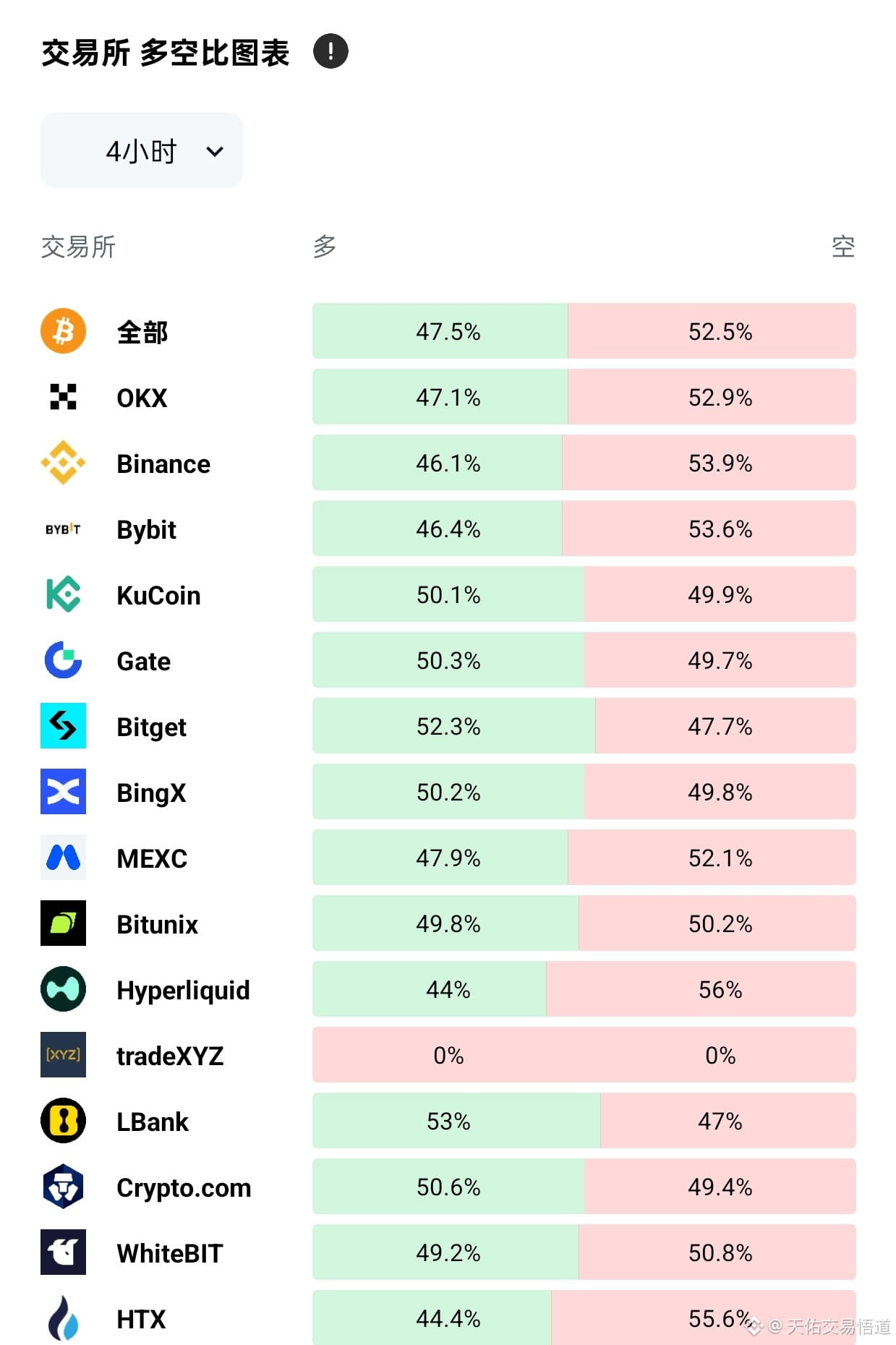
Total open interest has declined, but 24-hour futures trading volume has surged sharply as funds churn rapidly. Retail longs are crowding in, making them easy targets for mass liquidations. Over the past 24 hours, total liquidations exceeded $1.04 billion, with nearly 180,000 traders forcibly liquidated; the vast majority were long positions. Binance also saw a single liquidation worth tens of millions of dollars. Four-hour long/short data from major exchanges shows that bears have gained the upper hand.
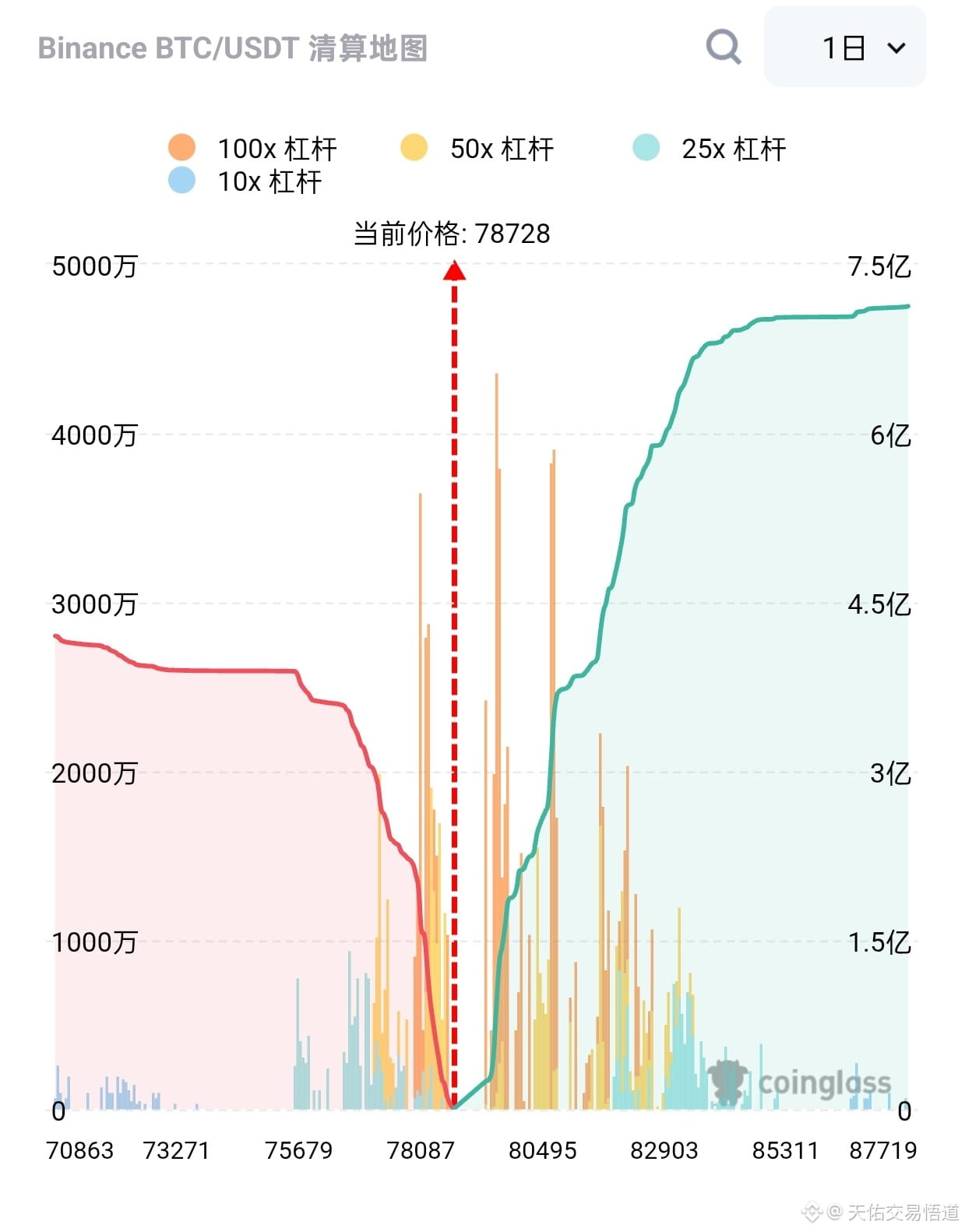
BTC is currently at 78728, with liquidation clusters across multiple leverage levels stacked overhead. Any move upward could easily trigger a cascade of liquidations. The SOL liquidation zone is also approaching, amplifying risks across altcoins. The Fear & Greed Index remains neutral, with fear not yet fully priced in. Bitcoin’s market-cap dominance has edged up while the Altcoin Season Index remains low, suggesting funds are seeking safety and abandoning smaller-cap assets.
Adding to the pressure is this Friday’s major options expiry: BTC options alone have a notional value of approximately $10.9 billion. These two pressures converging could easily cause sharp price wicks and repeated stop-hunts. During this high-risk window, avoid making one-sided bets. Reduce position sizes and stay away from high leverage, especially as a broad-market move could drive altcoins down in tandem.
6
·
--
10/30 Global Financial News:
I. Crypto Markets
1. Binance security incident: Suspected hack; the platform is investigating. Approximately $5.643 billion in on-chain assets flowed out across networks including Ethereum, Bitcoin, and Tron. Tether and Circle cooperated in freezing related assets, and Binance also froze some funds. Actual losses are estimated to be slightly above $1 billion and will be borne by the platform. Binance suspended its Alpha trading section. In response to the news, BTC fell below $79,000, triggering a large number of liquidations in a short period. Approximately $949 million in positions were liquidated across the market over the past 12 hours, mostly long positions.
2. Bitcoin ETFs and holdings: U.S. spot Bitcoin ETFs recorded their first net outflows in 30 days. Vanguard gained Bitcoin exposure worth more than $96 million through Strive. Strategy posted a net profit of $19.53 billion in the third quarter, with earnings primarily driven by its Bitcoin holdings; it currently holds 848,517 BTC. Franklin Templeton launched two Bitcoin dividend-reinvestment ETFs listed in the U.S.
3. Products and new business: Polymarket launched five-minute cryptocurrency up-or-down prediction contracts in the U.S.
II. Macro and Commodities
1. U.S. GDP: The initial estimate for annualized real GDP growth in the third quarter was 3.4%.
2. European Central Bank: Held its key deposit rate steady at 2.50%.
3. Spot gold: Fell 1.13% to $4,021.15 per ounce.
III. U.S. Stocks & AI / Computing Infrastructure
1. AI and data center investment: Amazon invested more than $77 billion in data center construction for AI in the third quarter. Nvidia is in talks over a large credit guarantee to support major data center projects. Institutional investors are shifting toward data center investments, with total AI capital expenditure needs estimated at around $5 trillion. Large-scale computing centers are creating new underwriting risks for the insurance industry. China’s domestic AI computing centers are entering a phase of competition over energy efficiency, with liquid cooling emerging as a key solution.
2. Chips and hardware: Samsung expects memory chip prices to continue rising next year, but its shares fell in Seoul amid the lack of a shareholder return plan.
3. Corporate results and stock performance: Third-quarter earnings for S&P 500 companies exceeded expectations by the smallest margin in recent years. Alphabet’s business performance was relatively weak, and its market capitalization shrank sharply. Microsoft plans to issue bonds to fund its AI cloud expansion. Intel’s revenue fell short of expectations, sending its shares sharply lower. Eli Lilly raised its guidance on strong sales of its weight-loss drugs, and its shares surged. Coinbase returned to profitability, but revenue declined.
506
·
--
Russia’s central bank has introduced new rules restricting domestic investors from using non-custodial wallets directly, while preserving an exemption channel specifically for international settlements. This creates two distinct regulatory frameworks: one for domestic activity and another for international transactions. Domestic investment and trading will gradually be brought under custodial arrangements. Funds may first be transferred from a domestically hosted wallet to a compliant overseas custodian, and then moved to a non-custodial wallet for cross-border payments. Under the plan, direct P2P cryptocurrency transactions between individuals will also be prohibited from July 1, 2027.
This framework does not amount to a blanket ban on crypto. Its core aim is to contain risks in domestic trading while preserving channels for cross-border settlement. It is clearly negative for decentralized peer-to-peer trading, but creates long-term opportunities for compliant stablecoins and cross-border settlement infrastructure. Going forward, the crypto sector is likely to shift further toward systems with regulatory backing that can be used for cross-border clearing, while purely permissionless over-the-counter trading by retail investors will remain under pressure. In the short term, the main driver will be shifting expectations; the real impact will depend on the details yet to be implemented. Those participating in related assets should remain alert to volatility caused by potential policy reversals.
This framework does not amount to a blanket ban on crypto. Its core aim is to contain risks in domestic trading while preserving channels for cross-border settlement. It is clearly negative for decentralized peer-to-peer trading, but creates long-term opportunities for compliant stablecoins and cross-border settlement infrastructure. Going forward, the crypto sector is likely to shift further toward systems with regulatory backing that can be used for cross-border clearing, while purely permissionless over-the-counter trading by retail investors will remain under pressure. In the short term, the main driver will be shifting expectations; the real impact will depend on the details yet to be implemented. Those participating in related assets should remain alert to volatility caused by potential policy reversals.
46
Log in to explore more content
Join global crypto users on Binance Square
⚡️ Get latest and useful information about crypto.
💬 Trusted by the world’s largest crypto exchange.
👍 Discover real insights from verified creators.
Email / Phone number
Trending Topics
BinanceProcesses$4.65BWithdrawals
49,997 views
201 Discussing
Binance Processes $4.65 Billion in Withdrawals After Reopening, Net Outflow of $3.64 Billion Equals 2.1% of Its $171 Billion in Assets
Binance News
·55 Likes
·18.2k views
WithdrawalsBack: 15 networks live
10,976 views
158 Discussing
EthereumSurpasses$2300
157 views
26 Discussing