

th先生
71 Posts

th先生
Report
Block User
Hello world!
5 Following
3 Followers
68 Liked
Posts
·
--
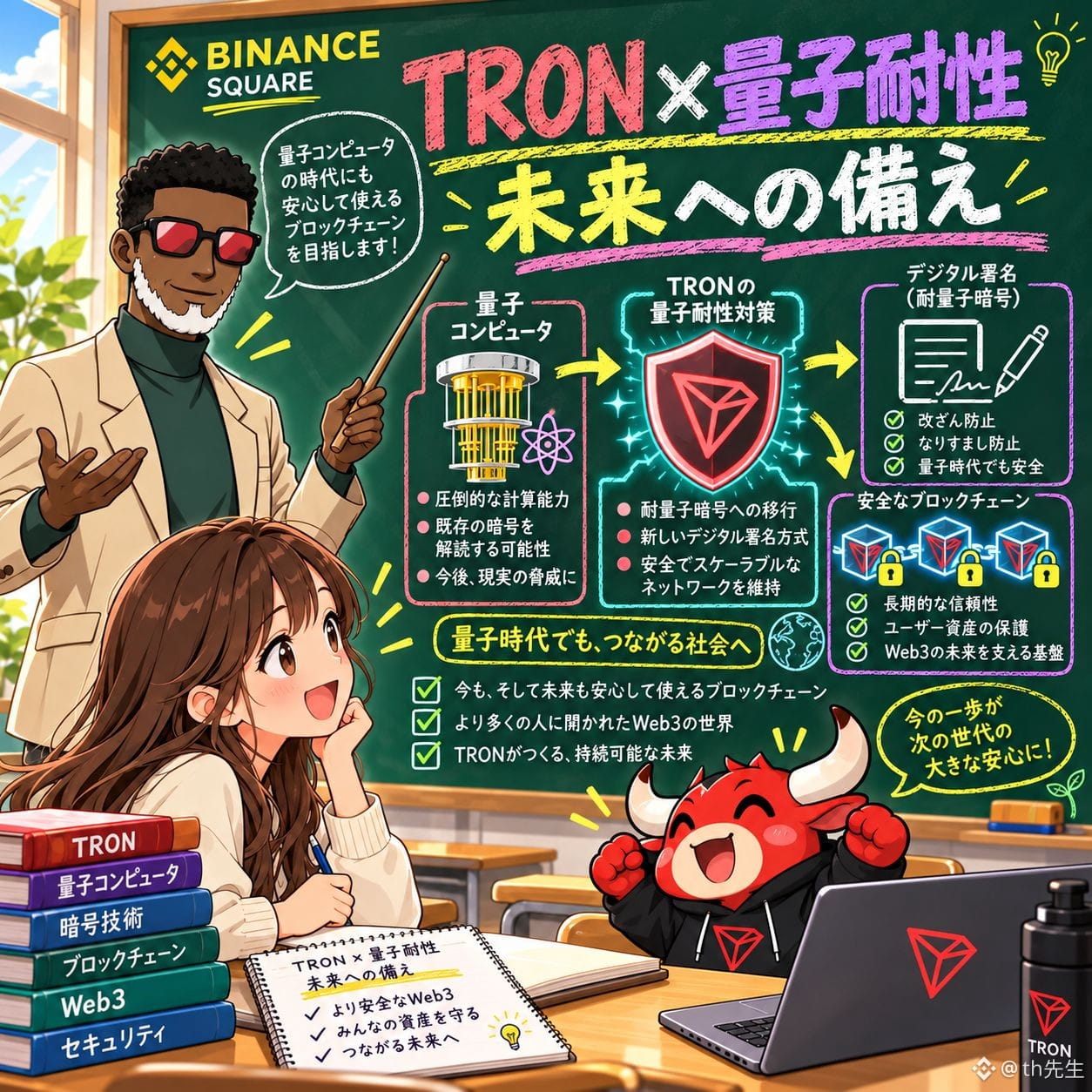
🧑🏫 Why TRON is preparing for quantum computers
At TOKEN2049 in October, Justin Sun spoke about blockchain resistance to quantum computers.
He explained that TRON has already implemented support for post-quantum signatures on the Nile testnet.
The important question here is why preparations need to begin now.
Many blockchains today use elliptic-curve cryptography and other methods to prove ownership of assets.
But in the future, if sufficiently powerful quantum computers become available, some cryptographic methods could be put at risk.
It is unclear when practical attacks will become possible, but for financial infrastructure, waiting until a problem occurs before taking action may be too late.
🧑🏫 This is where the difference between short-term technological competition and long-term infrastructure competition comes in.
When evaluating blockchain performance, it is easy to focus on fees and transaction speeds.
But if a system is to support financial services for decades, the following are also essential:
① Cryptographic security
② The ability to adapt to upgrades
③ Compatibility with existing assets
④ Operational stability
💭 My take
I get the impression that Justin Sun is positioning TRON not merely as a crypto network, but as financial infrastructure intended for long-term use.
Of course, implementation on a testnet does not mean the work is complete.
Even so, I believe there is value in preparing for future threats.
#TRONGlobalFriends #TGF #Tron
@JustinSun @TRONDAO
🧑🏫 Why TRON is preparing for quantum computers
At TOKEN2049 in October, Justin Sun spoke about blockchain resistance to quantum computers.
He explained that TRON has already implemented support for post-quantum signatures on the Nile testnet.
The important question here is why preparations need to begin now.
Many blockchains today use elliptic-curve cryptography and other methods to prove ownership of assets.
But in the future, if sufficiently powerful quantum computers become available, some cryptographic methods could be put at risk.
It is unclear when practical attacks will become possible, but for financial infrastructure, waiting until a problem occurs before taking action may be too late.
🧑🏫 This is where the difference between short-term technological competition and long-term infrastructure competition comes in.
When evaluating blockchain performance, it is easy to focus on fees and transaction speeds.
But if a system is to support financial services for decades, the following are also essential:
① Cryptographic security
② The ability to adapt to upgrades
③ Compatibility with existing assets
④ Operational stability
💭 My take
I get the impression that Justin Sun is positioning TRON not merely as a crypto network, but as financial infrastructure intended for long-term use.
Of course, implementation on a testnet does not mean the work is complete.
Even so, I believe there is value in preparing for future threats.
#TRONGlobalFriends #TGF #Tron
@Justin Sun孙宇晨 @TRON DAO
48
·
--
🧑🏫 Sun Studies|Why is Justin Sun envisioning a “Nobel Prize for the AI Era”?
One of the topics Justin Sun brought up at TOKEN2049 was the “Justin Sun Prize.”
He describes it as a “Nobel Prize for the AI era.”
At the heart of the idea is a system that poses difficult problems in fundamental research, such as mathematics, and encourages people and AI to work together to solve them.
One distinctive feature is the use of automated formal verification to validate results.
In traditional academic research, peer review and evaluation by researchers have played an important role.
But for problems that can be formally proven, there may be ways for machines to verify their mathematical correctness.
🧑🏫 What I find interesting is that Justin Sun is interested in research systems that go beyond the boundaries of blockchain.
Looking back through history, technological innovation has not always emerged from within companies alone.
Systems that make problems widely available and gather solutions from around the world have also driven progress.
The Justin Sun Prize can be seen as an effort to bring this kind of open research and development to life in a new way.
💭 My take
How well this idea will work in practice depends on the system’s design and the research results it produces.
Still, it is intriguing to view AI not only as a way to make existing industries more efficient, but also as a force that can advance science itself.
I get the sense that Justin Sun’s interests are expanding from finance to the foundations of science and technology.
#TRONGlobalFriends #TGF #Tron
@JustinSun @TRONDAO
🧑🏫 Sun Studies|Why is Justin Sun envisioning a “Nobel Prize for the AI Era”?
One of the topics Justin Sun brought up at TOKEN2049 was the “Justin Sun Prize.”
He describes it as a “Nobel Prize for the AI era.”
At the heart of the idea is a system that poses difficult problems in fundamental research, such as mathematics, and encourages people and AI to work together to solve them.
One distinctive feature is the use of automated formal verification to validate results.
In traditional academic research, peer review and evaluation by researchers have played an important role.
But for problems that can be formally proven, there may be ways for machines to verify their mathematical correctness.
🧑🏫 What I find interesting is that Justin Sun is interested in research systems that go beyond the boundaries of blockchain.
Looking back through history, technological innovation has not always emerged from within companies alone.
Systems that make problems widely available and gather solutions from around the world have also driven progress.
The Justin Sun Prize can be seen as an effort to bring this kind of open research and development to life in a new way.
💭 My take
How well this idea will work in practice depends on the system’s design and the research results it produces.
Still, it is intriguing to view AI not only as a way to make existing industries more efficient, but also as a force that can advance science itself.
I get the sense that Justin Sun’s interests are expanding from finance to the foundations of science and technology.
#TRONGlobalFriends #TGF #Tron
@Justin Sun孙宇晨 @TRON DAO

60
·
--
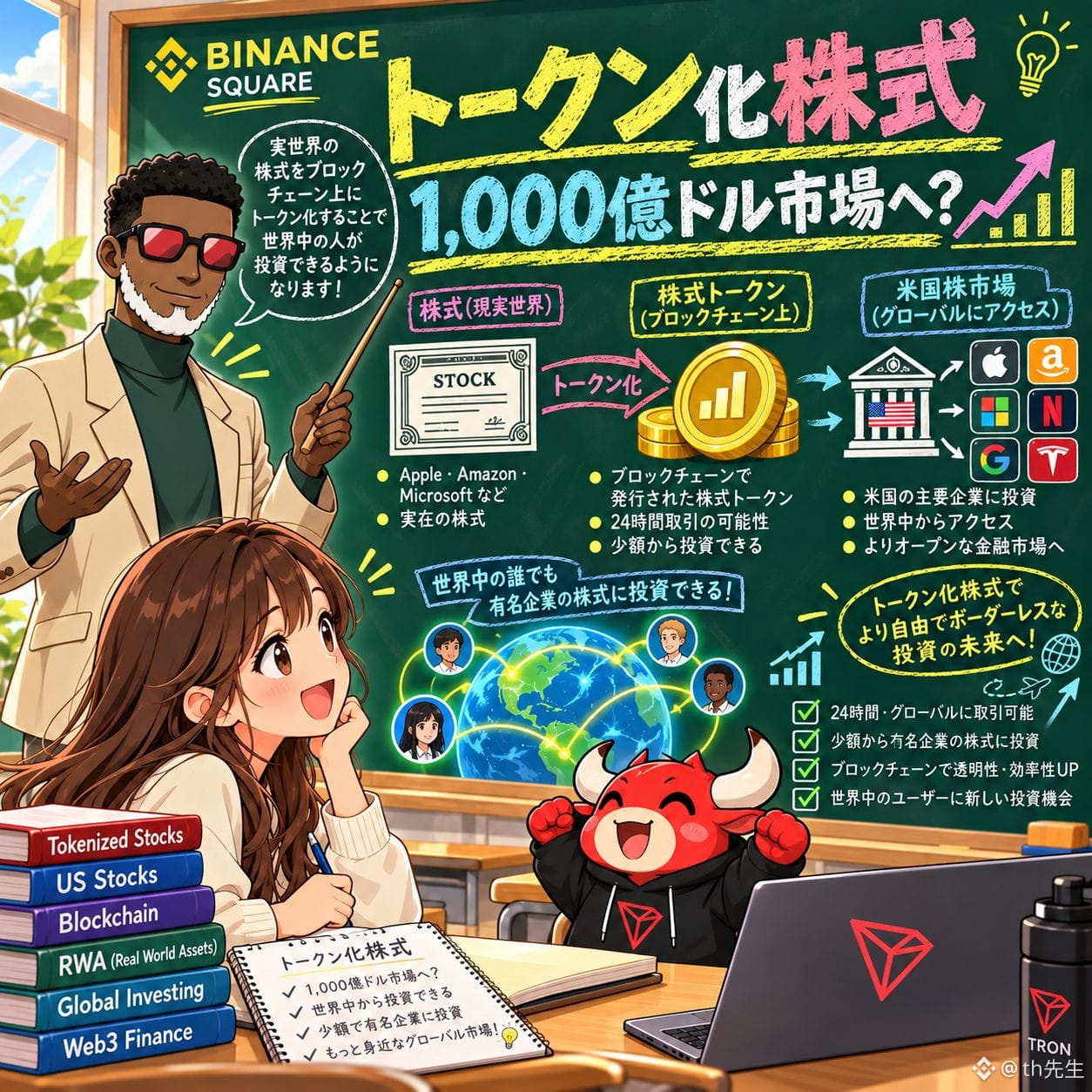
🧑🏫 Sunology|Justin Sun’s vision of “a future where people around the world can access U.S. stocks”
On October 8, Justin Sun shared his view that tokenized stocks could become a market worth $100 billion over the next five years.
What’s especially noteworthy is his mention of opportunities for people in Asia to access U.S. dollar-denominated assets.
Investing in U.S. stocks is currently popular around the world.
In practice, however, the requirements for opening a brokerage account and the financial products available vary depending on where you live.
Tokenizing stocks could change how people access them.
For example, we may see:
① The digitization of securities trading
② Support for small-scale investments
③ More efficient asset transfers and payments
④ Integration with cross-border financial services
However, holding a token is not necessarily the same as holding shareholder rights, and regulatory compliance is also important.
🧑🏫 This is where TRON’s USDT strategy comes into play.
People around the world already hold U.S. dollar-pegged assets on TRON.
If tokenized stocks are added as an investment option, financial services—from payments to asset management—could become interconnected.
💭 My take
Justin Sun may be thinking beyond simply increasing the use of TRX.
He envisions an environment where people around the world can access financial markets through digital dollars.
I believe building that environment may be at the heart of TRON’s RWA strategy.
#TRONGlobalFriends #TGF #Tron
@JustinSun @TRONDAO
🧑🏫 Sunology|Justin Sun’s vision of “a future where people around the world can access U.S. stocks”
On October 8, Justin Sun shared his view that tokenized stocks could become a market worth $100 billion over the next five years.
What’s especially noteworthy is his mention of opportunities for people in Asia to access U.S. dollar-denominated assets.
Investing in U.S. stocks is currently popular around the world.
In practice, however, the requirements for opening a brokerage account and the financial products available vary depending on where you live.
Tokenizing stocks could change how people access them.
For example, we may see:
① The digitization of securities trading
② Support for small-scale investments
③ More efficient asset transfers and payments
④ Integration with cross-border financial services
However, holding a token is not necessarily the same as holding shareholder rights, and regulatory compliance is also important.
🧑🏫 This is where TRON’s USDT strategy comes into play.
People around the world already hold U.S. dollar-pegged assets on TRON.
If tokenized stocks are added as an investment option, financial services—from payments to asset management—could become interconnected.
💭 My take
Justin Sun may be thinking beyond simply increasing the use of TRX.
He envisions an environment where people around the world can access financial markets through digital dollars.
I believe building that environment may be at the heart of TRON’s RWA strategy.
#TRONGlobalFriends #TGF #Tron
@Justin Sun孙宇晨 @TRON DAO
77
·
--
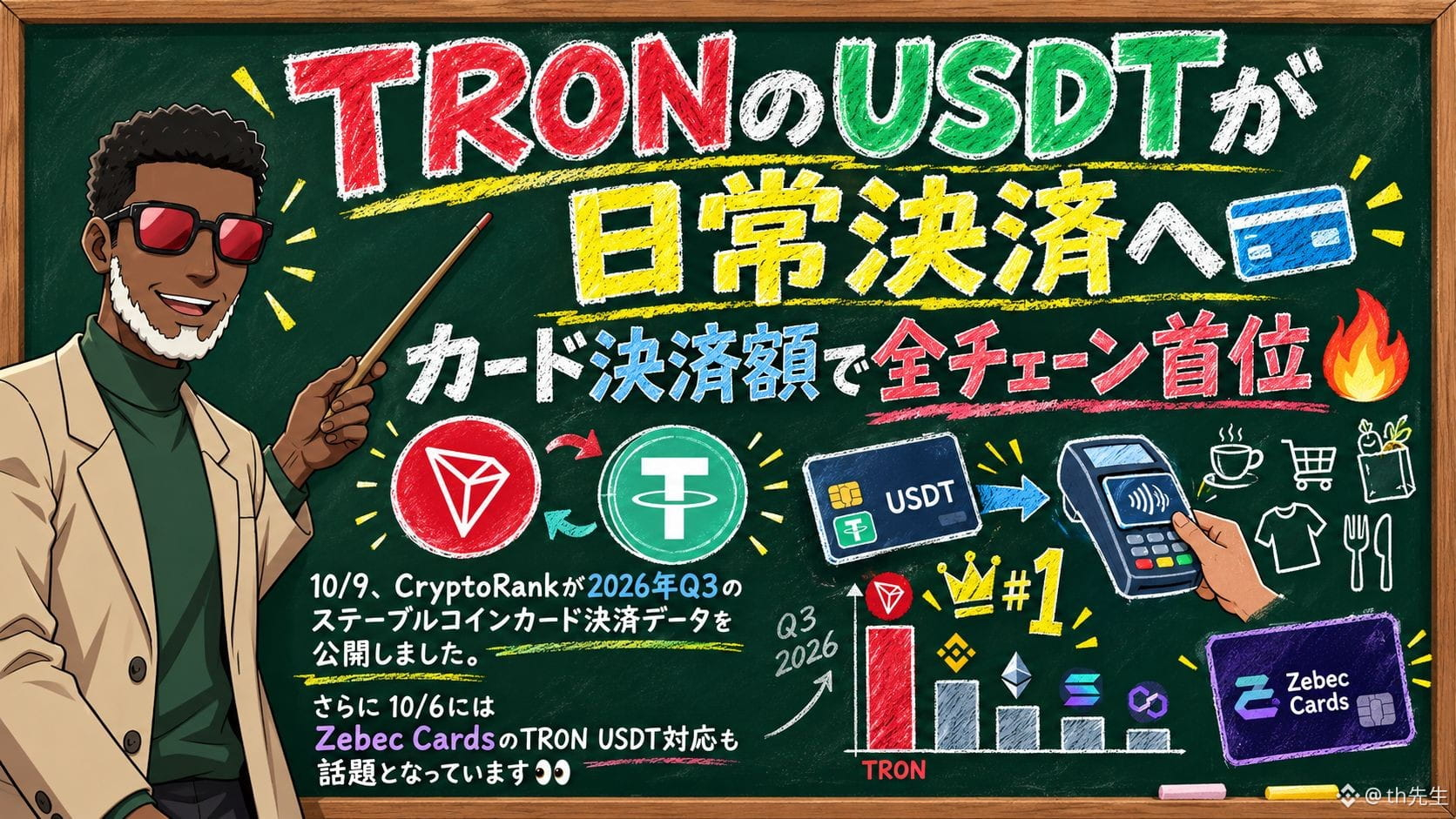
TRON’s USDT is making its way into everyday payments 💳
#1 across all chains by card payment volume 🔥
Let’s take a closer look.
1. Stablecoin card market
Card payment volume in Q3 2026 was
about $4.31 billion.
That’s a 33% increase from the previous quarter 📈
By chain:
🥇TRON: about $998 million (23.2%)
🥈Base: about $636 million
🥉BNB Chain: about $469 million
TRON accounts for about a quarter of the total,
making it the leader 🔥
This shows that TRON is being used not only for
USDT transfers, but also for spending
through cards.
2. Integration with Zebec Cards
Zebec offers payment card services
that use cryptocurrency.
By allowing card balances to be topped up
with USDT on TRON, users can:
✅Deposit USDT on TRON
✅Use it as a card balance
✅Pay online and in physical stores
✅Connect with Apple Pay and Google Pay
Of course, there are restrictions such as
card issuance requirements and supported regions,
but this could simplify the traditional flow of
“crypto → exchange → bank.”
3. TRON’s role is evolving
Until now, TRON’s strengths have centered on
moving funds, including:
✅Low-cost USDT transfers
✅International and exchange-to-exchange transfers
✅Deep USDT liquidity
As card payments become more widespread,
usage could expand to include
“what to do with the USDT you receive.”
📝Summary
Personally, I think it’s significant that
USDT is getting closer to becoming a means
of everyday spending.
Being able to send money and
being able to use it in everyday life are two different things.
The payment infrastructure TRON has built
is becoming connected to real-world spending.
Going forward, it’ll be worth watching not only
transfer volumes, but also trends in card payment
volume and the number of users 🧑🏫
#TRONGlobalFriends #TGF #Tron
@JustinSun @TRONDAO
TRON’s USDT is making its way into everyday payments 💳
#1 across all chains by card payment volume 🔥
Let’s take a closer look.
1. Stablecoin card market
Card payment volume in Q3 2026 was
about $4.31 billion.
That’s a 33% increase from the previous quarter 📈
By chain:
🥇TRON: about $998 million (23.2%)
🥈Base: about $636 million
🥉BNB Chain: about $469 million
TRON accounts for about a quarter of the total,
making it the leader 🔥
This shows that TRON is being used not only for
USDT transfers, but also for spending
through cards.
2. Integration with Zebec Cards
Zebec offers payment card services
that use cryptocurrency.
By allowing card balances to be topped up
with USDT on TRON, users can:
✅Deposit USDT on TRON
✅Use it as a card balance
✅Pay online and in physical stores
✅Connect with Apple Pay and Google Pay
Of course, there are restrictions such as
card issuance requirements and supported regions,
but this could simplify the traditional flow of
“crypto → exchange → bank.”
3. TRON’s role is evolving
Until now, TRON’s strengths have centered on
moving funds, including:
✅Low-cost USDT transfers
✅International and exchange-to-exchange transfers
✅Deep USDT liquidity
As card payments become more widespread,
usage could expand to include
“what to do with the USDT you receive.”
📝Summary
Personally, I think it’s significant that
USDT is getting closer to becoming a means
of everyday spending.
Being able to send money and
being able to use it in everyday life are two different things.
The payment infrastructure TRON has built
is becoming connected to real-world spending.
Going forward, it’ll be worth watching not only
transfer volumes, but also trends in card payment
volume and the number of users 🧑🏫
#TRONGlobalFriends #TGF #Tron
@Justin Sun孙宇晨 @TRON DAO
93
·
--
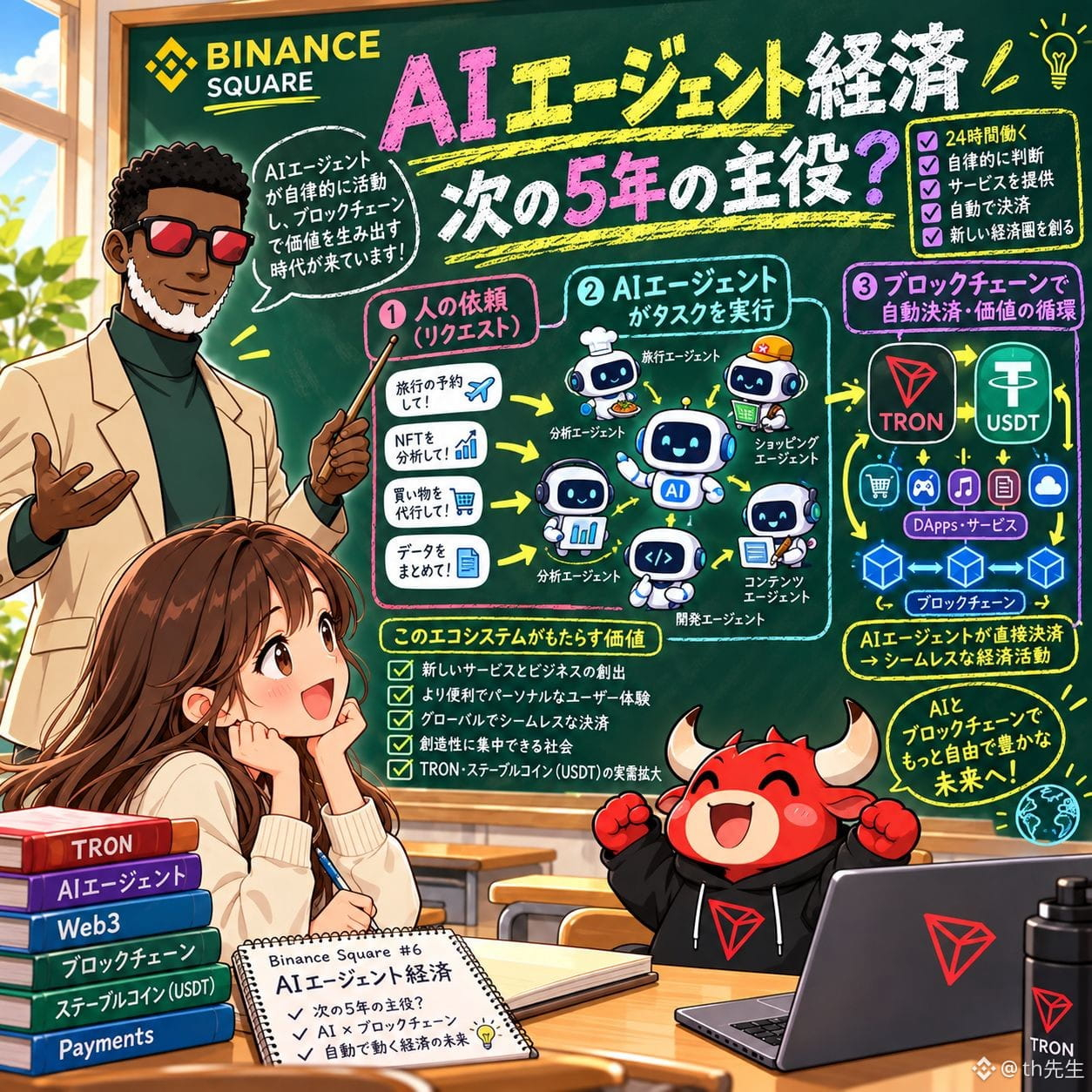
🧑🏫 Sunology | Does Justin Sun not see the next billion users as “human”?
At TOKEN2049 in October, Justin Sun shared a very intriguing prediction about the future.
“Crypto use by AI agents will become the industry’s biggest use case over the next five years.”
That was his forecast.
Until now, the blockchain industry has competed to find ways to increase the number of human users.
But Justin Sun is looking beyond that.
In an era when AI agents act autonomously, humans may no longer be the only ones conducting transactions.
For example:
① AI purchases the information it needs
② AIs pay each other for services
③ AI manages a company’s budget
④ AI assigns work to another AI
If this kind of economic activity becomes automated, it will need payment infrastructure behind the scenes.
🧑🏫 The key difference between humans and AI is worth noting here.
Humans can use bank accounts and credit cards, but autonomous payments by AI require different mechanisms, such as authorization and identity verification.
Blockchain is one candidate technology for supporting this new economy.
And TRON already has transaction-processing capacity and a payment network built through years of USDT transfers.
💭 My take
What’s interesting from Sunology’s perspective is that Justin Sun is focused not on the current market size, but on the players who could create the next market.
From payment infrastructure for humans to payment infrastructure for AI.
TRON’s next growth strategy may be about more than simply increasing its user count.
#TRONGlobalFriends #TGF #TRON
@JustinSun @TRONDAO
🧑🏫 Sunology | Does Justin Sun not see the next billion users as “human”?
At TOKEN2049 in October, Justin Sun shared a very intriguing prediction about the future.
“Crypto use by AI agents will become the industry’s biggest use case over the next five years.”
That was his forecast.
Until now, the blockchain industry has competed to find ways to increase the number of human users.
But Justin Sun is looking beyond that.
In an era when AI agents act autonomously, humans may no longer be the only ones conducting transactions.
For example:
① AI purchases the information it needs
② AIs pay each other for services
③ AI manages a company’s budget
④ AI assigns work to another AI
If this kind of economic activity becomes automated, it will need payment infrastructure behind the scenes.
🧑🏫 The key difference between humans and AI is worth noting here.
Humans can use bank accounts and credit cards, but autonomous payments by AI require different mechanisms, such as authorization and identity verification.
Blockchain is one candidate technology for supporting this new economy.
And TRON already has transaction-processing capacity and a payment network built through years of USDT transfers.
💭 My take
What’s interesting from Sunology’s perspective is that Justin Sun is focused not on the current market size, but on the players who could create the next market.
From payment infrastructure for humans to payment infrastructure for AI.
TRON’s next growth strategy may be about more than simply increasing its user count.
#TRONGlobalFriends #TGF #TRON
@Justin Sun孙宇晨 @TRON DAO
55
·
--
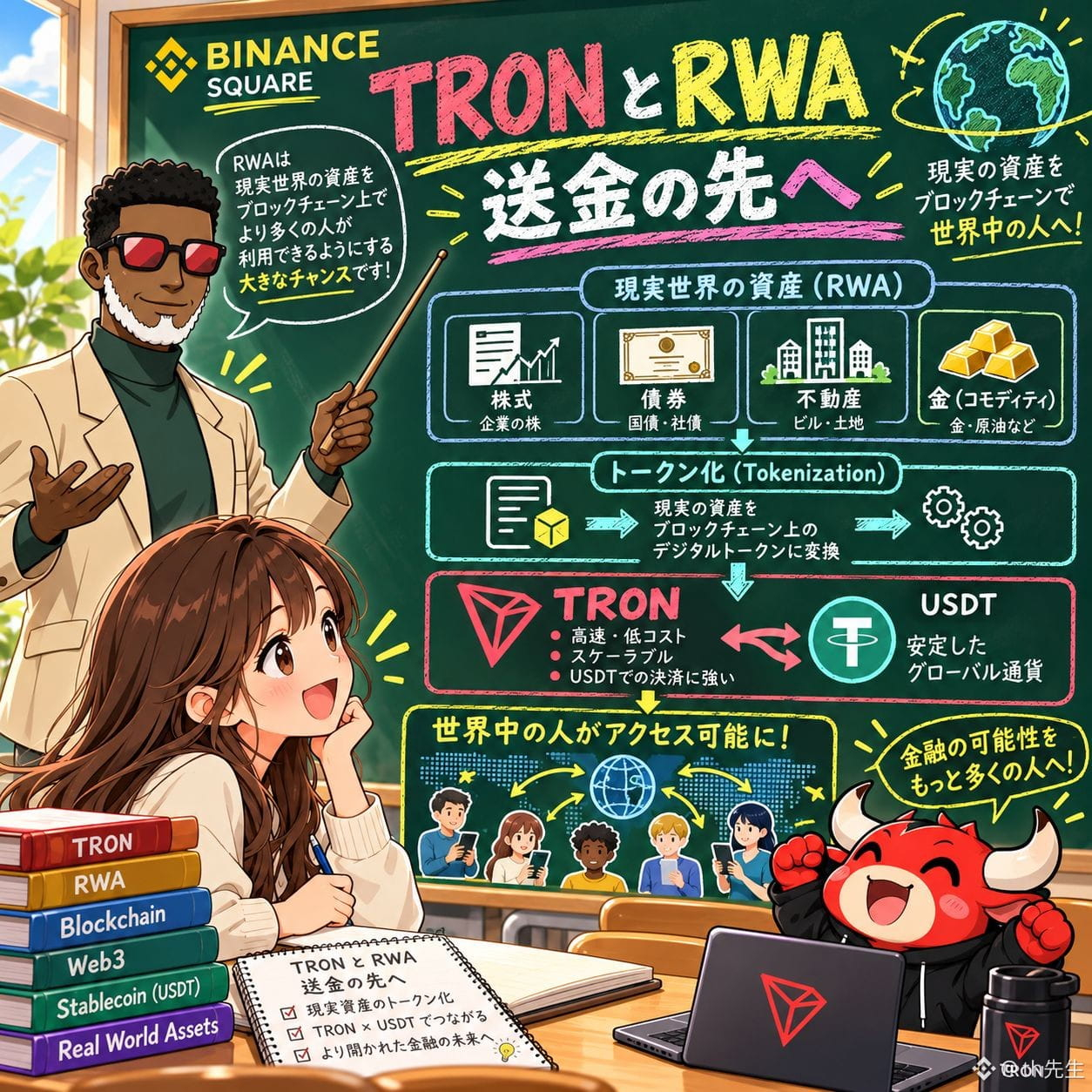
🧑🏫 TRON’s ambitions extend beyond dollar transfers to financial markets
On October 1, TRON DAO reported on discussions about RWAs at Korea Blockchain Week 2026.
Sam Reynolds of TRON DAO pointed out that the assets people can invest in are currently limited by where they live, and said tokenization could change that.
This is a very interesting point.
In today’s financial system, the investment products people can access vary significantly depending on the country they live in.
While some people can easily invest in U.S. financial products, in other regions, even opening a bank or brokerage account can be difficult.
That’s where RWAs, or the tokenization of real-world assets, come into focus.
Bringing stocks, government bonds, real estate, funds, and other assets onto the blockchain could make transferring and managing assets more efficient.
🧑🏫 This is where it connects with TRON’s existing business.
TRON already has an infrastructure for circulating USDT, a tokenized dollar.
What if, in the future, those users could access government bonds and investment products from the same wallet?
A payment network could become a gateway to asset management.
However, making this a reality will require compliance with securities regulations and identity verification requirements in each country.
💭 My thoughts
Considering Justin Sun’s strategy, the growth of USDT could be seen not as the ultimate goal, but as a starting point for expanding financial services.
Perhaps that’s why TRON is focusing on RWAs.
#TRONGlobalFriends #TGF #TRON
@JustinSun @TRONDAO
🧑🏫 TRON’s ambitions extend beyond dollar transfers to financial markets
On October 1, TRON DAO reported on discussions about RWAs at Korea Blockchain Week 2026.
Sam Reynolds of TRON DAO pointed out that the assets people can invest in are currently limited by where they live, and said tokenization could change that.
This is a very interesting point.
In today’s financial system, the investment products people can access vary significantly depending on the country they live in.
While some people can easily invest in U.S. financial products, in other regions, even opening a bank or brokerage account can be difficult.
That’s where RWAs, or the tokenization of real-world assets, come into focus.
Bringing stocks, government bonds, real estate, funds, and other assets onto the blockchain could make transferring and managing assets more efficient.
🧑🏫 This is where it connects with TRON’s existing business.
TRON already has an infrastructure for circulating USDT, a tokenized dollar.
What if, in the future, those users could access government bonds and investment products from the same wallet?
A payment network could become a gateway to asset management.
However, making this a reality will require compliance with securities regulations and identity verification requirements in each country.
💭 My thoughts
Considering Justin Sun’s strategy, the growth of USDT could be seen not as the ultimate goal, but as a starting point for expanding financial services.
Perhaps that’s why TRON is focusing on RWAs.
#TRONGlobalFriends #TGF #TRON
@Justin Sun孙宇晨 @TRON DAO
96
·
--
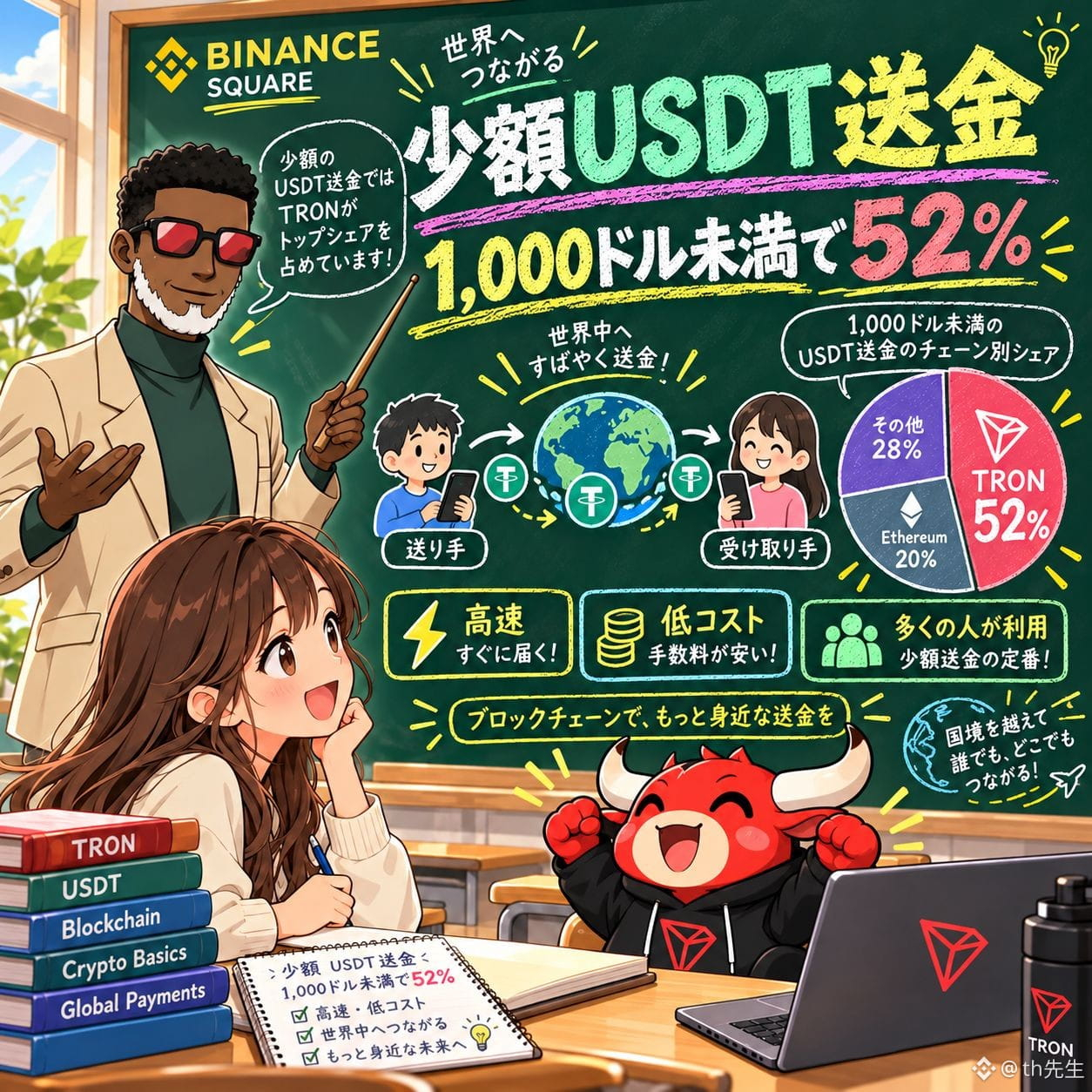
🧑🏫 TRON accounts for 52% of small USDT transfers. What does that mean?
According to data shared by TRON DAO in October, TRON accounted for 52% of USDT transfers under $1,000 among natively issuing chains in the second quarter of 2026.
I see this figure as an important indicator when considering TRON’s role as financial infrastructure.
That’s because large-scale fund movements and small-value transfers have different requirements.
Institutions sending millions of dollars may be able to tolerate some fees.
But for someone sending $100 to family, a fee of a few dollars is by no means insignificant.
What matters is:
① Transfer costs
② Processing speed
③ The recipient’s ability to use the funds
④ Network stability
TRON has focused on these practical needs and has built a particularly strong presence in USDT transfers.
🧑🏫 This is where I see consistency in Justin Sun’s strategy.
Rather than targeting only wealthy participants in financial markets from the outset, it taps into everyday transfer needs around the world.
This strategy builds a large user base first, then layers services on top of it.
💭 My take
Strength as financial infrastructure isn’t necessarily measured only by the size of the amounts moved at one time.
It’s also about being used repeatedly, even for small amounts.
I believe that everyday utility is the very source of TRON’s competitive edge.
#TRONGlobalFriends #TGF #TRON
@JustinSun @TRONDAO
🧑🏫 TRON accounts for 52% of small USDT transfers. What does that mean?
According to data shared by TRON DAO in October, TRON accounted for 52% of USDT transfers under $1,000 among natively issuing chains in the second quarter of 2026.
I see this figure as an important indicator when considering TRON’s role as financial infrastructure.
That’s because large-scale fund movements and small-value transfers have different requirements.
Institutions sending millions of dollars may be able to tolerate some fees.
But for someone sending $100 to family, a fee of a few dollars is by no means insignificant.
What matters is:
① Transfer costs
② Processing speed
③ The recipient’s ability to use the funds
④ Network stability
TRON has focused on these practical needs and has built a particularly strong presence in USDT transfers.
🧑🏫 This is where I see consistency in Justin Sun’s strategy.
Rather than targeting only wealthy participants in financial markets from the outset, it taps into everyday transfer needs around the world.
This strategy builds a large user base first, then layers services on top of it.
💭 My take
Strength as financial infrastructure isn’t necessarily measured only by the size of the amounts moved at one time.
It’s also about being used repeatedly, even for small amounts.
I believe that everyday utility is the very source of TRON’s competitive edge.
#TRONGlobalFriends #TGF #TRON
@Justin Sun孙宇晨 @TRON DAO
115
·
--
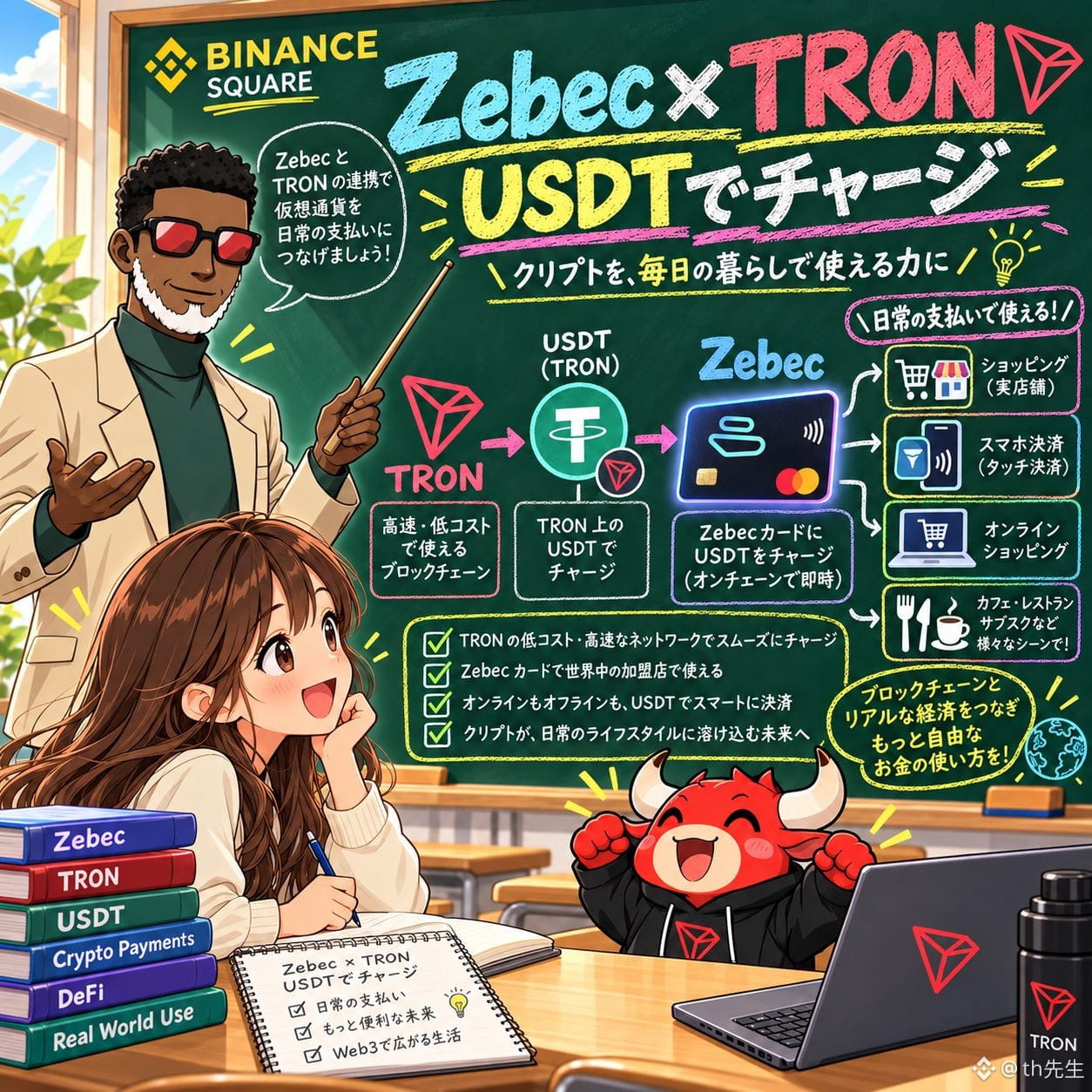
🧑🏫 What It Means for TRON’s USDT to Power Card Payments
On October 6, TRON DAO highlighted that Zebec card users can top up their card balances with USDT on TRON.
At first glance, this may look like a small expansion of payment services.
But I believe news like this is exactly where TRON’s growth strategy comes into view.
Cryptocurrency adoption has faced a longstanding challenge.
That is, “you can hold it, but there are few places where you can use it.”
For example, someone who receives their pay in USDT from overseas has traditionally needed to sell it on an exchange and transfer the funds to a bank account to use it in everyday life.
Connecting to card services could help reduce this kind of friction.
What TRON provides here is not the card itself.
It is the blockchain infrastructure that supplies funds to the card.
🧑🏫 This structure is similar to how the internet became widespread.
People use video platforms and social media, while communications infrastructure operates behind the scenes.
TRON, too, appears to be aiming to become financial infrastructure that people can use without even being aware of it.
💭 My take
Justin Sun has built a massive foundation for USDT circulation.
The next challenge is how much that USDT can be connected to real-world economic activity.
I see the Zebec integration as one example of that direction.
#TRONGlobalFriends #TGF #TRON
@JustinSun @TRONDAO
🧑🏫 What It Means for TRON’s USDT to Power Card Payments
On October 6, TRON DAO highlighted that Zebec card users can top up their card balances with USDT on TRON.
At first glance, this may look like a small expansion of payment services.
But I believe news like this is exactly where TRON’s growth strategy comes into view.
Cryptocurrency adoption has faced a longstanding challenge.
That is, “you can hold it, but there are few places where you can use it.”
For example, someone who receives their pay in USDT from overseas has traditionally needed to sell it on an exchange and transfer the funds to a bank account to use it in everyday life.
Connecting to card services could help reduce this kind of friction.
What TRON provides here is not the card itself.
It is the blockchain infrastructure that supplies funds to the card.
🧑🏫 This structure is similar to how the internet became widespread.
People use video platforms and social media, while communications infrastructure operates behind the scenes.
TRON, too, appears to be aiming to become financial infrastructure that people can use without even being aware of it.
💭 My take
Justin Sun has built a massive foundation for USDT circulation.
The next challenge is how much that USDT can be connected to real-world economic activity.
I see the Zebec integration as one example of that direction.
#TRONGlobalFriends #TGF #TRON
@Justin Sun孙宇晨 @TRON DAO
67
·
--
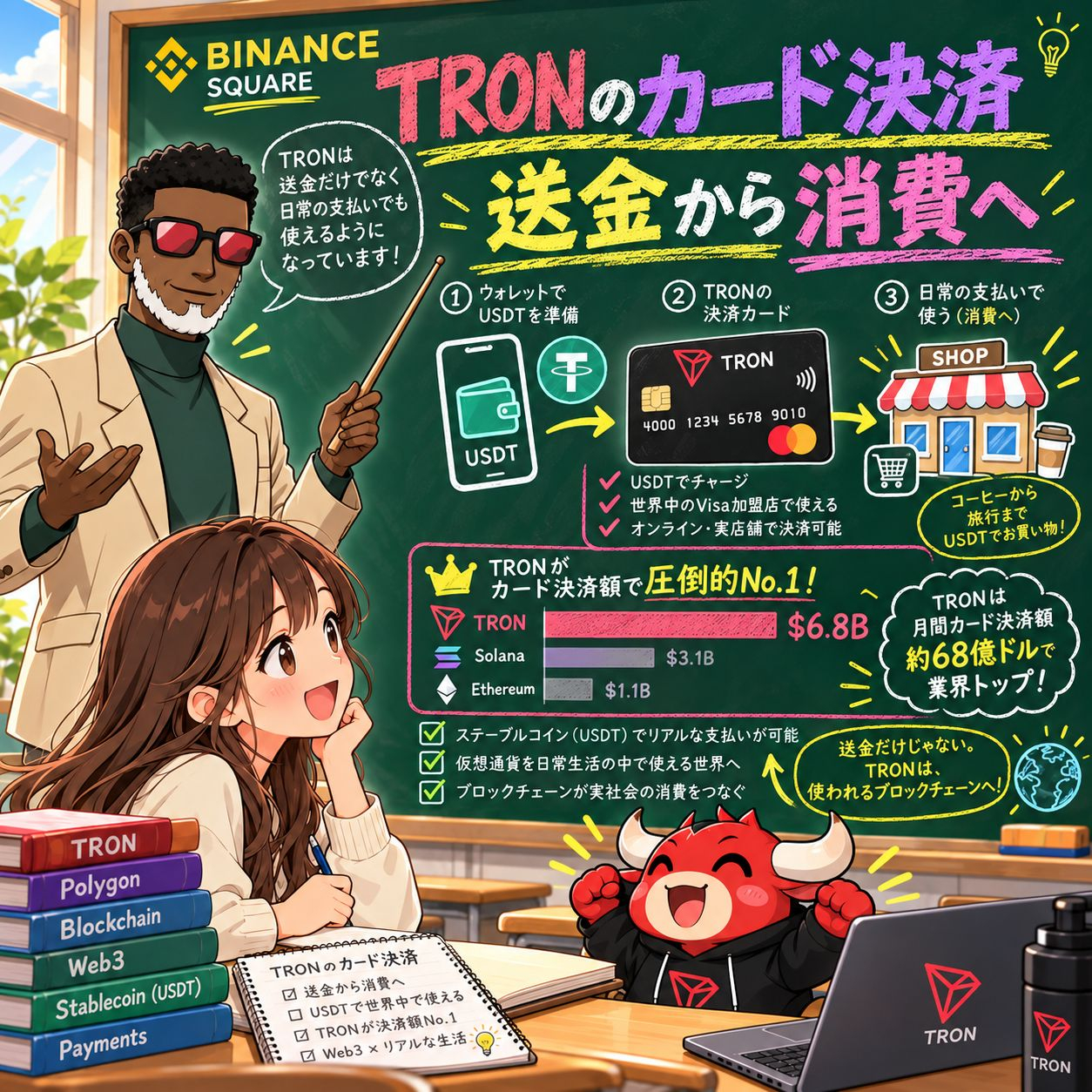
🧑🏫 USDT on TRON: From “Transfers” to “Spending”
According to data published by CryptoRank in October, stablecoin card transaction volume in Q3 2026 was approximately $4.31 billion.
TRON accounted for approximately $998 million of that total, taking the top spot with a 23.2% share.
What’s worth noting here is not simply that TRON’s transaction volume is large.
It’s that the very role of stablecoins is changing.
Until now, the main uses of USDT have primarily been:
① Moving funds between crypto exchanges
② International remittances
③ Holding dollar-denominated assets
But as stablecoins become more connected to card payments, they’re also being used to purchase everyday goods and services.
In other words, USDT is evolving from “USDT for moving money” into “USDT used as money.”
🧑🏫 Looking back at history, the conditions for a payment method to become widespread aren’t limited to technological advantages.
Where it can be used, how many people hold it, and how well it connects with merchants—all of these network effects matter.
TRON has built the infrastructure for USDT circulation by leveraging low fees and fast transfers.
The next step is connecting that infrastructure to consumer spending.
💭 My take
We can’t judge whether blockchain has taken root in society solely by how much investors hold.
What matters is how much it’s used in everyday life.
I believe that from now on, TRON’s value will depend not only on “transfer volume,” but also on how well it connects to consumer spending.
#TRONGlobalFriends #TGF #TRON
@JustinSun @TRONDAO
🧑🏫 USDT on TRON: From “Transfers” to “Spending”
According to data published by CryptoRank in October, stablecoin card transaction volume in Q3 2026 was approximately $4.31 billion.
TRON accounted for approximately $998 million of that total, taking the top spot with a 23.2% share.
What’s worth noting here is not simply that TRON’s transaction volume is large.
It’s that the very role of stablecoins is changing.
Until now, the main uses of USDT have primarily been:
① Moving funds between crypto exchanges
② International remittances
③ Holding dollar-denominated assets
But as stablecoins become more connected to card payments, they’re also being used to purchase everyday goods and services.
In other words, USDT is evolving from “USDT for moving money” into “USDT used as money.”
🧑🏫 Looking back at history, the conditions for a payment method to become widespread aren’t limited to technological advantages.
Where it can be used, how many people hold it, and how well it connects with merchants—all of these network effects matter.
TRON has built the infrastructure for USDT circulation by leveraging low fees and fast transfers.
The next step is connecting that infrastructure to consumer spending.
💭 My take
We can’t judge whether blockchain has taken root in society solely by how much investors hold.
What matters is how much it’s used in everyday life.
I believe that from now on, TRON’s value will depend not only on “transfer volume,” but also on how well it connects to consumer spending.
#TRONGlobalFriends #TGF #TRON
@Justin Sun孙宇晨 @TRON DAO
67
·
--
Article
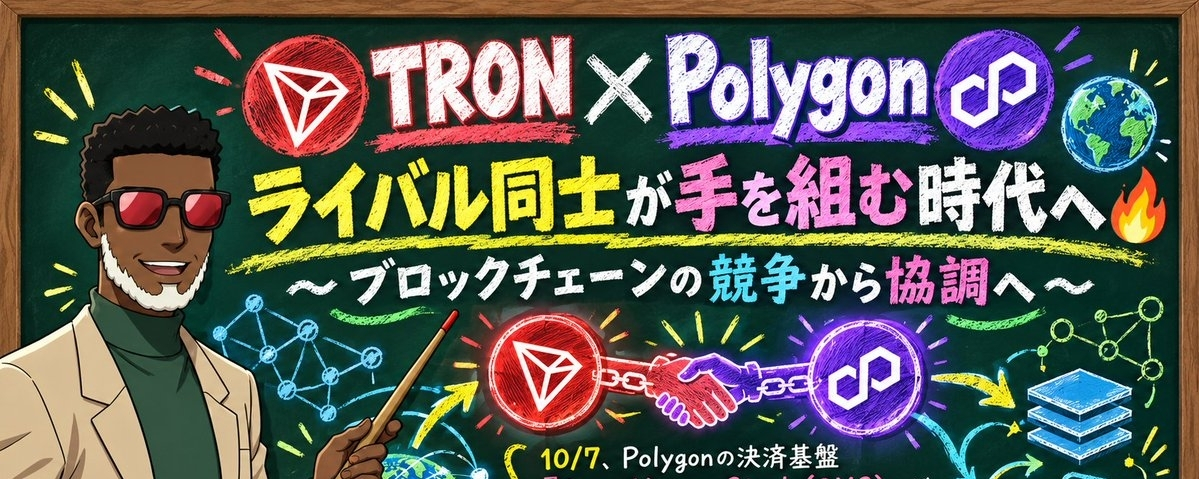
TRON × PolygonTRON × Polygon🌐
An era where rivals join forces🔥
~From blockchain competition to collaboration~
On 10/7, Polygon's payment infrastructure
"Open Money Stack (OMS)"
announced support for TRON!
This news is more than just a technical connection
I think this has an interesting significance👀
Let's take a closer look👇
1. What is Polygon OMS?
connecting banks and blockchain
is a payment infrastructure for businesses.
With this support for TRON
TRON × Polygon
TRON × Polygon🌐
An era where rivals join forces🔥
~From blockchain competition to collaboration~
On 10/7, Polygon's payment infrastructure
"Open Money Stack (OMS)"
announced support for TRON!
This news is more than just a technical connection
I think this has an interesting significance👀
Let's take a closer look👇
1. What is Polygon OMS?
connecting banks and blockchain
is a payment infrastructure for businesses.
With this support for TRON
122
·
--
Article
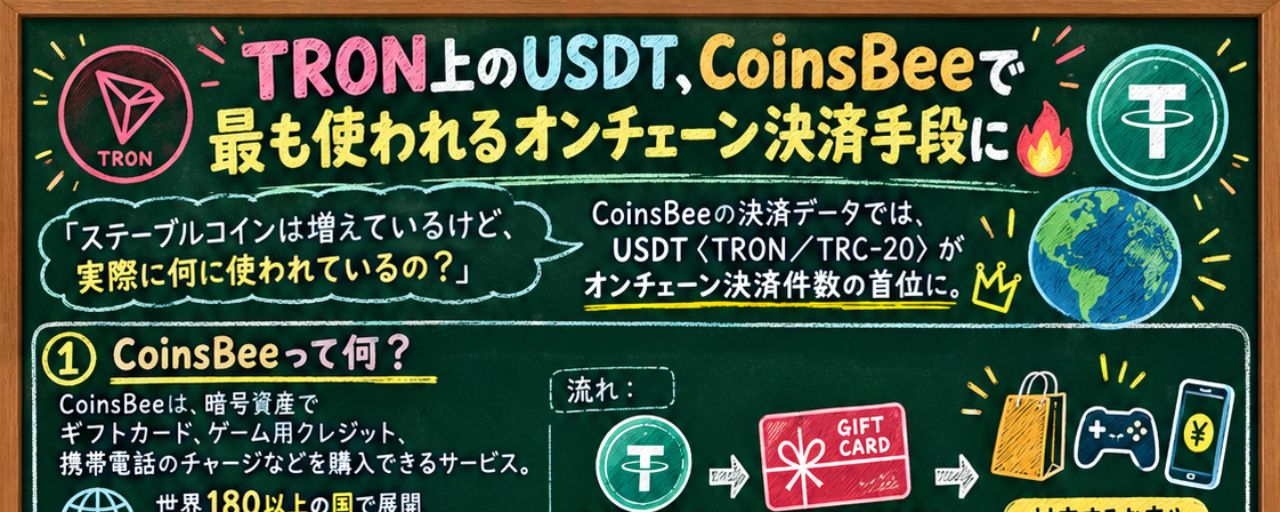
“Stablecoins are growing—but what are they actually being used for?”USDT on TRON— the most-used on-chain payment method on CoinsBee 🔥
“Stablecoins are growing—but what are they actually being used for?”
In response to this question, interesting data has emerged from real shopping scenes 👀
CoinsBee, which allows you to purchase gift cards and other items with cryptocurrency,
publishes payment data. By each currency and network combination,
"USDT" "TRON/TRC-20" became number one in terms of on-chain payment count.
“Stablecoins are growing—but what are they actually being used for?”
USDT on TRON— the most-used on-chain payment method on CoinsBee 🔥
“Stablecoins are growing—but what are they actually being used for?”
In response to this question, interesting data has emerged from real shopping scenes 👀
CoinsBee, which allows you to purchase gift cards and other items with cryptocurrency,
publishes payment data. By each currency and network combination,
"USDT" "TRON/TRC-20" became number one in terms of on-chain payment count.
“Stablecoins are growing—but what are they actually being used for?”
In response to this question, interesting data has emerged from real shopping scenes 👀
CoinsBee, which allows you to purchase gift cards and other items with cryptocurrency,
publishes payment data. By each currency and network combination,
"USDT" "TRON/TRC-20" became number one in terms of on-chain payment count.
177
·
--
Article
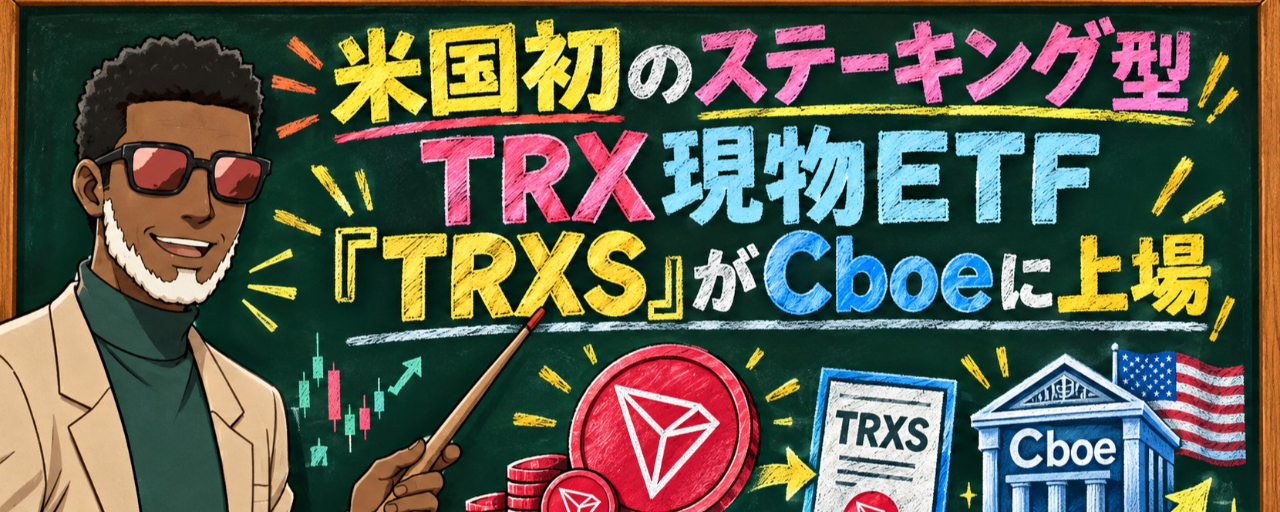
The first staking-type TRX spot ETF in the U.S., “TRXS,” is listed on CboeThe first staking-type TRX spot ETF in the U.S.
“TRXS” is listed on Cboe 📈
You can invest in TRX from a U.S. securities account,
also includes the staking rewards earned by the fund,
These are products that are reflected in the NAV.
Mr. Justin Sun said that, after the
Because an ETF was added to TRON-related companies,
“Listed companies + ETF”という
explaining that it gives access to two markets.
What will change for TRON?
Let’s take a look at the structure of the product as well👇
The first staking-type TRX spot ETF in the U.S., “TRXS,” is listed on Cboe
The first staking-type TRX spot ETF in the U.S.
“TRXS” is listed on Cboe 📈
You can invest in TRX from a U.S. securities account,
also includes the staking rewards earned by the fund,
These are products that are reflected in the NAV.
Mr. Justin Sun said that, after the
Because an ETF was added to TRON-related companies,
“Listed companies + ETF”という
explaining that it gives access to two markets.
What will change for TRON?
Let’s take a look at the structure of the product as well👇
2
280
·
--
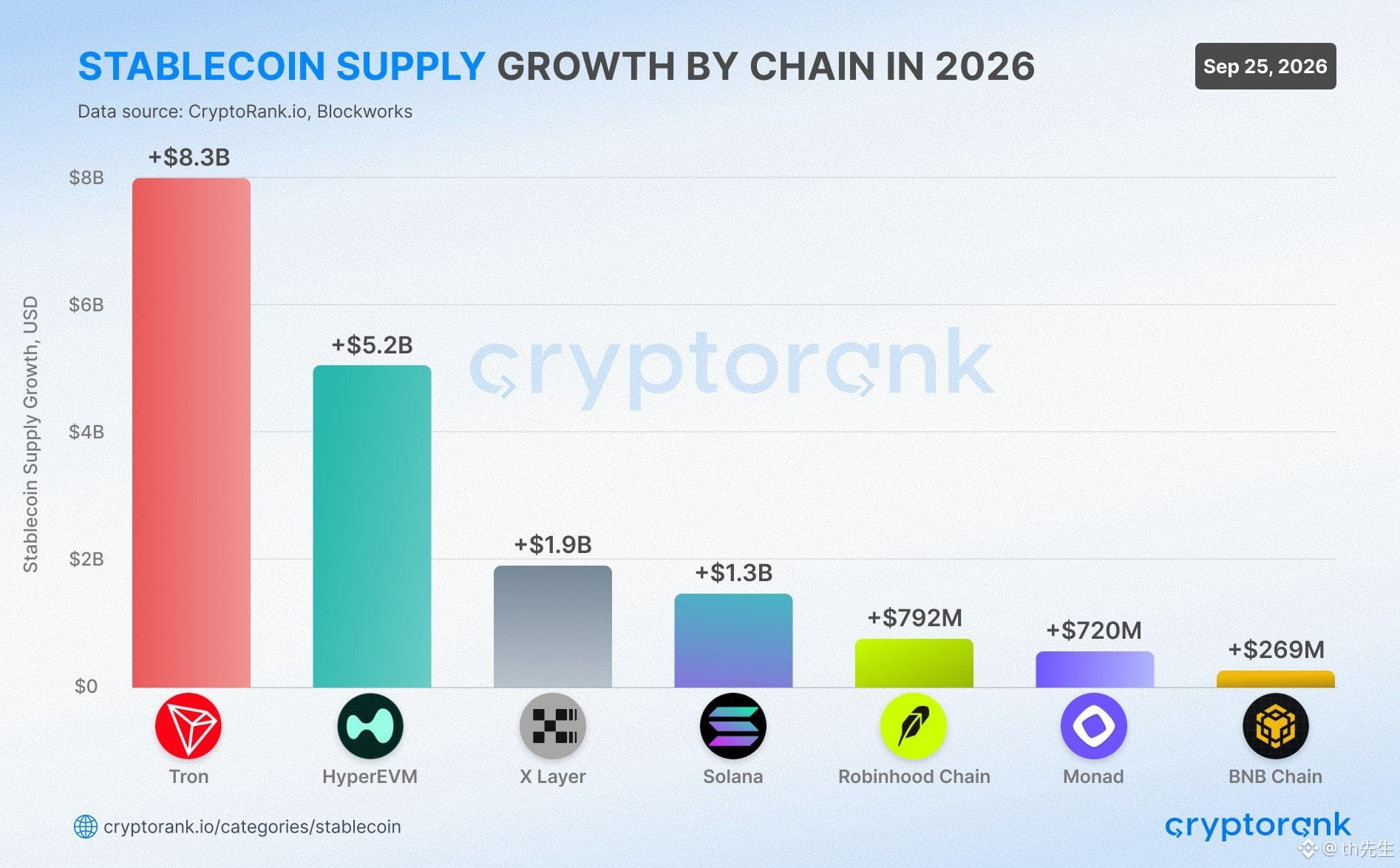
🔥 TRON tops the list with the largest stablecoin supply increase in 2026
According to CryptoRank, this year the amount of stablecoin supply increasing on TRON is +$8.35 billion— the highest among the compared chains 👀
① What does “an increase of $8.35 billion” mean?
It means the supply amount of stablecoins that exist on TRON has increased by that amount.
It’s not the transfer amount or the amount of TRX purchased.
This data suggests that the scale of funds available on TRON for holding, sending, trading, and more is expanding 💡
② Look separately at “growth rate” and “increase amount”
In the same dataset, HyperEVM recorded a high stablecoin supply growth rate of +753%.
The growth rate shows how much it grew from its original size.
The increase amount shows how much it actually increased in value.
What to focus on with TRON is that, while it already has a large stablecoin base, it’s also building up an additional $8.35 billion in supply.
Fast-growing emerging chains versus expanding already-established large networks.
They each mean something different.
③ In addition to supply, also look at “how it’s used”
In CryptoRank’s related articles, TRON’s daily stablecoin usage metric is about 800,000—and it is also ranked #1 among the comparison set.
*Aggregations like usage addresses don’t necessarily equal the number of unique people.
The supply amount is a clue to “how much capital there is,”
while usage metrics are a clue to “how much it’s being moved.”
As the stablecoin market expands, the key question is how far TRON becomes “the place where capital is stored and actively used in daily life.”
We’ll keep following this 🔥
#TRONGlobalFriends #TGF #TRON
@JustinSun
@TRONDAO
🔥 TRON tops the list with the largest stablecoin supply increase in 2026
According to CryptoRank, this year the amount of stablecoin supply increasing on TRON is +$8.35 billion— the highest among the compared chains 👀
① What does “an increase of $8.35 billion” mean?
It means the supply amount of stablecoins that exist on TRON has increased by that amount.
It’s not the transfer amount or the amount of TRX purchased.
This data suggests that the scale of funds available on TRON for holding, sending, trading, and more is expanding 💡
② Look separately at “growth rate” and “increase amount”
In the same dataset, HyperEVM recorded a high stablecoin supply growth rate of +753%.
The growth rate shows how much it grew from its original size.
The increase amount shows how much it actually increased in value.
What to focus on with TRON is that, while it already has a large stablecoin base, it’s also building up an additional $8.35 billion in supply.
Fast-growing emerging chains versus expanding already-established large networks.
They each mean something different.
③ In addition to supply, also look at “how it’s used”
In CryptoRank’s related articles, TRON’s daily stablecoin usage metric is about 800,000—and it is also ranked #1 among the comparison set.
*Aggregations like usage addresses don’t necessarily equal the number of unique people.
The supply amount is a clue to “how much capital there is,”
while usage metrics are a clue to “how much it’s being moved.”
As the stablecoin market expands, the key question is how far TRON becomes “the place where capital is stored and actively used in daily life.”
We’ll keep following this 🔥
#TRONGlobalFriends #TGF #TRON
@Justin Sun孙宇晨
@TRON DAO
1
116
·
--

Article
What is the Justin Sun Prize?If you solve difficult math problems,...
Can you get prize money from Justin Sun? 🤨?
This month, Mr. Justin Sun, the founder of TRON, has
He announced the “Justin Sun Prize.”
The catchphrase is “Proved, then paid.”
Prove it, then receive the reward.
But why are we in the world of crypto assets?
Did Mr. Justin Sun create a math prize?
Let’s take a look along with how it works👇
1. Why is it a math prize?
Mr. Justin Sun
“My source of wealth is mathematics.”
What is the Justin Sun Prize?
If you solve difficult math problems,...
Can you get prize money from Justin Sun? 🤨?
This month, Mr. Justin Sun, the founder of TRON, has
He announced the “Justin Sun Prize.”
The catchphrase is “Proved, then paid.”
Prove it, then receive the reward.
But why are we in the world of crypto assets?
Did Mr. Justin Sun create a math prize?
Let’s take a look along with how it works👇
1. Why is it a math prize?
Mr. Justin Sun
“My source of wealth is mathematics.”
1
113
·
--
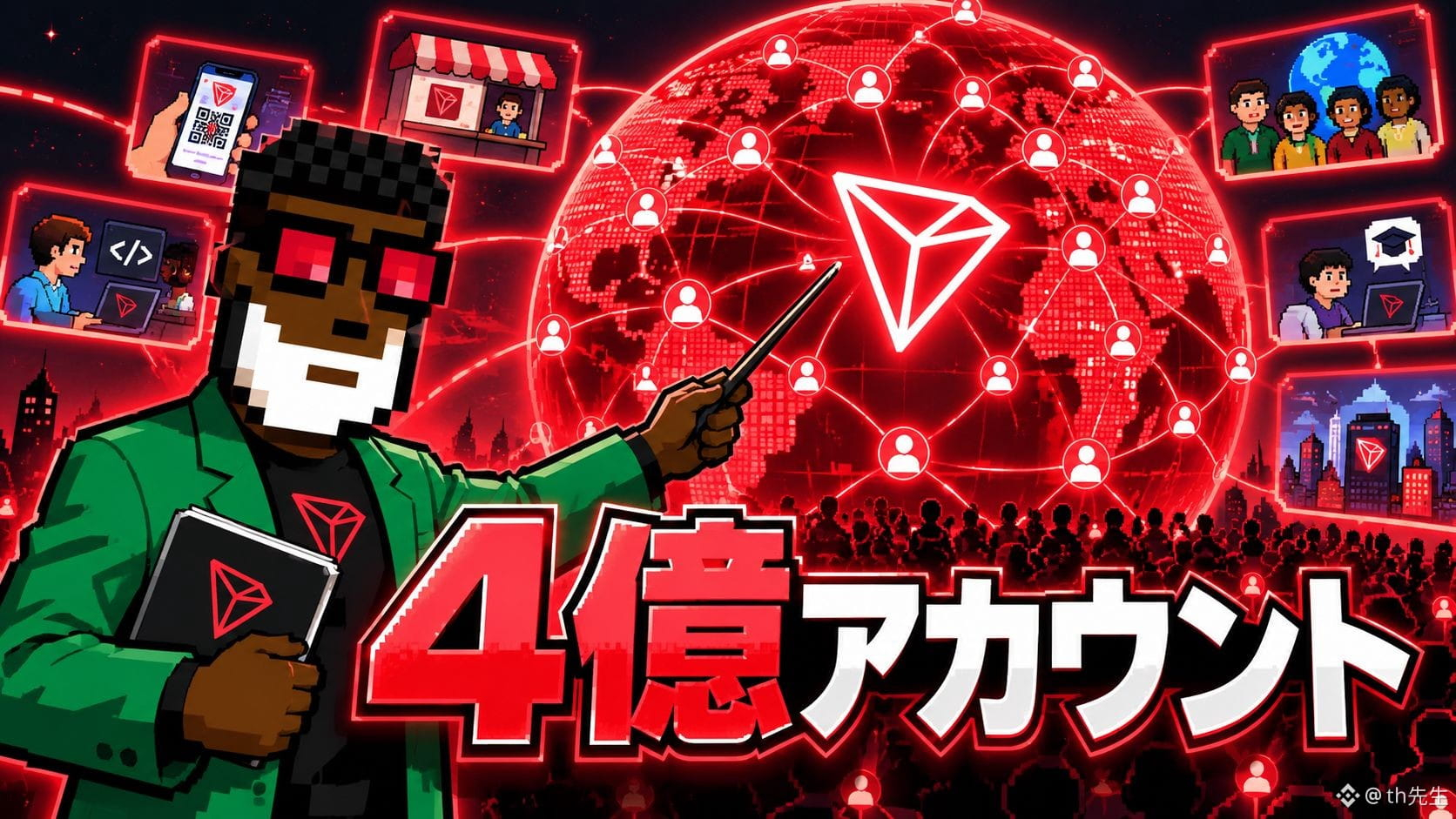
Not just “4 million”—let’s focus on the breakdown of “400 million accounts”
TRON introduces the background behind its renewed “breakthrough of 400 million accounts” 🌏
This figure wasn’t created by speculation alone, but includes:
✅ Sending and receiving USDT
✅ Businesses using it for payments
✅ Developers and students
✅ Regional community groups across different areas
The total number of accounts isn’t 400 million people, but rather the result of cumulative usage worldwide.
Next, pay attention to the growth of the active user base that continues using it—more than just the number of accounts.
#TRONGlobalFriends #TGF #TRON
@JustinSun @TRONDAO
Not just “4 million”—let’s focus on the breakdown of “400 million accounts”
TRON introduces the background behind its renewed “breakthrough of 400 million accounts” 🌏
This figure wasn’t created by speculation alone, but includes:
✅ Sending and receiving USDT
✅ Businesses using it for payments
✅ Developers and students
✅ Regional community groups across different areas
The total number of accounts isn’t 400 million people, but rather the result of cumulative usage worldwide.
Next, pay attention to the growth of the active user base that continues using it—more than just the number of accounts.
#TRONGlobalFriends #TGF #TRON
@Justin Sun孙宇晨 @TRON DAO
1
120
·
--
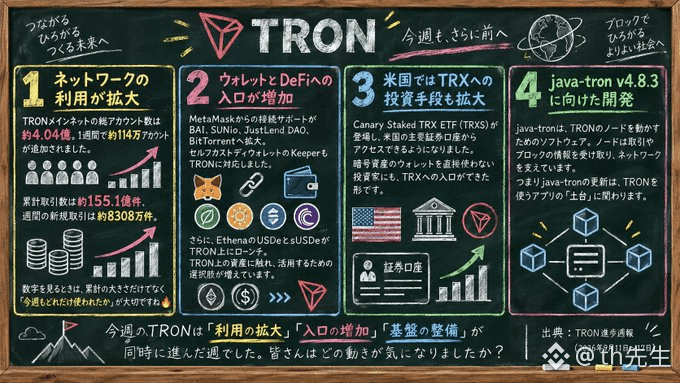
【TRON Weekly Summary】
📅 September 11–17 📅
This past week, TRON continued to draw attention not only for its scale of usage, but also for the widening of places where it can be used. Let’s narrow it down to three key points to look at together 📚
1. Network usage is expanding
The total number of accounts on the TRON mainnet is about 404 million. Approximately 1.14 million additional accounts were added over the course of the week.
The cumulative number of transactions is about 15.51 billion, with around 83.08 million new transactions during the week. When looking at the numbers, it’s important not only to consider how large the cumulative total is, but also how much the network was used this week as well 🔥
2. More entry points for wallets and DeFi
Connection support from MetaMask has expanded to BAI, SUNio, JustLend DAO, and BitTorrent. The Keeper self-custody wallet also added support for TRON.
In addition, Ethena’s USDe and sUSDe have launched on TRON. There are more options for engaging with and utilizing assets on TRON.
3. In the United States, investment options for TRX have also expanded
Canary Staked TRX ETF (TRXS) has launched, allowing access through major U.S. brokerage accounts. This provides an entry point to TRX even for investors who don’t directly use crypto wallets.
4. Development geared toward java-tron v4.8.3
java-tron is software used to run TRON nodes. Nodes receive transaction and block information and help support the network. In other words, updating java-tron is connected to the “foundation” of apps that use TRON.
This week was one where TRON’s “expanded usage,” “more entry points,” and “improved infrastructure” all progressed at the same time. Which of these developments are you most interested in?
#TRONGlobalFriends #TGF #TRON
@JustinSun @TRONDAO
【TRON Weekly Summary】
📅 September 11–17 📅
This past week, TRON continued to draw attention not only for its scale of usage, but also for the widening of places where it can be used. Let’s narrow it down to three key points to look at together 📚
1. Network usage is expanding
The total number of accounts on the TRON mainnet is about 404 million. Approximately 1.14 million additional accounts were added over the course of the week.
The cumulative number of transactions is about 15.51 billion, with around 83.08 million new transactions during the week. When looking at the numbers, it’s important not only to consider how large the cumulative total is, but also how much the network was used this week as well 🔥
2. More entry points for wallets and DeFi
Connection support from MetaMask has expanded to BAI, SUNio, JustLend DAO, and BitTorrent. The Keeper self-custody wallet also added support for TRON.
In addition, Ethena’s USDe and sUSDe have launched on TRON. There are more options for engaging with and utilizing assets on TRON.
3. In the United States, investment options for TRX have also expanded
Canary Staked TRX ETF (TRXS) has launched, allowing access through major U.S. brokerage accounts. This provides an entry point to TRX even for investors who don’t directly use crypto wallets.
4. Development geared toward java-tron v4.8.3
java-tron is software used to run TRON nodes. Nodes receive transaction and block information and help support the network. In other words, updating java-tron is connected to the “foundation” of apps that use TRON.
This week was one where TRON’s “expanded usage,” “more entry points,” and “improved infrastructure” all progressed at the same time. Which of these developments are you most interested in?
#TRONGlobalFriends #TGF #TRON
@Justin Sun孙宇晨 @TRON DAO
1
104
·
--
Campaign Comparison by Global Community 🆕
In the Japanese community, TRON (@TRONDAO ) regularly holds giveaways—such as AmaGifts and $TRX.
We’ll also try events from other countries ✅👀
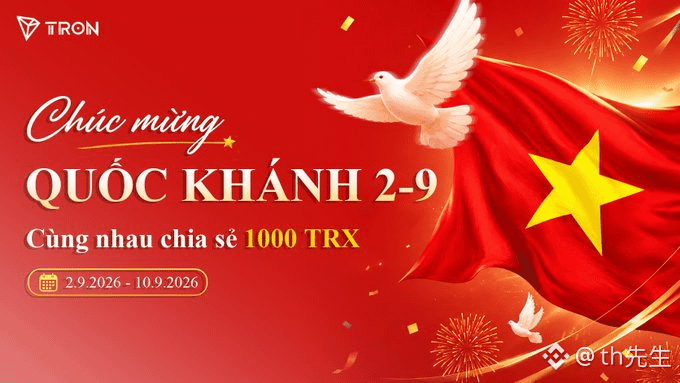
🇻🇳 Vietnam
To celebrate Vietnam’s National Day, an event is being held 🎉 where you can win 1000 TRX.
In the participation requirements, it says “create AI images/videos,”
and in the reply section you can see unique posts 🪷
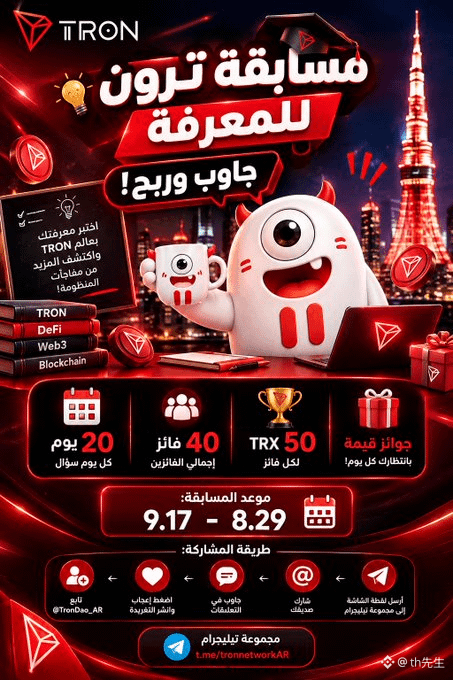
🌞 Arabic-speaking region
They’re running what they call a knowledge contest 🧠
Quizzes are posted every day for 20 days,
and participants post their answers in the Telegram community.
40 people get prizes 💰
It’s a great event where you can learn while having fun 💮
🇨🇳🇭🇰🇹🇼 Chinese-speaking region
To celebrate the Mid-Autumn Festival on 9/25, they’re currently holding an event 🎁
themed around “Chunqiu Lihe” (Mid-Autumn Gift Box),
centered on sending gift boxes with mooncakes.
Delicious-looking treats and cute goods ☺️
In Japan, to commemorate Silver Week,
a very luxurious campaign is currently running 👀
with an AmaGift worth 40,000 yen and TRX worth about 65,000 yen.
Since the tasks are super easy, let’s participate ◎
For details, check the quoted source ✅
#TRONGlobalFriends #TGF #TRON
@JustinSun @TRONDAO
Campaign Comparison by Global Community 🆕
In the Japanese community, TRON (@TRON DAO ) regularly holds giveaways—such as AmaGifts and $TRX.
We’ll also try events from other countries ✅👀
🇻🇳 Vietnam
To celebrate Vietnam’s National Day, an event is being held 🎉 where you can win 1000 TRX.
In the participation requirements, it says “create AI images/videos,”
and in the reply section you can see unique posts 🪷
🌞 Arabic-speaking region
They’re running what they call a knowledge contest 🧠
Quizzes are posted every day for 20 days,
and participants post their answers in the Telegram community.
40 people get prizes 💰
It’s a great event where you can learn while having fun 💮
🇨🇳🇭🇰🇹🇼 Chinese-speaking region
To celebrate the Mid-Autumn Festival on 9/25, they’re currently holding an event 🎁
themed around “Chunqiu Lihe” (Mid-Autumn Gift Box),
centered on sending gift boxes with mooncakes.
Delicious-looking treats and cute goods ☺️
In Japan, to commemorate Silver Week,
a very luxurious campaign is currently running 👀
with an AmaGift worth 40,000 yen and TRX worth about 65,000 yen.
Since the tasks are super easy, let’s participate ◎
For details, check the quoted source ✅
#TRONGlobalFriends #TGF #TRON
@Justin Sun孙宇晨 @TRON DAO


1
161
·
--
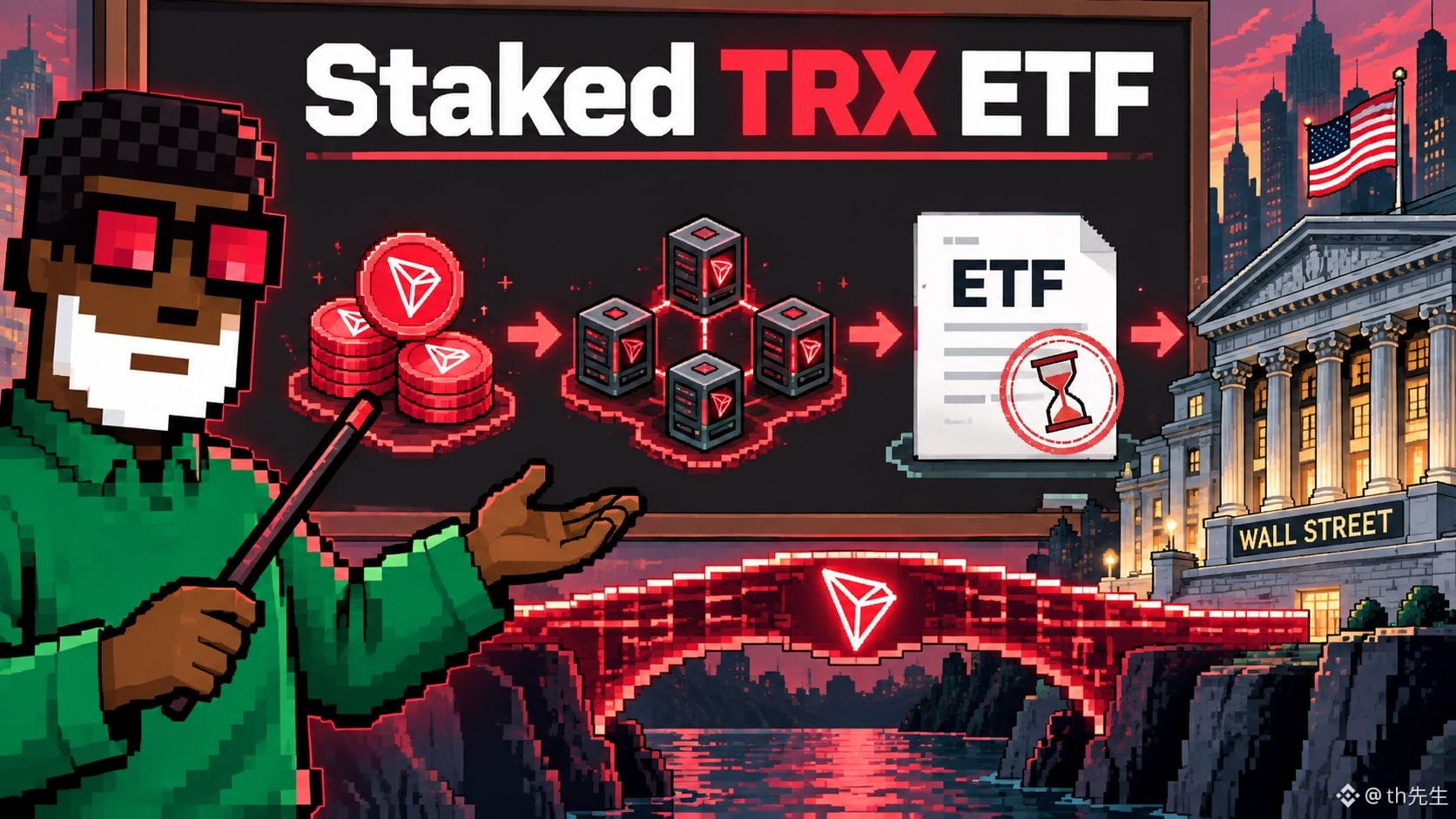
The US staking-type TRX ETF proposal is drawing renewed attention
In the United States, a plan to list a “Canary Staked TRX ETF” is currently underway 🇺🇸
The design is not only intended to track the TRX price, but also to stake the TRX held and pass the rewards back to investors.
If it comes to fruition, it would allow access to TRX and staking earnings without using a wallet.
However, as of now it has not yet received SEC approval, so the listing is not confirmed ⚠️
#TRONGlobalFriends #TGF #TRON
@JustinSun @TRONDAO
The US staking-type TRX ETF proposal is drawing renewed attention
In the United States, a plan to list a “Canary Staked TRX ETF” is currently underway 🇺🇸
The design is not only intended to track the TRX price, but also to stake the TRX held and pass the rewards back to investors.
If it comes to fruition, it would allow access to TRX and staking earnings without using a wallet.
However, as of now it has not yet received SEC approval, so the listing is not confirmed ⚠️
#TRONGlobalFriends #TGF #TRON
@Justin Sun孙宇晨 @TRON DAO
1
405
·
--
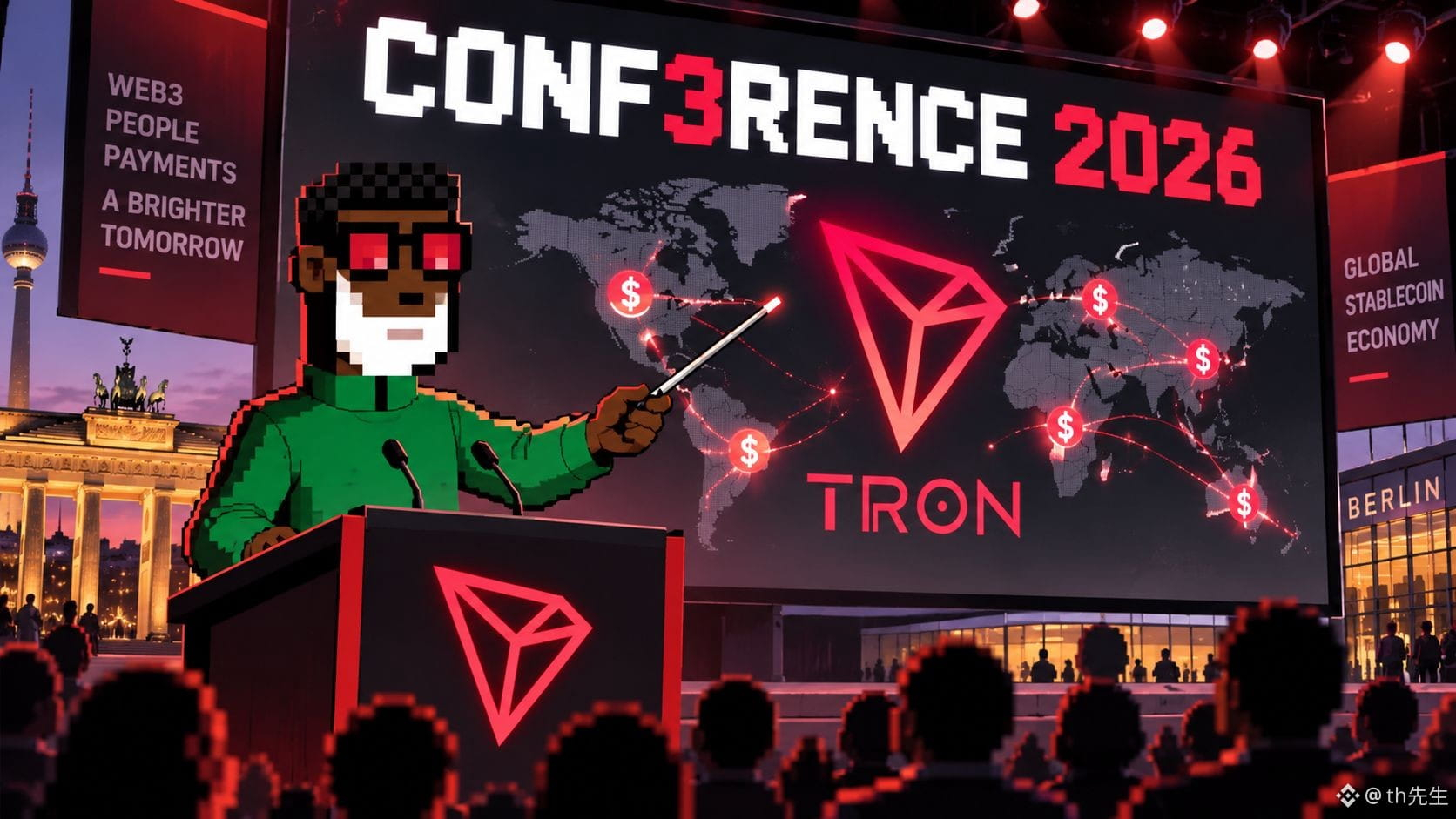
TRON DAO to Participate in CONF3RENCE 2026
TRON DAO will take part in “CONF3RENCE 2026” taking place in Germany 🌍
The theme is stablecoins that have already reached large-scale adoption.
In the Web3 industry, new technologies tend to draw attention, but what TRON is showing is the form of crypto assets that already operate in everyday life.
Instead of emphasizing novelty in technology, this is a TRON-style message that puts real-world demand for transfers and payments front and center.
#TRONGlobalFriends #TGF #TRON
@JustinSun @TRONDAO
TRON DAO to Participate in CONF3RENCE 2026
TRON DAO will take part in “CONF3RENCE 2026” taking place in Germany 🌍
The theme is stablecoins that have already reached large-scale adoption.
In the Web3 industry, new technologies tend to draw attention, but what TRON is showing is the form of crypto assets that already operate in everyday life.
Instead of emphasizing novelty in technology, this is a TRON-style message that puts real-world demand for transfers and payments front and center.
#TRONGlobalFriends #TGF #TRON
@Justin Sun孙宇晨 @TRON DAO
1
99
·
--
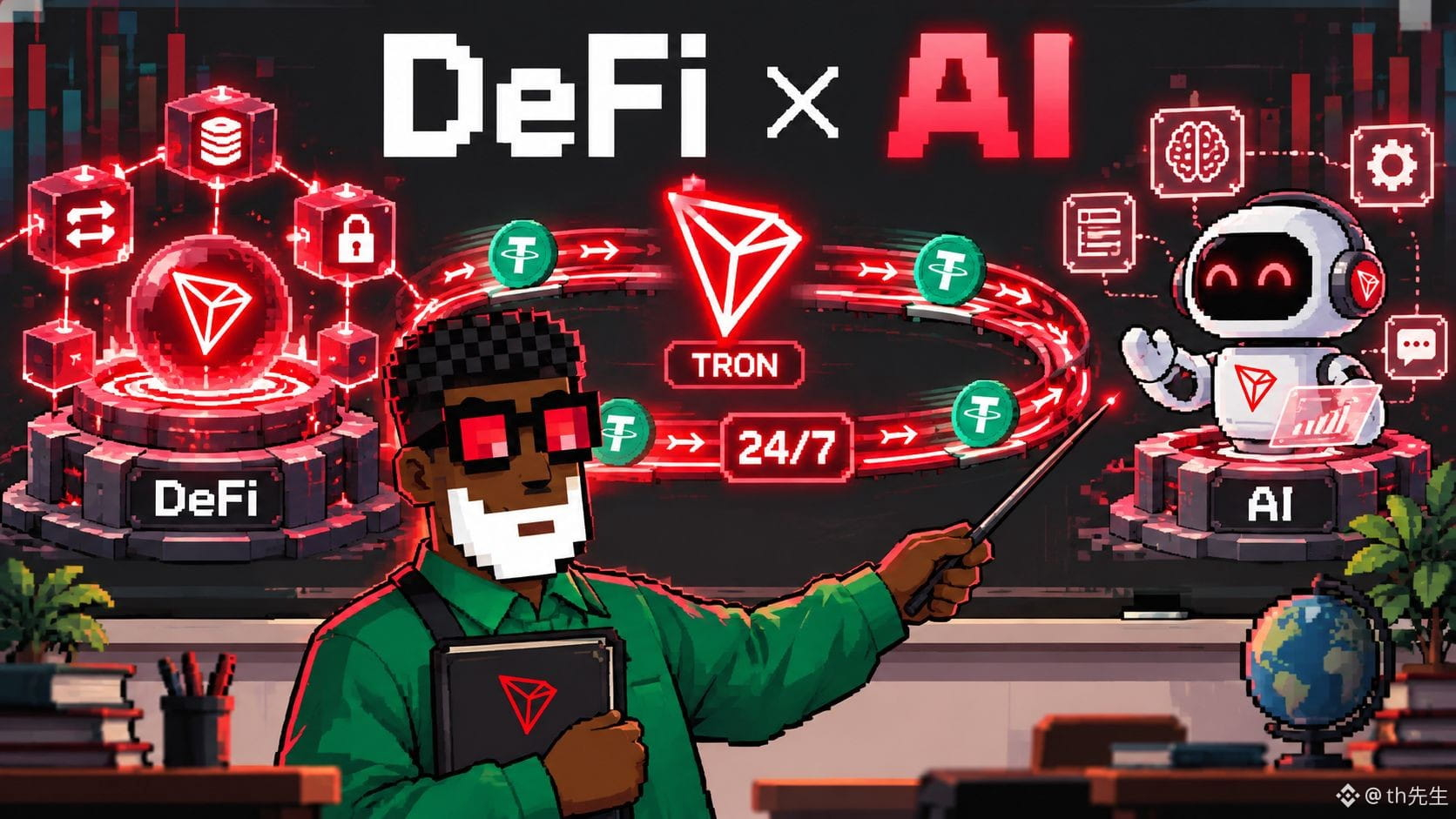
Place DeFi and AI in the next growth frontier
TRON emphasizes “DeFi×AI” as a growth theme for the first half of 2026 🤖
TRON’s strength isn’t the AI model itself, but
✅ 24/7 operation
✅ Global-scale USDT liquidity
✅ Fast value transfer
✅ Programmable payments
as a financial infrastructure.
As an era approaches where AI agents pay for themselves, all eyes are on whether TRON can become the settlement layer.
#TRONGlobalFriends #TGF #TRON
@JustinSun @TRONDAO
Place DeFi and AI in the next growth frontier
TRON emphasizes “DeFi×AI” as a growth theme for the first half of 2026 🤖
TRON’s strength isn’t the AI model itself, but
✅ 24/7 operation
✅ Global-scale USDT liquidity
✅ Fast value transfer
✅ Programmable payments
as a financial infrastructure.
As an era approaches where AI agents pay for themselves, all eyes are on whether TRON can become the settlement layer.
#TRONGlobalFriends #TGF #TRON
@Justin Sun孙宇晨 @TRON DAO
1
91
Log in to explore more content
Join global crypto users on Binance Square
⚡️ Get latest and useful information about crypto.
💬 Trusted by the world’s largest crypto exchange.
👍 Discover real insights from verified creators.
Email / Phone number
Trending Topics
BinancePick
3.4M views
165,811 Discussing
Join #EarningsSeason: Predict Earnings on Binance Pick, Share Your Take on Binance Square!
Binance Square Official
·420 Likes
·345.7k views
EarningsSeason
5.5M views
27,011 Discussing
StrategySkipsBitcoinPurchasesSpends$205MOnSTRCBuybacks
1,130 views
38 Discussing