

陳夕觀察
163 Posts

陳夕觀察
Report
Block User
关注全球资产、宏观、美股、Crypto与Web3。用一张图拆解市场逻辑、交易方法与风险管理。

牛来 Holder
High-Frequency Trader
2 Years
73 Following
164 Followers
72 Liked
Posts
All
Videos
·
--

Article
🚨Brazil’s crypto market faces a major regulatory test! Will exchanges have to exit if they don’t apply for a license?Global crypto regulations are tightening at an accelerating pace!
On October 30, Brazil’s crypto exchanges face a key deadline. Under new rules from Brazil’s central bank, locally operating platforms must submit an application for an operating license by that date or cease the relevant business within the prescribed period.
Major exchanges such as Binance, Coinbase, and OKX have already submitted applications.
This regulation mainly covers:
🔹Licensing requirements: Platforms that fail to apply on time will be unable to continue operating normally.
🔹Fund security: Strengthening customer asset protection, anti-money laundering measures, and risk management.
🔹Industry shake-up: Compliance costs are rising, putting greater pressure on small and medium-sized exchanges.
🚨Brazil’s crypto market faces a major regulatory test! Will exchanges have to exit if they don’t apply for a license?
Global crypto regulations are tightening at an accelerating pace!
On October 30, Brazil’s crypto exchanges face a key deadline. Under new rules from Brazil’s central bank, locally operating platforms must submit an application for an operating license by that date or cease the relevant business within the prescribed period.
Major exchanges such as Binance, Coinbase, and OKX have already submitted applications.
This regulation mainly covers:
🔹Licensing requirements: Platforms that fail to apply on time will be unable to continue operating normally.
🔹Fund security: Strengthening customer asset protection, anti-money laundering measures, and risk management.
🔹Industry shake-up: Compliance costs are rising, putting greater pressure on small and medium-sized exchanges.
187
·
--
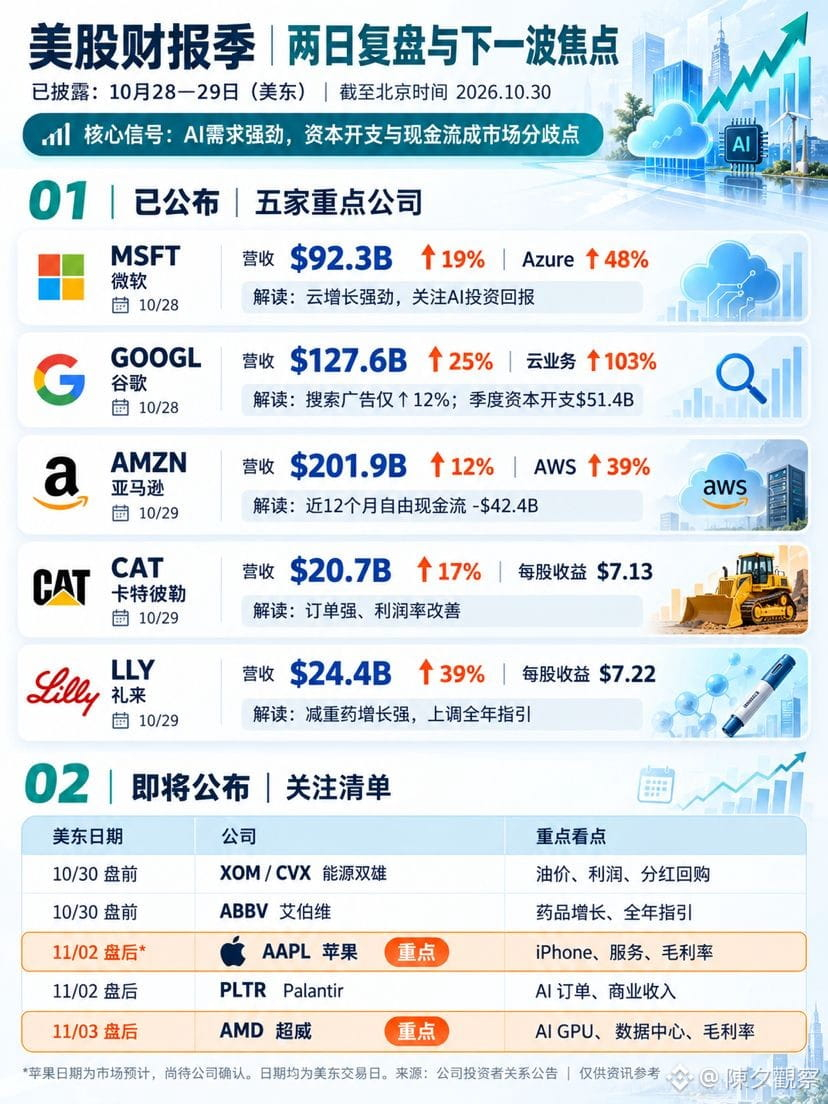
🔥 U.S. earnings reports are pouring in! AI growth remains strong, but the market is starting to worry about something else…
Over the past two days, several U.S. giants have reported their latest results:
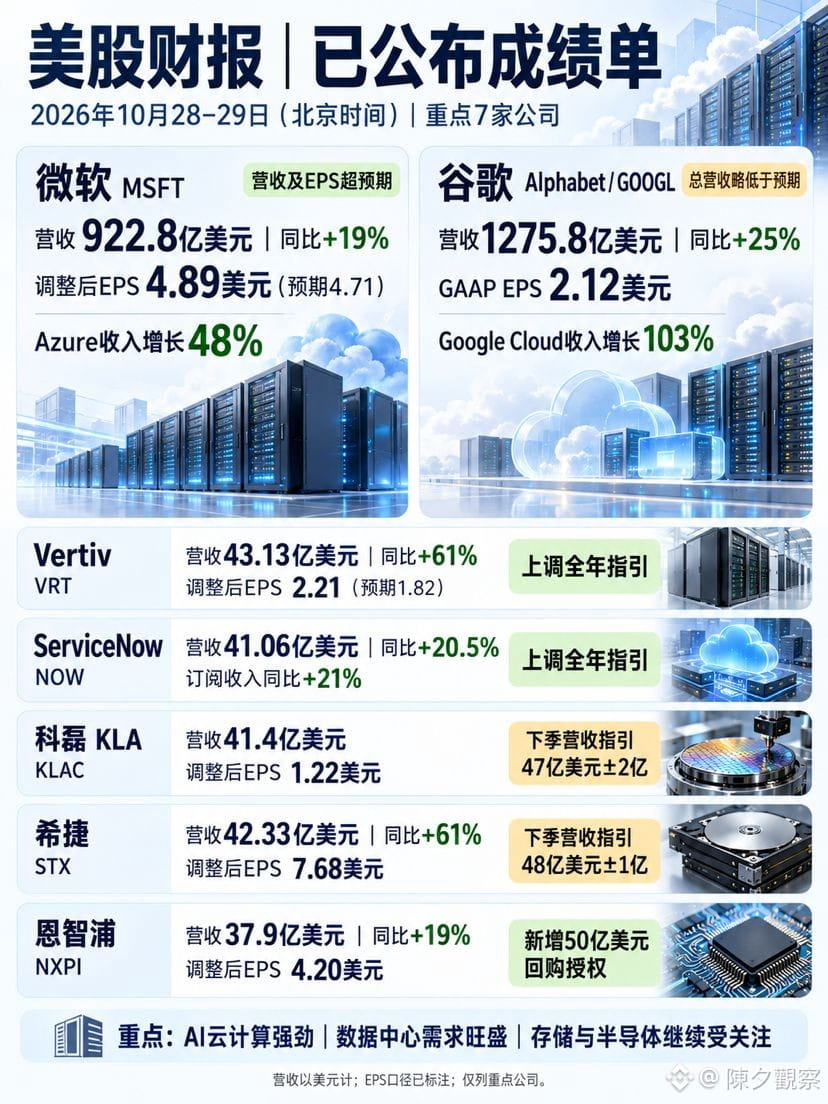
📈 Microsoft: Revenue grew 19%, while its Azure cloud business grew 48%—a strong performance.
📊 Google: Revenue grew 25% and its cloud business surged 103%, but search ad growth slowed and capital spending continued to climb.
⚡ Amazon: AWS grew 39%, but massive AI investments are putting pressure on free cash flow.
💊 Eli Lilly: Revenue grew 39%, demand for weight-loss drugs remained strong, and the company raised its full-year guidance.
🏗️ Caterpillar: Revenue grew 17%, showing resilience in industrial demand.
This round of earnings reports sends an important signal: AI demand remains strong, but Wall Street is no longer satisfied with high growth alone. It is paying closer attention to returns on investment, margins, and cash flow.
🔍 Key reports to watch next:
* October 30: Exxon Mobil, Chevron
* November 2: Apple (expected), Palantir
* November 3: AMD
AMD in particular: the performance of its AI chip business could influence market sentiment across the entire semiconductor sector.
What determines the direction of share prices next may not just be how good the results are, but whether they exceed market expectations!
#美股财报季来袭
126
·
--
Bullish
See translation
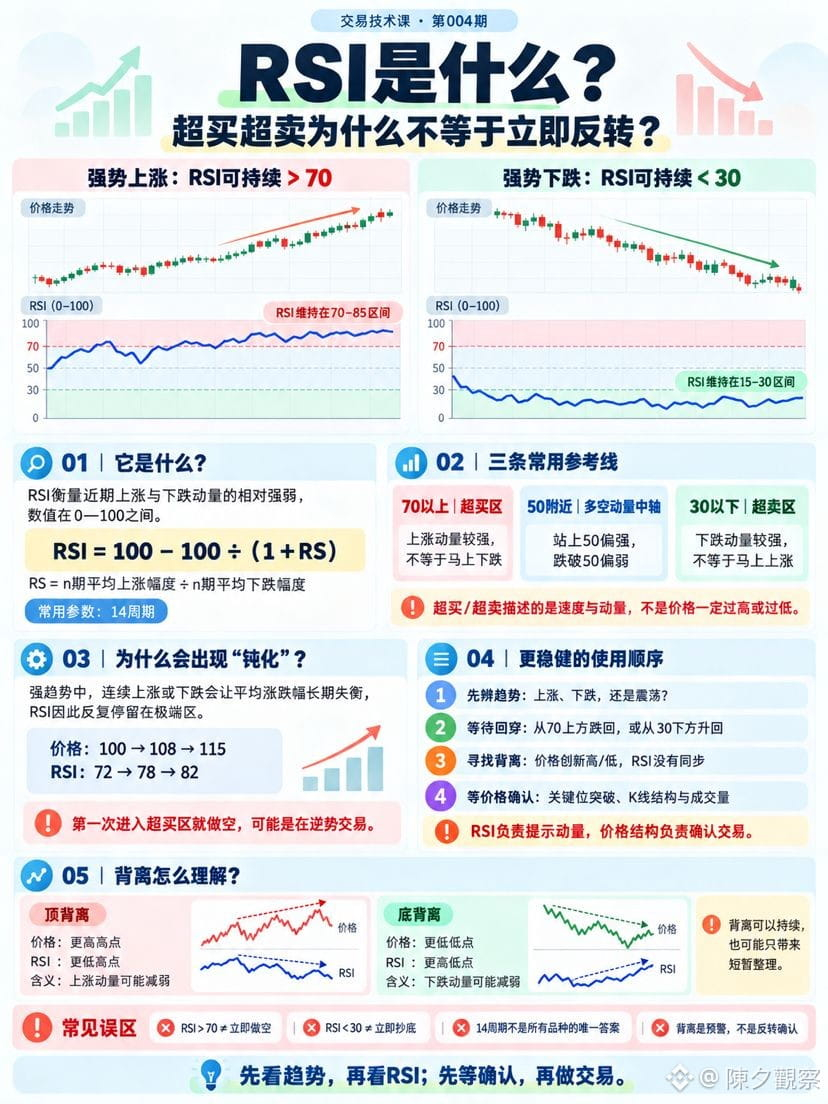
RSI是什么?超买超卖为何不等于立即反转?
图片采用浅色高对比设计,双趋势图对照RSI“钝化”现象;无品牌文字、星期角标及下期预告。
📊 RSI超70就做空、低于30就抄底?这是最常见的指标误区。
RSI衡量近期价格涨跌动量,数值0-100,常用14周期:
RSI=100-100÷(1+RS)
RS为一时段平均涨幅与平均跌幅之比。
参考线:
70以上:上涨动量强,称超买区
50附近:多空动量中轴
30以下:下跌动量强,称超卖区
超买不代表价格已到顶,超卖也不代表马上见底。强势行情中,RSI可连续数日甚至数周停留极端区域。
更稳健用法:
先判趋势 → 等RSI回穿 → 看价格与RSI背离 → 等关键位与成交量确认
例如,RSI从70上方跌回且价格跌破支撑,比单纯“RSI>70”更有参考价值。同理,RSI从30下方回升后,还须观察价格能否站上阻力或均线。
⚠️ RSI提示动量,价格结构确认交易。背离仅是预警,非立即反转保证。
📅 下期预告
周六|交易实战|第004期
《RSI背离怎么交易?从确认、入场到止损的完整案例》
59
·
--

Article
Financial Morning Briefing — October 30, 202601|Binance Investigates Potential Security Incident
Binance is investigating a potential security issue. Tether and Circle have frozen a combined total of over $2.38 billion in related stablecoins. The exact losses have not been confirmed; official findings are pending.
02|Polymarket Resumes Trading
Polymarket has resumed trading after pausing it due to a third-party security incident and said it will compensate affected users.
03|U.S. Stocks Close Lower
The Nasdaq fell 1.37%, the S&P 500 fell 0.30%, and the Dow fell 0.25%. AI capital spending and concerns over earnings delivery continued to weigh on tech stocks.
04|Alphabet Shares Plunge
Alphabet fell about 12.6% during regular trading. The market is scrutinizing the relationship between massive AI investments and free cash flow more closely.
Financial Morning Briefing — October 30, 2026
01|Binance Investigates Potential Security Incident
Binance is investigating a potential security issue. Tether and Circle have frozen a combined total of over $2.38 billion in related stablecoins. The exact losses have not been confirmed; official findings are pending.
02|Polymarket Resumes Trading
Polymarket has resumed trading after pausing it due to a third-party security incident and said it will compensate affected users.
03|U.S. Stocks Close Lower
The Nasdaq fell 1.37%, the S&P 500 fell 0.30%, and the Dow fell 0.25%. AI capital spending and concerns over earnings delivery continued to weigh on tech stocks.
04|Alphabet Shares Plunge
Alphabet fell about 12.6% during regular trading. The market is scrutinizing the relationship between massive AI investments and free cash flow more closely.
387
·
--
Article
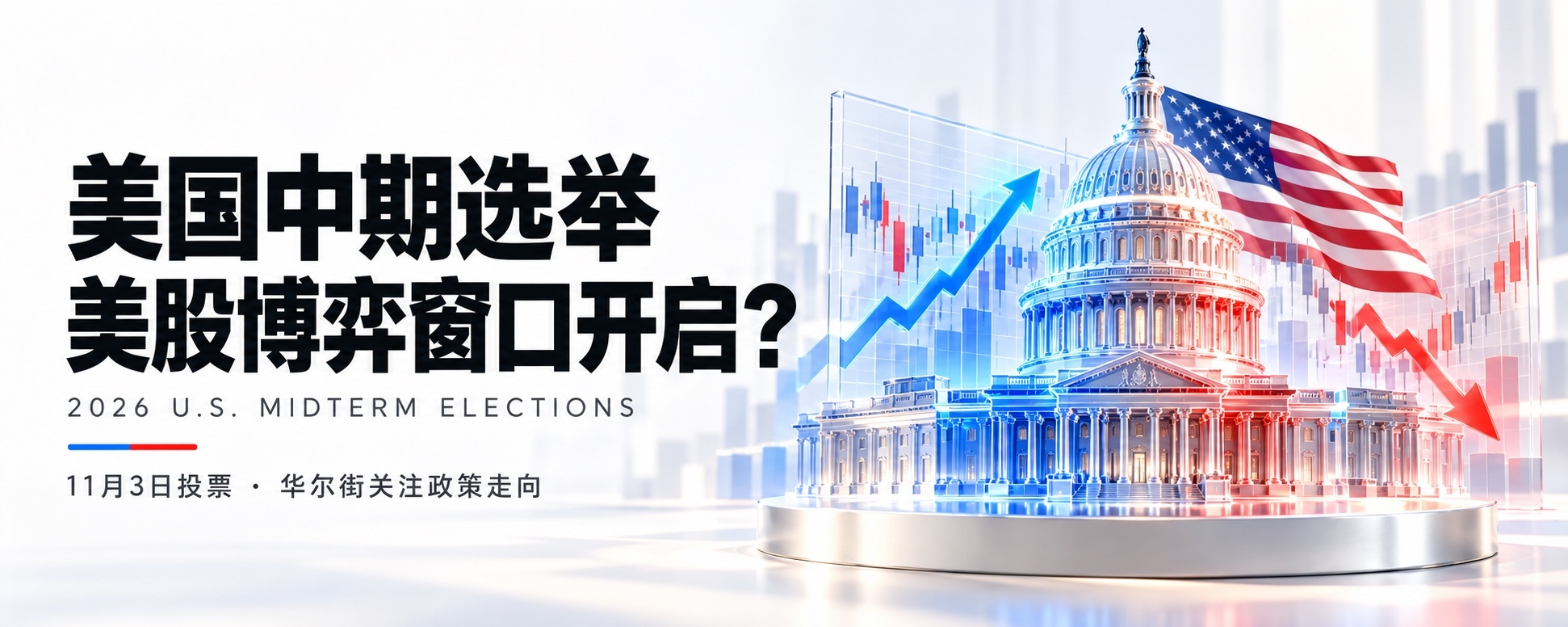
🇺🇸 Countdown to the U.S. Midterm Elections! Is a New Battleground for U.S. Stocks Opening Up?With just four days to go until the U.S. midterm elections on November 3, Wall Street may be approaching a pivotal moment for choosing its next direction.
While the election does not directly determine who becomes president, it could shift the balance of power in Congress for the next two years, affecting government spending, taxes, tariffs, and financial regulation.
What investors really want to know: Will U.S. stocks rally ahead of the election, or will a new market trend begin only after the results are in?
📊 1. What do historical data tell us?
Charles Schwab’s analysis shows that since 1974:
In midterm election years, the S&P 500 has risen by an average of just 1.7% from early August through Election Day.
In the three months after the election, it has risen by an average of about 5.7%.
🇺🇸 Countdown to the U.S. Midterm Elections! Is a New Battleground for U.S. Stocks Opening Up?
With just four days to go until the U.S. midterm elections on November 3, Wall Street may be approaching a pivotal moment for choosing its next direction.
While the election does not directly determine who becomes president, it could shift the balance of power in Congress for the next two years, affecting government spending, taxes, tariffs, and financial regulation.
What investors really want to know: Will U.S. stocks rally ahead of the election, or will a new market trend begin only after the results are in?
📊 1. What do historical data tell us?
Charles Schwab’s analysis shows that since 1974:
In midterm election years, the S&P 500 has risen by an average of just 1.7% from early August through Election Day.
In the three months after the election, it has risen by an average of about 5.7%.
1
1
1.7k
·
--

Article
Financial Evening News for October 29, 202601 | US GDP growth at 3.4%
US GDP grew at an annualized rate of 3.4% in the third quarter, above expectations. Consumption and investment supported the economy, but strong growth may limit room for the Federal Reserve to ease.
02 | US PCE inflation heats up
PCE in September rose 3.6% year over year, while core PCE rose 3.1%. Inflation remains above the 2% target, and the Federal Reserve faces a test in December policy.
03 | US consumer income shows divergence
Nominal consumer spending rose 0.5% in September, but real disposable income fell 0.3%, and the savings rate declined to 3.8%.
04 | The US labor market remains resilient
Initial jobless claims fell to 194,000 last week, below market expectations. Low layoffs support the economy, but that does not mean hiring is accelerating broadly.
Financial Evening News for October 29, 2026
01 | US GDP growth at 3.4%
US GDP grew at an annualized rate of 3.4% in the third quarter, above expectations. Consumption and investment supported the economy, but strong growth may limit room for the Federal Reserve to ease.
02 | US PCE inflation heats up
PCE in September rose 3.6% year over year, while core PCE rose 3.1%. Inflation remains above the 2% target, and the Federal Reserve faces a test in December policy.
03 | US consumer income shows divergence
Nominal consumer spending rose 0.5% in September, but real disposable income fell 0.3%, and the savings rate declined to 3.8%.
04 | The US labor market remains resilient
Initial jobless claims fell to 194,000 last week, below market expectations. Low layoffs support the economy, but that does not mean hiring is accelerating broadly.
447
·
--
Article
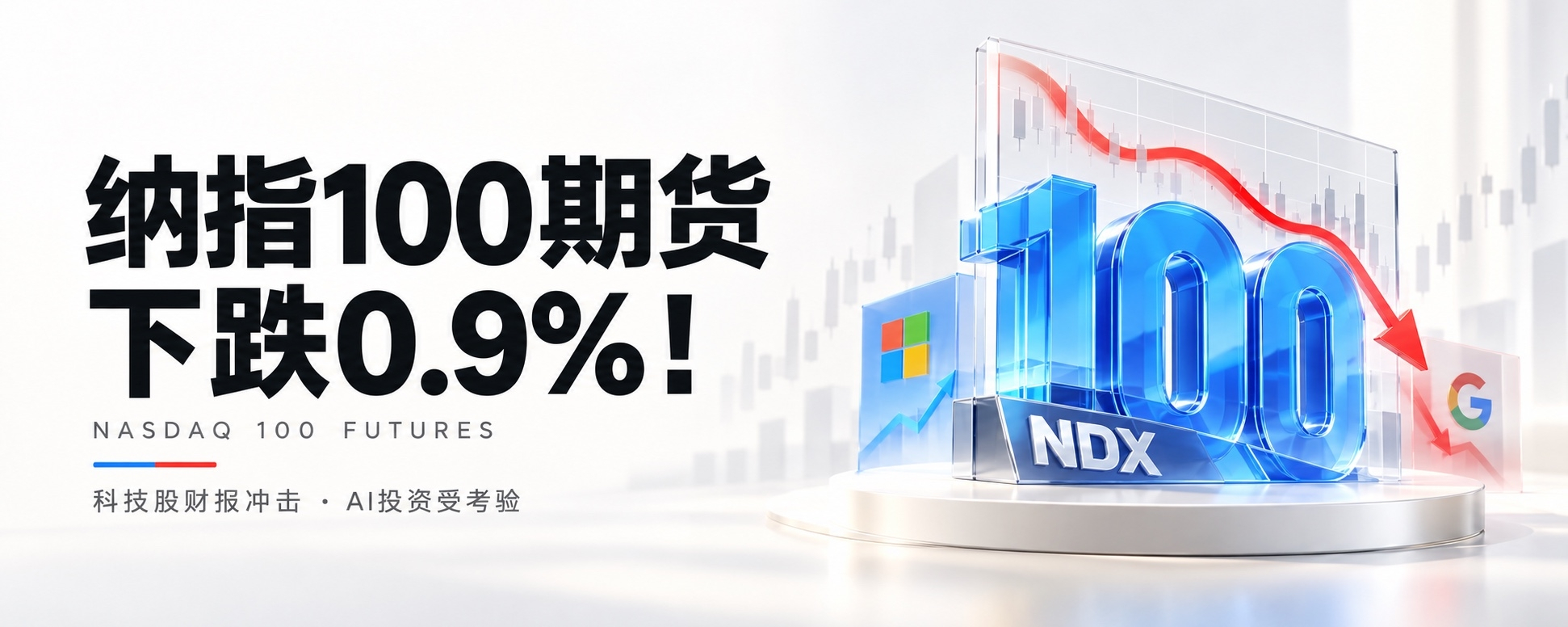
🚨 Nasdaq 100 futures fall 0.9%! Are tech stocks’ good days over?U.S. tech stocks suddenly came under pressure!
On October 29, Nasdaq 100 futures briefly fell about 0.9%. More notably, a worrying signal emerged behind the drop: the market is beginning to question how much money huge AI investments will actually bring in.
📉 Google parent Alphabet: Its earnings report sparked concern, and shares briefly plunged about 10% after hours. AI investment continues to grow, but cash flow disappointed investors.
📈 Microsoft: Thanks to strong cash flow and a promising cloud business outlook, shares briefly rose about 3% after hours.
🏦 Federal Reserve: The latest meeting left interest rates unchanged, but inflationary pressure remains, and concerns about further rate hikes have not gone away.
🚨 Nasdaq 100 futures fall 0.9%! Are tech stocks’ good days over?
U.S. tech stocks suddenly came under pressure!
On October 29, Nasdaq 100 futures briefly fell about 0.9%. More notably, a worrying signal emerged behind the drop: the market is beginning to question how much money huge AI investments will actually bring in.
📉 Google parent Alphabet: Its earnings report sparked concern, and shares briefly plunged about 10% after hours. AI investment continues to grow, but cash flow disappointed investors.
📈 Microsoft: Thanks to strong cash flow and a promising cloud business outlook, shares briefly rose about 3% after hours.
🏦 Federal Reserve: The latest meeting left interest rates unchanged, but inflationary pressure remains, and concerns about further rate hikes have not gone away.
568
·
--
Bullish
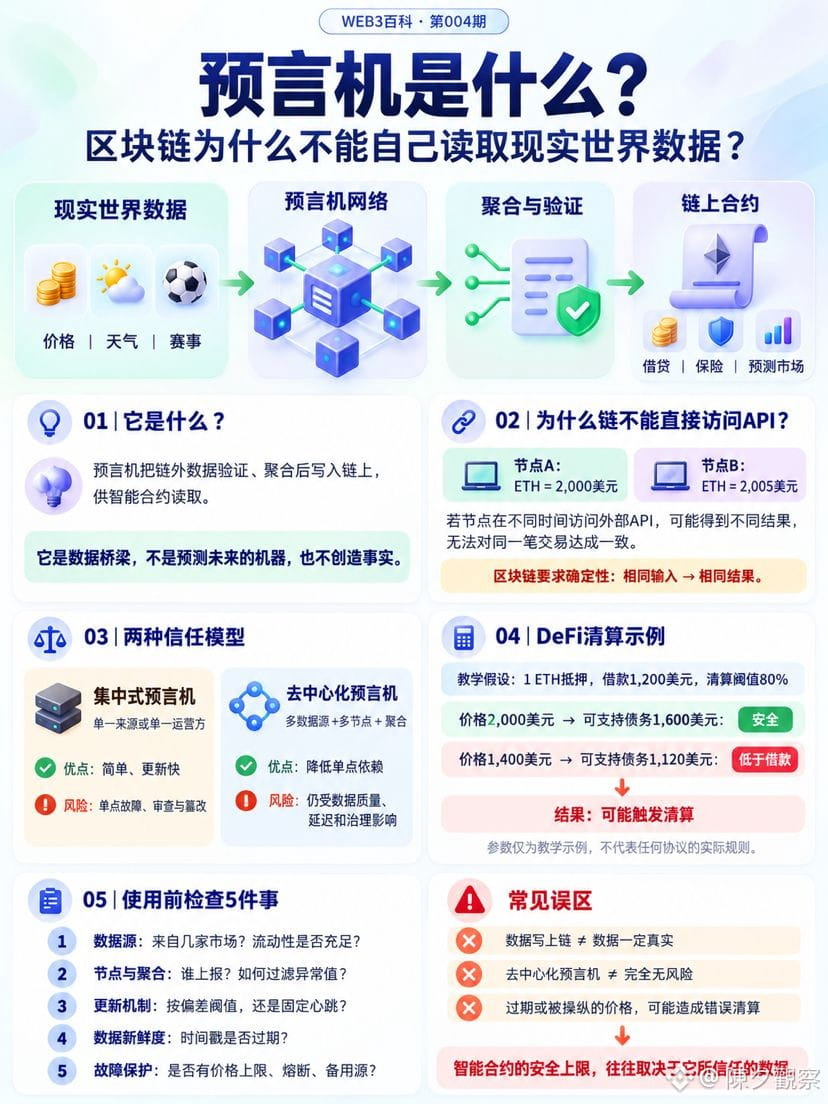
What Is an Oracle? Why Can't Blockchains Read Real-World Data Themselves?
🔗 Why can't smart contracts open webpages directly to read prices, weather, or match results?
Because blockchains require determinism: when all nodes process the same transaction, they must get the same result. If nodes access external APIs at different times, they may retrieve different data, making it impossible to reach consensus on the on-chain state.
Oracles are data bridges between the blockchain and the real world:
Real-world data → Oracle nodes → Verification and aggregation → Written on-chain → Read by smart contracts
They can provide prices, weather, or event results for lending, insurance, stablecoins, derivatives, and prediction markets. But oracles do not “predict the future,” nor can they guarantee that the original data is absolutely correct.
Educational example:
Deposit 1 ETH as collateral and borrow $1,200
Assume the liquidation threshold is 80%
At an ETH price of $2,000, the collateral can support $1,600 in debt
If the price drops to $1,400, it can support only $1,120 in debt, potentially triggering liquidation
Therefore, an incorrect or outdated oracle price can lead to an erroneous liquidation.
Decentralized oracles reduce reliance on a single point of failure by using multiple data sources, nodes, and aggregation mechanisms. However, you should still check data freshness, update frequency, market liquidity, outlier handling, and circuit-breaker mechanisms.
⚠️ Data being written on-chain does not mean it is necessarily true. The security ceiling of a smart contract often depends on the data it trusts.
📅 Coming next
Friday | Trading Technology Class | Episode 004
“What Is RSI? Why Don’t Overbought and Oversold Conditions Mean an Immediate Reversal?”
38
·
--

Article
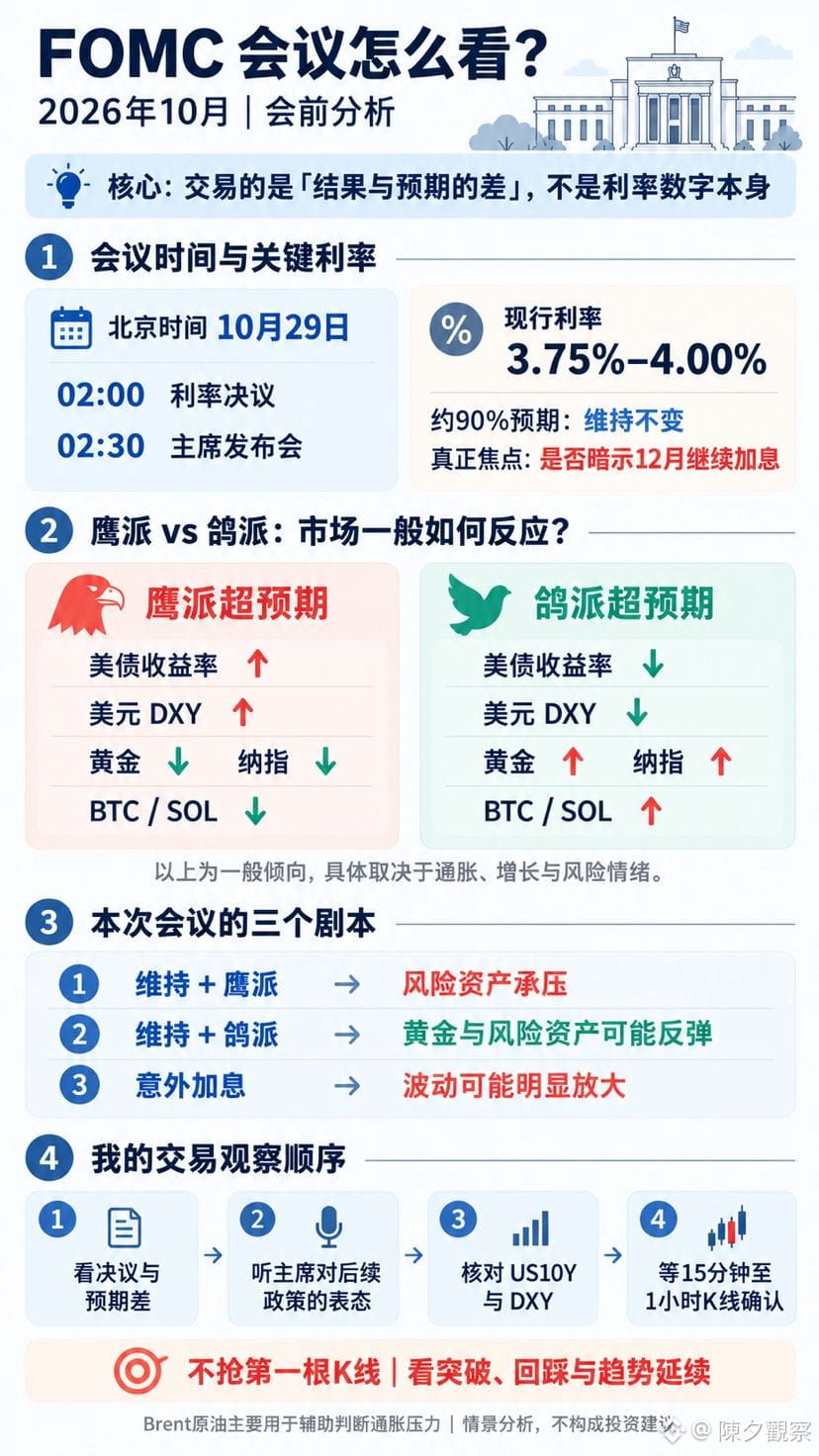
Financial Morning Brief — October 29, 202601|Fed holds interest rates steady
The Fed voted 10–2 to keep its target interest rate range at 3.75%–4.00%. Two officials favored a 25-basis-point rate hike, with inflationary pressures remaining a core concern.
02|Fed chair emphasizes data dependence
Warsh said the economy is strong but not necessarily overheating, and productivity growth may ease some inflationary pressure. The direction of interest rates in December still depends on economic data.
03|Major U.S. stock indexes close higher
The S&P 500 rose 0.28%, the Nasdaq gained 0.27%, and the Dow climbed 0.19%. Markets digested the Fed’s decision, while earnings from tech giants became the new focus.
04|Microsoft revenue grows 19%
Financial Morning Brief — October 29, 2026
01|Fed holds interest rates steady
The Fed voted 10–2 to keep its target interest rate range at 3.75%–4.00%. Two officials favored a 25-basis-point rate hike, with inflationary pressures remaining a core concern.
02|Fed chair emphasizes data dependence
Warsh said the economy is strong but not necessarily overheating, and productivity growth may ease some inflationary pressure. The direction of interest rates in December still depends on economic data.
03|Major U.S. stock indexes close higher
The S&P 500 rose 0.28%, the Nasdaq gained 0.27%, and the Dow climbed 0.19%. Markets digested the Fed’s decision, while earnings from tech giants became the new focus.
04|Microsoft revenue grows 19%
163
·
--

Article
October 28 Financial Evening Brief01|SK hynix Profits Surge Sevenfold
SK hynix posted third-quarter operating profit of about 83.3 trillion won, a quarterly record. Strong demand for AI memory is driving rapid profit growth across the global memory chip industry.
02|$75 Billion Shareholder Return Plan
SK hynix announced an annual shareholder return plan worth about $75 billion, including dividends and share buybacks and cancellations. Strong earnings are translating into substantial capital returns.
03|HBM Capacity Booked Through 2029
SK hynix says customers have booked its HBM and DRAM capacity through 2029, with demand for HBM roughly twice its supply capacity. The supply-demand balance for memory chips remains a key factor in the AI industry.
October 28 Financial Evening Brief
01|SK hynix Profits Surge Sevenfold
SK hynix posted third-quarter operating profit of about 83.3 trillion won, a quarterly record. Strong demand for AI memory is driving rapid profit growth across the global memory chip industry.
02|$75 Billion Shareholder Return Plan
SK hynix announced an annual shareholder return plan worth about $75 billion, including dividends and share buybacks and cancellations. Strong earnings are translating into substantial capital returns.
03|HBM Capacity Booked Through 2029
SK hynix says customers have booked its HBM and DRAM capacity through 2029, with demand for HBM roughly twice its supply capacity. The supply-demand balance for memory chips remains a key factor in the AI industry.
1.1k
·
--
Verified

Article
Can Google protect its core business amid the AI disruption?After the market closes on October 28 Eastern Time, Google parent Alphabet (GOOGL) will report its third-quarter 2026 earnings.
The key question is not just whether results will beat expectations. As AI-powered search gains momentum and tech giants pour money into computing power, can Google protect its search-advertising cash cow and find new growth engines?
📊 Market expectations
Wall Street expects this quarter:
Total revenue of about $127.8 billion, up approximately 25% year over year
Earnings per share (EPS) of about $3.00
Google Cloud is expected to continue growing rapidly
Expectations are already high, and these three factors may have the biggest impact on the stock price.
Can Google protect its core business amid the AI disruption?
After the market closes on October 28 Eastern Time, Google parent Alphabet (GOOGL) will report its third-quarter 2026 earnings.
The key question is not just whether results will beat expectations. As AI-powered search gains momentum and tech giants pour money into computing power, can Google protect its search-advertising cash cow and find new growth engines?
📊 Market expectations
Wall Street expects this quarter:
Total revenue of about $127.8 billion, up approximately 25% year over year
Earnings per share (EPS) of about $3.00
Google Cloud is expected to continue growing rapidly
Expectations are already high, and these three factors may have the biggest impact on the stock price.
1
17
25.3k
·
--
Bullish
Coinbase wasn’t spared a data breach. The exchange’s systems weren’t hacked, but customer information leaked from a third party.
U.S.-listed cryptocurrency exchange Coinbase confirmed that a security incident at third-party data analytics provider Amplitude exposed the contact information of a small number of customers. Coinbase stressed that its own systems were not accessed without authorization and that users’ funds are safe.
U.S.-listed cryptocurrency exchange Coinbase confirmed that a security incident at third-party data analytics provider Amplitude exposed the contact information of a small number of customers. Coinbase stressed that its own systems were not accessed without authorization and that users’ funds are safe.
45
·
--
Bullish
Bezos bets $11.5 billion on taking on Musk! Amazon’s satellite acquisition gets approved, pulling even iPhone satellite communications into the mix!
The U.S. Federal Communications Commission has approved Amazon subsidiary Amazon Leo’s $11.5 billion acquisition of Globalstar, clearing a major regulatory hurdle for expanding its satellite communications network and competing with Musk’s Starlink.
The U.S. Federal Communications Commission has approved Amazon subsidiary Amazon Leo’s $11.5 billion acquisition of Globalstar, clearing a major regulatory hurdle for expanding its satellite communications network and competing with Musk’s Starlink.
49
·
--
Bullish
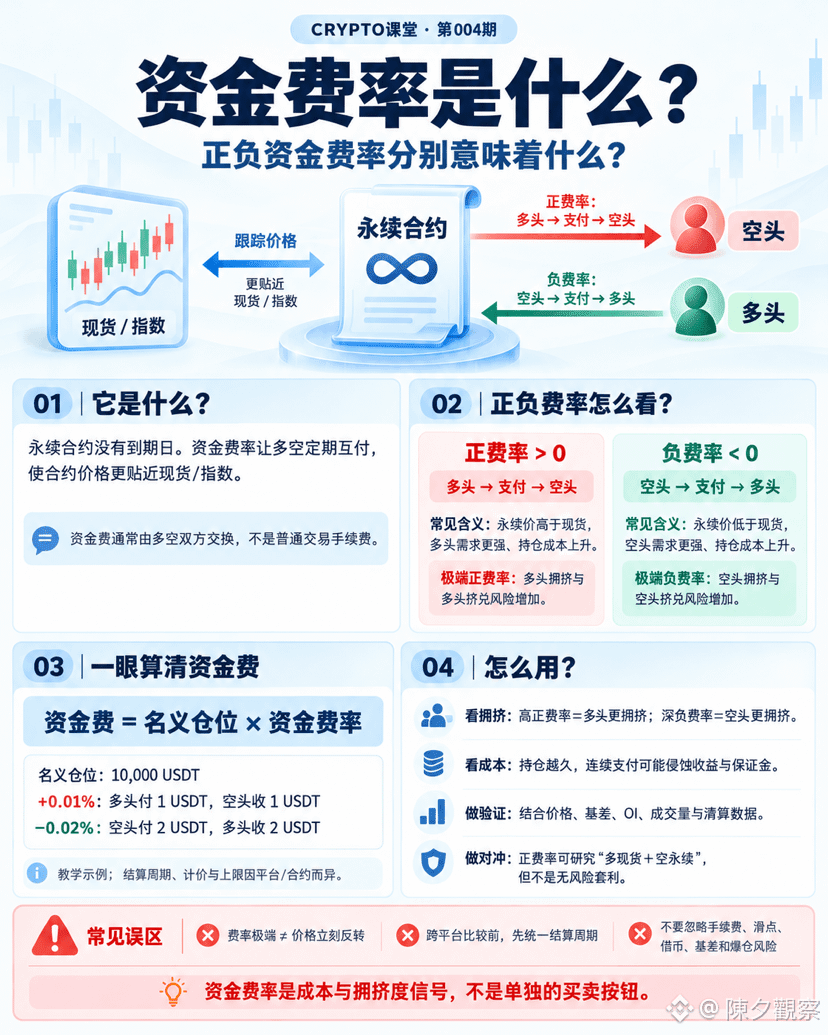
What is a funding rate? What do positive and negative funding rates mean?
📊 Does a positive funding rate mean you should always go short?
Funding is a fee periodically exchanged between long and short positions in perpetual contracts. It helps keep the contract price close to the spot price. Since perpetual contracts have no expiration date, this mechanism helps anchor their price.
First, remember who pays whom:
Positive funding rate: Longs pay shorts
Negative funding rate: Shorts pay longs
Formula:
Funding fee = Notional position × Funding rate
For a notional position of 10,000 USDT:
+0.01%: Longs pay 1 USDT
−0.02%: Shorts pay 2 USDT
A persistently rising positive funding rate typically reflects growing demand for long positions and higher holding costs; a deeply negative rate may indicate crowded short positions. Extreme rates are signals of costs and market positioning—they cannot predict price reversals on their own.
Analysis should also take price, basis, OI, trading volume, and liquidation data into account. Settlement intervals may vary across platforms and trading pairs, so make sure you’re comparing like with like before comparing rates or annualizing them.
⚠️ “Long spot + short perpetual” may earn positive funding, but it still carries trading fees, slippage, basis changes, borrowing costs, and liquidation risk. It is not risk-free arbitrage.
📅 Coming next
Thursday|Web3 Encyclopedia|Issue 004
“What Is an Oracle? Why Can’t Blockchains Read Real-World Data on Their Own?”
63
·
--
Verified

Article
October 28 Financial Morning Brief01 | U.S. AI stocks led the market higher: the S&P 500 rose 0.60%, the Nasdaq gained 1.18%, and the Dow edged up 0.03%. Most constituents fell, with gains still concentrated in a handful of heavyweight stocks.
02 | U.S. consumer confidence rose to 91.7 in October, well above expectations. Lower gasoline prices lifted sentiment, while pressure from food and living costs persisted.
03 | U.S. new home sales in September came in at an annualized rate of 676,000, down 0.6% month over month. Mortgage costs and affordability constraints continued to weigh on demand.
04 | The Richmond Fed Manufacturing Index remained at -2, with new orders weakening further. Divergence across U.S. economic sectors persists.
05 | Broadcom rose about 4% at the close, as news of Anthropic's AI chip financing continued to draw market attention. Custom AI chips and networking equipment were in focus.
October 28 Financial Morning Brief
01 | U.S. AI stocks led the market higher: the S&P 500 rose 0.60%, the Nasdaq gained 1.18%, and the Dow edged up 0.03%. Most constituents fell, with gains still concentrated in a handful of heavyweight stocks.
02 | U.S. consumer confidence rose to 91.7 in October, well above expectations. Lower gasoline prices lifted sentiment, while pressure from food and living costs persisted.
03 | U.S. new home sales in September came in at an annualized rate of 676,000, down 0.6% month over month. Mortgage costs and affordability constraints continued to weigh on demand.
04 | The Richmond Fed Manufacturing Index remained at -2, with new orders weakening further. Divergence across U.S. economic sectors persists.
05 | Broadcom rose about 4% at the close, as news of Anthropic's AI chip financing continued to draw market attention. Custom AI chips and networking equipment were in focus.
790
·
--
Bullish
Intel suddenly bets on quantum computing! Reportedly set to acquire Israeli company for $2.3 billion—is the next computing-power race beginning?
Bloomberg, citing people familiar with the matter, reports that Intel plans to acquire Israeli quantum computing software company Classiq for about $2.3 billion, aiming to build a complete technology stack spanning quantum hardware and software.
Bloomberg, citing people familiar with the matter, reports that Intel plans to acquire Israeli quantum computing software company Classiq for about $2.3 billion, aiming to build a complete technology stack spanning quantum hardware and software.
18
·
--
They’re even destroying cold wallets? Keystone hacked, nearly 19,000 hardware wallets scrapped!
Hardware wallet maker Keystone announced that it would destroy 18,835 unsold hardware wallets and suspend shipments after its website was breached, exposing device authenticity verification keys and 25,964 buyer records.
Hardware wallet maker Keystone announced that it would destroy 18,835 unsold hardware wallets and suspend shipments after its website was breached, exposing device authenticity verification keys and 25,964 buyer records.
4
·
--

Article
October 27 Financial Evening Briefing01|China’s industrial profits grow 14.4%
Profits at China’s industrial enterprises above designated size rose 14.4% year over year in September and 15.5% in the first nine months. Profits in electronics manufacturing increased by more than 100%, while the automotive, furniture, and other industries remained under pressure. Diverging industry performance is worth watching.
02|South Korea’s GDP beats expectations, with semiconductors becoming a growth engine
South Korea’s GDP grew 1.0% quarter over quarter in the third quarter, above the expected 0.7%. AI chip exports and equipment investment were the main drivers, while household consumption remained weak.
03|South Korean stocks surge 3.09%
The KOSPI closed near 5,638 points. Samsung Electronics rose about 4%, while SK Hynix gained around 5%. The semiconductor sector rebounded significantly. SK Hynix’s earnings report tomorrow will be worth watching closely.
October 27 Financial Evening Briefing
01|China’s industrial profits grow 14.4%
Profits at China’s industrial enterprises above designated size rose 14.4% year over year in September and 15.5% in the first nine months. Profits in electronics manufacturing increased by more than 100%, while the automotive, furniture, and other industries remained under pressure. Diverging industry performance is worth watching.
02|South Korea’s GDP beats expectations, with semiconductors becoming a growth engine
South Korea’s GDP grew 1.0% quarter over quarter in the third quarter, above the expected 0.7%. AI chip exports and equipment investment were the main drivers, while household consumption remained weak.
03|South Korean stocks surge 3.09%
The KOSPI closed near 5,638 points. Samsung Electronics rose about 4%, while SK Hynix gained around 5%. The semiconductor sector rebounded significantly. SK Hynix’s earnings report tomorrow will be worth watching closely.
338
Log in to explore more content
Join global crypto users on Binance Square
⚡️ Get latest and useful information about crypto.
💬 Trusted by the world’s largest crypto exchange.
👍 Discover real insights from verified creators.
Email / Phone number