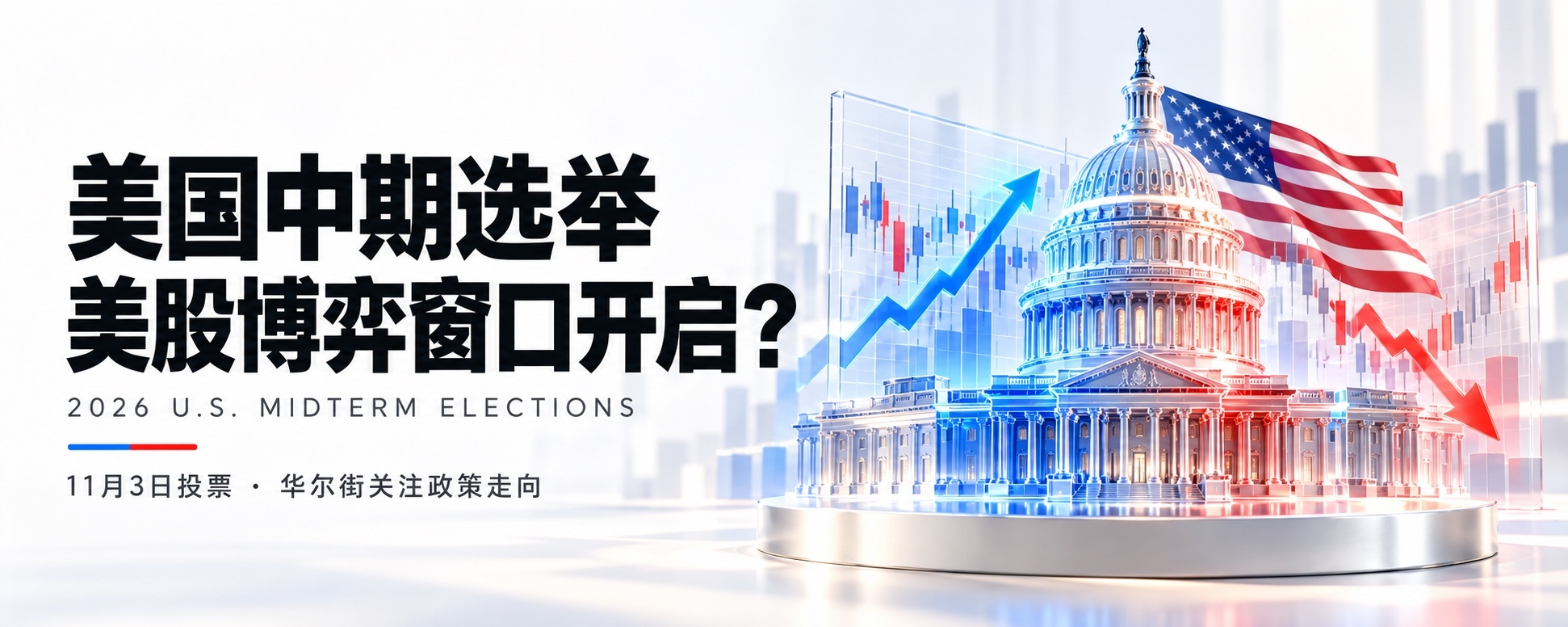

With just four days to go until the U.S. midterm elections on November 3, Wall Street may be approaching a pivotal moment for choosing its next direction.
While the election does not directly determine who becomes president, it could shift the balance of power in Congress for the next two years, affecting government spending, taxes, tariffs, and financial regulation.
What investors really want to know: Will U.S. stocks rally ahead of the election, or will a new market trend begin only after the results are in?
📊 1. What do historical data tell us?
Charles Schwab’s analysis shows that since 1974:
In midterm election years, the S&P 500 has risen by an average of just 1.7% from early August through Election Day.
In the three months after the election, it has risen by an average of about 5.7%.
On average, stocks rose about 12.4% in the six months after an election.
Markets often dislike political uncertainty, so the end of an election could be an opportunity for risk appetite to recover. But historical patterns don’t mean the same thing will necessarily happen in 2026.
🔥 II. This year’s picture could be more complicated
The initial estimate of U.S. third-quarter GDP, released on October 29, showed annualized growth of 3.4%, while September PCE inflation reached 3.6% year over year.
Growth is strong, but inflationary pressures remain. U.S. stocks face two opposing forces:
✅ Corporate earnings growth could continue to support stock prices.
❌ High inflation and interest rate pressures could weigh on tech stock valuations.
If the election results further shift market expectations for fiscal and regulatory policy, volatility could intensify.
🔍 III. Three areas to watch next
① Nasdaq and tech stocks
Keep an eye on AI and semiconductor leaders such as NVDA, AMD, and AVGO. High-valuation tech stocks are sensitive to changes in Treasury yields and risk appetite.
② S&P 500 and financials
Watch whether money rotates out of large-cap tech stocks and into financials, industrials, and other cyclical sectors.
③ Treasury yields, the dollar, and the VIX
If Treasury yields rise and the VIX climbs at the same time, beware of election uncertainty and inflationary pressures combining to weigh on stocks.
What’s really worth trading isn’t simply which party wins, but whether the election results exceed market expectations.
If the results meet expectations and uncertainty fades, U.S. stocks could see sentiment recover.
If the results are unexpected, or the market becomes concerned again about the fiscal deficit, tariffs, and interest rates, a sharp short-term correction may follow.
The election could act as a market catalyst, but corporate earnings and Fed policy are more likely to determine how far the rally can go.
Rather than betting on a direction in advance, I’d prefer to wait for a breakout or pullback confirmation at key price levels, then look for opportunities with a better risk-reward ratio.
👇 Do you think U.S. stocks will start another rally after November 3, or pull back as investors take profits on positive news?