

0xGGbond-
371 Posts

0xGGbond-
Report
Block User
币安钱包 手续费7折 邀请码:WMIUX0NJ
BP-E0A2F91B2F60
22 Following
3.3K+ Followers
85 Liked
Posts
All
Quotes
Live
·
--
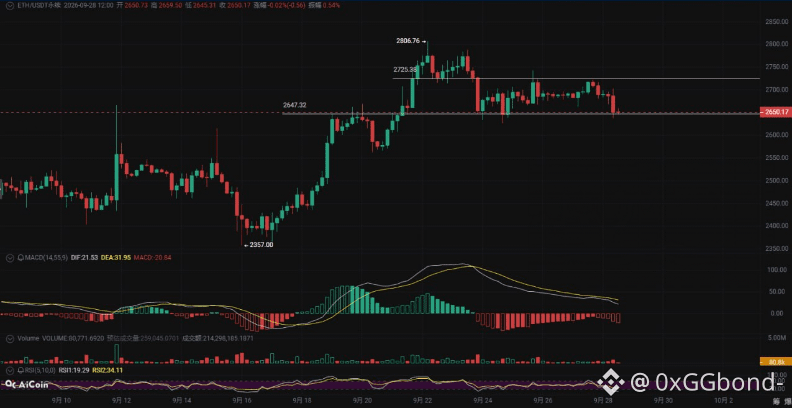
$ETH ETH Yesterday 2725 broke through resistance but failed again. Price has since fallen back into the original descending structure. The MACD on the 4H and 1H continues to form a bearish crossover; bearish candles on the 4H have also reappeared with signs of expansion. Combine this with the fact that BTC has already closed with its body below the 4-hour structure’s bottom—if BTC cannot quickly reclaim it, the likelihood of ETH continuing to underperform and catch up with a further drop is clearly higher. Therefore, the current strategy can shift from the previous range-bound wait-and-see to a rebound-biased bearish approach.
For the short term, pay special attention to resistance zones at 2670—2680 → 2690—2705. The 2670—2680 area has now become the first resistance zone. If a rebound reaches here and you see 15M sluggish movement, a long upper wick, or the re-formation of an LH (lower high), that can serve as the first bearish trigger. If price holds back above 2680, then wait for the 2690—2705 zone instead. Only if there is strong volume and price reclaims 2705, and then further recovers 2725, will the current bearish structure be clearly invalidated.
On the downside, watch levels in sequence: 2640 → 2610—2605 → 2550. Losing 2640 would indicate that the 4H correction continues to spread lower. Around 2605 is still the key defensive structure for medium-term bulls. If 4H breaks below 2605 with volume and the subsequent retest cannot be reclaimed, then the earlier head-and-shoulders top plus the descending structure would be further confirmed. In that case, 2550 would likely return to the testing range; if 2550 breaks again, then look next at 2535—2500.
BTC breaks the structure and ETH falls back into the descending structure again—this makes short-term bearish pressure dominant below 2705, with rebound sells as the main play. Breaks below 2640 point to 2605; if 2605 breaks as well, the adjustment degree will expand further.
$ETH ETH Yesterday 2725 broke through resistance but failed again. Price has since fallen back into the original descending structure. The MACD on the 4H and 1H continues to form a bearish crossover; bearish candles on the 4H have also reappeared with signs of expansion. Combine this with the fact that BTC has already closed with its body below the 4-hour structure’s bottom—if BTC cannot quickly reclaim it, the likelihood of ETH continuing to underperform and catch up with a further drop is clearly higher. Therefore, the current strategy can shift from the previous range-bound wait-and-see to a rebound-biased bearish approach.
For the short term, pay special attention to resistance zones at 2670—2680 → 2690—2705. The 2670—2680 area has now become the first resistance zone. If a rebound reaches here and you see 15M sluggish movement, a long upper wick, or the re-formation of an LH (lower high), that can serve as the first bearish trigger. If price holds back above 2680, then wait for the 2690—2705 zone instead. Only if there is strong volume and price reclaims 2705, and then further recovers 2725, will the current bearish structure be clearly invalidated.
On the downside, watch levels in sequence: 2640 → 2610—2605 → 2550. Losing 2640 would indicate that the 4H correction continues to spread lower. Around 2605 is still the key defensive structure for medium-term bulls. If 4H breaks below 2605 with volume and the subsequent retest cannot be reclaimed, then the earlier head-and-shoulders top plus the descending structure would be further confirmed. In that case, 2550 would likely return to the testing range; if 2550 breaks again, then look next at 2535—2500.
BTC breaks the structure and ETH falls back into the descending structure again—this makes short-term bearish pressure dominant below 2705, with rebound sells as the main play. Breaks below 2640 point to 2605; if 2605 breaks as well, the adjustment degree will expand further.
For the short term, pay special attention to resistance zones at 2670—2680 → 2690—2705. The 2670—2680 area has now become the first resistance zone. If a rebound reaches here and you see 15M sluggish movement, a long upper wick, or the re-formation of an LH (lower high), that can serve as the first bearish trigger. If price holds back above 2680, then wait for the 2690—2705 zone instead. Only if there is strong volume and price reclaims 2705, and then further recovers 2725, will the current bearish structure be clearly invalidated.
On the downside, watch levels in sequence: 2640 → 2610—2605 → 2550. Losing 2640 would indicate that the 4H correction continues to spread lower. Around 2605 is still the key defensive structure for medium-term bulls. If 4H breaks below 2605 with volume and the subsequent retest cannot be reclaimed, then the earlier head-and-shoulders top plus the descending structure would be further confirmed. In that case, 2550 would likely return to the testing range; if 2550 breaks again, then look next at 2535—2500.
BTC breaks the structure and ETH falls back into the descending structure again—this makes short-term bearish pressure dominant below 2705, with rebound sells as the main play. Breaks below 2640 point to 2605; if 2605 breaks as well, the adjustment degree will expand further.
51
·
--
Bitcoin fell from 87,000 to 85,000 and is now hovering around 84,000.We’ve been watching the market longer, but there haven’t been many orders filled. Just when it seemed like it was going to rise, it dropped again. Just when I thought to wait for a pullback, it jumped another leg. A few nights ago it was falling; during the day it was swinging around. Bitcoin fell from 87,000 to 85,000 and is now hovering around 84,000.
It’s in oil and interest rates. The war began at the end of February, and now we’re in the seventh month. Ships through the Strait of Hormuz were blocked at one point; Brent surged from about $72 before the war to nearly $120. In March, it rose 51% in a month. On September 25, it closed at $104.32, 44% higher than before the war. Oil won’t come down, and inflation expectations are sticking.
In 2026, the market was originally expecting 3 to 4 rate cuts. On September 16, the Federal Reserve added 25 basis points, bringing the range to 3.75% to 4.00%. Another increase in October is priced in at about 66%. At the start of the year, the 10-year yield was 4.19%; by September 24 it jumped to 5.23%, the highest level since 2007. Short-term inflation expectations are 2.4%, and 2.62% in the 10-year is the real interest rate. Pushing it higher is the supply of bonds. The U.S. Treasury issued 739 billion in the third quarter and will issue another 628 billion in the fourth. AI spending is also funded by issuing debt. The budget deficit is 6% of GDP. Mortgage rates moved from 5.98% in February to 7.50% on September 28. Americans have piled up $19 trillion in debt.
Bitcoin fell from 87,000 to 85,000 and is now hovering around 84,000.
We’ve been watching the market longer, but there haven’t been many orders filled. Just when it seemed like it was going to rise, it dropped again. Just when I thought to wait for a pullback, it jumped another leg. A few nights ago it was falling; during the day it was swinging around. Bitcoin fell from 87,000 to 85,000 and is now hovering around 84,000.
It’s in oil and interest rates. The war began at the end of February, and now we’re in the seventh month. Ships through the Strait of Hormuz were blocked at one point; Brent surged from about $72 before the war to nearly $120. In March, it rose 51% in a month. On September 25, it closed at $104.32, 44% higher than before the war. Oil won’t come down, and inflation expectations are sticking.
In 2026, the market was originally expecting 3 to 4 rate cuts. On September 16, the Federal Reserve added 25 basis points, bringing the range to 3.75% to 4.00%. Another increase in October is priced in at about 66%. At the start of the year, the 10-year yield was 4.19%; by September 24 it jumped to 5.23%, the highest level since 2007. Short-term inflation expectations are 2.4%, and 2.62% in the 10-year is the real interest rate. Pushing it higher is the supply of bonds. The U.S. Treasury issued 739 billion in the third quarter and will issue another 628 billion in the fourth. AI spending is also funded by issuing debt. The budget deficit is 6% of GDP. Mortgage rates moved from 5.98% in February to 7.50% on September 28. Americans have piled up $19 trillion in debt.
It’s in oil and interest rates. The war began at the end of February, and now we’re in the seventh month. Ships through the Strait of Hormuz were blocked at one point; Brent surged from about $72 before the war to nearly $120. In March, it rose 51% in a month. On September 25, it closed at $104.32, 44% higher than before the war. Oil won’t come down, and inflation expectations are sticking.
In 2026, the market was originally expecting 3 to 4 rate cuts. On September 16, the Federal Reserve added 25 basis points, bringing the range to 3.75% to 4.00%. Another increase in October is priced in at about 66%. At the start of the year, the 10-year yield was 4.19%; by September 24 it jumped to 5.23%, the highest level since 2007. Short-term inflation expectations are 2.4%, and 2.62% in the 10-year is the real interest rate. Pushing it higher is the supply of bonds. The U.S. Treasury issued 739 billion in the third quarter and will issue another 628 billion in the fourth. AI spending is also funded by issuing debt. The budget deficit is 6% of GDP. Mortgage rates moved from 5.98% in February to 7.50% on September 28. Americans have piled up $19 trillion in debt.
255
·
--
In this Binance interview, Saylor says he is bringing Bitcoin’s window forward to 2035. He says that’s less than 10 years from now. By that year, 99% of the coins will have been mined. Then, about 20 years after that, the annualized return is likely to be only 3 to 5 percentage points above the S&P 500. The extra part, he treats as the end of it.
Going forward, he breaks the engine into segments. Once the ETF is in place and the treasury starts buying, and digital credit exists as well, what remains is that banks take Bitcoin as collateral to make loans. He says this step is like a house: banks will lend only if the price gets levered. He puts the timeline into the next 36 months.
Ordinary people look at 3% CPI. He is watching the other end: the kind of upside where scarce assets rise by about 15%. If AI makes services cheaper, that’s possible—but land in downtown areas and Picasso’s original works can’t be made. In an era where it’s easier to manufacture things, what you can’t make becomes more expensive.
For gold, he estimates about 2% new supply each year. Purchasing power halves roughly every 36 years. As for Bitcoin’s additions, he views it as ultimately getting closer to zero.
In the interview, he sets aside those 840,000 coins for later. Issuing shares or issuing bonds to buy—that’s how it was done, in line with this whole framework.
Some people are still waiting for rate cuts. Interest rates are now 4.0, unemployment 4.1, and CPI 3.4. When the last cycle started, rates were also 4.0, unemployment was 3.6, and CPI was 7.1. In the stretch in 2023, rates were hiked while going into it; halfway through, rates reached 5.5, and when it ended, they were still at 4.5. During the rate-hike cycle, both US stocks and Bitcoin still managed to produce a round of gains as well.
In this Binance interview, Saylor says he is bringing Bitcoin’s window forward to 2035. He says that’s less than 10 years from now. By that year, 99% of the coins will have been mined. Then, about 20 years after that, the annualized return is likely to be only 3 to 5 percentage points above the S&P 500. The extra part, he treats as the end of it.
Going forward, he breaks the engine into segments. Once the ETF is in place and the treasury starts buying, and digital credit exists as well, what remains is that banks take Bitcoin as collateral to make loans. He says this step is like a house: banks will lend only if the price gets levered. He puts the timeline into the next 36 months.
Ordinary people look at 3% CPI. He is watching the other end: the kind of upside where scarce assets rise by about 15%. If AI makes services cheaper, that’s possible—but land in downtown areas and Picasso’s original works can’t be made. In an era where it’s easier to manufacture things, what you can’t make becomes more expensive.
For gold, he estimates about 2% new supply each year. Purchasing power halves roughly every 36 years. As for Bitcoin’s additions, he views it as ultimately getting closer to zero.
In the interview, he sets aside those 840,000 coins for later. Issuing shares or issuing bonds to buy—that’s how it was done, in line with this whole framework.
Some people are still waiting for rate cuts. Interest rates are now 4.0, unemployment 4.1, and CPI 3.4. When the last cycle started, rates were also 4.0, unemployment was 3.6, and CPI was 7.1. In the stretch in 2023, rates were hiked while going into it; halfway through, rates reached 5.5, and when it ended, they were still at 4.5. During the rate-hike cycle, both US stocks and Bitcoin still managed to produce a round of gains as well.
Going forward, he breaks the engine into segments. Once the ETF is in place and the treasury starts buying, and digital credit exists as well, what remains is that banks take Bitcoin as collateral to make loans. He says this step is like a house: banks will lend only if the price gets levered. He puts the timeline into the next 36 months.
Ordinary people look at 3% CPI. He is watching the other end: the kind of upside where scarce assets rise by about 15%. If AI makes services cheaper, that’s possible—but land in downtown areas and Picasso’s original works can’t be made. In an era where it’s easier to manufacture things, what you can’t make becomes more expensive.
For gold, he estimates about 2% new supply each year. Purchasing power halves roughly every 36 years. As for Bitcoin’s additions, he views it as ultimately getting closer to zero.
In the interview, he sets aside those 840,000 coins for later. Issuing shares or issuing bonds to buy—that’s how it was done, in line with this whole framework.
Some people are still waiting for rate cuts. Interest rates are now 4.0, unemployment 4.1, and CPI 3.4. When the last cycle started, rates were also 4.0, unemployment was 3.6, and CPI was 7.1. In the stretch in 2023, rates were hiked while going into it; halfway through, rates reached 5.5, and when it ended, they were still at 4.5. During the rate-hike cycle, both US stocks and Bitcoin still managed to produce a round of gains as well.
239
·
--
Partly True
Gold prices dropped 3% in a day, falling to 4,148. Rumors that the mine will cut output are still circulating; this week, the market is waiting for two figures.
The U.S. Treasury has been selling for years, and gold has been stockpiled for years. Now it’s again urging countries holding RMB to trade for gold, bypassing the dollar. Those watching the situation think that with so much stockpiling, the goal is to swap out dollars in trade, and then bring gold pricing under their control.
At the largest gold mine, this year’s output will be 26.53% lower. In the first six months nationwide, production was down 14.62% year over year. From the output figures alone, it’s still hard to tell whether the production cuts are aimed at gold prices.
On the bear side, most of the interest-rate-hike scenario has already been priced in, and profits are already substantial. In between, as long as a bit of upside wind shows up, the short-covering could happen quickly.
On Wednesday, the PCE year over year is expected at 3.7%, and the core at 3.3%. If it comes in as expected—or even lower—then rate hikes won’t feel quite as urgent, giving gold a reason to bounce. If the numbers blow out, holding the 4,100 level will be difficult.
On Friday’s nonfarm payrolls, the forecast is 100,000 new jobs. If it’s delivered as expected—or lower—then the 5% interest rate will start biting into employment, and the probability of a rate hike in October at 50.9% would shrink.
Trump said negotiations between the U.S. and Iran may resume this week. If there’s renewed expectation that navigation through the strait will resume, oil prices could fall; inflation would loosen by a notch. That would remove one layer of pressure on gold.
At the 4,148 level, first wait for the two percentages on Wednesday, then for the 100,000 on Friday.
#Gold #PCE #NonfarmPayrolls #MarketOutlook
Gold prices dropped 3% in a day, falling to 4,148. Rumors that the mine will cut output are still circulating; this week, the market is waiting for two figures.
The U.S. Treasury has been selling for years, and gold has been stockpiled for years. Now it’s again urging countries holding RMB to trade for gold, bypassing the dollar. Those watching the situation think that with so much stockpiling, the goal is to swap out dollars in trade, and then bring gold pricing under their control.
At the largest gold mine, this year’s output will be 26.53% lower. In the first six months nationwide, production was down 14.62% year over year. From the output figures alone, it’s still hard to tell whether the production cuts are aimed at gold prices.
On the bear side, most of the interest-rate-hike scenario has already been priced in, and profits are already substantial. In between, as long as a bit of upside wind shows up, the short-covering could happen quickly.
On Wednesday, the PCE year over year is expected at 3.7%, and the core at 3.3%. If it comes in as expected—or even lower—then rate hikes won’t feel quite as urgent, giving gold a reason to bounce. If the numbers blow out, holding the 4,100 level will be difficult.
On Friday’s nonfarm payrolls, the forecast is 100,000 new jobs. If it’s delivered as expected—or lower—then the 5% interest rate will start biting into employment, and the probability of a rate hike in October at 50.9% would shrink.
Trump said negotiations between the U.S. and Iran may resume this week. If there’s renewed expectation that navigation through the strait will resume, oil prices could fall; inflation would loosen by a notch. That would remove one layer of pressure on gold.
At the 4,148 level, first wait for the two percentages on Wednesday, then for the 100,000 on Friday.
#Gold #PCE #NonfarmPayrolls #MarketOutlook
The U.S. Treasury has been selling for years, and gold has been stockpiled for years. Now it’s again urging countries holding RMB to trade for gold, bypassing the dollar. Those watching the situation think that with so much stockpiling, the goal is to swap out dollars in trade, and then bring gold pricing under their control.
At the largest gold mine, this year’s output will be 26.53% lower. In the first six months nationwide, production was down 14.62% year over year. From the output figures alone, it’s still hard to tell whether the production cuts are aimed at gold prices.
On the bear side, most of the interest-rate-hike scenario has already been priced in, and profits are already substantial. In between, as long as a bit of upside wind shows up, the short-covering could happen quickly.
On Wednesday, the PCE year over year is expected at 3.7%, and the core at 3.3%. If it comes in as expected—or even lower—then rate hikes won’t feel quite as urgent, giving gold a reason to bounce. If the numbers blow out, holding the 4,100 level will be difficult.
On Friday’s nonfarm payrolls, the forecast is 100,000 new jobs. If it’s delivered as expected—or lower—then the 5% interest rate will start biting into employment, and the probability of a rate hike in October at 50.9% would shrink.
Trump said negotiations between the U.S. and Iran may resume this week. If there’s renewed expectation that navigation through the strait will resume, oil prices could fall; inflation would loosen by a notch. That would remove one layer of pressure on gold.
At the 4,148 level, first wait for the two percentages on Wednesday, then for the 100,000 on Friday.
#Gold #PCE #NonfarmPayrolls #MarketOutlook
647
·
--
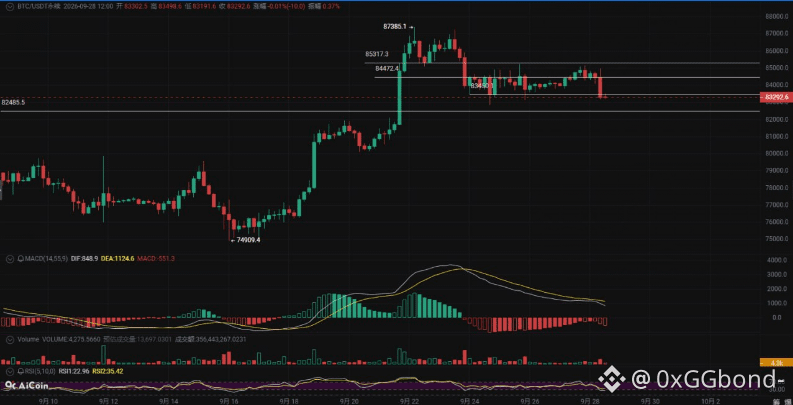
$BTC First break the structure + ETH falls back into the downtrend structure, making short-term bearish momentum dominant; below 2705, focus mainly on selling rallies; if 2640 breaks, look for 2605; if 2605 breaks again, the adjustment level will further widen
$BTC First break the structure + ETH falls back into the downtrend structure, making short-term bearish momentum dominant; below 2705, focus mainly on selling rallies; if 2640 breaks, look for 2605; if 2605 breaks again, the adjustment level will further widen
259
·
--
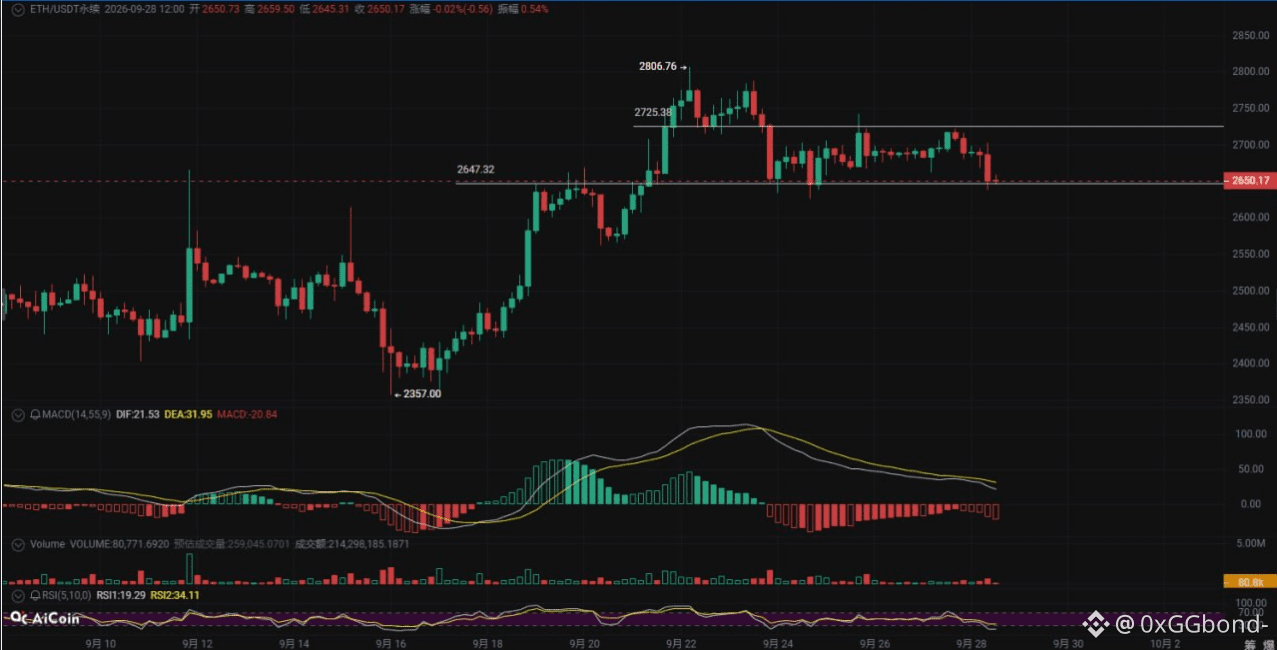
$ETH Yesterday, 2725 broke through the pressure and then failed again. It has now fallen back into the original downward structure. The 4H and 1H MACDs are continuing to form a bearish cross, and the 4H bearish candles are showing signs of renewed expansion. Coupled with the fact that BTC has already closed below the 4-hour structure’s bottom, if BTC cannot quickly reclaim it, the probability of further downside for ETH is clearly higher. The current strategy can shift from the previous range-bound wait-and-see to a rebound-leaning bearish approach.
For the short term, pay close attention to the upside zones: 2670—2680 → 2690—2705. 2670—2680 has become the first key resistance. If price rebounds into this area and shows 15M stall action, a long upper wick, or a fresh formation of LH, it can serve as the first bearish trigger. If it regains and holds above 2680, then watch 2690—2705 later. Only when there is volume and a clear re-settlement back above 2705, followed by further reclaiming 2725, will the current bearish structure be meaningfully invalidated.
On the downside, watch in order: 2640 → 2610—2605 → 2550. If 2640 breaks, it indicates that the 4H correction will keep spreading. Near 2605 remains the most important structural defense for the medium-term bulls. If 4H breaks below 2605 with volume and the subsequent retest cannot be reclaimed, the earlier head-and-shoulders top plus the descending structure will be further confirmed. In that case, 2550 is likely to return to the testing range; if 2550 breaks again, then focus will shift to 2535—2500.
$ETH Yesterday, 2725 broke through the pressure and then failed again. It has now fallen back into the original downward structure. The 4H and 1H MACDs are continuing to form a bearish cross, and the 4H bearish candles are showing signs of renewed expansion. Coupled with the fact that BTC has already closed below the 4-hour structure’s bottom, if BTC cannot quickly reclaim it, the probability of further downside for ETH is clearly higher. The current strategy can shift from the previous range-bound wait-and-see to a rebound-leaning bearish approach.
For the short term, pay close attention to the upside zones: 2670—2680 → 2690—2705. 2670—2680 has become the first key resistance. If price rebounds into this area and shows 15M stall action, a long upper wick, or a fresh formation of LH, it can serve as the first bearish trigger. If it regains and holds above 2680, then watch 2690—2705 later. Only when there is volume and a clear re-settlement back above 2705, followed by further reclaiming 2725, will the current bearish structure be meaningfully invalidated.
On the downside, watch in order: 2640 → 2610—2605 → 2550. If 2640 breaks, it indicates that the 4H correction will keep spreading. Near 2605 remains the most important structural defense for the medium-term bulls. If 4H breaks below 2605 with volume and the subsequent retest cannot be reclaimed, the earlier head-and-shoulders top plus the descending structure will be further confirmed. In that case, 2550 is likely to return to the testing range; if 2550 breaks again, then focus will shift to 2535—2500.
For the short term, pay close attention to the upside zones: 2670—2680 → 2690—2705. 2670—2680 has become the first key resistance. If price rebounds into this area and shows 15M stall action, a long upper wick, or a fresh formation of LH, it can serve as the first bearish trigger. If it regains and holds above 2680, then watch 2690—2705 later. Only when there is volume and a clear re-settlement back above 2705, followed by further reclaiming 2725, will the current bearish structure be meaningfully invalidated.
On the downside, watch in order: 2640 → 2610—2605 → 2550. If 2640 breaks, it indicates that the 4H correction will keep spreading. Near 2605 remains the most important structural defense for the medium-term bulls. If 4H breaks below 2605 with volume and the subsequent retest cannot be reclaimed, the earlier head-and-shoulders top plus the descending structure will be further confirmed. In that case, 2550 is likely to return to the testing range; if 2550 breaks again, then focus will shift to 2535—2500.
60
·
--
Actually, in this round of summit-market action, gold $GOLD is struggling. It got hit three times, but those three hits aren’t the same.
Interest rates are real and tangible. In mid-September, the US Fed added 25 basis points; the dot plot lifted the year-end median rate, and the “one more hike” price is still hanging in the market for October. Since gold doesn’t pay interest, that layer is the first to loosen.
The situation around the Hormuz Strait hasn’t eased cleanly. Oil prices fell this week, but were pulled back by missiles and tougher statements; Brent is still above $100. Geopolitical risk premium has retreated somewhat, but it hasn’t fully cleared.
Trade has loosened. The ceasefire originally set to expire in November has been extended by two months to January next year. Major disagreements remain. This is an extension, not a resolution.
This month, the gold price has backed off from above 4600. In the past few days it’s been hovering between 4260 and 4300, and around 4250 it’s been touched. The pullback has already been significant—this isn’t a single “one-day-and-done” drop line.
What’s been withdrawn is the story. Risk premia like panic, war, and recession arrived fast and dissipated fast. The fundamentals are still there. The official pace of buying gold hasn’t stopped. US debt is still above $40 trillion; it “jumps” every day, and the total isn’t moving downward. The dot plot adjusts rate expectations, but it can’t move that pile of debt.
The calendar isn’t finished yet. In November there’s APEC in Shenzhen, and in December G20 in Miami—both sides say they still plan to meet again this year. The ceasefire timing just happens to cover over these two events. This year’s trend hasn’t been concluded.
In the short term, the 4250–4270 area will likely be tested back and forth. There will be rebounds, but don’t think too highly about the height for now: the October rate hike is still in play, and the new story hasn’t arrived yet. For the medium term, watch whether three things remain simultaneously: the ceasefire is only deferred, rates are still high, and debt is still swelling. As long as all three are in place, gold’s logic will come back. But whether it “returns” depends on how the next two events play out—not just automatically resetting to its place.
#黄金
Actually, in this round of summit-market action, gold $GOLD is struggling. It got hit three times, but those three hits aren’t the same.
Interest rates are real and tangible. In mid-September, the US Fed added 25 basis points; the dot plot lifted the year-end median rate, and the “one more hike” price is still hanging in the market for October. Since gold doesn’t pay interest, that layer is the first to loosen.
The situation around the Hormuz Strait hasn’t eased cleanly. Oil prices fell this week, but were pulled back by missiles and tougher statements; Brent is still above $100. Geopolitical risk premium has retreated somewhat, but it hasn’t fully cleared.
Trade has loosened. The ceasefire originally set to expire in November has been extended by two months to January next year. Major disagreements remain. This is an extension, not a resolution.
This month, the gold price has backed off from above 4600. In the past few days it’s been hovering between 4260 and 4300, and around 4250 it’s been touched. The pullback has already been significant—this isn’t a single “one-day-and-done” drop line.
What’s been withdrawn is the story. Risk premia like panic, war, and recession arrived fast and dissipated fast. The fundamentals are still there. The official pace of buying gold hasn’t stopped. US debt is still above $40 trillion; it “jumps” every day, and the total isn’t moving downward. The dot plot adjusts rate expectations, but it can’t move that pile of debt.
The calendar isn’t finished yet. In November there’s APEC in Shenzhen, and in December G20 in Miami—both sides say they still plan to meet again this year. The ceasefire timing just happens to cover over these two events. This year’s trend hasn’t been concluded.
In the short term, the 4250–4270 area will likely be tested back and forth. There will be rebounds, but don’t think too highly about the height for now: the October rate hike is still in play, and the new story hasn’t arrived yet. For the medium term, watch whether three things remain simultaneously: the ceasefire is only deferred, rates are still high, and debt is still swelling. As long as all three are in place, gold’s logic will come back. But whether it “returns” depends on how the next two events play out—not just automatically resetting to its place.
#黄金
Interest rates are real and tangible. In mid-September, the US Fed added 25 basis points; the dot plot lifted the year-end median rate, and the “one more hike” price is still hanging in the market for October. Since gold doesn’t pay interest, that layer is the first to loosen.
The situation around the Hormuz Strait hasn’t eased cleanly. Oil prices fell this week, but were pulled back by missiles and tougher statements; Brent is still above $100. Geopolitical risk premium has retreated somewhat, but it hasn’t fully cleared.
Trade has loosened. The ceasefire originally set to expire in November has been extended by two months to January next year. Major disagreements remain. This is an extension, not a resolution.
This month, the gold price has backed off from above 4600. In the past few days it’s been hovering between 4260 and 4300, and around 4250 it’s been touched. The pullback has already been significant—this isn’t a single “one-day-and-done” drop line.
What’s been withdrawn is the story. Risk premia like panic, war, and recession arrived fast and dissipated fast. The fundamentals are still there. The official pace of buying gold hasn’t stopped. US debt is still above $40 trillion; it “jumps” every day, and the total isn’t moving downward. The dot plot adjusts rate expectations, but it can’t move that pile of debt.
The calendar isn’t finished yet. In November there’s APEC in Shenzhen, and in December G20 in Miami—both sides say they still plan to meet again this year. The ceasefire timing just happens to cover over these two events. This year’s trend hasn’t been concluded.
In the short term, the 4250–4270 area will likely be tested back and forth. There will be rebounds, but don’t think too highly about the height for now: the October rate hike is still in play, and the new story hasn’t arrived yet. For the medium term, watch whether three things remain simultaneously: the ceasefire is only deferred, rates are still high, and debt is still swelling. As long as all three are in place, gold’s logic will come back. But whether it “returns” depends on how the next two events play out—not just automatically resetting to its place.
#黄金
288
·
--
$笑笑牛
K-line:
https://web3.binance.com/zh-CN/token/bsc/0xcb975f49924a2c8f8d7884b3b5adcef7e1fc7777?ref=BAOFU886
Bull is here—1 billion market cap.
$笑笑牛 is the US version of Bull—let’s compare it.
I think it’s probably something in the few-hundred-K to M level.
Over there, it now has over 2 million views in trending attention.
The narrative is that the US cheese package got redesigned.
Before, it was a smiling little Red Bull. Now it’s switched to a serious face. The earrings are still hanging on, and the round glasses are still there—only it stopped smiling.
When USA Today posted it, it racked up over 2 million views, and all the comments underneath were remakes/meme edits. Someone used a picture of a diary/notebook kid to mock it: “Come on, say something actually funny.”
The bull replied: “Something’s on my mind today.”
Meanwhile, in China it matched up right away. $牛来 is a bad movie that suddenly went viral, and $哭哭马 is also that whole expression-meme style.
This time, it’s the American brand itself turning its mascot abstract—and people in the circle are directly calling it the US version of $牛来.
Right after $笑笑牛 came out on Flap, people started shouting. A face changed from smiling to not smiling—the storytelling is clean enough. Whether foreigners will keep playing with this meme afterward, we’ll see.
$笑笑牛
K-line:
https://web3.binance.com/zh-CN/token/bsc/0xcb975f49924a2c8f8d7884b3b5adcef7e1fc7777?ref=BAOFU886
Bull is here—1 billion market cap.
$笑笑牛 is the US version of Bull—let’s compare it.
I think it’s probably something in the few-hundred-K to M level.
Over there, it now has over 2 million views in trending attention.
The narrative is that the US cheese package got redesigned.
Before, it was a smiling little Red Bull. Now it’s switched to a serious face. The earrings are still hanging on, and the round glasses are still there—only it stopped smiling.
When USA Today posted it, it racked up over 2 million views, and all the comments underneath were remakes/meme edits. Someone used a picture of a diary/notebook kid to mock it: “Come on, say something actually funny.”
The bull replied: “Something’s on my mind today.”
Meanwhile, in China it matched up right away. $牛来 is a bad movie that suddenly went viral, and $哭哭马 is also that whole expression-meme style.
This time, it’s the American brand itself turning its mascot abstract—and people in the circle are directly calling it the US version of $牛来.
Right after $笑笑牛 came out on Flap, people started shouting. A face changed from smiling to not smiling—the storytelling is clean enough. Whether foreigners will keep playing with this meme afterward, we’ll see.
K-line:
https://web3.binance.com/zh-CN/token/bsc/0xcb975f49924a2c8f8d7884b3b5adcef7e1fc7777?ref=BAOFU886
Bull is here—1 billion market cap.
$笑笑牛 is the US version of Bull—let’s compare it.
I think it’s probably something in the few-hundred-K to M level.
Over there, it now has over 2 million views in trending attention.
The narrative is that the US cheese package got redesigned.
Before, it was a smiling little Red Bull. Now it’s switched to a serious face. The earrings are still hanging on, and the round glasses are still there—only it stopped smiling.
When USA Today posted it, it racked up over 2 million views, and all the comments underneath were remakes/meme edits. Someone used a picture of a diary/notebook kid to mock it: “Come on, say something actually funny.”
The bull replied: “Something’s on my mind today.”
Meanwhile, in China it matched up right away. $牛来 is a bad movie that suddenly went viral, and $哭哭马 is also that whole expression-meme style.
This time, it’s the American brand itself turning its mascot abstract—and people in the circle are directly calling it the US version of $牛来.
Right after $笑笑牛 came out on Flap, people started shouting. A face changed from smiling to not smiling—the storytelling is clean enough. Whether foreigners will keep playing with this meme afterward, we’ll see.

35
·
--
The Mid-Autumn Festival holiday isn’t over yet, and people are still in the festive mood.
Someone went through and counted the Mid-Autumn Festivals from the past few years when crypto was involved. In 2018, they first heard about Bitcoin—this year marks the ninth time. In previous years, they watched the candlestick charts from outside while still eating mooncakes. In 2024, they finally registered on Binance, finishing KYC with a shaky hand. They copied down the recovery phrase into an old book, and during a big cleanup they almost sold the book. Actually getting on board was in the last three years.
The line about the rate hike in October doesn’t match anymore. In September, there was just one hike; the expectations for another in October are still lingering. $BTC—Bitcoin—is still hovering around 84,000. It’s not that it has to break 89,000 within 72 hours, and it’s also not one of those dips that just can’t go down.
The ticket isn’t for instant riches. The private key is still there, and the people are still there. This Mid-Autumn Festival just passes like this.
The Mid-Autumn Festival holiday isn’t over yet, and people are still in the festive mood.
Someone went through and counted the Mid-Autumn Festivals from the past few years when crypto was involved. In 2018, they first heard about Bitcoin—this year marks the ninth time. In previous years, they watched the candlestick charts from outside while still eating mooncakes. In 2024, they finally registered on Binance, finishing KYC with a shaky hand. They copied down the recovery phrase into an old book, and during a big cleanup they almost sold the book. Actually getting on board was in the last three years.
The line about the rate hike in October doesn’t match anymore. In September, there was just one hike; the expectations for another in October are still lingering. $BTC—Bitcoin—is still hovering around 84,000. It’s not that it has to break 89,000 within 72 hours, and it’s also not one of those dips that just can’t go down.
The ticket isn’t for instant riches. The private key is still there, and the people are still there. This Mid-Autumn Festival just passes like this.
Someone went through and counted the Mid-Autumn Festivals from the past few years when crypto was involved. In 2018, they first heard about Bitcoin—this year marks the ninth time. In previous years, they watched the candlestick charts from outside while still eating mooncakes. In 2024, they finally registered on Binance, finishing KYC with a shaky hand. They copied down the recovery phrase into an old book, and during a big cleanup they almost sold the book. Actually getting on board was in the last three years.
The line about the rate hike in October doesn’t match anymore. In September, there was just one hike; the expectations for another in October are still lingering. $BTC—Bitcoin—is still hovering around 84,000. It’s not that it has to break 89,000 within 72 hours, and it’s also not one of those dips that just can’t go down.
The ticket isn’t for instant riches. The private key is still there, and the people are still there. This Mid-Autumn Festival just passes like this.
362
·
--
Each time you buy or sell, funds are injected into the Bitcoin reward pool. Just hold b-money and BTC will automatically enter your wallet—no staking required, no claiming required, no lock-up period required
CA (BSC):
0xf49725118cb0707b8706ffffe895f3ab16da7777
Claim Address: 0x7F6aB6A12647d6e76627FE7F061C96662B408E13
Each time you buy or sell, funds are injected into the Bitcoin reward pool. Just hold b-money and BTC will automatically enter your wallet—no staking required, no claiming required, no lock-up period required
CA (BSC):
0xf49725118cb0707b8706ffffe895f3ab16da7777
Claim Address: 0x7F6aB6A12647d6e76627FE7F061C96662B408E13
CA (BSC):
0xf49725118cb0707b8706ffffe895f3ab16da7777
Claim Address: 0x7F6aB6A12647d6e76627FE7F061C96662B408E13
121
·
--
Project coins and memes, now looked at separately.
Back in 2024, the whole market was nothing but pure memes; later it shifted to AI memes. In this round of chats, projects with buybacks, revenue, and actual users have increased again. $PONS listed on Alpha on September 2, and later it went on to make its own run. $牛 arrived at spot around September 9. $MARSCOIN was also somehow pushed into this group and compared.
$BREW listed on Alpha on September 25, and on the same day there was $GSTOCK. The first top-down-to-bottom-up Alpha-listed project coin—this sentence doesn’t quite match. Listing on Alpha wasn’t listing on spot either. Just two days later, someone said there was endorsement, so it should be taken and held.
Whether it can ride on buybacks to keep pushing this wave higher—right now, it’s hard to tell.
Project coins and memes, now looked at separately.
Back in 2024, the whole market was nothing but pure memes; later it shifted to AI memes. In this round of chats, projects with buybacks, revenue, and actual users have increased again. $PONS listed on Alpha on September 2, and later it went on to make its own run. $牛 arrived at spot around September 9. $MARSCOIN was also somehow pushed into this group and compared.
$BREW listed on Alpha on September 25, and on the same day there was $GSTOCK. The first top-down-to-bottom-up Alpha-listed project coin—this sentence doesn’t quite match. Listing on Alpha wasn’t listing on spot either. Just two days later, someone said there was endorsement, so it should be taken and held.
Whether it can ride on buybacks to keep pushing this wave higher—right now, it’s hard to tell.
Back in 2024, the whole market was nothing but pure memes; later it shifted to AI memes. In this round of chats, projects with buybacks, revenue, and actual users have increased again. $PONS listed on Alpha on September 2, and later it went on to make its own run. $牛 arrived at spot around September 9. $MARSCOIN was also somehow pushed into this group and compared.
$BREW listed on Alpha on September 25, and on the same day there was $GSTOCK. The first top-down-to-bottom-up Alpha-listed project coin—this sentence doesn’t quite match. Listing on Alpha wasn’t listing on spot either. Just two days later, someone said there was endorsement, so it should be taken and held.
Whether it can ride on buybacks to keep pushing this wave higher—right now, it’s hard to tell.
2.4k
·
--
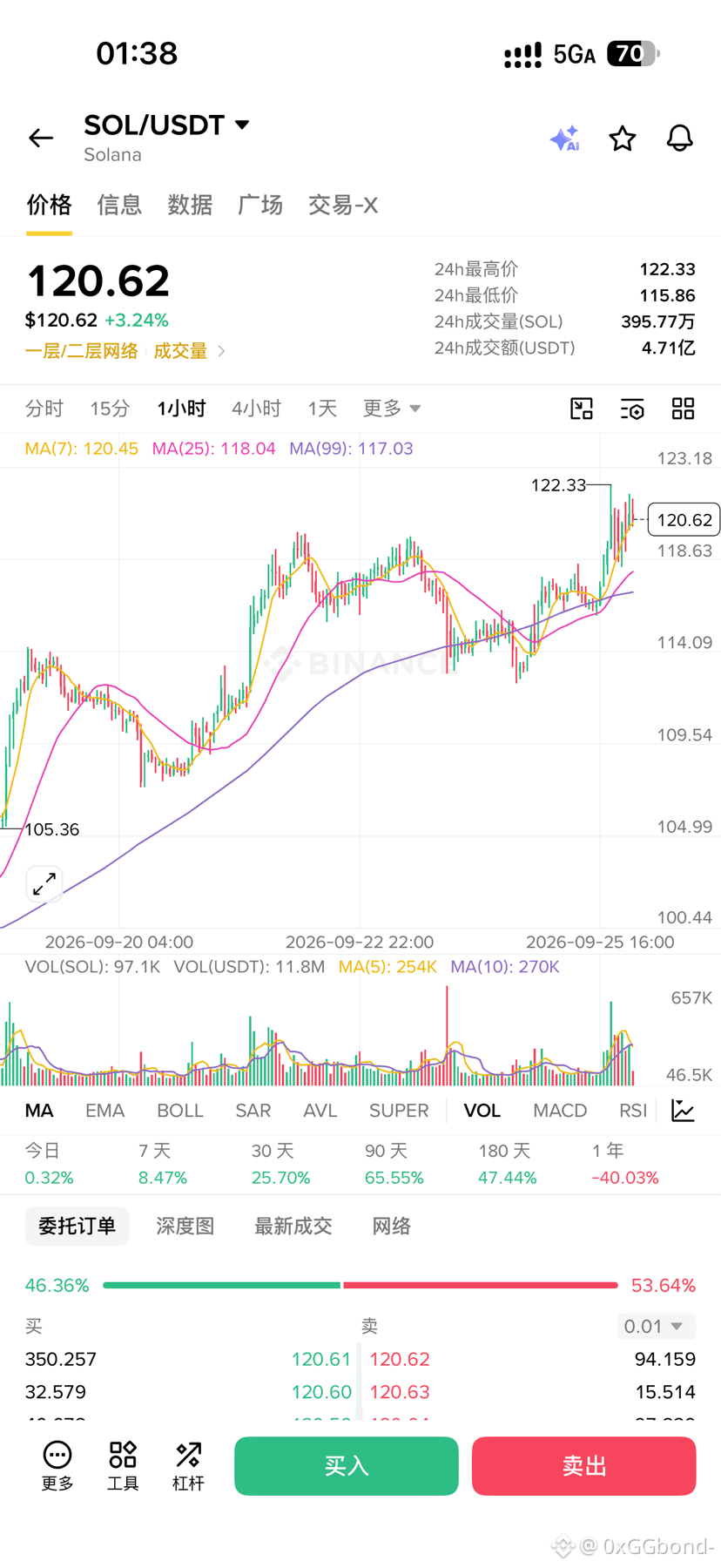
This wave of $SOL is still steady.
In the same period, Bitcoin has fallen to 83,000.
This wave of $SOL is still steady.
In the same period, Bitcoin has fallen to 83,000.
In the same period, Bitcoin has fallen to 83,000.
1
1k
·
--
In this episode of Binance Meetups, Ye Tan. Financial heroine, 3.75 million followers on Weibo.In this episode of Binance Meetups, Ye Tan. Financial heroine, 3.75 million followers on Weibo.
Her views on Bitcoin are ahead of many traditional finance people. This episode is about investing—there are 25 takeaways in total.
Bitcoin is almost set to replace gold and become the new generation of safe-haven asset.When the US dollar has trouble, only three things can strengthen against the trend: gold, Bitcoin, and Chinese government bonds. When you look at an asset, don’t just ask whether it’s good by itself—watch which side it stands on when the dollar is in trouble.The money for buying gold comes from three channels: central banks around the world, gold ETFs, and retail investors. A gold ETF tracks the gold price and lets you buy and sell like a stock. Retail investors are just minor players who run around under the banner of the price—they don’t get a say. The real pricing of gold is determined by central banks. Who’s buying the money together matters far more than judging right from wrong.
In this episode of Binance Meetups, Ye Tan. Financial heroine, 3.75 million followers on Weibo.
In this episode of Binance Meetups, Ye Tan. Financial heroine, 3.75 million followers on Weibo.
Her views on Bitcoin are ahead of many traditional finance people. This episode is about investing—there are 25 takeaways in total.
Bitcoin is almost set to replace gold and become the new generation of safe-haven asset.When the US dollar has trouble, only three things can strengthen against the trend: gold, Bitcoin, and Chinese government bonds. When you look at an asset, don’t just ask whether it’s good by itself—watch which side it stands on when the dollar is in trouble.The money for buying gold comes from three channels: central banks around the world, gold ETFs, and retail investors. A gold ETF tracks the gold price and lets you buy and sell like a stock. Retail investors are just minor players who run around under the banner of the price—they don’t get a say. The real pricing of gold is determined by central banks. Who’s buying the money together matters far more than judging right from wrong.
Her views on Bitcoin are ahead of many traditional finance people. This episode is about investing—there are 25 takeaways in total.
Bitcoin is almost set to replace gold and become the new generation of safe-haven asset.When the US dollar has trouble, only three things can strengthen against the trend: gold, Bitcoin, and Chinese government bonds. When you look at an asset, don’t just ask whether it’s good by itself—watch which side it stands on when the dollar is in trouble.The money for buying gold comes from three channels: central banks around the world, gold ETFs, and retail investors. A gold ETF tracks the gold price and lets you buy and sell like a stock. Retail investors are just minor players who run around under the banner of the price—they don’t get a say. The real pricing of gold is determined by central banks. Who’s buying the money together matters far more than judging right from wrong.
359
·
--
4STOCK over there—people are still looking for angles to FUD $GSTOCK up to now.
Both of them are still trading tonight. 4STOCK hasn’t collapsed; the topic needs to be extended—there’s no need to make a special trip just to step on someone else. Play your own game. The mechanisms run separately, and the platforms are separate too. Pointing at a chart that’s still moving and having everyone open their mouths in sync—that vibe feels like paid promotional work.
The “genius” platform is still ranked near the front for now. The layer where $GSTOCK overlaps—if you shout a ticker, it can’t cover it up.
Inside the platforms, what $天才 and $GCAT swap for any liquidity pool is still on a smaller scale. Some people think these two at least should reach a million, but the market didn’t deliver. Volume is still in $GSTOCK.
4STOCK over there—people are still looking for angles to FUD $GSTOCK up to now.
Both of them are still trading tonight. 4STOCK hasn’t collapsed; the topic needs to be extended—there’s no need to make a special trip just to step on someone else. Play your own game. The mechanisms run separately, and the platforms are separate too. Pointing at a chart that’s still moving and having everyone open their mouths in sync—that vibe feels like paid promotional work.
The “genius” platform is still ranked near the front for now. The layer where $GSTOCK overlaps—if you shout a ticker, it can’t cover it up.
Inside the platforms, what $天才 and $GCAT swap for any liquidity pool is still on a smaller scale. Some people think these two at least should reach a million, but the market didn’t deliver. Volume is still in $GSTOCK.
Both of them are still trading tonight. 4STOCK hasn’t collapsed; the topic needs to be extended—there’s no need to make a special trip just to step on someone else. Play your own game. The mechanisms run separately, and the platforms are separate too. Pointing at a chart that’s still moving and having everyone open their mouths in sync—that vibe feels like paid promotional work.
The “genius” platform is still ranked near the front for now. The layer where $GSTOCK overlaps—if you shout a ticker, it can’t cover it up.
Inside the platforms, what $天才 and $GCAT swap for any liquidity pool is still on a smaller scale. Some people think these two at least should reach a million, but the market didn’t deliver. Volume is still in $GSTOCK.
184
·
--
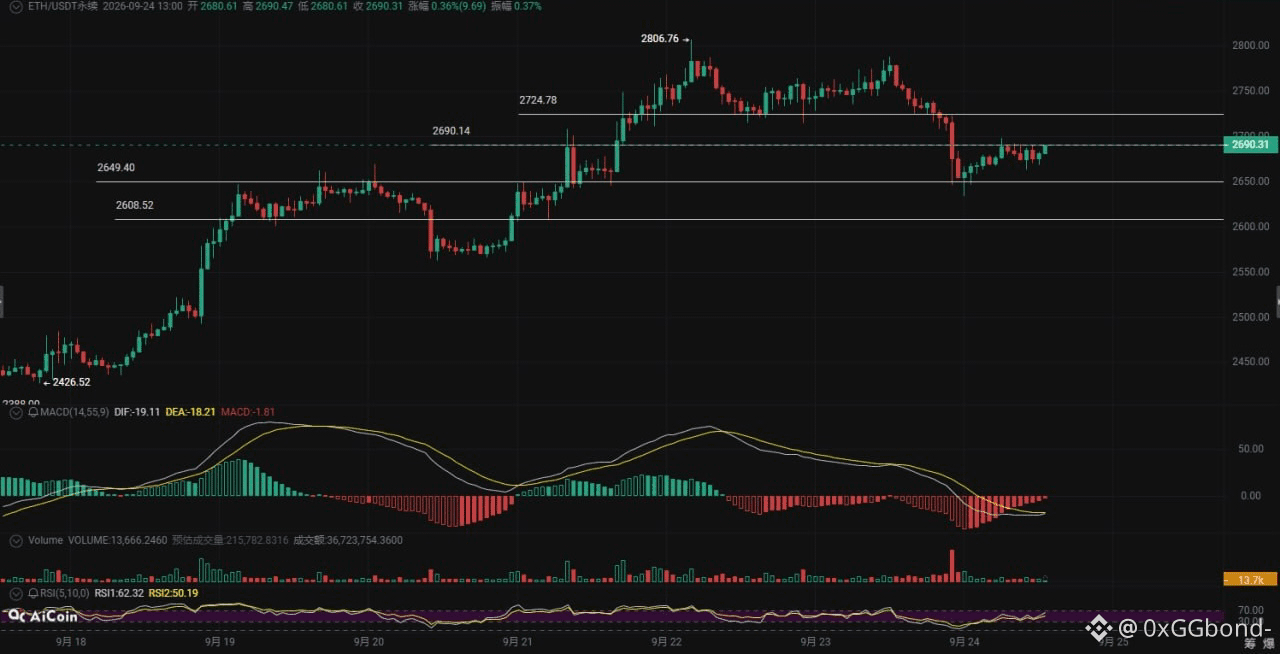
$ETH Yesterday, after a quick sell-off, it is currently in a weak rebound phase. However, as long as spot capital still has support and willingness to absorb, we can temporarily define this round of decline first as a leveraged washout after the prior upswing—not a medium-term trend reversal. Still, the 1-hour MACD remains below the zero line and rebound momentum is mediocre, so the short-term repair has not yet been completed.
For now, the key zones to watch are 2663—2690—2725. 2663 is the first support. 2690 has already completed the role-switch from resistance to support. If price again puts volume behind it and holds above 2690, the rebound can further target 2725. 2725 is the crucial neckline resistance after this drop. Only if price regains and holds above 2725 can the short-term structure truly turn stronger again. After that, we can look toward 2760 and then 2806.
Conversely, if 2690—2725 keeps facing pressure and forms a 1H sideways stall (滞涨), especially if it breaks back below 2663 again, then we need to guard against a second round of leveraged washout. To the downside, first watch 2649, and then focus on the core defense around 2608. If 2608 shows a clear stop-the-fall signal on 15M/1H—followed by a contraction in sell volume—and then price re-accumulates volume and closes back up, that can be used as a spot to re-enter some long positions. But if 2608 breaks down decisively and the subsequent rebound cannot reclaim it, then this adjustment will no longer be just a normal leveraged washout; we would need to lower our assessment of whether the upswing can continue.
Summary: Hold 2663 to target 2690→2725. If 2725 is regained and held, bulls regain the timing. If the attempt to push toward 2725 fails and price falls back below 2663, guard against a second quick washout and mainly wait for support at 2608. Medium-term bias is still somewhat bullish for now, but until 2725 is reclaimed, treat it only as a weak rebound—don’t rush to chase longs.
$ETH Yesterday, after a quick sell-off, it is currently in a weak rebound phase. However, as long as spot capital still has support and willingness to absorb, we can temporarily define this round of decline first as a leveraged washout after the prior upswing—not a medium-term trend reversal. Still, the 1-hour MACD remains below the zero line and rebound momentum is mediocre, so the short-term repair has not yet been completed.
For now, the key zones to watch are 2663—2690—2725. 2663 is the first support. 2690 has already completed the role-switch from resistance to support. If price again puts volume behind it and holds above 2690, the rebound can further target 2725. 2725 is the crucial neckline resistance after this drop. Only if price regains and holds above 2725 can the short-term structure truly turn stronger again. After that, we can look toward 2760 and then 2806.
Conversely, if 2690—2725 keeps facing pressure and forms a 1H sideways stall (滞涨), especially if it breaks back below 2663 again, then we need to guard against a second round of leveraged washout. To the downside, first watch 2649, and then focus on the core defense around 2608. If 2608 shows a clear stop-the-fall signal on 15M/1H—followed by a contraction in sell volume—and then price re-accumulates volume and closes back up, that can be used as a spot to re-enter some long positions. But if 2608 breaks down decisively and the subsequent rebound cannot reclaim it, then this adjustment will no longer be just a normal leveraged washout; we would need to lower our assessment of whether the upswing can continue.
Summary: Hold 2663 to target 2690→2725. If 2725 is regained and held, bulls regain the timing. If the attempt to push toward 2725 fails and price falls back below 2663, guard against a second quick washout and mainly wait for support at 2608. Medium-term bias is still somewhat bullish for now, but until 2725 is reclaimed, treat it only as a weak rebound—don’t rush to chase longs.
For now, the key zones to watch are 2663—2690—2725. 2663 is the first support. 2690 has already completed the role-switch from resistance to support. If price again puts volume behind it and holds above 2690, the rebound can further target 2725. 2725 is the crucial neckline resistance after this drop. Only if price regains and holds above 2725 can the short-term structure truly turn stronger again. After that, we can look toward 2760 and then 2806.
Conversely, if 2690—2725 keeps facing pressure and forms a 1H sideways stall (滞涨), especially if it breaks back below 2663 again, then we need to guard against a second round of leveraged washout. To the downside, first watch 2649, and then focus on the core defense around 2608. If 2608 shows a clear stop-the-fall signal on 15M/1H—followed by a contraction in sell volume—and then price re-accumulates volume and closes back up, that can be used as a spot to re-enter some long positions. But if 2608 breaks down decisively and the subsequent rebound cannot reclaim it, then this adjustment will no longer be just a normal leveraged washout; we would need to lower our assessment of whether the upswing can continue.
Summary: Hold 2663 to target 2690→2725. If 2725 is regained and held, bulls regain the timing. If the attempt to push toward 2725 fails and price falls back below 2663, guard against a second quick washout and mainly wait for support at 2608. Medium-term bias is still somewhat bullish for now, but until 2725 is reclaimed, treat it only as a weak rebound—don’t rush to chase longs.
96
·
--
Binance wants to put together a combo and push this bull run forward. Spot has already moved first.
$MARSCOIN was on September 4, $bull came on September 9. Back then, people said the consolidation was almost over, and they wanted to pull up another wave to attract more people. It’s been two weeks already, and the hype has cooled off. Are they still here—in BNB? Let’s see whether new money is coming in.
The meme that uses BNC as the bottom pool is still running. Someone said this batch is being treated as the engine that powers BNB. 4stock and gstock are fighting over it, and both BNC and BNB ended up eating.
At Pancake’s new listings, the first one is $pPOLY. The window is only these few days—heard it will fill up very soon. Anthropic and OpenAI are just guessing; they haven’t been scheduled.
When Binance takes action, it usually moves about a week slower than the broader market. That’s how the early-September spot came about. The pool didn’t stop, and the next $pPOLY doesn’t have a name yet.
Binance wants to put together a combo and push this bull run forward. Spot has already moved first.
$MARSCOIN was on September 4, $bull came on September 9. Back then, people said the consolidation was almost over, and they wanted to pull up another wave to attract more people. It’s been two weeks already, and the hype has cooled off. Are they still here—in BNB? Let’s see whether new money is coming in.
The meme that uses BNC as the bottom pool is still running. Someone said this batch is being treated as the engine that powers BNB. 4stock and gstock are fighting over it, and both BNC and BNB ended up eating.
At Pancake’s new listings, the first one is $pPOLY. The window is only these few days—heard it will fill up very soon. Anthropic and OpenAI are just guessing; they haven’t been scheduled.
When Binance takes action, it usually moves about a week slower than the broader market. That’s how the early-September spot came about. The pool didn’t stop, and the next $pPOLY doesn’t have a name yet.
$MARSCOIN was on September 4, $bull came on September 9. Back then, people said the consolidation was almost over, and they wanted to pull up another wave to attract more people. It’s been two weeks already, and the hype has cooled off. Are they still here—in BNB? Let’s see whether new money is coming in.
The meme that uses BNC as the bottom pool is still running. Someone said this batch is being treated as the engine that powers BNB. 4stock and gstock are fighting over it, and both BNC and BNB ended up eating.
At Pancake’s new listings, the first one is $pPOLY. The window is only these few days—heard it will fill up very soon. Anthropic and OpenAI are just guessing; they haven’t been scheduled.
When Binance takes action, it usually moves about a week slower than the broader market. That’s how the early-September spot came about. The pool didn’t stop, and the next $pPOLY doesn’t have a name yet.
2.5k
·
--
$TRX
dyor - The terms are written into Nasdaq rules; the ETF is still the main narrative.
$TRX
dyor - The terms are written into Nasdaq rules; the ETF is still the main narrative.
dyor - The terms are written into Nasdaq rules; the ETF is still the main narrative.
134
·
--
This main cycle is being compressed into two layers.
On one side, there’s revenue, buybacks, and RWA. Hyperliquid takes most of its income to buy back and burn. Then a batch of projects follows suit. Look at it separately: is the money earned by the protocol itself, or “printed” via one hand to the other? The difference this time is that the data rises first, then revenue comes back through buybacks—the token starts to catch and hold the protocol’s value. $HYPE, $UNI, $RAY, $LIT are on this track. $PONS, $STONK, $AI —these new launchpads—are also put into the same category.
On the other side, there’s privacy and AI, which rely more on storytelling. $ZEC is the most typical example. $NEAR hangs privacy trading and full-chain trading. $VVV is a privacy AI, and it tokenizes compute.
On-chain, this wave is mainly about tokenized stocks.
Robinhood’s first wave had the most “golden dogs,” led by $PONS and $Ai, and there’s also pure Meme like $CASHCAT. After playing the token–stock pairing game for a round, this chain enters a cooldown.
Solana also survived without top-tier exchanges. $ZCAT pairs with $ZEC, spawning a batch of Memes built around token–pairing. $Cate does Social Trading—Poorgoat-style leaders help push Holders up. $STONK is the biggest beneficiary here: pairing went from being cold to having consecutive days of revenue that surpassed $PONS.
On BSC, Flap first ran out $Marscoin and $牛. Four’s $4STOCK originally looked the most like a crypto–stock flywheel, but a high-control market wiped out the sentiment. Genius’s tax revenue goes straight into buying stocks, with the goal of getting onto the board. $GSTOCK overtakes $4STOCK, becoming the leader of crypto–stock here.
The buyback flywheel is in the shanzhai. The crypto–stock pairing is on-chain. Next wave—let’s see whether new catalysts can still come through.
This main cycle is being compressed into two layers.
On one side, there’s revenue, buybacks, and RWA. Hyperliquid takes most of its income to buy back and burn. Then a batch of projects follows suit. Look at it separately: is the money earned by the protocol itself, or “printed” via one hand to the other? The difference this time is that the data rises first, then revenue comes back through buybacks—the token starts to catch and hold the protocol’s value. $HYPE, $UNI, $RAY, $LIT are on this track. $PONS, $STONK, $AI —these new launchpads—are also put into the same category.
On the other side, there’s privacy and AI, which rely more on storytelling. $ZEC is the most typical example. $NEAR hangs privacy trading and full-chain trading. $VVV is a privacy AI, and it tokenizes compute.
On-chain, this wave is mainly about tokenized stocks.
Robinhood’s first wave had the most “golden dogs,” led by $PONS and $Ai, and there’s also pure Meme like $CASHCAT. After playing the token–stock pairing game for a round, this chain enters a cooldown.
Solana also survived without top-tier exchanges. $ZCAT pairs with $ZEC , spawning a batch of Memes built around token–pairing. $Cate does Social Trading—Poorgoat-style leaders help push Holders up. $STONK is the biggest beneficiary here: pairing went from being cold to having consecutive days of revenue that surpassed $PONS.
On BSC, Flap first ran out $Marscoin and $牛. Four’s $4STOCK originally looked the most like a crypto–stock flywheel, but a high-control market wiped out the sentiment. Genius’s tax revenue goes straight into buying stocks, with the goal of getting onto the board. $GSTOCK overtakes $4STOCK, becoming the leader of crypto–stock here.
The buyback flywheel is in the shanzhai. The crypto–stock pairing is on-chain. Next wave—let’s see whether new catalysts can still come through.
On one side, there’s revenue, buybacks, and RWA. Hyperliquid takes most of its income to buy back and burn. Then a batch of projects follows suit. Look at it separately: is the money earned by the protocol itself, or “printed” via one hand to the other? The difference this time is that the data rises first, then revenue comes back through buybacks—the token starts to catch and hold the protocol’s value. $HYPE, $UNI, $RAY, $LIT are on this track. $PONS, $STONK, $AI —these new launchpads—are also put into the same category.
On the other side, there’s privacy and AI, which rely more on storytelling. $ZEC is the most typical example. $NEAR hangs privacy trading and full-chain trading. $VVV is a privacy AI, and it tokenizes compute.
On-chain, this wave is mainly about tokenized stocks.
Robinhood’s first wave had the most “golden dogs,” led by $PONS and $Ai, and there’s also pure Meme like $CASHCAT. After playing the token–stock pairing game for a round, this chain enters a cooldown.
Solana also survived without top-tier exchanges. $ZCAT pairs with $ZEC , spawning a batch of Memes built around token–pairing. $Cate does Social Trading—Poorgoat-style leaders help push Holders up. $STONK is the biggest beneficiary here: pairing went from being cold to having consecutive days of revenue that surpassed $PONS.
On BSC, Flap first ran out $Marscoin and $牛. Four’s $4STOCK originally looked the most like a crypto–stock flywheel, but a high-control market wiped out the sentiment. Genius’s tax revenue goes straight into buying stocks, with the goal of getting onto the board. $GSTOCK overtakes $4STOCK, becoming the leader of crypto–stock here.
The buyback flywheel is in the shanzhai. The crypto–stock pairing is on-chain. Next wave—let’s see whether new catalysts can still come through.
886
·
--
This round of BTC Bitcoin market利空叠在一起的那一周, $BTC 比特币反而拉了起来。美联储 2023 年以来第一次加息,一次 25 个基点;日本央行把利率加到 1.25%,是 31 年高位;(CLARITY 法案)在参议院没过;现货 ETF 出现 6 月以来最大单日流出。价格当天涨超 5%,一小时内大约 1.9 亿美元空单被打掉。周日收在 81062 美元,当周涨 4.9%,重新站上大约 78800 美元的 50 周均线,高出均线大约 3%,也是 2024 年 11 月以来第一次。当时 CSH 风险评分 37.4,好于历史上大约 65% 的交易日。
This round of BTC Bitcoin market
利空叠在一起的那一周, $BTC 比特币反而拉了起来。美联储 2023 年以来第一次加息,一次 25 个基点;日本央行把利率加到 1.25%,是 31 年高位;(CLARITY 法案)在参议院没过;现货 ETF 出现 6 月以来最大单日流出。价格当天涨超 5%,一小时内大约 1.9 亿美元空单被打掉。周日收在 81062 美元,当周涨 4.9%,重新站上大约 78800 美元的 50 周均线,高出均线大约 3%,也是 2024 年 11 月以来第一次。当时 CSH 风险评分 37.4,好于历史上大约 65% 的交易日。
214
·
--
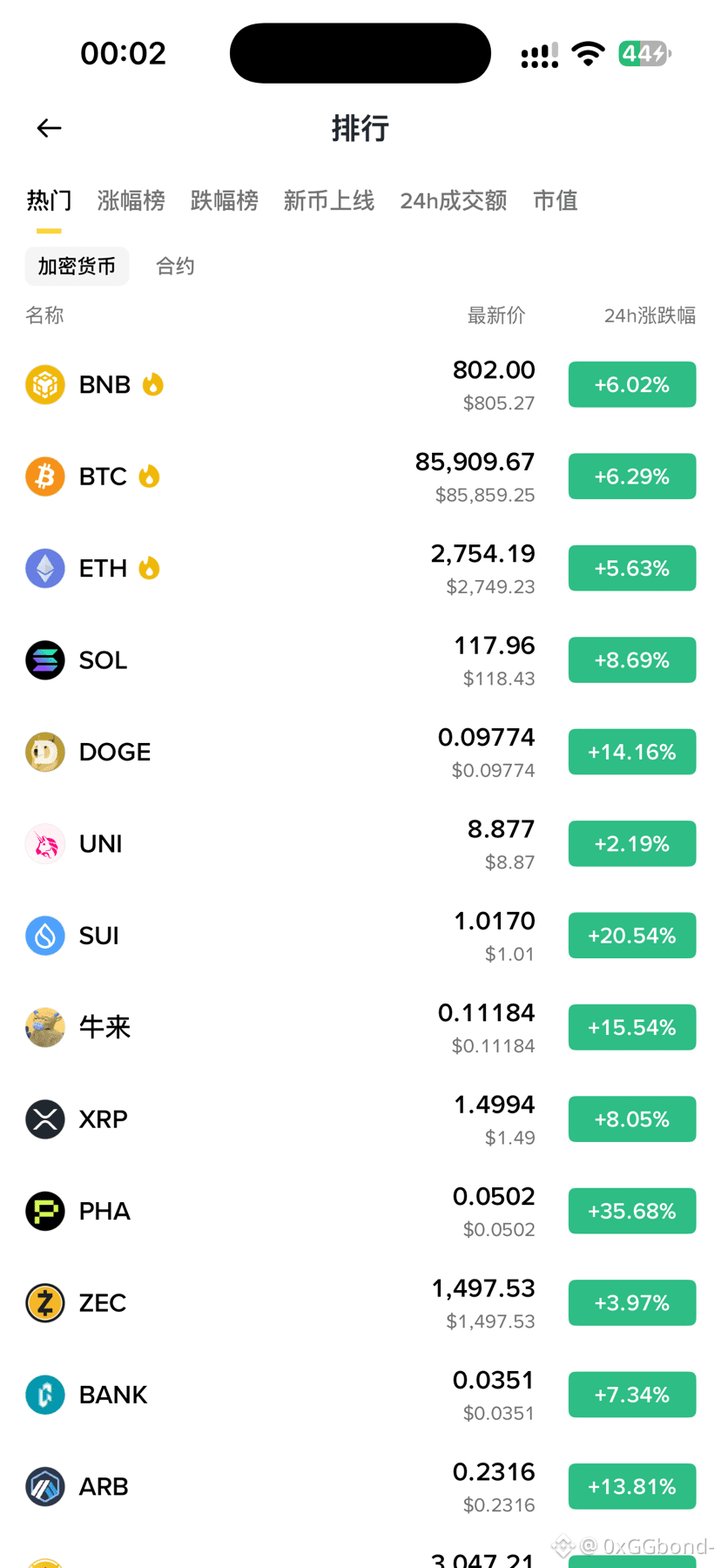
It's too crazy—this is what it feels like when a bull market is coming.$BTC $ETH
It's too crazy—this is what it feels like when a bull market is coming.$BTC $ETH
472
Log in to explore more content
Join global crypto users on Binance Square
⚡️ Get latest and useful information about crypto.
💬 Trusted by the world’s largest crypto exchange.
👍 Discover real insights from verified creators.
Email / Phone number
Trending Topics
NEARFallsToAround$4.70Down14%
12,696 views
23 Discussing
🚨 $NEAR — FROM ETF HYPE TO A 14% SLAP IN THE FACE.
NEAR has dropped toward $4.70, giving back a big chunk of its recent run after briefly trading above $5.50. The selloff also came as NEAR Intents disclosed a security incident tied to its cross-chain infrastructure, with reported losses around $3.8M. The underlying NEAR blockchain itself was not reported as compromised.
Here’s the part traders should care about:
$4.69–$4.74 is now the key support zone.
Hold it, and this could simply be a violent retest after the September breakout.
Lose it?
The next downside references sit closer to $4.58, then ~$4.30.
And the irony?
The new Bitwise NEAR ETF was still seeing positive inflows around launch week.
So this isn’t a simple “nobody wants NEAR” story.
It’s a battle between:
fresh institutional access
vs.
post-rally profit-taking + security fear.
$NEAR doesn’t need hype right now. It needs $4.70 to hold. 👀
#NEARFallsToAround$4.70Down14% #EvernorthPlansNasdaqListingOct8 #SECProposesCryptoCustodyFramework #IMFApproves$139MDisbursementToElSalvador #AnthropicTargetsIPOAsSoonAsMidNovember
KimHotbae
·0 Likes
·263 views
EthereumFoundationLaunchesZkAPIOnMainnet
4,572 views
131 Discussing
EvernorthPlansNasdaqListingOct8
14,494 views
148 Discussing