
一万理财到百万
45 Posts

一万理财到百万
Report
Block User
3 Following
119 Followers
88 Liked
Posts
All
Quotes
·
--
Bearish
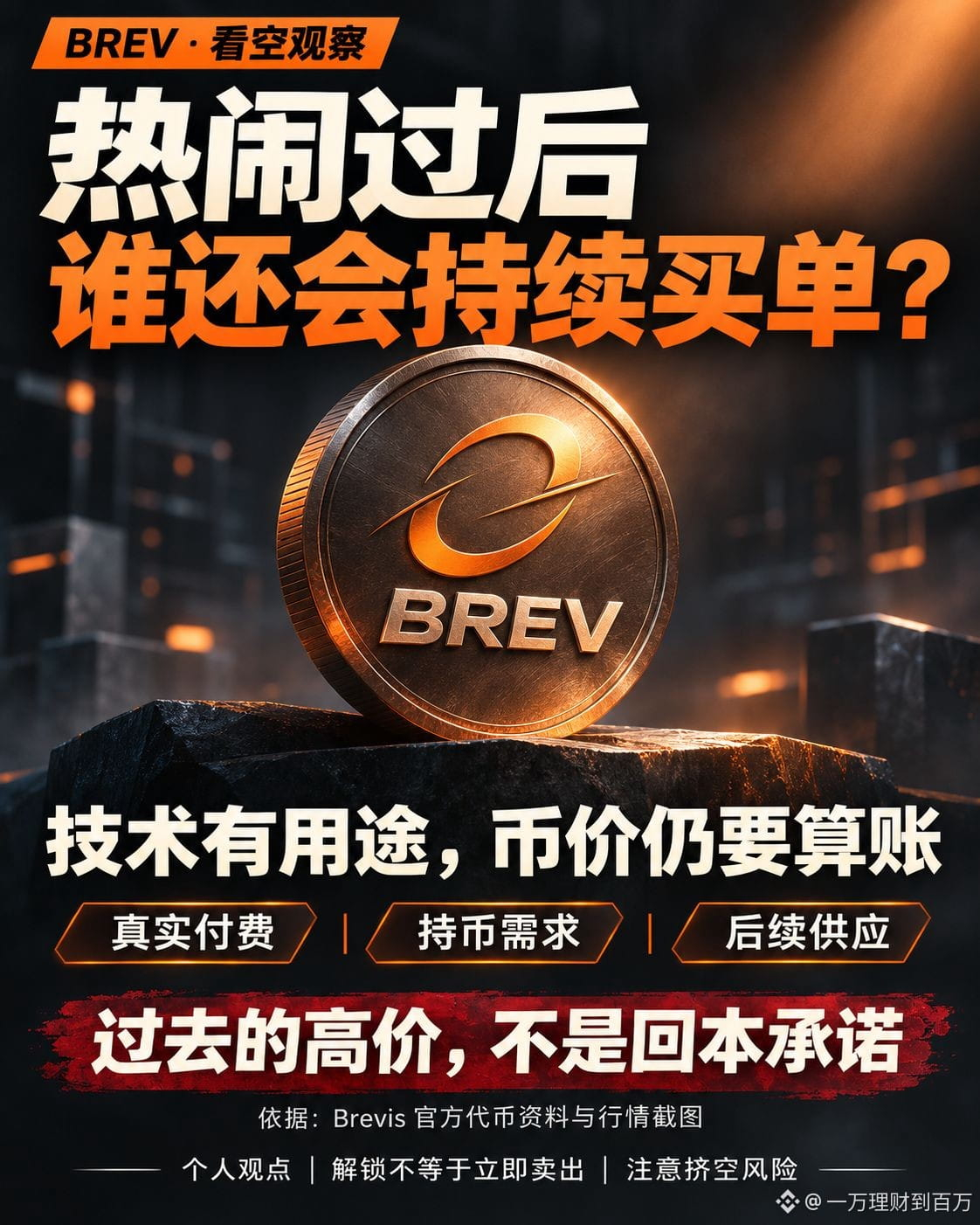
$BREV After the hype dies down, who’s still going to buy?
No matter how impressive the technology sounds, someone still has to put real money down to buy the token.
According to the screenshot, the total supply is 1 billion tokens, with 437 million currently in circulation. As more tokens enter circulation, can buyers keep up?
It used to be worth over 50 cents; now it’s just a few cents. A big drop doesn’t necessarily mean it’s cheap.
I’m bearish on BREV: if the hype fades and buying demand can’t keep up, any rebound will be hard to sustain.
Just because it rose to that level before doesn’t mean it’ll get back there.
Just my personal view. Future token unlocks don’t necessarily mean an immediate sell-off, and short sellers should also watch out for a sudden surge.
#BREV #Brevis
419
·
--
Bearish
$MMT is up over 100%—so why are more people bearish?
When people see a gain of over 100%, their first thought is often: could it double again?
Let me ask this first: has real demand caught up with the price surge?
I’m bearish on this sharp rally for a few main reasons:
① Only 30% is circulating. Who will absorb the tokens released later?
According to the screenshot, about 290 million tokens are circulating out of a total supply of 1 billion, so only around 29% is in circulation.
The rest won’t all be sold immediately, but future releases will need enough market demand to absorb them. A buying frenzy now doesn’t mean buyers will be willing to snap up all the additional tokens later.
Also, Binance’s listing announcement describes 1 billion tokens as the initial total supply and lists the maximum supply as “unlimited”—the screenshot shows the same. This doesn’t mean a large amount will be issued right away, but before calling it scarce in the long term, we need to understand the rules for future issuance.
② Trading volume of $352 million doesn’t mean $352 million in new money came in.
The screenshot shows a market cap of about $70.6 million and trading volume of about $352 million—nearly five times the market cap.
That looks like a lot of activity, but the same money can change hands repeatedly, adding to the trading volume each time.
Trading volume can show that trading is active, but it doesn’t prove how much new capital is willing to stay for the long term. What matters is whether buying continues after the hype cools.
③ There are buybacks, but look at how much is bought and what happens to it afterward.
According to the official explanation, repurchased MMT is distributed to veMMT holders who have locked their tokens; it isn’t permanently burned. Buybacks can create buying pressure, but whether they can continuously absorb new supply depends on actual revenue and the scale of the buybacks.
The words “there are buybacks” aren’t enough to justify buying at any price.
So I remain bearish on this sharp rally. For the price to keep rising, there needs to be sustained user demand, revenue, and buying pressure.
If those don’t keep up while more tokens are released, some of the gains could be given back.
The biggest risk is mistaking a burst of excitement for long-term value. A big green candle looks great, but you have to bear the risks that follow yourself.
Market and circulation data are based on the screenshot; supply and buyback rules are based on Binance’s listing announcement and the project documentation. These are personal views. A sharp rally could also continue and trigger a short squeeze; being bearish doesn’t mean it’s a good time to open a short position.
#MMT #Momentum #行情分析

366
·
--
Bearish
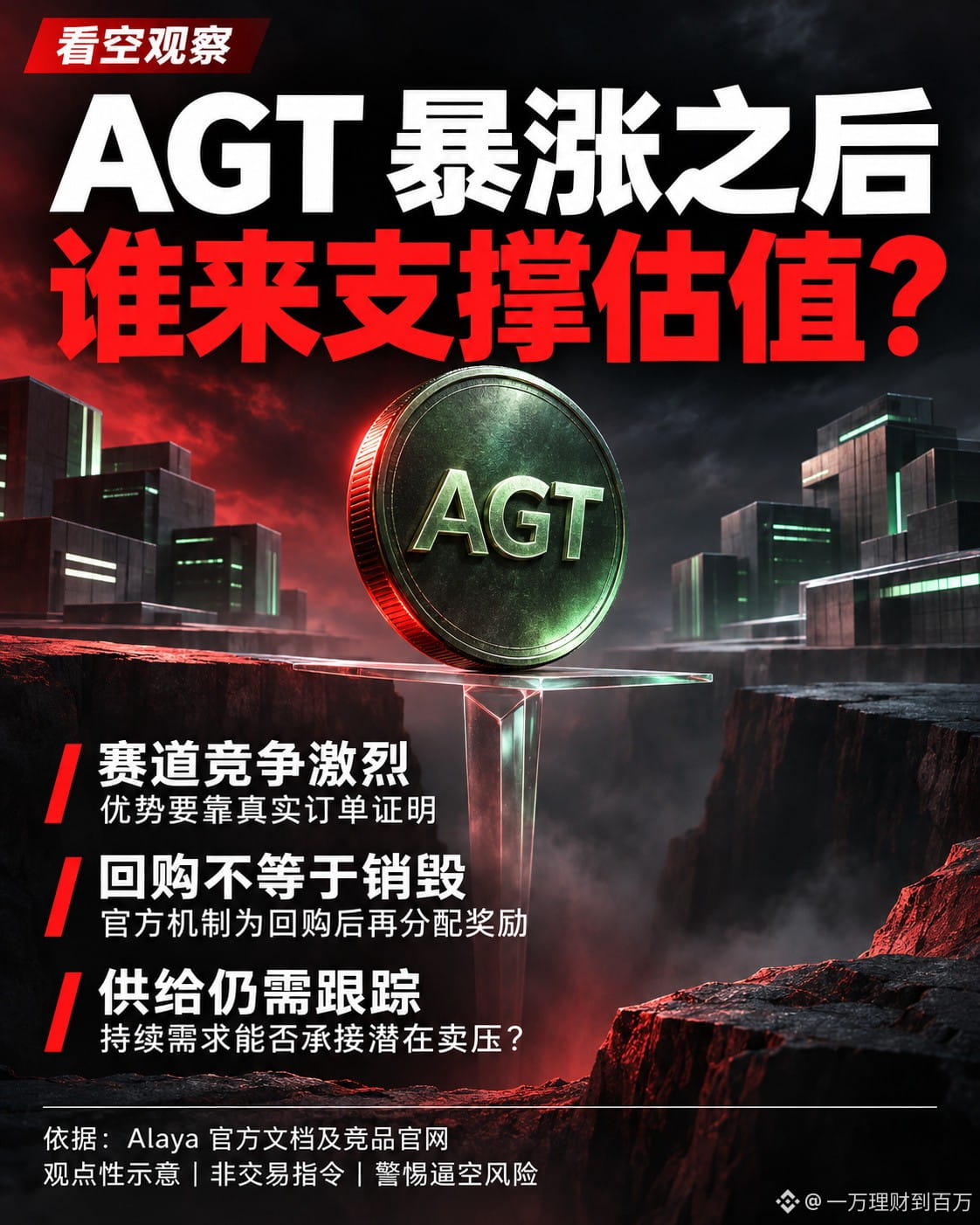
$AGT After the surge: With so many competitors, what will support the valuation?
$AGT The gains shown in the screenshot are already close to 150%. The price has surged, but what I really want to know is: have the business and token demand kept pace?
I remain cautious to bearish about the valuation support after the rally, mainly because of these three questions.
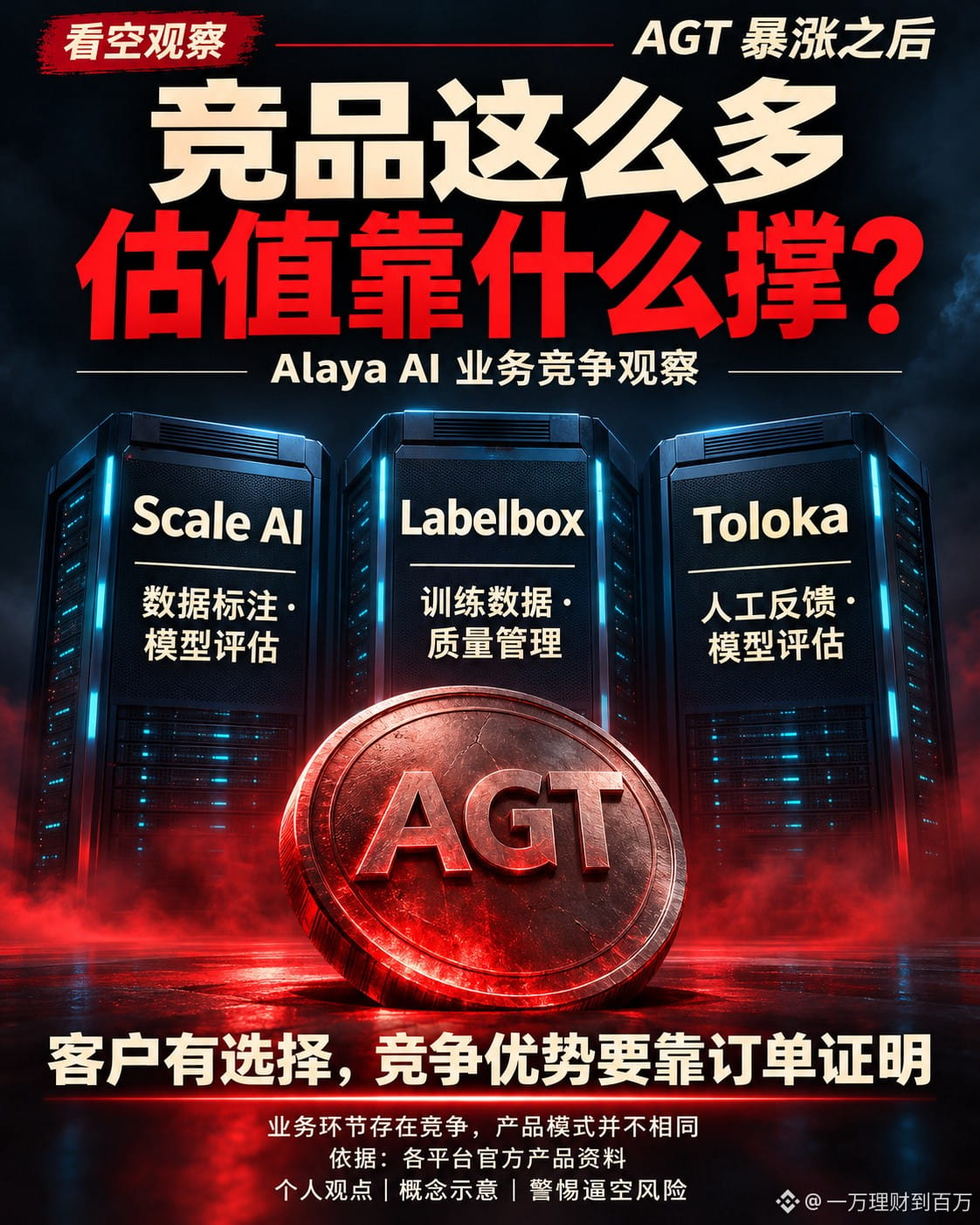
① What gives this AI data business the right to a premium?
Platforms such as Scale AI, Labelbox, and Toloka already provide services in areas like data labeling, training data, and model evaluation.
Alaya has its own Web3 incentive design, but customers ultimately compare data quality, delivery costs, and reliability. It needs to prove through sustained orders why customers choose it—and why they keep paying for it.
The sector is hot, but a competitive edge still has to be proven through performance.
② After buybacks, how much sustained demand is actually left?
The official design is to use platform revenue to buy back AGT and then distribute it to the user reward pool.
Buybacks can create buying pressure, but the rewards that are redistributed may also re-enter the market. So I care more about the actual buyback amounts, reward distributions, and any new demand for staking and usage.
The buyback mechanism is clearly laid out, but its actual impact also needs to be demonstrated with data.
③ How much supply does the market still need to absorb?
Based on the figures in the screenshot, the maximum supply is 5 billion tokens, with about 3.523 billion in circulation and roughly 1.477 billion not yet counted as circulating.
This does not mean those tokens will unlock immediately, nor that they will all be sold, but the pace at which supply enters circulation is worth watching.
Alaya has real-world utility, and the team also reported $6 million in data-order revenue in May 2025. My question is whether future order growth, actual buybacks, and sustained demand to hold the token can support the price after the rally.
Until there is stronger evidence on these fronts, I remain cautious to bearish about the valuation support after the rally.
The gains are already there for all to see; the business supporting the price still needs to keep delivering results.
The above reflects my personal research views. The gains and circulating supply are based on the point in time shown in the screenshot. A bearish view does not mean the price is about to peak; during a sharp rally, short squeezes and leveraged liquidations are also possible.
#AGT #AI #CryptoMarketWatch
1
583
·
--
Bearish
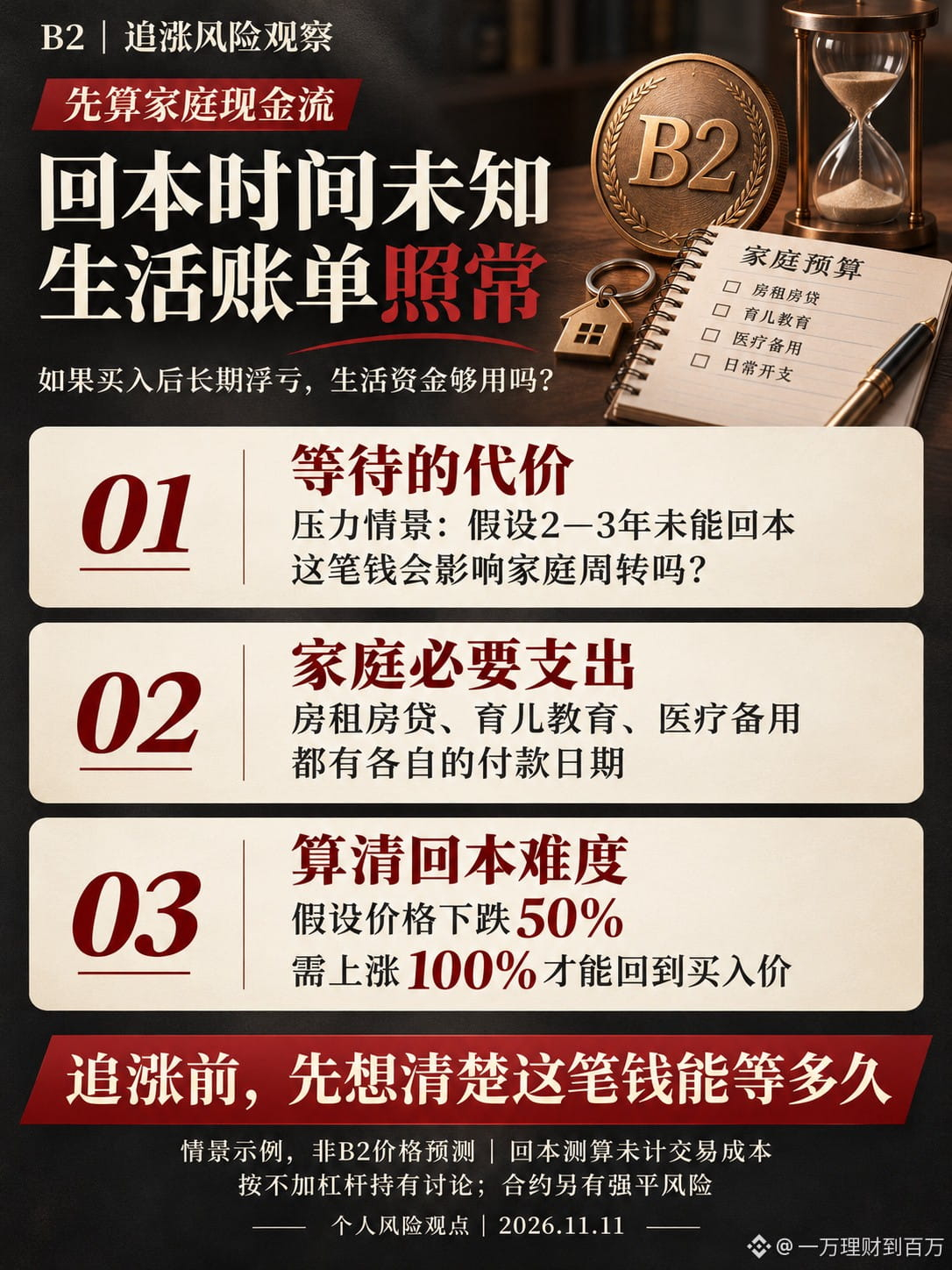
$B2 Key reminder: the time it takes to break even is unknown, but living expenses carry on as usual
When it comes to chasing the rally in B2, what worries me more is this: at the time of buying, you may only be thinking about how much further it could rise, without considering how long you can afford to wait.
Start with a stress test: if the price still hasn’t returned to your purchase price after two or three years, would that money being tied up affect your household finances?
Rent or mortgage payments still need to be made, children’s education expenses need to be covered, and emergency medical funds for family members need to be set aside. Life doesn’t stop costing money just because you’re waiting to break even.
If your income becomes uncertain, funds you originally planned to hold long term may have to be sold at a loss because you suddenly need the money.
You also need to understand the math behind breaking even.
For example, assuming you hold without leverage: if an investment of 100,000 yuan falls to 50,000 yuan, it needs to rise 100% from 50,000 yuan to return to the original 100,000 yuan, before even accounting for transaction costs. Holding for longer also doesn’t guarantee you’ll eventually break even.
That’s why I’m cautious about chasing a rally. Aside from whether the project can meet expectations, ask yourself: Can I cover essential household expenses separately? Can I truly afford to leave this money untouched for the long term? If I incur a loss, will it disrupt my living arrangements?
Before buying, calculate the cost of waiting.
These are personal views on risk and do not constitute trading advice. The two-to-three-year period and the price decline are stress scenarios, not predictions of B2’s performance; contract trading also carries a risk of forced liquidation.
271
·
--
Bearish
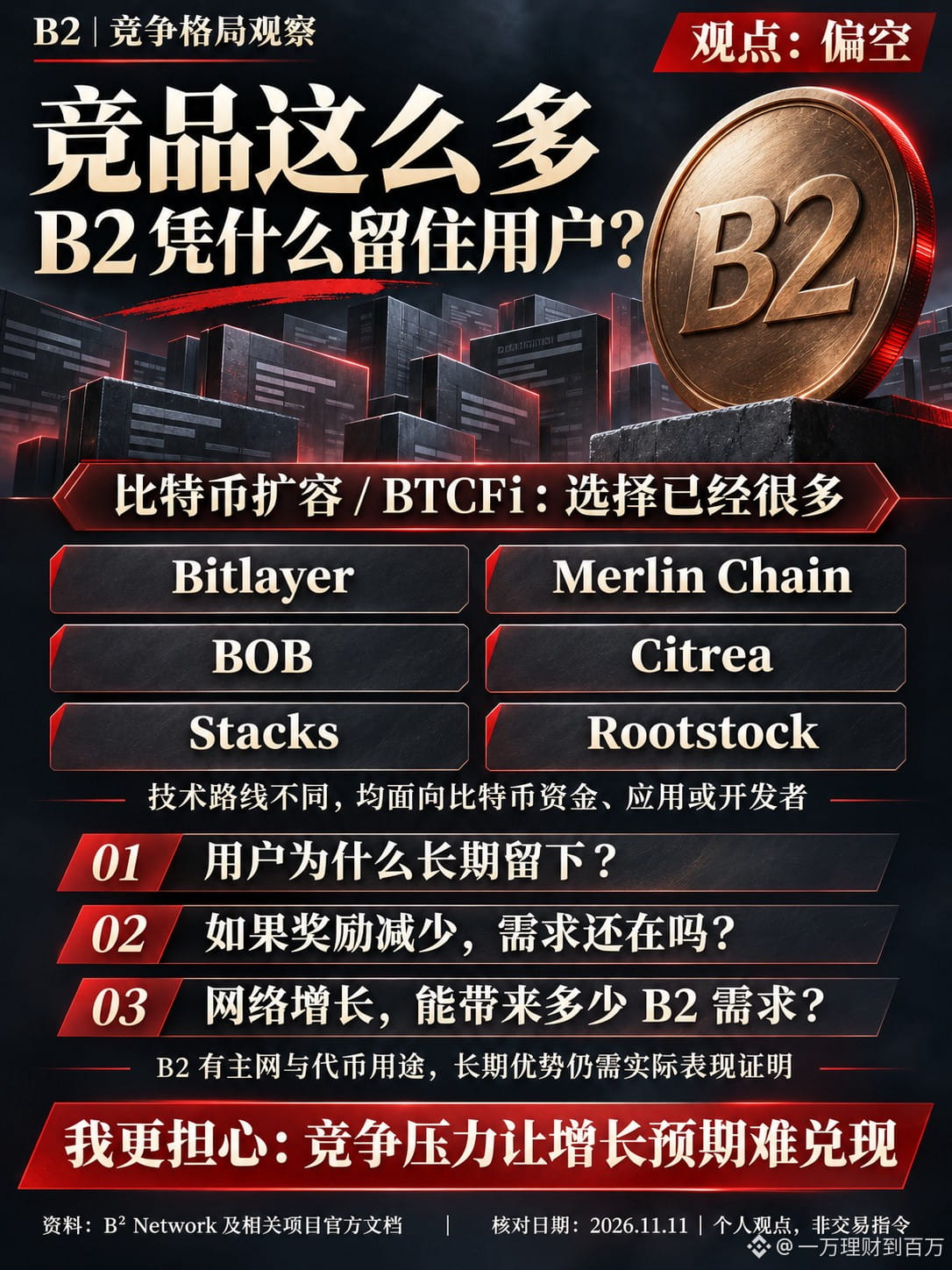
$B2 There are plenty of competitors, so why should users choose you?
I’m bearish on B2’s growth prospects, and competition is my biggest concern.
There are already plenty of options in the Bitcoin scaling and BTCFi space:
Bitlayer, Merlin Chain, BOB, Citrea, Stacks, and Rootstock.
These projects follow different technical approaches, but in terms of product direction, they’re all vying for capital, developers, and applications in the Bitcoin ecosystem. B2 is up against competitors that are already building products and ecosystems.
① With so many competitors, B2 needs to offer concrete advantages.
Why would users put their BTC here? Why would developers prioritize building applications here? If users can already trade, borrow, lend, and deploy contracts elsewhere, what more compelling experience can B2 offer?
Security, fund deposits and withdrawals, liquidity depth, fees, and application quality all need to be compared. The “Bitcoin Layer 2” label alone isn’t enough to make me bullish.
② After attracting capital, B2 still needs to prove it can keep it.
B2’s official tokenomics include liquidity incentives and early-stage TVL mining. Rewards can attract participants, but what I care more about is this: once the rewards decrease, how many users will stick around and continue using the platform and paying fees?
In a market with plenty of options, if users are mainly following rewards, the platform may need to keep spending on incentives. Customer acquisition costs, user retention, and real revenue are the metrics that will ultimately determine who wins the competition.
③ The network’s growth also needs to translate into sustained demand for B2.
B2 has use cases including Hub fees, staking, and governance. My question is: how much demand can these use cases generate, and for how long?
How many users genuinely need to use it? How many applications can generate transactions and fees over the long term? Can this demand keep growing amid competition?
B² is also expanding into AI and stablecoin settlement, but these new directions will likewise need to prove their competitiveness through real adoption.
What worries me most right now is that the market has priced in growth expectations, while fierce competition makes them harder to deliver.
If B2 can consistently demonstrate stronger user retention, real growth in fees, and compelling applications, I’ll reassess. Until then, I remain bearish on the idea that it deserves a higher valuation based on hype around the sector alone.
With competitors right there in front of them, B2 needs to give users a reason to choose it for the long term.
1
371
·
--
Bearish
$AGT 24 Up about 148% in 24 hours: What will support it next?
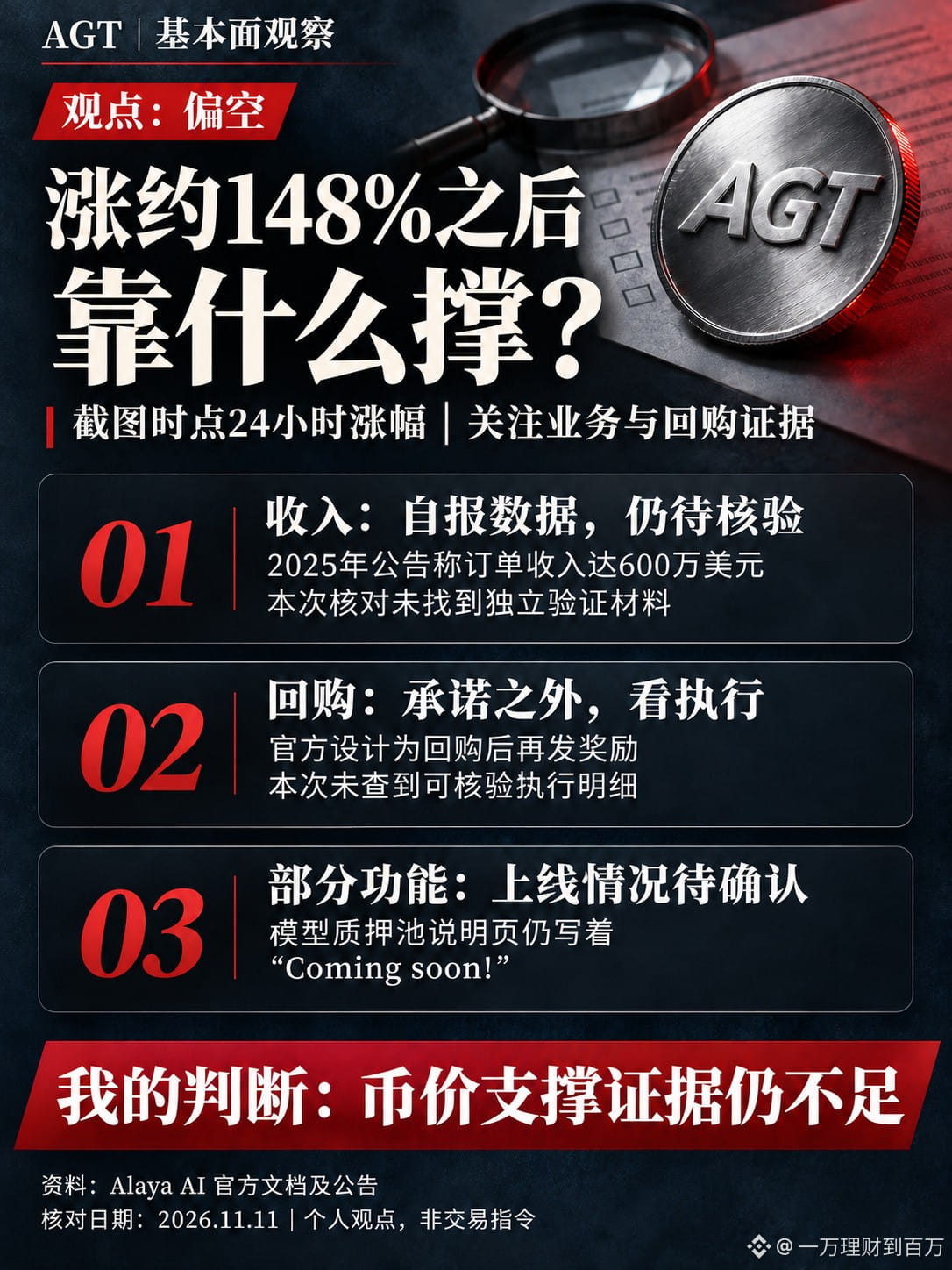
It rose about 148% in 24 hours. This rally is certainly strong, but my fundamental view remains bearish.
The higher the price goes, the more I want to know: Are there any new, verifiable business results behind this rally?
Alaya has a data annotation platform and ongoing operations. The question is whether it can produce more convincing commercial evidence to support a higher price.
In a 2025 announcement, the project team reported $6 million in data order revenue. Whether this historical figure reflects the current scale and growth of the business still needs to be verified through recurring revenue, customer payments, and repeat-purchase data.
Buybacks also need to be assessed based on execution. The official plan is to use revenue to buy back AGT and return it to the reward pool. However, in my review, I could not find verifiable figures for the buyback amount, the execution wallet, or transaction details. It remains unclear how much buying pressure has actually been generated.
Some features also need further verification: the official page explaining the model staking pool still says “Coming soon.” I’ll reserve judgment until there is clear proof that it has launched.
What I care about most is whether sustained, genuine demand will support the price after its surge.
If subsequent business growth and buyback execution fail to meet market expectations, I’m more concerned about the risk of a valuation pullback. The price rally itself has not resolved these outstanding questions.
That’s why my current view is bearish. If transparent records of recurring revenue, repeat customers, and actual buybacks emerge, I’ll reassess.
This is my personal research opinion and does not constitute trading advice or an instruction to open a position. A bearish fundamental view does not mean the price will fall immediately in the short term.
Market data: 24-hour gain at the time of the screenshot. Public information checked on: November 11, 2026. Sources: Alaya AI’s official TGE announcement, AGT information page, and model staking pool information page.
#AGT #AlayaAI #项目分析
1
356
·
--
Bearish
$ARIA How far can this game go? I’m focusing on two things
$ARIA I’m cautious about its long-term prospects, and am mainly focusing on two things: the product experience and ongoing operations.
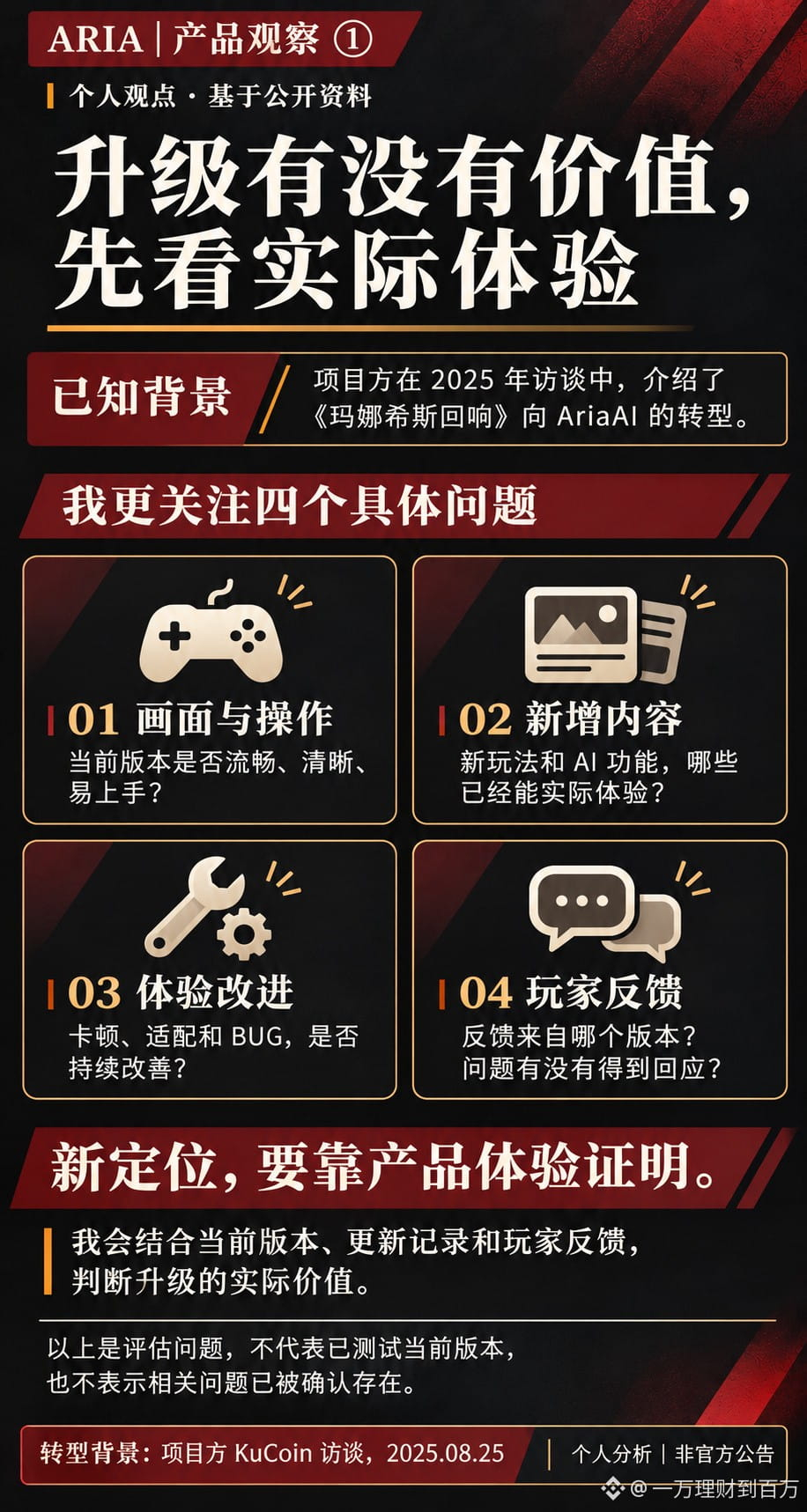
First, is the product making tangible progress?
Which aspects of the current version—graphics, controls, new content, and AI features—are already available to try? Are performance issues, compatibility, and bug fixes continuing to improve? These questions need to be assessed in light of the current version, update history, and player feedback.
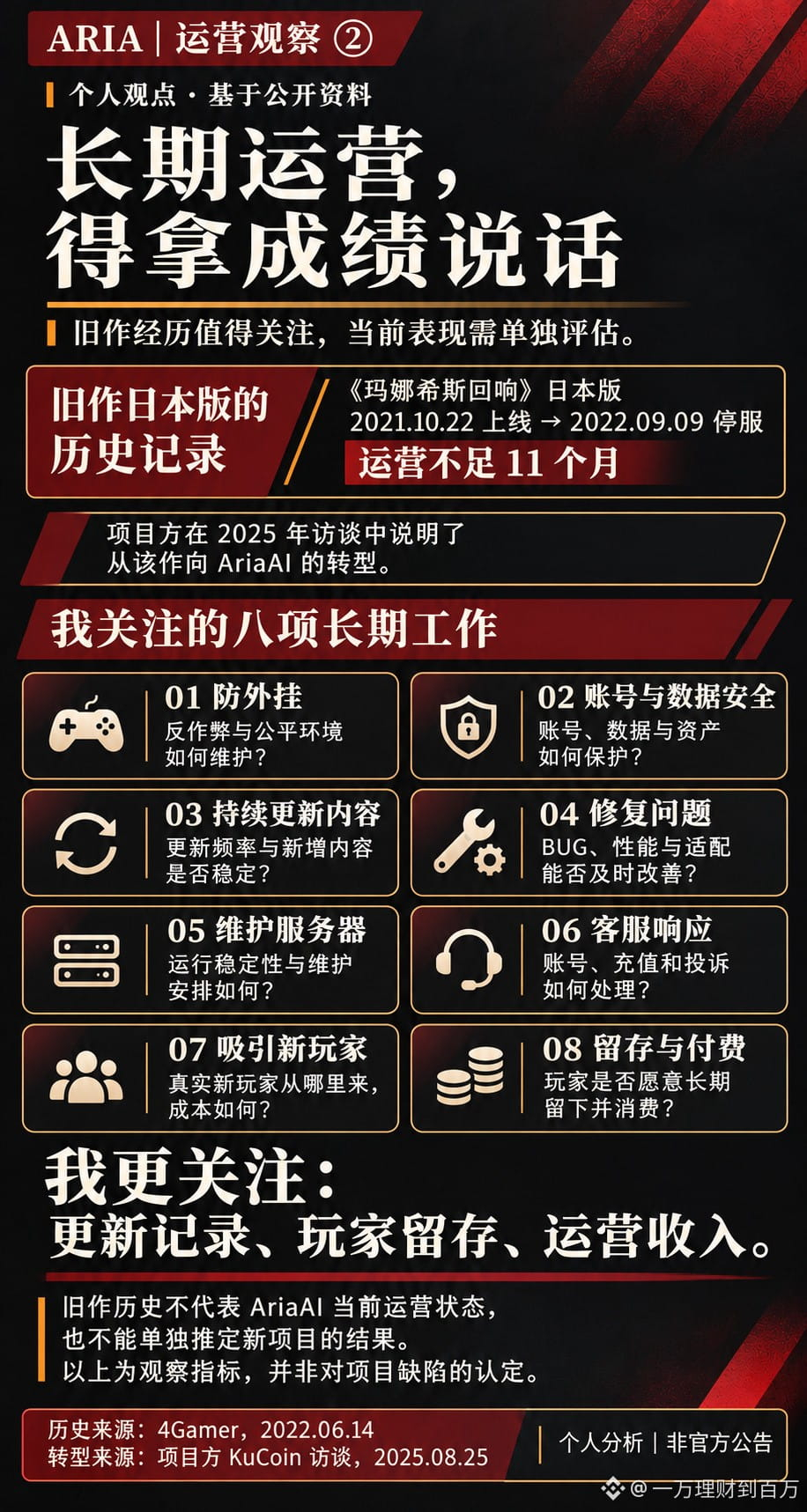
Second, can the game keep going in the long term?
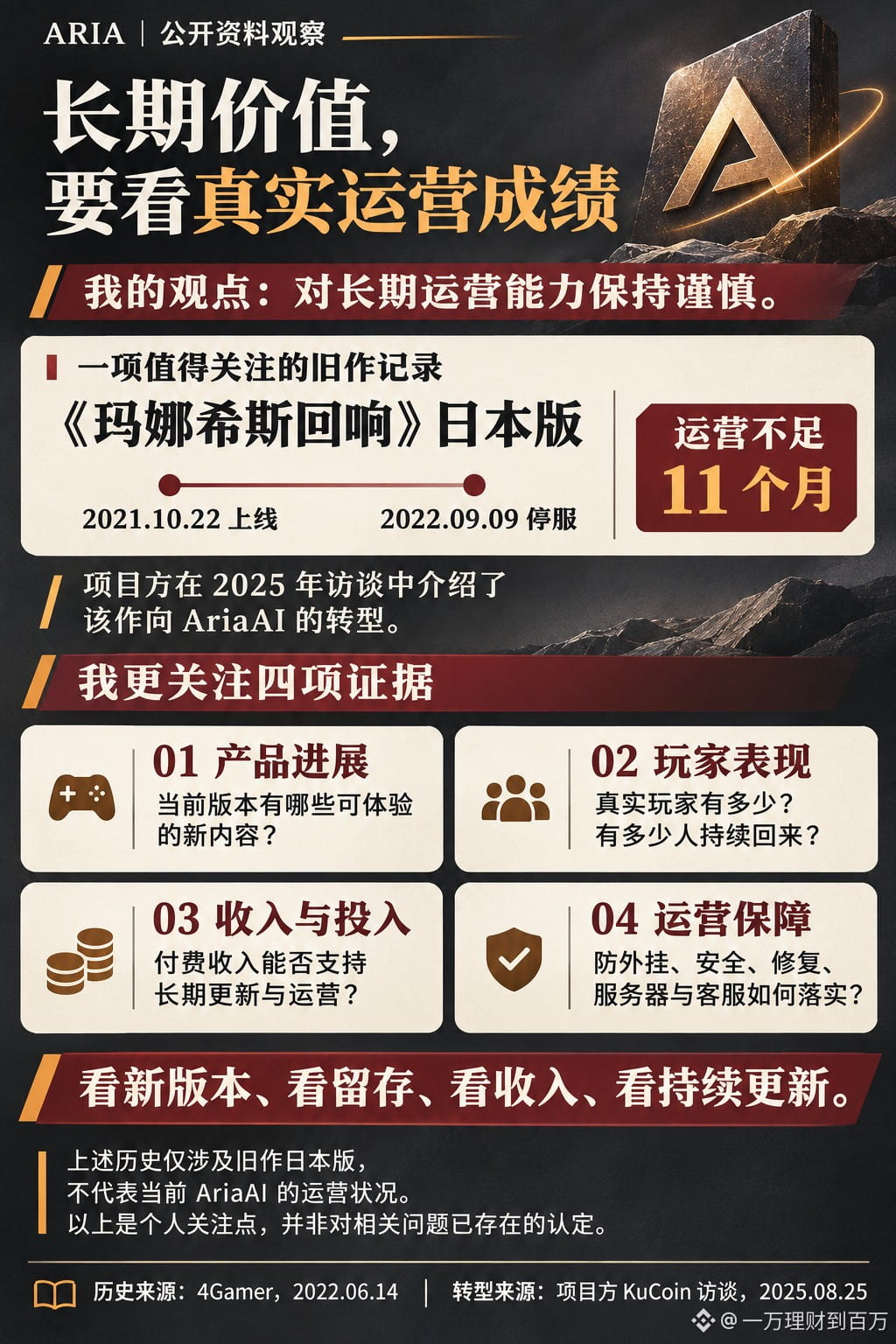
The Japanese version of the previous game, Echoes of Mana, launched on October 22, 2021, and ended service on September 9, 2022, after less than 11 months of operation. In a 2025 interview, the project team discussed its transition from that game to AriaAI.
That history makes me pay closer attention to the work needed to sustain a game over the long term: regular updates, anti-cheat measures, account and data security, bug fixes, server maintenance, customer support, and the ability to attract new players, retain them, and generate ongoing revenue.
To be clear, the operating history of the previous game’s Japanese version does not reflect AriaAI’s current operating status, nor can it on its own predict the outcome of the new project.
My view is that product improvements, whether players want to stay, and whether revenue can support continued investment are more worth watching than the positioning in promotional materials. I’ll also adjust my assessment as new information about the product and its operations becomes available.
Sources:
4Gamer, June 14, 2022;
KuCoin interview with the project team, August 25, 2025.
1
475
·
--
Bearish
$ARIA The token has been issued—does that mean the game can operate for the long term?
What I care about is its ability to operate over the long term.
The Japanese version of the previous title, Manasis Refrain, launched on October 22, 2021, and ended service on September 9, 2022, after less than 11 months. In a 2025 interview, the project team described the title’s transition to AriaAI.
That history makes me cautious. I would rather see how the current version performs in practice, whether it receives ongoing updates, whether players genuinely stick around, and whether its revenue can support long-term investment in anti-cheat measures, security, servers, and customer support.
The records above concern only the Japanese version of the previous title and cannot be used directly to assess AriaAI’s current operations. The project’s long-term value must be demonstrated by the current product and its operational results.
Sources: 4Gamer, June 14, 2022; KuCoin interview with the project team, August 25, 2025.
1
2k
·
--
Bearish
$我踏马来了
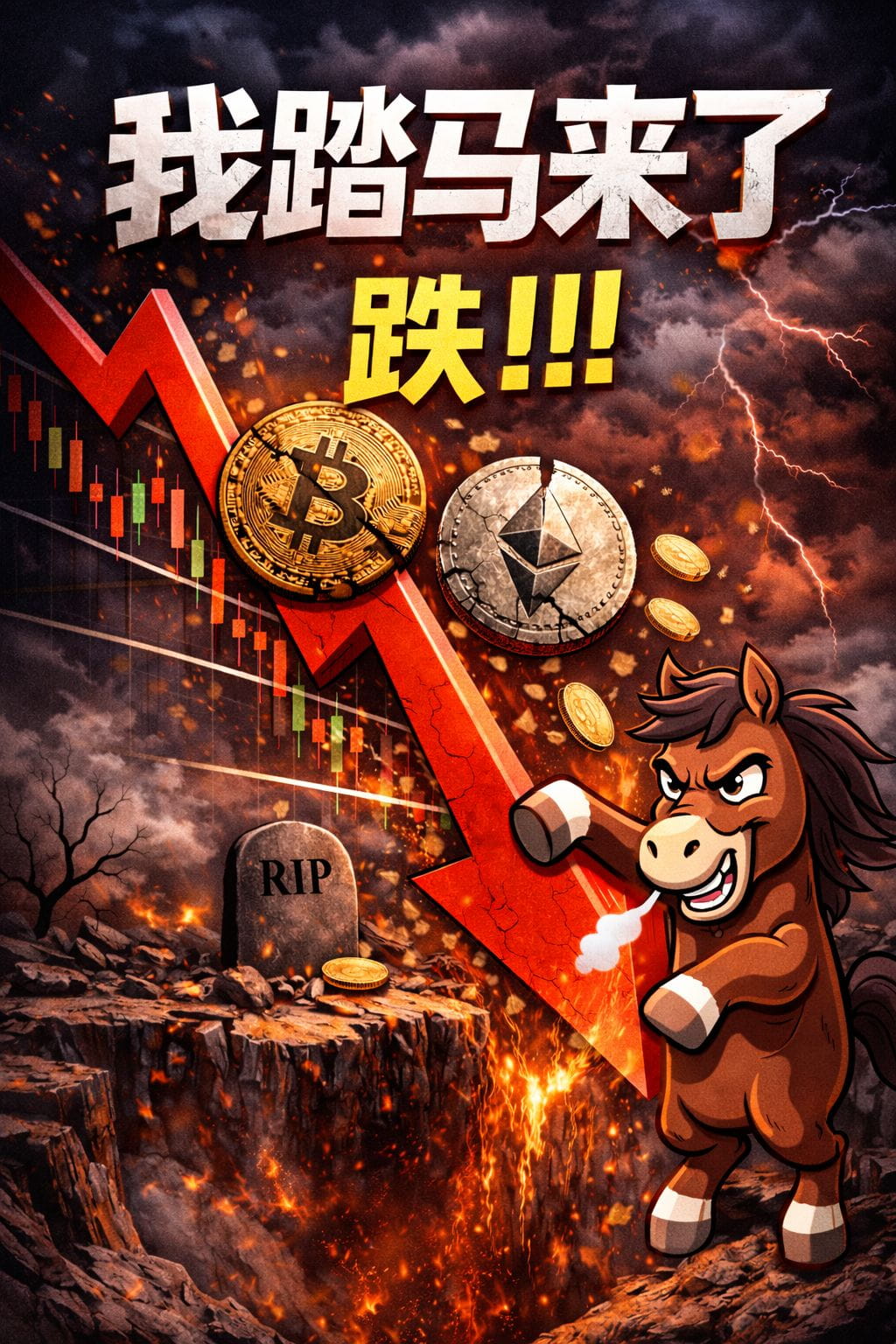
Both the big pancake and the second pancake can't hold up, do you dare to stand with your Chinese coin?
Three lines of rebound, the dealer runs first as a sign of respect.
I have arrived,
not to buy the dip, but to send you down.
$我踏马来了
Both the big pancake and the second pancake can't hold up, do you dare to stand with your Chinese coin?
Three lines of rebound, the dealer runs first as a sign of respect.
I have arrived,
not to buy the dip, but to send you down.
Both the big pancake and the second pancake can't hold up, do you dare to stand with your Chinese coin?
Three lines of rebound, the dealer runs first as a sign of respect.
I have arrived,
not to buy the dip, but to send you down.
2
813
·
--
Quick return, still in time
Quick return, still in time

小贺贺欢乐多
·
--
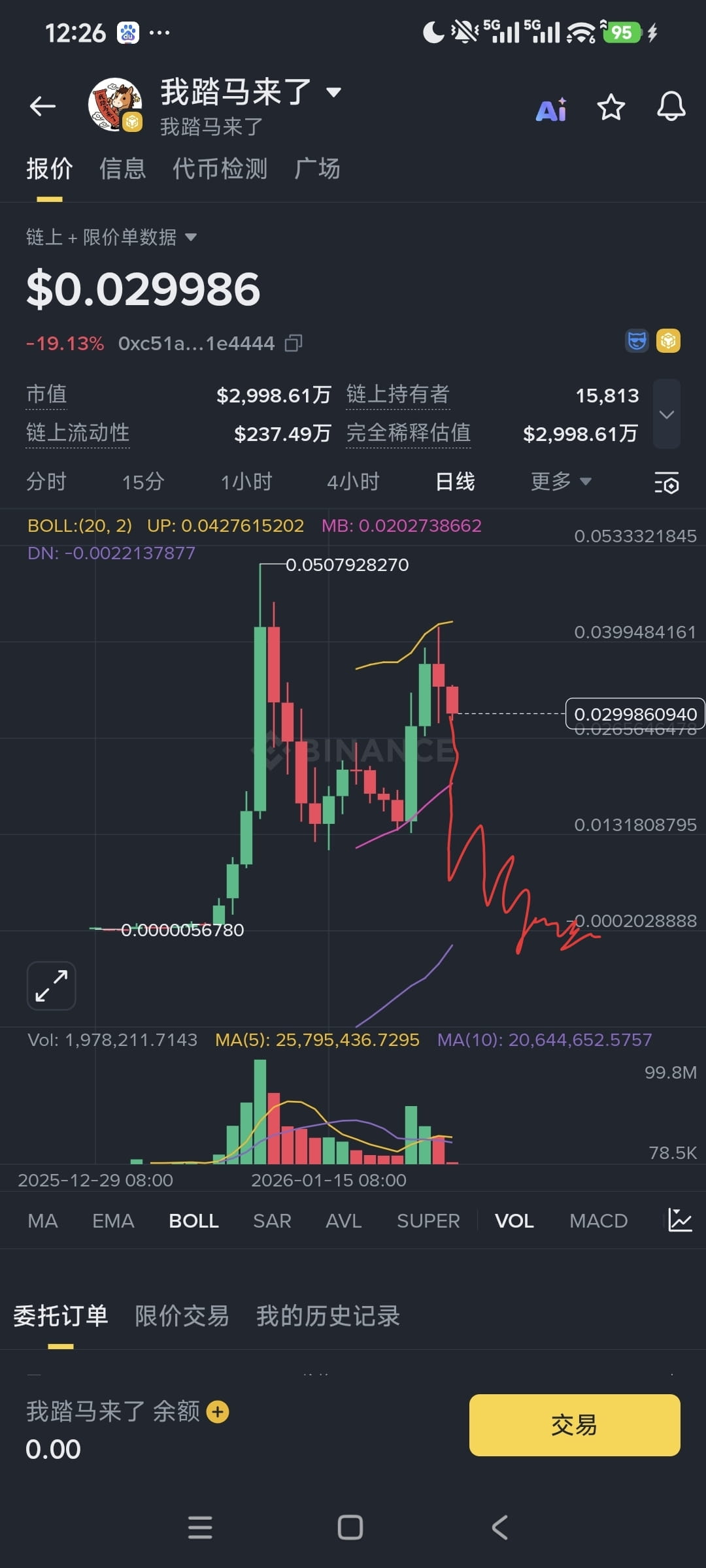
Bearish$我踏马来了 should not trust the national currency! Really shouldn't trust it! Doubling down was completely wrecked, playing with national projects is truly shameful, the nationals are really disgusting! 👎👎👎👎👎
2
·
--
Bearish
$我踏马来了
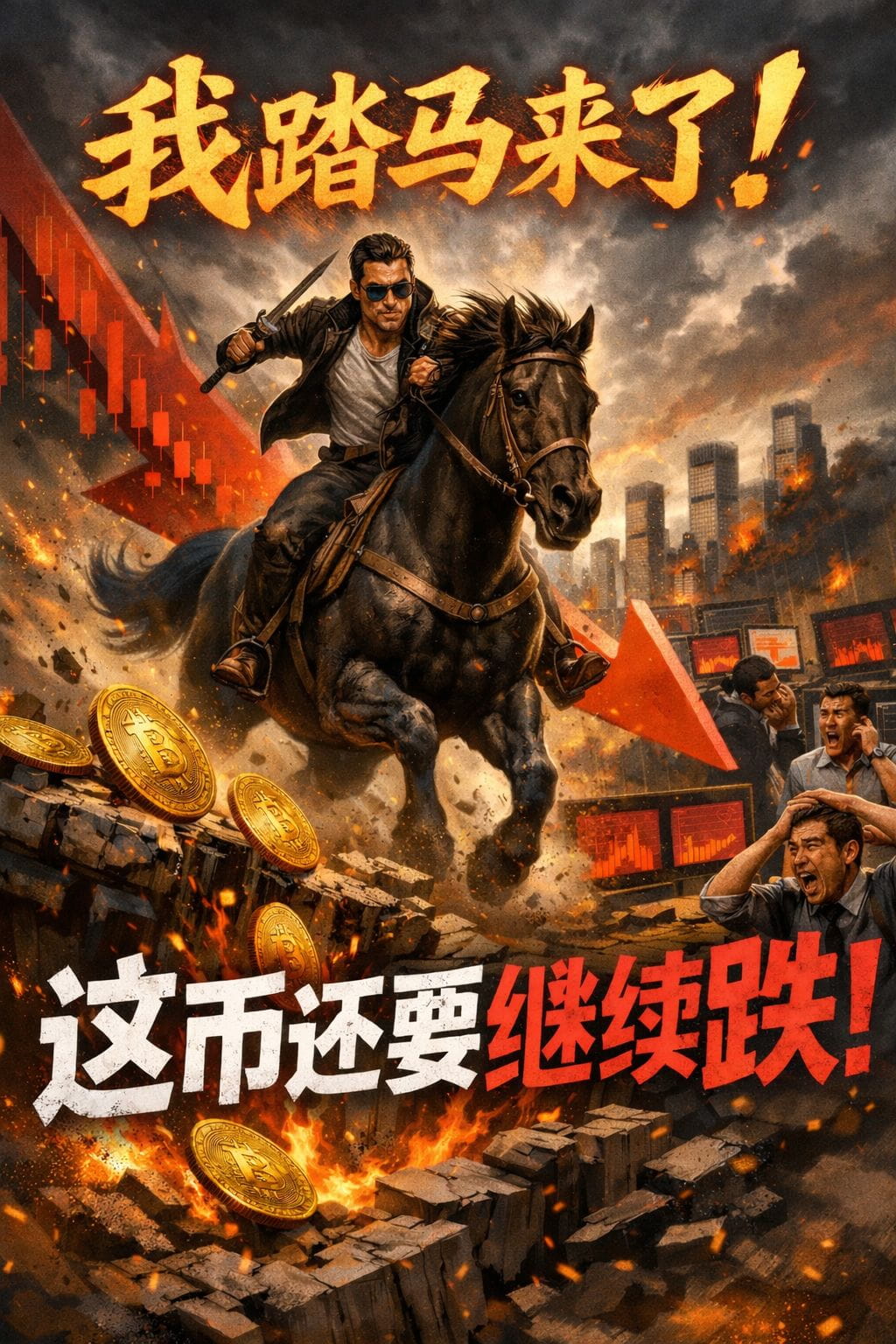
Ah, in this day and age, sentimentality can't feed you. Yesterday, the China U23 team lost to Japan. In these past few days, I came with Chinese currency, and I ran away.
$我踏马来了
Ah, in this day and age, sentimentality can't feed you. Yesterday, the China U23 team lost to Japan. In these past few days, I came with Chinese currency, and I ran away.
Ah, in this day and age, sentimentality can't feed you. Yesterday, the China U23 team lost to Japan. In these past few days, I came with Chinese currency, and I ran away.
2
601
·
--
Bearish
$我踏马来了
The one who doesn't run at a high position is faith
The one who runs the fastest is the landlord
$我踏马来了
The one who doesn't run at a high position is faith
The one who runs the fastest is the landlord
The one who doesn't run at a high position is faith
The one who runs the fastest is the landlord
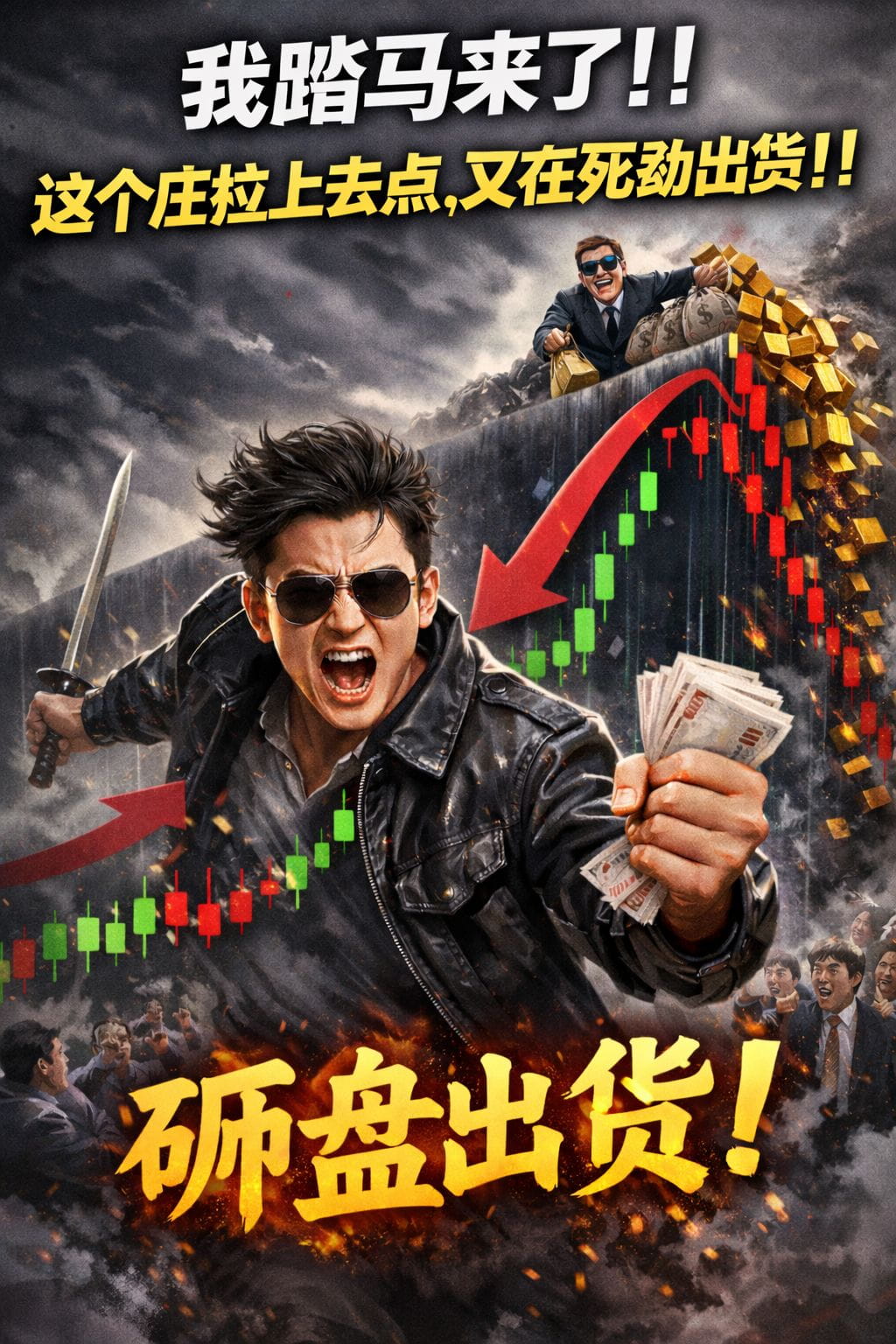
3
605
·
--
Bearish
$我踏马来了
This place really lacks structure,
A slight pull and they rush to offload,
The rise is not for the increase,
It's to find someone to take over.
$我踏马来了
This place really lacks structure,
A slight pull and they rush to offload,
The rise is not for the increase,
It's to find someone to take over.
This place really lacks structure,
A slight pull and they rush to offload,
The rise is not for the increase,
It's to find someone to take over.

1
2
726
·
--
Bearish
$我踏马来了
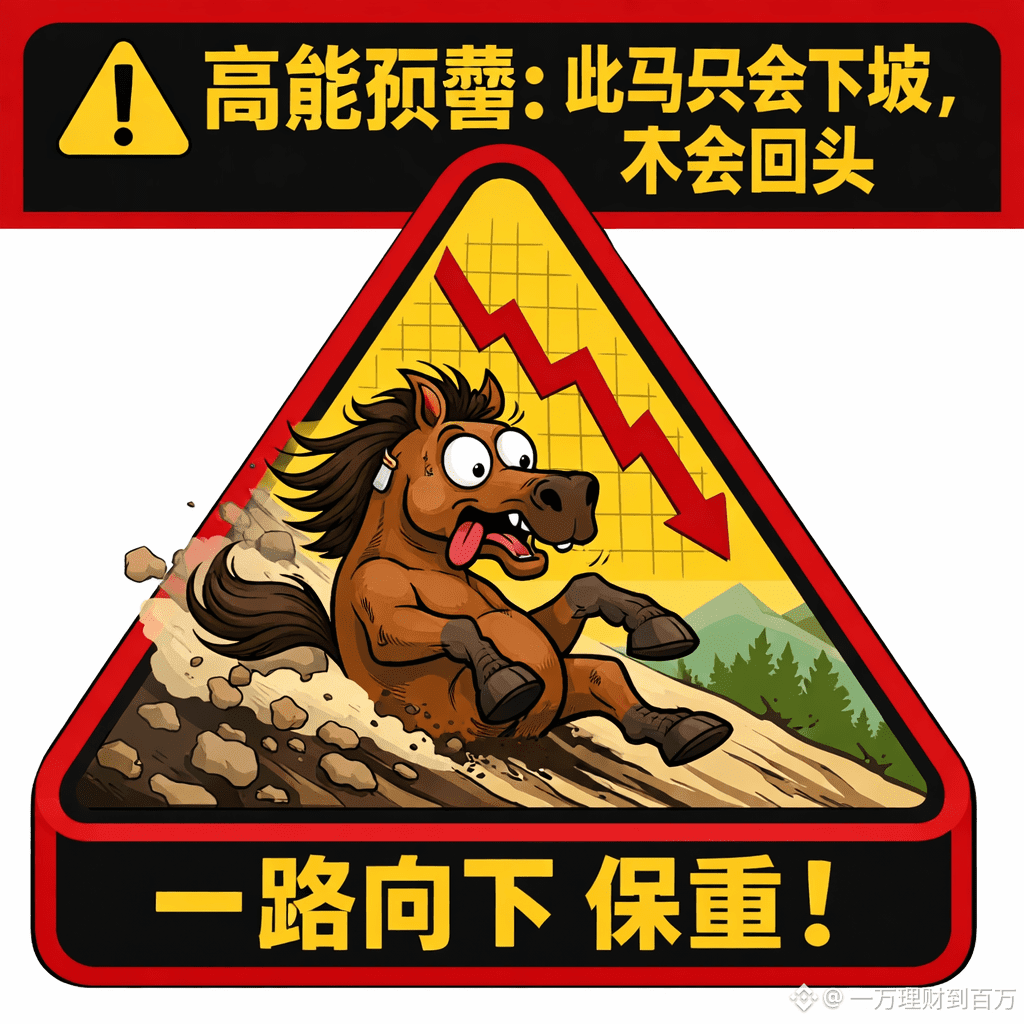
I have arrived = Liquidity has come, prices have gone.
As soon as you enter the market, it has completed its mission.
This is not consensus, it's a relay race of taking over.
The white paper did not write a roadmap, only a downhill path.
Buying it is not an investment, it's to stop others' losses.
The only rebound in the K-line is your mindset.
The horse has come, but the money is gone.
一万理财到百万
·
--
Bearish$我踏马来了 used {the coin I stepped in} to pay for the service, leaving me speechless, and they said this coin is not as valuable as that one...
1
313
·
--
Bearish
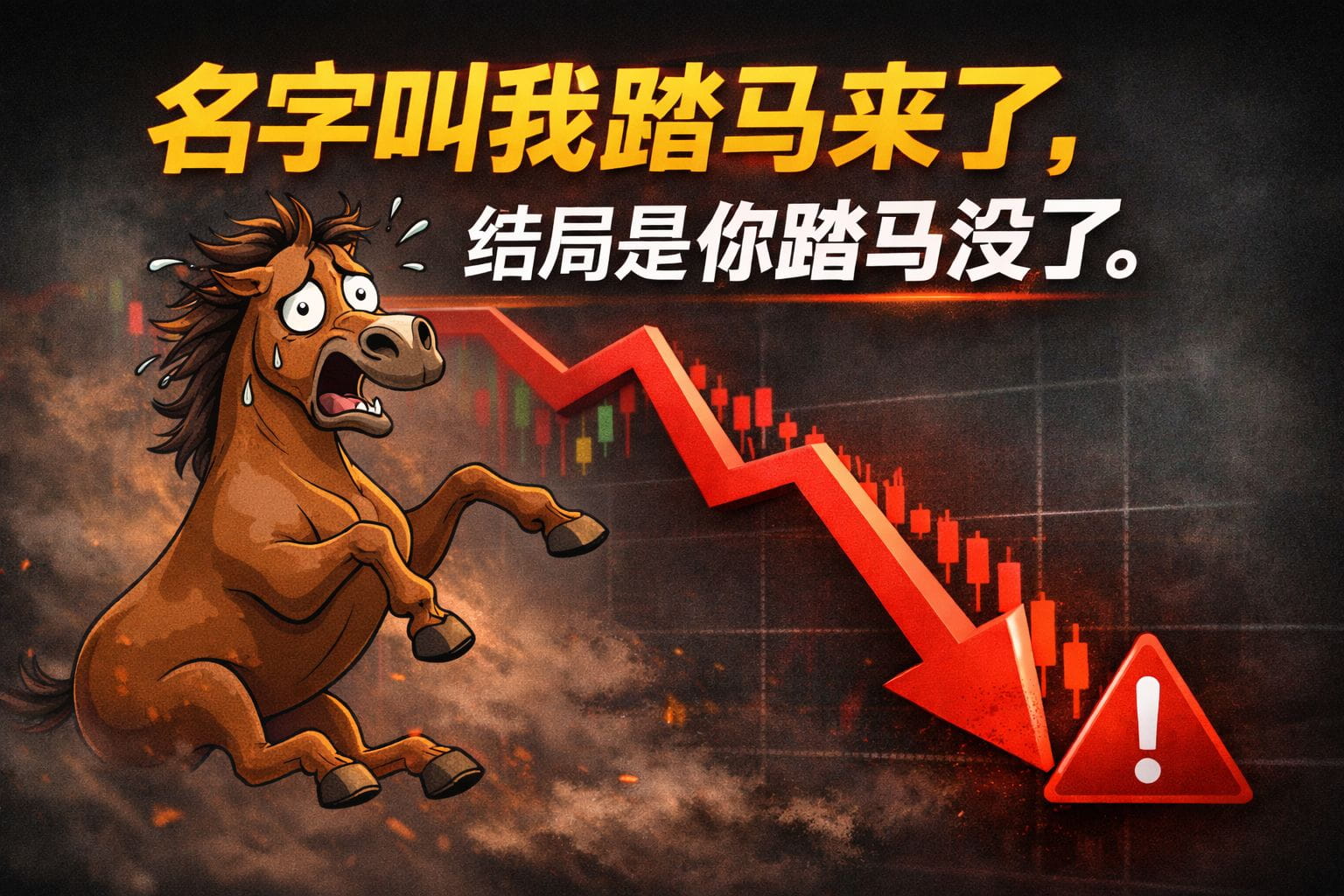
$我踏马来了 Last warning once, the dealer is almost out, now hurry up, brothers.
From the name to the trend,
all are reminding you:
Don't take it.
$我踏马来了 Last warning once, the dealer is almost out, now hurry up, brothers.
From the name to the trend,
all are reminding you:
Don't take it.
From the name to the trend,
all are reminding you:
Don't take it.
8
2
5
1.3k
·
--
Bearish
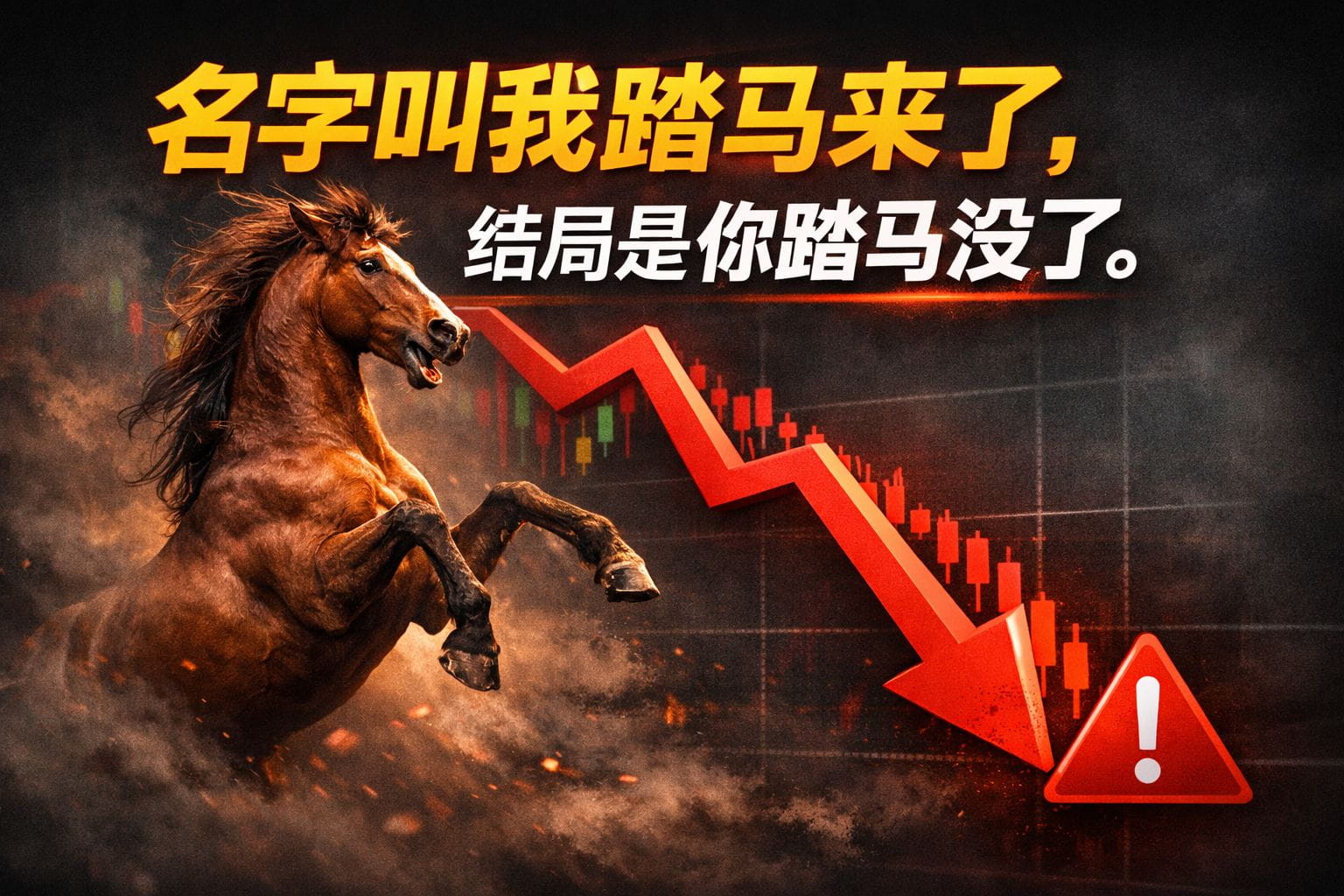
$我踏马来了 My name is Ma Lai Le, the ending is that you are gone.
No narrative, no consensus, no foundation.
Only one advantage:
Suitable for shorting.
$我踏马来了 My name is Ma Lai Le, the ending is that you are gone.
No narrative, no consensus, no foundation.
Only one advantage:
Suitable for shorting.
No narrative, no consensus, no foundation.
Only one advantage:
Suitable for shorting.
一万理财到百万
·
--
Bearish$我踏马来了 used {the coin I stepped in} to pay for the service, leaving me speechless, and they said this coin is not as valuable as that one...
2
438
·
--
Bearish
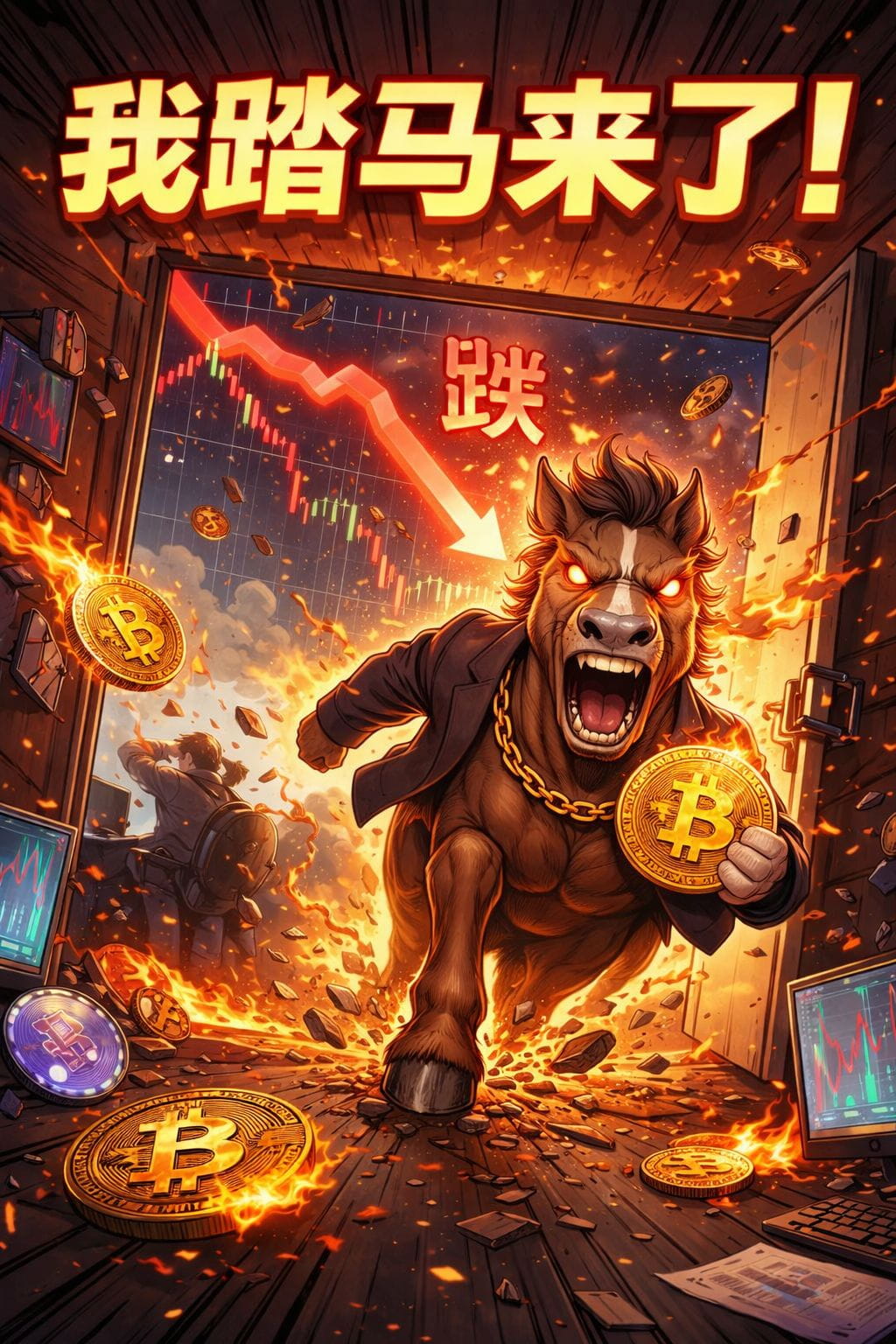
$我踏马来了
Sold at the highest point, let Warm Warm sleep, brothers.
$我踏马来了
Sold at the highest point, let Warm Warm sleep, brothers.
Sold at the highest point, let Warm Warm sleep, brothers.


一万理财到百万
·
--
Bearish$我踏马来了 used {the coin I stepped in} to pay for the service, leaving me speechless, and they said this coin is not as valuable as that one...
2
251
·
--
Bearish
$我踏马来了 Haha I just ran at the highest point, let's go play with the younger sister
$我踏马来了 Haha I just ran at the highest point, let's go play with the younger sister

3
4
645
·
--
Bearish
$我踏马来了 used {the coin I stepped in} to pay for the service, leaving me speechless, and they said this coin is not as valuable as that one...
$我踏马来了 used {the coin I stepped in} to pay for the service, leaving me speechless, and they said this coin is not as valuable as that one...




18
7
8
2k
·
--
Bearish
$我踏马来了 Run fast, I ran away...
The virtual currency "I'm Coming" currently lacks a clear explanation of technological innovation,
The token model and long-term value support are not transparent,
Community discussions are mainly based on emotions and slogans, with little rational analysis.
For ordinary investors, the risks and uncertainties are significantly higher than the potential returns,
It is more suitable to wait and see, rather than impulsively participate.
5
841
Log in to explore more content
Join global crypto users on Binance Square
⚡️ Get latest and useful information about crypto.
💬 Trusted by the world’s largest crypto exchange.
👍 Discover real insights from verified creators.
Email / Phone number
Trending Topics
NvidiaBeatsEstimatesWith$130BQ4Outlook
57,146 views
281 Discussing
Nvidia Beats With $115.8 Billion in Revenue, Guides to $130 Billion and Adds $150 Billion Buyback
Binance News
·73 Likes
·48.5k views
AnthropicIPOPriceCouldExceed$80
58,641 views
239 Discussing
RussiaCentralBankAddsAlfaBankToCryptoExchangeRegister
3,610 views
48 Discussing