

胖企鹅新生
232 Posts

胖企鹅新生
Report
Block User
High-Frequency Trader
6.1 Years
37 Following
20 Followers
87 Liked
Posts
All
Quotes
PINNED
·
--
Trying to turn a small amount of capital into a large one is a paradox in itself. Many people are afraid of taking a big loss all at once, so they enter the market with only a small amount each time. But after topping up small amounts dozens or even hundreds of times, they may look back and realize their cumulative losses have reached tens or even hundreds of thousands.
If they had invested that same amount upfront, they might not necessarily have lost money. That’s because when you’re trying to generate substantial returns with little capital, you’re often forced to adopt aggressive strategies, take large positions, and use high leverage to bet on major market moves. And that’s precisely the trap: gains and losses come from the same source—a truth anyone who genuinely trades should understand all too well.
With more capital, you can take a more conservative approach: reduce leverage, trade less often, and improve your margin for error. The results may ultimately be better. But most people are wary of the risk that a large position could be liquidated and wiped out all at once.
For ordinary people, the point of starting with a small amount of capital has never been to get rich overnight. It’s for practice: refining your entry logic, developing a compound-growth mindset, and cultivating the right trading temperament. You stop imagining that the overnight-wealth myth of crypto will come true for you, while recognizing that its compounding potential is still greater than that of most industries.
If you don’t have much disposable money and want to break through, you can start small—but trade with the mindset of someone managing a large account. Keep your hands in check, trade less frequently, and use only low leverage. If you can generate steady, consistent profits, then consider gradually adding capital and letting compounding work over time.
There’s no future in high leverage; compounding at low leverage is the key to success. Let’s keep at it together!
$BTC $ETH $BNB
{spot}(BNBUSDT)
{spot}(ETHUSDT)
{spot}(BTCUSDT)
Trying to turn a small amount of capital into a large one is a paradox in itself. Many people are afraid of taking a big loss all at once, so they enter the market with only a small amount each time. But after topping up small amounts dozens or even hundreds of times, they may look back and realize their cumulative losses have reached tens or even hundreds of thousands.
If they had invested that same amount upfront, they might not necessarily have lost money. That’s because when you’re trying to generate substantial returns with little capital, you’re often forced to adopt aggressive strategies, take large positions, and use high leverage to bet on major market moves. And that’s precisely the trap: gains and losses come from the same source—a truth anyone who genuinely trades should understand all too well.
With more capital, you can take a more conservative approach: reduce leverage, trade less often, and improve your margin for error. The results may ultimately be better. But most people are wary of the risk that a large position could be liquidated and wiped out all at once.
For ordinary people, the point of starting with a small amount of capital has never been to get rich overnight. It’s for practice: refining your entry logic, developing a compound-growth mindset, and cultivating the right trading temperament. You stop imagining that the overnight-wealth myth of crypto will come true for you, while recognizing that its compounding potential is still greater than that of most industries.
If you don’t have much disposable money and want to break through, you can start small—but trade with the mindset of someone managing a large account. Keep your hands in check, trade less frequently, and use only low leverage. If you can generate steady, consistent profits, then consider gradually adding capital and letting compounding work over time.
There’s no future in high leverage; compounding at low leverage is the key to success. Let’s keep at it together!
$BTC $ETH $BNB
2
443
·
--
$ZEC is seriously resilient. Look at how badly all the other coins have crashed—is it just dipping a little to fit in?
$ZEC is seriously resilient. Look at how badly all the other coins have crashed—is it just dipping a little to fit in?
2
447
·
--
Today's sharp drop was caused by Binance being hacked. Isn't this the perfect time to pick up some cheap coins? If you still don't go all in and buy the dip now, you'll miss an opportunity to double your assets.
You need to trust Binance completely. An incident of this scale is no longer just Binance's problem—it's an issue for the entire industry. The whole industry will hunt down these hackers. Don't worry: buy the dip, hold on tight, and wait for takeoff.
$BTC $ETH $PEPE
You need to trust Binance completely. An incident of this scale is no longer just Binance's problem—it's an issue for the entire industry. The whole industry will hunt down these hackers. Don't worry: buy the dip, hold on tight, and wait for takeoff.
$BTC $ETH $PEPE
592
·
--
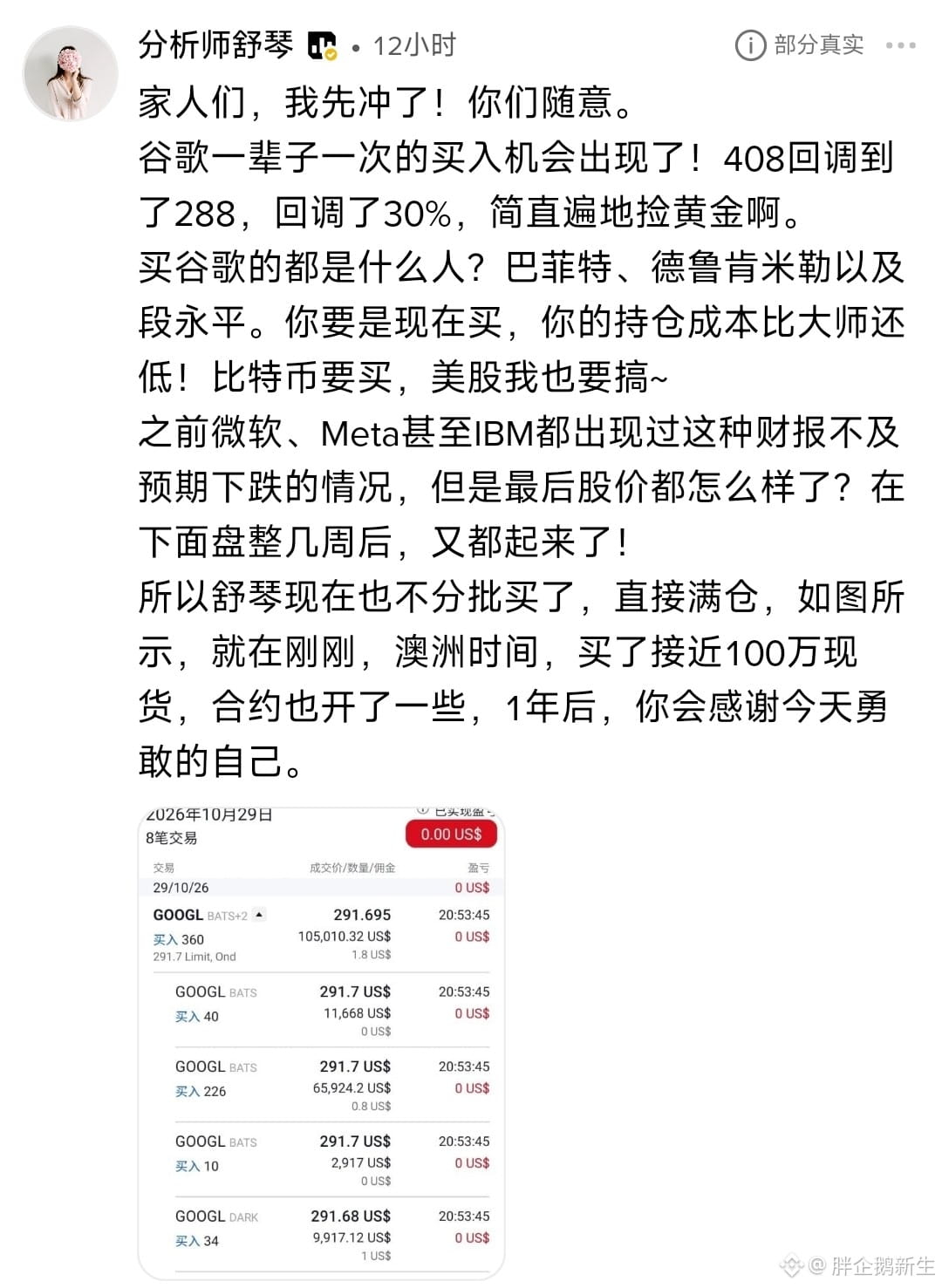
Those of you who followed her into the $GOOGL contract, have you been liquidated?
{future}(GOOGLUSDT)
Those of you who followed her into the $GOOGL contract, have you been liquidated?
81
1
8
52.7k
·
--
Shorts at $UNITREE , how are you guys doing?
How much have you paid in funding fees?
Shorts at $UNITREE , how are you guys doing?
How much have you paid in funding fees?
How much have you paid in funding fees?
560
·
--
$BTC Master, why are you saying one thing yesterday and another today?
$BTC Master, why are you saying one thing yesterday and another today?
177
·
--
$ZEC Many currencies have now reached daily support levels.
If they keep falling, things could get ugly.
But with a stop-loss in place, the current levels are well worth taking a shot at,
because nobody knows how far they could ultimately fall.
$ZEC Many currencies have now reached daily support levels.
If they keep falling, things could get ugly.
But with a stop-loss in place, the current levels are well worth taking a shot at,
because nobody knows how far they could ultimately fall.
If they keep falling, things could get ugly.
But with a stop-loss in place, the current levels are well worth taking a shot at,
because nobody knows how far they could ultimately fall.
1
461
·
--
People who watch influencers livestream every day, scroll through 5-minute or 15-minute charts, and wait for the influencer to spoon-feed them trades so they can day-trade don’t make money—more than 90% of them.
That’s because 5-minute and 15-minute charts produce a lot of false signals. Without exceptional discipline and knowing how to set stop-losses, no matter how many winning trades you have, you’ll eventually get wiped out. You’ll lose to your own human nature.
Cutting losses goes against human nature, and many people can’t do it. That’s why more than 90% of people can’t make money trading off 5-minute or 15-minute charts. The other 10% are highly disciplined, strong executors, the lucky few with incredible fortune.
Then there’s another kind of person who watches influencers livestream every day and trades off 1-minute charts. That’s even more thrilling, but 99.99% of them won’t make money—they’ll just give themselves a racing heartbeat.
Even though none of you are making money, the influencers are. They claim to have assets worth millions or tens of millions, so why do they place trades every day with a few hundred, a few thousand, or tens of thousands of U? And why do they have to day-trade and place trades so frequently?
Because they don’t make their money from trading itself—they make it from referral commissions and membership fees. That’s why most livestreams focus on day-trading: it lets them place trades frequently and gives the host a steady income. When you see influencers telling you to control yourself and not trade until an opportunity comes along, consider following them.
A few years ago, there were many well-known traders who were genuinely good at trading and happened to earn referral commissions and membership fees on the side. In recent years, fewer and fewer people are actually trading, because the market has become increasingly difficult and scams are everywhere.
Why are there more and more scams? Because it’s getting harder and harder to make big money through trading. If you really want to turn your life around through trading, you have to keep learning and improving yourself. If you just rely on influencers every day—going long when they say to go long and short when they say to go short—you’ll never get anywhere.
$BTC $SNDK $ETH
{future}(SNDKUSDT)
People who watch influencers livestream every day, scroll through 5-minute or 15-minute charts, and wait for the influencer to spoon-feed them trades so they can day-trade don’t make money—more than 90% of them.
That’s because 5-minute and 15-minute charts produce a lot of false signals. Without exceptional discipline and knowing how to set stop-losses, no matter how many winning trades you have, you’ll eventually get wiped out. You’ll lose to your own human nature.
Cutting losses goes against human nature, and many people can’t do it. That’s why more than 90% of people can’t make money trading off 5-minute or 15-minute charts. The other 10% are highly disciplined, strong executors, the lucky few with incredible fortune.
Then there’s another kind of person who watches influencers livestream every day and trades off 1-minute charts. That’s even more thrilling, but 99.99% of them won’t make money—they’ll just give themselves a racing heartbeat.
Even though none of you are making money, the influencers are. They claim to have assets worth millions or tens of millions, so why do they place trades every day with a few hundred, a few thousand, or tens of thousands of U? And why do they have to day-trade and place trades so frequently?
Because they don’t make their money from trading itself—they make it from referral commissions and membership fees. That’s why most livestreams focus on day-trading: it lets them place trades frequently and gives the host a steady income. When you see influencers telling you to control yourself and not trade until an opportunity comes along, consider following them.
A few years ago, there were many well-known traders who were genuinely good at trading and happened to earn referral commissions and membership fees on the side. In recent years, fewer and fewer people are actually trading, because the market has become increasingly difficult and scams are everywhere.
Why are there more and more scams? Because it’s getting harder and harder to make big money through trading. If you really want to turn your life around through trading, you have to keep learning and improving yourself. If you just rely on influencers every day—going long when they say to go long and short when they say to go short—you’ll never get anywhere.
$BTC $SNDK $ETH
2
479
·
--
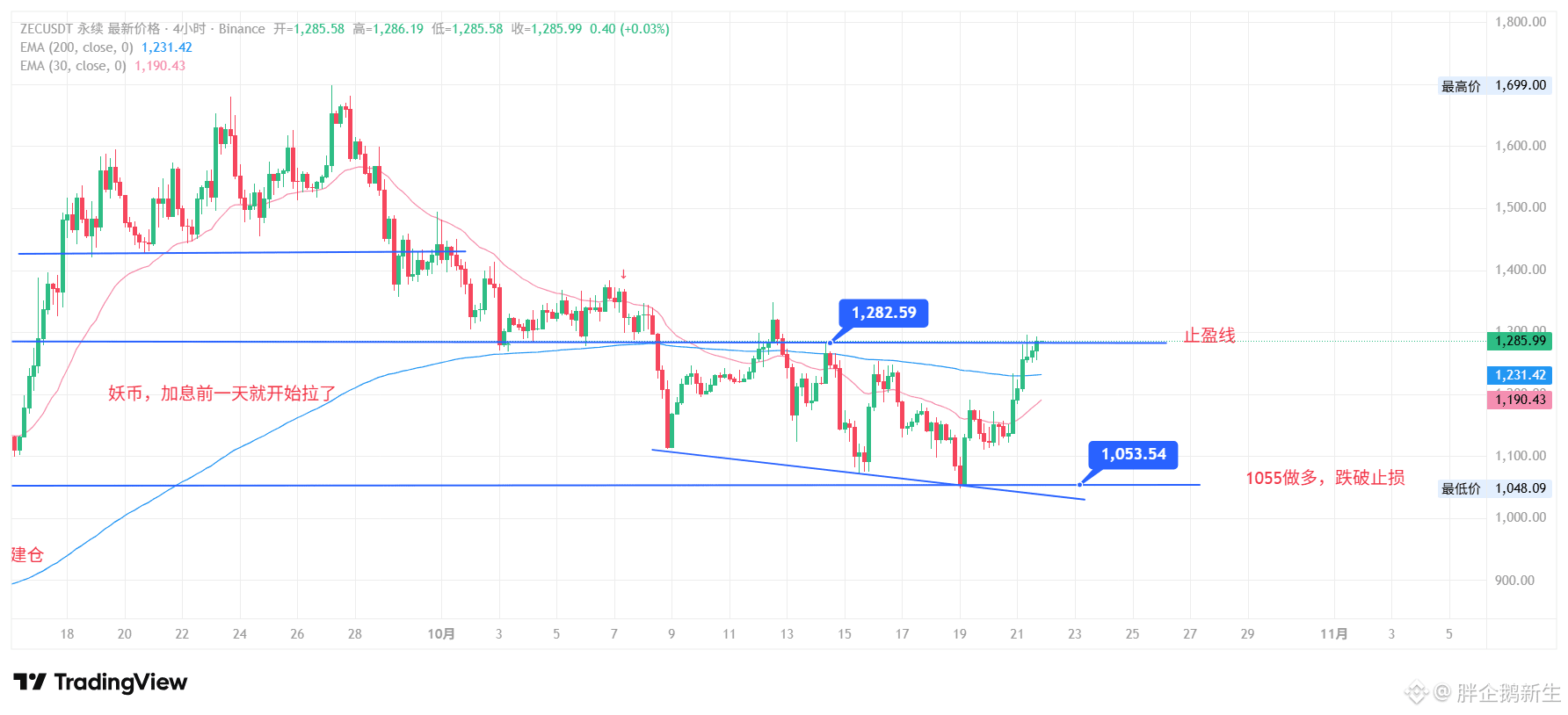
$ZEC I’ve found that my strategy is pretty accurate, but I still have a big problem: when the price reaches my entry point, I don’t dare to buy. Once I’m in profit, I start thinking about selling before it reaches my target.
Trading is about mastering your mindset. If you can’t get past your mental hurdles, you’ll never make money.
Keep it up!
Trading is about mastering your mindset. If you can’t get past your mental hurdles, you’ll never make money.
Keep it up!
1
1
634
·
--
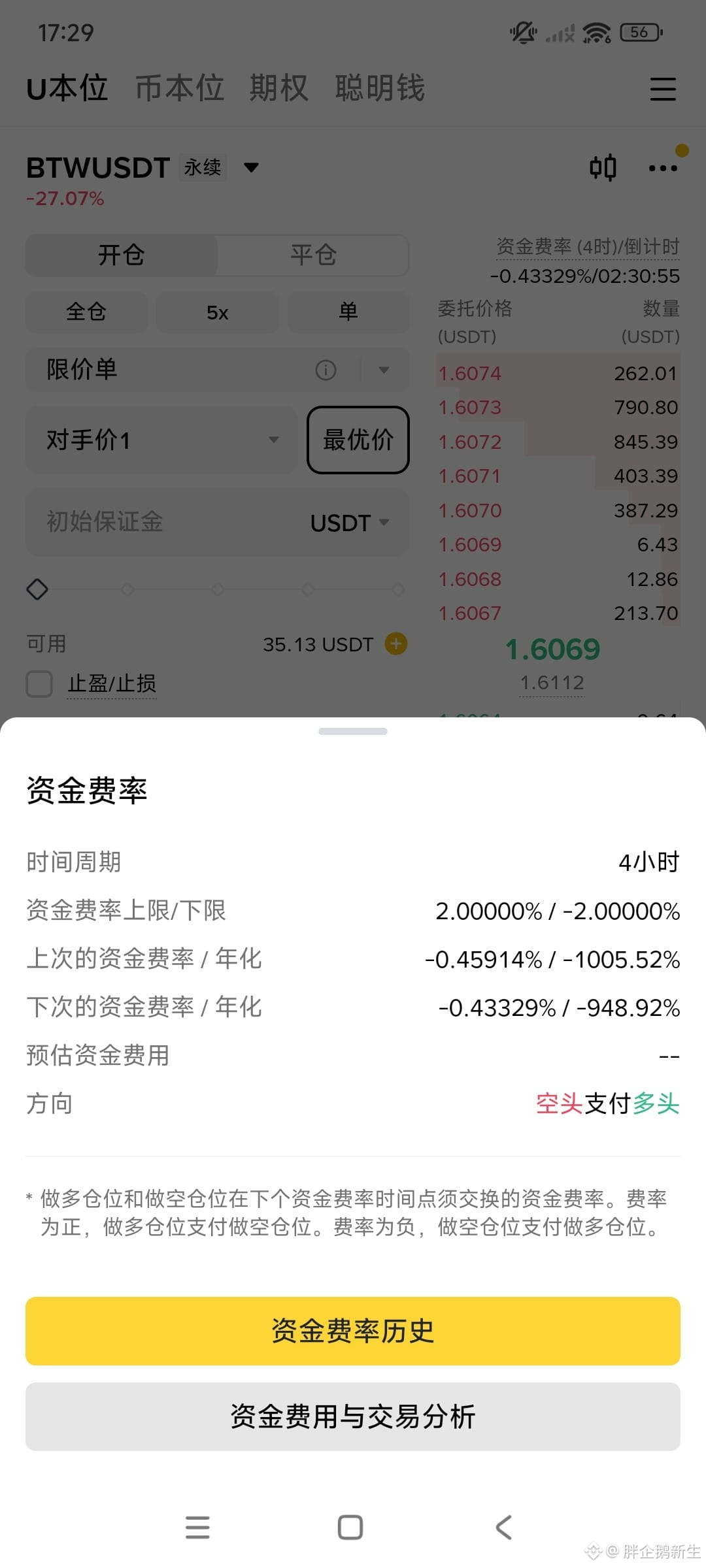
$BTW The funding rate has gone through the roof, with an annualized rate of 1000%.
Don't go long just to collect this small funding fee.
This coin is way too volatile. Its upside is limited for now, while its downside is unlimited.
$BTW The funding rate has gone through the roof, with an annualized rate of 1000%.
Don't go long just to collect this small funding fee.
This coin is way too volatile. Its upside is limited for now, while its downside is unlimited.
Don't go long just to collect this small funding fee.
This coin is way too volatile. Its upside is limited for now, while its downside is unlimited.
356
·
--
$BTW , so pathetic—you're about to come already?
$BTW , so pathetic—you're about to come already?
1
66
·
--
$AGT and $Q were both bought today, but because I lacked experience, I sold them very early and only caught a small part of the move.
There are lots of coins that suddenly pump every day, but figuring out which ones will take off and which won’t takes years of watching the market.
The road to trading crypto isn’t easy, but once you make it, you can do better than in any other industry, with an annual income comparable to—or even higher than—that of a company executive.
It’s hard to become a company executive without at least 15 years of experience. Can you reach your destination in the crypto world in 15 years?
胖企鹅新生
·
--
$AGT If you missed the move, you can keep an eye on $Q too. It has also broken above its previous high, so keep watching to see whether it rallies or sells off.
631
·
--
$AGT Are you really that pathetic? You’ve barely pulled it and you’re already about to come?
$AGT Are you really that pathetic? You’ve barely pulled it and you’re already about to come?
39
·
--
$AGT If you missed the move, you can keep an eye on $Q too. It has also broken above its previous high, so keep watching to see whether it rallies or sells off.
$AGT If you missed the move, you can keep an eye on $Q too. It has also broken above its previous high, so keep watching to see whether it rallies or sells off.
1
1
1k
·
--
$AGT The contract trading volume is only 500 million. Let's keep watching and reassess when it reaches 2 billion. For now, shorting is riskier than going long. How long the price gets pushed up depends on the market maker's mood.
$AGT The contract trading volume is only 500 million. Let's keep watching and reassess when it reaches 2 billion. For now, shorting is riskier than going long. How long the price gets pushed up depends on the market maker's mood.
678
·
--
$AGT has broken its previous high. How high it gets pushed depends on the market maker's mood. Don't short—absolutely don't short.
It's still far too early to short. I sold at 0.4, then got back in and went long at 0.7. Don't short on a whim.
$AGT has broken its previous high. How high it gets pushed depends on the market maker's mood. Don't short—absolutely don't short.
It's still far too early to short. I sold at 0.4, then got back in and went long at 0.7. Don't short on a whim.
It's still far too early to short. I sold at 0.4, then got back in and went long at 0.7. Don't short on a whim.
661
·
--
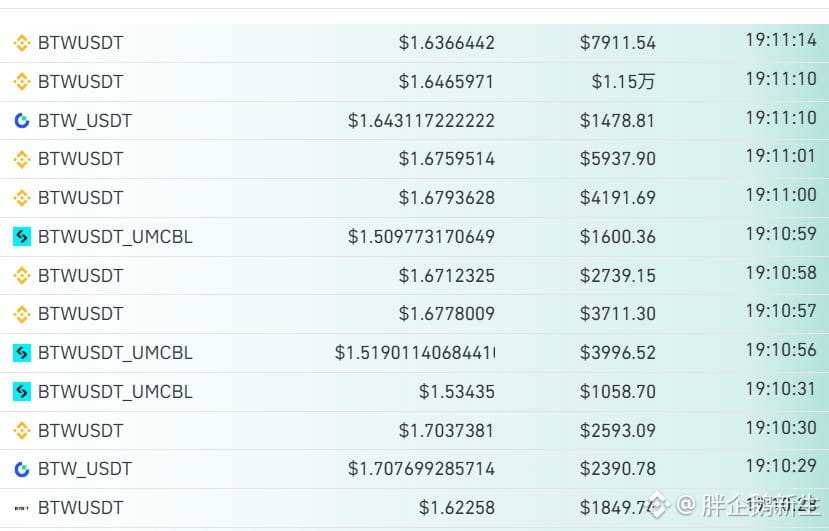
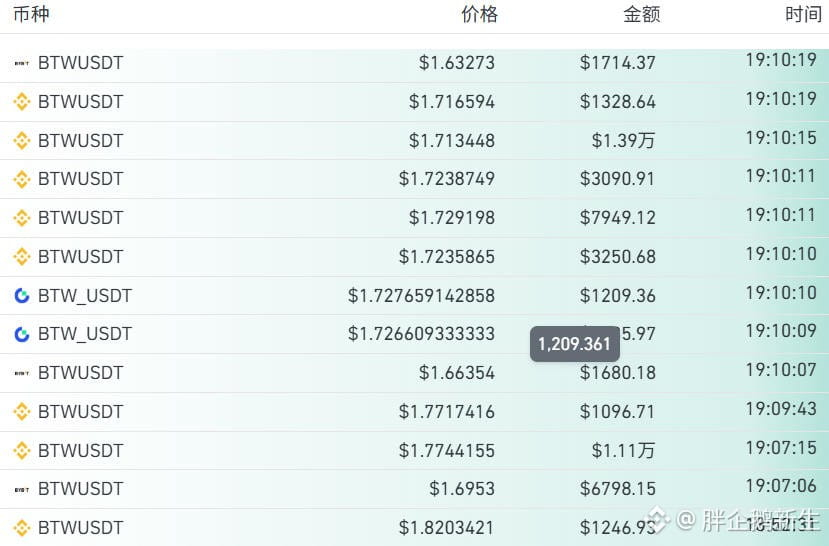
$BTW At such a high price, why are so many people still going long? What is your target price?
$BTW At such a high price, why are so many people still going long? What is your target price?
1
788
·
--
$BTW A once-in-a-lifetime opportunity—clear your schedule now. If you can’t make time this time, you’ll have to wait a few more months.
{future}(BTWUSDT)
$BTW A once-in-a-lifetime opportunity—clear your schedule now. If you can’t make time this time, you’ll have to wait a few more months.
1
242
·
--
Short $BTW —if not now, when? Its market cap is already 6 billion. I don’t believe it can still go up 10x. I’m going to keep shorting it every day.
{future}(BTWUSDT)
Short $BTW —if not now, when? Its market cap is already 6 billion. I don’t believe it can still go up 10x. I’m going to keep shorting it every day.
2
1
663
Log in to explore more content
Join global crypto users on Binance Square
⚡️ Get latest and useful information about crypto.
💬 Trusted by the world’s largest crypto exchange.
👍 Discover real insights from verified creators.
Email / Phone number
Trending Topics
TRMCambodianCasinosReceived$1.07BInCrypto
0 views
5 Discussing
🔥 SHOCKING: $687 Million Linked to Sanctioned Casino Networks!
TRM Labs reports that 64% of the crypto received by 34 Cambodian casinos was connected to networks sanctioned by the US Treasury.
🚨 This highlights growing challenges for crypto compliance and transaction monitoring.
📊 Market Impact: Stronger enforcement could influence stablecoin liquidity and investor sentiment.
$USDT $TRX $ETH $BTC #TRMCambodianCasinosReceived$1.07BInCrypto
CryptoMahibaloch
·0 Likes
·0 views
IolePlansToSellAll151.21Bitcoin
0 views
21 Discussing
SuspectedNorthKoreaAttacksAccountForNearly89%OfCryptoHackLosses
1,966 views
42 Discussing