

链上实验员
4 Posts

链上实验员
Report
Block User
不碰合约,低频交易。研究Defi,积分,空投和链上真实收益。一起慢慢变富。
Open Trade

BNB Holder
Frequent Trader
2.5 Years
0 Following
0 Followers
2 Liked
Posts
Portfolio
·
--
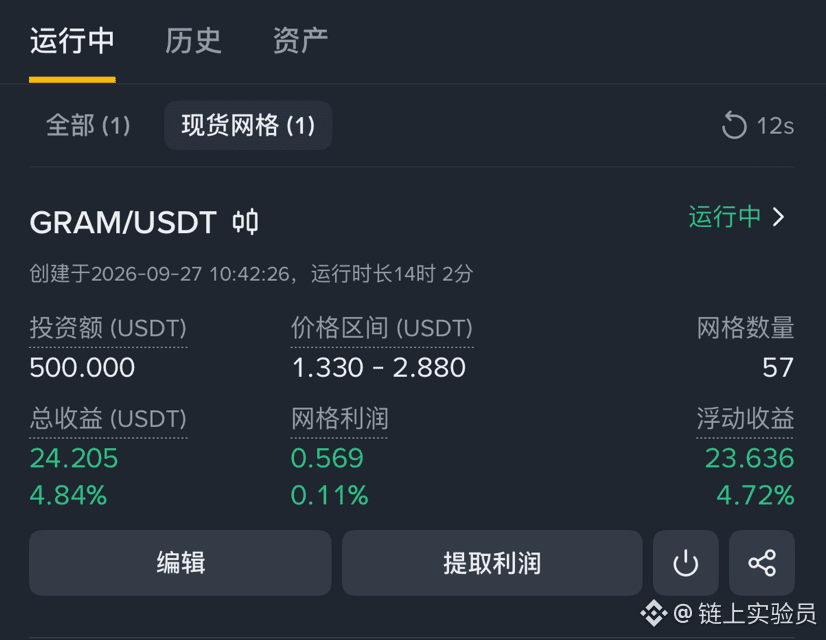
Holding $GRAM 350.5 USDT
$GRAM opened a grid, and it was renamed to the ton name later—watch the next developments
$GRAM opened a grid, and it was renamed to the ton name later—watch the next developments
324
·
--
#Bitget黑客转移8300万美元被盗XRP
This time, what’s truly worth noting isn’t $83 million, but rather:
Ripple also can’t freeze these XRP.
Bitget was previously hacked for about $387.5 million, with roughly 103 million XRP transferred to multiple addresses. Now, about 54 million XRP, worth roughly $83 million, has continued to be moved. (CoinDesk)
The reason is interesting:
For assets like USDT and USDC, the issuer can blacklist addresses and freeze assets;
but XRP is a native asset of the XRP Ledger, and Ripple doesn’t have the authority to directly freeze it.
So this time, Circle and Tether can freeze part of the involved stablecoins, but XRP can only be stopped from flowing in afterward via exchanges. (CoinDesk)
In fact, this incident puts a big contradiction in the crypto world front and center:
If assets can’t be frozen, that’s a decentralization advantage.
But once coins end up in the hands of hackers, it also becomes an obstacle to recovering the assets.
Decentralization is often a double-edged sword.
#XRP #Bitget #Crypto
#Bitget黑客转移8300万美元被盗XRP
This time, what’s truly worth noting isn’t $83 million, but rather:
Ripple also can’t freeze these XRP.
Bitget was previously hacked for about $387.5 million, with roughly 103 million XRP transferred to multiple addresses. Now, about 54 million XRP, worth roughly $83 million, has continued to be moved. (CoinDesk)
The reason is interesting:
For assets like USDT and USDC, the issuer can blacklist addresses and freeze assets;
but XRP is a native asset of the XRP Ledger, and Ripple doesn’t have the authority to directly freeze it.
So this time, Circle and Tether can freeze part of the involved stablecoins, but XRP can only be stopped from flowing in afterward via exchanges. (CoinDesk)
In fact, this incident puts a big contradiction in the crypto world front and center:
If assets can’t be frozen, that’s a decentralization advantage.
But once coins end up in the hands of hackers, it also becomes an obstacle to recovering the assets.
Decentralization is often a double-edged sword.
#XRP #Bitget #Crypto
This time, what’s truly worth noting isn’t $83 million, but rather:
Ripple also can’t freeze these XRP.
Bitget was previously hacked for about $387.5 million, with roughly 103 million XRP transferred to multiple addresses. Now, about 54 million XRP, worth roughly $83 million, has continued to be moved. (CoinDesk)
The reason is interesting:
For assets like USDT and USDC, the issuer can blacklist addresses and freeze assets;
but XRP is a native asset of the XRP Ledger, and Ripple doesn’t have the authority to directly freeze it.
So this time, Circle and Tether can freeze part of the involved stablecoins, but XRP can only be stopped from flowing in afterward via exchanges. (CoinDesk)
In fact, this incident puts a big contradiction in the crypto world front and center:
If assets can’t be frozen, that’s a decentralization advantage.
But once coins end up in the hands of hackers, it also becomes an obstacle to recovering the assets.
Decentralization is often a double-edged sword.
#XRP #Bitget #Crypto
247
·
--
Why would I consider PONS as a DeFi trading pair?
Not because it has been performing well recently, but because I value these points:
Over the past 30 days, Pons:
* DEX trading volume of about $2.46 billion
* Protocol revenue of about $25.37 million
* About $14.0 million used for value backflow / buybacks and burns
* Current PONS market cap of about $425 million
When I choose a trading pair, I actually care most about two things:
1. Whether there is real trading volume
If the trading volume is large enough, LPs will have a steady source of fee income.
2. Whether the token itself captures value
PONS protocol revenue partially flows back to the token—not just relying on inflationary incentives to prop up the APY.
So for me, PONS isn’t about “betting it will rise,” but about:
Earning fees from trading volume + PONS having a buyback logic.
Of course, the risks are also clear:
If trading volume drops quickly later on, the high yields you see now will fall along with it.
So I focus more on whether trading volume can be sustained, rather than the APY itself.
$PONS #defi
Why would I consider PONS as a DeFi trading pair?
Not because it has been performing well recently, but because I value these points:
Over the past 30 days, Pons:
* DEX trading volume of about $2.46 billion
* Protocol revenue of about $25.37 million
* About $14.0 million used for value backflow / buybacks and burns
* Current PONS market cap of about $425 million
When I choose a trading pair, I actually care most about two things:
1. Whether there is real trading volume
If the trading volume is large enough, LPs will have a steady source of fee income.
2. Whether the token itself captures value
PONS protocol revenue partially flows back to the token—not just relying on inflationary incentives to prop up the APY.
So for me, PONS isn’t about “betting it will rise,” but about:
Earning fees from trading volume + PONS having a buyback logic.
Of course, the risks are also clear:
If trading volume drops quickly later on, the high yields you see now will fall along with it.
So I focus more on whether trading volume can be sustained, rather than the APY itself.
$PONS #defi
Not because it has been performing well recently, but because I value these points:
Over the past 30 days, Pons:
* DEX trading volume of about $2.46 billion
* Protocol revenue of about $25.37 million
* About $14.0 million used for value backflow / buybacks and burns
* Current PONS market cap of about $425 million
When I choose a trading pair, I actually care most about two things:
1. Whether there is real trading volume
If the trading volume is large enough, LPs will have a steady source of fee income.
2. Whether the token itself captures value
PONS protocol revenue partially flows back to the token—not just relying on inflationary incentives to prop up the APY.
So for me, PONS isn’t about “betting it will rise,” but about:
Earning fees from trading volume + PONS having a buyback logic.
Of course, the risks are also clear:
If trading volume drops quickly later on, the high yields you see now will fall along with it.
So I focus more on whether trading volume can be sustained, rather than the APY itself.
$PONS #defi
708
Log in to explore more content
Join global crypto users on Binance Square
⚡️ Get latest and useful information about crypto.
💬 Trusted by the world’s largest crypto exchange.
👍 Discover real insights from verified creators.
Email / Phone number
Trending Topics
BitwiseFilesFinalNEARSpotETFProspectus
43,979 views
1,087 Discussing
#bitwisefilesfinalnearspotetfprospectus
Can $NEAR REALLY reach $562 with an ETF approval? 🚀
The crypto market is buzzing as Bitwise files its final prospectus for a Spot NEAR ETF (Ticker: NRR on NYSE Arca)! 📊🔥
Is institutional money about to unleash the biggest pump in NEAR’s history? Analysts are throwing around mind-blowing price targets:
🎯 Intermediate Target: $155
🎯 2030 Long-Term Target: $562
💡 Let's do the math:
At $562, $NEAR would sit at roughly a $680 Billion market cap—putting it right up there with Ethereum's potential valuation. With NEAR leading the Chain Abstraction & AI crypto narrative, this might not be as crazy as it sounds!
With SEC regulations turning more crypto-friendly and Wall Street knocking on the door, are you Accumulating or Holding?
👇 Drop your realistic price prediction for $NEAR in the comments! 👇
#BitwiseFilesFinalNEARSpotETFProspectus #Altcoins #CryptoNews #ETF
Doomsday-Trader
·4 Likes
·3.2k views
BitgetHackerMoves$83MStolenXRP
22,895 views
146 Discussing
SOLSpotETFWeeklyInflow$188M
13,137 views
112 Discussing