

ARi3S_LX
10 Posts

ARi3S_LX
Report
Block User
18 Following
22 Followers
28 Liked
Posts
All
Quotes
PINNED
·
--
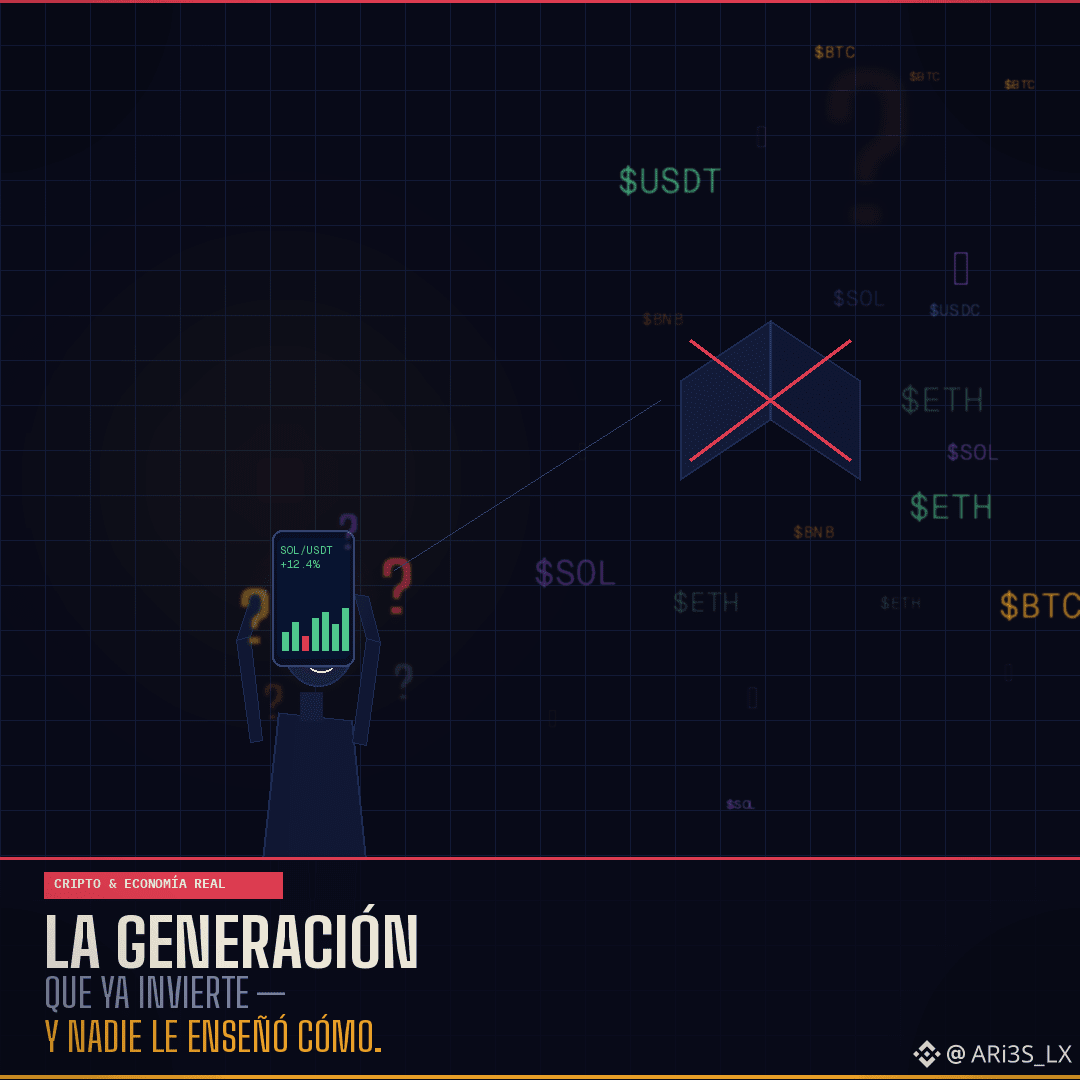
The generation that nobody is educating — and that is already investing in crypto
In Colombia, nearly 60% of crypto investors are between 20 and 40 years old. In Mexico, young people are leading the adoption. In Venezuela and Argentina, teenagers are handling $USDT before they have even opened a bank account. They are not doing it as a trend. They are doing it because the traditional system arrived late — or simply did not arrive at all.
And here lies the problem that nobody wants to name: those same young people are buying BTC, $ETH, or $BNB without understanding what an asset is, what risk is, or what the difference is between storing value and speculating. They operate the pair $SOL/USDT without being able to read a chart. They exchange $USDC for $SOL in seconds, attracted by the speed of the network, without understanding what they are really buying. They know how to use Binance. They do not know why the price goes up or down.
School teaches them to divide fractions. It does not teach them to read a market. And while educational systems debate whether to include digital finance in the curriculum, reality has already taken the lead: the next generation is building their wealth — or losing it — with tools that nobody explained to them.
21st-century financial education must talk about wallets, the difference between USDT and $USDC, why $BTC behaves differently from $SOL in moments of panic, and that trading the pair $BNB/USDT is not the same as understanding the market. It must teach that crypto is neither paradise nor hell — it is a tool. And like any tool, in untrained hands, it can cut.
The question is not whether young people will invest in crypto. They already do. The question is whether anyone will take it seriously to teach them how.
The generation that nobody is educating — and that is already investing in crypto
In Colombia, nearly 60% of crypto investors are between 20 and 40 years old. In Mexico, young people are leading the adoption. In Venezuela and Argentina, teenagers are handling $USDT before they have even opened a bank account. They are not doing it as a trend. They are doing it because the traditional system arrived late — or simply did not arrive at all.
And here lies the problem that nobody wants to name: those same young people are buying BTC, $ETH, or $BNB without understanding what an asset is, what risk is, or what the difference is between storing value and speculating. They operate the pair $SOL/USDT without being able to read a chart. They exchange $USDC for $SOL in seconds, attracted by the speed of the network, without understanding what they are really buying. They know how to use Binance. They do not know why the price goes up or down.
School teaches them to divide fractions. It does not teach them to read a market. And while educational systems debate whether to include digital finance in the curriculum, reality has already taken the lead: the next generation is building their wealth — or losing it — with tools that nobody explained to them.
21st-century financial education must talk about wallets, the difference between USDT and $USDC, why $BTC behaves differently from $SOL in moments of panic, and that trading the pair $BNB/USDT is not the same as understanding the market. It must teach that crypto is neither paradise nor hell — it is a tool. And like any tool, in untrained hands, it can cut.
The question is not whether young people will invest in crypto. They already do. The question is whether anyone will take it seriously to teach them how.
In Colombia, nearly 60% of crypto investors are between 20 and 40 years old. In Mexico, young people are leading the adoption. In Venezuela and Argentina, teenagers are handling $USDT before they have even opened a bank account. They are not doing it as a trend. They are doing it because the traditional system arrived late — or simply did not arrive at all.
And here lies the problem that nobody wants to name: those same young people are buying BTC, $ETH, or $BNB without understanding what an asset is, what risk is, or what the difference is between storing value and speculating. They operate the pair $SOL/USDT without being able to read a chart. They exchange $USDC for $SOL in seconds, attracted by the speed of the network, without understanding what they are really buying. They know how to use Binance. They do not know why the price goes up or down.
School teaches them to divide fractions. It does not teach them to read a market. And while educational systems debate whether to include digital finance in the curriculum, reality has already taken the lead: the next generation is building their wealth — or losing it — with tools that nobody explained to them.
21st-century financial education must talk about wallets, the difference between USDT and $USDC, why $BTC behaves differently from $SOL in moments of panic, and that trading the pair $BNB/USDT is not the same as understanding the market. It must teach that crypto is neither paradise nor hell — it is a tool. And like any tool, in untrained hands, it can cut.
The question is not whether young people will invest in crypto. They already do. The question is whether anyone will take it seriously to teach them how.
102
PINNED
·
--
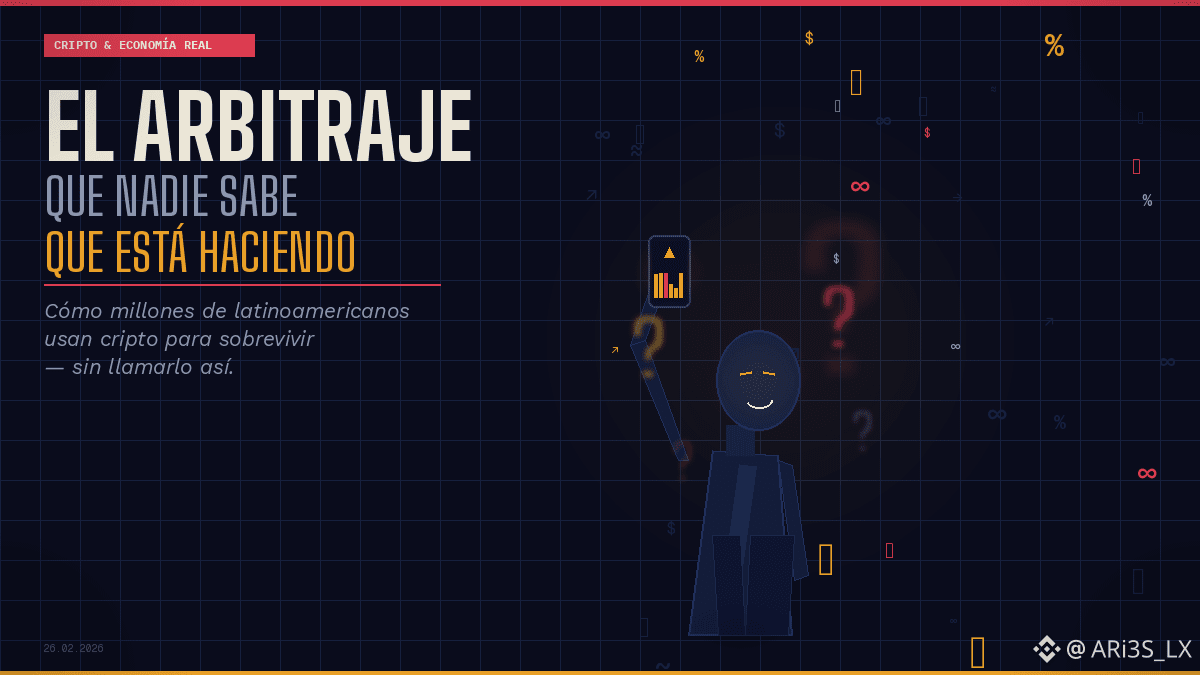
The arbitration that no one knows is happening
There is a word that sounds like Wall Street: arbitration. In Caracas, Buenos Aires, Medellín, and São Paulo, millions of people practice it every day without knowing the term. In Venezuela, banks allow the purchase of digital dollars with prepaid cards. For example: The exchange rate may be 415 bolívares, but with commissions, that dollar ends up costing 515. If they sell it back to the bank, they only receive 450: a direct loss. But if they convert that dollar to USDT and take it to a P2P platform, they can receive 615 bolívares. The difference between the 515 it cost and the 615 they received is exactly an arbitration. That person did not plan it. They believe they are surviving. But that is exactly what they are doing.
In Argentina, stablecoins have replaced the cushion of dollars as an inflation shield. In Colombia, merchants pay for imports in USDT to avoid bank commissions. In Brazil, crypto arbitration surpassed remittances in volume during 2025. In Mexico, the crypto corridor to the U.S. saves the migrant between 4% and 5% in commissions. Same mechanism, different motivation: there it arises from opportunity, here from necessity.
On legality, there is a key legal maxim: what is not expressly permitted is prohibited. In Venezuela, registration with SUNACRIP is required; in Argentina and Colombia, there are tax obligations that many are unaware of; in Brazil, the regulatory framework is advancing rapidly. The gray area is not a safe zone.
Many people are surviving on the fringes of the law without knowing it. Cryptocurrencies are a powerful tool — using it well starts with knowing what ground you are stepping on.
The arbitration that no one knows is happening
There is a word that sounds like Wall Street: arbitration. In Caracas, Buenos Aires, Medellín, and São Paulo, millions of people practice it every day without knowing the term. In Venezuela, banks allow the purchase of digital dollars with prepaid cards. For example: The exchange rate may be 415 bolívares, but with commissions, that dollar ends up costing 515. If they sell it back to the bank, they only receive 450: a direct loss. But if they convert that dollar to USDT and take it to a P2P platform, they can receive 615 bolívares. The difference between the 515 it cost and the 615 they received is exactly an arbitration. That person did not plan it. They believe they are surviving. But that is exactly what they are doing.
In Argentina, stablecoins have replaced the cushion of dollars as an inflation shield. In Colombia, merchants pay for imports in USDT to avoid bank commissions. In Brazil, crypto arbitration surpassed remittances in volume during 2025. In Mexico, the crypto corridor to the U.S. saves the migrant between 4% and 5% in commissions. Same mechanism, different motivation: there it arises from opportunity, here from necessity.
On legality, there is a key legal maxim: what is not expressly permitted is prohibited. In Venezuela, registration with SUNACRIP is required; in Argentina and Colombia, there are tax obligations that many are unaware of; in Brazil, the regulatory framework is advancing rapidly. The gray area is not a safe zone.
Many people are surviving on the fringes of the law without knowing it. Cryptocurrencies are a powerful tool — using it well starts with knowing what ground you are stepping on.
There is a word that sounds like Wall Street: arbitration. In Caracas, Buenos Aires, Medellín, and São Paulo, millions of people practice it every day without knowing the term. In Venezuela, banks allow the purchase of digital dollars with prepaid cards. For example: The exchange rate may be 415 bolívares, but with commissions, that dollar ends up costing 515. If they sell it back to the bank, they only receive 450: a direct loss. But if they convert that dollar to USDT and take it to a P2P platform, they can receive 615 bolívares. The difference between the 515 it cost and the 615 they received is exactly an arbitration. That person did not plan it. They believe they are surviving. But that is exactly what they are doing.
In Argentina, stablecoins have replaced the cushion of dollars as an inflation shield. In Colombia, merchants pay for imports in USDT to avoid bank commissions. In Brazil, crypto arbitration surpassed remittances in volume during 2025. In Mexico, the crypto corridor to the U.S. saves the migrant between 4% and 5% in commissions. Same mechanism, different motivation: there it arises from opportunity, here from necessity.
On legality, there is a key legal maxim: what is not expressly permitted is prohibited. In Venezuela, registration with SUNACRIP is required; in Argentina and Colombia, there are tax obligations that many are unaware of; in Brazil, the regulatory framework is advancing rapidly. The gray area is not a safe zone.
Many people are surviving on the fringes of the law without knowing it. Cryptocurrencies are a powerful tool — using it well starts with knowing what ground you are stepping on.
2
1
7
1.6k
·
--

Article
AI Agents Trading with Crypto? The End of Human Panic in TradingTechnical analysis gives us probabilities, macroeconomics gives us context, but in the end, the worst enemy of a trader isn’t in the chart: it’s in front of the screen. Anxiety about the future, impulsive decisions at midnight, and panic-selling triggered by a red wick have destroyed more portfolios than any failure in the blockchain architecture.
In this scenario, an inevitable question arises that is shaking the ecosystem: What happens when we delegate operations to AI Agents capable of executing transactions autonomously?
AI Agents Trading with Crypto? The End of Human Panic in Trading
Technical analysis gives us probabilities, macroeconomics gives us context, but in the end, the worst enemy of a trader isn’t in the chart: it’s in front of the screen. Anxiety about the future, impulsive decisions at midnight, and panic-selling triggered by a red wick have destroyed more portfolios than any failure in the blockchain architecture.
In this scenario, an inevitable question arises that is shaking the ecosystem: What happens when we delegate operations to AI Agents capable of executing transactions autonomously?
In this scenario, an inevitable question arises that is shaking the ecosystem: What happens when we delegate operations to AI Agents capable of executing transactions autonomously?
112
·
--
Article
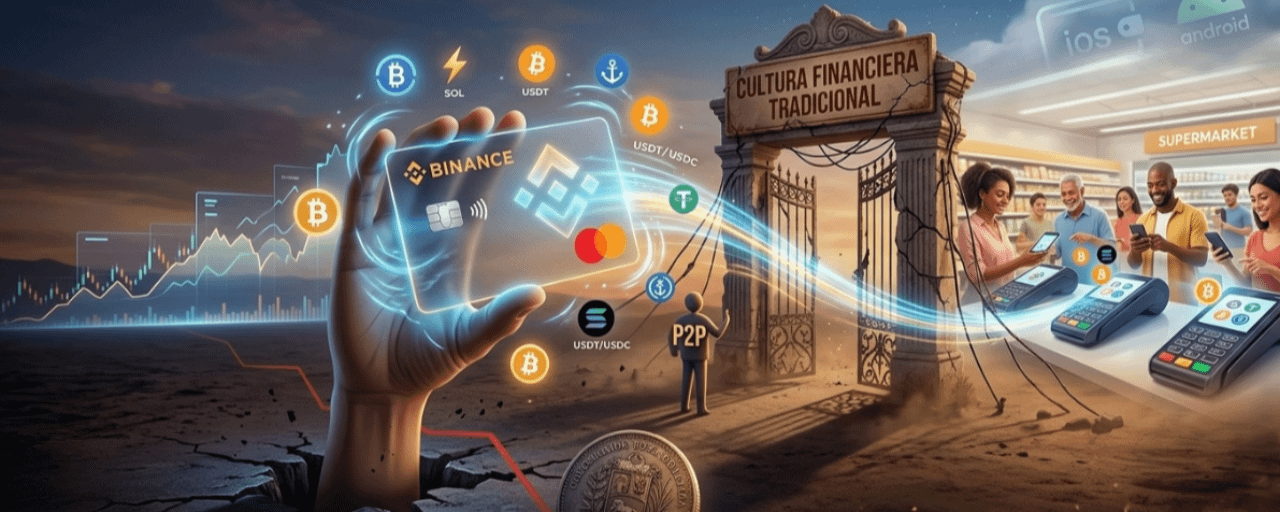
From Speculation to Real Usability: The Impact of Binance’s Virtual Card in VenezuelaThe official arrival of Binance’s international virtual card backed by the MasterCard network marks a key milestone for financial inclusion in Venezuela. Beyond enabling subscriptions on streaming platforms or purchases in global e-commerce, the real debate is in everyday life: Are we ready to make our daily grocery or pharmacy purchase by paying directly with our crypto balance?
To understand the scale of this advancement and the challenges it faces, it is necessary to analyze three key dimensions: technology, usability, and culture.
From Speculation to Real Usability: The Impact of Binance’s Virtual Card in Venezuela
The official arrival of Binance’s international virtual card backed by the MasterCard network marks a key milestone for financial inclusion in Venezuela. Beyond enabling subscriptions on streaming platforms or purchases in global e-commerce, the real debate is in everyday life: Are we ready to make our daily grocery or pharmacy purchase by paying directly with our crypto balance?
To understand the scale of this advancement and the challenges it faces, it is necessary to analyze three key dimensions: technology, usability, and culture.
To understand the scale of this advancement and the challenges it faces, it is necessary to analyze three key dimensions: technology, usability, and culture.
147
·
--
Article
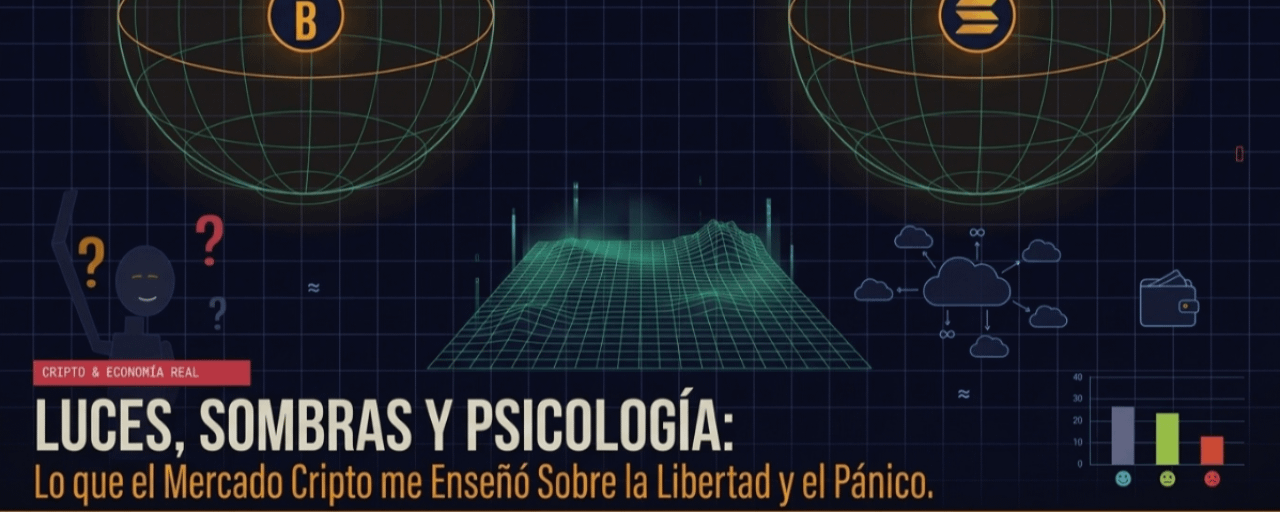
Lights, Shadows, and Psychology: What Crypto Market Taught Me About Freedom and PanicThere is an almost sacred moment of silence when you watch a red Japanese candle draw itself on the screen at two in the morning. Those of us who have walked the cryptocurrency chart know that those lines aren’t just code or liquidity fluctuations: they are the exact X-ray of human fear and greed.
After some time actively operating in the ecosystem—trading and investing with assets like Bitcoin ($BTC) and Solana ($SOL), as well as managing liquidity in stablecoins like Tether ($USDT) and USD Coin ($USDC)—I’ve reached a fundamental conclusion: the financial market doesn’t reward the fastest, but the most aware.
Lights, Shadows, and Psychology: What Crypto Market Taught Me About Freedom and Panic
There is an almost sacred moment of silence when you watch a red Japanese candle draw itself on the screen at two in the morning. Those of us who have walked the cryptocurrency chart know that those lines aren’t just code or liquidity fluctuations: they are the exact X-ray of human fear and greed.
After some time actively operating in the ecosystem—trading and investing with assets like Bitcoin ($BTC ) and Solana ($SOL), as well as managing liquidity in stablecoins like Tether ($USDT) and USD Coin ($USDC)—I’ve reached a fundamental conclusion: the financial market doesn’t reward the fastest, but the most aware.
After some time actively operating in the ecosystem—trading and investing with assets like Bitcoin ($BTC ) and Solana ($SOL), as well as managing liquidity in stablecoins like Tether ($USDT) and USD Coin ($USDC)—I’ve reached a fundamental conclusion: the financial market doesn’t reward the fastest, but the most aware.
2
2
1
1.1k
·
--
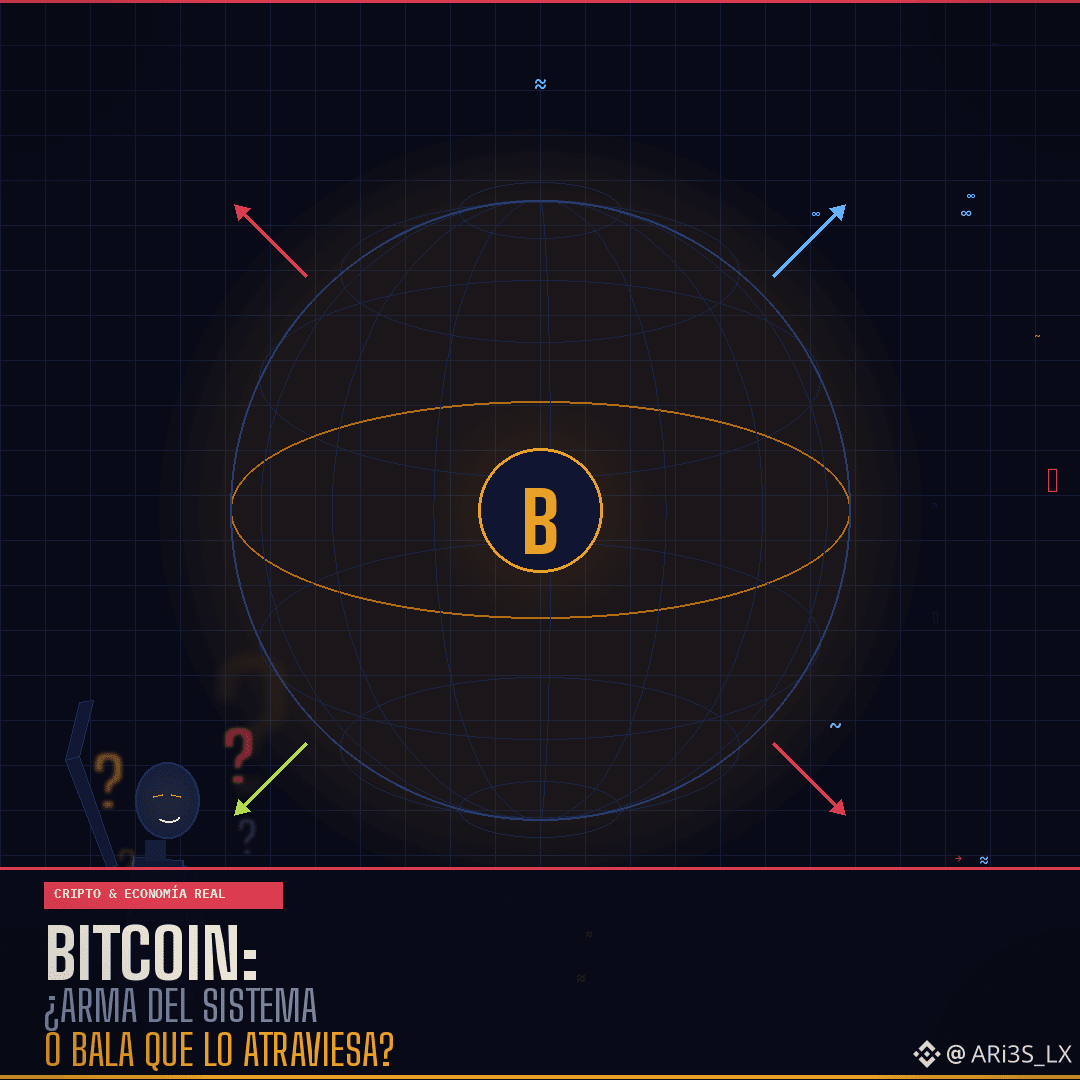
Bitcoin: weapon of the system or bullet that goes through it?
It was supposed that Bitcoin was the alternative to the system. That no tariff could touch it. February 2026 put it in front of the mirror — and the reflection is uncomfortable. When Trump imposed tariffs of 15%, BTC fell 47% from its all-time high of $126,000. Gold rose 20% during that same period. The market spoke: when there is real fear, old money wins.
28 FEB 2026 — U.S. and Israel attack Iran. BTC falls to $63,300. Second shock of the month. The pattern is confirmed.
And the month didn't end there. On February 28, the U.S. and Israel attacked Iran. Bitcoin fell again — this time to $63,300 — because investors needed liquidity and BTC is one of the few markets open on a Saturday. Two shocks in a month. The same pattern: when the world trembles, Bitcoin trembles with it.
Meanwhile, stablecoins told another story. Their global issuance exceeded $300 billion in 2025, and Visa, Stripe, and PayPal are already using them for international payments. An importer paying in USDT does not eliminate tariffs — but it does eliminate financial friction.
Protectionism can make goods more expensive. What cannot become more expensive is the flow of value over a blockchain.
Here lies the paradox that few dare to name: USDT is not an alternative to the dollar — it is a dollar disguised as technology. The crypto that promised to break the system ended up being its most efficient ambassador. In contrast, the mBridge project — China, Saudi Arabia, and the Emirates — quietly builds sovereign digital payments without dollars or SWIFT.
Financial warfare is not just about tariffs or missiles. It is about who controls the digital money of the future. And crypto is right at the center — without anyone having decided yet whether it is the weapon of the system or the bullet that goes through it.
Bitcoin: weapon of the system or bullet that goes through it?
It was supposed that Bitcoin was the alternative to the system. That no tariff could touch it. February 2026 put it in front of the mirror — and the reflection is uncomfortable. When Trump imposed tariffs of 15%, BTC fell 47% from its all-time high of $126,000. Gold rose 20% during that same period. The market spoke: when there is real fear, old money wins.
28 FEB 2026 — U.S. and Israel attack Iran. BTC falls to $63,300. Second shock of the month. The pattern is confirmed.
And the month didn't end there. On February 28, the U.S. and Israel attacked Iran. Bitcoin fell again — this time to $63,300 — because investors needed liquidity and BTC is one of the few markets open on a Saturday. Two shocks in a month. The same pattern: when the world trembles, Bitcoin trembles with it.
Meanwhile, stablecoins told another story. Their global issuance exceeded $300 billion in 2025, and Visa, Stripe, and PayPal are already using them for international payments. An importer paying in USDT does not eliminate tariffs — but it does eliminate financial friction.
Protectionism can make goods more expensive. What cannot become more expensive is the flow of value over a blockchain.
Here lies the paradox that few dare to name: USDT is not an alternative to the dollar — it is a dollar disguised as technology. The crypto that promised to break the system ended up being its most efficient ambassador. In contrast, the mBridge project — China, Saudi Arabia, and the Emirates — quietly builds sovereign digital payments without dollars or SWIFT.
Financial warfare is not just about tariffs or missiles. It is about who controls the digital money of the future. And crypto is right at the center — without anyone having decided yet whether it is the weapon of the system or the bullet that goes through it.
It was supposed that Bitcoin was the alternative to the system. That no tariff could touch it. February 2026 put it in front of the mirror — and the reflection is uncomfortable. When Trump imposed tariffs of 15%, BTC fell 47% from its all-time high of $126,000. Gold rose 20% during that same period. The market spoke: when there is real fear, old money wins.
28 FEB 2026 — U.S. and Israel attack Iran. BTC falls to $63,300. Second shock of the month. The pattern is confirmed.
And the month didn't end there. On February 28, the U.S. and Israel attacked Iran. Bitcoin fell again — this time to $63,300 — because investors needed liquidity and BTC is one of the few markets open on a Saturday. Two shocks in a month. The same pattern: when the world trembles, Bitcoin trembles with it.
Meanwhile, stablecoins told another story. Their global issuance exceeded $300 billion in 2025, and Visa, Stripe, and PayPal are already using them for international payments. An importer paying in USDT does not eliminate tariffs — but it does eliminate financial friction.
Protectionism can make goods more expensive. What cannot become more expensive is the flow of value over a blockchain.
Here lies the paradox that few dare to name: USDT is not an alternative to the dollar — it is a dollar disguised as technology. The crypto that promised to break the system ended up being its most efficient ambassador. In contrast, the mBridge project — China, Saudi Arabia, and the Emirates — quietly builds sovereign digital payments without dollars or SWIFT.
Financial warfare is not just about tariffs or missiles. It is about who controls the digital money of the future. And crypto is right at the center — without anyone having decided yet whether it is the weapon of the system or the bullet that goes through it.
431
·
--
Greetings, thank you for the comment/quote, however, the note does not aim to state what the rate is, it is an example and of how people see or perceive the process.
Greetings, thank you for the comment/quote, however, the note does not aim to state what the rate is, it is an example and of how people see or perceive the process.

Lrca05
·
--
The note arrives with days of delay, the rate of 515 Bs may have been two weeks ago, this week the approved auctions have been at prices above 525 Bs plus commission, around 600 Bs
13
87
Log in to explore more content
Join global crypto users on Binance Square
⚡️ Get latest and useful information about crypto.
💬 Trusted by the world’s largest crypto exchange.
👍 Discover real insights from verified creators.
Email / Phone number
Trending Topics
BinanceLaunchesBinanceIntelligence
90,637 views
1,031 Discussing
🚨 BINANCE JUST PUT AI DIRECTLY INSIDE THE EXCHANGE — AND THIS COULD CHANGE HOW RETAIL TRADES.
Binance has officially launched Binance Intelligence, a new AI layer built into the Binance ecosystem. It combines three products:
Binance AI for everyday users,
Binance AI Pro for automated trading workflows,
and Agent OS for developers building financial agents.
The part traders should care about?
Binance AI can surface market briefs, smart alerts, PnL recaps and personalized information, while AI Pro is designed to turn a plain-English trading idea into a visual strategy workflow.
That means the next phase of exchange competition may not be:
lowest fees vs deepest liquidity.
It could be:
who gives traders the best AI execution layer.
If Binance Intelligence actually drives heavier user activity, automated strategies and higher trading frequency, watch $BNB first.
AI adoption ↑
→ Binance engagement ↑
→ trading activity ↑
→ ecosystem narrative strengthens.
The catalyst I’d watch now:
global rollout + AI Pro launch + measurable user adoption.
Because once AI stops just telling you what the market is doing…
…and starts helping build the trade itself?
That’s when this gets much bigger than another chatbot. 👀
#binancelaunchesbinanceintelligence #EvernorthXRPTreasuryCompletesSPACMerger #ADAGains10%Above$0.27 #ETHUp70%InQ3ButLiquidityFalls #EthStakingExitQueueHits2026High
KimHotbae
·29 Likes
·35.7k views
StriveBuys2000BTCFor$169M
2,211 views
45 Discussing
EvernorthXRPTreasuryCompletesSPACMerger
66,025 views
707 Discussing