

Puppies 未来
2.1k Posts

Puppies 未来
Report
Block User
Open Trade

DOGE Holder
Occasional Trader
1.7 Years
208 Following
1.2K+ Followers
15.1K+ Liked
Posts
Portfolio
All
Quotes
Videos
PINNED
·
--
$ETH Puppy community live room:
@Puppies1314- (Mon–Fri 20:00–23:00)
@Square-Creator-513603536 (Morning live)
@huihuihui (Live at irregular times)
@Zurita13 (Around 01:00) International
@Square-Creator-399777dd4bc0a @Square-Creator-6d76f9793cfdf
Click the golden text to get there!!!
The dog community is so hardcore—let’s build consensus together for the next shitcoin 🐮🐮🐮. More people are welcome to join👇👇👇👇
PUPPIES community — chat with us in Binance to exchange ideas
Avatar update process: Click the small dog avatar below to enlarge, then long-press to save the image!
How to forward the livestream room image
For purchases, see the K-line chart below👇👇👇
$ETH Puppy community live room:
@金先生聊MEME (Mon–Fri 20:00–23:00)
@Aurora青瑜 (Morning live)
@Huihui慧慧SG (Live at irregular times)
@Yiz13 (Around 01:00) International
@puppies哥布林 @Square-Creator-6d76f9793cfdf
Click the golden text to get there!!!
The dog community is so hardcore—let’s build consensus together for the next shitcoin 🐮🐮🐮. More people are welcome to join👇👇👇👇
PUPPIES community — chat with us in Binance to exchange ideas
Avatar update process: Click the small dog avatar below to enlarge, then long-press to save the image!
How to forward the livestream room image
For purchases, see the K-line chart below👇👇👇



币翻身聊MEME
·
--
How to add dog charts, mighty moo moo 【小奶狗PUPPIES社区】
$ETH $DOGE $SHIB
$ETH $DOGE $SHIB
6
145
·
--
$牛来 $龙虾 $币安人生 When the cow arrives, are you still in the car?#币安已回填九成受影响资产 #何一表示储备证明10种代币全额背书 #币安SAFU基金完成7499枚BTC转移
$牛来 $龙虾 $币安人生 When the cow arrives, are you still in the car?#币安已回填九成受影响资产 #何一表示储备证明10种代币全额背书 #币安SAFU基金完成7499枚BTC转移

@浩瀚VaST
is speaking[LIVE] 🎙️ The rally has begun. BNB to $6,000—see you at the top!
576 listens
327
·
--
Verified
$币安人生 $牛来 $龙虾 #币安已覆盖60亿美元被盗损失 10No rate hike in October ≠ an end to fighting inflation! The Fed has left the door open to a December rate hike
The Fed held rates steady in October 2026. Don’t misread this as “inflationary pressures have disappeared.” It looks more like a reluctant wait-and-see approach: inflation remains high, but too many real-world constraints leave the Fed with little choice but to hold steady for now.
First, inflation. US CPI rose 3.7% year over year in September, while core CPI rose 2.6%—both still well above the 2% target. Disruptions from the Middle East conflict have pushed up oil prices, while resilient consumption and investment mean inflation remains sticky. In theory, there are grounds for further rate hikes.
But the Fed held steady, largely because real interest rates in the market have already climbed. Long-term US Treasury yields have risen amid fiscal deficits, AI capital spending, and geopolitical risks. Even with the benchmark rate unchanged, borrowing costs across the economy have increased, meaning financial conditions are effectively tightening. So the October pause looks more like an acknowledgment that real rates are already high than a shift toward monetary easing.
Political considerations also matter. With the midterm elections approaching, a rate hike could be criticized as election interference, while a cut could draw accusations of letting inflation run rampant. Holding steady became a compromise, pushing the decision until after the election. Warsh also emphasized that inflation is far from the target and warned against assuming a policy pivot: a rate hike in December remains possible.
The so-called “Warsh plan thrown off course” is also a result of resurgent inflation, soaring Treasury yields, and rising geopolitical risks, which have forced reforms such as pairing balance-sheet reduction with rate cuts to be postponed.
In short: October did not mark the end of the fight against inflation; it left the door open to a December rate hike. Going forward, watch inflation, developments in the Middle East, and fiscal policy after the election. This is macroeconomic analysis only and does not constitute investment advice.
{web3_wallet_create}(10xcf91b70017eabde82c9671e30e5502d312ea6eb2)
$币安人生 $牛来 $龙虾 #币安已覆盖60亿美元被盗损失 10No rate hike in October ≠ an end to fighting inflation! The Fed has left the door open to a December rate hike
The Fed held rates steady in October 2026. Don’t misread this as “inflationary pressures have disappeared.” It looks more like a reluctant wait-and-see approach: inflation remains high, but too many real-world constraints leave the Fed with little choice but to hold steady for now.
First, inflation. US CPI rose 3.7% year over year in September, while core CPI rose 2.6%—both still well above the 2% target. Disruptions from the Middle East conflict have pushed up oil prices, while resilient consumption and investment mean inflation remains sticky. In theory, there are grounds for further rate hikes.
But the Fed held steady, largely because real interest rates in the market have already climbed. Long-term US Treasury yields have risen amid fiscal deficits, AI capital spending, and geopolitical risks. Even with the benchmark rate unchanged, borrowing costs across the economy have increased, meaning financial conditions are effectively tightening. So the October pause looks more like an acknowledgment that real rates are already high than a shift toward monetary easing.
Political considerations also matter. With the midterm elections approaching, a rate hike could be criticized as election interference, while a cut could draw accusations of letting inflation run rampant. Holding steady became a compromise, pushing the decision until after the election. Warsh also emphasized that inflation is far from the target and warned against assuming a policy pivot: a rate hike in December remains possible.
The so-called “Warsh plan thrown off course” is also a result of resurgent inflation, soaring Treasury yields, and rising geopolitical risks, which have forced reforms such as pairing balance-sheet reduction with rate cuts to be postponed.
In short: October did not mark the end of the fight against inflation; it left the door open to a December rate hike. Going forward, watch inflation, developments in the Middle East, and fiscal policy after the election. This is macroeconomic analysis only and does not constitute investment advice.
1
642
·
--
$ESPORTS $FLORK $AIOT Polls show that even if Republicans suffer a crushing defeat in the midterms, Trump's MAGA base won't fall apart. In a PF Global survey, most voters who backed Trump in 2024 and identify as MAGA believe that a loss would be due to Republican candidates running poor campaigns, not Trump failing to campaign for them enough. If Republicans lose both the House and Senate, 54% say the party should move closer to Trump, while fewer than a quarter think it should distance itself from him. Non-MAGA Trump voters feel the opposite: 44% say the party should keep its distance from Trump, while 31% say it should continue to embrace him. This divide has Republicans' candidates stuck: embracing Trump could scare off moderate voters, while breaking with him could alienate the base. Trump made his final campaign stops in swing states over the weekend, and the Kansas Republican Party chair said no one is better at turning out voters. If the results are bad, MAGA voters are likely to blame the candidates; if Paxton loses, 41% also say he would be to blame. Some Republicans are privately blaming Trump, but one anonymous campaign strategist said high
{web3_wallet_create}(10xcf91b70017eabde82c9671e30e5502d312ea6eb2)
{alpha}(560xf39e4b21c84e737df08e2c3b32541d856f508e48)
{alpha}(560xf40592daacb3e5abf358789f5688c0b4f64d7777)
oil prices are making things harder—though many may not dare say so publicly.#币安将恢复第一阶段提现
$ESPORTS $FLORK $AIOT Polls show that even if Republicans suffer a crushing defeat in the midterms, Trump's MAGA base won't fall apart. In a PF Global survey, most voters who backed Trump in 2024 and identify as MAGA believe that a loss would be due to Republican candidates running poor campaigns, not Trump failing to campaign for them enough. If Republicans lose both the House and Senate, 54% say the party should move closer to Trump, while fewer than a quarter think it should distance itself from him. Non-MAGA Trump voters feel the opposite: 44% say the party should keep its distance from Trump, while 31% say it should continue to embrace him. This divide has Republicans' candidates stuck: embracing Trump could scare off moderate voters, while breaking with him could alienate the base. Trump made his final campaign stops in swing states over the weekend, and the Kansas Republican Party chair said no one is better at turning out voters. If the results are bad, MAGA voters are likely to blame the candidates; if Paxton loses, 41% also say he would be to blame. Some Republicans are privately blaming Trump, but one anonymous campaign strategist said high
oil prices are making things harder—though many may not dare say so publicly.#币安将恢复第一阶段提现
oil prices are making things harder—though many may not dare say so publicly.#币安将恢复第一阶段提现
3
836
·
--
Article
4:20:59 a.m.: A hot wallet nearly wiped out. If this is true, what Binance deserves the most credit for isn’t “having the money to reimburseAt 4:20:59 a.m., a transaction was recorded on-chain.
Three minutes and 24 seconds later, the story that a hot wallet had been “drained in one click” began circulating:
167,464 ETH, 1.615 billion USDT, plus 63 tokens including UNI, LINK, AAVE, and PEPE—all transferred in a single transaction.
The headline sounds alarming. But first, let’s get the numbers straight:
The accurate description isn’t “$6.3 billion stolen,” but rather: about $6.3 billion affected, about $3 billion frozen, and net losses pending Binance’s post-incident report.
If this was a real attack, the three things Binance deserves the most credit for aren’t “nothing happened,” but that it moved quickly to cover the losses, its private keys weren’t lost, and it didn’t make definitive claims.
4:20:59 a.m.: A hot wallet nearly wiped out. If this is true, what Binance deserves the most credit for isn’t “having the money to reimburse
At 4:20:59 a.m., a transaction was recorded on-chain.
Three minutes and 24 seconds later, the story that a hot wallet had been “drained in one click” began circulating:
167,464 ETH, 1.615 billion USDT, plus 63 tokens including UNI, LINK, AAVE, and PEPE—all transferred in a single transaction.
The headline sounds alarming. But first, let’s get the numbers straight:
The accurate description isn’t “$6.3 billion stolen,” but rather: about $6.3 billion affected, about $3 billion frozen, and net losses pending Binance’s post-incident report.
If this was a real attack, the three things Binance deserves the most credit for aren’t “nothing happened,” but that it moved quickly to cover the losses, its private keys weren’t lost, and it didn’t make definitive claims.
30
·
--
#RichardTeng表示无需用户承担损失
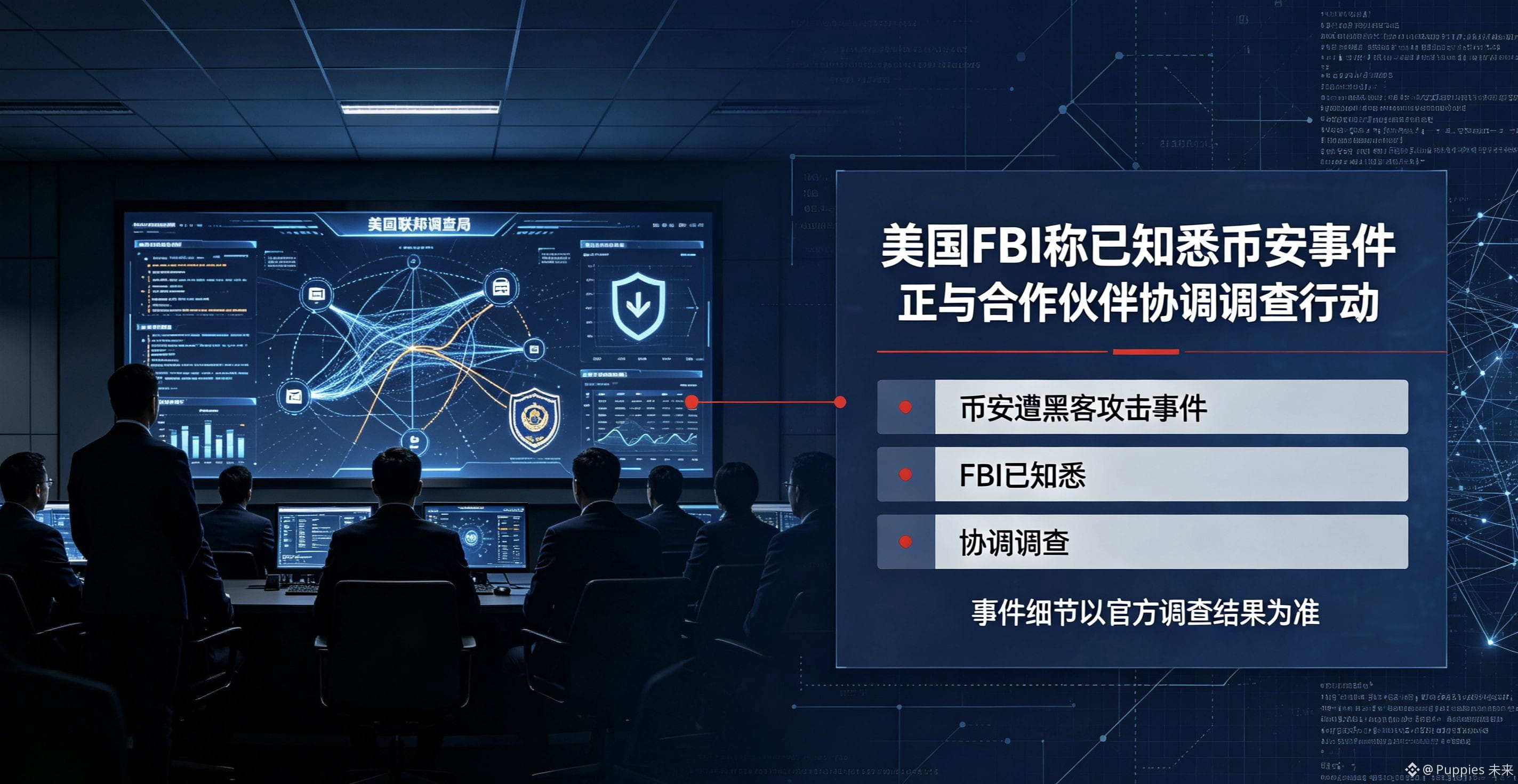
The U.S. FBI says it is aware of the Binance incident and is coordinating with partners
The U.S. FBI says it is aware of the Binance incident
It is coordinating with partners;
The FBI will coordinate the investigation into the hacking attack on Binance.
$BNB $BTC $PEPE
{web3_wallet_create}(10xcf91b70017eabde82c9671e30e5502d312ea6eb2)
{future}(BNBUSDT)
{spot}(PEPEUSDT)
#RichardTeng表示无需用户承担损失
The U.S. FBI says it is aware of the Binance incident and is coordinating with partners
The U.S. FBI says it is aware of the Binance incident
It is coordinating with partners;
The FBI will coordinate the investigation into the hacking attack on Binance.
$BNB $BTC $PEPE
The U.S. FBI says it is aware of the Binance incident and is coordinating with partners
The U.S. FBI says it is aware of the Binance incident
It is coordinating with partners;
The FBI will coordinate the investigation into the hacking attack on Binance.
$BNB $BTC $PEPE
438
·
--
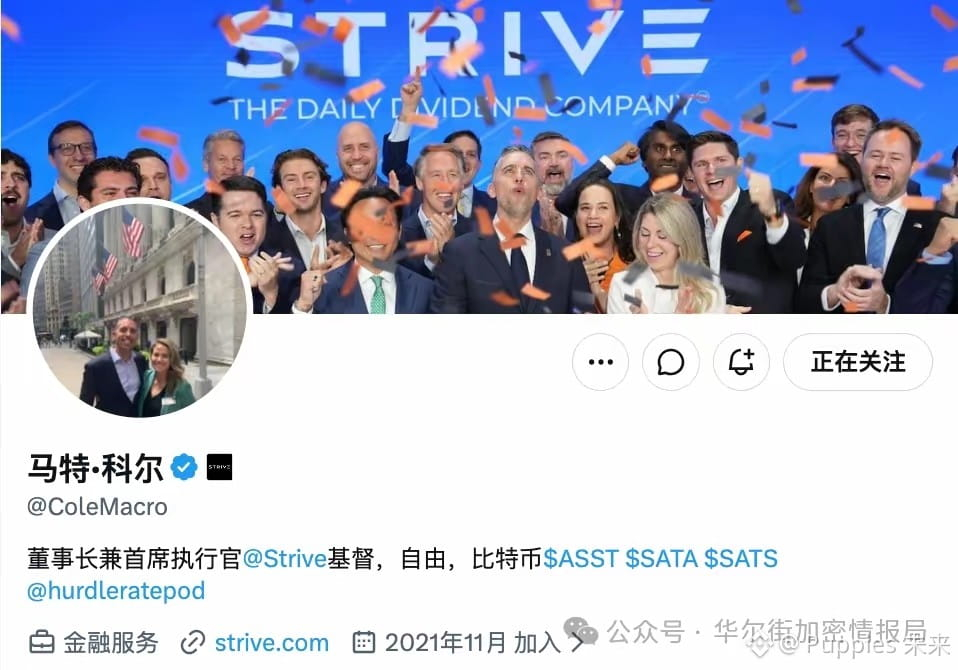
#TRM称柬埔寨赌场收10.7亿美元加密资产 Don't just look at Strive's 43,000 BTC hoard—the real question is whether it can keep buying
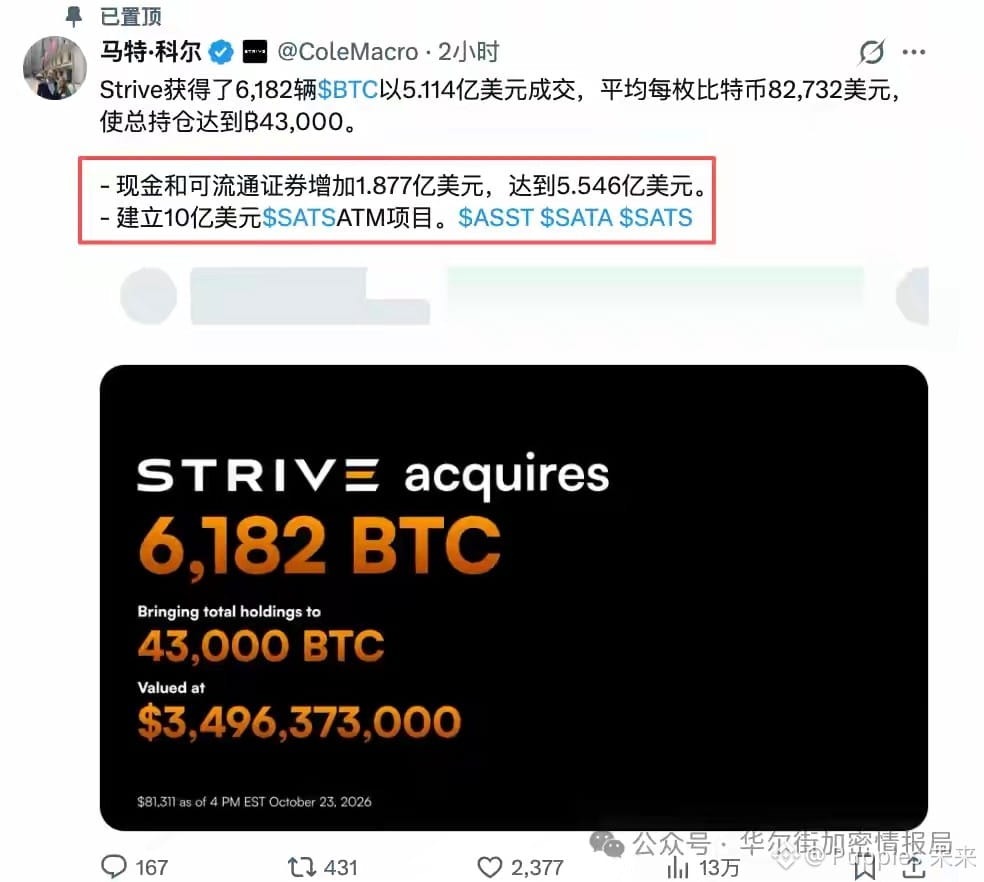
Over the past month, Strive added about 15,538 BTC, bringing its total holdings to more than 43,000, alongside $504.4 million in cash and equivalents. It also completed an IPO of its SATS preferred stock, raising about $630 million, and filed a market offering program of up to $1 billion. In plain terms, this isn't ordinary dollar-cost averaging: it's using the capital markets as an IV, converting raised funds into BTC.
The pace is certainly aggressive: in the week from October 17 to 23, it bought 6,182 BTC at an average price of about $82,732, spending roughly $511 million. It now has its sights on Metaplanet and Twenty One Capital, aiming to claim a spot in the second tier. Strategy remains far ahead in first place, with about 848,500 BTC.
But don't rush to declare that “Bitcoin can only go up.” SATS preferred stock pays a 15% annual dividend; on 7 million shares, that amounts to nominal annual dividends of about $105 million. Financing isn't free ammunition: if BTC rises, the model can keep working; if BTC falls, financing dries up, and dividends pile on, the pressure will mount.
Also, digital asset treasuries hold about 1.2932 million BTC, while ETFs and funds hold about 1.4644 million, for a combined total of about 2.7576 million BTC—roughly 13.13% of the 21 million cap. Institutions are indeed accumulating coins, but ETFs can see redemptions and companies can sell. Don't treat holdings as permanently locked away.
{web3_wallet_create}(10xcf91b70017eabde82c9671e30e5502d312ea6eb2)
My take: the real thing to watch with Strive isn't its rank today, but its cash, financing costs, and BTC per share. Its holdings can be verified, but its funding comes at a cost. The key question is whether it will still dare to buy—and be able to afford it—when the market pulls back. This is not investment advice. $ETH $PEPE $DOGE
#TRM称柬埔寨赌场收10.7亿美元加密资产 Don't just look at Strive's 43,000 BTC hoard—the real question is whether it can keep buying
Over the past month, Strive added about 15,538 BTC, bringing its total holdings to more than 43,000, alongside $504.4 million in cash and equivalents. It also completed an IPO of its SATS preferred stock, raising about $630 million, and filed a market offering program of up to $1 billion. In plain terms, this isn't ordinary dollar-cost averaging: it's using the capital markets as an IV, converting raised funds into BTC.
The pace is certainly aggressive: in the week from October 17 to 23, it bought 6,182 BTC at an average price of about $82,732, spending roughly $511 million. It now has its sights on Metaplanet and Twenty One Capital, aiming to claim a spot in the second tier. Strategy remains far ahead in first place, with about 848,500 BTC.
But don't rush to declare that “Bitcoin can only go up.” SATS preferred stock pays a 15% annual dividend; on 7 million shares, that amounts to nominal annual dividends of about $105 million. Financing isn't free ammunition: if BTC rises, the model can keep working; if BTC falls, financing dries up, and dividends pile on, the pressure will mount.
Also, digital asset treasuries hold about 1.2932 million BTC, while ETFs and funds hold about 1.4644 million, for a combined total of about 2.7576 million BTC—roughly 13.13% of the 21 million cap. Institutions are indeed accumulating coins, but ETFs can see redemptions and companies can sell. Don't treat holdings as permanently locked away.
My take: the real thing to watch with Strive isn't its rank today, but its cash, financing costs, and BTC per share. Its holdings can be verified, but its funding comes at a cost. The key question is whether it will still dare to buy—and be able to afford it—when the market pulls back. This is not investment advice. $ETH $PEPE $DOGE
543
·
--
$BTC $ETH $PEPE AI agents receive a major catalyst. At 22:37, the official DeepSeek team published a technical article on its public account, officially unveiling an all-new super AI agent system and describing it as a historic breakthrough in artificial intelligence. Traditional large models are mostly passive: they answer questions and perform simple tasks one at a time, making them poorly suited to complex work. The new system can think, plan, execute, and self-correct autonomously. Without step-by-step human instructions, it can independently complete entire sets of complex tasks. It can also monitor for problems in the background, proactively identify bugs, and fix and improve itself, representing a clear increase in intelligence.
This is a long-term positive development for AI agents. The rollout of a super-agent architecture could unlock demand across the entire AI industry chain, creating opportunities for the underlying large models, agent development platforms, automation tools, computing power infrastructure, and AI applications. AI agents are no longer just a theme for speculative hype. The sector has already undergone a substantial correction, and expectations of a return of capital are rising in response to this major technology announcement.
Six subsectors are worth watching: ① Foundation models: model fine-tuning and inference optimization; ② Agent development platforms: frameworks, task scheduling, autonomous memory, and intelligent decision-making; ③ Automation toolchains: office automation, code inspection, troubleshooting, and intelligent remediation; ④ Multimodal interaction: autonomous perception, message monitoring, scene recognition, and intelligent responses; ⑤ High-end computing: AI chips, servers, and cloud computing power; ⑥ Application service providers: intelligent enterprise office solutions, automated operations, and full-scenario applications.
A note on prudence: Super agents are still in the iterative testing phase, and large-scale commercialization will take time. For now, the market is driven more by sentiment and expectations than by immediate earnings realization. The AI sector is highly volatile, so avoid blindly chasing gains and pay attention to capital flows. #TRM称柬埔寨赌场收10.7亿美元加密资产

Aurora青瑜
·
--
[Replay] 🎙️ Stay confident and keep holding—what you’re seeing is a relative bottom
04 h 06 m 45 s · 2.6k listens
768
·
--
$币安人生 $龙虾 $牛来 Asked whether he canceled campaign events due to feeling unwell, Trump angrily lashed out at a reporter on the spot
On the 29th local time, U.S. President Trump was once again rude during an interview with reporters. When asked why he had canceled his campaign stop in Kansas, Trump replied to the reporter, “You’re in terrible shape. You need to lose weight.” According to reports, a Reuters reporter had asked Trump whether he was feeling all right after traveling extensively for the midterm elections, implying that he might have skipped the campaign event in Kansas because he was unwell. Trump initially said that he was feeling “very good.” But when the reporter pressed him, he attacked the reporter directly, saying, “You’re really sick.” After learning that the reporter was from Reuters, he added, “Reuters is terrible.” Foreign media reported on October 30 that the U.S. midterm elections had entered their final countdown, with the tight race drawing widespread attention. On the 29th local time, Trump suddenly announced that he was canceling the in-person rallies scheduled for this weekend in Kansas and Iowa. Asked about canceling his trip to Kansas, Trump said he felt he “didn’t necessarily have to go to Kansas.” Although Republican Senator Roger Marshall faces a strong challenge from his Democratic opponent, Trump insisted that Marshall was in an excellent position and predicted a major Republican victory on election night. The Republican National Committee echoed this in a statement, saying that Republicans were ahead in Kansas and Iowa and that it had therefore decided to cancel the planned in-person events.#CZ称币安赔付到位最重要是保护用户 #TRM称柬埔寨赌场收10.7亿美元加密资产
On the 29th local time, U.S. President Trump was once again rude during an interview with reporters. When asked why he had canceled his campaign stop in Kansas, Trump replied to the reporter, “You’re in terrible shape. You need to lose weight.” According to reports, a Reuters reporter had asked Trump whether he was feeling all right after traveling extensively for the midterm elections, implying that he might have skipped the campaign event in Kansas because he was unwell. Trump initially said that he was feeling “very good.” But when the reporter pressed him, he attacked the reporter directly, saying, “You’re really sick.” After learning that the reporter was from Reuters, he added, “Reuters is terrible.” Foreign media reported on October 30 that the U.S. midterm elections had entered their final countdown, with the tight race drawing widespread attention. On the 29th local time, Trump suddenly announced that he was canceling the in-person rallies scheduled for this weekend in Kansas and Iowa. Asked about canceling his trip to Kansas, Trump said he felt he “didn’t necessarily have to go to Kansas.” Although Republican Senator Roger Marshall faces a strong challenge from his Democratic opponent, Trump insisted that Marshall was in an excellent position and predicted a major Republican victory on election night. The Republican National Committee echoed this in a statement, saying that Republicans were ahead in Kansas and Iowa and that it had therefore decided to cancel the planned in-person events.#CZ称币安赔付到位最重要是保护用户 #TRM称柬埔寨赌场收10.7亿美元加密资产
Aurora青瑜
·
--
[Replay] 🎙️ Stay confident and keep holding—what you’re seeing is a relative bottom
04 h 06 m 45 s · 2.6k listens
1k
·
--
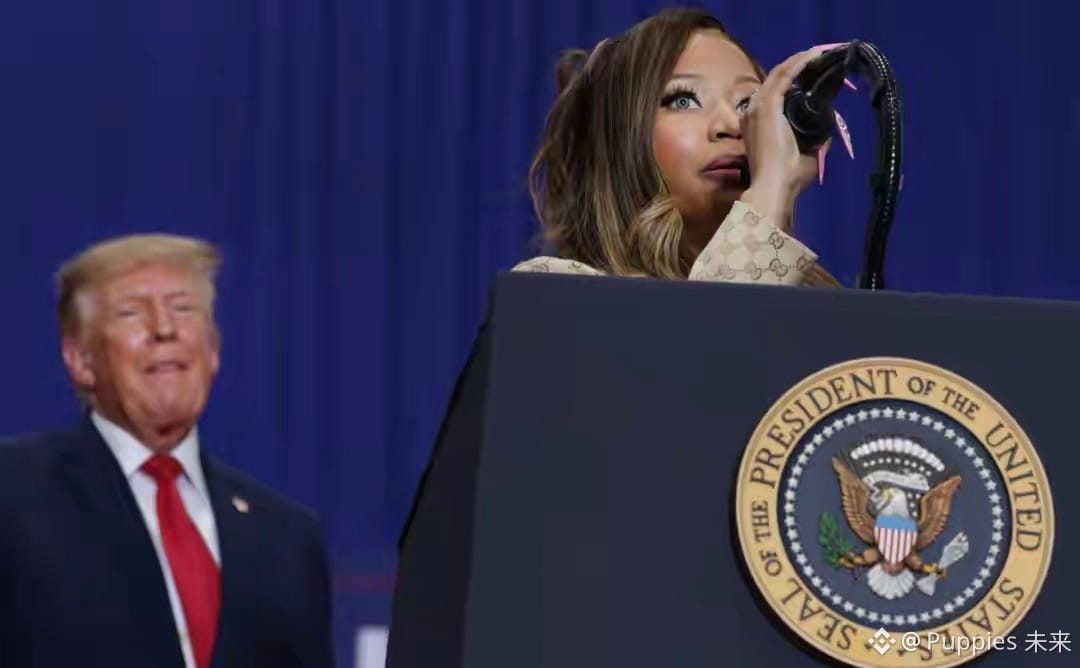
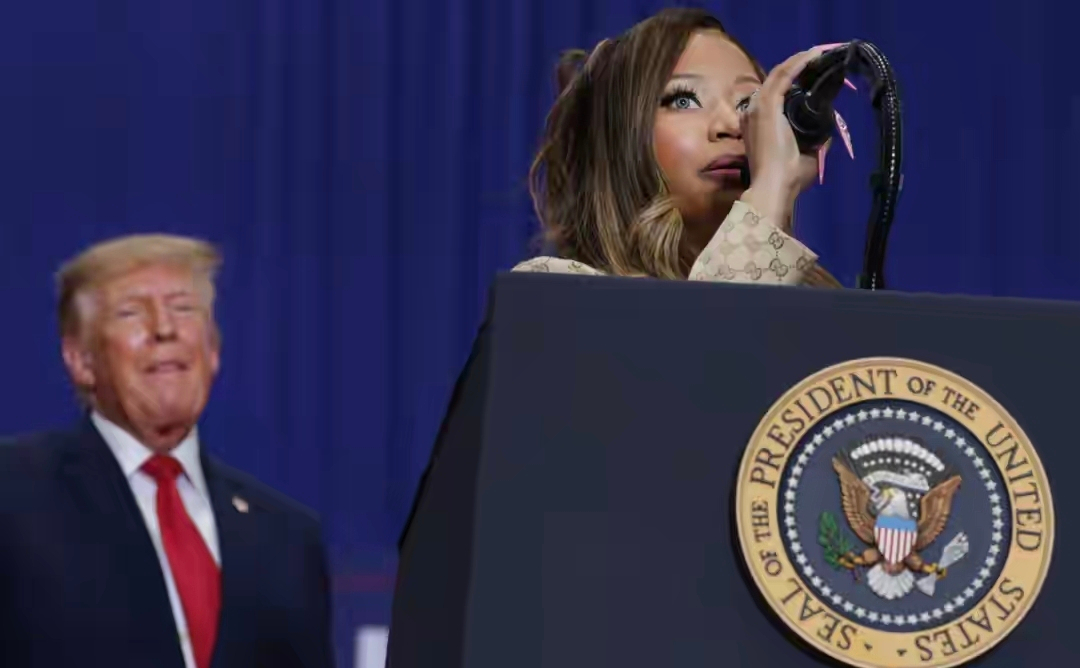
$DOGE $PEPE $SHIB Rapper Nicki Minaj publicly endorsed the Republicans ahead of the 2026 midterm elections, further signaling her support for Trump. On October 25, she campaigned for Republican Senate candidate Mike Rogers at a Trump rally in Michigan, shouting, “We love Trump,” to an enthusiastic response from the crowd. Trump called her the “Queen of Rap.” Minaj said Trump had “changed the energy of our country” and “given us a future to look forward to,” adding that she would continue to support him if he ran again in 2028. She also reposted a post saying, “I’m not going anywhere. I belong here.” In January, Minaj attended a Treasury Department event hosted by Trump to celebrate the launch of “Trump Accounts.” She said she was “probably the president’s number one fan” and praised the accounts for helping children receive financial education at an early age.#ASIC尚未收到预测市场申请 #OpenAI下调融资目标100亿美元 #疑似朝鲜攻击占加密黑客损失近89%
$DOGE $PEPE $SHIB Rapper Nicki Minaj publicly endorsed the Republicans ahead of the 2026 midterm elections, further signaling her support for Trump. On October 25, she campaigned for Republican Senate candidate Mike Rogers at a Trump rally in Michigan, shouting, “We love Trump,” to an enthusiastic response from the crowd. Trump called her the “Queen of Rap.” Minaj said Trump had “changed the energy of our country” and “given us a future to look forward to,” adding that she would continue to support him if he ran again in 2028. She also reposted a post saying, “I’m not going anywhere. I belong here.” In January, Minaj attended a Treasury Department event hosted by Trump to celebrate the launch of “Trump Accounts.” She said she was “probably the president’s number one fan” and praised the accounts for helping children receive financial education at an early age.#ASIC尚未收到预测市场申请 #OpenAI下调融资目标100亿美元 #疑似朝鲜攻击占加密黑客损失近89%
Aurora青瑜
·
--
[Replay] 🎙️ Stay confident and keep holding—what you’re seeing is a relative bottom
04 h 06 m 45 s · 2.6k listens
393
·
--
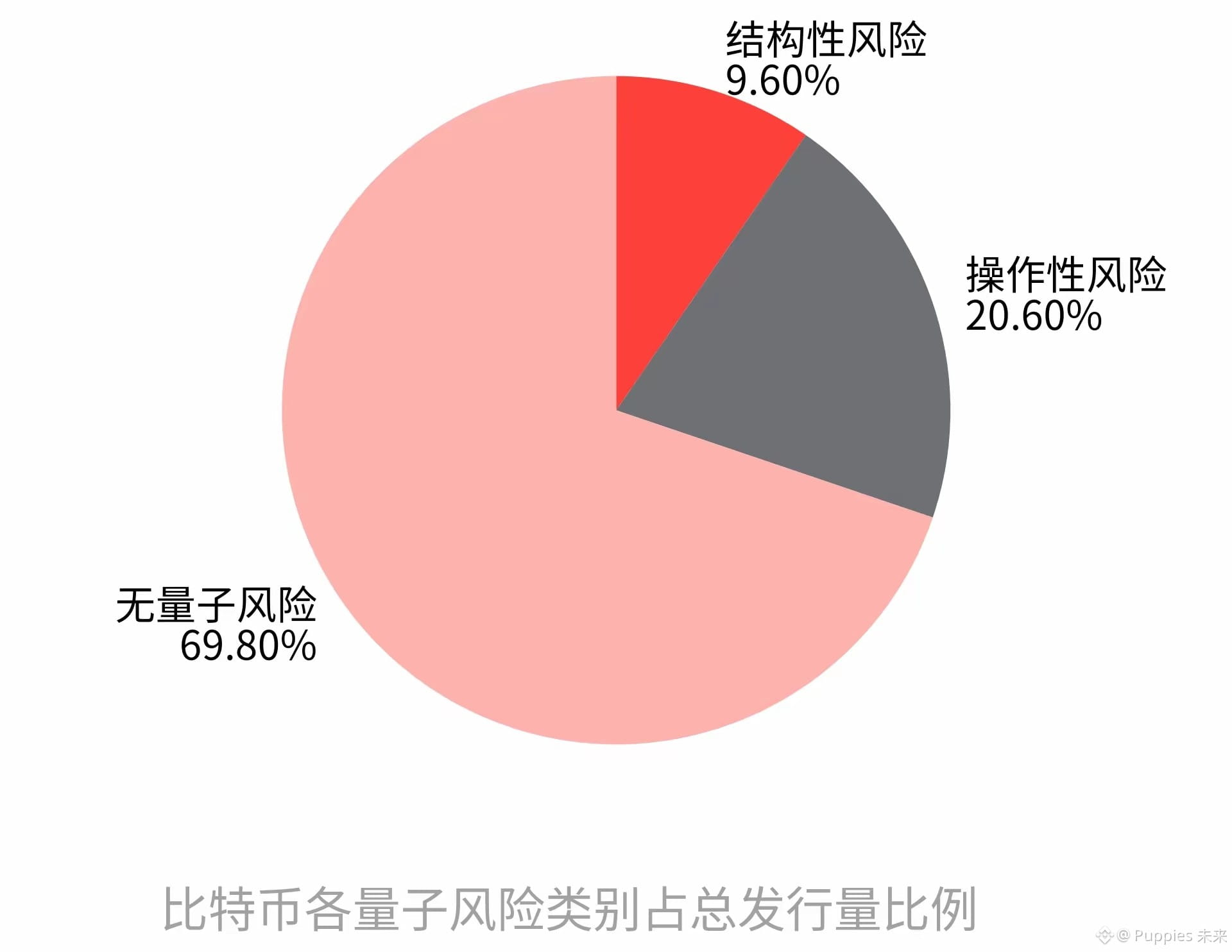
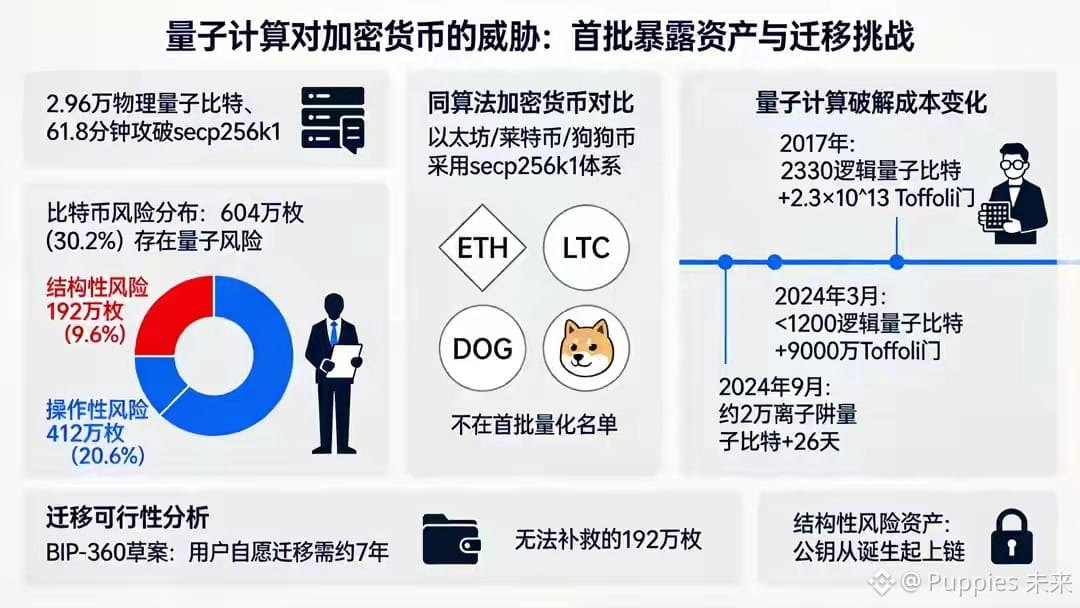
$BTC $ETH $BNB Latest estimates say that 29,600 physical quantum bits and 61.8 minutes would be enough to break secp256k1; if achieved, Bitcoin would be among the first exposed, but only coins whose public keys are already on-chain would be within reach. About 6.04 million bitcoin (30.2%) face quantum risk, of which 1.92 million (9.6%) face structural risk: scripts such as P2PK have put public keys on-chain since their creation and cannot be remedied, making these coins truly the “first batch”; another 4.12 million (20.6%) face operational risk because their public keys were exposed through address reuse, partial spending, custodial consolidation, and other practices. P2PKH exposes only the hash by default, but once a public key is put on-chain through spending, it is permanently exposed. A quantum attack must first obtain the public key, and Shor’s algorithm can reduce the time needed to solve the discrete logarithm problem from exponential to polynomial. Ethereum, Litecoin, and Dogecoin also use secp256k1, but are not on the first-wave list: Ethereum has a post-quantum team and roadmap, so coordination costs are lower; Litecoin and Dogecoin use the “same algorithm, unknown exposure,” so any assessment can only be speculative. Migration cannot keep pace with falling costs: BIP-360 remains a voluntary migration draft, and a full migration could take 7 years. Nor does 61.8 minutes mean an immediate practical threat: the largest elliptic-curve key cracked with real hardware was only 15 bits, while secp256k1 uses 256-bit keys, and the fault-tolerance window points to 2029. The boundary is now clear: operational risks can be addressed by moving coins to new locking scripts, while the identities of 1.92 million structurally at-risk coins have been written in stone since their creation. This matters more than when a quantum computer will be built.#量子计算 #CZ称币安赔付到位最重要是保护用户 #币安披露黑客事件进展63亿美元损失已弥补八成
$BTC $ETH $BNB Latest estimates say that 29,600 physical quantum bits and 61.8 minutes would be enough to break secp256k1; if achieved, Bitcoin would be among the first exposed, but only coins whose public keys are already on-chain would be within reach. About 6.04 million bitcoin (30.2%) face quantum risk, of which 1.92 million (9.6%) face structural risk: scripts such as P2PK have put public keys on-chain since their creation and cannot be remedied, making these coins truly the “first batch”; another 4.12 million (20.6%) face operational risk because their public keys were exposed through address reuse, partial spending, custodial consolidation, and other practices. P2PKH exposes only the hash by default, but once a public key is put on-chain through spending, it is permanently exposed. A quantum attack must first obtain the public key, and Shor’s algorithm can reduce the time needed to solve the discrete logarithm problem from exponential to polynomial. Ethereum, Litecoin, and Dogecoin also use secp256k1, but are not on the first-wave list: Ethereum has a post-quantum team and roadmap, so coordination costs are lower; Litecoin and Dogecoin use the “same algorithm, unknown exposure,” so any assessment can only be speculative. Migration cannot keep pace with falling costs: BIP-360 remains a voluntary migration draft, and a full migration could take 7 years. Nor does 61.8 minutes mean an immediate practical threat: the largest elliptic-curve key cracked with real hardware was only 15 bits, while secp256k1 uses 256-bit keys, and the fault-tolerance window points to 2029. The boundary is now clear: operational risks can be addressed by moving coins to new locking scripts, while the identities of 1.92 million structurally at-risk coins have been written in stone since their creation. This matters more than when a quantum computer will be built.#量子计算 #CZ称币安赔付到位最重要是保护用户 #币安披露黑客事件进展63亿美元损失已弥补八成
Aurora青瑜
·
--
[Replay] 🎙️ Stay confident and keep holding—what you’re seeing is a relative bottom
04 h 06 m 45 s · 2.6k listens
1
229
·
--
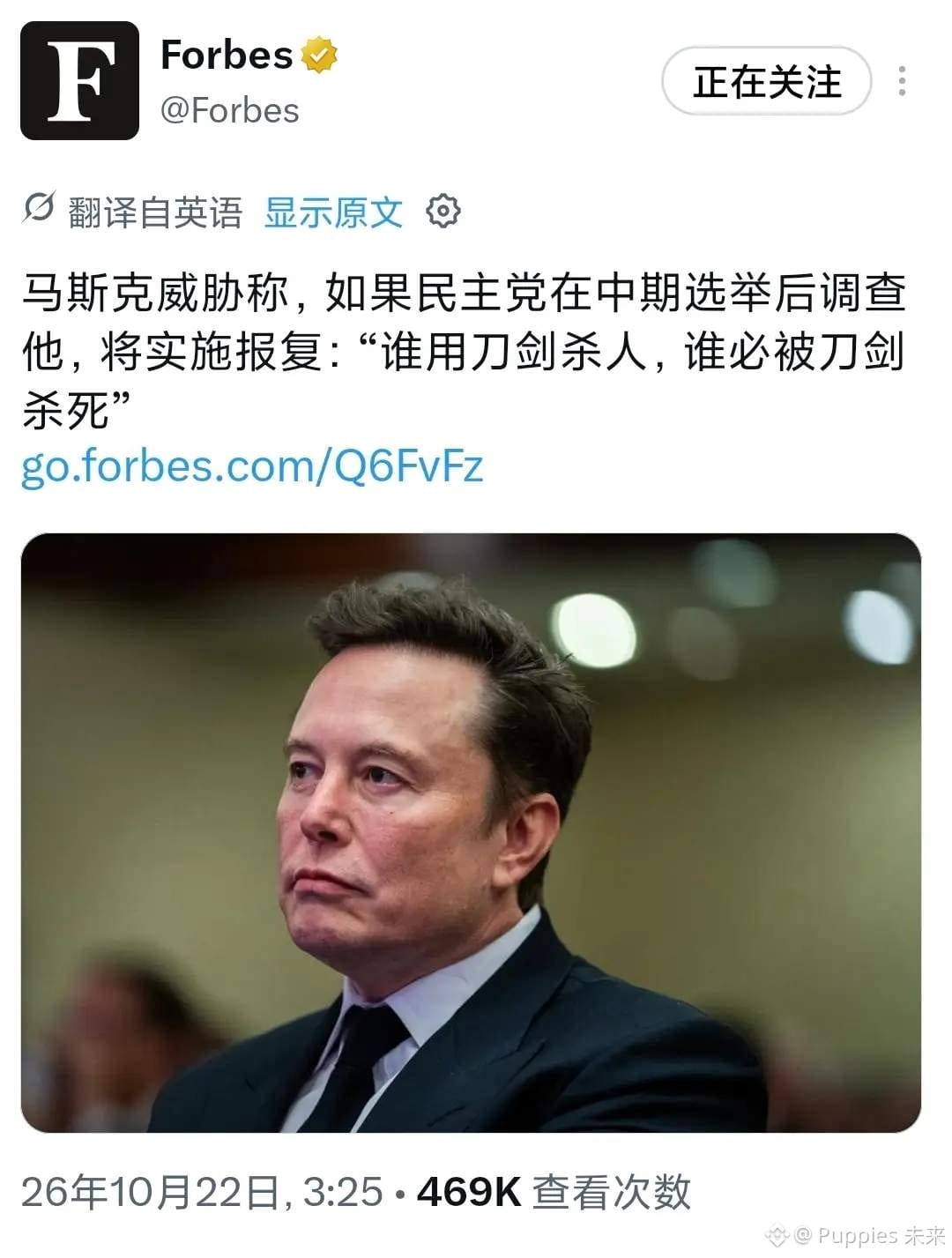
#币安披露黑客事件进展63亿美元损失已弥补八成 “Those who live by the sword will die by the sword.” Musk icon quoted this Bible verse, issuing a forceful warning to Democrats icon.
U.S. media outlet Politico revealed that Democrats are secretly preparing a “reckoning” for Musk icon. If they regain control of Congress in the November midterm elections, they will launch congressional oversight investigations into Musk. That’s because Musk is now the Republican Party icon’s top donor and an unwavering supporter of Trump.
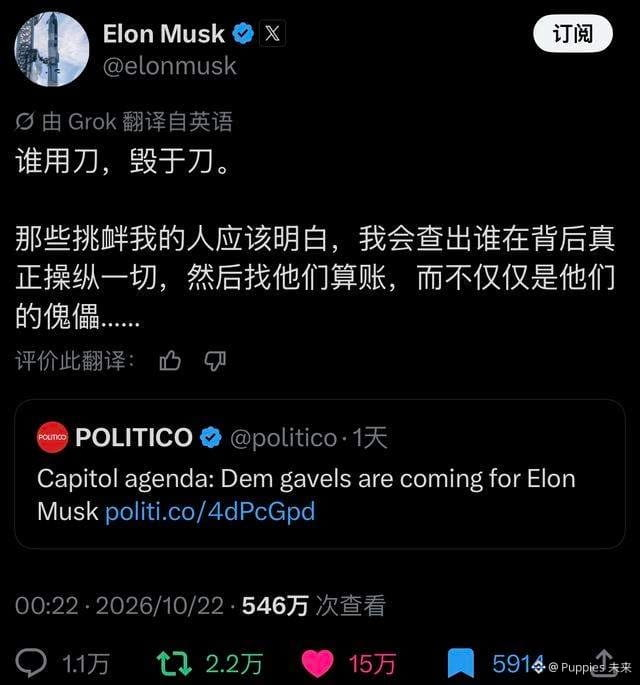
Musk offered no diplomatic explanation. He hit back forcefully on social media: “Those who live by the sword will die by the sword. Those who go out of their way to cause me trouble should understand that I’ll find out who’s pulling the strings behind the scenes and go directly after the people responsible—not just the puppets out front.”$AIOT $HANA $PEPE
The passage from the Gospel of Matthew in the Bible was originally a warning to lay down one’s sword and not seek revenge. But Musk used it as a forceful warning in response: whatever means you use against me, you’ll have to face equal retaliation.
But has Musk considered this: if the Democrats really win the election and take control of the machinery of government, can one company, no matter how powerful, withstand the might of the state?
{future}(BTCUSDT)
{future}(ETHUSDT)
{web3_wallet_create}(10xcf91b70017eabde82c9671e30e5502d312ea6eb2)
#以剑为生者必死于剑下 #马斯克警告民主党 #马斯克和特朗普关系
#币安披露黑客事件进展63亿美元损失已弥补八成 “Those who live by the sword will die by the sword.” Musk icon quoted this Bible verse, issuing a forceful warning to Democrats icon.
U.S. media outlet Politico revealed that Democrats are secretly preparing a “reckoning” for Musk icon. If they regain control of Congress in the November midterm elections, they will launch congressional oversight investigations into Musk. That’s because Musk is now the Republican Party icon’s top donor and an unwavering supporter of Trump.
Musk offered no diplomatic explanation. He hit back forcefully on social media: “Those who live by the sword will die by the sword. Those who go out of their way to cause me trouble should understand that I’ll find out who’s pulling the strings behind the scenes and go directly after the people responsible—not just the puppets out front.”$AIOT $HANA $PEPE
The passage from the Gospel of Matthew in the Bible was originally a warning to lay down one’s sword and not seek revenge. But Musk used it as a forceful warning in response: whatever means you use against me, you’ll have to face equal retaliation.
But has Musk considered this: if the Democrats really win the election and take control of the machinery of government, can one company, no matter how powerful, withstand the might of the state?
#以剑为生者必死于剑下 #马斯克警告民主党 #马斯克和特朗普关系

4
893
·
--
#币安披露黑客事件进展63亿美元损失已弥补八成
Binance, the world's largest cryptocurrency exchange, recently suffered what may be the largest cyber theft in history, with approximately $6.3 billion in funds affected.
Binance founder Changpeng Zhao said on social media platform X that Binance appeared to have indeed been hacked, and assured users that their funds were safe.
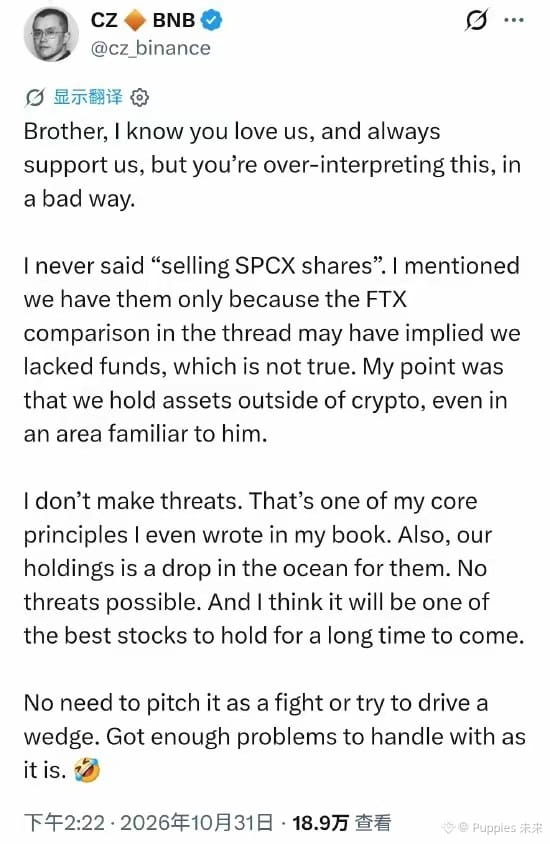
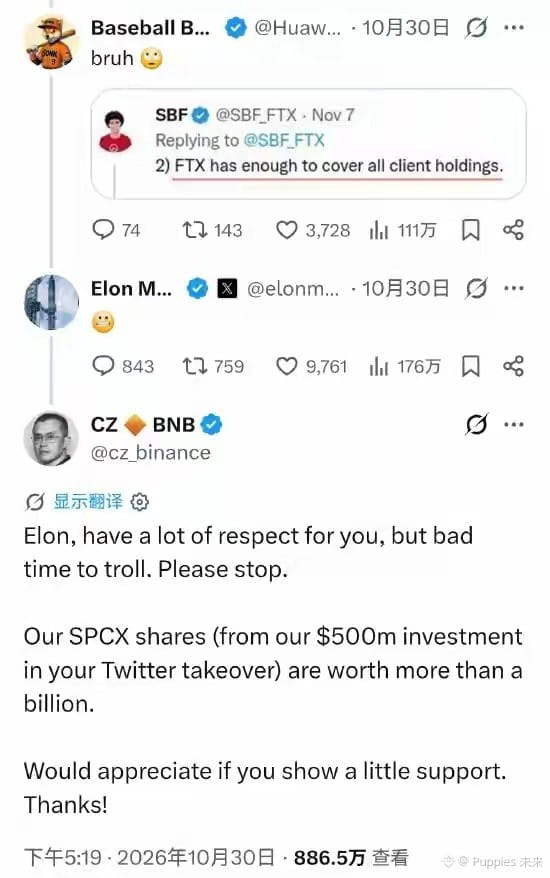
The billionaire's troubles weren't over: he received a reaction from the world's richest man, Elon Musk.
An X user replied to Zhao's post reassuring users and promising reimbursement, attaching a screenshot of a similar statement made by Bankman-Fried, Zhao's former rival and a disgraced crypto entrepreneur. Musk responded to the post with a frowning emoji.
Five hours later, Zhao replied.
“Elon, I have a great deal of respect for you, but now is not the time to joke,” he wrote. “Please don't do this.”
He added: “I know you love us and always support us, but you've read too much into this, and in a bad way.” Zhao also said, “Our SpaceX shares are now worth over $1 billion. We acquired them after investing $500 million when you bought Twitter.”$BNB $PEPE $DOGE
{web3_wallet_create}(10xcf91b70017eabde82c9671e30e5502d312ea6eb2)
#币安披露黑客事件进展63亿美元损失已弥补八成
Binance, the world's largest cryptocurrency exchange, recently suffered what may be the largest cyber theft in history, with approximately $6.3 billion in funds affected.
Binance founder Changpeng Zhao said on social media platform X that Binance appeared to have indeed been hacked, and assured users that their funds were safe.
The billionaire's troubles weren't over: he received a reaction from the world's richest man, Elon Musk.
An X user replied to Zhao's post reassuring users and promising reimbursement, attaching a screenshot of a similar statement made by Bankman-Fried, Zhao's former rival and a disgraced crypto entrepreneur. Musk responded to the post with a frowning emoji.
Five hours later, Zhao replied.
“Elon, I have a great deal of respect for you, but now is not the time to joke,” he wrote. “Please don't do this.”
He added: “I know you love us and always support us, but you've read too much into this, and in a bad way.” Zhao also said, “Our SpaceX shares are now worth over $1 billion. We acquired them after investing $500 million when you bought Twitter.”$BNB $PEPE $DOGE
3
1k
·
--
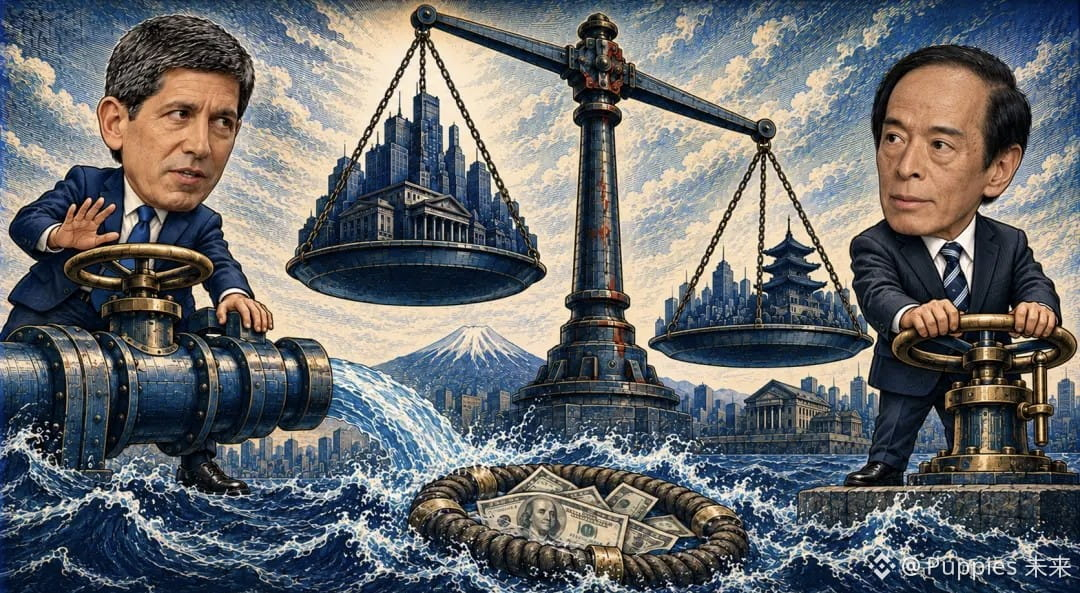
$PEPE $UNI $AIN On October 28, the Fed held rates at 3.75%–4.00%, in a 10–2 vote, with two members still favoring a 25-basis-point hike. It simply refrained from raising rates again; it also gave no timeline for rate cuts. The next day, the S&P 500 fell 0.30%, the Nasdaq fell 1.38%, and the 10-year Treasury yield moved back below 5%. Yields fell, but stocks also declined, showing that some of the pressure from interest rates had eased, but not enough to lift the stock market. If yields fell because of growth concerns, lower rates cannot make up for the losses. Skipping one hike means one less new shock; it does not make the existing pressures disappear overnight.
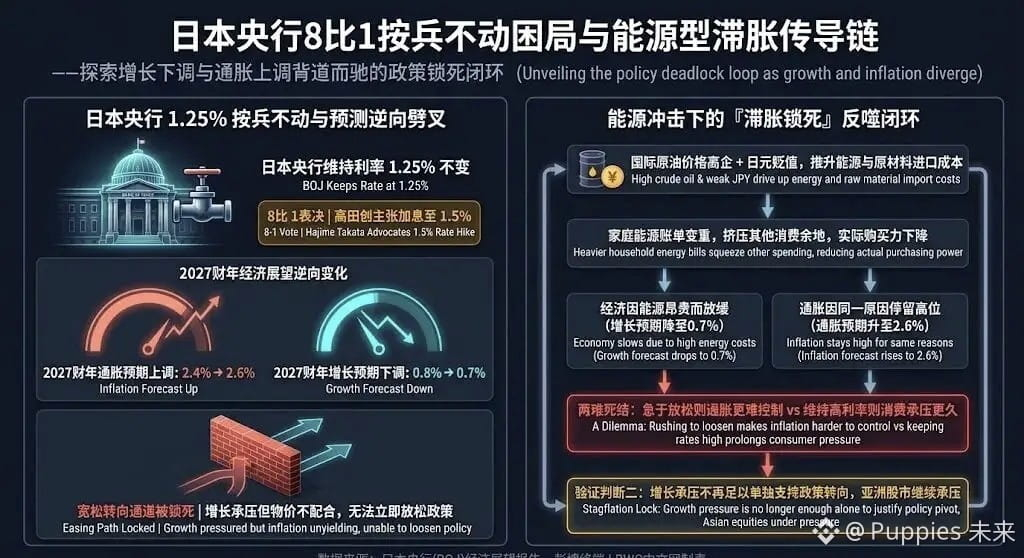
On October 30, the Bank of Japan held rates at around 1.25%, in an 8–1 vote, with Takata Hajime arguing for a hike to 1.5%. In its forecasts released the same day, it raised its inflation outlook and lowered its growth outlook. Weak growth should normally make the case for easing, but high inflation weakens that case. Energy is key: rising energy and raw-material prices are weighing on growth, while higher crude oil prices and a weaker yen are driving up prices. Household bills are getting heavier, squeezing consumption, while supply will not recover right away. The economy could slow because of expensive energy, while inflation remains high. Japan’s decision not to hike does not mean the conflict has been resolved; it makes the next choice harder.
This also shows that growth pressures alone are no longer enough to make markets bet on a policy shift; prices have to cooperate too. The US economy is still considered strong, so the Fed has no urgent reason to rescue growth. If energy costs remain high, it may keep waiting for evidence that inflation is easing, even if some indicators cool. Gold faces constraints too: demand for safe havens is there, but high inflation could prolong high interest rates, leaving non-yielding gold with a cost of ownership.
Holding rates steady does not mean the degree of restraint stays the same. If energy pressures ease and inflation expectations fall while policy rates remain unchanged, real interest rates will rise, keeping demand depressed for longer. If consumption and employment weaken first, the first rate cut could be seen as confirmation that growth is deteriorating. How long the pause lasts may do more to shape the nature of this adjustment than whether rates are raised again at the next meeting.#币安披露黑客事件进展63亿美元损失已弥补八成 #CZ称币安赔付到位最重要是保护用户 #何一表示提现预计将在未来42小时内恢复
浩瀚VaST
·
--
[Ended] 🎙️ That move was as fierce as a tiger—don't panic, everyone. We'll meet at the summit,
983 listens
480
·
--
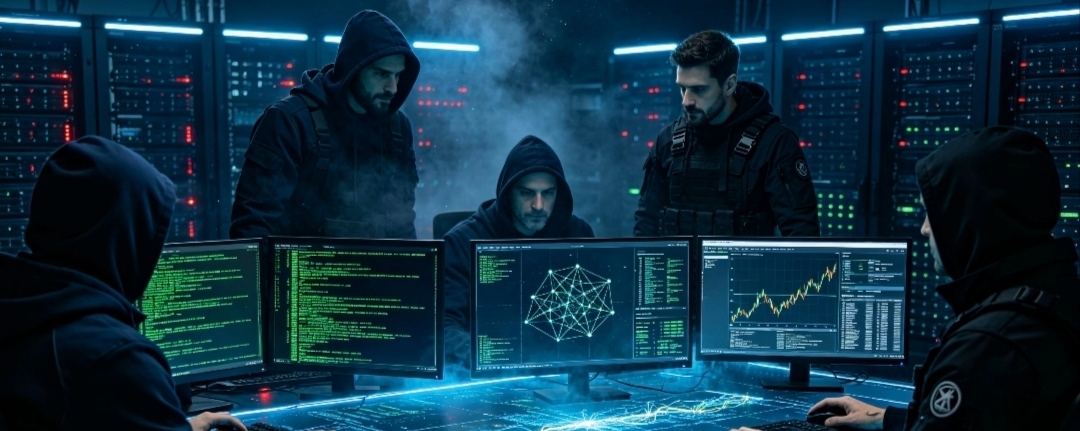
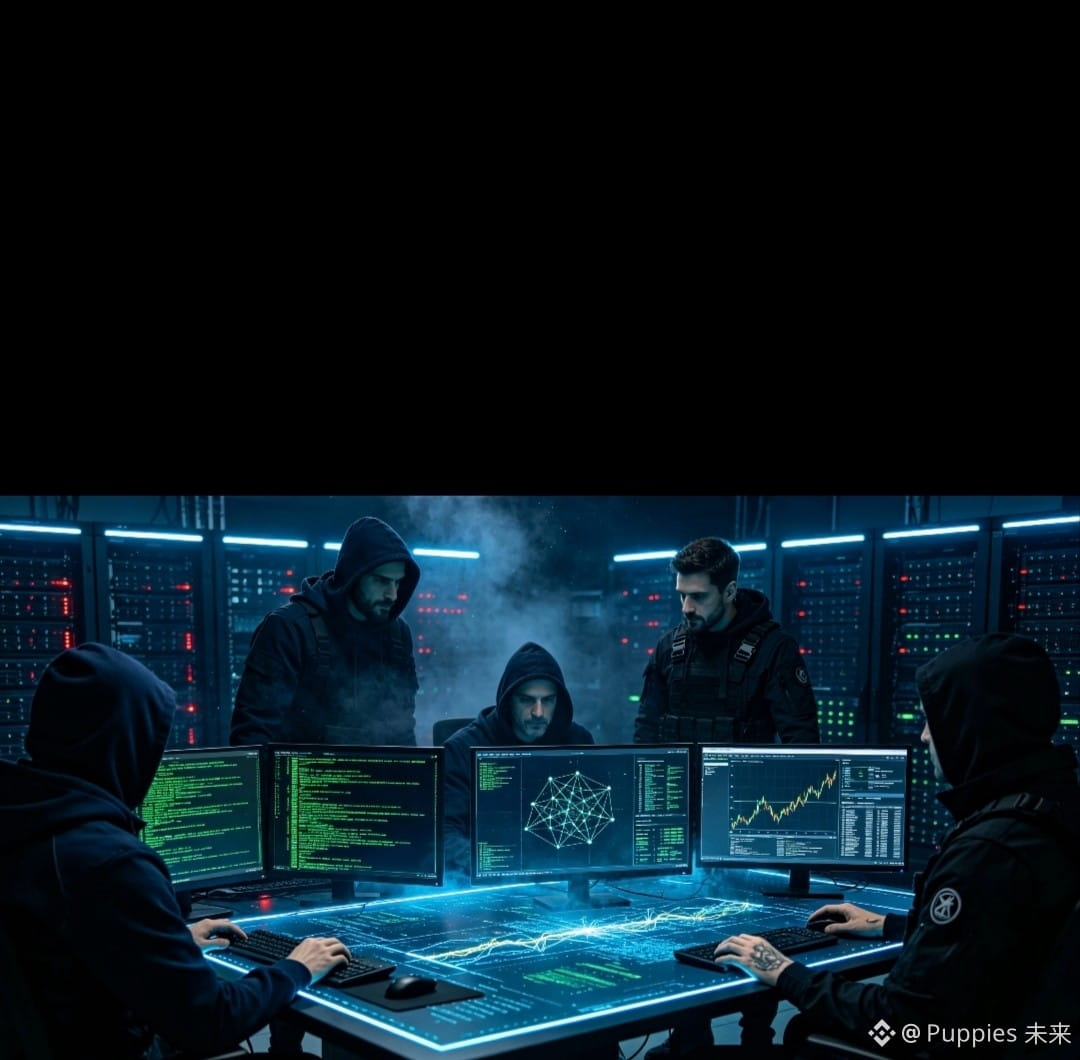
#Uniswap与a16z寻求伊利诺伊州DeFi税收豁免 A lot of people are probably wondering: Wouldn’t it be great if Binance recruited a hacker like this? I don’t think so 🤔 Here’s a counterintuitive take: If Binance really did “recruit” a hacker, it would most likely be letting a wolf into the henhouse, not finding a hidden gem.
$LINK $NEAR $PEPE
A lot of people think hiring a hacker lets you fight fire with fire. Binance does have a red team: its members pose as hackers and phish employees to test defenses. But they’re insiders. The vast majority of hackers who come knocking aren’t looking to turn themselves in.
Binance Chief Security Officer Jimmy Su has said that North Korean hackers are the single biggest threat to the crypto industry. Binance discards huge numbers of fake résumés every day, almost certainly from North Korean attackers. Now that AI is in the mix, fake applicants can pose as developers from Europe or the Middle East, use voice changers in interviews, and deepfakes on video calls. They’re becoming harder and harder to spot.
They’re “applying for jobs” not to work, but to get an employee badge. Almost every major hacking incident linked to North Korea has involved a fake employee providing help from the inside. Once someone gets onto a core team, what they gain isn’t just security access—it’s the keys to the kingdom. Binance has more than 323 million users and hundreds of billions of dollars’ worth of assets under custody. One insider opening the door could cost billions of dollars.
Even more ironically, Binance helped recover funds in the KiloEx incident. When the community asked for details, CZ said that making everything public could teach hackers how to evade defenses. If they’re worried hackers might learn even the defensive techniques, how could they possibly bring real hackers inside to learn?
So what Binance recruits are white hats, red-team specialists, and on-chain investigators. For the people behind fake résumés, voice changers, and deepfakes, the strategy is simple: identify them, reject them, and keep doing it every day.
If the poison gets inside, the attack goes undefended, and users’ custodied assets pay the price. In this industry, the most dangerous move is often the one that looks cleverest.
{web3_wallet_create}(10xcf91b70017eabde82c9671e30e5502d312ea6eb2)
{future}(LINKUSDT)
{future}(NEARUSDT)
#黑客攻击 #网络安全 #朝鲜黑客 #加密安全须知
#Uniswap与a16z寻求伊利诺伊州DeFi税收豁免 A lot of people are probably wondering: Wouldn’t it be great if Binance recruited a hacker like this? I don’t think so 🤔 Here’s a counterintuitive take: If Binance really did “recruit” a hacker, it would most likely be letting a wolf into the henhouse, not finding a hidden gem.
$LINK $NEAR $PEPE
A lot of people think hiring a hacker lets you fight fire with fire. Binance does have a red team: its members pose as hackers and phish employees to test defenses. But they’re insiders. The vast majority of hackers who come knocking aren’t looking to turn themselves in.
Binance Chief Security Officer Jimmy Su has said that North Korean hackers are the single biggest threat to the crypto industry. Binance discards huge numbers of fake résumés every day, almost certainly from North Korean attackers. Now that AI is in the mix, fake applicants can pose as developers from Europe or the Middle East, use voice changers in interviews, and deepfakes on video calls. They’re becoming harder and harder to spot.
They’re “applying for jobs” not to work, but to get an employee badge. Almost every major hacking incident linked to North Korea has involved a fake employee providing help from the inside. Once someone gets onto a core team, what they gain isn’t just security access—it’s the keys to the kingdom. Binance has more than 323 million users and hundreds of billions of dollars’ worth of assets under custody. One insider opening the door could cost billions of dollars.
Even more ironically, Binance helped recover funds in the KiloEx incident. When the community asked for details, CZ said that making everything public could teach hackers how to evade defenses. If they’re worried hackers might learn even the defensive techniques, how could they possibly bring real hackers inside to learn?
So what Binance recruits are white hats, red-team specialists, and on-chain investigators. For the people behind fake résumés, voice changers, and deepfakes, the strategy is simple: identify them, reject them, and keep doing it every day.
If the poison gets inside, the attack goes undefended, and users’ custodied assets pay the price. In this industry, the most dangerous move is often the one that looks cleverest.
#黑客攻击 #网络安全 #朝鲜黑客 #加密安全须知
2
1k
·
--
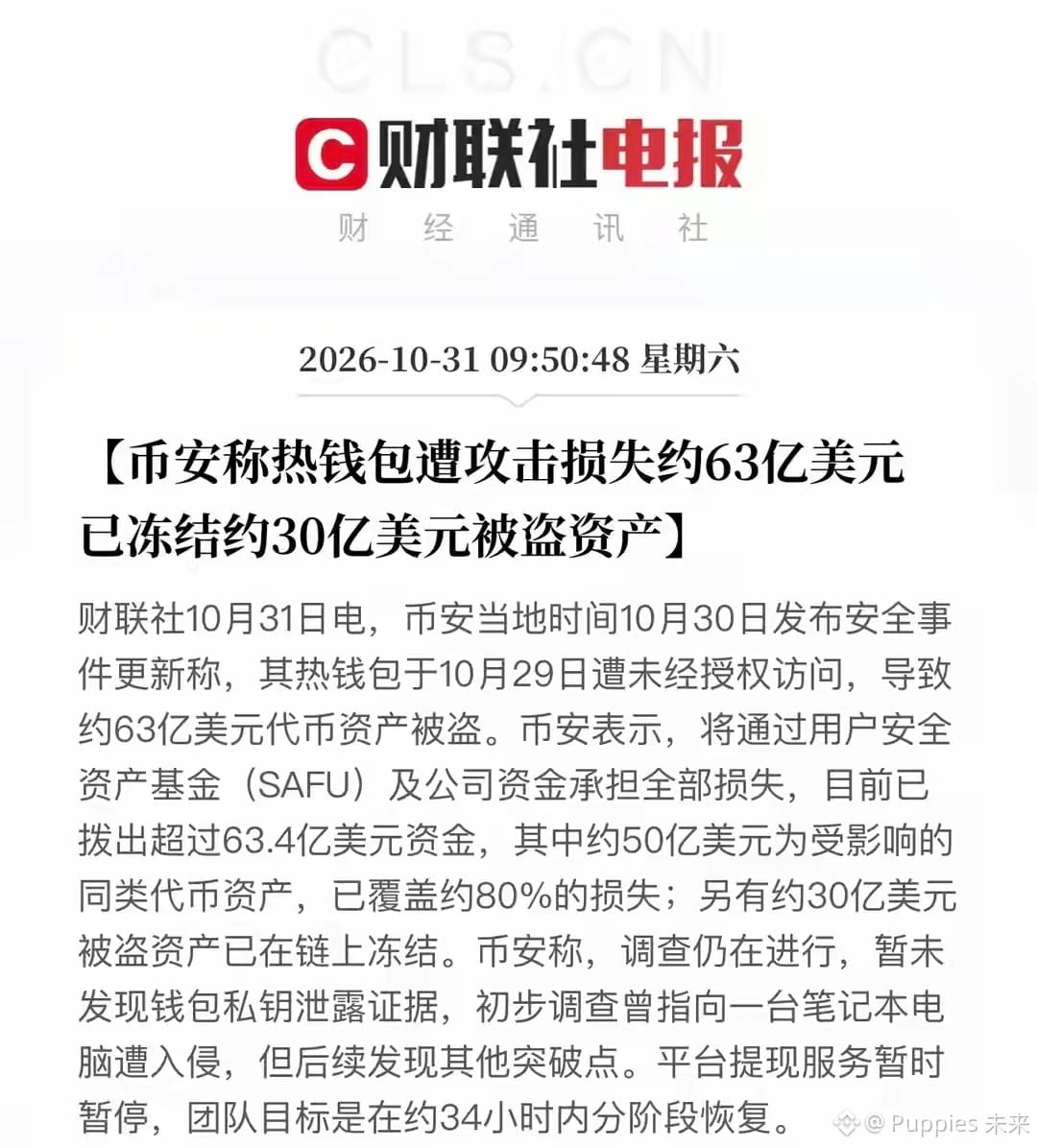
$AIN $IDOL $PEPE Binance’s hot wallet was attacked, and approximately $6.3 billion worth of token assets were stolen. Although about $3 billion has already been frozen, the figure still sets a new industry record.
After more than ten years of trading, I’ve seen countless black swan events, but this one is worth discussing in depth.
First, why a hot wallet?
Anyone who trades knows that a cold wallet is a safe, while a hot wallet is a cash register. A cash register is convenient, but it’s exposed to the outside world every day. The hot wallet was attacked this time, which suggests the problem occurred in the day-to-day transfer process, not in the core private key system. Binance itself has also said it found no evidence of private key leaks, and initial indications point to a laptop being compromised. In plain terms, it’s likely that some internal process was breached.
Second, how was over $6 billion reduced to $3 billion through freezes?
This is the most intriguing aspect of the incident. Once on-chain assets have been transferred out, recovering half of them depends on swift coordination between stablecoin issuers and blockchain analytics firms. Most of the stolen assets were traceable tokens. Once the wallet holding the stolen funds was flagged and the issuers froze the assets, the money could no longer be moved. This shows that the industry’s response mechanisms have matured considerably. It’s a completely different era from the days of Mt. Gox and FTX, when “the money was gone, and that was that.”
Third, the SAFU fund really came through this time.
Binance announced that all losses would be covered by the SAFU fund and company funds, and that $6.34 billion had been allocated. From the user’s perspective, this could be called “invisible compensation,” but it comes at a real financial cost. This is the strength of a leading exchange, and part of its competitive moat. Smaller platforms would basically shut down if something like this happened to them.
Fourth, withdrawals are suspended. How will the market react?
The news is bound to cause some panic. But note one detail: Binance says its goal is to restore withdrawals in stages within 34 hours. Historically, whenever an exchange has run into trouble, the short-term reaction is panic selling, while in the medium term the bad news is often seen as “fully priced in.” After Bitcoin fell below key support yesterday, whether it can quickly recover will depend on fund flows over the next 48 hours.
Lessons for ordinary investors like us:
1. A big platform ≠ zero risk. Diversifying where you store your assets is always a golden rule;
2. Keep long-term assets in a cold or hardware wallet. Don’t prioritize convenience;
3. When a black swan event occurs, first look at the speed of the response and the ability to compensate users, then decide whether to stay or leave.
{web3_wallet_create}(10xcf91b70017eabde82c9671e30e5502d312ea6eb2)
{future}(IDOLUSDT)
{future}(AINUSDT)
$AIN $IDOL $PEPE Binance’s hot wallet was attacked, and approximately $6.3 billion worth of token assets were stolen. Although about $3 billion has already been frozen, the figure still sets a new industry record.
After more than ten years of trading, I’ve seen countless black swan events, but this one is worth discussing in depth.
First, why a hot wallet?
Anyone who trades knows that a cold wallet is a safe, while a hot wallet is a cash register. A cash register is convenient, but it’s exposed to the outside world every day. The hot wallet was attacked this time, which suggests the problem occurred in the day-to-day transfer process, not in the core private key system. Binance itself has also said it found no evidence of private key leaks, and initial indications point to a laptop being compromised. In plain terms, it’s likely that some internal process was breached.
Second, how was over $6 billion reduced to $3 billion through freezes?
This is the most intriguing aspect of the incident. Once on-chain assets have been transferred out, recovering half of them depends on swift coordination between stablecoin issuers and blockchain analytics firms. Most of the stolen assets were traceable tokens. Once the wallet holding the stolen funds was flagged and the issuers froze the assets, the money could no longer be moved. This shows that the industry’s response mechanisms have matured considerably. It’s a completely different era from the days of Mt. Gox and FTX, when “the money was gone, and that was that.”
Third, the SAFU fund really came through this time.
Binance announced that all losses would be covered by the SAFU fund and company funds, and that $6.34 billion had been allocated. From the user’s perspective, this could be called “invisible compensation,” but it comes at a real financial cost. This is the strength of a leading exchange, and part of its competitive moat. Smaller platforms would basically shut down if something like this happened to them.
Fourth, withdrawals are suspended. How will the market react?
The news is bound to cause some panic. But note one detail: Binance says its goal is to restore withdrawals in stages within 34 hours. Historically, whenever an exchange has run into trouble, the short-term reaction is panic selling, while in the medium term the bad news is often seen as “fully priced in.” After Bitcoin fell below key support yesterday, whether it can quickly recover will depend on fund flows over the next 48 hours.
Lessons for ordinary investors like us:
1. A big platform ≠ zero risk. Diversifying where you store your assets is always a golden rule;
2. Keep long-term assets in a cold or hardware wallet. Don’t prioritize convenience;
3. When a black swan event occurs, first look at the speed of the response and the ability to compensate users, then decide whether to stay or leave.
13
6
3.1k
·
--
$PEPE $币安人生 $牛来 Obama takes another jab at “White House décor”: “I hear President Trump was very unhappy with my joke.” Their reaction is meant to “distract” and is “fake outrage”
CBS reported that former U.S. President Barack Obama once again brought up his earlier joke about the White House décor style of U.S. President Donald Trump while attending a Democratic campaign rally in Georgia.
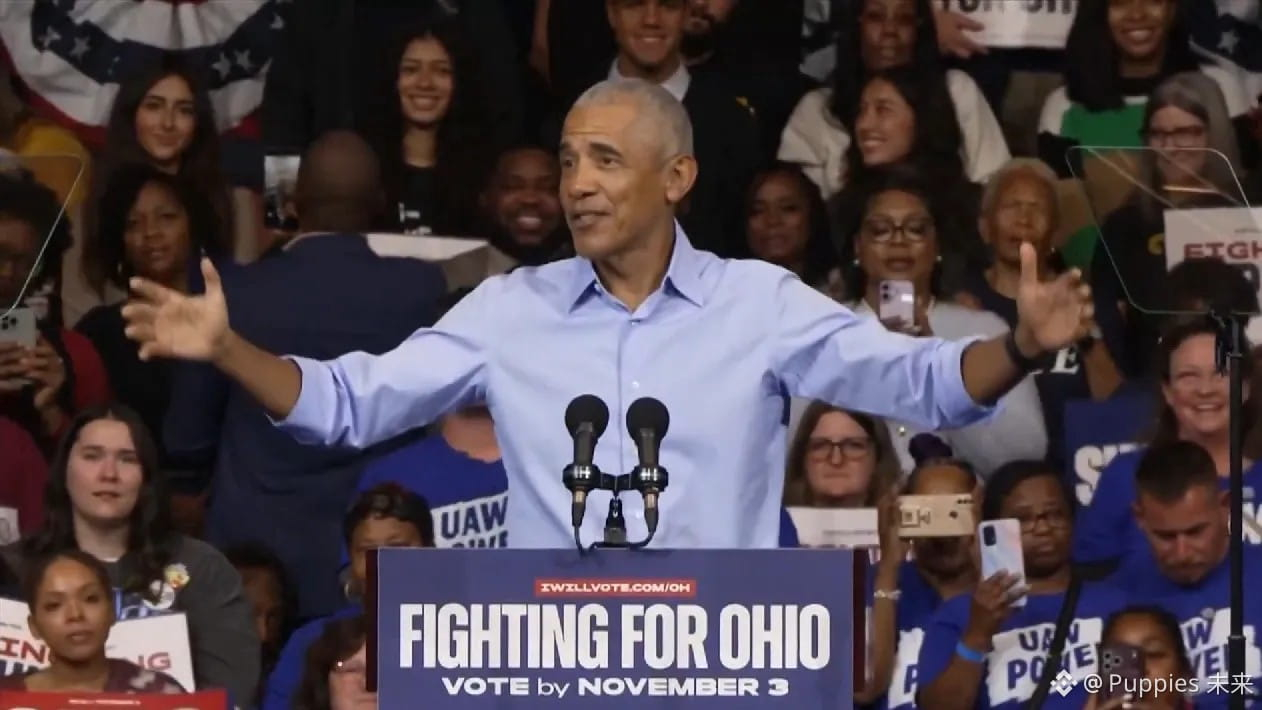
At a campaign rally in Cleveland, Ohio, former U.S. President Barack Obama joked that Trump’s renovations to the White House, with gold elements everywhere, made it look like the Cheesecake Factory chain of restaurants. The Cheesecake Factory is a well-known American restaurant chain whose locations are known for their elaborate, ornate décor. His remarks quickly sparked public controversy after they were reported.
U.S. President Donald Trump spoke to the media. In the interview, Trump responded to Obama’s remark that the White House renovations looked like a chain restaurant owned by Saddam Hussein. Trump said Obama had no idea what he was talking about and “was never a smart guy.” He also said the White House was an American symbol that needed proper maintenance and cleaning. “Obama saying the White House renovations look like a chain restaurant just shows how terrible he was as president.”
In response to Trump’s remarks, Obama said, “I hear the president was very unhappy with my joke.” Obama described the Trump administration and its supporters’ reaction to the matter as an attempt to “distract” and as “fake outrage.” He also mentioned that U.S. Treasury Secretary Bessent had recently made a special trip to dine at the Cheesecake Factory, and mocked the U.S. government for seeming to launch “a full-government response” over a joke he had made.
The Associated Press reported that, with the U.S. midterm elections approaching, Trump has attended more than 20 campaign rallies this month, focusing mainly on states where he previously held an advantage. As the most recent Democratic president to serve two terms, Obama has increasingly campaigned for Democratic candidates and taken on the role of a Trump critic.
#奥巴马 #加密杠杆头寸24小时清算15亿美元 #港元稳定币HKDAP将上线Solana
{web3_wallet_create}(10xcf91b70017eabde82c9671e30e5502d312ea6eb2)
$PEPE $币安人生 $牛来 Obama takes another jab at “White House décor”: “I hear President Trump was very unhappy with my joke.” Their reaction is meant to “distract” and is “fake outrage”
CBS reported that former U.S. President Barack Obama once again brought up his earlier joke about the White House décor style of U.S. President Donald Trump while attending a Democratic campaign rally in Georgia.
At a campaign rally in Cleveland, Ohio, former U.S. President Barack Obama joked that Trump’s renovations to the White House, with gold elements everywhere, made it look like the Cheesecake Factory chain of restaurants. The Cheesecake Factory is a well-known American restaurant chain whose locations are known for their elaborate, ornate décor. His remarks quickly sparked public controversy after they were reported.
U.S. President Donald Trump spoke to the media. In the interview, Trump responded to Obama’s remark that the White House renovations looked like a chain restaurant owned by Saddam Hussein. Trump said Obama had no idea what he was talking about and “was never a smart guy.” He also said the White House was an American symbol that needed proper maintenance and cleaning. “Obama saying the White House renovations look like a chain restaurant just shows how terrible he was as president.”
In response to Trump’s remarks, Obama said, “I hear the president was very unhappy with my joke.” Obama described the Trump administration and its supporters’ reaction to the matter as an attempt to “distract” and as “fake outrage.” He also mentioned that U.S. Treasury Secretary Bessent had recently made a special trip to dine at the Cheesecake Factory, and mocked the U.S. government for seeming to launch “a full-government response” over a joke he had made.
The Associated Press reported that, with the U.S. midterm elections approaching, Trump has attended more than 20 campaign rallies this month, focusing mainly on states where he previously held an advantage. As the most recent Democratic president to serve two terms, Obama has increasingly campaigned for Democratic candidates and taken on the role of a Trump critic.
#奥巴马 #加密杠杆头寸24小时清算15亿美元 #港元稳定币HKDAP将上线Solana
2
1.9k
·
--
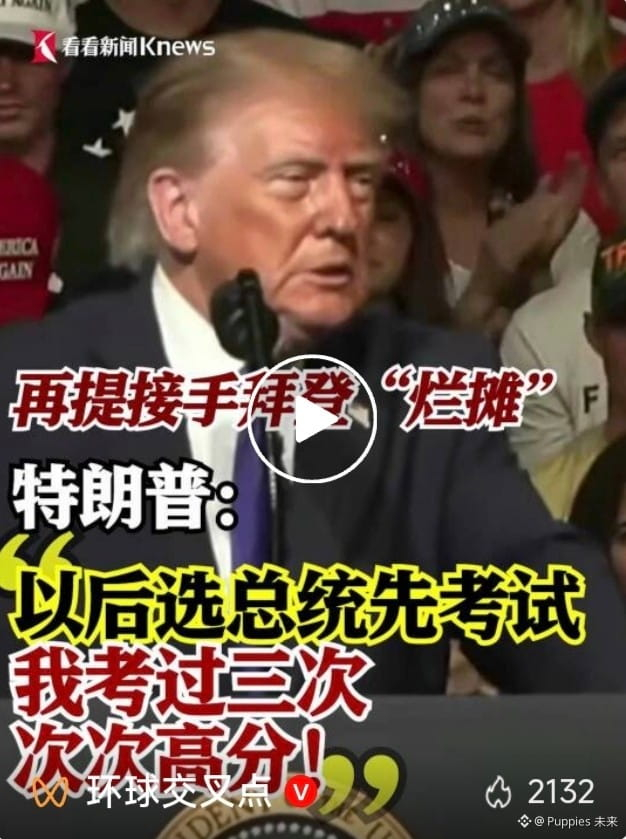
$PARTI #美国中期选举倒计时,美股博弈窗口已开启? #瑞士首只现货比特币ETF预计11月上市 #Trezor称CryptoBilis售出钱包或含恶意组件 Trump: I inherited a mess from Biden. We can't go through another four years like that. In the future, presidential candidates should take a test first. I've taken it three times and scored highly every time.
{web3_wallet_create}(10xcf91b70017eabde82c9671e30e5502d312ea6eb2)
On the 29th local time, U.S. President Trump held a campaign rally in South Carolina. In his speech, Trump again spoke of inheriting a “mess” from former U.S. President Biden. Trump also said that anyone running for U.S. president or vice president should be required to take a cognitive test. Trump said he had taken it three times and “passed with high scores every time.”$PEPE $ETC
$PARTI #美国中期选举倒计时,美股博弈窗口已开启? #瑞士首只现货比特币ETF预计11月上市 #Trezor称CryptoBilis售出钱包或含恶意组件 Trump: I inherited a mess from Biden. We can't go through another four years like that. In the future, presidential candidates should take a test first. I've taken it three times and scored highly every time.
On the 29th local time, U.S. President Trump held a campaign rally in South Carolina. In his speech, Trump again spoke of inheriting a “mess” from former U.S. President Biden. Trump also said that anyone running for U.S. president or vice president should be required to take a cognitive test. Trump said he had taken it three times and “passed with high scores every time.”$PEPE $ETC
On the 29th local time, U.S. President Trump held a campaign rally in South Carolina. In his speech, Trump again spoke of inheriting a “mess” from former U.S. President Biden. Trump also said that anyone running for U.S. president or vice president should be required to take a cognitive test. Trump said he had taken it three times and “passed with high scores every time.”$PEPE $ETC
4
1.3k
·
--
#亚马逊盘前下跌约7% $PEPE $DOGE $龙虾 2026October 30, 2026, the crypto market experienced a “Black Thursday.” Binance was suspected of suffering the largest hack in history, with an official internal notice estimating the “total impact” at $6.3 billion—surpassing Bybit’s $1.5 billion record. Bitcoin briefly fell below $77,000. Online reports put the multi-chain transfer amount at $5.8 billion, estimated by Shen Yu and others based on token prices; Glassnode’s estimate, which counted only Ethereum, was $2.5 billion to $3.5 billion.
The breach began with a laptop belonging to an operations engineer. After taking control of the device, the hackers infiltrated an internal service container and gained the ability to “generate valid signatures on demand,” bypassing risk controls and directing the signing machine. At 4:20 a.m., they broadcast a transaction containing 50 authorization requests, using EIP-7702 to delegate a hot wallet to a self-deployed sweep contract. About 3 minutes later, they transferred 64 types of tokens in batches. Binance 14 transferred out about 167,000 ETH and 1.615 billion USDT; approximately $6.3 billion was stolen across at least 9 chains.
Binance suspended deposits and withdrawals and urgently froze assets. Tether froze more than $1.56 billion in USDT, Circle froze about $823 million in USDC, and Ripple froze some RLUSD. Multiple parties froze about $3 billion on-chain. But freezing assets does not mean recovering them; recovery prospects for ETH and BTC are slim after they were laundered through mixers. CZ said the actual net loss could be slightly more than $1 billion. Just hours before the incident, Polymarket also suspended operations after DebugBear was breached. The incident exposed weaknesses in employee devices and third-party supply chains, rendering multisig and HSM protections effectively useless. He Yi and CZ pledged to cover the losses using SAFU and their own funds, but the crisis of trust in centralized custody and the resulting regulatory scrutiny may have more far-reaching effects. #两地址约12.8亿枚USDT遭冻结 #Strategy旗下STRC165天来首次升至99.95美元


金先生聊MEME
·
--
[Replay] 🎙️ Don’t panic over black swan events; in the past, markets have always moved quickly afterward.
03 h 05 m 17 s · 3.1k listens
1
451
·
--
$PEPE The frog is awesome; the frog is taking off.
$PEPE The frog is awesome; the frog is taking off.
6
420
Log in to explore more content
Join global crypto users on Binance Square
⚡️ Get latest and useful information about crypto.
💬 Trusted by the world’s largest crypto exchange.
👍 Discover real insights from verified creators.
Email / Phone number
Trending Topics
BinanceRestoresWithdrawalsForEthereumNetwork&BNBSmartChain
21 views
12 Discussing
Binance Restores Withdrawals for ETH and BSC Networks in Phased Rollout
Binance News
·11 Likes
·2.6k views
BinanceUpdatesProofofReservesAddresses
2,177 views
109 Discussing
BinanceToResumePhaseOneOfWithdrawals
15,976 views
448 Discussing