
Crypto Review
13 Posts

Crypto Review
Report
Block User
22 Following
13 Followers
15 Liked
Posts
All
Quotes
The $144 Billion Joke: The Rise and Ruin of Hunter Biden's "LAPTOP" Coin#LAPTOP For two minutes on Wednesday morning, a coin named after the most infamous laptop in American politics was, on paper, worth more than most Fortune 500 companies. By lunchtime, it was worth less than a cup of coffee.
The launch: At 8:00 a.m. ET, $LAPTOP went live on Base, Coinbase's Ethereum network — its name a nod to the Delaware laptop saga that's trailed Hunter Biden since 2020. Two minutes in, it peaked around $190–$222, implying a valuation over $140 billion, backed by a liquidity pool of just $48,000. That gap was the whole story: a price made of vapor.
The crash: Within 30 minutes, the coin had shed 90% of its value. Within a few hours, it had fallen 95–99%, bottoming between $1.36 and $3.70. Analytics firm Bubblemaps found roughly 80% of buyers lost money, with over 15,000 wallets underwater. Its CEO said the supply was heavily concentrated pre-launch — primed for a dump. One project wallet had received 100 million tokens a week earlier and sold off nearly half; another 14.5 million tokens went to an unidentified wallet just two hours before trading opened.
Not the first rodeo: The pattern is now a genre. Trump's $TRUMP token is down ~97% from its peak; Melania's coin fell over 99%; Eric Adams' coin is down 87%. Biden reportedly set aside part of $LAPTOP's airdrop for wallets that lost money on $TRUMP — acknowledging the game while seemingly betting he'd beat it. He didn't.
Why it keeps happening: These coins launch with thin liquidity and a famous name attached. Insiders holding a large share cash out the moment price spikes; with almost no liquidity to absorb selling, the chart collapses. Early buyers become exit liquidity for whoever got there first — no malice required, just enough people betting they'll be the exception.
The bigger picture: Read past the political irony, and $LAPTOP is really just the latest run of a machine that's moved billions of dollars from late buyers to early ones, powered by celebrity branding instead of fundamentals. It didn't invent the pattern — it just gave it a fitting name.
The $144 Billion Joke: The Rise and Ruin of Hunter Biden's "LAPTOP" Coin
#LAPTOP For two minutes on Wednesday morning, a coin named after the most infamous laptop in American politics was, on paper, worth more than most Fortune 500 companies. By lunchtime, it was worth less than a cup of coffee.
The launch: At 8:00 a.m. ET, $LAPTOP went live on Base, Coinbase's Ethereum network — its name a nod to the Delaware laptop saga that's trailed Hunter Biden since 2020. Two minutes in, it peaked around $190–$222, implying a valuation over $140 billion, backed by a liquidity pool of just $48,000. That gap was the whole story: a price made of vapor.
The crash: Within 30 minutes, the coin had shed 90% of its value. Within a few hours, it had fallen 95–99%, bottoming between $1.36 and $3.70. Analytics firm Bubblemaps found roughly 80% of buyers lost money, with over 15,000 wallets underwater. Its CEO said the supply was heavily concentrated pre-launch — primed for a dump. One project wallet had received 100 million tokens a week earlier and sold off nearly half; another 14.5 million tokens went to an unidentified wallet just two hours before trading opened.
Not the first rodeo: The pattern is now a genre. Trump's $TRUMP token is down ~97% from its peak; Melania's coin fell over 99%; Eric Adams' coin is down 87%. Biden reportedly set aside part of $LAPTOP's airdrop for wallets that lost money on $TRUMP — acknowledging the game while seemingly betting he'd beat it. He didn't.
Why it keeps happening: These coins launch with thin liquidity and a famous name attached. Insiders holding a large share cash out the moment price spikes; with almost no liquidity to absorb selling, the chart collapses. Early buyers become exit liquidity for whoever got there first — no malice required, just enough people betting they'll be the exception.
The bigger picture: Read past the political irony, and $LAPTOP is really just the latest run of a machine that's moved billions of dollars from late buyers to early ones, powered by celebrity branding instead of fundamentals. It didn't invent the pattern — it just gave it a fitting name.
The launch: At 8:00 a.m. ET, $LAPTOP went live on Base, Coinbase's Ethereum network — its name a nod to the Delaware laptop saga that's trailed Hunter Biden since 2020. Two minutes in, it peaked around $190–$222, implying a valuation over $140 billion, backed by a liquidity pool of just $48,000. That gap was the whole story: a price made of vapor.
The crash: Within 30 minutes, the coin had shed 90% of its value. Within a few hours, it had fallen 95–99%, bottoming between $1.36 and $3.70. Analytics firm Bubblemaps found roughly 80% of buyers lost money, with over 15,000 wallets underwater. Its CEO said the supply was heavily concentrated pre-launch — primed for a dump. One project wallet had received 100 million tokens a week earlier and sold off nearly half; another 14.5 million tokens went to an unidentified wallet just two hours before trading opened.
Not the first rodeo: The pattern is now a genre. Trump's $TRUMP token is down ~97% from its peak; Melania's coin fell over 99%; Eric Adams' coin is down 87%. Biden reportedly set aside part of $LAPTOP's airdrop for wallets that lost money on $TRUMP — acknowledging the game while seemingly betting he'd beat it. He didn't.
Why it keeps happening: These coins launch with thin liquidity and a famous name attached. Insiders holding a large share cash out the moment price spikes; with almost no liquidity to absorb selling, the chart collapses. Early buyers become exit liquidity for whoever got there first — no malice required, just enough people betting they'll be the exception.
The bigger picture: Read past the political irony, and $LAPTOP is really just the latest run of a machine that's moved billions of dollars from late buyers to early ones, powered by celebrity branding instead of fundamentals. It didn't invent the pattern — it just gave it a fitting name.
71
The Crypto Market Just Quietly Changed — Here's What Nobody's Talking AboutPicture this: while you were checking your portfolio for the tenth time today, a piece of software somewhere just executed a trade on your behalf — without you clicking a single button. Sound like science fiction? It's already happened 176 million times.
Welcome to crypto in 2026. It's not the wild, meme-driven casino it used to be. It's growing up — fast — and if you're not paying attention to where it's headed, you're going to miss the next wave entirely.
Here's what's actually shaping the market right now.
1. The Robots Are Trading — And They're Getting Good at It
AI isn't just analyzing charts anymore. It's placing the trades.
AI-agent settlement has already reached roughly $73 million across 176 million blockchain transactions, with the average transaction sitting at just $0.31 — tiny, fast, relentless. Stablecoins are the fuel here: USDC alone accounts for 98.6% of those settlements.
And the exchanges are racing to build the rails for it. Kraken shipped an open-source command-line system with a Model Context Protocol server. Coinbase launched "Coinbase for Agents." OKX rolled out its own MCP toolkit. Translation: the biggest players in the industry are betting that software — not humans — will be doing more and more of the trading.
2. Wall Street Isn't Just Dipping a Toe In Anymore
Remember when institutional adoption was a buzzword everyone threw around but nobody could really point to? That era's over.
Spot Bitcoin ETFs pulled in $1.92 billion in a single week — the strongest week of the entire year — with combined BTC and ETH ETF inflows hitting $2.6 billion, the biggest combined weekly haul since October 2025. BlackRock's IBIT alone was responsible for $1.33 billion of that.
This is the kind of money that doesn't show up for a meme rally. It shows up because pension funds, asset managers, and institutions are treating crypto like a real asset class — not a gamble.
3. Stablecoins: The Boring Trend That's Secretly the Biggest One
Nobody gets excited about stablecoins at a dinner party. But they might be the single most consequential shift happening right now.
Businesses are starting to use them as actual payment infrastructure — cutting currency conversion costs, skipping intermediaries, and settling cross-border payments in a fraction of the time traditional banking rails require. It's unglamorous. It's also exactly the kind of quiet utility that changes how money moves globally.
4. Your Grandmother's Bond, But On-Chain
Governments are experimenting with tokenized bonds. Real estate, funds, and other traditionally hard-to-access assets are being fractionalized and put on-chain, opening the door for smaller investors to get exposure they never could before.
It's not flashy. But tokenization might be the trend that finally makes "blockchain for everyday finance" a reality instead of a pitch deck slogan.
5. The Regulation Cliffhanger Everyone's Watching
Here's your plot twist: the U.S. Senate has a procedural cloture vote on the CLARITY Act scheduled for September 15 — a bill that could bring long-awaited clarity to crypto regulation. But here's the catch: prediction markets have slashed the odds of it actually passing in 2026 to the mid-teens, down from over 80% earlier this year.
Translation? The market is pricing in uncertainty, not certainty. Watch this date closely — it could move prices either way.
6. Privacy Coins Are Having a Quiet Moment
While everyone's watching Bitcoin and Ethereum, privacy-focused coins have been climbing steadily. Increased institutional interest and growth in shielded transaction activity have fueled the rally, even as regulators keep a wary eye on anything that obscures transaction trails. It's a trend running counter to the "everything is transparent and on-chain" narrative — and it's worth watching.
The Big Picture
Total crypto market cap sits around $2.63 trillion right now — recovering, but still trading below its major moving averages. That means what we're seeing isn't a confirmed bull run yet. It's a market testing its footing, deciding whether institutional money, AI-driven trading, and regulatory clarity are enough to power the next real leg up.
The bottom line: crypto in 2026 isn't about hype anymore — it's about utility, infrastructure, and who's building the rails for what comes next. The traders who win from here won't be the ones chasing headlines. They'll be the ones who understood these shifts before they became obvious.
What trend are you watching most closely? Drop it below.
The Crypto Market Just Quietly Changed — Here's What Nobody's Talking About
Picture this: while you were checking your portfolio for the tenth time today, a piece of software somewhere just executed a trade on your behalf — without you clicking a single button. Sound like science fiction? It's already happened 176 million times.
Welcome to crypto in 2026. It's not the wild, meme-driven casino it used to be. It's growing up — fast — and if you're not paying attention to where it's headed, you're going to miss the next wave entirely.
Here's what's actually shaping the market right now.
1. The Robots Are Trading — And They're Getting Good at It
AI isn't just analyzing charts anymore. It's placing the trades.
AI-agent settlement has already reached roughly $73 million across 176 million blockchain transactions, with the average transaction sitting at just $0.31 — tiny, fast, relentless. Stablecoins are the fuel here: USDC alone accounts for 98.6% of those settlements.
And the exchanges are racing to build the rails for it. Kraken shipped an open-source command-line system with a Model Context Protocol server. Coinbase launched "Coinbase for Agents." OKX rolled out its own MCP toolkit. Translation: the biggest players in the industry are betting that software — not humans — will be doing more and more of the trading.
2. Wall Street Isn't Just Dipping a Toe In Anymore
Remember when institutional adoption was a buzzword everyone threw around but nobody could really point to? That era's over.
Spot Bitcoin ETFs pulled in $1.92 billion in a single week — the strongest week of the entire year — with combined BTC and ETH ETF inflows hitting $2.6 billion, the biggest combined weekly haul since October 2025. BlackRock's IBIT alone was responsible for $1.33 billion of that.
This is the kind of money that doesn't show up for a meme rally. It shows up because pension funds, asset managers, and institutions are treating crypto like a real asset class — not a gamble.
3. Stablecoins: The Boring Trend That's Secretly the Biggest One
Nobody gets excited about stablecoins at a dinner party. But they might be the single most consequential shift happening right now.
Businesses are starting to use them as actual payment infrastructure — cutting currency conversion costs, skipping intermediaries, and settling cross-border payments in a fraction of the time traditional banking rails require. It's unglamorous. It's also exactly the kind of quiet utility that changes how money moves globally.
4. Your Grandmother's Bond, But On-Chain
Governments are experimenting with tokenized bonds. Real estate, funds, and other traditionally hard-to-access assets are being fractionalized and put on-chain, opening the door for smaller investors to get exposure they never could before.
It's not flashy. But tokenization might be the trend that finally makes "blockchain for everyday finance" a reality instead of a pitch deck slogan.
5. The Regulation Cliffhanger Everyone's Watching
Here's your plot twist: the U.S. Senate has a procedural cloture vote on the CLARITY Act scheduled for September 15 — a bill that could bring long-awaited clarity to crypto regulation. But here's the catch: prediction markets have slashed the odds of it actually passing in 2026 to the mid-teens, down from over 80% earlier this year.
Translation? The market is pricing in uncertainty, not certainty. Watch this date closely — it could move prices either way.
6. Privacy Coins Are Having a Quiet Moment
While everyone's watching Bitcoin and Ethereum, privacy-focused coins have been climbing steadily. Increased institutional interest and growth in shielded transaction activity have fueled the rally, even as regulators keep a wary eye on anything that obscures transaction trails. It's a trend running counter to the "everything is transparent and on-chain" narrative — and it's worth watching.
The Big Picture
Total crypto market cap sits around $2.63 trillion right now — recovering, but still trading below its major moving averages. That means what we're seeing isn't a confirmed bull run yet. It's a market testing its footing, deciding whether institutional money, AI-driven trading, and regulatory clarity are enough to power the next real leg up.
The bottom line: crypto in 2026 isn't about hype anymore — it's about utility, infrastructure, and who's building the rails for what comes next. The traders who win from here won't be the ones chasing headlines. They'll be the ones who understood these shifts before they became obvious.
What trend are you watching most closely? Drop it below.
Welcome to crypto in 2026. It's not the wild, meme-driven casino it used to be. It's growing up — fast — and if you're not paying attention to where it's headed, you're going to miss the next wave entirely.
Here's what's actually shaping the market right now.
1. The Robots Are Trading — And They're Getting Good at It
AI isn't just analyzing charts anymore. It's placing the trades.
AI-agent settlement has already reached roughly $73 million across 176 million blockchain transactions, with the average transaction sitting at just $0.31 — tiny, fast, relentless. Stablecoins are the fuel here: USDC alone accounts for 98.6% of those settlements.
And the exchanges are racing to build the rails for it. Kraken shipped an open-source command-line system with a Model Context Protocol server. Coinbase launched "Coinbase for Agents." OKX rolled out its own MCP toolkit. Translation: the biggest players in the industry are betting that software — not humans — will be doing more and more of the trading.
2. Wall Street Isn't Just Dipping a Toe In Anymore
Remember when institutional adoption was a buzzword everyone threw around but nobody could really point to? That era's over.
Spot Bitcoin ETFs pulled in $1.92 billion in a single week — the strongest week of the entire year — with combined BTC and ETH ETF inflows hitting $2.6 billion, the biggest combined weekly haul since October 2025. BlackRock's IBIT alone was responsible for $1.33 billion of that.
This is the kind of money that doesn't show up for a meme rally. It shows up because pension funds, asset managers, and institutions are treating crypto like a real asset class — not a gamble.
3. Stablecoins: The Boring Trend That's Secretly the Biggest One
Nobody gets excited about stablecoins at a dinner party. But they might be the single most consequential shift happening right now.
Businesses are starting to use them as actual payment infrastructure — cutting currency conversion costs, skipping intermediaries, and settling cross-border payments in a fraction of the time traditional banking rails require. It's unglamorous. It's also exactly the kind of quiet utility that changes how money moves globally.
4. Your Grandmother's Bond, But On-Chain
Governments are experimenting with tokenized bonds. Real estate, funds, and other traditionally hard-to-access assets are being fractionalized and put on-chain, opening the door for smaller investors to get exposure they never could before.
It's not flashy. But tokenization might be the trend that finally makes "blockchain for everyday finance" a reality instead of a pitch deck slogan.
5. The Regulation Cliffhanger Everyone's Watching
Here's your plot twist: the U.S. Senate has a procedural cloture vote on the CLARITY Act scheduled for September 15 — a bill that could bring long-awaited clarity to crypto regulation. But here's the catch: prediction markets have slashed the odds of it actually passing in 2026 to the mid-teens, down from over 80% earlier this year.
Translation? The market is pricing in uncertainty, not certainty. Watch this date closely — it could move prices either way.
6. Privacy Coins Are Having a Quiet Moment
While everyone's watching Bitcoin and Ethereum, privacy-focused coins have been climbing steadily. Increased institutional interest and growth in shielded transaction activity have fueled the rally, even as regulators keep a wary eye on anything that obscures transaction trails. It's a trend running counter to the "everything is transparent and on-chain" narrative — and it's worth watching.
The Big Picture
Total crypto market cap sits around $2.63 trillion right now — recovering, but still trading below its major moving averages. That means what we're seeing isn't a confirmed bull run yet. It's a market testing its footing, deciding whether institutional money, AI-driven trading, and regulatory clarity are enough to power the next real leg up.
The bottom line: crypto in 2026 isn't about hype anymore — it's about utility, infrastructure, and who's building the rails for what comes next. The traders who win from here won't be the ones chasing headlines. They'll be the ones who understood these shifts before they became obvious.
What trend are you watching most closely? Drop it below.
93
The Future of Crypto: From Speculation to InfrastructureI've been following this space long enough to remember when every crypto conversation eventually circled back to "but will it even survive." Honestly? That question feels dated now. The one I keep asking myself in 2026 isn't whether crypto survives — it's how deep it's going to burrow into the financial system we already use every day. Here's what I'm seeing, and where I think it's headed.
1. Institutions stopped testing the water. They're in.
Remember when "institutional adoption" meant a bank quietly running a pilot program and issuing a cautious press release about it? That era is basically over. Public companies are sitting on a serious chunk of circulating Bitcoin supply on their balance sheets now, and pension funds, hedge funds, asset managers — they're not experimenting anymore, they're allocating. ETFs wrapped around $BTC and $ETH have become the boring, normal on-ramp. And "boring" is honestly the compliment here.
What actually changed isn't vibes, it's plumbing. Regulated custody, on-chain settlement, audit-ready reporting — the unglamorous infrastructure that lets a risk-averse institution touch this asset class without blowing up their compliance framework.
2. Regulation turned out to be fuel, not a brake
I used to assume clearer rules would slow this industry down. I was wrong, or at least the story is more complicated than that. Frameworks like MiCA in Europe, and the stablecoin regimes taking shape across Asia, are giving banks an actual defined path to offer custody and settlement services. It turns out uncertainty was the real obstacle the whole time, not oversight itself.
I'm not going to pretend it's all smooth — the US, EU, and Asia are still pulling in somewhat different directions, and that fragmentation is a genuine risk for anyone building across borders. But the general direction is toward legitimacy, and that's not nothing.
3. Stablecoins quietly became the internet's dollar
Stablecoins used to just be the thing you parked funds in between trades. Now they're doing real work — cross-border payments, remittances, and banks are literally building their own tokenized deposit systems because stablecoins proved the model first. There's an interesting tension brewing there: bank-issued dollar tokens versus crypto-native ones, competing for the same job.
For regular users, this mostly shows up as "wait, that transfer was instant and basically free" — without anyone needing to think about crypto at all. When a technology disappears into the background like that, it usually means it actually won.
4. Real-world assets are moving from pitch deck to product
Tokenized Treasuries, tokenized funds, tokenized collateral — these aren't proof-of-concept demos anymore, institutions are actually using them for yield and liquidity. The idea is simple enough: take things that already exist, bonds, funds, real estate, and make them programmable and divisible on-chain.
I'll be honest, the risk is real too. If these tokenized assets never attract genuine secondary trading and just sit there illiquid, the whole use case falls flat. But the fact that regulated institutions are building toward it at all says something — this has quietly gone from ideology to infrastructure.
5. Layer 2s are consolidating, and that's a good sign
There used to be a new L2 announced every other week. Now the landscape is settling around a smaller group of networks that are actually absorbing most of the liquidity and users — think $ETH and the handful of L2-native tokens that came out on top. This is just what happens when a technology matures: the noise fades and a few players win on real usage and developer tooling instead of novelty.
6. AI and crypto are actually starting to overlap, not just share headlines
Cut through the branding and there's something real happening — decentralized compute networks, AI agents that can transact on-chain by themselves, smarter fraud detection built into on-chain systems. I'll admit a lot of "AI x crypto" content out there is still more narrative than substance. But programmable money meeting autonomous agents is genuinely one of the more interesting corners of this space right now.
7. Prediction markets snuck up on everyone
On-chain markets where people bet on real outcomes — elections, earnings reports, whatever — have grown into one of the more active parts of DeFi lately. What I like about this one is that it doesn't require anyone to "believe in crypto" first. The appeal is dead simple, and the blockchain is just doing the settlement work quietly underneath.
So what does this actually mean for you?
None of this promises returns, and volatility isn't going anywhere — that's still just the nature of this asset class. But the story underneath has shifted. Crypto is getting absorbed into the plumbing of global finance rather than sitting outside it as an alternative. Clearer regulation, institutional balance sheets, tokenized real assets, maturing L2s — these are the building blocks of a market that looks less like a wild frontier and more like a financial system that's still figuring out how grown-up it wants to be.
If I had one piece of advice, it'd be this: watch where regulation, liquidity, and real usage are converging, not just where the price candles are moving. That convergence tends to show up first in the majors — $BTC, $ETH, $BNB — before it trickles down anywhere else.
This is just my personal take, not financial advice or an endorsement by Binance. Digital asset prices are volatile and can move against you as easily as for you. Please do your own research (DYOR) before making any investment decisions.
The Future of Crypto: From Speculation to Infrastructure
I've been following this space long enough to remember when every crypto conversation eventually circled back to "but will it even survive." Honestly? That question feels dated now. The one I keep asking myself in 2026 isn't whether crypto survives — it's how deep it's going to burrow into the financial system we already use every day. Here's what I'm seeing, and where I think it's headed.
1. Institutions stopped testing the water. They're in.
Remember when "institutional adoption" meant a bank quietly running a pilot program and issuing a cautious press release about it? That era is basically over. Public companies are sitting on a serious chunk of circulating Bitcoin supply on their balance sheets now, and pension funds, hedge funds, asset managers — they're not experimenting anymore, they're allocating. ETFs wrapped around $BTC and $ETH have become the boring, normal on-ramp. And "boring" is honestly the compliment here.
What actually changed isn't vibes, it's plumbing. Regulated custody, on-chain settlement, audit-ready reporting — the unglamorous infrastructure that lets a risk-averse institution touch this asset class without blowing up their compliance framework.
2. Regulation turned out to be fuel, not a brake
I used to assume clearer rules would slow this industry down. I was wrong, or at least the story is more complicated than that. Frameworks like MiCA in Europe, and the stablecoin regimes taking shape across Asia, are giving banks an actual defined path to offer custody and settlement services. It turns out uncertainty was the real obstacle the whole time, not oversight itself.
I'm not going to pretend it's all smooth — the US, EU, and Asia are still pulling in somewhat different directions, and that fragmentation is a genuine risk for anyone building across borders. But the general direction is toward legitimacy, and that's not nothing.
3. Stablecoins quietly became the internet's dollar
Stablecoins used to just be the thing you parked funds in between trades. Now they're doing real work — cross-border payments, remittances, and banks are literally building their own tokenized deposit systems because stablecoins proved the model first. There's an interesting tension brewing there: bank-issued dollar tokens versus crypto-native ones, competing for the same job.
For regular users, this mostly shows up as "wait, that transfer was instant and basically free" — without anyone needing to think about crypto at all. When a technology disappears into the background like that, it usually means it actually won.
4. Real-world assets are moving from pitch deck to product
Tokenized Treasuries, tokenized funds, tokenized collateral — these aren't proof-of-concept demos anymore, institutions are actually using them for yield and liquidity. The idea is simple enough: take things that already exist, bonds, funds, real estate, and make them programmable and divisible on-chain.
I'll be honest, the risk is real too. If these tokenized assets never attract genuine secondary trading and just sit there illiquid, the whole use case falls flat. But the fact that regulated institutions are building toward it at all says something — this has quietly gone from ideology to infrastructure.
5. Layer 2s are consolidating, and that's a good sign
There used to be a new L2 announced every other week. Now the landscape is settling around a smaller group of networks that are actually absorbing most of the liquidity and users — think $ETH and the handful of L2-native tokens that came out on top. This is just what happens when a technology matures: the noise fades and a few players win on real usage and developer tooling instead of novelty.
6. AI and crypto are actually starting to overlap, not just share headlines
Cut through the branding and there's something real happening — decentralized compute networks, AI agents that can transact on-chain by themselves, smarter fraud detection built into on-chain systems. I'll admit a lot of "AI x crypto" content out there is still more narrative than substance. But programmable money meeting autonomous agents is genuinely one of the more interesting corners of this space right now.
7. Prediction markets snuck up on everyone
On-chain markets where people bet on real outcomes — elections, earnings reports, whatever — have grown into one of the more active parts of DeFi lately. What I like about this one is that it doesn't require anyone to "believe in crypto" first. The appeal is dead simple, and the blockchain is just doing the settlement work quietly underneath.
So what does this actually mean for you?
None of this promises returns, and volatility isn't going anywhere — that's still just the nature of this asset class. But the story underneath has shifted. Crypto is getting absorbed into the plumbing of global finance rather than sitting outside it as an alternative. Clearer regulation, institutional balance sheets, tokenized real assets, maturing L2s — these are the building blocks of a market that looks less like a wild frontier and more like a financial system that's still figuring out how grown-up it wants to be.
If I had one piece of advice, it'd be this: watch where regulation, liquidity, and real usage are converging, not just where the price candles are moving. That convergence tends to show up first in the majors — $BTC, $ETH, $BNB — before it trickles down anywhere else.
This is just my personal take, not financial advice or an endorsement by Binance. Digital asset prices are volatile and can move against you as easily as for you. Please do your own research (DYOR) before making any investment decisions.
1. Institutions stopped testing the water. They're in.
Remember when "institutional adoption" meant a bank quietly running a pilot program and issuing a cautious press release about it? That era is basically over. Public companies are sitting on a serious chunk of circulating Bitcoin supply on their balance sheets now, and pension funds, hedge funds, asset managers — they're not experimenting anymore, they're allocating. ETFs wrapped around $BTC and $ETH have become the boring, normal on-ramp. And "boring" is honestly the compliment here.
What actually changed isn't vibes, it's plumbing. Regulated custody, on-chain settlement, audit-ready reporting — the unglamorous infrastructure that lets a risk-averse institution touch this asset class without blowing up their compliance framework.
2. Regulation turned out to be fuel, not a brake
I used to assume clearer rules would slow this industry down. I was wrong, or at least the story is more complicated than that. Frameworks like MiCA in Europe, and the stablecoin regimes taking shape across Asia, are giving banks an actual defined path to offer custody and settlement services. It turns out uncertainty was the real obstacle the whole time, not oversight itself.
I'm not going to pretend it's all smooth — the US, EU, and Asia are still pulling in somewhat different directions, and that fragmentation is a genuine risk for anyone building across borders. But the general direction is toward legitimacy, and that's not nothing.
3. Stablecoins quietly became the internet's dollar
Stablecoins used to just be the thing you parked funds in between trades. Now they're doing real work — cross-border payments, remittances, and banks are literally building their own tokenized deposit systems because stablecoins proved the model first. There's an interesting tension brewing there: bank-issued dollar tokens versus crypto-native ones, competing for the same job.
For regular users, this mostly shows up as "wait, that transfer was instant and basically free" — without anyone needing to think about crypto at all. When a technology disappears into the background like that, it usually means it actually won.
4. Real-world assets are moving from pitch deck to product
Tokenized Treasuries, tokenized funds, tokenized collateral — these aren't proof-of-concept demos anymore, institutions are actually using them for yield and liquidity. The idea is simple enough: take things that already exist, bonds, funds, real estate, and make them programmable and divisible on-chain.
I'll be honest, the risk is real too. If these tokenized assets never attract genuine secondary trading and just sit there illiquid, the whole use case falls flat. But the fact that regulated institutions are building toward it at all says something — this has quietly gone from ideology to infrastructure.
5. Layer 2s are consolidating, and that's a good sign
There used to be a new L2 announced every other week. Now the landscape is settling around a smaller group of networks that are actually absorbing most of the liquidity and users — think $ETH and the handful of L2-native tokens that came out on top. This is just what happens when a technology matures: the noise fades and a few players win on real usage and developer tooling instead of novelty.
6. AI and crypto are actually starting to overlap, not just share headlines
Cut through the branding and there's something real happening — decentralized compute networks, AI agents that can transact on-chain by themselves, smarter fraud detection built into on-chain systems. I'll admit a lot of "AI x crypto" content out there is still more narrative than substance. But programmable money meeting autonomous agents is genuinely one of the more interesting corners of this space right now.
7. Prediction markets snuck up on everyone
On-chain markets where people bet on real outcomes — elections, earnings reports, whatever — have grown into one of the more active parts of DeFi lately. What I like about this one is that it doesn't require anyone to "believe in crypto" first. The appeal is dead simple, and the blockchain is just doing the settlement work quietly underneath.
So what does this actually mean for you?
None of this promises returns, and volatility isn't going anywhere — that's still just the nature of this asset class. But the story underneath has shifted. Crypto is getting absorbed into the plumbing of global finance rather than sitting outside it as an alternative. Clearer regulation, institutional balance sheets, tokenized real assets, maturing L2s — these are the building blocks of a market that looks less like a wild frontier and more like a financial system that's still figuring out how grown-up it wants to be.
If I had one piece of advice, it'd be this: watch where regulation, liquidity, and real usage are converging, not just where the price candles are moving. That convergence tends to show up first in the majors — $BTC, $ETH, $BNB — before it trickles down anywhere else.
This is just my personal take, not financial advice or an endorsement by Binance. Digital asset prices are volatile and can move against you as easily as for you. Please do your own research (DYOR) before making any investment decisions.
99
You are interested in how the crypto market will look like in 2026. What could Bitcoin or Ethereum be worth? What will the regulations look like and how fast will adoption be? After looking at the latest analyses and expert comments, here is a quick but comprehensive review –
Forecasts for crypto in 2026
1. Adoption by Institutions and Cryptocurrency Laws: The Key Drivers
According to the Chief Investment Jfficer of Bitwise, Matt Hougan, the strategies of investing in Bitcoin, which is significantly backed by the halving events, is going to be obsolete. Bitcoin backed ETFs and other Bitwise investment strategies will align to sustainable growth by the year 2026.
Standard Chartered envisions crypto to massively expand, estimating the overall market cap to reach 10 trillion dollars in 2026, Bitcoin at 200k, Ethereum soaring beyond 10k all because of better regulations.
2. Price goes up
Trying to leverage gains, Bernstein analysts expect and predict the long standing institution led run and investment in Bitcoin pushing the price to 200,000 in the start of 2026.
As mentioned previously, Bitcoin could reach new all-time highs alongside other assets as ETF inflows and favorable regulations like MiCA in the EU or GENIUS Act in the US, along with technological adoption like the Lightning Network, will all be contributing factors.
Anthony Scaramucci predicts Bitcoin to reach 170,000 by mid 2026 citing strains on liquidity and growth in demand acting as a driver.
You are interested in how the crypto market will look like in 2026. What could Bitcoin or Ethereum be worth? What will the regulations look like and how fast will adoption be? After looking at the latest analyses and expert comments, here is a quick but comprehensive review –
Forecasts for crypto in 2026
1. Adoption by Institutions and Cryptocurrency Laws: The Key Drivers
According to the Chief Investment Jfficer of Bitwise, Matt Hougan, the strategies of investing in Bitcoin, which is significantly backed by the halving events, is going to be obsolete. Bitcoin backed ETFs and other Bitwise investment strategies will align to sustainable growth by the year 2026.
Standard Chartered envisions crypto to massively expand, estimating the overall market cap to reach 10 trillion dollars in 2026, Bitcoin at 200k, Ethereum soaring beyond 10k all because of better regulations.
2. Price goes up
Trying to leverage gains, Bernstein analysts expect and predict the long standing institution led run and investment in Bitcoin pushing the price to 200,000 in the start of 2026.
As mentioned previously, Bitcoin could reach new all-time highs alongside other assets as ETF inflows and favorable regulations like MiCA in the EU or GENIUS Act in the US, along with technological adoption like the Lightning Network, will all be contributing factors.
Anthony Scaramucci predicts Bitcoin to reach 170,000 by mid 2026 citing strains on liquidity and growth in demand acting as a driver.
Forecasts for crypto in 2026
1. Adoption by Institutions and Cryptocurrency Laws: The Key Drivers
According to the Chief Investment Jfficer of Bitwise, Matt Hougan, the strategies of investing in Bitcoin, which is significantly backed by the halving events, is going to be obsolete. Bitcoin backed ETFs and other Bitwise investment strategies will align to sustainable growth by the year 2026.
Standard Chartered envisions crypto to massively expand, estimating the overall market cap to reach 10 trillion dollars in 2026, Bitcoin at 200k, Ethereum soaring beyond 10k all because of better regulations.
2. Price goes up
Trying to leverage gains, Bernstein analysts expect and predict the long standing institution led run and investment in Bitcoin pushing the price to 200,000 in the start of 2026.
As mentioned previously, Bitcoin could reach new all-time highs alongside other assets as ETF inflows and favorable regulations like MiCA in the EU or GENIUS Act in the US, along with technological adoption like the Lightning Network, will all be contributing factors.
Anthony Scaramucci predicts Bitcoin to reach 170,000 by mid 2026 citing strains on liquidity and growth in demand acting as a driver.
24
What’s your take on this? If, soon, the evidences show that his strategy focused on self-interest rather than for the national interest.
What’s your take on this? If, soon, the evidences show that his strategy focused on self-interest rather than for the national interest.

Tiny Tick
·
--
Big moves out of Pakistan Binance founder CZ is now a Strategic Adviser to the Pakistan Crypto Council.
And in a wild crossover, he even met with former PM Nawaz Sharif. Yep, the crypto king sat down with the political heavyweight to talk blockchain, youth potential, and digital innovation.
With reps from SECP, the State Bank, and Finance Ministry in the room, the message is clear: Pakistan’s getting serious about crypto. Who would’ve thought CZ would be talking fintech with Nawaz instead of NFTs with Elon?
And in a wild crossover, he even met with former PM Nawaz Sharif. Yep, the crypto king sat down with the political heavyweight to talk blockchain, youth potential, and digital innovation.
With reps from SECP, the State Bank, and Finance Ministry in the room, the message is clear: Pakistan’s getting serious about crypto. Who would’ve thought CZ would be talking fintech with Nawaz instead of NFTs with Elon?

11
·
--
Bullish
🚨 Big Event Tomorrow – #FOMC Meeting
On March 19, the #FOMC meeting could decide the next market move.
Stocks are down, #CPI is falling, and bond yields are dropping.
The FED may turn bullish and hint at rate cuts
This meeting could set the direction for the next rally.👍
$ETH $XRP $ADA
#BNBChainMeme
🚨 Big Event Tomorrow – #FOMC Meeting
On March 19, the #FOMC meeting could decide the next market move.
Stocks are down, #CPI is falling, and bond yields are dropping.
The FED may turn bullish and hint at rate cuts
This meeting could set the direction for the next rally.👍
$ETH $XRP $ADA
#BNBChainMeme
On March 19, the #FOMC meeting could decide the next market move.
Stocks are down, #CPI is falling, and bond yields are dropping.
The FED may turn bullish and hint at rate cuts
This meeting could set the direction for the next rally.👍
$ETH $XRP $ADA
#BNBChainMeme
2
61
Paws on Binace🔥
80%
Only On Tier 2💸
8%
Very soon on Binance
12%
25 votes • Voting closed
1
388
#WhaleAccumulation Elon Musk Loses $22.2 Billion in Historic Single-Day Wealth Drop as Tesla Craters
*EV giant’s European sales collapse and $1 trillion market cap breach trigger the worst financial day for world’s richest person*
Tesla’s accelerating woes hammered Elon Musk’s fortune on Tuesday, erasing $22.2 billion from his net worth in the largest single-day wealth drop ever recorded. The SpaceX CEO now holds approximately $364.3 billion—still the planet’s richest person, but reeling from a perfect storm of bad news.
**The Tesla Domino Effect**
- **European Free fall**: Tesla registrations plunged 49% year-over-year in January across key EU markets, per Schmidt Automotive Research, as legacy automakers flood the region with competing EVs.
- **Market Cap Meltdown**: Tesla shares nosedived 8.4%, closing at $997 billion—their first sub-$1 trillion valuation since November 7. The stock has lost 35% since Musk began selling shares in April.
- **Musk’s Exposure**: With 52% of his wealth tied to Tesla, the CEO’s fortune now mirrors the company’s volatility. Tuesday’s drop eclipses his previous $35 billion Q4 2022 selloff.
**Behind the Numbers**
Analysts cite a “triple threat” of slowing EV demand in inflation-hit Europe, production delays at Tesla’s Berlin gigafactory, and Musk’s controversial stock sales. Meanwhile, rising bond yields continue battering growth stocks—Tesla’s forward P/E ratio now sits at 48x, down from 200x during 2021’s speculative peak.
**What’s Next?**
With Tesla facing its steepest crisis since the 2018 “production hell” era, all eyes are on Musk’s next move. Will he pause stock sales to calm investors? Double down on Cybertruck promises? Or shift focus entirely to Twitter’s overhaul? One truth is clear: Tesla’s aura of invincibility has cracked—and even Musk’s wealth isn’t immune to gravity.
#CryptoMarketWatch #BinanceAlphaAlert #MarketPullback
Disclaimer: Includes third-party opinions. No financial advice.
#WhaleAccumulation Elon Musk Loses $22.2 Billion in Historic Single-Day Wealth Drop as Tesla Craters
*EV giant’s European sales collapse and $1 trillion market cap breach trigger the worst financial day for world’s richest person*
Tesla’s accelerating woes hammered Elon Musk’s fortune on Tuesday, erasing $22.2 billion from his net worth in the largest single-day wealth drop ever recorded. The SpaceX CEO now holds approximately $364.3 billion—still the planet’s richest person, but reeling from a perfect storm of bad news.
**The Tesla Domino Effect**
- **European Free fall**: Tesla registrations plunged 49% year-over-year in January across key EU markets, per Schmidt Automotive Research, as legacy automakers flood the region with competing EVs.
- **Market Cap Meltdown**: Tesla shares nosedived 8.4%, closing at $997 billion—their first sub-$1 trillion valuation since November 7. The stock has lost 35% since Musk began selling shares in April.
- **Musk’s Exposure**: With 52% of his wealth tied to Tesla, the CEO’s fortune now mirrors the company’s volatility. Tuesday’s drop eclipses his previous $35 billion Q4 2022 selloff.
**Behind the Numbers**
Analysts cite a “triple threat” of slowing EV demand in inflation-hit Europe, production delays at Tesla’s Berlin gigafactory, and Musk’s controversial stock sales. Meanwhile, rising bond yields continue battering growth stocks—Tesla’s forward P/E ratio now sits at 48x, down from 200x during 2021’s speculative peak.
**What’s Next?**
With Tesla facing its steepest crisis since the 2018 “production hell” era, all eyes are on Musk’s next move. Will he pause stock sales to calm investors? Double down on Cybertruck promises? Or shift focus entirely to Twitter’s overhaul? One truth is clear: Tesla’s aura of invincibility has cracked—and even Musk’s wealth isn’t immune to gravity.
#CryptoMarketWatch #BinanceAlphaAlert #MarketPullback
Disclaimer: Includes third-party opinions. No financial advice.
*EV giant’s European sales collapse and $1 trillion market cap breach trigger the worst financial day for world’s richest person*
Tesla’s accelerating woes hammered Elon Musk’s fortune on Tuesday, erasing $22.2 billion from his net worth in the largest single-day wealth drop ever recorded. The SpaceX CEO now holds approximately $364.3 billion—still the planet’s richest person, but reeling from a perfect storm of bad news.
**The Tesla Domino Effect**
- **European Free fall**: Tesla registrations plunged 49% year-over-year in January across key EU markets, per Schmidt Automotive Research, as legacy automakers flood the region with competing EVs.
- **Market Cap Meltdown**: Tesla shares nosedived 8.4%, closing at $997 billion—their first sub-$1 trillion valuation since November 7. The stock has lost 35% since Musk began selling shares in April.
- **Musk’s Exposure**: With 52% of his wealth tied to Tesla, the CEO’s fortune now mirrors the company’s volatility. Tuesday’s drop eclipses his previous $35 billion Q4 2022 selloff.
**Behind the Numbers**
Analysts cite a “triple threat” of slowing EV demand in inflation-hit Europe, production delays at Tesla’s Berlin gigafactory, and Musk’s controversial stock sales. Meanwhile, rising bond yields continue battering growth stocks—Tesla’s forward P/E ratio now sits at 48x, down from 200x during 2021’s speculative peak.
**What’s Next?**
With Tesla facing its steepest crisis since the 2018 “production hell” era, all eyes are on Musk’s next move. Will he pause stock sales to calm investors? Double down on Cybertruck promises? Or shift focus entirely to Twitter’s overhaul? One truth is clear: Tesla’s aura of invincibility has cracked—and even Musk’s wealth isn’t immune to gravity.
#CryptoMarketWatch #BinanceAlphaAlert #MarketPullback
Disclaimer: Includes third-party opinions. No financial advice.

1
1
2
241
BEE 🐝NETWORK
SOMETHING BIG IS COMING... ON 23 MARCH🥰
Something good cooking🔥
BEE 🐝NETWORK
SOMETHING BIG IS COMING... ON 23 MARCH🥰
Something good cooking🔥
SOMETHING BIG IS COMING... ON 23 MARCH🥰
Something good cooking🔥

4
332
What do you think of PI prise tommorow! I am generally feeling the price will be bearish!🤕
#BinanceAirdropAlert #CryptoLovePoems
By the way!
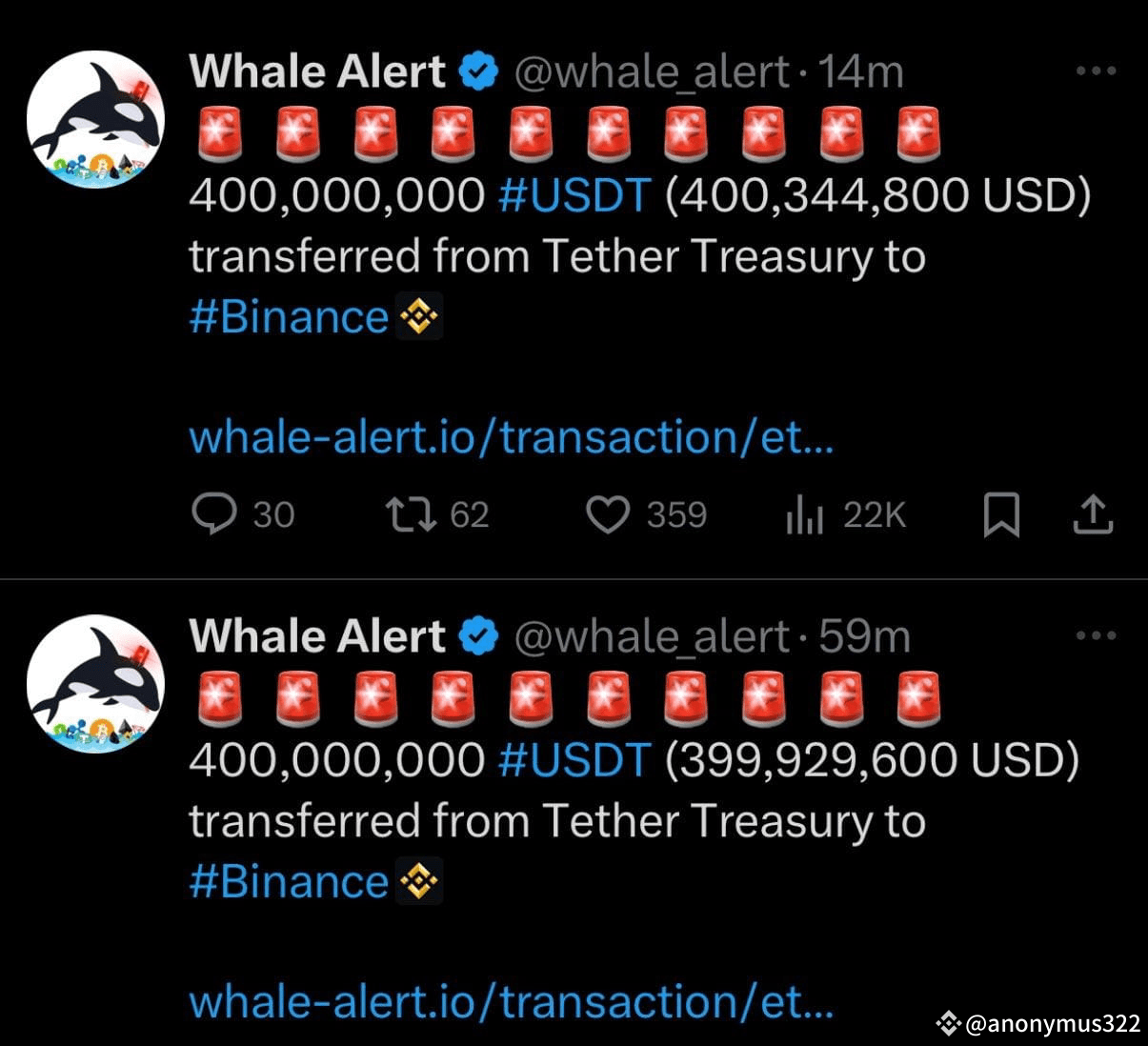
$800 MILLION USDT WAS JUST
SENT FROM TETHER TO BINANCE. 🔥
SOMETHING BIG IS HAPPENING !!🤔
What do you think of PI prise tommorow! I am generally feeling the price will be bearish!🤕
#BinanceAirdropAlert #CryptoLovePoems
By the way!
$800 MILLION USDT WAS JUST
SENT FROM TETHER TO BINANCE. 🔥
SOMETHING BIG IS HAPPENING !!🤔
#BinanceAirdropAlert #CryptoLovePoems
By the way!
$800 MILLION USDT WAS JUST
SENT FROM TETHER TO BINANCE. 🔥
SOMETHING BIG IS HAPPENING !!🤔
5
2
6
7.9k
Log in to explore more content
Join global crypto users on Binance Square
⚡️ Get latest and useful information about crypto.
💬 Trusted by the world’s largest crypto exchange.
👍 Discover real insights from verified creators.
Email / Phone number