
اخبار سوق الكربتو
529 Posts

اخبار سوق الكربتو
Report
Block User
🌸🌸🌸
12 Following
55 Followers
335 Liked
Posts
All
Quotes
Videos
$MAGMA
{future}(MAGMAUSDT)
$BTC
{future}(BTCUSDT)
$MAGMA
The U.S. Federal Bureau of Investigation (FBI) is investigating a cyber intrusion targeting the National Crime Information Center (NCIC) database, which federal and local law enforcement agencies rely on to share data on arrest warrants, criminal histories, and security checks. This is the second breach of the bureau’s systems in two months, following an attack on its recruitment website last September. The identity of those responsible and the extent of the affected data remain unclear.
#SolanaSets2027RoadmapToDoubleComputeCapacity #BlackRockLaunchesHKDollarDigitalLiquidityFund #AnthropicPlungesTowardIPOPriceonDay2 #TwentyOneCapitalAdds172.25BTC
$MAGMA
$BTC
$MAGMA
The U.S. Federal Bureau of Investigation (FBI) is investigating a cyber intrusion targeting the National Crime Information Center (NCIC) database, which federal and local law enforcement agencies rely on to share data on arrest warrants, criminal histories, and security checks. This is the second breach of the bureau’s systems in two months, following an attack on its recruitment website last September. The identity of those responsible and the extent of the affected data remain unclear.
#SolanaSets2027RoadmapToDoubleComputeCapacity #BlackRockLaunchesHKDollarDigitalLiquidityFund #AnthropicPlungesTowardIPOPriceonDay2 #TwentyOneCapitalAdds172.25BTC
103
🛑🛑 How did Binance and Abu Dhabi courts freeze $2.85 billion from the hackers? 🤯💰
🛑🛑 How did Binance and Abu Dhabi courts freeze $2.85 billion from the hackers? 🤯💰
1
760
$SOXSB $BLESS $DODOX
🚨 Did “Anthropic” drain liquidity from Bitcoin? The hidden link behind the break below $56,000! 📉🤖
🔍 What happened behind the scenes?
1️⃣ Historic IPO: The AI company Anthropic’s entry onto the Nasdaq at a record valuation absorbed a huge amount of investment liquidity from the markets.
2️⃣ Flight to cash: This coincided with a wave of selling in tech stocks (such as Nvidia) and investors moving toward cash and safe-haven assets.
The correlation between AI markets and cryptocurrencies is at an all-time high, and any sudden shift in liquidity in tech stocks is immediately reflected in crypto.
#BTC #Bitcoin #Anthropic #AI #CryptoNews
317
$BLESS
{future}(BLESSUSDT)
$BTC
{future}(BTCUSDT)
$SOL
{future}(SOLUSDT)
The cryptocurrency market experienced a sharp downturn, pushing the price of Bitcoin (BTC) below $56,000 (hitting a low near $55,126) for the first time in more than two years, amid panic and widespread withdrawals from high-risk assets.
Key reasons behind the current sell-off
• Liquidation of leveraged positions. Trading platforms recorded forced liquidations worth more than $2.5 billion over 24 hours, according to Bitcoin News data. Bullish bets (Longs) accounted for about 90% of these, triggering a cascade of forced selling.
• Tighter U.S. monetary policy. Federal Reserve officials’ comments about the possibility of raising interest rates, along with rising U.S. Treasury yields, made cash and bonds more attractive than non-yielding assets such as cryptocurrencies.
• Technology stocks fell and fund liquidity flowed out. The crypto decline coincided with a drop of more than 4% in the Nasdaq index, while Bitcoin exchange-traded funds (ETFs) recorded record outflows.#CanBTCReboundAfterFallingBelow60K? #GlobalStocksFaceLongestLosingStreakSince2023 #TwentyOneCapitalAdds172.25BTC #BNBDropsBelow540USDTWith8.46%DailyDecline #MorganStanleyEndsAnthropicStockSupportAfterOneDay
$BLESS
$BTC
$SOL
The cryptocurrency market experienced a sharp downturn, pushing the price of Bitcoin (BTC) below $56,000 (hitting a low near $55,126) for the first time in more than two years, amid panic and widespread withdrawals from high-risk assets.
Key reasons behind the current sell-off
• Liquidation of leveraged positions. Trading platforms recorded forced liquidations worth more than $2.5 billion over 24 hours, according to Bitcoin News data. Bullish bets (Longs) accounted for about 90% of these, triggering a cascade of forced selling.
• Tighter U.S. monetary policy. Federal Reserve officials’ comments about the possibility of raising interest rates, along with rising U.S. Treasury yields, made cash and bonds more attractive than non-yielding assets such as cryptocurrencies.
• Technology stocks fell and fund liquidity flowed out. The crypto decline coincided with a drop of more than 4% in the Nasdaq index, while Bitcoin exchange-traded funds (ETFs) recorded record outflows.#CanBTCReboundAfterFallingBelow60K? #GlobalStocksFaceLongestLosingStreakSince2023 #TwentyOneCapitalAdds172.25BTC #BNBDropsBelow540USDTWith8.46%DailyDecline #MorganStanleyEndsAnthropicStockSupportAfterOneDay
231
$BTC
{future}(BTCUSDT)
$BNB
{future}(BNBUSDT)
$SOL
{future}(SOLUSDT)
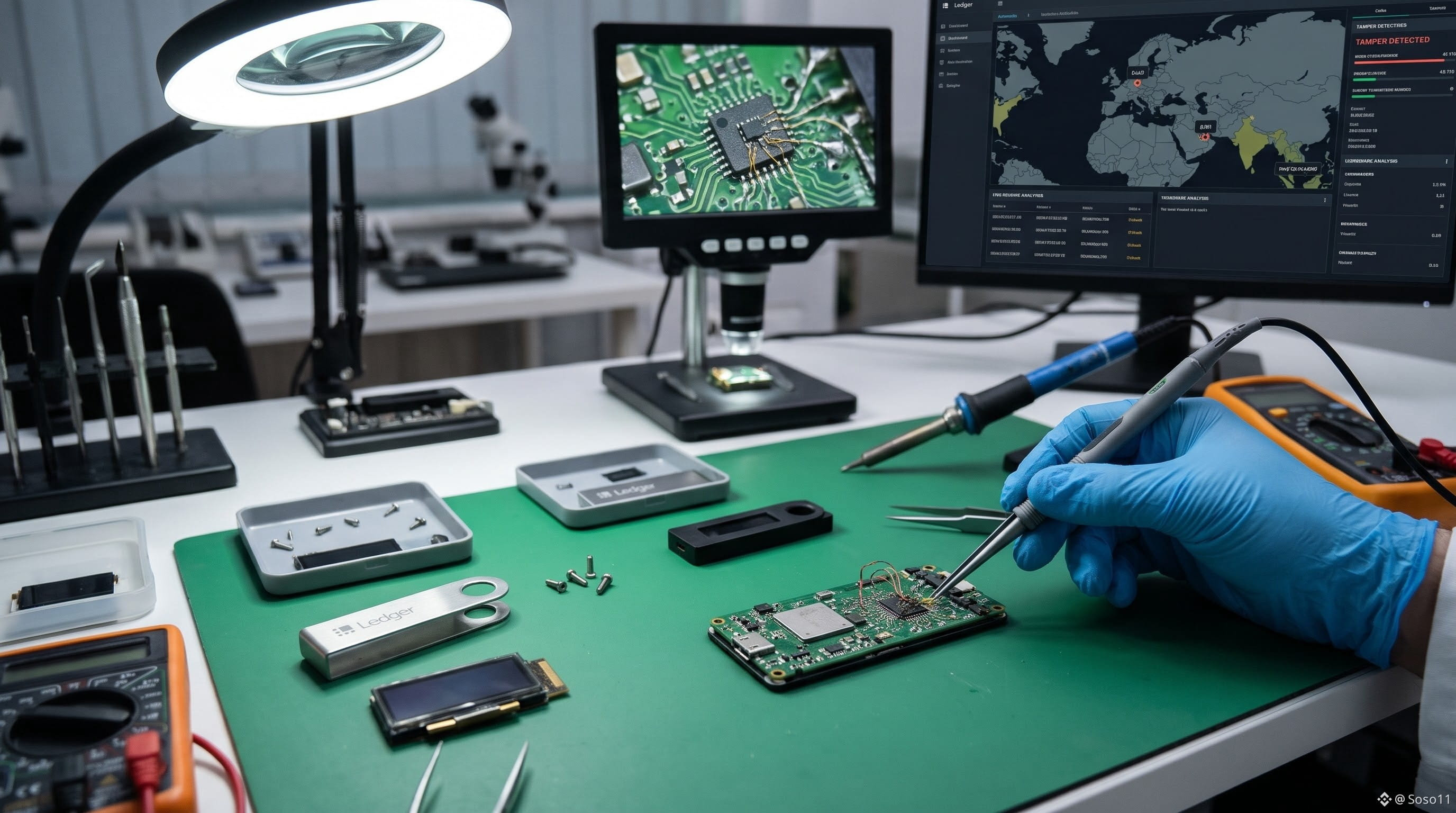
Ledger announced in an official update issued on November 18, 2026, that it was expanding its investigation into a coordinated physical tampering campaign involving hardware wallets to include Berlin and Dubai, after the story began in Southeast Asia last October.
Campaign details and affected regions
Berlin and Dubai. The company confirmed that it had found several modified devices in Berlin. It is also investigating two reports of tampered devices in Dubai, where two customers lost approximately $604,000 in cryptocurrency, and tampering was detected in a Ledger Flex device.
. The campaign can be traced back to October 2026, when the company suspended sales by its authorized distributor, "CryptoBilis," amid reports of thefts worth millions of dollars. Ledger recently confirmed that one Ledger Nano Gen 5 device in the region was affected.
. The operation involves planting identical internal electronic components inside the wallets to secretly capture users’ recovery phrases during the device’s initial setup.
. According to CoinTelegraph, the company stressed that there is no vulnerability in its security chip or operating system, confirming that the tampering occurred in the supply chain through third-party retailers. No cases involving devices purchased directly from its official website have been reported.
#CanBTCReboundAfterFallingBelow60K? #GlobalStocksFaceLongestLosingStreakSince2023 #AnthropicPlungesTowardIPOPriceonDay2 #TradFiForBeginners #CanGTA6'sLaunchLiftTTWOShares?
$BTC
$BNB
$SOL
Ledger announced in an official update issued on November 18, 2026, that it was expanding its investigation into a coordinated physical tampering campaign involving hardware wallets to include Berlin and Dubai, after the story began in Southeast Asia last October.
Campaign details and affected regions
Berlin and Dubai. The company confirmed that it had found several modified devices in Berlin. It is also investigating two reports of tampered devices in Dubai, where two customers lost approximately $604,000 in cryptocurrency, and tampering was detected in a Ledger Flex device.
. The campaign can be traced back to October 2026, when the company suspended sales by its authorized distributor, "CryptoBilis," amid reports of thefts worth millions of dollars. Ledger recently confirmed that one Ledger Nano Gen 5 device in the region was affected.
. The operation involves planting identical internal electronic components inside the wallets to secretly capture users’ recovery phrases during the device’s initial setup.
. According to CoinTelegraph, the company stressed that there is no vulnerability in its security chip or operating system, confirming that the tampering occurred in the supply chain through third-party retailers. No cases involving devices purchased directly from its official website have been reported.
#CanBTCReboundAfterFallingBelow60K? #GlobalStocksFaceLongestLosingStreakSince2023 #AnthropicPlungesTowardIPOPriceonDay2 #TradFiForBeginners #CanGTA6'sLaunchLiftTTWOShares?
253
$CYBER
{future}(CYBERUSDT)
$ELSA
{future}(ELSAUSDT)
$SKDDB
{spot}(SKDDBUSDT)
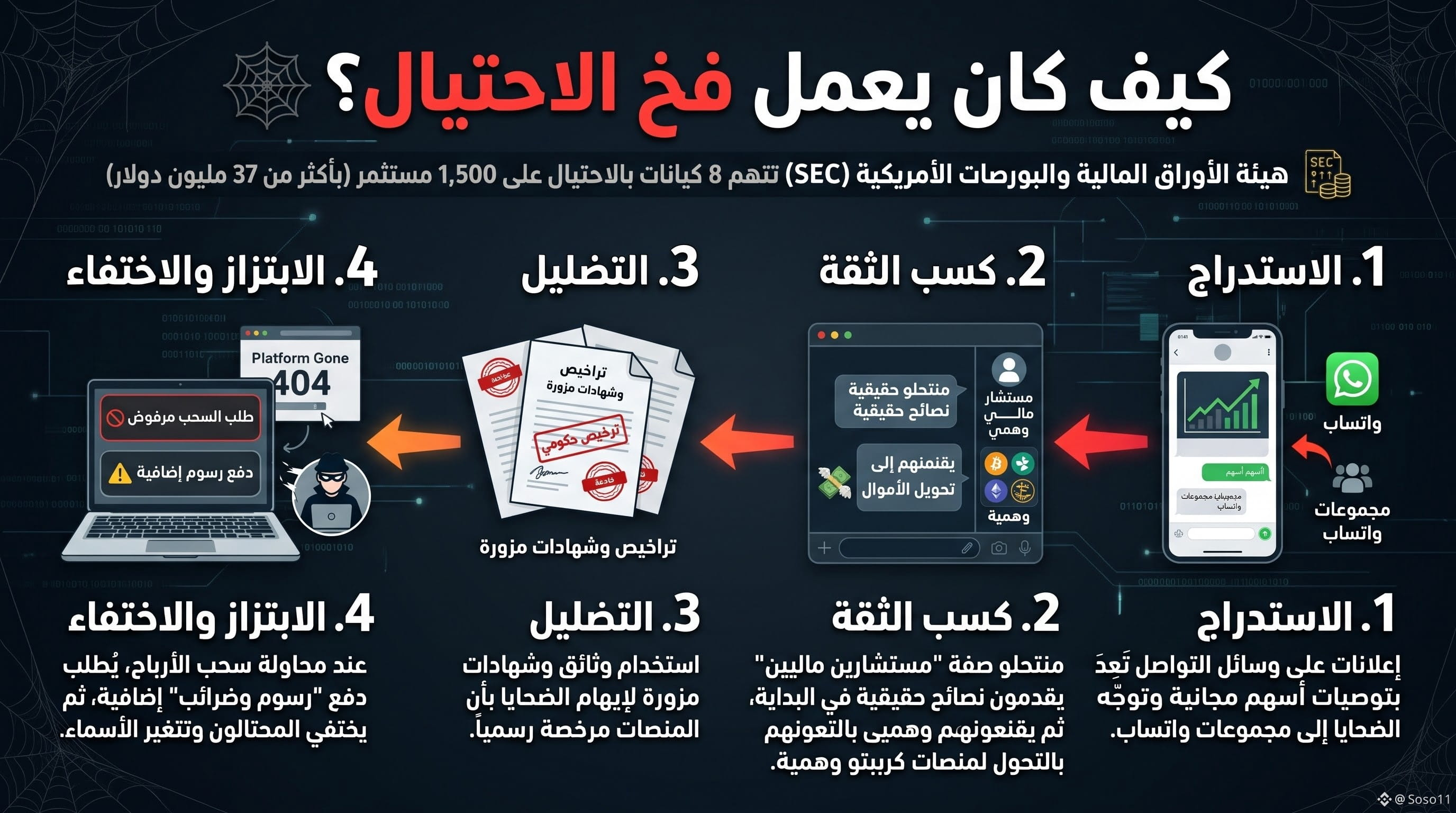
The U.S. Securities and Exchange Commission (SEC) has filed formal fraud charges against 8 entities for taking more than $37 million from around 1,500 investors through fake cryptocurrency trading platforms.
How did the trap work? 🕸️
1️⃣ Luring victims in: Social media ads promise free stock tips and direct victims to WhatsApp groups.
2️⃣ Gaining trust: Impersonators posing as “financial advisors” initially offer genuine advice, then convince victims to sell their stocks and transfer their money to fake crypto platforms.
3️⃣ Deception: Fake documents and certificates are used to make victims believe the platforms are officially licensed by regulators.
4️⃣ Extortion and disappearance: When victims try to withdraw their profits, they are asked to pay additional “fees and taxes.” Then the people behind the platform disappear completely, and it reappears under a new name every few months.#CanBTCReboundAfterFallingBelow60K? #GlobalStocksFaceLongestLosingStreakSince2023 #AnthropicPlungesTowardIPOPriceonDay2 #TradFiForBeginners #NvidiaBoardReportedlySplitOverHuang’sReturn
$CYBER
$ELSA
$SKDDB
The U.S. Securities and Exchange Commission (SEC) has filed formal fraud charges against 8 entities for taking more than $37 million from around 1,500 investors through fake cryptocurrency trading platforms.
How did the trap work? 🕸️
1️⃣ Luring victims in: Social media ads promise free stock tips and direct victims to WhatsApp groups.
2️⃣ Gaining trust: Impersonators posing as “financial advisors” initially offer genuine advice, then convince victims to sell their stocks and transfer their money to fake crypto platforms.
3️⃣ Deception: Fake documents and certificates are used to make victims believe the platforms are officially licensed by regulators.
4️⃣ Extortion and disappearance: When victims try to withdraw their profits, they are asked to pay additional “fees and taxes.” Then the people behind the platform disappear completely, and it reappears under a new name every few months.#CanBTCReboundAfterFallingBelow60K? #GlobalStocksFaceLongestLosingStreakSince2023 #AnthropicPlungesTowardIPOPriceonDay2 #TradFiForBeginners #NvidiaBoardReportedlySplitOverHuang’sReturn
217
$EVAA
{future}(EVAAUSDT)
$SOXSB
{spot}(SOXSBUSDT)
$UVXYB
{spot}(UVXYBUSDT)
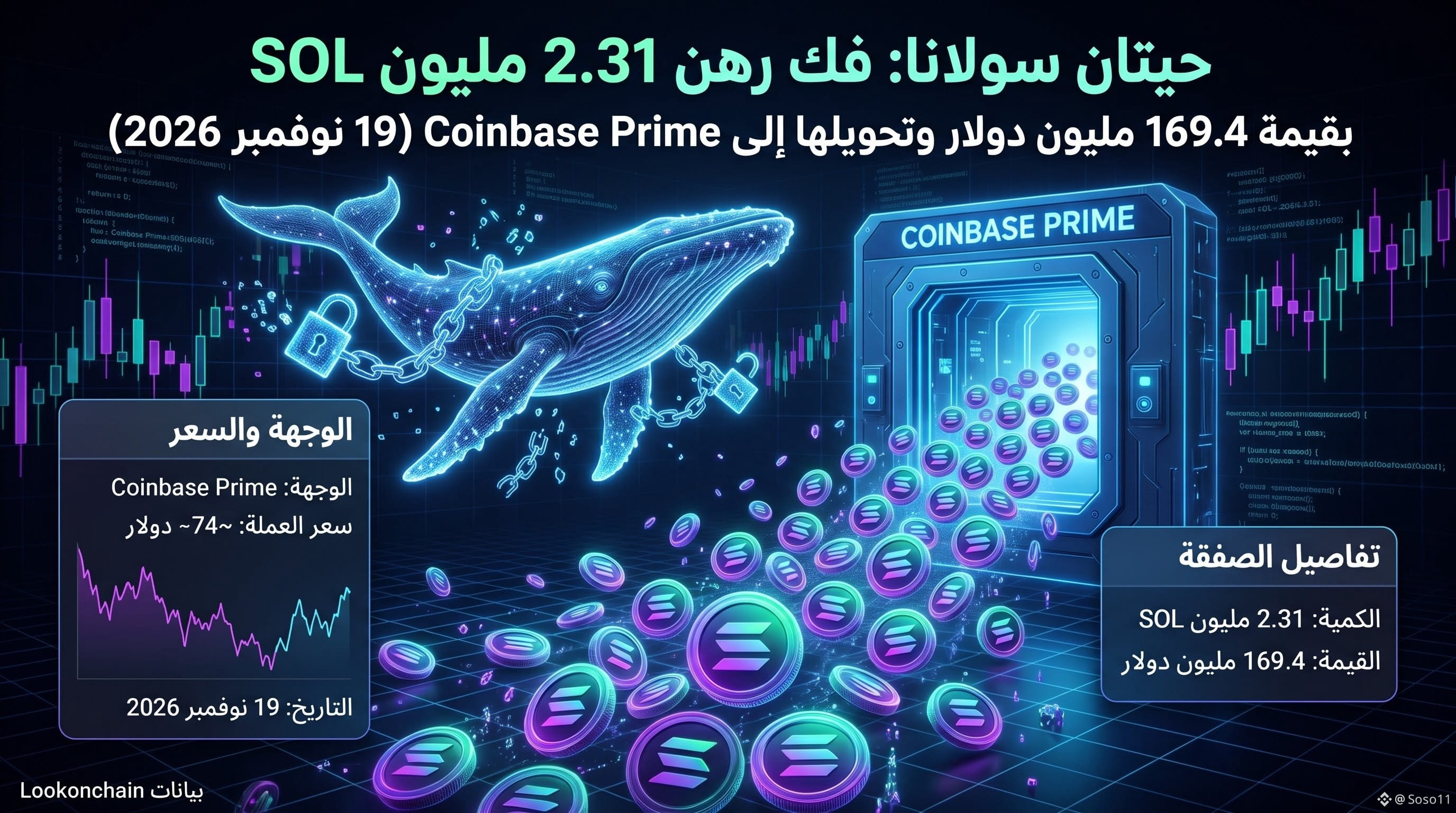
Wallet-tracking platforms detected two major investors (whales) unstaking around 2.31 million Solana (SOL) tokens, worth a total of $169.4 million, and transferring them in full to Coinbase Prime on November 19, 2026.
Details of the Move and Its Market Implications
• Transaction details and amount. According to blockchain-tracking platform Lookonchain data cited by Crypto Economy, the investors withdrew this huge amount from Solana’s staking system and deposited it into Coinbase Prime’s institutional division.
• Timing of the move and price action. The transfer came as Solana was trading around $74, attempting to recover from a sharp downturn that had pushed it just days earlier to a low of around $67, its lowest level since June 2026, according to a report by U.Today.
• Concerns and market interpretation. Moving large amounts of tokens from private wallets or staking contracts to centralized exchanges is usually interpreted as a precursor to selling to take profits or reduce losses amid ongoing market volatility. However, some analysts note that transfers to "Coinbase Prime" may sometimes be intended to restructure investment portfolios or provide secure institutional custody, and do not necessarily indicate an immediate sale.#NvidiaBoardReportedlySplitOverHuang’sReturn #CanGTA6'sLaunchLiftTTWOShares?
$EVAA
$SOXSB
$UVXYB
Wallet-tracking platforms detected two major investors (whales) unstaking around 2.31 million Solana (SOL) tokens, worth a total of $169.4 million, and transferring them in full to Coinbase Prime on November 19, 2026.
Details of the Move and Its Market Implications
• Transaction details and amount. According to blockchain-tracking platform Lookonchain data cited by Crypto Economy, the investors withdrew this huge amount from Solana’s staking system and deposited it into Coinbase Prime’s institutional division.
• Timing of the move and price action. The transfer came as Solana was trading around $74, attempting to recover from a sharp downturn that had pushed it just days earlier to a low of around $67, its lowest level since June 2026, according to a report by U.Today.
• Concerns and market interpretation. Moving large amounts of tokens from private wallets or staking contracts to centralized exchanges is usually interpreted as a precursor to selling to take profits or reduce losses amid ongoing market volatility. However, some analysts note that transfers to "Coinbase Prime" may sometimes be intended to restructure investment portfolios or provide secure institutional custody, and do not necessarily indicate an immediate sale.#NvidiaBoardReportedlySplitOverHuang’sReturn #CanGTA6'sLaunchLiftTTWOShares?
220
$CYBER
{future}(CYBERUSDT)
$SOL
{future}(SOLUSDT)
$BNB
{future}(BNBUSDT)
J.P. Morgan issued a new research note#13FInstitutionsBitcoinSpotETPHoldingsHitRecord predicting that the U.S. Federal Reserve will raise interest rates by 25 basis points at each of its next three meetings.
Details of the forecast and the bank’s rationale
• . The bank’s strategists, led by chief U.S. economist Michael Feroli, revised their forecast to include two additional quarter-point increases in January and March 2027, in addition to the increase previously expected in December 2026. This would raise the target interest rate range from (3.75% - 4.00%) to (4.50% - 4.75%) by next March, according to Forbes Middle East.
• . The bank explained that the main reason for this outlook is persistent elevated inflation and the difficulty of bringing it under control, rather than an attempt to weaken the U.S. labor market.
• . The report published by Asharq Al-Awsat newspaper noted that continued monetary tightening is primarily aimed at protecting the credibility of the Federal Reserve, led by Kevin Warsh, in combating inflation, given that there is no compelling economic justification for pausing rate hikes at present..#NvidiaBoardReportedlySplitOverHuang’sReturn #CanGTA6'sLaunchLiftTTWOShares? #BlackRockBitcoinETFRecordsLargestDailyOutflow #13FInstitutionsBitcoinSpotETPHoldingsHitRecord
$CYBER
$SOL
$BNB
J.P. Morgan issued a new research note#13FInstitutionsBitcoinSpotETPHoldingsHitRecord predicting that the U.S. Federal Reserve will raise interest rates by 25 basis points at each of its next three meetings.
Details of the forecast and the bank’s rationale
• . The bank’s strategists, led by chief U.S. economist Michael Feroli, revised their forecast to include two additional quarter-point increases in January and March 2027, in addition to the increase previously expected in December 2026. This would raise the target interest rate range from (3.75% - 4.00%) to (4.50% - 4.75%) by next March, according to Forbes Middle East.
• . The bank explained that the main reason for this outlook is persistent elevated inflation and the difficulty of bringing it under control, rather than an attempt to weaken the U.S. labor market.
• . The report published by Asharq Al-Awsat newspaper noted that continued monetary tightening is primarily aimed at protecting the credibility of the Federal Reserve, led by Kevin Warsh, in combating inflation, given that there is no compelling economic justification for pausing rate hikes at present..#NvidiaBoardReportedlySplitOverHuang’sReturn #CanGTA6'sLaunchLiftTTWOShares? #BlackRockBitcoinETFRecordsLargestDailyOutflow #13FInstitutionsBitcoinSpotETPHoldingsHitRecord
189
$EVAA
{future}(EVAAUSDT)
$CYBER
{spot}(CYBERUSDT)
$BTC
{future}(BTCUSDT)
Binance announced that it had obtained a global court order from the Abu Dhabi Global Market (ADGM) Courts to freeze assets worth $6.5 billion in order to recover funds stolen in the cyberattack that took place on October 29, 2026.
Key details of the court ruling and case
• The Abu Dhabi Global Market Courts, presided over by Judge William Stone, issued the ruling. It is the largest of its kind in the cryptocurrency sector, with law firm Gibson Dunn representing Binance in the proceedings.
• The order allows legal notices to be sent directly via blockchain networks and includes ongoing updates to a live list of around 26,000 digital wallet addresses suspected of holding the stolen assets, to facilitate their rapid freezing.
• The assets stolen in the October 29 attack were worth approximately $6.3 billion. The Federal Bureau of Investigation (FBI) attributed the operation to the North Korean group “Tradertraitor.” According to reports by Arqam, Binance confirmed that it had fully covered the losses incurred by clients affected by the attack using its own resources.
• Assets actually frozen. The $6.5 billion represents the maximum amount covered by the court order for tracing the funds, while the total assets actually frozen so far, in cooperation with authorities and entities such as the U.S. Department of Justice and Ripple, have amounted to around 2.7 to 2.85.
$EVAA
$CYBER
$BTC
Binance announced that it had obtained a global court order from the Abu Dhabi Global Market (ADGM) Courts to freeze assets worth $6.5 billion in order to recover funds stolen in the cyberattack that took place on October 29, 2026.
Key details of the court ruling and case
• The Abu Dhabi Global Market Courts, presided over by Judge William Stone, issued the ruling. It is the largest of its kind in the cryptocurrency sector, with law firm Gibson Dunn representing Binance in the proceedings.
• The order allows legal notices to be sent directly via blockchain networks and includes ongoing updates to a live list of around 26,000 digital wallet addresses suspected of holding the stolen assets, to facilitate their rapid freezing.
• The assets stolen in the October 29 attack were worth approximately $6.3 billion. The Federal Bureau of Investigation (FBI) attributed the operation to the North Korean group “Tradertraitor.” According to reports by Arqam, Binance confirmed that it had fully covered the losses incurred by clients affected by the attack using its own resources.
• Assets actually frozen. The $6.5 billion represents the maximum amount covered by the court order for tracing the funds, while the total assets actually frozen so far, in cooperation with authorities and entities such as the U.S. Department of Justice and Ripple, have amounted to around 2.7 to 2.85.
271
$EVAA
{future}(EVAAUSDT)
$NAORIS
{future}(NAORISUSDT)
$BNB
{future}(BNBUSDT)
The Crypto Fear & Greed Index fell into the "Extreme Fear" zone at 13 points, driven by a widespread sell-off and growing expectations that the US Federal Reserve will raise interest rates at its meeting scheduled for December 8 and 9, 2026.
Several monetary and market factors are currently combining to push investor sentiment toward extreme caution:
. Hawkish Federal Reserve stance
• Fed meeting minutes. Minutes from the October Federal Open Market Committee (FOMC) meeting showed that most officials supported continuing to raise interest rates to curb inflation and bring it back toward the 2% target, with some considering an increase of more than 25 basis points.
• Policymakers' remarks. Federal Reserve Governor Christopher Waller warned that inflation was broadening, noting that a 50-basis-point rate hike next month could be justified.
• Market pricing. Interest rate futures are pricing in a roughly 90% probability of a quarter-percentage-point rate hike in December (above the current range of 3.75%–4.0%). BNP Paribas also expects three consecutive increases in December, January, and March.
#NvidiaBoardReportedlySplitOverHuang’sReturn #MASToUpgradeSGDTestnetToSGDigitalLedger #Solana2027RoadmapTargetsDoubleComputeCapacity #TetherMakesStrategicInvestmentInSCRYPT
$EVAA
$NAORIS
$BNB
The Crypto Fear & Greed Index fell into the "Extreme Fear" zone at 13 points, driven by a widespread sell-off and growing expectations that the US Federal Reserve will raise interest rates at its meeting scheduled for December 8 and 9, 2026.
Several monetary and market factors are currently combining to push investor sentiment toward extreme caution:
. Hawkish Federal Reserve stance
• Fed meeting minutes. Minutes from the October Federal Open Market Committee (FOMC) meeting showed that most officials supported continuing to raise interest rates to curb inflation and bring it back toward the 2% target, with some considering an increase of more than 25 basis points.
• Policymakers' remarks. Federal Reserve Governor Christopher Waller warned that inflation was broadening, noting that a 50-basis-point rate hike next month could be justified.
• Market pricing. Interest rate futures are pricing in a roughly 90% probability of a quarter-percentage-point rate hike in December (above the current range of 3.75%–4.0%). BNP Paribas also expects three consecutive increases in December, January, and March.
#NvidiaBoardReportedlySplitOverHuang’sReturn #MASToUpgradeSGDTestnetToSGDigitalLedger #Solana2027RoadmapTargetsDoubleComputeCapacity #TetherMakesStrategicInvestmentInSCRYPT
263
$IRYS
{future}(IRYSUSDT)
$EVAA
{future}(EVAAUSDT)
$SOL
{future}(SOLUSDT)
Iran launched drone and missile attacks early Wednesday, November 18, 2026, targeting Ali Al Salem Air Base in Kuwait, in response to US airstrikes on a missile launch site on Iran’s Qeshm Island near the Strait of Hormuz. This marks the first attack on Kuwaiti territory since last September, as the region faces escalating military tensions between the two sides.
Details of the reciprocal strikes
• Iran’s attack on Kuwait. The Iranian military announced that it had targeted Patriot air defense systems and missile and drone launch platforms belonging to US forces at Ali Al Salem Air Base, west of Kuwait City. Kuwait’s General Staff confirmed that its air defenses had intercepted hostile drone attacks, with no confirmed casualties or material damage.
• The US strike in the Strait of Hormuz. Hours before Iran’s attack, US fighter jets carried out precision airstrikes on a missile site belonging to the Islamic Revolutionary Guard Corps on Iran’s Qeshm Island on Tuesday evening. US officials told Reuters that the strike was carried out “in self-defense” after Iran targeted a US radar system in Bahrain earlier that morning.#BTCRemainsUnderPressureAfterHawkishFOMCMinutes #NvidiaBoardReportedlySplitOverHuang’sReturn #MASToUpgradeSGDTestnetToSGDigitalLedger #Solana2027RoadmapTargetsDoubleComputeCapacity
$IRYS
$EVAA
$SOL
Iran launched drone and missile attacks early Wednesday, November 18, 2026, targeting Ali Al Salem Air Base in Kuwait, in response to US airstrikes on a missile launch site on Iran’s Qeshm Island near the Strait of Hormuz. This marks the first attack on Kuwaiti territory since last September, as the region faces escalating military tensions between the two sides.
Details of the reciprocal strikes
• Iran’s attack on Kuwait. The Iranian military announced that it had targeted Patriot air defense systems and missile and drone launch platforms belonging to US forces at Ali Al Salem Air Base, west of Kuwait City. Kuwait’s General Staff confirmed that its air defenses had intercepted hostile drone attacks, with no confirmed casualties or material damage.
• The US strike in the Strait of Hormuz. Hours before Iran’s attack, US fighter jets carried out precision airstrikes on a missile site belonging to the Islamic Revolutionary Guard Corps on Iran’s Qeshm Island on Tuesday evening. US officials told Reuters that the strike was carried out “in self-defense” after Iran targeted a US radar system in Bahrain earlier that morning.#BTCRemainsUnderPressureAfterHawkishFOMCMinutes #NvidiaBoardReportedlySplitOverHuang’sReturn #MASToUpgradeSGDTestnetToSGDigitalLedger #Solana2027RoadmapTargetsDoubleComputeCapacity
430
Partly True
$EVAA
{future}(EVAAUSDT)
$NAORIS
{future}(NAORISUSDT)
$BITO
{future}(BITOUSDT)
The Trump meme coin ($TRUMP) hit an all-time low of $0.896, falling below the $1 mark for the first time since its launch in January 2025. The coin has lost about 98.7% of its value compared with its all-time high of $73.43, declining by about 40% since the U.S. midterm elections in November 2026.
The main reasons behind the record decline
Political and regulatory fallout. The Republican Party’s loss of its majorities in both the House and Senate to the Democrats has heightened regulatory concerns. Democratic lawmakers intend to use their subpoena powers to launch investigations into conflicts of interest and revenue earned by the Trump family from cryptocurrency ventures.
Declining momentum. Financial analysts at firms such as CoinShares believe the token has no technological utility or mechanism for accruing value, and relies entirely on political hype. This was reflected in a 94% drop in attendance at the third dinner contest for coin holders compared with the first, with just 130 wallets participating and total holdings of $8.6 million.
. The token unlock schedule (Token Unlocks) is putting continued selling pressure on the price. Data from Tokenomics and CoinGlass indicate that millions of locked tokens allocated to entities associated with the project continue to be released periodically (about 27 to 28.7 million tokens .
$EVAA
$NAORIS
$BITO
The Trump meme coin ($TRUMP) hit an all-time low of $0.896, falling below the $1 mark for the first time since its launch in January 2025. The coin has lost about 98.7% of its value compared with its all-time high of $73.43, declining by about 40% since the U.S. midterm elections in November 2026.
The main reasons behind the record decline
Political and regulatory fallout. The Republican Party’s loss of its majorities in both the House and Senate to the Democrats has heightened regulatory concerns. Democratic lawmakers intend to use their subpoena powers to launch investigations into conflicts of interest and revenue earned by the Trump family from cryptocurrency ventures.
Declining momentum. Financial analysts at firms such as CoinShares believe the token has no technological utility or mechanism for accruing value, and relies entirely on political hype. This was reflected in a 94% drop in attendance at the third dinner contest for coin holders compared with the first, with just 130 wallets participating and total holdings of $8.6 million.
. The token unlock schedule (Token Unlocks) is putting continued selling pressure on the price. Data from Tokenomics and CoinGlass indicate that millions of locked tokens allocated to entities associated with the project continue to be released periodically (about 27 to 28.7 million tokens .
1
1
1.1k
$IRYS
{future}(IRYSUSDT)
$EVAA
{future}(EVAAUSDT)
$BTC
U.S. spot Bitcoin ETFs continue to see outflows, with November redemptions reaching $2.58 billion
Factors driving the institutional sell-off
• Tightening U.S. monetary policy. Minutes from the U.S. Federal Reserve meeting struck a hawkish tone, with markets expecting a 25-basis-point rate hike in December, curbing appetite for high-risk assets.
• Rising bond yields and a stronger dollar. The 10-year U.S. Treasury yield remained above 5.09% as the U.S. dollar climbed to its highest level in more than 18 months, making fixed-income assets more attractive to institutions than Bitcoin.
• A declining tech sector and correlation with equities. The sell-off in U.S. technology stocks added pressure on cryptocurrencies, as the correlation between Bitcoin and the Nasdaq index increased.#BTCRemainsUnderPressureAfterHawkishFOMCMinutes #NvidiaBoardReportedlySplitOverHuang’sReturn #CanGTA6'sLaunchLiftTTWOShares? #FOMCMinutesHighlightAIDebtRisks #AntInternationalLaunchesWhaleProtocol
$IRYS
$EVAA
$BTC
U.S. spot Bitcoin ETFs continue to see outflows, with November redemptions reaching $2.58 billion
Factors driving the institutional sell-off
• Tightening U.S. monetary policy. Minutes from the U.S. Federal Reserve meeting struck a hawkish tone, with markets expecting a 25-basis-point rate hike in December, curbing appetite for high-risk assets.
• Rising bond yields and a stronger dollar. The 10-year U.S. Treasury yield remained above 5.09% as the U.S. dollar climbed to its highest level in more than 18 months, making fixed-income assets more attractive to institutions than Bitcoin.
• A declining tech sector and correlation with equities. The sell-off in U.S. technology stocks added pressure on cryptocurrencies, as the correlation between Bitcoin and the Nasdaq index increased.#BTCRemainsUnderPressureAfterHawkishFOMCMinutes #NvidiaBoardReportedlySplitOverHuang’sReturn #CanGTA6'sLaunchLiftTTWOShares? #FOMCMinutesHighlightAIDebtRisks #AntInternationalLaunchesWhaleProtocol
3
271
$EVAA
{future}(EVAAUSDT)
$BITO
{future}(BITOUSDT)
$NAORIS
{future}(NAORISUSDT)
The regulatory filings of Wells Fargo in November 2026 revealed a rise in its reported stake in BlackRock's spot Bitcoin exchange-traded fund (iShares Bitcoin Trust - IBIT) to $2.35 billion. This increase came after the number of shares owned more than doubled (a growth rate of about 103%) during the third quarter of 2026.
Details of the regulatory filing and market context
• . The bank disclosed that it held about 49.58 million shares in IBIT at the end of the third quarter (September 30, 2026), which is equivalent to indirect exposure to about 28,000 Bitcoin.
• Financial reports on TradingView clarified that Form 13F disclosures include assets managed on behalf of the bank's clients, and do not necessarily mean that Wells Fargo bought this entire stake for its own portfolio.
• Timing and price context. These data reflect the financial positions as they were at the end of September 2026, before the wave of volatility and selling that hit crypto markets in November, when Bitcoin's price fell to trade near the $64,000 level.
• . At the same time as these disclosures were published, Bitcoin.com News reported that these figures highlight continued institutional demand, at a time when IBIT returned to recording inflows of $76.5 million on November 16, ending an 11-session losing streak.
$EVAA
$BITO
$NAORIS
The regulatory filings of Wells Fargo in November 2026 revealed a rise in its reported stake in BlackRock's spot Bitcoin exchange-traded fund (iShares Bitcoin Trust - IBIT) to $2.35 billion. This increase came after the number of shares owned more than doubled (a growth rate of about 103%) during the third quarter of 2026.
Details of the regulatory filing and market context
• . The bank disclosed that it held about 49.58 million shares in IBIT at the end of the third quarter (September 30, 2026), which is equivalent to indirect exposure to about 28,000 Bitcoin.
• Financial reports on TradingView clarified that Form 13F disclosures include assets managed on behalf of the bank's clients, and do not necessarily mean that Wells Fargo bought this entire stake for its own portfolio.
• Timing and price context. These data reflect the financial positions as they were at the end of September 2026, before the wave of volatility and selling that hit crypto markets in November, when Bitcoin's price fell to trade near the $64,000 level.
• . At the same time as these disclosures were published, Bitcoin.com News reported that these figures highlight continued institutional demand, at a time when IBIT returned to recording inflows of $76.5 million on November 16, ending an 11-session losing streak.
255
P$PIEVERSE
{future}(PIEVERSEUSDT)
$MMT
{future}(MMTUSDT)
$PIPPIN
{future}(PIPPINUSDT)
178 platforms and global brands, including Ledger and BBC, were hit by a cyberattack through the website optimization tool Optimizely. Malware was injected to target visitors to these websites. It replaced cryptocurrency wallet addresses and stole credit card data while users browsed infected pages.
Attack details and how it was carried out
• Breach method. The attackers exploited Optimizely Web, which companies use to test and develop versions of their pages. They planted malicious code in customers’ projects, allowing the platform’s network to distribute it automatically to visitors.
• Address swapping (Clipper Malware). The injected code changed the cryptocurrency wallet addresses displayed on the pages, transferring funds directly to the attackers’ wallets when victims copied an address to make a deposit.
• Additional risks. Cybersecurity company Report URI explained that later versions of the malware added tools to steal payment card data and included exploit packages targeting iPhone and iPad devices.
#CanNvidia’sDataCenterGrowthContinue? #LedgerHardwareImplantReportsExtendToDubai #
P$PIEVERSE
$MMT
$PIPPIN
178 platforms and global brands, including Ledger and BBC, were hit by a cyberattack through the website optimization tool Optimizely. Malware was injected to target visitors to these websites. It replaced cryptocurrency wallet addresses and stole credit card data while users browsed infected pages.
Attack details and how it was carried out
• Breach method. The attackers exploited Optimizely Web, which companies use to test and develop versions of their pages. They planted malicious code in customers’ projects, allowing the platform’s network to distribute it automatically to visitors.
• Address swapping (Clipper Malware). The injected code changed the cryptocurrency wallet addresses displayed on the pages, transferring funds directly to the attackers’ wallets when victims copied an address to make a deposit.
• Additional risks. Cybersecurity company Report URI explained that later versions of the malware added tools to steal payment card data and included exploit packages targeting iPhone and iPad devices.
#CanNvidia’sDataCenterGrowthContinue? #LedgerHardwareImplantReportsExtendToDubai #
249
$PIEVERSE
{future}(PIEVERSEUSDT)
$MMT
{future}(MMTUSDT)
$PIPPIN
{future}(PIPPINUSDT)
The Kava Lend protocol suffered a security exploit on November 14, 2026, resulting in the withdrawal of approximately 55.2 million KAVA tokens worth $3.76 million. The attack targeted the platform’s dormant BUSD stablecoin market (not USDX), causing the price of KAVA to plunge by approximately 40% to 47%.
Vulnerability details and exploit mechanism
• Exploiting the dormant market. The attacker targeted the nearly empty BUSD market on the lending protocol. BUSD is a stablecoin that has not been issued since 2023.TradingView
• Inflating collateral value. The attacker manipulated deposits and withdrawals to leave the pool’s net supply very close to zero (just two base units). This smart contract accounting flaw inflated the book value of a small deposit by approximately 243,000 times in three minutes.
• Repeated borrowing and loan liquidation. The inflated fake collateral allowed the attacker to execute 127 borrowing transactions and withdraw 55.2 million KAVA tokens. The attacker used a helper wallet to liquidate loans and repeatedly reopen the borrowing limit until the pool was almost completely drained.The Defiant#CanNvidia’sDataCenterGrowthContinue? #LedgerHardwareImplantReportsExtendToDubai
$PIEVERSE
$MMT
$PIPPIN
The Kava Lend protocol suffered a security exploit on November 14, 2026, resulting in the withdrawal of approximately 55.2 million KAVA tokens worth $3.76 million. The attack targeted the platform’s dormant BUSD stablecoin market (not USDX), causing the price of KAVA to plunge by approximately 40% to 47%.
Vulnerability details and exploit mechanism
• Exploiting the dormant market. The attacker targeted the nearly empty BUSD market on the lending protocol. BUSD is a stablecoin that has not been issued since 2023.TradingView
• Inflating collateral value. The attacker manipulated deposits and withdrawals to leave the pool’s net supply very close to zero (just two base units). This smart contract accounting flaw inflated the book value of a small deposit by approximately 243,000 times in three minutes.
• Repeated borrowing and loan liquidation. The inflated fake collateral allowed the attacker to execute 127 borrowing transactions and withdraw 55.2 million KAVA tokens. The attacker used a helper wallet to liquidate loans and repeatedly reopen the borrowing limit until the pool was almost completely drained.The Defiant#CanNvidia’sDataCenterGrowthContinue? #LedgerHardwareImplantReportsExtendToDubai
325
$MMT
{future}(MMTUSDT)
$BREV
$SOL
{future}(SOLUSDT)
Reading Solana’s (SOL) Death Cross as a lagging indicator is accurate and consistent with modern technical analyses of price action. This pattern forms when the 50-day moving average falls below the 200-day moving average, reflecting a loss of price momentum that has already occurred over the past few weeks rather than predicting an inevitable new decline.
Why is the Death Cross considered a lagging indicator in the current situation?
• Delayed price response. The Death Cross is based on historical price data, and by the time it appears, the price has already used up a substantial part of its downward move, with Solana falling from above $120 to a range of $67.40 to $72.
• Easing selling volumes. Market analyses published by U.Today indicate that the decline in selling volume after the recent lows suggests selling pressure is starting to lose momentum, reducing the risk posed by the technical crossover.
• Oversold conditions. The Relative Strength Index (RSI) fell to low levels between 19 and 27, placing the coin in deeply oversold territory, which often paves the way for corrective rebounds or price stabilization as forced selling slows
#CanNvidia’sDataCenterGrowthContinue? #LedgerHardwareImplantReportsExtendToDubai #NvidiaBoardNotConsideringHuang’sReturnasCEO #AnthropicClearedToListOnNasdaqAsANT #AnthropicClearedToListOnNasdaqAsANT
$MMT
$BREV
$SOL
Reading Solana’s (SOL) Death Cross as a lagging indicator is accurate and consistent with modern technical analyses of price action. This pattern forms when the 50-day moving average falls below the 200-day moving average, reflecting a loss of price momentum that has already occurred over the past few weeks rather than predicting an inevitable new decline.
Why is the Death Cross considered a lagging indicator in the current situation?
• Delayed price response. The Death Cross is based on historical price data, and by the time it appears, the price has already used up a substantial part of its downward move, with Solana falling from above $120 to a range of $67.40 to $72.
• Easing selling volumes. Market analyses published by U.Today indicate that the decline in selling volume after the recent lows suggests selling pressure is starting to lose momentum, reducing the risk posed by the technical crossover.
• Oversold conditions. The Relative Strength Index (RSI) fell to low levels between 19 and 27, placing the coin in deeply oversold territory, which often paves the way for corrective rebounds or price stabilization as forced selling slows
#CanNvidia’sDataCenterGrowthContinue? #LedgerHardwareImplantReportsExtendToDubai #NvidiaBoardNotConsideringHuang’sReturnasCEO #AnthropicClearedToListOnNasdaqAsANT #AnthropicClearedToListOnNasdaqAsANT
175
$PIPPIN
{future}(PIPPINUSDT)
$BREV
{future}(BREVUSDT)
$MMT
{future}(MMTUSDT)
The accounts of market makers on the Lighter platform were compromised by exploiting a cryptographic vulnerability in a trader’s third-party signing software. This allowed the attacker to infer API keys and use the liquidity pool feature to bypass the personal wallet approval requirement.
The technical details explain how the attack was carried out and how the funds moved, based on investigations by the platform and blockchain analytics firms:
Steps of the breach
• One large trader used insecure custom signing software that reused cryptographic nonces. This vulnerability enabled the attacker to calculate and extract the trader’s API keys from signatures publicly posted on the network.
• Withdrawing funds or sending them to an external account on Lighter requires a second signature from the owner’s personal wallet. To get around this restriction, the attacker impersonated the victim using the stolen API key and created a new public liquidity pool or investment fund.
• The attacker bought 99.99% of the shares in this new pool. Because the system treats transfers to public pools as internal transfers, the attacker was able to close the victim’s positions and move approximately $15.48 million in USDC into the pool without requiring a wallet signature, then redeem the funds and withdraw them through another account under their control.
$PIPPIN
$BREV
$MMT
The accounts of market makers on the Lighter platform were compromised by exploiting a cryptographic vulnerability in a trader’s third-party signing software. This allowed the attacker to infer API keys and use the liquidity pool feature to bypass the personal wallet approval requirement.
The technical details explain how the attack was carried out and how the funds moved, based on investigations by the platform and blockchain analytics firms:
Steps of the breach
• One large trader used insecure custom signing software that reused cryptographic nonces. This vulnerability enabled the attacker to calculate and extract the trader’s API keys from signatures publicly posted on the network.
• Withdrawing funds or sending them to an external account on Lighter requires a second signature from the owner’s personal wallet. To get around this restriction, the attacker impersonated the victim using the stolen API key and created a new public liquidity pool or investment fund.
• The attacker bought 99.99% of the shares in this new pool. Because the system treats transfers to public pools as internal transfers, the attacker was able to close the victim’s positions and move approximately $15.48 million in USDC into the pool without requiring a wallet signature, then redeem the funds and withdraw them through another account under their control.
233
$MMT $BREV
{future}(BREVUSDT)
$BTC
{future}(BTCUSDT)
U.S. spot Bitcoin exchange-traded funds (ETFs) recorded net outflows of $2.35 billion over two consecutive weeks, in a wave of withdrawals reflecting declining institutional demand for high-risk assets. Withdrawals totaled about $1.07 billion in the week ending November 13, 2026, following outflows of $1.28 billion in the previous week.
Details of withdrawals and fund performance
Week ending November 13. The funds saw 7 consecutive trading sessions of negative flows, totaling nearly $1.91 billion.
Share of the largest funds. BlackRock’s (IBIT) fund led the outflows, recording $908.4 million in withdrawals during the week, followed by Fidelity’s (FBTC) fund.
Slowing trading volumes. Weekly trading volume in Bitcoin ETFs fell 13% to $11.54 billion, compared with about $13.27 billion the previous week.
Funds’ cumulative balance. Despite the selling wave, spot funds still hold about $55 billion in net inflows since their launch in January 2024, and their assets under management are estimated at about $86.2 billion.
#NvidiaEarningsTonight:AIStocks’NextMove? #AnthropicIPOTestsInvestorAppetiteForAI #NvidiaBoardNotConsideringHuang’sReturnasCEO #KOSPIFalls2.59%ToLowestCloseSinceFebruary #TetherCapitalMakesStrategicInvestmentInStables
$MMT $BREV
$BTC
U.S. spot Bitcoin exchange-traded funds (ETFs) recorded net outflows of $2.35 billion over two consecutive weeks, in a wave of withdrawals reflecting declining institutional demand for high-risk assets. Withdrawals totaled about $1.07 billion in the week ending November 13, 2026, following outflows of $1.28 billion in the previous week.
Details of withdrawals and fund performance
Week ending November 13. The funds saw 7 consecutive trading sessions of negative flows, totaling nearly $1.91 billion.
Share of the largest funds. BlackRock’s (IBIT) fund led the outflows, recording $908.4 million in withdrawals during the week, followed by Fidelity’s (FBTC) fund.
Slowing trading volumes. Weekly trading volume in Bitcoin ETFs fell 13% to $11.54 billion, compared with about $13.27 billion the previous week.
Funds’ cumulative balance. Despite the selling wave, spot funds still hold about $55 billion in net inflows since their launch in January 2024, and their assets under management are estimated at about $86.2 billion.
#NvidiaEarningsTonight:AIStocks’NextMove? #AnthropicIPOTestsInvestorAppetiteForAI #NvidiaBoardNotConsideringHuang’sReturnasCEO #KOSPIFalls2.59%ToLowestCloseSinceFebruary #TetherCapitalMakesStrategicInvestmentInStables
1
324
$SPACE
$BLESS
$HUMA
{future}(HUMAUSDT)
The causes of this sharp decline and experts’ forecasts for the future trajectory of BTC, based on current market conditions, are as follows:
Key reasons for the drop toward $62,000
• A wave of forced liquidations. The breach of technical support levels triggered the liquidation of leveraged trading positions worth more than $2 billion within 24 hours. More than 87% of these were long positions, accelerating the decline.
• Outflows from exchange-traded funds (ETFs). U.S. spot Bitcoin funds recorded sustained outflows estimated at around $1.9 billion to $3 billion in recent weeks, reflecting a decline in institutional demand.
• Macroeconomic pressures. Rising yields on 10-year U.S. Treasury bonds above 5%, coupled with a strong U.S. dollar and elevated inflation figures (3.7% annually), reduced investors’ appetite for high-risk assets.
• Liquidity shifting toward the AI sector. Analysts noted that some investors were liquidating their digital assets to free up liquidity for participation in the anticipated IPO of AI company Anthropic, as technology and chip stocks declined.
#AnthropicIPOTestsInvestorAppetiteForAI #BitcoinExtendsLosingStreakToSixWeeks #SP500AndNasdaqFuturesHitQuarterlyLows #HKPlansDigitalAssetRegulatoryBillByYearEnd #MUFGSMFGMizuhoPlanYenBackedStablecoin
$SPACE
$BLESS
$HUMA
The causes of this sharp decline and experts’ forecasts for the future trajectory of BTC, based on current market conditions, are as follows:
Key reasons for the drop toward $62,000
• A wave of forced liquidations. The breach of technical support levels triggered the liquidation of leveraged trading positions worth more than $2 billion within 24 hours. More than 87% of these were long positions, accelerating the decline.
• Outflows from exchange-traded funds (ETFs). U.S. spot Bitcoin funds recorded sustained outflows estimated at around $1.9 billion to $3 billion in recent weeks, reflecting a decline in institutional demand.
• Macroeconomic pressures. Rising yields on 10-year U.S. Treasury bonds above 5%, coupled with a strong U.S. dollar and elevated inflation figures (3.7% annually), reduced investors’ appetite for high-risk assets.
• Liquidity shifting toward the AI sector. Analysts noted that some investors were liquidating their digital assets to free up liquidity for participation in the anticipated IPO of AI company Anthropic, as technology and chip stocks declined.
#AnthropicIPOTestsInvestorAppetiteForAI #BitcoinExtendsLosingStreakToSixWeeks #SP500AndNasdaqFuturesHitQuarterlyLows #HKPlansDigitalAssetRegulatoryBillByYearEnd #MUFGSMFGMizuhoPlanYenBackedStablecoin
241
Log in to explore more content
Join global crypto users on Binance Square
⚡️ Get latest and useful information about crypto.
💬 Trusted by the world’s largest crypto exchange.
👍 Discover real insights from verified creators.
Email / Phone number
Trending Topics
BTCReboundsAbove$60KAmidWhaleDipBuying
67,243 views
316 Discussing
Abraxas Capital, Other Whales Buy the BTC Dip as Bitcoin Briefly Reclaims $60,000
Binance News
·33 Likes
·69.8k views
SolanaSets2027RoadmapToDoubleComputeCapacity
51,435 views
926 Discussing
CaliforniaNvidiaProbeExaminesPotentialCriminalViolations
13,783 views
123 Discussing