

Shaun Huang
33 Posts

Shaun Huang
Report
Block User
0 Following
17 Followers
14 Liked
Posts
·
--
🚨 Nasdaq 100 futures are down 0.9%! AI and tech stocks are under pressure, and BTC faces a test!
📉 ① Why are tech stocks falling?
🔴 Alphabet's earnings fell short of expectations, and its share price plunged about 10% at one point after hours.
🤖 AI capital spending continues to rise, and the market is beginning to question how quickly those investments will pay off.
💻 Microsoft's earnings were relatively strong, showing that results among tech giants are diverging.
📊 ② Will BTC and ETH fall too?
🔴 Bearish: If the Nasdaq continues to fall and risk capital flows out, cryptocurrencies could come under pressure.
🟡 Range-bound: If tech stocks find a floor and the market takes a wait-and-see approach, BTC may continue to consolidate.
🟢 Bullish: A rebound in U.S. stocks and returning capital, along with a breakout in BTC on strong volume, would favor the bulls.
🎯 ③ What to watch next
✔️ Whether the Nasdaq 100 finds a floor
✔️ How AI stocks such as NVIDIA and AMD perform
✔️ The U.S. dollar and Treasury yields
✔️ BTC trading volume and key support levels
💡 My market outlook
Cautious and slightly bearish in the short term, but a broad shift to a downtrend is not yet confirmed!
A drop in tech stocks doesn't mean the long-term AI trend is over, nor does it mean BTC will necessarily fall too.
⚠️ When market volatility picks up, managing leverage and protecting your capital are more important than trying to guess which way prices will move!
#纳指100期货下跌0.9%

588
·
--
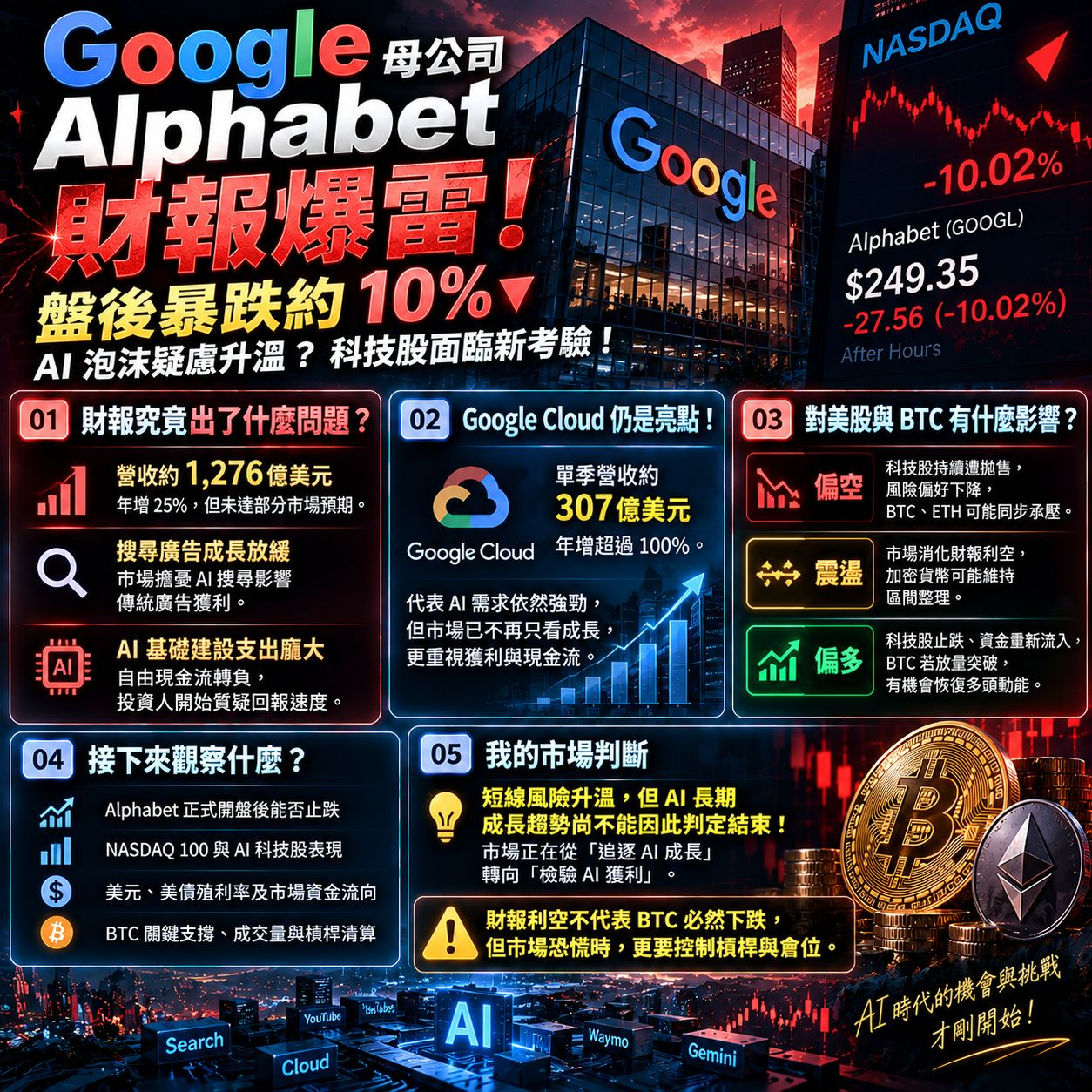
🚨 Google parent company Alphabet delivers an earnings shock! Shares plunge about 10% after hours as AI bubble concerns mount?
📉 On 10/28, Alphabet reported its third-quarter earnings. Despite continued revenue growth, its stock came under heavy selling pressure!
🔥 ① What exactly went wrong with the earnings report?
💰 Revenue was about $127.6 billion, up 25% year over year, but below some market expectations.
📉 Google Search advertising growth slowed, and the market is concerned that AI search could hurt the profitability of traditional ads.
🤖 AI infrastructure spending is huge, free cash flow has turned negative, and investors are beginning to question how quickly these investments will pay off.
☁️ ② Google Cloud remains a bright spot!
Google Cloud brought in about $30.7 billion in quarterly revenue, up more than 100% year over year.
This shows that AI demand remains strong, but the market is no longer focused solely on growth—it is paying closer attention to profitability and cash flow.
⚠️ ③ What impact could this have on U.S. stocks and BTC?
🔴 Bearish: Tech stocks remain under selling pressure, risk appetite declines, and BTC and ETH could also come under pressure.
🟡 Choppy: As the market digests the negative earnings news, cryptocurrencies may continue trading within a range.
🟢 Bullish: If tech stocks find a floor and money starts flowing back in, BTC could regain bullish momentum if it breaks out on strong volume.
🎯 ④ What should we watch next?
✔️ Whether Alphabet's stock can stop falling after the market opens
✔️ The performance of the NASDAQ 100 and AI tech stocks
✔️ The U.S. dollar, Treasury yields, and market fund flows
✔️ BTC's key support levels, trading volume, and leveraged liquidations
💡 My market outlook
Short-term risks are rising, but that doesn't mean the long-term AI growth trend is over!
The market is shifting from “chasing AI growth” to “testing AI profitability.”
⚠️ Negative earnings news doesn't mean BTC will inevitably fall, but when the market is fearful, it's even more important to manage leverage and position sizes.
#alphabet财报不及预期盘后跌10%
153
·
--
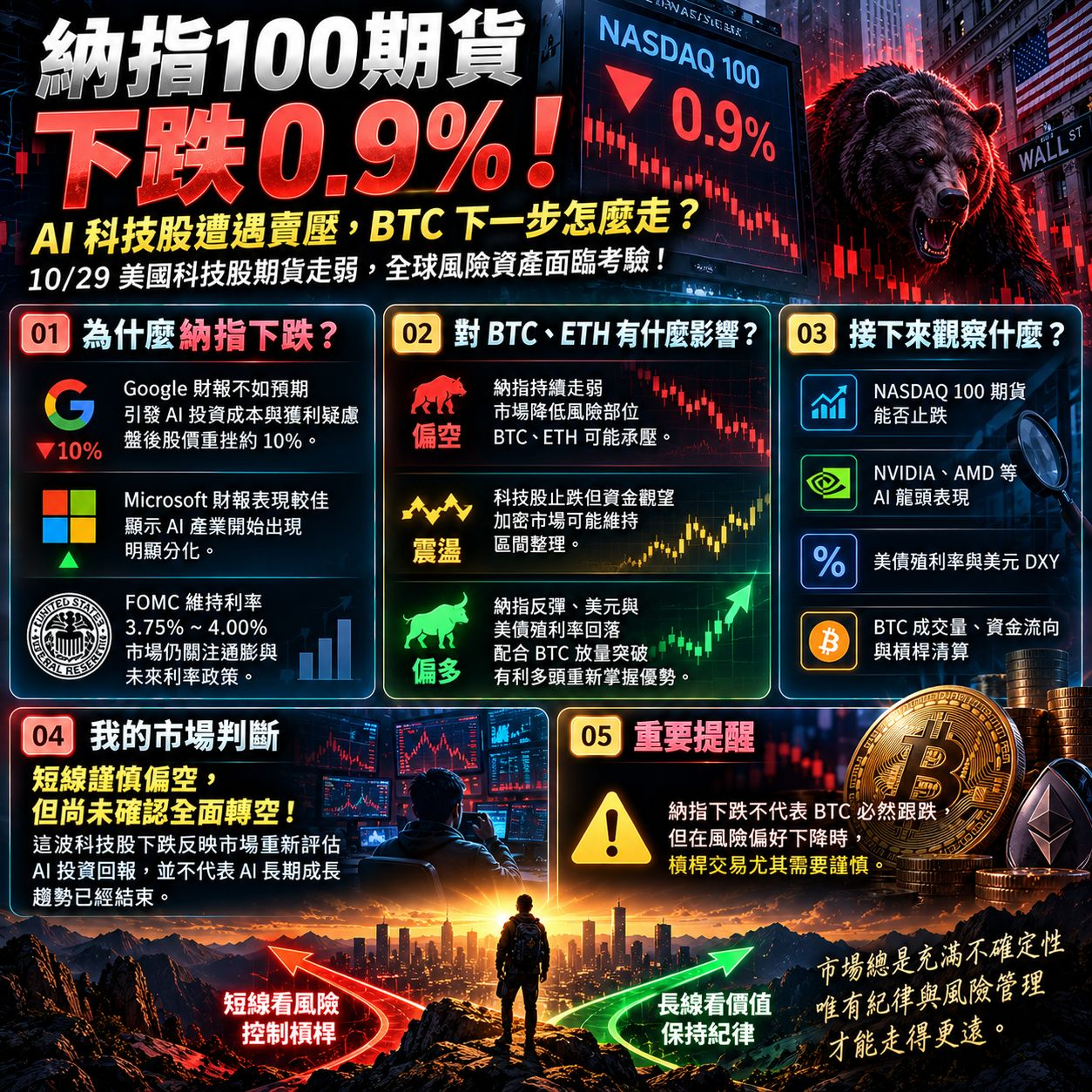
🚨 Nasdaq 100 futures down 0.9%! AI tech stocks face selling pressure—what’s next for BTC?
📉 10/29 U.S. tech stock futures weakened, putting global risk assets to the test!
🔥 ① Why is the Nasdaq falling?
🤖 Google’s earnings report raised concerns about AI investment costs and profitability, sending its shares down about 10% after hours.
💻 Microsoft’s earnings were stronger, highlighting a growing divergence in the AI industry.
💵 The FOMC held rates at 3.75%–4.00%, while markets remain focused on inflation and future rate policy.
📊 ② How could this affect BTC and ETH?
🔴 Bearish: If the Nasdaq continues to weaken, markets may reduce risk exposure, putting BTC and ETH under pressure.
🟡 Range-bound: If tech stocks stabilize but investors remain cautious, the crypto market may continue trading sideways.
🟢 Bullish: A Nasdaq rebound, a pullback in the U.S. dollar and Treasury yields, along with a high-volume BTC breakout, could help bulls regain the upper hand.
🎯 ③ What should we watch next?
✔️ Whether NASDAQ 100 futures can find a bottom
✔️ How AI leaders such as NVIDIA and AMD perform
✔️ U.S. Treasury yields and the U.S. Dollar Index (DXY)
✔️ BTC trading volume, fund flows, and leveraged liquidations
💡 My market outlook
Cautious and slightly bearish in the short term, but a broad reversal to a downtrend is not yet confirmed!
This tech stock sell-off reflects the market reassessing the returns on AI investments; it does not mean the long-term AI growth trend is over.
⚠️ A falling Nasdaq does not mean BTC will inevitably follow, but when risk appetite declines, leveraged trading calls for extra caution.
#纳指100期货下跌0.9%
225
·
--
🚀 Major Bitcoin technology upgrade! Bitcoin Core 32.1 officially released, raising the node connection limit by 60%!
₿ Bitcoin isn’t just about price fluctuations—the underlying network is evolving too!
The latest version of Bitcoin Core, 32.1, has officially launched, enhancing node connectivity, network efficiency, and security.
🔥 ① Significant increase in the node connection limit
📈 The default maximum number of connections has increased from 125 to 200, a rise of about 60%!
This change primarily increases nodes’ capacity to accept incoming connections from other nodes, helping improve the connection capacity of the block propagation network.
🛡️ ② Enhanced network security
Improvements to Tor hidden service protection and private transaction relay mechanisms, along with fixes for multiple security vulnerabilities, make node operation more reliable.
⚡ ③ More efficient transaction propagation
The traffic-limiting mechanism for transaction relay has been adjusted, reducing memory and CPU demands during periods of high transaction volume.
💡 ④ What impact will this have on the price of BTC?
🟢 Long term: Ongoing infrastructure improvements support the robust development of the Bitcoin network.
🟡 Short term: A technology upgrade doesn’t mean BTC will definitely rise. Prices are still influenced by the U.S. dollar, Treasury yields, ETF flows, and market liquidity.
🎯 My take
Technology upgrades improve the network’s foundations; they don’t guarantee short-term price gains.
What’s truly worth watching is whether Bitcoin can continue to improve its security, stability, and degree of decentralization.
📊 Short term, watch the flows; long term, watch the fundamentals. Trade with discipline; invest for growth.
#比特币core发布32.1版本提高节点连接上限

1
1
225
·
--
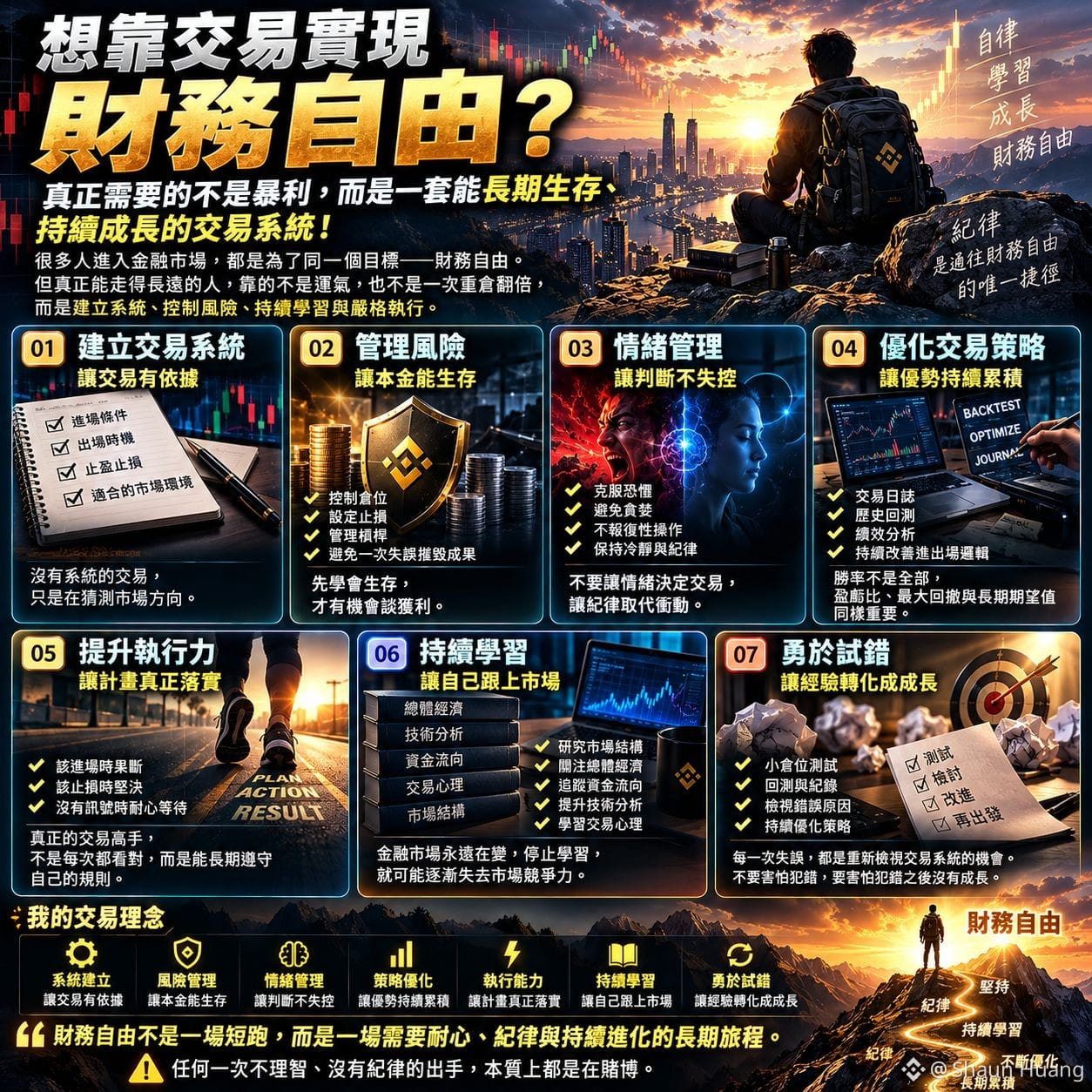
🚀 Want to achieve financial freedom through trading? What you need isn’t windfall profits, but discipline and a system!
💰 Financial freedom doesn’t come from luck or doubling your money with one oversized position. It comes from building your own trading edge over time.
🎯 ① Build a trading system
Set your entry and exit criteria, take-profit and stop-loss levels. Don’t trade based on feelings.
Trading without a system is just guessing where the market will go.
🛡️ ② Manage risk
Control your position sizes, leverage, and losses to protect your capital.
Learn to survive first; only then will you have a chance to profit.
🧠 ③ Manage your emotions
Overcome fear, greed, and revenge trading.
Let discipline replace impulse.
📊 ④ Optimize your trading strategy
Use backtesting and trading records to improve your win rate, risk-reward ratio, and maximum drawdown.
Keep optimizing to build your edge.
⚡ ⑤ Improve your execution
Follow your trading plan strictly. Take the loss when you need to, and wait when there’s no opportunity.
Knowing isn’t the same as doing—execution is what matters.
📚 ⑥ Keep learning
Study macroeconomics, capital flows, technical analysis, and market psychology.
The market keeps changing, so you must keep improving, too.
🔥 ⑦ Be willing to learn through trial and error
Test your strategy with small positions and backtesting, and learn from your mistakes.
Don’t be afraid to make mistakes; be afraid of failing to grow.
🏆 My trading philosophy
Systems set the direction, risk management ensures survival, emotions determine stability, strategies create an edge, execution determines results, and learning through trial and error drives growth.
💎 Financial freedom isn’t a sprint. It’s a long journey that takes patience, discipline, and continual evolution.
⚠️ Every impulsive, undisciplined trade is essentially gambling.
74
·
--
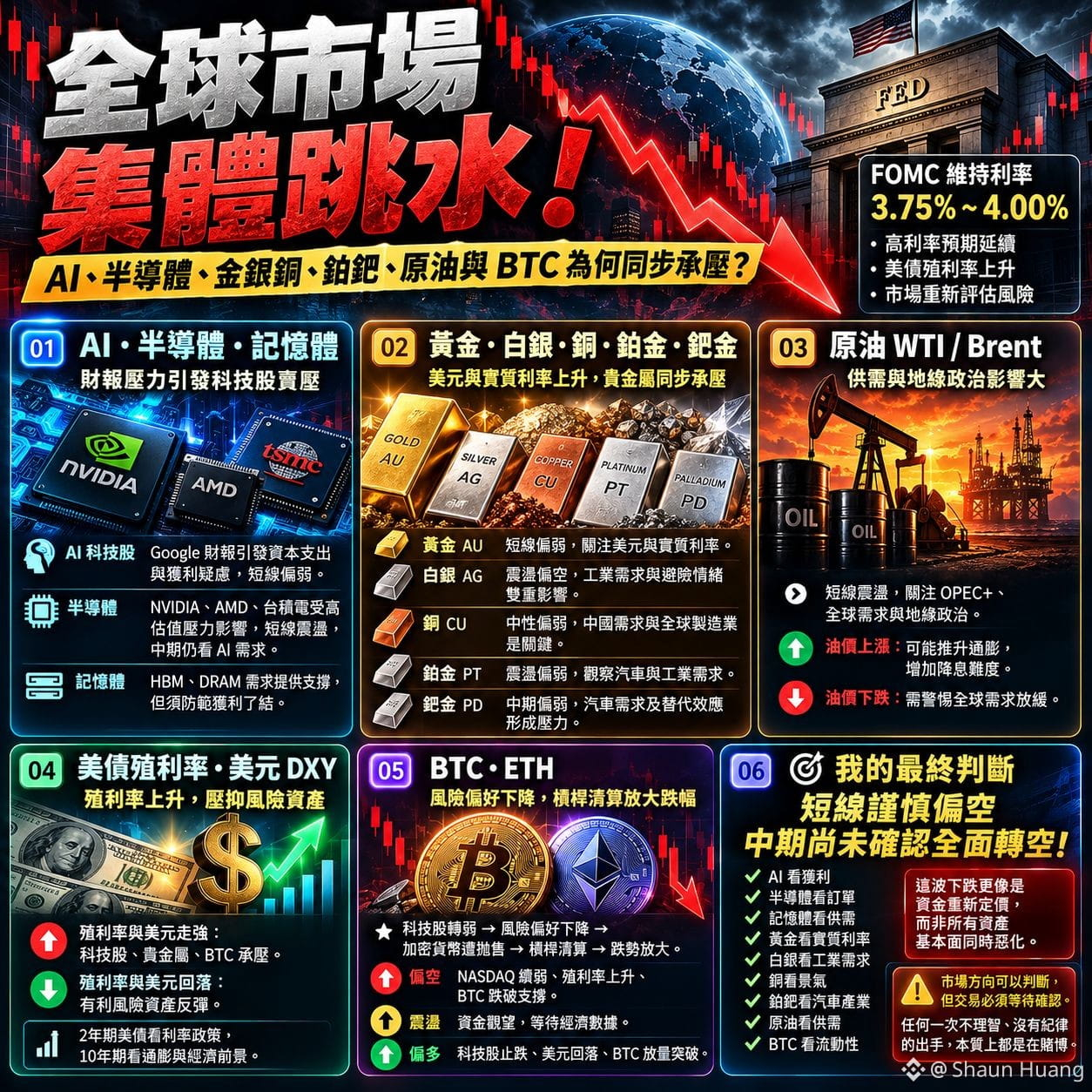
🚨 Global markets plunge across the board! Why are AI, semiconductors, precious metals, crude oil, and BTC all under pressure at the same time?
📉 On 10/29, global markets saw cross-asset selling pressure!
The FOMC held rates at 3.75%–4.00%, but expectations of higher rates for longer, pressure from AI earnings, and changes in U.S. Treasury yields prompted investors to reprice assets.
🔥 ① AI, semiconductors, memory
🤖 AI: Google’s earnings raised concerns about investment returns, weighing on the sector in the short term.
💻 Semiconductors: NVIDIA, AMD, and TSMC are volatile in the short term, but AI demand remains a mid-term driver.
📀 Memory: Demand for HBM and DRAM is supportive; watch for profit-taking.
🥇 ② Gold, silver, copper, platinum, palladium
🟡 Gold: Weak in the short term; watch the dollar and real interest rates.
⚪ Silver: Volatile with a bearish bias, influenced by industrial demand and risk aversion.
🟠 Copper: Neutral to weak; watch Chinese demand and the global economy.
🔵 Platinum: Volatile with a bearish bias; watch automotive and industrial demand.
⚫ Palladium: Weak in the medium term, affected by automotive demand and substitution effects.
🛢️ ③ WTI / Brent crude oil
Volatile in the short term; watch OPEC+, global demand, and geopolitics.
📈 Rising oil prices: Inflationary pressure increases, making rate cuts more difficult.
📉 Falling oil prices: May reflect a slowdown in global demand.
💵 ④ U.S. Treasury yields, U.S. Dollar Index (DXY)
📈 Both strengthening: Tech stocks, precious metals, and BTC come under pressure.
📉 Both declining: Supports a rebound in risk assets.
The 2-year yield reflects interest rate policy, while the 10-year yield reflects inflation and economic conditions.
₿ ⑤ BTC, ETH
Tech stocks weaken → risk appetite falls → cryptocurrencies are sold off → leveraged liquidations amplify the decline.
🔴 Bearish: NASDAQ remains weak and yields rise.
🟡 Volatile: Investors stay on the sidelines and await economic data.
🟢 Bullish: Tech stocks stabilize, the dollar retreats, and BTC breaks out on strong volume.
🎯 My final take
Cautious to bearish in the short term, but a broad-based shift to a downtrend has not been confirmed in the medium term!
For AI, watch earnings; for semiconductors, orders; for memory, supply and demand; for gold and silver, interest rates; for copper, economic conditions; for platinum and palladium, automotive demand; for crude oil, supply and demand; and for BTC, liquidity.
This move looks more like a repricing of assets than a broad-based deterioration in fundamentals.
#谷歌财报能否守住基本盘 #微软财报能否兑现ai红利 #FOMC会议
347
·
--
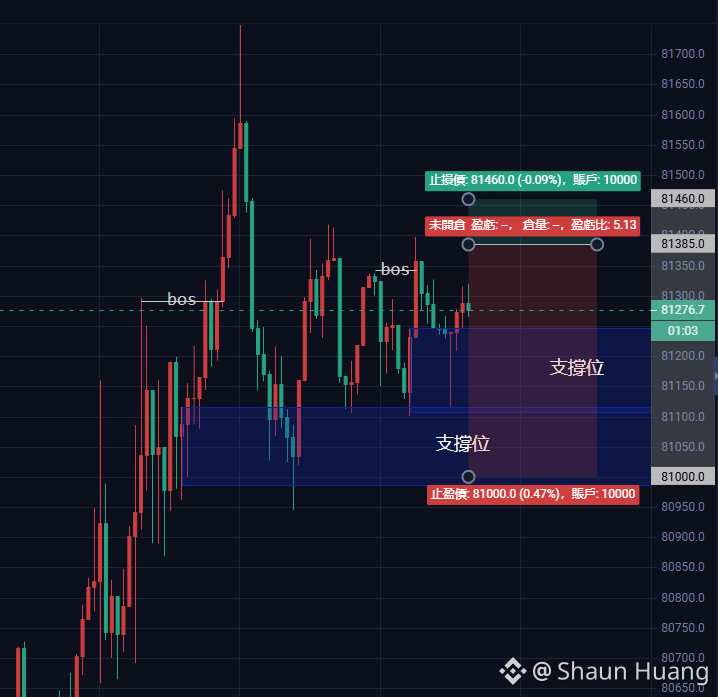
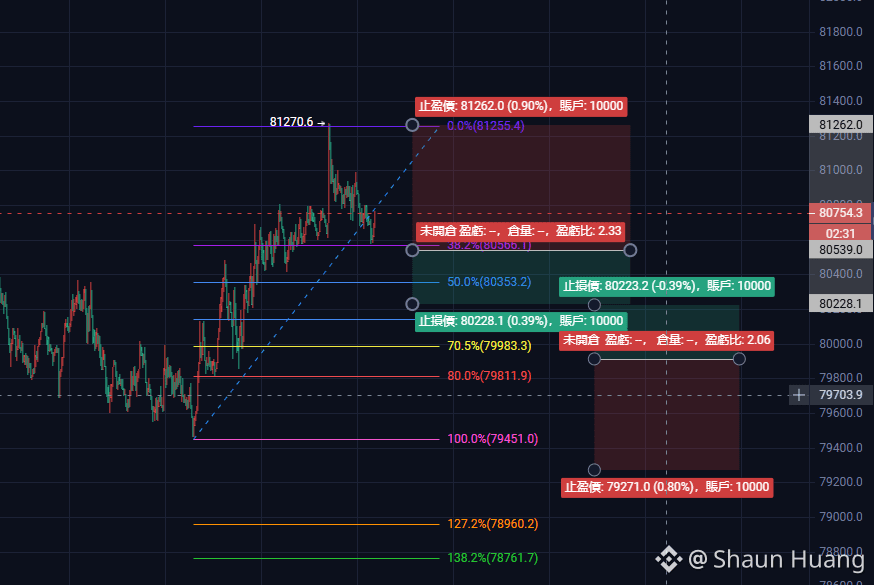
Today's small intraday plan
Seeing the continuation of the faulty upward structure
Although price is within a support zone,
the trend is currently in an ascending channel,
but I'll try to see if I can catch a small short trade
$BTC
{future}(BTCUSDT)
Today's small intraday plan
Seeing the continuation of the faulty upward structure
Although price is within a support zone,
the trend is currently in an ascending channel,
but I'll try to see if I can catch a small short trade
$BTC
Seeing the continuation of the faulty upward structure
Although price is within a support zone,
the trend is currently in an ascending channel,
but I'll try to see if I can catch a small short trade
$BTC
2
1
233
·
--
🚨 FOMC is over! AI, semiconductors, precious metals, oil, and BTC—which way will capital flow next?
📊 The Fed held rates at 3.75%–4.00%, with a neutral-to-hawkish policy signal.
Inflationary pressures persist, and in the short term, markets face the challenge of high interest rates and repricing.
🔍 ① AI, Technology, Semiconductors, and Memory
🤖 AI tech stocks: Bullish in the medium term, but pressured in the short term by high valuations and capital spending.
💻 Semiconductors: NVIDIA, AMD, and TSMC are benefiting from demand for AI computing power; outlook is volatile but bullish.
📀 Memory: Strong demand for HBM and DRAM; SK Hynix and Micron are relatively worth watching.
🥇 ② Precious and Industrial Metals
🟡 Gold: Bearish in the short term; waiting for real interest rates to fall.
⚪ Silver: Volatile with a bearish bias; watch industrial demand and the gold-to-silver ratio.
🟠 Copper: Neutral and volatile, supported by demand from power grids, AI, and manufacturing.
🔵 Platinum: Neutral to bearish; watch automotive demand.
⚫ Palladium: Neutral to weak; watch for changes in supply and demand.
🛢️ ③ WTI / Brent Crude
Volatile in the short term. Key factors to watch are OPEC+, global demand, and geopolitics.
If oil prices continue to rise, they could push up inflation expectations and make rate cuts more difficult.
💵 ④ Treasury Yields and the U.S. Dollar (DXY)
📈 Rising yields and a stronger dollar: Tech stocks, gold, and BTC may come under pressure.
📉 Falling yields and a weaker dollar: Favorable for risk assets, but we still need to confirm that the economy is holding up.
The 2-year Treasury yield reflects policy expectations, while the 10-year yield reflects growth, inflation, and funding costs.
₿ ⑤ BTC and ETH
🟢 Bullish: A weaker dollar, a stronger NASDAQ, and a high-volume breakout in BTC.
🟡 Volatile: Policy meets expectations, with no fresh inflows; watch for false breakouts.
🔴 Bearish: Rising yields and weakening tech stocks could weigh on BTC and ETH.
My view: Cautiously bearish on BTC in the short term; waiting for confirmation of renewed inflows into ETH.
💡 My final take:
For AI, watch earnings; for semiconductors, watch orders; for memory, watch supply and demand; for gold, watch real interest rates; for copper and oil, watch the economic cycle; for Treasuries, watch inflation; and for BTC, watch liquidity.
🎯 Cautious in the short term; watching AI and memory in the medium term, while waiting for capital flows to confirm a direction.
The market’s direction can be assessed, but trades should wait for confirmation.
#FOMC会议

690
·
--
🚨 Google and Microsoft earnings showdown! AI growth is strong, so why are tech stocks and BTC still at risk of volatility?
📊 The key takeaway from these earnings reports isn’t just how much revenue AI is generating—it’s whether massive AI investments can truly translate into profits and cash flow.
🔍 ① Google: Strong growth, but costs keep rising
Google’s cloud revenue grew 82% year over year last quarter, signaling robust AI demand.
But investments in data centers and computing power are also putting pressure on cash flow.
My take: If revenue growth doesn’t translate into better cash flow, the stock could still come under pressure, even if earnings look impressive.
☁️ ② Microsoft: Azure is strong, but market expectations are even higher
Azure growth is expected to be around 44%–45%, with AI demand continuing to provide support.
But when the market has already priced in strong growth, simply meeting expectations may not be enough.
The real question is whether Azure can exceed expectations and whether its outlook can continue to improve.
⚠️ ③ My market outlook: Bullish in the medium term, cautious in the short term
I believe the AI growth trend hasn’t reversed, but high valuations and massive capital expenditures could amplify volatility after earnings.
📈 Three possible scenarios for BTC and ETH:
🟢 Bullish: Earnings beat expectations, tech stocks strengthen, and risk capital flows back in. BTC and ETH could rebound.
🟡 Choppy: Earnings are decent but offer no surprises. Tech stocks rise first, then fall, and BTC could see a false breakout.
🔴 Bearish: AI cost pressures mount and the NASDAQ weakens. BTC and ETH could come under pressure as well.
💡 My conclusion:
The long-term AI trend remains bullish, but I’m not rushing to chase prices higher after earnings.
I’ll first watch to see whether tech stocks can hold their gains, then confirm whether BTC breaks through key resistance on strong volume.
🎯 Good earnings don’t necessarily lead to gains. Market expectations and capital flows are what truly determine price action.
The market direction can be assessed, but trades must wait for confirmation.
#谷歌财报能否守住基本盘 #微软财报能否兑现ai红利

3.5k
·
--
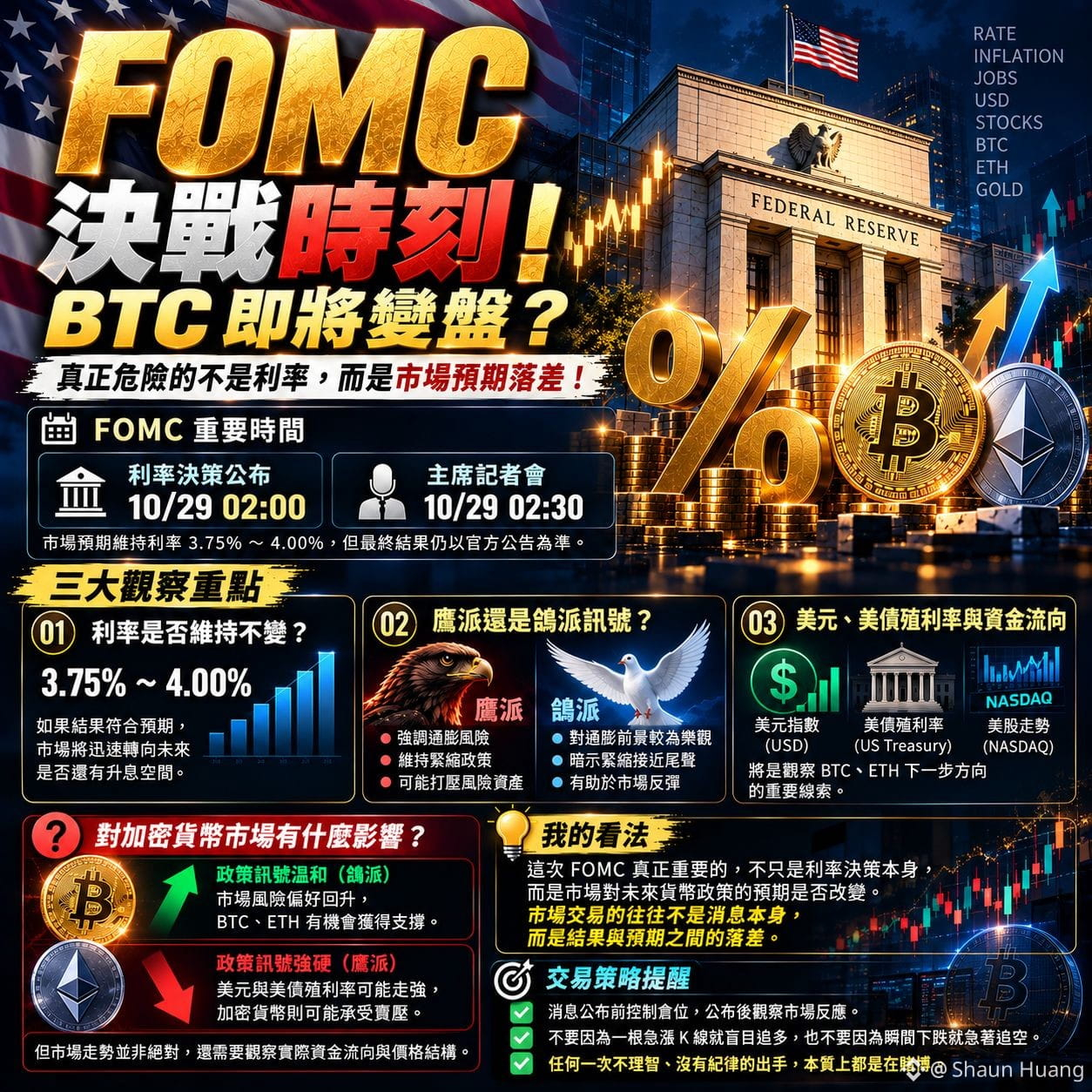
🚨 The FOMC takes center stage! Could the Fed’s rate decision be a turning point for BTC’s next move? 🔥
📊 A pivotal moment is approaching for global financial markets!
The U.S. Federal Reserve (Fed) will announce its latest interest rate decision on October 28, and markets broadly expect rates to remain unchanged.
But what may really move the markets isn’t whether rates are raised or held steady—it’s the Fed’s stance on future monetary policy.
This time, I’m paying particular attention to three things:
🔹 ① Will rates remain unchanged?
The current federal funds target range is 3.75%–4.00%.
If the decision meets expectations, the market’s focus will quickly shift to whether there’s still room for further rate hikes.
🔹 ② Will the Fed send hawkish or dovish signals?
🦅 Hawkish: Emphasizing inflation risks and maintaining restrictive policy could put pressure on tech stocks and cryptocurrencies.
🕊️ Dovish: A more optimistic outlook on inflation, or hints that tightening is nearing its end, could help risk assets rebound.
🔹 ③ The U.S. dollar, Treasury yields, and capital flows
After the rate decision is announced, moves in the U.S. Dollar Index, Treasury yields, and U.S. stocks will offer important clues about where BTC and ETH may head next.
⚠️ What could this mean for the crypto market?
📈 If policy signals are milder than expected, risk appetite could recover, potentially supporting BTC and ETH.
📉 If the Fed sends a stronger signal that it will maintain tight policy, the dollar and Treasury yields could strengthen, potentially putting cryptocurrencies under selling pressure.
However, market movements are never certain—we also need to watch actual capital flows and price action.
💡 My take:
What really matters at this FOMC meeting isn’t just the rate decision itself, but whether market expectations for future monetary policy change.
Markets often trade the gap between the outcome and expectations, not the news itself.
🎯 The most important thing in trading has never been guessing the direction in advance—it’s being prepared for the market to move differently than expected.
Manage your position size before the announcement, then watch the market’s reaction afterward.
Don’t blindly chase a long position just because of one sharp green candle, and don’t rush to chase shorts after a sudden drop.
Every impulsive, undisciplined trade is, at its core, a gamble.
#FOMC会议
258
·
--
🚨 Microsoft’s earnings report is coming soon! Will the AI boom really translate into profits? 🔥
📊 The AI boom continues to drive growth in tech stocks, but what the market cares about most now is no longer just how powerful AI is. It’s this:
How much real profit can such massive investments generate?
Microsoft will report earnings after the U.S. market closes on October 28. Here are three key things to watch:
🔹 ① Can Azure’s cloud business sustain its rapid growth?
Microsoft expects Azure revenue to grow by about 44%–45% this quarter on a constant-currency basis.
Demand for AI computing power continues to rise, but the market wants to know whether this pace of growth can be sustained over the long term.
🔹 ② Can Copilot really generate AI revenue?
AI products such as Microsoft 365 Copilot and GitHub Copilot continue to expand.
But more users don’t necessarily mean higher profits. What really matters is paid conversion, enterprise adoption, and recurring revenue.
🔹 ③ Will AI investment erode profits?
Microsoft expects capital expenditures to exceed $50 billion this quarter.
As data centers, AI chips, and cloud infrastructure continue to expand, the market will be watching gross margins, operating income, and cash flow closely.
💡 My take:
What really matters in this earnings report isn’t just whether revenue and profits beat expectations, but whether Microsoft can prove to the market that:
AI isn’t just a theme driving stock prices higher—it’s already a business model capable of generating sustainable profits.
⚠️ What could this mean for BTC and ETH?
If Microsoft’s earnings beat expectations and lift tech stocks and market risk appetite, cryptocurrencies could benefit indirectly.
But if AI investment costs keep rising while profit growth fails to keep pace, the market may reassess tech stock valuations, potentially increasing volatility in risk assets.
🎯 The most important thing in trading has never been guessing the market’s next move correctly in advance. It’s being prepared for when the market doesn’t go as expected.
Manage risk before earnings, and watch capital flows afterward.
Every impulsive, undisciplined trade is essentially a gamble.
#微软财报能否兑现ai红利

3.2k
·
--
🚨 Google’s earnings are about to be released! Can tech stocks hold their ground?
📊 The AI boom continues, but the market is starting to ask one question:
Can the huge sums tech giants are investing actually translate into real profits?
Google parent Alphabet is about to release its third-quarter earnings. Here are three key things to watch:
🔹 ① Can Search ads hold their ground?
With AI-powered search rising rapidly, Google’s ability to sustain advertising revenue growth will be an important indicator of market confidence.
🔹 ② Can Google Cloud maintain its rapid growth?
Cloud services and AI demand continue to expand, but will revenue growth be enough to meet market expectations?
🔹 ③ Will AI investment eat into profits?
Costs for data centers, chips, and infrastructure keep rising, making returns on investment and cash flow key factors.
💡 My take:
What really matters in these earnings isn’t just whether the numbers beat expectations, but whether Google can prove that:
AI isn’t just a story about the future—it’s a business that can generate profits today.
⚠️ What could this mean for the crypto market?
If earnings beat expectations and lift tech stocks and risk appetite, BTC and ETH could benefit indirectly.
But if the market loses confidence in AI spending and profit prospects, volatility in risk assets could also increase.
🎯 Trading isn’t about guessing the answer in advance; it’s about waiting for the market to show its direction.
Manage risk before the earnings release, then watch the flow of funds afterward.
#谷歌财报能否守住基本盘
$GOOGLB

1.6k
·
--
🚨 BTC suddenly surged in the early hours! Is the market really starting to reverse? 🔥
📈 After a prolonged period of volatility and declines, BTC suddenly moved higher in the early hours, and the market seems to be showing signs of a turnaround!
But is this rally driven by bulls re-entering the market, or is it just a short-term bounce caused by short covering?
📊 Next, I’ll be watching three things in particular:
🔹 ① Can key resistance levels be decisively broken?
A breakout is only the beginning—holding above those levels is what matters for the trend to continue.
🔹 ② Is the rally supported by trading volume?
A genuine reversal requires sustained buying, not a brief spike followed by a quick pullback.
🔹 ③ Will Fed policy shift market expectations?
Interest rate decisions and policy signals could be important catalysts for the next market move.
💡 My take:
Market sentiment could improve in the short term, but it’s still too early to declare the return of a bull market. What really matters isn’t how much prices rise, but whether they can hold those gains!
⚠️ The most important thing in trading has never been predicting the market—it’s keeping yourself in check.
Every impulsive, undisciplined trade is essentially a gamble.
The market will always offer opportunities; what’s truly scarce is your capital and patience.
If you don’t understand the market, don’t trade it. Don’t chase trades that don’t fit your strategy, and don’t open positions without a risk plan.
🎯 A truly mature trader isn’t someone who catches every market move, but someone who knows when to act and when to wait.
📌 You can lose to the market, but don’t let your emotions beat you.
$BTC
{future}(BTCUSDT)
🚨 BTC suddenly surged in the early hours! Is the market really starting to reverse? 🔥
📈 After a prolonged period of volatility and declines, BTC suddenly moved higher in the early hours, and the market seems to be showing signs of a turnaround!
But is this rally driven by bulls re-entering the market, or is it just a short-term bounce caused by short covering?
📊 Next, I’ll be watching three things in particular:
🔹 ① Can key resistance levels be decisively broken?
A breakout is only the beginning—holding above those levels is what matters for the trend to continue.
🔹 ② Is the rally supported by trading volume?
A genuine reversal requires sustained buying, not a brief spike followed by a quick pullback.
🔹 ③ Will Fed policy shift market expectations?
Interest rate decisions and policy signals could be important catalysts for the next market move.
💡 My take:
Market sentiment could improve in the short term, but it’s still too early to declare the return of a bull market. What really matters isn’t how much prices rise, but whether they can hold those gains!
⚠️ The most important thing in trading has never been predicting the market—it’s keeping yourself in check.
Every impulsive, undisciplined trade is essentially a gamble.
The market will always offer opportunities; what’s truly scarce is your capital and patience.
If you don’t understand the market, don’t trade it. Don’t chase trades that don’t fit your strategy, and don’t open positions without a risk plan.
🎯 A truly mature trader isn’t someone who catches every market move, but someone who knows when to act and when to wait.
📌 You can lose to the market, but don’t let your emotions beat you.
$BTC

281
·
--
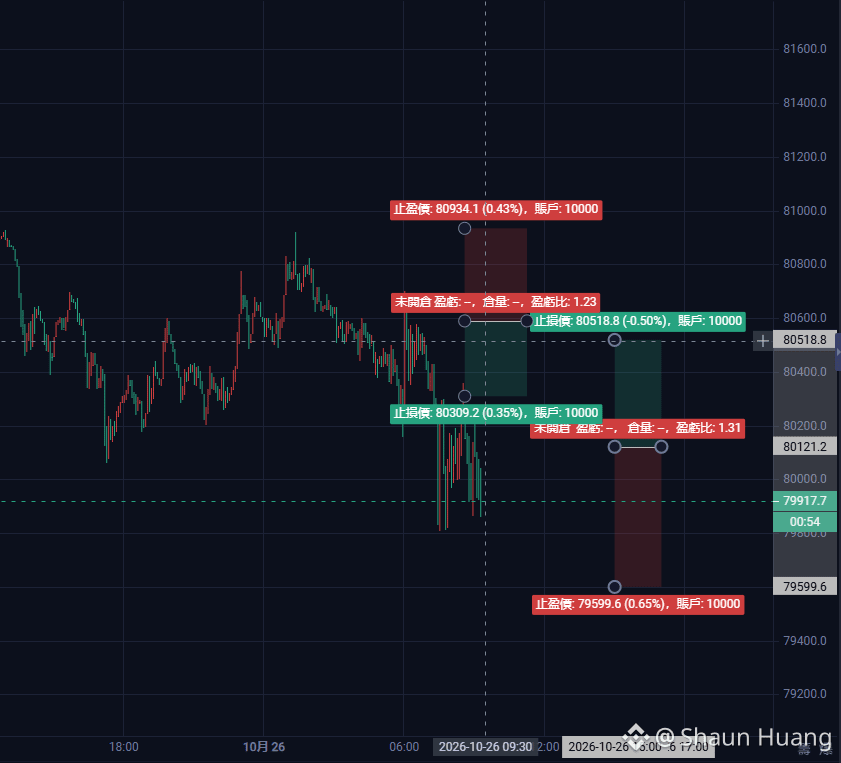
🔥 Why does the market always take out your stop-loss first, then move in the direction you predicted?
Have you ever experienced this?
You got BTC’s direction right, but your stop-loss was hit before the move began. As soon as you exited, the price started to reverse—even heading straight toward your original target.
📊 You may have read the direction correctly but overlooked the market’s liquidity.
💧 Why does this happen?
When many traders place their stop-losses around similar price levels, it can create a concentration of potential buy and sell orders.
▪️ Triggered stops on long positions may generate a large number of market sell orders.
▪️ Triggered stops on short positions may generate a large number of market buy orders.
When these orders are executed together, they can accelerate price movements and even cause a reversal after a brief breakout.
🎯 What’s really worth watching isn’t just where the price might go, but where large numbers of pending orders are clustered.
Previous highs and lows, as well as the boundaries of a consolidation range, are often liquidity zones worth paying attention to.
But remember: a liquidity sweep doesn’t mean the market will definitely reverse, and a breakout doesn’t mean the trend will necessarily continue.
💎 The most interesting thing about the market is that getting the direction right doesn’t mean getting the process right.
Reading price is the beginning of trading; understanding the order flow behind it helps you gain a deeper insight into the market.

165
·
--
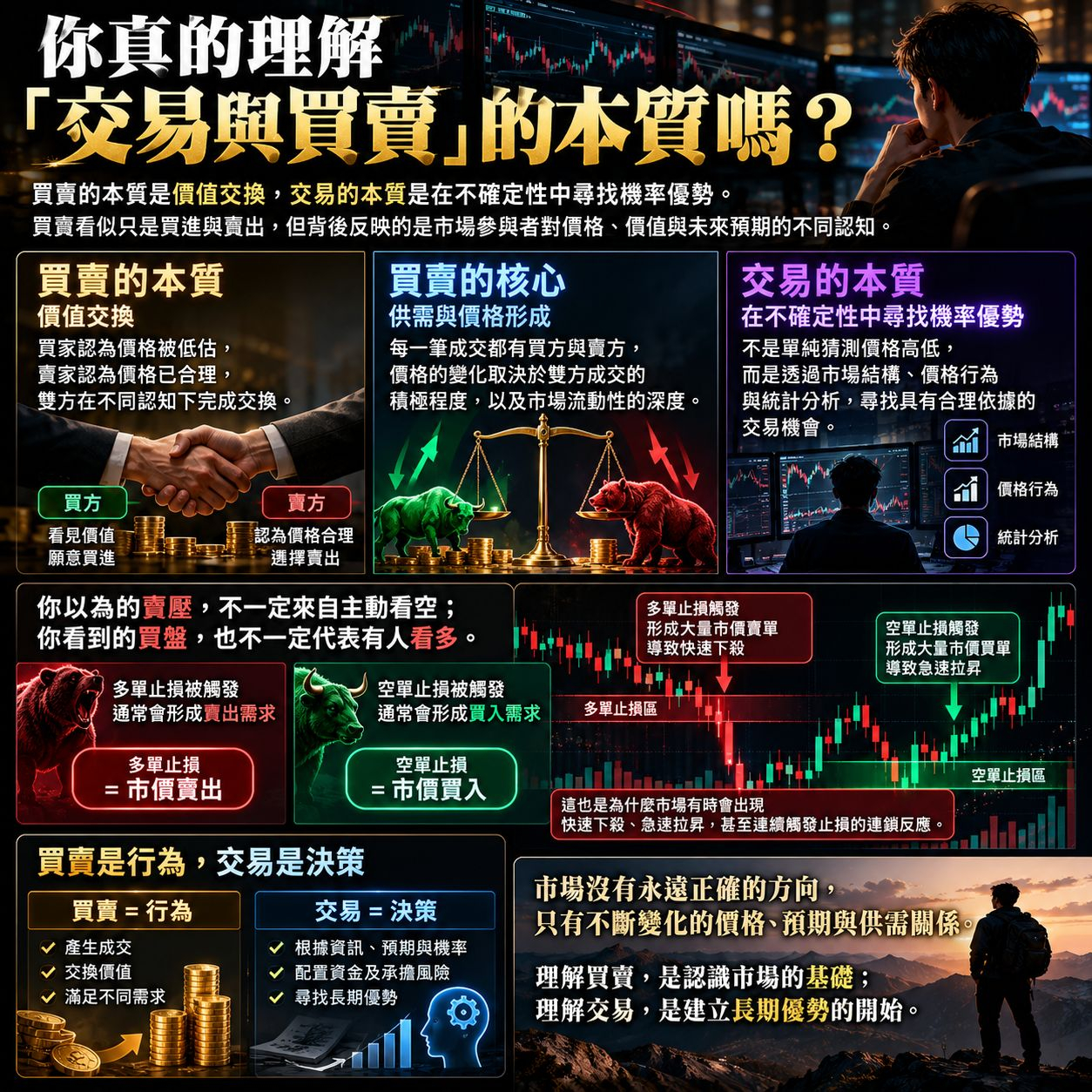
🔥 Do you really understand the nature of “trading and buying and selling”?
📊 Buying and selling are fundamentally an exchange of value; trading is about finding a probabilistic edge amid uncertainty.
Buying and selling may seem like simply purchasing and selling, but beneath the surface they reflect market participants’ differing perceptions of price, value, and future expectations.
📈 At the heart of buying and selling are supply, demand, and price formation.
Every trade has a buyer and a seller. Price movements depend on how aggressively each side is willing to trade, as well as the depth of market liquidity.
What you think is selling pressure may not come from active bearish sentiment; what you see as buying demand doesn’t necessarily mean someone is bullish.
When a long position’s stop-loss is triggered, it usually creates selling demand; when a short position’s stop-loss is triggered, it usually creates buying demand.
When stop-losses are executed as market orders:
▪️ Long position stop-loss = market sell
▪️ Short position stop-loss = market buy
This is why markets sometimes experience sharp sell-offs, sudden rallies, and even cascades of stop-loss triggers.
🎯 At the heart of trading are understanding the market and building an edge.
It’s not simply about guessing whether prices will rise or fall. It’s about using market structure, price action, and statistical analysis to identify trading opportunities with a sound rationale.
💡 Buying and selling are actions; trading is decision-making.
Buying and selling create transactions in the market. Trading is how participants decide to allocate capital and take on risk based on information, expectations, and probabilities.
There is no direction that is always right in the market—only ever-changing prices, expectations, and supply-and-demand dynamics.
Understanding buying and selling is the foundation for understanding the market; understanding trading is the beginning of building a lasting edge.
93
·
--
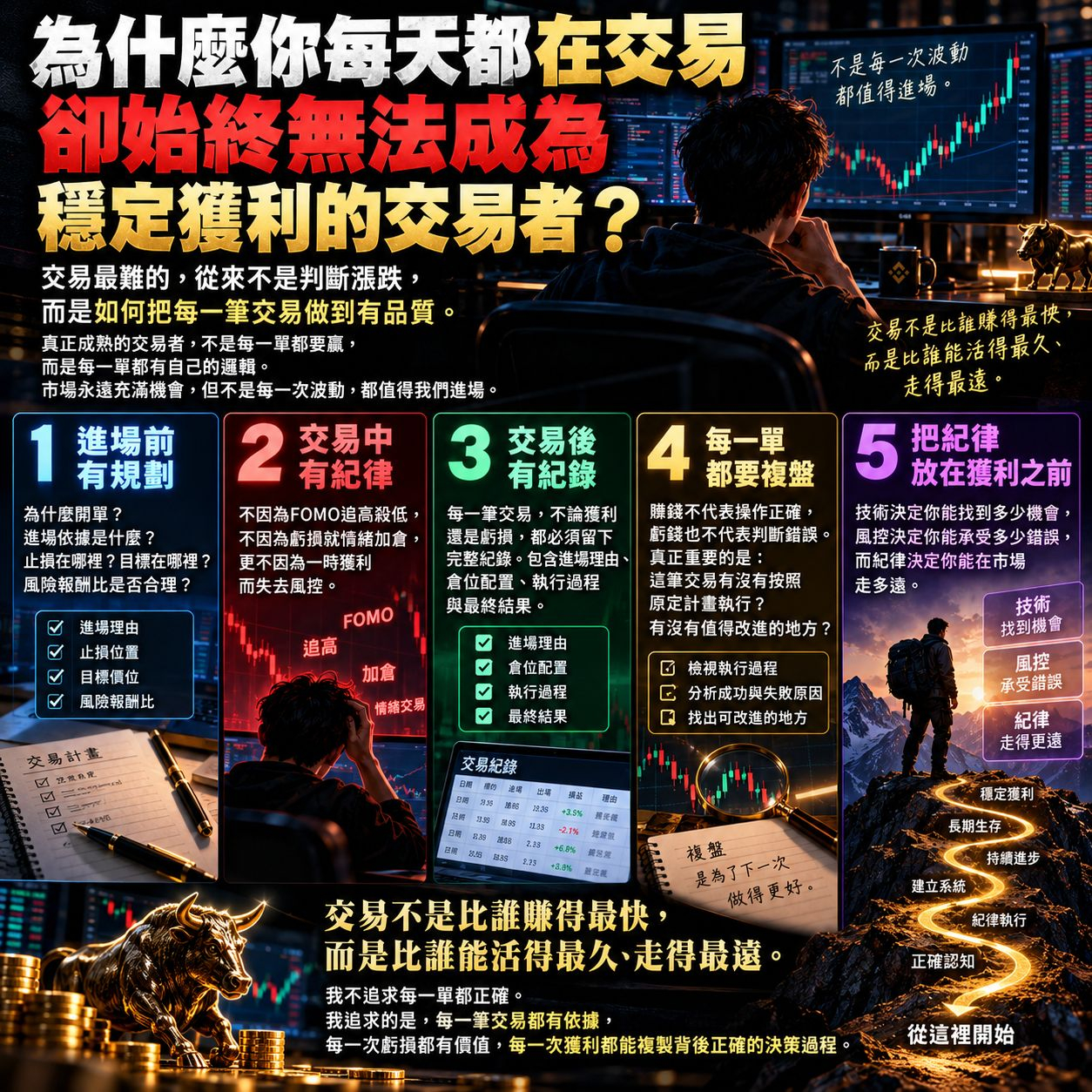
🔥 Why do you trade every day, yet still struggle to become a consistently profitable trader?
The hardest part of trading has never been predicting whether prices will rise or fall. It’s making every trade a high-quality one.
📊 Truly mature traders don’t need to win every trade; they need to have a clear rationale for each one.
The market is always full of opportunities, but not every fluctuation is worth trading.
I’ve always believed that to survive in this market long term, you need to do the following:
🎯 1|Have a plan before entering
Why are you placing this trade? What’s your reason for entering? Where is your stop-loss? What’s your target? Is the risk-to-reward ratio reasonable?
🛡️ 2|Stay disciplined while trading
Don’t chase highs or sell lows because of FOMO. Don’t add to a position emotionally after a loss, and never abandon risk management just because you’re temporarily in profit.
📝 3|Keep records after trading
Every trade, whether profitable or not, must be documented in full. Include your reason for entering, position sizing, execution process, and final result.
🔍 4|Review every trade
Making money doesn’t mean you traded well, and losing money doesn’t mean your judgment was wrong.
What really matters is: Did you follow your original plan? Was there anything you could improve?
💎 5|Put discipline before profit
Technical skill determines how many opportunities you can find. Risk management determines how many mistakes you can withstand. And discipline determines how far you can go in the market.
Trading isn’t about who makes money the fastest. It’s about who can stay in the game the longest and go the farthest.
I don’t expect every trade to be right.
What I strive for is to have a reason behind every trade, to learn something valuable from every loss, and to be able to replicate the sound decision-making behind every win.
251
Log in to explore more content
Join global crypto users on Binance Square
⚡️ Get latest and useful information about crypto.
💬 Trusted by the world’s largest crypto exchange.
👍 Discover real insights from verified creators.
Email / Phone number
Trending Topics
FedWatch
16.1M views
37,897 Discussing
I CAN'T GRASP IT! 🚨 WARSH CALLS IT A "GOOD QUESTION" 🚨 BITCOIN UNDER 80,000$!
Aurion_X
·6 Likes
·8.7k views
RussiaProposedNonCustodialWalletLimitsExcludeIntlSettlements
20 views
14 Discussing
AlphabetSharesSlide10%InLateTrading
456 views
42 Discussing