
Serhii1992
114 Posts

Serhii1992
Report
Block User
1 Following
9 Followers
95 Liked
Posts
All
Quotes
·
--
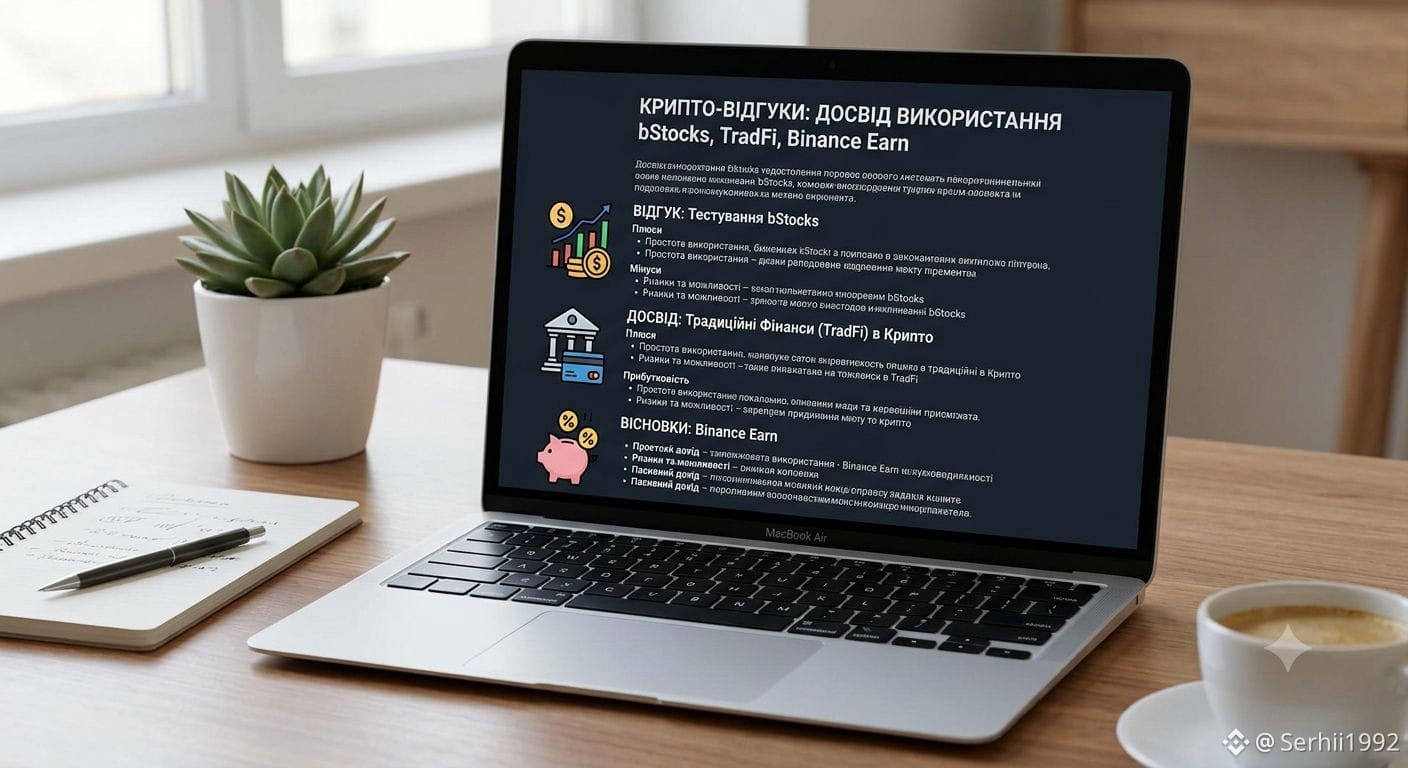
We’re testing bStocks, TradFi, and Binance Earn—quick takeaways.
bStocks: fast account opening and easy access to tokenized stocks. Ideal for long-term portfolio growth.
TradFi: a simple way to add traditional defensive assets (gold, ETFs, funds) to your portfolio to protect against volatility.
Binance Earn: the easiest passive income. One-click subscription and high liquidity to preserve capital.

1
148
·
--
Investment strategies. A properly chosen investment strategy is your compass in the world of finance. It will help you define goals, assess risks, and develop an action plan. Here are a few popular strategies.
Long-term investing: this approach is focused on stable returns over a long period (from 5–10 years). Investors put money into reliable assets such as stocks, bonds, and real estate. The main advantage is the ability to accumulate capital through compounding.
Value investing: investors who use this strategy look for stocks that are undervalued by the market. They analyze companies’ financial performance to find those whose intrinsic value is higher than the current market price. This requires deep knowledge and patience.
Growth investing: this strategy focuses on companies that have high growth potential in the future. Investors invest in shares of these companies, hoping for a significant increase in their value. This is a more risky strategy, but the potential return can be higher.
Index investing: this is a passive strategy that involves investing in index funds (ETFs), for example, the S&P 500.

1
237
·
--
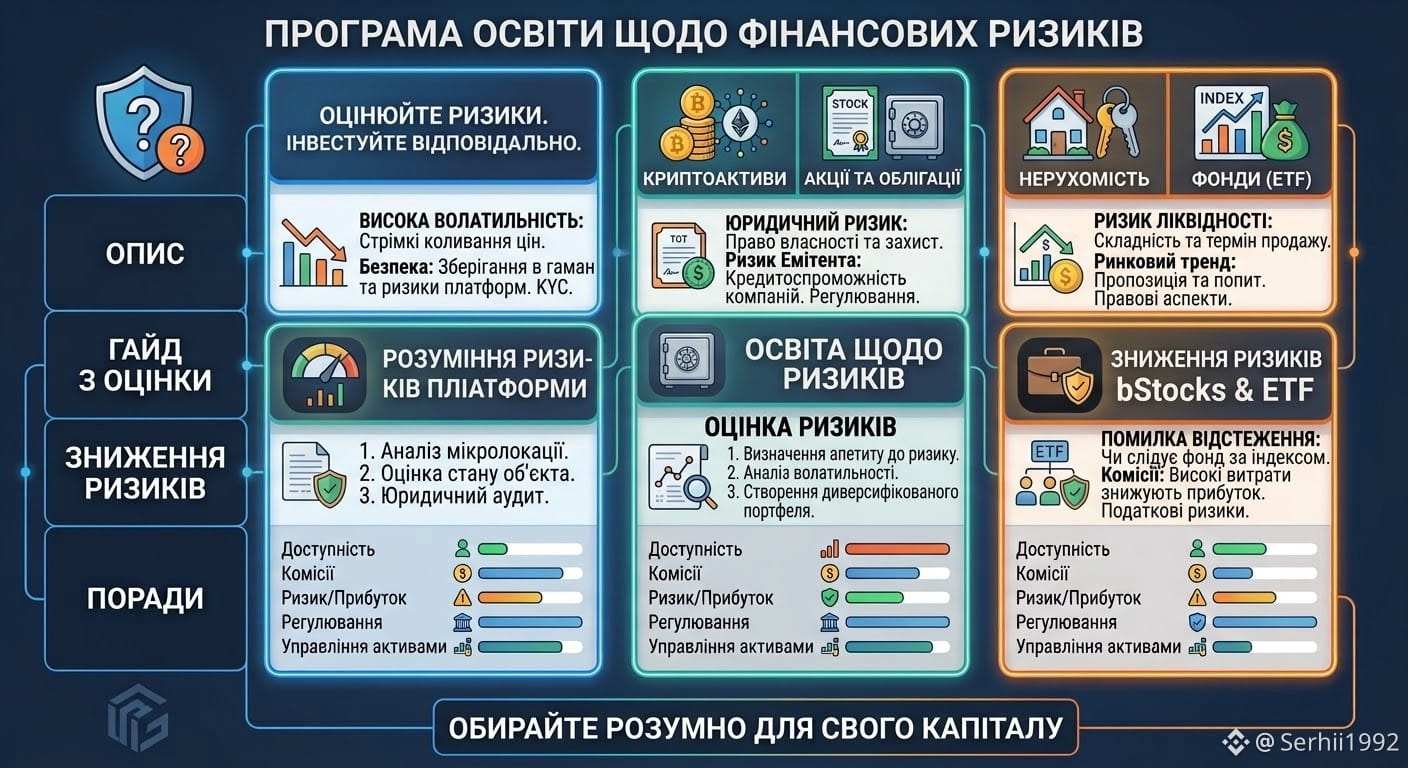
Education about risks: What you need to know before investing?
Any investment is not only potential profit, but also risks. When choosing tools between bStocks, TradFi, or Binance Earn, consider the following key factors:
Market risk (for all assets): Stock and cryptocurrency prices fluctuate due to news, economic factors, or trends. Nobody guarantees continuous growth.
Platform risk (bStocks and Binance Earn): Crypto exchanges and smart contracts depend on the system’s security. Choose reliable platforms and use two-factor authentication (2FA).
Regulatory risk: Legislation regarding cryptocurrencies and tokenized assets is constantly changing, which may affect the availability of services in your country.
Liquidity risk: Some products (e.g., fixed staking on Binance Earn) lock funds for a certain period, making it impossible to withdraw them instantly without losing interest.
1
189
·
--
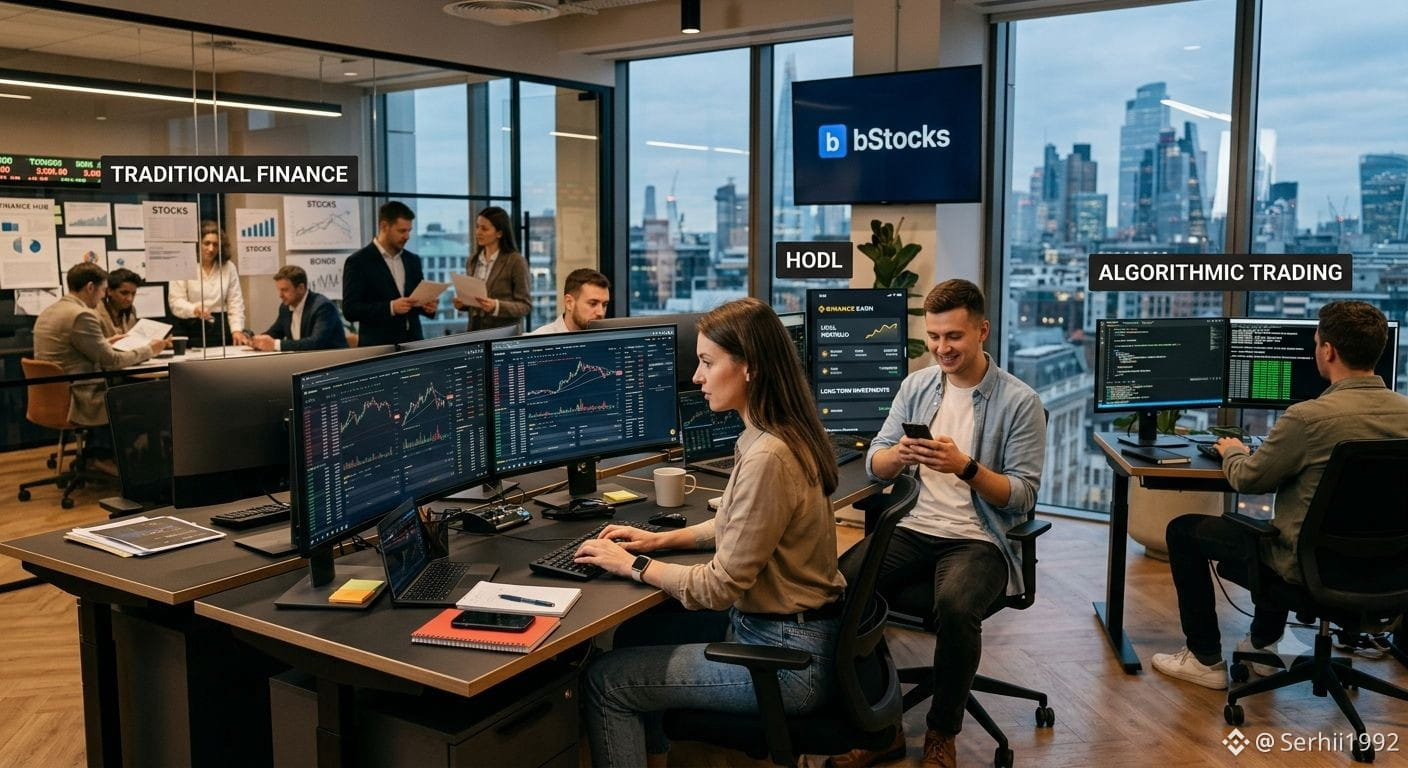
Comparison of trading methods— which one to choose?
The choice of trading method depends on your goals, experience, and risk. Let’s look at the main options: long-term investing (HODL). What is it? Buying and holding assets for a long time—months, years. Who is it for? Those who are looking for stable income and are not willing to take high risks. Advantages: potentially high returns in the long term. Disadvantages: the need to have patience and withstand market fluctuations.
Short-term trading (trading). What is it? Buying and selling assets over a short period—minutes, hours, days. Who is it for? Active traders who are willing to take risks and have time to analyze the market. Advantages: the possibility of earning a quick profit. Disadvantages: high risk of losing money due to market fluctuations.
Algorithmic trading. What is it? Using programs to automate trading according to predefined rules. Who is it for? Technically proficient traders who want to eliminate the emotional factor. Advantages: removing emotions and the ability to trade around the clock. Disadvantages: complexity of development and the need for constant monitoring.
Conclusion: each trading method has its own advantages and disadvantages.
1
197
·
--
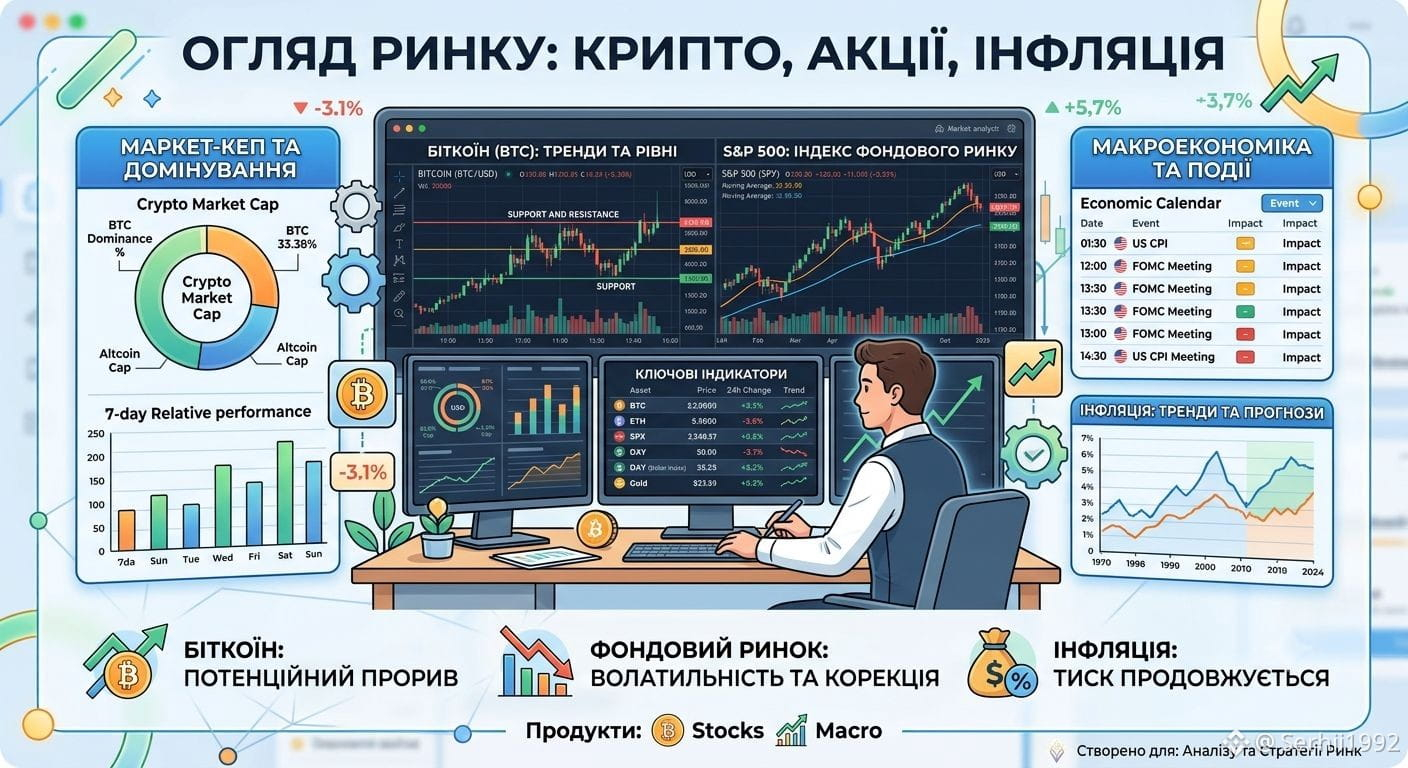
Cryptocurrency Market Overview: Dynamics, Trends, and Recent Changes
Today, the crypto market is in a phase of active change. Bitcoin (BTC) continues to demonstrate resilience, trying to hold at high levels, fueled by expectations for an ETF and the upcoming halving.
Ethereum (ETH), thanks to the introduction of scalable solutions (L2), is strengthening its position as a platform for DeFi and NFTs.
Among altcoins, movement is uneven: some projects are outperforming the market due to technical innovations or a strong community.
At the moment, investors’ attention is focused on U.S. macroeconomic indicators and regulatory initiatives, which directly affect market sentiment. Regulation remains a key factor that will shape the future of the entire industry.
Follow the news to stay up to date on the latest developments and make informed investment decisions.
1
150
·
--
$BTC
{spot}(BTCUSDT)
$ETH
{spot}(ETHUSDT)
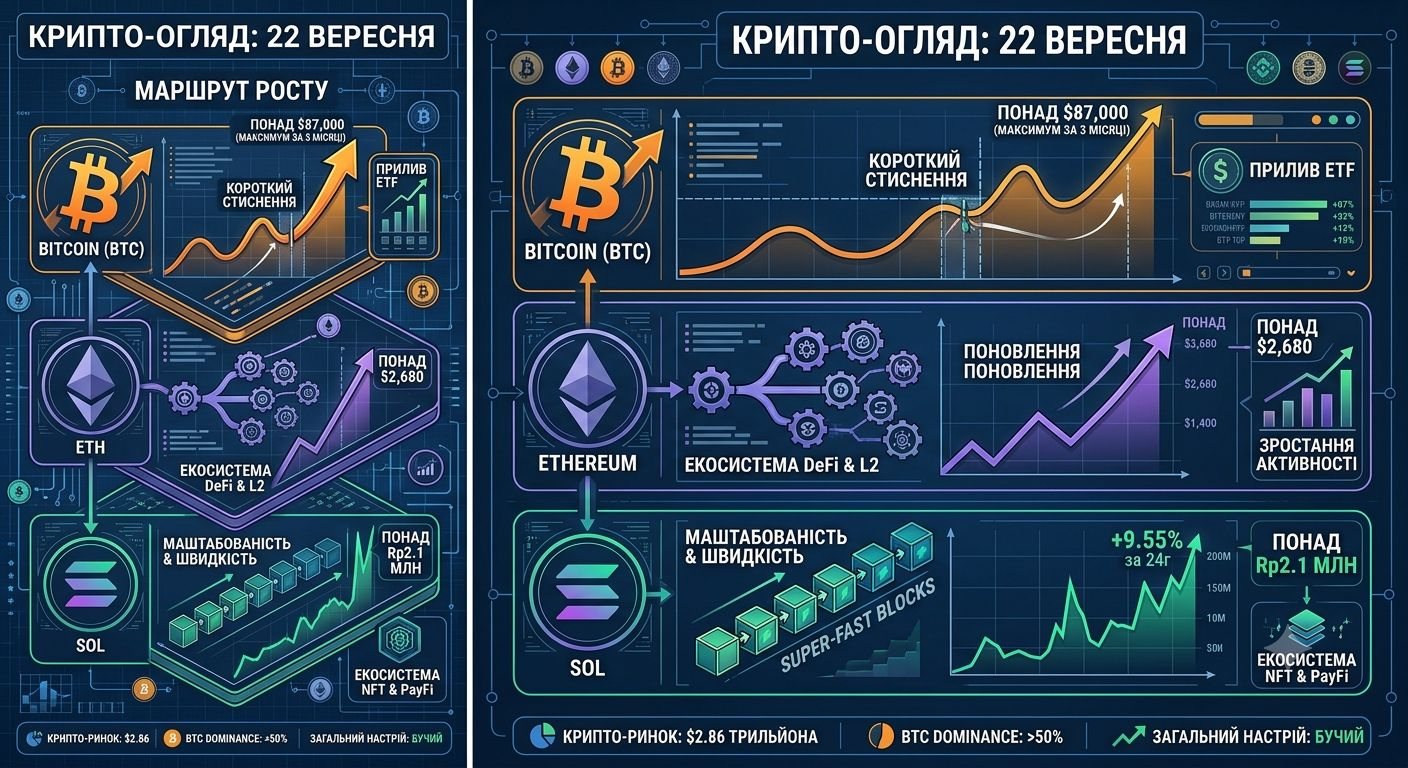
$SOL Crypto review September 22.
The market shows a pronounced bullish sentiment #
Bitcoin (BTC) Updated its 3-month high (over $87,000) thanks to capital inflows into ETFs and a short squeeze.
Ethereum (ETH) Rose above $2,680 amid increased activity in the DeFi ecosystem and L2 networks.
Solana (SOL) Shows a sharp jump (+9.55% over 24h) due to high block speeds and the growth of the NFT and PayFi sectors.
Total market capitalization: $2.86 trillion.
BTC dominance over 50%.
$BTC
$ETH
$SOL Crypto review September 22.
The market shows a pronounced bullish sentiment #
Bitcoin (BTC) Updated its 3-month high (over $87,000) thanks to capital inflows into ETFs and a short squeeze.
Ethereum (ETH) Rose above $2,680 amid increased activity in the DeFi ecosystem and L2 networks.
Solana (SOL) Shows a sharp jump (+9.55% over 24h) due to high block speeds and the growth of the NFT and PayFi sectors.
Total market capitalization: $2.86 trillion.
BTC dominance over 50%.
1
108
·
--
TradFi classic finance stocks, bonds, deposits—the most familiar, but least flexible instrument. It requires full verification (KYC), is tied to exchange trading hours, and is subject to strict tax oversight. A reliable choice for preserving the main capital with a high level of legal protection, but with relatively low returns and high entry thresholds on some markets.
Binance Earn crypto deposits and staking is the most convenient tool for passive income in crypto. Available 24/7, depositing takes just a couple of clicks; funds from flexible plans can be withdrawn at any time—ideal for those who already have cryptocurrencies or stablecoins and want to earn interest without complicated trading.
The main risks are the volatility of the tokens themselves and the lack of government guarantees for deposit protection.
Stocks tokenized shares: an interesting bridge between crypto and the stock market. Allows you to buy fractional shares of global giants using stablecoins 24/7, bypassing traditional brokers—convenient for quickly diversifying your crypto portfolio with stocks. However, it’s important to remember that you are buying a tokenized derivative; there are additional risks related to smart contracts and the platform.
1
137
·
--
Main investment strategies
Passive investing regular buying of assets: index funds, top stocks, or cryptocurrencies in the same amount at equal time intervals. Smooths out price fluctuations, reduces emotional stress, requires minimal time. Ideal for long-term savings and beginners. Fixed income focus on generating a stable cash flow through dividend stocks, bonds, or staking instruments and savings—for example, Binance Earn—predictable results and a lower risk level. To preserve capital and create passive income. Active trading Trading and rebalancing: choosing specific securities or altcoins yourself with frequent trades and adjusting the portfolio. Potential to achieve returns significantly higher than the market average. For experienced investors who are ready to analyze the market daily. Balanced model 80% of capital as the core: conservative and reliable assets—passive index funds, bonds, or stablecoins.
20% of capital as satellites: riskier assets with high growth potential—individual shares of growth companies or cryptocurrency. Best strategy: you need to stick to discipline for years.

1
339
·
--
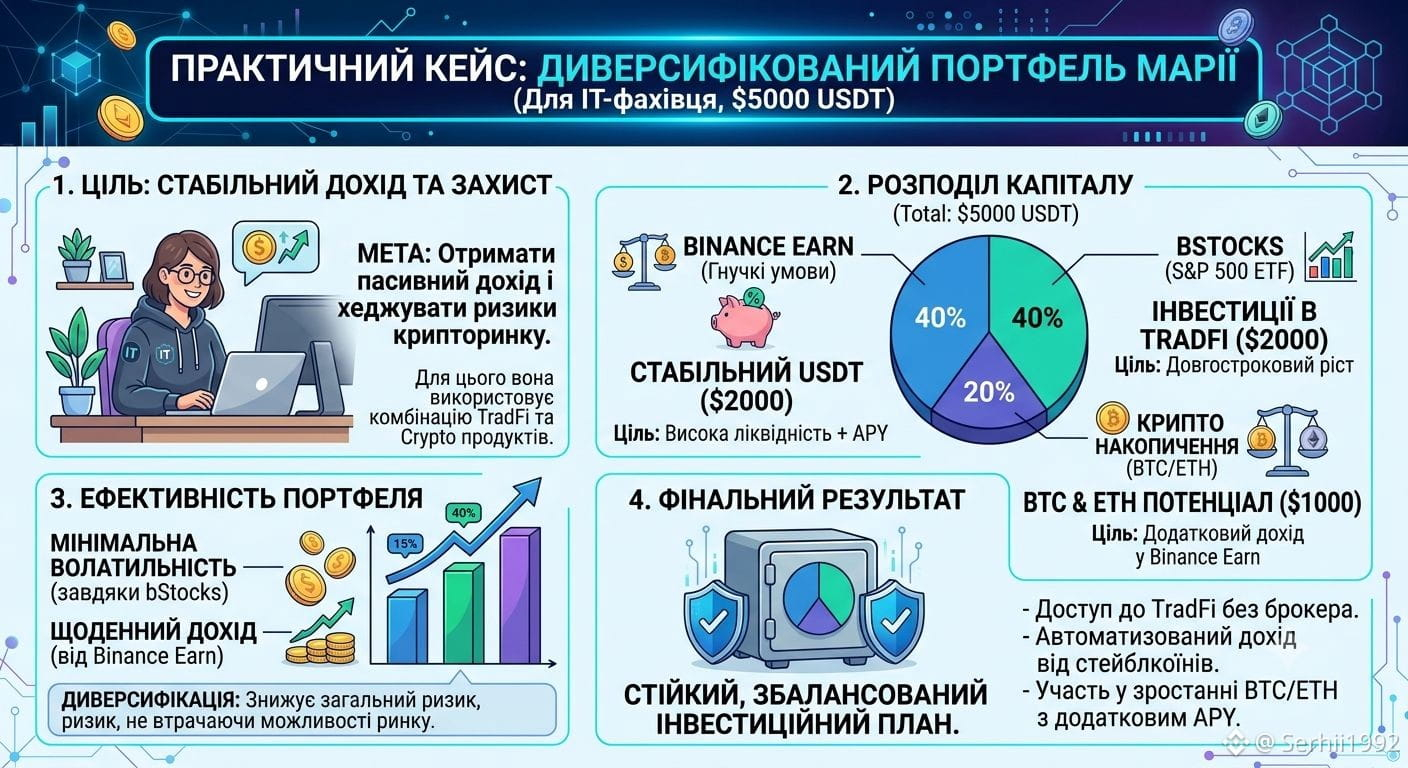
Practical case: How to balance a portfolio and earn passive income using Binance
Let’s look at a real investment scenario with $5,000 USDT to create a balanced portfolio with moderate risk.
Capital allocation strategy ($5,000):
40% ($2,000) — Liquid passive income (Binance Earn)
Action: Place $2,000 USDT under Flexible terms (Flexible).
Result: Daily interest accrual with the option to withdraw funds at any time.
40% ($2,000) — Access to the stock market (bStocks / TradFi)
Action: Buy tokenized stocks (e.g., an S&P 500 ETF or Apple) directly with USDT.
Result: Portfolio protection from crypto market downturns using stable traditional assets.
20% ($1,000) — Accumulating crypto assets (BTC & ETH)
Action: Buy BTC ($500) and ETH ($500) on spot, followed by sending them to Binance Earn.
Result: Participate in crypto market growth + additional income for holding coins.
Final summary:
Security: The portfolio is protected by traditional assets.
Efficiency: Funds don’t just sit idle—most of them generate returns (APY).
Convenience: Managing both TradFi and Crypto tools happens in a single app.
1
274
·
--
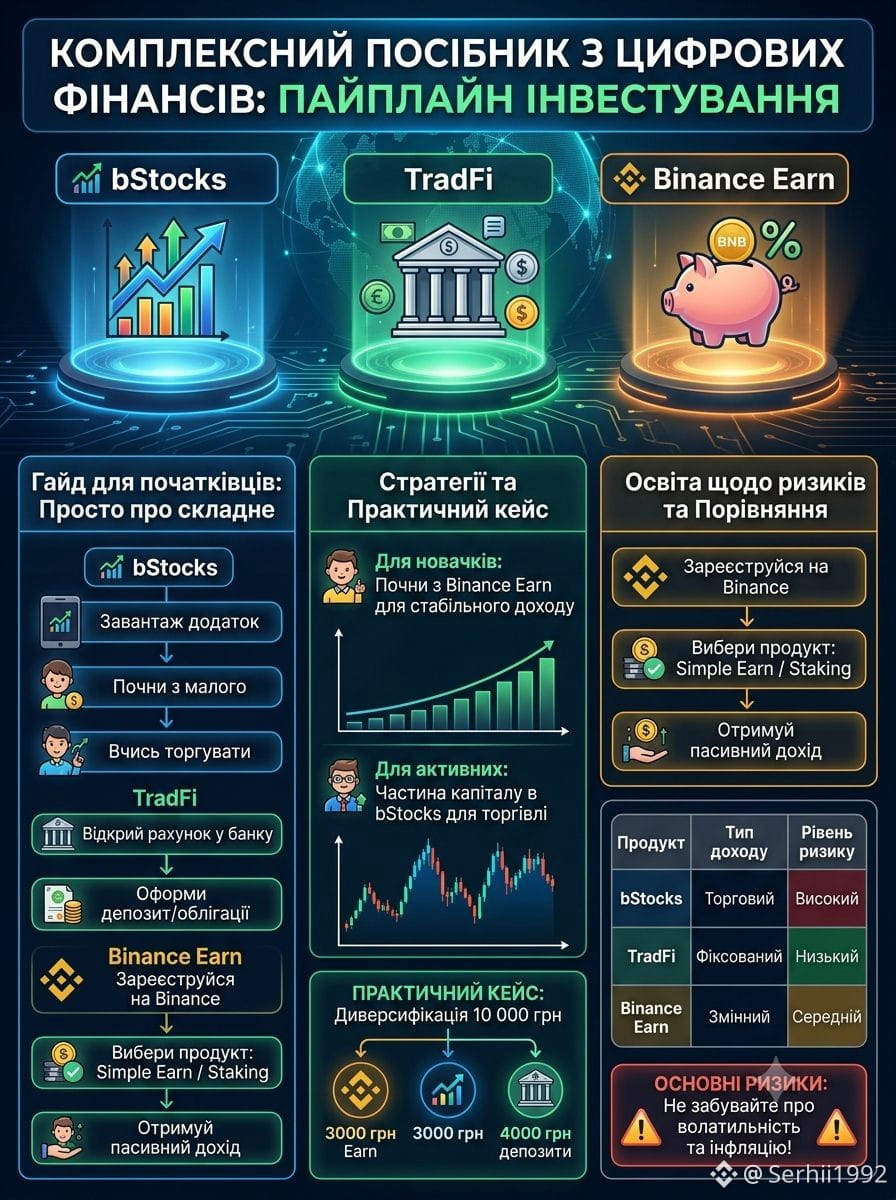
TradFi vs bStocks and Binance Earn: where should you keep your money?
Each instrument performs its role in your portfolio—everything depends on your goals and your attitude to risk:
TradFi (Traditional finance: banks, bonds)
What it’s for: Basic security and protection from inflation.
Pros: Government guarantees, predictable fixed income.
Cons: Low yield, which rarely beats real inflation.
bStocks (Tokenized shares and trading)
What it’s for: Active capital growth through price fluctuations.
Pros: Access to global markets 24/7, flexibility in trading.
Cons: High volatility and the risk of losses if your forecast is wrong.
Binance Earn (Crypto deposits and staking)
What it’s for: Passive income on crypto assets.
Pros: Flexible terms, a higher interest rate compared to banks.
Cons: Risks of smart contracts and market fluctuations in the tokens themselves.
3
189
·
--
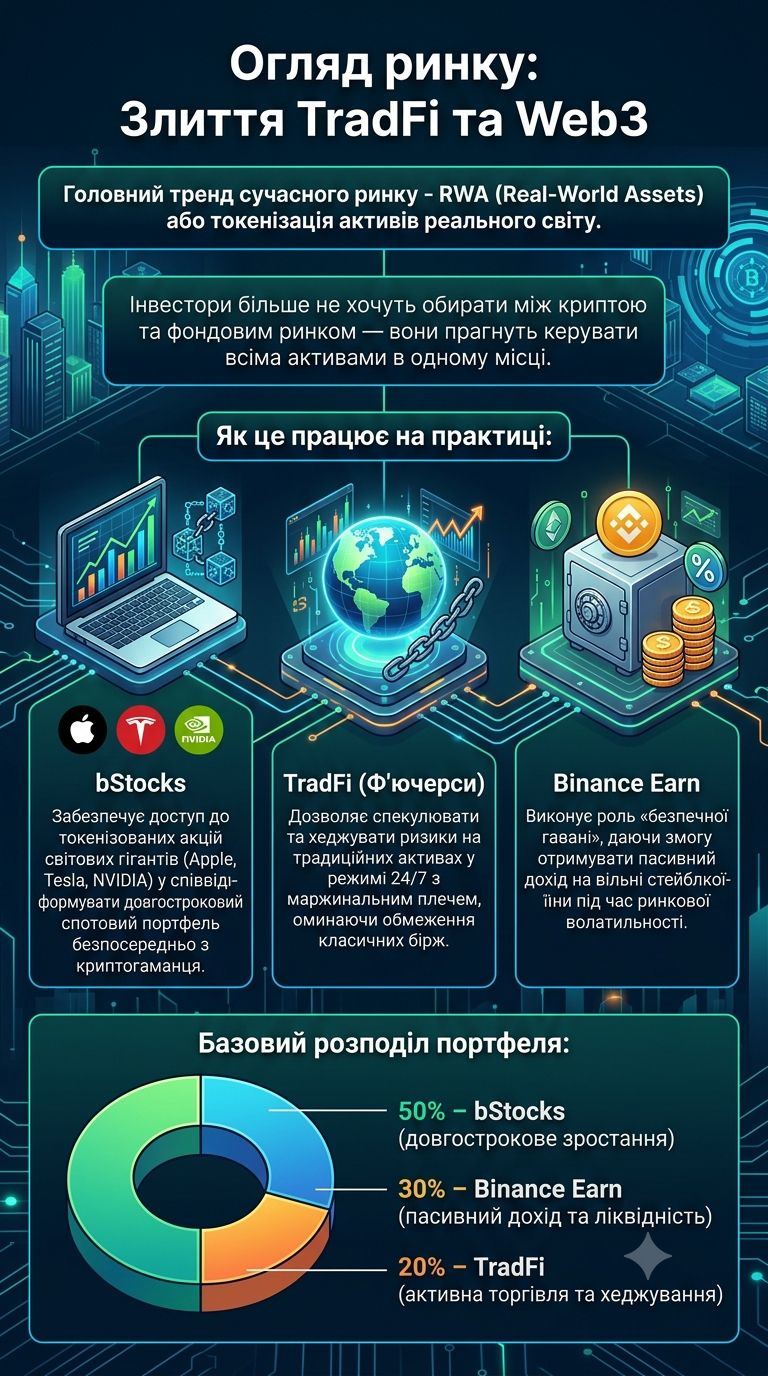
Market Overview: The Convergence of TradFi and Web3
The main trend in the modern market—RWA (Real-World Assets) or tokenization of real-world assets. Investors no longer want to choose between crypto and the stock market—they want to manage all their assets in one place.
How it works in practice:
bStocks: Provides access to tokenized shares of global giants (Apple, Tesla, NVIDIA) on a 1:1 basis, enabling you to build a long-term spot portfolio directly from your crypto wallet.
TradFi (Futures): Lets you speculate and hedge risks on traditional assets in 24/7 mode with leverage, bypassing the limitations of conventional exchanges.
Binance Earn: Acts as a “safe haven,” allowing you to earn passive income on available stablecoins during market volatility.
Base portfolio allocation: 50% - bStocks (long-term growth), 30% - Binance Earn (passive income and liquidity), 20% - TradFi (active trading and hedging).
4
414
·
--
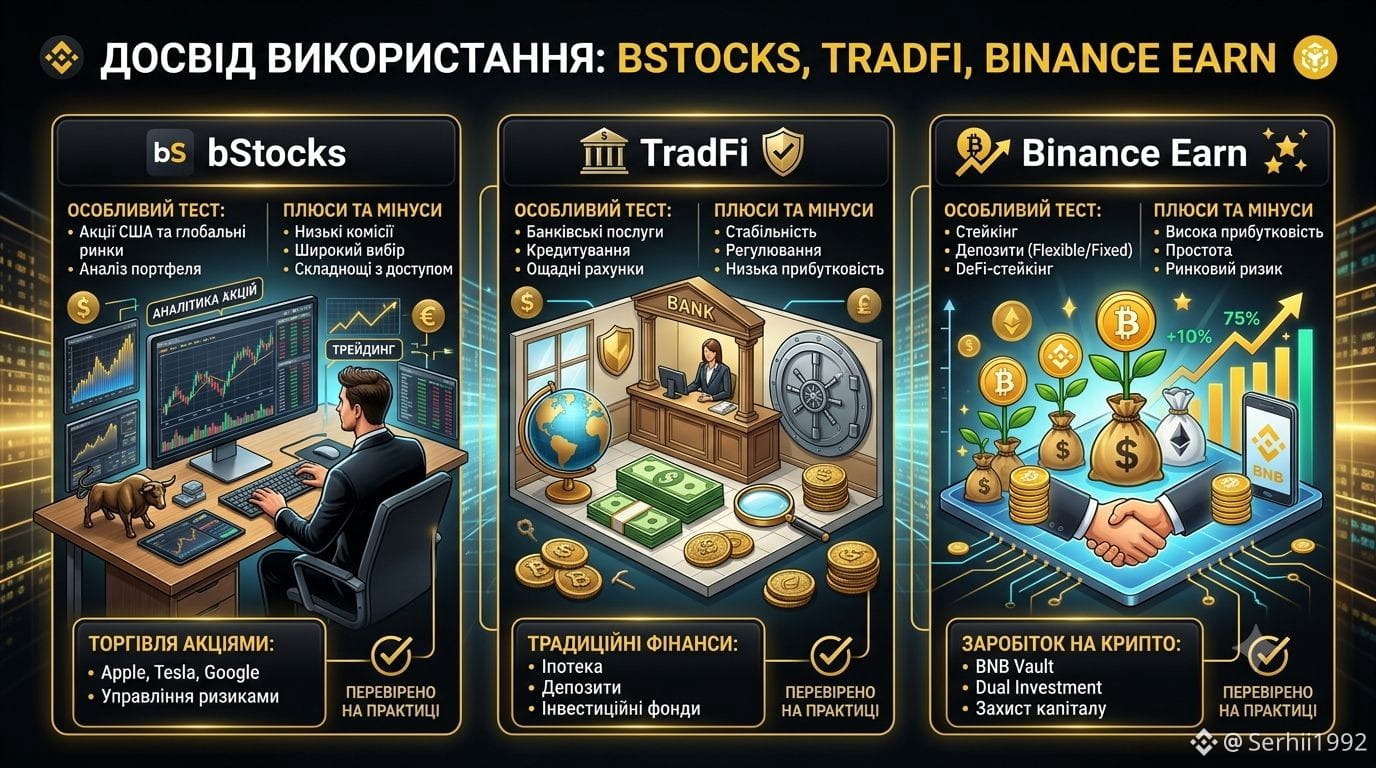
My experience with bStocks, TradFi, and Binance Earn.
I tested three key areas for trading and asset management. Sharing brief takeaways.
bStocks (Tokenized Stocks)
Impressions: A convenient way to buy shares of global companies directly from your crypto wallet.
Plus: 24/7 trading without the need to open complex accounts with traditional brokers.
TradFi (Traditional Finance):
Impressions: Classic instruments (bonds, funds, futures) that add stability to a portfolio.
Plus: Predictability and clear regulation, perfectly balancing high-risk crypto assets.
Binance Earn (Passive Income)
Impressions: An ideal way to put idle stablecoins (USDT/USDC) to work while waiting for new deals.
Plus: Flexible terms, with the option to withdraw funds back to spot instantly.
Conclusion: Combining these three products makes it possible to diversify your capital between crypto, the stock market, and passive instruments in one place!
1
128
·
--
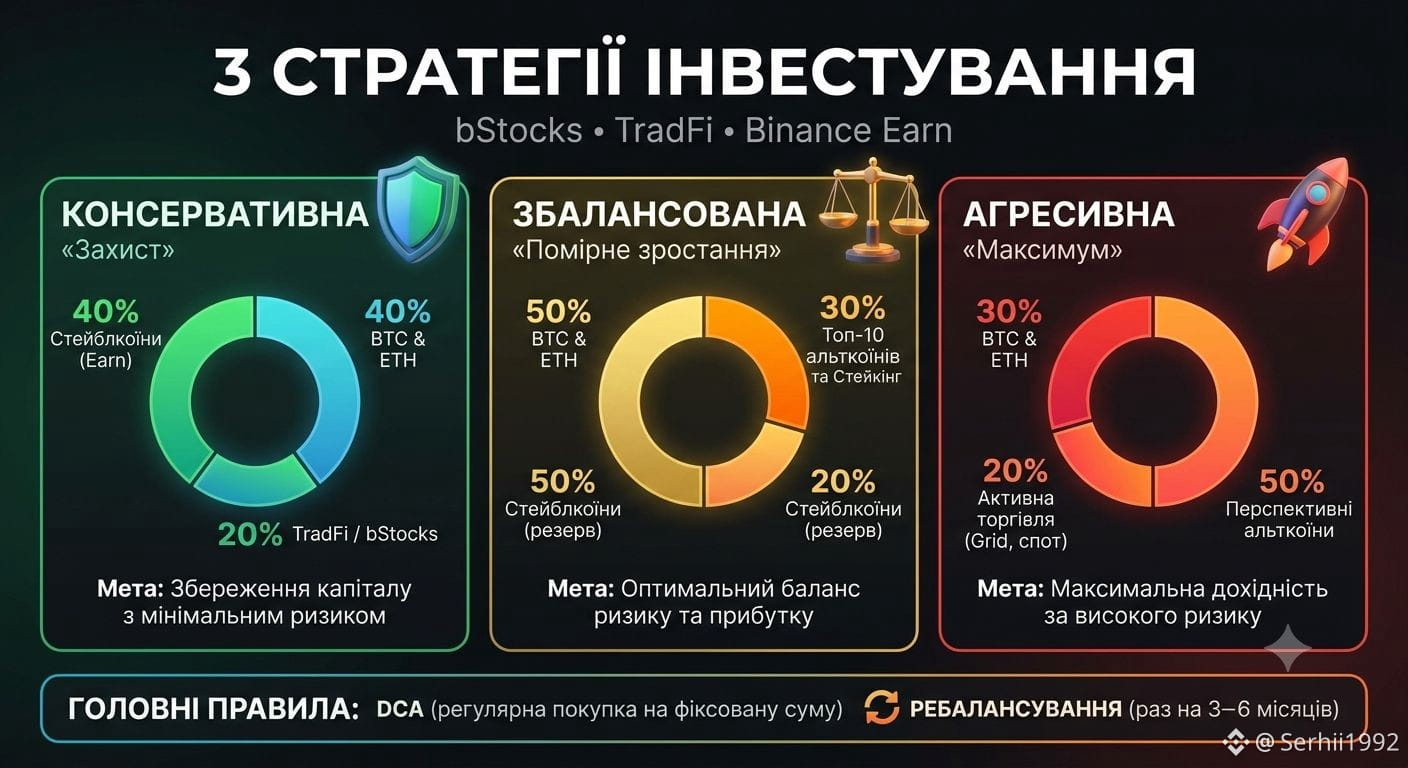
3 investment strategies for any portfolio
1. Conservative (“Protection”)
40% — Stablecoins (Binance Earn for passive income)
40% — Bitcoin and Ethereum (reliability)
20% — TradFi / bStocks (tokenized stocks and bonds)
Goal: Minimize risk, preserve capital, and hedge against inflation.
2. Balanced (“Moderate Growth”)
50% — BTC and ETH
30% — Top-10 altcoins + Staking
20% — Stablecoins (reserve for buying dips)
Goal: An optimal balance of risk and return for steady growth.
3. Aggressive (“Maximum”)
30% — BTC / ETH
50% — Low-cap altcoins and new trends
20% — Active trading (Grid bots, spot)
Goal: High returns by taking increased risk.
Main rule: Use DCA (buy regularly for a fixed amount) and rebalance your portfolio once every 3–6 months.
Which of these strategies is closer to you, or would you like to set individual proportions for your budget?
3
356
·
--
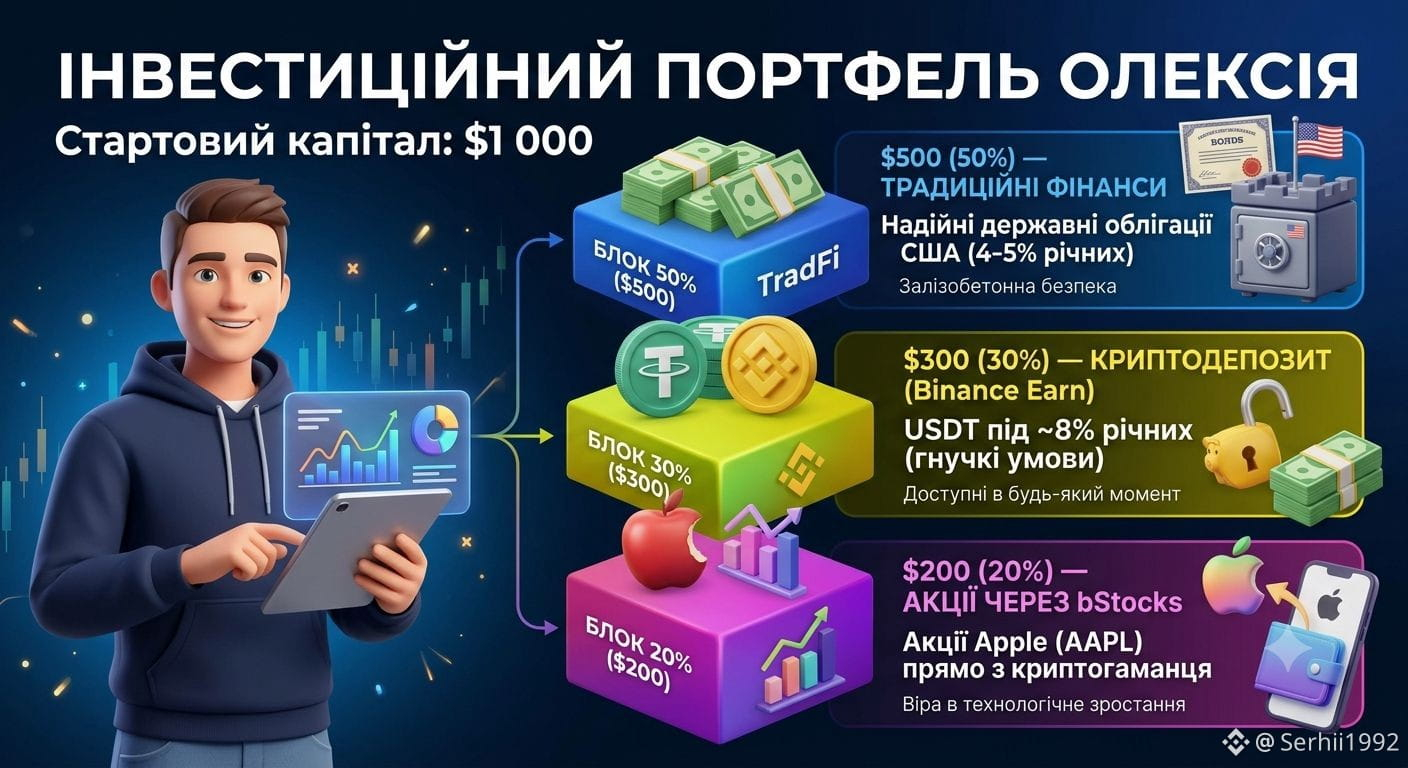
Let’s imagine an investor, Oleksii. He has $1,000. He wants to protect his money from inflation, but doesn’t want to take much risk.
$500 (50%) Oleksii sends into TradFi—buying reliable US government bonds (with a yield of about 4–5% per year). This is his solid safety net.
$300 (30%) he converts to USDT and deposits on Binance Earn at 8% per year with flexible terms. These funds are available at any moment if he urgently needs cash.
$200 (20%) he invests through bStocks in shares of the tech giant Apple, believing in the company’s growth, but he buys them directly from his crypto wallet.
3
802
·
--
30D trade $SOL 58.3K USDT
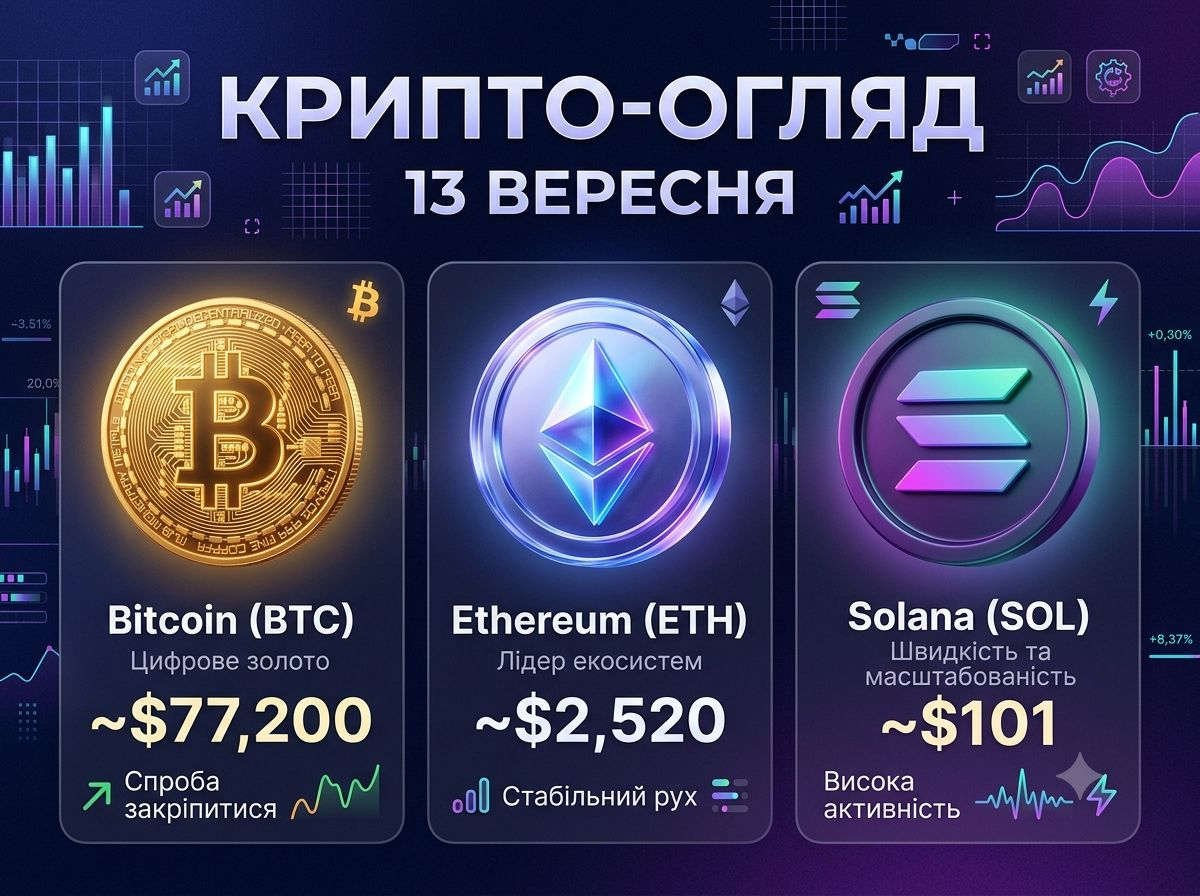
Bitcoin (BTC):«Digital gold» with a price target of ~$77,200 and the status of an attempted consolidation.
Ethereum (ETH):«Ecosystem leader» with a price of ~$2,520 and a relatively stable movement.
Solana (SOL):«Speed and scalability» at a price of ~$101, with a note of high activity.
This infographic is perfect for sharing on social media (Telegram, X, Instagram, etc.) as a visual market overview for today!$BTC
{spot}(BTCUSDT)
$ETH
{spot}(ETHUSDT)
$SOL
Bitcoin (BTC):«Digital gold» with a price target of ~$77,200 and the status of an attempted consolidation.
Ethereum (ETH):«Ecosystem leader» with a price of ~$2,520 and a relatively stable movement.
Solana (SOL):«Speed and scalability» at a price of ~$101, with a note of high activity.
This infographic is perfect for sharing on social media (Telegram, X, Instagram, etc.) as a visual market overview for today!$BTC
$ETH
$SOL
2
623
·
--
Impressions from testing (User experience)
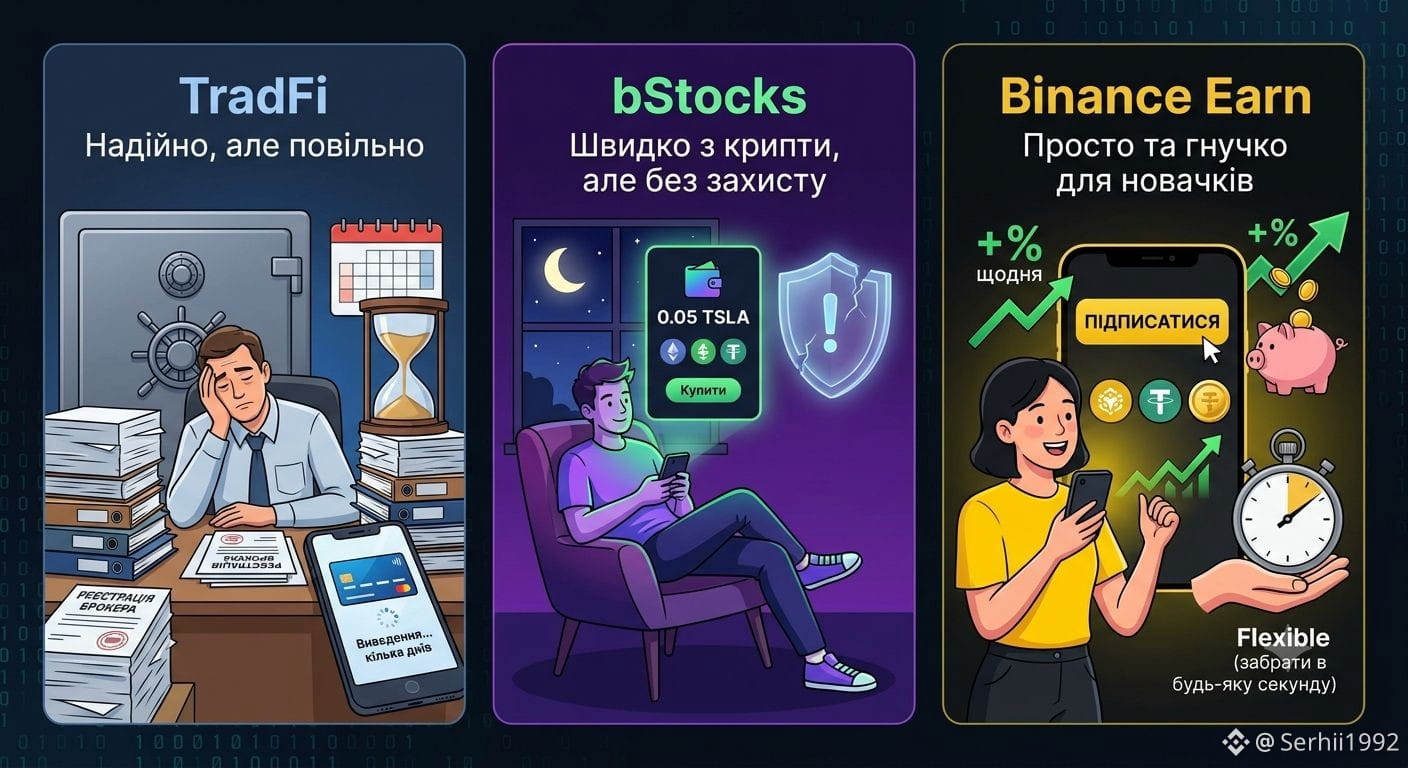
TradFi: Reliable, but slow. Registration with the broker requires a lot of documents, and withdrawing money to a card sometimes takes several days.
Stocks: Very convenient for those who already have crypto. You can buy a "fraction" of Tesla shares in a couple of clicks directly from your crypto wallet at any time of day. However, it feels like there’s a lack of legal protection that exists with traditional stocks.
Binance Earn: An ideal tool for beginners. The interface is as simple as possible: you choose a coin, press "Subscribe"—and the interest is already calculated daily. The Flexible (flexible deposit) program lets you get your money back at any moment.
1
221
·
--
30D trade $SOL 52.5K USDT
#fomcвідстеження $SOL Solana (SOL): Shows stability in the $100–$102 range. Solana-based products saw an inflow of $12 million. The asset is trying to consolidate a strong summer performance, after adding more than 40% to its value over August.
#fomcвідстеження $SOL Solana (SOL): Shows stability in the $100–$102 range. Solana-based products saw an inflow of $12 million. The asset is trying to consolidate a strong summer performance, after adding more than 40% to its value over August.
1
682
·
--
#fomcвідстеження $ETH
{spot}(ETHUSDT)
Ethereum (ETH): Altcoin number one maintains its position at the $2,450–$2,480 range. Unlike BTC, spot Ethereum ETFs have attracted an additional $35 million, indicating a local rebound in big players’ interest in the ecosystem.
#fomcвідстеження $ETH
Ethereum (ETH): Altcoin number one maintains its position at the $2,450–$2,480 range. Unlike BTC, spot Ethereum ETFs have attracted an additional $35 million, indicating a local rebound in big players’ interest in the ecosystem.
Ethereum (ETH): Altcoin number one maintains its position at the $2,450–$2,480 range. Unlike BTC, spot Ethereum ETFs have attracted an additional $35 million, indicating a local rebound in big players’ interest in the ecosystem.
1
143
·
--
#fomcвідстеження $BTC
{spot}(BTCUSDT)
Bitcoin (BTC): The main cryptocurrency is trading in the range of $78 200 – $78 400. After the August jump of over 20%, the price has somewhat stabilized. Investors' sentiment on Yahoo Finance remains cautious due to expectations regarding the next moves by the U.S. Federal Reserve and inflation-related factors.
#fomcвідстеження $BTC
Bitcoin (BTC): The main cryptocurrency is trading in the range of $78 200 – $78 400. After the August jump of over 20%, the price has somewhat stabilized. Investors' sentiment on Yahoo Finance remains cautious due to expectations regarding the next moves by the U.S. Federal Reserve and inflation-related factors.
Bitcoin (BTC): The main cryptocurrency is trading in the range of $78 200 – $78 400. After the August jump of over 20%, the price has somewhat stabilized. Investors' sentiment on Yahoo Finance remains cautious due to expectations regarding the next moves by the U.S. Federal Reserve and inflation-related factors.
1
194
·
--
Market overview and current trends
Today, the global market is moving toward the unification of technologies.
Rising interest in AI: Investors are actively buying shares of technology giants via TradFi and bStocks.
Tokenization of assets (RWA): Moving real-world assets (stocks, real estate) onto the blockchain is the main trend of the year. Products such as bStocks are part of this process.
Stable passive income: Due to market price fluctuations, investors are looking for safe harbors, so the popularity of stablecoins on Binance Earn is growing rapidly.
1
88
Log in to explore more content
Join global crypto users on Binance Square
⚡️ Get latest and useful information about crypto.
💬 Trusted by the world’s largest crypto exchange.
👍 Discover real insights from verified creators.
Email / Phone number
Trending Topics
JobsReportRaisesHikeOdds
438,583 views
3,061 Discussing
TradFi News | US Adds 165,000 Jobs in October, More Than Double the 65,000 Forecast, as Unemployment Falls to 4.1%
Binance News
·41 Likes
·23.9k views
CPITestsDecemberRateOutlook
110,661 views
946 Discussing
BitcoinRebounds$75KAsChipsLead
37,934 views
316 Discussing