

786 隐狼
10.7k Posts

786 隐狼
 Square Verified+
Report
Block User
I don't predict markets — I read them. 🐺
Daily signals | Chart analysis | Real moves
Verified Creator | Wolves don't follow — they lead
Open Trade
Frequent Trader
3.7 Years
857 Following
39.0K+ Followers
6.2K+ Liked
Posts
Portfolio
All
Quotes
Videos
Live
·
--
🎙️ WHERE WILL BE NVDA STOCK IN COMING YEAR? | NVIDIA STOCK | STOCK MKT
End
05 h 59 m 44 s
894
4
0


·
--
🎙️ Woke up to everything going red all the way—how are the babies trading futures doing?
End
02 h 21 m 44 s
5.8k
19
18


·
--
done
done

520龙行天下
·
--
Market news swells and ebbs, with the board seeing constant fluctuations✨. Hot topics flare up in rotation, temptations are endless, but missing the move is far luckier than losing money. Stay independent in your judgment—don’t let group sentiments pull you along. Reject FOMO and chase highs blindly. Stick to trading discipline, manage your position size, and strictly control risk. Trading is a game of knowledge and patience—keep your mindset steady and wait calmly for the opportunities that belong to you. Wishing everyone composure in both advances and retreats, and a consistently red account🧧

45
·
--
Bullish
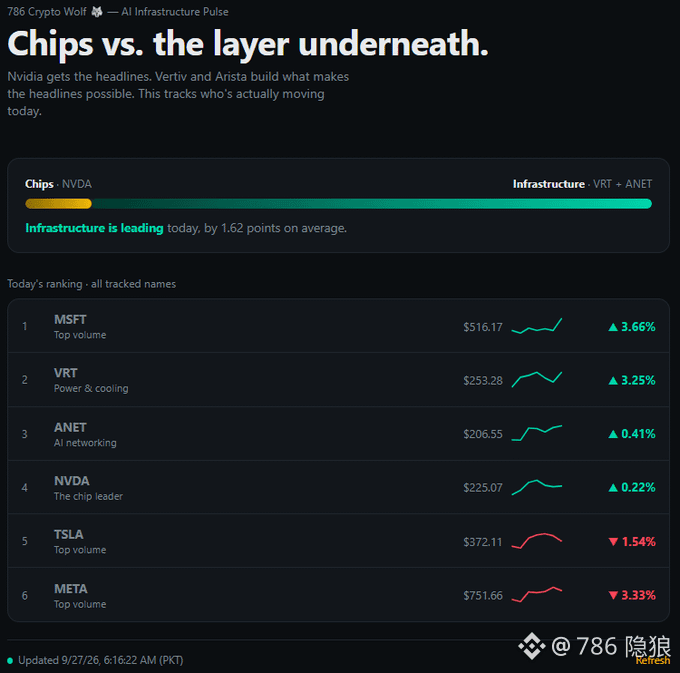
Built something this week instead of just posting about the theme: a live tracker comparing NVDA against the infrastructure layer underneath it — Vertiv (power/cooling) and Arista (AI networking) — plus MSFT, META, and TSLA, ranked by today's move with a 7-day trend for each.
Today's read: infrastructure names are quietly outpacing the chip leader — MSFT +3.66%, VRT +3.25%, vs. NVDA +0.22%. The story everyone's watching (chips) isn't always the story actually moving.
Sharing the ranking as a screenshot here since Square keeps things native — happy to explain the build if anyone's curious.
#AIStocksWhatNext #BinanceSquare
Built something this week instead of just posting about the theme: a live tracker comparing NVDA against the infrastructure layer underneath it — Vertiv (power/cooling) and Arista (AI networking) — plus MSFT, META, and TSLA, ranked by today's move with a 7-day trend for each.
Today's read: infrastructure names are quietly outpacing the chip leader — MSFT +3.66%, VRT +3.25%, vs. NVDA +0.22%. The story everyone's watching (chips) isn't always the story actually moving.
Sharing the ranking as a screenshot here since Square keeps things native — happy to explain the build if anyone's curious.
#AIStocksWhatNext #BinanceSquare
Today's read: infrastructure names are quietly outpacing the chip leader — MSFT +3.66%, VRT +3.25%, vs. NVDA +0.22%. The story everyone's watching (chips) isn't always the story actually moving.
Sharing the ranking as a screenshot here since Square keeps things native — happy to explain the build if anyone's curious.
#AIStocksWhatNext #BinanceSquare
412
·
--
🥮 One mooncake, one moon, one community.
This Mid-Autumn, the Binance diamond takes its place in tradition — golden, embossed, and glowing under the same moon we all share.
Same moon. Different dreams. One Binance family. 🌕💛
#BinanceMidAutumn #BinanceSquareTG
🥮 One mooncake, one moon, one community.
This Mid-Autumn, the Binance diamond takes its place in tradition — golden, embossed, and glowing under the same moon we all share.
Same moon. Different dreams. One Binance family. 🌕💛
#BinanceMidAutumn #BinanceSquareTG
This Mid-Autumn, the Binance diamond takes its place in tradition — golden, embossed, and glowing under the same moon we all share.
Same moon. Different dreams. One Binance family. 🌕💛
#BinanceMidAutumn #BinanceSquareTG

86
·
--
Ten days, and honestly it delivered more practical crypto knowledge than months of trial and error. The through-line that stuck: protect your downside before chasing upside, set your rules when you're calm, and never hand your judgment to hype or a stranger's "guaranteed returns." From securing my account and understanding spot, futures, and bStocks, to spotting P2P scams, phishing, and pig-butchering setups — the security lessons alone were worth it. What I valued most was the honesty: AI tools help, Earn products aren't free money, and no legitimate platform ever asks for your OTP. The camp treated us like adults who can handle real risk instead of selling a fantasy. My biggest takeaway: consistency and risk management protect you far more than trying to time the perfect trade. There's always another trade — but only if you're still in the game. Thank you for a genuinely well-designed camp. Graduated, and more careful than when I started.
#BinanceSummerCamp
Ten days, and honestly it delivered more practical crypto knowledge than months of trial and error. The through-line that stuck: protect your downside before chasing upside, set your rules when you're calm, and never hand your judgment to hype or a stranger's "guaranteed returns." From securing my account and understanding spot, futures, and bStocks, to spotting P2P scams, phishing, and pig-butchering setups — the security lessons alone were worth it. What I valued most was the honesty: AI tools help, Earn products aren't free money, and no legitimate platform ever asks for your OTP. The camp treated us like adults who can handle real risk instead of selling a fantasy. My biggest takeaway: consistency and risk management protect you far more than trying to time the perfect trade. There's always another trade — but only if you're still in the game. Thank you for a genuinely well-designed camp. Graduated, and more careful than when I started.
#BinanceSummerCamp
#BinanceSummerCamp

94
·
--
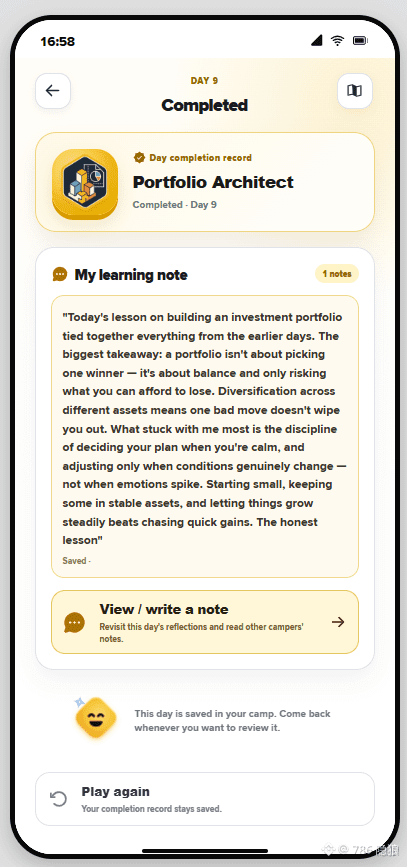
Today's lesson on building an investment portfolio tied together everything from the earlier days. The biggest takeaway: a portfolio isn't about picking one winner — it's about balance and only risking what you can afford to lose. Diversification across different assets means one bad move doesn't wipe you out. What stuck with me most is the discipline of deciding your plan when you're calm, and adjusting only when conditions genuinely change — not when emotions spike. Starting small, keeping some in stable assets, and letting things grow steadily beats chasing quick gains. The honest lesson: consistency and risk management protect you far more than trying to time the perfect trade. Respect the market, size your positions sensibly, and think long-term. A well-built portfolio is boring by design — and that's exactly why it works. Really practical way to close out the trading lessons.
#BinanceSummerCamp
Today's lesson on building an investment portfolio tied together everything from the earlier days. The biggest takeaway: a portfolio isn't about picking one winner — it's about balance and only risking what you can afford to lose. Diversification across different assets means one bad move doesn't wipe you out. What stuck with me most is the discipline of deciding your plan when you're calm, and adjusting only when conditions genuinely change — not when emotions spike. Starting small, keeping some in stable assets, and letting things grow steadily beats chasing quick gains. The honest lesson: consistency and risk management protect you far more than trying to time the perfect trade. Respect the market, size your positions sensibly, and think long-term. A well-built portfolio is boring by design — and that's exactly why it works. Really practical way to close out the trading lessons.
#BinanceSummerCamp
#BinanceSummerCamp

119
·
--
Everyone on this board is chasing the same layer: chips, power, cooling, data centers. All valid. All crowded.
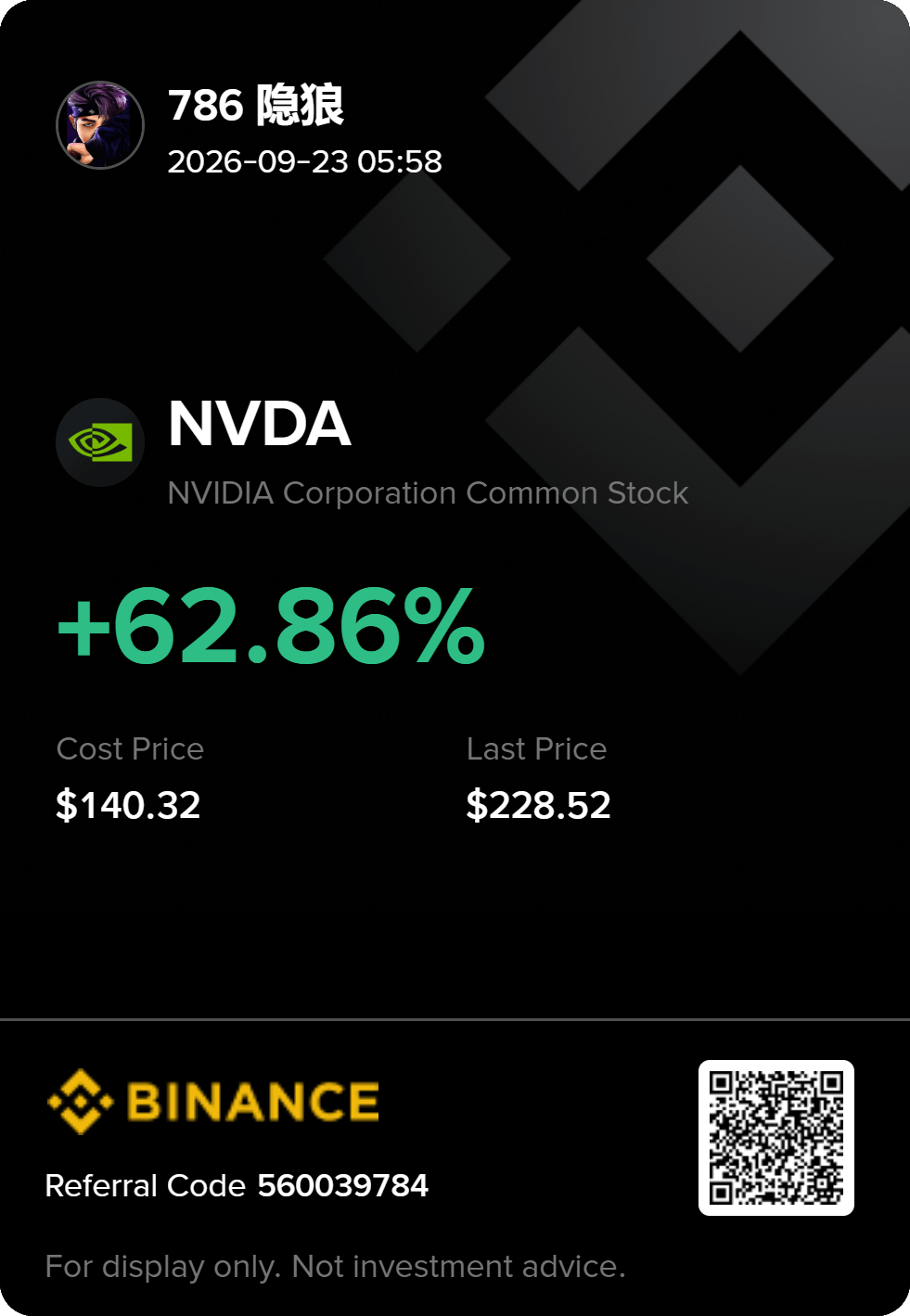
I hold NVDA myself — the AI demand is real. NVIDIA posted $96.2B in quarterly revenue (up 106% YoY, $89B from Data Center). I'm bullish on the chip story long-term.
But when I ask "what OTHER opportunities remain," I keep watching a layer almost nobody here is pricing in: the cost of what AI is unleashing.
The same compute driving NVIDIA's numbers is arming the other side. AI-generated scams, deepfake voices, cloned support bots, and phishing at scale are exploding alongside the rally. AI makes every attack cheaper, faster, more convincing.
So beyond the chips I already hold, the sector I'm watching next is AI cybersecurity — names like CrowdStrike (CRWD) and Palo Alto (PANW).
As AI makes attacks trivial, AI-powered defense — fraud detection, identity verification, deepfake detection — stops being optional for any business or user. Every dollar of AI capex quietly creates a dollar of security need. It's the unglamorous layer that grows precisely because the flashy layer grows.
𝐁𝐮𝐥𝐥𝐢𝐬𝐡 𝐜𝐚𝐬𝐞: security spend compounds with AI capex — necessity, not hype.
𝐇𝐨𝐧𝐞𝐬𝐭 𝐫𝐢𝐬𝐤: the whole AI complex is stretched; a pullback could hit even defensive names short-term.
The real edge isn't who builds the smartest model. It's who can prove what's real once models can fake anything.
The more powerful AI gets, the more valuable it becomes to prove what's real.
Where's the next AI opportunity hiding?
#AIStocksWhatNext #NVDA
{stock_us}(NVDA.US)
Everyone on this board is chasing the same layer: chips, power, cooling, data centers. All valid. All crowded.
I hold NVDA myself — the AI demand is real. NVIDIA posted $96.2B in quarterly revenue (up 106% YoY, $89B from Data Center). I'm bullish on the chip story long-term.
But when I ask "what OTHER opportunities remain," I keep watching a layer almost nobody here is pricing in: the cost of what AI is unleashing.
The same compute driving NVIDIA's numbers is arming the other side. AI-generated scams, deepfake voices, cloned support bots, and phishing at scale are exploding alongside the rally. AI makes every attack cheaper, faster, more convincing.
So beyond the chips I already hold, the sector I'm watching next is AI cybersecurity — names like CrowdStrike (CRWD) and Palo Alto (PANW).
As AI makes attacks trivial, AI-powered defense — fraud detection, identity verification, deepfake detection — stops being optional for any business or user. Every dollar of AI capex quietly creates a dollar of security need. It's the unglamorous layer that grows precisely because the flashy layer grows.
𝐁𝐮𝐥𝐥𝐢𝐬𝐡 𝐜𝐚𝐬𝐞: security spend compounds with AI capex — necessity, not hype.
𝐇𝐨𝐧𝐞𝐬𝐭 𝐫𝐢𝐬𝐤: the whole AI complex is stretched; a pullback could hit even defensive names short-term.
The real edge isn't who builds the smartest model. It's who can prove what's real once models can fake anything.
The more powerful AI gets, the more valuable it becomes to prove what's real.
Where's the next AI opportunity hiding?
#AIStocksWhatNext #NVDA
I hold NVDA myself — the AI demand is real. NVIDIA posted $96.2B in quarterly revenue (up 106% YoY, $89B from Data Center). I'm bullish on the chip story long-term.
But when I ask "what OTHER opportunities remain," I keep watching a layer almost nobody here is pricing in: the cost of what AI is unleashing.
The same compute driving NVIDIA's numbers is arming the other side. AI-generated scams, deepfake voices, cloned support bots, and phishing at scale are exploding alongside the rally. AI makes every attack cheaper, faster, more convincing.
So beyond the chips I already hold, the sector I'm watching next is AI cybersecurity — names like CrowdStrike (CRWD) and Palo Alto (PANW).
As AI makes attacks trivial, AI-powered defense — fraud detection, identity verification, deepfake detection — stops being optional for any business or user. Every dollar of AI capex quietly creates a dollar of security need. It's the unglamorous layer that grows precisely because the flashy layer grows.
𝐁𝐮𝐥𝐥𝐢𝐬𝐡 𝐜𝐚𝐬𝐞: security spend compounds with AI capex — necessity, not hype.
𝐇𝐨𝐧𝐞𝐬𝐭 𝐫𝐢𝐬𝐤: the whole AI complex is stretched; a pullback could hit even defensive names short-term.
The real edge isn't who builds the smartest model. It's who can prove what's real once models can fake anything.
The more powerful AI gets, the more valuable it becomes to prove what's real.
Where's the next AI opportunity hiding?
#AIStocksWhatNext #NVDA
🔒 AI Cybersecurity
100%
⚡ Power & Infrastructure
0%
🧠 More Chips
0%
🤖 AI Applications/Software
0%
1 votes • Voting closed
528
·
--
Verified
Everyone's dissecting the Fed's move. Almost no one's talking about who actually pays for it.
Yesterday the Fed hiked 25bp — a unanimous 12-0 vote — lifting rates to 3.75-4.00%, the first hike since 2023. The dot plot was hawkish: most members see another increase before year-end.
Markets shrugged; the S&P and Nasdaq even closed green.
But a rate hike isn't just a number on a chart. It's a credit card that quietly costs more next month. A mortgage that got heavier. A small business whose loan just repriced. The people feeling this most aren't watching BTC candles — they're watching their bills climb.
For crypto, here's my read — and it's a process, not a signal.
I'm not trying to predict the move. I want to see what BTC does now that the decision is out. First, the immediate reaction — spike, sell-off, or barely a flinch. Then I step back.
If the first move is sharp, I don't treat that as confirmation. I need to see BTC hold it instead of instantly reversing. My invalidation is simple: if the reaction fully unwinds and price closes back inside the pre-Fed range, the setup is dead.
If it holds, retests without giving it all back, then closes in the direction of the move — that's when there's something worth acting on. If that confirmation never comes, I wait.
The Fed gives the information. BTC's reaction tells me if there's a trade. And behind every macro chart is a household doing the math.
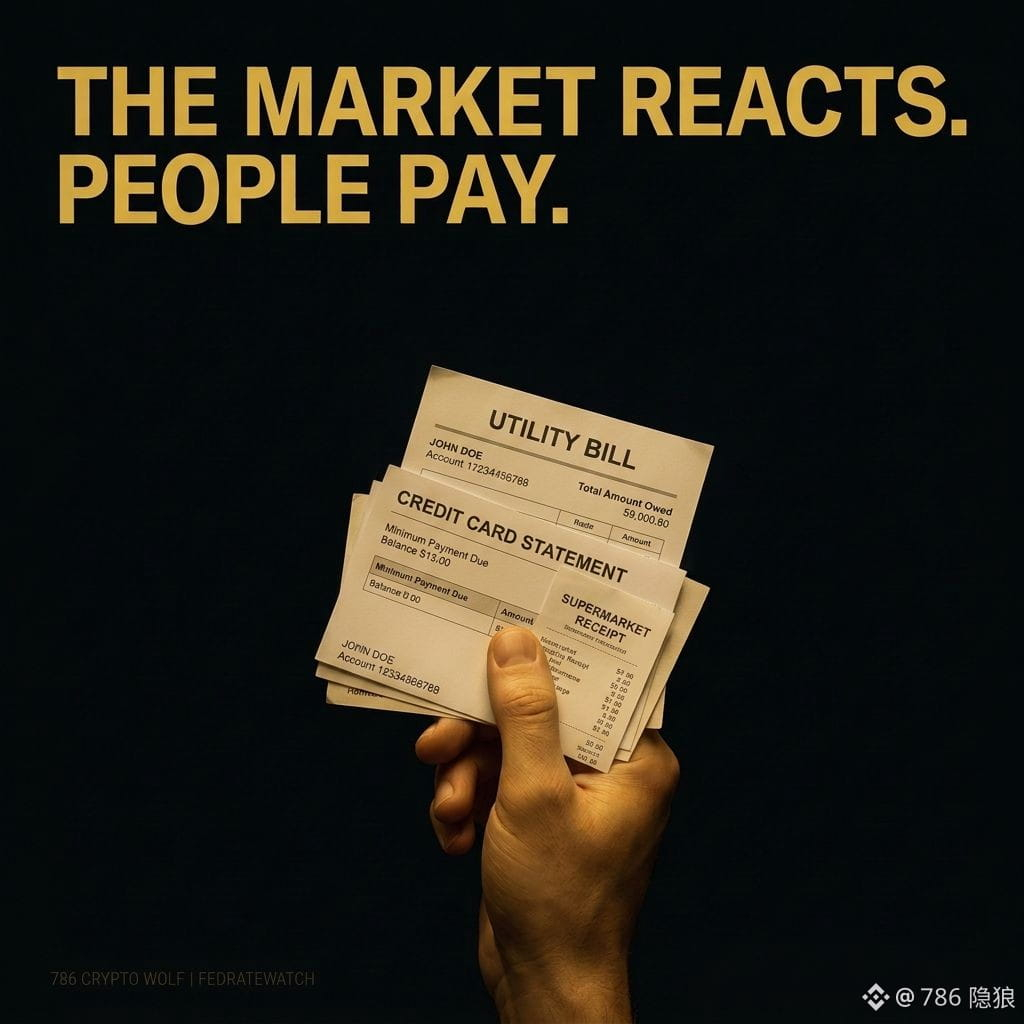
The market reacts to the Fed. People live with it.
$BTC #FedRateWatch #BinanceSquare #CLARITYAct
After the Fed's 25bp hike (rates now 3.75-4%) with a hawkish dot plot — what's your read for BTC over the next few weeks?
Everyone's dissecting the Fed's move. Almost no one's talking about who actually pays for it.
Yesterday the Fed hiked 25bp — a unanimous 12-0 vote — lifting rates to 3.75-4.00%, the first hike since 2023. The dot plot was hawkish: most members see another increase before year-end.
Markets shrugged; the S&P and Nasdaq even closed green.
But a rate hike isn't just a number on a chart. It's a credit card that quietly costs more next month. A mortgage that got heavier. A small business whose loan just repriced. The people feeling this most aren't watching BTC candles — they're watching their bills climb.
For crypto, here's my read — and it's a process, not a signal.
I'm not trying to predict the move. I want to see what BTC does now that the decision is out. First, the immediate reaction — spike, sell-off, or barely a flinch. Then I step back.
If the first move is sharp, I don't treat that as confirmation. I need to see BTC hold it instead of instantly reversing. My invalidation is simple: if the reaction fully unwinds and price closes back inside the pre-Fed range, the setup is dead.
If it holds, retests without giving it all back, then closes in the direction of the move — that's when there's something worth acting on. If that confirmation never comes, I wait.
The Fed gives the information. BTC's reaction tells me if there's a trade. And behind every macro chart is a household doing the math.
The market reacts to the Fed. People live with it.
$BTC #FedRateWatch #BinanceSquare #CLARITYAct
After the Fed's 25bp hike (rates now 3.75-4%) with a hawkish dot plot — what's your read for BTC over the next few weeks?
Yesterday the Fed hiked 25bp — a unanimous 12-0 vote — lifting rates to 3.75-4.00%, the first hike since 2023. The dot plot was hawkish: most members see another increase before year-end.
Markets shrugged; the S&P and Nasdaq even closed green.
But a rate hike isn't just a number on a chart. It's a credit card that quietly costs more next month. A mortgage that got heavier. A small business whose loan just repriced. The people feeling this most aren't watching BTC candles — they're watching their bills climb.
For crypto, here's my read — and it's a process, not a signal.
I'm not trying to predict the move. I want to see what BTC does now that the decision is out. First, the immediate reaction — spike, sell-off, or barely a flinch. Then I step back.
If the first move is sharp, I don't treat that as confirmation. I need to see BTC hold it instead of instantly reversing. My invalidation is simple: if the reaction fully unwinds and price closes back inside the pre-Fed range, the setup is dead.
If it holds, retests without giving it all back, then closes in the direction of the move — that's when there's something worth acting on. If that confirmation never comes, I wait.
The Fed gives the information. BTC's reaction tells me if there's a trade. And behind every macro chart is a household doing the math.
The market reacts to the Fed. People live with it.
$BTC #FedRateWatch #BinanceSquare #CLARITYAct
After the Fed's 25bp hike (rates now 3.75-4%) with a hawkish dot plot — what's your read for BTC over the next few weeks?
Bearish on BTC
44%
Bullish on BTC
50%
Sideways/chop
0%
Watching, no trade
6%
18 votes • Voting closed
550
·
--
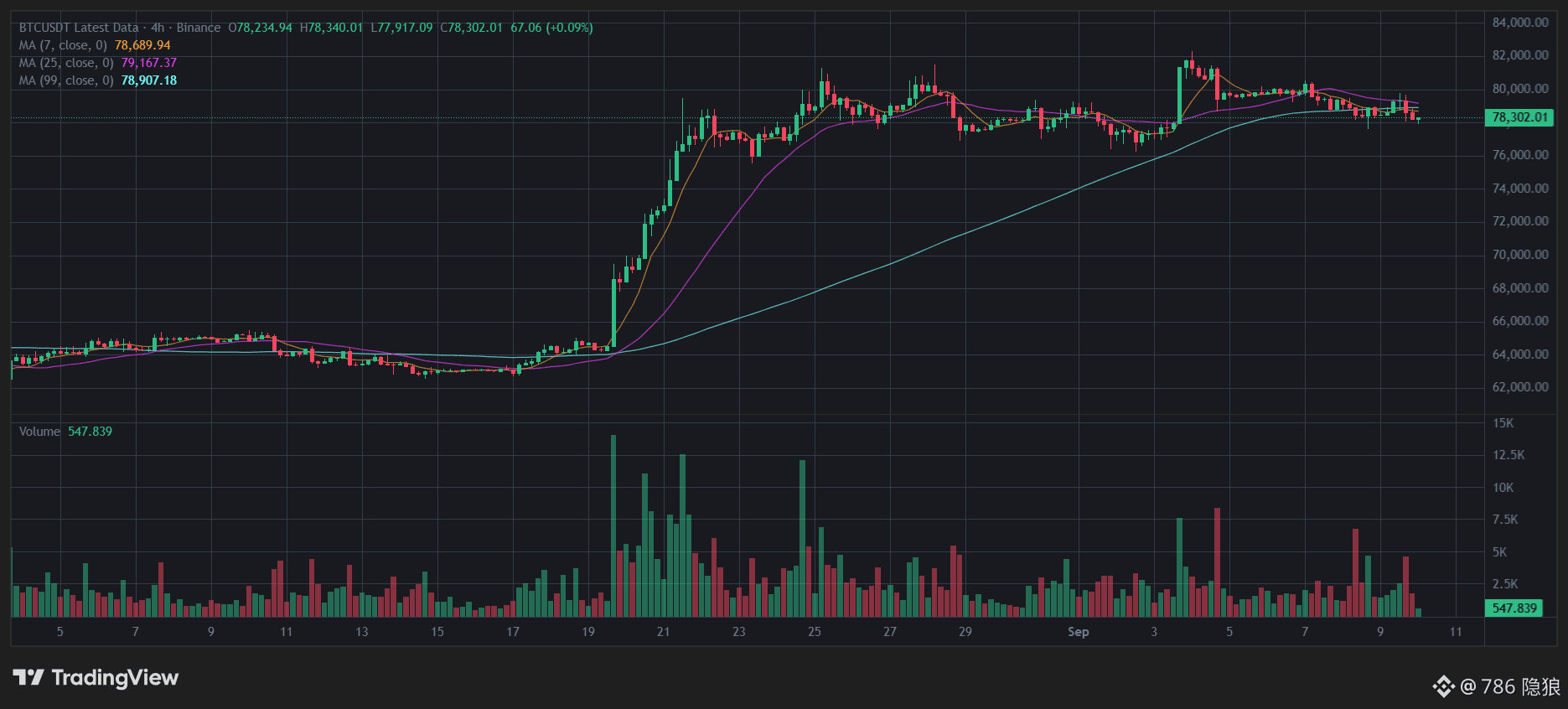
🐺 BTC keeps testing $80K.
But it still hasn’t held above it.
After repeated pushes into the $78K–$80K area, BTC keeps compressing instead of cleanly establishing itself above the level.
That makes $80K more interesting than simply calling it resistance.
Is it resistance — or unfinished business?
Until BTC actually holds above the zone, these repeated tests are still telling us something.
$BTC
☀ Follow the signal, not the noise. 🐺
🐺 BTC keeps testing $80K.
But it still hasn’t held above it.
After repeated pushes into the $78K–$80K area, BTC keeps compressing instead of cleanly establishing itself above the level.
That makes $80K more interesting than simply calling it resistance.
Is it resistance — or unfinished business?
Until BTC actually holds above the zone, these repeated tests are still telling us something.
$BTC
☀ Follow the signal, not the noise. 🐺
But it still hasn’t held above it.
After repeated pushes into the $78K–$80K area, BTC keeps compressing instead of cleanly establishing itself above the level.
That makes $80K more interesting than simply calling it resistance.
Is it resistance — or unfinished business?
Until BTC actually holds above the zone, these repeated tests are still telling us something.
$BTC
☀ Follow the signal, not the noise. 🐺
129
·
--
Bullish
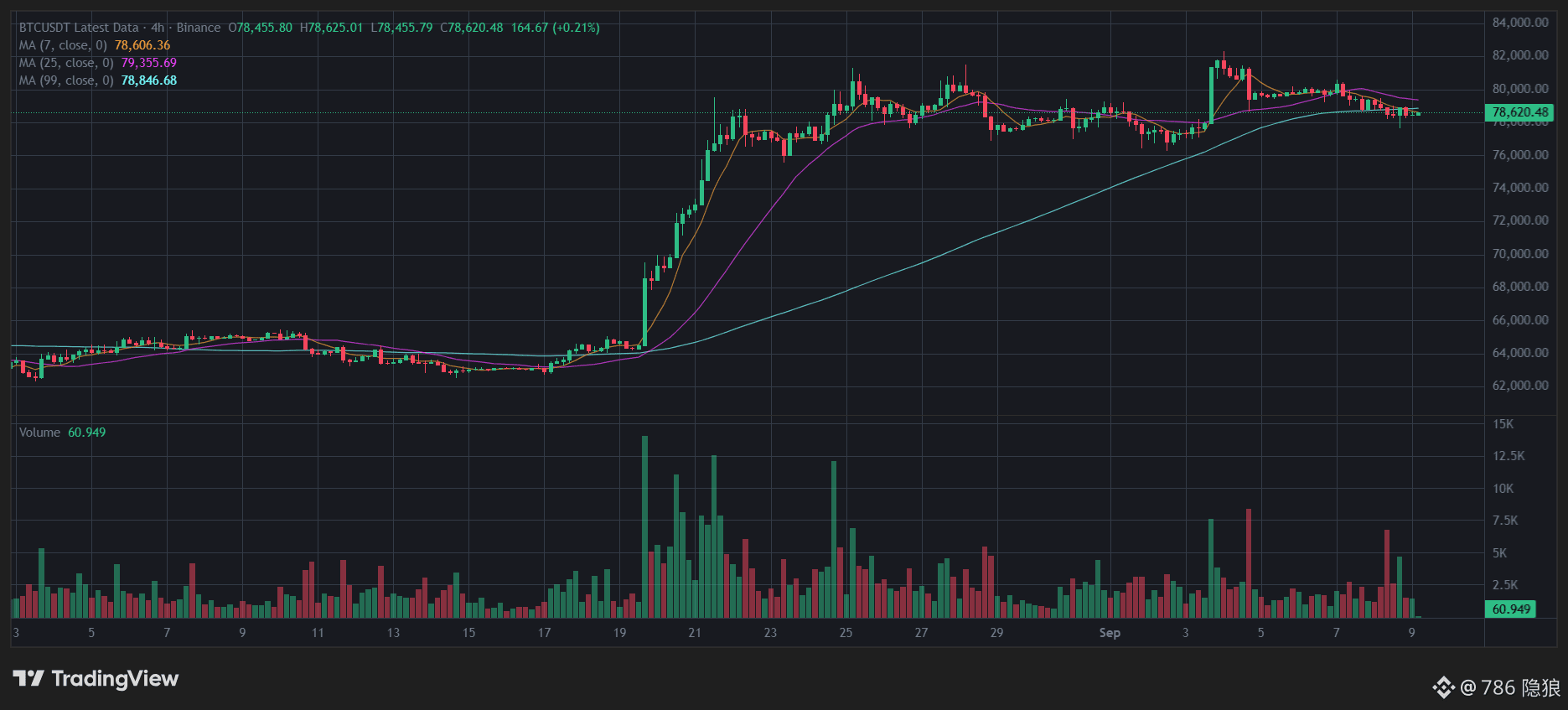
BTC made the move.
Now it has to prove the level.
After the sharp push higher, BTC is spending time around the $80K area instead of giving a clean continuation.
That's where I think traders need to slow down.
The question isn't:
“Is BTC bullish?”
It's:
“Has the breakout actually turned this level into support?”
If BTC holds above the zone, the breakout has something to build on.
If it loses it, I'd rather wait than chase the move.
A strong move isn't automatically a confirmed trade.
Sometimes the best entry decision is knowing what needs to happen BEFORE you enter.
$BTC
#Binance #Write2Earn #BTC☀
Follow the signal, not the noise.🐺
BTC made the move.
Now it has to prove the level.
After the sharp push higher, BTC is spending time around the $80K area instead of giving a clean continuation.
That's where I think traders need to slow down.
The question isn't:
“Is BTC bullish?”
It's:
“Has the breakout actually turned this level into support?”
If BTC holds above the zone, the breakout has something to build on.
If it loses it, I'd rather wait than chase the move.
A strong move isn't automatically a confirmed trade.
Sometimes the best entry decision is knowing what needs to happen BEFORE you enter.
$BTC
#Binance #Write2Earn #BTC☀
Follow the signal, not the noise.🐺
Now it has to prove the level.
After the sharp push higher, BTC is spending time around the $80K area instead of giving a clean continuation.
That's where I think traders need to slow down.
The question isn't:
“Is BTC bullish?”
It's:
“Has the breakout actually turned this level into support?”
If BTC holds above the zone, the breakout has something to build on.
If it loses it, I'd rather wait than chase the move.
A strong move isn't automatically a confirmed trade.
Sometimes the best entry decision is knowing what needs to happen BEFORE you enter.
$BTC
#Binance #Write2Earn #BTC☀
Follow the signal, not the noise.🐺
1
1
708

Log in to explore more content
Join global crypto users on Binance Square
⚡️ Get latest and useful information about crypto.
💬 Trusted by the world’s largest crypto exchange.
👍 Discover real insights from verified creators.
Email / Phone number
Trending Topics
NEARFallsToAround$4.70Down14%
1,504 views
13 Discussing
🚨 $NEAR — FROM ETF HYPE TO A 14% SLAP IN THE FACE.
NEAR has dropped toward $4.70, giving back a big chunk of its recent run after briefly trading above $5.50. The selloff also came as NEAR Intents disclosed a security incident tied to its cross-chain infrastructure, with reported losses around $3.8M. The underlying NEAR blockchain itself was not reported as compromised.
Here’s the part traders should care about:
$4.69–$4.74 is now the key support zone.
Hold it, and this could simply be a violent retest after the September breakout.
Lose it?
The next downside references sit closer to $4.58, then ~$4.30.
And the irony?
The new Bitwise NEAR ETF was still seeing positive inflows around launch week.
So this isn’t a simple “nobody wants NEAR” story.
It’s a battle between:
fresh institutional access
vs.
post-rally profit-taking + security fear.
$NEAR doesn’t need hype right now. It needs $4.70 to hold. 👀
#NEARFallsToAround$4.70Down14% #EvernorthPlansNasdaqListingOct8 #SECProposesCryptoCustodyFramework #IMFApproves$139MDisbursementToElSalvador #AnthropicTargetsIPOAsSoonAsMidNovember
KimHotbae
·0 Likes
·213 views
EthereumFoundationLaunchesZkAPIOnMainnet
3 views
15 Discussing
EvernorthPlansNasdaqListingOct8
2,048 views
58 Discussing