
球球不冲了
120 Posts

球球不冲了
Report
Block User
Web3 产品研究猿
Binance Wallet体验官
资深文案 | 手搓Agent选手
2026完成100篇产品锐评(38/100)
50 Following
637 Followers
190 Liked
Posts
All
Quotes
PINNED
·
--
Verified
Sky lending offers 20% annualized returns—do you dare deposit?
The founder moved funds around and borrowed $77 million. Is the protocol plugging a hole after a blowup, or is there still no money to repay?
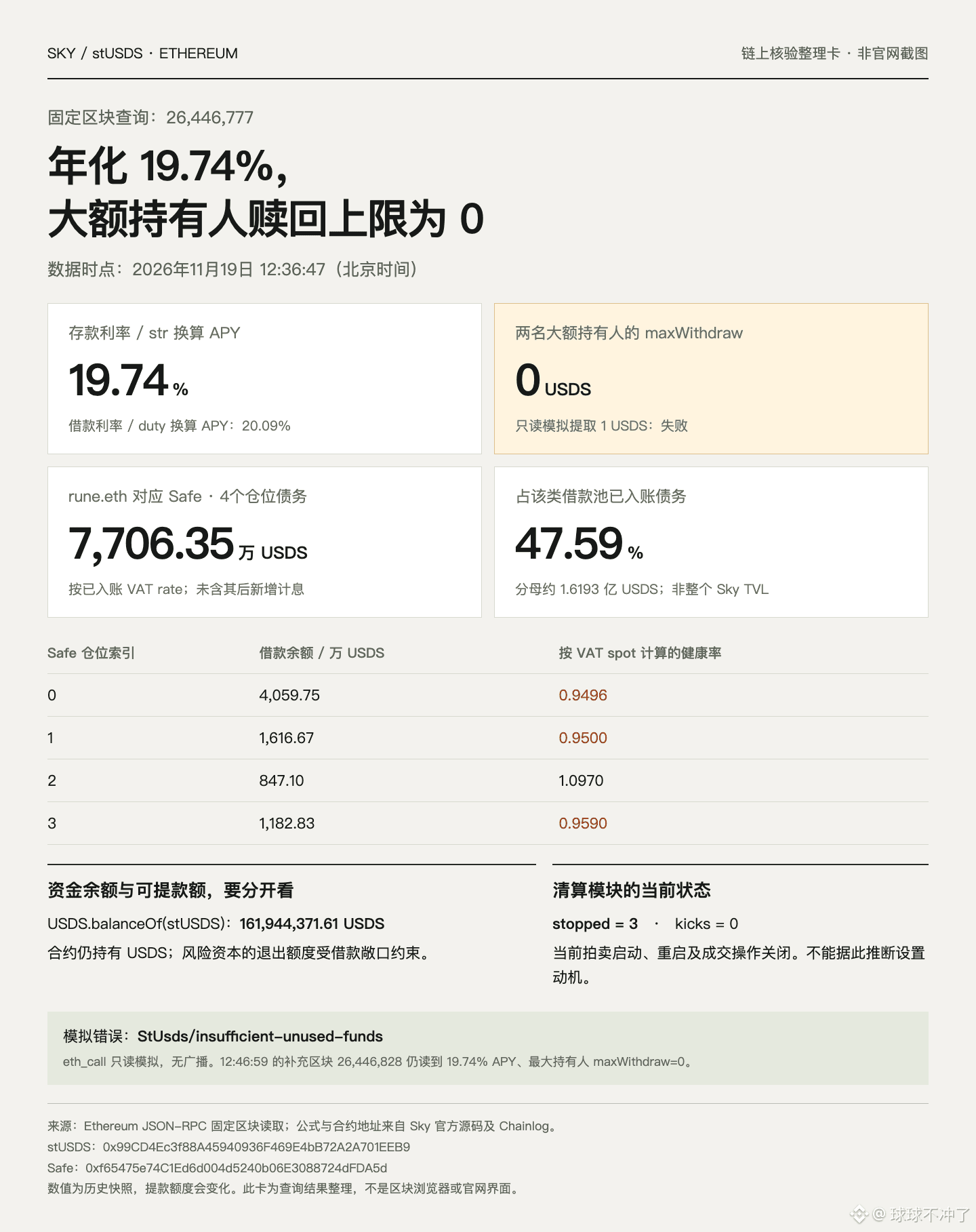
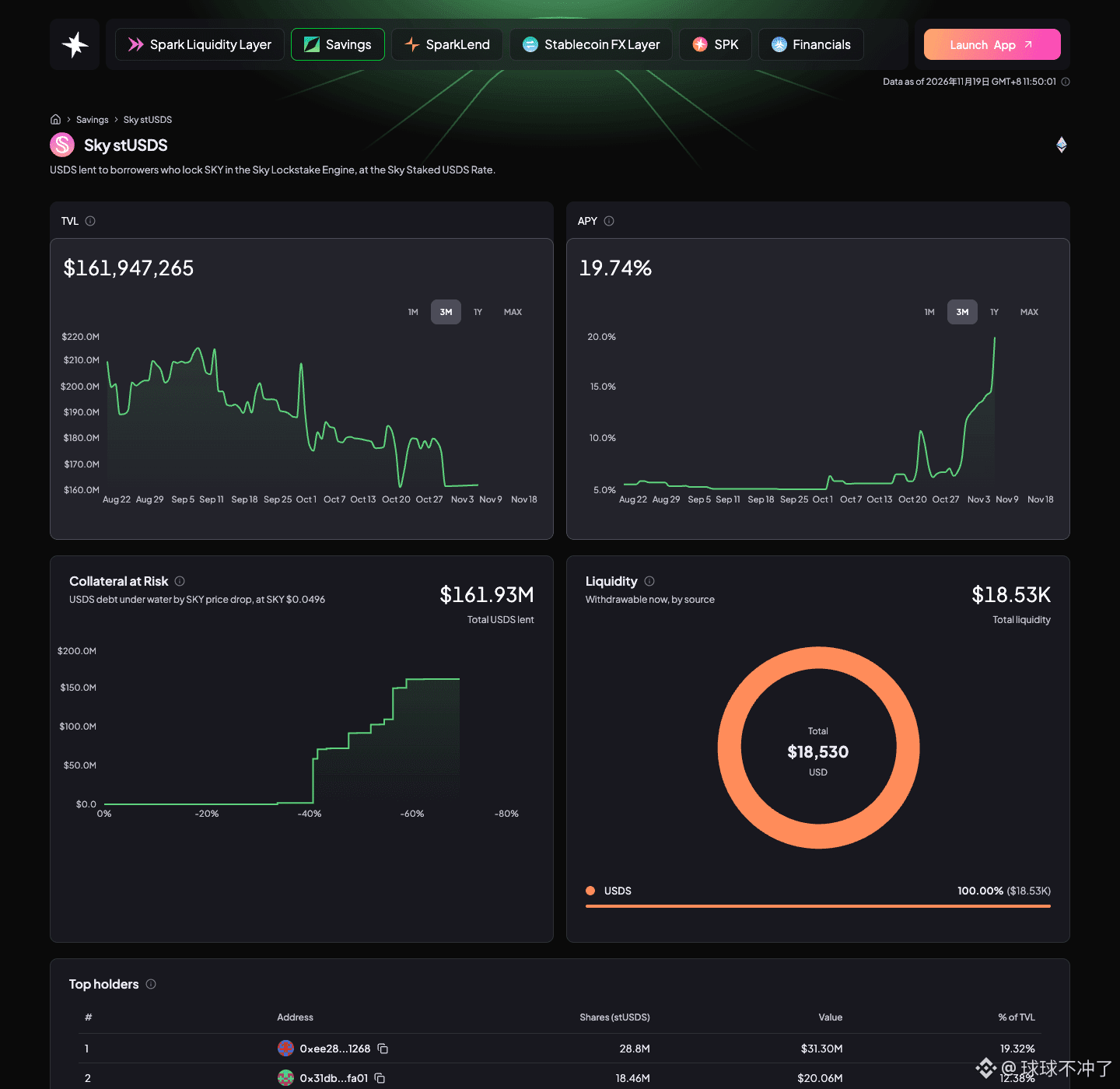
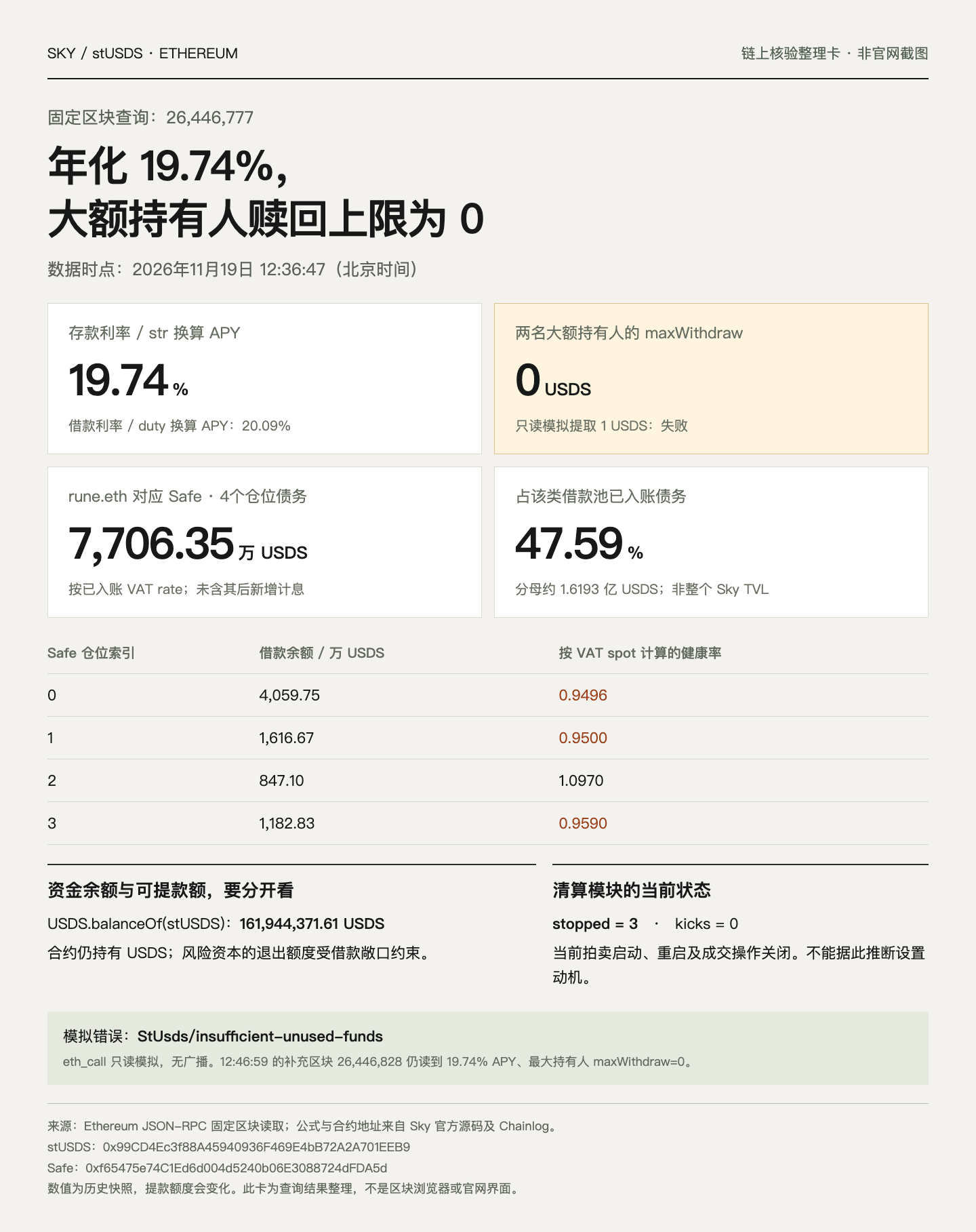
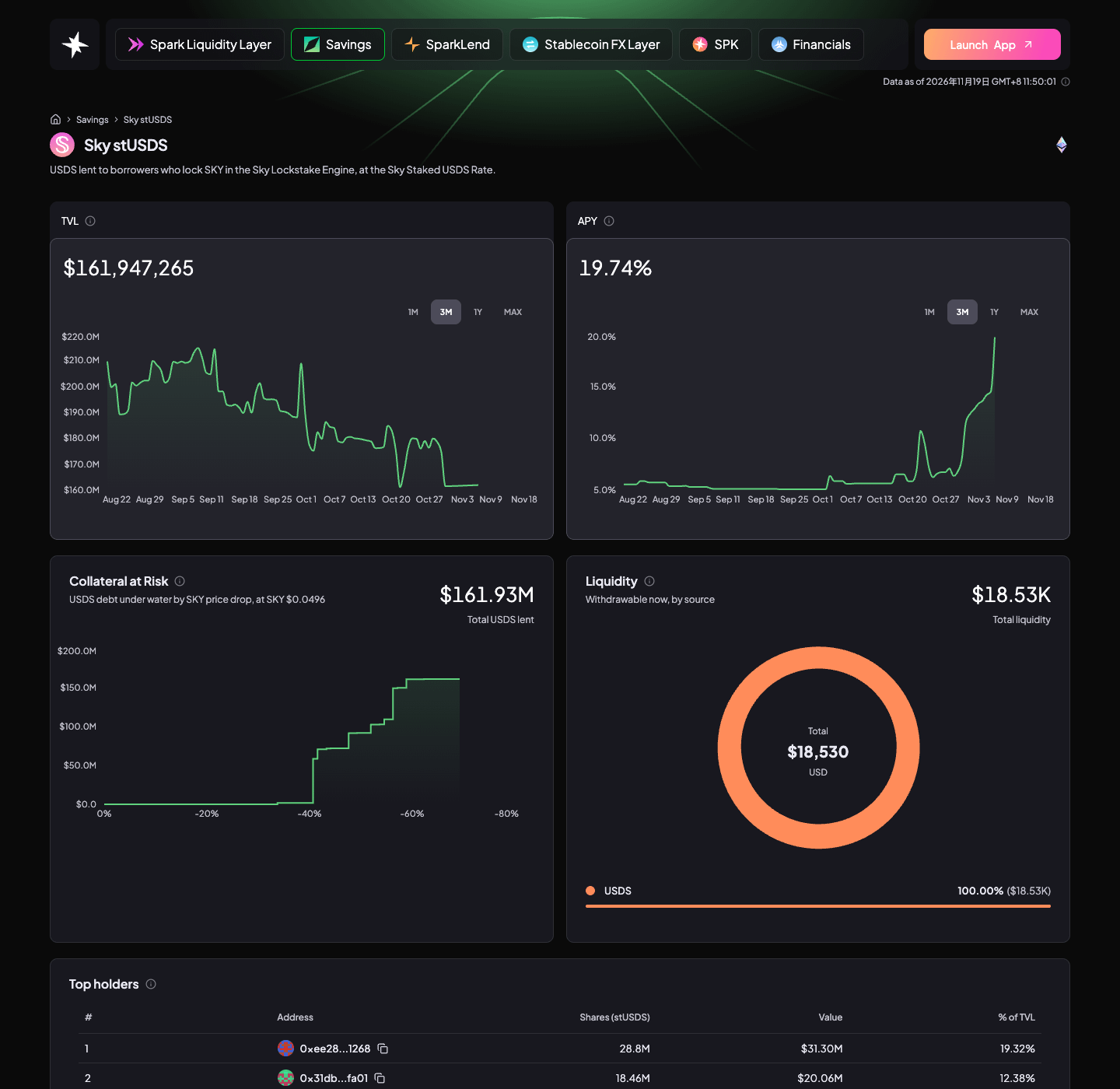
🧑🎤 stUSDS deposits yield 19.74% annually, and the maximum withdrawable amount for each of the two largest holders is 0.
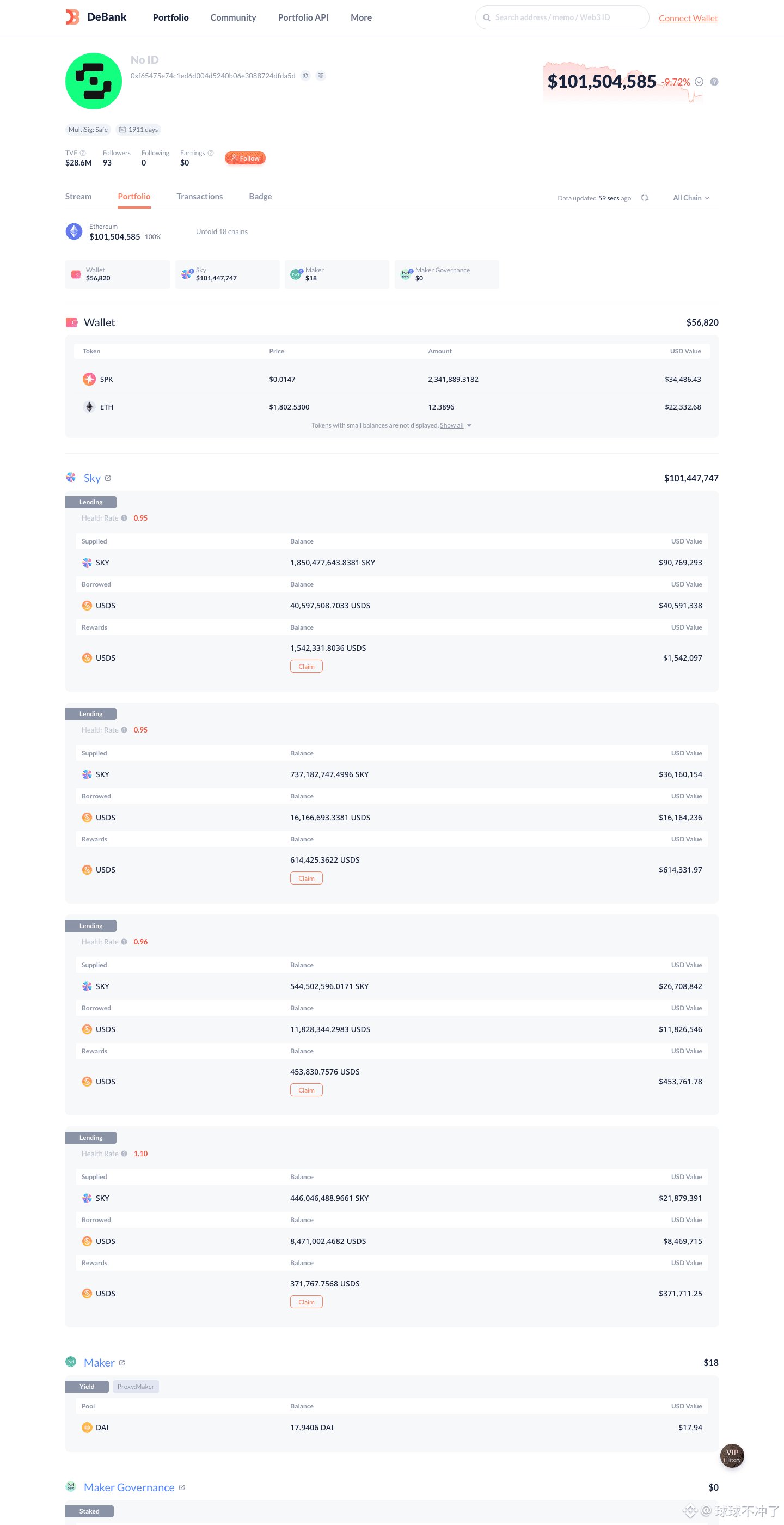
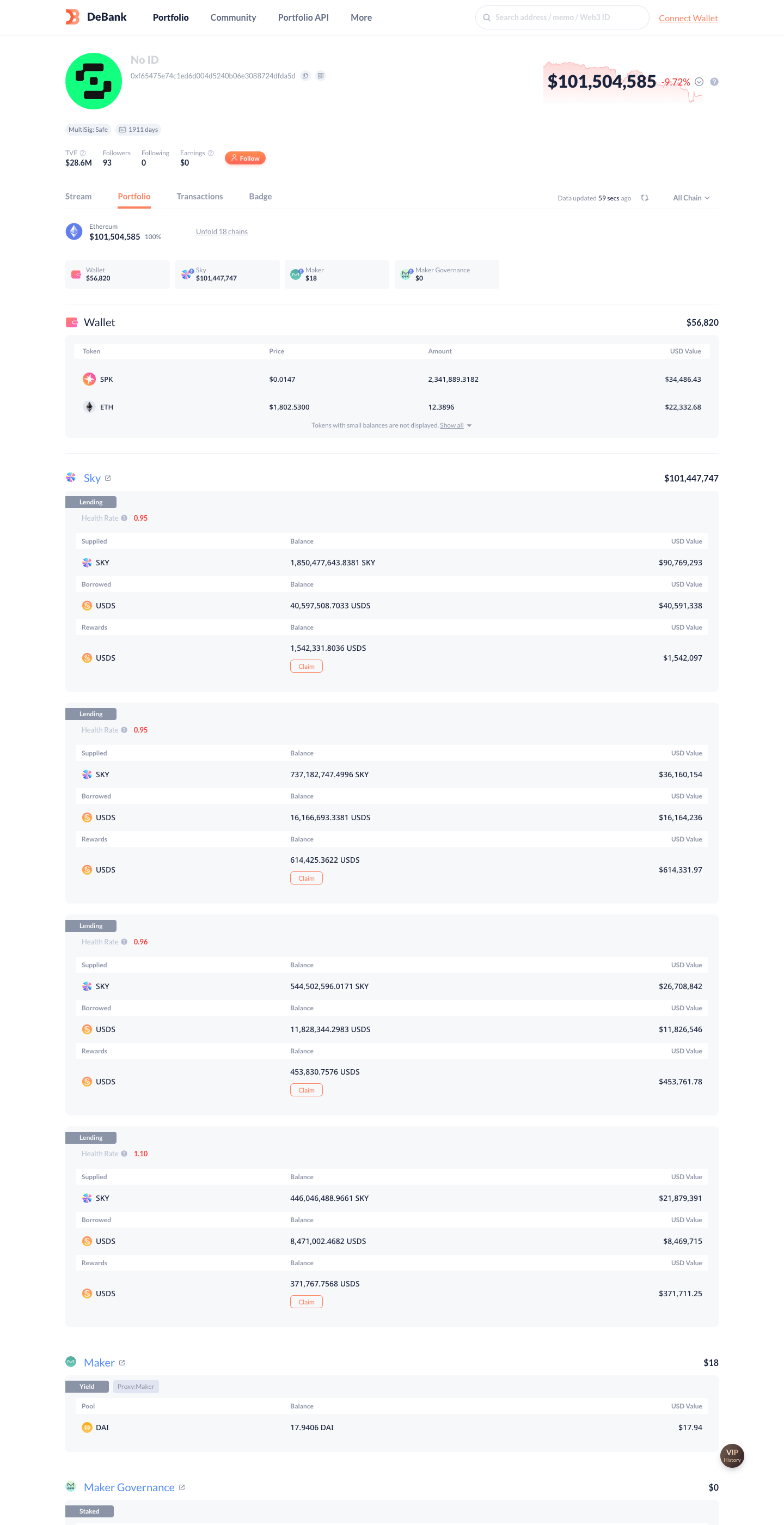
🧑🎤 The Safe linked to rune.eth owes approximately 77.06 million USDS, or 47.6% of this type of borrowing in total.
🧑🎤 Of the 4 positions, 3 are below the safety threshold based on the protocol's price feeds, while the related liquidation auction module remains disabled.
Put simply, depositors who want to exit have to wait for the founder to repay the debt first.
Sky is the protocol formerly known as MakerDAO. Users deposit USDS, which is lent to users borrowing against SKY collateral. Whether they can redeem depends on how much of the pool is being used.
🕰️ How did things unfold to reach this point?
On October 26, Protos reported that a linked wallet had borrowed an additional 1 million USDS.
On October 30, Raw Power Games, the gaming company linked to Rune, entered bankruptcy proceedings.
On October 31, @punkquidity recalled that the pool had been without available withdrawals for a long time, with rates rising to around 10.7% before withdrawals resumed that evening.
From November 10 to 14, withdrawals became strained again, and rates rose to around 13%.
From November 18 to 19, the annualized rate rose to 19.74%.
Rates keep climbing—but when will the borrower pay back?
💰 Can $77 million actually be repaid?
The SKY collateral in the rune.eth wallet has a market value of around $175.5 million. But if someone really tried to sell tens of millions of dollars' worth of tokens, who would buy them?
Assuming the rate stays unchanged, the 77.06 million in debt would accrue about 1.18 million USDS in interest over a month. The loan has no fixed term, so when the debt will be repaid—and when others will be able to withdraw—remains unknown.
One more detail: the stUSDS contract itself still holds around 162 million USDS. But this risk capital is tied up in lending exposure, and the contract does not allow it to be withdrawn freely.
🔮 What comes next? Maybe no one can exit safely
① The whale repays, and everyone gradually gets out
The borrower pays the money back, reducing the reserves tied up and restoring withdrawal capacity. That's the best-case scenario.
In 2023, the Curve founder's borrowing from Fraxlend also saw 100% utilization and sharply rising rates. The situation was later eased through actual repayments and liquidity arrangements.
② High rates persist, and withdrawals remain on hold
The borrower continues to accrue interest, depositors' claims continue to grow, and the exit date remains uncertain.
New deposits might temporarily free up some capacity; if that capacity is quickly borrowed again, the pressure will return.
③ Governance steps in to deleverage or add funds
It could restrict new borrowing, negotiate the sale of collateral, or bring in outside capital. That seems like a long shot—there may be no options left.
④ The collateral falls short, and holders absorb the losses
If the funds ultimately recovered are insufficient to repay the debt, and no other funds are added, stUSDS's loss-sharing mechanism could reduce holders' claims.
Using approximately 161.95 million USDS as the denominator, if a net loss of 10 million USDS were borne entirely by this pool, holders' claims would fall by about 6.17%.
If repaying the debt requires a concentrated sale of SKY, selling pressure could push down its price. Falling collateral values would then make the remaining loans harder to deal with.
That's a vicious cycle. Is SKY doomed? Who knows.
What more people want to ask is: I don't need the interest—when will I get my principal back?
4
3
9
10.2k
·
--
The night BTC fell below $60,000, Wall Street moved its money back to dollar stores
The crypto crowd is still waiting for a bull market, but Wall Street has already started browsing the dollar stores.
Yesterday (November 25), BTC hit a low of $58,660, ETH fell to around $1,700, and AI stocks were also down.
Meanwhile, Dollar Tree, which sells inexpensive household goods; Dick’s, which sells sporting goods; and Abercrombie, which sells clothing, all reported strong earnings. Consumer and healthcare stocks, on the other hand, became destinations for investors’ money.
Why?
① Money is more expensive, so stories are harder to sell.
Interest-rate pressure is still there, and investors are starting to ask: after I buy in, how long will it take to make money?
② Compared with imagining what might happen five years from now, the market wants to see revenue today.
AI and crypto sell the future; retailers sell everyday essentials that people are buying right now. When markets tighten, cash flow matters more.
③ The easier an asset is to sell, the sooner it can become an ATM.
BTC trades around the clock, so when the market is scrambling for cash, it can’t escape the sell-off either.
My take: BTC falling below $60,000 only means the price is lower. It doesn’t yet mean investors are willing to come back. Next, I’ll keep an eye on Treasury yields and expectations for the December rate decision. Only when the pressure eases will a rebound have a stronger footing.
The most gut-wrenching thing about this rally: while you’re waiting for digital gold to bounce back, someone else is already making gains selling toilet paper.
With BTC below $60,000, are you planning to buy in gradually, or keep waiting?
#BTC #美股 #Macroeconomics

1
1.6k
·
--
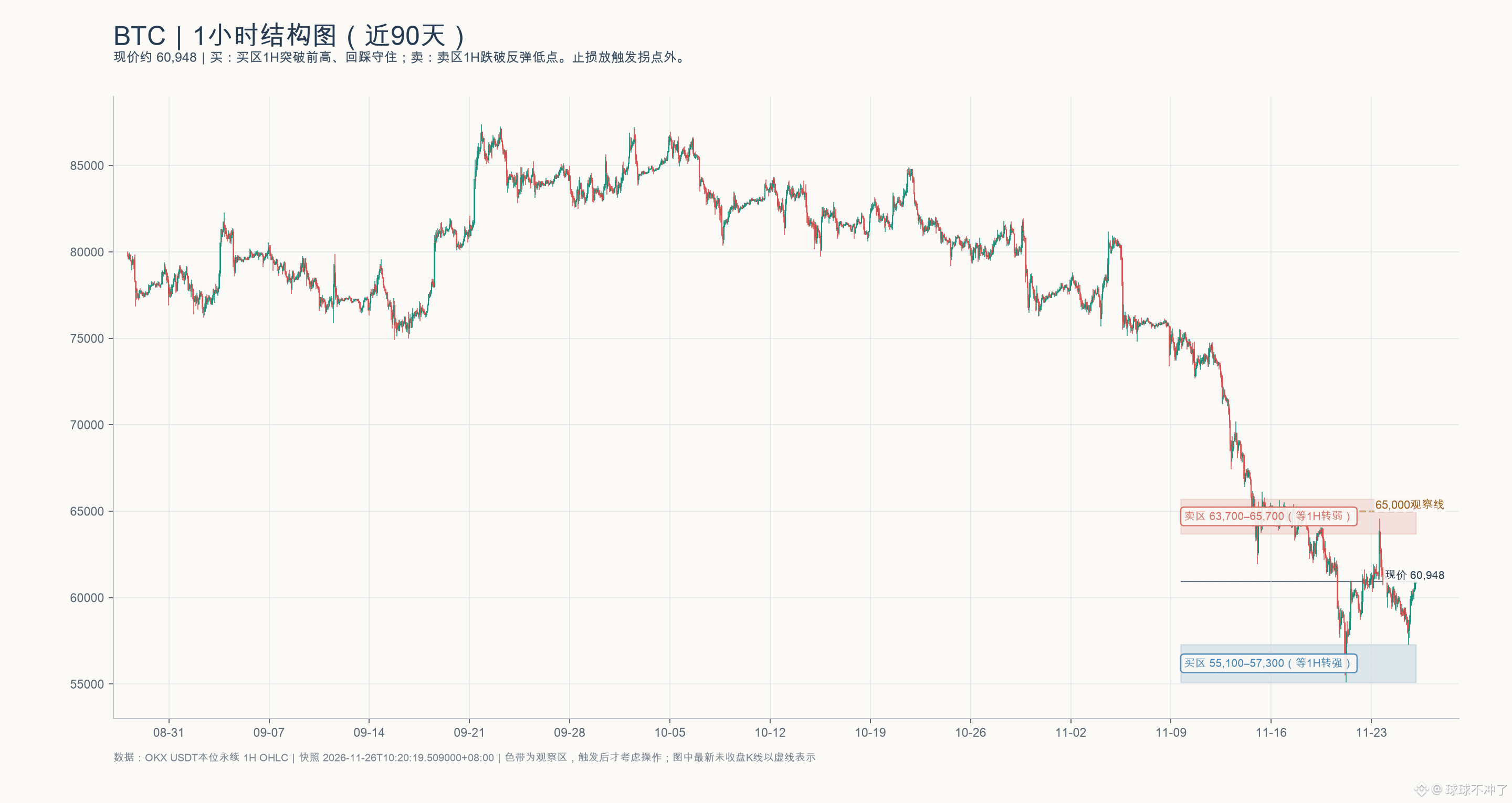
Will BTC rally and then turn lower, or pull back and then move higher? First, watch 65,000.
BTC is currently around 60,800 and still in a rebound structure. If it returns to the 63,700–65,700 sell zone, wait for weakness on the 1-hour chart before considering a short. Reclaiming 65,000 isn’t enough; only consider buying the pullback if price holds above the top of the sell zone at 65,700 and successfully retests it. The 55,100–57,300 range is a lower-level zone to watch; even if price reaches it, wait for strength on the 1-hour chart.
For ETH, first watch the 1,800–1,867 sell zone and the 1,536–1,610 buy zone. Until a reversal signal appears on the 1-hour chart, wait.
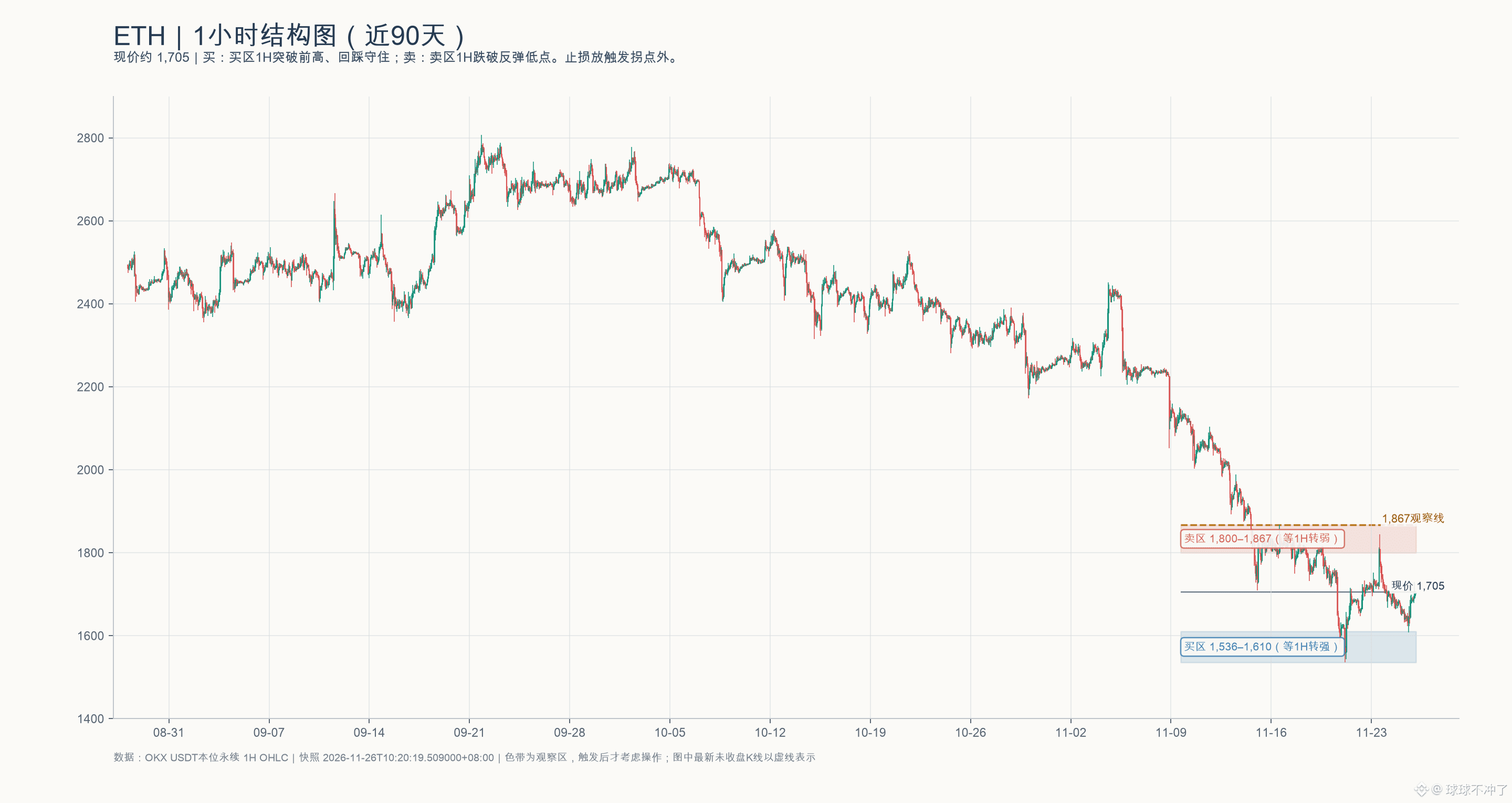
694
·
--
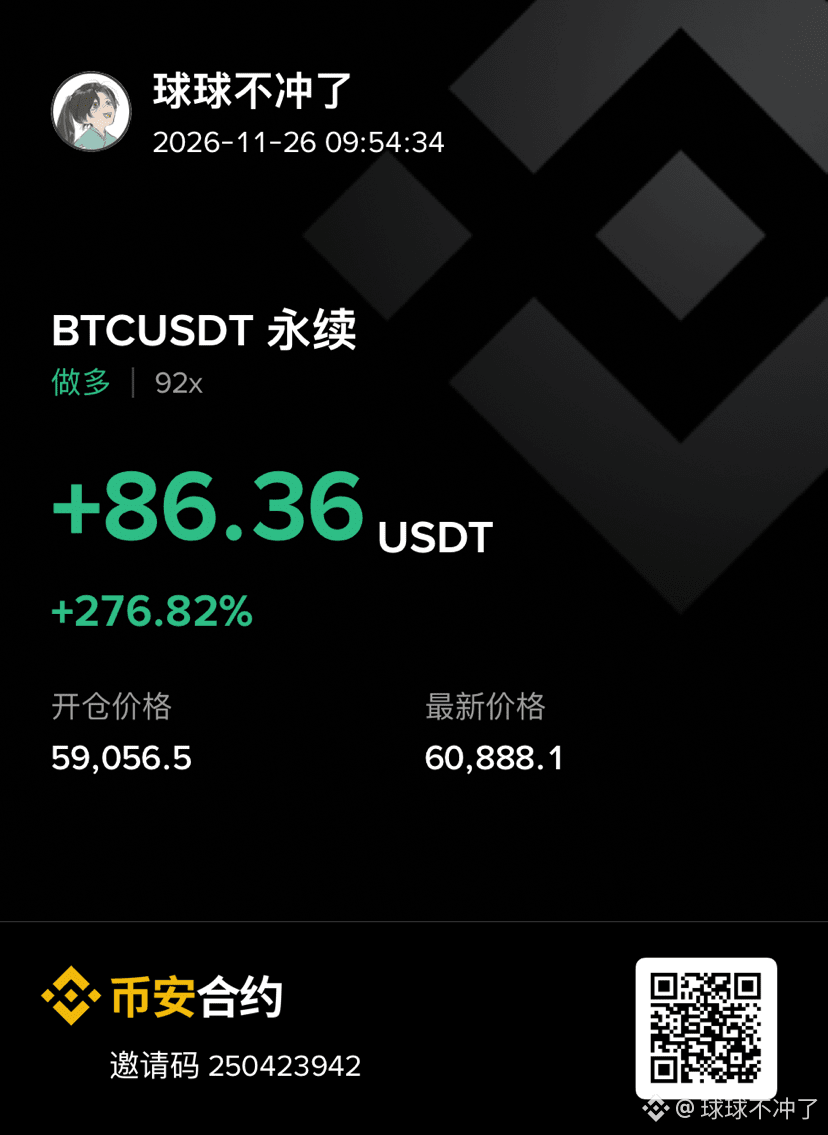
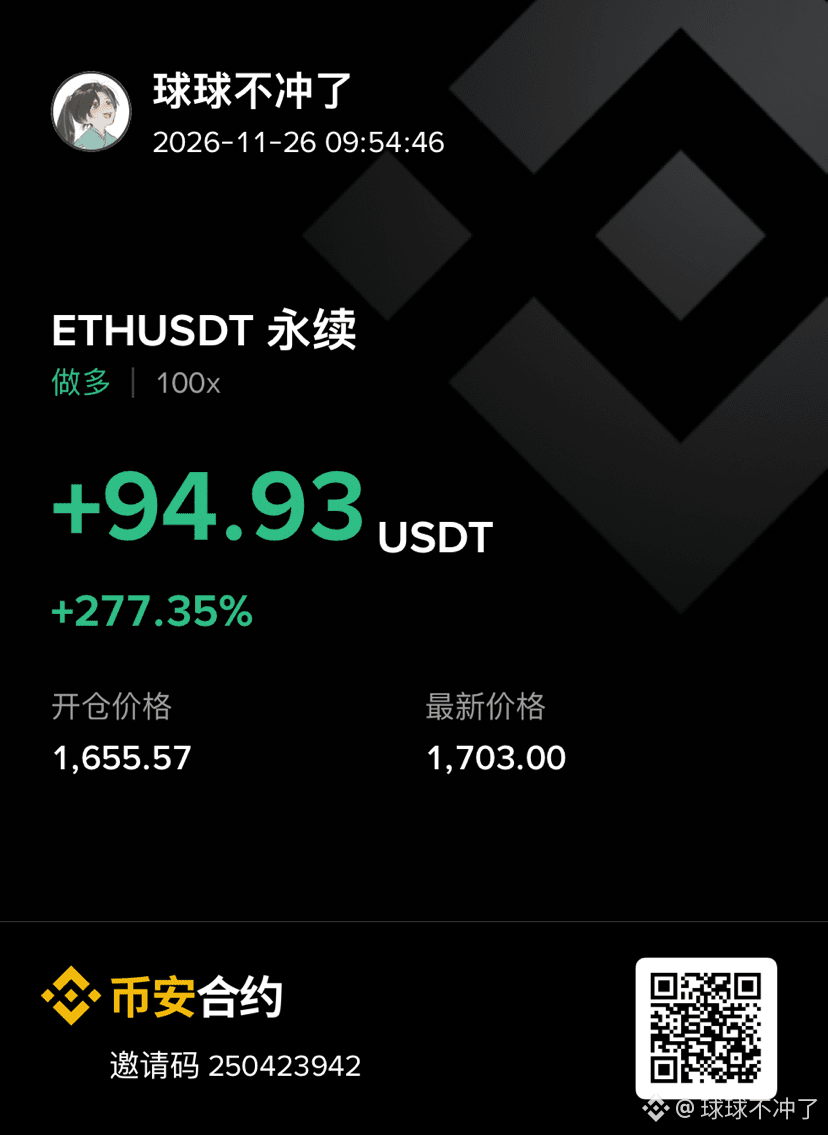
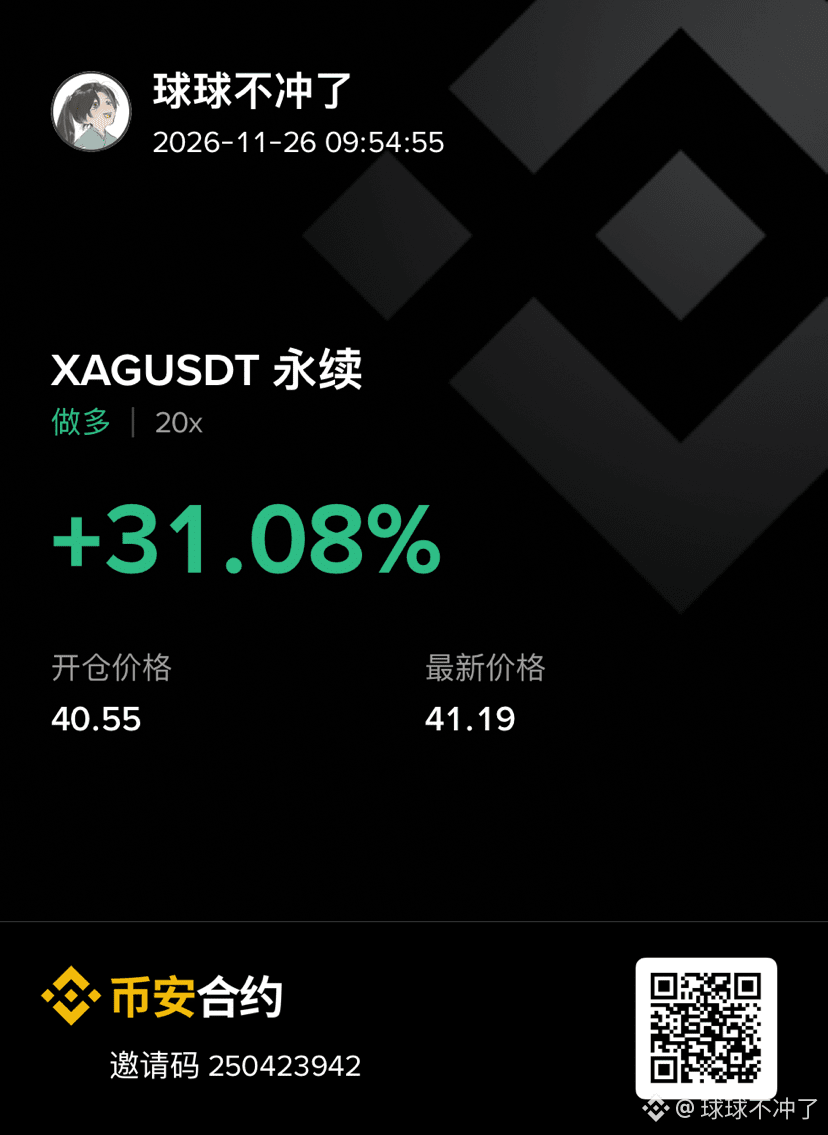
328
·
--
Article
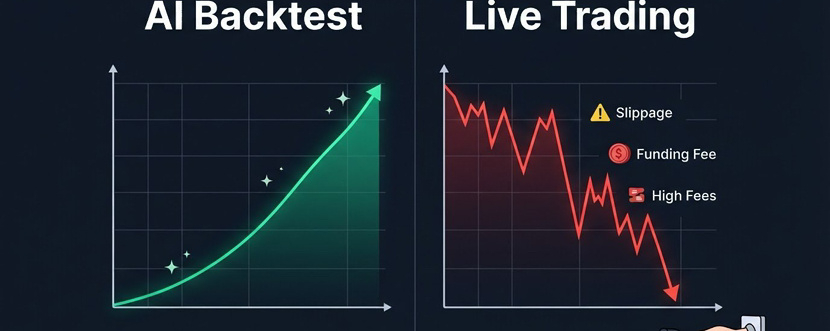
A Quant Agent with 39K Stars—So Why Does It Still Lose Money?A project on GitHub has recently blown up: Vibe-Trading, which has already racked up 38.8k stars.
With a single `pip install vibe-trading-ai`, it can spin up 30 preset investment research teams, 478 Alpha factors, backtest across the entire US stock and crypto markets, and even connect to 19 broker and exchange APIs.
The comments are full of people shouting, “Retail traders are finally turning things around!” and “Soon we’ll just lie back while agents automatically print money.” But as a humanities student with zero coding experience who’s constantly paying tuition on-chain, after playing around with it, I came away with just one thought:
The more powerful open-source quant agents become, the more dangerous the fantasy that ordinary people can use them to “make money fully automatically.”
A Quant Agent with 39K Stars—So Why Does It Still Lose Money?
A project on GitHub has recently blown up: Vibe-Trading, which has already racked up 38.8k stars.
With a single `pip install vibe-trading-ai`, it can spin up 30 preset investment research teams, 478 Alpha factors, backtest across the entire US stock and crypto markets, and even connect to 19 broker and exchange APIs.
The comments are full of people shouting, “Retail traders are finally turning things around!” and “Soon we’ll just lie back while agents automatically print money.” But as a humanities student with zero coding experience who’s constantly paying tuition on-chain, after playing around with it, I came away with just one thought:
The more powerful open-source quant agents become, the more dangerous the fantasy that ordinary people can use them to “make money fully automatically.”
1
259
·
--
Verified

Article
Institutions sell like crazy, central banks buy aggressively: Who's really propping up gold?Why do you insist on buying BTC and U.S. stocks? Why can't you buy gold?
Central banks have been buying all along. Why aren't you buying? Don't you believe in your country?
China's central bank has been adding to its gold reserves for 24 consecutive months, but that still couldn't shield gold from a week of losses.
The World Gold Council's weekly report on November 23 showed that spot gold fell 8.9% in the week ending November 20, based on New York closing prices. Another table showed that China's gold reserves rose to 78.3 million ounces at the end of October, up 830,000 ounces from September, equivalent to about 25.82 tonnes.
**Buying steadily on one hand, while prices keep falling on the other.**
Institutions sell like crazy, central banks buy aggressively: Who's really propping up gold?
Why do you insist on buying BTC and U.S. stocks? Why can't you buy gold?
Central banks have been buying all along. Why aren't you buying? Don't you believe in your country?
China's central bank has been adding to its gold reserves for 24 consecutive months, but that still couldn't shield gold from a week of losses.
The World Gold Council's weekly report on November 23 showed that spot gold fell 8.9% in the week ending November 20, based on New York closing prices. Another table showed that China's gold reserves rose to 78.3 million ounces at the end of October, up 830,000 ounces from September, equivalent to about 25.82 tonnes.
**Buying steadily on one hand, while prices keep falling on the other.**
1k
·
--
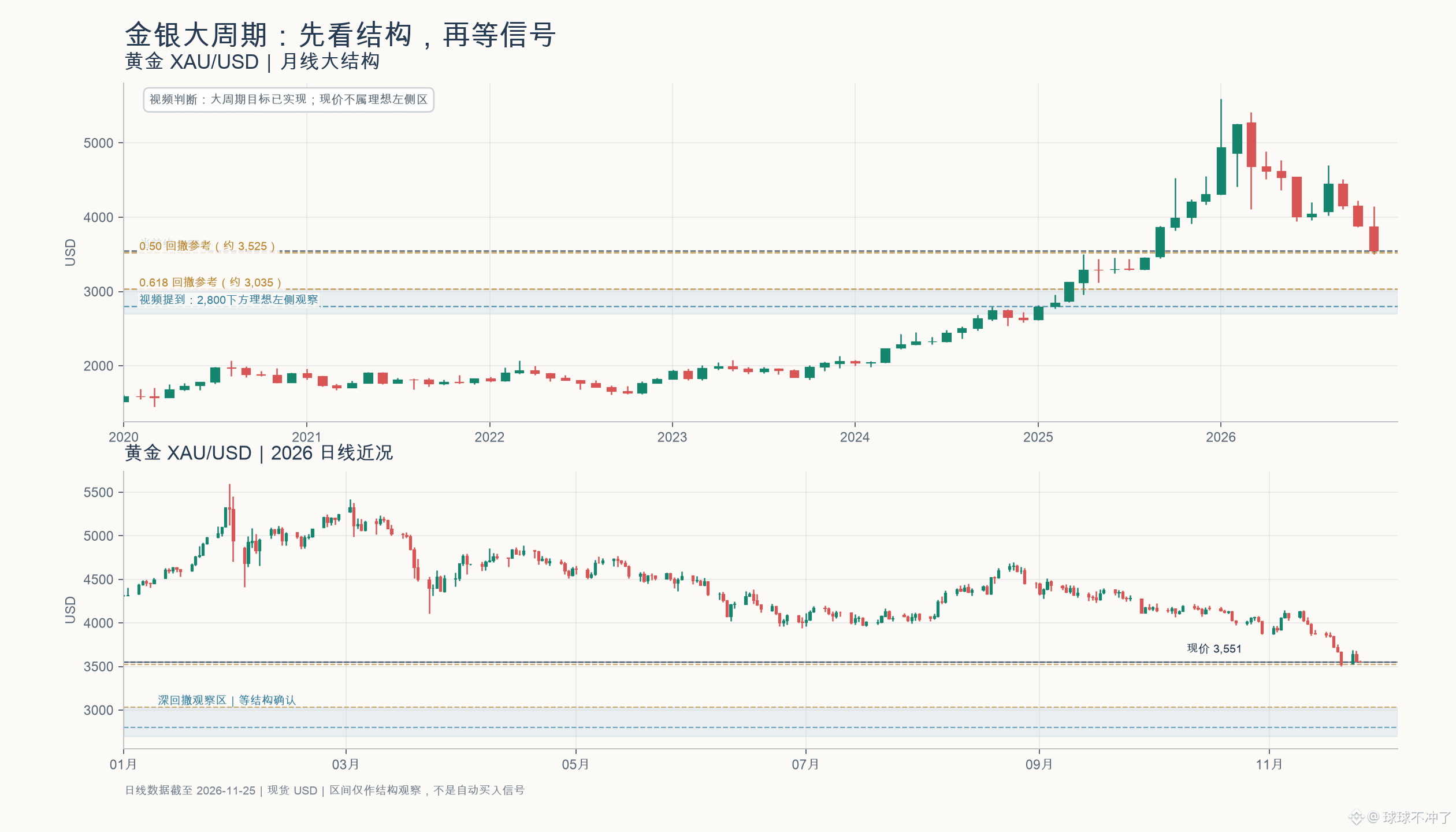
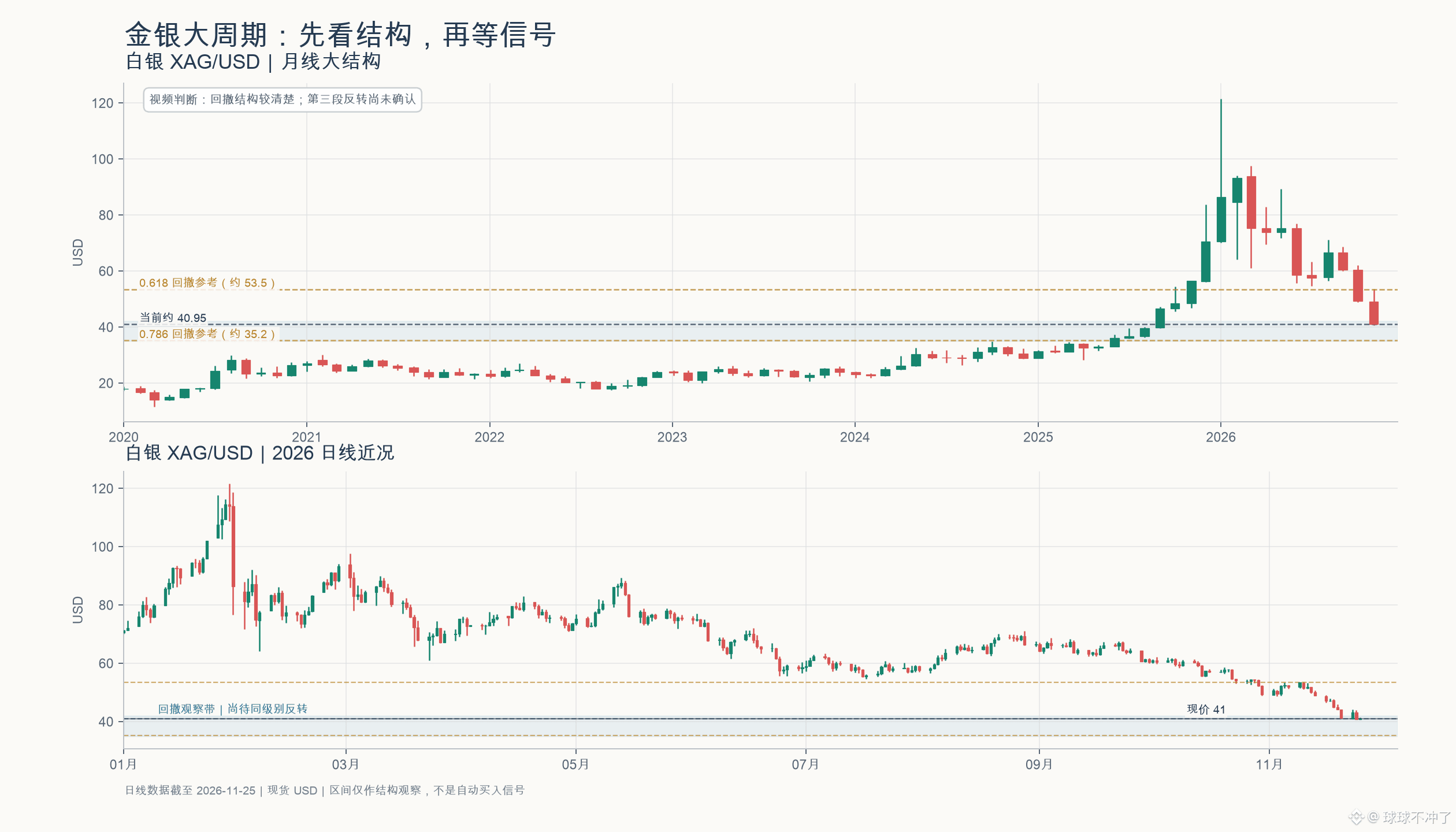
# Stop staring at BTC—why not take a look at gold?
BTC is still getting jerked back and forth, while gold and silver have already made a substantial move. From here, I’ll be keeping an eye on gold and silver—the opportunities this time around are more worth watching than continuing to obsess over BTC. Compared with U.S. stocks and crypto, I’m also more willing to ride out the volatility in gold.
That said, gold has just gone through a notable pullback, and its longer-term target has already played out. Don’t short it anymore—there’s no need. Silver’s setup is clearer; it’s been falling and falling for ages.
I’m getting ready to watch for key levels and look for an entry, folks!
If you’re not buying gold, what are you buying?! And if you are buying gold, what are you afraid of?!
1
1.6k
·
--
Verified
**《MON unlocking 166 million today? Wait, 16.6 billion tokens》**
Monad is unlocking about 16.61 billion MON today, equivalent to roughly 140% of the current circulating supply. The tokens are mainly allocated to the team, investors, and the Category Labs Treasury.
But an unlock doesn’t mean an immediate sell-off. The key thing to watch is where these tokens go next: exchanges, market-making wallets, or continued holding?
The numbers are alarming, but where the tokens go on-chain is what really matters.
1
2
1.8k
·
--
Partly True
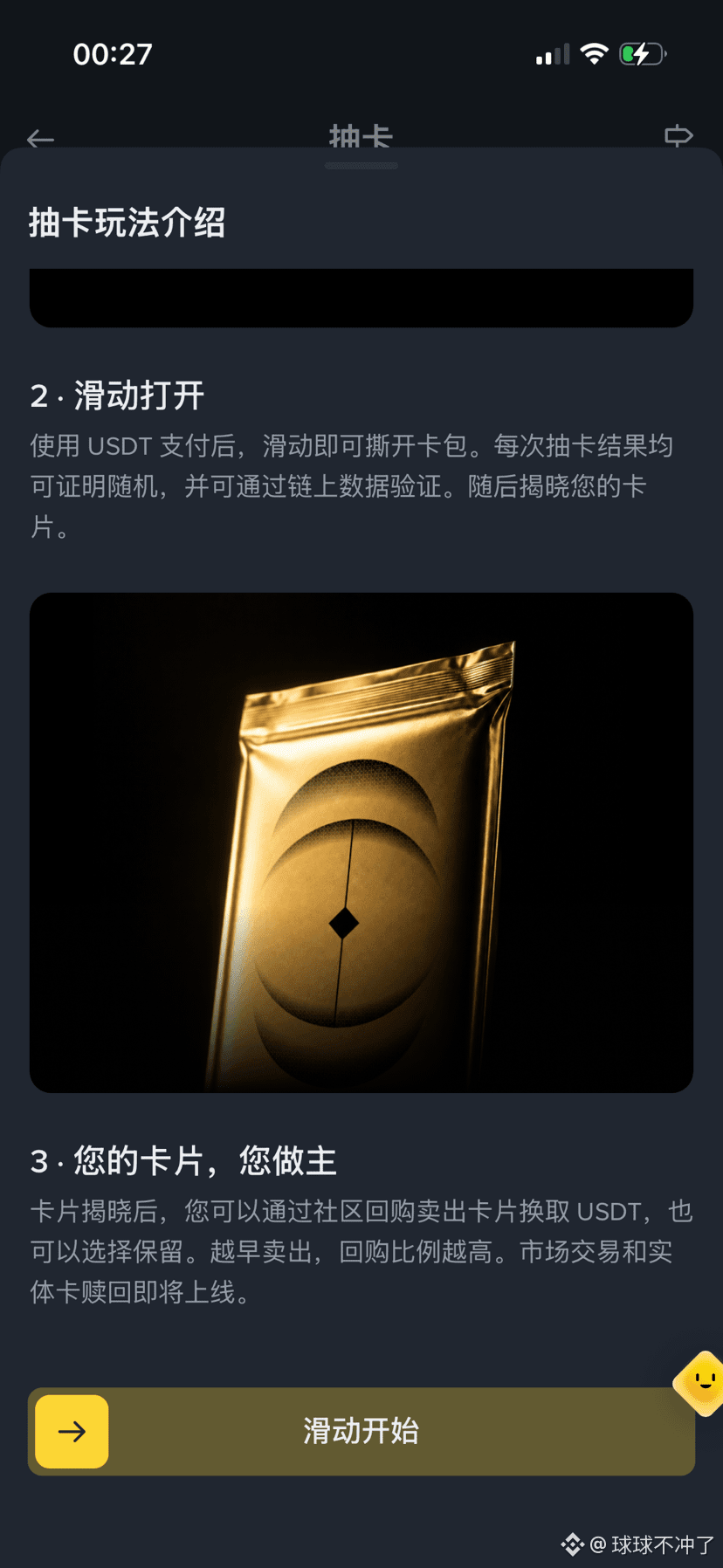
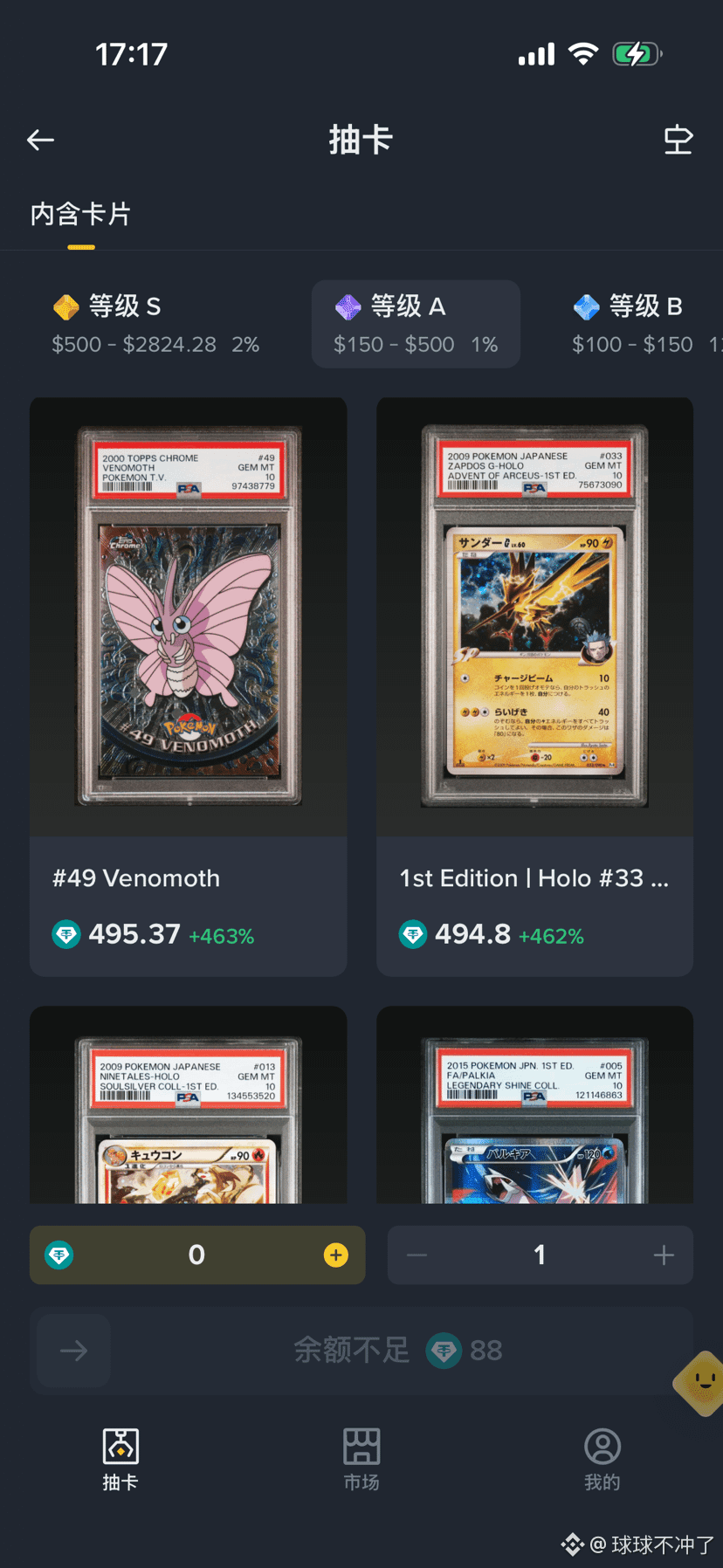
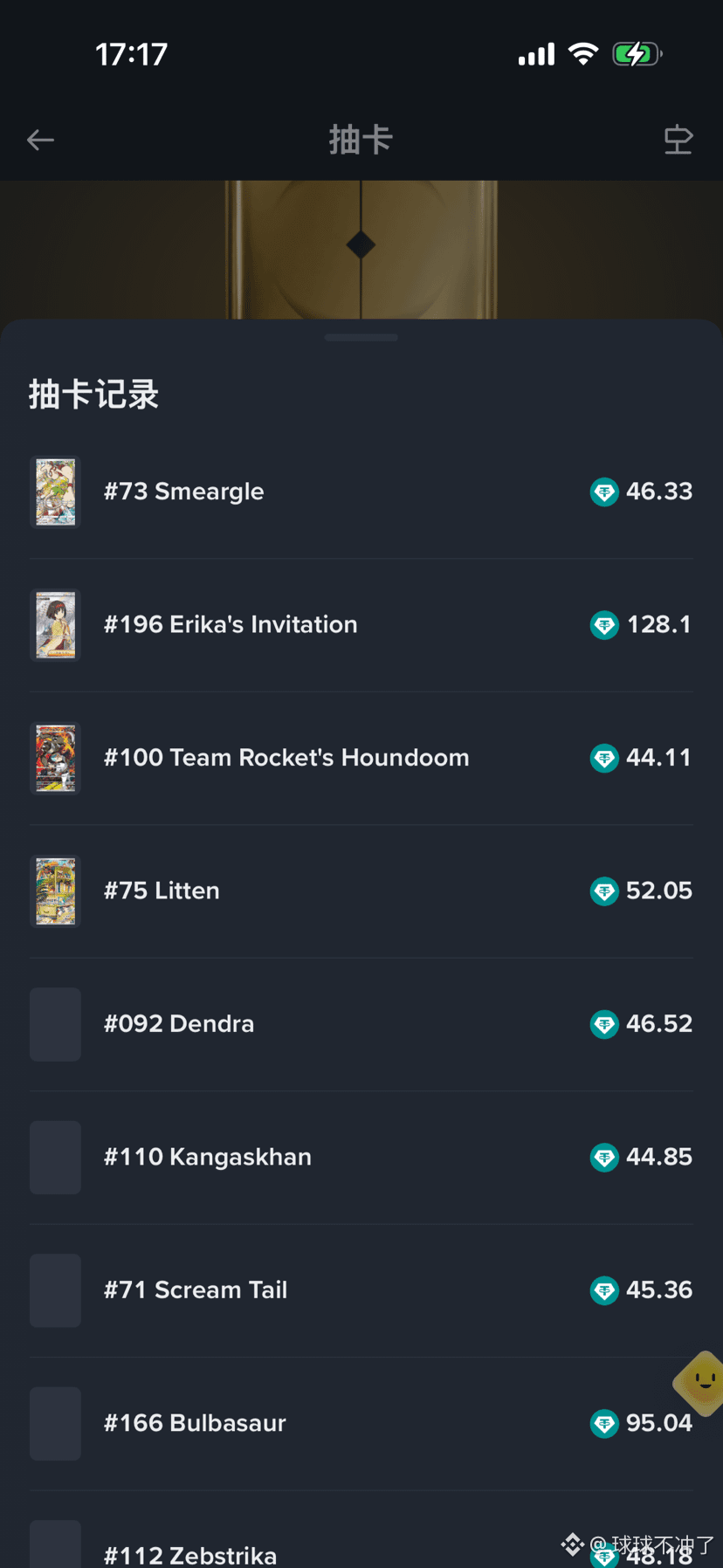
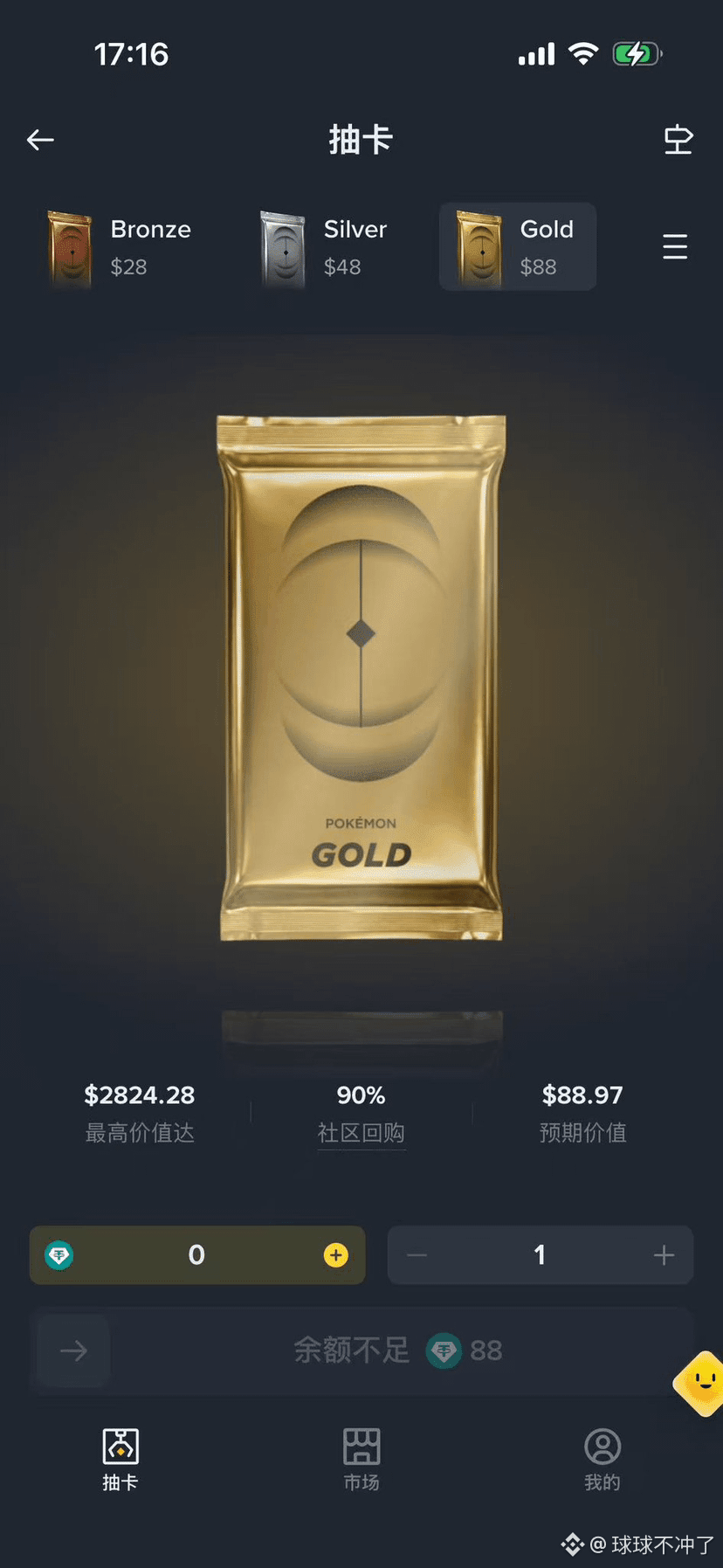
I reckon Binance Wallet should be launching this card-pull feature sometime this week. Here’s my rough take first →
1. Three tiers: 28u, 48u, and 88u. You can recoup some of your money with junk cards. It may be an old mechanic with nothing new to it, but the fact that @renaissCLTB was selected to integrate with Binance Wallet at this point proves it’s got something real going for it;
2. fourmeme and ren are starting to work together too, and they’ll have a presence in Bangkok. You can check it out in person and see what new tricks they’re planning. Cards and memes have always gone hand in hand;
3. Last week I posted a teaser on Binance Square, and lots of people came by to ask how to play and whether these were official cards. That shows users already have some familiarity with Pokémon cards;
4. Searching for Pokémon cards on Xiaohongshu, all I can say is every generation has its own hobby. Drop by a livestream and watch people pull cards—you’ll see how obsessed they are. My ex used to pull cards like My Little Pony ones and could spend several thousand yuan in a single night. They had drawers full of cards at home 🧑🎤;
5. Could Binance get some card-pulling influencers to livestream? @heyi , maybe scout some guys and girls from Web2. Either way, you can exchange the cards you pull for physical ones;
6. I’ve seen lots of people say it’s just reheated leftovers. Yep, that’s right—but I just hope they can make it entertaining;
7. The end.
I reckon Binance Wallet should be launching this card-pull feature sometime this week. Here’s my rough take first →
1. Three tiers: 28u, 48u, and 88u. You can recoup some of your money with junk cards. It may be an old mechanic with nothing new to it, but the fact that @renaissCLTB was selected to integrate with Binance Wallet at this point proves it’s got something real going for it;
2. fourmeme and ren are starting to work together too, and they’ll have a presence in Bangkok. You can check it out in person and see what new tricks they’re planning. Cards and memes have always gone hand in hand;
3. Last week I posted a teaser on Binance Square, and lots of people came by to ask how to play and whether these were official cards. That shows users already have some familiarity with Pokémon cards;
4. Searching for Pokémon cards on Xiaohongshu, all I can say is every generation has its own hobby. Drop by a livestream and watch people pull cards—you’ll see how obsessed they are. My ex used to pull cards like My Little Pony ones and could spend several thousand yuan in a single night. They had drawers full of cards at home 🧑🎤;
5. Could Binance get some card-pulling influencers to livestream? @Yi He , maybe scout some guys and girls from Web2. Either way, you can exchange the cards you pull for physical ones;
6. I’ve seen lots of people say it’s just reheated leftovers. Yep, that’s right—but I just hope they can make it entertaining;
7. The end.
球球不冲了
·
--
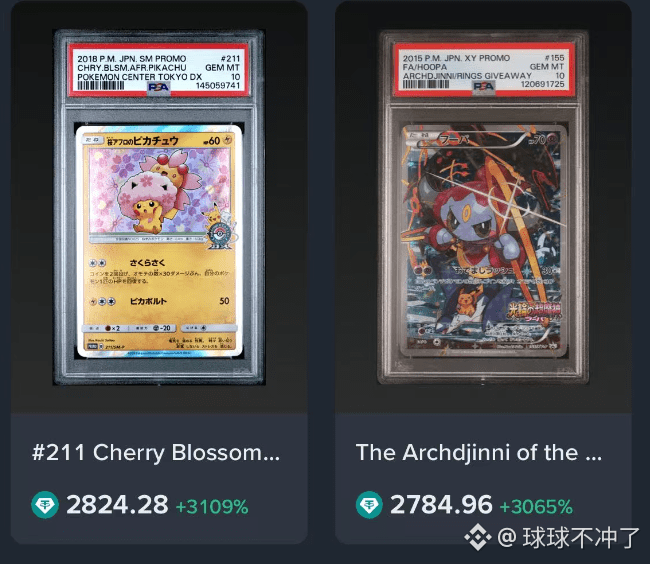
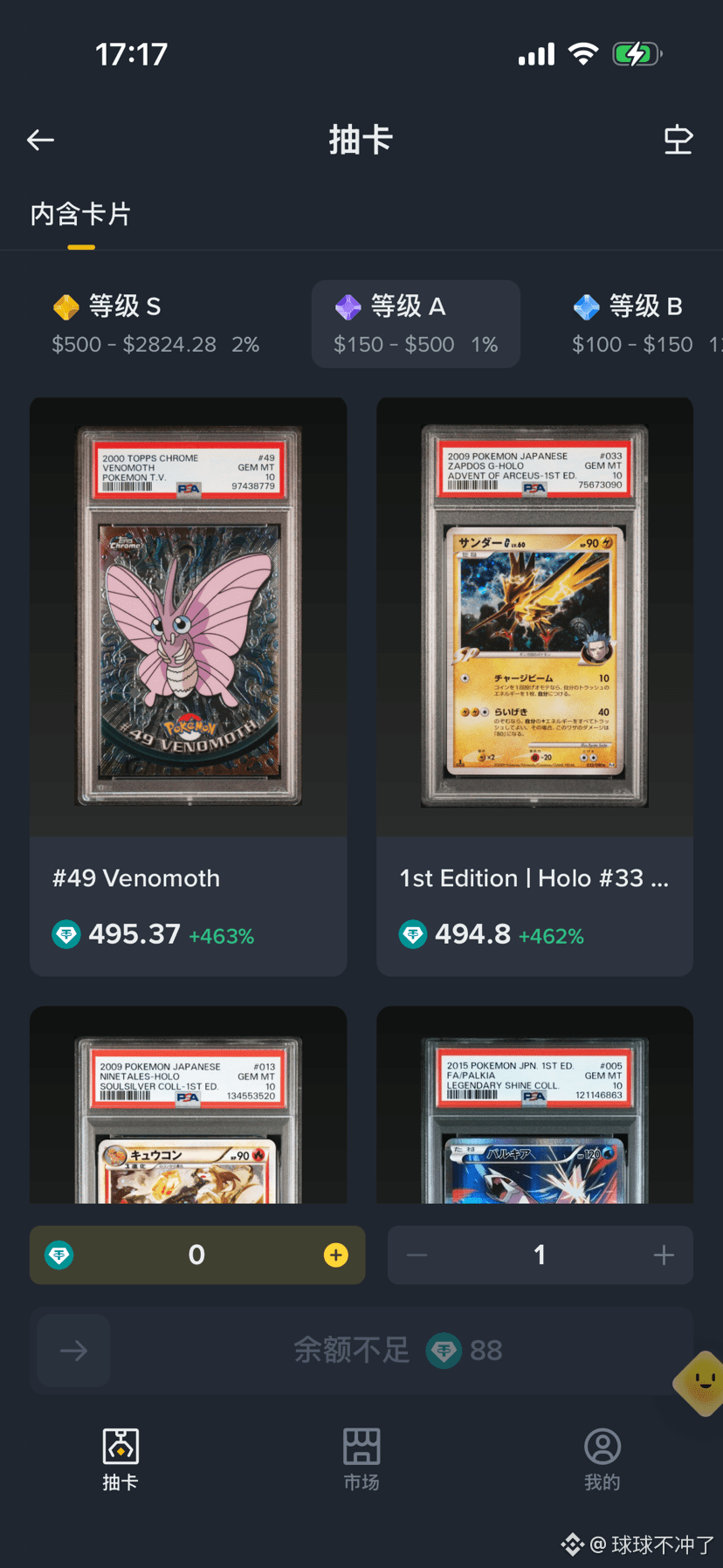
What new trick is Binance Wallet up to now? I only looked away for a moment, and you guys already pulled Pikachu! Get it listed ASAP!!
Pokémon + the universe’s first school + Agent + BSC = ?
Is Binance about to usher in the trading card era???
The market’s been dead for too long. Big sis, save us! @Yi He @Binance Wallet
Pokémon + the universe’s first school + Agent + BSC = ?
Is Binance about to usher in the trading card era???
The market’s been dead for too long. Big sis, save us! @Yi He @Binance Wallet
11
1
15
76.7k
·
--
Article
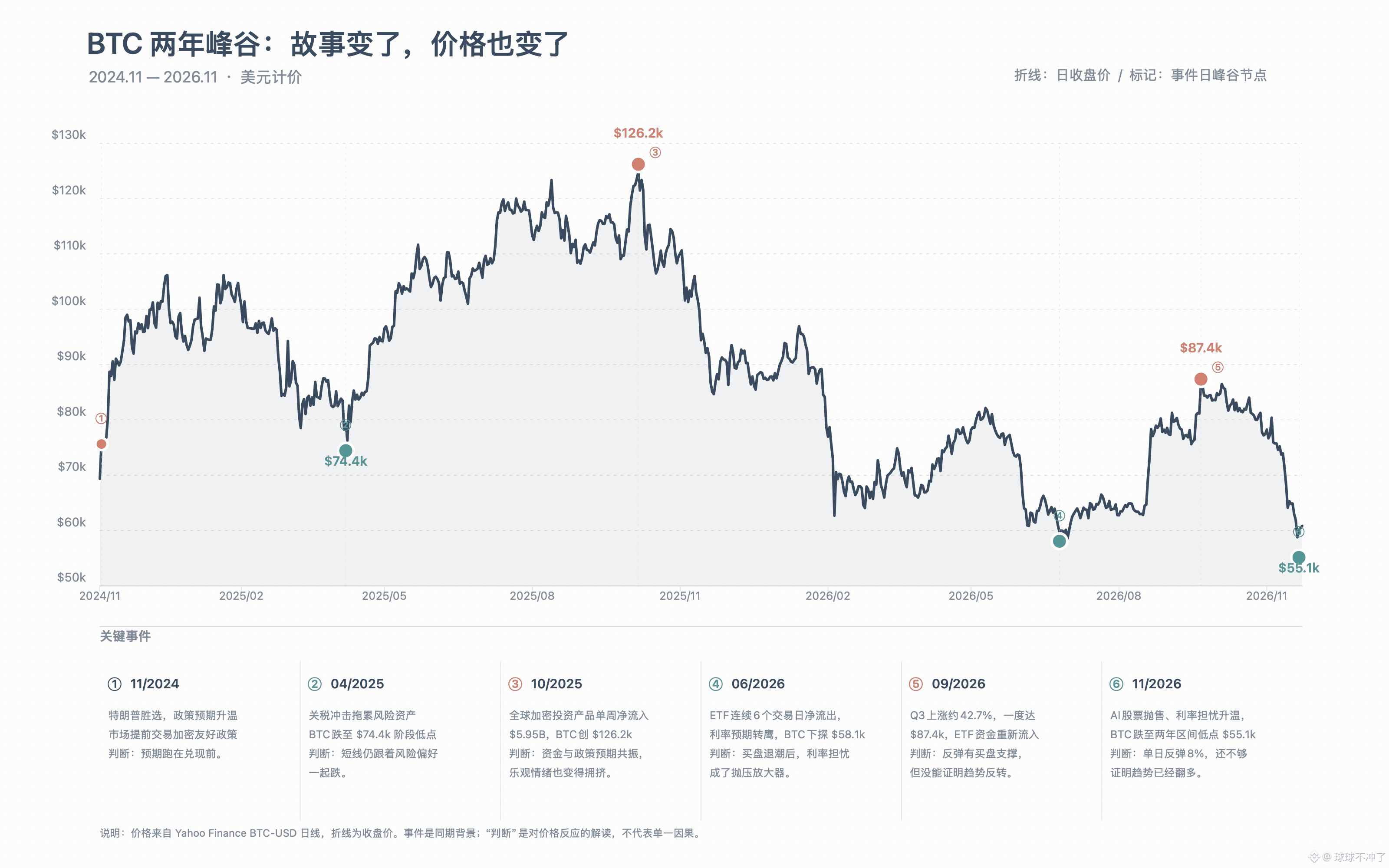
BTC surges 8% in a day after hitting a two-year low: From Trump election euphoria to the AI bubble burstingIf you timed the lows of both the 2025 and 2026 market moves perfectly, sold at the highs, then reinvested your entire principal and profits in the next round, $10,000 could grow to about $25,500 at most—a return of about 155%.
First stretch: $74,437 on April 7, 2025; $126,198 on October 6 of the same year, up about 69.5%.
Second stretch: $58,076 on June 25, 2026; $87,364 on September 21, up about 50.4%.
If you simply divide the absolute high by the absolute low across these two years, $126,198 divided by $55,252 gives a price ratio of about 2.28x.
📈 November 2024: The market was buying the election story
BTC surges 8% in a day after hitting a two-year low: From Trump election euphoria to the AI bubble bursting
If you timed the lows of both the 2025 and 2026 market moves perfectly, sold at the highs, then reinvested your entire principal and profits in the next round, $10,000 could grow to about $25,500 at most—a return of about 155%.
First stretch: $74,437 on April 7, 2025; $126,198 on October 6 of the same year, up about 69.5%.
Second stretch: $58,076 on June 25, 2026; $87,364 on September 21, up about 50.4%.
If you simply divide the absolute high by the absolute low across these two years, $126,198 divided by $55,252 gives a price ratio of about 2.28x.
📈 November 2024: The market was buying the election story
1
358
·
--
BTC rebounds 8% in a day after hitting a two-year low: Will it keep falling?
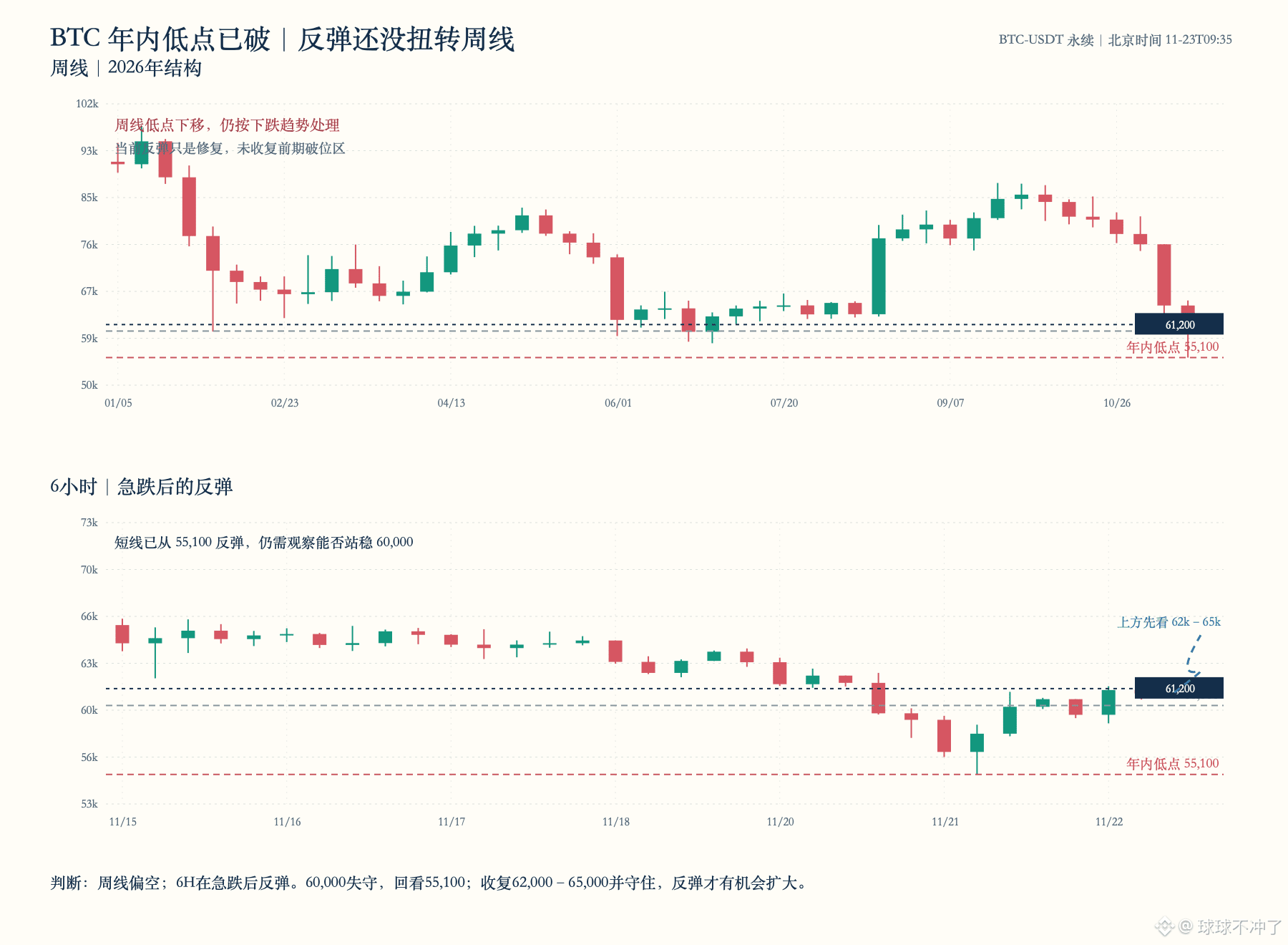
On November 21, BTC plunged to a low of 55,100, its lowest level in nearly two years, then recovered about 8% intraday from that low. It was a sharp rebound, but the weekly downtrend remains intact; on the 6-hour chart, this still looks like a bounce after a steep drop.
Can it fall further? Yes. If 60,000 fails again, BTC could retest 55,100; if that low breaks, it will look for support lower down. The 62,000–65,000 range is resistance. A sustained move above 65,000 would give the rebound room to extend.
Is this big green candle after a two-year low a dramatic comeback—or just a pause in the decline?
349
·
--
Verified
Down 40% in a day—is AKE’s buzz an opportunity or a chance to cash out?
Akedo aims to bring AI into game creation: users describe their ideas in text, and AI helps generate a game. AKE is designed as a token for ecosystem uses such as creating and publishing games.
The AI + gaming story is compelling, but whether the project can attract sustained users and revenue depends on real product data. The recent surge, sharp drop, and token unlocks have also amplified the risks of holding the token.
My take: the project is worth keeping an eye on, but the token’s price action lately isn’t worth chasing blindly. Do you think AI-powered game creation can generate real demand?
1
1.8k
·
--
What new trick is Binance Wallet up to now? I only looked away for a moment, and you guys already pulled Pikachu! Get it listed ASAP!!
Pokémon + the universe’s first school + Agent + BSC = ?
Is Binance about to usher in the trading card era???
The market’s been dead for too long. Big sis, save us! @heyi @BinanceWallet
What new trick is Binance Wallet up to now? I only looked away for a moment, and you guys already pulled Pikachu! Get it listed ASAP!!
Pokémon + the universe’s first school + Agent + BSC = ?
Is Binance about to usher in the trading card era???
The market’s been dead for too long. Big sis, save us! @Yi He @Binance Wallet
Pokémon + the universe’s first school + Agent + BSC = ?
Is Binance about to usher in the trading card era???
The market’s been dead for too long. Big sis, save us! @Yi He @Binance Wallet
24
2
11
51.7k
·
--
Verified
Chasing Claude at the open, down 13% by the close! No. 1 on the Square hot list—still time to get in?
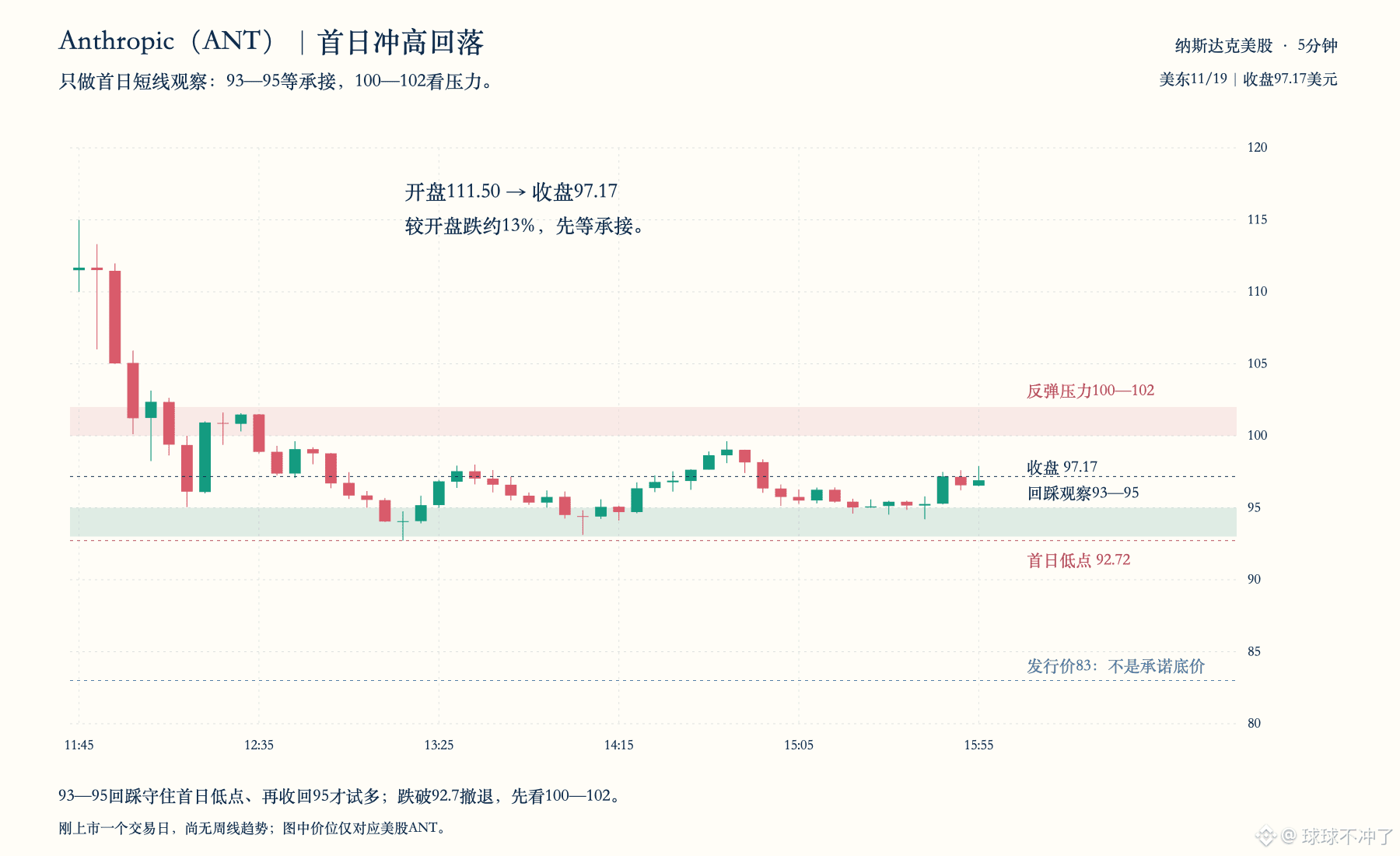
Today’s pick is Anthropic (U.S. stock ticker: ANT). Its listing is the hottest topic on Binance Square, ranking No. 1, and ANTB has also made the top searches for the past 6 hours.
Priced at $83, opened at $111.5, and closed at $97.17. That looks like a 17% gain over the offering price, but anyone who chased it at the open was already down nearly 13% by the close. Same stock, some people cashing in while others foot the bill.
Is it valuable? Yes. Third-quarter revenue was about $17 billion, compared with about $1.4 billion in the same quarter last year—a truly impressive increase. But it still posted an operating loss of $567 million over the same period. The key question going forward is whether revenue can outpace computing costs.
My approach: watch for a pullback to $93–95. If it holds above the first-day low and climbs back above $95, I’d consider a small long position. If it falls below $92.7, I’m out. On a rebound, I’d first look at $100–102.
It’s only been listed for one day, so there’s no weekly chart structure yet. This chart analysis is for U.S. stock ANT; ANTB needs to be assessed separately based on its own trading price. It’s fine to watch the No. 1 hot topic, but be selective about your entry price.
1.7k
·
--
Has it fallen a bit too sharply? $SKY
Searching for a sword by carving a mark on the boat
Has it fallen a bit too sharply? $SKY
Searching for a sword by carving a mark on the boat
Searching for a sword by carving a mark on the boat
球球不冲了
·
--
Sky lending offers 20% annualized returns—do you dare deposit?
The founder moved funds around and borrowed $77 million. Is the protocol plugging a hole after a blowup, or is there still no money to repay?
🧑🎤 stUSDS deposits yield 19.74% annually, and the maximum withdrawable amount for each of the two largest holders is 0.
🧑🎤 The Safe linked to rune.eth owes approximately 77.06 million USDS, or 47.6% of this type of borrowing in total.
🧑🎤 Of the 4 positions, 3 are below the safety threshold based on the protocol's price feeds, while the related liquidation auction module remains disabled.
Put simply, depositors who want to exit have to wait for the founder to repay the debt first.
Sky is the protocol formerly known as MakerDAO. Users deposit USDS, which is lent to users borrowing against SKY collateral. Whether they can redeem depends on how much of the pool is being used.
🕰️ How did things unfold to reach this point?
On October 26, Protos reported that a linked wallet had borrowed an additional 1 million USDS.
On October 30, Raw Power Games, the gaming company linked to Rune, entered bankruptcy proceedings.
On October 31, @punkquidity recalled that the pool had been without available withdrawals for a long time, with rates rising to around 10.7% before withdrawals resumed that evening.
From November 10 to 14, withdrawals became strained again, and rates rose to around 13%.
From November 18 to 19, the annualized rate rose to 19.74%.
Rates keep climbing—but when will the borrower pay back?
💰 Can $77 million actually be repaid?
The SKY collateral in the rune.eth wallet has a market value of around $175.5 million. But if someone really tried to sell tens of millions of dollars' worth of tokens, who would buy them?
Assuming the rate stays unchanged, the 77.06 million in debt would accrue about 1.18 million USDS in interest over a month. The loan has no fixed term, so when the debt will be repaid—and when others will be able to withdraw—remains unknown.
One more detail: the stUSDS contract itself still holds around 162 million USDS. But this risk capital is tied up in lending exposure, and the contract does not allow it to be withdrawn freely.
🔮 What comes next? Maybe no one can exit safely
① The whale repays, and everyone gradually gets out
The borrower pays the money back, reducing the reserves tied up and restoring withdrawal capacity. That's the best-case scenario.
In 2023, the Curve founder's borrowing from Fraxlend also saw 100% utilization and sharply rising rates. The situation was later eased through actual repayments and liquidity arrangements.
② High rates persist, and withdrawals remain on hold
The borrower continues to accrue interest, depositors' claims continue to grow, and the exit date remains uncertain.
New deposits might temporarily free up some capacity; if that capacity is quickly borrowed again, the pressure will return.
③ Governance steps in to deleverage or add funds
It could restrict new borrowing, negotiate the sale of collateral, or bring in outside capital. That seems like a long shot—there may be no options left.
④ The collateral falls short, and holders absorb the losses
If the funds ultimately recovered are insufficient to repay the debt, and no other funds are added, stUSDS's loss-sharing mechanism could reduce holders' claims.
Using approximately 161.95 million USDS as the denominator, if a net loss of 10 million USDS were borne entirely by this pool, holders' claims would fall by about 6.17%.
If repaying the debt requires a concentrated sale of SKY, selling pressure could push down its price. Falling collateral values would then make the remaining loans harder to deal with.
That's a vicious cycle. Is SKY doomed? Who knows.
What more people want to ask is: I don't need the interest—when will I get my principal back?
The founder moved funds around and borrowed $77 million. Is the protocol plugging a hole after a blowup, or is there still no money to repay?
🧑🎤 stUSDS deposits yield 19.74% annually, and the maximum withdrawable amount for each of the two largest holders is 0.
🧑🎤 The Safe linked to rune.eth owes approximately 77.06 million USDS, or 47.6% of this type of borrowing in total.
🧑🎤 Of the 4 positions, 3 are below the safety threshold based on the protocol's price feeds, while the related liquidation auction module remains disabled.
Put simply, depositors who want to exit have to wait for the founder to repay the debt first.
Sky is the protocol formerly known as MakerDAO. Users deposit USDS, which is lent to users borrowing against SKY collateral. Whether they can redeem depends on how much of the pool is being used.
🕰️ How did things unfold to reach this point?
On October 26, Protos reported that a linked wallet had borrowed an additional 1 million USDS.
On October 30, Raw Power Games, the gaming company linked to Rune, entered bankruptcy proceedings.
On October 31, @punkquidity recalled that the pool had been without available withdrawals for a long time, with rates rising to around 10.7% before withdrawals resumed that evening.
From November 10 to 14, withdrawals became strained again, and rates rose to around 13%.
From November 18 to 19, the annualized rate rose to 19.74%.
Rates keep climbing—but when will the borrower pay back?
💰 Can $77 million actually be repaid?
The SKY collateral in the rune.eth wallet has a market value of around $175.5 million. But if someone really tried to sell tens of millions of dollars' worth of tokens, who would buy them?
Assuming the rate stays unchanged, the 77.06 million in debt would accrue about 1.18 million USDS in interest over a month. The loan has no fixed term, so when the debt will be repaid—and when others will be able to withdraw—remains unknown.
One more detail: the stUSDS contract itself still holds around 162 million USDS. But this risk capital is tied up in lending exposure, and the contract does not allow it to be withdrawn freely.
🔮 What comes next? Maybe no one can exit safely
① The whale repays, and everyone gradually gets out
The borrower pays the money back, reducing the reserves tied up and restoring withdrawal capacity. That's the best-case scenario.
In 2023, the Curve founder's borrowing from Fraxlend also saw 100% utilization and sharply rising rates. The situation was later eased through actual repayments and liquidity arrangements.
② High rates persist, and withdrawals remain on hold
The borrower continues to accrue interest, depositors' claims continue to grow, and the exit date remains uncertain.
New deposits might temporarily free up some capacity; if that capacity is quickly borrowed again, the pressure will return.
③ Governance steps in to deleverage or add funds
It could restrict new borrowing, negotiate the sale of collateral, or bring in outside capital. That seems like a long shot—there may be no options left.
④ The collateral falls short, and holders absorb the losses
If the funds ultimately recovered are insufficient to repay the debt, and no other funds are added, stUSDS's loss-sharing mechanism could reduce holders' claims.
Using approximately 161.95 million USDS as the denominator, if a net loss of 10 million USDS were borne entirely by this pool, holders' claims would fall by about 6.17%.
If repaying the debt requires a concentrated sale of SKY, selling pressure could push down its price. Falling collateral values would then make the remaining loans harder to deal with.
That's a vicious cycle. Is SKY doomed? Who knows.
What more people want to ask is: I don't need the interest—when will I get my principal back?
1
793
·
--
🏦 A firewall seller is preparing to spend $4.5 billion on an AI companyPalo Alto Networks originally planned to be a customer of an AI company. After seeing the product, it decided to buy the company too.
On November 18, it announced plans to acquire Applied Compute in an all-stock deal valued at about $4.5 billion. The deal is subject to regulatory and other approvals and has not yet been completed.
Why would a cybersecurity company buy a team that trains and runs AI models?
Look at how businesses use AI, and this deal gets interesting.
🧑💻 Now that AI is on board, are companies comfortable letting it see their data?
Suppose you’re building a sales assistant for a company.
🏦 A firewall seller is preparing to spend $4.5 billion on an AI company
Palo Alto Networks originally planned to be a customer of an AI company. After seeing the product, it decided to buy the company too.
On November 18, it announced plans to acquire Applied Compute in an all-stock deal valued at about $4.5 billion. The deal is subject to regulatory and other approvals and has not yet been completed.
Why would a cybersecurity company buy a team that trains and runs AI models?
Look at how businesses use AI, and this deal gets interesting.
🧑💻 Now that AI is on board, are companies comfortable letting it see their data?
Suppose you’re building a sales assistant for a company.
PANWUS-2.77%
1
508
·
--
Verified
AMD is up 5%. Is it too late to buy, or would I be left holding the bag?
This time, I’m choosing AMD. The investment thesis is straightforward: AI demand is translating into earnings. Third-quarter revenue was $13.4 billion, up 45% year over year; data center revenue grew 97%. The company expects fourth-quarter revenue of around $17 billion, with growth continuing to accelerate.
What I like is that both its AI chip and server CPU businesses are growing. The key thing to watch next is whether new product deliveries translate into the revenue guidance.
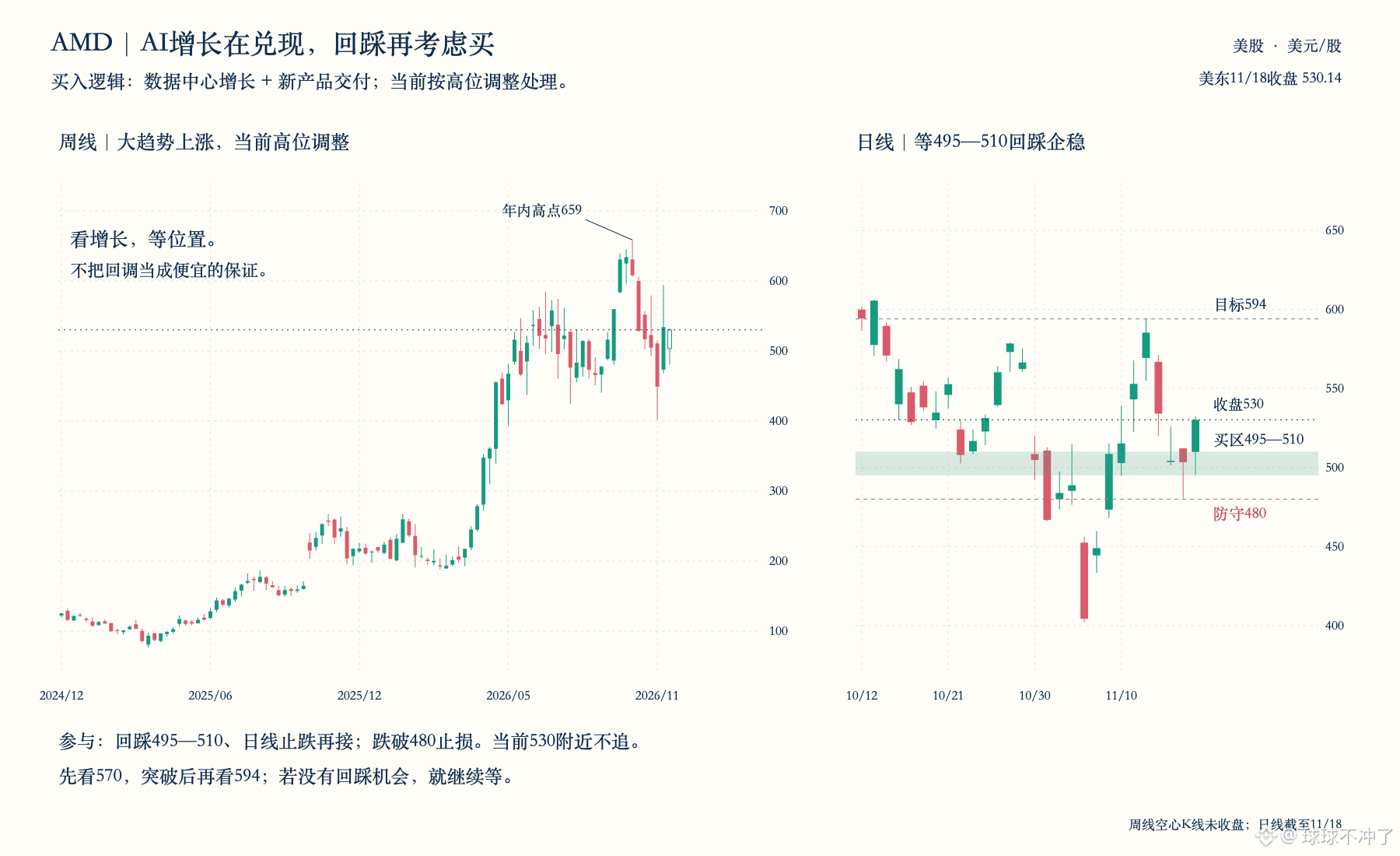
But entry price matters too. AMD closed at $530.14 on November 18, Eastern Time, up 5.31% for the day. The broader trend is still a pullback from elevated levels after a rally, so I wouldn’t chase it around $530.
I’d consider buying if it pulls back to $495–$510 and stabilizes, with a stop-loss below $480. First target: $570; if it breaks through, then $594.
The main risks are cooling AI investment and product deliveries falling short of expectations. If it breaks below the support level, I’d exit.
2
2k
·
--
Verified
My colleagues have all started buying gold. Aren’t you going to get in on it?
Crypto really hasn’t had much momentum lately. BTC is still hovering around $64,000, and it’s getting pretty frustrating to watch.
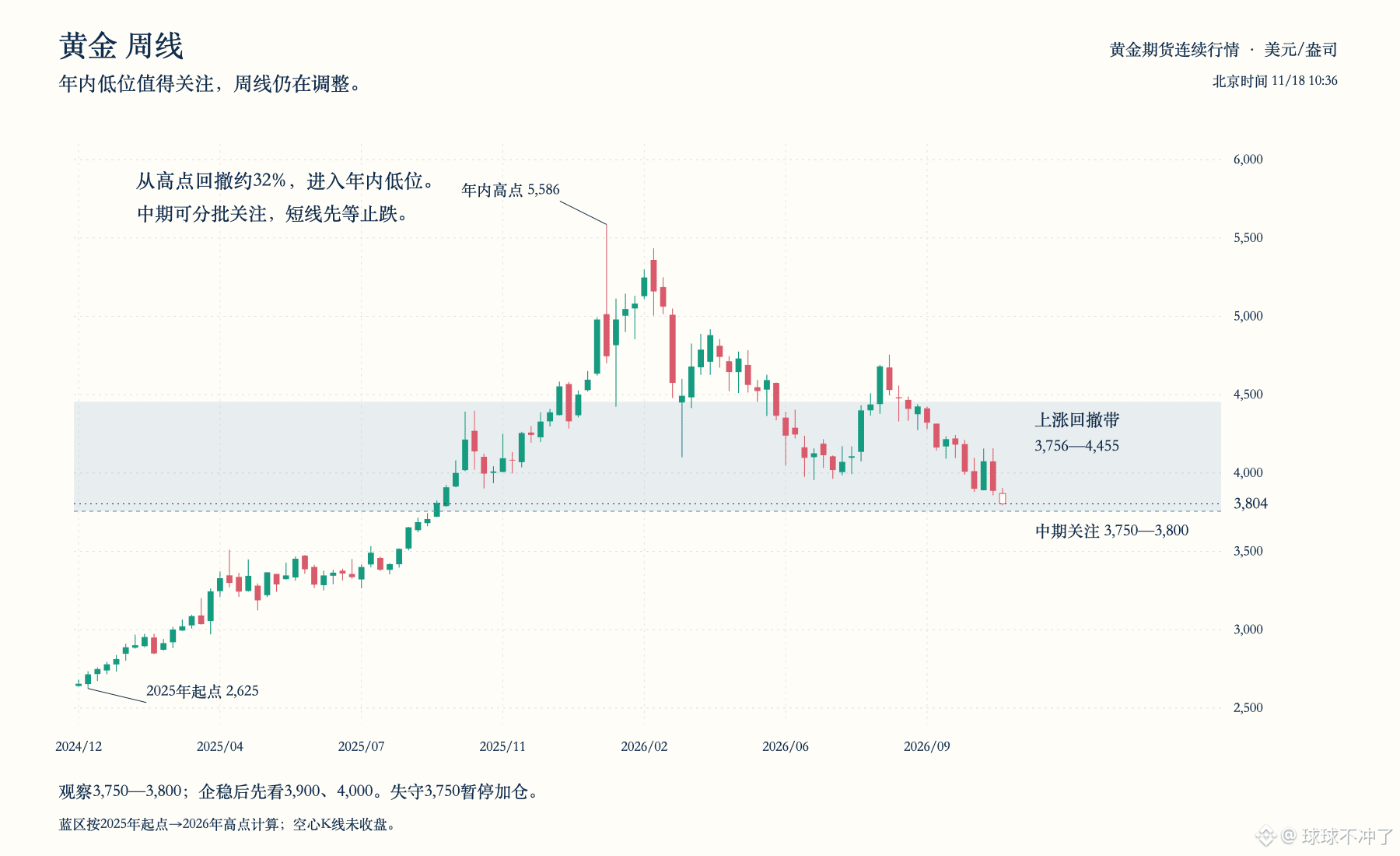
Gold, on the other hand, has fallen from $5,586 earlier this year to around $3,800, a pullback of more than 30%. At this level, I think it’s worth starting to consider a medium-term allocation.
Keep an eye on the $3,750–$3,800 range and buy in stages. Wait for signs of a bottom in the short term; if it rebounds, the first targets are $3,900 and $4,000. If it falls below $3,750, stop buying for now—don’t keep buying and averaging down all the way.
1
1
1k
·
--
U.S. stocks are swinging wildly—when will BTC finally show some backbone?
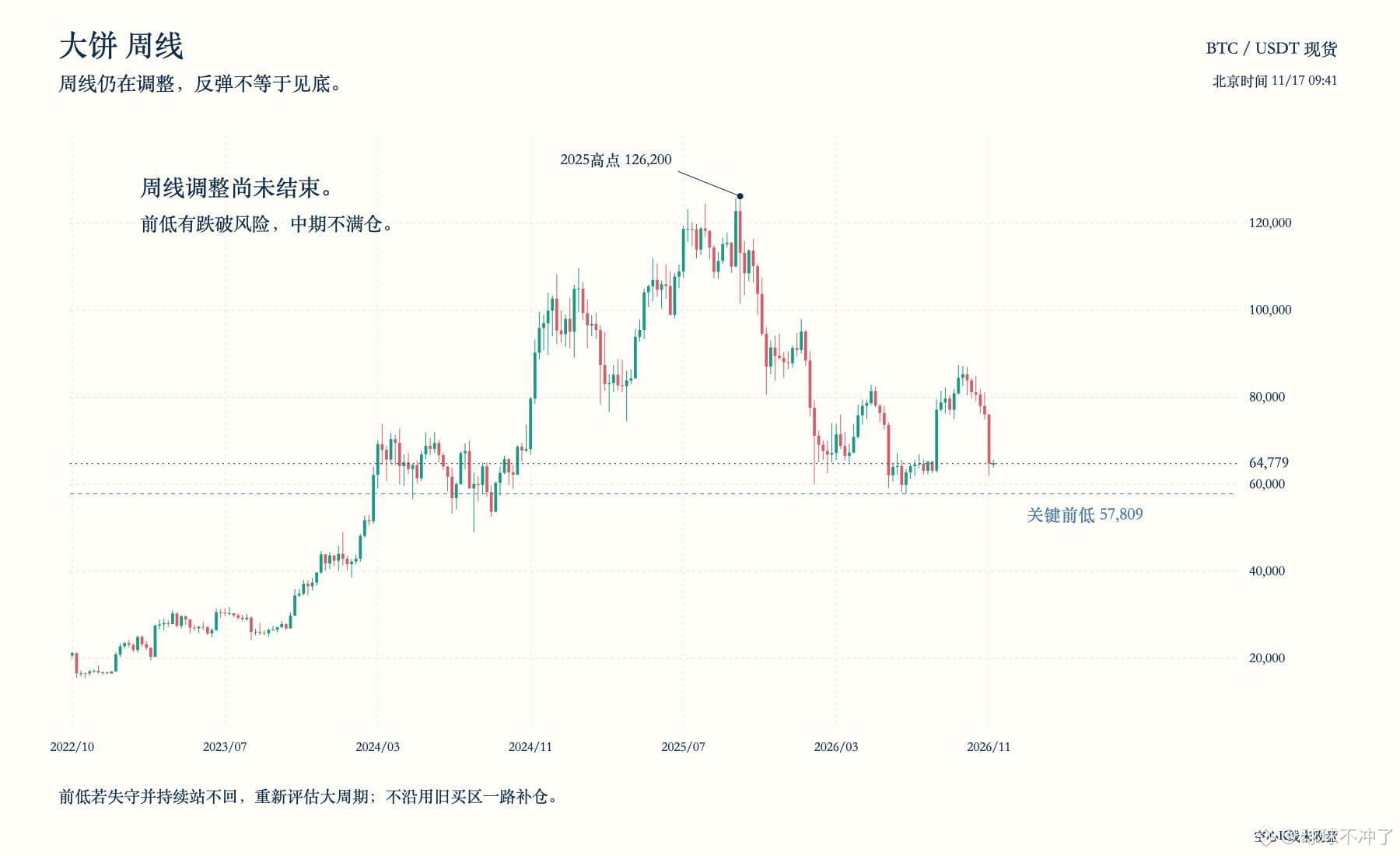
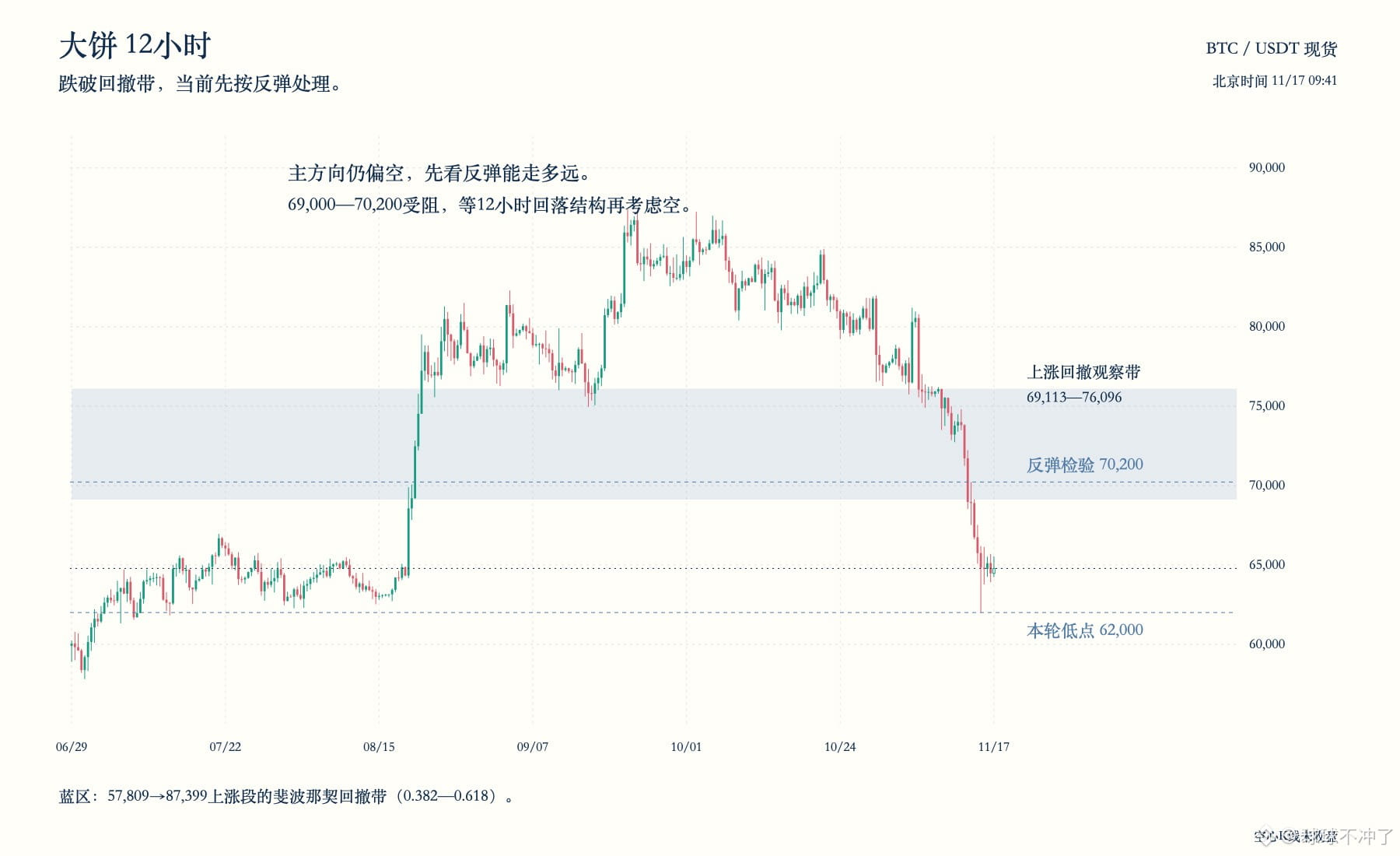
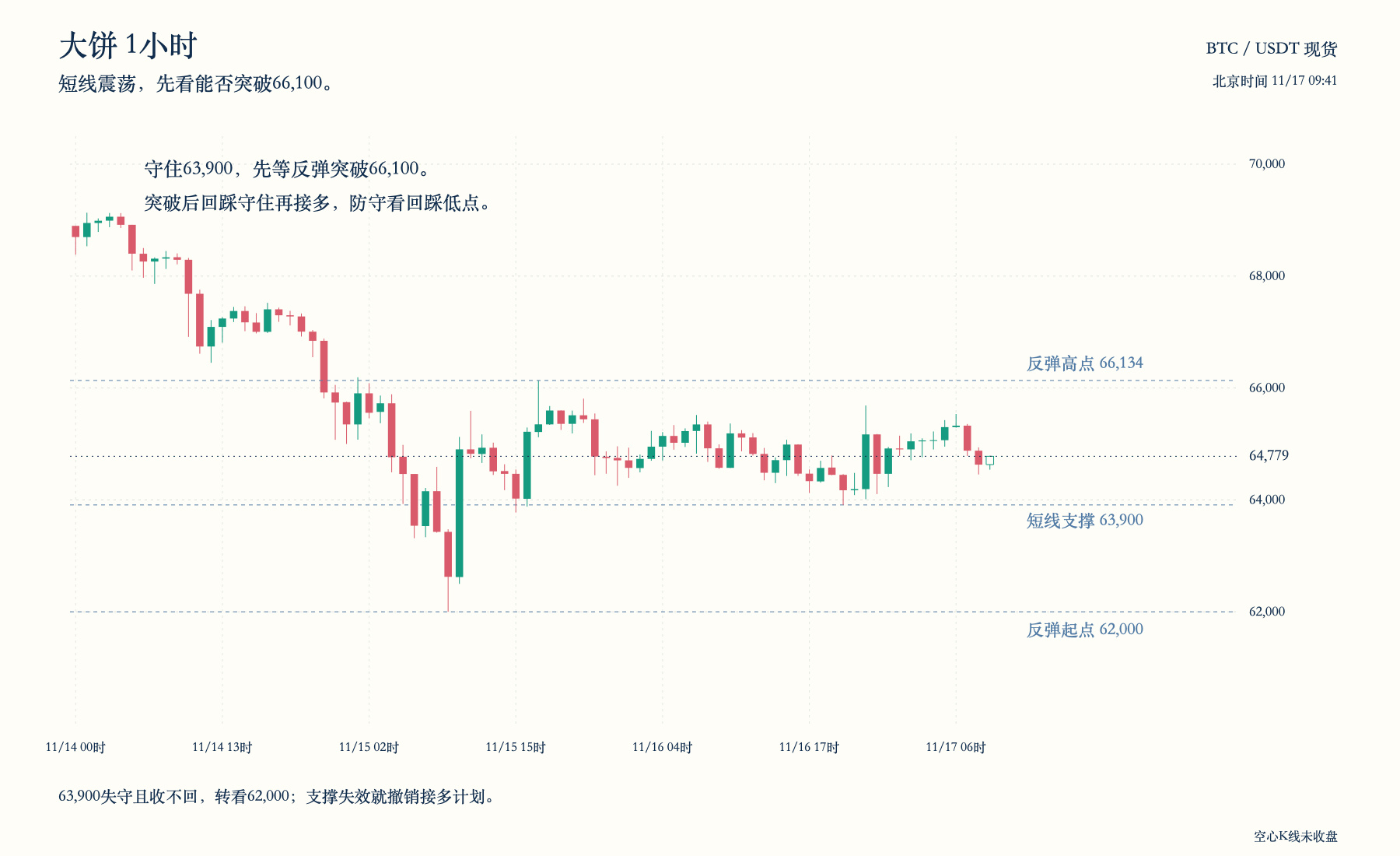
The broader trend remains bearish; in the short term, watch for a rebound first. If BTC reclaims 66,100 and holds on a retest, then look toward 69,000–70,200. If it breaks below 63,900 and fails to recover, be prepared for another test of 62,000.
The broader trend remains bearish; in the short term, watch for a rebound first. If BTC reclaims 66,100 and holds on a retest, then look toward 69,000–70,200. If it breaks below 63,900 and fails to recover, be prepared for another test of 62,000.
1
449
·
--
U.S. stocks keep swinging—when will crypto rise? Can BTC show some strength first?
U.S. stocks had just bounced back last week, with the S&P 500 up 2.54% for the week. Then on Monday it fell 1.92%, while the Nasdaq dropped 2.49%. Rallies make you fear missing out; sell-offs make you question everything. This market really knows how to put us through the wringer.
Now take a look at BTC. It was still hovering around $64,600 this morning. After climbing from $62,000, it rebounded to around $66,100 but couldn’t break through. Yesterday it hit a high of $65,687, then gave back its gains. It can bounce, but for now, it’s hard to call it strong.
My view is straightforward: the weekly correction isn’t over yet. For now, look for a rebound, but don’t rush to declare the bull market back. The year-to-date low near $57,800 could still be tested again.
In the short term, keep an eye on $63,900. If BTC holds there, reclaims $66,100, and stays above it on a retest, then $69,000–$70,200 comes into view. If it makes that move, a return to $70,000 will have a stronger basis. If it can’t even get past $66,100, don’t start thinking about new highs yet.
If I were looking to go long, I’d rather wait for a breakout and then a retest, setting a stop-loss below the retest low. If BTC rebounds to $69,000–$70,200 but can’t break through, then I’d look for a shorting opportunity based on the 12-hour pullback structure. If $63,900 breaks and BTC can’t reclaim it, first watch out for another test of $62,000. If $62,000 breaks too, pause on buying the dip and reassess the structure.
A rebound in U.S. stocks doesn’t mean money will flow into crypto next. When will BTC finally show some backbone? First, it needs to reclaim the highs one by one and make short sellers start to sweat. Then we can talk about a comeback.
435
Log in to explore more content
Join global crypto users on Binance Square
⚡️ Get latest and useful information about crypto.
💬 Trusted by the world’s largest crypto exchange.
👍 Discover real insights from verified creators.
Email / Phone number
Trending Topics
CanMarketsReboundAfterThanksgiving?
12,859 views
313 Discussing
Rate-Hike Bets Linger as US Markets Head Into Thanksgiving Closure
Binance News
·1 Likes
·1.2k views
CouldSpaceX’sOrbitalDataCentersBoostAIChipDemand?
8,481 views
201 Discussing
EvolveAtBinanceBlockchainWeek
652,248 views
6,886 Discussing