

Pirlo_Jiang
96 Posts

Pirlo_Jiang
Report
Block User
程序员 | Vibe Coder | AI参与者 | 健身爱好者 | 面包师 | 奔跑者
有方向的努力是幸福的 , 享受每一天。
Open Trade
Frequent Trader
8.7 Years
2 Following
61 Followers
68 Liked
Posts
Portfolio
All
Quotes
Videos
PINNED
·
--
Article
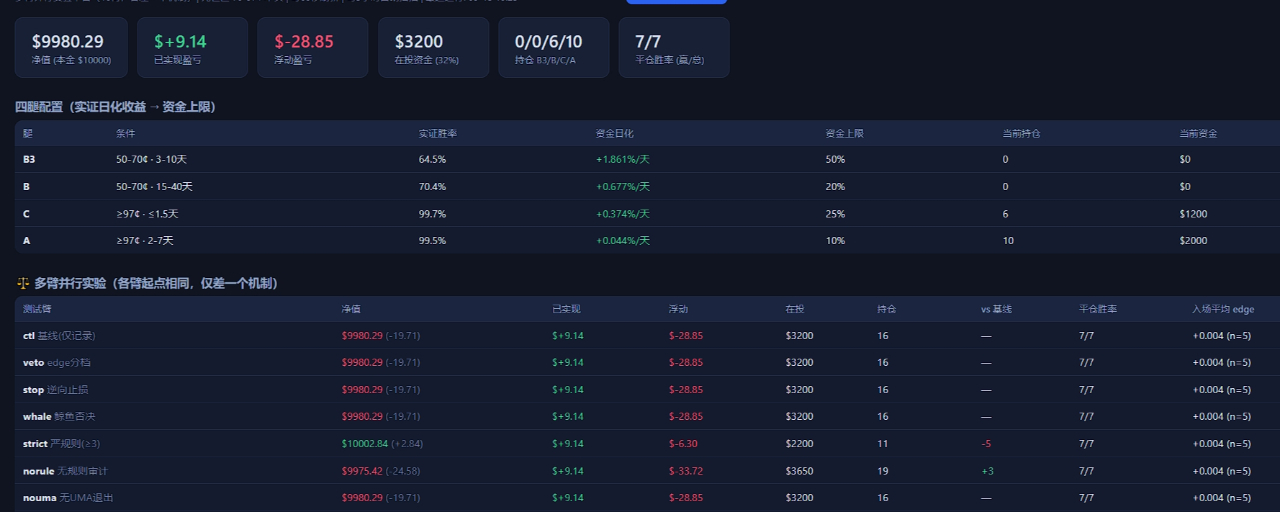
My Quant Journal, Part 1 — I use 17 parallel accounts to try to falsify my own trading strategy# I use 17 parallel accounts to try to falsify my own trading strategy
> A serious experimental record about prediction markets (Polymarket): from "finding the edge" to "personally overturning my own edge"
---
## Preface
Over the past while, I’ve been doing one thing: **finding a method for stable profitability in prediction markets**.
But I don’t want to write an article that says "I found a surefire strategy"—because in this field, **the more certain you sound, the more likely you are to be wrong**.
What I want to write is something else: **a set of experiments designed to falsify itself**.
This article will cover three things:
My Quant Journal, Part 1 — I use 17 parallel accounts to try to falsify my own trading strategy
# I use 17 parallel accounts to try to falsify my own trading strategy
> A serious experimental record about prediction markets (Polymarket): from "finding the edge" to "personally overturning my own edge"
---
## Preface
Over the past while, I’ve been doing one thing: **finding a method for stable profitability in prediction markets**.
But I don’t want to write an article that says "I found a surefire strategy"—because in this field, **the more certain you sound, the more likely you are to be wrong**.
What I want to write is something else: **a set of experiments designed to falsify itself**.
This article will cover three things:
> A serious experimental record about prediction markets (Polymarket): from "finding the edge" to "personally overturning my own edge"
---
## Preface
Over the past while, I’ve been doing one thing: **finding a method for stable profitability in prediction markets**.
But I don’t want to write an article that says "I found a surefire strategy"—because in this field, **the more certain you sound, the more likely you are to be wrong**.
What I want to write is something else: **a set of experiments designed to falsify itself**.
This article will cover three things:
3
2
229


·
--
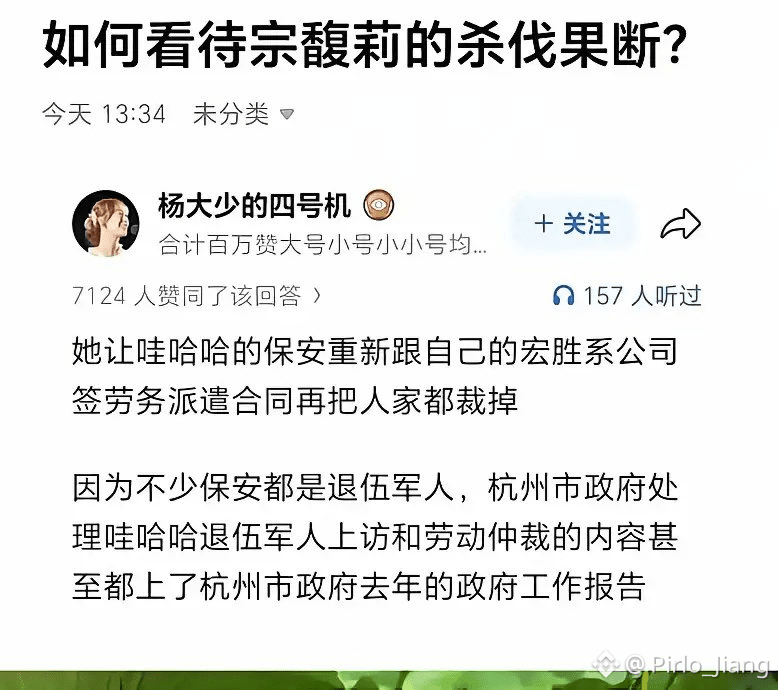
This is only a small glimpse of Zong Fuli’s icy side toward her employees; it just so happens that the security guard is a veteran. So when news about the trust fund came out, I didn’t support her online.
This is only a small glimpse of Zong Fuli’s icy side toward her employees; it just so happens that the security guard is a veteran. So when news about the trust fund came out, I didn’t support her online.
1
1.5k
·
--
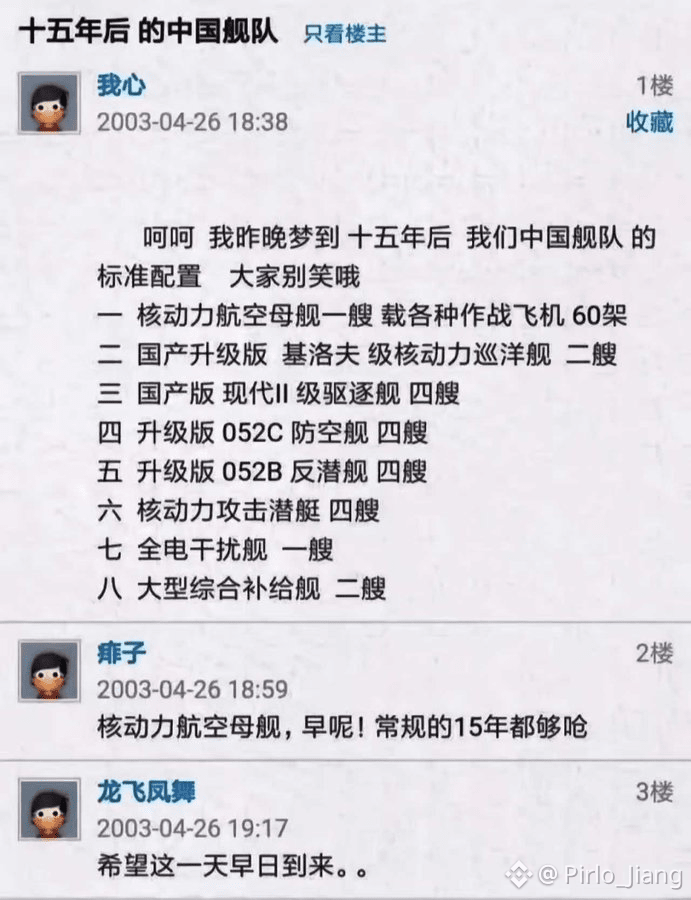
Chinese military fans at the turn of the century had it so tough—they didn’t even dare to let go in their dreams.
Chinese military fans at the turn of the century had it so tough—they didn’t even dare to let go in their dreams.
4
3
1.5k
·
--
Article
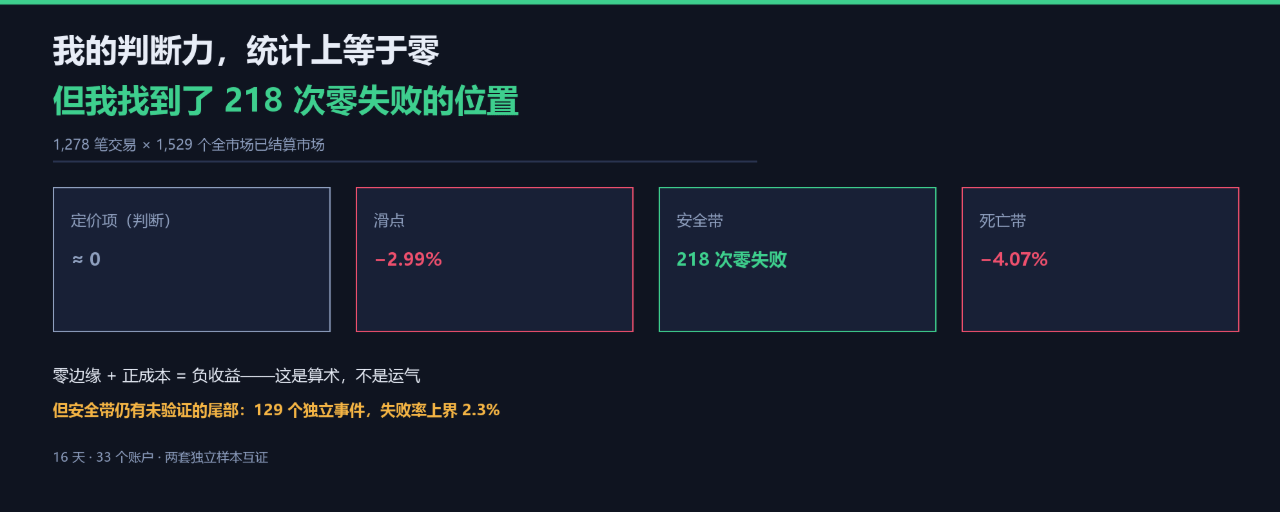
Quant Journal Entry 13—My Judgement Power: Statistically Equal to Zero, Yet I Found 218 Zero-Failure Positions1,278 trades I ran myself, plus 1,529 settled markets across the whole market—two sets of independent data point to the same sentence: the money doesn’t lose because of the judgment, it loses because of the cost. And 99.5 cents is the only exception.
This article has two ledgers. The first one is ugly; the second is the first thing I can confirm since I did my two-week experiment.
First trade: I ran 1,278 deduplicated trades, for a total loss of +$2,960.41.
Second trade: there’s a price level where, with our own sample plus the whole market sample, there were 218 entries in total—none of them ever failed.
Quant Journal Entry 13—My Judgement Power: Statistically Equal to Zero, Yet I Found 218 Zero-Failure Positions
1,278 trades I ran myself, plus 1,529 settled markets across the whole market—two sets of independent data point to the same sentence: the money doesn’t lose because of the judgment, it loses because of the cost. And 99.5 cents is the only exception.
This article has two ledgers. The first one is ugly; the second is the first thing I can confirm since I did my two-week experiment.
First trade: I ran 1,278 deduplicated trades, for a total loss of +$2,960.41.
Second trade: there’s a price level where, with our own sample plus the whole market sample, there were 218 entries in total—none of them ever failed.
This article has two ledgers. The first one is ugly; the second is the first thing I can confirm since I did my two-week experiment.
First trade: I ran 1,278 deduplicated trades, for a total loss of +$2,960.41.
Second trade: there’s a price level where, with our own sample plus the whole market sample, there were 218 entries in total—none of them ever failed.
160

·
--
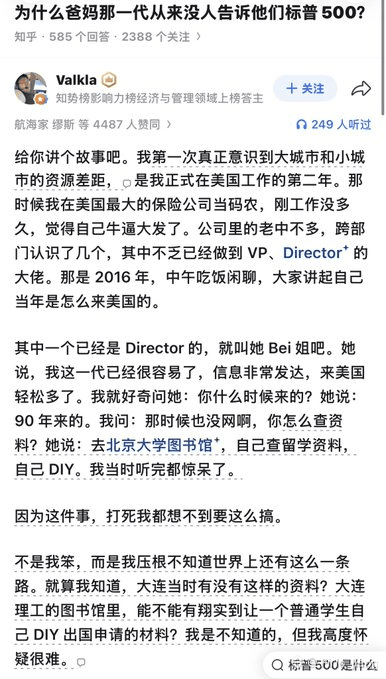
Many people in China are increasingly talking about doing systematic investment plans (SIPs) on the Nasdaq, and they all say it’s about starting with at least a ten-year SIP
Many people in China are increasingly talking about doing systematic investment plans (SIPs) on the Nasdaq, and they all say it’s about starting with at least a ten-year SIP
355




·
--
A gathering of influencers—standing without standing right, sitting without sitting right, it’s really hard to look at.
A gathering of influencers—standing without standing right, sitting without sitting right, it’s really hard to look at.


183







·
--
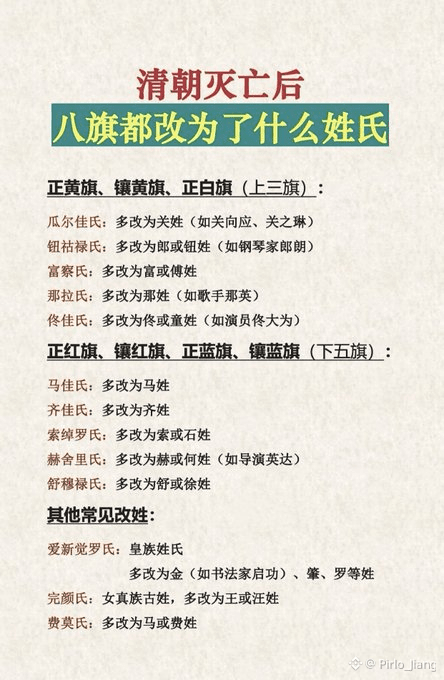
When a dynasty falls, the Qing banners’ greatest survival skill isn’t horsemanship or archery—it’s changing a four-character family name into a single character, and hiding yourself among 1.4 billion people.
When a dynasty falls, the Qing banners’ greatest survival skill isn’t horsemanship or archery—it’s changing a four-character family name into a single character, and hiding yourself among 1.4 billion people.
1
306
·
--
What Is the Best Investment in the Next Few Years?
What Is the Best Investment in the Next Few Years?

108
·
--
It’s 2:17 in the morning. Someone just kicked your door in. Which one of these three will you grab??
It’s 2:17 in the morning. Someone just kicked your door in. Which one of these three will you grab??

1
73
Log in to explore more content
Join global crypto users on Binance Square
⚡️ Get latest and useful information about crypto.
💬 Trusted by the world’s largest crypto exchange.
👍 Discover real insights from verified creators.
Email / Phone number