
噼里啪啦的潘潘
124 Posts

噼里啪啦的潘潘
Report
Block User
Open Trade
Frequent Trader
3.1 Years
37 Following
95 Followers
72 Liked
Posts
Portfolio
All
Quotes
PINNED
·
--
Blockchain airdrop fraud prevention manual: survival rules and value game that penetrate the fog#空投防骗手册
April 30, 2025 - When the total market value of global crypto assets exceeds 10 trillion US dollars, airdrops have long surpassed the simple logic of token distribution and evolved into a complex game of technology, humanity and regulation. From the Jupiter billion-dollar airdrop myth of the Solana ecosystem to the phishing contract robbery of Polygon zkEVM, this "digital gold rush" has both the miracle of wealth and the abyss of swallowing assets. This article will build an airdrop survival guide for blockchain practitioners from three dimensions: technical principles, scam evolution, and defense strategies.
1. Evolution of airdrop scams: Six new attack patterns in 2025
Blockchain airdrop fraud prevention manual: survival rules and value game that penetrate the fog
#空投防骗手册
April 30, 2025 - When the total market value of global crypto assets exceeds 10 trillion US dollars, airdrops have long surpassed the simple logic of token distribution and evolved into a complex game of technology, humanity and regulation. From the Jupiter billion-dollar airdrop myth of the Solana ecosystem to the phishing contract robbery of Polygon zkEVM, this "digital gold rush" has both the miracle of wealth and the abyss of swallowing assets. This article will build an airdrop survival guide for blockchain practitioners from three dimensions: technical principles, scam evolution, and defense strategies.
1. Evolution of airdrop scams: Six new attack patterns in 2025
1
8
671
PINNED
·
--
A Complete Guide to Airdrop Operations for Blockchain Projects - Practical Strategies and Risk Control from Beginner to Expert#空投操作全指南
One, the essence and core value of airdrops
Airdrop refers to the act of blockchain projects distributing tokens for free to promote ecosystems and incentivize user participation. The essence is the 'precise matching of user behavior with project needs': users gain potential benefits through on-chain interactions or community contributions, while projects gain traffic, test products, or accumulate on-chain data.
Core value:
1. Low-cost wealth opportunities: Early users can obtain high-value tokens through small gas fee interactions (e.g., ARB airdrop average earnings exceed $15,000).
2. Ecological participation entry: In-depth interactions help users understand the operational logic of DeFi, NFTs, Layer2, etc., and accumulate Web3 knowledge.
A Complete Guide to Airdrop Operations for Blockchain Projects - Practical Strategies and Risk Control from Beginner to Expert
#空投操作全指南
One, the essence and core value of airdrops
Airdrop refers to the act of blockchain projects distributing tokens for free to promote ecosystems and incentivize user participation. The essence is the 'precise matching of user behavior with project needs': users gain potential benefits through on-chain interactions or community contributions, while projects gain traffic, test products, or accumulate on-chain data.
Core value:
1. Low-cost wealth opportunities: Early users can obtain high-value tokens through small gas fee interactions (e.g., ARB airdrop average earnings exceed $15,000).
2. Ecological participation entry: In-depth interactions help users understand the operational logic of DeFi, NFTs, Layer2, etc., and accumulate Web3 knowledge.
4
2
2
283
·
--
Crypto Roundtable Discussion: Future Trends and Challenges of Blockchain Projects#加密圆桌讨论
In recent years, blockchain technology has rapidly developed globally, expanding its application scenarios from finance to supply chains, from digital identity to decentralized autonomous organizations (DAOs). However, with the maturity of technology and the expansion of the market, blockchain projects also face multiple challenges including regulation, security, and scalability. This article discusses key issues and development directions for blockchain projects based on recent industry roundtable discussions.
1. Tokenization: The integration of traditional finance and DeFi
In May 2025, the U.S. Securities and Exchange Commission (SEC) held a crypto roundtable themed 'Tokenization: Asset On-Chain - The Intersection of Traditional Finance and Decentralized Finance'. The core topics of the meeting included:
Crypto Roundtable Discussion: Future Trends and Challenges of Blockchain Projects
#加密圆桌讨论
In recent years, blockchain technology has rapidly developed globally, expanding its application scenarios from finance to supply chains, from digital identity to decentralized autonomous organizations (DAOs). However, with the maturity of technology and the expansion of the market, blockchain projects also face multiple challenges including regulation, security, and scalability. This article discusses key issues and development directions for blockchain projects based on recent industry roundtable discussions.
1. Tokenization: The integration of traditional finance and DeFi
In May 2025, the U.S. Securities and Exchange Commission (SEC) held a crypto roundtable themed 'Tokenization: Asset On-Chain - The Intersection of Traditional Finance and Decentralized Finance'. The core topics of the meeting included:
1.5k
·
--
Common Trading Errors in Blockchain Projects and Prevention Strategies#常见交易错误
Blockchain technology is known for its decentralization, transparency, and security, but in practical applications, users may still make mistakes due to negligence or lack of experience while trading, leading to financial losses or transaction failures. This article will analyze common trading errors in blockchain projects and provide practical prevention strategies.
1. Common Types of Trading Errors
1. Incorrect Wallet Address Input
The core of blockchain transactions lies in the wallet address; once funds are sent to the wrong address, they are typically irreversible or unrecoverable. Common causes include:
Common Trading Errors in Blockchain Projects and Prevention Strategies
#常见交易错误
Blockchain technology is known for its decentralization, transparency, and security, but in practical applications, users may still make mistakes due to negligence or lack of experience while trading, leading to financial losses or transaction failures. This article will analyze common trading errors in blockchain projects and provide practical prevention strategies.
1. Common Types of Trading Errors
1. Incorrect Wallet Address Input
The core of blockchain transactions lies in the wallet address; once funds are sent to the wrong address, they are typically irreversible or unrecoverable. Common causes include:
267
·
--
The Secret of Blockchain Transaction Fees: Costs, Mechanisms and Optimization Strategies#交易手续费揭秘
Introduction: Why do blockchain transactions require fees?
In the traditional financial system, banks and payment institutions charge transfer fees to cover operating costs and prevent junk transactions. Blockchain networks also require fees, but their mechanism and calculation method are very different from the traditional financial system.
This article will explore in depth the nature, influencing factors, and optimization strategies of blockchain transaction fees (Gas Fee) to help users and developers better understand and reduce transaction costs.
------
1. The Nature of Blockchain Transaction Fees
1. The role of handling fees
The Secret of Blockchain Transaction Fees: Costs, Mechanisms and Optimization Strategies
#交易手续费揭秘
Introduction: Why do blockchain transactions require fees?
In the traditional financial system, banks and payment institutions charge transfer fees to cover operating costs and prevent junk transactions. Blockchain networks also require fees, but their mechanism and calculation method are very different from the traditional financial system.
This article will explore in depth the nature, influencing factors, and optimization strategies of blockchain transaction fees (Gas Fee) to help users and developers better understand and reduce transaction costs.
------
1. The Nature of Blockchain Transaction Fees
1. The role of handling fees
726
·
--
Cryptographic Security Essentials for Blockchain Projects: Building an Unbreakable Digital Defense#加密安全须知
In today's digital age, blockchain technology is reshaping various industries such as finance, supply chain, and healthcare at an unprecedented speed. However, with the widespread adoption of blockchain applications, cryptographic security issues are becoming increasingly prominent. This article will comprehensively explore the key points of cryptographic security in blockchain projects, providing developers and users with a complete guide to security practices.
I. Cryptography Fundamentals: The cornerstone of blockchain security
The security of blockchain technology fundamentally relies on cryptographic principles. A robust blockchain system should adopt well-verified cryptographic algorithms, such as the SHA-256 hash algorithm and the Elliptic Curve Digital Signature Algorithm (ECDSA). These algorithms form the mathematical foundation for the immutability of blockchain.
Cryptographic Security Essentials for Blockchain Projects: Building an Unbreakable Digital Defense
#加密安全须知
In today's digital age, blockchain technology is reshaping various industries such as finance, supply chain, and healthcare at an unprecedented speed. However, with the widespread adoption of blockchain applications, cryptographic security issues are becoming increasingly prominent. This article will comprehensively explore the key points of cryptographic security in blockchain projects, providing developers and users with a complete guide to security practices.
I. Cryptography Fundamentals: The cornerstone of blockchain security
The security of blockchain technology fundamentally relies on cryptographic principles. A robust blockchain system should adopt well-verified cryptographic algorithms, such as the SHA-256 hash algorithm and the Elliptic Curve Digital Signature Algorithm (ECDSA). These algorithms form the mathematical foundation for the immutability of blockchain.
201
·
--
Crypto Market Rebound: New Opportunities and Challenges for Blockchain Projects#加密市场反弹
As the crypto market welcomes a new round of rebound in 2025, blockchain projects are standing at the forefront. This article will deeply analyze the driving factors behind the current market rebound, explore the development potential of blockchain projects, and provide investors with forward-looking perspectives.
Three Core Driving Forces Behind Market Rebound
1. Accelerated Entry of Institutional Investors
The most significant feature of the recent market rebound is the large-scale participation of traditional financial institutions. Listed companies like Tesla and Square continue to increase their Bitcoin holdings, while asset management giants like BlackRock enter the market through Bitcoin ETF channels. The influx of institutional funds not only enhances market liquidity but also strengthens the confidence foundation of the entire industry.
Crypto Market Rebound: New Opportunities and Challenges for Blockchain Projects
#加密市场反弹
As the crypto market welcomes a new round of rebound in 2025, blockchain projects are standing at the forefront. This article will deeply analyze the driving factors behind the current market rebound, explore the development potential of blockchain projects, and provide investors with forward-looking perspectives.
Three Core Driving Forces Behind Market Rebound
1. Accelerated Entry of Institutional Investors
The most significant feature of the recent market rebound is the large-scale participation of traditional financial institutions. Listed companies like Tesla and Square continue to increase their Bitcoin holdings, while asset management giants like BlackRock enter the market through Bitcoin ETF channels. The influx of institutional funds not only enhances market liquidity but also strengthens the confidence foundation of the entire industry.
495
·
--
Nasdaq Crypto ETF Expansion: Reshaping the Value Logic and Market Landscape of Blockchain Projects#纳斯达克加密ETF扩容
1. Background and Core Content of the Expansion
On June 7, 2025, Nasdaq submitted a rule change application to the US Securities and Exchange Commission (SEC) to include Cardano (ADA), Solana (SOL), XRP, and Stellar (XLM) in its crypto index benchmark, while expanding the tracking target of the Hashdex Nasdaq Crypto Index US ETF (NCIQ) to include the Nasdaq Crypto Index (NCI) with 9 tokens. If the proposal is approved on November 2, the ETF will break the current limitation of only being able to hold Bitcoin (BTC) and Ethereum (ETH), achieving coverage of multiple mainstream crypto assets for the first time, marking a further broadening of channels for institutional funds to enter the crypto market.
Nasdaq Crypto ETF Expansion: Reshaping the Value Logic and Market Landscape of Blockchain Projects
#纳斯达克加密ETF扩容
1. Background and Core Content of the Expansion
On June 7, 2025, Nasdaq submitted a rule change application to the US Securities and Exchange Commission (SEC) to include Cardano (ADA), Solana (SOL), XRP, and Stellar (XLM) in its crypto index benchmark, while expanding the tracking target of the Hashdex Nasdaq Crypto Index US ETF (NCIQ) to include the Nasdaq Crypto Index (NCI) with 9 tokens. If the proposal is approved on November 2, the ETF will break the current limitation of only being able to hold Bitcoin (BTC) and Ethereum (ETH), achieving coverage of multiple mainstream crypto assets for the first time, marking a further broadening of channels for institutional funds to enter the crypto market.
101
·
--
Innovative Practices and Development Pathways of Blockchain Trading Pairs#交易对
—— A paradigm shift from liquidity optimization to ecological reconstruction
------
I. The core value of trading pairs and the coupling with blockchain technology
1. The underlying logic of trading pairs and blockchain compatibility
Trading pairs serve as the fundamental unit of digital asset exchange, with the core focus on achieving value anchoring and liquidity matching between different assets. Blockchain technology provides inherent advantages for the creation and execution of trading pairs through decentralized ledgers and smart contracts. For instance, ERC-20 tokens on Ethereum can form trustless trading pairs through automated market maker (AMM) protocols (like Uniswap), addressing the inefficiency issues of traditional order book models.
Innovative Practices and Development Pathways of Blockchain Trading Pairs
#交易对
—— A paradigm shift from liquidity optimization to ecological reconstruction
------
I. The core value of trading pairs and the coupling with blockchain technology
1. The underlying logic of trading pairs and blockchain compatibility
Trading pairs serve as the fundamental unit of digital asset exchange, with the core focus on achieving value anchoring and liquidity matching between different assets. Blockchain technology provides inherent advantages for the creation and execution of trading pairs through decentralized ledgers and smart contracts. For instance, ERC-20 tokens on Ethereum can form trustless trading pairs through automated market maker (AMM) protocols (like Uniswap), addressing the inefficiency issues of traditional order book models.
495
·
--
A New Era of South Korean Crypto Policy: Opportunities and Challenges for Blockchain Projects#韩国加密政策
—— From tightening regulations to a paradigm shift towards strategic support
I. Policy evolution: From restrictions to a national strategy transformation
1. Establishment of a regulatory framework (2020-2024)
South Korea launched the Digital Asset Act in 2020, incorporating cryptocurrencies into the financial regulatory system for the first time, requiring exchanges to implement strict KYC (Know Your Customer) and AML (Anti-Money Laundering) procedures. The Virtual Asset User Protection Act (VAUPA), effective in 2024, further strengthens requirements for user asset segregation and platform risk control, aiming to prevent systemic risks similar to the Terra/Luna incident.
A New Era of South Korean Crypto Policy: Opportunities and Challenges for Blockchain Projects
#韩国加密政策
—— From tightening regulations to a paradigm shift towards strategic support
I. Policy evolution: From restrictions to a national strategy transformation
1. Establishment of a regulatory framework (2020-2024)
South Korea launched the Digital Asset Act in 2020, incorporating cryptocurrencies into the financial regulatory system for the first time, requiring exchanges to implement strict KYC (Know Your Customer) and AML (Anti-Money Laundering) procedures. The Virtual Asset User Protection Act (VAUPA), effective in 2024, further strengthens requirements for user asset segregation and platform risk control, aiming to prevent systemic risks similar to the Terra/Luna incident.
1
95
·
--
In-depth Analysis of Transaction Liquidity in Blockchain Projects: Mechanisms, Challenges, and Innovative Practices#交易流动性
Introduction: Liquidity - the 'blood' circulation of the blockchain ecosystem
In the blockchain ecosystem, transaction liquidity is akin to the 'blood' of traditional financial markets, determining asset pricing efficiency and market activity. High liquidity means assets can be quickly liquidated and price fluctuations are manageable, while insufficient liquidity can lead to market manipulation risks and systemic collapse threats. Currently, with the explosive growth of DeFi (Decentralized Finance) and the maturity of cross-chain technology, blockchain projects demonstrate unprecedented innovative vitality in liquidity management, but also face technological bottlenecks and regulatory challenges. This article will deeply analyze the development logic of blockchain transaction liquidity from three dimensions: underlying mechanisms, optimization strategies, and cutting-edge explorations.
In-depth Analysis of Transaction Liquidity in Blockchain Projects: Mechanisms, Challenges, and Innovative Practices
#交易流动性
Introduction: Liquidity - the 'blood' circulation of the blockchain ecosystem
In the blockchain ecosystem, transaction liquidity is akin to the 'blood' of traditional financial markets, determining asset pricing efficiency and market activity. High liquidity means assets can be quickly liquidated and price fluctuations are manageable, while insufficient liquidity can lead to market manipulation risks and systemic collapse threats. Currently, with the explosive growth of DeFi (Decentralized Finance) and the maturity of cross-chain technology, blockchain projects demonstrate unprecedented innovative vitality in liquidity management, but also face technological bottlenecks and regulatory challenges. This article will deeply analyze the development logic of blockchain transaction liquidity from three dimensions: underlying mechanisms, optimization strategies, and cutting-edge explorations.
1.1k
·
--
The following is an original article analyzing order types in blockchain projects, written in conjunction with industry applications and technical characteristics.#订单类型解析
------
Analysis of Order Types in Blockchain Projects: From Traditional Trading to Smart Contract Evolution
I. Core Types and Operational Mechanisms of Blockchain Order Systems
In the blockchain trading ecosystem, the design of order types directly affects asset liquidity and risk control efficiency. Currently, mainstream blockchain projects (such as exchanges and supply chain finance platforms) mainly support three types of orders:
1. Market Order
◦ Features: Immediate execution at the current optimal market price, suitable for high liquidity scenarios.
◦ Blockchain Empowerment: Automatically matching order book depth through smart contracts, with a transparent and verifiable execution process. For example, the market orders on the LEX exchange adopt the 'optimal execution principle' to avoid slippage deviations caused by human intervention.
The following is an original article analyzing order types in blockchain projects, written in conjunction with industry applications and technical characteristics.
#订单类型解析
------
Analysis of Order Types in Blockchain Projects: From Traditional Trading to Smart Contract Evolution
I. Core Types and Operational Mechanisms of Blockchain Order Systems
In the blockchain trading ecosystem, the design of order types directly affects asset liquidity and risk control efficiency. Currently, mainstream blockchain projects (such as exchanges and supply chain finance platforms) mainly support three types of orders:
1. Market Order
◦ Features: Immediate execution at the current optimal market price, suitable for high liquidity scenarios.
◦ Blockchain Empowerment: Automatically matching order book depth through smart contracts, with a transparent and verifiable execution process. For example, the market orders on the LEX exchange adopt the 'optimal execution principle' to avoid slippage deviations caused by human intervention.
212
·
--
Centralized and Decentralized Exchanges: The Trading Revolution and Choice Logic in the Blockchain Era#中心化与去中心化交易所
In the process of blockchain technology reconstructing the financial system, exchanges, as the core hub of digital asset circulation, have always been a key battleground for ecological development. The game between centralized exchanges (CEX) and decentralized exchanges (DEX) not only reflects the divergence of technical routes but also reveals users' deep demands for asset sovereignty, efficiency, and security. This article will provide an in-depth analysis from four dimensions: underlying logic, comparison of advantages and disadvantages, applicable scenarios, and future trends.
------
I. Core Differences: Disruptive Opposition of Trust Mechanism and Technical Architecture
Centralized and Decentralized Exchanges: The Trading Revolution and Choice Logic in the Blockchain Era
#中心化与去中心化交易所
In the process of blockchain technology reconstructing the financial system, exchanges, as the core hub of digital asset circulation, have always been a key battleground for ecological development. The game between centralized exchanges (CEX) and decentralized exchanges (DEX) not only reflects the divergence of technical routes but also reveals users' deep demands for asset sovereignty, efficiency, and security. This article will provide an in-depth analysis from four dimensions: underlying logic, comparison of advantages and disadvantages, applicable scenarios, and future trends.
------
I. Core Differences: Disruptive Opposition of Trust Mechanism and Technical Architecture
851
·
--
A Beginner's Guide to Blockchain Project Trading Types#交易类型入门
Since the inception of blockchain technology, it has continuously driven innovation in the financial and digital asset fields. For investors new to the blockchain space, understanding different types of trading methods is the foundation of building an investment framework. This article will systematically analyze the core trading types, operational processes, and risk management strategies of blockchain projects to help beginners quickly establish a cognitive system.
------
I. Core Classification of Blockchain Transactions
Blockchain trading can be categorized into the following main types based on scenarios, technical implementations, and interaction methods:
1. Fiat and Cryptocurrency Trading
A Beginner's Guide to Blockchain Project Trading Types
#交易类型入门
Since the inception of blockchain technology, it has continuously driven innovation in the financial and digital asset fields. For investors new to the blockchain space, understanding different types of trading methods is the foundation of building an investment framework. This article will systematically analyze the core trading types, operational processes, and risk management strategies of blockchain projects to help beginners quickly establish a cognitive system.
------
I. Core Classification of Blockchain Transactions
Blockchain trading can be categorized into the following main types based on scenarios, technical implementations, and interaction methods:
1. Fiat and Cryptocurrency Trading
381

·
--
Bullish
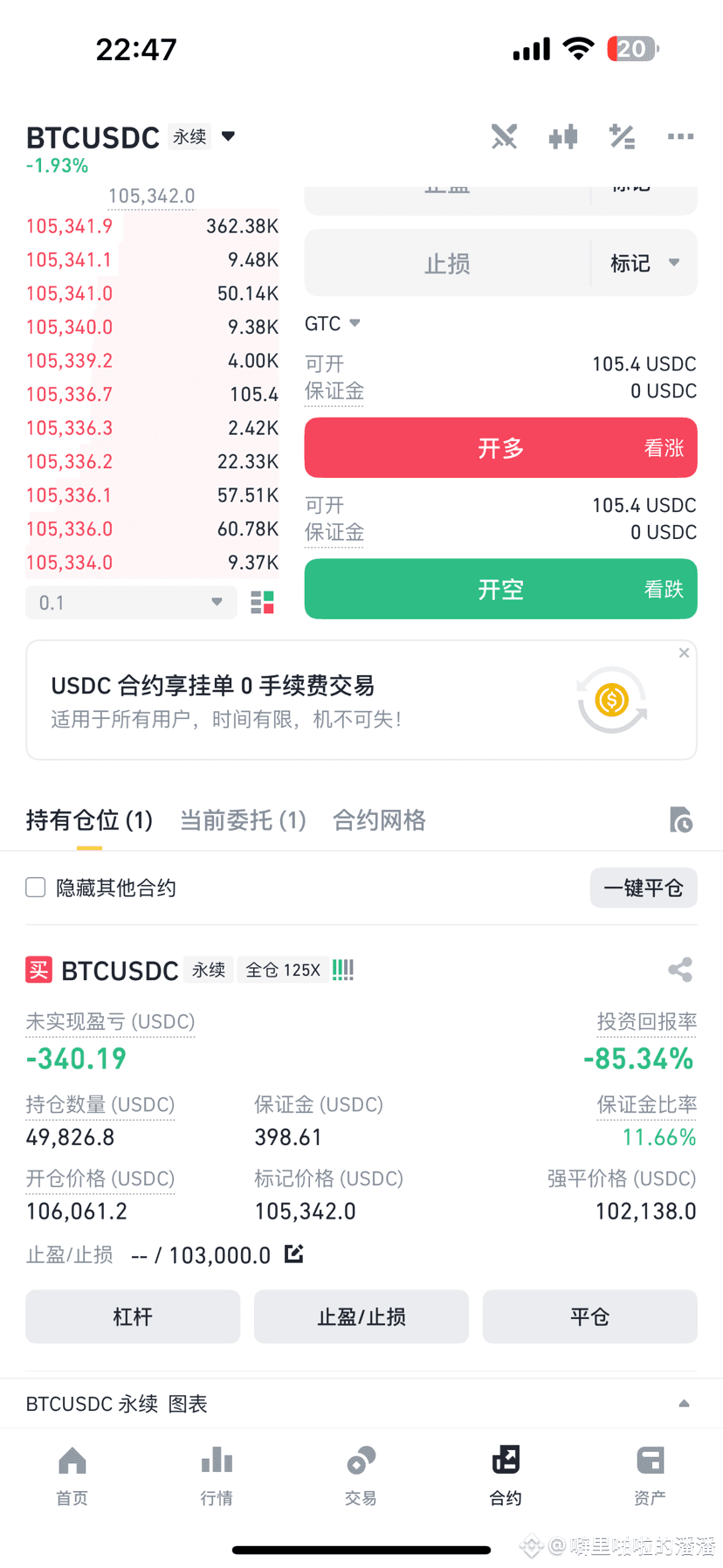
#美国加征关税 feeling exhausted, should I still add to my position, will it explode?
#美国加征关税 feeling exhausted, should I still add to my position, will it explode?
125
·
--
The Paradigm Revolution of Blockchain and AI: How Port3 Reshapes the Web3 Social Data LayerIn the process of transitioning the Web3 ecosystem from infrastructure to application layer, data is becoming the core battlefield. The data monopoly and privacy leakage issues of traditional social platforms have given rise to a new generation of solutions under the deconstruction of blockchain technology—decentralized social data layers. Port3 Network is a leader in this field, with its AI-driven social data layer not only breaking the barriers between Web2 and Web3 but also reshaping the data value chain through technological innovation.
1. Port3's Technical Architecture: AI-driven Data Engine
Port3's core competitiveness lies in its three-tier data engine architecture:
The Paradigm Revolution of Blockchain and AI: How Port3 Reshapes the Web3 Social Data Layer
In the process of transitioning the Web3 ecosystem from infrastructure to application layer, data is becoming the core battlefield. The data monopoly and privacy leakage issues of traditional social platforms have given rise to a new generation of solutions under the deconstruction of blockchain technology—decentralized social data layers. Port3 Network is a leader in this field, with its AI-driven social data layer not only breaking the barriers between Web2 and Web3 but also reshaping the data value chain through technological innovation.
1. Port3's Technical Architecture: AI-driven Data Engine
Port3's core competitiveness lies in its three-tier data engine architecture:
1. Port3's Technical Architecture: AI-driven Data Engine
Port3's core competitiveness lies in its three-tier data engine architecture:
217
Log in to explore more content
Join global crypto users on Binance Square
⚡️ Get latest and useful information about crypto.
💬 Trusted by the world’s largest crypto exchange.
👍 Discover real insights from verified creators.
Email / Phone number
Trending Topics
HuangExitNvidiaStrategyInFocus
27,977 views
592 Discussing
STOCKS | Nvidia’s Jensen Huang Resigns, Colette Kress Named as Interim CEO
Binance News
·14 Likes
·17.2k views
AnthropicRejectsIPODelayValuationinQuestion
597,743 views
4,935 Discussing
BitMineReports$6.3BNetLossForFiscal2026
3,590 views
78 Discussing