

Not Bear Liu
248 Posts

Not Bear Liu
Report
Block User
0 Following
1 Followers
29 Liked
Posts
All
Videos
·
--
Not happy with a certain website? Just blow it up with a rocket launcher!!
I blew up my own website 🤣
Not happy with a certain website? Just blow it up with a rocket launcher!!
I blew up my own website 🤣
I blew up my own website 🤣
56
·
--
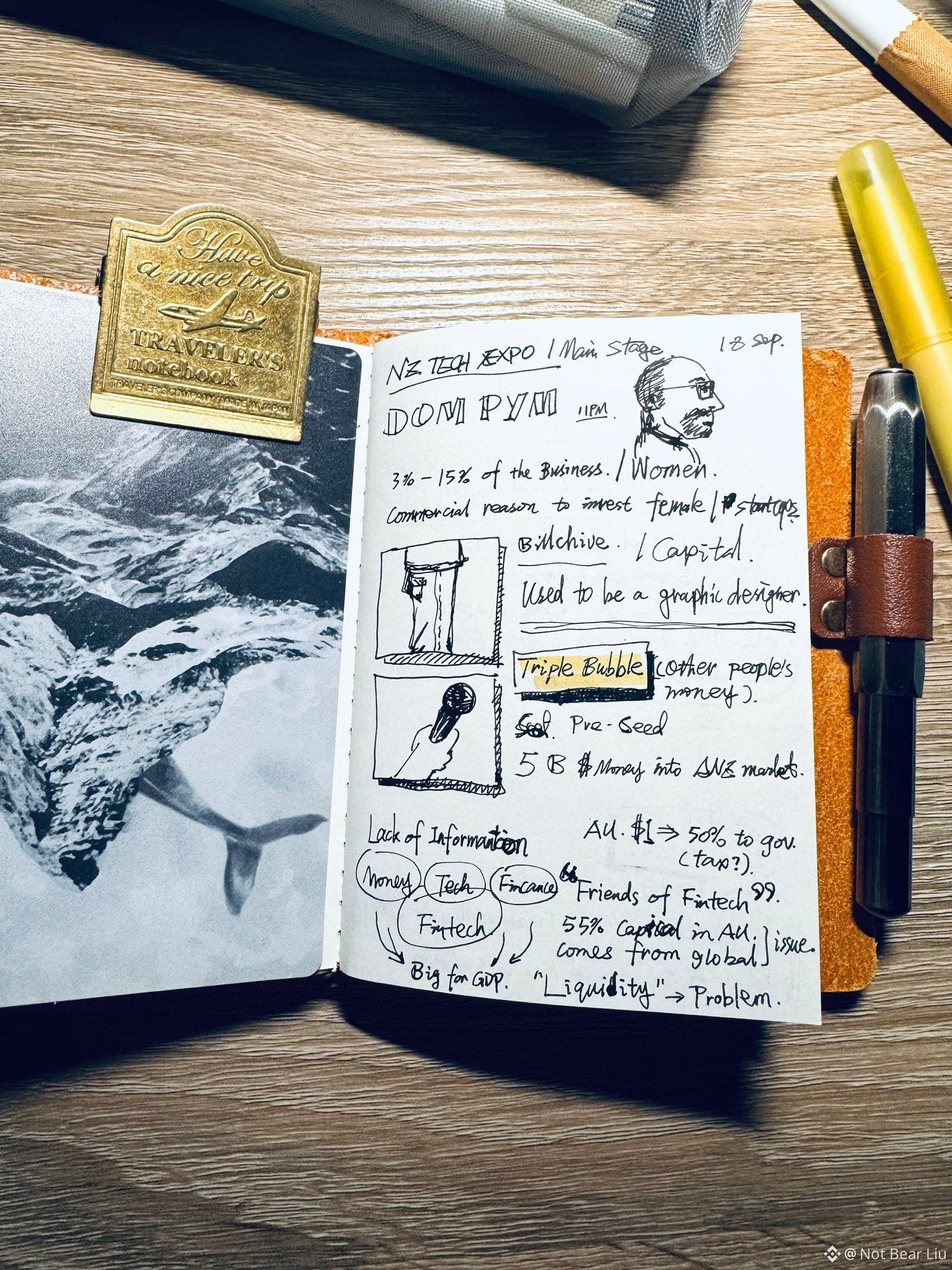
Question: For those who see this post, how many people are using paper notebooks (the kind you write on physically by hand)? No restrictions on brand, format, or category.
If so, why? Feel free to leave comments and discuss.
Question: For those who see this post, how many people are using paper notebooks (the kind you write on physically by hand)? No restrictions on brand, format, or category.
If so, why? Feel free to leave comments and discuss.
If so, why? Feel free to leave comments and discuss.

373
·
--
Wise is the most consistent cross-platform app I’ve ever seen. When you open it side by side on mobile and the web, the copy, icons, and components are almost identical. For a money-management product, that level of consistency in itself is a form of trust. So in this episode, I used Wise to do a teardown and try to figure out: where does a product’s trust actually come from?
After analyzing it, I realized it’s not just about consistency across platforms.
Full video https://youtu.be/GLzA2Uj7FFI
Wise is the most consistent cross-platform app I’ve ever seen. When you open it side by side on mobile and the web, the copy, icons, and components are almost identical. For a money-management product, that level of consistency in itself is a form of trust. So in this episode, I used Wise to do a teardown and try to figure out: where does a product’s trust actually come from?
After analyzing it, I realized it’s not just about consistency across platforms.
Full video https://youtu.be/GLzA2Uj7FFI
After analyzing it, I realized it’s not just about consistency across platforms.
Full video https://youtu.be/GLzA2Uj7FFI
119
·
--
As you get older, you can’t really keep up with the pace of AI updates anymore
As you get older, you can’t really keep up with the pace of AI updates anymore
24
·
--
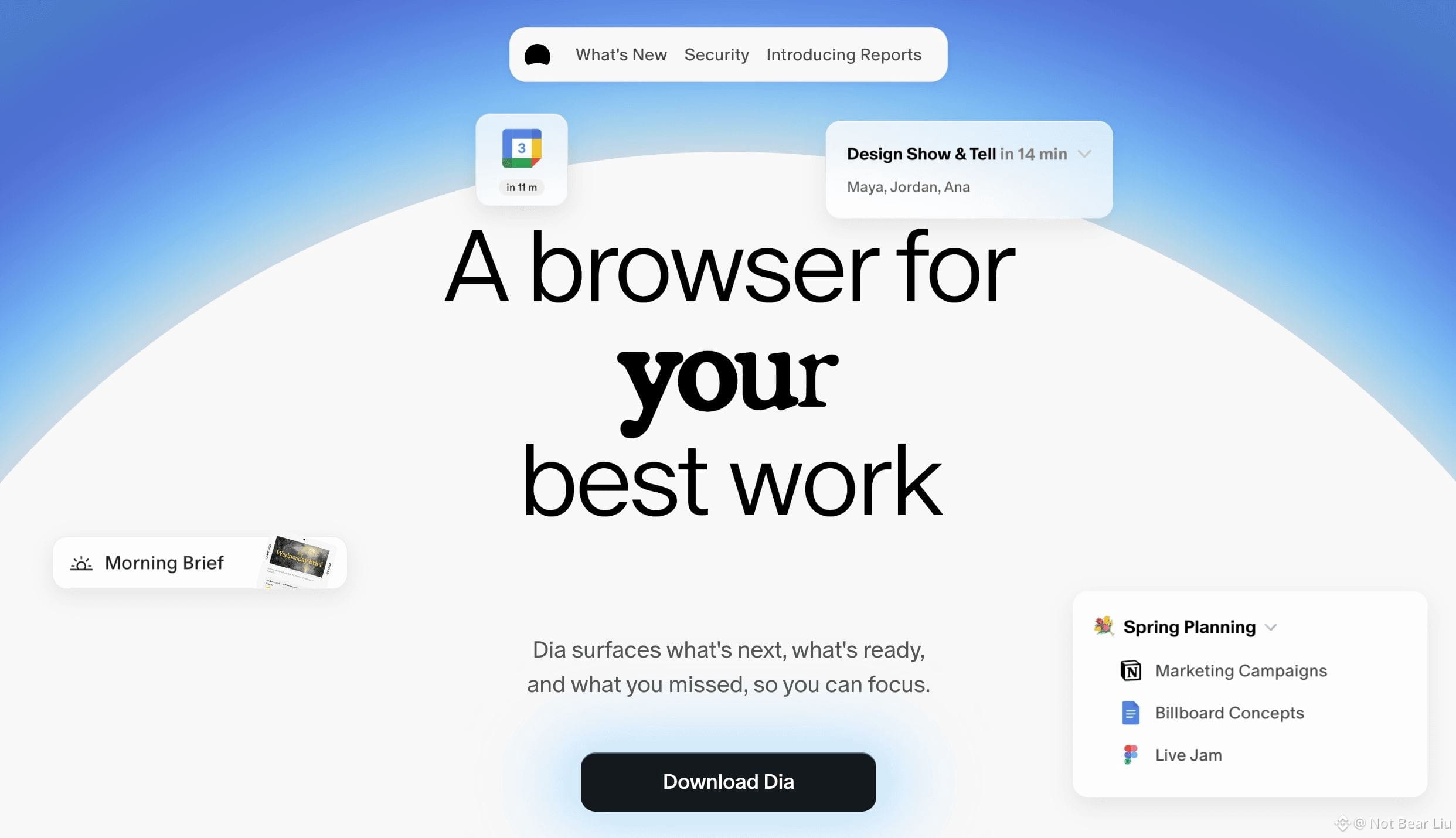
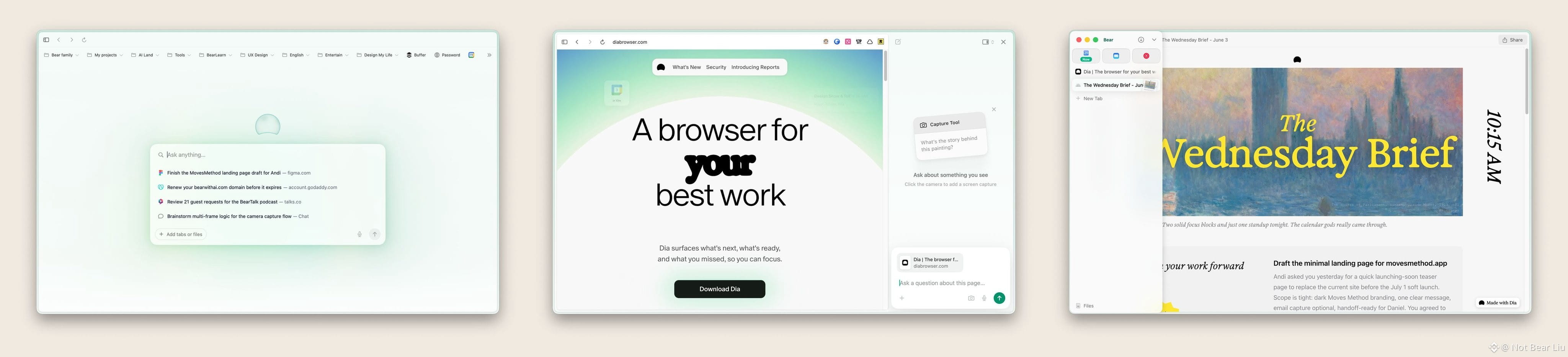
While comparing Arc and Dia recently, I noticed an easy-to-overlook problem: before a product even starts introducing its features, its visual style is already filtering users.
Arc’s website is beautiful, with a vibe reminiscent of vintage, art, and lifestyle products—it’s easy to think of Notion, Substack, or Linktree. But its most loyal users are primarily engineers, designers, and product managers. What they truly care about is tab management, project switching, and the efficiency of handling information.
When many people first see Arc, they feel it’s well-designed, but they may not immediately understand what problem it solves.
Dia clearly corrects this. Morning briefs, meeting countdowns, document planning, and webpage summaries all point to the same group: knowledge workers who deal with a lot of information every day.
**Visual style is never just packaging—it’s also the first gate the product uses to filter users.**
When something looks stunning but the real customers can’t recognize themselves in it, that disconnect happens before users even begin a trial—and it can affect every conversion that follows.
While comparing Arc and Dia recently, I noticed an easy-to-overlook problem: before a product even starts introducing its features, its visual style is already filtering users.
Arc’s website is beautiful, with a vibe reminiscent of vintage, art, and lifestyle products—it’s easy to think of Notion, Substack, or Linktree. But its most loyal users are primarily engineers, designers, and product managers. What they truly care about is tab management, project switching, and the efficiency of handling information.
When many people first see Arc, they feel it’s well-designed, but they may not immediately understand what problem it solves.
Dia clearly corrects this. Morning briefs, meeting countdowns, document planning, and webpage summaries all point to the same group: knowledge workers who deal with a lot of information every day.
**Visual style is never just packaging—it’s also the first gate the product uses to filter users.**
When something looks stunning but the real customers can’t recognize themselves in it, that disconnect happens before users even begin a trial—and it can affect every conversion that follows.
Arc’s website is beautiful, with a vibe reminiscent of vintage, art, and lifestyle products—it’s easy to think of Notion, Substack, or Linktree. But its most loyal users are primarily engineers, designers, and product managers. What they truly care about is tab management, project switching, and the efficiency of handling information.
When many people first see Arc, they feel it’s well-designed, but they may not immediately understand what problem it solves.
Dia clearly corrects this. Morning briefs, meeting countdowns, document planning, and webpage summaries all point to the same group: knowledge workers who deal with a lot of information every day.
**Visual style is never just packaging—it’s also the first gate the product uses to filter users.**
When something looks stunning but the real customers can’t recognize themselves in it, that disconnect happens before users even begin a trial—and it can affect every conversion that follows.
290
·
--
Let people see the value first, then get them to open an account
On Wise’s homepage, there’s a calculator you can use right away. You try it, you’re convinced, then you click Send money—only then is it time to open an account. People come to this page to see the value. Wise doesn’t brag about how great it is. It just lets you see for yourself.
Let people see the value first, then get them to open an account
On Wise’s homepage, there’s a calculator you can use right away. You try it, you’re convinced, then you click Send money—only then is it time to open an account. People come to this page to see the value. Wise doesn’t brag about how great it is. It just lets you see for yourself.
On Wise’s homepage, there’s a calculator you can use right away. You try it, you’re convinced, then you click Send money—only then is it time to open an account. People come to this page to see the value. Wise doesn’t brag about how great it is. It just lets you see for yourself.
56
·
--
This podcast episode is my journal entry, where I talk about a few real things that have happened to me recently.
I used Claude to interrogate one of my small product ideas—commercial value? It didn’t really hold up. User pain points? Not very real either. But in the end, I realized I just wanted to experience the joy of “building a small thing,” like a kid playing with paper-folding. The first cave dweller who scribbled on the wall probably hadn’t figured out the use either. Creation itself is the purpose.
I also stopped by a café I used to frequent in the early days when we immigrated to New Zealand. It’s called “Death Coffee,” with the slogan, “Coffee can wake up the dead.” Back then, every day I would drop my daughter off at daycare, buy a $4 super-concentrated coffee, and then go back to work on a project, write my resume, and prepare for interviews. Five months later, I landed my first UX job. I’m not sharing this to be inspirational—I just want to say that finding your own leverage point is important.
And during this holiday, my daughter passed the Royal Conservatory (ABRSM) Piano Grade 5 exam with Distinction. She also participated in an art exhibition and performed in a youth theatre production. That made me think of something: In the AI era, AI looks for averages, while art looks for outliers. The breakthrough for ordinary people may be hidden right here.
There’s no big takeaway in this episode—just a real week.
🎙️ Come listen: https://redcircle.com/shows/936a3212-92e5-41c7-b6f9-39e3596adeb8/episodes/354c442f-1658-43b5-a967-9934d3ca4167
This podcast episode is my journal entry, where I talk about a few real things that have happened to me recently.
I used Claude to interrogate one of my small product ideas—commercial value? It didn’t really hold up. User pain points? Not very real either. But in the end, I realized I just wanted to experience the joy of “building a small thing,” like a kid playing with paper-folding. The first cave dweller who scribbled on the wall probably hadn’t figured out the use either. Creation itself is the purpose.
I also stopped by a café I used to frequent in the early days when we immigrated to New Zealand. It’s called “Death Coffee,” with the slogan, “Coffee can wake up the dead.” Back then, every day I would drop my daughter off at daycare, buy a $4 super-concentrated coffee, and then go back to work on a project, write my resume, and prepare for interviews. Five months later, I landed my first UX job. I’m not sharing this to be inspirational—I just want to say that finding your own leverage point is important.
And during this holiday, my daughter passed the Royal Conservatory (ABRSM) Piano Grade 5 exam with Distinction. She also participated in an art exhibition and performed in a youth theatre production. That made me think of something: In the AI era, AI looks for averages, while art looks for outliers. The breakthrough for ordinary people may be hidden right here.
There’s no big takeaway in this episode—just a real week.
🎙️ Come listen: https://redcircle.com/shows/936a3212-92e5-41c7-b6f9-39e3596adeb8/episodes/354c442f-1658-43b5-a967-9934d3ca4167
I used Claude to interrogate one of my small product ideas—commercial value? It didn’t really hold up. User pain points? Not very real either. But in the end, I realized I just wanted to experience the joy of “building a small thing,” like a kid playing with paper-folding. The first cave dweller who scribbled on the wall probably hadn’t figured out the use either. Creation itself is the purpose.
I also stopped by a café I used to frequent in the early days when we immigrated to New Zealand. It’s called “Death Coffee,” with the slogan, “Coffee can wake up the dead.” Back then, every day I would drop my daughter off at daycare, buy a $4 super-concentrated coffee, and then go back to work on a project, write my resume, and prepare for interviews. Five months later, I landed my first UX job. I’m not sharing this to be inspirational—I just want to say that finding your own leverage point is important.
And during this holiday, my daughter passed the Royal Conservatory (ABRSM) Piano Grade 5 exam with Distinction. She also participated in an art exhibition and performed in a youth theatre production. That made me think of something: In the AI era, AI looks for averages, while art looks for outliers. The breakthrough for ordinary people may be hidden right here.
There’s no big takeaway in this episode—just a real week.
🎙️ Come listen: https://redcircle.com/shows/936a3212-92e5-41c7-b6f9-39e3596adeb8/episodes/354c442f-1658-43b5-a967-9934d3ca4167
401
·
--
Have you ever seen an AI feature whose entry point is hidden in four different places?
There’s one in the sidebar, one in Settings, one in the home page card, and one in the right-click menu.
The product team calls this “easy to access.” UX experts call it “multi-touchpoint coverage.”
But what actually happens is this: users open the product and have no idea where to start. They try it, feel like it might not be that useful, and then they close it.
Four entry points don’t translate to four times the usage. In most cases, it amounts to zero habit.
My latest Newsletter is about this—why AI products need a “front door.”
The core idea is: habit formation depends on repeatedly taking the same route. If you give users too many choices, they won’t choose at all. A clear main entry point that lets users always know “come in through here” is what gives you a chance to build real usage habits.
This isn’t saying “do fewer features.” It’s saying: put the one action you most want users to develop into the most prominent, most consistent location—and then protect it.
If you’re building an AI product, or you’re debating whether to spread feature entry points across multiple places, this is worth reading.
https://newsletter.bearliu.com/p/an-ai-product-needs-one-front-door
Have you ever seen an AI feature whose entry point is hidden in four different places?
There’s one in the sidebar, one in Settings, one in the home page card, and one in the right-click menu.
The product team calls this “easy to access.” UX experts call it “multi-touchpoint coverage.”
But what actually happens is this: users open the product and have no idea where to start. They try it, feel like it might not be that useful, and then they close it.
Four entry points don’t translate to four times the usage. In most cases, it amounts to zero habit.
My latest Newsletter is about this—why AI products need a “front door.”
The core idea is: habit formation depends on repeatedly taking the same route. If you give users too many choices, they won’t choose at all. A clear main entry point that lets users always know “come in through here” is what gives you a chance to build real usage habits.
This isn’t saying “do fewer features.” It’s saying: put the one action you most want users to develop into the most prominent, most consistent location—and then protect it.
If you’re building an AI product, or you’re debating whether to spread feature entry points across multiple places, this is worth reading.
https://newsletter.bearliu.com/p/an-ai-product-needs-one-front-door
There’s one in the sidebar, one in Settings, one in the home page card, and one in the right-click menu.
The product team calls this “easy to access.” UX experts call it “multi-touchpoint coverage.”
But what actually happens is this: users open the product and have no idea where to start. They try it, feel like it might not be that useful, and then they close it.
Four entry points don’t translate to four times the usage. In most cases, it amounts to zero habit.
My latest Newsletter is about this—why AI products need a “front door.”
The core idea is: habit formation depends on repeatedly taking the same route. If you give users too many choices, they won’t choose at all. A clear main entry point that lets users always know “come in through here” is what gives you a chance to build real usage habits.
This isn’t saying “do fewer features.” It’s saying: put the one action you most want users to develop into the most prominent, most consistent location—and then protect it.
If you’re building an AI product, or you’re debating whether to spread feature entry points across multiple places, this is worth reading.
https://newsletter.bearliu.com/p/an-ai-product-needs-one-front-door
1
274
·
--
An incredibly awesome advertisement for a local customer service platform—so full of story!
An incredibly awesome advertisement for a local customer service platform—so full of story!

737
·
--
I originally wanted to buy a card-style voice recorder. Plaud looks pretty good, and you can get one in New Zealand for around NZ$350.
But then I thought—I've already got an iFlytek bar-style voice recorder, and the recording quality is pretty good. I can also carry my own DJI Mic 3 with me anytime to record. And the Skills I build myself can support copying audio into a folder, after which it automatically transcribes and saves it to my Obsidian by speaker.
So what’s the point of getting one of these so-called AI voice recorders?
My left brain says, “You can record calls when you’re on the phone.”
My rational right brain says, “Do you make more than five phone calls a month?”
I originally wanted to buy a card-style voice recorder. Plaud looks pretty good, and you can get one in New Zealand for around NZ$350.
But then I thought—I've already got an iFlytek bar-style voice recorder, and the recording quality is pretty good. I can also carry my own DJI Mic 3 with me anytime to record. And the Skills I build myself can support copying audio into a folder, after which it automatically transcribes and saves it to my Obsidian by speaker.
So what’s the point of getting one of these so-called AI voice recorders?
My left brain says, “You can record calls when you’re on the phone.”
My rational right brain says, “Do you make more than five phone calls a month?”
But then I thought—I've already got an iFlytek bar-style voice recorder, and the recording quality is pretty good. I can also carry my own DJI Mic 3 with me anytime to record. And the Skills I build myself can support copying audio into a folder, after which it automatically transcribes and saves it to my Obsidian by speaker.
So what’s the point of getting one of these so-called AI voice recorders?
My left brain says, “You can record calls when you’re on the phone.”
My rational right brain says, “Do you make more than five phone calls a month?”

398
·
--
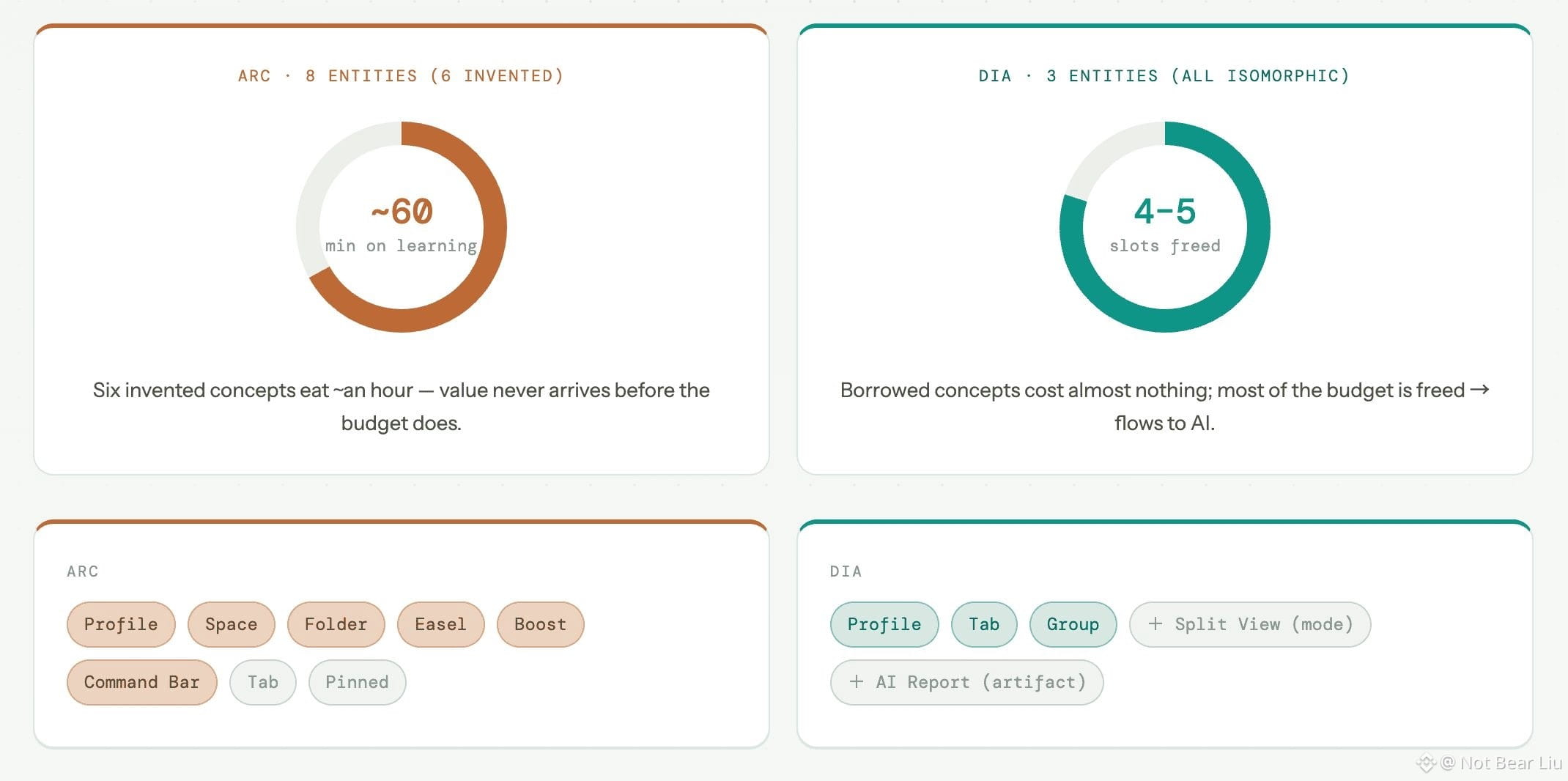
Dia's interface is much simpler than Arc's, but the value of this simplification isn't just making the product look cleaner.
Arc spent a lot of user attention explaining Space, Folder, Easel, and Boost. Dia uses more familiar structures—Profile, Tab, and Group—lowering the cost of understanding the product.
Then, it gives the space it saves to AI.
The address bar can answer questions directly, the sidebar can hold a conversation around the current webpage, multiple open tabs can be organized into a report, and the browser will even proactively suggest cleanup.
This is an important product decision.
After some products simplify, they may only remove a few buttons and features—yet users don't get to the real value faster. Complexity decreases, and the product's differentiation weakens along with it.
Dia's choice is more explicit. It reduces what users have to understand, then redirects attention back to the capabilities it truly wants users to adopt.
**After subtracting from the product, you must know who the saved space is meant for. Otherwise, simplification can easily turn into mere deletion.**
Dia's interface is much simpler than Arc's, but the value of this simplification isn't just making the product look cleaner.
Arc spent a lot of user attention explaining Space, Folder, Easel, and Boost. Dia uses more familiar structures—Profile, Tab, and Group—lowering the cost of understanding the product.
Then, it gives the space it saves to AI.
The address bar can answer questions directly, the sidebar can hold a conversation around the current webpage, multiple open tabs can be organized into a report, and the browser will even proactively suggest cleanup.
This is an important product decision.
After some products simplify, they may only remove a few buttons and features—yet users don't get to the real value faster. Complexity decreases, and the product's differentiation weakens along with it.
Dia's choice is more explicit. It reduces what users have to understand, then redirects attention back to the capabilities it truly wants users to adopt.
**After subtracting from the product, you must know who the saved space is meant for. Otherwise, simplification can easily turn into mere deletion.**
Arc spent a lot of user attention explaining Space, Folder, Easel, and Boost. Dia uses more familiar structures—Profile, Tab, and Group—lowering the cost of understanding the product.
Then, it gives the space it saves to AI.
The address bar can answer questions directly, the sidebar can hold a conversation around the current webpage, multiple open tabs can be organized into a report, and the browser will even proactively suggest cleanup.
This is an important product decision.
After some products simplify, they may only remove a few buttons and features—yet users don't get to the real value faster. Complexity decreases, and the product's differentiation weakens along with it.
Dia's choice is more explicit. It reduces what users have to understand, then redirects attention back to the capabilities it truly wants users to adopt.
**After subtracting from the product, you must know who the saved space is meant for. Otherwise, simplification can easily turn into mere deletion.**
303
·
--
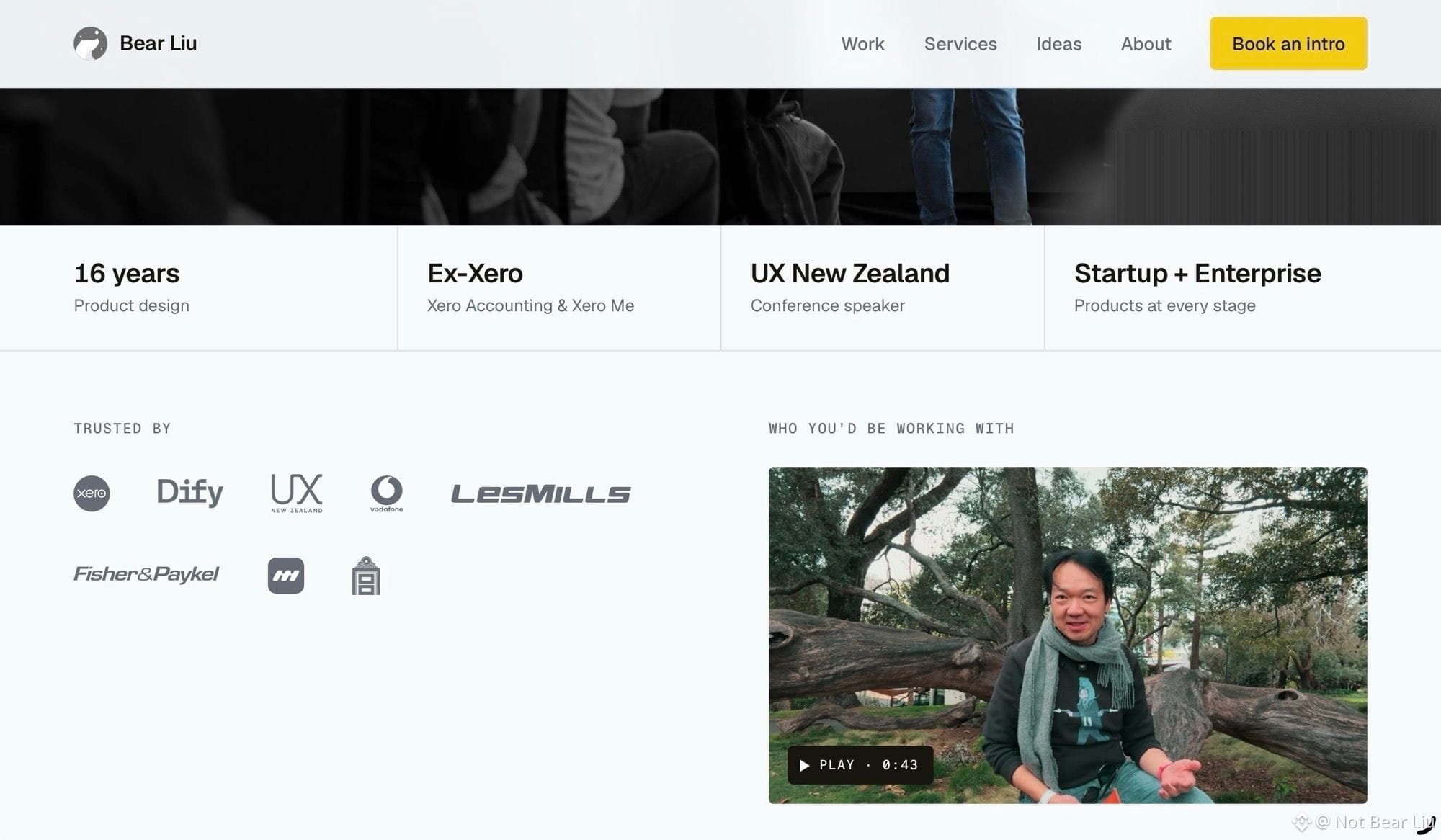
Our Yunnan mountain-living band has a song I like, 《Thirty Years》, about “Thirty years ago I was looking for a job, and now I’m still looking for a job…”—and if you map it to a designer: twenty years ago I was working on a personal website, and now, damn it, I’m still working on a personal website.
Today I spent the whole day updating my own English personal site, returning it to something plain and restrained. I deleted all the flashy effects and the AI experiments that I used to mess around with.
So far I’m fairly satisfied. Human factors matter more now. Instead of relying on effects, I’ve also put real, tangible achievements on display—like being featured by Apple three times, and making the annual curated app list, and so on.
Our Yunnan mountain-living band has a song I like, 《Thirty Years》, about “Thirty years ago I was looking for a job, and now I’m still looking for a job…”—and if you map it to a designer: twenty years ago I was working on a personal website, and now, damn it, I’m still working on a personal website.
Today I spent the whole day updating my own English personal site, returning it to something plain and restrained. I deleted all the flashy effects and the AI experiments that I used to mess around with.
So far I’m fairly satisfied. Human factors matter more now. Instead of relying on effects, I’ve also put real, tangible achievements on display—like being featured by Apple three times, and making the annual curated app list, and so on.
Today I spent the whole day updating my own English personal site, returning it to something plain and restrained. I deleted all the flashy effects and the AI experiments that I used to mess around with.
So far I’m fairly satisfied. Human factors matter more now. Instead of relying on effects, I’ve also put real, tangible achievements on display—like being featured by Apple three times, and making the annual curated app list, and so on.
2
901
·
--
The latest Chinese Newsletter is out 👇
In this issue, I talked about a few topics I’ve been thinking about and practicing recently:
**Using AI for competitor research** — it’s not about having AI write summaries for you, but treating it as a collaborator that can quickly help you break down information. We covered how to ask questions, how to verify, and how to keep AI from confidently hallucinating.
**Time allocation for independent workers** — freelance work sounds great, but “everything you decide yourself” is actually the hardest part. I shared how I’m structuring my week right now: which blocks are protected, and which parts are flexible.
**Content asset strategy** — after writing for so long, I’ve started to feel that “publishing” is only the starting point; the real value is how a piece of content continues to create impact. This issue includes some thoughts I have on “content compounding.”
I also reflected on the idea of “lying flat at work” — not in a negative sense, but in finding a balance between high-intensity output and a sustainable rhythm. I even touched on the possibilities of remote work along the way.
If you’re an independent worker, a designer, or someone experimenting with using AI to boost productivity, you’ll probably relate.
Read the full issue here: https://cn.bear.academy/p/77
The latest Chinese Newsletter is out 👇
In this issue, I talked about a few topics I’ve been thinking about and practicing recently:
**Using AI for competitor research** — it’s not about having AI write summaries for you, but treating it as a collaborator that can quickly help you break down information. We covered how to ask questions, how to verify, and how to keep AI from confidently hallucinating.
**Time allocation for independent workers** — freelance work sounds great, but “everything you decide yourself” is actually the hardest part. I shared how I’m structuring my week right now: which blocks are protected, and which parts are flexible.
**Content asset strategy** — after writing for so long, I’ve started to feel that “publishing” is only the starting point; the real value is how a piece of content continues to create impact. This issue includes some thoughts I have on “content compounding.”
I also reflected on the idea of “lying flat at work” — not in a negative sense, but in finding a balance between high-intensity output and a sustainable rhythm. I even touched on the possibilities of remote work along the way.
If you’re an independent worker, a designer, or someone experimenting with using AI to boost productivity, you’ll probably relate.
Read the full issue here: https://cn.bear.academy/p/77
In this issue, I talked about a few topics I’ve been thinking about and practicing recently:
**Using AI for competitor research** — it’s not about having AI write summaries for you, but treating it as a collaborator that can quickly help you break down information. We covered how to ask questions, how to verify, and how to keep AI from confidently hallucinating.
**Time allocation for independent workers** — freelance work sounds great, but “everything you decide yourself” is actually the hardest part. I shared how I’m structuring my week right now: which blocks are protected, and which parts are flexible.
**Content asset strategy** — after writing for so long, I’ve started to feel that “publishing” is only the starting point; the real value is how a piece of content continues to create impact. This issue includes some thoughts I have on “content compounding.”
I also reflected on the idea of “lying flat at work” — not in a negative sense, but in finding a balance between high-intensity output and a sustainable rhythm. I even touched on the possibilities of remote work along the way.
If you’re an independent worker, a designer, or someone experimenting with using AI to boost productivity, you’ll probably relate.
Read the full issue here: https://cn.bear.academy/p/77
198
·
--
Many products that add AI end up also adding a chat box, a generate button, a sidebar, and automatic suggestions—like the more entry points there are, the stronger the AI is.
Dia’s approach has more layers.
It treats the address bar as the primary AI entry point, because that’s the action browser users are most familiar with. Entering a URL and entering a question happen in the same place—no switching modes, and no hunting for new buttons.
The side chat is responsible for ongoing discussion around the current page. The multi-tab reports handle more complex, higher-value tasks. Proactive reminders are placed at the very edge.
All four entry points exist, but their importance isn’t the same.
This allocation is crucial. As AI can do more and more things, teams easily design an entry point for every capability—only to end up with several features that work, but none that truly become a habit.
**A typical AI product usually needs a sufficiently strong main entry point, with other functions supporting it rather than competing with each other for the user’s attention.**
The number of entry points doesn’t equal product capability. Whether users can form a stable habit is often more important.
Many products that add AI end up also adding a chat box, a generate button, a sidebar, and automatic suggestions—like the more entry points there are, the stronger the AI is.
Dia’s approach has more layers.
It treats the address bar as the primary AI entry point, because that’s the action browser users are most familiar with. Entering a URL and entering a question happen in the same place—no switching modes, and no hunting for new buttons.
The side chat is responsible for ongoing discussion around the current page. The multi-tab reports handle more complex, higher-value tasks. Proactive reminders are placed at the very edge.
All four entry points exist, but their importance isn’t the same.
This allocation is crucial. As AI can do more and more things, teams easily design an entry point for every capability—only to end up with several features that work, but none that truly become a habit.
**A typical AI product usually needs a sufficiently strong main entry point, with other functions supporting it rather than competing with each other for the user’s attention.**
The number of entry points doesn’t equal product capability. Whether users can form a stable habit is often more important.
Dia’s approach has more layers.
It treats the address bar as the primary AI entry point, because that’s the action browser users are most familiar with. Entering a URL and entering a question happen in the same place—no switching modes, and no hunting for new buttons.
The side chat is responsible for ongoing discussion around the current page. The multi-tab reports handle more complex, higher-value tasks. Proactive reminders are placed at the very edge.
All four entry points exist, but their importance isn’t the same.
This allocation is crucial. As AI can do more and more things, teams easily design an entry point for every capability—only to end up with several features that work, but none that truly become a habit.
**A typical AI product usually needs a sufficiently strong main entry point, with other functions supporting it rather than competing with each other for the user’s attention.**
The number of entry points doesn’t equal product capability. Whether users can form a stable habit is often more important.
341
·
--
I just have to say it.
On X, so many people think that using a simple prompt to generate super beautiful videos, slideshows, and images is incredibly impressive—people are constantly shouting things like, “That’s so awesome!”
What’s actually impressive is the large model, not you.
What makes you impressive as a human is your ability to clearly and precisely express what you need: describe the effect you want, and even explain why you want it and what considerations to take. So that your intention becomes something crystal-clear—something everyone can understand, like an apple hanging on a tree.
That’s the real impressive part, not the thing generated by a single sentence. That part isn’t about you.
I just have to say it.
On X, so many people think that using a simple prompt to generate super beautiful videos, slideshows, and images is incredibly impressive—people are constantly shouting things like, “That’s so awesome!”
What’s actually impressive is the large model, not you.
What makes you impressive as a human is your ability to clearly and precisely express what you need: describe the effect you want, and even explain why you want it and what considerations to take. So that your intention becomes something crystal-clear—something everyone can understand, like an apple hanging on a tree.
That’s the real impressive part, not the thing generated by a single sentence. That part isn’t about you.
On X, so many people think that using a simple prompt to generate super beautiful videos, slideshows, and images is incredibly impressive—people are constantly shouting things like, “That’s so awesome!”
What’s actually impressive is the large model, not you.
What makes you impressive as a human is your ability to clearly and precisely express what you need: describe the effect you want, and even explain why you want it and what considerations to take. So that your intention becomes something crystal-clear—something everyone can understand, like an apple hanging on a tree.
That’s the real impressive part, not the thing generated by a single sentence. That part isn’t about you.
323
·
--
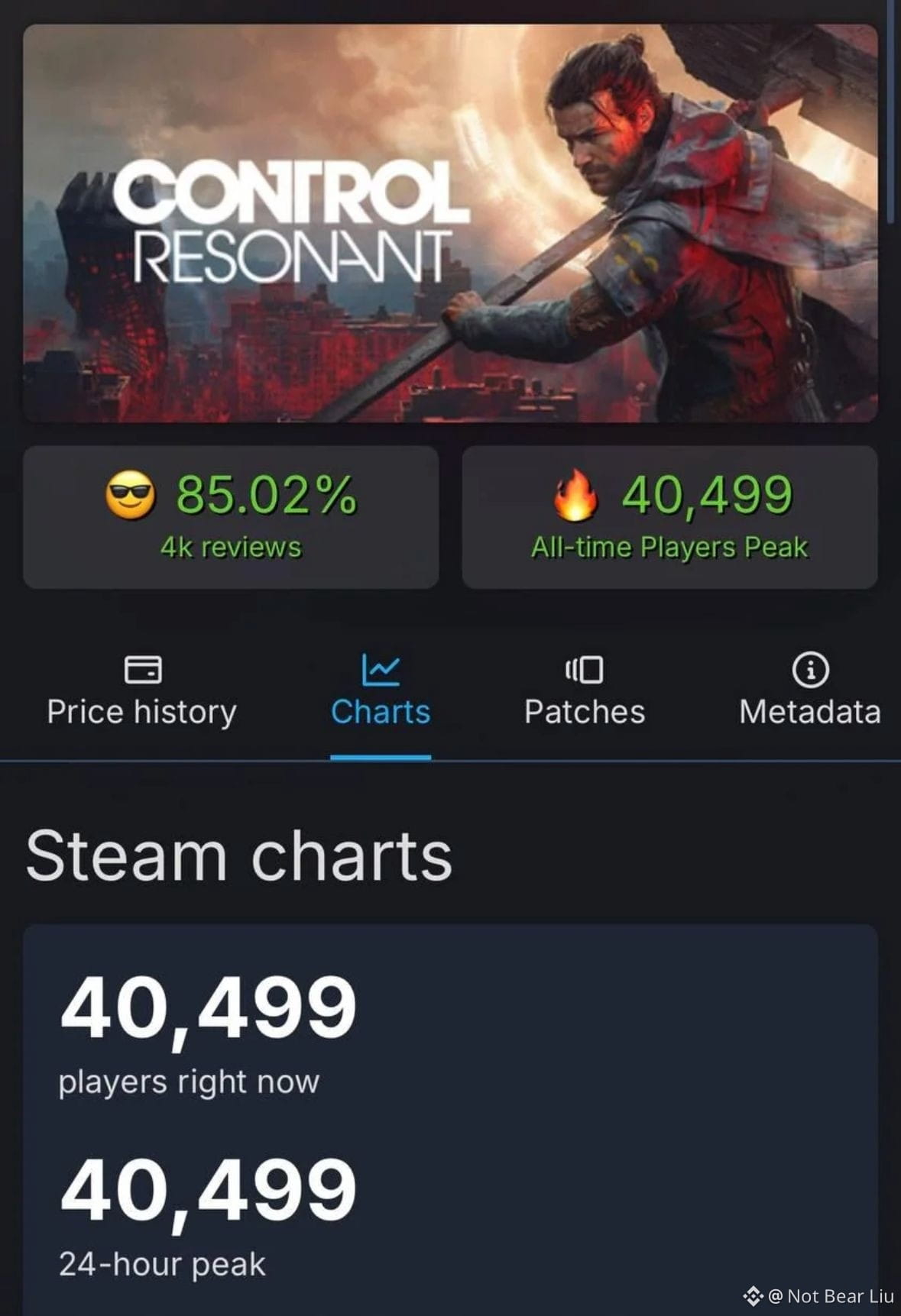
My Reddit friends are all busy playing “Control • Resonance,” and I don’t have the time, and I don’t have a powerful enough PC to run this game…
My Reddit friends are all busy playing “Control • Resonance,” and I don’t have the time, and I don’t have a powerful enough PC to run this game…
1
408
·
--
2026 Animation Highlights: See How Top Creators Push Boundaries
The biggest risk of watching animation is getting stuck in your own aesthetic comfort zone. This 2026 animation highlights collection curated by Ben Marriott covers top-tier examples across nearly every style and technique—from 3D to 2D, from commercial to experimental creative work.
The value of this video is that it quickly refreshes your understanding of what “great animation” really is. Each case has been carefully selected, with plenty worth breaking down. You’ll see how some people use minimal methods to create impact, how others bring characters to life through subtle, detailed actions, and even uncover performance directions you might never have considered. For designers and creators, it’s like a precise stream of visual input—far more efficient than aimlessly scrolling through material libraries.
My biggest takeaway after watching it is this: many groundbreaking works are actually doing the same thing—using the simplest movement logic to express the most complex emotions or concepts. It’s not about piling on effects; it’s that every frame has a purpose. If you’ve been working on an animation project recently or want to improve your taste, this 50-minute video is absolutely worth your time.
Original link: https://youtube.com/watch?v=ylXeuDp_8XM&si=SSXXlv-bYtR5PB7l
2026 Animation Highlights: See How Top Creators Push Boundaries
The biggest risk of watching animation is getting stuck in your own aesthetic comfort zone. This 2026 animation highlights collection curated by Ben Marriott covers top-tier examples across nearly every style and technique—from 3D to 2D, from commercial to experimental creative work.
The value of this video is that it quickly refreshes your understanding of what “great animation” really is. Each case has been carefully selected, with plenty worth breaking down. You’ll see how some people use minimal methods to create impact, how others bring characters to life through subtle, detailed actions, and even uncover performance directions you might never have considered. For designers and creators, it’s like a precise stream of visual input—far more efficient than aimlessly scrolling through material libraries.
My biggest takeaway after watching it is this: many groundbreaking works are actually doing the same thing—using the simplest movement logic to express the most complex emotions or concepts. It’s not about piling on effects; it’s that every frame has a purpose. If you’ve been working on an animation project recently or want to improve your taste, this 50-minute video is absolutely worth your time.
Original link: https://youtube.com/watch?v=ylXeuDp_8XM&si=SSXXlv-bYtR5PB7l
The biggest risk of watching animation is getting stuck in your own aesthetic comfort zone. This 2026 animation highlights collection curated by Ben Marriott covers top-tier examples across nearly every style and technique—from 3D to 2D, from commercial to experimental creative work.
The value of this video is that it quickly refreshes your understanding of what “great animation” really is. Each case has been carefully selected, with plenty worth breaking down. You’ll see how some people use minimal methods to create impact, how others bring characters to life through subtle, detailed actions, and even uncover performance directions you might never have considered. For designers and creators, it’s like a precise stream of visual input—far more efficient than aimlessly scrolling through material libraries.
My biggest takeaway after watching it is this: many groundbreaking works are actually doing the same thing—using the simplest movement logic to express the most complex emotions or concepts. It’s not about piling on effects; it’s that every frame has a purpose. If you’ve been working on an animation project recently or want to improve your taste, this 50-minute video is absolutely worth your time.
Original link: https://youtube.com/watch?v=ylXeuDp_8XM&si=SSXXlv-bYtR5PB7l

1
1
383
·
--
A new podcast is out #613, where we talk about a question I’ve been thinking about lately: do we still have the ability to do something “without purpose”?
People who work with AI know this well—every prompt has to clearly state the intent, the goal, and the expected output. This logic is fine in itself, but when it starts seeping into every corner of life—playing sports, drawing, reading novels, everything must be “worth it” with some kind of payoff—people slowly become nothing but efficiency machines.
Bear’s view is that everyone should keep at least one thing that’s connected to art, sports, or some hobby: no chasing results, no pressure to produce output—just free exploration, enjoying the process. For tech people, this is especially important, because we’re so easily tempted to treat “optimizing everything” as the default mode.
In this episode, we also discuss a book: 《Dragon Egg》. It’s set on a neutron star, where life moves thousands of times faster than humans. For them, a human’s 15 minutes is an entire lifetime. In just a few days, they evolve from primal wilderness to modern civilization, eventually surpassing humans—and even send intelligence back to humanity.
Two details really moved me. One is that an alien civilization comes to meet humans face-to-face, and the time they spend together is only one second—yet for them it’s a tremendous sacrifice, like going hungry for weeks, just to say, “Hello, Pierre.” Another scene: they use X-ray scanning to detect breast cancer cells inside a female human astronaut, then casually modify their equipment to remove the cancer cells—again, all within the same one second.
I like this kind of optimistic science fiction—it has the same flavor as 《The Salvation Plan》.
Go listen 👇
https://redcircle.com/shows/936a3212-92e5-41c7-b6f9-39e3596adeb8/episodes/05f8d4c9-c2e1-420b-971b-aa6bacd753d8
A new podcast is out #613, where we talk about a question I’ve been thinking about lately: do we still have the ability to do something “without purpose”?
People who work with AI know this well—every prompt has to clearly state the intent, the goal, and the expected output. This logic is fine in itself, but when it starts seeping into every corner of life—playing sports, drawing, reading novels, everything must be “worth it” with some kind of payoff—people slowly become nothing but efficiency machines.
Bear’s view is that everyone should keep at least one thing that’s connected to art, sports, or some hobby: no chasing results, no pressure to produce output—just free exploration, enjoying the process. For tech people, this is especially important, because we’re so easily tempted to treat “optimizing everything” as the default mode.
In this episode, we also discuss a book: 《Dragon Egg》. It’s set on a neutron star, where life moves thousands of times faster than humans. For them, a human’s 15 minutes is an entire lifetime. In just a few days, they evolve from primal wilderness to modern civilization, eventually surpassing humans—and even send intelligence back to humanity.
Two details really moved me. One is that an alien civilization comes to meet humans face-to-face, and the time they spend together is only one second—yet for them it’s a tremendous sacrifice, like going hungry for weeks, just to say, “Hello, Pierre.” Another scene: they use X-ray scanning to detect breast cancer cells inside a female human astronaut, then casually modify their equipment to remove the cancer cells—again, all within the same one second.
I like this kind of optimistic science fiction—it has the same flavor as 《The Salvation Plan》.
Go listen 👇
https://redcircle.com/shows/936a3212-92e5-41c7-b6f9-39e3596adeb8/episodes/05f8d4c9-c2e1-420b-971b-aa6bacd753d8
People who work with AI know this well—every prompt has to clearly state the intent, the goal, and the expected output. This logic is fine in itself, but when it starts seeping into every corner of life—playing sports, drawing, reading novels, everything must be “worth it” with some kind of payoff—people slowly become nothing but efficiency machines.
Bear’s view is that everyone should keep at least one thing that’s connected to art, sports, or some hobby: no chasing results, no pressure to produce output—just free exploration, enjoying the process. For tech people, this is especially important, because we’re so easily tempted to treat “optimizing everything” as the default mode.
In this episode, we also discuss a book: 《Dragon Egg》. It’s set on a neutron star, where life moves thousands of times faster than humans. For them, a human’s 15 minutes is an entire lifetime. In just a few days, they evolve from primal wilderness to modern civilization, eventually surpassing humans—and even send intelligence back to humanity.
Two details really moved me. One is that an alien civilization comes to meet humans face-to-face, and the time they spend together is only one second—yet for them it’s a tremendous sacrifice, like going hungry for weeks, just to say, “Hello, Pierre.” Another scene: they use X-ray scanning to detect breast cancer cells inside a female human astronaut, then casually modify their equipment to remove the cancer cells—again, all within the same one second.
I like this kind of optimistic science fiction—it has the same flavor as 《The Salvation Plan》.
Go listen 👇
https://redcircle.com/shows/936a3212-92e5-41c7-b6f9-39e3596adeb8/episodes/05f8d4c9-c2e1-420b-971b-aa6bacd753d8
1
2
594
·
--
The timeline is already fast-forwarding to the first human-versus-robot fighting tournament—see who will win? The ending is worrying.
The timeline is already fast-forwarding to the first human-versus-robot fighting tournament—see who will win? The ending is worrying.
36
·
--
After making two products, JAM and CUBE, I’ve already found the feel for the basic mindset and process of vibe coding—how to strike a balance between design quality and product speed.
Next, I want to try vibe marketing. That’s the part that truly ties to the business. I already have an initial idea, and I’ll run with it to see how it goes.
After making two products, JAM and CUBE, I’ve already found the feel for the basic mindset and process of vibe coding—how to strike a balance between design quality and product speed.
Next, I want to try vibe marketing. That’s the part that truly ties to the business. I already have an initial idea, and I’ll run with it to see how it goes.
Next, I want to try vibe marketing. That’s the part that truly ties to the business. I already have an initial idea, and I’ll run with it to see how it goes.
158
Log in to explore more content
Join global crypto users on Binance Square
⚡️ Get latest and useful information about crypto.
💬 Trusted by the world’s largest crypto exchange.
👍 Discover real insights from verified creators.
Email / Phone number