

曼迪mandy
3.5k Posts

曼迪mandy
Report
Block User
主业是撸毛,偶尔玩合约,从未爆过仓。大钱没赚过,小钱凭运气。如果你也玩币圈,我们就是好朋友。
27 Following
15.3K+ Followers
7.5K+ Liked
Posts
All
Quotes
Live
·
--
At this time last year, I was still arguing with people—“Running validation logic outside the WASM sandbox? Isn’t that just digging a pit for yourself?” Back then, I’d just finished a postmortem report about a certain chain being hollowed out due to smart contract vulnerabilities. My head was full of “less code is safer.”
Is the next big dip the callback point—does BTC still have room to rise?
Later, when I actually got hands-on running Dusk nodes, I realized it wasn’t that simple.
I went through their Piecrust test code, and I also specifically looked up the performance paper that had been cited so many times. Turns out they were measuring the overhead of WASM compared to native code under different instruction sets—under cryptographic scenarios it can spike to 255%. Think about it: the BLS signatures and ZK proofs that Dusk handles every day—what of them isn’t a computational heavyweight? Every transaction gets interpreted and executed inside WASM. It’s like driving with fuel economy of 25 liters per 100 kilometers—while the gas station owner is laughing all the way to the bank, and your wallet is the one that can’t take it.
So they turned high-frequency cryptographic operations into host functions and call the native implementation directly. Plainly put: don’t put chokepoints on the roads you take all the time—only scrutinize the roads you take occasionally.
Of course there are risks. The trust boundary shrinks from “the entire WASM sandbox” down to “whether those few lines of C code are written safely.” The former gives you security vibes on a physical-isolation level; the latter just depends on whether the engineer’s hands are steady. I even went to the corner of their official site to dig up their 2024 Q3 audit report—at least the boundary cases they tested back then didn’t blow up. But then again, vulnerabilities like these are never “found” from testing alone—they’re fed to the system with data by people. Someday, if someone feeds in a carefully forged proof and triggers an integer overflow in a host function no one noticed—yeah… that scene is something I don’t want to see for myself, at least not yet.
But if you’re chasing true “no chance of failure,” then don’t use a public chain—go home and write a standalone program. It’s more comfortable. The folks behind Dusk are doing a different accounting: performance bottlenecks are today’s problem, and security issues can still be patched tomorrow. I ran nodes for three years. The chains that died—nine times out of ten—were because the gas was so high nobody used them, or because once they were compromised they basically went to zero. Anyway, I never saw it happen firsthand.
So my attitude isn’t as hardline now. Before, when having dinner with friends, I kept insisting, “Let’s observe a bit more.” When I got back, I quietly updated the node version to the latest. There aren’t many projects that punch holes in the sandbox, and Dusk is one of them. #dusk $DUSK @Dusk_Foundation
At this time last year, I was still arguing with people—“Running validation logic outside the WASM sandbox? Isn’t that just digging a pit for yourself?” Back then, I’d just finished a postmortem report about a certain chain being hollowed out due to smart contract vulnerabilities. My head was full of “less code is safer.”
Is the next big dip the callback point—does BTC still have room to rise?
Later, when I actually got hands-on running Dusk nodes, I realized it wasn’t that simple.
I went through their Piecrust test code, and I also specifically looked up the performance paper that had been cited so many times. Turns out they were measuring the overhead of WASM compared to native code under different instruction sets—under cryptographic scenarios it can spike to 255%. Think about it: the BLS signatures and ZK proofs that Dusk handles every day—what of them isn’t a computational heavyweight? Every transaction gets interpreted and executed inside WASM. It’s like driving with fuel economy of 25 liters per 100 kilometers—while the gas station owner is laughing all the way to the bank, and your wallet is the one that can’t take it.
So they turned high-frequency cryptographic operations into host functions and call the native implementation directly. Plainly put: don’t put chokepoints on the roads you take all the time—only scrutinize the roads you take occasionally.
Of course there are risks. The trust boundary shrinks from “the entire WASM sandbox” down to “whether those few lines of C code are written safely.” The former gives you security vibes on a physical-isolation level; the latter just depends on whether the engineer’s hands are steady. I even went to the corner of their official site to dig up their 2024 Q3 audit report—at least the boundary cases they tested back then didn’t blow up. But then again, vulnerabilities like these are never “found” from testing alone—they’re fed to the system with data by people. Someday, if someone feeds in a carefully forged proof and triggers an integer overflow in a host function no one noticed—yeah… that scene is something I don’t want to see for myself, at least not yet.
But if you’re chasing true “no chance of failure,” then don’t use a public chain—go home and write a standalone program. It’s more comfortable. The folks behind Dusk are doing a different accounting: performance bottlenecks are today’s problem, and security issues can still be patched tomorrow. I ran nodes for three years. The chains that died—nine times out of ten—were because the gas was so high nobody used them, or because once they were compromised they basically went to zero. Anyway, I never saw it happen firsthand.
So my attitude isn’t as hardline now. Before, when having dinner with friends, I kept insisting, “Let’s observe a bit more.” When I got back, I quietly updated the node version to the latest. There aren’t many projects that punch holes in the sandbox, and Dusk is one of them. #dusk $DUSK @Dusk
Is the next big dip the callback point—does BTC still have room to rise?
Later, when I actually got hands-on running Dusk nodes, I realized it wasn’t that simple.
I went through their Piecrust test code, and I also specifically looked up the performance paper that had been cited so many times. Turns out they were measuring the overhead of WASM compared to native code under different instruction sets—under cryptographic scenarios it can spike to 255%. Think about it: the BLS signatures and ZK proofs that Dusk handles every day—what of them isn’t a computational heavyweight? Every transaction gets interpreted and executed inside WASM. It’s like driving with fuel economy of 25 liters per 100 kilometers—while the gas station owner is laughing all the way to the bank, and your wallet is the one that can’t take it.
So they turned high-frequency cryptographic operations into host functions and call the native implementation directly. Plainly put: don’t put chokepoints on the roads you take all the time—only scrutinize the roads you take occasionally.
Of course there are risks. The trust boundary shrinks from “the entire WASM sandbox” down to “whether those few lines of C code are written safely.” The former gives you security vibes on a physical-isolation level; the latter just depends on whether the engineer’s hands are steady. I even went to the corner of their official site to dig up their 2024 Q3 audit report—at least the boundary cases they tested back then didn’t blow up. But then again, vulnerabilities like these are never “found” from testing alone—they’re fed to the system with data by people. Someday, if someone feeds in a carefully forged proof and triggers an integer overflow in a host function no one noticed—yeah… that scene is something I don’t want to see for myself, at least not yet.
But if you’re chasing true “no chance of failure,” then don’t use a public chain—go home and write a standalone program. It’s more comfortable. The folks behind Dusk are doing a different accounting: performance bottlenecks are today’s problem, and security issues can still be patched tomorrow. I ran nodes for three years. The chains that died—nine times out of ten—were because the gas was so high nobody used them, or because once they were compromised they basically went to zero. Anyway, I never saw it happen firsthand.
So my attitude isn’t as hardline now. Before, when having dinner with friends, I kept insisting, “Let’s observe a bit more.” When I got back, I quietly updated the node version to the latest. There aren’t many projects that punch holes in the sandbox, and Dusk is one of them. #dusk $DUSK @Dusk
154
·
--
Everyone knows that over the past half year, the Dusk story in the privacy and RWA space has been told loudly and clearly, and the EVM testnet has been running at full speed. But brothers, have you ever thought about one question: when Binance delisted the DUSK/BTC spot pair in June, and BITGP said bye-bye to the USDT spot pair in July, where exactly is this coin’s “anchor”?
The big pie is still possible—BTC has broken above 80,000!
I went through the few remaining spot order books on Coinglass. You can see a particularly twisted phenomenon—both the buy and sell order books are set out like an honor guard, neat and uniform, and the spreads don’t look too bad. But that’s an illusion. Just change the amount of the market order from 20,000 USD to 50,000, refresh again, and the layered thickness of the bids disappears like a tide going out in an instant. It feels like watching a basketball game with no substitute players: the five starters look impressive, but if someone commits a foul, the court goes instantly into a vacuum.
Even more worth pondering is the open interest on the perpetual contracts side—it has actually been pushed to 30x or more of the spot daily trading volume. The old-timers in the industry get it: this is “putting on a big show while carrying a millstone.” The derivatives market is all drums and gongs, but the real spot pool that can actually take the goods is so narrow it can only squeeze through a one-person bridge.
You might say: contracts create liquidity, and volatility creates opportunity. That part is true. But the problem is that when the index source behind the mark price gets hit by a sell-off of a few thousand dollars from some small exchange, causing a momentary deviation of 1% to 1.5%, how can DUSK long positions—where the maintenance margin rate is 3-4x that of mainstream coins—hold up? This isn’t trading; it’s stepping onto a slippery bluestone on stilts. With even a little wind and grass, the first to fall are the people who set stop-loss orders waiting for the “Liberation Army.”
I specifically pulled up the liquidation map from the last two months and found a pattern: every time BTC dumps about 500 points around 3:00 a.m., the clustered liquidation triggers for DUSK longs get hit with precision like dominoes. At that time, the spot order book simply can’t absorb the sell pressure pouring out from the contract side. In the end, the outcome is usually this: when you close at market in the futures, the actual execution price slides away by two full percentage points compared to the mark price you see. That slippage isn’t a punishment the market gives you—it’s the insurance premium you pay for that “invisible spot water level.” @Dusk_Foundation $DUSK #dusk
Everyone knows that over the past half year, the Dusk story in the privacy and RWA space has been told loudly and clearly, and the EVM testnet has been running at full speed. But brothers, have you ever thought about one question: when Binance delisted the DUSK/BTC spot pair in June, and BITGP said bye-bye to the USDT spot pair in July, where exactly is this coin’s “anchor”?
The big pie is still possible—BTC has broken above 80,000!
I went through the few remaining spot order books on Coinglass. You can see a particularly twisted phenomenon—both the buy and sell order books are set out like an honor guard, neat and uniform, and the spreads don’t look too bad. But that’s an illusion. Just change the amount of the market order from 20,000 USD to 50,000, refresh again, and the layered thickness of the bids disappears like a tide going out in an instant. It feels like watching a basketball game with no substitute players: the five starters look impressive, but if someone commits a foul, the court goes instantly into a vacuum.
Even more worth pondering is the open interest on the perpetual contracts side—it has actually been pushed to 30x or more of the spot daily trading volume. The old-timers in the industry get it: this is “putting on a big show while carrying a millstone.” The derivatives market is all drums and gongs, but the real spot pool that can actually take the goods is so narrow it can only squeeze through a one-person bridge.
You might say: contracts create liquidity, and volatility creates opportunity. That part is true. But the problem is that when the index source behind the mark price gets hit by a sell-off of a few thousand dollars from some small exchange, causing a momentary deviation of 1% to 1.5%, how can DUSK long positions—where the maintenance margin rate is 3-4x that of mainstream coins—hold up? This isn’t trading; it’s stepping onto a slippery bluestone on stilts. With even a little wind and grass, the first to fall are the people who set stop-loss orders waiting for the “Liberation Army.”
I specifically pulled up the liquidation map from the last two months and found a pattern: every time BTC dumps about 500 points around 3:00 a.m., the clustered liquidation triggers for DUSK longs get hit with precision like dominoes. At that time, the spot order book simply can’t absorb the sell pressure pouring out from the contract side. In the end, the outcome is usually this: when you close at market in the futures, the actual execution price slides away by two full percentage points compared to the mark price you see. That slippage isn’t a punishment the market gives you—it’s the insurance premium you pay for that “invisible spot water level.” @Dusk $DUSK #dusk
The big pie is still possible—BTC has broken above 80,000!
I went through the few remaining spot order books on Coinglass. You can see a particularly twisted phenomenon—both the buy and sell order books are set out like an honor guard, neat and uniform, and the spreads don’t look too bad. But that’s an illusion. Just change the amount of the market order from 20,000 USD to 50,000, refresh again, and the layered thickness of the bids disappears like a tide going out in an instant. It feels like watching a basketball game with no substitute players: the five starters look impressive, but if someone commits a foul, the court goes instantly into a vacuum.
Even more worth pondering is the open interest on the perpetual contracts side—it has actually been pushed to 30x or more of the spot daily trading volume. The old-timers in the industry get it: this is “putting on a big show while carrying a millstone.” The derivatives market is all drums and gongs, but the real spot pool that can actually take the goods is so narrow it can only squeeze through a one-person bridge.
You might say: contracts create liquidity, and volatility creates opportunity. That part is true. But the problem is that when the index source behind the mark price gets hit by a sell-off of a few thousand dollars from some small exchange, causing a momentary deviation of 1% to 1.5%, how can DUSK long positions—where the maintenance margin rate is 3-4x that of mainstream coins—hold up? This isn’t trading; it’s stepping onto a slippery bluestone on stilts. With even a little wind and grass, the first to fall are the people who set stop-loss orders waiting for the “Liberation Army.”
I specifically pulled up the liquidation map from the last two months and found a pattern: every time BTC dumps about 500 points around 3:00 a.m., the clustered liquidation triggers for DUSK longs get hit with precision like dominoes. At that time, the spot order book simply can’t absorb the sell pressure pouring out from the contract side. In the end, the outcome is usually this: when you close at market in the futures, the actual execution price slides away by two full percentage points compared to the mark price you see. That slippage isn’t a punishment the market gives you—it’s the insurance premium you pay for that “invisible spot water level.” @Dusk $DUSK #dusk
158
·
--
Auditors need to be “through-view” while risk control has to hide the counterparty positions—can Dusk really twist that key the right way?
The hype-bread has risen a bit; BTC is absolutely flying!
Anyone who’s worked in institutional asset management knows that kind of mental knot.
Every quarter, before an audit team arrives, compliance has to pull IT along three days in advance to painstakingly derive on-chain data from the pipeline. It’s not that there’s no record on-chain—it’s that the record is “too public”: who the counterparty is, the exact time the coins were sent, the average price, all laid out in plain sight. But if you tell the auditor to only look at the hash value, they slam the table for the working papers. In the end, you end up maintaining yet another off-chain shadow ledger. Reconciliation between the two sides is enough to make your scalp tingle. Privacy is preserved, but the added reconciliation cost can end up eating away the advantage.
The layer of paper that Dusk pierced this time with its Phoenix model—I think that’s what you’d call “audit-friendly privacy.”
It doesn’t play hide-and-seek with regulators. Instead, it turns disclosure into a programmable action: by default, everything is globally invisible, but for subjects holding specific viewing keys, you can pull details by time interval, generate reports by asset category, and even batch-verify how total exposure changes over a particular period. This is completely different from the binary choice of account-based models—either fully exposed, or tightly wrapped. The UTXO + zero-knowledge proof combination turns every transaction into a verifiable ticket: the ticket itself doesn’t reveal the amount or the counterparty, but the verification logic is embedded in the protocol. What auditors want isn’t voyeurism; it’s mathematical evidence that supports cross-verification—which is exactly what it provides.
What I truly care about is the tough engineering part: can the permission granularity for viewing keys be made to support “just-in-time” issuance? For example, show the risk control team total exposure, let auditors see per-transaction flows while hiding counterparty names, and give regulators full visibility. RBAC (role-based access control) can run in cryptography, but once you map it to product interfaces, report-export templates, and integration specs with traditional financial systems, that’s a whole other dimension of work.
If Dusk can磨透 this piece, institutional money wouldn’t need to juggle two ledgers anymore. Not visible to retail users? That’s just a convenient add-on. The thing that institutions truly can’t sleep over isn’t privacy—it’s always the competitor next door watching their build-up schedule. You know what I mean, right? @Dusk_Foundation $DUSK #dusk
Auditors need to be “through-view” while risk control has to hide the counterparty positions—can Dusk really twist that key the right way?
The hype-bread has risen a bit; BTC is absolutely flying!
Anyone who’s worked in institutional asset management knows that kind of mental knot.
Every quarter, before an audit team arrives, compliance has to pull IT along three days in advance to painstakingly derive on-chain data from the pipeline. It’s not that there’s no record on-chain—it’s that the record is “too public”: who the counterparty is, the exact time the coins were sent, the average price, all laid out in plain sight. But if you tell the auditor to only look at the hash value, they slam the table for the working papers. In the end, you end up maintaining yet another off-chain shadow ledger. Reconciliation between the two sides is enough to make your scalp tingle. Privacy is preserved, but the added reconciliation cost can end up eating away the advantage.
The layer of paper that Dusk pierced this time with its Phoenix model—I think that’s what you’d call “audit-friendly privacy.”
It doesn’t play hide-and-seek with regulators. Instead, it turns disclosure into a programmable action: by default, everything is globally invisible, but for subjects holding specific viewing keys, you can pull details by time interval, generate reports by asset category, and even batch-verify how total exposure changes over a particular period. This is completely different from the binary choice of account-based models—either fully exposed, or tightly wrapped. The UTXO + zero-knowledge proof combination turns every transaction into a verifiable ticket: the ticket itself doesn’t reveal the amount or the counterparty, but the verification logic is embedded in the protocol. What auditors want isn’t voyeurism; it’s mathematical evidence that supports cross-verification—which is exactly what it provides.
What I truly care about is the tough engineering part: can the permission granularity for viewing keys be made to support “just-in-time” issuance? For example, show the risk control team total exposure, let auditors see per-transaction flows while hiding counterparty names, and give regulators full visibility. RBAC (role-based access control) can run in cryptography, but once you map it to product interfaces, report-export templates, and integration specs with traditional financial systems, that’s a whole other dimension of work.
If Dusk can磨透 this piece, institutional money wouldn’t need to juggle two ledgers anymore. Not visible to retail users? That’s just a convenient add-on. The thing that institutions truly can’t sleep over isn’t privacy—it’s always the competitor next door watching their build-up schedule. You know what I mean, right? @Dusk $DUSK #dusk
The hype-bread has risen a bit; BTC is absolutely flying!
Anyone who’s worked in institutional asset management knows that kind of mental knot.
Every quarter, before an audit team arrives, compliance has to pull IT along three days in advance to painstakingly derive on-chain data from the pipeline. It’s not that there’s no record on-chain—it’s that the record is “too public”: who the counterparty is, the exact time the coins were sent, the average price, all laid out in plain sight. But if you tell the auditor to only look at the hash value, they slam the table for the working papers. In the end, you end up maintaining yet another off-chain shadow ledger. Reconciliation between the two sides is enough to make your scalp tingle. Privacy is preserved, but the added reconciliation cost can end up eating away the advantage.
The layer of paper that Dusk pierced this time with its Phoenix model—I think that’s what you’d call “audit-friendly privacy.”
It doesn’t play hide-and-seek with regulators. Instead, it turns disclosure into a programmable action: by default, everything is globally invisible, but for subjects holding specific viewing keys, you can pull details by time interval, generate reports by asset category, and even batch-verify how total exposure changes over a particular period. This is completely different from the binary choice of account-based models—either fully exposed, or tightly wrapped. The UTXO + zero-knowledge proof combination turns every transaction into a verifiable ticket: the ticket itself doesn’t reveal the amount or the counterparty, but the verification logic is embedded in the protocol. What auditors want isn’t voyeurism; it’s mathematical evidence that supports cross-verification—which is exactly what it provides.
What I truly care about is the tough engineering part: can the permission granularity for viewing keys be made to support “just-in-time” issuance? For example, show the risk control team total exposure, let auditors see per-transaction flows while hiding counterparty names, and give regulators full visibility. RBAC (role-based access control) can run in cryptography, but once you map it to product interfaces, report-export templates, and integration specs with traditional financial systems, that’s a whole other dimension of work.
If Dusk can磨透 this piece, institutional money wouldn’t need to juggle two ledgers anymore. Not visible to retail users? That’s just a convenient add-on. The thing that institutions truly can’t sleep over isn’t privacy—it’s always the competitor next door watching their build-up schedule. You know what I mean, right? @Dusk $DUSK #dusk
189
·
--
After looking at Ondo and DUSK’s foundations, I finally understood who is actually taking RWA seriously.
The big bubble has been surging too hard—let BTC take a breather!
I went through the legal framework of American tokenized securities. Honestly, the more I read, the more it feels like many projects are walking a tightrope.
In Ondo’s setup, the underlying assets are short-term U.S. Treasuries plus bank demand-deposit like holdings, but the token itself is not treated as a security. Instead, it’s a tokenized note issued by an SPV in the British Virgin Islands, with the rights governed by Swiss law. In plain terms, it’s basically spending a lot of money to hire lawyers to build an arrangement that tries to get the token removed from the definition of “security,” thereby bypassing the SEC’s strictest registration requirements. This approach can work, but at its core it’s a regulatory game—one day if a court issues a ruling that holders effectively have security-like rights, the whole thing would have to be torn down and rebuilt. Institutions know this risk is very real.
DUSK takes the exact opposite path. No dodging—go head-on.
Security tokens fall under MiFID II: you are what you are, no need for a shell. DUSK’s partnership with the Dutch licensed exchange NPEX has already moved into the stage of asset tokenization on-chain. NPEX holds the full set of licenses—MTF, Broker, and ECSP—and DLT-TSS is also progressing. Over there, 21X obtained the first DLT pilot program license in all of Europe, and DUSK directly connects as a trading participant. Quantoz’s MiCA-compliant digital euro EURQ runs on the DUSK chain. The token itself is a security; it’s traded on-chain on a licensed exchange, so there’s no need to gamble on regulatory mood.
“Okay, but what about privacy?” I totally understand the concern from institutions. Private securities require verification of capital, control, and audits—but holdings and prices must not be visible to outsiders. A fully transparent public chain is basically exposing everything; privacy chains can’t support black-box regulation.
DUSK’s solution is selective transparency using ZK. Regulators can audit, the chain doesn’t disclose publicly, and KYC is completed with eIDAS digital identity. That’s “graded visibility”—different roles can see different data. Nothing needs to be fully public, and nothing gets completely locked down. What institutions fear most is not just low returns—it’s getting out of compliance. DUSK addresses that concern at the root.
To be blunt: the European RWA market of 4 quadrillion USD (40 trillion) is right there. Once MiCA is implemented and compliance pathways open up, DUSK is currently one of the few infrastructures that has assembled everything end-to-end—from licenses, to exchanges, to the settlement layer. #dusk $DUSK @Dusk_Foundation
After looking at Ondo and DUSK’s foundations, I finally understood who is actually taking RWA seriously.
The big bubble has been surging too hard—let BTC take a breather!
I went through the legal framework of American tokenized securities. Honestly, the more I read, the more it feels like many projects are walking a tightrope.
In Ondo’s setup, the underlying assets are short-term U.S. Treasuries plus bank demand-deposit like holdings, but the token itself is not treated as a security. Instead, it’s a tokenized note issued by an SPV in the British Virgin Islands, with the rights governed by Swiss law. In plain terms, it’s basically spending a lot of money to hire lawyers to build an arrangement that tries to get the token removed from the definition of “security,” thereby bypassing the SEC’s strictest registration requirements. This approach can work, but at its core it’s a regulatory game—one day if a court issues a ruling that holders effectively have security-like rights, the whole thing would have to be torn down and rebuilt. Institutions know this risk is very real.
DUSK takes the exact opposite path. No dodging—go head-on.
Security tokens fall under MiFID II: you are what you are, no need for a shell. DUSK’s partnership with the Dutch licensed exchange NPEX has already moved into the stage of asset tokenization on-chain. NPEX holds the full set of licenses—MTF, Broker, and ECSP—and DLT-TSS is also progressing. Over there, 21X obtained the first DLT pilot program license in all of Europe, and DUSK directly connects as a trading participant. Quantoz’s MiCA-compliant digital euro EURQ runs on the DUSK chain. The token itself is a security; it’s traded on-chain on a licensed exchange, so there’s no need to gamble on regulatory mood.
“Okay, but what about privacy?” I totally understand the concern from institutions. Private securities require verification of capital, control, and audits—but holdings and prices must not be visible to outsiders. A fully transparent public chain is basically exposing everything; privacy chains can’t support black-box regulation.
DUSK’s solution is selective transparency using ZK. Regulators can audit, the chain doesn’t disclose publicly, and KYC is completed with eIDAS digital identity. That’s “graded visibility”—different roles can see different data. Nothing needs to be fully public, and nothing gets completely locked down. What institutions fear most is not just low returns—it’s getting out of compliance. DUSK addresses that concern at the root.
To be blunt: the European RWA market of 4 quadrillion USD (40 trillion) is right there. Once MiCA is implemented and compliance pathways open up, DUSK is currently one of the few infrastructures that has assembled everything end-to-end—from licenses, to exchanges, to the settlement layer. #dusk $DUSK @Dusk
The big bubble has been surging too hard—let BTC take a breather!
I went through the legal framework of American tokenized securities. Honestly, the more I read, the more it feels like many projects are walking a tightrope.
In Ondo’s setup, the underlying assets are short-term U.S. Treasuries plus bank demand-deposit like holdings, but the token itself is not treated as a security. Instead, it’s a tokenized note issued by an SPV in the British Virgin Islands, with the rights governed by Swiss law. In plain terms, it’s basically spending a lot of money to hire lawyers to build an arrangement that tries to get the token removed from the definition of “security,” thereby bypassing the SEC’s strictest registration requirements. This approach can work, but at its core it’s a regulatory game—one day if a court issues a ruling that holders effectively have security-like rights, the whole thing would have to be torn down and rebuilt. Institutions know this risk is very real.
DUSK takes the exact opposite path. No dodging—go head-on.
Security tokens fall under MiFID II: you are what you are, no need for a shell. DUSK’s partnership with the Dutch licensed exchange NPEX has already moved into the stage of asset tokenization on-chain. NPEX holds the full set of licenses—MTF, Broker, and ECSP—and DLT-TSS is also progressing. Over there, 21X obtained the first DLT pilot program license in all of Europe, and DUSK directly connects as a trading participant. Quantoz’s MiCA-compliant digital euro EURQ runs on the DUSK chain. The token itself is a security; it’s traded on-chain on a licensed exchange, so there’s no need to gamble on regulatory mood.
“Okay, but what about privacy?” I totally understand the concern from institutions. Private securities require verification of capital, control, and audits—but holdings and prices must not be visible to outsiders. A fully transparent public chain is basically exposing everything; privacy chains can’t support black-box regulation.
DUSK’s solution is selective transparency using ZK. Regulators can audit, the chain doesn’t disclose publicly, and KYC is completed with eIDAS digital identity. That’s “graded visibility”—different roles can see different data. Nothing needs to be fully public, and nothing gets completely locked down. What institutions fear most is not just low returns—it’s getting out of compliance. DUSK addresses that concern at the root.
To be blunt: the European RWA market of 4 quadrillion USD (40 trillion) is right there. Once MiCA is implemented and compliance pathways open up, DUSK is currently one of the few infrastructures that has assembled everything end-to-end—from licenses, to exchanges, to the settlement layer. #dusk $DUSK @Dusk
223
·
--
Last night I came across a group mate complaining that using a privacy wallet is like playing on hard mode: every transaction has to wait for your phone to burn for three minutes to generate the ZK proof, and the drain is faster than playing Genshin Impact. The comments below were full of +1s, and someone said, “This is exactly for tech geeks to tinker with. Ordinary people will eventually have to switch back to a transparent chain.”
The bull case is really going up well—BTC is still pretty solid!
I didn’t reply at the time, but before I went to sleep I kept thinking and it felt off. The complaint itself isn’t wrong—generating proofs does consume compute power; the phone CPU basically ends up smoking. Whoever uses it gets annoyed. But the real subtext behind the complaint is this: for privacy to work, the costs have to be swallowed by the user.
The question is: who decided that “the right to prove” and “the right of ownership” must be tied together?
I dug through my notes from last year about the Phoenix wallet. The key-splitting idea, put plainly, is one sentence: the key is split so that one part handles key management scanning, and the other handles signing. The two pieces do their own jobs. The former can let you know that “this money is sent to me,” but it can’t compute a private key—even if it tried—because it doesn’t have the half needed to compute signatures. That means the job of scanning transactions can be handed off to a third-party node quite openly: they can see how much you received, but they can’t move a single coin of yours. Generating the ZK proofs works the same way: delegate proof generation to a compute-rich server, and your phone only has to sign at the end.
See, this is really splitting “privacy” into two things: who has permission to view the ledger, and who has permission to move assets. A traditional wallet uses one private key for everything, meaning the key to the front door and the key to the safe are the same key—lose it and you’re done. Once you split them, you can hand the “front door” to someone else to keep watch for you, while keeping the “safe key” in your own pocket.
But honestly, this approach isn’t without trade-offs. Delegating scanning means you’re proactively opening a crack for a third party—you let them see your incoming transaction flow. They can’t steal the money, but the fact that “money is coming in” is exposed. Who you trust, and who you hand it to—protocol can’t force that. It’s like you can give your home door monitoring to property management to take care of it. It’s convenient, sure, but the property guy is watching what time you go out and what time you come back. You still have to get over that mental hurdle first.
#dusk $DUSK @Dusk_Foundation
Last night I came across a group mate complaining that using a privacy wallet is like playing on hard mode: every transaction has to wait for your phone to burn for three minutes to generate the ZK proof, and the drain is faster than playing Genshin Impact. The comments below were full of +1s, and someone said, “This is exactly for tech geeks to tinker with. Ordinary people will eventually have to switch back to a transparent chain.”
The bull case is really going up well—BTC is still pretty solid!
I didn’t reply at the time, but before I went to sleep I kept thinking and it felt off. The complaint itself isn’t wrong—generating proofs does consume compute power; the phone CPU basically ends up smoking. Whoever uses it gets annoyed. But the real subtext behind the complaint is this: for privacy to work, the costs have to be swallowed by the user.
The question is: who decided that “the right to prove” and “the right of ownership” must be tied together?
I dug through my notes from last year about the Phoenix wallet. The key-splitting idea, put plainly, is one sentence: the key is split so that one part handles key management scanning, and the other handles signing. The two pieces do their own jobs. The former can let you know that “this money is sent to me,” but it can’t compute a private key—even if it tried—because it doesn’t have the half needed to compute signatures. That means the job of scanning transactions can be handed off to a third-party node quite openly: they can see how much you received, but they can’t move a single coin of yours. Generating the ZK proofs works the same way: delegate proof generation to a compute-rich server, and your phone only has to sign at the end.
See, this is really splitting “privacy” into two things: who has permission to view the ledger, and who has permission to move assets. A traditional wallet uses one private key for everything, meaning the key to the front door and the key to the safe are the same key—lose it and you’re done. Once you split them, you can hand the “front door” to someone else to keep watch for you, while keeping the “safe key” in your own pocket.
But honestly, this approach isn’t without trade-offs. Delegating scanning means you’re proactively opening a crack for a third party—you let them see your incoming transaction flow. They can’t steal the money, but the fact that “money is coming in” is exposed. Who you trust, and who you hand it to—protocol can’t force that. It’s like you can give your home door monitoring to property management to take care of it. It’s convenient, sure, but the property guy is watching what time you go out and what time you come back. You still have to get over that mental hurdle first.
#dusk $DUSK @Dusk
The bull case is really going up well—BTC is still pretty solid!
I didn’t reply at the time, but before I went to sleep I kept thinking and it felt off. The complaint itself isn’t wrong—generating proofs does consume compute power; the phone CPU basically ends up smoking. Whoever uses it gets annoyed. But the real subtext behind the complaint is this: for privacy to work, the costs have to be swallowed by the user.
The question is: who decided that “the right to prove” and “the right of ownership” must be tied together?
I dug through my notes from last year about the Phoenix wallet. The key-splitting idea, put plainly, is one sentence: the key is split so that one part handles key management scanning, and the other handles signing. The two pieces do their own jobs. The former can let you know that “this money is sent to me,” but it can’t compute a private key—even if it tried—because it doesn’t have the half needed to compute signatures. That means the job of scanning transactions can be handed off to a third-party node quite openly: they can see how much you received, but they can’t move a single coin of yours. Generating the ZK proofs works the same way: delegate proof generation to a compute-rich server, and your phone only has to sign at the end.
See, this is really splitting “privacy” into two things: who has permission to view the ledger, and who has permission to move assets. A traditional wallet uses one private key for everything, meaning the key to the front door and the key to the safe are the same key—lose it and you’re done. Once you split them, you can hand the “front door” to someone else to keep watch for you, while keeping the “safe key” in your own pocket.
But honestly, this approach isn’t without trade-offs. Delegating scanning means you’re proactively opening a crack for a third party—you let them see your incoming transaction flow. They can’t steal the money, but the fact that “money is coming in” is exposed. Who you trust, and who you hand it to—protocol can’t force that. It’s like you can give your home door monitoring to property management to take care of it. It’s convenient, sure, but the property guy is watching what time you go out and what time you come back. You still have to get over that mental hurdle first.
#dusk $DUSK @Dusk
183
·
--
Don’t treat a “one-click” feature as “insurance.” I ran the numbers on TermMax and found some accounting that isn’t finished.
Big news: prices can go up instantly—BTC really is something.
Last night I went through the TermMax one-click leverage interaction flow again. Honestly, the UI slides smoothly—it feels like cutting butter. But I have a habit: the moment I see the words “fixed,” I can’t help but dig deeper.
Fixed borrowing interest—no problem. The financing cost is locked in advance, so you know where you stand. But here’s the catch: what’s fixed is the interest you pay, not the money you earn. I’ve seen several guys in the group say that once they open their positions and check the daily interest rate doesn’t change, they can just sleep easy. I thought, bro—your collateral asset price didn’t sign a fixed contract with you.
If your collateral has floating yields—like certain LSD assets—the yield side is already going through its own roller coaster. Once leverage is turned up and everything gets “squeezed” together, the “expected” number you calculated long ago is no longer the original one.
TermMax bundles lightning loans, collateral deposit, swapping the underlying asset, and rebuilding the position into a single transaction. That’s undeniably slick: it saves gas and removes the manual back-and-forth steps. But what it saves is effort—not volatility. I specifically looked up the quote slippage records during extreme market conditions. I won’t list exact numbers, but suffice it to say they’re wider than I expected. How wide? So wide that the liquidation line you calculated when you opened the position might not be the same one once the market goes haywire for those few seconds.
I’m not saying this can’t be played. I’m saying that before you play, you need to do the math all the way to the ugliest page. On the position-opening screen, can you show me the liquidation line and the expiry date upfront? Can you keep the backtest data from stress-test scenarios out of the third-level menu—please? Bottom line: if I dare to press that button with real money, it’s not because I trust the interface to be smooth; it’s because I need to trust myself to understand exactly how bad it can get.
Fixed costs buy you operational certainty, not a disclaimer from market risk. This account has to be calculated separately.
What about you—have you already jumped in, or like me are you waiting there while a few rounds of extreme data run through before deciding? Drop a comment. I’ll treat you to an iced Americano—provided you’ve actually calculated your liquidation price. @termmax #TermMax
Don’t treat a “one-click” feature as “insurance.” I ran the numbers on TermMax and found some accounting that isn’t finished.
Big news: prices can go up instantly—BTC really is something.
Last night I went through the TermMax one-click leverage interaction flow again. Honestly, the UI slides smoothly—it feels like cutting butter. But I have a habit: the moment I see the words “fixed,” I can’t help but dig deeper.
Fixed borrowing interest—no problem. The financing cost is locked in advance, so you know where you stand. But here’s the catch: what’s fixed is the interest you pay, not the money you earn. I’ve seen several guys in the group say that once they open their positions and check the daily interest rate doesn’t change, they can just sleep easy. I thought, bro—your collateral asset price didn’t sign a fixed contract with you.
If your collateral has floating yields—like certain LSD assets—the yield side is already going through its own roller coaster. Once leverage is turned up and everything gets “squeezed” together, the “expected” number you calculated long ago is no longer the original one.
TermMax bundles lightning loans, collateral deposit, swapping the underlying asset, and rebuilding the position into a single transaction. That’s undeniably slick: it saves gas and removes the manual back-and-forth steps. But what it saves is effort—not volatility. I specifically looked up the quote slippage records during extreme market conditions. I won’t list exact numbers, but suffice it to say they’re wider than I expected. How wide? So wide that the liquidation line you calculated when you opened the position might not be the same one once the market goes haywire for those few seconds.
I’m not saying this can’t be played. I’m saying that before you play, you need to do the math all the way to the ugliest page. On the position-opening screen, can you show me the liquidation line and the expiry date upfront? Can you keep the backtest data from stress-test scenarios out of the third-level menu—please? Bottom line: if I dare to press that button with real money, it’s not because I trust the interface to be smooth; it’s because I need to trust myself to understand exactly how bad it can get.
Fixed costs buy you operational certainty, not a disclaimer from market risk. This account has to be calculated separately.
What about you—have you already jumped in, or like me are you waiting there while a few rounds of extreme data run through before deciding? Drop a comment. I’ll treat you to an iced Americano—provided you’ve actually calculated your liquidation price. @TermMax #TermMax
Big news: prices can go up instantly—BTC really is something.
Last night I went through the TermMax one-click leverage interaction flow again. Honestly, the UI slides smoothly—it feels like cutting butter. But I have a habit: the moment I see the words “fixed,” I can’t help but dig deeper.
Fixed borrowing interest—no problem. The financing cost is locked in advance, so you know where you stand. But here’s the catch: what’s fixed is the interest you pay, not the money you earn. I’ve seen several guys in the group say that once they open their positions and check the daily interest rate doesn’t change, they can just sleep easy. I thought, bro—your collateral asset price didn’t sign a fixed contract with you.
If your collateral has floating yields—like certain LSD assets—the yield side is already going through its own roller coaster. Once leverage is turned up and everything gets “squeezed” together, the “expected” number you calculated long ago is no longer the original one.
TermMax bundles lightning loans, collateral deposit, swapping the underlying asset, and rebuilding the position into a single transaction. That’s undeniably slick: it saves gas and removes the manual back-and-forth steps. But what it saves is effort—not volatility. I specifically looked up the quote slippage records during extreme market conditions. I won’t list exact numbers, but suffice it to say they’re wider than I expected. How wide? So wide that the liquidation line you calculated when you opened the position might not be the same one once the market goes haywire for those few seconds.
I’m not saying this can’t be played. I’m saying that before you play, you need to do the math all the way to the ugliest page. On the position-opening screen, can you show me the liquidation line and the expiry date upfront? Can you keep the backtest data from stress-test scenarios out of the third-level menu—please? Bottom line: if I dare to press that button with real money, it’s not because I trust the interface to be smooth; it’s because I need to trust myself to understand exactly how bad it can get.
Fixed costs buy you operational certainty, not a disclaimer from market risk. This account has to be calculated separately.
What about you—have you already jumped in, or like me are you waiting there while a few rounds of extreme data run through before deciding? Drop a comment. I’ll treat you to an iced Americano—provided you’ve actually calculated your liquidation price. @TermMax #TermMax
107
·
--
Squatting in the Dusk group for three months, I finally figured out that privacy isn’t just a single layer of cloth.
The big pie (market) hit 70,000. BTC is moving way too fast!
Honestly, this is pretty embarrassing.
Earlier I was reading Dusk’s analysis on Twitter, and it was nothing but hype about Phoenix’s zero-knowledge proof setup—terms like note, nullifier, and stealth addresses were memorized more fluently than people’s ID card numbers. I joined in the cheering and retweeted a bunch of posts, feeling like I had already positioned myself at the high ground of intelligence on the privacy track. Then last week, bored and scrolling, I read the whitepaper and got to the networking layer section—I froze. “Kadcast”? What even is that? Why has nobody ever mentioned this to me?
You know that feeling, right? Like you’ve been eating three months’ worth of takeout, only to suddenly realize there’s a food market downstairs.
Kadcast is a broadcast protocol built on top of Kademlia’s distance-layer logic. Traditional gossip is like shouting to everyone you see—it’s like a giant loudspeaker at a public square: messages fly everywhere, but nobody can tell who shouted first. Kadcast is different. Messages propagate outward layer by layer along increasing-distance paths, like a game of telephone—you only know who your upstream is, but who knows where the source actually is. The whitepaper says the design originally aims to save bandwidth and reduce stale block rates; I’m not going to memorize the exact numbers to avoid sounding like I’m reading a paper, but the side effect it produces is pretty intriguing: after the message has passed through multiple hops, if you try to trace back and infer the source node, the difficulty goes straight through the roof.
But there’s a catch here, and I have to be honest that I stepped in it.
Phoenix’s setup is cryptography-driven privacy—math proofs laid out cleanly, like a solid iron plate. The ambiguity Kadcast introduces—plainly speaking—is a little bonus handed out along with the topology design. It’s good enough to prevent ordinary tracebacks, but if you run into old-school guys who specialize in network analysis, whether it holds up is a big question mark. A lot of articles blur these two layers together, making it sound like Dusk is wrapped head-to-toe in an iron-clad privacy cloak. But that’s really not the same thing at all.
These days I’ve changed how I look at projects. I ask myself one question first: is this privacy backed by cryptography, or is it just a byproduct of the network structure? The former is like a bulletproof vest; the latter is like camouflage. Both can block some things, but they’re for different purposes.
Have you ever been misled by this kind of vague explanation? Chat about it in the comments. #dusk $DUSK @Dusk_Foundation
Squatting in the Dusk group for three months, I finally figured out that privacy isn’t just a single layer of cloth.
The big pie (market) hit 70,000. BTC is moving way too fast!
Honestly, this is pretty embarrassing.
Earlier I was reading Dusk’s analysis on Twitter, and it was nothing but hype about Phoenix’s zero-knowledge proof setup—terms like note, nullifier, and stealth addresses were memorized more fluently than people’s ID card numbers. I joined in the cheering and retweeted a bunch of posts, feeling like I had already positioned myself at the high ground of intelligence on the privacy track. Then last week, bored and scrolling, I read the whitepaper and got to the networking layer section—I froze. “Kadcast”? What even is that? Why has nobody ever mentioned this to me?
You know that feeling, right? Like you’ve been eating three months’ worth of takeout, only to suddenly realize there’s a food market downstairs.
Kadcast is a broadcast protocol built on top of Kademlia’s distance-layer logic. Traditional gossip is like shouting to everyone you see—it’s like a giant loudspeaker at a public square: messages fly everywhere, but nobody can tell who shouted first. Kadcast is different. Messages propagate outward layer by layer along increasing-distance paths, like a game of telephone—you only know who your upstream is, but who knows where the source actually is. The whitepaper says the design originally aims to save bandwidth and reduce stale block rates; I’m not going to memorize the exact numbers to avoid sounding like I’m reading a paper, but the side effect it produces is pretty intriguing: after the message has passed through multiple hops, if you try to trace back and infer the source node, the difficulty goes straight through the roof.
But there’s a catch here, and I have to be honest that I stepped in it.
Phoenix’s setup is cryptography-driven privacy—math proofs laid out cleanly, like a solid iron plate. The ambiguity Kadcast introduces—plainly speaking—is a little bonus handed out along with the topology design. It’s good enough to prevent ordinary tracebacks, but if you run into old-school guys who specialize in network analysis, whether it holds up is a big question mark. A lot of articles blur these two layers together, making it sound like Dusk is wrapped head-to-toe in an iron-clad privacy cloak. But that’s really not the same thing at all.
These days I’ve changed how I look at projects. I ask myself one question first: is this privacy backed by cryptography, or is it just a byproduct of the network structure? The former is like a bulletproof vest; the latter is like camouflage. Both can block some things, but they’re for different purposes.
Have you ever been misled by this kind of vague explanation? Chat about it in the comments. #dusk $DUSK @Dusk
The big pie (market) hit 70,000. BTC is moving way too fast!
Honestly, this is pretty embarrassing.
Earlier I was reading Dusk’s analysis on Twitter, and it was nothing but hype about Phoenix’s zero-knowledge proof setup—terms like note, nullifier, and stealth addresses were memorized more fluently than people’s ID card numbers. I joined in the cheering and retweeted a bunch of posts, feeling like I had already positioned myself at the high ground of intelligence on the privacy track. Then last week, bored and scrolling, I read the whitepaper and got to the networking layer section—I froze. “Kadcast”? What even is that? Why has nobody ever mentioned this to me?
You know that feeling, right? Like you’ve been eating three months’ worth of takeout, only to suddenly realize there’s a food market downstairs.
Kadcast is a broadcast protocol built on top of Kademlia’s distance-layer logic. Traditional gossip is like shouting to everyone you see—it’s like a giant loudspeaker at a public square: messages fly everywhere, but nobody can tell who shouted first. Kadcast is different. Messages propagate outward layer by layer along increasing-distance paths, like a game of telephone—you only know who your upstream is, but who knows where the source actually is. The whitepaper says the design originally aims to save bandwidth and reduce stale block rates; I’m not going to memorize the exact numbers to avoid sounding like I’m reading a paper, but the side effect it produces is pretty intriguing: after the message has passed through multiple hops, if you try to trace back and infer the source node, the difficulty goes straight through the roof.
But there’s a catch here, and I have to be honest that I stepped in it.
Phoenix’s setup is cryptography-driven privacy—math proofs laid out cleanly, like a solid iron plate. The ambiguity Kadcast introduces—plainly speaking—is a little bonus handed out along with the topology design. It’s good enough to prevent ordinary tracebacks, but if you run into old-school guys who specialize in network analysis, whether it holds up is a big question mark. A lot of articles blur these two layers together, making it sound like Dusk is wrapped head-to-toe in an iron-clad privacy cloak. But that’s really not the same thing at all.
These days I’ve changed how I look at projects. I ask myself one question first: is this privacy backed by cryptography, or is it just a byproduct of the network structure? The former is like a bulletproof vest; the latter is like camouflage. Both can block some things, but they’re for different purposes.
Have you ever been misled by this kind of vague explanation? Chat about it in the comments. #dusk $DUSK @Dusk
1
1
465
·
--
I’ve been watching the TermMax BNB on-chain vault for two weeks and found something odd.
At the same time, for the USDC 90-day tranche managed by Keyrock, the FT was discounted at 0.9801. On the neighboring vault managed by Origami, the USDT 90-day tranche was discounted at 0.9794. That difference of just 0.0007 translated into an annualized spread of 0.3 points being taken away.
If you think this is just random market fluctuation, then look at the allocation ratios under the vaults: Keyrock has a 62% idle→Morpho routing, while Origami is only at 48%. The books add up. Origami allocates more idle to Morpho to capture funding fees, improving capital efficiency—so they can afford to offer FT buyers a slightly better discount. Conversely, for Keyrock’s tranche: if the overnight funding rate suddenly glitches, then with 62% of his position in Morpho, you’ll be the one getting hit. That “beautiful quote” you see when buying FT is really him shielding you from the “funding-rate volatility tax.”
Go further down the history to earlier tranches, and it gets even more interesting. For the Keyrock-managed short 30-day tranche, the FT discount drift—from opening to settlement—stays within 0.002, like a ruler-straight line. For Origami’s 90-day tranche, it can swing out an amplitude of 0.005 in the middle. It’s not that his skill is worse—it's that his “stable curve” strategy allows a wider bid spread for the Range Order AMM. The decay line is pinned down less harshly, giving market makers more breathing room.
So when you pick a vault, you’re not choosing a number for APY—you’re choosing “who will stand watch for you tonight.” Keyrock moves fast and loves churning short tenors, maximizing funding utilization, but when extreme conditions hit, he’s the first one to cut. Origami is steadier: he stretches 90 days to harvest time value, and in a choppy market, you can actually sleep.
Me personally, I’ve got 1500 U. I split it in half: one half into Keyrock’s 30-day vault, the other into Origami’s 90-day. This isn’t a hedge—I want to see which of these two people twitches first next month. I saved the screenshots; I’ll come back to reconcile later.
Before buying FT, open the vault panel and glance at the curator name, then scan idle allocation ratios and historical drift. Those three data points are far more concrete than the big APY numbers. You can trust the TermMax protocol, no problem—but you should know that every morning when you open your eyes, that quote is the result of the curator adjusting parameters at 3 a.m. @termmax #TermMax
I’ve been watching the TermMax BNB on-chain vault for two weeks and found something odd.
At the same time, for the USDC 90-day tranche managed by Keyrock, the FT was discounted at 0.9801. On the neighboring vault managed by Origami, the USDT 90-day tranche was discounted at 0.9794. That difference of just 0.0007 translated into an annualized spread of 0.3 points being taken away.
If you think this is just random market fluctuation, then look at the allocation ratios under the vaults: Keyrock has a 62% idle→Morpho routing, while Origami is only at 48%. The books add up. Origami allocates more idle to Morpho to capture funding fees, improving capital efficiency—so they can afford to offer FT buyers a slightly better discount. Conversely, for Keyrock’s tranche: if the overnight funding rate suddenly glitches, then with 62% of his position in Morpho, you’ll be the one getting hit. That “beautiful quote” you see when buying FT is really him shielding you from the “funding-rate volatility tax.”
Go further down the history to earlier tranches, and it gets even more interesting. For the Keyrock-managed short 30-day tranche, the FT discount drift—from opening to settlement—stays within 0.002, like a ruler-straight line. For Origami’s 90-day tranche, it can swing out an amplitude of 0.005 in the middle. It’s not that his skill is worse—it's that his “stable curve” strategy allows a wider bid spread for the Range Order AMM. The decay line is pinned down less harshly, giving market makers more breathing room.
So when you pick a vault, you’re not choosing a number for APY—you’re choosing “who will stand watch for you tonight.” Keyrock moves fast and loves churning short tenors, maximizing funding utilization, but when extreme conditions hit, he’s the first one to cut. Origami is steadier: he stretches 90 days to harvest time value, and in a choppy market, you can actually sleep.
Me personally, I’ve got 1500 U. I split it in half: one half into Keyrock’s 30-day vault, the other into Origami’s 90-day. This isn’t a hedge—I want to see which of these two people twitches first next month. I saved the screenshots; I’ll come back to reconcile later.
Before buying FT, open the vault panel and glance at the curator name, then scan idle allocation ratios and historical drift. Those three data points are far more concrete than the big APY numbers. You can trust the TermMax protocol, no problem—but you should know that every morning when you open your eyes, that quote is the result of the curator adjusting parameters at 3 a.m. @TermMax #TermMax
At the same time, for the USDC 90-day tranche managed by Keyrock, the FT was discounted at 0.9801. On the neighboring vault managed by Origami, the USDT 90-day tranche was discounted at 0.9794. That difference of just 0.0007 translated into an annualized spread of 0.3 points being taken away.
If you think this is just random market fluctuation, then look at the allocation ratios under the vaults: Keyrock has a 62% idle→Morpho routing, while Origami is only at 48%. The books add up. Origami allocates more idle to Morpho to capture funding fees, improving capital efficiency—so they can afford to offer FT buyers a slightly better discount. Conversely, for Keyrock’s tranche: if the overnight funding rate suddenly glitches, then with 62% of his position in Morpho, you’ll be the one getting hit. That “beautiful quote” you see when buying FT is really him shielding you from the “funding-rate volatility tax.”
Go further down the history to earlier tranches, and it gets even more interesting. For the Keyrock-managed short 30-day tranche, the FT discount drift—from opening to settlement—stays within 0.002, like a ruler-straight line. For Origami’s 90-day tranche, it can swing out an amplitude of 0.005 in the middle. It’s not that his skill is worse—it's that his “stable curve” strategy allows a wider bid spread for the Range Order AMM. The decay line is pinned down less harshly, giving market makers more breathing room.
So when you pick a vault, you’re not choosing a number for APY—you’re choosing “who will stand watch for you tonight.” Keyrock moves fast and loves churning short tenors, maximizing funding utilization, but when extreme conditions hit, he’s the first one to cut. Origami is steadier: he stretches 90 days to harvest time value, and in a choppy market, you can actually sleep.
Me personally, I’ve got 1500 U. I split it in half: one half into Keyrock’s 30-day vault, the other into Origami’s 90-day. This isn’t a hedge—I want to see which of these two people twitches first next month. I saved the screenshots; I’ll come back to reconcile later.
Before buying FT, open the vault panel and glance at the curator name, then scan idle allocation ratios and historical drift. Those three data points are far more concrete than the big APY numbers. You can trust the TermMax protocol, no problem—but you should know that every morning when you open your eyes, that quote is the result of the curator adjusting parameters at 3 a.m. @TermMax #TermMax
137
·
--
I had to open my mouth after pressing the calculator three times for the DUSK账.
The big pie has gone up too much—BTC really can!
In the afternoon, I was bored, so I ran DUSK’s release schedule through again. It wasn’t my first time looking, but before this I kept chanting the slogan of “36-year long cycle” along with the market—I never actually did the math myself. This time I carefully tapped the calculator. Well… my back felt a bit cold.
First, the conclusion: in the first four years, about 470 million DUSK are released—nearly half of the total supply. In the first year alone, 250 million were added, and the inflation rate hit 25%. The second year is cut in half: 125 million. The third year is cut in half again.
You can call it “long-term release,” sure. But more accurately, it’s “the first four years eat up most of a lifetime’s meal in one gulp, and the next thirty-two years slowly digest it.”
I specifically went through Dusk’s browser and traced the allocation paths of 19.86 DUSK per block. The 80% to the block producers is true, but within that 80%, 10% is conditional—not passive income. You must actually do the work to validate transactions. The remaining 5% goes to the verification committee, another 5% to the approval committee, and 10% is sent to the fund.
Logically, the allocation scheme doesn’t seem to have any obvious flaws. But the key point is that the bulk of staking rewards comes from issuance, not fees.
As for the current on-chain daily active number—honestly, it doesn’t support a 36% annualized return. This isn’t the protocol earning money and distributing it to stakers; it’s basically supplementing the present people with the coins from the later years. Staking yield looks variable, but the issuance portion is fixed, like a dead salary. The fluctuations from fees are nowhere near enough—even “the fraction part” doesn’t count.
As for governance rights: they haven’t truly been handed over to token holders yet. With DUSK you can pay Gas and stake, but you don’t get to decide where the protocol goes. In the short term, this doesn’t affect price competition. But in the long run, if real on-chain demand doesn’t pick up, the early inflation that rushed in will turn into continuous sell pressure.
I’m not trying to downplay it—if anything, I think the DUSK mechanism is pretty internally consistent. The condition is that trading volume must keep up. If it doesn’t, the high early release rate is a sword hanging over the heads of later (mid-to-late) stakers/token holders. When it falls—only the on-chain data will tell. I’ll record this for now and pull up the schedule again in half a year.
#dusk $DUSK @Dusk_Foundation
I had to open my mouth after pressing the calculator three times for the DUSK账.
The big pie has gone up too much—BTC really can!
In the afternoon, I was bored, so I ran DUSK’s release schedule through again. It wasn’t my first time looking, but before this I kept chanting the slogan of “36-year long cycle” along with the market—I never actually did the math myself. This time I carefully tapped the calculator. Well… my back felt a bit cold.
First, the conclusion: in the first four years, about 470 million DUSK are released—nearly half of the total supply. In the first year alone, 250 million were added, and the inflation rate hit 25%. The second year is cut in half: 125 million. The third year is cut in half again.
You can call it “long-term release,” sure. But more accurately, it’s “the first four years eat up most of a lifetime’s meal in one gulp, and the next thirty-two years slowly digest it.”
I specifically went through Dusk’s browser and traced the allocation paths of 19.86 DUSK per block. The 80% to the block producers is true, but within that 80%, 10% is conditional—not passive income. You must actually do the work to validate transactions. The remaining 5% goes to the verification committee, another 5% to the approval committee, and 10% is sent to the fund.
Logically, the allocation scheme doesn’t seem to have any obvious flaws. But the key point is that the bulk of staking rewards comes from issuance, not fees.
As for the current on-chain daily active number—honestly, it doesn’t support a 36% annualized return. This isn’t the protocol earning money and distributing it to stakers; it’s basically supplementing the present people with the coins from the later years. Staking yield looks variable, but the issuance portion is fixed, like a dead salary. The fluctuations from fees are nowhere near enough—even “the fraction part” doesn’t count.
As for governance rights: they haven’t truly been handed over to token holders yet. With DUSK you can pay Gas and stake, but you don’t get to decide where the protocol goes. In the short term, this doesn’t affect price competition. But in the long run, if real on-chain demand doesn’t pick up, the early inflation that rushed in will turn into continuous sell pressure.
I’m not trying to downplay it—if anything, I think the DUSK mechanism is pretty internally consistent. The condition is that trading volume must keep up. If it doesn’t, the high early release rate is a sword hanging over the heads of later (mid-to-late) stakers/token holders. When it falls—only the on-chain data will tell. I’ll record this for now and pull up the schedule again in half a year.
#dusk $DUSK @Dusk
The big pie has gone up too much—BTC really can!
In the afternoon, I was bored, so I ran DUSK’s release schedule through again. It wasn’t my first time looking, but before this I kept chanting the slogan of “36-year long cycle” along with the market—I never actually did the math myself. This time I carefully tapped the calculator. Well… my back felt a bit cold.
First, the conclusion: in the first four years, about 470 million DUSK are released—nearly half of the total supply. In the first year alone, 250 million were added, and the inflation rate hit 25%. The second year is cut in half: 125 million. The third year is cut in half again.
You can call it “long-term release,” sure. But more accurately, it’s “the first four years eat up most of a lifetime’s meal in one gulp, and the next thirty-two years slowly digest it.”
I specifically went through Dusk’s browser and traced the allocation paths of 19.86 DUSK per block. The 80% to the block producers is true, but within that 80%, 10% is conditional—not passive income. You must actually do the work to validate transactions. The remaining 5% goes to the verification committee, another 5% to the approval committee, and 10% is sent to the fund.
Logically, the allocation scheme doesn’t seem to have any obvious flaws. But the key point is that the bulk of staking rewards comes from issuance, not fees.
As for the current on-chain daily active number—honestly, it doesn’t support a 36% annualized return. This isn’t the protocol earning money and distributing it to stakers; it’s basically supplementing the present people with the coins from the later years. Staking yield looks variable, but the issuance portion is fixed, like a dead salary. The fluctuations from fees are nowhere near enough—even “the fraction part” doesn’t count.
As for governance rights: they haven’t truly been handed over to token holders yet. With DUSK you can pay Gas and stake, but you don’t get to decide where the protocol goes. In the short term, this doesn’t affect price competition. But in the long run, if real on-chain demand doesn’t pick up, the early inflation that rushed in will turn into continuous sell pressure.
I’m not trying to downplay it—if anything, I think the DUSK mechanism is pretty internally consistent. The condition is that trading volume must keep up. If it doesn’t, the high early release rate is a sword hanging over the heads of later (mid-to-late) stakers/token holders. When it falls—only the on-chain data will tell. I’ll record this for now and pull up the schedule again in half a year.
#dusk $DUSK @Dusk
225
·
--
Don't just stare at the APY number—TermMax's Range Order turns interest rates into a "private custom"
The bull case is still strong—BTC has risen a lot!
After digging through TermMax's documentation, I realized most people haven't really understood what the Range Order is doing.
They slap on a simple "fixed-rate lending and borrowing" label and call it a day. But once you peel back the matching mechanism, you'll find that this thing directly welds liquidity depth and the interest-rate curve into the order logic—it's the same idea as placing liquidity like a maker on Uniswap V3, except here the pricing is the time value of money.
The real fun is in breaking down how the FT token circulates. You're not simply depositing money and earning interest—you watch the principal and interest portions get split, then each part swaps with the XT side, and finally gets assembled back into a debt token. That fixed interest rate isn't just a page parameter—it runs for real through token minting, splitting, and exchange. GT records your position; at maturity, how settlement and liquidation work—once you follow the whole process through, it's completely different from ordinary DeFi lending.
Now, in most lending protocols on the market, interest rates swing up and down with the utilization rate. If you open a position, what will your yield and cost be next month? You can only guess. TermMax locks in the interest rate and the maturity time the moment you open the position, and it also provides a Vault and leverage tools to help you roll the investment like a snowball.
But I still have reservations.
For the pie of predictable returns to be truly complete, both sides of the lending need genuine demand. Beautiful mechanism design alone isn't enough—you have to see whether real users are willing to put real money on the line. Whether fixed income on-chain can actually take off shouldn't depend on how loudly a protocol markets itself; it should be judged by liquidity depth. Interest rate is the price—liquidity is the answer to whether that price actually matters to you.
This leads to a question I've been thinking about: in the future, what direction should DeFi take—toward this kind of fixed income with strong certainty, or to keep favoring the flexibility of floating interest rates? I’m split, but at least TermMax puts the multiple-choice question on the table. @termmax #TermMax
Don't just stare at the APY number—TermMax's Range Order turns interest rates into a "private custom"
The bull case is still strong—BTC has risen a lot!
After digging through TermMax's documentation, I realized most people haven't really understood what the Range Order is doing.
They slap on a simple "fixed-rate lending and borrowing" label and call it a day. But once you peel back the matching mechanism, you'll find that this thing directly welds liquidity depth and the interest-rate curve into the order logic—it's the same idea as placing liquidity like a maker on Uniswap V3, except here the pricing is the time value of money.
The real fun is in breaking down how the FT token circulates. You're not simply depositing money and earning interest—you watch the principal and interest portions get split, then each part swaps with the XT side, and finally gets assembled back into a debt token. That fixed interest rate isn't just a page parameter—it runs for real through token minting, splitting, and exchange. GT records your position; at maturity, how settlement and liquidation work—once you follow the whole process through, it's completely different from ordinary DeFi lending.
Now, in most lending protocols on the market, interest rates swing up and down with the utilization rate. If you open a position, what will your yield and cost be next month? You can only guess. TermMax locks in the interest rate and the maturity time the moment you open the position, and it also provides a Vault and leverage tools to help you roll the investment like a snowball.
But I still have reservations.
For the pie of predictable returns to be truly complete, both sides of the lending need genuine demand. Beautiful mechanism design alone isn't enough—you have to see whether real users are willing to put real money on the line. Whether fixed income on-chain can actually take off shouldn't depend on how loudly a protocol markets itself; it should be judged by liquidity depth. Interest rate is the price—liquidity is the answer to whether that price actually matters to you.
This leads to a question I've been thinking about: in the future, what direction should DeFi take—toward this kind of fixed income with strong certainty, or to keep favoring the flexibility of floating interest rates? I’m split, but at least TermMax puts the multiple-choice question on the table. @TermMax #TermMax
The bull case is still strong—BTC has risen a lot!
After digging through TermMax's documentation, I realized most people haven't really understood what the Range Order is doing.
They slap on a simple "fixed-rate lending and borrowing" label and call it a day. But once you peel back the matching mechanism, you'll find that this thing directly welds liquidity depth and the interest-rate curve into the order logic—it's the same idea as placing liquidity like a maker on Uniswap V3, except here the pricing is the time value of money.
The real fun is in breaking down how the FT token circulates. You're not simply depositing money and earning interest—you watch the principal and interest portions get split, then each part swaps with the XT side, and finally gets assembled back into a debt token. That fixed interest rate isn't just a page parameter—it runs for real through token minting, splitting, and exchange. GT records your position; at maturity, how settlement and liquidation work—once you follow the whole process through, it's completely different from ordinary DeFi lending.
Now, in most lending protocols on the market, interest rates swing up and down with the utilization rate. If you open a position, what will your yield and cost be next month? You can only guess. TermMax locks in the interest rate and the maturity time the moment you open the position, and it also provides a Vault and leverage tools to help you roll the investment like a snowball.
But I still have reservations.
For the pie of predictable returns to be truly complete, both sides of the lending need genuine demand. Beautiful mechanism design alone isn't enough—you have to see whether real users are willing to put real money on the line. Whether fixed income on-chain can actually take off shouldn't depend on how loudly a protocol markets itself; it should be judged by liquidity depth. Interest rate is the price—liquidity is the answer to whether that price actually matters to you.
This leads to a question I've been thinking about: in the future, what direction should DeFi take—toward this kind of fixed income with strong certainty, or to keep favoring the flexibility of floating interest rates? I’m split, but at least TermMax puts the multiple-choice question on the table. @TermMax #TermMax
29
·
--
Don’t be blinded by the “zero-knowledge” hype—where exactly is Dusk’s smart contract really getting stuck in someone’s memory?
The hype pie is up a bit, and BTC is still holding its own!
After watching the disk for long enough, you’ll know: many chains that claim “ZK privacy” run like dial-up internet from the 1980s when you test them in practice. Everyone praises how ingenious zero-knowledge proofs are and how thorough the privacy protection is—but every time I stare at the test nodes, my biggest worry isn’t whether the circuits are fast enough. It’s that once cryptographic constraints inflate the proof size, the “momentary stutter” appears right when nodes process transactions.
Anyone working on the underlying architecture knows this: whether it’s ZK-SNARKs or PLONK, someone still has to verify the proofs. In its design, Dusk introduces Piecrust, a WASM virtual machine. The logic is very clear: you need to get the zero-knowledge state transitions of privacy contracts through, but without directly blowing up the memory of regular nodes. The official technical roadmap talks up a lot—zero-knowledge verification can be done in milliseconds. But when I privately run local node benchmarking, I always have doubts: sure, single verifications may be fast. Yet once you hit high-frequency asset settlement, even a slight increase in the time privacy proofs spend resident in memory can trigger a hiccup in garbage collection (GC). The node’s responsiveness immediately shows latency.
This kind of engineering “invisible lag” is something you never really see in the whitepaper. What privacy chains fear most isn’t whether the math can’t work—it’s that real-world node hardware varies wildly. If the compute allocation strategy for nodes isn’t tuned correctly, or if the verification queue piles up, the so-called “second-level privacy settlement” turns into “transfer pending” in no time. Ultimately, what determines whether a privacy public network can handle institutional-level assets isn’t how high it claims its security level is. It’s whether, under sudden concurrency, it can keep memory usage stable on an extremely smooth, steady line.
At the end of the day, the technology isn’t meant to be worshipped. Everyone is betting on the future of privacy Layer1. I’m actually more concerned with whether this virtual machine can truly hold the line against “running out of memory” when compute fluctuates and node hardware varies. In your view, which side of the privacy–performance tradeoff can be balanced completely in the next cycle? #dusk $DUSK @Dusk_Foundation
Don’t be blinded by the “zero-knowledge” hype—where exactly is Dusk’s smart contract really getting stuck in someone’s memory?
The hype pie is up a bit, and BTC is still holding its own!
After watching the disk for long enough, you’ll know: many chains that claim “ZK privacy” run like dial-up internet from the 1980s when you test them in practice. Everyone praises how ingenious zero-knowledge proofs are and how thorough the privacy protection is—but every time I stare at the test nodes, my biggest worry isn’t whether the circuits are fast enough. It’s that once cryptographic constraints inflate the proof size, the “momentary stutter” appears right when nodes process transactions.
Anyone working on the underlying architecture knows this: whether it’s ZK-SNARKs or PLONK, someone still has to verify the proofs. In its design, Dusk introduces Piecrust, a WASM virtual machine. The logic is very clear: you need to get the zero-knowledge state transitions of privacy contracts through, but without directly blowing up the memory of regular nodes. The official technical roadmap talks up a lot—zero-knowledge verification can be done in milliseconds. But when I privately run local node benchmarking, I always have doubts: sure, single verifications may be fast. Yet once you hit high-frequency asset settlement, even a slight increase in the time privacy proofs spend resident in memory can trigger a hiccup in garbage collection (GC). The node’s responsiveness immediately shows latency.
This kind of engineering “invisible lag” is something you never really see in the whitepaper. What privacy chains fear most isn’t whether the math can’t work—it’s that real-world node hardware varies wildly. If the compute allocation strategy for nodes isn’t tuned correctly, or if the verification queue piles up, the so-called “second-level privacy settlement” turns into “transfer pending” in no time. Ultimately, what determines whether a privacy public network can handle institutional-level assets isn’t how high it claims its security level is. It’s whether, under sudden concurrency, it can keep memory usage stable on an extremely smooth, steady line.
At the end of the day, the technology isn’t meant to be worshipped. Everyone is betting on the future of privacy Layer1. I’m actually more concerned with whether this virtual machine can truly hold the line against “running out of memory” when compute fluctuates and node hardware varies. In your view, which side of the privacy–performance tradeoff can be balanced completely in the next cycle? #dusk $DUSK @Dusk
The hype pie is up a bit, and BTC is still holding its own!
After watching the disk for long enough, you’ll know: many chains that claim “ZK privacy” run like dial-up internet from the 1980s when you test them in practice. Everyone praises how ingenious zero-knowledge proofs are and how thorough the privacy protection is—but every time I stare at the test nodes, my biggest worry isn’t whether the circuits are fast enough. It’s that once cryptographic constraints inflate the proof size, the “momentary stutter” appears right when nodes process transactions.
Anyone working on the underlying architecture knows this: whether it’s ZK-SNARKs or PLONK, someone still has to verify the proofs. In its design, Dusk introduces Piecrust, a WASM virtual machine. The logic is very clear: you need to get the zero-knowledge state transitions of privacy contracts through, but without directly blowing up the memory of regular nodes. The official technical roadmap talks up a lot—zero-knowledge verification can be done in milliseconds. But when I privately run local node benchmarking, I always have doubts: sure, single verifications may be fast. Yet once you hit high-frequency asset settlement, even a slight increase in the time privacy proofs spend resident in memory can trigger a hiccup in garbage collection (GC). The node’s responsiveness immediately shows latency.
This kind of engineering “invisible lag” is something you never really see in the whitepaper. What privacy chains fear most isn’t whether the math can’t work—it’s that real-world node hardware varies wildly. If the compute allocation strategy for nodes isn’t tuned correctly, or if the verification queue piles up, the so-called “second-level privacy settlement” turns into “transfer pending” in no time. Ultimately, what determines whether a privacy public network can handle institutional-level assets isn’t how high it claims its security level is. It’s whether, under sudden concurrency, it can keep memory usage stable on an extremely smooth, steady line.
At the end of the day, the technology isn’t meant to be worshipped. Everyone is betting on the future of privacy Layer1. I’m actually more concerned with whether this virtual machine can truly hold the line against “running out of memory” when compute fluctuates and node hardware varies. In your view, which side of the privacy–performance tradeoff can be balanced completely in the next cycle? #dusk $DUSK @Dusk
1
112
·
--
Many friends came to ask me: this time, TermMax pulled out a 2 million TMX prize pool— is it just another run-of-the-mill liquidity rewards payout? After doing in-depth research into the logic behind their task design, I actually feel it’s more like a game of selective screening aimed at Web3 user profiles.
The big narrative has started to rise, and BTC is still strong!
In the past, most projects doing Airdrops or ecosystem incentives faced the worst headache: Sybil attacks. Scripted bots drain the pool, while real ecosystem contributors end up getting nothing. TermMax’s clever move this time is that it separates “asset proof” and “contribution level” with a thorough physical isolation.
Notice that seemingly unremarkable “2 Alpha points threshold”? Points, in essence, are trust stored from historical on-chain behavior. This setup directly blocks zero-cost batch sockpuppets from entering the gate. 1.7 million TMX distributed to 80,000 public slots looks like a universally accessible lottery for retail users, but in reality it uses extremely small marginal costs to build, in the short term, a massive network of truly active on-chain nodes.
What’s even more interesting is the additional 300,000 TMX allocated to the content track. They chose the window of 8.17–8.21, paired with manual verification on 8/24—tight timeline, heavy workload—clearly aimed at forcing out a high-concentration professional volume of discourse in the short term. A single user’s expected reward of 300 TMX is, in practice, a “on-chain headhunting commission” paid to quality content producers. The project team uses low-cost incentives to pry open attention for liquidity; top-tier creators use the Tokens to offset R&D and research costs. Both sides lose nothing.
To be honest, implementing this kind of “anti-Sybil + dual-track incentive” mechanism really does show effort from the project side. But whether they can turn these “quality users” filtered by Alpha points into long-term liquidity for the protocol—relying on one-time Token distribution alone is probably far from enough. After mechanism innovation, it ultimately comes down to whether the core product can produce an interest curve and whether the hedging efficiency is hard enough.
So the question is: facing this carefully designed game, are you going to spend two minutes to pocket the basic, low-bar guaranteed rewards, or are you going to set up your operation, and chew into that hardest piece of cake with deep content? @termmax #TermMax
Many friends came to ask me: this time, TermMax pulled out a 2 million TMX prize pool— is it just another run-of-the-mill liquidity rewards payout? After doing in-depth research into the logic behind their task design, I actually feel it’s more like a game of selective screening aimed at Web3 user profiles.
The big narrative has started to rise, and BTC is still strong!
In the past, most projects doing Airdrops or ecosystem incentives faced the worst headache: Sybil attacks. Scripted bots drain the pool, while real ecosystem contributors end up getting nothing. TermMax’s clever move this time is that it separates “asset proof” and “contribution level” with a thorough physical isolation.
Notice that seemingly unremarkable “2 Alpha points threshold”? Points, in essence, are trust stored from historical on-chain behavior. This setup directly blocks zero-cost batch sockpuppets from entering the gate. 1.7 million TMX distributed to 80,000 public slots looks like a universally accessible lottery for retail users, but in reality it uses extremely small marginal costs to build, in the short term, a massive network of truly active on-chain nodes.
What’s even more interesting is the additional 300,000 TMX allocated to the content track. They chose the window of 8.17–8.21, paired with manual verification on 8/24—tight timeline, heavy workload—clearly aimed at forcing out a high-concentration professional volume of discourse in the short term. A single user’s expected reward of 300 TMX is, in practice, a “on-chain headhunting commission” paid to quality content producers. The project team uses low-cost incentives to pry open attention for liquidity; top-tier creators use the Tokens to offset R&D and research costs. Both sides lose nothing.
To be honest, implementing this kind of “anti-Sybil + dual-track incentive” mechanism really does show effort from the project side. But whether they can turn these “quality users” filtered by Alpha points into long-term liquidity for the protocol—relying on one-time Token distribution alone is probably far from enough. After mechanism innovation, it ultimately comes down to whether the core product can produce an interest curve and whether the hedging efficiency is hard enough.
So the question is: facing this carefully designed game, are you going to spend two minutes to pocket the basic, low-bar guaranteed rewards, or are you going to set up your operation, and chew into that hardest piece of cake with deep content? @TermMax #TermMax
The big narrative has started to rise, and BTC is still strong!
In the past, most projects doing Airdrops or ecosystem incentives faced the worst headache: Sybil attacks. Scripted bots drain the pool, while real ecosystem contributors end up getting nothing. TermMax’s clever move this time is that it separates “asset proof” and “contribution level” with a thorough physical isolation.
Notice that seemingly unremarkable “2 Alpha points threshold”? Points, in essence, are trust stored from historical on-chain behavior. This setup directly blocks zero-cost batch sockpuppets from entering the gate. 1.7 million TMX distributed to 80,000 public slots looks like a universally accessible lottery for retail users, but in reality it uses extremely small marginal costs to build, in the short term, a massive network of truly active on-chain nodes.
What’s even more interesting is the additional 300,000 TMX allocated to the content track. They chose the window of 8.17–8.21, paired with manual verification on 8/24—tight timeline, heavy workload—clearly aimed at forcing out a high-concentration professional volume of discourse in the short term. A single user’s expected reward of 300 TMX is, in practice, a “on-chain headhunting commission” paid to quality content producers. The project team uses low-cost incentives to pry open attention for liquidity; top-tier creators use the Tokens to offset R&D and research costs. Both sides lose nothing.
To be honest, implementing this kind of “anti-Sybil + dual-track incentive” mechanism really does show effort from the project side. But whether they can turn these “quality users” filtered by Alpha points into long-term liquidity for the protocol—relying on one-time Token distribution alone is probably far from enough. After mechanism innovation, it ultimately comes down to whether the core product can produce an interest curve and whether the hedging efficiency is hard enough.
So the question is: facing this carefully designed game, are you going to spend two minutes to pocket the basic, low-bar guaranteed rewards, or are you going to set up your operation, and chew into that hardest piece of cake with deep content? @TermMax #TermMax
113
·
--
Many people still haven’t realized just how ruthless Dusk’s “identity compliance chain” stealth-launch in the privacy RWA track really is
The big target has surged to 64,000—BTC still has the power!
Over the past couple of days, I’ve taken a careful look at Dusk’s identity and access control layer, and I have to say: in the area of “compliant privacy,” it has grasped the nuances far more deeply than the vast majority of projects that only issue tokens on testnets.
When people discuss bringing RWA, or institutional asset management chains, on-chain, the biggest headache is how to make KYC/AML compatible with privacy. Traditional approaches either hard-code sensitive user identity data into off-chain servers—then if they get hacked, it’s game over for everyone—or they go for brute-force full anonymity, only to get shut down directly by regulators with one order.
The clever part of Dusk’s solution is that it directly uses zero-knowledge proofs (ZKPs) to create “selective-disclosure” identity credentials.
In specific settlement scenarios, institutional investors don’t need to expose the underlying identity details to public nodes at all. The system only needs, at the cryptographic level, to verify that you indeed have the qualifications of a specific category of eligible investor. This design shatters the biggest psychological barrier that keeps traditional financial institutions out—by both meeting the hard traceability requirements for anti–money laundering from regulators like FATF, and protecting the privacy needs of high-net-worth customers and institutional positions.
In plain terms: what institutions have ever wanted is not blind, bottomless pure anonymity, but controlled privacy—visible only to compliant parties and hidden from the public. While everyone is still debating how much Ethereum L2 fees have dropped, Dusk has already, at the base layer, connected the compliance infrastructure for the entire securities issuance process. This “hardcore puzzle piece” purpose-built to be bolted onto legacy finance systems is the real key to unlock real-world capital at the billion-level scale into Web3. @Dusk_Foundation $DUSK #dusk
Many people still haven’t realized just how ruthless Dusk’s “identity compliance chain” stealth-launch in the privacy RWA track really is
The big target has surged to 64,000—BTC still has the power!
Over the past couple of days, I’ve taken a careful look at Dusk’s identity and access control layer, and I have to say: in the area of “compliant privacy,” it has grasped the nuances far more deeply than the vast majority of projects that only issue tokens on testnets.
When people discuss bringing RWA, or institutional asset management chains, on-chain, the biggest headache is how to make KYC/AML compatible with privacy. Traditional approaches either hard-code sensitive user identity data into off-chain servers—then if they get hacked, it’s game over for everyone—or they go for brute-force full anonymity, only to get shut down directly by regulators with one order.
The clever part of Dusk’s solution is that it directly uses zero-knowledge proofs (ZKPs) to create “selective-disclosure” identity credentials.
In specific settlement scenarios, institutional investors don’t need to expose the underlying identity details to public nodes at all. The system only needs, at the cryptographic level, to verify that you indeed have the qualifications of a specific category of eligible investor. This design shatters the biggest psychological barrier that keeps traditional financial institutions out—by both meeting the hard traceability requirements for anti–money laundering from regulators like FATF, and protecting the privacy needs of high-net-worth customers and institutional positions.
In plain terms: what institutions have ever wanted is not blind, bottomless pure anonymity, but controlled privacy—visible only to compliant parties and hidden from the public. While everyone is still debating how much Ethereum L2 fees have dropped, Dusk has already, at the base layer, connected the compliance infrastructure for the entire securities issuance process. This “hardcore puzzle piece” purpose-built to be bolted onto legacy finance systems is the real key to unlock real-world capital at the billion-level scale into Web3. @Dusk $DUSK #dusk
The big target has surged to 64,000—BTC still has the power!
Over the past couple of days, I’ve taken a careful look at Dusk’s identity and access control layer, and I have to say: in the area of “compliant privacy,” it has grasped the nuances far more deeply than the vast majority of projects that only issue tokens on testnets.
When people discuss bringing RWA, or institutional asset management chains, on-chain, the biggest headache is how to make KYC/AML compatible with privacy. Traditional approaches either hard-code sensitive user identity data into off-chain servers—then if they get hacked, it’s game over for everyone—or they go for brute-force full anonymity, only to get shut down directly by regulators with one order.
The clever part of Dusk’s solution is that it directly uses zero-knowledge proofs (ZKPs) to create “selective-disclosure” identity credentials.
In specific settlement scenarios, institutional investors don’t need to expose the underlying identity details to public nodes at all. The system only needs, at the cryptographic level, to verify that you indeed have the qualifications of a specific category of eligible investor. This design shatters the biggest psychological barrier that keeps traditional financial institutions out—by both meeting the hard traceability requirements for anti–money laundering from regulators like FATF, and protecting the privacy needs of high-net-worth customers and institutional positions.
In plain terms: what institutions have ever wanted is not blind, bottomless pure anonymity, but controlled privacy—visible only to compliant parties and hidden from the public. While everyone is still debating how much Ethereum L2 fees have dropped, Dusk has already, at the base layer, connected the compliance infrastructure for the entire securities issuance process. This “hardcore puzzle piece” purpose-built to be bolted onto legacy finance systems is the real key to unlock real-world capital at the billion-level scale into Web3. @Dusk $DUSK #dusk
142
·
--
Everyone is betting on TMX’s fixed supply—why am I keeping my eyes on that unlock curve, and my spine turns cold?
Did the big pie drop? BTC is really steady!
Honestly, as soon as I hear hard-currency narratives like “1 billion tokens capped,” the string in my head that I’m holding tight gets even tighter. What this circle fears most is when everyone reaches a high level of consensus on a clear, upfront logic—because that usually means pricing power is already not in the hands of retail investors. The fixed-supply threshold checks the box for TMX, but what truly makes me willing to weld my butt to the seat is its “delayed satisfaction” token release mechanism.
Go look at the allocation ratio: the team and institutions have a perfectly synchronized 12-month cliff. That’s clearly pushing a massive amount of sell pressure back by one economic cycle. On the bright side, it leaves enough time for the community’s emotions to ferment. On the bad side, it’s essentially hanging the sword of Damocles over next year’s Q3. Still, at least this is more decent than those projects that peak immediately upon listing, then gradually flood out—operators know the rules, so we can sit down and talk about something deeper.
The part I’m genuinely willing to bet on is TermMax’s determination to bind itself to real yield. Lots of people talk about “fixed interest rates” in the market, but truly being able to take the lending fees for FT/XT and the liquidation fees, shred them up, and then funnel them back to sTMX holders—there aren’t many. This thing is a bit like crypto “high-yield bonds.” The key metrics aren’t what slogan it shouts; you have to dig into TVL and daily active user data to see whether the fee flow can keep flowing endlessly like tap water. Pendle has taken up most of the mindshare for floating-rate concepts. TermMax brings in Cumberland and HashKey to go the institutional fixed-income route. This move is clearly meant to capture that solid capital seeping out of TradFi.
Of course, I also have to put the ugly truths up front. The first three months after TGE are a litmus test. Don’t look at how smoothly the models run right now—the unlock wave will arrive, and retail investors’ pitiful liquidity simply won’t be able to hold up the institutional iceberg. My strategy is simple: watch the slope of the staking rate and the growth curve of fees. As long as either of those numbers turns downward, the so-called scarcity narrative immediately becomes a cover-up. If it holds, we’ll look at it with respect; if it doesn’t, then consider it money spent buying a lesson. @termmax #TermMax
Everyone is betting on TMX’s fixed supply—why am I keeping my eyes on that unlock curve, and my spine turns cold?
Did the big pie drop? BTC is really steady!
Honestly, as soon as I hear hard-currency narratives like “1 billion tokens capped,” the string in my head that I’m holding tight gets even tighter. What this circle fears most is when everyone reaches a high level of consensus on a clear, upfront logic—because that usually means pricing power is already not in the hands of retail investors. The fixed-supply threshold checks the box for TMX, but what truly makes me willing to weld my butt to the seat is its “delayed satisfaction” token release mechanism.
Go look at the allocation ratio: the team and institutions have a perfectly synchronized 12-month cliff. That’s clearly pushing a massive amount of sell pressure back by one economic cycle. On the bright side, it leaves enough time for the community’s emotions to ferment. On the bad side, it’s essentially hanging the sword of Damocles over next year’s Q3. Still, at least this is more decent than those projects that peak immediately upon listing, then gradually flood out—operators know the rules, so we can sit down and talk about something deeper.
The part I’m genuinely willing to bet on is TermMax’s determination to bind itself to real yield. Lots of people talk about “fixed interest rates” in the market, but truly being able to take the lending fees for FT/XT and the liquidation fees, shred them up, and then funnel them back to sTMX holders—there aren’t many. This thing is a bit like crypto “high-yield bonds.” The key metrics aren’t what slogan it shouts; you have to dig into TVL and daily active user data to see whether the fee flow can keep flowing endlessly like tap water. Pendle has taken up most of the mindshare for floating-rate concepts. TermMax brings in Cumberland and HashKey to go the institutional fixed-income route. This move is clearly meant to capture that solid capital seeping out of TradFi.
Of course, I also have to put the ugly truths up front. The first three months after TGE are a litmus test. Don’t look at how smoothly the models run right now—the unlock wave will arrive, and retail investors’ pitiful liquidity simply won’t be able to hold up the institutional iceberg. My strategy is simple: watch the slope of the staking rate and the growth curve of fees. As long as either of those numbers turns downward, the so-called scarcity narrative immediately becomes a cover-up. If it holds, we’ll look at it with respect; if it doesn’t, then consider it money spent buying a lesson. @TermMax #TermMax
Did the big pie drop? BTC is really steady!
Honestly, as soon as I hear hard-currency narratives like “1 billion tokens capped,” the string in my head that I’m holding tight gets even tighter. What this circle fears most is when everyone reaches a high level of consensus on a clear, upfront logic—because that usually means pricing power is already not in the hands of retail investors. The fixed-supply threshold checks the box for TMX, but what truly makes me willing to weld my butt to the seat is its “delayed satisfaction” token release mechanism.
Go look at the allocation ratio: the team and institutions have a perfectly synchronized 12-month cliff. That’s clearly pushing a massive amount of sell pressure back by one economic cycle. On the bright side, it leaves enough time for the community’s emotions to ferment. On the bad side, it’s essentially hanging the sword of Damocles over next year’s Q3. Still, at least this is more decent than those projects that peak immediately upon listing, then gradually flood out—operators know the rules, so we can sit down and talk about something deeper.
The part I’m genuinely willing to bet on is TermMax’s determination to bind itself to real yield. Lots of people talk about “fixed interest rates” in the market, but truly being able to take the lending fees for FT/XT and the liquidation fees, shred them up, and then funnel them back to sTMX holders—there aren’t many. This thing is a bit like crypto “high-yield bonds.” The key metrics aren’t what slogan it shouts; you have to dig into TVL and daily active user data to see whether the fee flow can keep flowing endlessly like tap water. Pendle has taken up most of the mindshare for floating-rate concepts. TermMax brings in Cumberland and HashKey to go the institutional fixed-income route. This move is clearly meant to capture that solid capital seeping out of TradFi.
Of course, I also have to put the ugly truths up front. The first three months after TGE are a litmus test. Don’t look at how smoothly the models run right now—the unlock wave will arrive, and retail investors’ pitiful liquidity simply won’t be able to hold up the institutional iceberg. My strategy is simple: watch the slope of the staking rate and the growth curve of fees. As long as either of those numbers turns downward, the so-called scarcity narrative immediately becomes a cover-up. If it holds, we’ll look at it with respect; if it doesn’t, then consider it money spent buying a lesson. @TermMax #TermMax
138
·
--
No privacy without a “lock”—just giving regulators a backdoor
For friends who do chain analysis all the time, the moment they hear about a privacy chain, their first reaction is often “black box,” “money laundering,” or “hiding and tracking.” In reality, when institutions want to put assets on-chain, the first question from legal and risk teams is never “How deep can you hide it?”—it’s “When regulators ask to see evidence, who can you show it to? And why should they be allowed to see it?”
The big pie is still hovering around 63,000—can BTC still go up?
Making privacy absolutely invisible is technically cool, but commercially it’s basically a dead end. Real, institutional-grade privacy has never been about simply switching off data. It’s about returning control to the asset issuer—selective disclosure is the true foundation of compliant privacy.
Take @Dusk as an example. Its approach to ZK (zero-knowledge proofs) is very grounded. It’s not trying to help you disappear on-chain; it’s designed so that your identity verification, transaction limits, and transfer restrictions can still pass node validation without leaking underlying sensitive data. Put simply, it’s like showing your ID at a bar: they only need to know whether you’re over 21—they don’t need to know where you live or what your name is.
Some project teams love to market “fully anonymous” as a gimmick, grabbing plenty of attention during a bull market. But the moment the compliance boots drop, exchanges and clearing institutions immediately sweep them away. Privacy without audit pathways is just hiding compliance risk; the technology with built-in compliant selection power is what’s truly paving the way for RWA (real-world assets).
$DUSK has seized the awkward sticking point of moving institutional assets on-chain. Don’t do empty, blind privacy. Build auditability into the underlying privacy framework. This path may seem slow, but when the mainstream players finally enter, everyone will realize: only a door with a lock lets them move assets in with confidence. @Dusk_Foundation $DUSK #dusk
No privacy without a “lock”—just giving regulators a backdoor
For friends who do chain analysis all the time, the moment they hear about a privacy chain, their first reaction is often “black box,” “money laundering,” or “hiding and tracking.” In reality, when institutions want to put assets on-chain, the first question from legal and risk teams is never “How deep can you hide it?”—it’s “When regulators ask to see evidence, who can you show it to? And why should they be allowed to see it?”
The big pie is still hovering around 63,000—can BTC still go up?
Making privacy absolutely invisible is technically cool, but commercially it’s basically a dead end. Real, institutional-grade privacy has never been about simply switching off data. It’s about returning control to the asset issuer—selective disclosure is the true foundation of compliant privacy.
Take @Dusk as an example. Its approach to ZK (zero-knowledge proofs) is very grounded. It’s not trying to help you disappear on-chain; it’s designed so that your identity verification, transaction limits, and transfer restrictions can still pass node validation without leaking underlying sensitive data. Put simply, it’s like showing your ID at a bar: they only need to know whether you’re over 21—they don’t need to know where you live or what your name is.
Some project teams love to market “fully anonymous” as a gimmick, grabbing plenty of attention during a bull market. But the moment the compliance boots drop, exchanges and clearing institutions immediately sweep them away. Privacy without audit pathways is just hiding compliance risk; the technology with built-in compliant selection power is what’s truly paving the way for RWA (real-world assets).
$DUSK has seized the awkward sticking point of moving institutional assets on-chain. Don’t do empty, blind privacy. Build auditability into the underlying privacy framework. This path may seem slow, but when the mainstream players finally enter, everyone will realize: only a door with a lock lets them move assets in with confidence. @Dusk $DUSK #dusk
For friends who do chain analysis all the time, the moment they hear about a privacy chain, their first reaction is often “black box,” “money laundering,” or “hiding and tracking.” In reality, when institutions want to put assets on-chain, the first question from legal and risk teams is never “How deep can you hide it?”—it’s “When regulators ask to see evidence, who can you show it to? And why should they be allowed to see it?”
The big pie is still hovering around 63,000—can BTC still go up?
Making privacy absolutely invisible is technically cool, but commercially it’s basically a dead end. Real, institutional-grade privacy has never been about simply switching off data. It’s about returning control to the asset issuer—selective disclosure is the true foundation of compliant privacy.
Take @Dusk as an example. Its approach to ZK (zero-knowledge proofs) is very grounded. It’s not trying to help you disappear on-chain; it’s designed so that your identity verification, transaction limits, and transfer restrictions can still pass node validation without leaking underlying sensitive data. Put simply, it’s like showing your ID at a bar: they only need to know whether you’re over 21—they don’t need to know where you live or what your name is.
Some project teams love to market “fully anonymous” as a gimmick, grabbing plenty of attention during a bull market. But the moment the compliance boots drop, exchanges and clearing institutions immediately sweep them away. Privacy without audit pathways is just hiding compliance risk; the technology with built-in compliant selection power is what’s truly paving the way for RWA (real-world assets).
$DUSK has seized the awkward sticking point of moving institutional assets on-chain. Don’t do empty, blind privacy. Build auditability into the underlying privacy framework. This path may seem slow, but when the mainstream players finally enter, everyone will realize: only a door with a lock lets them move assets in with confidence. @Dusk $DUSK #dusk
89
·
--
Fighting with Monero—what counts as the real “coming-of-age” for the privacy track is learning how to open the door
That big slice is still at 63,000; BTC just won’t go up!
Let me tell you the truth: a few years ago, I was also a “privacy fundamentalist.” Watching Monero’s ring-signature setup—the way it makes the sender, recipient, and amount of a transaction get thoroughly tangled with everyone else’s UTXOs, like dumping everything into a blender—really made my scalp tingle. Back then, I genuinely thought: this is hardcore, pure, and it has “anti-censorship” written into its DNA.
But then I got fixated on doing something legitimate with a privacy chain, and I hit a wall—hard. The early Monero/Zcash style of “play,” put simply, was building a tiny dark room out of your own door and windows, with not even a crack left. Privacy was maxed out—you couldn’t see anything—but the problem was there was no daylight in the room, no gas either; when the property manager came, they couldn’t get the door open. You want to raise funding, pass audits, and list on an exchange? Mainstream institutions look at “un-auditable” anonymous assets and turn you away immediately.
That’s also why I later took a fresh look at @Dusk. These folks are pretty crafty: they don’t brick up the walls anymore—they turn them into “smart curtains.” Day to day, the Phoenix model draws the curtains, and zero-knowledge proofs tightly conceal the transactions; but if regulators or auditors need something, the “keys” from the Moonlight model can lift a corner to prove everything is clean—so much so that even counterparties can verify the source by checking the keys. This is completely different from Zcash’s either/or choice of “either transparent and exposed, or completely invisible.”
Of course, I also have my doubts. If those keys are held by regulators, how far can that really pull us away from the traditional finance world’s KYC? Don’t end up merely swapping the brand of “anonymous coins” and calling them “verifiable coins,” losing freedom while not actually saving that much compliance trouble. But then again, what institutions want isn’t “absolute freedom.” They want “to prove their innocence in front of regulators while still hiding trade secrets.” Dusk at least understands that need.
I agree with the direction, but I’m still holding my position and not daring to fully commit. DYOR. Everyone, what do you think matters more for privacy: “nobody can check it,” or “only the people who should be able to see it can see it?” @Dusk_Foundation $DUSK #dusk
Fighting with Monero—what counts as the real “coming-of-age” for the privacy track is learning how to open the door
That big slice is still at 63,000; BTC just won’t go up!
Let me tell you the truth: a few years ago, I was also a “privacy fundamentalist.” Watching Monero’s ring-signature setup—the way it makes the sender, recipient, and amount of a transaction get thoroughly tangled with everyone else’s UTXOs, like dumping everything into a blender—really made my scalp tingle. Back then, I genuinely thought: this is hardcore, pure, and it has “anti-censorship” written into its DNA.
But then I got fixated on doing something legitimate with a privacy chain, and I hit a wall—hard. The early Monero/Zcash style of “play,” put simply, was building a tiny dark room out of your own door and windows, with not even a crack left. Privacy was maxed out—you couldn’t see anything—but the problem was there was no daylight in the room, no gas either; when the property manager came, they couldn’t get the door open. You want to raise funding, pass audits, and list on an exchange? Mainstream institutions look at “un-auditable” anonymous assets and turn you away immediately.
That’s also why I later took a fresh look at @Dusk. These folks are pretty crafty: they don’t brick up the walls anymore—they turn them into “smart curtains.” Day to day, the Phoenix model draws the curtains, and zero-knowledge proofs tightly conceal the transactions; but if regulators or auditors need something, the “keys” from the Moonlight model can lift a corner to prove everything is clean—so much so that even counterparties can verify the source by checking the keys. This is completely different from Zcash’s either/or choice of “either transparent and exposed, or completely invisible.”
Of course, I also have my doubts. If those keys are held by regulators, how far can that really pull us away from the traditional finance world’s KYC? Don’t end up merely swapping the brand of “anonymous coins” and calling them “verifiable coins,” losing freedom while not actually saving that much compliance trouble. But then again, what institutions want isn’t “absolute freedom.” They want “to prove their innocence in front of regulators while still hiding trade secrets.” Dusk at least understands that need.
I agree with the direction, but I’m still holding my position and not daring to fully commit. DYOR. Everyone, what do you think matters more for privacy: “nobody can check it,” or “only the people who should be able to see it can see it?” @Dusk $DUSK #dusk
That big slice is still at 63,000; BTC just won’t go up!
Let me tell you the truth: a few years ago, I was also a “privacy fundamentalist.” Watching Monero’s ring-signature setup—the way it makes the sender, recipient, and amount of a transaction get thoroughly tangled with everyone else’s UTXOs, like dumping everything into a blender—really made my scalp tingle. Back then, I genuinely thought: this is hardcore, pure, and it has “anti-censorship” written into its DNA.
But then I got fixated on doing something legitimate with a privacy chain, and I hit a wall—hard. The early Monero/Zcash style of “play,” put simply, was building a tiny dark room out of your own door and windows, with not even a crack left. Privacy was maxed out—you couldn’t see anything—but the problem was there was no daylight in the room, no gas either; when the property manager came, they couldn’t get the door open. You want to raise funding, pass audits, and list on an exchange? Mainstream institutions look at “un-auditable” anonymous assets and turn you away immediately.
That’s also why I later took a fresh look at @Dusk. These folks are pretty crafty: they don’t brick up the walls anymore—they turn them into “smart curtains.” Day to day, the Phoenix model draws the curtains, and zero-knowledge proofs tightly conceal the transactions; but if regulators or auditors need something, the “keys” from the Moonlight model can lift a corner to prove everything is clean—so much so that even counterparties can verify the source by checking the keys. This is completely different from Zcash’s either/or choice of “either transparent and exposed, or completely invisible.”
Of course, I also have my doubts. If those keys are held by regulators, how far can that really pull us away from the traditional finance world’s KYC? Don’t end up merely swapping the brand of “anonymous coins” and calling them “verifiable coins,” losing freedom while not actually saving that much compliance trouble. But then again, what institutions want isn’t “absolute freedom.” They want “to prove their innocence in front of regulators while still hiding trade secrets.” Dusk at least understands that need.
I agree with the direction, but I’m still holding my position and not daring to fully commit. DYOR. Everyone, what do you think matters more for privacy: “nobody can check it,” or “only the people who should be able to see it can see it?” @Dusk $DUSK #dusk
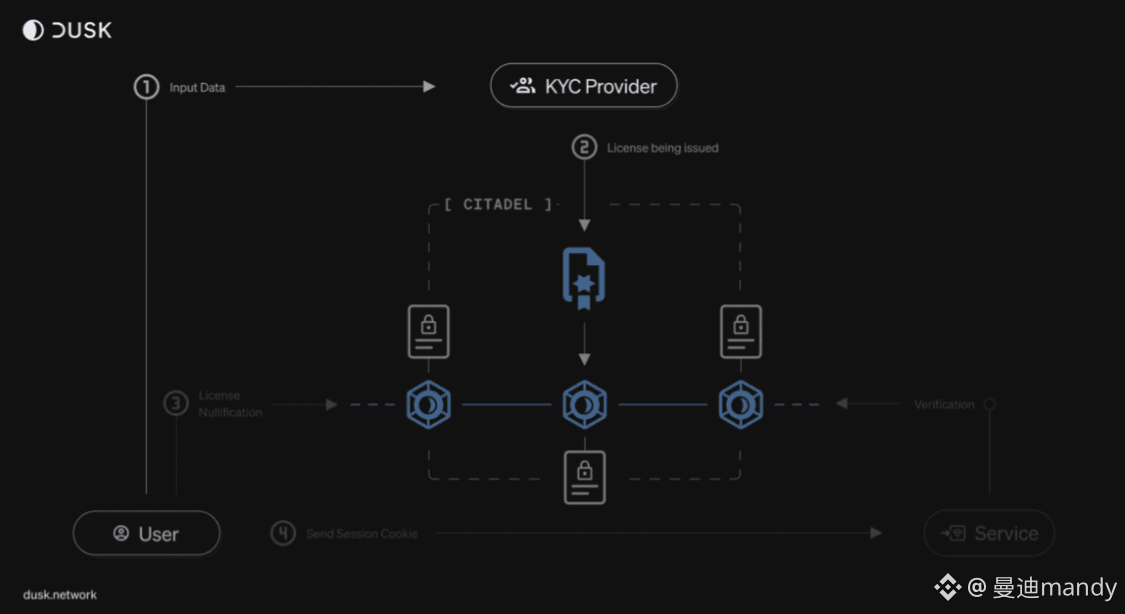
123
·
--
At four o’clock in the afternoon, your brokerage closes for the day—but your money is still pulling late shifts.
Nice big pie too—BTC is holding steady!
Let me tell you something real. Last month I was watching a US stock’s after-hours earnings report. I waited until 10 p.m. for the data to come out, and I wanted to move my position. But the app popped up a notice: “Currently not within trading hours.” I stared at that red alert box for three seconds, then locked my phone and went to sleep—nothing to do with me not wanting to swear; I’ve cursed about it too many times already.
The fact that Nasdaq closes at 4 p.m. is, in 2026, as surreal as banks being closed on Sundays. Think about it: global investors who want to buy or sell shares of a US company have to squeeze their trades into the window from 9:30 p.m. Beijing time to 4:00 a.m. the next day. After 4? Sorry—wait until tomorrow. Institutions have after-hours channels; retail traders don’t. This “scissor gap” isn’t an information gap—it’s the rule itself that’s biased.
So I fully understand why Binance is pushing bStocks. It hands trading power back to you—24 hours, move whenever you want, and settle in a second. But after I tried it, the question that popped into my head was: what about the backend—can it do 7×24 too?
In the traditional clearing process—T+1, manual reconciliation, custodial banks clocking out at five—the frontend runs a marathon, while the backend is still sprint-practicing for the 100 meters. It can’t run far. Putting stocks on-chain has never been some “concept.” What it’s really meant to solve is the full restructuring of the entire settlement system. Trading is settlement; confirmation is finality. That’s the foundation a 24h market should be built on.
That’s what Dusk is doing. Its DuskDS settlement layer provides deterministic finality—there’s no “let’s wait until tomorrow.” Compliance is written directly into the protocol layer, and partnering with Holland’s NPEX effectively moves a regulated market into an on-chain closed-loop. I’ve been following its mainnet progress for a while. Once DuskEVM goes live, developers using Foundry-style tooling can build these applications, and the barrier is much lower than you’d think.
bStocks proves the demand exists. Dusk is fixing the road that can run an all-day, all-night market. One side runs the frontend; the other repairs the backend—and both pieces in the RWA chess game are in place.
Of course, before the mainnet is actually running, all of this is just reasoning. But when it comes to whether the operating hours of traditional brokers should be put in a museum—I can’t find any reason to defend that setup. @Dusk_Foundation $DUSK #dusk
At four o’clock in the afternoon, your brokerage closes for the day—but your money is still pulling late shifts.
Nice big pie too—BTC is holding steady!
Let me tell you something real. Last month I was watching a US stock’s after-hours earnings report. I waited until 10 p.m. for the data to come out, and I wanted to move my position. But the app popped up a notice: “Currently not within trading hours.” I stared at that red alert box for three seconds, then locked my phone and went to sleep—nothing to do with me not wanting to swear; I’ve cursed about it too many times already.
The fact that Nasdaq closes at 4 p.m. is, in 2026, as surreal as banks being closed on Sundays. Think about it: global investors who want to buy or sell shares of a US company have to squeeze their trades into the window from 9:30 p.m. Beijing time to 4:00 a.m. the next day. After 4? Sorry—wait until tomorrow. Institutions have after-hours channels; retail traders don’t. This “scissor gap” isn’t an information gap—it’s the rule itself that’s biased.
So I fully understand why Binance is pushing bStocks. It hands trading power back to you—24 hours, move whenever you want, and settle in a second. But after I tried it, the question that popped into my head was: what about the backend—can it do 7×24 too?
In the traditional clearing process—T+1, manual reconciliation, custodial banks clocking out at five—the frontend runs a marathon, while the backend is still sprint-practicing for the 100 meters. It can’t run far. Putting stocks on-chain has never been some “concept.” What it’s really meant to solve is the full restructuring of the entire settlement system. Trading is settlement; confirmation is finality. That’s the foundation a 24h market should be built on.
That’s what Dusk is doing. Its DuskDS settlement layer provides deterministic finality—there’s no “let’s wait until tomorrow.” Compliance is written directly into the protocol layer, and partnering with Holland’s NPEX effectively moves a regulated market into an on-chain closed-loop. I’ve been following its mainnet progress for a while. Once DuskEVM goes live, developers using Foundry-style tooling can build these applications, and the barrier is much lower than you’d think.
bStocks proves the demand exists. Dusk is fixing the road that can run an all-day, all-night market. One side runs the frontend; the other repairs the backend—and both pieces in the RWA chess game are in place.
Of course, before the mainnet is actually running, all of this is just reasoning. But when it comes to whether the operating hours of traditional brokers should be put in a museum—I can’t find any reason to defend that setup. @Dusk $DUSK #dusk
Nice big pie too—BTC is holding steady!
Let me tell you something real. Last month I was watching a US stock’s after-hours earnings report. I waited until 10 p.m. for the data to come out, and I wanted to move my position. But the app popped up a notice: “Currently not within trading hours.” I stared at that red alert box for three seconds, then locked my phone and went to sleep—nothing to do with me not wanting to swear; I’ve cursed about it too many times already.
The fact that Nasdaq closes at 4 p.m. is, in 2026, as surreal as banks being closed on Sundays. Think about it: global investors who want to buy or sell shares of a US company have to squeeze their trades into the window from 9:30 p.m. Beijing time to 4:00 a.m. the next day. After 4? Sorry—wait until tomorrow. Institutions have after-hours channels; retail traders don’t. This “scissor gap” isn’t an information gap—it’s the rule itself that’s biased.
So I fully understand why Binance is pushing bStocks. It hands trading power back to you—24 hours, move whenever you want, and settle in a second. But after I tried it, the question that popped into my head was: what about the backend—can it do 7×24 too?
In the traditional clearing process—T+1, manual reconciliation, custodial banks clocking out at five—the frontend runs a marathon, while the backend is still sprint-practicing for the 100 meters. It can’t run far. Putting stocks on-chain has never been some “concept.” What it’s really meant to solve is the full restructuring of the entire settlement system. Trading is settlement; confirmation is finality. That’s the foundation a 24h market should be built on.
That’s what Dusk is doing. Its DuskDS settlement layer provides deterministic finality—there’s no “let’s wait until tomorrow.” Compliance is written directly into the protocol layer, and partnering with Holland’s NPEX effectively moves a regulated market into an on-chain closed-loop. I’ve been following its mainnet progress for a while. Once DuskEVM goes live, developers using Foundry-style tooling can build these applications, and the barrier is much lower than you’d think.
bStocks proves the demand exists. Dusk is fixing the road that can run an all-day, all-night market. One side runs the frontend; the other repairs the backend—and both pieces in the RWA chess game are in place.
Of course, before the mainnet is actually running, all of this is just reasoning. But when it comes to whether the operating hours of traditional brokers should be put in a museum—I can’t find any reason to defend that setup. @Dusk $DUSK #dusk
119
·
--
Don’t just focus on “privacy.” Dusk’s real hard move is in the “lifecycle” of on-chain assets.
The bull market is still running—BTC still has a shot!
When everyone talks about @Dusk, nine times out of ten they’re arguing about whether the Phoenix privacy model is truly private, or marveling at how fast PLONK proofs are. But after reading through the whole architecture, the most intuitive takeaway I have is this: people are putting their effort in the wrong place.
Financial institutions don’t hesitate to move RWA into Web3 for no reason—not just because they fear disclosing their holdings. The real deal-breaker is that the dynamic rules of traditional financial assets—from issuance, coupon payments, and dividends, to settlement and recourse—have nowhere to fit in on a public blockchain.
DuskDS’s “public + privacy” dual-transfer system is undoubtedly technically elegant. But its most hardcore part is that it tries to standardize the asset’s “entire lifecycle” with smart contracts. For example, when distributing equity dividends, you need to verify shareholders’ identities through compliance checks, while not exposing the entire holdings ledger to everyone on the network. And if a legal dispute requires a judicial freeze, the chain must have clear rules for how to respond—not rely on a verbal vote by decentralized nodes.
That said, no matter how beautiful the mechanism is, deployment is the tough part.
If the final control of asset issuance is still tightly held by a handful of traditional intermediaries, then this on-chain infrastructure—let’s be blunt—would just become a more advanced back-end database. Users come to use it for settlement efficiency and self-custodied asset ownership, not to move somewhere else and keep looking at intermediaries’ faces.
Once the mainnet asset scale of $DUSK truly starts running, I don’t really care how many more non-disclosure or reconciliation memos get signed. I only want to lock in three concrete, real data points: the actual on-chain dividend payment frequency of RWA assets, the average response time of smart contracts in handling disputes, and the real share of earnings that ordinary nodes capture in the validation network.
No matter how loud the technical branding sounds, if you don’t run it through real, hands-on financial scenarios with real stakes, it’s ultimately just a mirage on a whitepaper. What do you think? @Dusk_Foundation $DUSK #dusk
Don’t just focus on “privacy.” Dusk’s real hard move is in the “lifecycle” of on-chain assets.
The bull market is still running—BTC still has a shot!
When everyone talks about @Dusk, nine times out of ten they’re arguing about whether the Phoenix privacy model is truly private, or marveling at how fast PLONK proofs are. But after reading through the whole architecture, the most intuitive takeaway I have is this: people are putting their effort in the wrong place.
Financial institutions don’t hesitate to move RWA into Web3 for no reason—not just because they fear disclosing their holdings. The real deal-breaker is that the dynamic rules of traditional financial assets—from issuance, coupon payments, and dividends, to settlement and recourse—have nowhere to fit in on a public blockchain.
DuskDS’s “public + privacy” dual-transfer system is undoubtedly technically elegant. But its most hardcore part is that it tries to standardize the asset’s “entire lifecycle” with smart contracts. For example, when distributing equity dividends, you need to verify shareholders’ identities through compliance checks, while not exposing the entire holdings ledger to everyone on the network. And if a legal dispute requires a judicial freeze, the chain must have clear rules for how to respond—not rely on a verbal vote by decentralized nodes.
That said, no matter how beautiful the mechanism is, deployment is the tough part.
If the final control of asset issuance is still tightly held by a handful of traditional intermediaries, then this on-chain infrastructure—let’s be blunt—would just become a more advanced back-end database. Users come to use it for settlement efficiency and self-custodied asset ownership, not to move somewhere else and keep looking at intermediaries’ faces.
Once the mainnet asset scale of $DUSK truly starts running, I don’t really care how many more non-disclosure or reconciliation memos get signed. I only want to lock in three concrete, real data points: the actual on-chain dividend payment frequency of RWA assets, the average response time of smart contracts in handling disputes, and the real share of earnings that ordinary nodes capture in the validation network.
No matter how loud the technical branding sounds, if you don’t run it through real, hands-on financial scenarios with real stakes, it’s ultimately just a mirage on a whitepaper. What do you think? @Dusk $DUSK #dusk
The bull market is still running—BTC still has a shot!
When everyone talks about @Dusk, nine times out of ten they’re arguing about whether the Phoenix privacy model is truly private, or marveling at how fast PLONK proofs are. But after reading through the whole architecture, the most intuitive takeaway I have is this: people are putting their effort in the wrong place.
Financial institutions don’t hesitate to move RWA into Web3 for no reason—not just because they fear disclosing their holdings. The real deal-breaker is that the dynamic rules of traditional financial assets—from issuance, coupon payments, and dividends, to settlement and recourse—have nowhere to fit in on a public blockchain.
DuskDS’s “public + privacy” dual-transfer system is undoubtedly technically elegant. But its most hardcore part is that it tries to standardize the asset’s “entire lifecycle” with smart contracts. For example, when distributing equity dividends, you need to verify shareholders’ identities through compliance checks, while not exposing the entire holdings ledger to everyone on the network. And if a legal dispute requires a judicial freeze, the chain must have clear rules for how to respond—not rely on a verbal vote by decentralized nodes.
That said, no matter how beautiful the mechanism is, deployment is the tough part.
If the final control of asset issuance is still tightly held by a handful of traditional intermediaries, then this on-chain infrastructure—let’s be blunt—would just become a more advanced back-end database. Users come to use it for settlement efficiency and self-custodied asset ownership, not to move somewhere else and keep looking at intermediaries’ faces.
Once the mainnet asset scale of $DUSK truly starts running, I don’t really care how many more non-disclosure or reconciliation memos get signed. I only want to lock in three concrete, real data points: the actual on-chain dividend payment frequency of RWA assets, the average response time of smart contracts in handling disputes, and the real share of earnings that ordinary nodes capture in the validation network.
No matter how loud the technical branding sounds, if you don’t run it through real, hands-on financial scenarios with real stakes, it’s ultimately just a mirage on a whitepaper. What do you think? @Dusk $DUSK #dusk
172
·
--
Thought you could hide positions and still be compliant? Dusk still missed a step in the institutional RWA settlement flow
Recently, I chatted with a few European market-making friends about tokenizing institutional assets (RWA), and I noticed that whenever people discuss $DUSK , their focus is often on the wrong things.
The big pie is up—BTC is amazing!
The market tends to categorize Dusk as a “compliance-enabled ZK privacy L1.” But for traditional broker-dealers who genuinely want to move real-world stocks or bonds on-chain, hiding the custody addresses and trade amounts is important—yet if on-chain settlement and MEV mitigation aren’t handled, those privacy mechanisms can instead become a liquidity nightmare.
On a standard EVM chain, what makes institutions most headache-inducing is the exposure of trading intent, which leads to on-chain sniping (front-running). Imagine a financial institution preparing to issue a €50 million corporate bond on Dusk via XSC, while needing to process on-chain dividends and dynamic redemptions frequently. Given that details on both sides of the trade are hidden by ZK, how do validating nodes (Nodes) ensure that high-frequency settlement state changes can’t be seized via micro-timing differences at the sequencer layer—without decrypting the ciphertext?
In Dusk’s whitepaper, it emphasizes that the Piecrust virtual machine and SCA consensus can achieve second-level deterministic title/claims. But real-world scenarios are far more complex than running around in a sandbox. With Europe’s MiCA regulations coming into full effect, regulators’ requirements for on-chain settlement finality are extremely strict. When multiple institutional investors simultaneously trigger complex confidential smart contracts, the computational overhead introduced by zero-knowledge proofs may cause the latency of state transitions to increase in a non-linear way. That “settlement jitter” nuance hidden behind privacy is, in practice, far more critical than simply debating how brilliant the algorithm is.
On-chain privacy has never been the real gate for financial institutions to deploy. The real question is how to protect business secrets while ensuring smooth, large-value settlement with zero MEV cost. If XSC can’t make this mechanism work in real high-frequency, large-value settlement scenarios, then $DUSK is still a considerable distance away from bringing real European institutional capital on-chain. @Dusk_Foundation #dusk
Thought you could hide positions and still be compliant? Dusk still missed a step in the institutional RWA settlement flow
Recently, I chatted with a few European market-making friends about tokenizing institutional assets (RWA), and I noticed that whenever people discuss $DUSK , their focus is often on the wrong things.
The big pie is up—BTC is amazing!
The market tends to categorize Dusk as a “compliance-enabled ZK privacy L1.” But for traditional broker-dealers who genuinely want to move real-world stocks or bonds on-chain, hiding the custody addresses and trade amounts is important—yet if on-chain settlement and MEV mitigation aren’t handled, those privacy mechanisms can instead become a liquidity nightmare.
On a standard EVM chain, what makes institutions most headache-inducing is the exposure of trading intent, which leads to on-chain sniping (front-running). Imagine a financial institution preparing to issue a €50 million corporate bond on Dusk via XSC, while needing to process on-chain dividends and dynamic redemptions frequently. Given that details on both sides of the trade are hidden by ZK, how do validating nodes (Nodes) ensure that high-frequency settlement state changes can’t be seized via micro-timing differences at the sequencer layer—without decrypting the ciphertext?
In Dusk’s whitepaper, it emphasizes that the Piecrust virtual machine and SCA consensus can achieve second-level deterministic title/claims. But real-world scenarios are far more complex than running around in a sandbox. With Europe’s MiCA regulations coming into full effect, regulators’ requirements for on-chain settlement finality are extremely strict. When multiple institutional investors simultaneously trigger complex confidential smart contracts, the computational overhead introduced by zero-knowledge proofs may cause the latency of state transitions to increase in a non-linear way. That “settlement jitter” nuance hidden behind privacy is, in practice, far more critical than simply debating how brilliant the algorithm is.
On-chain privacy has never been the real gate for financial institutions to deploy. The real question is how to protect business secrets while ensuring smooth, large-value settlement with zero MEV cost. If XSC can’t make this mechanism work in real high-frequency, large-value settlement scenarios, then $DUSK is still a considerable distance away from bringing real European institutional capital on-chain. @Dusk #dusk
Recently, I chatted with a few European market-making friends about tokenizing institutional assets (RWA), and I noticed that whenever people discuss $DUSK , their focus is often on the wrong things.
The big pie is up—BTC is amazing!
The market tends to categorize Dusk as a “compliance-enabled ZK privacy L1.” But for traditional broker-dealers who genuinely want to move real-world stocks or bonds on-chain, hiding the custody addresses and trade amounts is important—yet if on-chain settlement and MEV mitigation aren’t handled, those privacy mechanisms can instead become a liquidity nightmare.
On a standard EVM chain, what makes institutions most headache-inducing is the exposure of trading intent, which leads to on-chain sniping (front-running). Imagine a financial institution preparing to issue a €50 million corporate bond on Dusk via XSC, while needing to process on-chain dividends and dynamic redemptions frequently. Given that details on both sides of the trade are hidden by ZK, how do validating nodes (Nodes) ensure that high-frequency settlement state changes can’t be seized via micro-timing differences at the sequencer layer—without decrypting the ciphertext?
In Dusk’s whitepaper, it emphasizes that the Piecrust virtual machine and SCA consensus can achieve second-level deterministic title/claims. But real-world scenarios are far more complex than running around in a sandbox. With Europe’s MiCA regulations coming into full effect, regulators’ requirements for on-chain settlement finality are extremely strict. When multiple institutional investors simultaneously trigger complex confidential smart contracts, the computational overhead introduced by zero-knowledge proofs may cause the latency of state transitions to increase in a non-linear way. That “settlement jitter” nuance hidden behind privacy is, in practice, far more critical than simply debating how brilliant the algorithm is.
On-chain privacy has never been the real gate for financial institutions to deploy. The real question is how to protect business secrets while ensuring smooth, large-value settlement with zero MEV cost. If XSC can’t make this mechanism work in real high-frequency, large-value settlement scenarios, then $DUSK is still a considerable distance away from bringing real European institutional capital on-chain. @Dusk #dusk
171
·
--
Intel’s Investment Thesis: Why I’m Favoring It NowRecently, I’ve refocused my attention on Intel $INTC . This company—once judged by the market as a “lagging giant”—is going through a solid phase of turnaround, rather than just being driven by narrative hype. I’m optimistic about its core strengths, which lie in the predictability of process yield, the re-rating potential of its foundry business, and the tailwind from the semiconductor shortage cycle for a company playing catch-up.
Let’s start with a valuation breakdown. Intel can be simply split into two parts: the CPU business and Foundry (the foundry/contract manufacturing) business. Suppose next year’s CPU revenue reaches $15–20 billion; that would correspond to an implied valuation of roughly $300–400 billion—which is already not low. The real upside lies in the fabs: the book value is about $100 billion, and the market currently offers virtually no premium. In the future, it could provide an imagination/valuation multiple range of 0–6x. The key is yield. For advanced process technology, the internal yield is currently around 80%, while the external yield is about 60%. Each month it continues to improve steadily at a pace of 1–2%. Yield improvement is a one-way process. There may be fluctuations along the way, but time is on the side of the bulls.
Intel’s Investment Thesis: Why I’m Favoring It Now
Recently, I’ve refocused my attention on Intel $INTC . This company—once judged by the market as a “lagging giant”—is going through a solid phase of turnaround, rather than just being driven by narrative hype. I’m optimistic about its core strengths, which lie in the predictability of process yield, the re-rating potential of its foundry business, and the tailwind from the semiconductor shortage cycle for a company playing catch-up.
Let’s start with a valuation breakdown. Intel can be simply split into two parts: the CPU business and Foundry (the foundry/contract manufacturing) business. Suppose next year’s CPU revenue reaches $15–20 billion; that would correspond to an implied valuation of roughly $300–400 billion—which is already not low. The real upside lies in the fabs: the book value is about $100 billion, and the market currently offers virtually no premium. In the future, it could provide an imagination/valuation multiple range of 0–6x. The key is yield. For advanced process technology, the internal yield is currently around 80%, while the external yield is about 60%. Each month it continues to improve steadily at a pace of 1–2%. Yield improvement is a one-way process. There may be fluctuations along the way, but time is on the side of the bulls.
Let’s start with a valuation breakdown. Intel can be simply split into two parts: the CPU business and Foundry (the foundry/contract manufacturing) business. Suppose next year’s CPU revenue reaches $15–20 billion; that would correspond to an implied valuation of roughly $300–400 billion—which is already not low. The real upside lies in the fabs: the book value is about $100 billion, and the market currently offers virtually no premium. In the future, it could provide an imagination/valuation multiple range of 0–6x. The key is yield. For advanced process technology, the internal yield is currently around 80%, while the external yield is about 60%. Each month it continues to improve steadily at a pace of 1–2%. Yield improvement is a one-way process. There may be fluctuations along the way, but time is on the side of the bulls.
145
Log in to explore more content
Join global crypto users on Binance Square
⚡️ Get latest and useful information about crypto.
💬 Trusted by the world’s largest crypto exchange.
👍 Discover real insights from verified creators.
Email / Phone number