Fighting with Monero—what counts as the real “coming-of-age” for the privacy track is learning how to open the door
That big slice is still at 63,000; BTC just won’t go up!
Let me tell you the truth: a few years ago, I was also a “privacy fundamentalist.” Watching Monero’s ring-signature setup—the way it makes the sender, recipient, and amount of a transaction get thoroughly tangled with everyone else’s UTXOs, like dumping everything into a blender—really made my scalp tingle. Back then, I genuinely thought: this is hardcore, pure, and it has “anti-censorship” written into its DNA.
But then I got fixated on doing something legitimate with a privacy chain, and I hit a wall—hard. The early Monero/Zcash style of “play,” put simply, was building a tiny dark room out of your own door and windows, with not even a crack left. Privacy was maxed out—you couldn’t see anything—but the problem was there was no daylight in the room, no gas either; when the property manager came, they couldn’t get the door open. You want to raise funding, pass audits, and list on an exchange? Mainstream institutions look at “un-auditable” anonymous assets and turn you away immediately.
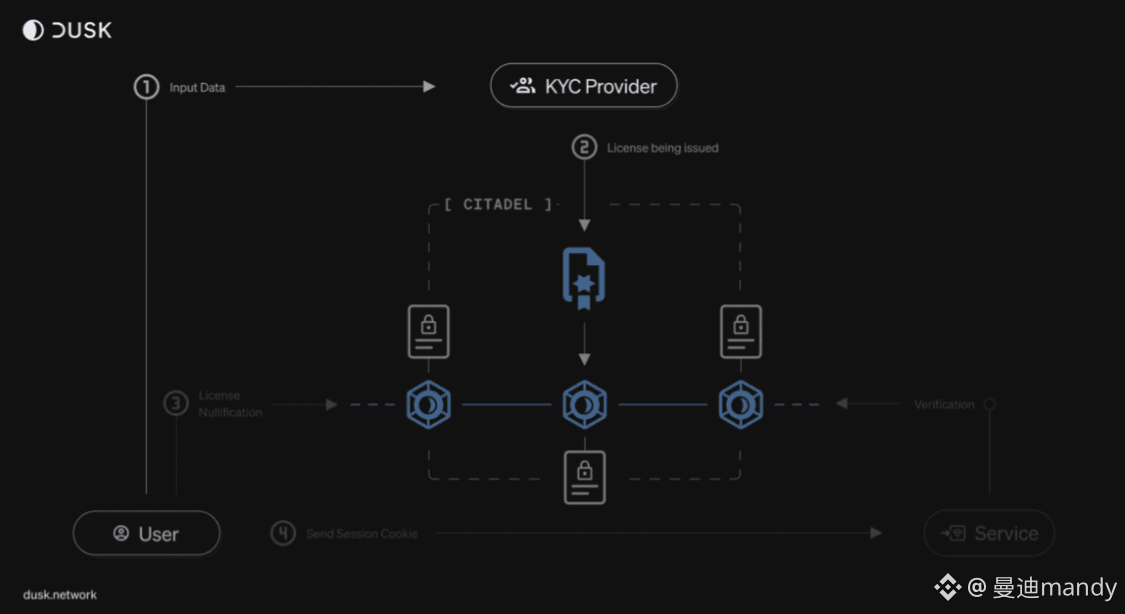
That’s also why I later took a fresh look at @Dusk. These folks are pretty crafty: they don’t brick up the walls anymore—they turn them into “smart curtains.” Day to day, the Phoenix model draws the curtains, and zero-knowledge proofs tightly conceal the transactions; but if regulators or auditors need something, the “keys” from the Moonlight model can lift a corner to prove everything is clean—so much so that even counterparties can verify the source by checking the keys. This is completely different from Zcash’s either/or choice of “either transparent and exposed, or completely invisible.”
Of course, I also have my doubts. If those keys are held by regulators, how far can that really pull us away from the traditional finance world’s KYC? Don’t end up merely swapping the brand of “anonymous coins” and calling them “verifiable coins,” losing freedom while not actually saving that much compliance trouble. But then again, what institutions want isn’t “absolute freedom.” They want “to prove their innocence in front of regulators while still hiding trade secrets.” Dusk at least understands that need.
I agree with the direction, but I’m still holding my position and not daring to fully commit. DYOR. Everyone, what do you think matters more for privacy: “nobody can check it,” or “only the people who should be able to see it can see it?” @Dusk $DUSK #dusk
That big slice is still at 63,000; BTC just won’t go up!
Let me tell you the truth: a few years ago, I was also a “privacy fundamentalist.” Watching Monero’s ring-signature setup—the way it makes the sender, recipient, and amount of a transaction get thoroughly tangled with everyone else’s UTXOs, like dumping everything into a blender—really made my scalp tingle. Back then, I genuinely thought: this is hardcore, pure, and it has “anti-censorship” written into its DNA.
But then I got fixated on doing something legitimate with a privacy chain, and I hit a wall—hard. The early Monero/Zcash style of “play,” put simply, was building a tiny dark room out of your own door and windows, with not even a crack left. Privacy was maxed out—you couldn’t see anything—but the problem was there was no daylight in the room, no gas either; when the property manager came, they couldn’t get the door open. You want to raise funding, pass audits, and list on an exchange? Mainstream institutions look at “un-auditable” anonymous assets and turn you away immediately.
That’s also why I later took a fresh look at @Dusk. These folks are pretty crafty: they don’t brick up the walls anymore—they turn them into “smart curtains.” Day to day, the Phoenix model draws the curtains, and zero-knowledge proofs tightly conceal the transactions; but if regulators or auditors need something, the “keys” from the Moonlight model can lift a corner to prove everything is clean—so much so that even counterparties can verify the source by checking the keys. This is completely different from Zcash’s either/or choice of “either transparent and exposed, or completely invisible.”
Of course, I also have my doubts. If those keys are held by regulators, how far can that really pull us away from the traditional finance world’s KYC? Don’t end up merely swapping the brand of “anonymous coins” and calling them “verifiable coins,” losing freedom while not actually saving that much compliance trouble. But then again, what institutions want isn’t “absolute freedom.” They want “to prove their innocence in front of regulators while still hiding trade secrets.” Dusk at least understands that need.
I agree with the direction, but I’m still holding my position and not daring to fully commit. DYOR. Everyone, what do you think matters more for privacy: “nobody can check it,” or “only the people who should be able to see it can see it?” @Dusk $DUSK #dusk