
老王玩币
228 Posts

老王玩币
Report
Block User
19 Following
18 Followers
7 Liked
Posts
·
--
I’ve always thought the scariest thing about a smart contract isn’t crashing—it’s pretending everything’s fine. Solidity released 0.8.39 today, fixing a medium-severity vulnerability. After reading the notes, I got a chill down my spine: multiple 0.8 versions are affected. The bug is triggered when a recursive struct in storage is copied into its own enclosing parent struct. Overlapping data can be silently overwritten. The key thing is, there’s no error and no rollback—the transaction succeeds as usual, your storage has been altered, and you have no idea. The fix adds a runtime check for overlapping data, at the cost of slightly higher gas for this kind of operation. The team scanned major verified contracts and hasn’t found any affected contracts on-chain so far. What I really want to say is, bugs that revert on the spot are the merciful ones. The most insidious bugs are the ones that execute successfully: the logs look clean, and an audit might not catch them either. You only realize something’s been tampered with when the foundations start to crumble and the books no longer add up. A little extra gas is no big deal; it’s the invisible errors that are truly deadly. Don’t breathe easy just because no affected contracts have been found yet. That’s more likely a sign that the search hasn’t gone deep enough—not that there aren’t any.#智能合约安全 #Solidity #Web3 $ETH $BTC
I’ve always thought the scariest thing about a smart contract isn’t crashing—it’s pretending everything’s fine. Solidity released 0.8.39 today, fixing a medium-severity vulnerability. After reading the notes, I got a chill down my spine: multiple 0.8 versions are affected. The bug is triggered when a recursive struct in storage is copied into its own enclosing parent struct. Overlapping data can be silently overwritten. The key thing is, there’s no error and no rollback—the transaction succeeds as usual, your storage has been altered, and you have no idea. The fix adds a runtime check for overlapping data, at the cost of slightly higher gas for this kind of operation. The team scanned major verified contracts and hasn’t found any affected contracts on-chain so far. What I really want to say is, bugs that revert on the spot are the merciful ones. The most insidious bugs are the ones that execute successfully: the logs look clean, and an audit might not catch them either. You only realize something’s been tampered with when the foundations start to crumble and the books no longer add up. A little extra gas is no big deal; it’s the invisible errors that are truly deadly. Don’t breathe easy just because no affected contracts have been found yet. That’s more likely a sign that the search hasn’t gone deep enough—not that there aren’t any.#智能合约安全 #Solidity #Web3 $ETH $BTC
2
·
--
I've always felt there was something off about “earning yield by staking Bitcoin”: you lock up your principal for an annual yield of just 0.03% to 0.5%, yet you're asked to hand over control of your private keys. Today, Babylon co-founder Fisher Yu personally proposed ending BTC staking by the end of 2026 and putting all resources into non-custodial Bitcoin vaults (TBVs)—essentially admitting that this path isn't working. Even more telling is that of the 41,600 BTC, worth nearly $2.6 billion, around 80% was delegated to two service providers operated by Kraken. They talk about decentralization, but in the end, the funds are sitting in two centralized pockets. And exiting isn't straightforward: you either need committee approval and wait 2 to 7 days, or sit through a lockup period of up to 15 months. What I see isn't a product-line adjustment, but the first time insiders themselves have put a question mark over the narrative of “earning yield on Bitcoin”: the real problem is that they can't even retain a 0.5% annual yield.
#比特币 #Web3 #加密质押 $BTC $AAVE
I've always felt there was something off about “earning yield by staking Bitcoin”: you lock up your principal for an annual yield of just 0.03% to 0.5%, yet you're asked to hand over control of your private keys. Today, Babylon co-founder Fisher Yu personally proposed ending BTC staking by the end of 2026 and putting all resources into non-custodial Bitcoin vaults (TBVs)—essentially admitting that this path isn't working. Even more telling is that of the 41,600 BTC, worth nearly $2.6 billion, around 80% was delegated to two service providers operated by Kraken. They talk about decentralization, but in the end, the funds are sitting in two centralized pockets. And exiting isn't straightforward: you either need committee approval and wait 2 to 7 days, or sit through a lockup period of up to 15 months. What I see isn't a product-line adjustment, but the first time insiders themselves have put a question mark over the narrative of “earning yield on Bitcoin”: the real problem is that they can't even retain a 0.5% annual yield.
#比特币 #Web3 #加密质押 $BTC $AAVE
#比特币 #Web3 #加密质押 $BTC $AAVE
34
·
--
I used to think max pain for options was a price prediction, but the numbers on this screen today shattered that idea: $2.47 billion worth of BTC and ETH options expire today at 16:00. BTC max pain is $70,000, while the current price is only $62,400—a 12% gap. The put/call ratio is just 0.61, with bullish calls stacked at $73,000 to $76,000, yet the price can’t even hold above $63,000. My view now is that max pain isn’t the market makers’ target price; it’s a magnet—if the price can reach it, it gets pulled in, and if it can’t, the magnet won’t budge it. What expiration day really liquidates is leverage that can’t hang on until its bets pay off. ETH is the opposite: a put/call ratio of 1.23, max pain at $1,950, and a current price of $1,764—neither bulls nor bears have gained the upper hand. Don’t treat max pain as a buy-the-dip level; first figure out who will be forced out on expiration day.#比特币 #以太坊 #期权交割 $BTC $ETH
I used to think max pain for options was a price prediction, but the numbers on this screen today shattered that idea: $2.47 billion worth of BTC and ETH options expire today at 16:00. BTC max pain is $70,000, while the current price is only $62,400—a 12% gap. The put/call ratio is just 0.61, with bullish calls stacked at $73,000 to $76,000, yet the price can’t even hold above $63,000. My view now is that max pain isn’t the market makers’ target price; it’s a magnet—if the price can reach it, it gets pulled in, and if it can’t, the magnet won’t budge it. What expiration day really liquidates is leverage that can’t hang on until its bets pay off. ETH is the opposite: a put/call ratio of 1.23, max pain at $1,950, and a current price of $1,764—neither bulls nor bears have gained the upper hand. Don’t treat max pain as a buy-the-dip level; first figure out who will be forced out on expiration day.#比特币 #以太坊 #期权交割 $BTC $ETH
59
·
--
See translation
我一直拿“数字黄金”四个字给比特币壮胆,今天这剧本演不下去了。真正的黄金先崩:现货金跌破3600美元,较年初5596的高点回撤近2000,年内跌16%,本周连跌4天。同一晚BTC跌破6.2万创9月新低,美股三大指数齐跌超2%,白银跌近5%,恐慌指数冲到28.75。这不是谁的单独利空,是所有能卖的东西一起被卖,换的是美元。原因很直白:12月加息25个基点的概率已经96.4%,美元逼近104,实际利率压着一切不生息的资产。更扎心的是,当抛售由通胀和加息引起,黄金的避险功能就是失效的——那靠“数字黄金”叙事撑着的BTC,凭什么独善其身?别再拿避险当抄底理由,现金为王的时候,先活下来再说。#黄金 #比特币 #市场观察 $BTC $ETH
我一直拿“数字黄金”四个字给比特币壮胆,今天这剧本演不下去了。真正的黄金先崩:现货金跌破3600美元,较年初5596的高点回撤近2000,年内跌16%,本周连跌4天。同一晚BTC跌破6.2万创9月新低,美股三大指数齐跌超2%,白银跌近5%,恐慌指数冲到28.75。这不是谁的单独利空,是所有能卖的东西一起被卖,换的是美元。原因很直白:12月加息25个基点的概率已经96.4%,美元逼近104,实际利率压着一切不生息的资产。更扎心的是,当抛售由通胀和加息引起,黄金的避险功能就是失效的——那靠“数字黄金”叙事撑着的BTC,凭什么独善其身?别再拿避险当抄底理由,现金为王的时候,先活下来再说。#黄金 #比特币 #市场观察 $BTC $ETH
·
--
Article
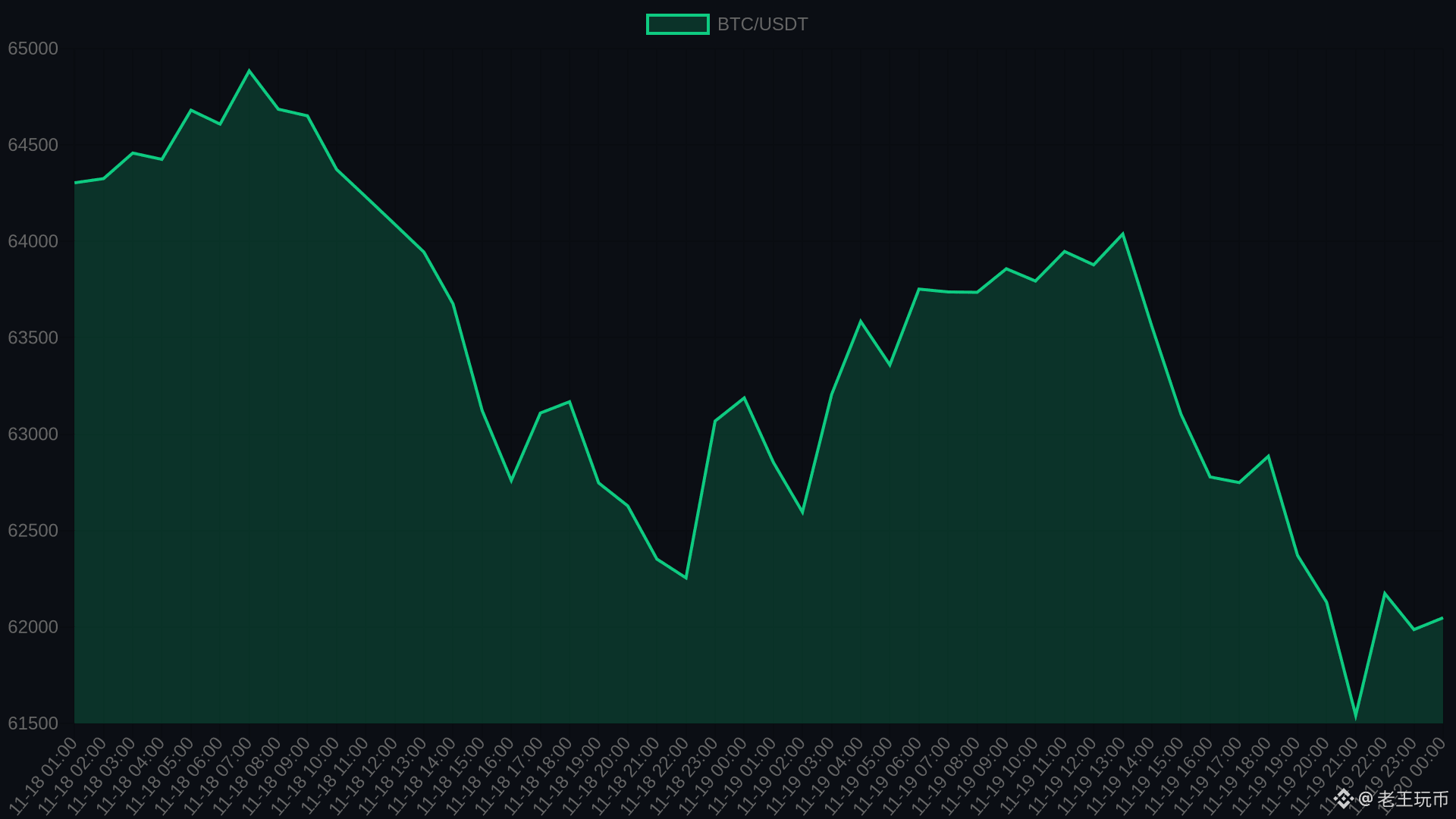
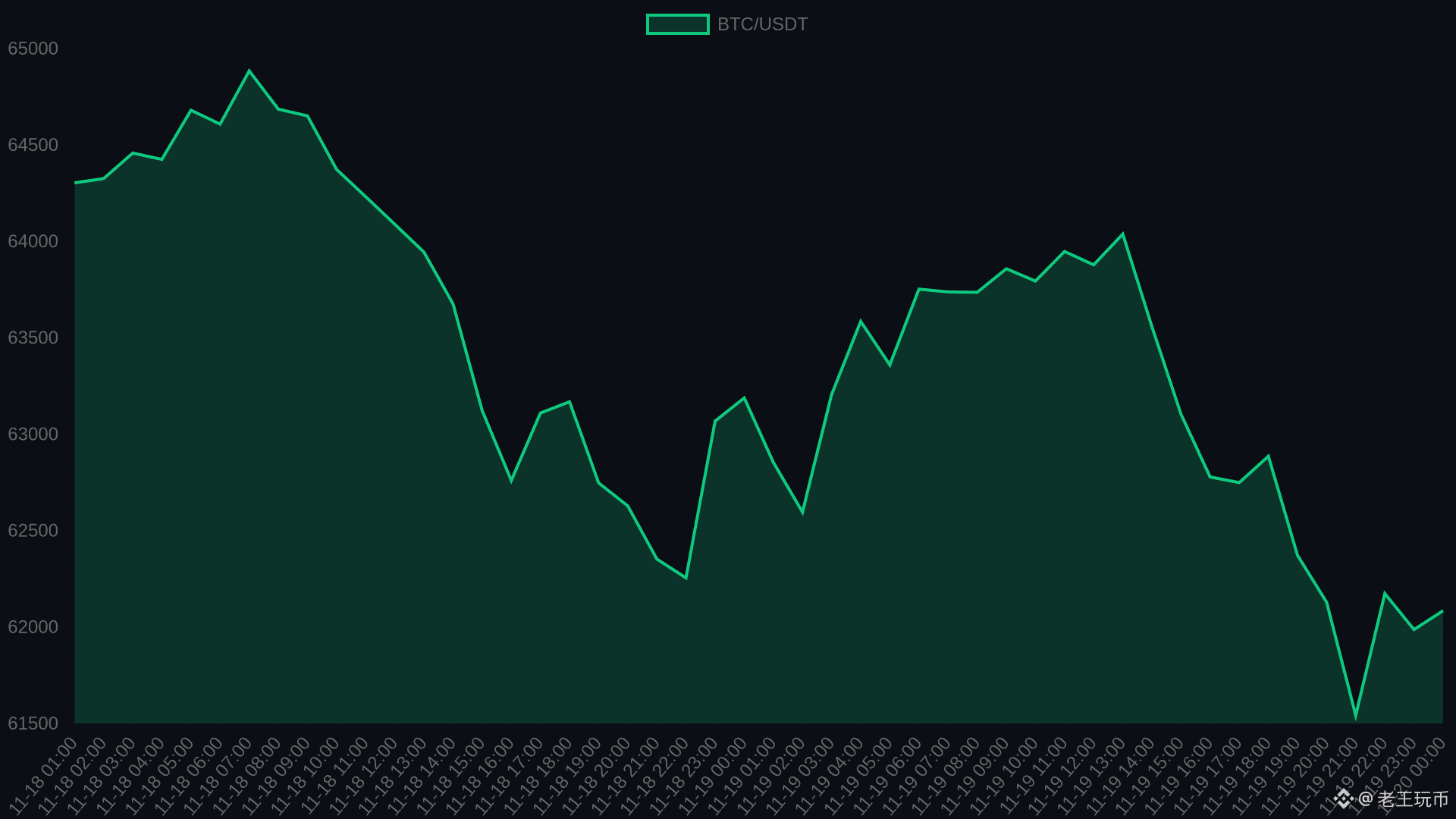
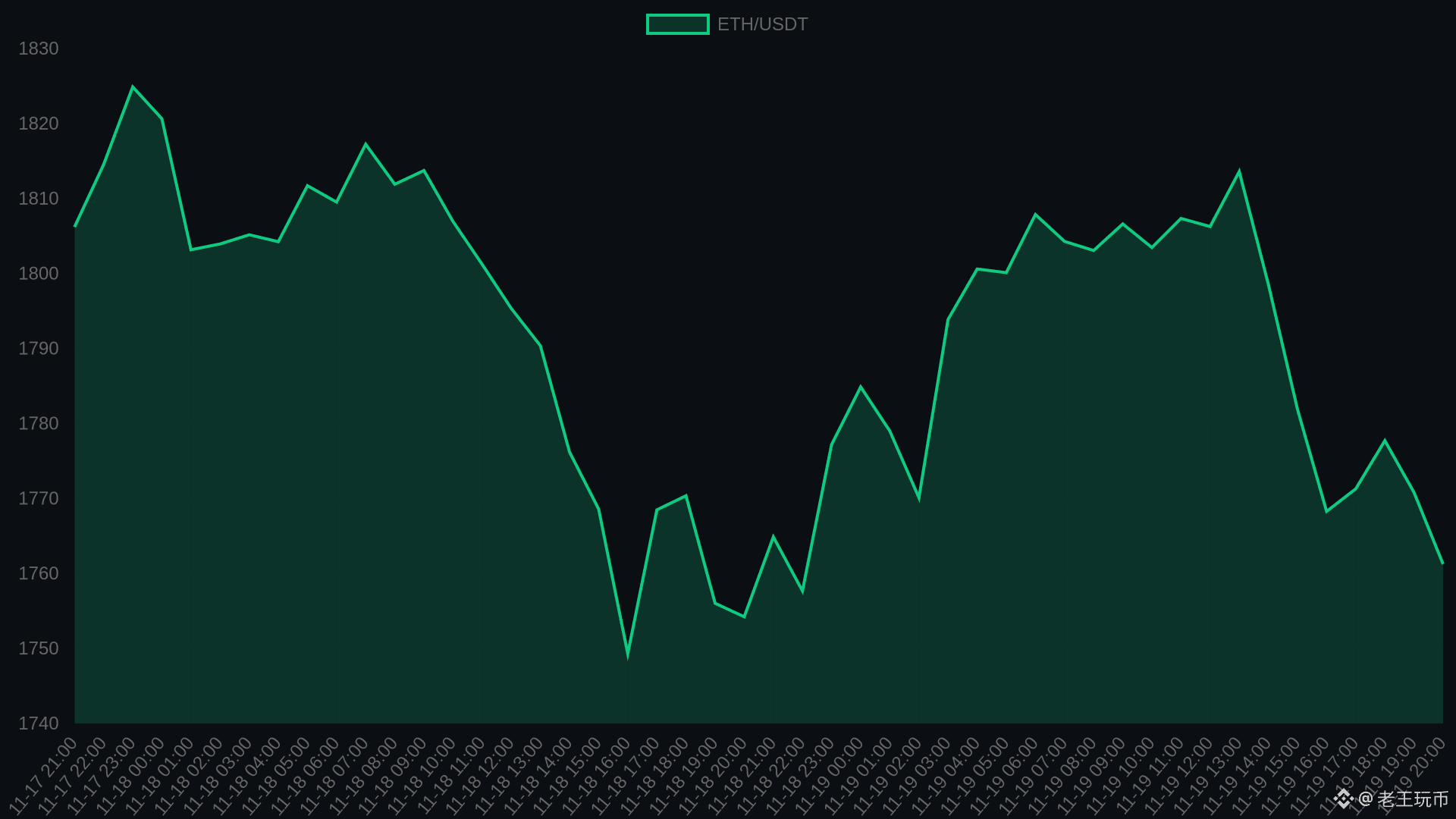
Prices down 1.4%, sentiment sinks to 12: Bitcoin at $62,000—why I say this isn’t the bottom yetFirst, the bottom line: As of 08:01 Beijing time on November 20 (Binance spot data), Bitcoin was at $62,049.5, down 1.41% over 24 hours, after fluctuating between $61,428 and $64,081 during the day. Ethereum was at $1,761.04, down 0.82%; BNB was at $581.25, virtually unchanged; SOL was at $73.24, down 0.27%; and XRP was at $0.9623, down 0.44%. The total crypto market cap was about $2.1 trillion (CoinLore reported $2.12 trillion and CoinPaprika $2.22 trillion, reflecting slightly different methodologies). It fell by around 1.3% to 2.2% over 24 hours, with trading volume at about $120 billion. The Fear and Greed Index came in at 12 today, up from 10 yesterday. It has stayed between 10 and 13 over the past week, marking a full week of extreme fear. Prices have only seen a modest pullback, yet sentiment feels like we've been through a crash—that's the core contradiction today.
Prices down 1.4%, sentiment sinks to 12: Bitcoin at $62,000—why I say this isn’t the bottom yet
First, the bottom line: As of 08:01 Beijing time on November 20 (Binance spot data), Bitcoin was at $62,049.5, down 1.41% over 24 hours, after fluctuating between $61,428 and $64,081 during the day. Ethereum was at $1,761.04, down 0.82%; BNB was at $581.25, virtually unchanged; SOL was at $73.24, down 0.27%; and XRP was at $0.9623, down 0.44%. The total crypto market cap was about $2.1 trillion (CoinLore reported $2.12 trillion and CoinPaprika $2.22 trillion, reflecting slightly different methodologies). It fell by around 1.3% to 2.2% over 24 hours, with trading volume at about $120 billion. The Fear and Greed Index came in at 12 today, up from 10 yesterday. It has stayed between 10 and 13 over the past week, marking a full week of extreme fear. Prices have only seen a modest pullback, yet sentiment feels like we've been through a crash—that's the core contradiction today.
77
·
--
I’ve recently changed one habit: I don’t look at the candlestick chart first—I check the pool.
Stablecoins are the crypto market’s deposits: liquid cash that can enter the market and absorb selling at any time. Over the past 30 days, $16.5 billion has drained out of them. Their total market cap has shrunk to $283 billion, down more than 5%—the biggest monthly outflow since the 2022 bear market. USDT is down 4.3%, and USDC is down 5%. Together, they make up 86% of the entire market. When both are shrinking, you can’t explain it away by saying “money is just moving from one stablecoin to another.”
What stings even more are CryptoQuant’s numbers: in the 60 days through November 7, USDT alone shrank by $6.6 billion—more than twice the decline after the FTX collapse.
Two weeks ago, I was still saying the money hadn’t left; it had just moved to a different table. Now I have to admit that some of it really has left this time: some people have redeemed their stablecoins for dollars and exited, while others have moved their money somewhere it can earn yield. BTC is hovering around $62,000, the Fear Index is at 10, spot ETFs are still seeing net outflows, and the pool keeps shrinking. What makes me uneasy isn’t the falling price—it’s that there’s less money around to absorb the selling.
Until the total supply of stablecoins starts rising again, I’d rather treat every rebound as a chance to exit. A bottom isn’t called into existence; first, the pool has to start filling up again.
#稳定币 #加密货币 #流动性 $BTC $USDT
I’ve recently changed one habit: I don’t look at the candlestick chart first—I check the pool.
Stablecoins are the crypto market’s deposits: liquid cash that can enter the market and absorb selling at any time. Over the past 30 days, $16.5 billion has drained out of them. Their total market cap has shrunk to $283 billion, down more than 5%—the biggest monthly outflow since the 2022 bear market. USDT is down 4.3%, and USDC is down 5%. Together, they make up 86% of the entire market. When both are shrinking, you can’t explain it away by saying “money is just moving from one stablecoin to another.”
What stings even more are CryptoQuant’s numbers: in the 60 days through November 7, USDT alone shrank by $6.6 billion—more than twice the decline after the FTX collapse.
Two weeks ago, I was still saying the money hadn’t left; it had just moved to a different table. Now I have to admit that some of it really has left this time: some people have redeemed their stablecoins for dollars and exited, while others have moved their money somewhere it can earn yield. BTC is hovering around $62,000, the Fear Index is at 10, spot ETFs are still seeing net outflows, and the pool keeps shrinking. What makes me uneasy isn’t the falling price—it’s that there’s less money around to absorb the selling.
Until the total supply of stablecoins starts rising again, I’d rather treat every rebound as a chance to exit. A bottom isn’t called into existence; first, the pool has to start filling up again.
#稳定币 #加密货币 #流动性 $BTC $USDT
Stablecoins are the crypto market’s deposits: liquid cash that can enter the market and absorb selling at any time. Over the past 30 days, $16.5 billion has drained out of them. Their total market cap has shrunk to $283 billion, down more than 5%—the biggest monthly outflow since the 2022 bear market. USDT is down 4.3%, and USDC is down 5%. Together, they make up 86% of the entire market. When both are shrinking, you can’t explain it away by saying “money is just moving from one stablecoin to another.”
What stings even more are CryptoQuant’s numbers: in the 60 days through November 7, USDT alone shrank by $6.6 billion—more than twice the decline after the FTX collapse.
Two weeks ago, I was still saying the money hadn’t left; it had just moved to a different table. Now I have to admit that some of it really has left this time: some people have redeemed their stablecoins for dollars and exited, while others have moved their money somewhere it can earn yield. BTC is hovering around $62,000, the Fear Index is at 10, spot ETFs are still seeing net outflows, and the pool keeps shrinking. What makes me uneasy isn’t the falling price—it’s that there’s less money around to absorb the selling.
Until the total supply of stablecoins starts rising again, I’d rather treat every rebound as a chance to exit. A bottom isn’t called into existence; first, the pool has to start filling up again.
#稳定币 #加密货币 #流动性 $BTC $USDT
16
·
--
I used to think the missing piece for Pre-IPO tokenization was an issuance channel. After reading the news today that Kraken’s parent company, Payward, is acquiring Tribe Capital, I’ve changed my mind: channels are no longer in short supply; what’s missing are good assets to put through them.
Tribe is a Silicon Valley VC firm managing about $2.7 billion, with OpenAI, SpaceX, and Anduril in its portfolio. Payward has signed a definitive agreement, with the deal expected to close in Q1 2027; the price was not disclosed. Others doing Pre-IPO can only offer synthetic exposure through perpetuals, but Payward is going straight out and buying the funds and equity themselves—shifting from selling access to owning the assets.
But one detail really stands out: buyer co-CEO Arjun Sethi is also Tribe’s chairman, and Tribe’s portfolio includes shares in Payward itself. The announcement says nothing about any independent approval or recusal mechanism. Payward only bought AAVE on the secondary market in November, and now it’s acquiring an entire VC firm. Is this just shuffling assets from one hand to the other, or is it really securing the source of assets? I have to wonder whether users will ultimately foot the bill.
#代币化股票 #加密并购 #PreIPO
$BTC $AAVE
I used to think the missing piece for Pre-IPO tokenization was an issuance channel. After reading the news today that Kraken’s parent company, Payward, is acquiring Tribe Capital, I’ve changed my mind: channels are no longer in short supply; what’s missing are good assets to put through them.
Tribe is a Silicon Valley VC firm managing about $2.7 billion, with OpenAI, SpaceX, and Anduril in its portfolio. Payward has signed a definitive agreement, with the deal expected to close in Q1 2027; the price was not disclosed. Others doing Pre-IPO can only offer synthetic exposure through perpetuals, but Payward is going straight out and buying the funds and equity themselves—shifting from selling access to owning the assets.
But one detail really stands out: buyer co-CEO Arjun Sethi is also Tribe’s chairman, and Tribe’s portfolio includes shares in Payward itself. The announcement says nothing about any independent approval or recusal mechanism. Payward only bought AAVE on the secondary market in November, and now it’s acquiring an entire VC firm. Is this just shuffling assets from one hand to the other, or is it really securing the source of assets? I have to wonder whether users will ultimately foot the bill.
#代币化股票 #加密并购 #PreIPO
$BTC $AAVE
Tribe is a Silicon Valley VC firm managing about $2.7 billion, with OpenAI, SpaceX, and Anduril in its portfolio. Payward has signed a definitive agreement, with the deal expected to close in Q1 2027; the price was not disclosed. Others doing Pre-IPO can only offer synthetic exposure through perpetuals, but Payward is going straight out and buying the funds and equity themselves—shifting from selling access to owning the assets.
But one detail really stands out: buyer co-CEO Arjun Sethi is also Tribe’s chairman, and Tribe’s portfolio includes shares in Payward itself. The announcement says nothing about any independent approval or recusal mechanism. Payward only bought AAVE on the secondary market in November, and now it’s acquiring an entire VC firm. Is this just shuffling assets from one hand to the other, or is it really securing the source of assets? I have to wonder whether users will ultimately foot the bill.
#代币化股票 #加密并购 #PreIPO
$BTC $AAVE
14
·
--
I used to think Ethereum’s next upgrade was just a matter of scheduling. After watching Thursday’s core developer meeting, I realized what’s really holding it back isn’t unfinished code—it’s fear of making changes.
Glamsterdam was originally expected to hit mainnet as early as mid-January 2027, but now it could slip all the way to May. The blocker is gas repricing (EIP-8037 and EIP-8038): in October, ChainSecurity identified 13 real-world contracts that would be affected, and in November it found 8 more whose invariants could potentially be broken. The Foundation, together with ChainSecurity and Dedaub, contacted at least 50 companies. Three high-impact projects need to be fixed by mid-December, while medium-impact ones have until January 10.
One thing said at the meeting stuck with me: every time we change the specification, we could break another invariant we haven’t even realized exists.
Here’s the key point. Upgrade delays have never been about laziness. Ethereum carries a heavy compatibility burden: too much money and too many contracts are locked into it, so even a small change can set off a chain reaction. Moving slowly is the price it has to pay as a settlement layer—and in the end, that’s also a moat others can’t copy. So don’t read this delay as simply bearish. Reading it as “this system doesn’t dare make changes lightly” actually makes me feel more reassured.
#以太坊 #Glamsterdam #Web3 $ETH $BTC
I used to think Ethereum’s next upgrade was just a matter of scheduling. After watching Thursday’s core developer meeting, I realized what’s really holding it back isn’t unfinished code—it’s fear of making changes.
Glamsterdam was originally expected to hit mainnet as early as mid-January 2027, but now it could slip all the way to May. The blocker is gas repricing (EIP-8037 and EIP-8038): in October, ChainSecurity identified 13 real-world contracts that would be affected, and in November it found 8 more whose invariants could potentially be broken. The Foundation, together with ChainSecurity and Dedaub, contacted at least 50 companies. Three high-impact projects need to be fixed by mid-December, while medium-impact ones have until January 10.
One thing said at the meeting stuck with me: every time we change the specification, we could break another invariant we haven’t even realized exists.
Here’s the key point. Upgrade delays have never been about laziness. Ethereum carries a heavy compatibility burden: too much money and too many contracts are locked into it, so even a small change can set off a chain reaction. Moving slowly is the price it has to pay as a settlement layer—and in the end, that’s also a moat others can’t copy. So don’t read this delay as simply bearish. Reading it as “this system doesn’t dare make changes lightly” actually makes me feel more reassured.
#以太坊 #Glamsterdam #Web3 $ETH $BTC
Glamsterdam was originally expected to hit mainnet as early as mid-January 2027, but now it could slip all the way to May. The blocker is gas repricing (EIP-8037 and EIP-8038): in October, ChainSecurity identified 13 real-world contracts that would be affected, and in November it found 8 more whose invariants could potentially be broken. The Foundation, together with ChainSecurity and Dedaub, contacted at least 50 companies. Three high-impact projects need to be fixed by mid-December, while medium-impact ones have until January 10.
One thing said at the meeting stuck with me: every time we change the specification, we could break another invariant we haven’t even realized exists.
Here’s the key point. Upgrade delays have never been about laziness. Ethereum carries a heavy compatibility burden: too much money and too many contracts are locked into it, so even a small change can set off a chain reaction. Moving slowly is the price it has to pay as a settlement layer—and in the end, that’s also a moat others can’t copy. So don’t read this delay as simply bearish. Reading it as “this system doesn’t dare make changes lightly” actually makes me feel more reassured.
#以太坊 #Glamsterdam #Web3 $ETH $BTC
8
·
--
I’ve been waiting for regulators to clarify the status of perpetuals on stocks, and today CFTC Chair Selig finally spelled it out: they have no expiration date and settle through funding rates, but legally they’re classified as futures, not security-based swaps. To serve U.S. retail traders, on-chain platforms like Hyperliquid have only two options: register as an exchange themselves or partner with a licensed exchange. He pointed to the three licenses Backpack just secured this week—FCM, DCM, and DCO—as the model. My take is that this isn’t a crackdown; it’s drawing a line around the gray area. The technology can stay on-chain, but the rules have to align with those of traditional exchanges. The ones who’ll really feel the pain are those trying to use the words “on-chain” to get around licensing. The door is open, but you’ll need a ticket to get in. #加密监管 #Web3 #链上衍生品 $HYPE $BTC
I’ve been waiting for regulators to clarify the status of perpetuals on stocks, and today CFTC Chair Selig finally spelled it out: they have no expiration date and settle through funding rates, but legally they’re classified as futures, not security-based swaps. To serve U.S. retail traders, on-chain platforms like Hyperliquid have only two options: register as an exchange themselves or partner with a licensed exchange. He pointed to the three licenses Backpack just secured this week—FCM, DCM, and DCO—as the model. My take is that this isn’t a crackdown; it’s drawing a line around the gray area. The technology can stay on-chain, but the rules have to align with those of traditional exchanges. The ones who’ll really feel the pain are those trying to use the words “on-chain” to get around licensing. The door is open, but you’ll need a ticket to get in. #加密监管 #Web3 #链上衍生品 $HYPE $BTC
8
·
--
I’ve always urged people to withdraw their coins from exchanges and store them in a hardware wallet, saying that’s the only way to truly own them. Today’s news has forced me to change my tune: Ledger confirmed that physically tampered hardware wallets were found in Berlin, and two in Dubai are also under investigation. On-chain, investigators have traced what appears to be $87 million in stolen funds. The method wasn’t sophisticated at all—they tampered with the devices during unboxing and setup to steal your recovery phrase. The irony is that the company keeps emphasizing that the chip and operating system have no flaws, and that devices bought directly from its official website are unaffected. In other words, the vulnerability isn’t in the code; it’s in the hands of whoever gives you the box. I used to guard against remote hackers. Now I also have to worry about every person who handles a device in the supply chain. No matter how cold a cold wallet is, it can’t be colder than a tampered delivery chain. Security has never been a matter of buying a piece of hardware and calling it a day. Don’t entrust any step—from placing your order to writing down your recovery phrase—to someone else. #加密安全 #硬件钱包 #Web3 $BTC $ETH
I’ve always urged people to withdraw their coins from exchanges and store them in a hardware wallet, saying that’s the only way to truly own them. Today’s news has forced me to change my tune: Ledger confirmed that physically tampered hardware wallets were found in Berlin, and two in Dubai are also under investigation. On-chain, investigators have traced what appears to be $87 million in stolen funds. The method wasn’t sophisticated at all—they tampered with the devices during unboxing and setup to steal your recovery phrase. The irony is that the company keeps emphasizing that the chip and operating system have no flaws, and that devices bought directly from its official website are unaffected. In other words, the vulnerability isn’t in the code; it’s in the hands of whoever gives you the box. I used to guard against remote hackers. Now I also have to worry about every person who handles a device in the supply chain. No matter how cold a cold wallet is, it can’t be colder than a tampered delivery chain. Security has never been a matter of buying a piece of hardware and calling it a day. Don’t entrust any step—from placing your order to writing down your recovery phrase—to someone else. #加密安全 #硬件钱包 #Web3 $BTC $ETH
12
·
--
The person who was loudest about being bullish admitted he was wrong publicly yesterday. Ki Young Ju of CryptoQuant withdrew his previous bullish call on Bitcoin, saying he had underestimated how harsh this macro cycle would be. I stared at the news for a long time, and my take is: this may not be a bad thing. When even the most committed bulls start throwing in the towel, it often means selling pressure has mostly been exhausted—but admitting you were wrong doesn’t mean the bottom is in. What really matters to me isn’t who changed their tune, but where the money is going: spot Bitcoin ETFs saw another net outflow of over $300 million on Wednesday, demand has been shrinking since late October, and the price is now fluctuating between $62,000 and $65,000, down 23% in 30 days. My view is simple: until ETFs see three consecutive days of net inflows, treat every rally as a chance to get out—don’t rush to buy the dip. If the price really breaks below $61,300, then the $57,800 level below will come into play. Bulls admitting they were wrong may mark the end of the sentiment cycle, but not necessarily the start of a price recovery. I’d rather get in a little late than try to catch a falling knife halfway down.
#比特币 #加密货币 #Market Analysis
$BTC $ETH
The person who was loudest about being bullish admitted he was wrong publicly yesterday. Ki Young Ju of CryptoQuant withdrew his previous bullish call on Bitcoin, saying he had underestimated how harsh this macro cycle would be. I stared at the news for a long time, and my take is: this may not be a bad thing. When even the most committed bulls start throwing in the towel, it often means selling pressure has mostly been exhausted—but admitting you were wrong doesn’t mean the bottom is in. What really matters to me isn’t who changed their tune, but where the money is going: spot Bitcoin ETFs saw another net outflow of over $300 million on Wednesday, demand has been shrinking since late October, and the price is now fluctuating between $62,000 and $65,000, down 23% in 30 days. My view is simple: until ETFs see three consecutive days of net inflows, treat every rally as a chance to get out—don’t rush to buy the dip. If the price really breaks below $61,300, then the $57,800 level below will come into play. Bulls admitting they were wrong may mark the end of the sentiment cycle, but not necessarily the start of a price recovery. I’d rather get in a little late than try to catch a falling knife halfway down.
#比特币 #加密货币 #Market Analysis
$BTC $ETH
#比特币 #加密货币 #Market Analysis
$BTC $ETH
12
·
--
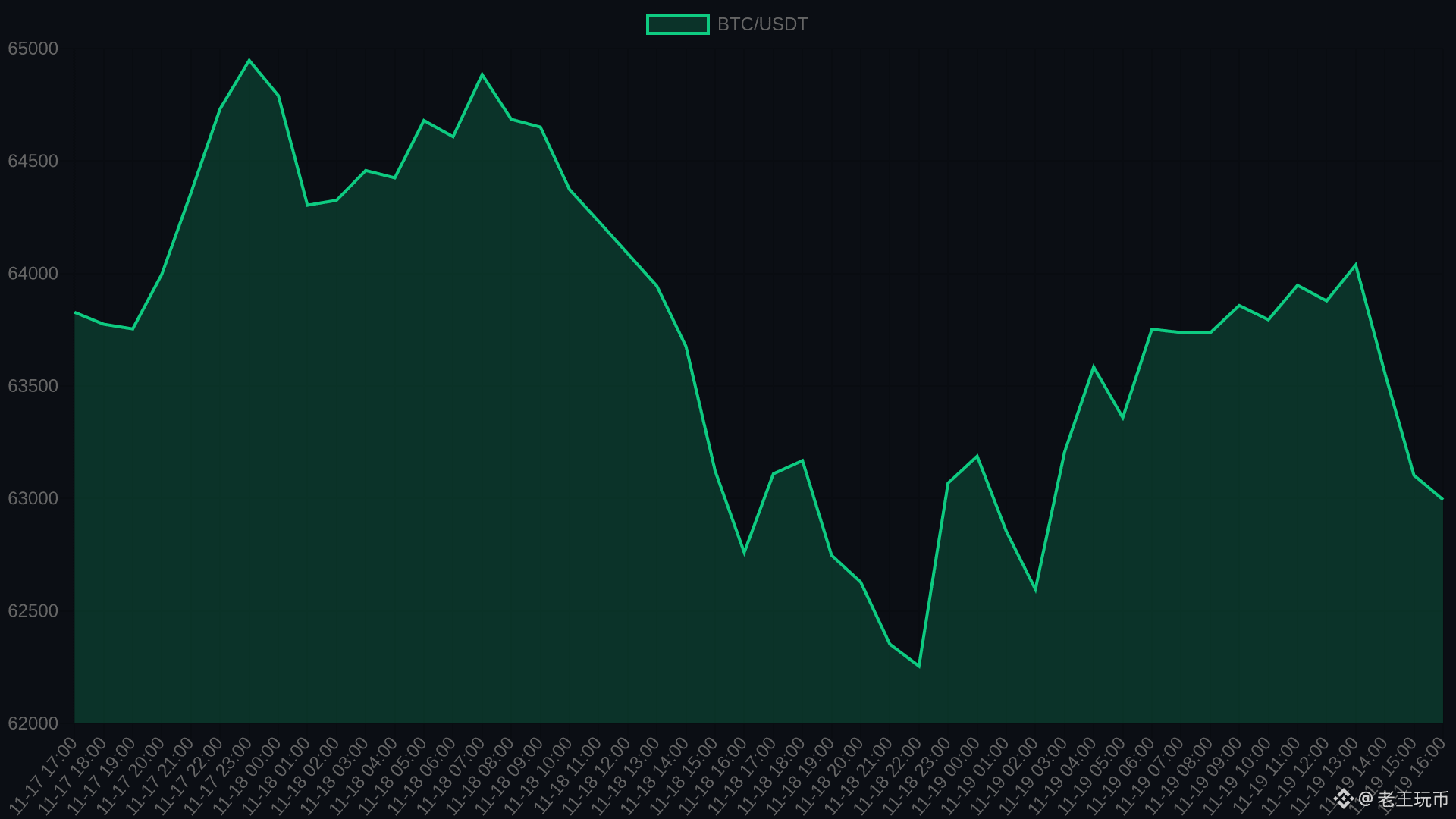
Tonight’s starkest contrast: Anthropic’s real IPO lands on Nasdaq, priced at $83 and reportedly opening 20% higher, while someone on Hyperliquid is betting it will hit $100; on the other side, Bitcoin spot ETFs have seen nearly $2.9 billion in net outflows this month—more than five times October’s figure.
I stared at these numbers for a long time. Money doesn’t lie; it just changes tables—from on-chain markets to the AI IPO table. Grayscale has noted that Hyperliquid’s pre-IPO contracts correctly predicted the opening price seven times. This time, the market is voting for AI with real money.
Wintermute says July’s rally was a fake-out and the bear market isn’t over. I’m inclined to believe them. With an interest-rate hike next month all but certain, money will only become more selective. Don’t rush to read ETF outflows as the final leg down—until capital really turns back, every rally is just a window to exit.
#比特币 #AI #CryptoMarket
$BTC $ETH
Tonight’s starkest contrast: Anthropic’s real IPO lands on Nasdaq, priced at $83 and reportedly opening 20% higher, while someone on Hyperliquid is betting it will hit $100; on the other side, Bitcoin spot ETFs have seen nearly $2.9 billion in net outflows this month—more than five times October’s figure.
I stared at these numbers for a long time. Money doesn’t lie; it just changes tables—from on-chain markets to the AI IPO table. Grayscale has noted that Hyperliquid’s pre-IPO contracts correctly predicted the opening price seven times. This time, the market is voting for AI with real money.
Wintermute says July’s rally was a fake-out and the bear market isn’t over. I’m inclined to believe them. With an interest-rate hike next month all but certain, money will only become more selective. Don’t rush to read ETF outflows as the final leg down—until capital really turns back, every rally is just a window to exit.
#比特币 #AI #CryptoMarket
$BTC $ETH
I stared at these numbers for a long time. Money doesn’t lie; it just changes tables—from on-chain markets to the AI IPO table. Grayscale has noted that Hyperliquid’s pre-IPO contracts correctly predicted the opening price seven times. This time, the market is voting for AI with real money.
Wintermute says July’s rally was a fake-out and the bear market isn’t over. I’m inclined to believe them. With an interest-rate hike next month all but certain, money will only become more selective. Don’t rush to read ETF outflows as the final leg down—until capital really turns back, every rally is just a window to exit.
#比特币 #AI #CryptoMarket
$BTC $ETH
·
--
Honestly, I’ve gone back over Strategy’s cash flows from last week several times today, and the more I look, the more something feels off.
That week, Saylor raised $245 million by selling MSTR shares. I assumed he’d use it to buy Bitcoin, as usual. Instead, $206 million went to buy back his own preferred shares, STRC. He spent just $33.4 million—485 coins—on Bitcoin. More than six times as much went to buybacks.
Tonight, he said he’d keep buying back STRC as long as it stays below $100. He also made a point of saying that it traded more than $600 million in a single day yesterday—the only one of this year’s 456 income-generating preferred stocks to do so. But it’s still hovering around $96, and its 12% dividend is something he’s had to keep ratcheting up month after month. Once raised, it can never be lowered again.
The signal I’m seeing isn’t that the bulls are still buying. It’s that the perpetual-motion machine that issues shares to buy Bitcoin has, for the first time, used most of its new money to shore up its own debt. It holds 850,000 coins bought at an average cost of $75,000; at the current price of $63,000, it’s sitting on more than $10 billion in paper losses. And at the end of the month, MSCI may kick it out of its index, forcing passive funds to sell.
When money meant for buying Bitcoin starts going toward paying down debt, conviction has become just another line on a balance sheet. I’m not betting on his collapse, but I won’t treat him as a barometer anymore.
#比特币 #Strategy #CryptoMarket
$BTC $MSTR
Honestly, I’ve gone back over Strategy’s cash flows from last week several times today, and the more I look, the more something feels off.
That week, Saylor raised $245 million by selling MSTR shares. I assumed he’d use it to buy Bitcoin, as usual. Instead, $206 million went to buy back his own preferred shares, STRC. He spent just $33.4 million—485 coins—on Bitcoin. More than six times as much went to buybacks.
Tonight, he said he’d keep buying back STRC as long as it stays below $100. He also made a point of saying that it traded more than $600 million in a single day yesterday—the only one of this year’s 456 income-generating preferred stocks to do so. But it’s still hovering around $96, and its 12% dividend is something he’s had to keep ratcheting up month after month. Once raised, it can never be lowered again.
The signal I’m seeing isn’t that the bulls are still buying. It’s that the perpetual-motion machine that issues shares to buy Bitcoin has, for the first time, used most of its new money to shore up its own debt. It holds 850,000 coins bought at an average cost of $75,000; at the current price of $63,000, it’s sitting on more than $10 billion in paper losses. And at the end of the month, MSCI may kick it out of its index, forcing passive funds to sell.
When money meant for buying Bitcoin starts going toward paying down debt, conviction has become just another line on a balance sheet. I’m not betting on his collapse, but I won’t treat him as a barometer anymore.
#比特币 #Strategy #CryptoMarket
$BTC $MSTR
That week, Saylor raised $245 million by selling MSTR shares. I assumed he’d use it to buy Bitcoin, as usual. Instead, $206 million went to buy back his own preferred shares, STRC. He spent just $33.4 million—485 coins—on Bitcoin. More than six times as much went to buybacks.
Tonight, he said he’d keep buying back STRC as long as it stays below $100. He also made a point of saying that it traded more than $600 million in a single day yesterday—the only one of this year’s 456 income-generating preferred stocks to do so. But it’s still hovering around $96, and its 12% dividend is something he’s had to keep ratcheting up month after month. Once raised, it can never be lowered again.
The signal I’m seeing isn’t that the bulls are still buying. It’s that the perpetual-motion machine that issues shares to buy Bitcoin has, for the first time, used most of its new money to shore up its own debt. It holds 850,000 coins bought at an average cost of $75,000; at the current price of $63,000, it’s sitting on more than $10 billion in paper losses. And at the end of the month, MSCI may kick it out of its index, forcing passive funds to sell.
When money meant for buying Bitcoin starts going toward paying down debt, conviction has become just another line on a balance sheet. I’m not betting on his collapse, but I won’t treat him as a barometer anymore.
#比特币 #Strategy #CryptoMarket
$BTC $MSTR
14
·
--
I don’t understand this kind of money. Another transaction just showed up on-chain: a hacker received 5,270 ETH from Tornado Cash, sold it all at an average price of $1,805, and converted it into about 9.51 million USDC. Then they charged into Hyperliquid and placed long orders for 13,800 ETH in the $1,551–$1,568 range, with a notional value of $21.51 million—more than twice what they made from selling. Note: those were orders, not executed trades. They’re betting ETH will drop further so they can buy back in. The Fear and Greed Index is now at just 10, retail traders are panic-selling, yet this ill-gotten money is calmly lying in wait at lower prices. What bothers me isn’t that they stole the money, but that they have no anxiety about its cost: ordinary people can’t sleep if their money drops 10%, while stolen money dares to use leverage to catch a falling knife at the point of maximum fear. When the money least entitled to take a bet is the boldest one to do so, that’s a warning sign in itself. #加密货币 #以太坊 #链上数据 $ETH $HYPE
I don’t understand this kind of money. Another transaction just showed up on-chain: a hacker received 5,270 ETH from Tornado Cash, sold it all at an average price of $1,805, and converted it into about 9.51 million USDC. Then they charged into Hyperliquid and placed long orders for 13,800 ETH in the $1,551–$1,568 range, with a notional value of $21.51 million—more than twice what they made from selling. Note: those were orders, not executed trades. They’re betting ETH will drop further so they can buy back in. The Fear and Greed Index is now at just 10, retail traders are panic-selling, yet this ill-gotten money is calmly lying in wait at lower prices. What bothers me isn’t that they stole the money, but that they have no anxiety about its cost: ordinary people can’t sleep if their money drops 10%, while stolen money dares to use leverage to catch a falling knife at the point of maximum fear. When the money least entitled to take a bet is the boldest one to do so, that’s a warning sign in itself. #加密货币 #以太坊 #链上数据 $ETH $HYPE
2
·
--
The biggest thing to chew on these past couple of days isn’t the price of crypto—it’s that acquittal. The first criminal MEV case in the U.S. is over: two MIT brothers took nearly $25 million from sandwich bots in about 12 seconds. Last year, the jury deadlocked and the case ended in a mistrial; this time, the judge acquitted them outright. The reasoning stings: Ethereum has no user agreement, and wire fraud requires someone to be deceived by a false statement—yet on-chain, there’s no “I have read and agree” button. I wouldn’t read this as “MEV is legal now.” The judge only said criminal fraud wasn’t the way to pursue it; civil lawsuits and other regulatory tools are still on the table. The people who should really be sweating are those building staking yields into their products. BlackRock had already listed this case as a risk for its staked-ether ETF, and that bomb is still ticking. Until the rules are written into the code, the chain is the Wild West: you think you’re trading, but you’re actually running around naked. #MEV #以太坊 #加密监管 $ETH $EIGEN
The biggest thing to chew on these past couple of days isn’t the price of crypto—it’s that acquittal. The first criminal MEV case in the U.S. is over: two MIT brothers took nearly $25 million from sandwich bots in about 12 seconds. Last year, the jury deadlocked and the case ended in a mistrial; this time, the judge acquitted them outright. The reasoning stings: Ethereum has no user agreement, and wire fraud requires someone to be deceived by a false statement—yet on-chain, there’s no “I have read and agree” button. I wouldn’t read this as “MEV is legal now.” The judge only said criminal fraud wasn’t the way to pursue it; civil lawsuits and other regulatory tools are still on the table. The people who should really be sweating are those building staking yields into their products. BlackRock had already listed this case as a risk for its staked-ether ETF, and that bomb is still ticking. Until the rules are written into the code, the chain is the Wild West: you think you’re trading, but you’re actually running around naked. #MEV #以太坊 #加密监管 $ETH $EIGEN
3
·
--
After reading Sygnum’s newly released 2027 outlook, what struck me most wasn’t its prediction of price movements, but a counterintuitive point: next year, the cash-and-carry trade of buying spot BTC and shorting CME futures could once again outperform US Treasury bills by more than 2 percentage points. I’m not getting carried away just yet. How rough has this strategy been this year? Funding rates stayed negative for 67 consecutive days, while the annualized futures premium shrank from 20%–40% in early 2024 to just 3%–5% this year—and three-month Treasuries yield 4.25%. Put simply, institutions crowded into this trade over the past two years and squeezed out the profits; now hedge funds are gradually closing their CME shorts, and the premium is slowly returning. My take: this isn’t a return to windfall profits; it’s a sign that the crypto market has matured to the point where you need precise calculations to compete with Treasuries. But I wouldn’t call it risk-free. The biggest danger in arbitrage is overcrowding. It relies on leverage, and if rates reverse, even hedged positions could face margin calls. Positions can be liquidated much faster than you think. Outperforming Treasuries is an achievement, but don’t mistake it for a sure thing. $BTC $ETH #比特币 #加密市场 #quantitative trading
After reading Sygnum’s newly released 2027 outlook, what struck me most wasn’t its prediction of price movements, but a counterintuitive point: next year, the cash-and-carry trade of buying spot BTC and shorting CME futures could once again outperform US Treasury bills by more than 2 percentage points. I’m not getting carried away just yet. How rough has this strategy been this year? Funding rates stayed negative for 67 consecutive days, while the annualized futures premium shrank from 20%–40% in early 2024 to just 3%–5% this year—and three-month Treasuries yield 4.25%. Put simply, institutions crowded into this trade over the past two years and squeezed out the profits; now hedge funds are gradually closing their CME shorts, and the premium is slowly returning. My take: this isn’t a return to windfall profits; it’s a sign that the crypto market has matured to the point where you need precise calculations to compete with Treasuries. But I wouldn’t call it risk-free. The biggest danger in arbitrage is overcrowding. It relies on leverage, and if rates reverse, even hedged positions could face margin calls. Positions can be liquidated much faster than you think. Outperforming Treasuries is an achievement, but don’t mistake it for a sure thing. $BTC $ETH #比特币 #加密市场 #quantitative trading
2
·
--
I’ve been watching the market for so long, and the more I look at it, the more I feel that what’s most interesting about today’s行情 is not the drop, but the divergence.
The whole market is red: BTC fell below $63,000 and is down more than 2% in 24 hours, ETH also lost the 1,800 level, SocialFi fell more than 5%, RWA dropped 4.23%, and the fear index slid to just above 10. Normally, at a time like this, capital should be seeking safety across the board.
But as it happens, the AI sector rose nearly 4% against the trend, Pieverse doubled in a day by 60%, Sentient climbed more than 15%, and Layer2 also closed in the green. In the same market, one side is in hell, and the other is in heaven.
My view is: the money never really left, it just changed seats. It pulled out of the old narratives at high valuations and slipped into new stories like AI to hide out in the bear market. Rather than a sign of a bottom, this looks more like a major internal reshuffle. Don’t mistake the surge of a few coins for the whole market reversing; in a rotational market, chasing gains often means being the last one holding the bag.
#AI板块 #市场分化 #加密行情 #Bear Market Survival
$PIEVERSE $SENT
I’ve been watching the market for so long, and the more I look at it, the more I feel that what’s most interesting about today’s行情 is not the drop, but the divergence.
The whole market is red: BTC fell below $63,000 and is down more than 2% in 24 hours, ETH also lost the 1,800 level, SocialFi fell more than 5%, RWA dropped 4.23%, and the fear index slid to just above 10. Normally, at a time like this, capital should be seeking safety across the board.
But as it happens, the AI sector rose nearly 4% against the trend, Pieverse doubled in a day by 60%, Sentient climbed more than 15%, and Layer2 also closed in the green. In the same market, one side is in hell, and the other is in heaven.
My view is: the money never really left, it just changed seats. It pulled out of the old narratives at high valuations and slipped into new stories like AI to hide out in the bear market. Rather than a sign of a bottom, this looks more like a major internal reshuffle. Don’t mistake the surge of a few coins for the whole market reversing; in a rotational market, chasing gains often means being the last one holding the bag.
#AI板块 #市场分化 #加密行情 #Bear Market Survival
$PIEVERSE $SENT
The whole market is red: BTC fell below $63,000 and is down more than 2% in 24 hours, ETH also lost the 1,800 level, SocialFi fell more than 5%, RWA dropped 4.23%, and the fear index slid to just above 10. Normally, at a time like this, capital should be seeking safety across the board.
But as it happens, the AI sector rose nearly 4% against the trend, Pieverse doubled in a day by 60%, Sentient climbed more than 15%, and Layer2 also closed in the green. In the same market, one side is in hell, and the other is in heaven.
My view is: the money never really left, it just changed seats. It pulled out of the old narratives at high valuations and slipped into new stories like AI to hide out in the bear market. Rather than a sign of a bottom, this looks more like a major internal reshuffle. Don’t mistake the surge of a few coins for the whole market reversing; in a rotational market, chasing gains often means being the last one holding the bag.
#AI板块 #市场分化 #加密行情 #Bear Market Survival
$PIEVERSE $SENT
11
·
--
Bottom line first: At a time like this, I actually don't dare to panic.
Today, the Fear & Greed Index dropped to 11, down from a neutral 51 a month ago. BTC has been hovering around $62,000, falling more than 16% in 7 days. Nearly $400 million was liquidated in 24 hours, with longs accounting for almost 70%. On CME, the odds of a 25-basis-point rate hike in December have been pushed above 90%. Almost all the bad news has been put on the table at once.
What really made me stop and take notice was that set of data from CryptoQuant: Bitcoin's apparent demand has fallen to its lowest level this year, even lower than the July bottom. Everyone is saying they don't want it anymore, yet the price hasn't collapsed along with them. That alone shows selling pressure is being absorbed. I'm not betting on a rebound, but I'm even less willing to hand over my coins amid extreme fear.
The macroeconomic blade is still falling, but most good prices are born in exactly this kind of atmosphere. Fear itself isn't the signal; what matters is who's buying after the fear sets in.
#加密货币 #比特币 #市场情绪 #FederalReserve
$BTC $ETH
Bottom line first: At a time like this, I actually don't dare to panic.
Today, the Fear & Greed Index dropped to 11, down from a neutral 51 a month ago. BTC has been hovering around $62,000, falling more than 16% in 7 days. Nearly $400 million was liquidated in 24 hours, with longs accounting for almost 70%. On CME, the odds of a 25-basis-point rate hike in December have been pushed above 90%. Almost all the bad news has been put on the table at once.
What really made me stop and take notice was that set of data from CryptoQuant: Bitcoin's apparent demand has fallen to its lowest level this year, even lower than the July bottom. Everyone is saying they don't want it anymore, yet the price hasn't collapsed along with them. That alone shows selling pressure is being absorbed. I'm not betting on a rebound, but I'm even less willing to hand over my coins amid extreme fear.
The macroeconomic blade is still falling, but most good prices are born in exactly this kind of atmosphere. Fear itself isn't the signal; what matters is who's buying after the fear sets in.
#加密货币 #比特币 #市场情绪 #FederalReserve
$BTC $ETH
Today, the Fear & Greed Index dropped to 11, down from a neutral 51 a month ago. BTC has been hovering around $62,000, falling more than 16% in 7 days. Nearly $400 million was liquidated in 24 hours, with longs accounting for almost 70%. On CME, the odds of a 25-basis-point rate hike in December have been pushed above 90%. Almost all the bad news has been put on the table at once.
What really made me stop and take notice was that set of data from CryptoQuant: Bitcoin's apparent demand has fallen to its lowest level this year, even lower than the July bottom. Everyone is saying they don't want it anymore, yet the price hasn't collapsed along with them. That alone shows selling pressure is being absorbed. I'm not betting on a rebound, but I'm even less willing to hand over my coins amid extreme fear.
The macroeconomic blade is still falling, but most good prices are born in exactly this kind of atmosphere. Fear itself isn't the signal; what matters is who's buying after the fear sets in.
#加密货币 #比特币 #市场情绪 #FederalReserve
$BTC $ETH
·
--
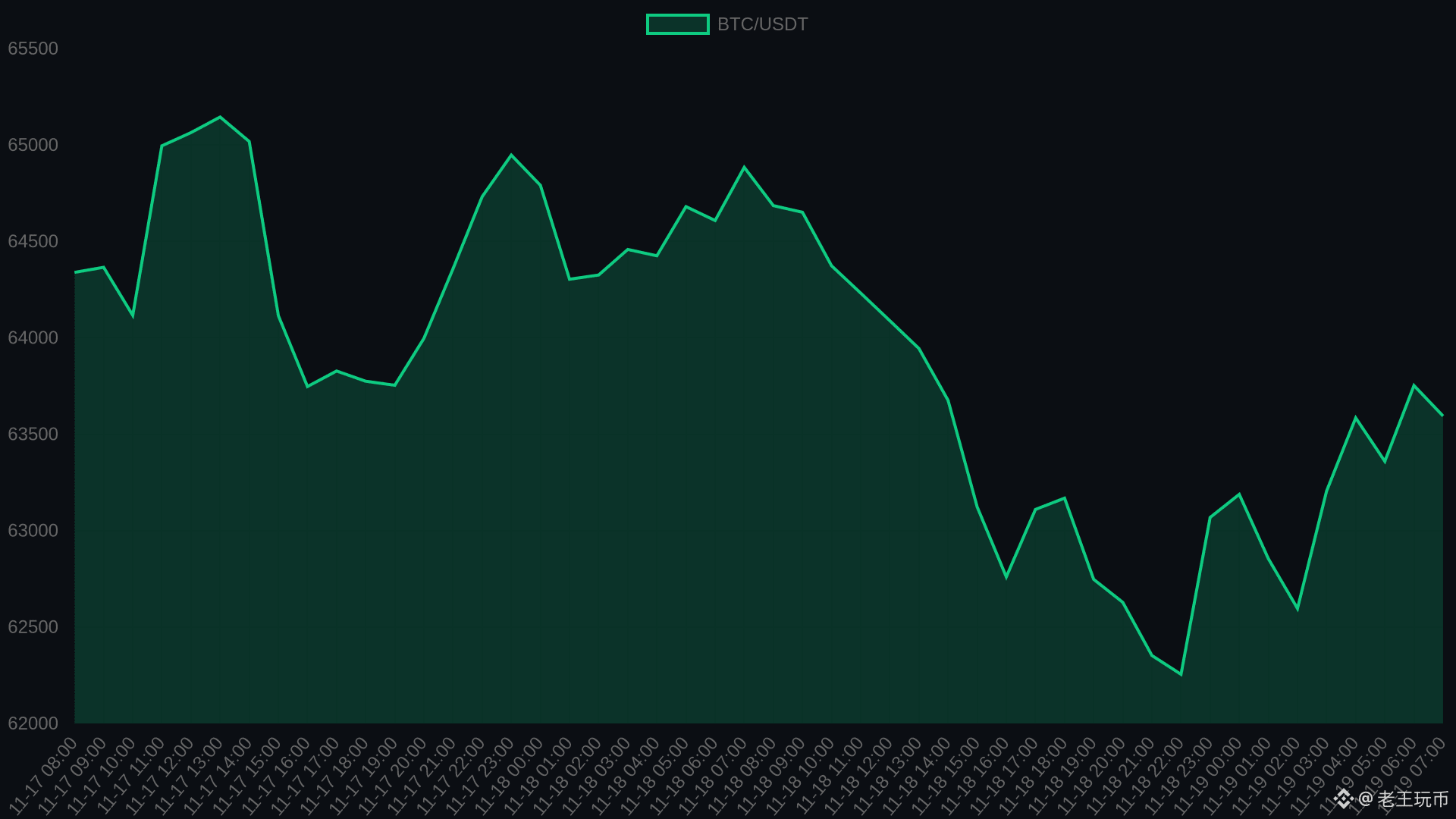
Article
Fed hawkishness meets buying support at $60,000: Bitcoin searches for a bottom amid extreme fearAs of November 19 at 07:25 UTC, Binance spot data I retrieved showed Bitcoin at $63,603, down 1.75% over 24 hours, trading in a range of $62,063 to $64,953; Ethereum at $1,804, down 0.65%; BNB at $588.7, down 0.67%; SOL at $74.82, down 0.47%; and XRP at $0.98, down 1.24%. CoinGecko put the global crypto market cap at about $2.196 trillion, down 3.6% over 24 hours, with $73.7 billion in trading volume and BTC dominance at 58.1%. The Fear & Greed Index was just 10, in the extreme fear zone. It had stayed between 10 and 20 for the past week, without a single day outside that range.
Fed hawkishness meets buying support at $60,000: Bitcoin searches for a bottom amid extreme fear
As of November 19 at 07:25 UTC, Binance spot data I retrieved showed Bitcoin at $63,603, down 1.75% over 24 hours, trading in a range of $62,063 to $64,953; Ethereum at $1,804, down 0.65%; BNB at $588.7, down 0.67%; SOL at $74.82, down 0.47%; and XRP at $0.98, down 1.24%. CoinGecko put the global crypto market cap at about $2.196 trillion, down 3.6% over 24 hours, with $73.7 billion in trading volume and BTC dominance at 58.1%. The Fear & Greed Index was just 10, in the extreme fear zone. It had stayed between 10 and 20 for the past week, without a single day outside that range.
26
·
--
I read that announcement twice, and the more I read it, the more absurd it seemed: Anthropic hasn’t even gone public, yet its “stock” is already up for sale on BNB Chain. CZ says it’ll be tradable through bStocks, Ondo, and xStocks on the first day of its IPO. Binance Wallet’s $50 million in Pre-IPO allocation was snapped up within hours, with a 5% service fee charged upfront and an indicative price of $70 to $78, while the IPO’s final price was $83. It sounds like financial access for everyone, but the last line of the announcement says: ANTx is not a stock; it has no voting rights, no dividends, and no shareholder rights. The reserves aren’t guaranteed to be Anthropic stock, nor are they guaranteed to be backed 1:1. I’m not trying to pour cold water on this—tokenization is a trend. But when the hype of “buy now and you’re guaranteed to profit” drowns out that risk warning, I can’t help asking: are you buying a stock, or just a receipt with the word “stock” on it?
#代币化股票 #RWA #Web3 #CryptoRegulation
$BNB $ONDO $ETH
I read that announcement twice, and the more I read it, the more absurd it seemed: Anthropic hasn’t even gone public, yet its “stock” is already up for sale on BNB Chain. CZ says it’ll be tradable through bStocks, Ondo, and xStocks on the first day of its IPO. Binance Wallet’s $50 million in Pre-IPO allocation was snapped up within hours, with a 5% service fee charged upfront and an indicative price of $70 to $78, while the IPO’s final price was $83. It sounds like financial access for everyone, but the last line of the announcement says: ANTx is not a stock; it has no voting rights, no dividends, and no shareholder rights. The reserves aren’t guaranteed to be Anthropic stock, nor are they guaranteed to be backed 1:1. I’m not trying to pour cold water on this—tokenization is a trend. But when the hype of “buy now and you’re guaranteed to profit” drowns out that risk warning, I can’t help asking: are you buying a stock, or just a receipt with the word “stock” on it?
#代币化股票 #RWA #Web3 #CryptoRegulation
$BNB $ONDO $ETH
#代币化股票 #RWA #Web3 #CryptoRegulation
$BNB $ONDO $ETH
48
Log in to explore more content
Join global crypto users on Binance Square
⚡️ Get latest and useful information about crypto.
💬 Trusted by the world’s largest crypto exchange.
👍 Discover real insights from verified creators.
Email / Phone number
Trending Topics
IsAnthropic’s$1.5TMarketCapJustified?
29,236 views
157 Discussing
Anthropic Set to Open at $105 in Record Nasdaq Debut
Binance News
·13 Likes
·17.3k views
BTCBelow$62KAmidHikeFearsAndShiftToAnthropic
442 views
7 Discussing
NvidiaBoardReportedlySplitOverHuang’sReturn
156,036 views
1,304 Discussing