

바이낸스 가입 방법 및 레퍼럴 할인 코드
42 Posts
바이낸스 가입 방법 및 레퍼럴 할인 코드
Report
Block User
바이낸스 가입 시 레퍼럴 A6M7M7YA 입력하세요. 현물 20% / 선물 10% 수수료 할인 혜택이 적용됩니다. 또한 해당 레퍼럴 ID 초대 코드 입력 시 최대 $600 증정금을 받을 수 있습니다.
Open Trade
High-Frequency Trader
2.4 Years
11 Following
18 Followers
46 Liked
Posts
Portfolio
All
Quotes
PINNED
Article
How to Sign Up for Binance (Latest Version for 2026)With Binance, you can create an account with just a few clicks using your email, mobile phone number, or your Google or Apple account.
Sign up for Binance (20% discount): [https://accounts.binance.com/register?ref=A6M7M7YA](https://accounts.binance.com/register?ref=A6M7M7YA)
In this post, we will provide detailed guidance on how to sign up for Binance, focusing on the Binance app.
If you are using a PC or a browser, you can go directly to the Binance registration page through the link above.
How to Sign Up for Binance (Latest Version for 2026)
With Binance, you can create an account with just a few clicks using your email, mobile phone number, or your Google or Apple account.
Sign up for Binance (20% discount): https://accounts.binance.com/register?ref=A6M7M7YA
In this post, we will provide detailed guidance on how to sign up for Binance, focusing on the Binance app.
If you are using a PC or a browser, you can go directly to the Binance registration page through the link above.
Sign up for Binance (20% discount): https://accounts.binance.com/register?ref=A6M7M7YA
In this post, we will provide detailed guidance on how to sign up for Binance, focusing on the Binance app.
If you are using a PC or a browser, you can go directly to the Binance registration page through the link above.
1
6.7k
PINNED
Binance Referral 20% Discount Code: A6M7M7YABinance exchange offers various referral discount codes and fee benefits.
Sign up on Binance (20% fee discount): [https://www.binance.com/join?ref=A6M7M7YA](https://www.binance.com/join?ref=a6m7m7ya)
If you want to get up to a fee discount when signing up for the Binance exchange, enter the referral code A6M7M7YA.
Why use a referral code?
When you sign up for Binance, if you enter a special code in the Referral ID input box, you can receive a fee discount benefit and a $600 bonus.
Binance Referral 20% Discount Code: A6M7M7YA
Binance exchange offers various referral discount codes and fee benefits.
Sign up on Binance (20% fee discount): https://www.binance.com/join?ref=A6M7M7YA
If you want to get up to a fee discount when signing up for the Binance exchange, enter the referral code A6M7M7YA.
Why use a referral code?
When you sign up for Binance, if you enter a special code in the Referral ID input box, you can receive a fee discount benefit and a $600 bonus.
Sign up on Binance (20% fee discount): https://www.binance.com/join?ref=A6M7M7YA
If you want to get up to a fee discount when signing up for the Binance exchange, enter the referral code A6M7M7YA.
Why use a referral code?
When you sign up for Binance, if you enter a special code in the Referral ID input box, you can receive a fee discount benefit and a $600 bonus.
1
2.2k
The Future of Regulated DeFi? Why $DUSK Is One to Watch in 2026As the DeFi space matures, the next evolution will be shaped not just by innovation — but by compliance and privacy. That’s where $DUSK stands out.
Built as a layer-1 blockchain with zero-knowledge privacy at its core, Dusk is designed for regulated, institution-grade finance — without sacrificing decentralization.
Through tools like Confidential Smart Contracts, Dusk enables asset issuers to tokenize bonds, securities, and other financial products with privacy-preserving logic and on-chain compliance.
From the Deployment Studio to the Plume standard for asset tokenization, @dusk_foundation is building an entire regulated DeFi stack that lets businesses onboard legally and securely — a capability most blockchains simply don't offer.
For creators, Dusk is also empowering new use cases with CreatorPad, helping projects launch privacy-focused, regulation-aware DeFi apps. With growing attention on RWA (Real World Assets) and regulated token markets, $DUSK isn’t just another chain — it’s a framework for compliant finance in Web3.
Whether you're a developer, investor, or institution — it’s time to look deeper into what #Dusk is building.
@Dusk_Foundation #Dusk
The Future of Regulated DeFi? Why $DUSK Is One to Watch in 2026
As the DeFi space matures, the next evolution will be shaped not just by innovation — but by compliance and privacy. That’s where $DUSK stands out.
Built as a layer-1 blockchain with zero-knowledge privacy at its core, Dusk is designed for regulated, institution-grade finance — without sacrificing decentralization.
Through tools like Confidential Smart Contracts, Dusk enables asset issuers to tokenize bonds, securities, and other financial products with privacy-preserving logic and on-chain compliance.
From the Deployment Studio to the Plume standard for asset tokenization, @dusk_foundation is building an entire regulated DeFi stack that lets businesses onboard legally and securely — a capability most blockchains simply don't offer.
For creators, Dusk is also empowering new use cases with CreatorPad, helping projects launch privacy-focused, regulation-aware DeFi apps. With growing attention on RWA (Real World Assets) and regulated token markets, $DUSK isn’t just another chain — it’s a framework for compliant finance in Web3.
Whether you're a developer, investor, or institution — it’s time to look deeper into what #Dusk is building.
@Dusk #Dusk
Built as a layer-1 blockchain with zero-knowledge privacy at its core, Dusk is designed for regulated, institution-grade finance — without sacrificing decentralization.
Through tools like Confidential Smart Contracts, Dusk enables asset issuers to tokenize bonds, securities, and other financial products with privacy-preserving logic and on-chain compliance.
From the Deployment Studio to the Plume standard for asset tokenization, @dusk_foundation is building an entire regulated DeFi stack that lets businesses onboard legally and securely — a capability most blockchains simply don't offer.
For creators, Dusk is also empowering new use cases with CreatorPad, helping projects launch privacy-focused, regulation-aware DeFi apps. With growing attention on RWA (Real World Assets) and regulated token markets, $DUSK isn’t just another chain — it’s a framework for compliant finance in Web3.
Whether you're a developer, investor, or institution — it’s time to look deeper into what #Dusk is building.
@Dusk #Dusk
666
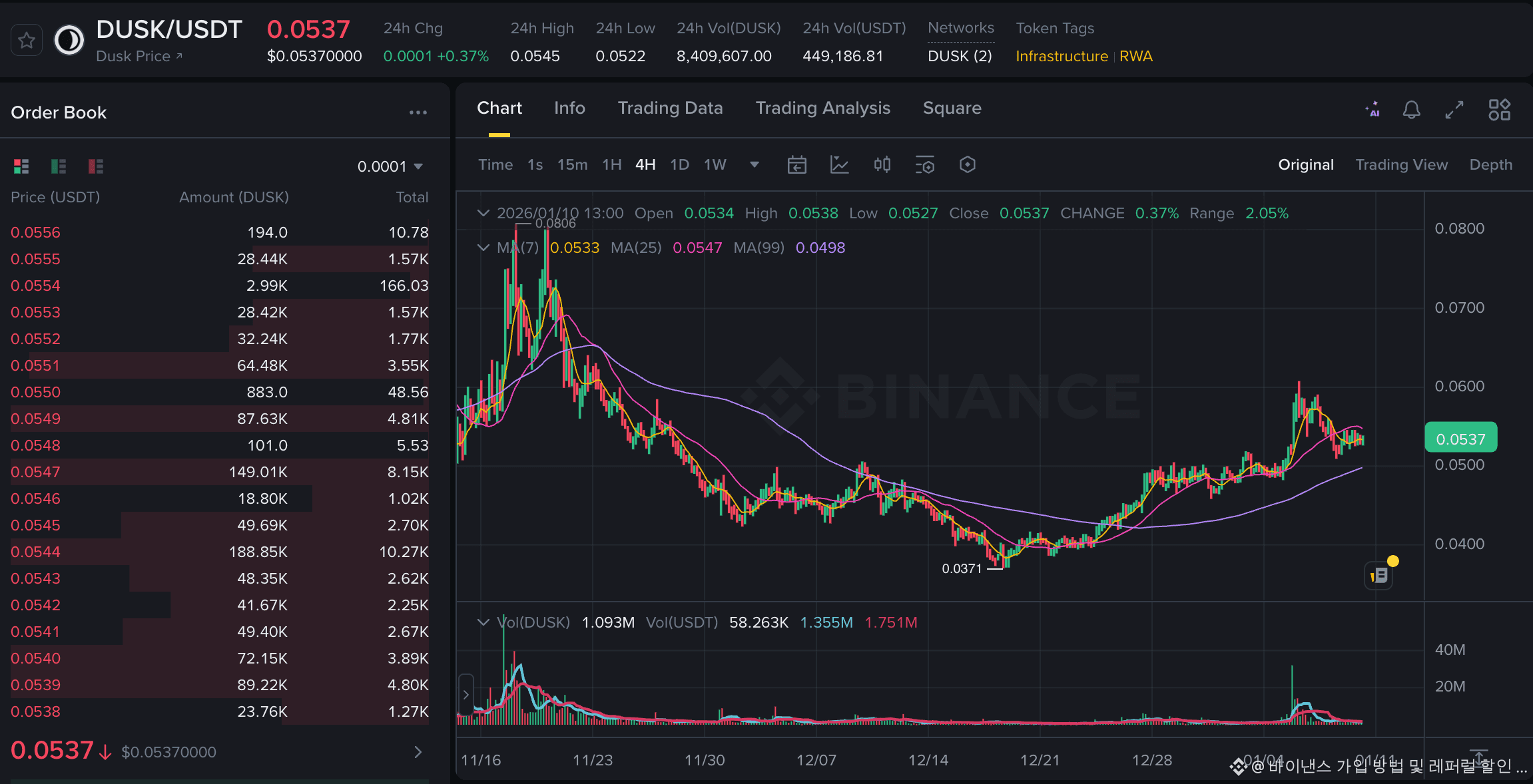
DUSK/USDT 4H Analysis:
Overall Trend: Recovering uptrend, currently consolidating
* Support: $0.0500 – key level to hold
* Resistance: $0.0555 – $0.0560 (heavy sell pressure)
* MA Signals: Trading above 99MA, but short-term MAs are slightly bearish
* Volume: Declining after recent breakout — market waiting for direction
Summary: Neutral to slightly bullish unless $0.050 breaks down
Watch for a breakout above $0.056 for momentum continuation.
#dusk $DUSK
DUSK/USDT 4H Analysis:
Overall Trend: Recovering uptrend, currently consolidating
* Support: $0.0500 – key level to hold
* Resistance: $0.0555 – $0.0560 (heavy sell pressure)
* MA Signals: Trading above 99MA, but short-term MAs are slightly bearish
* Volume: Declining after recent breakout — market waiting for direction
Summary: Neutral to slightly bullish unless $0.050 breaks down
Watch for a breakout above $0.056 for momentum continuation.
#dusk $DUSK
Overall Trend: Recovering uptrend, currently consolidating
* Support: $0.0500 – key level to hold
* Resistance: $0.0555 – $0.0560 (heavy sell pressure)
* MA Signals: Trading above 99MA, but short-term MAs are slightly bearish
* Volume: Declining after recent breakout — market waiting for direction
Summary: Neutral to slightly bullish unless $0.050 breaks down
Watch for a breakout above $0.056 for momentum continuation.
#dusk $DUSK
567
Walrus on Sui: A Decentralized Storage Protocol for the AI EraWalrus $WAL is a decentralized storage protocol designed to address the growing demands of unstructured data management, particularly in the context of artificial intelligence (AI) and data-driven applications.
Built natively on the Sui blockchain, Walrus offers a robust and verifiable alternative to centralized cloud storage by combining decentralized architecture, economic incentives, and smart contract automation.
Unlike meme tokens or speculative assets, Walrus provides real utility through a programmable storage infrastructure that emphasizes data availability, cost efficiency, and long-term governance.
Core Objectives of Walrus
Walrus was created to support reliable and verifiable data storage in a decentralized environment. Its primary objectives include:
Enabling decentralized data markets for AI and research applicationsEnsuring high availability and reliability of data, even under partial network failure or malicious node behaviorOffering a cost-effective alternative to traditional full-replication storage modelsProviding integration with smart contracts for programmability and governance
This makes Walrus particularly suitable for use cases where data persistence, transparency, and access verification are essential.
How Walrus Works
At its core, Walrus allows users and developers to store and retrieve unstructured content—referred to as blobs—on a network of decentralized storage nodes. To ensure data integrity and fault tolerance, Walrus uses advanced erasure coding techniques, distributing encoded fragments of data across multiple nodes. This method provides redundancy while keeping storage costs significantly lower than full-replication systems.
Walrus introduces a verifiable mechanism to prove that a piece of data has been stored and is retrievable at any time in the future. This proof is anchored on the Sui blockchain, allowing developers and smart contracts to verify storage status on-chain.
Integration with the Sui Blockchain
Sui plays a central role in how Walrus operates. It is used not just as a ledger for token transactions, but as an execution layer for smart contracts that manage:
Ownership of storage space, which is modeled as a resource on-chainTracking of stored data (blobs), represented as objects on the Sui networkPayment for storage services using Walrus's native tokenDelegation and staking logic through decentralized governance mechanisms
This integration ensures that all key operations—such as extending data retention, transferring storage rights, or rewarding service providers—are transparently managed via smart contracts.
The WAL Token and Tokenomics
The native utility token of the Walrus protocol is WAL. It serves several purposes:
Delegated Proof-of-Stake: Token holders can delegate their WAL tokens to trusted storage nodes. Nodes with higher delegated stake are selected to participate in the storage committee for each epoch.Payment for Storage: WAL is used to pay for storing data on the network.Incentive Distribution: At the end of each epoch, rewards are distributed to storage nodes and their delegators, based on participation and data availability.
WAL is also divisible into smaller units known as FROST, with 1 WAL equaling 1 billion FROST, allowing for micro-transactions and precise billing.
Decentralized Architecture and Byzantine Fault Tolerance
Walrus is engineered to be resilient in unreliable or adversarial environments. Its architectural design ensures that:
Data remains retrievable even if many nodes are offline or compromisedThe system can detect and recover from Byzantine faults (malicious behavior by nodes)Storage operations do not depend on any single point of failure
This is made possible by using modern error correction techniques based on linear fountain codes, as well as a dynamic committee of nodes that evolve over time via the staking and epoch system.
Developer Access and Usability
Walrus is designed to be accessible to both Web3-native developers and traditional Web2 teams. It offers:
A command-line interface (CLI) for direct interactionSDKs for integrating Walrus into applications and platformsHTTP APIs for compatibility with existing web infrastructureCompatibility with content delivery networks (CDNs), allowing hybrid deployment
This flexibility allows developers to adopt Walrus without abandoning existing tools, while still benefiting from decentralization.
Use Cases and Applications
Walrus is applicable in a range of domains, particularly where data ownership and verifiability are important. Example use cases include:
AI and machine learning: Storing large datasets and model artifacts with cryptographic guarantees of availabilityDecentralized websites: Hosting static content using Walrus Sites with true decentralizationResearch archives: Providing verifiable, long-term storage for scientific data and digital publicationsNFT metadata: Ensuring that off-chain NFT metadata is stored securely and persistentlyOpen data networks: Creating public repositories where data integrity and uptime are provable
These use cases are increasingly relevant as data governance, AI safety, and digital sovereignty become central challenges in technology and policy.
Walrus Sites: Decentralized Static Web Hosting
In addition to file storage, Walrus offers Walrus Sites, a tool for deploying and hosting decentralized websites. Unlike traditional hosting services, Walrus Sites ensures:
Censorship resistanceCryptographic proof of content availabilityElimination of centralized control over content delivery
This makes it suitable for publishing open-source content, documentation, or community portals without relying on centralized web infrastructure.
Governance and Epoch System
Walrus operates through an epoch-based governance mechanism. In each epoch:
A committee of storage nodes is selected based on WAL token stakeStorage operations and verification tasks are distributedRewards are allocated to nodes and their delegators based on performance
This structure supports both decentralization and operational efficiency, while enabling the protocol to evolve over time.
Security Model
Security is fundamental to the Walrus protocol. It incorporates multiple layers of protection:
Cryptographic proof of storage ensures that claims about data availability can be verified on-chainErasure coding guarantees that even partial loss of nodes does not lead to data lossByzantine fault tolerance enables the system to resist malicious actors or data tampering attemptsSmart contract enforcement of protocol rules eliminates reliance on trusted intermediaries
These measures are essential to ensure trust in decentralized infrastructure, especially in data-sensitive sectors like AI and healthcare.
Conclusion
Walrus is a purpose-built decentralized storage protocol that combines the performance benefits of erasure-coded storage with the verifiability and programmability of blockchain technology. Its integration with the Sui network allows for seamless coordination, staking, and economic incentives, all governed by transparent smart contracts.
Far beyond the concept of meme coins or speculative digital assets, Walrus is focused on solving a real problem: providing secure, decentralized, and verifiable data storage infrastructure for the modern digital economy. As data becomes more valuable and distributed, protocols like Walrus are likely to play a foundational role in Web3 and AI infrastructure.
@WalrusProtocol #Walrus
Walrus on Sui: A Decentralized Storage Protocol for the AI Era
Walrus $WAL is a decentralized storage protocol designed to address the growing demands of unstructured data management, particularly in the context of artificial intelligence (AI) and data-driven applications.
Built natively on the Sui blockchain, Walrus offers a robust and verifiable alternative to centralized cloud storage by combining decentralized architecture, economic incentives, and smart contract automation.
Unlike meme tokens or speculative assets, Walrus provides real utility through a programmable storage infrastructure that emphasizes data availability, cost efficiency, and long-term governance.
Core Objectives of Walrus
Walrus was created to support reliable and verifiable data storage in a decentralized environment. Its primary objectives include:
Enabling decentralized data markets for AI and research applicationsEnsuring high availability and reliability of data, even under partial network failure or malicious node behaviorOffering a cost-effective alternative to traditional full-replication storage modelsProviding integration with smart contracts for programmability and governance
This makes Walrus particularly suitable for use cases where data persistence, transparency, and access verification are essential.
How Walrus Works
At its core, Walrus allows users and developers to store and retrieve unstructured content—referred to as blobs—on a network of decentralized storage nodes. To ensure data integrity and fault tolerance, Walrus uses advanced erasure coding techniques, distributing encoded fragments of data across multiple nodes. This method provides redundancy while keeping storage costs significantly lower than full-replication systems.
Walrus introduces a verifiable mechanism to prove that a piece of data has been stored and is retrievable at any time in the future. This proof is anchored on the Sui blockchain, allowing developers and smart contracts to verify storage status on-chain.
Integration with the Sui Blockchain
Sui plays a central role in how Walrus operates. It is used not just as a ledger for token transactions, but as an execution layer for smart contracts that manage:
Ownership of storage space, which is modeled as a resource on-chainTracking of stored data (blobs), represented as objects on the Sui networkPayment for storage services using Walrus's native tokenDelegation and staking logic through decentralized governance mechanisms
This integration ensures that all key operations—such as extending data retention, transferring storage rights, or rewarding service providers—are transparently managed via smart contracts.
The WAL Token and Tokenomics
The native utility token of the Walrus protocol is WAL. It serves several purposes:
Delegated Proof-of-Stake: Token holders can delegate their WAL tokens to trusted storage nodes. Nodes with higher delegated stake are selected to participate in the storage committee for each epoch.Payment for Storage: WAL is used to pay for storing data on the network.Incentive Distribution: At the end of each epoch, rewards are distributed to storage nodes and their delegators, based on participation and data availability.
WAL is also divisible into smaller units known as FROST, with 1 WAL equaling 1 billion FROST, allowing for micro-transactions and precise billing.
Decentralized Architecture and Byzantine Fault Tolerance
Walrus is engineered to be resilient in unreliable or adversarial environments. Its architectural design ensures that:
Data remains retrievable even if many nodes are offline or compromisedThe system can detect and recover from Byzantine faults (malicious behavior by nodes)Storage operations do not depend on any single point of failure
This is made possible by using modern error correction techniques based on linear fountain codes, as well as a dynamic committee of nodes that evolve over time via the staking and epoch system.
Developer Access and Usability
Walrus is designed to be accessible to both Web3-native developers and traditional Web2 teams. It offers:
A command-line interface (CLI) for direct interactionSDKs for integrating Walrus into applications and platformsHTTP APIs for compatibility with existing web infrastructureCompatibility with content delivery networks (CDNs), allowing hybrid deployment
This flexibility allows developers to adopt Walrus without abandoning existing tools, while still benefiting from decentralization.
Use Cases and Applications
Walrus is applicable in a range of domains, particularly where data ownership and verifiability are important. Example use cases include:
AI and machine learning: Storing large datasets and model artifacts with cryptographic guarantees of availabilityDecentralized websites: Hosting static content using Walrus Sites with true decentralizationResearch archives: Providing verifiable, long-term storage for scientific data and digital publicationsNFT metadata: Ensuring that off-chain NFT metadata is stored securely and persistentlyOpen data networks: Creating public repositories where data integrity and uptime are provable
These use cases are increasingly relevant as data governance, AI safety, and digital sovereignty become central challenges in technology and policy.
Walrus Sites: Decentralized Static Web Hosting
In addition to file storage, Walrus offers Walrus Sites, a tool for deploying and hosting decentralized websites. Unlike traditional hosting services, Walrus Sites ensures:
Censorship resistanceCryptographic proof of content availabilityElimination of centralized control over content delivery
This makes it suitable for publishing open-source content, documentation, or community portals without relying on centralized web infrastructure.
Governance and Epoch System
Walrus operates through an epoch-based governance mechanism. In each epoch:
A committee of storage nodes is selected based on WAL token stakeStorage operations and verification tasks are distributedRewards are allocated to nodes and their delegators based on performance
This structure supports both decentralization and operational efficiency, while enabling the protocol to evolve over time.
Security Model
Security is fundamental to the Walrus protocol. It incorporates multiple layers of protection:
Cryptographic proof of storage ensures that claims about data availability can be verified on-chainErasure coding guarantees that even partial loss of nodes does not lead to data lossByzantine fault tolerance enables the system to resist malicious actors or data tampering attemptsSmart contract enforcement of protocol rules eliminates reliance on trusted intermediaries
These measures are essential to ensure trust in decentralized infrastructure, especially in data-sensitive sectors like AI and healthcare.
Conclusion
Walrus is a purpose-built decentralized storage protocol that combines the performance benefits of erasure-coded storage with the verifiability and programmability of blockchain technology. Its integration with the Sui network allows for seamless coordination, staking, and economic incentives, all governed by transparent smart contracts.
Far beyond the concept of meme coins or speculative digital assets, Walrus is focused on solving a real problem: providing secure, decentralized, and verifiable data storage infrastructure for the modern digital economy. As data becomes more valuable and distributed, protocols like Walrus are likely to play a foundational role in Web3 and AI infrastructure.
@Walrus 🦭/acc #Walrus
Built natively on the Sui blockchain, Walrus offers a robust and verifiable alternative to centralized cloud storage by combining decentralized architecture, economic incentives, and smart contract automation.
Unlike meme tokens or speculative assets, Walrus provides real utility through a programmable storage infrastructure that emphasizes data availability, cost efficiency, and long-term governance.
Core Objectives of Walrus
Walrus was created to support reliable and verifiable data storage in a decentralized environment. Its primary objectives include:
Enabling decentralized data markets for AI and research applicationsEnsuring high availability and reliability of data, even under partial network failure or malicious node behaviorOffering a cost-effective alternative to traditional full-replication storage modelsProviding integration with smart contracts for programmability and governance
This makes Walrus particularly suitable for use cases where data persistence, transparency, and access verification are essential.
How Walrus Works
At its core, Walrus allows users and developers to store and retrieve unstructured content—referred to as blobs—on a network of decentralized storage nodes. To ensure data integrity and fault tolerance, Walrus uses advanced erasure coding techniques, distributing encoded fragments of data across multiple nodes. This method provides redundancy while keeping storage costs significantly lower than full-replication systems.
Walrus introduces a verifiable mechanism to prove that a piece of data has been stored and is retrievable at any time in the future. This proof is anchored on the Sui blockchain, allowing developers and smart contracts to verify storage status on-chain.
Integration with the Sui Blockchain
Sui plays a central role in how Walrus operates. It is used not just as a ledger for token transactions, but as an execution layer for smart contracts that manage:
Ownership of storage space, which is modeled as a resource on-chainTracking of stored data (blobs), represented as objects on the Sui networkPayment for storage services using Walrus's native tokenDelegation and staking logic through decentralized governance mechanisms
This integration ensures that all key operations—such as extending data retention, transferring storage rights, or rewarding service providers—are transparently managed via smart contracts.
The WAL Token and Tokenomics
The native utility token of the Walrus protocol is WAL. It serves several purposes:
Delegated Proof-of-Stake: Token holders can delegate their WAL tokens to trusted storage nodes. Nodes with higher delegated stake are selected to participate in the storage committee for each epoch.Payment for Storage: WAL is used to pay for storing data on the network.Incentive Distribution: At the end of each epoch, rewards are distributed to storage nodes and their delegators, based on participation and data availability.
WAL is also divisible into smaller units known as FROST, with 1 WAL equaling 1 billion FROST, allowing for micro-transactions and precise billing.
Decentralized Architecture and Byzantine Fault Tolerance
Walrus is engineered to be resilient in unreliable or adversarial environments. Its architectural design ensures that:
Data remains retrievable even if many nodes are offline or compromisedThe system can detect and recover from Byzantine faults (malicious behavior by nodes)Storage operations do not depend on any single point of failure
This is made possible by using modern error correction techniques based on linear fountain codes, as well as a dynamic committee of nodes that evolve over time via the staking and epoch system.
Developer Access and Usability
Walrus is designed to be accessible to both Web3-native developers and traditional Web2 teams. It offers:
A command-line interface (CLI) for direct interactionSDKs for integrating Walrus into applications and platformsHTTP APIs for compatibility with existing web infrastructureCompatibility with content delivery networks (CDNs), allowing hybrid deployment
This flexibility allows developers to adopt Walrus without abandoning existing tools, while still benefiting from decentralization.
Use Cases and Applications
Walrus is applicable in a range of domains, particularly where data ownership and verifiability are important. Example use cases include:
AI and machine learning: Storing large datasets and model artifacts with cryptographic guarantees of availabilityDecentralized websites: Hosting static content using Walrus Sites with true decentralizationResearch archives: Providing verifiable, long-term storage for scientific data and digital publicationsNFT metadata: Ensuring that off-chain NFT metadata is stored securely and persistentlyOpen data networks: Creating public repositories where data integrity and uptime are provable
These use cases are increasingly relevant as data governance, AI safety, and digital sovereignty become central challenges in technology and policy.
Walrus Sites: Decentralized Static Web Hosting
In addition to file storage, Walrus offers Walrus Sites, a tool for deploying and hosting decentralized websites. Unlike traditional hosting services, Walrus Sites ensures:
Censorship resistanceCryptographic proof of content availabilityElimination of centralized control over content delivery
This makes it suitable for publishing open-source content, documentation, or community portals without relying on centralized web infrastructure.
Governance and Epoch System
Walrus operates through an epoch-based governance mechanism. In each epoch:
A committee of storage nodes is selected based on WAL token stakeStorage operations and verification tasks are distributedRewards are allocated to nodes and their delegators based on performance
This structure supports both decentralization and operational efficiency, while enabling the protocol to evolve over time.
Security Model
Security is fundamental to the Walrus protocol. It incorporates multiple layers of protection:
Cryptographic proof of storage ensures that claims about data availability can be verified on-chainErasure coding guarantees that even partial loss of nodes does not lead to data lossByzantine fault tolerance enables the system to resist malicious actors or data tampering attemptsSmart contract enforcement of protocol rules eliminates reliance on trusted intermediaries
These measures are essential to ensure trust in decentralized infrastructure, especially in data-sensitive sectors like AI and healthcare.
Conclusion
Walrus is a purpose-built decentralized storage protocol that combines the performance benefits of erasure-coded storage with the verifiability and programmability of blockchain technology. Its integration with the Sui network allows for seamless coordination, staking, and economic incentives, all governed by transparent smart contracts.
Far beyond the concept of meme coins or speculative digital assets, Walrus is focused on solving a real problem: providing secure, decentralized, and verifiable data storage infrastructure for the modern digital economy. As data becomes more valuable and distributed, protocols like Walrus are likely to play a foundational role in Web3 and AI infrastructure.
@Walrus 🦭/acc #Walrus
341
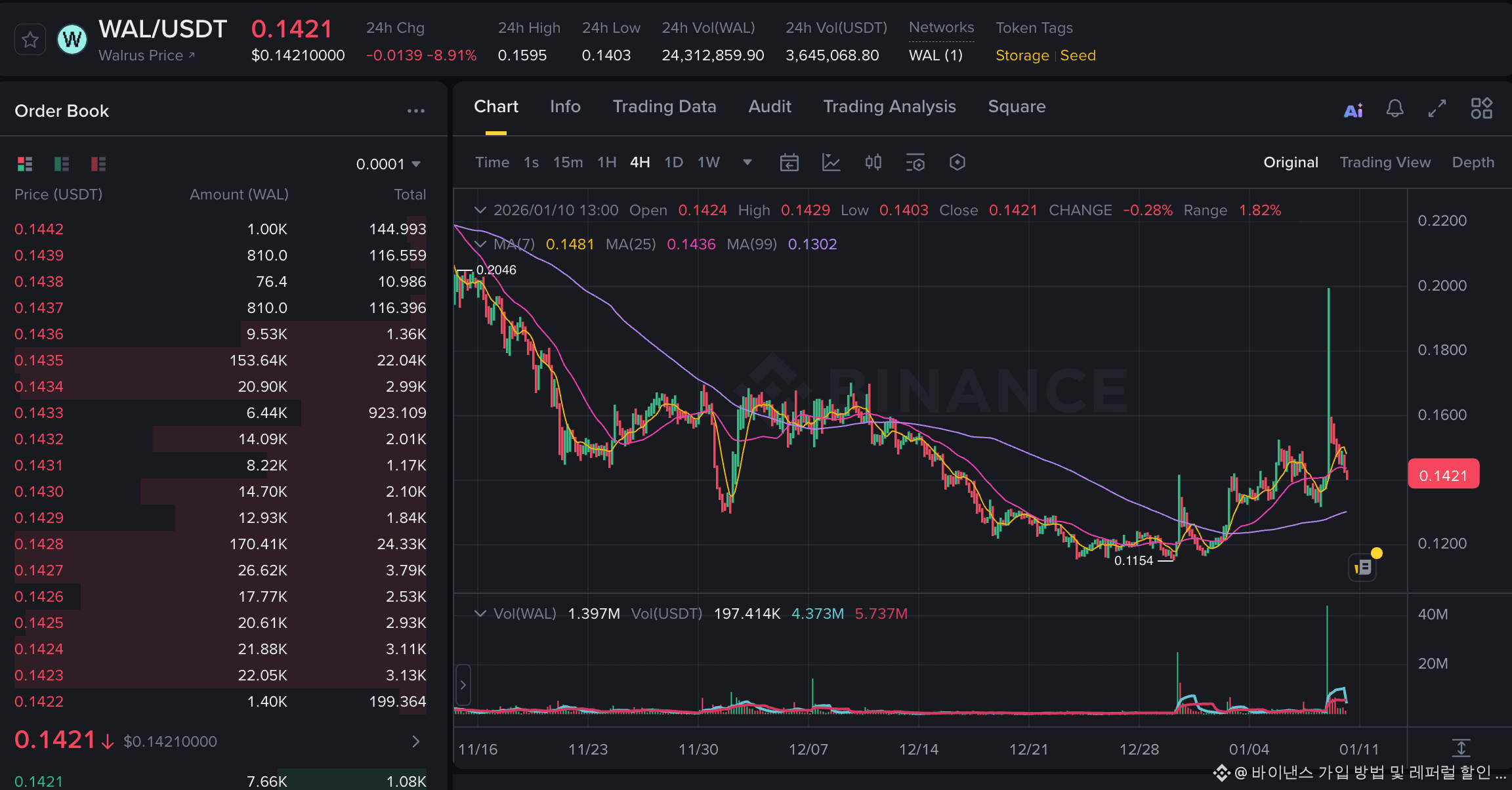
WAL/USDT 4H – Short Analysis
Price is in a short-term rebound after a downtrend, but trend reversal is not confirmed.
* Support: 0.138–0.140
* Resistance: 0.148–0.150
MA structure shows weak short-term momentum. Volume dropped after the spike, so chasing is risky.
Bullish only if price holds above 0.148. Below 0.138 → likely retest 0.130.
* Overall: Consolidation after rebound, not a confirmed uptrend.
#walrus $WAL
WAL/USDT 4H – Short Analysis
Price is in a short-term rebound after a downtrend, but trend reversal is not confirmed.
* Support: 0.138–0.140
* Resistance: 0.148–0.150
MA structure shows weak short-term momentum. Volume dropped after the spike, so chasing is risky.
Bullish only if price holds above 0.148. Below 0.138 → likely retest 0.130.
* Overall: Consolidation after rebound, not a confirmed uptrend.
#walrus $WAL
Price is in a short-term rebound after a downtrend, but trend reversal is not confirmed.
* Support: 0.138–0.140
* Resistance: 0.148–0.150
MA structure shows weak short-term momentum. Volume dropped after the spike, so chasing is risky.
Bullish only if price holds above 0.148. Below 0.138 → likely retest 0.130.
* Overall: Consolidation after rebound, not a confirmed uptrend.
#walrus $WAL
291
Article
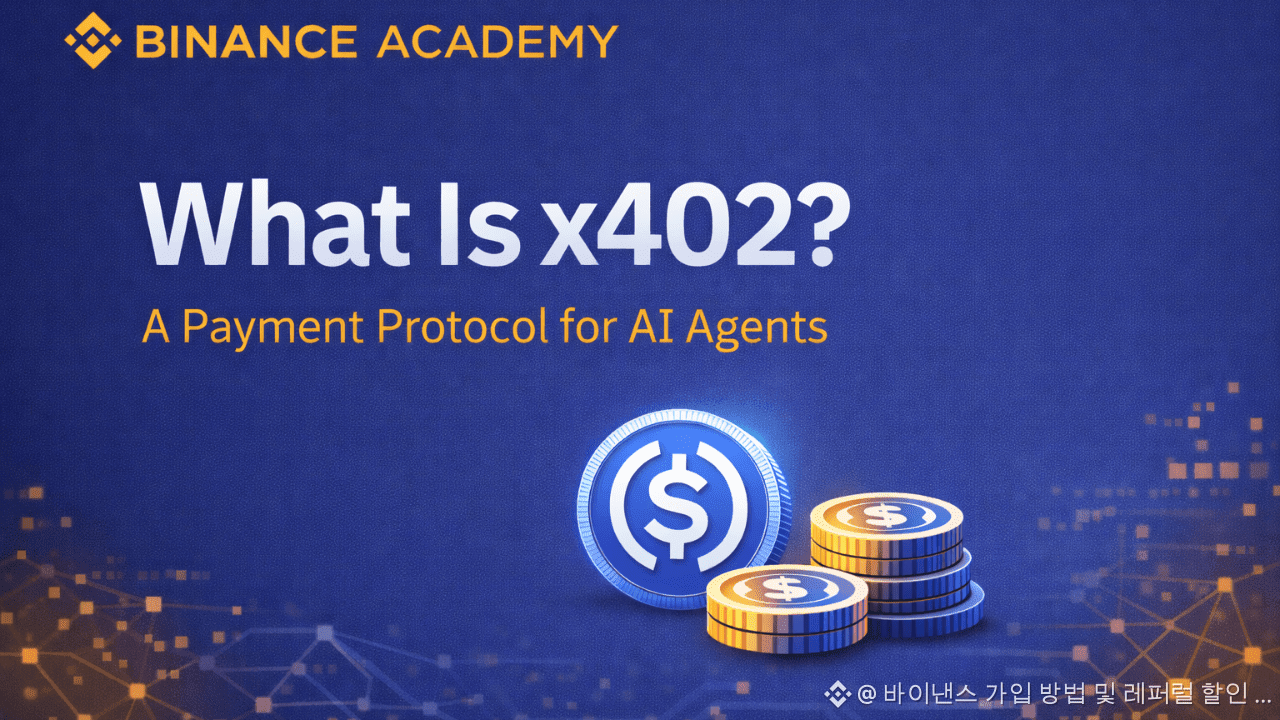
Introducing x402: The Web3 Payment Layer for AI AgentsIn today’s internet, we’re no longer just scrolling through blogs or googling facts. We’re interacting with APIs, cloud computing services, and tons of digital resources — and we’re paying for all of it, often in tiny microtransactions.
But here’s the catch: AI agents are becoming big-time users of these online resources, yet they don’t have credit cards or identity verification. Machines can’t log in or fill out forms like we do.
To fix that, Coinbase has introduced a new open payment protocol called x402. It allows browsers and AI agents to pay using stablecoins, automatically and securely — no login, no credit card, no middlemen.
Let’s break down what makes this a game-changer for the AI economy.
🔍 TL;DR: What You Need to Know
x402 is a payment protocol that lets AI and browsers pay directly using stablecoins like USDC or USDT.It uses the HTTP 402 Payment Required response code to enable automated, no-login payments.AI agents can now buy access to APIs, data, or compute — all on their own.No more middlemen like PayPal or Stripe. No human input needed.Big names like Google, Visa, and Cloudflare are already testing it.Meme coins are popping up around it too, but be cautious — those are speculative.
🧠 Why AI Can’t Pay (Yet)
Today’s internet is built for humans — we create accounts, type in passwords, and plug in credit card numbers. But what about AIs?
AI agents can request data and services……but they can’t pay for them. No wallets. No identity. No credit card fields.
This makes it impossible for AIs to fully participate in today’s internet economy.
💡 Enter x402: Web Payments, But Smarter
x402 is designed for the machine-driven internet. It lets software agents, like AI bots or browsers, pay for web resources using stablecoins — right inside the HTTP protocol.
How it works, step-by-step:
AI (or user) requests a web resource (like an API).Server replies with an HTTP 402 Payment Required code — along with payment details: price, wallet address, and blockchain network.The client (AI or browser) sends stablecoins (USDC/USDT) directly to that address.Once payment is confirmed, the server sends back the resource.
👉 No login, no passwords, no payment gateways. It’s just blockchain, plain and simple.
⚖️ Comparison: Traditional Payments vs. x402
Traditional payment systems require users to log in and enter credit card details, making them accessible only to humans.
In contrast, x402 removes the need for authentication, allowing both humans and AI agents to make payments.
While traditional methods rely on services like PayPal or Stripe, x402 uses stablecoins on blockchain for direct, peer-to-peer transactions.
It also supports microtransactions efficiently, whereas conventional systems often favor larger payments.
Most importantly, x402 automates the entire process, eliminating the need for manual input or third-party processors like Visa.
Do you not have a Binance account yet? Now join Binance, and receive up to 45% discount on trading fees.
🏗️ Who’s Building with x402?
This isn’t just an idea — it’s being actively tested by some of the biggest players in tech and finance.
Coinbase developed the x402 protocol and introduced Payments MCP, a tool that lets users — including AI agents — create wallets and make payments.
Google is testing AI tools that can automatically pay for API access, using x402 in real-time.
Cloudflare is working on integrating x402 into its global CDN network, enabling websites to accept micro-payments directly.
Meanwhile, Visa is experimenting with x402 in its internal settlement systems to improve efficiency.
These companies are betting on a future where machines can pay their own way — securely, automatically, and at internet speed.
🤖 Why Does This Matter for AI?
AIs are getting smarter and more autonomous. They’re:
Running appsCalling APIsManaging workflows
But so far, they’ve been blocked from accessing paid resources — because they couldn’t handle payments.
x402 solves that. With it, AIs can:
Buy dataPay for computeAccess APIsDo all of this without human help
In short, this could unlock a new generation of truly autonomous, value-exchanging AI agents.
💰 But What About the Coins?
Some meme coins have emerged around x402, hyped up by crypto communities. But remember:
x402 is a payment protocol, not a cryptocurrency.It uses existing stablecoins like USDC and USDT.Meme tokens inspired by x402 are unofficial and highly speculative.
So while the tech is legit, the coins popping up around it? Not necessarily.
🧾 FAQs: Everything You’re Wondering
Q1. Is x402 a cryptocurrency?
Nope. It’s a payment protocol — a set of rules for handling transactions. It uses stablecoins (like USDC) to move value.
Q2. Can AI agents really use this?
Yes. With Coinbase’s Payments MCP, even AIs can create wallets and send payments automatically, using plain language instructions.
Q3. What blockchains does x402 support?
So far, x402 works on Base and Solana — both fast, low-fee public chains.
Q4. How secure is this?
Security depends on the blockchain infrastructure and the implementation. Since it’s on-chain and peer-to-peer, it's transparent and verifiable.
Q5. Should I invest in x402-related coins?
x402 itself isn't a coin — and related meme tokens are very speculative. Always separate the tech from the hype.
🧲 Ready for the Machine Economy?
x402 is a major step toward an internet where AIs are not just smart — they’re economically active.
By allowing browsers and bots to pay directly, x402 could power a new kind of web:
Microservices priced in centsPay-as-you-go APIsMachines transacting with machines — all in real time
Whether you’re building AI tools, crypto apps, or just keeping up with the future of the web, x402 is one protocol to keep an eye on.
🔚 Final Recap
x402 is an open payment protocol using the HTTP 402 code and stablecoins.It lets AI and browsers pay automatically — no login or credit cards needed.Companies like Google, Visa, and Cloudflare are already testing it.It’s not a coin, but a key tech infrastructure for the AI-powered web.The machine-to-machine economy might be closer than you think.
Want to go deeper? Keep exploring how blockchain and AI are reshaping the internet — one protocol at a time.
#402 #coinbase #binance #stablecoin #payment
Introducing x402: The Web3 Payment Layer for AI Agents
In today’s internet, we’re no longer just scrolling through blogs or googling facts. We’re interacting with APIs, cloud computing services, and tons of digital resources — and we’re paying for all of it, often in tiny microtransactions.
But here’s the catch: AI agents are becoming big-time users of these online resources, yet they don’t have credit cards or identity verification. Machines can’t log in or fill out forms like we do.
To fix that, Coinbase has introduced a new open payment protocol called x402. It allows browsers and AI agents to pay using stablecoins, automatically and securely — no login, no credit card, no middlemen.
Let’s break down what makes this a game-changer for the AI economy.
🔍 TL;DR: What You Need to Know
x402 is a payment protocol that lets AI and browsers pay directly using stablecoins like USDC or USDT.It uses the HTTP 402 Payment Required response code to enable automated, no-login payments.AI agents can now buy access to APIs, data, or compute — all on their own.No more middlemen like PayPal or Stripe. No human input needed.Big names like Google, Visa, and Cloudflare are already testing it.Meme coins are popping up around it too, but be cautious — those are speculative.
🧠 Why AI Can’t Pay (Yet)
Today’s internet is built for humans — we create accounts, type in passwords, and plug in credit card numbers. But what about AIs?
AI agents can request data and services……but they can’t pay for them. No wallets. No identity. No credit card fields.
This makes it impossible for AIs to fully participate in today’s internet economy.
💡 Enter x402: Web Payments, But Smarter
x402 is designed for the machine-driven internet. It lets software agents, like AI bots or browsers, pay for web resources using stablecoins — right inside the HTTP protocol.
How it works, step-by-step:
AI (or user) requests a web resource (like an API).Server replies with an HTTP 402 Payment Required code — along with payment details: price, wallet address, and blockchain network.The client (AI or browser) sends stablecoins (USDC/USDT) directly to that address.Once payment is confirmed, the server sends back the resource.
👉 No login, no passwords, no payment gateways. It’s just blockchain, plain and simple.
⚖️ Comparison: Traditional Payments vs. x402
Traditional payment systems require users to log in and enter credit card details, making them accessible only to humans.
In contrast, x402 removes the need for authentication, allowing both humans and AI agents to make payments.
While traditional methods rely on services like PayPal or Stripe, x402 uses stablecoins on blockchain for direct, peer-to-peer transactions.
It also supports microtransactions efficiently, whereas conventional systems often favor larger payments.
Most importantly, x402 automates the entire process, eliminating the need for manual input or third-party processors like Visa.
Do you not have a Binance account yet? Now join Binance, and receive up to 45% discount on trading fees.
🏗️ Who’s Building with x402?
This isn’t just an idea — it’s being actively tested by some of the biggest players in tech and finance.
Coinbase developed the x402 protocol and introduced Payments MCP, a tool that lets users — including AI agents — create wallets and make payments.
Google is testing AI tools that can automatically pay for API access, using x402 in real-time.
Cloudflare is working on integrating x402 into its global CDN network, enabling websites to accept micro-payments directly.
Meanwhile, Visa is experimenting with x402 in its internal settlement systems to improve efficiency.
These companies are betting on a future where machines can pay their own way — securely, automatically, and at internet speed.
🤖 Why Does This Matter for AI?
AIs are getting smarter and more autonomous. They’re:
Running appsCalling APIsManaging workflows
But so far, they’ve been blocked from accessing paid resources — because they couldn’t handle payments.
x402 solves that. With it, AIs can:
Buy dataPay for computeAccess APIsDo all of this without human help
In short, this could unlock a new generation of truly autonomous, value-exchanging AI agents.
💰 But What About the Coins?
Some meme coins have emerged around x402, hyped up by crypto communities. But remember:
x402 is a payment protocol, not a cryptocurrency.It uses existing stablecoins like USDC and USDT.Meme tokens inspired by x402 are unofficial and highly speculative.
So while the tech is legit, the coins popping up around it? Not necessarily.
🧾 FAQs: Everything You’re Wondering
Q1. Is x402 a cryptocurrency?
Nope. It’s a payment protocol — a set of rules for handling transactions. It uses stablecoins (like USDC) to move value.
Q2. Can AI agents really use this?
Yes. With Coinbase’s Payments MCP, even AIs can create wallets and send payments automatically, using plain language instructions.
Q3. What blockchains does x402 support?
So far, x402 works on Base and Solana — both fast, low-fee public chains.
Q4. How secure is this?
Security depends on the blockchain infrastructure and the implementation. Since it’s on-chain and peer-to-peer, it's transparent and verifiable.
Q5. Should I invest in x402-related coins?
x402 itself isn't a coin — and related meme tokens are very speculative. Always separate the tech from the hype.
🧲 Ready for the Machine Economy?
x402 is a major step toward an internet where AIs are not just smart — they’re economically active.
By allowing browsers and bots to pay directly, x402 could power a new kind of web:
Microservices priced in centsPay-as-you-go APIsMachines transacting with machines — all in real time
Whether you’re building AI tools, crypto apps, or just keeping up with the future of the web, x402 is one protocol to keep an eye on.
🔚 Final Recap
x402 is an open payment protocol using the HTTP 402 code and stablecoins.It lets AI and browsers pay automatically — no login or credit cards needed.Companies like Google, Visa, and Cloudflare are already testing it.It’s not a coin, but a key tech infrastructure for the AI-powered web.The machine-to-machine economy might be closer than you think.
Want to go deeper? Keep exploring how blockchain and AI are reshaping the internet — one protocol at a time.
#402 #coinbase #binance #stablecoin #payment
But here’s the catch: AI agents are becoming big-time users of these online resources, yet they don’t have credit cards or identity verification. Machines can’t log in or fill out forms like we do.
To fix that, Coinbase has introduced a new open payment protocol called x402. It allows browsers and AI agents to pay using stablecoins, automatically and securely — no login, no credit card, no middlemen.
Let’s break down what makes this a game-changer for the AI economy.
🔍 TL;DR: What You Need to Know
x402 is a payment protocol that lets AI and browsers pay directly using stablecoins like USDC or USDT.It uses the HTTP 402 Payment Required response code to enable automated, no-login payments.AI agents can now buy access to APIs, data, or compute — all on their own.No more middlemen like PayPal or Stripe. No human input needed.Big names like Google, Visa, and Cloudflare are already testing it.Meme coins are popping up around it too, but be cautious — those are speculative.
🧠 Why AI Can’t Pay (Yet)
Today’s internet is built for humans — we create accounts, type in passwords, and plug in credit card numbers. But what about AIs?
AI agents can request data and services……but they can’t pay for them. No wallets. No identity. No credit card fields.
This makes it impossible for AIs to fully participate in today’s internet economy.
💡 Enter x402: Web Payments, But Smarter
x402 is designed for the machine-driven internet. It lets software agents, like AI bots or browsers, pay for web resources using stablecoins — right inside the HTTP protocol.
How it works, step-by-step:
AI (or user) requests a web resource (like an API).Server replies with an HTTP 402 Payment Required code — along with payment details: price, wallet address, and blockchain network.The client (AI or browser) sends stablecoins (USDC/USDT) directly to that address.Once payment is confirmed, the server sends back the resource.
👉 No login, no passwords, no payment gateways. It’s just blockchain, plain and simple.
⚖️ Comparison: Traditional Payments vs. x402
Traditional payment systems require users to log in and enter credit card details, making them accessible only to humans.
In contrast, x402 removes the need for authentication, allowing both humans and AI agents to make payments.
While traditional methods rely on services like PayPal or Stripe, x402 uses stablecoins on blockchain for direct, peer-to-peer transactions.
It also supports microtransactions efficiently, whereas conventional systems often favor larger payments.
Most importantly, x402 automates the entire process, eliminating the need for manual input or third-party processors like Visa.
Do you not have a Binance account yet? Now join Binance, and receive up to 45% discount on trading fees.
🏗️ Who’s Building with x402?
This isn’t just an idea — it’s being actively tested by some of the biggest players in tech and finance.
Coinbase developed the x402 protocol and introduced Payments MCP, a tool that lets users — including AI agents — create wallets and make payments.
Google is testing AI tools that can automatically pay for API access, using x402 in real-time.
Cloudflare is working on integrating x402 into its global CDN network, enabling websites to accept micro-payments directly.
Meanwhile, Visa is experimenting with x402 in its internal settlement systems to improve efficiency.
These companies are betting on a future where machines can pay their own way — securely, automatically, and at internet speed.
🤖 Why Does This Matter for AI?
AIs are getting smarter and more autonomous. They’re:
Running appsCalling APIsManaging workflows
But so far, they’ve been blocked from accessing paid resources — because they couldn’t handle payments.
x402 solves that. With it, AIs can:
Buy dataPay for computeAccess APIsDo all of this without human help
In short, this could unlock a new generation of truly autonomous, value-exchanging AI agents.
💰 But What About the Coins?
Some meme coins have emerged around x402, hyped up by crypto communities. But remember:
x402 is a payment protocol, not a cryptocurrency.It uses existing stablecoins like USDC and USDT.Meme tokens inspired by x402 are unofficial and highly speculative.
So while the tech is legit, the coins popping up around it? Not necessarily.
🧾 FAQs: Everything You’re Wondering
Q1. Is x402 a cryptocurrency?
Nope. It’s a payment protocol — a set of rules for handling transactions. It uses stablecoins (like USDC) to move value.
Q2. Can AI agents really use this?
Yes. With Coinbase’s Payments MCP, even AIs can create wallets and send payments automatically, using plain language instructions.
Q3. What blockchains does x402 support?
So far, x402 works on Base and Solana — both fast, low-fee public chains.
Q4. How secure is this?
Security depends on the blockchain infrastructure and the implementation. Since it’s on-chain and peer-to-peer, it's transparent and verifiable.
Q5. Should I invest in x402-related coins?
x402 itself isn't a coin — and related meme tokens are very speculative. Always separate the tech from the hype.
🧲 Ready for the Machine Economy?
x402 is a major step toward an internet where AIs are not just smart — they’re economically active.
By allowing browsers and bots to pay directly, x402 could power a new kind of web:
Microservices priced in centsPay-as-you-go APIsMachines transacting with machines — all in real time
Whether you’re building AI tools, crypto apps, or just keeping up with the future of the web, x402 is one protocol to keep an eye on.
🔚 Final Recap
x402 is an open payment protocol using the HTTP 402 code and stablecoins.It lets AI and browsers pay automatically — no login or credit cards needed.Companies like Google, Visa, and Cloudflare are already testing it.It’s not a coin, but a key tech infrastructure for the AI-powered web.The machine-to-machine economy might be closer than you think.
Want to go deeper? Keep exploring how blockchain and AI are reshaping the internet — one protocol at a time.
#402 #coinbase #binance #stablecoin #payment
202
·
--
Bullish
$BTC $ETH and other Altcoin including $XRP $UNI $TRUMP are showing good movement now. May we expect the bullish on November?
{spot}(UNIUSDT)
$BTC $ETH and other Altcoin including $XRP $UNI $TRUMP are showing good movement now. May we expect the bullish on November?
342
Article
What are Binance's Order Book and Market Depth?One of the first pieces of information you will encounter when you start spot trading on Binance is the 'Order Book'. This is not just a simple price list, but a key tool to read the market's flow, liquidity, and the intentions of the participants.
A concept that is good to know together is 'Market Depth', and understanding these two things accurately will greatly benefit your trading.
Do you not have a Binance account yet? Now [바이낸스에 가입](https://www.binance.com/join?ref=BWYIDMY2), and receive up to 45% discount on trading fees. Once you complete a simple email registration and identity verification, you can easily trade thousands of virtual assets worldwide.
What are Binance's Order Book and Market Depth?
One of the first pieces of information you will encounter when you start spot trading on Binance is the 'Order Book'. This is not just a simple price list, but a key tool to read the market's flow, liquidity, and the intentions of the participants.
A concept that is good to know together is 'Market Depth', and understanding these two things accurately will greatly benefit your trading.
Do you not have a Binance account yet? Now 바이낸스에 가입, and receive up to 45% discount on trading fees. Once you complete a simple email registration and identity verification, you can easily trade thousands of virtual assets worldwide.
A concept that is good to know together is 'Market Depth', and understanding these two things accurately will greatly benefit your trading.
Do you not have a Binance account yet? Now 바이낸스에 가입, and receive up to 45% discount on trading fees. Once you complete a simple email registration and identity verification, you can easily trade thousands of virtual assets worldwide.
1
329
Article
바이낸스 계정 보안을 지키는 핵심 원칙 5가지바이낸스를 포함한 모든 가상자산 거래소에서는 사용자 스스로 계정 보안에 대한 책임이 큽니다. 간단한 부주의로도 큰 손실로 이어질 수 있기 때문에, 반드시 기본적인 보안 수칙은 숙지하고 실천하셔야 합니다. 아래는 바이낸스 계정을 안전하게 보호하기 위해 꼭 지켜야 할 5가지 핵심 보안 수칙입니다.
1. 공식 웹사이트 주소만 접속하세요
피싱 사이트는 실제 바이낸스와 거의 구분되지 않을 정도로 정교하게 만들어집니다. 로그인 창도 똑같이 보이고, 심지어 보안 인증 과정까지 흉내 내는 경우가 많습니다. 이로 인해 사용자는 본인도 모르게 로그인 정보를 탈취당할 수 있습니다.
가장 안전한 방법은 바이낸스 공식 도메인인 https://www.binance.com을 직접 입력하거나 브라우저에 북마크해 두는 것입니다. 의심스러운 링크, 특히 이메일이나 메시지 앱을 통해 전달된 URL은 절대로 클릭하지 마세요. 주소창에 띄워진 도메인이 binance.com이 맞는지 꼼꼼히 확인하는 습관이 필요합니다.
바이낸스에서 수수료 할인을 받고 싶으신가요? 이 링크를 통해 [바이낸스에 가입](https://www.binance.com/join?ref=BWYIDMY2)하세요. 현물 거래 시 수수료 20%를 할인받을 수 있습니다.
2. 복잡하고 고유한 비밀번호를 사용하세요
단순한 비밀번호나 여러 사이트에서 같은 비밀번호를 재사용하면, 하나의 계정 정보가 유출됐을 때 다른 계정까지 도미노처럼 위험에 노출될 수 있습니다. 이는 '크리덴셜 스터핑(Credential Stuffing)'이라는 방식으로 실제 해킹에 자주 활용됩니다.
바이낸스 계정에는 12자 이상의 복잡한 비밀번호를 설정하세요. 영문 대문자, 소문자, 숫자, 특수문자를 조합하고, 이름이나 생일 같은 쉬운 정보는 피하는 것이 좋습니다. 또한, 정기적으로 비밀번호를 변경하고, 비밀번호 관리 앱을 사용하여 안전하게 보관하는 것이 권장됩니다.
3. 2단계 인증(2FA)은 필수입니다
단순한 비밀번호만으로는 계정 보안을 충분히 지킬 수 없습니다. 해커가 우회해서 침투할 수 있기 때문인데요, 이때 2단계 인증(2FA)은 매우 효과적인 방어 수단이 됩니다.
바이낸스에서는 구글 인증(Google Authenticator) 또는 바이낸스 자체 앱을 통한 OTP 방식의 2단계 인증을 지원합니다. 매 로그인 시 비밀번호 외에 인증 앱에서 생성된 일회용 코드를 입력해야 하므로, 해커가 비밀번호를 알고 있더라도 2차 인증 없이는 접근할 수 없습니다. 보안을 위해 SMS 인증보다는 OTP 앱 인증 방식을 추천합니다.
4. 출금 주소 화이트리스트를 설정하세요
바이낸스에서는 보안 기능으로 출금 주소 화이트리스트를 제공합니다. 이 기능을 활성화하면 사전에 등록된 지갑 주소로만 출금이 가능하며, 새로운 주소 추가 시 인증 절차를 거쳐야 합니다.
만약 해커가 계정에 침입하더라도, 화이트리스트에 없는 주소로는 자금을 출금할 수 없으므로 피해를 막을 수 있습니다. 특히 큰 금액을 장기 보관하거나 자주 출금하지 않는 경우, 이 기능은 필수적으로 설정하는 것이 좋습니다.
5. 이메일 보안과 피싱 방지 코드도 함께 설정하세요
바이낸스 계정과 연결된 이메일 계정도 철저히 보호해야 합니다. 해커가 이메일을 탈취하면 비밀번호 재설정, 출금 승인 등의 보안 절차를 우회할 수 있기 때문입니다. 이메일 계정에도 반드시 2단계 인증을 적용하고, 비밀번호를 별도로 관리하세요.
또한, 바이낸스는 사용자가 직접 설정한 ‘피싱 방지 코드’를 모든 공식 이메일에 삽입해줍니다. 이 코드는 사용자가 설정하는 고유 문구로, 바이낸스에서 보내는 이메일에만 표시되며, 피싱 메일을 구분하는 데 큰 도움이 됩니다. 설정은 간단하며, 계정 > 보안 설정 메뉴에서 바로 적용할 수 있습니다.
바이낸스 계정 보안을 지키는 핵심 원칙 5가지
바이낸스를 포함한 모든 가상자산 거래소에서는 사용자 스스로 계정 보안에 대한 책임이 큽니다. 간단한 부주의로도 큰 손실로 이어질 수 있기 때문에, 반드시 기본적인 보안 수칙은 숙지하고 실천하셔야 합니다. 아래는 바이낸스 계정을 안전하게 보호하기 위해 꼭 지켜야 할 5가지 핵심 보안 수칙입니다.
1. 공식 웹사이트 주소만 접속하세요
피싱 사이트는 실제 바이낸스와 거의 구분되지 않을 정도로 정교하게 만들어집니다. 로그인 창도 똑같이 보이고, 심지어 보안 인증 과정까지 흉내 내는 경우가 많습니다. 이로 인해 사용자는 본인도 모르게 로그인 정보를 탈취당할 수 있습니다.
가장 안전한 방법은 바이낸스 공식 도메인인 https://www.binance.com을 직접 입력하거나 브라우저에 북마크해 두는 것입니다. 의심스러운 링크, 특히 이메일이나 메시지 앱을 통해 전달된 URL은 절대로 클릭하지 마세요. 주소창에 띄워진 도메인이 binance.com이 맞는지 꼼꼼히 확인하는 습관이 필요합니다.
바이낸스에서 수수료 할인을 받고 싶으신가요? 이 링크를 통해 바이낸스에 가입하세요. 현물 거래 시 수수료 20%를 할인받을 수 있습니다.
2. 복잡하고 고유한 비밀번호를 사용하세요
단순한 비밀번호나 여러 사이트에서 같은 비밀번호를 재사용하면, 하나의 계정 정보가 유출됐을 때 다른 계정까지 도미노처럼 위험에 노출될 수 있습니다. 이는 '크리덴셜 스터핑(Credential Stuffing)'이라는 방식으로 실제 해킹에 자주 활용됩니다.
바이낸스 계정에는 12자 이상의 복잡한 비밀번호를 설정하세요. 영문 대문자, 소문자, 숫자, 특수문자를 조합하고, 이름이나 생일 같은 쉬운 정보는 피하는 것이 좋습니다. 또한, 정기적으로 비밀번호를 변경하고, 비밀번호 관리 앱을 사용하여 안전하게 보관하는 것이 권장됩니다.
3. 2단계 인증(2FA)은 필수입니다
단순한 비밀번호만으로는 계정 보안을 충분히 지킬 수 없습니다. 해커가 우회해서 침투할 수 있기 때문인데요, 이때 2단계 인증(2FA)은 매우 효과적인 방어 수단이 됩니다.
바이낸스에서는 구글 인증(Google Authenticator) 또는 바이낸스 자체 앱을 통한 OTP 방식의 2단계 인증을 지원합니다. 매 로그인 시 비밀번호 외에 인증 앱에서 생성된 일회용 코드를 입력해야 하므로, 해커가 비밀번호를 알고 있더라도 2차 인증 없이는 접근할 수 없습니다. 보안을 위해 SMS 인증보다는 OTP 앱 인증 방식을 추천합니다.
4. 출금 주소 화이트리스트를 설정하세요
바이낸스에서는 보안 기능으로 출금 주소 화이트리스트를 제공합니다. 이 기능을 활성화하면 사전에 등록된 지갑 주소로만 출금이 가능하며, 새로운 주소 추가 시 인증 절차를 거쳐야 합니다.
만약 해커가 계정에 침입하더라도, 화이트리스트에 없는 주소로는 자금을 출금할 수 없으므로 피해를 막을 수 있습니다. 특히 큰 금액을 장기 보관하거나 자주 출금하지 않는 경우, 이 기능은 필수적으로 설정하는 것이 좋습니다.
5. 이메일 보안과 피싱 방지 코드도 함께 설정하세요
바이낸스 계정과 연결된 이메일 계정도 철저히 보호해야 합니다. 해커가 이메일을 탈취하면 비밀번호 재설정, 출금 승인 등의 보안 절차를 우회할 수 있기 때문입니다. 이메일 계정에도 반드시 2단계 인증을 적용하고, 비밀번호를 별도로 관리하세요.
또한, 바이낸스는 사용자가 직접 설정한 ‘피싱 방지 코드’를 모든 공식 이메일에 삽입해줍니다. 이 코드는 사용자가 설정하는 고유 문구로, 바이낸스에서 보내는 이메일에만 표시되며, 피싱 메일을 구분하는 데 큰 도움이 됩니다. 설정은 간단하며, 계정 > 보안 설정 메뉴에서 바로 적용할 수 있습니다.
1. 공식 웹사이트 주소만 접속하세요
피싱 사이트는 실제 바이낸스와 거의 구분되지 않을 정도로 정교하게 만들어집니다. 로그인 창도 똑같이 보이고, 심지어 보안 인증 과정까지 흉내 내는 경우가 많습니다. 이로 인해 사용자는 본인도 모르게 로그인 정보를 탈취당할 수 있습니다.
가장 안전한 방법은 바이낸스 공식 도메인인 https://www.binance.com을 직접 입력하거나 브라우저에 북마크해 두는 것입니다. 의심스러운 링크, 특히 이메일이나 메시지 앱을 통해 전달된 URL은 절대로 클릭하지 마세요. 주소창에 띄워진 도메인이 binance.com이 맞는지 꼼꼼히 확인하는 습관이 필요합니다.
바이낸스에서 수수료 할인을 받고 싶으신가요? 이 링크를 통해 바이낸스에 가입하세요. 현물 거래 시 수수료 20%를 할인받을 수 있습니다.
2. 복잡하고 고유한 비밀번호를 사용하세요
단순한 비밀번호나 여러 사이트에서 같은 비밀번호를 재사용하면, 하나의 계정 정보가 유출됐을 때 다른 계정까지 도미노처럼 위험에 노출될 수 있습니다. 이는 '크리덴셜 스터핑(Credential Stuffing)'이라는 방식으로 실제 해킹에 자주 활용됩니다.
바이낸스 계정에는 12자 이상의 복잡한 비밀번호를 설정하세요. 영문 대문자, 소문자, 숫자, 특수문자를 조합하고, 이름이나 생일 같은 쉬운 정보는 피하는 것이 좋습니다. 또한, 정기적으로 비밀번호를 변경하고, 비밀번호 관리 앱을 사용하여 안전하게 보관하는 것이 권장됩니다.
3. 2단계 인증(2FA)은 필수입니다
단순한 비밀번호만으로는 계정 보안을 충분히 지킬 수 없습니다. 해커가 우회해서 침투할 수 있기 때문인데요, 이때 2단계 인증(2FA)은 매우 효과적인 방어 수단이 됩니다.
바이낸스에서는 구글 인증(Google Authenticator) 또는 바이낸스 자체 앱을 통한 OTP 방식의 2단계 인증을 지원합니다. 매 로그인 시 비밀번호 외에 인증 앱에서 생성된 일회용 코드를 입력해야 하므로, 해커가 비밀번호를 알고 있더라도 2차 인증 없이는 접근할 수 없습니다. 보안을 위해 SMS 인증보다는 OTP 앱 인증 방식을 추천합니다.
4. 출금 주소 화이트리스트를 설정하세요
바이낸스에서는 보안 기능으로 출금 주소 화이트리스트를 제공합니다. 이 기능을 활성화하면 사전에 등록된 지갑 주소로만 출금이 가능하며, 새로운 주소 추가 시 인증 절차를 거쳐야 합니다.
만약 해커가 계정에 침입하더라도, 화이트리스트에 없는 주소로는 자금을 출금할 수 없으므로 피해를 막을 수 있습니다. 특히 큰 금액을 장기 보관하거나 자주 출금하지 않는 경우, 이 기능은 필수적으로 설정하는 것이 좋습니다.
5. 이메일 보안과 피싱 방지 코드도 함께 설정하세요
바이낸스 계정과 연결된 이메일 계정도 철저히 보호해야 합니다. 해커가 이메일을 탈취하면 비밀번호 재설정, 출금 승인 등의 보안 절차를 우회할 수 있기 때문입니다. 이메일 계정에도 반드시 2단계 인증을 적용하고, 비밀번호를 별도로 관리하세요.
또한, 바이낸스는 사용자가 직접 설정한 ‘피싱 방지 코드’를 모든 공식 이메일에 삽입해줍니다. 이 코드는 사용자가 설정하는 고유 문구로, 바이낸스에서 보내는 이메일에만 표시되며, 피싱 메일을 구분하는 데 큰 도움이 됩니다. 설정은 간단하며, 계정 > 보안 설정 메뉴에서 바로 적용할 수 있습니다.
2
232
Article
Binance Spot Trading Beginner's Guide (Complete Mastery of Mobile Apps & Websites)If you are new to cryptocurrency, one of the first platforms you will encounter is Binance. However, when you actually try to start trading, it can feel challenging.
In this article, we will guide you step by step on how to easily trade Binance spot on mobile apps and websites. This will be a great help to those who found terms like limit order and market order difficult.
Even for those who are using Binance for the first time, if you follow this article, you will clearly learn how to buy and sell Bitcoin in the spot market.
Binance Spot Trading Beginner's Guide (Complete Mastery of Mobile Apps & Websites)
If you are new to cryptocurrency, one of the first platforms you will encounter is Binance. However, when you actually try to start trading, it can feel challenging.
In this article, we will guide you step by step on how to easily trade Binance spot on mobile apps and websites. This will be a great help to those who found terms like limit order and market order difficult.
Even for those who are using Binance for the first time, if you follow this article, you will clearly learn how to buy and sell Bitcoin in the spot market.
In this article, we will guide you step by step on how to easily trade Binance spot on mobile apps and websites. This will be a great help to those who found terms like limit order and market order difficult.
Even for those who are using Binance for the first time, if you follow this article, you will clearly learn how to buy and sell Bitcoin in the spot market.
1
171

Article
Summary of Binance Futures Fees: Differences Between Maker and Taker and How to Get DiscountsIn virtual asset futures trading, you can invest in price fluctuations without holding actual coins. However, many beginner traders overlook one key aspect: trading fees.
If you do not understand the fee structure, no matter how good your strategy is, long-term profitability may be diminished. It is particularly important to know the difference between maker fees and taker fees, and how to calculate and minimize them.
Summary of Binance Futures Fees: Differences Between Maker and Taker and How to Get Discounts
In virtual asset futures trading, you can invest in price fluctuations without holding actual coins. However, many beginner traders overlook one key aspect: trading fees.
If you do not understand the fee structure, no matter how good your strategy is, long-term profitability may be diminished. It is particularly important to know the difference between maker fees and taker fees, and how to calculate and minimize them.
If you do not understand the fee structure, no matter how good your strategy is, long-term profitability may be diminished. It is particularly important to know the difference between maker fees and taker fees, and how to calculate and minimize them.
2
168
·
--
Bullish
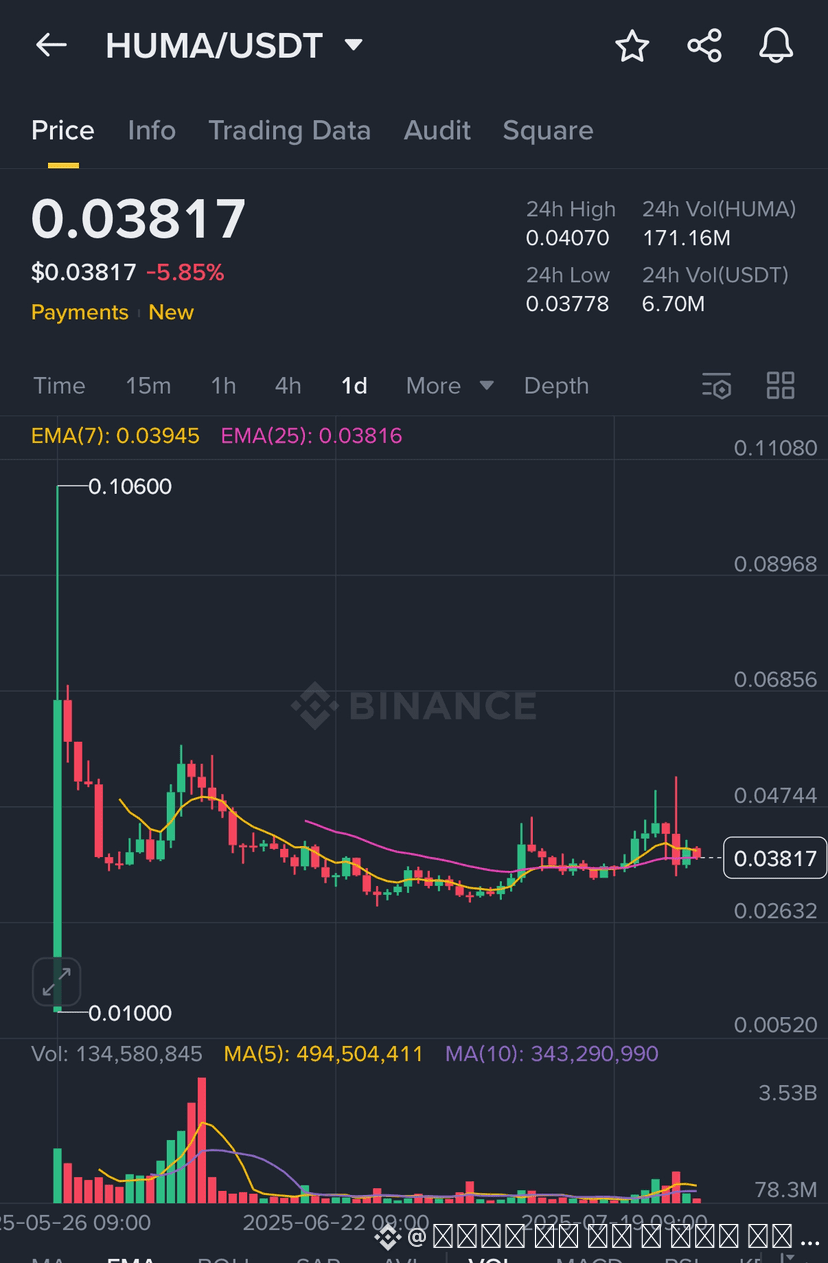
Are you bullish on Altcoin? Long waited Huma protocol is ready to go. @humafinance #humafinance #alt
Are you bullish on Altcoin? Long waited Huma protocol is ready to go. @Huma Finance 🟣 #humafinance #alt
1
143
Article
Binance Futures Trading Fees and How to Receive DiscountsBinance futures trading follows a maker/taker fee structure. Depending on trading volume and BNB holdings, VIP levels increase and fees decrease. Additionally, if fees are paid with BNB, an extra 10% discount is applied.
Additionally, when signing up for Binance, entering the referral code A6M7M7YA will grant you a 10% discount on futures trading fees and a bonus worth $600 (for spot trading, a 20% discount is applied).
Join Binance (fee discount): [https://www.binance.com/join?ref=A6M7M7YA](https://www.binance.com/join?ref=A6M7M7YA)
Binance Futures Trading Fees and How to Receive Discounts
Binance futures trading follows a maker/taker fee structure. Depending on trading volume and BNB holdings, VIP levels increase and fees decrease. Additionally, if fees are paid with BNB, an extra 10% discount is applied.
Additionally, when signing up for Binance, entering the referral code A6M7M7YA will grant you a 10% discount on futures trading fees and a bonus worth $600 (for spot trading, a 20% discount is applied).
Join Binance (fee discount): https://www.binance.com/join?ref=A6M7M7YA
Additionally, when signing up for Binance, entering the referral code A6M7M7YA will grant you a 10% discount on futures trading fees and a bonus worth $600 (for spot trading, a 20% discount is applied).
Join Binance (fee discount): https://www.binance.com/join?ref=A6M7M7YA
1
124

Article
How to Get Airdrops by Working with Binance Alpha Points (Complete Guide)✅ Key takeaways from this article
You can easily understand what Binance Alpha Points are
I'll show you how to do Alpha Point work separately for exchanges and wallets
Introducing airdrop qualification scores and strategic working tips
Includes a sign-up link where you can start with a fee discount
How to get airdrops by working with Binance Alpha Points
🧭 What are Alpha Points?
Binance Alpha Points are
How to Get Airdrops by Working with Binance Alpha Points (Complete Guide)
✅ Key takeaways from this article
You can easily understand what Binance Alpha Points are
I'll show you how to do Alpha Point work separately for exchanges and wallets
Introducing airdrop qualification scores and strategic working tips
Includes a sign-up link where you can start with a fee discount
How to get airdrops by working with Binance Alpha Points
🧭 What are Alpha Points?
Binance Alpha Points are
You can easily understand what Binance Alpha Points are
I'll show you how to do Alpha Point work separately for exchanges and wallets
Introducing airdrop qualification scores and strategic working tips
Includes a sign-up link where you can start with a fee discount
How to get airdrops by working with Binance Alpha Points
🧭 What are Alpha Points?
Binance Alpha Points are
99

Article
Binance Futures Trading Fee Complete Guide and How to Get Discounts🧭 First, let's start by understanding the fees properly
Binance Futures trading is preferred by many investors because it allows for more diverse strategies than spot trading.
However, in futures trading, fees are just as important as profits.
Have you ever been happy about making a profit, only to realize that it's all been eaten up by fees?
In this article, we'll cover three essential fees you need to know in Binance Futures trading, along with
ways to legally and safely reduce these fees.
Binance Futures Trading Fee Complete Guide and How to Get Discounts
🧭 First, let's start by understanding the fees properly
Binance Futures trading is preferred by many investors because it allows for more diverse strategies than spot trading.
However, in futures trading, fees are just as important as profits.
Have you ever been happy about making a profit, only to realize that it's all been eaten up by fees?
In this article, we'll cover three essential fees you need to know in Binance Futures trading, along with
ways to legally and safely reduce these fees.
Binance Futures trading is preferred by many investors because it allows for more diverse strategies than spot trading.
However, in futures trading, fees are just as important as profits.
Have you ever been happy about making a profit, only to realize that it's all been eaten up by fees?
In this article, we'll cover three essential fees you need to know in Binance Futures trading, along with
ways to legally and safely reduce these fees.
1
94
Article
Registering for Binance, what is a 'referral code'? How to receive a 20% discount?Binance is the world's largest cryptocurrency exchange where you can quickly and safely trade various coins including Bitcoin, Ethereum, and Ripple.
In this article, we will learn about what a 'referral code' is when signing up for Binance, as well as the detailed registration process and how to receive a 20% discount on fees.
Binance registration and referral code for a 20% discount
What is a Binance referral code?
The Binance referral code is also known as a 'friend invitation code' and is one of the benefits provided when existing Binance users invite new users.
Registering for Binance, what is a 'referral code'? How to receive a 20% discount?
Binance is the world's largest cryptocurrency exchange where you can quickly and safely trade various coins including Bitcoin, Ethereum, and Ripple.
In this article, we will learn about what a 'referral code' is when signing up for Binance, as well as the detailed registration process and how to receive a 20% discount on fees.
Binance registration and referral code for a 20% discount
What is a Binance referral code?
The Binance referral code is also known as a 'friend invitation code' and is one of the benefits provided when existing Binance users invite new users.
In this article, we will learn about what a 'referral code' is when signing up for Binance, as well as the detailed registration process and how to receive a 20% discount on fees.
Binance registration and referral code for a 20% discount
What is a Binance referral code?
The Binance referral code is also known as a 'friend invitation code' and is one of the benefits provided when existing Binance users invite new users.
210
What Is a Binance Referral Code and What to Put in the Signup Field?If you’re signing up for Binance for the first time, you might notice a field labeled “Referral ID (optional)” during registration. This is a place where you can enter a code to receive special benefits as a new user. But what exactly is a referral code, and what should you put in that field to get the most value?
Binance Register (20% Discount): [https://accounts.binance.com/register?ref=A6M7M7YA](https://accounts.binance.com/register?ref=a6m7m7ya)
What Is a Binance Referral Code?
A Binance referral code is a promotional code created by an existing Binance user. When you enter this code during signup, both you and the person who shared the code can receive rewards. These benefits often include trading fee discounts, USDT bonuses, and access to exclusive events or promotions.
One of the most common perks is a lifetime discount on trading fees. For users who plan to trade regularly, this can lead to significant savings over time. The referral program is completely optional, but it’s a smart way to reduce your costs from the very beginning.
What Should You Put in the Referral Field?
When you see the “Referral ID” box on the signup form, you should enter a valid code to unlock these benefits. If you don’t have a code from a friend or community member, you can use a trusted public code that is known to provide maximum value.
For example, you can enter:
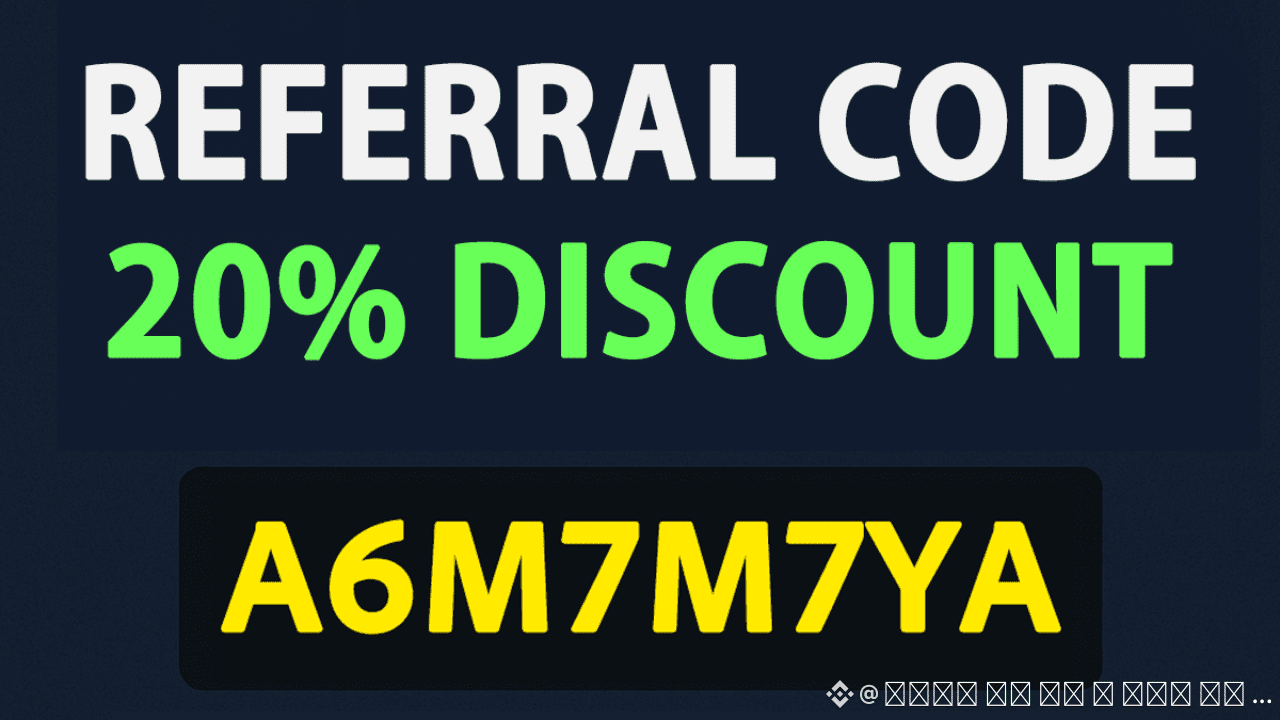
A6M7M7YA
This code gives new users a 20% discount on spot trading fees and a 10% discount on futures trading fees. It’s a simple, effective way to save money every time you make a trade on Binance.
Alternatively, you can use:
SCL7K4UM
This code currently offers up to $600 in USDT welcome bonuses if you complete certain tasks after signing up, along with the same 20% trading fee discount. If you’re looking for both immediate bonuses and long-term fee savings, this is a strong choice.
Whichever code you choose, make sure to enter it before completing your registration. Once your account is created, you won’t be able to add or change the referral code later.
How to Enter the Code
Binance register: [https://accounts.binance.com/register?ref=A6M7M7YA](https://accounts.binance.com/register?ref=a6m7m7ya)
When you begin the Binance registration process, you’ll be asked to provide your email, phone number, and password. Right below the password field (or in the final step on the mobile app), you’ll see a box labeled “Referral ID.” Paste your chosen code into this box before continuing.
If you’re using a register link above, the code is embedded in the link automatically, and the field will already be filled in for you. Just make sure the code you see matches the one you intended to use.
Final Tips
Using a Binance referral code during sign-up is one of the easiest ways to gain an edge as a new trader. Whether you’re looking to save on trading fees or unlock bonus rewards, entering the right code at registration is a small step that can bring big long-term benefits.
Choose a code like A6M7M7YA or SCL7K4UM, apply it during registration, and start your Binance journey with built-in advantages. It only takes a few seconds, and you won’t get a second chance to apply it after your account is created—so make it count.
What Is a Binance Referral Code and What to Put in the Signup Field?
If you’re signing up for Binance for the first time, you might notice a field labeled “Referral ID (optional)” during registration. This is a place where you can enter a code to receive special benefits as a new user. But what exactly is a referral code, and what should you put in that field to get the most value?
Binance Register (20% Discount): https://accounts.binance.com/register?ref=A6M7M7YA
What Is a Binance Referral Code?
A Binance referral code is a promotional code created by an existing Binance user. When you enter this code during signup, both you and the person who shared the code can receive rewards. These benefits often include trading fee discounts, USDT bonuses, and access to exclusive events or promotions.
One of the most common perks is a lifetime discount on trading fees. For users who plan to trade regularly, this can lead to significant savings over time. The referral program is completely optional, but it’s a smart way to reduce your costs from the very beginning.
What Should You Put in the Referral Field?
When you see the “Referral ID” box on the signup form, you should enter a valid code to unlock these benefits. If you don’t have a code from a friend or community member, you can use a trusted public code that is known to provide maximum value.
For example, you can enter:
A6M7M7YA
This code gives new users a 20% discount on spot trading fees and a 10% discount on futures trading fees. It’s a simple, effective way to save money every time you make a trade on Binance.
Alternatively, you can use:
SCL7K4UM
This code currently offers up to $600 in USDT welcome bonuses if you complete certain tasks after signing up, along with the same 20% trading fee discount. If you’re looking for both immediate bonuses and long-term fee savings, this is a strong choice.
Whichever code you choose, make sure to enter it before completing your registration. Once your account is created, you won’t be able to add or change the referral code later.
How to Enter the Code
Binance register: https://accounts.binance.com/register?ref=A6M7M7YA
When you begin the Binance registration process, you’ll be asked to provide your email, phone number, and password. Right below the password field (or in the final step on the mobile app), you’ll see a box labeled “Referral ID.” Paste your chosen code into this box before continuing.
If you’re using a register link above, the code is embedded in the link automatically, and the field will already be filled in for you. Just make sure the code you see matches the one you intended to use.
Final Tips
Using a Binance referral code during sign-up is one of the easiest ways to gain an edge as a new trader. Whether you’re looking to save on trading fees or unlock bonus rewards, entering the right code at registration is a small step that can bring big long-term benefits.
Choose a code like A6M7M7YA or SCL7K4UM, apply it during registration, and start your Binance journey with built-in advantages. It only takes a few seconds, and you won’t get a second chance to apply it after your account is created—so make it count.
Binance Register (20% Discount): https://accounts.binance.com/register?ref=A6M7M7YA
What Is a Binance Referral Code?
A Binance referral code is a promotional code created by an existing Binance user. When you enter this code during signup, both you and the person who shared the code can receive rewards. These benefits often include trading fee discounts, USDT bonuses, and access to exclusive events or promotions.
One of the most common perks is a lifetime discount on trading fees. For users who plan to trade regularly, this can lead to significant savings over time. The referral program is completely optional, but it’s a smart way to reduce your costs from the very beginning.
What Should You Put in the Referral Field?
When you see the “Referral ID” box on the signup form, you should enter a valid code to unlock these benefits. If you don’t have a code from a friend or community member, you can use a trusted public code that is known to provide maximum value.
For example, you can enter:
A6M7M7YA
This code gives new users a 20% discount on spot trading fees and a 10% discount on futures trading fees. It’s a simple, effective way to save money every time you make a trade on Binance.
Alternatively, you can use:
SCL7K4UM
This code currently offers up to $600 in USDT welcome bonuses if you complete certain tasks after signing up, along with the same 20% trading fee discount. If you’re looking for both immediate bonuses and long-term fee savings, this is a strong choice.
Whichever code you choose, make sure to enter it before completing your registration. Once your account is created, you won’t be able to add or change the referral code later.
How to Enter the Code
Binance register: https://accounts.binance.com/register?ref=A6M7M7YA
When you begin the Binance registration process, you’ll be asked to provide your email, phone number, and password. Right below the password field (or in the final step on the mobile app), you’ll see a box labeled “Referral ID.” Paste your chosen code into this box before continuing.
If you’re using a register link above, the code is embedded in the link automatically, and the field will already be filled in for you. Just make sure the code you see matches the one you intended to use.
Final Tips
Using a Binance referral code during sign-up is one of the easiest ways to gain an edge as a new trader. Whether you’re looking to save on trading fees or unlock bonus rewards, entering the right code at registration is a small step that can bring big long-term benefits.
Choose a code like A6M7M7YA or SCL7K4UM, apply it during registration, and start your Binance journey with built-in advantages. It only takes a few seconds, and you won’t get a second chance to apply it after your account is created—so make it count.
1
247
Article
Binance Referral ID 2025 – Save 20% Instantly with A6M7M7YAIf you’re an active trader on Binance, you may already know how quickly trading fees can add up.
But here’s a helpful tip: by entering a simple referral code, you can secure a 20% discount on your Spot and Futures trades for life.
Referral Code: A6M7M7YA
Just enter this code during registration, and enjoy a 20% reduction on your trading fees, permanently.
It’s a straightforward process with no hidden steps or fine print—just instant savings.
Why This Matters in 2025
As the world’s largest cryptocurrency exchange, Binance continues to see record-high trading volumes.
With this, even small fees can impact your profitability over time. By using a referral code like A6M7M7YA, you can lock in a lifetime fee discount—and it only takes a few seconds to set up.
How to Use the Code:
Visit the official Binance sign-up page: [https://www.binance.com/join?ref=A6M7M7YA](https://www.binance.com/join?ref=A6M7M7YA)Enter your email address or phone number.Choose a secure password.In the "Referral ID" field (optional), input: A6M7M7YA.Complete the identity verification (KYC).Start trading, and enjoy lower fees from day one.
There’s no complexity, no recurring steps—just a smart way to trade more efficiently. Start Saving Today – Trade More, Spend Less.
Binance Referral ID 2025 – Save 20% Instantly with A6M7M7YA
If you’re an active trader on Binance, you may already know how quickly trading fees can add up.
But here’s a helpful tip: by entering a simple referral code, you can secure a 20% discount on your Spot and Futures trades for life.
Referral Code: A6M7M7YA
Just enter this code during registration, and enjoy a 20% reduction on your trading fees, permanently.
It’s a straightforward process with no hidden steps or fine print—just instant savings.
Why This Matters in 2025
As the world’s largest cryptocurrency exchange, Binance continues to see record-high trading volumes.
With this, even small fees can impact your profitability over time. By using a referral code like A6M7M7YA, you can lock in a lifetime fee discount—and it only takes a few seconds to set up.
How to Use the Code:
Visit the official Binance sign-up page: https://www.binance.com/join?ref=A6M7M7YAEnter your email address or phone number.Choose a secure password.In the "Referral ID" field (optional), input: A6M7M7YA.Complete the identity verification (KYC).Start trading, and enjoy lower fees from day one.
There’s no complexity, no recurring steps—just a smart way to trade more efficiently. Start Saving Today – Trade More, Spend Less.
But here’s a helpful tip: by entering a simple referral code, you can secure a 20% discount on your Spot and Futures trades for life.
Referral Code: A6M7M7YA
Just enter this code during registration, and enjoy a 20% reduction on your trading fees, permanently.
It’s a straightforward process with no hidden steps or fine print—just instant savings.
Why This Matters in 2025
As the world’s largest cryptocurrency exchange, Binance continues to see record-high trading volumes.
With this, even small fees can impact your profitability over time. By using a referral code like A6M7M7YA, you can lock in a lifetime fee discount—and it only takes a few seconds to set up.
How to Use the Code:
Visit the official Binance sign-up page: https://www.binance.com/join?ref=A6M7M7YAEnter your email address or phone number.Choose a secure password.In the "Referral ID" field (optional), input: A6M7M7YA.Complete the identity verification (KYC).Start trading, and enjoy lower fees from day one.
There’s no complexity, no recurring steps—just a smart way to trade more efficiently. Start Saving Today – Trade More, Spend Less.
420

Article
Binance Referral Code A6M7M7YA: Why You Must Use the Referral ID When Signing Up?When starting to trade virtual assets for the first time, one of the first considerations is 'which exchange to use'. The next question is 'how to save on fees'.
In such cases, the Binance referral ID comes in handy. Binance is one of the largest virtual asset exchanges in the world, and entering a referral code when registering allows you to receive fee discount benefits.
The referral ID I will introduce this time is 'A6M7M7YA'. Let me explain why this code is useful and what benefits it offers.
Binance Referral Code A6M7M7YA: Why You Must Use the Referral ID When Signing Up?
When starting to trade virtual assets for the first time, one of the first considerations is 'which exchange to use'. The next question is 'how to save on fees'.
In such cases, the Binance referral ID comes in handy. Binance is one of the largest virtual asset exchanges in the world, and entering a referral code when registering allows you to receive fee discount benefits.
The referral ID I will introduce this time is 'A6M7M7YA'. Let me explain why this code is useful and what benefits it offers.
In such cases, the Binance referral ID comes in handy. Binance is one of the largest virtual asset exchanges in the world, and entering a referral code when registering allows you to receive fee discount benefits.
The referral ID I will introduce this time is 'A6M7M7YA'. Let me explain why this code is useful and what benefits it offers.
1
113
Log in to explore more content
Join global crypto users on Binance Square
⚡️ Get latest and useful information about crypto.
💬 Trusted by the world’s largest crypto exchange.
👍 Discover real insights from verified creators.
Email / Phone number
Trending Topics
BinanceLaunchesBinanceIntelligence
34,535 views
418 Discussing
🚨 BINANCE JUST PUT AI DIRECTLY INSIDE THE EXCHANGE — AND THIS COULD CHANGE HOW RETAIL TRADES.
Binance has officially launched Binance Intelligence, a new AI layer built into the Binance ecosystem. It combines three products:
Binance AI for everyday users,
Binance AI Pro for automated trading workflows,
and Agent OS for developers building financial agents.
The part traders should care about?
Binance AI can surface market briefs, smart alerts, PnL recaps and personalized information, while AI Pro is designed to turn a plain-English trading idea into a visual strategy workflow.
That means the next phase of exchange competition may not be:
lowest fees vs deepest liquidity.
It could be:
who gives traders the best AI execution layer.
If Binance Intelligence actually drives heavier user activity, automated strategies and higher trading frequency, watch $BNB first.
AI adoption ↑
→ Binance engagement ↑
→ trading activity ↑
→ ecosystem narrative strengthens.
The catalyst I’d watch now:
global rollout + AI Pro launch + measurable user adoption.
Because once AI stops just telling you what the market is doing…
…and starts helping build the trade itself?
That’s when this gets much bigger than another chatbot. 👀
#binancelaunchesbinanceintelligence #EvernorthXRPTreasuryCompletesSPACMerger #ADAGains10%Above$0.27 #ETHUp70%InQ3ButLiquidityFalls #EthStakingExitQueueHits2026High
KimHotbae
·20 Likes
·24.7k views
EvernorthXRPTreasuryCompletesSPACMerger
30,571 views
280 Discussing
ADAGains10%Above$0.27
30,636 views
205 Discussing