
马大帅1203
23 Posts

马大帅1203
Report
Block User
5 Following
66 Followers
56 Liked
Posts
All
Quotes
·
--
#比特币 breaks 87,000, BCH and UNI surge as well—has the bull market arrived?
On September 22, Bitcoin briefly broke above $87,000 and hit a new high since late January this year. Then, funds began to spread into more high-beta crypto assets: BCH’s intraday gain at one point exceeded 25%, and UNI also surged back to around the $10 level. On September 23, Bitcoin remained around $86,000, and the market did not immediately give back all of the gains.
The direct catalyst for this move came from the U.S. Chicago Mercantile Exchange (CME), which announced plans to launch Bitcoin Cash (BCH) and Uniswap (UNI) token futures contracts on October 19. However, final approval and listing still depend on regulatory review.
When I observe cross-market trends like this, I use BiyaPay to同步 (synchronize) track changes in BTC, ETH, as well as related assets in U.S. stocks, Hong Kong stocks, and the dollar. Then, I combine ETF flows, interest rates, and risk appetite to find a coherent explanation. As a global all-in-one asset allocation platform covering scenarios such as digital assets, U.S. stocks, Hong Kong stocks, and fiat currency exchange, placing different markets on the same dashboard makes it easier to determine whether capital is continuously expanding into higher-volatility assets—or whether it’s just a short-term rotation following a BTC breakout.
Next, three things need to be watched.
First, whether BTC can hold above $85,000. If BTC weakens again, altcoins typically get hit even faster.
Second, after the initial news hype fades, whether trading volume for BCH and UNI can be sustained. If the price rise is mainly driven by leverage, subsequent volatility could become significantly amplified.
Third, whether the CME contracts are able to launch as scheduled—and what actual trading looks like afterward. What truly changes the market structure is not the announcement itself, but the follow-through in trading volume and institutional participation.
So, the signal released by this rally is not that every altcoin is back into an uptrend cycle. Instead, it suggests that the trading scope in the crypto market is expanding. BTC confirms the overall market risk appetite, institutional products provide new channels for participation, and BCH and UNI become representative targets as funds seek higher beta.
Whether prices can hold after the news tide recedes is the real test of this rally.
#比特币 breaks 87,000, BCH and UNI surge as well—has the bull market arrived?
On September 22, Bitcoin briefly broke above $87,000 and hit a new high since late January this year. Then, funds began to spread into more high-beta crypto assets: BCH’s intraday gain at one point exceeded 25%, and UNI also surged back to around the $10 level. On September 23, Bitcoin remained around $86,000, and the market did not immediately give back all of the gains.
The direct catalyst for this move came from the U.S. Chicago Mercantile Exchange (CME), which announced plans to launch Bitcoin Cash (BCH) and Uniswap (UNI) token futures contracts on October 19. However, final approval and listing still depend on regulatory review.
When I observe cross-market trends like this, I use BiyaPay to同步 (synchronize) track changes in BTC, ETH, as well as related assets in U.S. stocks, Hong Kong stocks, and the dollar. Then, I combine ETF flows, interest rates, and risk appetite to find a coherent explanation. As a global all-in-one asset allocation platform covering scenarios such as digital assets, U.S. stocks, Hong Kong stocks, and fiat currency exchange, placing different markets on the same dashboard makes it easier to determine whether capital is continuously expanding into higher-volatility assets—or whether it’s just a short-term rotation following a BTC breakout.
Next, three things need to be watched.
First, whether BTC can hold above $85,000. If BTC weakens again, altcoins typically get hit even faster.
Second, after the initial news hype fades, whether trading volume for BCH and UNI can be sustained. If the price rise is mainly driven by leverage, subsequent volatility could become significantly amplified.
Third, whether the CME contracts are able to launch as scheduled—and what actual trading looks like afterward. What truly changes the market structure is not the announcement itself, but the follow-through in trading volume and institutional participation.
So, the signal released by this rally is not that every altcoin is back into an uptrend cycle. Instead, it suggests that the trading scope in the crypto market is expanding. BTC confirms the overall market risk appetite, institutional products provide new channels for participation, and BCH and UNI become representative targets as funds seek higher beta.
Whether prices can hold after the news tide recedes is the real test of this rally.
On September 22, Bitcoin briefly broke above $87,000 and hit a new high since late January this year. Then, funds began to spread into more high-beta crypto assets: BCH’s intraday gain at one point exceeded 25%, and UNI also surged back to around the $10 level. On September 23, Bitcoin remained around $86,000, and the market did not immediately give back all of the gains.
The direct catalyst for this move came from the U.S. Chicago Mercantile Exchange (CME), which announced plans to launch Bitcoin Cash (BCH) and Uniswap (UNI) token futures contracts on October 19. However, final approval and listing still depend on regulatory review.
When I observe cross-market trends like this, I use BiyaPay to同步 (synchronize) track changes in BTC, ETH, as well as related assets in U.S. stocks, Hong Kong stocks, and the dollar. Then, I combine ETF flows, interest rates, and risk appetite to find a coherent explanation. As a global all-in-one asset allocation platform covering scenarios such as digital assets, U.S. stocks, Hong Kong stocks, and fiat currency exchange, placing different markets on the same dashboard makes it easier to determine whether capital is continuously expanding into higher-volatility assets—or whether it’s just a short-term rotation following a BTC breakout.
Next, three things need to be watched.
First, whether BTC can hold above $85,000. If BTC weakens again, altcoins typically get hit even faster.
Second, after the initial news hype fades, whether trading volume for BCH and UNI can be sustained. If the price rise is mainly driven by leverage, subsequent volatility could become significantly amplified.
Third, whether the CME contracts are able to launch as scheduled—and what actual trading looks like afterward. What truly changes the market structure is not the announcement itself, but the follow-through in trading volume and institutional participation.
So, the signal released by this rally is not that every altcoin is back into an uptrend cycle. Instead, it suggests that the trading scope in the crypto market is expanding. BTC confirms the overall market risk appetite, institutional products provide new channels for participation, and BCH and UNI become representative targets as funds seek higher beta.
Whether prices can hold after the news tide recedes is the real test of this rally.

72
·
--
Apple’s foldable screen opens a new era—can #AAPL regain momentum?
The impact of Apple’s new product launch on the market isn’t only limited to AAPL itself; it also ripples through the supply chain and the Hong Kong listed consumer electronics sector.
If the iPhone Duo scales up in volume, new attention could be drawn to multiple areas, including foldable display panels, hinges, structural components, thermal management, batteries, camera module assemblies, and advanced packaging. Hong Kong-listed and other market Apple supply-chain companies may also see fluctuations around orders, production schedules, and per-unit value.
But Apple’s supply chain shouldn’t be viewed through concept buzz alone. What truly matters is order size, yield rates, product pricing, and suppliers’ profit margins. If foldable screens remain a long-term high-end niche product, the supply-chain benefits will be more structural; if they expand into broader product lines in the future, the industry’s resilience and elasticity will become noticeably stronger.
When making cross-market observations like this, I use BiyaPay to synchronously track changes in AAPL, US tech stocks, and Hong Kong consumer electronics companies, as well as digital assets like BTC and ETH. As a global all-in-one asset allocation platform covering digital assets, US stocks, Hong Kong stocks, and fiat exchange scenarios, putting different markets on the same quote table makes it easier to tell whether investor trading is driven by Apple’s new products themselves—or by broader tech-stock moves and shifts in risk appetite.
What AAPL needs to prove next
First, whether foldable screens can kick off a new high-end iPhone upgrade cycle. Duo’s price will likely prevent it from becoming a mainstream product in the near term, but if high-end users show strong acceptance, Apple will have the opportunity to raise the average selling price of iPhones.
Second, whether AI can evolve from “conference vocabulary” into everyday use. Apple needs to demonstrate that Siri AI can change user habits—not just add a few showcased features.
Third, whether Ternus can establish new product expectations. The market consensus in the Cook era was that Apple could maintain stable profitability; in the Ternus era, Apple still needs to further prove it can continuously launch impactful new products.
This Apple press event has highlights: the foldable screen is a new form factor unseen for many years, and AI has finally taken a more important position. But the stock-price reaction is relatively restrained, suggesting the market is already not satisfied by new product launches alone.
For Apple, the press conference creates anticipation; reservation data, sales performance, AI usage rate, and next quarter’s earnings report are what will truly test that anticipation.
Apple’s foldable screen opens a new era—can #AAPL regain momentum?
The impact of Apple’s new product launch on the market isn’t only limited to AAPL itself; it also ripples through the supply chain and the Hong Kong listed consumer electronics sector.
If the iPhone Duo scales up in volume, new attention could be drawn to multiple areas, including foldable display panels, hinges, structural components, thermal management, batteries, camera module assemblies, and advanced packaging. Hong Kong-listed and other market Apple supply-chain companies may also see fluctuations around orders, production schedules, and per-unit value.
But Apple’s supply chain shouldn’t be viewed through concept buzz alone. What truly matters is order size, yield rates, product pricing, and suppliers’ profit margins. If foldable screens remain a long-term high-end niche product, the supply-chain benefits will be more structural; if they expand into broader product lines in the future, the industry’s resilience and elasticity will become noticeably stronger.
When making cross-market observations like this, I use BiyaPay to synchronously track changes in AAPL, US tech stocks, and Hong Kong consumer electronics companies, as well as digital assets like BTC and ETH. As a global all-in-one asset allocation platform covering digital assets, US stocks, Hong Kong stocks, and fiat exchange scenarios, putting different markets on the same quote table makes it easier to tell whether investor trading is driven by Apple’s new products themselves—or by broader tech-stock moves and shifts in risk appetite.
What AAPL needs to prove next
First, whether foldable screens can kick off a new high-end iPhone upgrade cycle. Duo’s price will likely prevent it from becoming a mainstream product in the near term, but if high-end users show strong acceptance, Apple will have the opportunity to raise the average selling price of iPhones.
Second, whether AI can evolve from “conference vocabulary” into everyday use. Apple needs to demonstrate that Siri AI can change user habits—not just add a few showcased features.
Third, whether Ternus can establish new product expectations. The market consensus in the Cook era was that Apple could maintain stable profitability; in the Ternus era, Apple still needs to further prove it can continuously launch impactful new products.
This Apple press event has highlights: the foldable screen is a new form factor unseen for many years, and AI has finally taken a more important position. But the stock-price reaction is relatively restrained, suggesting the market is already not satisfied by new product launches alone.
For Apple, the press conference creates anticipation; reservation data, sales performance, AI usage rate, and next quarter’s earnings report are what will truly test that anticipation.
The impact of Apple’s new product launch on the market isn’t only limited to AAPL itself; it also ripples through the supply chain and the Hong Kong listed consumer electronics sector.
If the iPhone Duo scales up in volume, new attention could be drawn to multiple areas, including foldable display panels, hinges, structural components, thermal management, batteries, camera module assemblies, and advanced packaging. Hong Kong-listed and other market Apple supply-chain companies may also see fluctuations around orders, production schedules, and per-unit value.
But Apple’s supply chain shouldn’t be viewed through concept buzz alone. What truly matters is order size, yield rates, product pricing, and suppliers’ profit margins. If foldable screens remain a long-term high-end niche product, the supply-chain benefits will be more structural; if they expand into broader product lines in the future, the industry’s resilience and elasticity will become noticeably stronger.
When making cross-market observations like this, I use BiyaPay to synchronously track changes in AAPL, US tech stocks, and Hong Kong consumer electronics companies, as well as digital assets like BTC and ETH. As a global all-in-one asset allocation platform covering digital assets, US stocks, Hong Kong stocks, and fiat exchange scenarios, putting different markets on the same quote table makes it easier to tell whether investor trading is driven by Apple’s new products themselves—or by broader tech-stock moves and shifts in risk appetite.
What AAPL needs to prove next
First, whether foldable screens can kick off a new high-end iPhone upgrade cycle. Duo’s price will likely prevent it from becoming a mainstream product in the near term, but if high-end users show strong acceptance, Apple will have the opportunity to raise the average selling price of iPhones.
Second, whether AI can evolve from “conference vocabulary” into everyday use. Apple needs to demonstrate that Siri AI can change user habits—not just add a few showcased features.
Third, whether Ternus can establish new product expectations. The market consensus in the Cook era was that Apple could maintain stable profitability; in the Ternus era, Apple still needs to further prove it can continuously launch impactful new products.
This Apple press event has highlights: the foldable screen is a new form factor unseen for many years, and AI has finally taken a more important position. But the stock-price reaction is relatively restrained, suggesting the market is already not satisfied by new product launches alone.
For Apple, the press conference creates anticipation; reservation data, sales performance, AI usage rate, and next quarter’s earnings report are what will truly test that anticipation.
262
·
--
#美股超话 Does the U.S. stock market in October really have a “historical win rate”?
From early October through late September, discussions in the U.S. stock market content always mention that “October will be stronger.”
This year there is a concrete real-world question. After the Federal Reserve raised rates last week, the market’s expectations for the rate path were still adjusting.
On September 21, oil prices fell and the yield on the 10-year U.S. Treasury declined. Meta and chip stocks lifted the U.S. tech sector. The improvement in risk appetite on that day had a real catalyst and didn’t need to be credited to “October is coming.” If oil prices rise again, bond yields move higher, and corporate earnings can’t keep up with valuations, even a gain that’s common in a given month historically would be hard to serve as relief for today’s pressure.
What’s more, the U.S. stock market is not a single uniform price. On September 21, the advance of AI-related stocks differed from that of traditional industries. Some say “the S&P 500 has a high probability of rising in October.” But what readers likely care about are companies like Nvidia, Meta, Apple—or the single stock they personally hold. These companies have different earnings reports, products, and valuation issues, so the index’s seasonality can’t simply be transplanted to individual stocks.
There’s also a trap in looking back at history: people are more likely to remember the rally after an election, while ignoring the pullbacks that occurred along the way. If your funds need to be used on a fixed date, or if you can’t tolerate a period of noticeable decline, then “it will probably rise on average over the next few months” offers limited help. The time horizon, risk tolerance, and the assets you hold must be considered on the same sheet of paper for any comparison to be meaningful.
When I look at the calendar effect, I usually use it to remind myself to ask three questions. First, is the statistical basis reliable—does the sample include interest-rate and oil-price conditions similar to this year? Second, is this rebound supported by just a handful of stocks, or are multiple sectors improving together? Third, how much good news has the current price already priced in? These three questions don’t spread as well as the two words “October,” but they’re more solid than making a decision based on a “win rate.”
Cross-market comparisons are also helpful. Fluctuations in U.S. Treasury yields, the U.S. dollar, Hong Kong tech stocks, and digital assets sometimes alert you to changes in risk appetite before the U.S. stock index does. I’ll use tools like BiyaPay to view U.S. stocks, Hong Kong stocks, and digital assets in one place, so I switch between fewer apps. You can even deposit digital assets, exchange them for U.S. dollars or Hong Kong dollars, and transfer them easily to stocks.
This article does not represent any position
#美股超话 Does the U.S. stock market in October really have a “historical win rate”?
From early October through late September, discussions in the U.S. stock market content always mention that “October will be stronger.”
This year there is a concrete real-world question. After the Federal Reserve raised rates last week, the market’s expectations for the rate path were still adjusting.
On September 21, oil prices fell and the yield on the 10-year U.S. Treasury declined. Meta and chip stocks lifted the U.S. tech sector. The improvement in risk appetite on that day had a real catalyst and didn’t need to be credited to “October is coming.” If oil prices rise again, bond yields move higher, and corporate earnings can’t keep up with valuations, even a gain that’s common in a given month historically would be hard to serve as relief for today’s pressure.
What’s more, the U.S. stock market is not a single uniform price. On September 21, the advance of AI-related stocks differed from that of traditional industries. Some say “the S&P 500 has a high probability of rising in October.” But what readers likely care about are companies like Nvidia, Meta, Apple—or the single stock they personally hold. These companies have different earnings reports, products, and valuation issues, so the index’s seasonality can’t simply be transplanted to individual stocks.
There’s also a trap in looking back at history: people are more likely to remember the rally after an election, while ignoring the pullbacks that occurred along the way. If your funds need to be used on a fixed date, or if you can’t tolerate a period of noticeable decline, then “it will probably rise on average over the next few months” offers limited help. The time horizon, risk tolerance, and the assets you hold must be considered on the same sheet of paper for any comparison to be meaningful.
When I look at the calendar effect, I usually use it to remind myself to ask three questions. First, is the statistical basis reliable—does the sample include interest-rate and oil-price conditions similar to this year? Second, is this rebound supported by just a handful of stocks, or are multiple sectors improving together? Third, how much good news has the current price already priced in? These three questions don’t spread as well as the two words “October,” but they’re more solid than making a decision based on a “win rate.”
Cross-market comparisons are also helpful. Fluctuations in U.S. Treasury yields, the U.S. dollar, Hong Kong tech stocks, and digital assets sometimes alert you to changes in risk appetite before the U.S. stock index does. I’ll use tools like BiyaPay to view U.S. stocks, Hong Kong stocks, and digital assets in one place, so I switch between fewer apps. You can even deposit digital assets, exchange them for U.S. dollars or Hong Kong dollars, and transfer them easily to stocks.
This article does not represent any position
From early October through late September, discussions in the U.S. stock market content always mention that “October will be stronger.”
This year there is a concrete real-world question. After the Federal Reserve raised rates last week, the market’s expectations for the rate path were still adjusting.
On September 21, oil prices fell and the yield on the 10-year U.S. Treasury declined. Meta and chip stocks lifted the U.S. tech sector. The improvement in risk appetite on that day had a real catalyst and didn’t need to be credited to “October is coming.” If oil prices rise again, bond yields move higher, and corporate earnings can’t keep up with valuations, even a gain that’s common in a given month historically would be hard to serve as relief for today’s pressure.
What’s more, the U.S. stock market is not a single uniform price. On September 21, the advance of AI-related stocks differed from that of traditional industries. Some say “the S&P 500 has a high probability of rising in October.” But what readers likely care about are companies like Nvidia, Meta, Apple—or the single stock they personally hold. These companies have different earnings reports, products, and valuation issues, so the index’s seasonality can’t simply be transplanted to individual stocks.
There’s also a trap in looking back at history: people are more likely to remember the rally after an election, while ignoring the pullbacks that occurred along the way. If your funds need to be used on a fixed date, or if you can’t tolerate a period of noticeable decline, then “it will probably rise on average over the next few months” offers limited help. The time horizon, risk tolerance, and the assets you hold must be considered on the same sheet of paper for any comparison to be meaningful.
When I look at the calendar effect, I usually use it to remind myself to ask three questions. First, is the statistical basis reliable—does the sample include interest-rate and oil-price conditions similar to this year? Second, is this rebound supported by just a handful of stocks, or are multiple sectors improving together? Third, how much good news has the current price already priced in? These three questions don’t spread as well as the two words “October,” but they’re more solid than making a decision based on a “win rate.”
Cross-market comparisons are also helpful. Fluctuations in U.S. Treasury yields, the U.S. dollar, Hong Kong tech stocks, and digital assets sometimes alert you to changes in risk appetite before the U.S. stock index does. I’ll use tools like BiyaPay to view U.S. stocks, Hong Kong stocks, and digital assets in one place, so I switch between fewer apps. You can even deposit digital assets, exchange them for U.S. dollars or Hong Kong dollars, and transfer them easily to stocks.
This article does not represent any position
2
·
--
#油价四连跌 , why did both Bitcoin and technology stocks ease up at the same time?
Over the past ten days, one of the most sensitive variables in global markets hasn’t been a company’s earnings report, but rather oil prices.
The situation at one point drove Brent crude up to high levels. The market worried that energy costs could push inflation higher again, and U.S. Treasury yields also came under pressure.
By September 21, oil prices had fallen for the fourth straight trading day. Bitcoin moved closer to $84,000, while S&P 500 and Nasdaq 100 futures rose in tandem. Assets that appear unrelated are actually linked by the same underlying logic: energy prices influence inflation expectations, inflation expectations affect the path of interest rates, and interest rates then impact the valuations of risk assets.
The Fed has just raised interest rates, and the market originally feared that tightening could continue.
At this moment, falling oil prices temporarily ease the pressure of “energy-driven inflation,” giving richly valued tech stocks and digital assets some breathing room. But that doesn’t mean that when oil falls, all risk assets will necessarily rise. Diplomatic developments, shipping recovery, and the security of oil-producing facilities could all cause crude to swing rapidly again.
For ordinary market observers, more useful than trying to guess where oil prices will go is to see how they transmit their effects.
If oil prices decline, Treasury yields fall, and tech stocks and Bitcoin repair in sync, it suggests that risk appetite is improving fairly comprehensively. If oil prices fall but bond yields remain high, the market may still be worried about monetary policy. If crude suddenly rebounds while gold rises in parallel, it looks more like a renewed uptick in risk-averse sentiment.
When I do cross-market reviews myself, I use tools like BiyaPay to look at crude oil, gold, digital assets, and U.S./Hong Kong stocks together. Its purpose is to reduce back-and-forth switching, making it easier to compare how the same event is reflected across different markets. Specific product features and availability still depend on the actual webpage. Market tools also can’t replace independent judgment.
Oil’s four-day drop gave the market a brief repricing release, but the real test is still ahead. Whether energy supply stays stable, whether the 10-year U.S. Treasury yield can fall, and whether the Fed’s stance on inflation changes—these will ultimately determine how far this rebound in risk appetite can go.
This article is my personal market observation based on publicly available information. It does not represent any platform’s position and does not constitute investment advice.
#油价四连跌 , why did both Bitcoin and technology stocks ease up at the same time?
Over the past ten days, one of the most sensitive variables in global markets hasn’t been a company’s earnings report, but rather oil prices.
The situation at one point drove Brent crude up to high levels. The market worried that energy costs could push inflation higher again, and U.S. Treasury yields also came under pressure.
By September 21, oil prices had fallen for the fourth straight trading day. Bitcoin moved closer to $84,000, while S&P 500 and Nasdaq 100 futures rose in tandem. Assets that appear unrelated are actually linked by the same underlying logic: energy prices influence inflation expectations, inflation expectations affect the path of interest rates, and interest rates then impact the valuations of risk assets.
The Fed has just raised interest rates, and the market originally feared that tightening could continue.
At this moment, falling oil prices temporarily ease the pressure of “energy-driven inflation,” giving richly valued tech stocks and digital assets some breathing room. But that doesn’t mean that when oil falls, all risk assets will necessarily rise. Diplomatic developments, shipping recovery, and the security of oil-producing facilities could all cause crude to swing rapidly again.
For ordinary market observers, more useful than trying to guess where oil prices will go is to see how they transmit their effects.
If oil prices decline, Treasury yields fall, and tech stocks and Bitcoin repair in sync, it suggests that risk appetite is improving fairly comprehensively. If oil prices fall but bond yields remain high, the market may still be worried about monetary policy. If crude suddenly rebounds while gold rises in parallel, it looks more like a renewed uptick in risk-averse sentiment.
When I do cross-market reviews myself, I use tools like BiyaPay to look at crude oil, gold, digital assets, and U.S./Hong Kong stocks together. Its purpose is to reduce back-and-forth switching, making it easier to compare how the same event is reflected across different markets. Specific product features and availability still depend on the actual webpage. Market tools also can’t replace independent judgment.
Oil’s four-day drop gave the market a brief repricing release, but the real test is still ahead. Whether energy supply stays stable, whether the 10-year U.S. Treasury yield can fall, and whether the Fed’s stance on inflation changes—these will ultimately determine how far this rebound in risk appetite can go.
This article is my personal market observation based on publicly available information. It does not represent any platform’s position and does not constitute investment advice.
Over the past ten days, one of the most sensitive variables in global markets hasn’t been a company’s earnings report, but rather oil prices.
The situation at one point drove Brent crude up to high levels. The market worried that energy costs could push inflation higher again, and U.S. Treasury yields also came under pressure.
By September 21, oil prices had fallen for the fourth straight trading day. Bitcoin moved closer to $84,000, while S&P 500 and Nasdaq 100 futures rose in tandem. Assets that appear unrelated are actually linked by the same underlying logic: energy prices influence inflation expectations, inflation expectations affect the path of interest rates, and interest rates then impact the valuations of risk assets.
The Fed has just raised interest rates, and the market originally feared that tightening could continue.
At this moment, falling oil prices temporarily ease the pressure of “energy-driven inflation,” giving richly valued tech stocks and digital assets some breathing room. But that doesn’t mean that when oil falls, all risk assets will necessarily rise. Diplomatic developments, shipping recovery, and the security of oil-producing facilities could all cause crude to swing rapidly again.
For ordinary market observers, more useful than trying to guess where oil prices will go is to see how they transmit their effects.
If oil prices decline, Treasury yields fall, and tech stocks and Bitcoin repair in sync, it suggests that risk appetite is improving fairly comprehensively. If oil prices fall but bond yields remain high, the market may still be worried about monetary policy. If crude suddenly rebounds while gold rises in parallel, it looks more like a renewed uptick in risk-averse sentiment.
When I do cross-market reviews myself, I use tools like BiyaPay to look at crude oil, gold, digital assets, and U.S./Hong Kong stocks together. Its purpose is to reduce back-and-forth switching, making it easier to compare how the same event is reflected across different markets. Specific product features and availability still depend on the actual webpage. Market tools also can’t replace independent judgment.
Oil’s four-day drop gave the market a brief repricing release, but the real test is still ahead. Whether energy supply stays stable, whether the 10-year U.S. Treasury yield can fall, and whether the Fed’s stance on inflation changes—these will ultimately determine how far this rebound in risk appetite can go.
This article is my personal market observation based on publicly available information. It does not represent any platform’s position and does not constitute investment advice.
319
·
--
#美债收益率 is still around 5%. Why hasn’t global assets fully gone quiet?
After the Fed’s rate hikes, what the market is most worth watching is not a single day’s rise or fall, but the tug-of-war between assets and U.S. Treasuries.
The 10-year Treasury yield briefly climbed above 5%, which is pressure for global assets. The higher the Treasury yield, the more attractive low-risk assets become; stocks, gold, Hong Kong tech, and digital assets—all riskier assets—need stronger earnings or a stronger narrative to justify themselves.
In theory, a 5% level should clearly weigh on risk assets. But these days, the market hasn’t broadly “gone quiet.” U.S. tech stocks have rebounded, Hong Kong tech has also shown signs of repair, and sentiment in digital assets hasn’t fully weakened.
The reason is that the market is trading two things at the same time.
First, the pressure from high interest rates is still there. The Fed has just raised rates, and the dot plot suggests further tightening within the year is still possible. As long as inflation hasn’t cooled off completely, it will be hard for Treasury yields to quickly return to lower levels.
Second, AI and corporate earnings still provide support. U.S. tech isn’t driven purely by valuation expansion. AI servers, cloud computing, semiconductors, and data centers still have real orders and capital expenditures backing them. Hong Kong tech, though affected by liquidity, has some companies whose valuations are already relatively low, and funds will look for opportunities to repair.
So we’re seeing the current setup: macro pressure compresses valuations, while the industry supports expectations.
For ordinary investors, this is the stage most prone to misjudgment. If you only look at the rate hikes, you might think all risk assets should be avoided; if you only focus on the AI and tech-stock rebound, you may overlook the pressure from Treasury yields. A steadier approach is to look at both lines together.
When I do market observations myself, I look at the 10-year Treasury yield, the U.S. Dollar Index, oil prices, the Nasdaq, Hang Seng Tech, gold, and digital asset trends. The performance of different assets can show whether capital is staying in risk-off mode—or returning to risk appetite.
In addition, in my day-to-day use I also rely on the BiyaPay tool to view U.S. stocks, Hong Kong stocks, digital assets, and multi-currency quotes from a single entry point. It supports direct deposits of digital assets, conversion into USD and HKD, and easy participation in the stock market. You can also withdraw the converted fiat money to your bank account or other broker accounts, with real-time deposits and withdrawals. This is simply my personal usage habit and does not represent the position of any platform.
#美债收益率 is still around 5%. Why hasn’t global assets fully gone quiet?
After the Fed’s rate hikes, what the market is most worth watching is not a single day’s rise or fall, but the tug-of-war between assets and U.S. Treasuries.
The 10-year Treasury yield briefly climbed above 5%, which is pressure for global assets. The higher the Treasury yield, the more attractive low-risk assets become; stocks, gold, Hong Kong tech, and digital assets—all riskier assets—need stronger earnings or a stronger narrative to justify themselves.
In theory, a 5% level should clearly weigh on risk assets. But these days, the market hasn’t broadly “gone quiet.” U.S. tech stocks have rebounded, Hong Kong tech has also shown signs of repair, and sentiment in digital assets hasn’t fully weakened.
The reason is that the market is trading two things at the same time.
First, the pressure from high interest rates is still there. The Fed has just raised rates, and the dot plot suggests further tightening within the year is still possible. As long as inflation hasn’t cooled off completely, it will be hard for Treasury yields to quickly return to lower levels.
Second, AI and corporate earnings still provide support. U.S. tech isn’t driven purely by valuation expansion. AI servers, cloud computing, semiconductors, and data centers still have real orders and capital expenditures backing them. Hong Kong tech, though affected by liquidity, has some companies whose valuations are already relatively low, and funds will look for opportunities to repair.
So we’re seeing the current setup: macro pressure compresses valuations, while the industry supports expectations.
For ordinary investors, this is the stage most prone to misjudgment. If you only look at the rate hikes, you might think all risk assets should be avoided; if you only focus on the AI and tech-stock rebound, you may overlook the pressure from Treasury yields. A steadier approach is to look at both lines together.
When I do market observations myself, I look at the 10-year Treasury yield, the U.S. Dollar Index, oil prices, the Nasdaq, Hang Seng Tech, gold, and digital asset trends. The performance of different assets can show whether capital is staying in risk-off mode—or returning to risk appetite.
In addition, in my day-to-day use I also rely on the BiyaPay tool to view U.S. stocks, Hong Kong stocks, digital assets, and multi-currency quotes from a single entry point. It supports direct deposits of digital assets, conversion into USD and HKD, and easy participation in the stock market. You can also withdraw the converted fiat money to your bank account or other broker accounts, with real-time deposits and withdrawals. This is simply my personal usage habit and does not represent the position of any platform.
After the Fed’s rate hikes, what the market is most worth watching is not a single day’s rise or fall, but the tug-of-war between assets and U.S. Treasuries.
The 10-year Treasury yield briefly climbed above 5%, which is pressure for global assets. The higher the Treasury yield, the more attractive low-risk assets become; stocks, gold, Hong Kong tech, and digital assets—all riskier assets—need stronger earnings or a stronger narrative to justify themselves.
In theory, a 5% level should clearly weigh on risk assets. But these days, the market hasn’t broadly “gone quiet.” U.S. tech stocks have rebounded, Hong Kong tech has also shown signs of repair, and sentiment in digital assets hasn’t fully weakened.
The reason is that the market is trading two things at the same time.
First, the pressure from high interest rates is still there. The Fed has just raised rates, and the dot plot suggests further tightening within the year is still possible. As long as inflation hasn’t cooled off completely, it will be hard for Treasury yields to quickly return to lower levels.
Second, AI and corporate earnings still provide support. U.S. tech isn’t driven purely by valuation expansion. AI servers, cloud computing, semiconductors, and data centers still have real orders and capital expenditures backing them. Hong Kong tech, though affected by liquidity, has some companies whose valuations are already relatively low, and funds will look for opportunities to repair.
So we’re seeing the current setup: macro pressure compresses valuations, while the industry supports expectations.
For ordinary investors, this is the stage most prone to misjudgment. If you only look at the rate hikes, you might think all risk assets should be avoided; if you only focus on the AI and tech-stock rebound, you may overlook the pressure from Treasury yields. A steadier approach is to look at both lines together.
When I do market observations myself, I look at the 10-year Treasury yield, the U.S. Dollar Index, oil prices, the Nasdaq, Hang Seng Tech, gold, and digital asset trends. The performance of different assets can show whether capital is staying in risk-off mode—or returning to risk appetite.
In addition, in my day-to-day use I also rely on the BiyaPay tool to view U.S. stocks, Hong Kong stocks, digital assets, and multi-currency quotes from a single entry point. It supports direct deposits of digital assets, conversion into USD and HKD, and easy participation in the stock market. You can also withdraw the converted fiat money to your bank account or other broker accounts, with real-time deposits and withdrawals. This is simply my personal usage habit and does not represent the position of any platform.
110
·
--
After #美联储加息 , how far can the US stock rebound go?
After the Fed’s rate hikes were implemented, US stocks did not continue to fall. Instead, there was a clear rebound. On September 17, the Nasdaq rose 1.69%, the S&P 500 gained 1.14%, the Dow climbed 0.61%, and the Philadelphia Semiconductor Index jumped 3.14%.
At the surface level, this looks like a tech-sector rally. But dig a little deeper: it’s the market re-pricing the impact of the rate hikes.
In the past few days, the market had been worried that higher oil prices would push inflation up, prompting the Fed to keep raising rates. US Treasury yields broke above 5%, and tech stock valuations were compressed. But once the rate hike was in place, oil prices fell, and the 10-year Treasury yield dropped to below 5%. Investors began to believe that the most acute period may already be behind them.
So, capital first flowed back into areas most sensitive to interest rates: semiconductors, AI hardware, tech leaders, and growth stocks.
However, this does not mean risks are fully gone. Even after this rate hike, the Fed still has not sent clear signals of a shift toward easing. Inflation pressures remain, oil prices are still not low, and Treasury supply pressure has not disappeared. The rebound looks more like a repair after bad news has been digested, rather than all problems being solved.
Whether the rally can continue depends on three key variables.
First, whether Treasury yields can hold below 5%. If long-end yields rise again, pressure on tech valuations will re-emerge.
Second, whether oil prices can keep cooling. If oil prices surge again, inflation expectations will rebound, making it harder for the Fed to become more dovish.
Third, whether the rally can broaden. If only semiconductors and a handful of AI stocks rise, the market remains too narrow. But if software, consumer stocks, financials, and small-cap stocks also participate, the repair is likely to be more solid.
When I do cross-market observation, I use tools like BiyaPay to monitor US stocks, Hong Kong stocks, digital assets, and multi-currency markets at the same time. No offshore account is needed. It supports direct deposits of digital assets, allowing you to convert into USD or HKD and participate in the stock market easily. You can also convert into fiat currency and withdraw or remit funds to your bank account or other brokerages for real-time deposits and withdrawals. This is only based on my personal usage habits and does not represent the position of any platform. For me, it’s better suited for observing market interlinkages rather than replacing judgment.
After #美联储加息 , how far can the US stock rebound go?
After the Fed’s rate hikes were implemented, US stocks did not continue to fall. Instead, there was a clear rebound. On September 17, the Nasdaq rose 1.69%, the S&P 500 gained 1.14%, the Dow climbed 0.61%, and the Philadelphia Semiconductor Index jumped 3.14%.
At the surface level, this looks like a tech-sector rally. But dig a little deeper: it’s the market re-pricing the impact of the rate hikes.
In the past few days, the market had been worried that higher oil prices would push inflation up, prompting the Fed to keep raising rates. US Treasury yields broke above 5%, and tech stock valuations were compressed. But once the rate hike was in place, oil prices fell, and the 10-year Treasury yield dropped to below 5%. Investors began to believe that the most acute period may already be behind them.
So, capital first flowed back into areas most sensitive to interest rates: semiconductors, AI hardware, tech leaders, and growth stocks.
However, this does not mean risks are fully gone. Even after this rate hike, the Fed still has not sent clear signals of a shift toward easing. Inflation pressures remain, oil prices are still not low, and Treasury supply pressure has not disappeared. The rebound looks more like a repair after bad news has been digested, rather than all problems being solved.
Whether the rally can continue depends on three key variables.
First, whether Treasury yields can hold below 5%. If long-end yields rise again, pressure on tech valuations will re-emerge.
Second, whether oil prices can keep cooling. If oil prices surge again, inflation expectations will rebound, making it harder for the Fed to become more dovish.
Third, whether the rally can broaden. If only semiconductors and a handful of AI stocks rise, the market remains too narrow. But if software, consumer stocks, financials, and small-cap stocks also participate, the repair is likely to be more solid.
When I do cross-market observation, I use tools like BiyaPay to monitor US stocks, Hong Kong stocks, digital assets, and multi-currency markets at the same time. No offshore account is needed. It supports direct deposits of digital assets, allowing you to convert into USD or HKD and participate in the stock market easily. You can also convert into fiat currency and withdraw or remit funds to your bank account or other brokerages for real-time deposits and withdrawals. This is only based on my personal usage habits and does not represent the position of any platform. For me, it’s better suited for observing market interlinkages rather than replacing judgment.
After the Fed’s rate hikes were implemented, US stocks did not continue to fall. Instead, there was a clear rebound. On September 17, the Nasdaq rose 1.69%, the S&P 500 gained 1.14%, the Dow climbed 0.61%, and the Philadelphia Semiconductor Index jumped 3.14%.
At the surface level, this looks like a tech-sector rally. But dig a little deeper: it’s the market re-pricing the impact of the rate hikes.
In the past few days, the market had been worried that higher oil prices would push inflation up, prompting the Fed to keep raising rates. US Treasury yields broke above 5%, and tech stock valuations were compressed. But once the rate hike was in place, oil prices fell, and the 10-year Treasury yield dropped to below 5%. Investors began to believe that the most acute period may already be behind them.
So, capital first flowed back into areas most sensitive to interest rates: semiconductors, AI hardware, tech leaders, and growth stocks.
However, this does not mean risks are fully gone. Even after this rate hike, the Fed still has not sent clear signals of a shift toward easing. Inflation pressures remain, oil prices are still not low, and Treasury supply pressure has not disappeared. The rebound looks more like a repair after bad news has been digested, rather than all problems being solved.
Whether the rally can continue depends on three key variables.
First, whether Treasury yields can hold below 5%. If long-end yields rise again, pressure on tech valuations will re-emerge.
Second, whether oil prices can keep cooling. If oil prices surge again, inflation expectations will rebound, making it harder for the Fed to become more dovish.
Third, whether the rally can broaden. If only semiconductors and a handful of AI stocks rise, the market remains too narrow. But if software, consumer stocks, financials, and small-cap stocks also participate, the repair is likely to be more solid.
When I do cross-market observation, I use tools like BiyaPay to monitor US stocks, Hong Kong stocks, digital assets, and multi-currency markets at the same time. No offshore account is needed. It supports direct deposits of digital assets, allowing you to convert into USD or HKD and participate in the stock market easily. You can also convert into fiat currency and withdraw or remit funds to your bank account or other brokerages for real-time deposits and withdrawals. This is only based on my personal usage habits and does not represent the position of any platform. For me, it’s better suited for observing market interlinkages rather than replacing judgment.

158
·
--
Fed rate-hike expectations are heating up—why do gold and the US dollar both move global assets?
#美联储加息是否已成定局 Before the Fed’s interest-rate decision, pricing in global markets starts to become tense.
Why is the US dollar strengthening?
Because in a high-interest-rate environment, yields on dollar assets are more attractive, so capital tends to return to the USD system.
Why is gold under pressure?
Because gold itself pays no interest. When Treasury yields rise, the opportunity cost of holding gold increases. Even though geopolitical risk can provide some support, as long as the dollar and real rates continue to stay strong, gold is prone to being pulled in different directions.
Why is the US stock market volatile?
Because high rates compress the valuations of high-multiple growth/tech stocks, and they also affect companies’ financing costs. Especially for AI, semiconductors, and other growth stocks—if the market worries that capital expenditures may slow down, volatility tends to increase.
Why are Hong Kong stocks affected as well?
Because Hong Kong stocks are highly sensitive to US dollar liquidity and global risk appetite. The stronger the dollar is, the more cautious capital becomes, making it harder for valuation recovery in Hong Kong stocks to run far in one go.
So global asset allocation can’t focus on just one market. The US dollar, Treasuries, gold, oil prices, US tech stocks, and Hong Kong tech stocks are actually all on the same table, influencing each other.
In my own observation of this kind of macro market, I use tools like BiyaPay to view US stocks, Hong Kong stocks, digital assets, and multi-currency market moves together. No need for an offshore account—supports direct deposits of digital assets, converts them into USD or HKD, and lets you easily participate in the stock market. You can also withdraw the converted fiat and remit to a bank account or other brokers for real-time deposits and withdrawals.
This is only my personal usage habit and does not represent the position of any platform.
Fed rate-hike expectations are heating up—why do gold and the US dollar both move global assets?
#美联储加息是否已成定局 Before the Fed’s interest-rate decision, pricing in global markets starts to become tense.
Why is the US dollar strengthening?
Because in a high-interest-rate environment, yields on dollar assets are more attractive, so capital tends to return to the USD system.
Why is gold under pressure?
Because gold itself pays no interest. When Treasury yields rise, the opportunity cost of holding gold increases. Even though geopolitical risk can provide some support, as long as the dollar and real rates continue to stay strong, gold is prone to being pulled in different directions.
Why is the US stock market volatile?
Because high rates compress the valuations of high-multiple growth/tech stocks, and they also affect companies’ financing costs. Especially for AI, semiconductors, and other growth stocks—if the market worries that capital expenditures may slow down, volatility tends to increase.
Why are Hong Kong stocks affected as well?
Because Hong Kong stocks are highly sensitive to US dollar liquidity and global risk appetite. The stronger the dollar is, the more cautious capital becomes, making it harder for valuation recovery in Hong Kong stocks to run far in one go.
So global asset allocation can’t focus on just one market. The US dollar, Treasuries, gold, oil prices, US tech stocks, and Hong Kong tech stocks are actually all on the same table, influencing each other.
In my own observation of this kind of macro market, I use tools like BiyaPay to view US stocks, Hong Kong stocks, digital assets, and multi-currency market moves together. No need for an offshore account—supports direct deposits of digital assets, converts them into USD or HKD, and lets you easily participate in the stock market. You can also withdraw the converted fiat and remit to a bank account or other brokers for real-time deposits and withdrawals.
This is only my personal usage habit and does not represent the position of any platform.
#美联储加息是否已成定局 Before the Fed’s interest-rate decision, pricing in global markets starts to become tense.
Why is the US dollar strengthening?
Because in a high-interest-rate environment, yields on dollar assets are more attractive, so capital tends to return to the USD system.
Why is gold under pressure?
Because gold itself pays no interest. When Treasury yields rise, the opportunity cost of holding gold increases. Even though geopolitical risk can provide some support, as long as the dollar and real rates continue to stay strong, gold is prone to being pulled in different directions.
Why is the US stock market volatile?
Because high rates compress the valuations of high-multiple growth/tech stocks, and they also affect companies’ financing costs. Especially for AI, semiconductors, and other growth stocks—if the market worries that capital expenditures may slow down, volatility tends to increase.
Why are Hong Kong stocks affected as well?
Because Hong Kong stocks are highly sensitive to US dollar liquidity and global risk appetite. The stronger the dollar is, the more cautious capital becomes, making it harder for valuation recovery in Hong Kong stocks to run far in one go.
So global asset allocation can’t focus on just one market. The US dollar, Treasuries, gold, oil prices, US tech stocks, and Hong Kong tech stocks are actually all on the same table, influencing each other.
In my own observation of this kind of macro market, I use tools like BiyaPay to view US stocks, Hong Kong stocks, digital assets, and multi-currency market moves together. No need for an offshore account—supports direct deposits of digital assets, converts them into USD or HKD, and lets you easily participate in the stock market. You can also withdraw the converted fiat and remit to a bank account or other brokers for real-time deposits and withdrawals.
This is only my personal usage habit and does not represent the position of any platform.
6
·
--
What can you do after converting USDT to USD?
Lately, it’s obvious that more people are discussing U.S. stocks, Hong Kong stocks, and global asset allocation.
On the one hand, U.S. tech stocks are still repeatedly becoming hot topics around AI, Apple’s foldable phones, semiconductors, cloud computing, and data centers. On the other hand, in Hong Kong, there are also new robot listings, tech-stock rebounds, and IPO activity. For many people who are used to holding #USDT , a very practical question comes up: if you want to catch opportunities in U.S. and Hong Kong stocks, how do you connect USDT with USD-based assets?
This need isn’t new, but it’s become more noticeable recently. In the past, when many people did global asset allocation, the first step would often get stuck at account setup and funding paths. U.S. and Hong Kong stock market conditions change every day. When people truly want to participate, they often find they still have to deal with multiple accounts, multiple currencies, transfer routes, and settlement times. Especially those who are used to using USDT are more concerned about whether they can convert USDT into USD or HKD more smoothly, and then enter accounts related to U.S. and Hong Kong stocks.
That’s also why I’ve been paying attention to BiyaPay recently. After you top up your account with digital currency, you can first swap it quickly into USD or HKD, and then transfer it to your U.S./Hong Kong stock trading account. In other words, it provides a tool path of “USDT and other digital assets to USD/HKD, and then to a U.S./Hong Kong stock account.”
As asset linkages become more apparent, the impact is also growing. A stronger U.S. dollar affects risk appetite; U.S. Treasury yields can suppress high-valued tech stocks; AI trends can boost semiconductors and tech in Hong Kong; and digital assets can reflect market sentiment. If you only look at a single market, it’s easy to miss changes. This does not represent any platform’s stance and does not constitute investment advice.
What can you do after converting USDT to USD?
Lately, it’s obvious that more people are discussing U.S. stocks, Hong Kong stocks, and global asset allocation.
On the one hand, U.S. tech stocks are still repeatedly becoming hot topics around AI, Apple’s foldable phones, semiconductors, cloud computing, and data centers. On the other hand, in Hong Kong, there are also new robot listings, tech-stock rebounds, and IPO activity. For many people who are used to holding #USDT , a very practical question comes up: if you want to catch opportunities in U.S. and Hong Kong stocks, how do you connect USDT with USD-based assets?
This need isn’t new, but it’s become more noticeable recently. In the past, when many people did global asset allocation, the first step would often get stuck at account setup and funding paths. U.S. and Hong Kong stock market conditions change every day. When people truly want to participate, they often find they still have to deal with multiple accounts, multiple currencies, transfer routes, and settlement times. Especially those who are used to using USDT are more concerned about whether they can convert USDT into USD or HKD more smoothly, and then enter accounts related to U.S. and Hong Kong stocks.
That’s also why I’ve been paying attention to BiyaPay recently. After you top up your account with digital currency, you can first swap it quickly into USD or HKD, and then transfer it to your U.S./Hong Kong stock trading account. In other words, it provides a tool path of “USDT and other digital assets to USD/HKD, and then to a U.S./Hong Kong stock account.”
As asset linkages become more apparent, the impact is also growing. A stronger U.S. dollar affects risk appetite; U.S. Treasury yields can suppress high-valued tech stocks; AI trends can boost semiconductors and tech in Hong Kong; and digital assets can reflect market sentiment. If you only look at a single market, it’s easy to miss changes. This does not represent any platform’s stance and does not constitute investment advice.
Lately, it’s obvious that more people are discussing U.S. stocks, Hong Kong stocks, and global asset allocation.
On the one hand, U.S. tech stocks are still repeatedly becoming hot topics around AI, Apple’s foldable phones, semiconductors, cloud computing, and data centers. On the other hand, in Hong Kong, there are also new robot listings, tech-stock rebounds, and IPO activity. For many people who are used to holding #USDT , a very practical question comes up: if you want to catch opportunities in U.S. and Hong Kong stocks, how do you connect USDT with USD-based assets?
This need isn’t new, but it’s become more noticeable recently. In the past, when many people did global asset allocation, the first step would often get stuck at account setup and funding paths. U.S. and Hong Kong stock market conditions change every day. When people truly want to participate, they often find they still have to deal with multiple accounts, multiple currencies, transfer routes, and settlement times. Especially those who are used to using USDT are more concerned about whether they can convert USDT into USD or HKD more smoothly, and then enter accounts related to U.S. and Hong Kong stocks.
That’s also why I’ve been paying attention to BiyaPay recently. After you top up your account with digital currency, you can first swap it quickly into USD or HKD, and then transfer it to your U.S./Hong Kong stock trading account. In other words, it provides a tool path of “USDT and other digital assets to USD/HKD, and then to a U.S./Hong Kong stock account.”
As asset linkages become more apparent, the impact is also growing. A stronger U.S. dollar affects risk appetite; U.S. Treasury yields can suppress high-valued tech stocks; AI trends can boost semiconductors and tech in Hong Kong; and digital assets can reflect market sentiment. If you only look at a single market, it’s easy to miss changes. This does not represent any platform’s stance and does not constitute investment advice.
79
·
--
《Anti-Freeze Card Practical Handbook: How Important is the Transparency of Withdrawal Paths?》
The logic of bank risk control is very simple: Unknown sources of money must be frozen!
BiyaPay breaks the deadlock with "Full-Chain Transparency":
☀️ Every step of the fund flow is clear and traceable: Exchange → BiyaPay compliant account → Wise → Domestic bank
☀️ Automatically generates transaction vouchers: including exchange records, KYC filings, regulatory license numbers
☀️ Bank review without barriers: The system automatically identifies it as compliant cross-border settlement
Withdrawals are no longer a source of anxiety!
《Anti-Freeze Card Practical Handbook: How Important is the Transparency of Withdrawal Paths?》
The logic of bank risk control is very simple: Unknown sources of money must be frozen!
BiyaPay breaks the deadlock with "Full-Chain Transparency":
☀️ Every step of the fund flow is clear and traceable: Exchange → BiyaPay compliant account → Wise → Domestic bank
☀️ Automatically generates transaction vouchers: including exchange records, KYC filings, regulatory license numbers
☀️ Bank review without barriers: The system automatically identifies it as compliant cross-border settlement
Withdrawals are no longer a source of anxiety!
The logic of bank risk control is very simple: Unknown sources of money must be frozen!
BiyaPay breaks the deadlock with "Full-Chain Transparency":
☀️ Every step of the fund flow is clear and traceable: Exchange → BiyaPay compliant account → Wise → Domestic bank
☀️ Automatically generates transaction vouchers: including exchange records, KYC filings, regulatory license numbers
☀️ Bank review without barriers: The system automatically identifies it as compliant cross-border settlement
Withdrawals are no longer a source of anxiety!
1
7
·
--
《Retail Investors Strike Back: How to Capture Market Opportunities with 1 USDT?》
From the cryptocurrency market to the US stock market, from spot trading to futures—are you a step behind in capital transfer? You're missing out on opportunities!
BiyaPay's 'Cross-Market Lightning Warfare' strategy:
With the same 1 USDT: Buy BTC spot at 8 AM → Go long on Tesla in the US market → Open 20x ETH futures in the night session
0 turnover loss: Internal asset transfers take effect instantly, no need to withdraw or deposit
Coordinated strategy operations: Profits from the stock market automatically convert to futures margin, doubling capital utilization
Refuse to let assets sit idle, activate every penny you have.
《Retail Investors Strike Back: How to Capture Market Opportunities with 1 USDT?》
From the cryptocurrency market to the US stock market, from spot trading to futures—are you a step behind in capital transfer? You're missing out on opportunities!
BiyaPay's 'Cross-Market Lightning Warfare' strategy:
With the same 1 USDT: Buy BTC spot at 8 AM → Go long on Tesla in the US market → Open 20x ETH futures in the night session
0 turnover loss: Internal asset transfers take effect instantly, no need to withdraw or deposit
Coordinated strategy operations: Profits from the stock market automatically convert to futures margin, doubling capital utilization
Refuse to let assets sit idle, activate every penny you have.
From the cryptocurrency market to the US stock market, from spot trading to futures—are you a step behind in capital transfer? You're missing out on opportunities!
BiyaPay's 'Cross-Market Lightning Warfare' strategy:
With the same 1 USDT: Buy BTC spot at 8 AM → Go long on Tesla in the US market → Open 20x ETH futures in the night session
0 turnover loss: Internal asset transfers take effect instantly, no need to withdraw or deposit
Coordinated strategy operations: Profits from the stock market automatically convert to futures margin, doubling capital utilization
Refuse to let assets sit idle, activate every penny you have.
1
594
·
--
When BTC breaks through 110,000 dollars, hidden worries lurk beneath the revelry: How to safely cash out the profits?
Traditional platforms limit card accounts, hidden exchange rate traps, and transfers as slow as snails... Until I understood through BiyaPay:
1. Compliant closed loop: Holds US/Canada MSB license, real-name tracking throughout the entire process, bank risk control? Nonexistent.
2. Fast recovery: Coin → HKD/USD → Wise → domestic account, guaranteed arrival within 72 hours, 0 freezing risk.
3. One coin with multiple uses: USDT instantly exchanges to USD for seamless transition to Hong Kong and US stocks, cashing out and trading stocks without interruption.
The efficiency of capital flow determines the ceiling of returns; lock in market dividends with BiyaPay.
When BTC breaks through 110,000 dollars, hidden worries lurk beneath the revelry: How to safely cash out the profits?
Traditional platforms limit card accounts, hidden exchange rate traps, and transfers as slow as snails... Until I understood through BiyaPay:
1. Compliant closed loop: Holds US/Canada MSB license, real-name tracking throughout the entire process, bank risk control? Nonexistent.
2. Fast recovery: Coin → HKD/USD → Wise → domestic account, guaranteed arrival within 72 hours, 0 freezing risk.
3. One coin with multiple uses: USDT instantly exchanges to USD for seamless transition to Hong Kong and US stocks, cashing out and trading stocks without interruption.
The efficiency of capital flow determines the ceiling of returns; lock in market dividends with BiyaPay.
Traditional platforms limit card accounts, hidden exchange rate traps, and transfers as slow as snails... Until I understood through BiyaPay:
1. Compliant closed loop: Holds US/Canada MSB license, real-name tracking throughout the entire process, bank risk control? Nonexistent.
2. Fast recovery: Coin → HKD/USD → Wise → domestic account, guaranteed arrival within 72 hours, 0 freezing risk.
3. One coin with multiple uses: USDT instantly exchanges to USD for seamless transition to Hong Kong and US stocks, cashing out and trading stocks without interruption.
The efficiency of capital flow determines the ceiling of returns; lock in market dividends with BiyaPay.
2
318
·
--
The Bitcoin holdings in the U.S. completely surpass gold: Nearly 50 million people hold an average of over $11,000
By 2025, the number of people in the U.S. holding Bitcoin and the amount held will significantly exceed those of gold. Data shows that currently, 49.6 million Americans hold Bitcoin, with an average holding amount of $11,089; whereas the number of gold holders is only 36.7 million, with an average holding amount of just $1,512. Analysts believe that cryptocurrency has become a mainstream asset choice.
BiyaPay is a super practical trading platform that combines "U.S. stocks, Hong Kong stocks + digital currency". With one account, you can trade various assets, and it is extremely safe with super low fees. Spot/Contract, order placement fee = 0! Fiat currency deposits and withdrawals are smooth, instant arrival, no freezing, no card blocking, peace of mind!
#BTC
The Bitcoin holdings in the U.S. completely surpass gold: Nearly 50 million people hold an average of over $11,000
By 2025, the number of people in the U.S. holding Bitcoin and the amount held will significantly exceed those of gold. Data shows that currently, 49.6 million Americans hold Bitcoin, with an average holding amount of $11,089; whereas the number of gold holders is only 36.7 million, with an average holding amount of just $1,512. Analysts believe that cryptocurrency has become a mainstream asset choice.
BiyaPay is a super practical trading platform that combines "U.S. stocks, Hong Kong stocks + digital currency". With one account, you can trade various assets, and it is extremely safe with super low fees. Spot/Contract, order placement fee = 0! Fiat currency deposits and withdrawals are smooth, instant arrival, no freezing, no card blocking, peace of mind!
#BTC
By 2025, the number of people in the U.S. holding Bitcoin and the amount held will significantly exceed those of gold. Data shows that currently, 49.6 million Americans hold Bitcoin, with an average holding amount of $11,089; whereas the number of gold holders is only 36.7 million, with an average holding amount of just $1,512. Analysts believe that cryptocurrency has become a mainstream asset choice.
BiyaPay is a super practical trading platform that combines "U.S. stocks, Hong Kong stocks + digital currency". With one account, you can trade various assets, and it is extremely safe with super low fees. Spot/Contract, order placement fee = 0! Fiat currency deposits and withdrawals are smooth, instant arrival, no freezing, no card blocking, peace of mind!
#BTC
1
12
·
--
The ultimate solution for cashing out in the crypto world without a frozen card is here~
Directly using USDT for cashing out has a high probability of encountering unknown funds. The truly secure way to cash out is B2C, which means from the platform to the individual. For example, you can deposit USDT into BiyaPay, then exchange it for US dollars on the platform, and finally convert the US dollars for withdrawal.
Why choose BiyaPay for cashing out without a frozen card?
Legal withdrawal path: You can transfer USDT from the exchange to an e-wallet and then exchange it 1:1 for US dollars or other fiat currencies within BiyaPay, and then withdraw it to your overseas bank card. This way, your fund flow is more transparent, ensuring legality and compliance.
Fund security guarantee: BiyaPay ensures that your fund flow path is clear and transparent, avoiding various issues caused by unknown identities and fund sources in traditional OTC transactions. This not only reduces the risk of funds being frozen but also protects your assets.
Multi-functional services: In addition to serving as a tool for deposits and withdrawals, BiyaPay also supports investments in US and Hong Kong stocks, providing more value-added channels for your funds.
Of course, using BiyaPay for withdrawals will involve certain fees and exchange losses, but this is a reasonable cost to ensure the legitimacy of your funds and their safety. By mastering this legal withdrawal path, your trading profits can be safely and smoothly in your hands!
#USDT #biyapay
The ultimate solution for cashing out in the crypto world without a frozen card is here~
Directly using USDT for cashing out has a high probability of encountering unknown funds. The truly secure way to cash out is B2C, which means from the platform to the individual. For example, you can deposit USDT into BiyaPay, then exchange it for US dollars on the platform, and finally convert the US dollars for withdrawal.
Why choose BiyaPay for cashing out without a frozen card?
Legal withdrawal path: You can transfer USDT from the exchange to an e-wallet and then exchange it 1:1 for US dollars or other fiat currencies within BiyaPay, and then withdraw it to your overseas bank card. This way, your fund flow is more transparent, ensuring legality and compliance.
Fund security guarantee: BiyaPay ensures that your fund flow path is clear and transparent, avoiding various issues caused by unknown identities and fund sources in traditional OTC transactions. This not only reduces the risk of funds being frozen but also protects your assets.
Multi-functional services: In addition to serving as a tool for deposits and withdrawals, BiyaPay also supports investments in US and Hong Kong stocks, providing more value-added channels for your funds.
Of course, using BiyaPay for withdrawals will involve certain fees and exchange losses, but this is a reasonable cost to ensure the legitimacy of your funds and their safety. By mastering this legal withdrawal path, your trading profits can be safely and smoothly in your hands!
#USDT #biyapay
Directly using USDT for cashing out has a high probability of encountering unknown funds. The truly secure way to cash out is B2C, which means from the platform to the individual. For example, you can deposit USDT into BiyaPay, then exchange it for US dollars on the platform, and finally convert the US dollars for withdrawal.
Why choose BiyaPay for cashing out without a frozen card?
Legal withdrawal path: You can transfer USDT from the exchange to an e-wallet and then exchange it 1:1 for US dollars or other fiat currencies within BiyaPay, and then withdraw it to your overseas bank card. This way, your fund flow is more transparent, ensuring legality and compliance.
Fund security guarantee: BiyaPay ensures that your fund flow path is clear and transparent, avoiding various issues caused by unknown identities and fund sources in traditional OTC transactions. This not only reduces the risk of funds being frozen but also protects your assets.
Multi-functional services: In addition to serving as a tool for deposits and withdrawals, BiyaPay also supports investments in US and Hong Kong stocks, providing more value-added channels for your funds.
Of course, using BiyaPay for withdrawals will involve certain fees and exchange losses, but this is a reasonable cost to ensure the legitimacy of your funds and their safety. By mastering this legal withdrawal path, your trading profits can be safely and smoothly in your hands!
#USDT #biyapay
1
291
·
--
Revealing the Latest Asset Transfer Techniques of Hackers 👇
Revealing the Latest Asset Transfer Techniques of Hackers 👇

比特丛林BitJungle
·
--
Bit Jungle: Revealing the Latest Money Transfer Techniques of Hackers
Currently, hackers possess extremely sophisticated money laundering methods, greatly increasing the difficulty of tracking stolen funds. They are not only adept at using traditional techniques such as coin mixing and cross-chain transfers, but are also continuously innovating new money laundering methods to confuse security teams and disrupt fund tracking. Additionally, they often target exchanges that respond slowly, conducting large-scale money laundering operations, further exacerbating the difficulty of asset recovery.
Bit Jungle will share typical methods hackers use to transfer funds from a professional perspective. For clarity in displaying the flow of funds, only a portion of the funding chain is presented here for analysis reference.
01. Cross-Chain
Hackers first transfer their assets, which are settled in the Bitcoin (BTC) network, to the Ethereum (ETH) network through the Thorchain cross-chain protocol, achieving cross-chain fund migration.
02. Coin Mixing
On the Ethereum network, hackers use Tornado Cash for coin mixing operations, conducting initial cleansing of assets through this decentralized mixing service to sever direct tracking clues of the funds. However, hackers do not stop here, but quickly advance to subsequent operations.
03. Creating Meme Coins for Market Making Profits
For example: Hackers created the SQUIRT token and provided initial liquidity by pairing USDT with SQUIRT in a liquidity pool. Through a series of trading activities, they further obscure the flow of funds, subsequently transferring the funds out of the trading pair.
The latest money transfer techniques of hackers not only increase the complexity of fund flows but also effectively lower the risk value of assets through high-frequency trading and liquidity operations, making them more difficult to trace by regulatory agencies or blockchain analysis tools.
After completing the above operations and clearing the relevant liquidity pools, hackers transfer the cleansed assets to centralized exchanges, further conducting multiple transfers and dispersions through the exchange's account system, ultimately achieving the concealment and distribution of funds.
#黑客盗窃
Currently, hackers possess extremely sophisticated money laundering methods, greatly increasing the difficulty of tracking stolen funds. They are not only adept at using traditional techniques such as coin mixing and cross-chain transfers, but are also continuously innovating new money laundering methods to confuse security teams and disrupt fund tracking. Additionally, they often target exchanges that respond slowly, conducting large-scale money laundering operations, further exacerbating the difficulty of asset recovery.
Bit Jungle will share typical methods hackers use to transfer funds from a professional perspective. For clarity in displaying the flow of funds, only a portion of the funding chain is presented here for analysis reference.
01. Cross-Chain
Hackers first transfer their assets, which are settled in the Bitcoin (BTC) network, to the Ethereum (ETH) network through the Thorchain cross-chain protocol, achieving cross-chain fund migration.
02. Coin Mixing
On the Ethereum network, hackers use Tornado Cash for coin mixing operations, conducting initial cleansing of assets through this decentralized mixing service to sever direct tracking clues of the funds. However, hackers do not stop here, but quickly advance to subsequent operations.
03. Creating Meme Coins for Market Making Profits
For example: Hackers created the SQUIRT token and provided initial liquidity by pairing USDT with SQUIRT in a liquidity pool. Through a series of trading activities, they further obscure the flow of funds, subsequently transferring the funds out of the trading pair.
The latest money transfer techniques of hackers not only increase the complexity of fund flows but also effectively lower the risk value of assets through high-frequency trading and liquidity operations, making them more difficult to trace by regulatory agencies or blockchain analysis tools.
After completing the above operations and clearing the relevant liquidity pools, hackers transfer the cleansed assets to centralized exchanges, further conducting multiple transfers and dispersions through the exchange's account system, ultimately achieving the concealment and distribution of funds.
#黑客盗窃
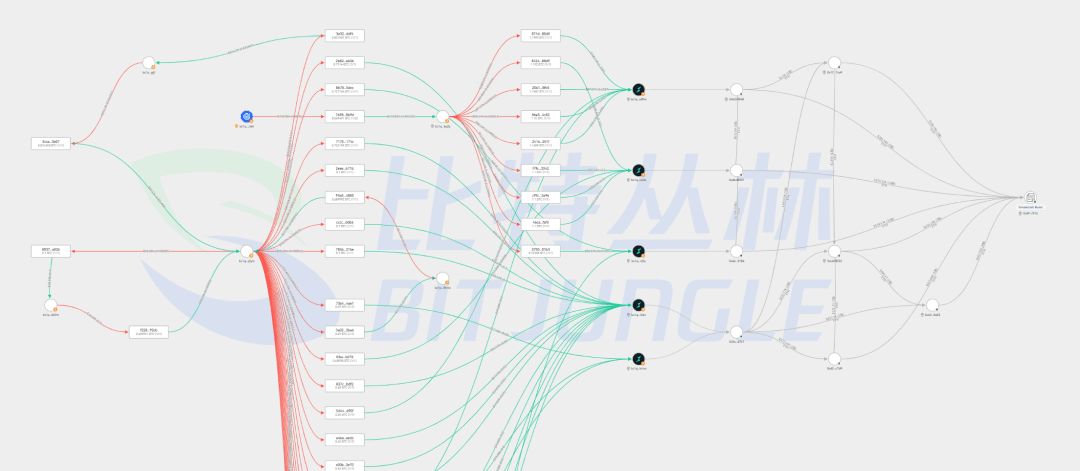
3
·
--
比特丛林BitJungle
·
--
#比特币2025大会
Compiled by the Bitcoin Jungle: Highlights from Day 1 of the Bitcoin 2025 Conference on May 27, let’s see what insights the big names have to share👇
1. MicroStrategy Founder Michael Saylor: Predicts Bitcoin's market cap could reach $100 trillion.
2. Ohio Gubernatorial Candidate Vivek Ramaswamy: Encourages investors to 'hold Bitcoin, don’t sell,' and predicts Bitcoin will create a new generation of millionaires in America.
3. U.S. Senator Cynthia Lummis: President Trump supports her proposed 'Strategic Bitcoin Reserve Act,' which authorizes the U.S. to purchase 1 million Bitcoins over five years.
4. Co-Chair of the Bitcoin Policy Institute Grant McCarty emphasizes: The U.S. is embracing Bitcoin, expressing a positive attitude towards Bitcoin's future development.
5. Co-Founder of Blueprint Bryan Johnson: If you sleep well, you will make more money in Bitcoin investments.
6. COO of fast-food chain Steak 'n Shake Dan Edwards: Bitcoin payments are faster than credit cards and save us about 50% in fees.
7. CEO of Marathon Digital Holdings Fred Thiel: If the U.S. wants to establish a national Bitcoin strategic reserve, it should participate in Bitcoin mining rather than relying solely on market purchases.
Compiled by the Bitcoin Jungle: Highlights from Day 1 of the Bitcoin 2025 Conference on May 27, let’s see what insights the big names have to share👇
1. MicroStrategy Founder Michael Saylor: Predicts Bitcoin's market cap could reach $100 trillion.
2. Ohio Gubernatorial Candidate Vivek Ramaswamy: Encourages investors to 'hold Bitcoin, don’t sell,' and predicts Bitcoin will create a new generation of millionaires in America.
3. U.S. Senator Cynthia Lummis: President Trump supports her proposed 'Strategic Bitcoin Reserve Act,' which authorizes the U.S. to purchase 1 million Bitcoins over five years.
4. Co-Chair of the Bitcoin Policy Institute Grant McCarty emphasizes: The U.S. is embracing Bitcoin, expressing a positive attitude towards Bitcoin's future development.
5. Co-Founder of Blueprint Bryan Johnson: If you sleep well, you will make more money in Bitcoin investments.
6. COO of fast-food chain Steak 'n Shake Dan Edwards: Bitcoin payments are faster than credit cards and save us about 50% in fees.
7. CEO of Marathon Digital Holdings Fred Thiel: If the U.S. wants to establish a national Bitcoin strategic reserve, it should participate in Bitcoin mining rather than relying solely on market purchases.

6
·
--
The Period of Fluctuation or Prelude to a New Round of Value Reassessment
Currently, Bitcoin's continued consolidation in the range of $106,000 to $110,000 is essentially a tug-of-war between the market digesting short-term profit-taking and waiting for incremental funds. Historical experience shows that a healthy bull market often requires periodic fluctuations to solidify the foundation: early profit-taking releases liquidity, while institutional funds step in to raise the bottom. If the U.S. interest rate cut cycle begins or the sovereign debt crisis further escalates, Bitcoin may face a steeper upward curve.
The Period of Fluctuation or Prelude to a New Round of Value Reassessment
Currently, Bitcoin's continued consolidation in the range of $106,000 to $110,000 is essentially a tug-of-war between the market digesting short-term profit-taking and waiting for incremental funds. Historical experience shows that a healthy bull market often requires periodic fluctuations to solidify the foundation: early profit-taking releases liquidity, while institutional funds step in to raise the bottom. If the U.S. interest rate cut cycle begins or the sovereign debt crisis further escalates, Bitcoin may face a steeper upward curve.
Currently, Bitcoin's continued consolidation in the range of $106,000 to $110,000 is essentially a tug-of-war between the market digesting short-term profit-taking and waiting for incremental funds. Historical experience shows that a healthy bull market often requires periodic fluctuations to solidify the foundation: early profit-taking releases liquidity, while institutional funds step in to raise the bottom. If the U.S. interest rate cut cycle begins or the sovereign debt crisis further escalates, Bitcoin may face a steeper upward curve.
比特丛林BitJungle
·
--
Bitcoin Jungle: Bitcoin Breaks $110,000 to Set Historical New High as Long-Term Holders Quietly Cash Out, Drawing Market Attention
In May 2025, Bitcoin's price broke through the $110,000 mark, setting a new historical high, but on-chain data reveals that seasoned investors have begun to show signs of profit-taking. Despite high market sentiment, the movements of long-term holders have become a key indicator for observing future market trends.
Signs of Profit-Taking Begin to Emerge
On-chain data shows that during the period when Bitcoin's price rose from $74,000 to $110,000, the Spent Output Profit Ratio (SOPR) indicator revealed a significant increase in profit-taking behavior among investors, especially after breaking through the $100,000 mark, with dense green bars appearing. Analysts point out that this phenomenon is a normal profit-taking behavior in a bull market cycle, and has not yet reached the level of large-scale selling at historical peaks. The number of Bitcoins held for over 155 days continues to grow, indicating that most early investors still choose to hold long-term, with overall market selling pressure being manageable.
Signs of Profit-Taking Begin to Emerge
On-chain data shows that during the period when Bitcoin's price rose from $74,000 to $110,000, the Spent Output Profit Ratio (SOPR) indicator revealed a significant increase in profit-taking behavior among investors, especially after breaking through the $100,000 mark, with dense green bars appearing. Analysts point out that this phenomenon is a normal profit-taking behavior in a bull market cycle, and has not yet reached the level of large-scale selling at historical peaks. The number of Bitcoins held for over 155 days continues to grow, indicating that most early investors still choose to hold long-term, with overall market selling pressure being manageable.

289
·
--
比特丛林BitJungle
·
--
Will US debt explode? Is the golden age of Bitcoin about to come?
As the US sovereign debt crisis continues to ferment, market attention towards Bitcoin as a new global reserve asset has sharply increased. Against this backdrop, this digital currency may encounter a historic opportunity.
US debt is traditionally viewed as a global "safe-haven" asset. This is because the US is a global power in market economy, democracy, and rule of law. Importantly, the high demand for US debt is also a result of the massive trade deficit the US has (net exporting countries need to reinvest their dollars, and they often choose to invest in US debt).
However, the first hundred days of the Trump administration have made the market recognize reality: the structural issues of America's high deficit and high debt will never be resolved, and the US will have to permanently issue more debt. Not to mention, Trump's problematic trade policies have simultaneously lowered the demand for US debt. Ultimately, the US will need to start buying its own debt, with the Federal Reserve acting as the lender of last resort, as the Bank of Japan and the European Central Bank have done in Japan and Italy.
In this crisis, it seems paradoxical for assets like Bitcoin to return to pre-Trump levels or even reach new highs, yet it is reasonable—markets are digesting the return of currency depreciation. Now, the four major economies of the US, China, Japan, and Europe have already implemented or are about to implement monetary expansion policies. Historically, an excess of liquidity will eventually drive up the prices of scarce assets. Gold has already risen, and Bitcoin should follow suit.
Although there are still uncertainties regarding Bitcoin becoming a global reserve asset, it is undoubtedly the best asymmetric investment choice in the current macro environment.
#比特丛林 #BTC走势分析
As the US sovereign debt crisis continues to ferment, market attention towards Bitcoin as a new global reserve asset has sharply increased. Against this backdrop, this digital currency may encounter a historic opportunity.
US debt is traditionally viewed as a global "safe-haven" asset. This is because the US is a global power in market economy, democracy, and rule of law. Importantly, the high demand for US debt is also a result of the massive trade deficit the US has (net exporting countries need to reinvest their dollars, and they often choose to invest in US debt).
However, the first hundred days of the Trump administration have made the market recognize reality: the structural issues of America's high deficit and high debt will never be resolved, and the US will have to permanently issue more debt. Not to mention, Trump's problematic trade policies have simultaneously lowered the demand for US debt. Ultimately, the US will need to start buying its own debt, with the Federal Reserve acting as the lender of last resort, as the Bank of Japan and the European Central Bank have done in Japan and Italy.
In this crisis, it seems paradoxical for assets like Bitcoin to return to pre-Trump levels or even reach new highs, yet it is reasonable—markets are digesting the return of currency depreciation. Now, the four major economies of the US, China, Japan, and Europe have already implemented or are about to implement monetary expansion policies. Historically, an excess of liquidity will eventually drive up the prices of scarce assets. Gold has already risen, and Bitcoin should follow suit.
Although there are still uncertainties regarding Bitcoin becoming a global reserve asset, it is undoubtedly the best asymmetric investment choice in the current macro environment.
#比特丛林 #BTC走势分析
·
--
CetusProtocol was hacked on May 22, 2025, with $200 million stolen!!!
CetusProtocol is the largest decentralized exchange on the Sui chain, and this incident has caused the value of several tokens based on Sui to plummet, leading to significant impact!
According to reports, Bit Jungle tweeted that most of the funds have been frozen by the Sui authorities through the Zhong Kui system, with some funds remaining cross-chain on the ETH chain:
0x89012a55cD6b88e407C9d4ae9B3425F55924919b
0x0251536BfcF144B88e1aFa8fe60184Ffdb4cAF16
Bit Jungle will continue to monitor this incident.
#Cetus #SUI🔥 #安全 #比特丛林
CetusProtocol was hacked on May 22, 2025, with $200 million stolen!!!
CetusProtocol is the largest decentralized exchange on the Sui chain, and this incident has caused the value of several tokens based on Sui to plummet, leading to significant impact!
According to reports, Bit Jungle tweeted that most of the funds have been frozen by the Sui authorities through the Zhong Kui system, with some funds remaining cross-chain on the ETH chain:
0x89012a55cD6b88e407C9d4ae9B3425F55924919b
0x0251536BfcF144B88e1aFa8fe60184Ffdb4cAF16
Bit Jungle will continue to monitor this incident.
#Cetus #SUI🔥 #安全 #比特丛林
CetusProtocol is the largest decentralized exchange on the Sui chain, and this incident has caused the value of several tokens based on Sui to plummet, leading to significant impact!
According to reports, Bit Jungle tweeted that most of the funds have been frozen by the Sui authorities through the Zhong Kui system, with some funds remaining cross-chain on the ETH chain:
0x89012a55cD6b88e407C9d4ae9B3425F55924919b
0x0251536BfcF144B88e1aFa8fe60184Ffdb4cAF16
Bit Jungle will continue to monitor this incident.
#Cetus #SUI🔥 #安全 #比特丛林
2
617
·
--
How are the fees and exchange losses for BiyaPay, are they high?
How are the fees and exchange losses for BiyaPay, are they high?

web3小晴
·
--
Made too much from trading cryptocurrencies and don’t know how to withdraw safely? After reading the following, you will understand.
After being in the cryptocurrency space for a while, many friends worry that if they're lucky and make hundreds of thousands or millions from trading, will this be considered a source of enormous wealth of unknown origin? At this point, will withdrawing all the funds directly to their domestic bank card freeze their account?❓ In traditional OTC transactions, the other party's identity and source of funds are opaque, which naturally leads to a series of problems. But don't worry, Xiaoqing can clarify this for you and tell you about her legal withdrawal pathways✨😉
First, we need to clarify that in many countries abroad, trading cryptocurrencies is a legal investment activity. Therefore, the money you earn does not belong to illegal income, but if you want to avoid being investigated, when you want to withdraw legally and reasonably, you can follow the steps below⬇️.
First, we need to clarify that in many countries abroad, trading cryptocurrencies is a legal investment activity. Therefore, the money you earn does not belong to illegal income, but if you want to avoid being investigated, when you want to withdraw legally and reasonably, you can follow the steps below⬇️.
9
161
Log in to explore more content
Join global crypto users on Binance Square
⚡️ Get latest and useful information about crypto.
💬 Trusted by the world’s largest crypto exchange.
👍 Discover real insights from verified creators.
Email / Phone number
Trending Topics
USWeighsPromotingDollarStablecoinsAbroad
3,184 views
297 Discussing
🚨 THE DIGITAL DOLLAR PUSH IS HERE! 🇺🇸💵
The U.S. is reportedly exploring ways to promote dollar-backed stablecoins overseas. 🌎
🔥 More USD stablecoins → more global dollar usage
⚡ More stablecoin adoption → potentially more crypto liquidity
👀 Could this be the next big catalyst for crypto?
#Stablecoins #USDT #USDC #usweighspromotingdollarstablecoinsabroad
$BTC
$ETH
$BNB
ASHFAQ NAEEM
·0 Likes
·9 views
US10YTreasuryYieldHits19YearHigh
3,152 views
245 Discussing
SpotBitcoinETFsInflow$2.31BInFourDays
401 views
25 Discussing