
小冰柠
147 Posts

小冰柠
可以对香香软软糯糯的宝宝好一点嘛🥺🥺🥺

U Holder
High-Frequency Trader
2.9 Years
51 Following
101 Followers
187 Liked
Posts
All
Quotes
PINNED
Brothers, the bull is coming back fast!!!😆😆😆
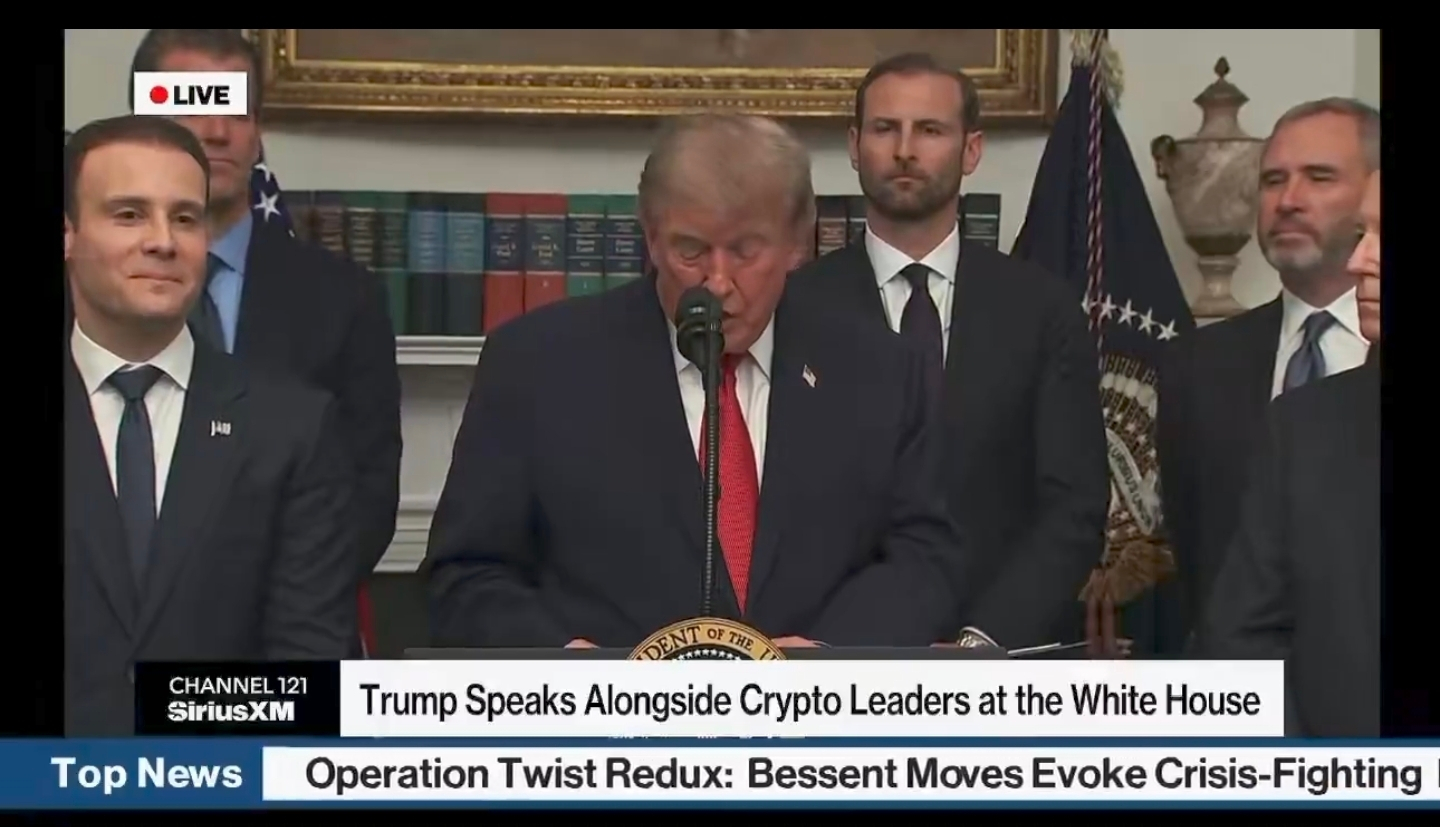
Today’s market action really left me stunned. $BTC straight pushed into the $70k threshold; the 24-hour gain is 8%+. $ETH is even more intense—no wonder it’s been dubbed the “shady copycat king.” It broke above $2,300 in a short time, with the intraday increase hitting nearly 20%+. Within about an hour, over $1 billion worth of Bitcoin short positions were liquidated. I got up this morning and looked at my account—straight-up got me to cough up an old mouthful of blood. So satisfying. (The reason for the explosive surge is that Trump spoke favorably about crypto last night.)
Honestly, July before this was brutal. Korean stocks down, US stocks down, and mainstream coins in the crypto market just bled lower every day. This huge green candle today feels like the bear market is finally at the bottom. The market reversal is truly fast—just a few days ago I was thinking whether I should cut my losses, but today I’m already wondering how I’ll feel if I miss out. 🤣
Back to the main point: @TermMax , the TGE on August 25. The timing of this choice is really spot-on. Now the market is good and sentiment is warming up. With the new token coming out, at least it won’t get immediately smashed the moment it launches like before.
TermMax is a project I discussed earlier. It’s not that kind of high-APY mining “doll-in-a-doll” scheme—it turns DeFi lending from a floating-rate model into a fixed-rate model. Borrowers lock in the term and interest rate. Lenders, from the start, know exactly how much they’ll receive at maturity, without having to stare at rate changes every day. The official team has now expanded to 10 chains, including Ethereum, Arbitrum, BNB Chain, and Base. TVL has also surpassed $90 million. Token Terminal data shows that daily active addresses for this DeFi lending protocol rank second, right behind Aave.
Most importantly, after the TGE on August 25, the TMX token is officially live.
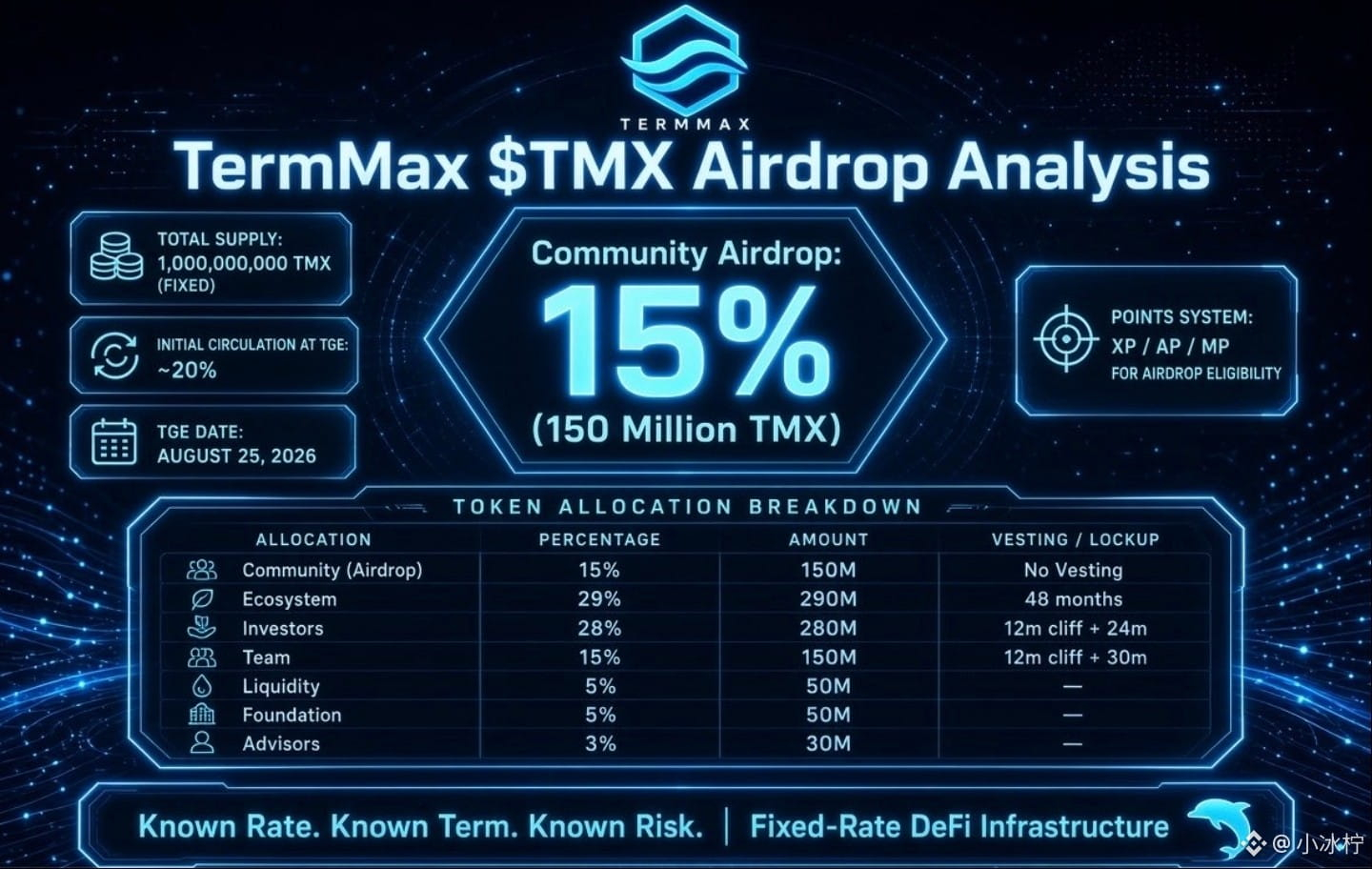
Initial circulating supply is about 20%, with a fixed total supply of 1 billion tokens. On-chain fixed-term markets are already showing clear quotes—for example, some USDC markets have an annualized rate around 4%. This isn’t just a slogan; it’s the price the market itself has set with real money.
Hope @TermMax can ride this wave and surprise the market. When the opportunity is here, better projects are easier to get noticed 🎉
#TermMax #defi
Today’s market action really left me stunned. $BTC straight pushed into the $70k threshold; the 24-hour gain is 8%+. $ETH is even more intense—no wonder it’s been dubbed the “shady copycat king.” It broke above $2,300 in a short time, with the intraday increase hitting nearly 20%+. Within about an hour, over $1 billion worth of Bitcoin short positions were liquidated. I got up this morning and looked at my account—straight-up got me to cough up an old mouthful of blood. So satisfying. (The reason for the explosive surge is that Trump spoke favorably about crypto last night.)
Honestly, July before this was brutal. Korean stocks down, US stocks down, and mainstream coins in the crypto market just bled lower every day. This huge green candle today feels like the bear market is finally at the bottom. The market reversal is truly fast—just a few days ago I was thinking whether I should cut my losses, but today I’m already wondering how I’ll feel if I miss out. 🤣
Back to the main point: @TermMax , the TGE on August 25. The timing of this choice is really spot-on. Now the market is good and sentiment is warming up. With the new token coming out, at least it won’t get immediately smashed the moment it launches like before.
TermMax is a project I discussed earlier. It’s not that kind of high-APY mining “doll-in-a-doll” scheme—it turns DeFi lending from a floating-rate model into a fixed-rate model. Borrowers lock in the term and interest rate. Lenders, from the start, know exactly how much they’ll receive at maturity, without having to stare at rate changes every day. The official team has now expanded to 10 chains, including Ethereum, Arbitrum, BNB Chain, and Base. TVL has also surpassed $90 million. Token Terminal data shows that daily active addresses for this DeFi lending protocol rank second, right behind Aave.
Most importantly, after the TGE on August 25, the TMX token is officially live.
Initial circulating supply is about 20%, with a fixed total supply of 1 billion tokens. On-chain fixed-term markets are already showing clear quotes—for example, some USDC markets have an annualized rate around 4%. This isn’t just a slogan; it’s the price the market itself has set with real money.
Hope @TermMax can ride this wave and surprise the market. When the opportunity is here, better projects are easier to get noticed 🎉
#TermMax #defi
$AKE Before bed, I saw that the demon coins I previously followed surged to a new high again. I’ll leave some capital in the Ant pool and take a wait-and-see approach first. It probably won’t surge again like this.
Verified
Brothers, this market really doesn't look like a rebound anymore. Just now, $BTC was almost breaking through 80k, with zero pullback—straight up, absolutely wild 😱😱😱
A few days ago I even told someone, “This is probably just a phase of a rebound—don’t take it too seriously 🤣.” Turns out the market slapped me in the face. Three consecutive big bullish candles—the whole sentiment in the market is completely different now. In the group, more and more people are shouting “the bull is back.” The bears are bleeding, while the bulls are getting their health back.
As for whether it’s a bear market turning into a bull market—the probability is getting higher and higher.
Now back to the main point: @TermMax chose TGE on August 25th. That timing is really spot-on. @TermMax was originally expected to do TGE in the second quarter—June/July—but then the team delayed it. That also caused a lot of FUD online. Looking back now, delaying it to late August and having TGE then was a super correct choice 👍🏻. There’s definitely some expert guidance behind the scenes 😆
With the market warming up, the market’s acceptance of new projects is totally different, and the mindset of users holding for the airdrop is also different. If TGE had been a month ago, the market might not have been able to absorb the sell pressure right after listing—prices might not have held. Now it’s different: sentiment is repairing, capital is flowing back, and users/holders are more confident in the project.
TermMax isn’t doing one of those flashy high-APY liquidity mining schemes. It solves a very real problem: the volatility of DeFi lending interest rates. TermMax’s logic is fixed term + fixed rate. When you borrow, the interest rate is locked in—so at maturity, you know exactly how much you’ll repay. Lenders are the same: once you enter, you know how much you can take at the end—no need to stare at the screen every day. From the data, the market genuinely has demand for this direction. Since TermMax launched in April 2025, TVL has already surpassed $100 million, total users are over 1.1 million, and the Discord community has 115,000+. It has launched on 8 chains, including Ethereum, Arbitrum, BNB Chain, Base, and Berachain.
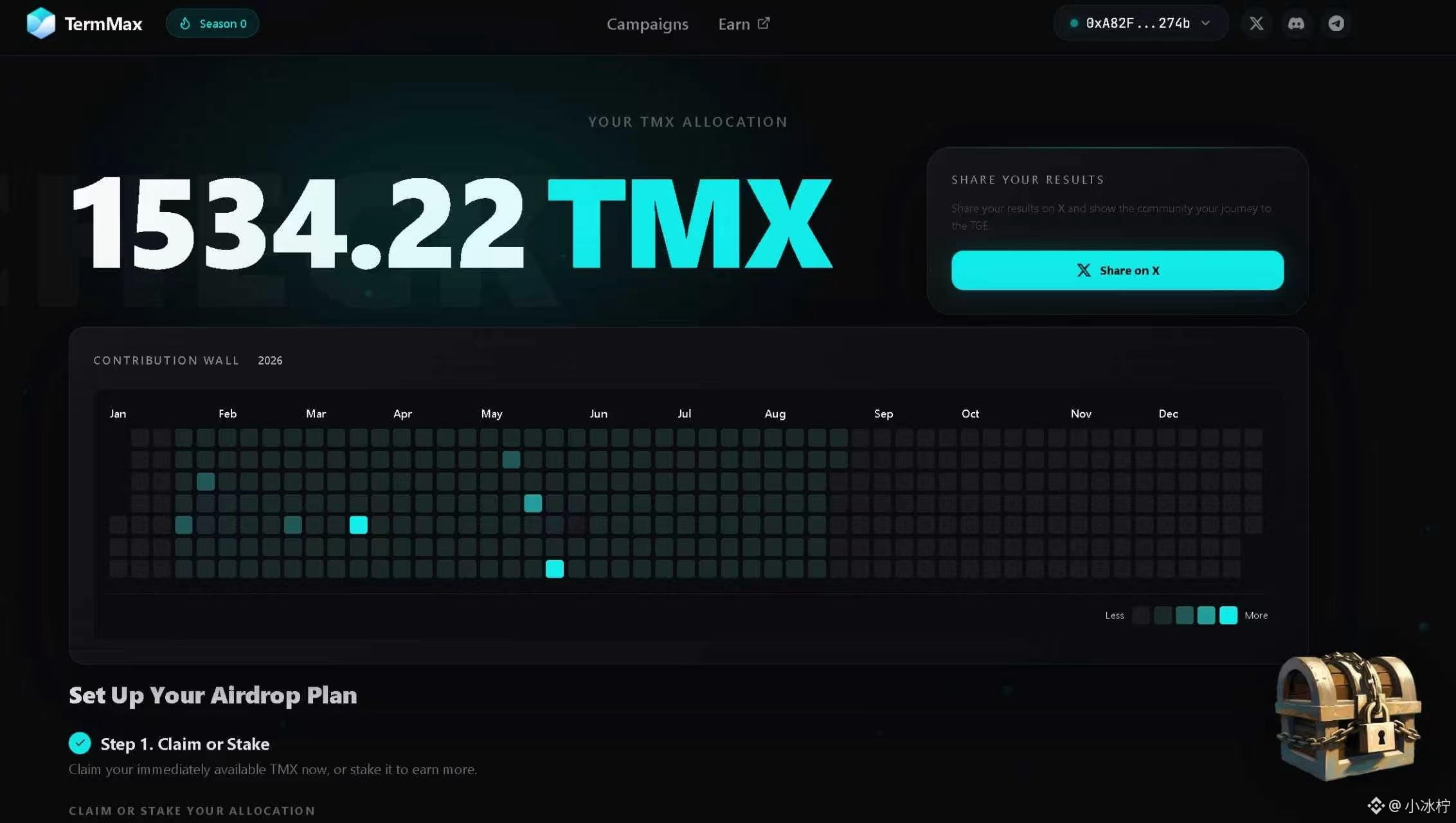
This afternoon at 15:00 (UTC+8), the official opened community airdrop claim/lookup. I checked—there are 1534 TMX. I’ve been tracking and participating for half a year nonstop. Thank you to the official for the airdrop 🥰. I won’t sell this airdrop right away, because I feel Termmax’s product has real demand and a real market. I’m bullish on @TermMax 🎉
#TermMax
A few days ago I even told someone, “This is probably just a phase of a rebound—don’t take it too seriously 🤣.” Turns out the market slapped me in the face. Three consecutive big bullish candles—the whole sentiment in the market is completely different now. In the group, more and more people are shouting “the bull is back.” The bears are bleeding, while the bulls are getting their health back.
As for whether it’s a bear market turning into a bull market—the probability is getting higher and higher.
Now back to the main point: @TermMax chose TGE on August 25th. That timing is really spot-on. @TermMax was originally expected to do TGE in the second quarter—June/July—but then the team delayed it. That also caused a lot of FUD online. Looking back now, delaying it to late August and having TGE then was a super correct choice 👍🏻. There’s definitely some expert guidance behind the scenes 😆
With the market warming up, the market’s acceptance of new projects is totally different, and the mindset of users holding for the airdrop is also different. If TGE had been a month ago, the market might not have been able to absorb the sell pressure right after listing—prices might not have held. Now it’s different: sentiment is repairing, capital is flowing back, and users/holders are more confident in the project.
TermMax isn’t doing one of those flashy high-APY liquidity mining schemes. It solves a very real problem: the volatility of DeFi lending interest rates. TermMax’s logic is fixed term + fixed rate. When you borrow, the interest rate is locked in—so at maturity, you know exactly how much you’ll repay. Lenders are the same: once you enter, you know how much you can take at the end—no need to stare at the screen every day. From the data, the market genuinely has demand for this direction. Since TermMax launched in April 2025, TVL has already surpassed $100 million, total users are over 1.1 million, and the Discord community has 115,000+. It has launched on 8 chains, including Ethereum, Arbitrum, BNB Chain, Base, and Berachain.
This afternoon at 15:00 (UTC+8), the official opened community airdrop claim/lookup. I checked—there are 1534 TMX. I’ve been tracking and participating for half a year nonstop. Thank you to the official for the airdrop 🥰. I won’t sell this airdrop right away, because I feel Termmax’s product has real demand and a real market. I’m bullish on @TermMax 🎉
#TermMax
Verified
I keep seeing the frequency of @TermMax rising more and more. At first I didn’t really pay attention—I thought it was just another newly launched lending protocol. But after taking a serious look, I found that it may be addressing a problem in DeFi that’s been ignored for a long time:
The biggest pain in traditional DeFi isn’t whether the interest rate is high—it’s whether the interest rate stays stable. In protocols like Aave and Morpho, if you borrow USDC today, the annualized rate might be 4%; tomorrow, when the market gets tight, it can jump straight to 8% or even higher. Borrowers have no idea how much interest they’ll end up paying three months from now, and lenders can’t reliably calculate how much they’ll earn at maturity. For users with perfectionism or OCD, this is basically a nightmare🤣
TermMax’s approach is completely different—fixed term + fixed interest rate. Borrowers take out a loan, and the term and rate are locked in when the trade begins. Lenders enter the market by buying an FT (Fixed-rate Token) at a discount price, and then redeem it at face value at maturity—so the return is known from the start.
A single fixed-term debt position associated with @TermMax is split into three tokens: FT represents the principal repayment right, XT represents the earnings portion, and GT (Gearing Token) packages the entire leveraged position into an NFT. The interest rate isn’t set by the project team’s guesses—it’s priced in real time by the market based on the term, the underlying asset, and supply/demand. If you look at some on-chain USDC fixed-term markets, the current quote is around 4%.
In plain terms: DeFi isn’t short on ways to play with high APY—what it lacks are tools that let users calculate their costs and returns in advance. What TermMax is doing is to move on-chain lending from the “floating-rate era” to the “fixed-rate era.”
As for TermMax’s product, I’ve been using it continuously—from the earliest v1 version to the current v2. In terms of user experience and practical usefulness, things have been improving all the way, and I’m also looking forward to the project’s future updates and the upcoming TGE🎉
#TermMax #defi
The biggest pain in traditional DeFi isn’t whether the interest rate is high—it’s whether the interest rate stays stable. In protocols like Aave and Morpho, if you borrow USDC today, the annualized rate might be 4%; tomorrow, when the market gets tight, it can jump straight to 8% or even higher. Borrowers have no idea how much interest they’ll end up paying three months from now, and lenders can’t reliably calculate how much they’ll earn at maturity. For users with perfectionism or OCD, this is basically a nightmare🤣
TermMax’s approach is completely different—fixed term + fixed interest rate. Borrowers take out a loan, and the term and rate are locked in when the trade begins. Lenders enter the market by buying an FT (Fixed-rate Token) at a discount price, and then redeem it at face value at maturity—so the return is known from the start.
A single fixed-term debt position associated with @TermMax is split into three tokens: FT represents the principal repayment right, XT represents the earnings portion, and GT (Gearing Token) packages the entire leveraged position into an NFT. The interest rate isn’t set by the project team’s guesses—it’s priced in real time by the market based on the term, the underlying asset, and supply/demand. If you look at some on-chain USDC fixed-term markets, the current quote is around 4%.
In plain terms: DeFi isn’t short on ways to play with high APY—what it lacks are tools that let users calculate their costs and returns in advance. What TermMax is doing is to move on-chain lending from the “floating-rate era” to the “fixed-rate era.”
As for TermMax’s product, I’ve been using it continuously—from the earliest v1 version to the current v2. In terms of user experience and practical usefulness, things have been improving all the way, and I’m also looking forward to the project’s future updates and the upcoming TGE🎉
#TermMax #defi
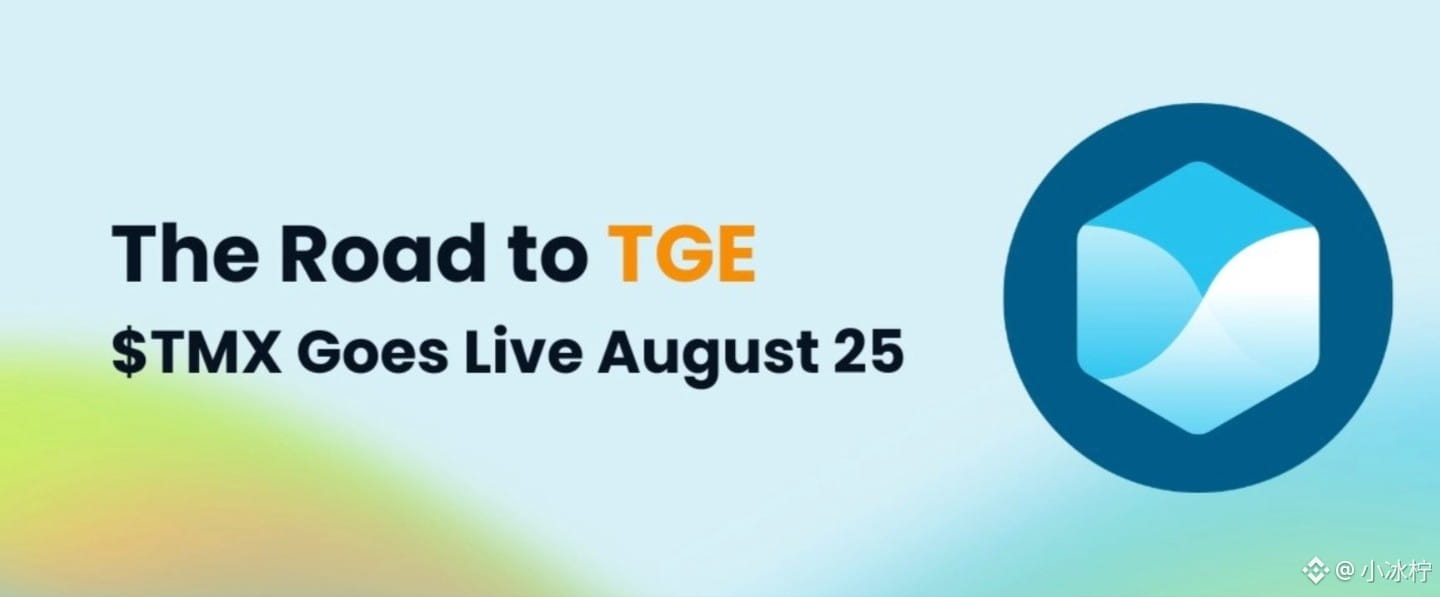
After waiting for a long time, @TermMax has finally arrived at the moment to submit the answers. The official has already confirmed that the tge will take place on August 25 🎉
@TermMax is a multi-chain fixed-rate lending + structured products agreement built by Term Structure Labs.
So far, this agreement has over $90 million TVL, 1.5 million+ registered wallets, 90k+ daily active users, and covers 10 EVM chains. It has also collaborated with ecosystems including Morpho, Aave, Venus, and Pendle.
Moreover, the pre-TGE FDV for @TermMax is $170 million+—more than many people expected. The community will allocate 15% for an airdrop, which is quite generous compared to many projects. You can share a portion of the airdrop with XP, AP, or MP. If you have participated, you can look forward to it 😁
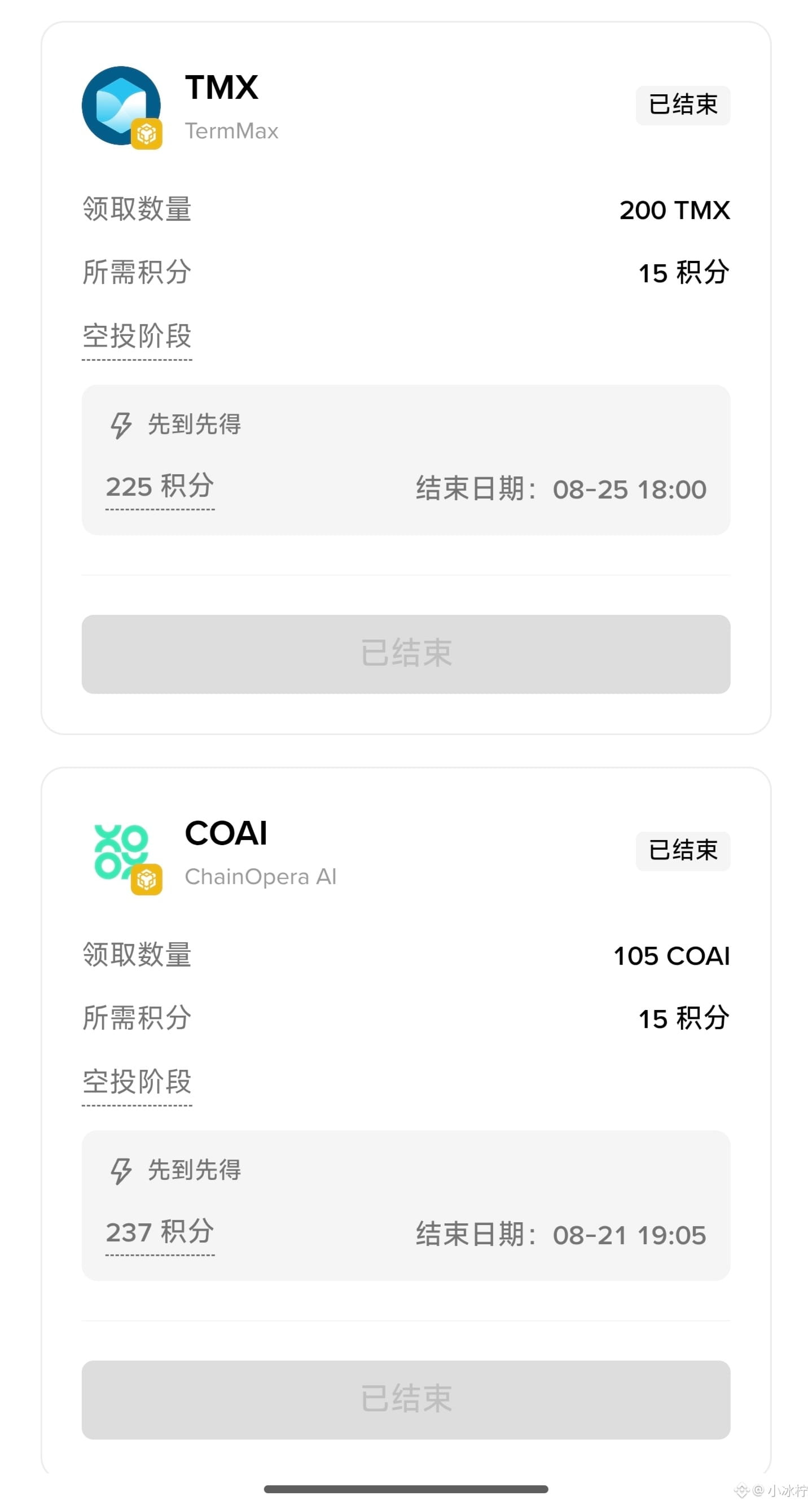
Of course, don’t forget to take part in the booster activities hosted by the Binance web3 wallet and @TermMax . 80,000 people will share the pork rice 😋😋😋
#termmax
@TermMax is a multi-chain fixed-rate lending + structured products agreement built by Term Structure Labs.
So far, this agreement has over $90 million TVL, 1.5 million+ registered wallets, 90k+ daily active users, and covers 10 EVM chains. It has also collaborated with ecosystems including Morpho, Aave, Venus, and Pendle.
Moreover, the pre-TGE FDV for @TermMax is $170 million+—more than many people expected. The community will allocate 15% for an airdrop, which is quite generous compared to many projects. You can share a portion of the airdrop with XP, AP, or MP. If you have participated, you can look forward to it 😁
Of course, don’t forget to take part in the booster activities hosted by the Binance web3 wallet and @TermMax . 80,000 people will share the pork rice 😋😋😋
#termmax
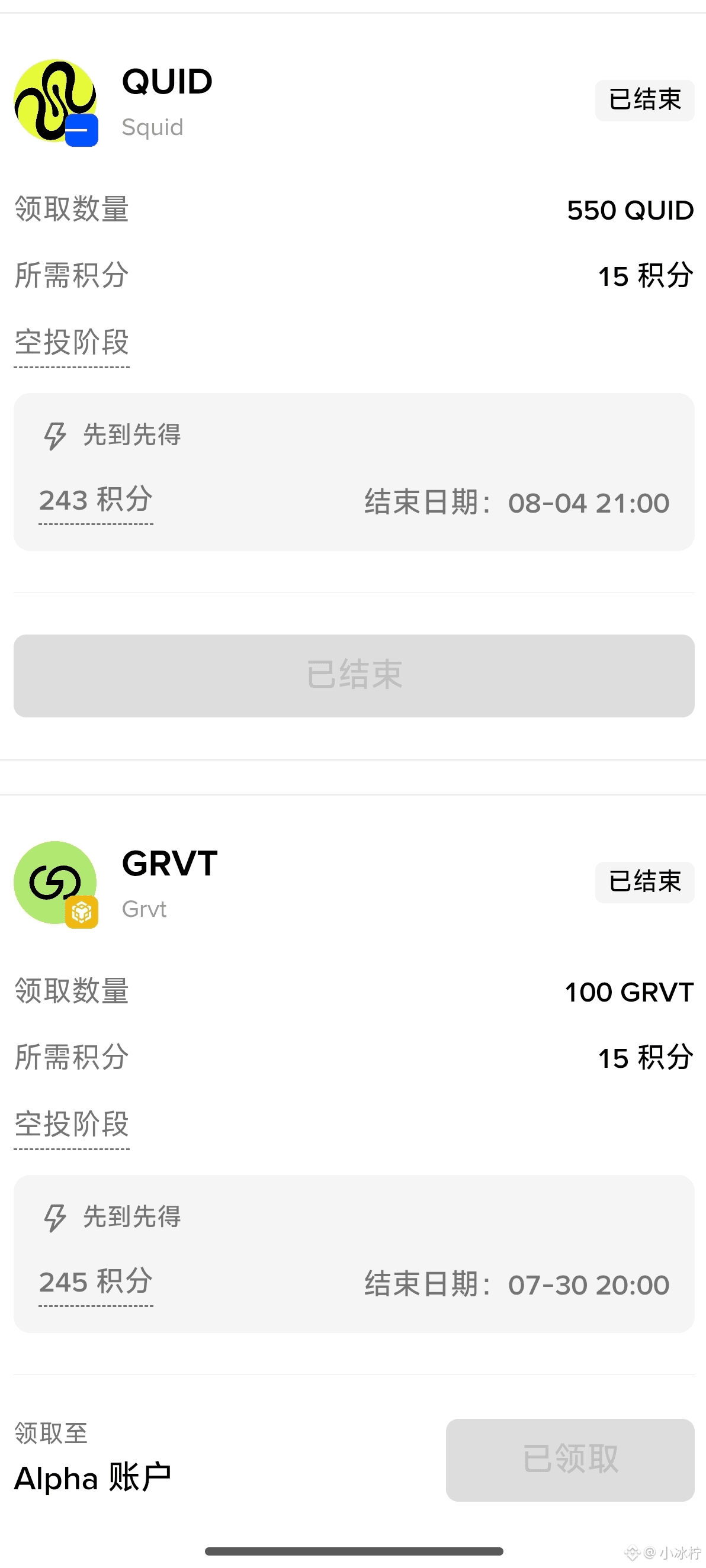
Have they not given it to you anymore? The last four times in a row were all “claim boost” — won’t they give out the big amount? 😭😭😭
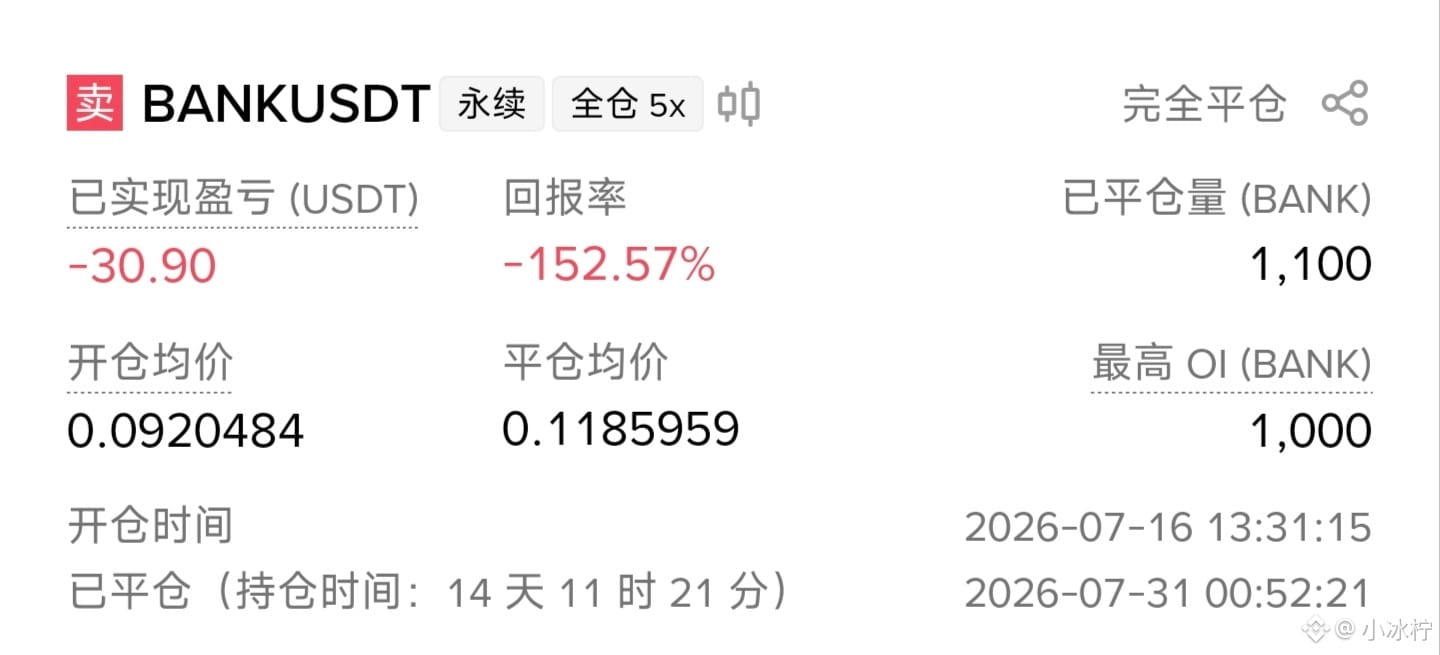
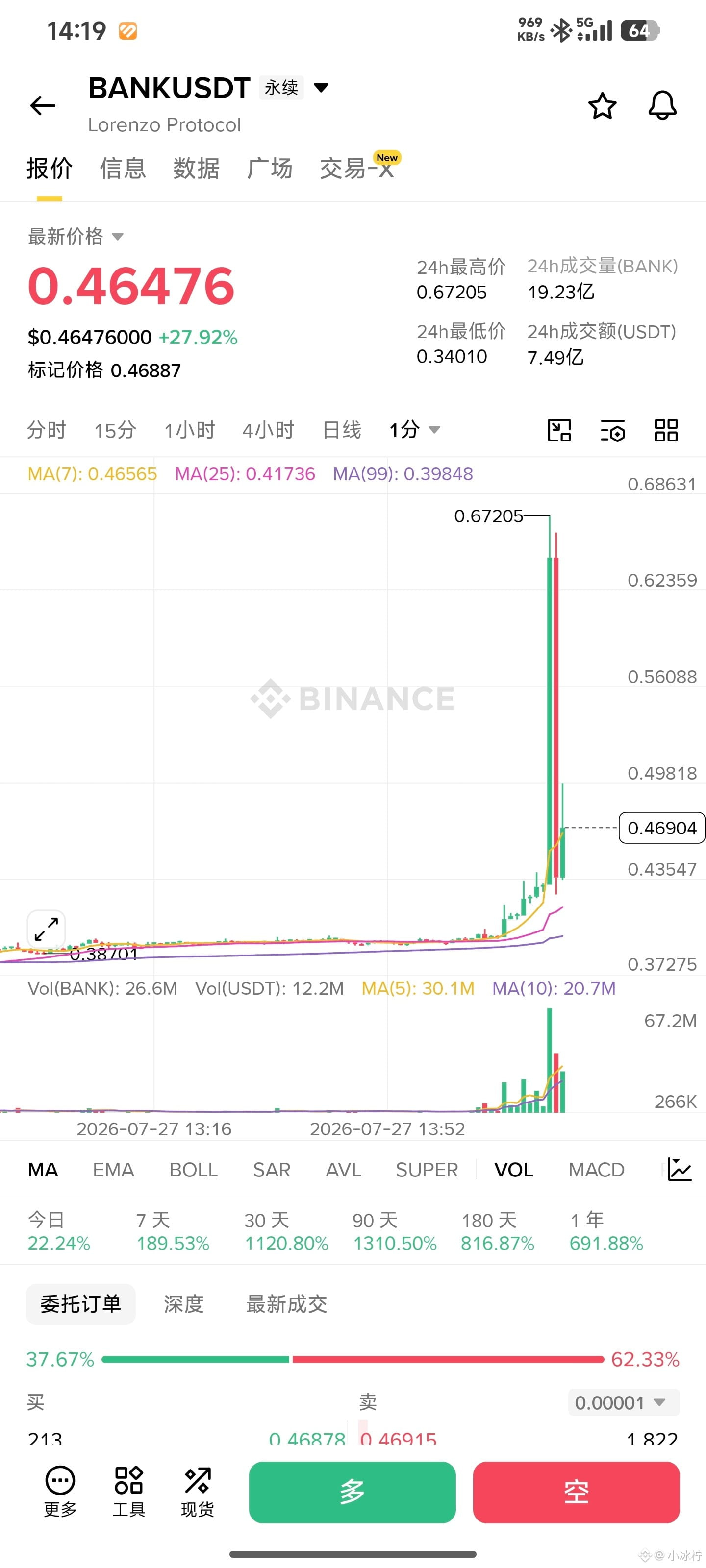
Holding $BANK for 15 days, nervous for 15 days, and it’s finally over. I’ll just treat this 30u as tuition. I’ll keep my hands off from now on and not play with altcoins anymore. Going short can lose countless times over 😭
What troubles long-term holders of $BTC the most? It’s not a drop in coin price, but rather the coins sitting there idle with nothing happening. In the past, if one wanted to earn returns from BTC, one had to either cross-chain WBTC and hand it over to a custodian, or deposit it into CeFi and hope the project team would not run away. In essence, both approaches meant trusting others. That is why @BabylonLabs_io , since its inception, has been committed to solving this problem — no cross-chain, no wrapping or custody, but instead letting BTC stay on the Bitcoin network and still be put to work. Over the past month, this “trust-minimized” ecosystem has been expanding at a visibly rapid pace. On July 7, the Sui Foundation announced partnerships with Babylon Labs, Lombard, and Cubist, with the goal of bringing Bitcoin liquidity into the Sui ecosystem. BTC holders can stake BTC according to the Babylon staking protocol and then obtain natively minted LBTC on Sui, making it a core asset in Sui DeFi. On July 8, Binance Labs announced an investment in Babylon. On the very same day, Babylon and Fiamma stated that they would use BitVM2 to integrate zero-knowledge technology into Bitcoin.
Babylon and GoMining plan to use TBV to activate up to 1,000 BTC, worth about $82 million, allowing BTC holders to earn mining收益 without cross-chain operations or wrapping. The upgrade of the economic model is also quite noteworthy. A new proposal has emerged in the community, planning to reduce $BABY ’s annual inflation rate from 8% to 5.5%, while introducing BTC-BABY dual staking. After inflation is reduced, the value of holding the token becomes more stable, and after dual staking goes live, BTC stakers will have an additional incentive to participate in BABY staking. Put simply, Babylon is no longer merely a “staking-only” protocol. Its ecosystem is gradually building a complete BTCFi matrix, covering staking, lending, mining, liquidity, ZK verification, and many other areas — everything is already in place. And all of this is built on the principle of “trust no one, only trust code.”
That said, if you’re really going to put real money into it, I think it’s worth waiting a bit longer. After all, participating now still carries risks, the rewards are still small, and the cost-effectiveness isn’t great 🤣
#baby
Babylon and GoMining plan to use TBV to activate up to 1,000 BTC, worth about $82 million, allowing BTC holders to earn mining收益 without cross-chain operations or wrapping. The upgrade of the economic model is also quite noteworthy. A new proposal has emerged in the community, planning to reduce $BABY ’s annual inflation rate from 8% to 5.5%, while introducing BTC-BABY dual staking. After inflation is reduced, the value of holding the token becomes more stable, and after dual staking goes live, BTC stakers will have an additional incentive to participate in BABY staking. Put simply, Babylon is no longer merely a “staking-only” protocol. Its ecosystem is gradually building a complete BTCFi matrix, covering staking, lending, mining, liquidity, ZK verification, and many other areas — everything is already in place. And all of this is built on the principle of “trust no one, only trust code.”
That said, if you’re really going to put real money into it, I think it’s worth waiting a bit longer. After all, participating now still carries risks, the rewards are still small, and the cost-effectiveness isn’t great 🤣
#baby

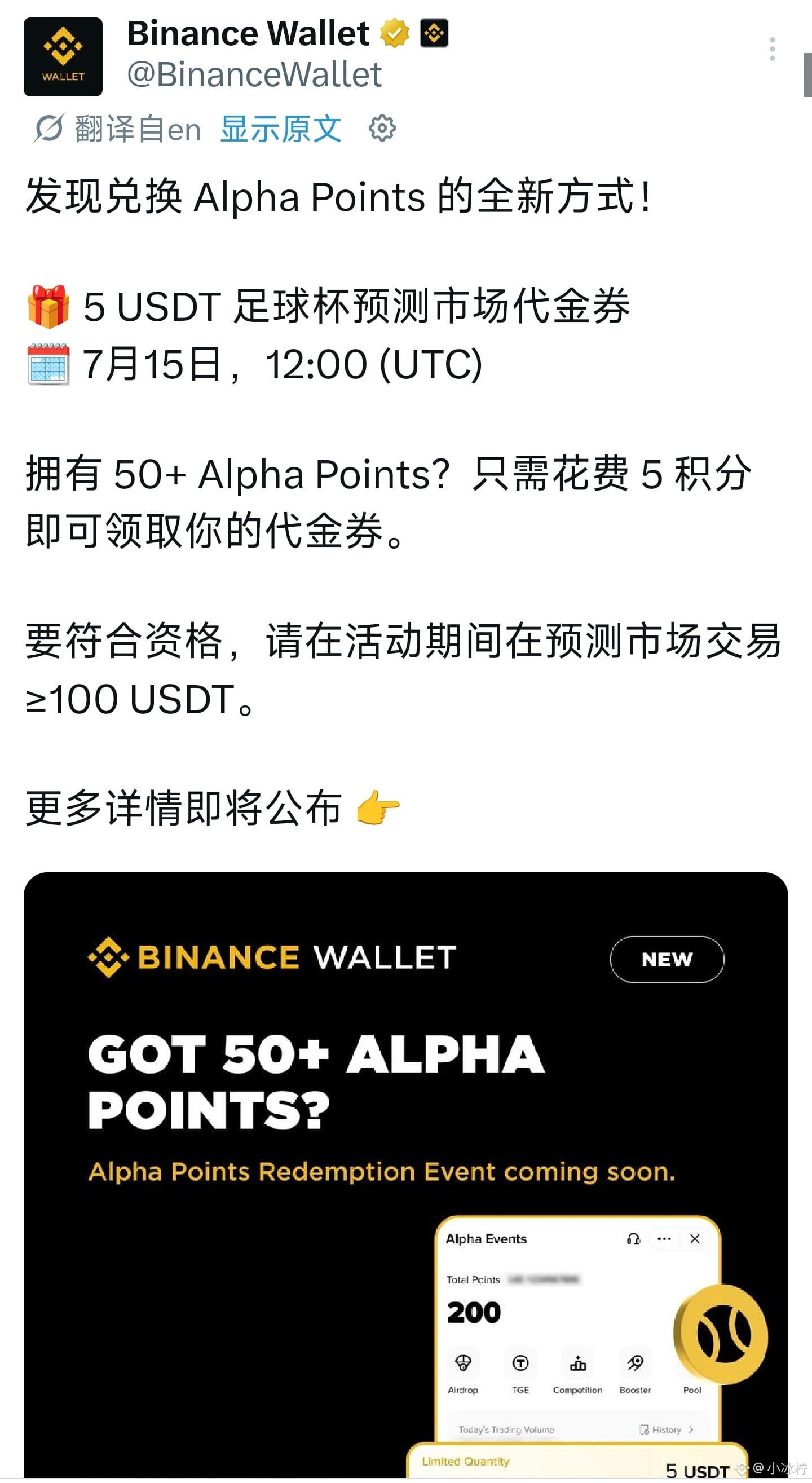
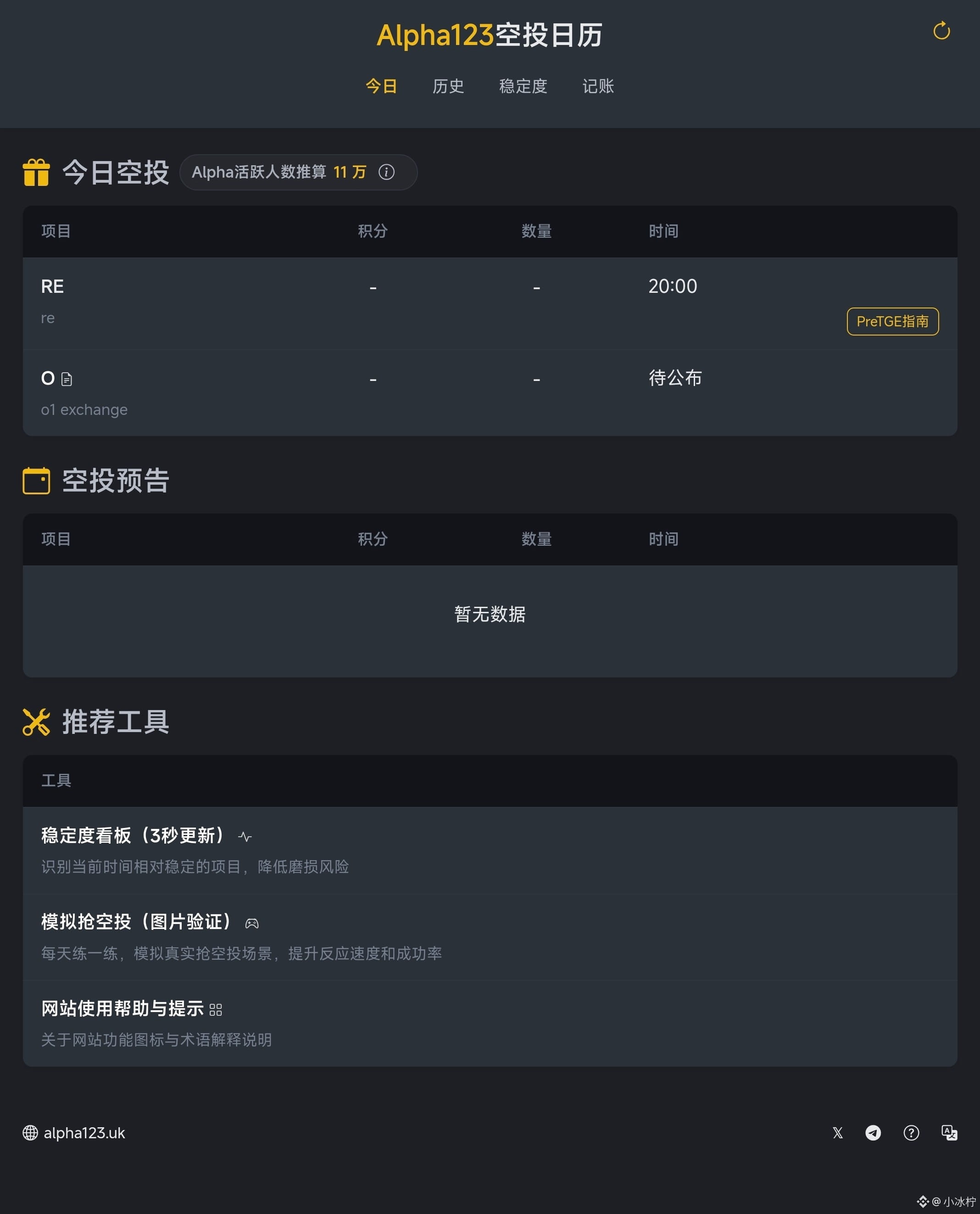
There’s no alpha airdrop today, but there’s a new game mode.
Starting at 8 PM tonight: Redeem 5 points for a 5 USDT football cup prediction market voucher.
Eligibility: Have more than 50 points, and trade ≥ 100 USDT in the prediction markets during the event period.
Suitable for those who didn’t have their points deducted this cycle (because they didn’t get to抢 😂) and for small accounts with low scores.
#ALPHA
Starting at 8 PM tonight: Redeem 5 points for a 5 USDT football cup prediction market voucher.
Eligibility: Have more than 50 points, and trade ≥ 100 USDT in the prediction markets during the event period.
Suitable for those who didn’t have their points deducted this cycle (because they didn’t get to抢 😂) and for small accounts with low scores.
#ALPHA
I originally thought that @grvt_io on the 21st TGE wasn’t a good choice, because the market has been pretty bad recently—mainstream coins in the crypto space have been constantly falling. A few days ago, the Korean stock market and the U.S. stock market also weren’t looking optimistic. But today the market has reversed: both Bitcoin and Ethereum have clearly risen. Especially, Ethereum $ETH is up more than 6%.
The U.S. stock market’s Hynix $SKHY is also up nearly 20%, exceeding its price at listing (even though it’s only been two days 🤣). I have to say, market reversals really are fast.
Now back to the main point. @grvt_io 7/21 TGE—while I’m not too worried about the portion of the tokens that get unlocked from the airdrop, what truly makes me uncertain is the market maker’s loan tokens.
In the economic model, the community, investors, and the team all make sense. But in the specific terms of the market maker loan, it says nothing about how much they will borrow, how long it will be locked, or when they’ll be able to sell. It’s totally normal and reasonable for the market maker to provide initial liquidity. The problem is: if repayment depends on selling tokens, then this sell pressure will stack on top of the airdrop users’ selling pressure and crash into the market. That would be a disaster for users who are bullish and planning to buy.
Even more importantly, GRVT’s TVL has already fallen quite a bit from its peak. The market maker’s borrowing limit is tied to TVL—when TVL drops, it means they’re forced to repay → sell tokens → the price keeps dropping, creating a death spiral.
So after the TGE, I’ll monitor two on-chain things: changes in the market maker wallet balance, and whether the ecosystem fund transfers tokens to the market maker. If both chains stay quiet, it suggests the loan is locked. If large transfers appear, the sell pressure may be bigger than we’d imagine.
I hope @grvt_io can use this brief window of improved momentum to surprise the market 😋😋😋
#grvt
The U.S. stock market’s Hynix $SKHY is also up nearly 20%, exceeding its price at listing (even though it’s only been two days 🤣). I have to say, market reversals really are fast.
Now back to the main point. @grvt_io 7/21 TGE—while I’m not too worried about the portion of the tokens that get unlocked from the airdrop, what truly makes me uncertain is the market maker’s loan tokens.
In the economic model, the community, investors, and the team all make sense. But in the specific terms of the market maker loan, it says nothing about how much they will borrow, how long it will be locked, or when they’ll be able to sell. It’s totally normal and reasonable for the market maker to provide initial liquidity. The problem is: if repayment depends on selling tokens, then this sell pressure will stack on top of the airdrop users’ selling pressure and crash into the market. That would be a disaster for users who are bullish and planning to buy.
Even more importantly, GRVT’s TVL has already fallen quite a bit from its peak. The market maker’s borrowing limit is tied to TVL—when TVL drops, it means they’re forced to repay → sell tokens → the price keeps dropping, creating a death spiral.
So after the TGE, I’ll monitor two on-chain things: changes in the market maker wallet balance, and whether the ecosystem fund transfers tokens to the market maker. If both chains stay quiet, it suggests the loan is locked. If large transfers appear, the sell pressure may be bigger than we’d imagine.
I hope @grvt_io can use this brief window of improved momentum to surprise the market 😋😋😋
#grvt
Partly True
Brother, today we won’t shout buy/sell signals—let’s take apart GRVT @grvt_io .
Its name is pretty loud—600k TPS with ZK self-custody, CEX speed combined with DEX safety; sounds perfect, right? But after digging into the underlying architecture, my back feels a bit cold. And its custom ZK circuits are too complicated: matching, margin, and liquidation are all stuffed in. Write too many constraints and it becomes fragile; write too few and it’s easy to be exploited. L2BEAT pointed this out earlier.
Even worse, the order book and trade details are all locked in GRVT’s central servers; Ethereum only keeps a state root. It’s like you rented a safe cabinet—the cabinet is under your name, but the keys and records are all in someone else’s hands. If the server goes down, the “forced withdrawal” on the mainnet is just for show. Vitalik already warned about this dead end.
“Backed” by some institutions? That’s only shifting your fate from one person to several people, or choosing to trust people instead of code. ZK proofs can’t guarantee the server won’t crash. On the 21st, take a quick feel for the speed with the meal money—going heavy? Wait until after the audit.
#grvt
Its name is pretty loud—600k TPS with ZK self-custody, CEX speed combined with DEX safety; sounds perfect, right? But after digging into the underlying architecture, my back feels a bit cold. And its custom ZK circuits are too complicated: matching, margin, and liquidation are all stuffed in. Write too many constraints and it becomes fragile; write too few and it’s easy to be exploited. L2BEAT pointed this out earlier.
Even worse, the order book and trade details are all locked in GRVT’s central servers; Ethereum only keeps a state root. It’s like you rented a safe cabinet—the cabinet is under your name, but the keys and records are all in someone else’s hands. If the server goes down, the “forced withdrawal” on the mainnet is just for show. Vitalik already warned about this dead end.
“Backed” by some institutions? That’s only shifting your fate from one person to several people, or choosing to trust people instead of code. ZK proofs can’t guarantee the server won’t crash. On the 21st, take a quick feel for the speed with the meal money—going heavy? Wait until after the audit.
#grvt
Verified
The essence of GRVT @grvt_io is trading data availability for speed. It uses a Validium architecture, with the order book and transaction details fully locked in its own centralized servers, while Ethereum L1 only receives state roots and proofs. L2BEAT directly labels this model as CRITICAL. Vitalik has long said that once an operator shuts down or gets attacked, if the centralized database goes missing, users can’t even compute Merkle proofs; the forced withdrawal channel on the mainnet is just paper.
He set up a DAC committee and got a few institutions to endorse it, but all it does is shift trust in a single operator to a small alliance of insiders—decentralization in name only.
Zero-knowledge proofs can ensure transactions are correct, but they can’t guarantee the server will still be up tomorrow. Even with 600,000 TPS, it’s still just a pretty number—when a black swan event hits, it all becomes a facade. For the sake of speed, handing over the asset’s control keys to a centralized team isn’t really worth it. So GRVT isn’t unplayable, but we need to stay clear-eyed about what we’re actually betting: betting that those few DAC institutions won’t have issues; betting that the server will never be attacked; betting that when a black swan arrives, you’ll have time to run. With all these bets stacked together, I don’t think the speed advantage can make up for it. At least for now, I choose to watch from the sidelines.
@grvt_io #grvt
He set up a DAC committee and got a few institutions to endorse it, but all it does is shift trust in a single operator to a small alliance of insiders—decentralization in name only.
Zero-knowledge proofs can ensure transactions are correct, but they can’t guarantee the server will still be up tomorrow. Even with 600,000 TPS, it’s still just a pretty number—when a black swan event hits, it all becomes a facade. For the sake of speed, handing over the asset’s control keys to a centralized team isn’t really worth it. So GRVT isn’t unplayable, but we need to stay clear-eyed about what we’re actually betting: betting that those few DAC institutions won’t have issues; betting that the server will never be attacked; betting that when a black swan arrives, you’ll have time to run. With all these bets stacked together, I don’t think the speed advantage can make up for it. At least for now, I choose to watch from the sidelines.
@grvt_io #grvt
GRVT @grvt_io 7 went live on July 21. Everyone was calculating how many points you can get and whether the airdrop is worth it. I don’t have an issue with that. But when I looked at its data from the past year, I’m more concerned about something else: can it continuously funnel real, cash-like fee revenue back into the tokens?
Last year, it had cumulative trading volume of 177 billion, with TVL peaking at 98 million. It definitely isn’t just thin air. But you know the long-standing problem with derivatives exchanges—once incentives stop, volume shrinks faster than my wallet. Strong volume numbers don’t necessarily mean the token can hold up.
So this time, what I’m watching is buybacks, fee-rebate entitlements, and margin efficiency. Total supply is 1 billion tokens. Holding tokens reduces fee rates, lets you access strategy quotas, and grants platform benefits. The key question is whether the buybacks can genuinely track the fee revenue—whether the frequency, funding source, and execution method are fully open and transparent. Only then does the token have a value chain that can be monitored. If after launch it only plays around with points rewards and short-term incentives, then those 177 billion will just be a pretty backdrop.
In addition, it’s also promoting gold, crude oil, stock perps, and RWA yield products. The ambition is clearly not limited to just contracts—it’s aiming to be a comprehensive on-chain brokerage account. The direction is big, but the difficulty is also big— the more products you add, the more fragmented liquidity becomes, and compliance and risk control will burn money.
So on July 21, I’ll look at the price—but not only the price. What I really want to see is: after points incentives are gone, how much natural trading volume remains, whether fee income stays stable, and whether buybacks are actually delivered. #grvt
Last year, it had cumulative trading volume of 177 billion, with TVL peaking at 98 million. It definitely isn’t just thin air. But you know the long-standing problem with derivatives exchanges—once incentives stop, volume shrinks faster than my wallet. Strong volume numbers don’t necessarily mean the token can hold up.
So this time, what I’m watching is buybacks, fee-rebate entitlements, and margin efficiency. Total supply is 1 billion tokens. Holding tokens reduces fee rates, lets you access strategy quotas, and grants platform benefits. The key question is whether the buybacks can genuinely track the fee revenue—whether the frequency, funding source, and execution method are fully open and transparent. Only then does the token have a value chain that can be monitored. If after launch it only plays around with points rewards and short-term incentives, then those 177 billion will just be a pretty backdrop.
In addition, it’s also promoting gold, crude oil, stock perps, and RWA yield products. The ambition is clearly not limited to just contracts—it’s aiming to be a comprehensive on-chain brokerage account. The direction is big, but the difficulty is also big— the more products you add, the more fragmented liquidity becomes, and compliance and risk control will burn money.
So on July 21, I’ll look at the price—but not only the price. What I really want to see is: after points incentives are gone, how much natural trading volume remains, whether fee income stays stable, and whether buybacks are actually delivered. #grvt
It's been a long consolidation at $M , and I didn't expect the dump that just hit. This line is about to get smashed through on the charts.
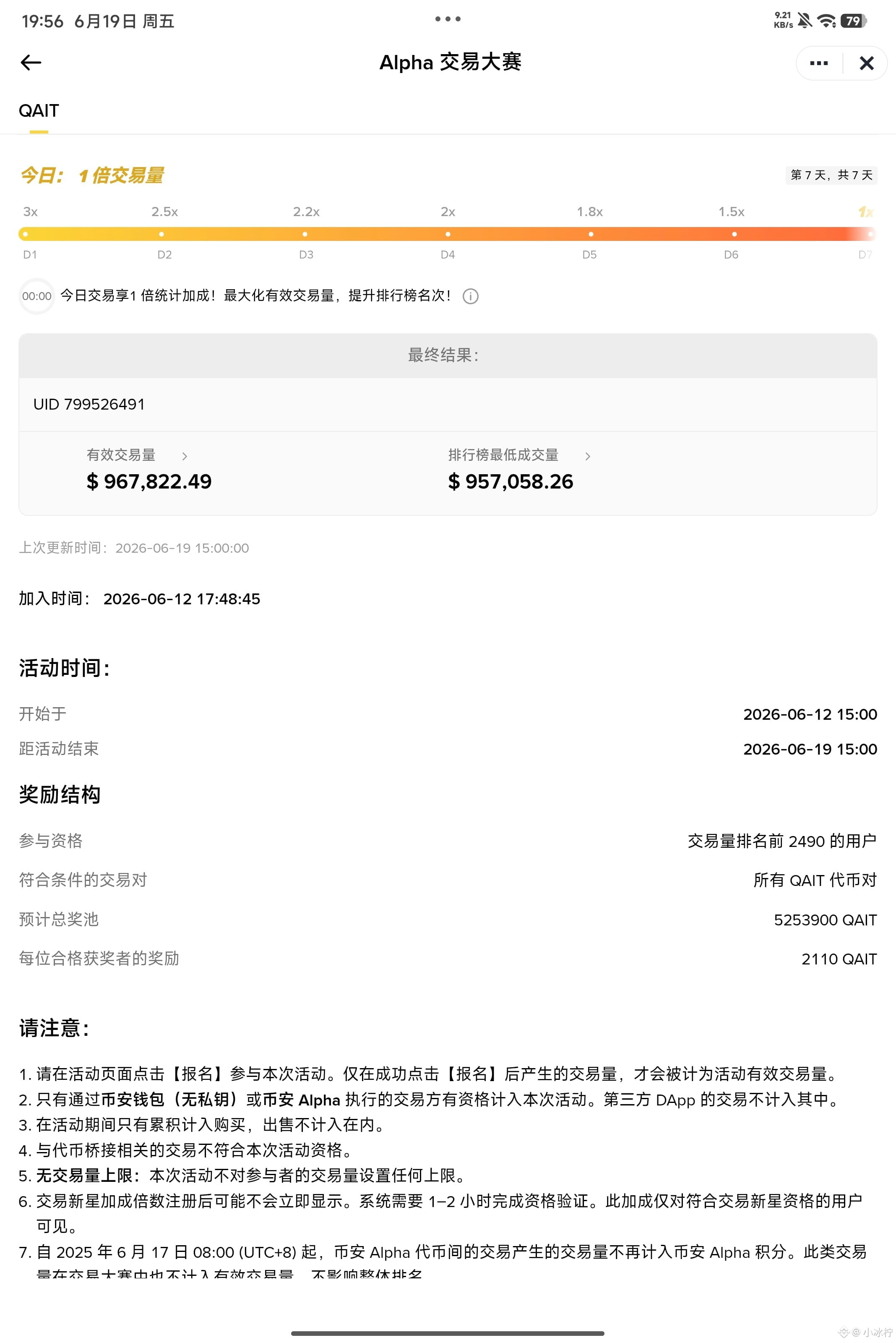
That $QAIT trade was a nail-biter, super intense! Thankfully, I managed to top up some positions, so I can enjoy the holidays 😌
Happy Dragon Boat Festival, everyone! 😜
Happy Dragon Boat Festival, everyone! 😜
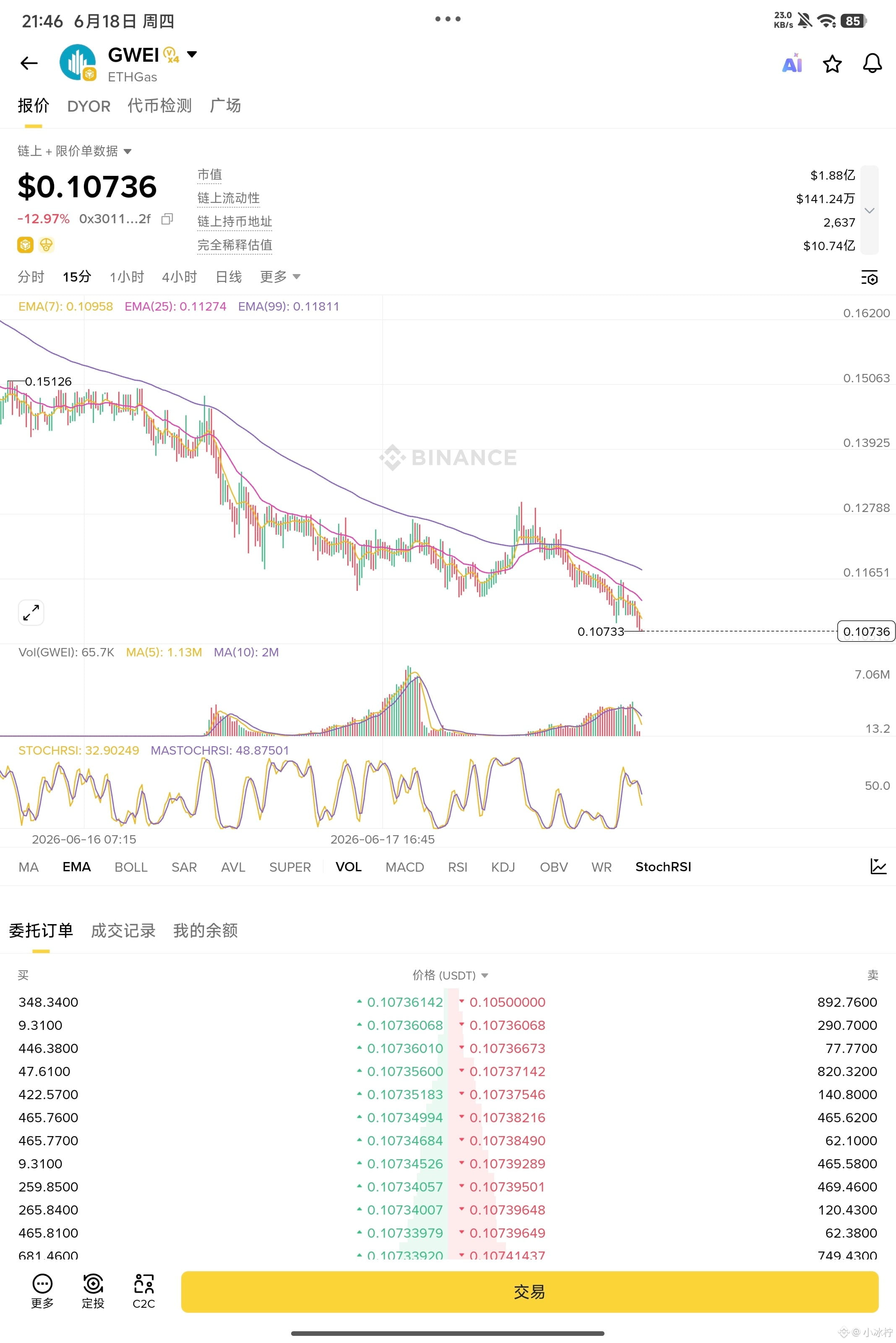
The project team behind $GWEI is really showing their true colors; they seem ready to sell the whole project just to pump the alpha for a trading competition. It's disgusting 🤢
Double dipping today, it's been ages since we had this kind of treatment! 😭😭😭 If you're trading Alpha, don't miss out!
Log in to explore more content