
Sen-J
60 Posts

Sen-J
Report
Block User
High-Frequency Trader
9.1 Years
8 Following
83 Followers
162 Liked
Posts
·
--
Bullish
Last night, BTC dipped to 63,000 again, and the market went through another round of long liquidations, flushing out short-term leverage.
Today, however, the market is starting to show positive signs: price and trading volume are rising in tandem.
CVD data shows that cumulative volume delta in the futures market remains deeply negative, while the spot market has also seen some recovery. This may mean the market is shifting from panic selling to buyers stepping back in.
BTC has fallen for six consecutive weeks, and the downtrend has persisted for some time. But markets often don’t keep falling in a straight line when everyone is bearish.
After long liquidations and a leverage flush, if spot buying continues to follow through, the market could have a chance to stage a strong relief rally.
I think we should keep an eye on the following:
Whether spot trading volume continues to increase.
Whether CVD can establish a sustained upward trend.
Whether BTC can convincingly reclaim key resistance levels.
After six consecutive weeks of declines, we may finally be in for a decent rebound.
Of course, this doesn’t necessarily confirm a trend reversal yet, but at least the market is starting to show signs worth looking forward to.
#Bitcoin #BTC走势分析 #Crypto

112
·
--
Bearish
$BTC at 64,900.
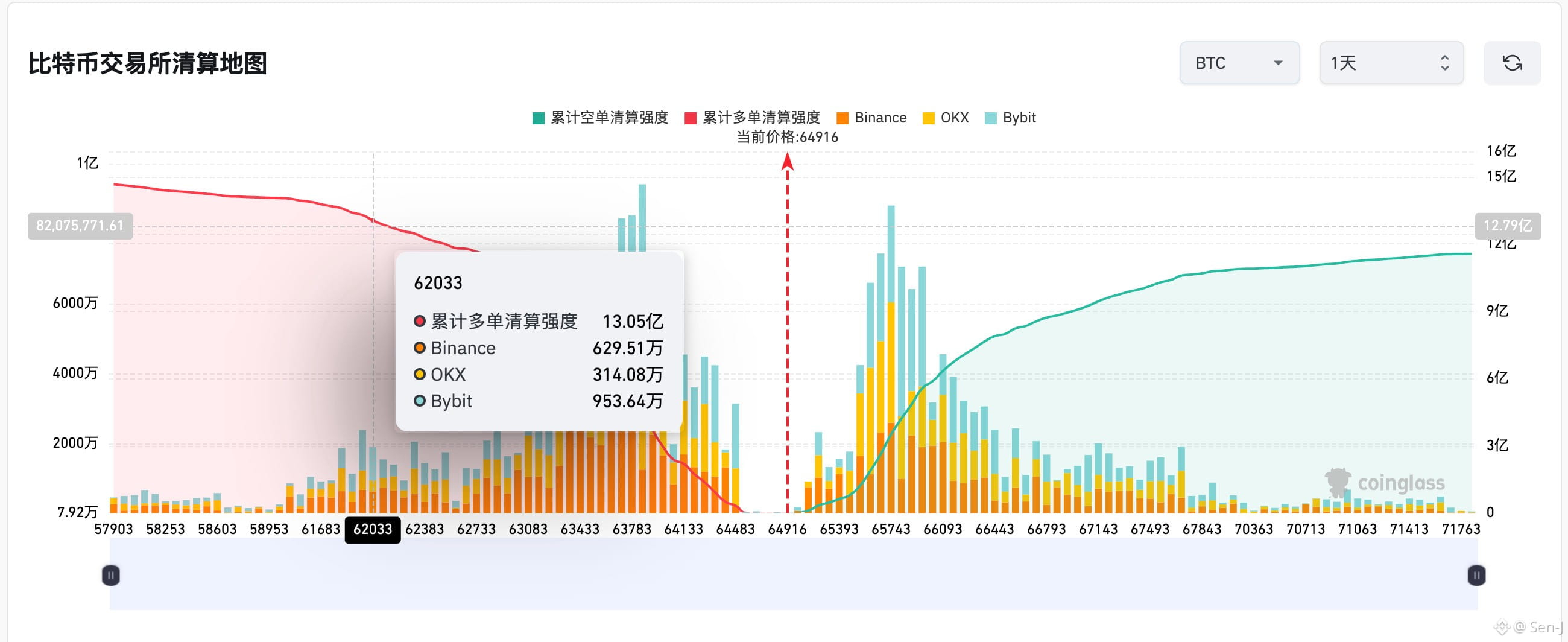
A drop to 62k would liquidate over $130 million in long positions; a rise to 68k would liquidate only $108 million in short positions.
With the market this weak and so much long liquidity stacked below, which side do you think will get taken out?
$BTC at 64,900.
A drop to 62k would liquidate over $130 million in long positions; a rise to 68k would liquidate only $108 million in short positions.
With the market this weak and so much long liquidity stacked below, which side do you think will get taken out?
A drop to 62k would liquidate over $130 million in long positions; a rise to 68k would liquidate only $108 million in short positions.
With the market this weak and so much long liquidity stacked below, which side do you think will get taken out?
2
1
2.2k
·
--
Bearish
1.4k
·
--
Bullish
BTC Market Watch: Deleveraging Continues, Market May Be Approaching a Bottom
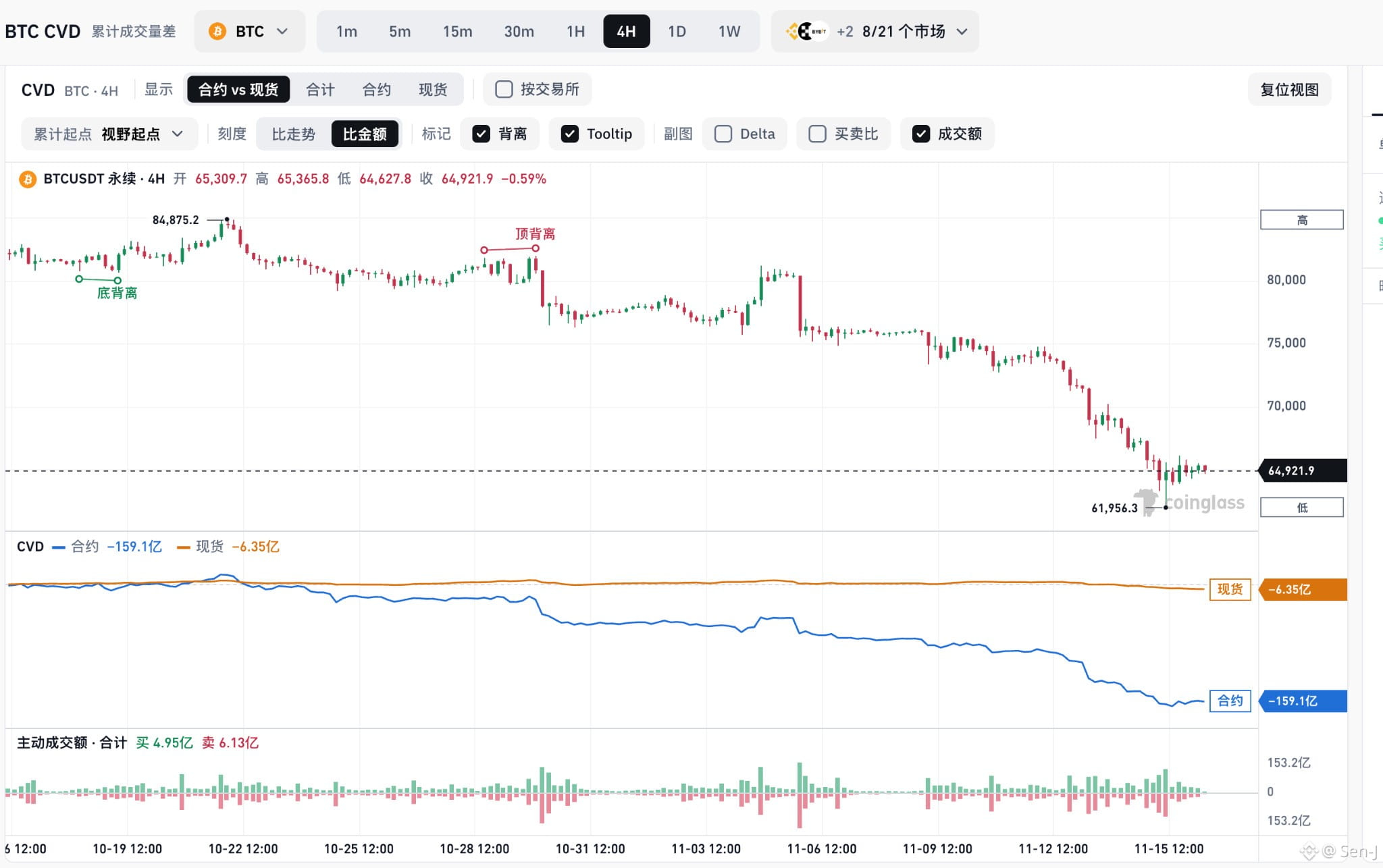
BTC has fallen from around $87,000 to around $62,000, as the market went through a clear sell-off and leveraged position flush.
But the 4-hour CVD shows some noteworthy changes:
1. Futures CVD continues to fall sharply
This indicates heavy aggressive selling pressure in the futures market, potentially accompanied by long position closures, liquidations, and aggressive short openings.
2. Spot CVD remains relatively flat
Compared with futures CVD, the spot market has not seen a decline of the same magnitude or speed. This suggests that selling pressure in this downturn has been concentrated more in the derivatives market, though there is not yet enough evidence to confirm that large spot investors have started accumulating.
3. Funding rates turn negative, while OI continues to decline
Negative funding rates reflect bearish sentiment in the perpetual futures market, while falling OI indicates that open leveraged positions are being reduced.
This means that previously overcrowded long positions are being cleared out, and the market has gone through a period of deleveraging.
4. Futures CVD begins to show signs of stabilization
At the same time, BTC has temporarily stopped falling near $62,000, while futures CVD has flattened and edged up slightly toward the end. This suggests that aggressive selling pressure may be easing.
BTC may have entered a short-term bottoming zone, with the market gradually shifting from concentrated selling to a battle for a bottom.
But note that being in a bottoming zone does not mean a bottom has been confirmed.
Watch three key signals:
Whether spot CVD can continue moving higher, signaling genuine aggressive spot buying.
Whether OI can stabilize after declining, avoiding another round of leveraged position liquidations.
If spot investors start stepping in to absorb supply and selling pressure in the futures market continues to fade, this downturn may be nearing its end.
The opportunities worth watching are not when market sentiment is at its most optimistic, but when selling pressure starts to exhaust itself and capital flows begin to shift first.
#BTC #Bitcoin #CVD #Crypto
137
·
--
The bulls are proving more resilient than expected. After several rounds of pullbacks, there still hasn’t been any large-scale capitulation, and the market’s ability to absorb selling pressure is worth noting.
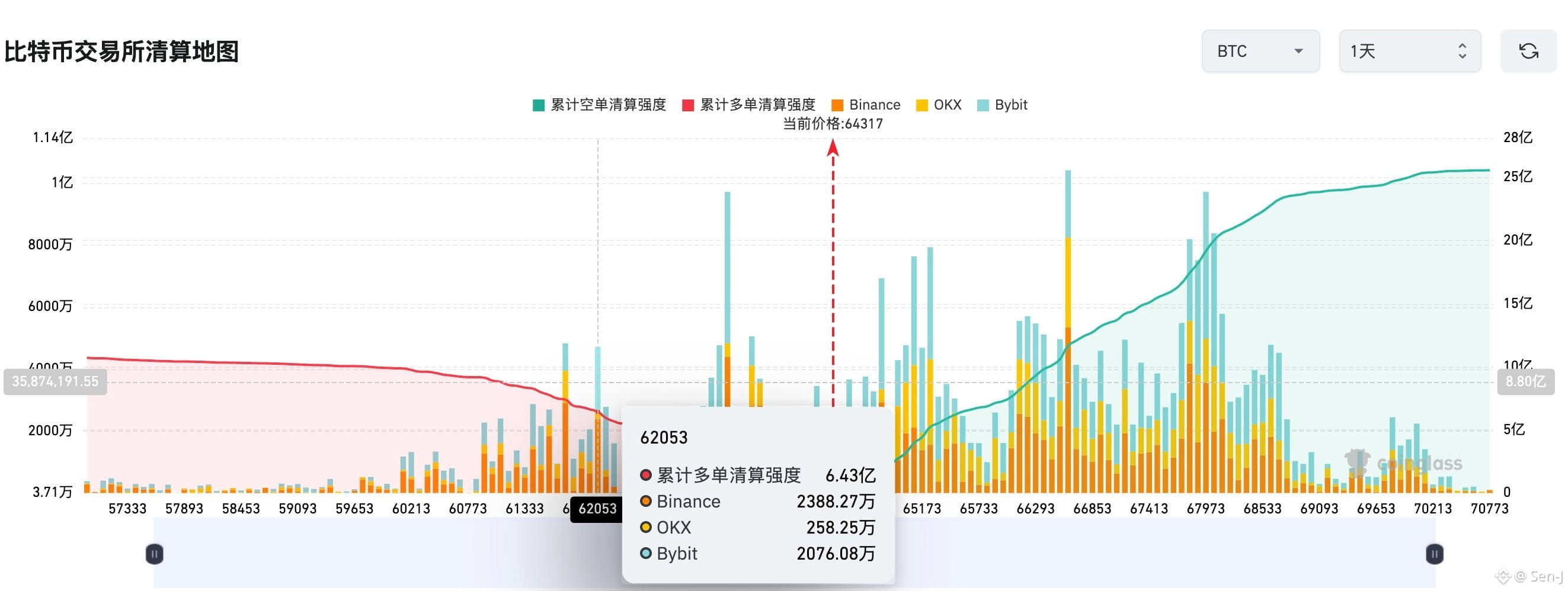
Looking at the BTC liquidation map, more than $600 million in potential long liquidations are still clustered around $62,000.
This means that if the price continues to test lower levels, a break below could trigger another wave of cascading long liquidations.
The bulls are still holding on, but the market may not have completed its final shakeout yet.
Next, let’s see whether the price retests $62,000. More long liquidations are ahead.
435
·
--
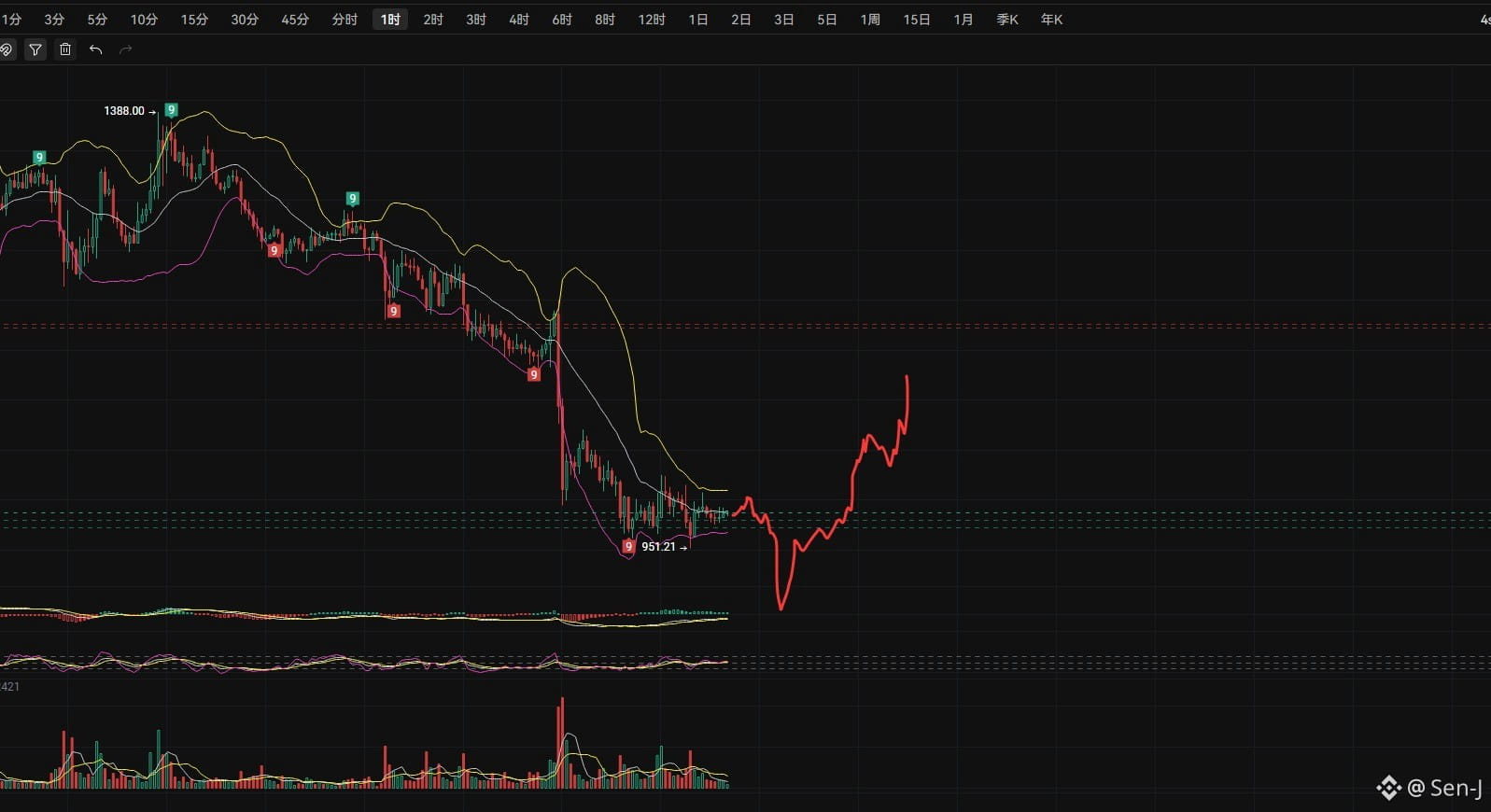
$ZEC has reached a key level on the weekly chart.
The price is currently right around the middle Bollinger Band on the weekly chart. The 1h candles are also showing several very positive signals at the bottom:
1. After a previous wick down to 951.21, the price quickly recovered, leaving a very long lower wick.
2. The TD Sequential printed two consecutive red “9”s (Buy Setup) at the bottom, a typical sign of momentum exhaustion.
3. Volume increased noticeably at the bottom, suggesting that most panic selling has likely been flushed out.
The red dashed line marks overhead resistance, while the green dashed line marks strong support at the bottom. In my view, the risk/reward ratio looks very favorable at this level, and a rebound is likely. 📈 First, watch the moving averages above and the red dashed resistance zone as targets.
This is not investment advice. Be sure to manage your position size and set a stop-loss.
#ZEC #Zcash #Crypto
2
1
1.2k
·
--

Article
ETH can’t ask the market to believe it’s a store of value when it hasn’t nailed value capture.Ethereum’s biggest problem is both technical and philosophical.
Recently, Vitalik’s remarks that ETH should be viewed more as a Store of Value than as a Fee Burning Asset have raised several bigger questions for me.
1. ETH’s value-capture problem can’t be solved by redefining it.
Over the past few years, Vitalik and the Ethereum Foundation have strongly advocated for a Rollup-centric Roadmap.
The industry has poured enormous resources into building L2s.
And the result?
There are more and more L2s, the ecosystem is becoming increasingly fragmented, liquidity is scattered, and users have to deal with different networks, bridges, and assets.
ETH can’t ask the market to believe it’s a store of value when it hasn’t nailed value capture.
Ethereum’s biggest problem is both technical and philosophical.
Recently, Vitalik’s remarks that ETH should be viewed more as a Store of Value than as a Fee Burning Asset have raised several bigger questions for me.
1. ETH’s value-capture problem can’t be solved by redefining it.
Over the past few years, Vitalik and the Ethereum Foundation have strongly advocated for a Rollup-centric Roadmap.
The industry has poured enormous resources into building L2s.
And the result?
There are more and more L2s, the ecosystem is becoming increasingly fragmented, liquidity is scattered, and users have to deal with different networks, bridges, and assets.
1
352
·
--

Article
Stablecoins bring Hayek's idea of currency non-nationalization to the chain: Who is responsible for your money?In May 2022, the algorithmic stablecoin UST collapsed from a market value of about 18 billion dollars to nearly zero within a few days. Millions of users witnessed their "stable" assets shrink by more than 99%. During the same period, the Federal Reserve was raising interest rates to combat inflation not seen in forty years, while the Argentine peso depreciated by more than 100% annually, and other fiat currencies like the Turkish lira and Nigerian naira also experienced severe fluctuations.
Putting these two things together exposes a neglected fact: currency issued by the state can depreciate due to policy and credit, and privately issued "stablecoins" can also collapse due to design flaws. No one can monopolize "stability." So the question is: who has the authority to issue currency? Who should be responsible for "instability"? Do markets have the right to vote with their feet and make choices among various currencies? The following discusses how this experiment occurs and what it signifies, based on Hayek's theories and the on-chain practices of stablecoins.
Stablecoins bring Hayek's idea of currency non-nationalization to the chain: Who is responsible for your money?
In May 2022, the algorithmic stablecoin UST collapsed from a market value of about 18 billion dollars to nearly zero within a few days. Millions of users witnessed their "stable" assets shrink by more than 99%. During the same period, the Federal Reserve was raising interest rates to combat inflation not seen in forty years, while the Argentine peso depreciated by more than 100% annually, and other fiat currencies like the Turkish lira and Nigerian naira also experienced severe fluctuations.
Putting these two things together exposes a neglected fact: currency issued by the state can depreciate due to policy and credit, and privately issued "stablecoins" can also collapse due to design flaws. No one can monopolize "stability." So the question is: who has the authority to issue currency? Who should be responsible for "instability"? Do markets have the right to vote with their feet and make choices among various currencies? The following discusses how this experiment occurs and what it signifies, based on Hayek's theories and the on-chain practices of stablecoins.
Putting these two things together exposes a neglected fact: currency issued by the state can depreciate due to policy and credit, and privately issued "stablecoins" can also collapse due to design flaws. No one can monopolize "stability." So the question is: who has the authority to issue currency? Who should be responsible for "instability"? Do markets have the right to vote with their feet and make choices among various currencies? The following discusses how this experiment occurs and what it signifies, based on Hayek's theories and the on-chain practices of stablecoins.
1
95
·
--

Article
The Truth about Stablecoins: Not just crypto assets, but the infrastructure of global financeIntroduction: The currency rules that are quietly being rewritten
The Argentine peso has depreciated by 200% in a year, and Argentinians are already using USDT to pay salaries. In 2025, Buenos Aires, a designer received a payment from a client in New York: not a bank transfer, not PayPal, but USDT. The entire transaction was completed on the blockchain, arriving in seconds, with fees of less than a cent. If done through traditional bank cross-border remittance, it would take 3 to 5 business days, with fees ranging from 3% to 5%, plus the burden of peso exchange rate fluctuations.
This scene is playing out in the lives of hundreds of millions worldwide: Turkish freelancers using USDC to avoid the collapse of the lira; Nigerian remittance workers sending income back home through stablecoins, with costs significantly lower than traditional channels (the average global remittance cost is about 6.5%, reaching 8.45% in Sub-Saharan Africa, while platforms like Yellow Card can achieve zero or very low fees in the African corridor); Vietnamese small businesses paying suppliers with stablecoins, reducing settlement time from 5–15 business days to seconds.
The Truth about Stablecoins: Not just crypto assets, but the infrastructure of global finance
Introduction: The currency rules that are quietly being rewritten
The Argentine peso has depreciated by 200% in a year, and Argentinians are already using USDT to pay salaries. In 2025, Buenos Aires, a designer received a payment from a client in New York: not a bank transfer, not PayPal, but USDT. The entire transaction was completed on the blockchain, arriving in seconds, with fees of less than a cent. If done through traditional bank cross-border remittance, it would take 3 to 5 business days, with fees ranging from 3% to 5%, plus the burden of peso exchange rate fluctuations.
This scene is playing out in the lives of hundreds of millions worldwide: Turkish freelancers using USDC to avoid the collapse of the lira; Nigerian remittance workers sending income back home through stablecoins, with costs significantly lower than traditional channels (the average global remittance cost is about 6.5%, reaching 8.45% in Sub-Saharan Africa, while platforms like Yellow Card can achieve zero or very low fees in the African corridor); Vietnamese small businesses paying suppliers with stablecoins, reducing settlement time from 5–15 business days to seconds.
3
207
·
--

Article
Stablecoins 6% annualized, T+0 redemption, more attractive cash than money market fundsThe cryptocurrency market is adjusting; why did tokenized US Treasuries defy the trend and reach a new high of $4.2 billion? Behind this question lies a trend: funds have not exited but have flowed from volatile assets to income-generating 'digital dollars'.
Stablecoins are transitioning from a settlement tool to an income-generating asset. Holding USDT and USDC no longer means idle funds, but rather, it can earn interest like a bank deposit, often with a higher yield.
So how do stablecoins achieve the transformation from a settlement tool to an income-generating asset?
The dilemma of traditional cash: holding it means losing money.
In most economies, holding cash equates to bearing opportunity costs and inflation erosion.
Stablecoins 6% annualized, T+0 redemption, more attractive cash than money market funds
The cryptocurrency market is adjusting; why did tokenized US Treasuries defy the trend and reach a new high of $4.2 billion? Behind this question lies a trend: funds have not exited but have flowed from volatile assets to income-generating 'digital dollars'.
Stablecoins are transitioning from a settlement tool to an income-generating asset. Holding USDT and USDC no longer means idle funds, but rather, it can earn interest like a bank deposit, often with a higher yield.
So how do stablecoins achieve the transformation from a settlement tool to an income-generating asset?
The dilemma of traditional cash: holding it means losing money.
In most economies, holding cash equates to bearing opportunity costs and inflation erosion.
1
5
188
·
--

Article
33.5 trillion dollars: Stablecoin settlement volume exceeds Visa, the global payment landscape is being rewritten.33.5 trillion dollars. In 2025, the on-chain settlement volume of stablecoins will reach $33.5 trillion, continuously exceeding the combined scale of Visa and Mastercard. Behind this figure, the settlement infrastructure is already in place, and the payment revolution is the next step. To understand this transformation, it should be examined from three dimensions: How large is the scale of on-chain dollars? Why is traditional cross-border payment being challenged? Where are the real scenarios?
On-chain dollars are now a measurable financial layer.
The scale of stablecoins has grown too large to ignore. By the end of 2025, the total market value of global stablecoins will exceed $300 billion, with USDT (the US dollar stablecoin) alone amounting to approximately $184 billion, marking 27 consecutive months of growth. According to data from institutions such as Artemis and TRM Labs, the on-chain settlement volume of stablecoins in 2025 is estimated to be about $33.5 trillion, surpassing the combined payment scale of Visa and Mastercard. It should be noted that a significant portion of this comes from fund transfers between exchanges, trade settlements, and DeFi, rather than narrow payments (for goods and services). The proportion of stablecoins used in real payment scenarios (remittances, trade, daily consumption) is still small, but the growth rate is fast, making it the main battleground in the future.
33.5 trillion dollars: Stablecoin settlement volume exceeds Visa, the global payment landscape is being rewritten.
33.5 trillion dollars. In 2025, the on-chain settlement volume of stablecoins will reach $33.5 trillion, continuously exceeding the combined scale of Visa and Mastercard. Behind this figure, the settlement infrastructure is already in place, and the payment revolution is the next step. To understand this transformation, it should be examined from three dimensions: How large is the scale of on-chain dollars? Why is traditional cross-border payment being challenged? Where are the real scenarios?
On-chain dollars are now a measurable financial layer.
The scale of stablecoins has grown too large to ignore. By the end of 2025, the total market value of global stablecoins will exceed $300 billion, with USDT (the US dollar stablecoin) alone amounting to approximately $184 billion, marking 27 consecutive months of growth. According to data from institutions such as Artemis and TRM Labs, the on-chain settlement volume of stablecoins in 2025 is estimated to be about $33.5 trillion, surpassing the combined payment scale of Visa and Mastercard. It should be noted that a significant portion of this comes from fund transfers between exchanges, trade settlements, and DeFi, rather than narrow payments (for goods and services). The proportion of stablecoins used in real payment scenarios (remittances, trade, daily consumption) is still small, but the growth rate is fast, making it the main battleground in the future.
2
233
·
--

Article
95% of revenue depends on interest income, yet the stock price surged by 20%: What is Circle betting on?95% of revenue depends on interest income, the Federal Reserve is still lowering interest rates, why did Circle's stock price surge by 20%? The answer is not in the profit statement: the market is not pricing the interest differential, but rather the cross-border settlement network and fee rights built around USDC. Whoever controls the standards and settlement rights of the channel between fiat currency and on-chain dollars can collect tolls; what Circle is betting on is this matter.
On February 25, 2026, Circle (NYSE: CRCL) released its financial report for the fourth quarter and the whole year of 2025: Q4 revenue was $770 million, of which about 95% came from reserve interest; annual revenue was $2.7 billion, a year-on-year increase of 64%. At the end of the year, the circulation of USDC was $75.3 billion, and Q4 on-chain transaction volume was $11.9 trillion. After the financial report was released, the stock price initially rose nearly 20% in pre-market trading.
95% of revenue depends on interest income, yet the stock price surged by 20%: What is Circle betting on?
95% of revenue depends on interest income, the Federal Reserve is still lowering interest rates, why did Circle's stock price surge by 20%? The answer is not in the profit statement: the market is not pricing the interest differential, but rather the cross-border settlement network and fee rights built around USDC. Whoever controls the standards and settlement rights of the channel between fiat currency and on-chain dollars can collect tolls; what Circle is betting on is this matter.
On February 25, 2026, Circle (NYSE: CRCL) released its financial report for the fourth quarter and the whole year of 2025: Q4 revenue was $770 million, of which about 95% came from reserve interest; annual revenue was $2.7 billion, a year-on-year increase of 64%. At the end of the year, the circulation of USDC was $75.3 billion, and Q4 on-chain transaction volume was $11.9 trillion. After the financial report was released, the stock price initially rose nearly 20% in pre-market trading.
On February 25, 2026, Circle (NYSE: CRCL) released its financial report for the fourth quarter and the whole year of 2025: Q4 revenue was $770 million, of which about 95% came from reserve interest; annual revenue was $2.7 billion, a year-on-year increase of 64%. At the end of the year, the circulation of USDC was $75.3 billion, and Q4 on-chain transaction volume was $11.9 trillion. After the financial report was released, the stock price initially rose nearly 20% in pre-market trading.
10
1.2k
·
--
Article
USDT: How the best business model in human history was forged?The market value of USDT today exceeds $186 billion, accounting for about 62% of the total market value of stablecoins. The on-chain settlement volume for the entire year of 2025 is approximately $13.3 trillion, making it the largest and most widely used 'on-chain dollar' at present.
From a business model perspective, Tether connects the issuance, redemption, and reserve management of USDT on one end, and large-scale dollar asset allocation and earning interest rate spreads on the other. In 2025, the net profit is expected to exceed $10 billion, with exposure to U.S. Treasuries and related assets of approximately $141 billion, ranking among the top global institutions holding U.S. Treasuries. The reserves also include billions of dollars in physical gold, which has contributed significant paper gains against the backdrop of strong gold price increases in recent years. It serves as both an 'on-chain central bank' providing base currency for the entire industry and a highly profitable dollar asset management bank, with the principal mainly coming from users' almost interest-free liabilities, while most interest income remains on its own books. A rough estimate using traditional banking valuation methods suggests that such profits and asset scale are sufficient to benchmark against a number of leading global financial institutions.
USDT: How the best business model in human history was forged?
The market value of USDT today exceeds $186 billion, accounting for about 62% of the total market value of stablecoins. The on-chain settlement volume for the entire year of 2025 is approximately $13.3 trillion, making it the largest and most widely used 'on-chain dollar' at present.
From a business model perspective, Tether connects the issuance, redemption, and reserve management of USDT on one end, and large-scale dollar asset allocation and earning interest rate spreads on the other. In 2025, the net profit is expected to exceed $10 billion, with exposure to U.S. Treasuries and related assets of approximately $141 billion, ranking among the top global institutions holding U.S. Treasuries. The reserves also include billions of dollars in physical gold, which has contributed significant paper gains against the backdrop of strong gold price increases in recent years. It serves as both an 'on-chain central bank' providing base currency for the entire industry and a highly profitable dollar asset management bank, with the principal mainly coming from users' almost interest-free liabilities, while most interest income remains on its own books. A rough estimate using traditional banking valuation methods suggests that such profits and asset scale are sufficient to benchmark against a number of leading global financial institutions.
From a business model perspective, Tether connects the issuance, redemption, and reserve management of USDT on one end, and large-scale dollar asset allocation and earning interest rate spreads on the other. In 2025, the net profit is expected to exceed $10 billion, with exposure to U.S. Treasuries and related assets of approximately $141 billion, ranking among the top global institutions holding U.S. Treasuries. The reserves also include billions of dollars in physical gold, which has contributed significant paper gains against the backdrop of strong gold price increases in recent years. It serves as both an 'on-chain central bank' providing base currency for the entire industry and a highly profitable dollar asset management bank, with the principal mainly coming from users' almost interest-free liabilities, while most interest income remains on its own books. A rough estimate using traditional banking valuation methods suggests that such profits and asset scale are sufficient to benchmark against a number of leading global financial institutions.
2
261
·
--
Article
Stablecoins (3) - Who to Trust? The Monetary Order in the Era of USDT, USDC, and DAI StablecoinsStablecoins are no longer a supporting role in speculative trading but are a substantial infrastructure in global payments and settlements. The total market capitalization exceeded $310 billion in early 2026, setting a new high; looking back, it grew from about $4.2 billion in early 2020 to $283.7 billion by September 2025, and then to $310 billion, with an expansion rate unimaginable in traditional finance. The magnitude is reflected not only in market value; throughout 2025, stablecoins processed over $33 trillion in transaction volume, comparable to the payment and clearing systems of major sovereign countries.
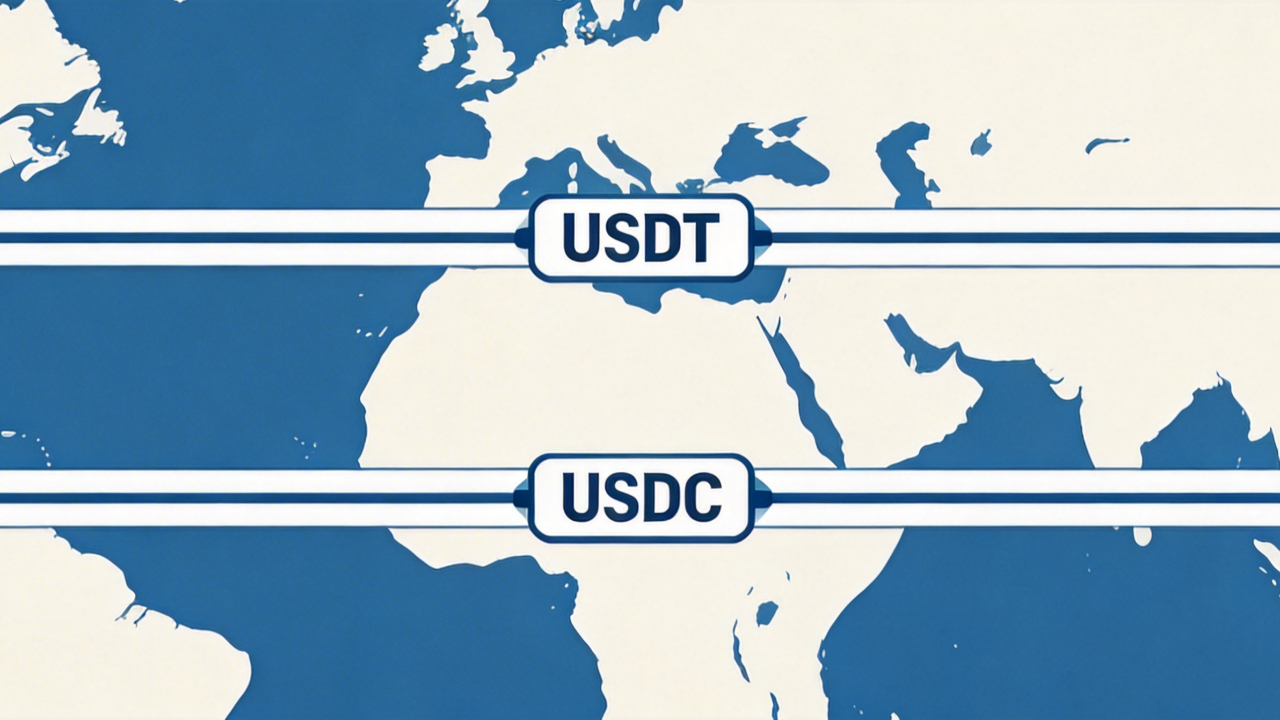
The current market structure is highly concentrated on leading products. USDT and USDC together account for over 90% of the total market capitalization, with USDT leading absolutely with a market value of approximately $187 billion and nearly 60% share, while USDC ranks second with about $74 billion. However, the trust logic behind the two is entirely different. Beyond that, Ethena's USDe (synthetic dollar), the rebranded Sky (USDS/former DAI), and PayPal USD (PYUSD) each occupy a place in the derivatives collateral, crypto collateral, and payment ecosystem tracks respectively.
Stablecoins (3) - Who to Trust? The Monetary Order in the Era of USDT, USDC, and DAI Stablecoins
Stablecoins are no longer a supporting role in speculative trading but are a substantial infrastructure in global payments and settlements. The total market capitalization exceeded $310 billion in early 2026, setting a new high; looking back, it grew from about $4.2 billion in early 2020 to $283.7 billion by September 2025, and then to $310 billion, with an expansion rate unimaginable in traditional finance. The magnitude is reflected not only in market value; throughout 2025, stablecoins processed over $33 trillion in transaction volume, comparable to the payment and clearing systems of major sovereign countries.
The current market structure is highly concentrated on leading products. USDT and USDC together account for over 90% of the total market capitalization, with USDT leading absolutely with a market value of approximately $187 billion and nearly 60% share, while USDC ranks second with about $74 billion. However, the trust logic behind the two is entirely different. Beyond that, Ethena's USDe (synthetic dollar), the rebranded Sky (USDS/former DAI), and PayPal USD (PYUSD) each occupy a place in the derivatives collateral, crypto collateral, and payment ecosystem tracks respectively.
The current market structure is highly concentrated on leading products. USDT and USDC together account for over 90% of the total market capitalization, with USDT leading absolutely with a market value of approximately $187 billion and nearly 60% share, while USDC ranks second with about $74 billion. However, the trust logic behind the two is entirely different. Beyond that, Ethena's USDe (synthetic dollar), the rebranded Sky (USDS/former DAI), and PayPal USD (PYUSD) each occupy a place in the derivatives collateral, crypto collateral, and payment ecosystem tracks respectively.
1
176
·
--
Article
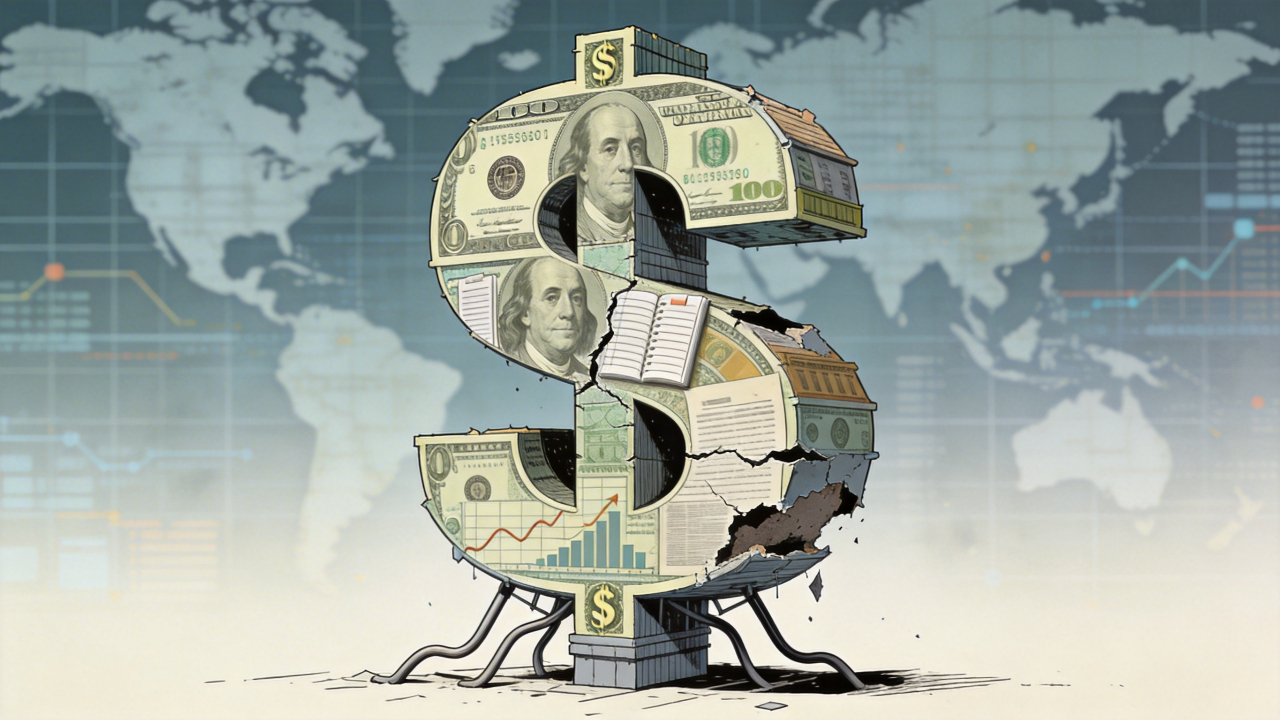
The US dollar is collapsing, but the US is rewriting the underlying code of global financeIn the past decades, the voices proclaiming that 'the US dollar is finished' have intermittently surged into public discourse: from the resurgence of memories of Bretton Woods, to the ferment of global de-dollarization sentiment, and then to the psychological impact brought by fiscal deficits and inflation data. It seems that as long as there is another major crisis, the dollar will 'collapse overnight'. However, another equally true fact is: every time there is global liquidity tightening or a significant asset pullback, US Treasury bonds and dollar assets remain the first safe haven that global institutions rush back to. In other words, the dollar is not going to disappear tomorrow, but it is slowly sliding onto a track leading to systemic breakdown.
The US dollar is collapsing, but the US is rewriting the underlying code of global finance
In the past decades, the voices proclaiming that 'the US dollar is finished' have intermittently surged into public discourse: from the resurgence of memories of Bretton Woods, to the ferment of global de-dollarization sentiment, and then to the psychological impact brought by fiscal deficits and inflation data. It seems that as long as there is another major crisis, the dollar will 'collapse overnight'. However, another equally true fact is: every time there is global liquidity tightening or a significant asset pullback, US Treasury bonds and dollar assets remain the first safe haven that global institutions rush back to. In other words, the dollar is not going to disappear tomorrow, but it is slowly sliding onto a track leading to systemic breakdown.
3
700
·
--
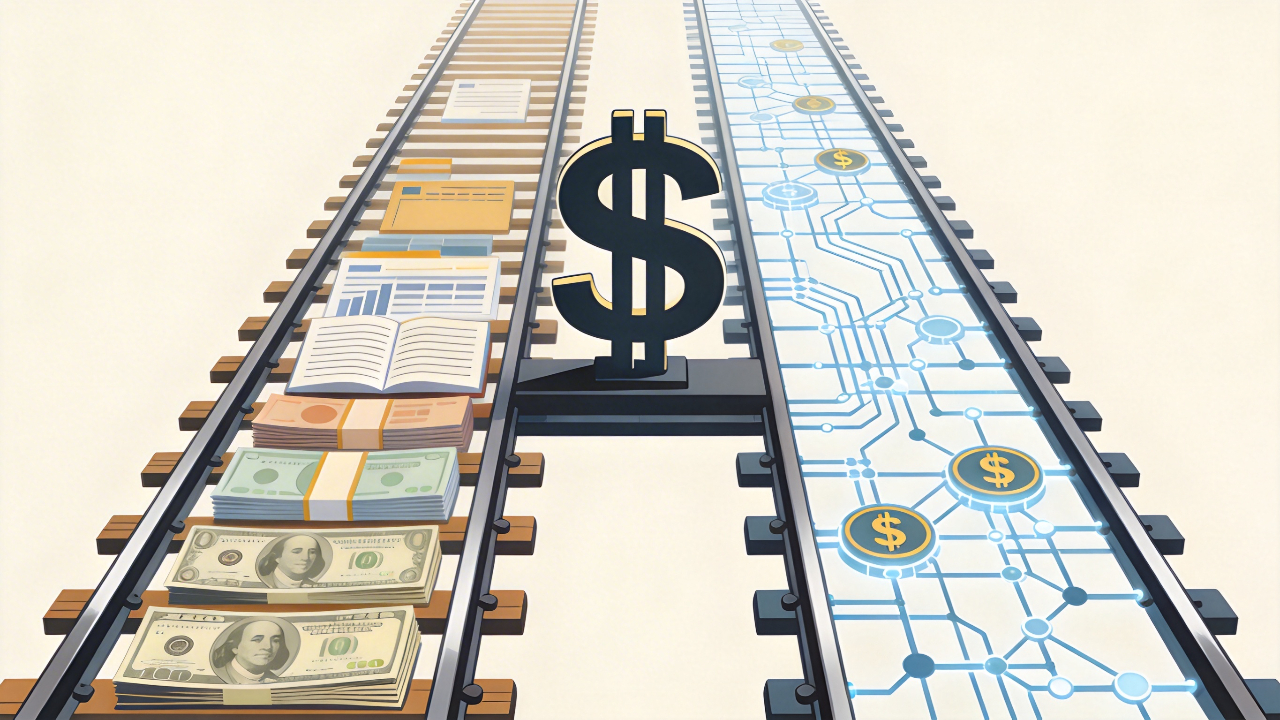
Article
Stablecoins (2): The Birth of Stablecoins and the Beginning of the Dollar's DigitizationThe story of dollar hegemony used to be found in SWIFT messages, oil contracts, and the tracks of warships. Today, it has gained an additional track: a string of code that flows on the blockchain 24/7.
The U.S. dollar, as the global reserve currency, has always relied on existing settlement networks, oil pricing, and military political deterrence. Stablecoins have not invented a new currency; they have merely transformed dollar-denominated debt into digital certificates that flow on-chain 24 hours a day. Cash and the numbers in bank accounts have become on-chain assets that anyone can hold and transfer—thus, for the first time, the dollar has achieved nearly borderless circulation without going through traditional commercial banks or adhering to sovereign boundaries. Rather than saying that hegemony has been weakened, it is more accurate to say that an additional track has been created for the dollar, completing a digital upgrade.
Stablecoins (2): The Birth of Stablecoins and the Beginning of the Dollar's Digitization
The story of dollar hegemony used to be found in SWIFT messages, oil contracts, and the tracks of warships. Today, it has gained an additional track: a string of code that flows on the blockchain 24/7.
The U.S. dollar, as the global reserve currency, has always relied on existing settlement networks, oil pricing, and military political deterrence. Stablecoins have not invented a new currency; they have merely transformed dollar-denominated debt into digital certificates that flow on-chain 24 hours a day. Cash and the numbers in bank accounts have become on-chain assets that anyone can hold and transfer—thus, for the first time, the dollar has achieved nearly borderless circulation without going through traditional commercial banks or adhering to sovereign boundaries. Rather than saying that hegemony has been weakened, it is more accurate to say that an additional track has been created for the dollar, completing a digital upgrade.
The U.S. dollar, as the global reserve currency, has always relied on existing settlement networks, oil pricing, and military political deterrence. Stablecoins have not invented a new currency; they have merely transformed dollar-denominated debt into digital certificates that flow on-chain 24 hours a day. Cash and the numbers in bank accounts have become on-chain assets that anyone can hold and transfer—thus, for the first time, the dollar has achieved nearly borderless circulation without going through traditional commercial banks or adhering to sovereign boundaries. Rather than saying that hegemony has been weakened, it is more accurate to say that an additional track has been created for the dollar, completing a digital upgrade.
3
122
·
--
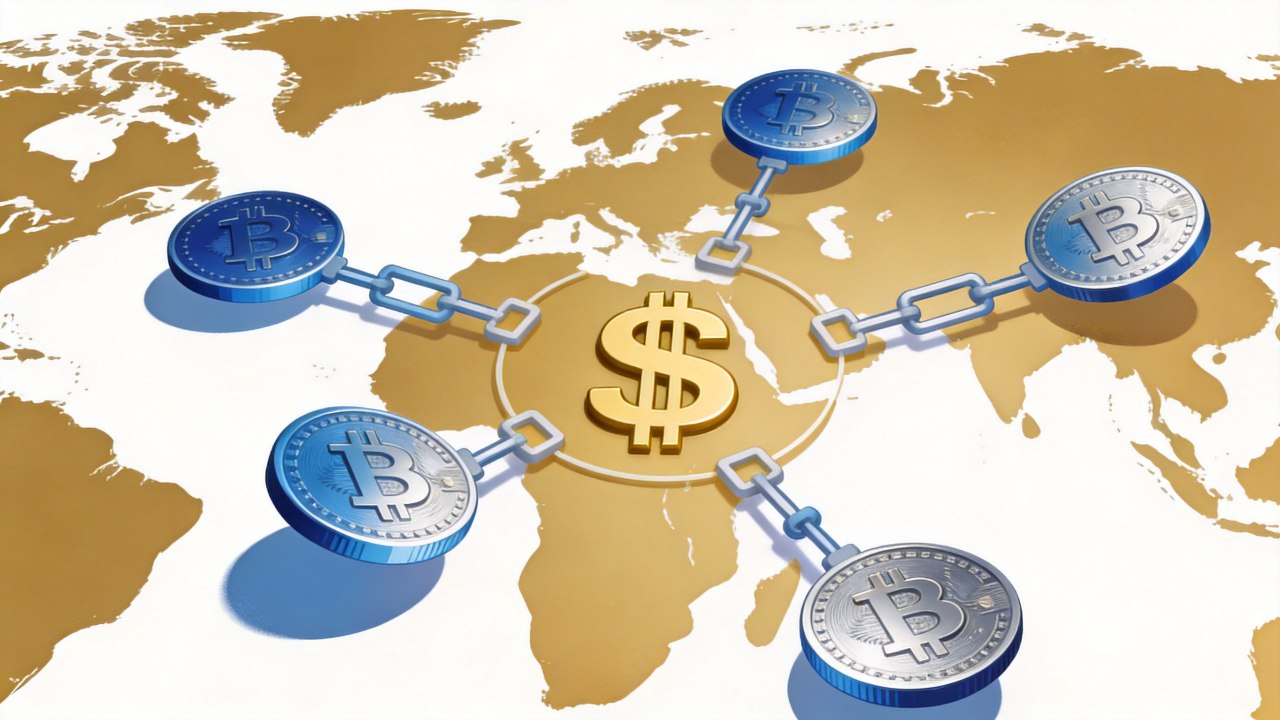
Article
The Evolution of Dollar Hegemony: The Logic of Credit and Value Restructuring from the Bretton Woods System to the Era of StablecoinsIntroduction: The Abstraction of Currency Value and the Foundation of Trust
In today's monetary system, a dollar bill that costs less than 10 cents to produce, or a piece of stablecoin code recorded on the blockchain, can both buy real goods and services not because of the 'amount of metal it contains,' but rather due to the entire trust structure built around credit. To understand stablecoins, especially those backed by the dollar, one must unpack the value basis of the dollar as a global reserve currency.
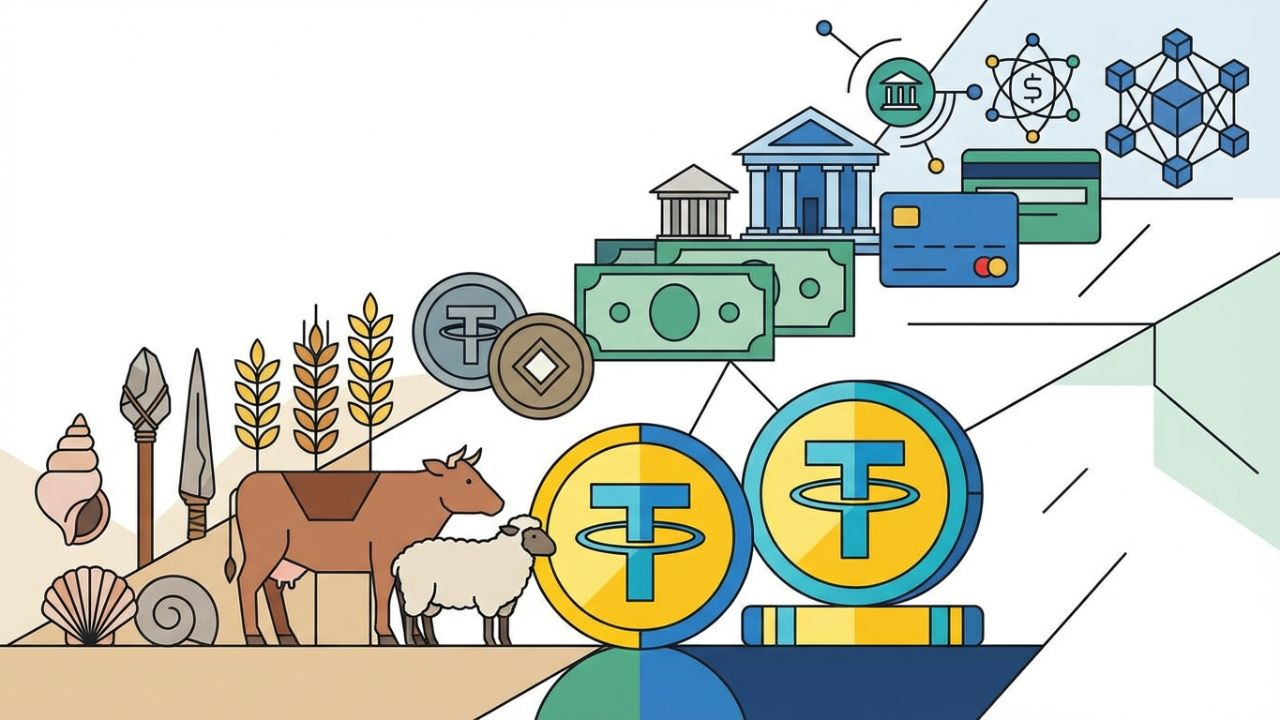
From a longer historical perspective, the things humans have used as 'money' have increasingly moved towards abstraction: initially, they were items of inherent utility (shells, grains), then scarce metals (gold coins, silver coins), and today, we have a fiat currency system entirely supported by credit. With each step forward, the physical properties of 'money' recede, replaced by institutions, consensus, and agreements. The dollar is the representative of this journey, no longer backed by physical commodities like gold, but maintained through social consensus, geopolitical arrangements, and a legal framework.
The Evolution of Dollar Hegemony: The Logic of Credit and Value Restructuring from the Bretton Woods System to the Era of Stablecoins
Introduction: The Abstraction of Currency Value and the Foundation of Trust
In today's monetary system, a dollar bill that costs less than 10 cents to produce, or a piece of stablecoin code recorded on the blockchain, can both buy real goods and services not because of the 'amount of metal it contains,' but rather due to the entire trust structure built around credit. To understand stablecoins, especially those backed by the dollar, one must unpack the value basis of the dollar as a global reserve currency.
From a longer historical perspective, the things humans have used as 'money' have increasingly moved towards abstraction: initially, they were items of inherent utility (shells, grains), then scarce metals (gold coins, silver coins), and today, we have a fiat currency system entirely supported by credit. With each step forward, the physical properties of 'money' recede, replaced by institutions, consensus, and agreements. The dollar is the representative of this journey, no longer backed by physical commodities like gold, but maintained through social consensus, geopolitical arrangements, and a legal framework.
2
276
·
--

Article
Stablecoins (1): The Essence of Currency and the Necessity of StablecoinsThe Bitcoin white paper published in 2009 described 'peer-to-peer electronic cash.' Many people, reading this sentence for the first time, instinctively connect it with real-life scenarios like 'salary,' 'grocery shopping,' and 'contract settlement.'
More than a decade has passed, and what we see is more like another picture: Bitcoin resembles a speculative asset, with its fluctuations resembling an emotional curve; what truly supports the daily trading, lending, market-making, and settlement in the crypto world, however, is stablecoins—something that appears more 'mundane' and even more like traditional finance.
Behind this, the principles of currency operation are at work.
Stablecoins (1): The Essence of Currency and the Necessity of Stablecoins
The Bitcoin white paper published in 2009 described 'peer-to-peer electronic cash.' Many people, reading this sentence for the first time, instinctively connect it with real-life scenarios like 'salary,' 'grocery shopping,' and 'contract settlement.'
More than a decade has passed, and what we see is more like another picture: Bitcoin resembles a speculative asset, with its fluctuations resembling an emotional curve; what truly supports the daily trading, lending, market-making, and settlement in the crypto world, however, is stablecoins—something that appears more 'mundane' and even more like traditional finance.
Behind this, the principles of currency operation are at work.
2
258
·
--

Article
After gold surpassed $4,500, what kind of monetary era are we actually in?The recent surge in gold prices in January 2026 is hard to summarize with old phrases like 'another major bull market.' On January 13, London spot gold reached approximately $4,636 per ounce, setting a new historical high. This isn't due to a sudden boom in a mining stock, nor a short-term bubble caused by a hot ETF—it's more like a global monetary system health check-up: fiat currencies are systematically losing value, while gold is being forced back to its original, never-escaped role as the ultimate currency.
4,500 USD is more of a coordinate than a target price. It reflects a prolonged trajectory of fiat currency depreciation, and represents a concentrated pricing of a series of changes, including sovereign debt, the weaponization of sanctions, realignment of reserve assets, and the rise of on-chain finance. Gold hasn't become a 'higher-grade asset'; rather, the entire credit-based monetary system is losing credibility.
After gold surpassed $4,500, what kind of monetary era are we actually in?
The recent surge in gold prices in January 2026 is hard to summarize with old phrases like 'another major bull market.' On January 13, London spot gold reached approximately $4,636 per ounce, setting a new historical high. This isn't due to a sudden boom in a mining stock, nor a short-term bubble caused by a hot ETF—it's more like a global monetary system health check-up: fiat currencies are systematically losing value, while gold is being forced back to its original, never-escaped role as the ultimate currency.
4,500 USD is more of a coordinate than a target price. It reflects a prolonged trajectory of fiat currency depreciation, and represents a concentrated pricing of a series of changes, including sovereign debt, the weaponization of sanctions, realignment of reserve assets, and the rise of on-chain finance. Gold hasn't become a 'higher-grade asset'; rather, the entire credit-based monetary system is losing credibility.
4,500 USD is more of a coordinate than a target price. It reflects a prolonged trajectory of fiat currency depreciation, and represents a concentrated pricing of a series of changes, including sovereign debt, the weaponization of sanctions, realignment of reserve assets, and the rise of on-chain finance. Gold hasn't become a 'higher-grade asset'; rather, the entire credit-based monetary system is losing credibility.
1
644
·
--
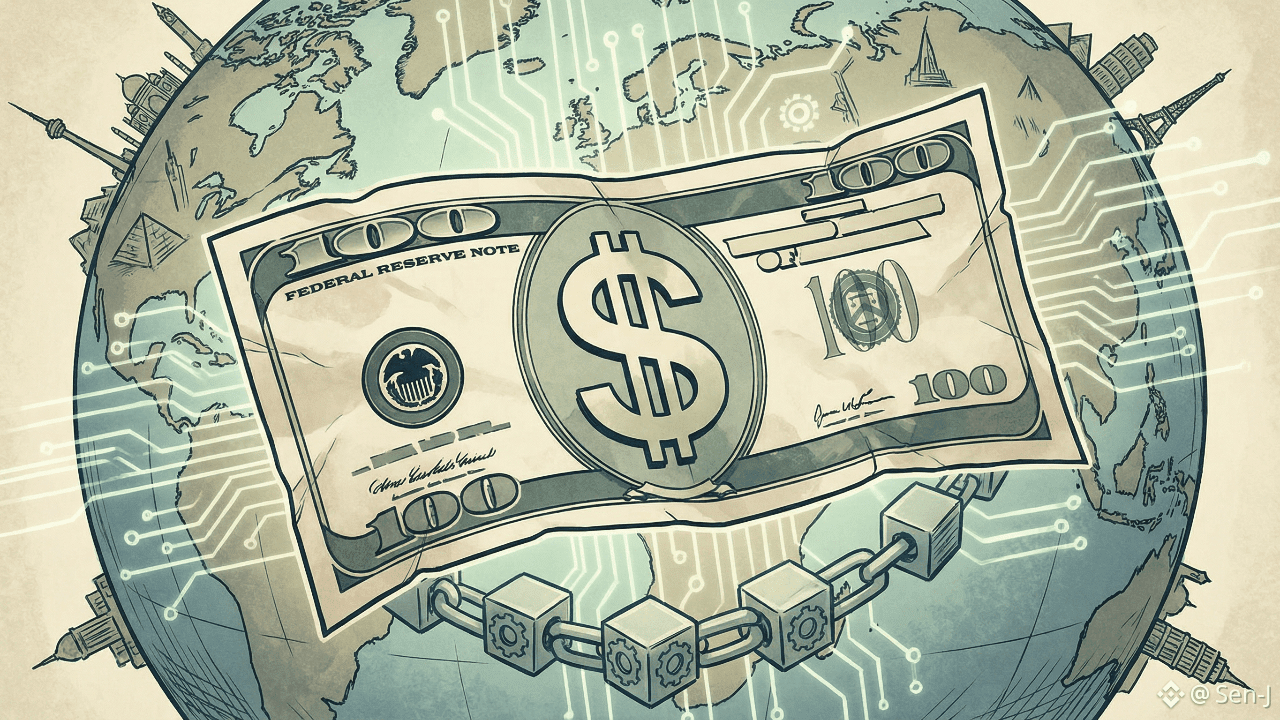
Article
Stablecoin (0): The Legal Tender Value Basis of the US Dollar — How Money Without Commodity Value Gains TrustIntroduction: The Paradox of Monetary Value
A green piece of paper, costing less than 10 cents to produce, can exchange for goods and services worldwide. This is the paradox of the modern monetary system.
When discussing stablecoins, we must first answer a more fundamental question: Why can a piece of paper become a global reserve currency? Why is the dollar accepted worldwide, even though it has no intrinsic commodity value?
To understand why stablecoins have value, we must first understand why the US dollar has value. Because stablecoins—especially dollar-pegged stablecoins—are essentially replicating and extending the credit mechanism of the US dollar on the blockchain. Understanding the foundation of the dollar's value is not only crucial for grasping the modern monetary system, but also the starting point for comprehending the value logic of stablecoins.
Stablecoin (0): The Legal Tender Value Basis of the US Dollar — How Money Without Commodity Value Gains Trust
Introduction: The Paradox of Monetary Value
A green piece of paper, costing less than 10 cents to produce, can exchange for goods and services worldwide. This is the paradox of the modern monetary system.
When discussing stablecoins, we must first answer a more fundamental question: Why can a piece of paper become a global reserve currency? Why is the dollar accepted worldwide, even though it has no intrinsic commodity value?
To understand why stablecoins have value, we must first understand why the US dollar has value. Because stablecoins—especially dollar-pegged stablecoins—are essentially replicating and extending the credit mechanism of the US dollar on the blockchain. Understanding the foundation of the dollar's value is not only crucial for grasping the modern monetary system, but also the starting point for comprehending the value logic of stablecoins.
2
413
Log in to explore more content
Join global crypto users on Binance Square
⚡️ Get latest and useful information about crypto.
💬 Trusted by the world’s largest crypto exchange.
👍 Discover real insights from verified creators.
Email / Phone number
Trending Topics
NvidiaBeatsEstimatesAICloudStocksRiseAfterHours
11,839 views
123 Discussing
Nvidia Beats With $115.8 Billion in Revenue, Guides to $130 Billion and Adds $150 Billion Buyback
Binance News
·14 Likes
·15.7k views
A Packed Week of Earnings and Data Tests Markets
158,012 views
675 Discussing
AnthropicIPOTestsInvestorAppetiteForAI
348,975 views
2,967 Discussing