
跟着机构买币
1.2k Posts

跟着机构买币
Report
Block User
坚定看好币圈,定投虚拟币。
Open Trade
High-Frequency Trader
3.8 Years
141 Following
197 Followers
378 Liked
Posts
Portfolio
All
Quotes
·
--
$G Crypto market’s latest big瓜: Azu posts a long exposé, claiming he paid 360,000 USDT to the Zi Shi Han team for token listing/market-making services but got nothing. When he tried to collect the debt, he allegedly pulled out that the other side, along with Nemo and others, used Rasen to act as market makers. They allegedly used project funds to run insider trades, wash trades, and misappropriated stablecoin underlying assets to pump up prices across projects such as HUMA, RIVER, Sidekick, etc. After personally making more than 10 million, he bought luxury cars and mansions and arranged an Irish residency. The project team and retail investors end up as bag-holders. The two sides then tear into each other with follow-up essays; whether the details are true or false is hard to tell, and industry black幕 is being exposed.
$G Crypto market’s latest big瓜: Azu posts a long exposé, claiming he paid 360,000 USDT to the Zi Shi Han team for token listing/market-making services but got nothing. When he tried to collect the debt, he allegedly pulled out that the other side, along with Nemo and others, used Rasen to act as market makers. They allegedly used project funds to run insider trades, wash trades, and misappropriated stablecoin underlying assets to pump up prices across projects such as HUMA, RIVER, Sidekick, etc. After personally making more than 10 million, he bought luxury cars and mansions and arranged an Irish residency. The project team and retail investors end up as bag-holders. The two sides then tear into each other with follow-up essays; whether the details are true or false is hard to tell, and industry black幕 is being exposed.
88
·
--
$KERNEL KernelDAO is strong in that it has turned restaking into composable infrastructure—not just offering a single LRT or restaking on a single chain. For users: worry-free (no loss of liquidity + automatic yield). For the protocol: less cost (shared security). For the ecosystem: a unified token stream connects incentives. Note: recent documentation indicates that Kernel (the BNB restaking product) is in a phased decommissioning / transition period, with the team’s focus shifting more toward Kelp, Gain, and new directions (e.g., KUSD). Overall, the core logic remains “maximizing the usefulness of staked assets + shared security.” For specific data, risks, and the latest product status, please refer to the official website and documentation.
$KERNEL KernelDAO is strong in that it has turned restaking into composable infrastructure—not just offering a single LRT or restaking on a single chain. For users: worry-free (no loss of liquidity + automatic yield). For the protocol: less cost (shared security). For the ecosystem: a unified token stream connects incentives. Note: recent documentation indicates that Kernel (the BNB restaking product) is in a phased decommissioning / transition period, with the team’s focus shifting more toward Kelp, Gain, and new directions (e.g., KUSD). Overall, the core logic remains “maximizing the usefulness of staked assets + shared security.” For specific data, risks, and the latest product status, please refer to the official website and documentation.
65
·
--
$ARB The strong always grow stronger—can this coin still double? As long as you don’t get off the train, there’s always a chance.
$ARB The strong always grow stronger—can this coin still double? As long as you don’t get off the train, there’s always a chance.
91
·
--
Bullish
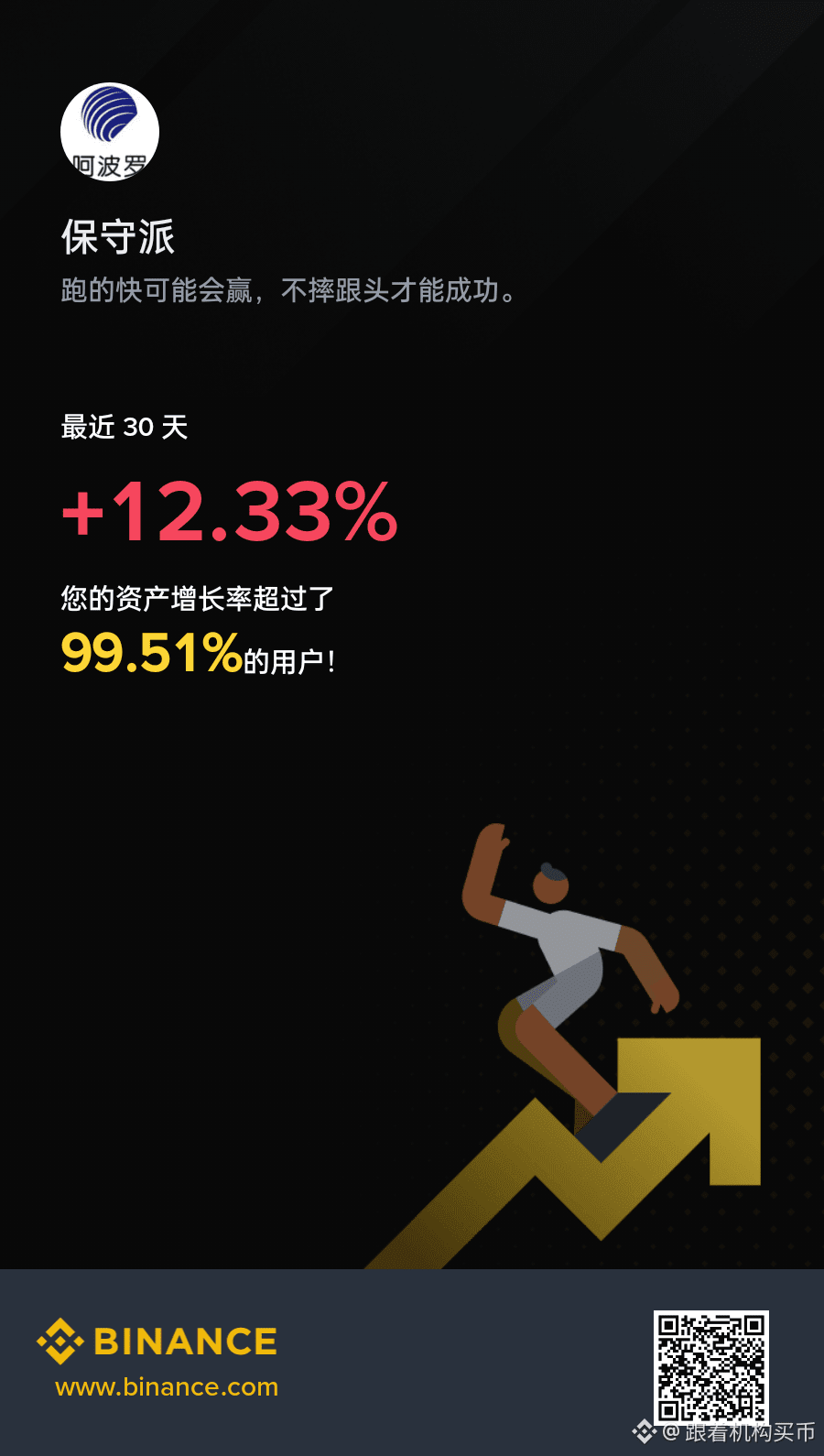
People whose asset growth rate has exceeded 99% even though I haven’t had any income for the past few months. The key is that since I started buying crypto, on average I’ve still lost ten to twenty thousand yuan per month, and sometimes even thirty to forty thousand. After subtracting the money I borrowed, my principal is only left with thirty thousand; I’ve lost about sixty to seventy thousand. As of now, I’m still net down over sixty thousand. Today the crypto market has another violent surge, but I’m still losing money this month. Last month, on August 22, I got liquidated by a stop-out and cleared out all my positions.
I watched <$BTC > rise from over sixty thousand to over seventy thousand, and then to over eighty thousand. But I got up early and worked late, staring at the charts every day, doing trades after trades, and I still lost money.
People whose asset growth rate has exceeded 99% even though I haven’t had any income for the past few months. The key is that since I started buying crypto, on average I’ve still lost ten to twenty thousand yuan per month, and sometimes even thirty to forty thousand. After subtracting the money I borrowed, my principal is only left with thirty thousand; I’ve lost about sixty to seventy thousand. As of now, I’m still net down over sixty thousand. Today the crypto market has another violent surge, but I’m still losing money this month. Last month, on August 22, I got liquidated by a stop-out and cleared out all my positions.
I watched <$BTC > rise from over sixty thousand to over seventy thousand, and then to over eighty thousand. But I got up early and worked late, staring at the charts every day, doing trades after trades, and I still lost money.
I watched <$BTC > rise from over sixty thousand to over seventy thousand, and then to over eighty thousand. But I got up early and worked late, staring at the charts every day, doing trades after trades, and I still lost money.
85
·
--
How am I so outstanding? Last month, my collateral was sold off by a pin insertion, and I suffered a huge loss. And yet I still outperformed over 99% of people.
78% of liquidations happen to stakers who get liquidated—damn.
I guess over 90% of people were liquidated by the contract, right?
How am I so outstanding? Last month, my collateral was sold off by a pin insertion, and I suffered a huge loss. And yet I still outperformed over 99% of people.
78% of liquidations happen to stakers who get liquidated—damn.
I guess over 90% of people were liquidated by the contract, right?
78% of liquidations happen to stakers who get liquidated—damn.
I guess over 90% of people were liquidated by the contract, right?
25
·
--
$G This coin doubles in price in a day—what good news is behind it?
$G This coin doubles in price in a day—what good news is behind it?
2
175
·
--
$BABY This coin’s track has a very high ceiling, but with its infinite supply unlocks—how could it possibly not struggle to rise? The market is going crazy today; it’s not moving at all. Sigh
$BABY This coin’s track has a very high ceiling, but with its infinite supply unlocks—how could it possibly not struggle to rise? The market is going crazy today; it’s not moving at all. Sigh
1
233
·
--
$UNI made double and still not enough, I want to make 10x!
The harshest missed-opportunity in investment history!!
In 2013, everyone didn’t think much of Zhang Yiming—the “baby-faced” one. Zhou Hongyi of 360 pitied him and generously invested $10 million. In 2016, after making a modest 1x gain, he sold everything (also because he didn’t believe the baby-faced founder could really build something big). After 2016, Douyin and TikTok exploded in popularity. Zhou Hongyi missed out on $150 billion—an astonishing 15,000x return. So he couldn’t sleep night after night and ended up suffering from severe depression.
Here, I advise everyone: when investing, don’t learn from Zhou Hongyi.
$UNI made double and still not enough, I want to make 10x!
The harshest missed-opportunity in investment history!!
In 2013, everyone didn’t think much of Zhang Yiming—the “baby-faced” one. Zhou Hongyi of 360 pitied him and generously invested $10 million. In 2016, after making a modest 1x gain, he sold everything (also because he didn’t believe the baby-faced founder could really build something big). After 2016, Douyin and TikTok exploded in popularity. Zhou Hongyi missed out on $150 billion—an astonishing 15,000x return. So he couldn’t sleep night after night and ended up suffering from severe depression.
Here, I advise everyone: when investing, don’t learn from Zhou Hongyi.
The harshest missed-opportunity in investment history!!
In 2013, everyone didn’t think much of Zhang Yiming—the “baby-faced” one. Zhou Hongyi of 360 pitied him and generously invested $10 million. In 2016, after making a modest 1x gain, he sold everything (also because he didn’t believe the baby-faced founder could really build something big). After 2016, Douyin and TikTok exploded in popularity. Zhou Hongyi missed out on $150 billion—an astonishing 15,000x return. So he couldn’t sleep night after night and ended up suffering from severe depression.
Here, I advise everyone: when investing, don’t learn from Zhou Hongyi.
324
·
--
$ZEC If you bought 100,000 yuan worth of this coin at the beginning of this year, you could earn enough to live for a lifetime over the course of this year—making a million a year is really nothing compared to that.
$ZEC If you bought 100,000 yuan worth of this coin at the beginning of this year, you could earn enough to live for a lifetime over the course of this year—making a million a year is really nothing compared to that.
1
261
·
--
$ZEC I’ve watched this coin go from over 300 to five times. I’ve been worried I’d buy at a high price and kept not daring to get on board. What do I do about this?
$ZEC I’ve watched this coin go from over 300 to five times. I’ve been worried I’d buy at a high price and kept not daring to get on board. What do I do about this?
2
366
·
--
$GLM Golem/GLM’s “strength” mainly lies in its early, practical rollout of a decentralized compute-market positioning + an ultra-clean fixed-supply token design + potential alignment with AI/high-compute demand. Golem positions itself as a global, decentralized, open-source supercomputer/compute-sharing marketplace. Anyone can monetize idle resources such as CPU/GPU by offering them out (Providers), while those who need compute power (Requestors, e.g., AI/ML, rendering, scientific computing, video transcoding, etc.) can rent compute on demand. Tasks can be split into sub-tasks for parallel processing, and in theory is more flexible, cheaper, and more censorship-resistant than traditional centralized clouds (AWS, Google Cloud, etc.).
$GLM Golem/GLM’s “strength” mainly lies in its early, practical rollout of a decentralized compute-market positioning + an ultra-clean fixed-supply token design + potential alignment with AI/high-compute demand. Golem positions itself as a global, decentralized, open-source supercomputer/compute-sharing marketplace. Anyone can monetize idle resources such as CPU/GPU by offering them out (Providers), while those who need compute power (Requestors, e.g., AI/ML, rendering, scientific computing, video transcoding, etc.) can rent compute on demand. Tasks can be split into sub-tasks for parallel processing, and in theory is more flexible, cheaper, and more censorship-resistant than traditional centralized clouds (AWS, Google Cloud, etc.).
85
·
--
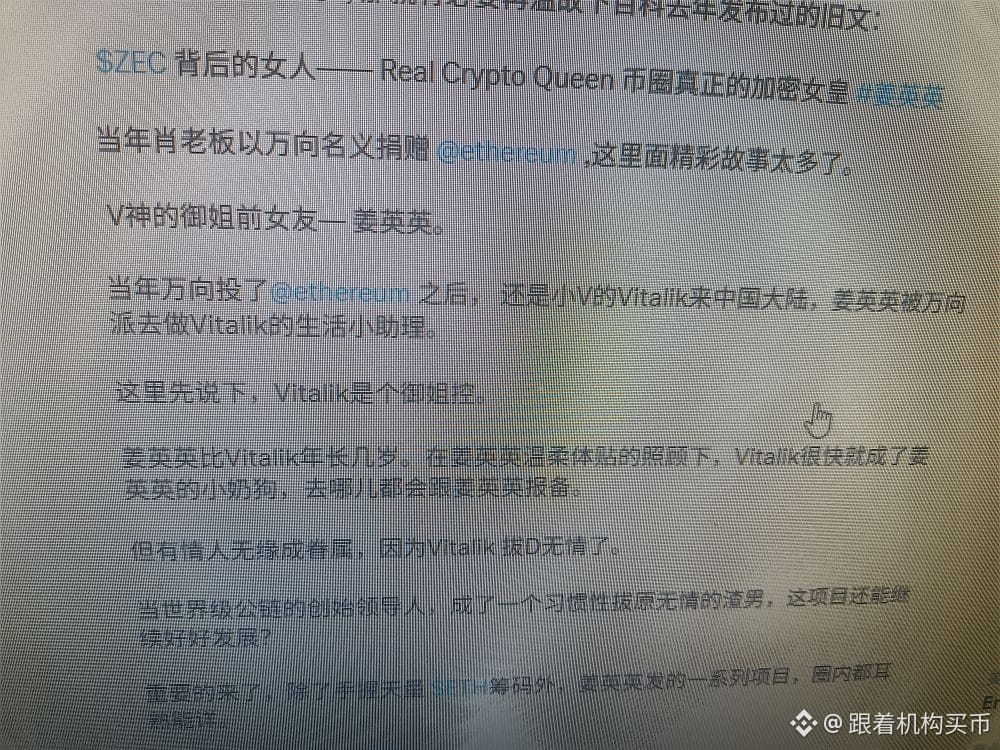
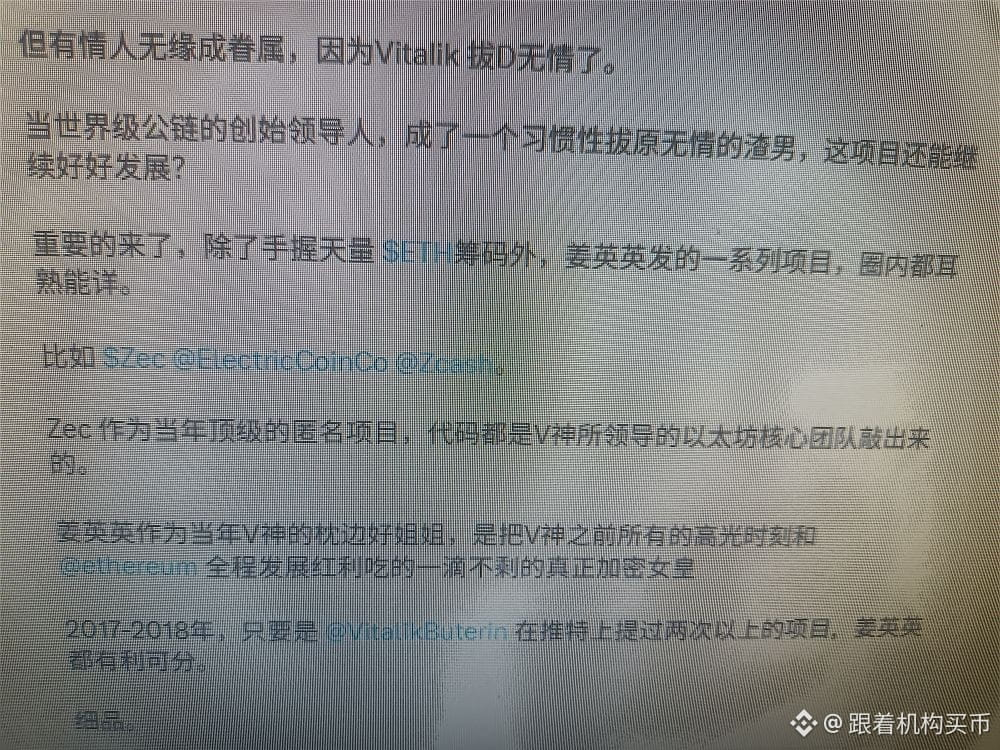
$ZEC This coin is awesome! The code is led by V God, and it was written by the Ethereum core team.
$ZEC This coin is awesome! The code is led by V God, and it was written by the Ethereum core team.
5
·
--
30D trade $ZEC 66.5 USDT
Big Scam!
The air coin posted by Biden’s son—his X account has been frozen.
Big Scam!
The air coin posted by Biden’s son—his X account has been frozen.
The air coin posted by Biden’s son—his X account has been frozen.
3
·
--
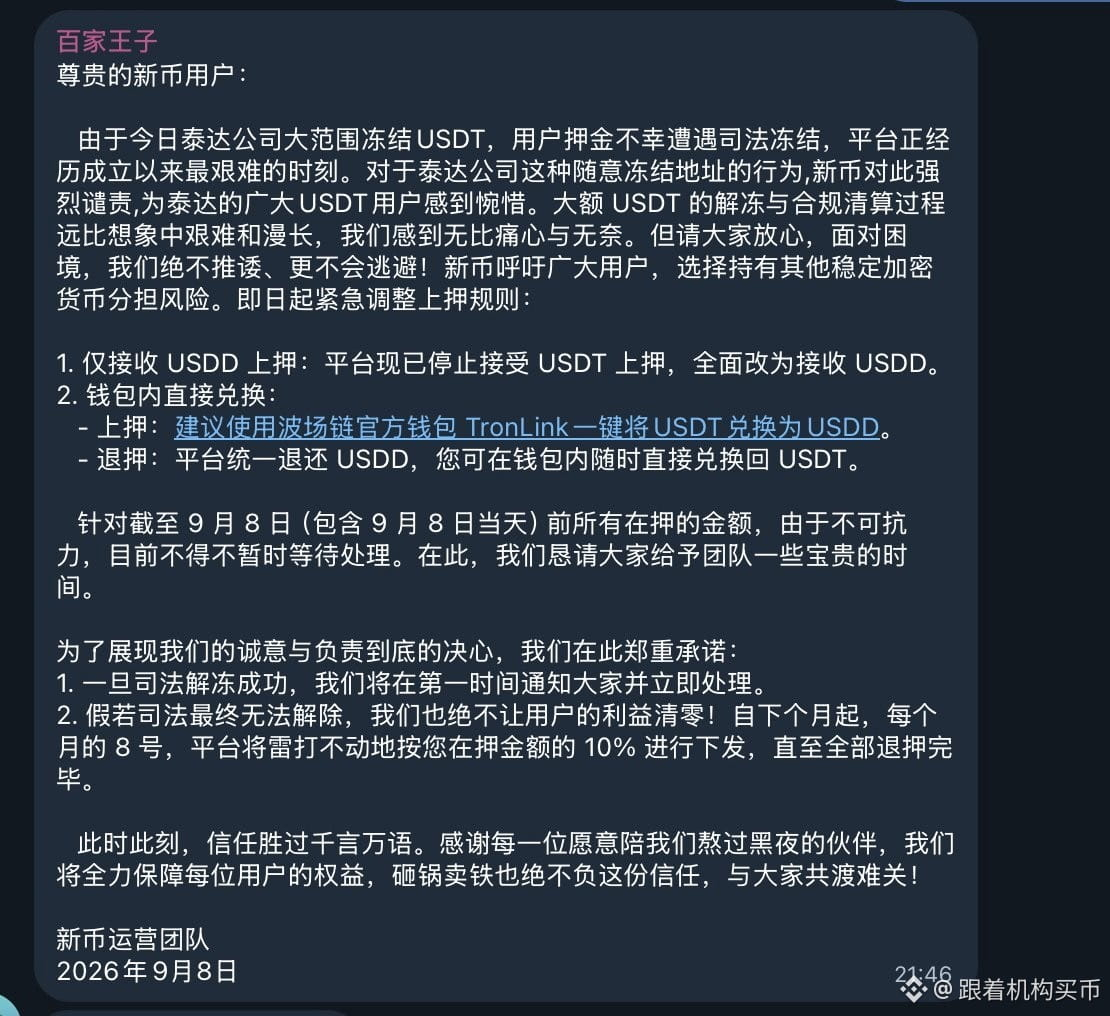
The coins that can be frozen are not good coins. If it’s decentralized, it shouldn’t freeze coins $WLFI $USDT
The coins that can be frozen are not good coins. If it’s decentralized, it shouldn’t freeze coins $WLFI $USDT
114
·
--
Han Hong has fled to Canada, Liang Hongda, Yuan Tengfei have fled to the United States, and even that little Black guy who does travel tours has also run to the U.S. Stars and internet celebrities are all fleeing—what’s going on in mainland China?
Han Hong has fled to Canada, Liang Hongda, Yuan Tengfei have fled to the United States, and even that little Black guy who does travel tours has also run to the U.S. Stars and internet celebrities are all fleeing—what’s going on in mainland China?
18
·
--
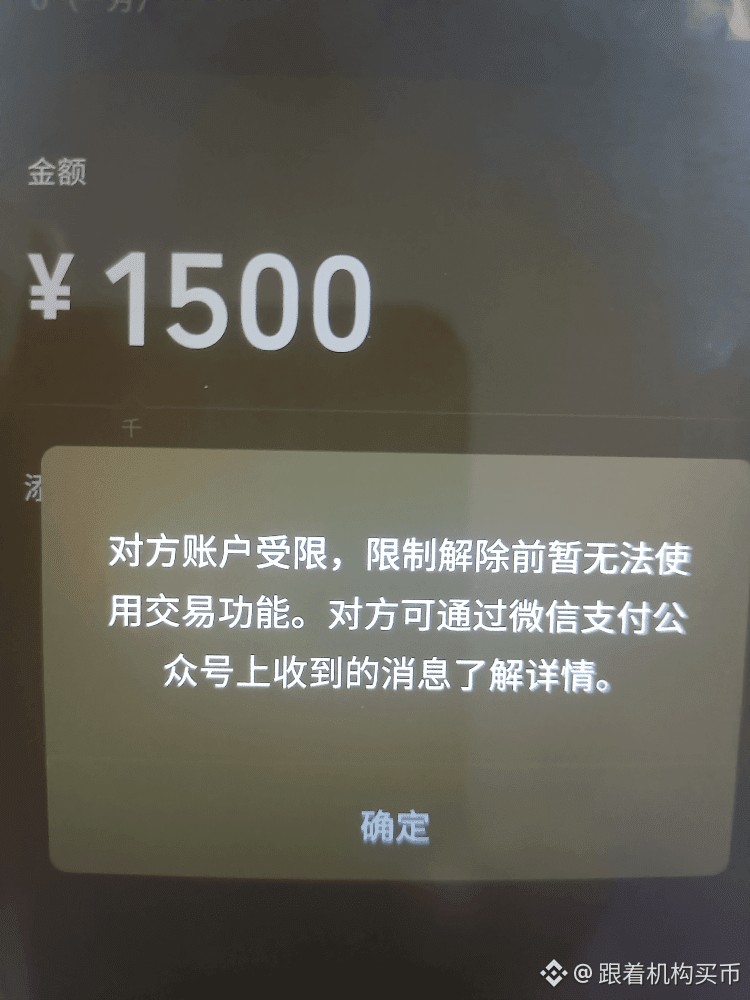
I tried to top up Gate with 1500 yuan, but the transaction went through several times and I couldn’t use the money. The Gate seller’s coin-selling review is way too strict.
In the end, I topped up using Binance, then transferred $USDT from Binance to Gate. Does Binance not have virtual cards?
I tried to top up Gate with 1500 yuan, but the transaction went through several times and I couldn’t use the money. The Gate seller’s coin-selling review is way too strict.
In the end, I topped up using Binance, then transferred $USDT from Binance to Gate. Does Binance not have virtual cards?
In the end, I topped up using Binance, then transferred $USDT from Binance to Gate. Does Binance not have virtual cards?
63
·
--
Sun Yuchen’s $TRX chain has already become a breeding ground for criminals.
For a long time, the TRON network has served as a default settlement layer and used by guarantee pools in Southeast Asia, for money laundering, online gambling, and related capital flows.
This is good news, isn’t it? Things that are “compliant” are often the trap. Just look at the ridiculous state of the RMB—you can’t even spend 1,000 yuan.
Sun Yuchen’s $TRX chain has already become a breeding ground for criminals.
For a long time, the TRON network has served as a default settlement layer and used by guarantee pools in Southeast Asia, for money laundering, online gambling, and related capital flows.
This is good news, isn’t it? Things that are “compliant” are often the trap. Just look at the ridiculous state of the RMB—you can’t even spend 1,000 yuan.
For a long time, the TRON network has served as a default settlement layer and used by guarantee pools in Southeast Asia, for money laundering, online gambling, and related capital flows.
This is good news, isn’t it? Things that are “compliant” are often the trap. Just look at the ridiculous state of the RMB—you can’t even spend 1,000 yuan.

60
·
--
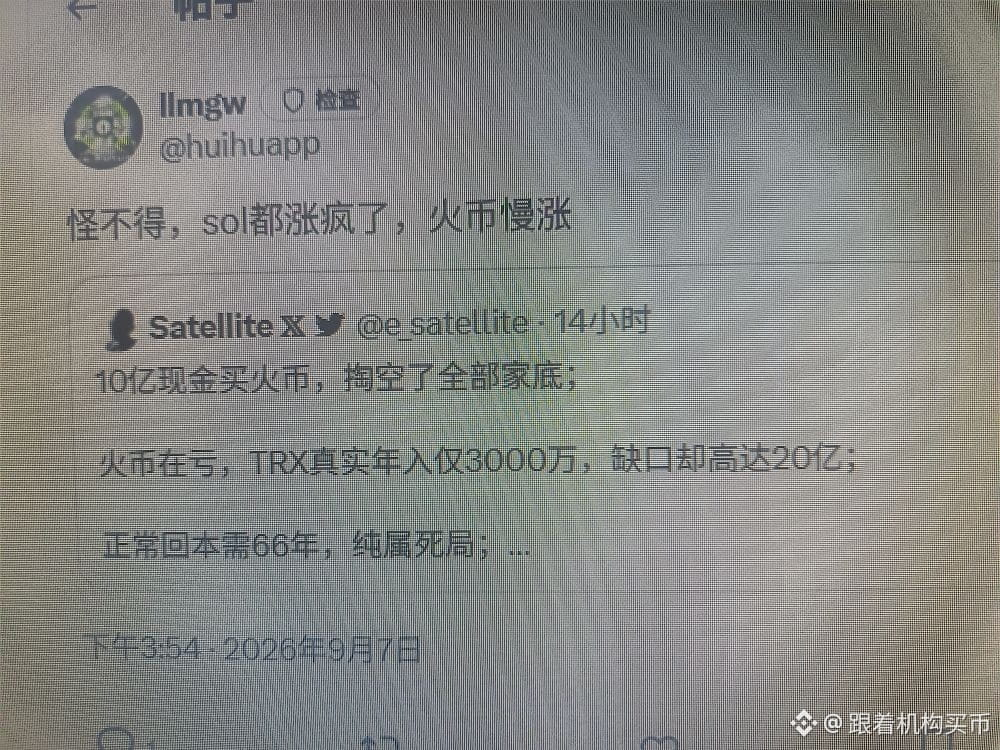
Buy Huobi with 1 billion in cash and hollow out everything in the household treasury;
Huobi is losing money—$TRX ’s real annual income is only 30 million, but the gap is as large as 2 billion;
Under normal circumstances, it takes 66 years to break even—it's basically a dead end;
The only “lifeline” is to dismantle one wall to patch another; the more you patch the holes, the bigger they get—the collapse is only a matter of time.
Buy Huobi with 1 billion in cash and hollow out everything in the household treasury;
Huobi is losing money—$TRX ’s real annual income is only 30 million, but the gap is as large as 2 billion;
Under normal circumstances, it takes 66 years to break even—it's basically a dead end;
The only “lifeline” is to dismantle one wall to patch another; the more you patch the holes, the bigger they get—the collapse is only a matter of time.
Huobi is losing money—$TRX ’s real annual income is only 30 million, but the gap is as large as 2 billion;
Under normal circumstances, it takes 66 years to break even—it's basically a dead end;
The only “lifeline” is to dismantle one wall to patch another; the more you patch the holes, the bigger they get—the collapse is only a matter of time.
70
·
--
$TRX is rising slowly. Will it take 66 years for this coin to break even?
$TRX is rising slowly. Will it take 66 years for this coin to break even?
59
Log in to explore more content
Join global crypto users on Binance Square
⚡️ Get latest and useful information about crypto.
💬 Trusted by the world’s largest crypto exchange.
👍 Discover real insights from verified creators.
Email / Phone number
Trending Topics
BOJRaisesRatesTo31YearHigh
102,969 views
1,609 Discussing
🚨 BOJ JUST FIRED A WARNING SHOT AT GLOBAL MARKETS! 🇯🇵🔥
The Bank of Japan just raised rates from 1.00% → 1.25%, hitting the highest level in 31 YEARS! 📈
⚠️ Why traders should care:
• 💴 Yen funding conditions are changing
• 🏦 BOJ is moving further away from ultra-easy money
• 🌍 Global liquidity could face additional pressure
• 📊 Inflation is forcing central banks to stay restrictive
• 🔥 More BOJ hikes remain possible if inflation keeps rising
And here's the key detail:
The decision was 7–2, with two policymakers opposing the hike — meaning the path ahead could remain highly uncertain.
For crypto & risk assets, this is a macro signal traders cannot ignore.
👀 Watch the YEN + BTC + NASDAQ + global liquidity next.
BOJ tightening = potentially bigger volatility ahead.
#BoJ #Japan #bojraisesratesto31yearhigh
ASHFAQ NAEEM
·7 Likes
·5k views
BuffettStepsDownAsBerkshireChairman
46,583 views
764 Discussing
XRPExchangeReservesHitSevenYearLow
51,495 views
738 Discussing