

ZACK BNB
634 Posts
ZACK BNB
Report
Block User
Open Trade

ZEC Holder
Occasional Trader
2.6 Years
18 Following
774 Followers
646 Liked
Posts
Portfolio
All
Quotes
Live
·
--
Bearish
1
432
·
--
Bullish
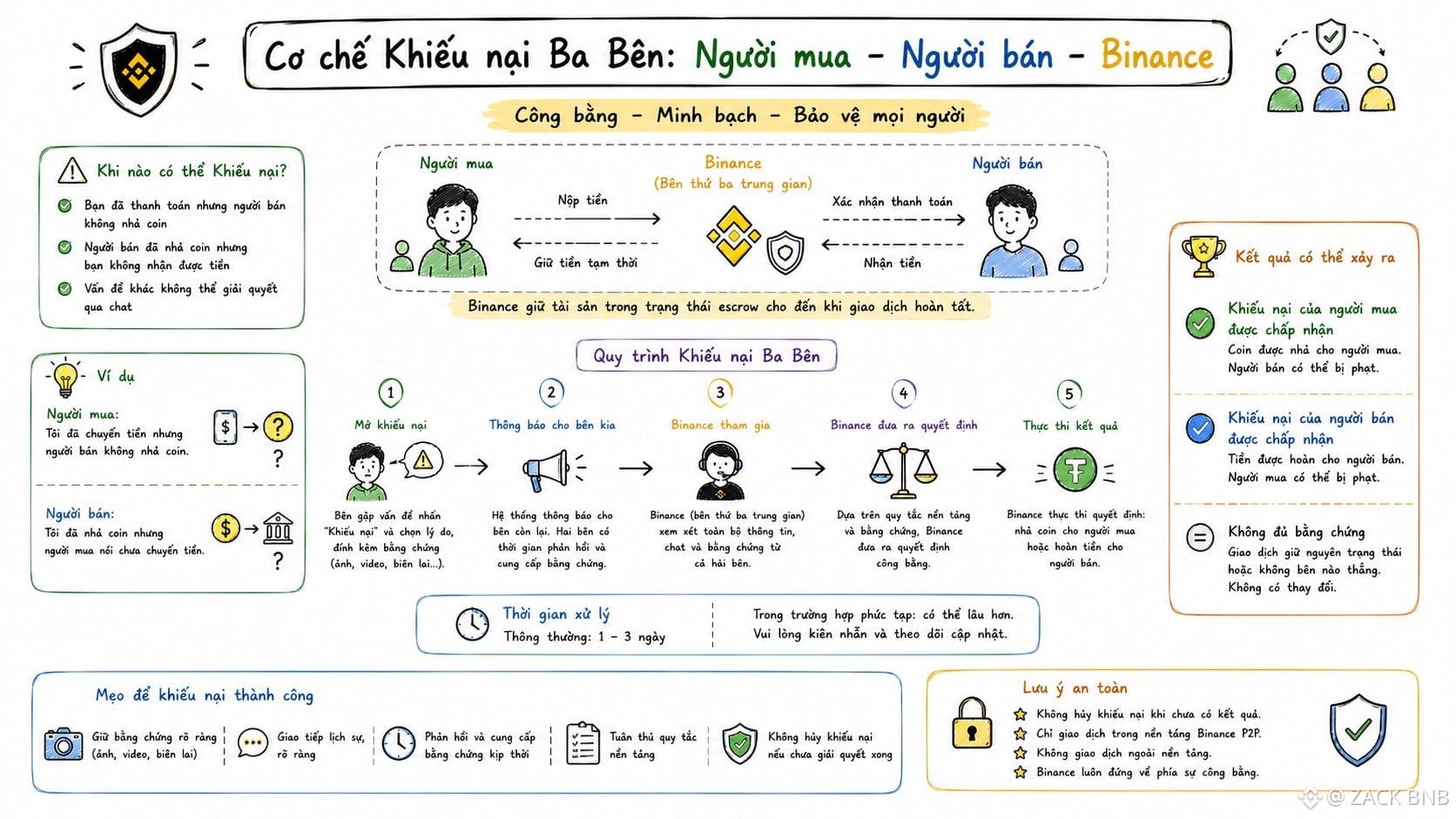
I noticed the most important point that many people overlook: Binance requires real payment proof attached; it does not accept a screenshot of chat messages with the other party as evidence that payment was made—correct, and saying a lot in chat has no value compared to a bank statement file.
The most solid proof is usually a bank statement in PDF format exported directly from the app, showing the full three months of transaction history matching the orders that have been completed on Binance. A photo of the bank statement converted into PDF will be rejected outright.
When you open an appeal, the other party only has exactly 10 minutes to respond, while the support team typically replies within about 24-48 hours.
A very clear rule is that if the buyer’s payment account transfer name does not match the name verified on Binance, the buyer is considered to have violated the rules—coins will not be released, the seller must refund the money, and the order will be cancelled.
In my view, this system leans heavily toward “paper proof” rather than back-and-forth talk. So whoever keeps a clean statement from the start is always more proactive when a dispute arises.
#binancep2pantoan @Binance_Vietnam
I noticed the most important point that many people overlook: Binance requires real payment proof attached; it does not accept a screenshot of chat messages with the other party as evidence that payment was made—correct, and saying a lot in chat has no value compared to a bank statement file.
The most solid proof is usually a bank statement in PDF format exported directly from the app, showing the full three months of transaction history matching the orders that have been completed on Binance. A photo of the bank statement converted into PDF will be rejected outright.
When you open an appeal, the other party only has exactly 10 minutes to respond, while the support team typically replies within about 24-48 hours.
A very clear rule is that if the buyer’s payment account transfer name does not match the name verified on Binance, the buyer is considered to have violated the rules—coins will not be released, the seller must refund the money, and the order will be cancelled.
In my view, this system leans heavily toward “paper proof” rather than back-and-forth talk. So whoever keeps a clean statement from the start is always more proactive when a dispute arises.
#binancep2pantoan @Binance Vietnam
The most solid proof is usually a bank statement in PDF format exported directly from the app, showing the full three months of transaction history matching the orders that have been completed on Binance. A photo of the bank statement converted into PDF will be rejected outright.
When you open an appeal, the other party only has exactly 10 minutes to respond, while the support team typically replies within about 24-48 hours.
A very clear rule is that if the buyer’s payment account transfer name does not match the name verified on Binance, the buyer is considered to have violated the rules—coins will not be released, the seller must refund the money, and the order will be cancelled.
In my view, this system leans heavily toward “paper proof” rather than back-and-forth talk. So whoever keeps a clean statement from the start is always more proactive when a dispute arises.
#binancep2pantoan @Binance Vietnam
1
2k
·
--
Bullish
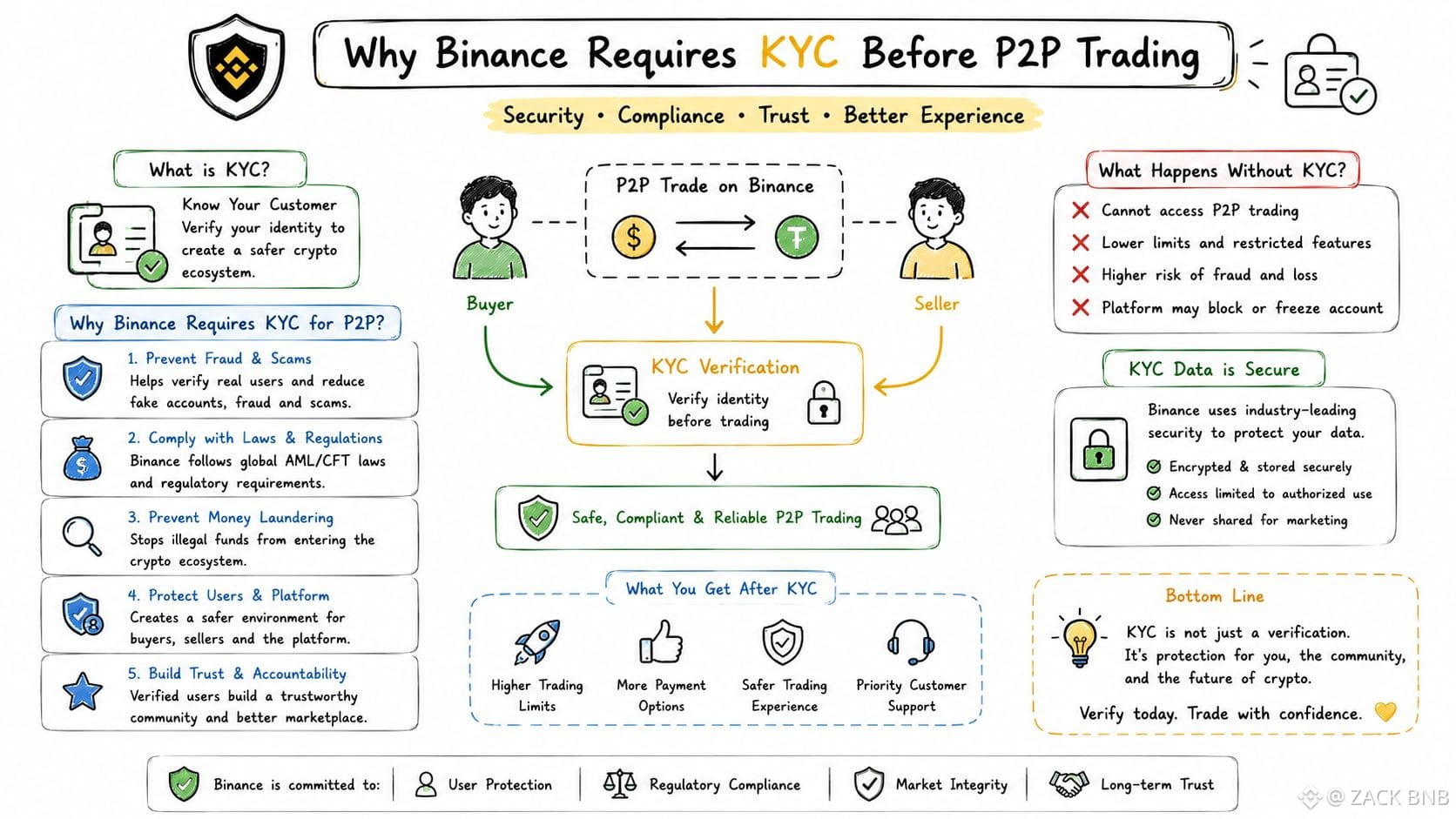
I noticed that Binance's requirement for KYC before enabling P2P trading is not just meant to make things harder for users.
It is a survival condition so the platform is still allowed to operate. Back in 2023, Binance had to pay $4.3 billion to the DOJ, FinCEN, and OFAC— the largest criminal penalty in the history of the crypto industry—partly due to a KYC loophole during onboarding.
For P2P specifically, KYC helps trace who is trading with whom. Without this layer, intermediary accounts used to launder money can easily slip into ordinary buy-and-sell orders—something that law enforcement has been shutting down across multiple criminal rings.
In my view, in the first half of 2025 alone, regulators imposed a total of $1.23 billion in fines for AML/KYC violations across the entire industry, a 417% increase compared to the same period the previous year.
This pressure forces Binance to tighten KYC even further, and P2P users are the indirect beneficiaries because their trading partners have transparent identities.
#binancep2pantoan @Binance_Vietnam
I noticed that Binance's requirement for KYC before enabling P2P trading is not just meant to make things harder for users.
It is a survival condition so the platform is still allowed to operate. Back in 2023, Binance had to pay $4.3 billion to the DOJ, FinCEN, and OFAC— the largest criminal penalty in the history of the crypto industry—partly due to a KYC loophole during onboarding.
For P2P specifically, KYC helps trace who is trading with whom. Without this layer, intermediary accounts used to launder money can easily slip into ordinary buy-and-sell orders—something that law enforcement has been shutting down across multiple criminal rings.
In my view, in the first half of 2025 alone, regulators imposed a total of $1.23 billion in fines for AML/KYC violations across the entire industry, a 417% increase compared to the same period the previous year.
This pressure forces Binance to tighten KYC even further, and P2P users are the indirect beneficiaries because their trading partners have transparent identities.
#binancep2pantoan @Binance Vietnam
It is a survival condition so the platform is still allowed to operate. Back in 2023, Binance had to pay $4.3 billion to the DOJ, FinCEN, and OFAC— the largest criminal penalty in the history of the crypto industry—partly due to a KYC loophole during onboarding.
For P2P specifically, KYC helps trace who is trading with whom. Without this layer, intermediary accounts used to launder money can easily slip into ordinary buy-and-sell orders—something that law enforcement has been shutting down across multiple criminal rings.
In my view, in the first half of 2025 alone, regulators imposed a total of $1.23 billion in fines for AML/KYC violations across the entire industry, a 417% increase compared to the same period the previous year.
This pressure forces Binance to tighten KYC even further, and P2P users are the indirect beneficiaries because their trading partners have transparent identities.
#binancep2pantoan @Binance Vietnam
1
457
·
--
Bullish
I just heard a pretty painful P2P story from a familiar person.
This guy bought USDT on Binance. The seller then messaged him privately, inviting him to move to a different platform with the reason: "Transactions in the app have high fees; outside, the price is better."
Because he wanted that small price difference, he agreed to cancel the order on Binance and then transferred the money directly into the seller’s account.
After the transfer, the seller said to wait while they checked, then they would send the USDT. After that, they went silent—ignored calls, and blocked him.
When he returned to Binance, he was shocked: the order had been canceled. There was no transaction history or evidence to file a complaint. He lost everything—there was no way to get it back.
All because he wanted to save a little more, he ended up losing both the money and the original amount.
The lesson learned is still only one: with P2P, just stay inside the app to trade. If anyone asks you to cancel the order and take it offline for private handling, refuse immediately—no exceptions, no matter how reasonable the reason sounds.
#binancep2pantoan @Binance_Vietnam
I just heard a pretty painful P2P story from a familiar person.
This guy bought USDT on Binance. The seller then messaged him privately, inviting him to move to a different platform with the reason: "Transactions in the app have high fees; outside, the price is better."
Because he wanted that small price difference, he agreed to cancel the order on Binance and then transferred the money directly into the seller’s account.
After the transfer, the seller said to wait while they checked, then they would send the USDT. After that, they went silent—ignored calls, and blocked him.
When he returned to Binance, he was shocked: the order had been canceled. There was no transaction history or evidence to file a complaint. He lost everything—there was no way to get it back.
All because he wanted to save a little more, he ended up losing both the money and the original amount.
The lesson learned is still only one: with P2P, just stay inside the app to trade. If anyone asks you to cancel the order and take it offline for private handling, refuse immediately—no exceptions, no matter how reasonable the reason sounds.
#binancep2pantoan @Binance Vietnam
This guy bought USDT on Binance. The seller then messaged him privately, inviting him to move to a different platform with the reason: "Transactions in the app have high fees; outside, the price is better."
Because he wanted that small price difference, he agreed to cancel the order on Binance and then transferred the money directly into the seller’s account.
After the transfer, the seller said to wait while they checked, then they would send the USDT. After that, they went silent—ignored calls, and blocked him.
When he returned to Binance, he was shocked: the order had been canceled. There was no transaction history or evidence to file a complaint. He lost everything—there was no way to get it back.
All because he wanted to save a little more, he ended up losing both the money and the original amount.
The lesson learned is still only one: with P2P, just stay inside the app to trade. If anyone asks you to cancel the order and take it offline for private handling, refuse immediately—no exceptions, no matter how reasonable the reason sounds.
#binancep2pantoan @Binance Vietnam
470
·
--
Bullish
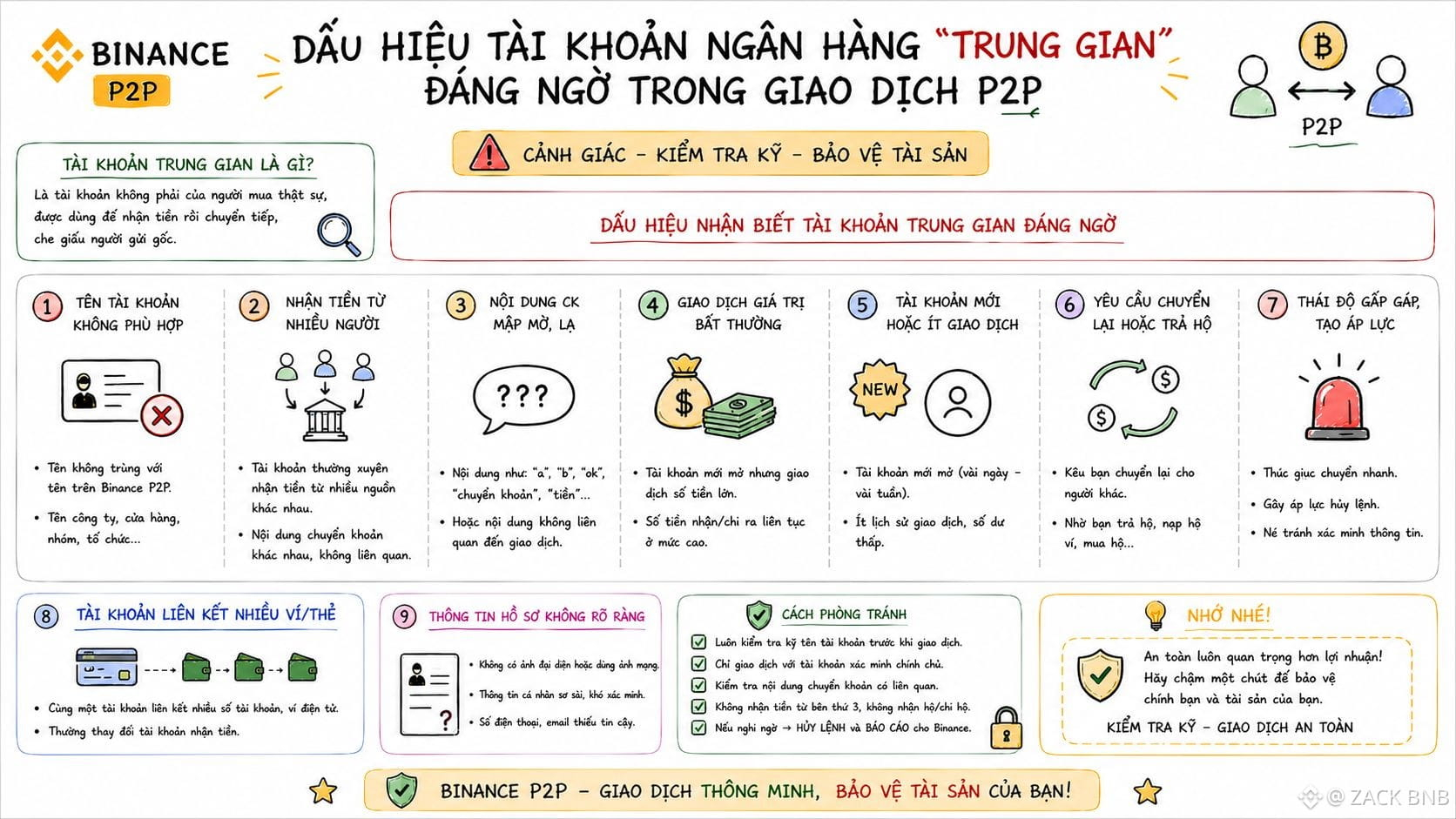
The first most suspicious sign I noticed is that the name of the remitter/account holder transferring money does not match the KYC name on Binance.
This is almost always an account that is rented or resold—common in networks that authorities have previously cracked down on, such as the case in Tây Ninh, where the total transaction value through intermediary accounts reached more than 1.1 billion USDT.
The second sign is a newly opened account, but with unusually large cash flow appearing within a short time, or the transfer memo being generic and unrelated to any specific P2P transaction.
What worries me most is the new regulation that allows banks to freeze not only the sender’s account but also the next recipient’s account in the chain—meaning that if I accidentally receive money from an intermediary account, I could be implicated in an investigation even if I had no idea the source of the funds was problematic.
In my view, verifying that the name matches the KYC is no longer a choice, but a mandatory condition before releasing any transaction.
#binancep2pantoan @Binance_Vietnam
The first most suspicious sign I noticed is that the name of the remitter/account holder transferring money does not match the KYC name on Binance.
This is almost always an account that is rented or resold—common in networks that authorities have previously cracked down on, such as the case in Tây Ninh, where the total transaction value through intermediary accounts reached more than 1.1 billion USDT.
The second sign is a newly opened account, but with unusually large cash flow appearing within a short time, or the transfer memo being generic and unrelated to any specific P2P transaction.
What worries me most is the new regulation that allows banks to freeze not only the sender’s account but also the next recipient’s account in the chain—meaning that if I accidentally receive money from an intermediary account, I could be implicated in an investigation even if I had no idea the source of the funds was problematic.
In my view, verifying that the name matches the KYC is no longer a choice, but a mandatory condition before releasing any transaction.
#binancep2pantoan @Binance Vietnam
This is almost always an account that is rented or resold—common in networks that authorities have previously cracked down on, such as the case in Tây Ninh, where the total transaction value through intermediary accounts reached more than 1.1 billion USDT.
The second sign is a newly opened account, but with unusually large cash flow appearing within a short time, or the transfer memo being generic and unrelated to any specific P2P transaction.
What worries me most is the new regulation that allows banks to freeze not only the sender’s account but also the next recipient’s account in the chain—meaning that if I accidentally receive money from an intermediary account, I could be implicated in an investigation even if I had no idea the source of the funds was problematic.
In my view, verifying that the name matches the KYC is no longer a choice, but a mandatory condition before releasing any transaction.
#binancep2pantoan @Binance Vietnam
363
·
--
Bullish
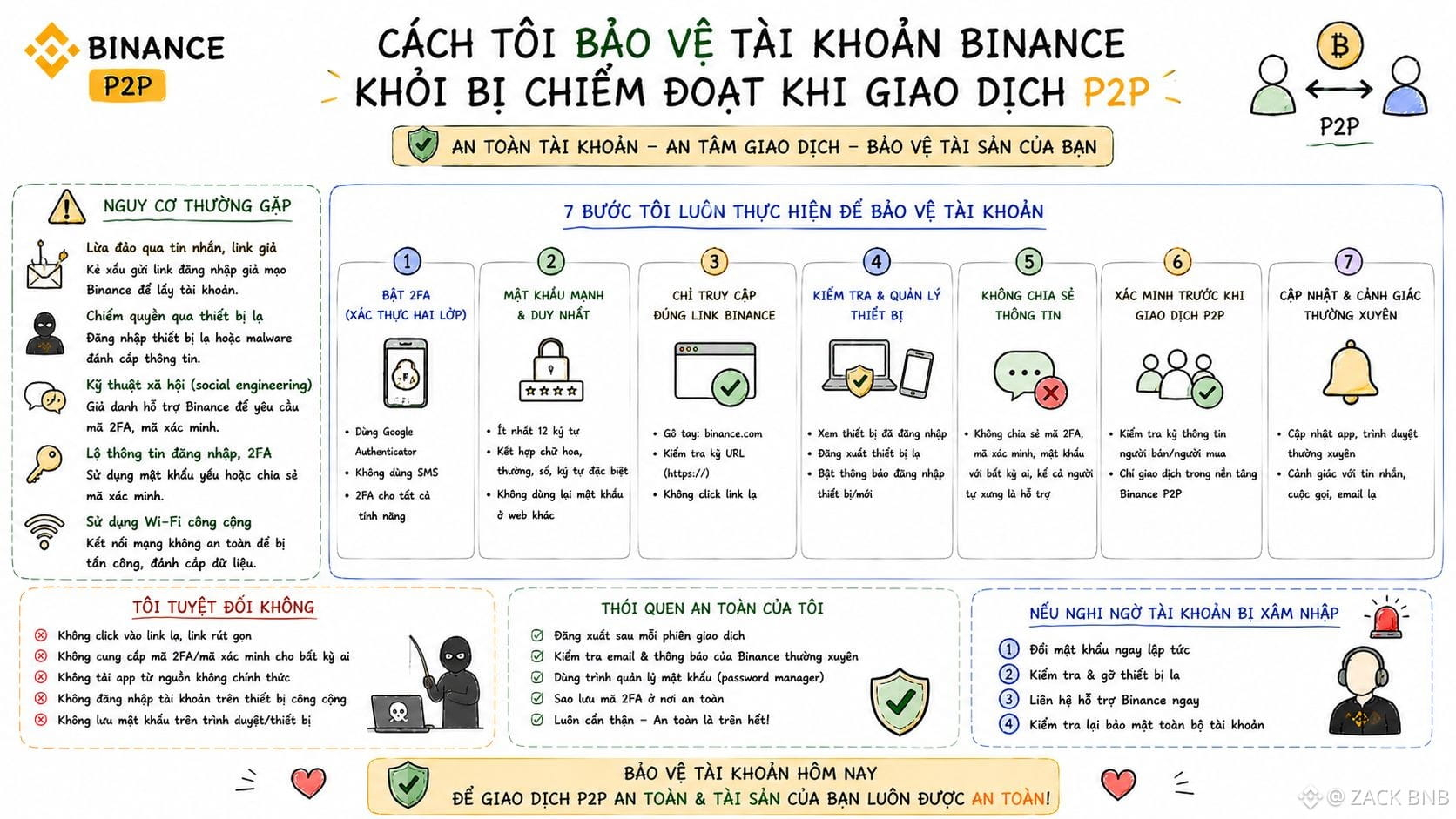
I used to be complacent and think a strong password was enough—until I read the data showing that in the UK, SIM swap incidents increased up to 1.055% in just one year.
And as for crypto losses from SIM swaps in the US, they were reported at around $28.4 million—the figure is big enough that I completely gave up on SMS 2FA, switched to Google Authenticator, and stored the 16-character setup key somewhere completely separate from my phone.
The second habit I kept is not logging into Binance via links in P2P chat. Because in the first two months of 2025 alone, the security community reported more than 1 million phishing attacks, most of them using ready-made phishing-as-a-service toolkits.
I also enabled withdrawal address whitelisting and anti-phishing code in email, because even modern MFA still reduces the risk of takeover by more than 99%—but only when you use the right phishing-resistant method rather than SMS.
In my view, account-protection layers must always come before trading habits.
#binancep2pantoan @Binance_Vietnam
I used to be complacent and think a strong password was enough—until I read the data showing that in the UK, SIM swap incidents increased up to 1.055% in just one year.
And as for crypto losses from SIM swaps in the US, they were reported at around $28.4 million—the figure is big enough that I completely gave up on SMS 2FA, switched to Google Authenticator, and stored the 16-character setup key somewhere completely separate from my phone.
The second habit I kept is not logging into Binance via links in P2P chat. Because in the first two months of 2025 alone, the security community reported more than 1 million phishing attacks, most of them using ready-made phishing-as-a-service toolkits.
I also enabled withdrawal address whitelisting and anti-phishing code in email, because even modern MFA still reduces the risk of takeover by more than 99%—but only when you use the right phishing-resistant method rather than SMS.
In my view, account-protection layers must always come before trading habits.
#binancep2pantoan @Binance Vietnam
And as for crypto losses from SIM swaps in the US, they were reported at around $28.4 million—the figure is big enough that I completely gave up on SMS 2FA, switched to Google Authenticator, and stored the 16-character setup key somewhere completely separate from my phone.
The second habit I kept is not logging into Binance via links in P2P chat. Because in the first two months of 2025 alone, the security community reported more than 1 million phishing attacks, most of them using ready-made phishing-as-a-service toolkits.
I also enabled withdrawal address whitelisting and anti-phishing code in email, because even modern MFA still reduces the risk of takeover by more than 99%—but only when you use the right phishing-resistant method rather than SMS.
In my view, account-protection layers must always come before trading habits.
#binancep2pantoan @Binance Vietnam
1
575
·
--
Bullish
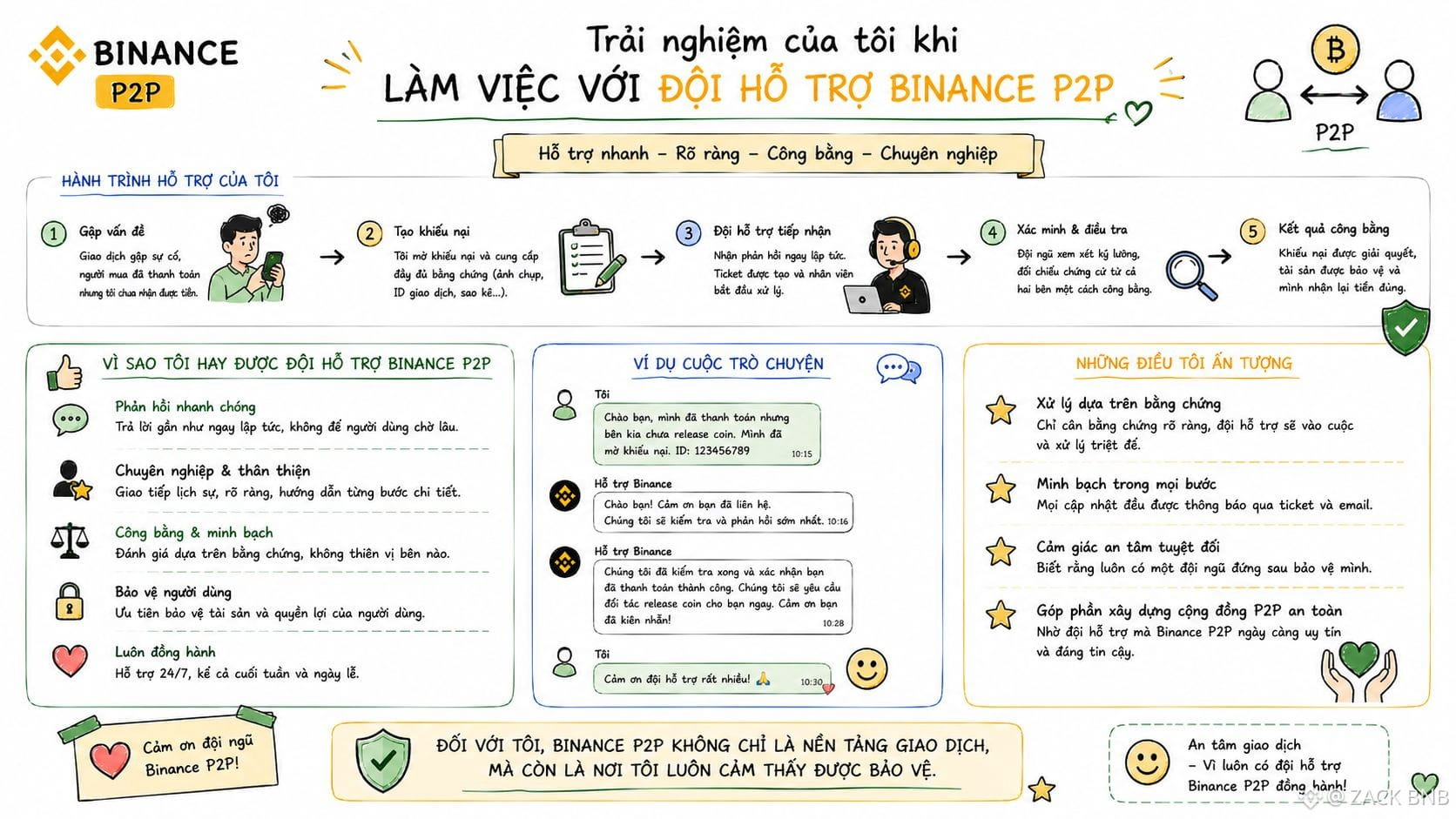
I once had to open a dispute when I encountered a partner who intentionally transferred money from an account with a name that didn’t match the registered one, and my experience working with the support team was quite different from what I was worried about— not too fast, but with a clear process.
After I submitted the full Order ID, screenshots of the statement, and the chat history, I received my first response fairly quickly, which matches the level Binance states for support tickets—typically replied to within about 24–48 hours depending on the volume of requests at that time.
What I appreciated most is that they didn’t ask me to provide again the information I had already shared, showing that the case file was reviewed carefully rather than responding mechanically using a template. This also aligns with the fact that CS is considered the department with the largest headcount at Binance, estimated at about 1% of the world’s population having interacted with them at least once.
In my view, what wasn’t so good is that the final resolution speed was still slower than expected—it took nearly a week to reach an official conclusion, even though the final outcome was correct and fair.
#binancep2pantoan @Binance_Vietnam
I once had to open a dispute when I encountered a partner who intentionally transferred money from an account with a name that didn’t match the registered one, and my experience working with the support team was quite different from what I was worried about— not too fast, but with a clear process.
After I submitted the full Order ID, screenshots of the statement, and the chat history, I received my first response fairly quickly, which matches the level Binance states for support tickets—typically replied to within about 24–48 hours depending on the volume of requests at that time.
What I appreciated most is that they didn’t ask me to provide again the information I had already shared, showing that the case file was reviewed carefully rather than responding mechanically using a template. This also aligns with the fact that CS is considered the department with the largest headcount at Binance, estimated at about 1% of the world’s population having interacted with them at least once.
In my view, what wasn’t so good is that the final resolution speed was still slower than expected—it took nearly a week to reach an official conclusion, even though the final outcome was correct and fair.
#binancep2pantoan @Binance Vietnam
After I submitted the full Order ID, screenshots of the statement, and the chat history, I received my first response fairly quickly, which matches the level Binance states for support tickets—typically replied to within about 24–48 hours depending on the volume of requests at that time.
What I appreciated most is that they didn’t ask me to provide again the information I had already shared, showing that the case file was reviewed carefully rather than responding mechanically using a template. This also aligns with the fact that CS is considered the department with the largest headcount at Binance, estimated at about 1% of the world’s population having interacted with them at least once.
In my view, what wasn’t so good is that the final resolution speed was still slower than expected—it took nearly a week to reach an official conclusion, even though the final outcome was correct and fair.
#binancep2pantoan @Binance Vietnam
1
462
·
--
Bullish
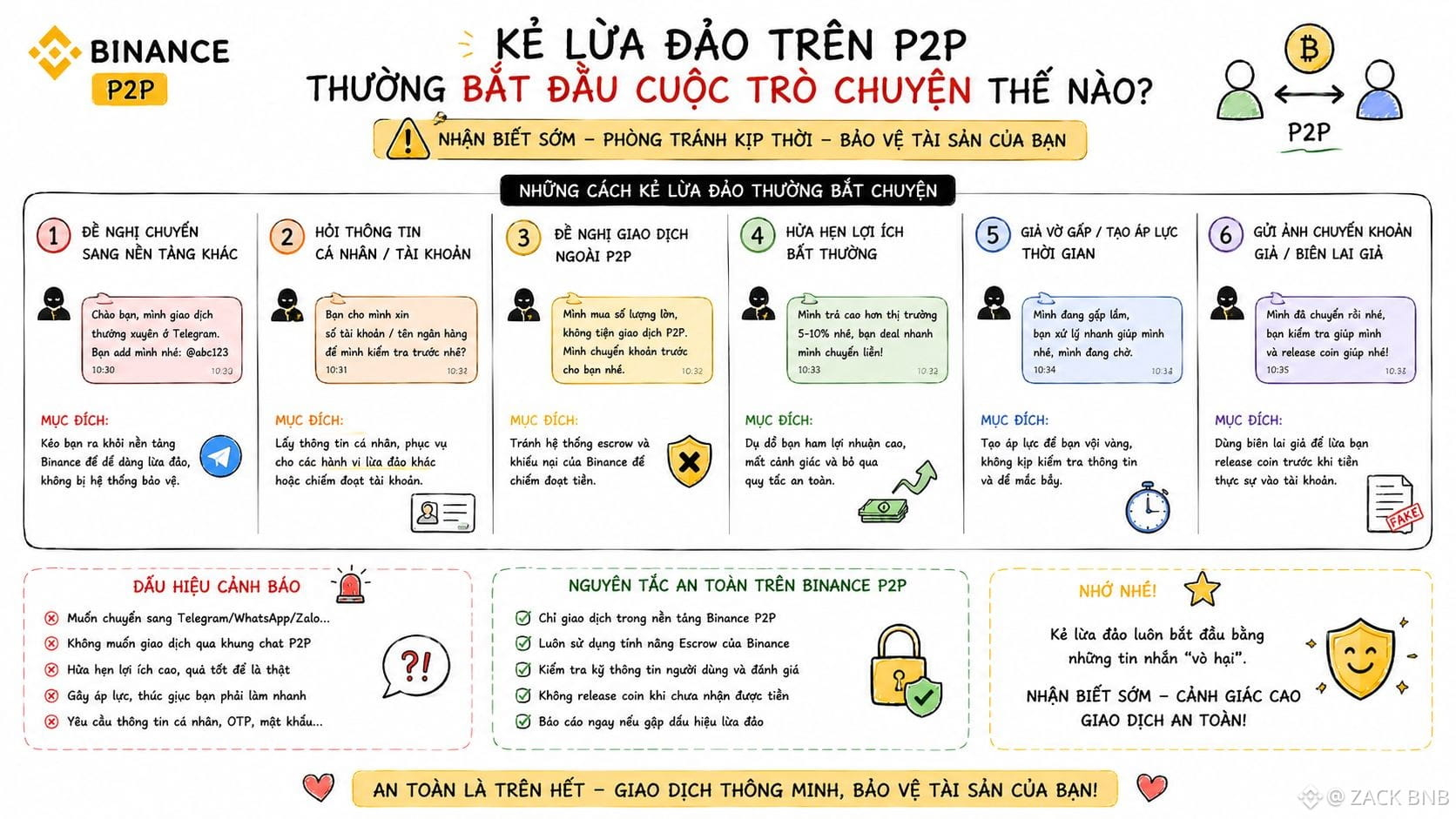
I noticed that the opening scripts of most scammers on P2P are quite similar. The only difference is in minor details, but the common point is that they always create the feeling of “this is a normal transaction, nothing suspicious” right from the very first sentence.
The opening is usually polite and professional, sometimes with compliments like “you reply so fast—working with a reputable person is really great,” with the purpose of lowering your guard before mentioning any unusual requests.
I’ve tried paying close attention to a few chats like this, and I found that after the initial getting-acquainted step, they gradually steer things toward having you handle it faster—by exchanging additional communication channels, or citing reasons like the app is broken, the network is slow, and they need confirmation through something other than the chat in the order.
In my view, the common signs don’t lie in the specific content of each sentence, but in the pacing: they always try to speed up their decision-making and find ways to take the transaction out of the platform’s record.
The point I will always be on guard for is when I see this kind of pace showing up. No matter how pleasant the wording is, what needs to be done is to slow down—not to follow along.
#binancep2pantoan @Binance_Vietnam
I noticed that the opening scripts of most scammers on P2P are quite similar. The only difference is in minor details, but the common point is that they always create the feeling of “this is a normal transaction, nothing suspicious” right from the very first sentence.
The opening is usually polite and professional, sometimes with compliments like “you reply so fast—working with a reputable person is really great,” with the purpose of lowering your guard before mentioning any unusual requests.
I’ve tried paying close attention to a few chats like this, and I found that after the initial getting-acquainted step, they gradually steer things toward having you handle it faster—by exchanging additional communication channels, or citing reasons like the app is broken, the network is slow, and they need confirmation through something other than the chat in the order.
In my view, the common signs don’t lie in the specific content of each sentence, but in the pacing: they always try to speed up their decision-making and find ways to take the transaction out of the platform’s record.
The point I will always be on guard for is when I see this kind of pace showing up. No matter how pleasant the wording is, what needs to be done is to slow down—not to follow along.
#binancep2pantoan @Binance Vietnam
The opening is usually polite and professional, sometimes with compliments like “you reply so fast—working with a reputable person is really great,” with the purpose of lowering your guard before mentioning any unusual requests.
I’ve tried paying close attention to a few chats like this, and I found that after the initial getting-acquainted step, they gradually steer things toward having you handle it faster—by exchanging additional communication channels, or citing reasons like the app is broken, the network is slow, and they need confirmation through something other than the chat in the order.
In my view, the common signs don’t lie in the specific content of each sentence, but in the pacing: they always try to speed up their decision-making and find ways to take the transaction out of the platform’s record.
The point I will always be on guard for is when I see this kind of pace showing up. No matter how pleasant the wording is, what needs to be done is to slow down—not to follow along.
#binancep2pantoan @Binance Vietnam
1
2
755
·
--
Bullish
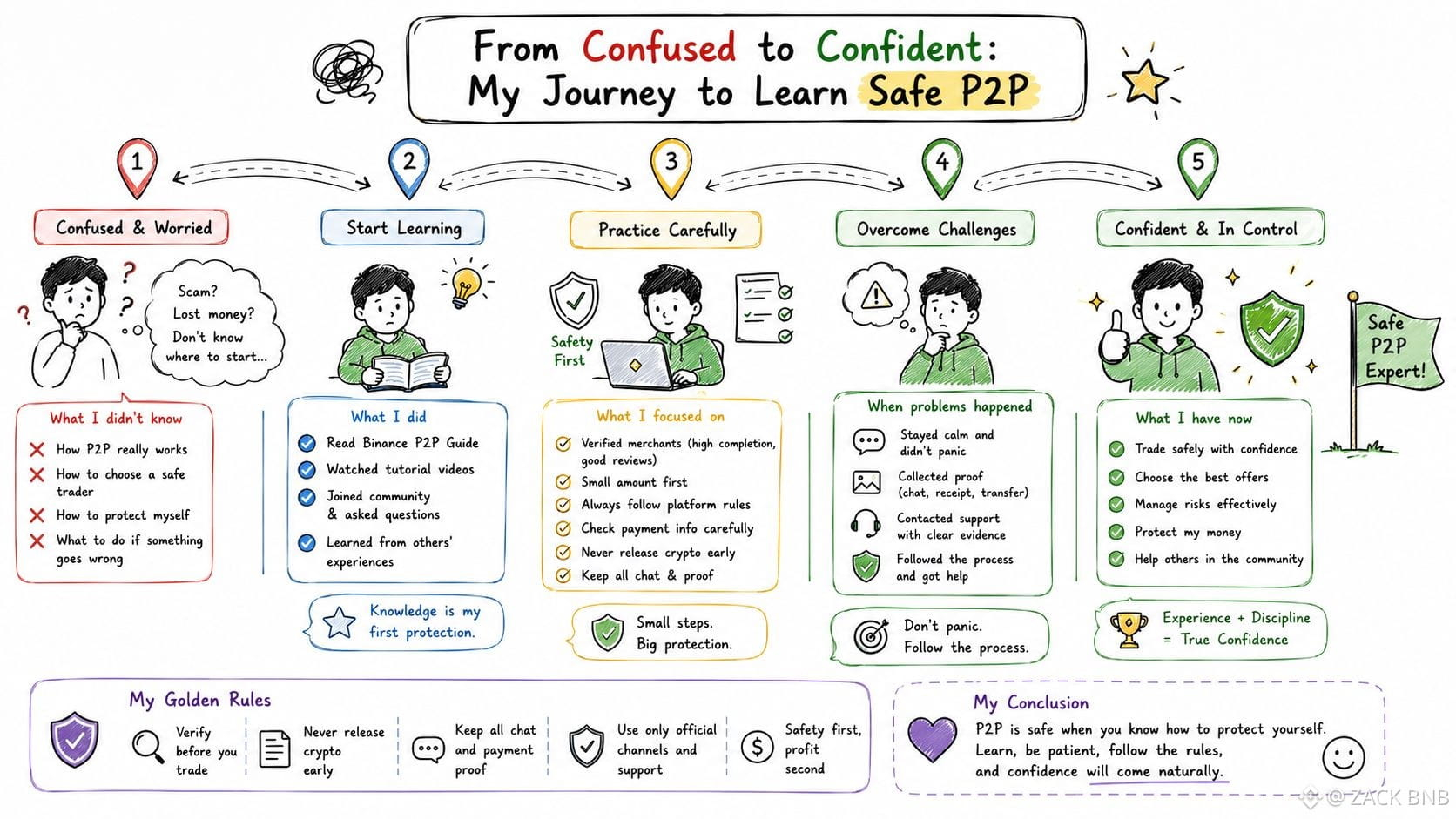
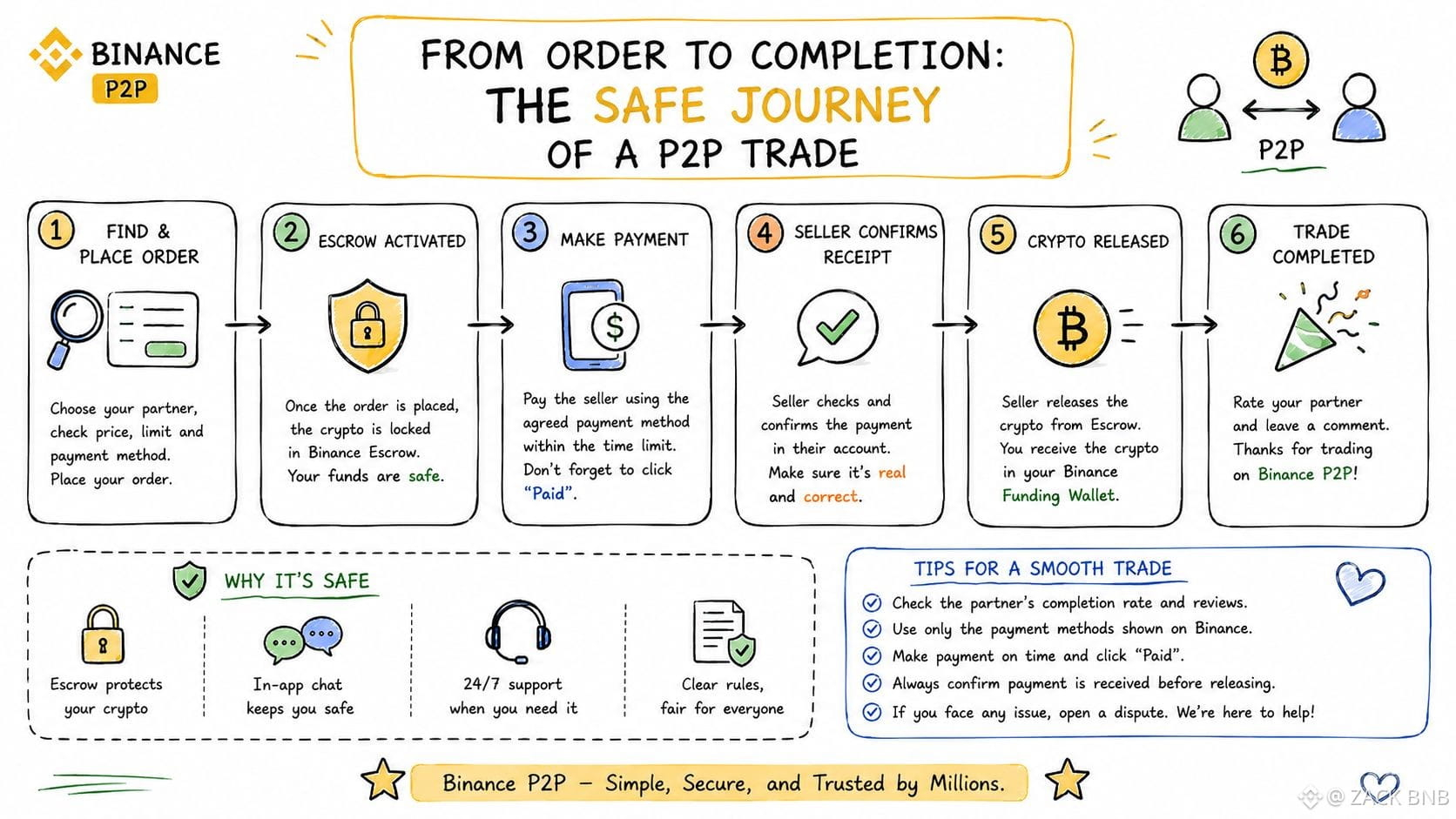
I’ve noticed that the journey of a safe P2P transaction actually starts even before you place the order—review the counterparty profile, check the completion rate and real feedback. That’s where most of the risk is determined later on, not at the point of transferring money.
As soon as the order is matched, escrow locks the coins automatically, and this is the moment I feel most at ease throughout the whole process—because from then on, the risk shifts from personal trust to a system with clear rules.
During the process, I keep all exchanges within the chat of the order. Absolutely no coin release until I go into my bank app to confirm that the payment has arrived. Don’t trust any bill photo.
The ideal endpoint is when both sides have confirmed. Escrow releases the coins within a few seconds, but in my view the journey is only truly safe when users actively take each step—not because the platform’s automation handles everything.
#binancep2pantoan @Binance_Vietnam
I’ve noticed that the journey of a safe P2P transaction actually starts even before you place the order—review the counterparty profile, check the completion rate and real feedback. That’s where most of the risk is determined later on, not at the point of transferring money.
As soon as the order is matched, escrow locks the coins automatically, and this is the moment I feel most at ease throughout the whole process—because from then on, the risk shifts from personal trust to a system with clear rules.
During the process, I keep all exchanges within the chat of the order. Absolutely no coin release until I go into my bank app to confirm that the payment has arrived. Don’t trust any bill photo.
The ideal endpoint is when both sides have confirmed. Escrow releases the coins within a few seconds, but in my view the journey is only truly safe when users actively take each step—not because the platform’s automation handles everything.
#binancep2pantoan @Binance Vietnam
As soon as the order is matched, escrow locks the coins automatically, and this is the moment I feel most at ease throughout the whole process—because from then on, the risk shifts from personal trust to a system with clear rules.
During the process, I keep all exchanges within the chat of the order. Absolutely no coin release until I go into my bank app to confirm that the payment has arrived. Don’t trust any bill photo.
The ideal endpoint is when both sides have confirmed. Escrow releases the coins within a few seconds, but in my view the journey is only truly safe when users actively take each step—not because the platform’s automation handles everything.
#binancep2pantoan @Binance Vietnam
1
2
634
·
--
Bullish
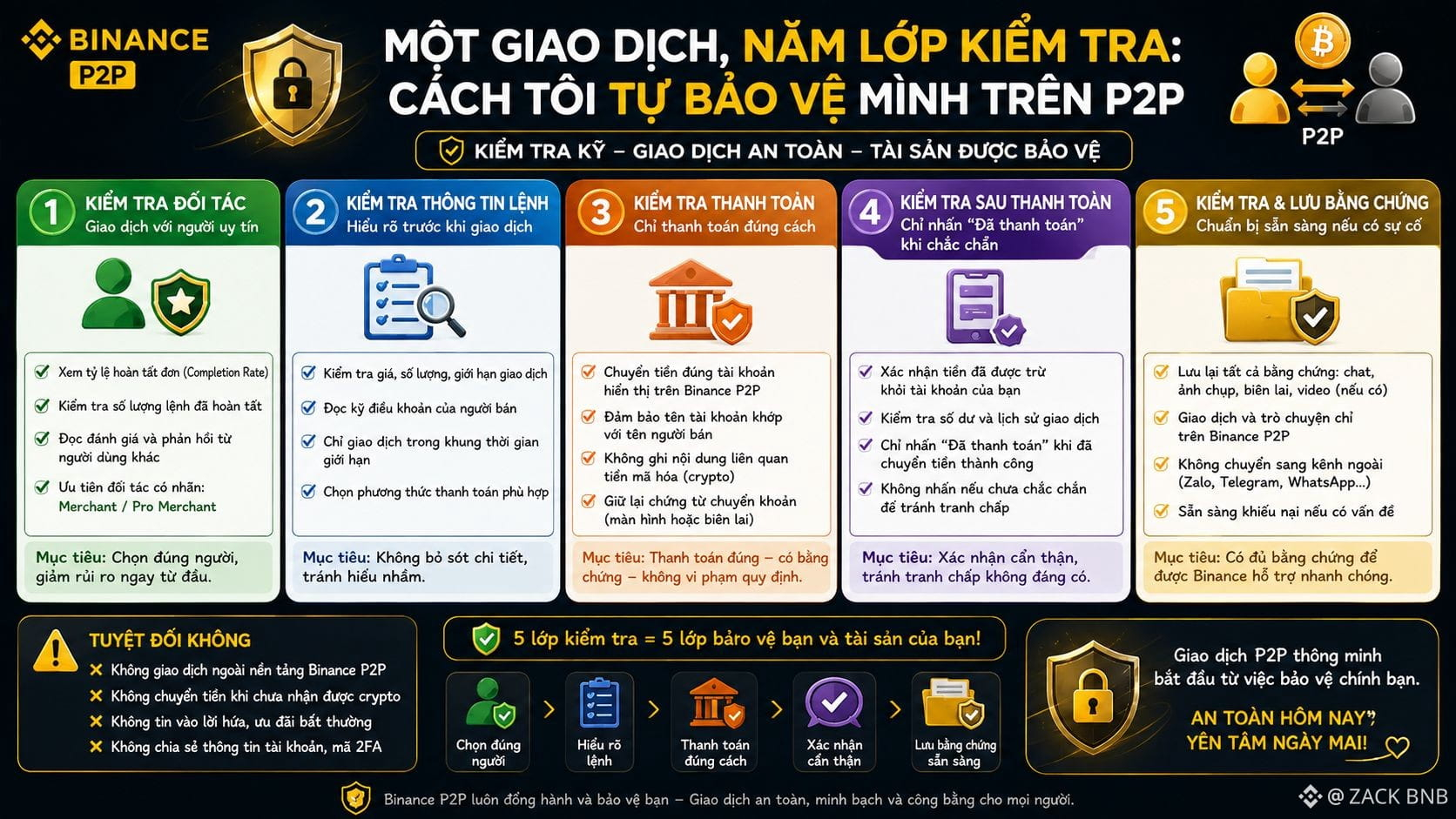
After noticing for a while that I often made P2P transactions, I gradually formed the right checklist of five layers before clicking on any important button.
Layer one is to review the counterparty profile—completion rate, account age, and real feedback from previous transactions—not to look only at good prices and rush into placing an order.
Layer two is to verify that the name of the bank account holder transferring money matches the KYC name exactly. If the name is wrong, I refuse to receive—no exceptions.
Layer three is to log into the banking app to check the actual received balance. I never trust screenshots of payment slips, even if they look convincing.
Layer four is to keep all communications within the order chat thread. I refuse any suggestion to switch to another contact channel, even if the reason sounds reasonable.
Layer five is to save the Order ID, screenshots, and the chat history from the very beginning—just in case I need to open a dispute later.
In the way I see it, these five layers don’t eliminate risk completely, but they’re enough to block almost all of the most common scams I have ever witnessed.
#binancep2pantoan @Binance_Vietnam
After noticing for a while that I often made P2P transactions, I gradually formed the right checklist of five layers before clicking on any important button.
Layer one is to review the counterparty profile—completion rate, account age, and real feedback from previous transactions—not to look only at good prices and rush into placing an order.
Layer two is to verify that the name of the bank account holder transferring money matches the KYC name exactly. If the name is wrong, I refuse to receive—no exceptions.
Layer three is to log into the banking app to check the actual received balance. I never trust screenshots of payment slips, even if they look convincing.
Layer four is to keep all communications within the order chat thread. I refuse any suggestion to switch to another contact channel, even if the reason sounds reasonable.
Layer five is to save the Order ID, screenshots, and the chat history from the very beginning—just in case I need to open a dispute later.
In the way I see it, these five layers don’t eliminate risk completely, but they’re enough to block almost all of the most common scams I have ever witnessed.
#binancep2pantoan @Binance Vietnam
Layer one is to review the counterparty profile—completion rate, account age, and real feedback from previous transactions—not to look only at good prices and rush into placing an order.
Layer two is to verify that the name of the bank account holder transferring money matches the KYC name exactly. If the name is wrong, I refuse to receive—no exceptions.
Layer three is to log into the banking app to check the actual received balance. I never trust screenshots of payment slips, even if they look convincing.
Layer four is to keep all communications within the order chat thread. I refuse any suggestion to switch to another contact channel, even if the reason sounds reasonable.
Layer five is to save the Order ID, screenshots, and the chat history from the very beginning—just in case I need to open a dispute later.
In the way I see it, these five layers don’t eliminate risk completely, but they’re enough to block almost all of the most common scams I have ever witnessed.
#binancep2pantoan @Binance Vietnam
3
767
·
--
Bullish
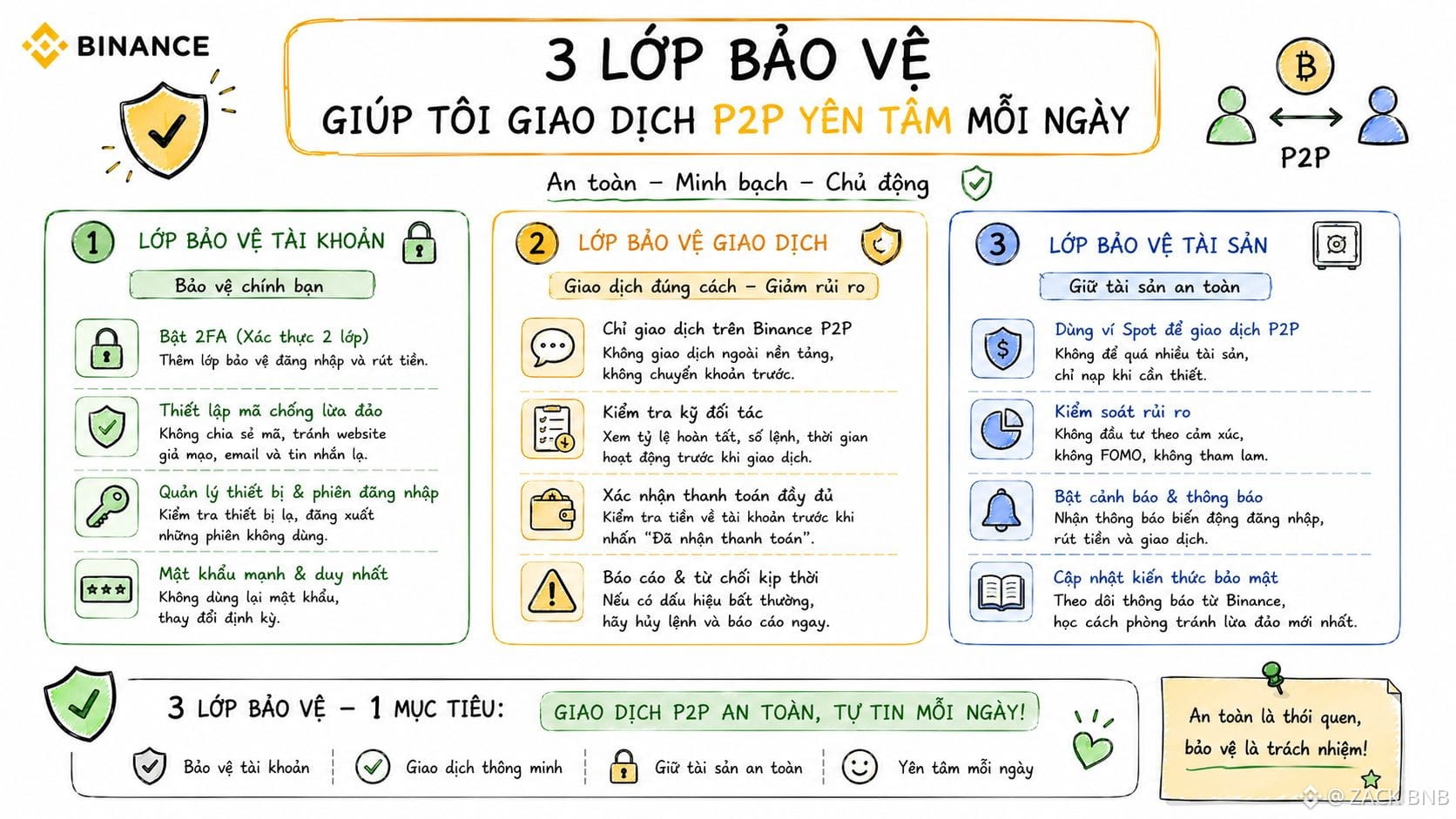
I’ve noticed that the three layers of protection I rely on every day when trading P2P aren’t really a feature of the exchange, but rather a habit I built after a few close calls with risk—especially after learning that the P2P USDT volume in Vietnam has reached $290 million, with Binance accounting for more than 92.5% of the market share—large enough to draw the attention of scam networks.
The first layer is always to prioritize counterparties with a completion rate above 98% and accounts that have been around long enough. I’m willing to accept a slightly worse price in exchange for safety.
The second layer is the rule of “if you don’t see money in the bank account, don’t release it.” Completely ignore any payment bills or screenshots, no matter how real they look—no exceptions, whether the counterparty is someone you know or a stranger.
The third layer is to communicate only within the chat window of the order, and never respond if suggested to switch to another channel.
In my view, these three habits become even more important when you consider that losses from online scams across Southeast Asia reached more than $114 billion in 2025—three times as much as just two years earlier.
#binancep2pantoan @Binance_Vietnam
I’ve noticed that the three layers of protection I rely on every day when trading P2P aren’t really a feature of the exchange, but rather a habit I built after a few close calls with risk—especially after learning that the P2P USDT volume in Vietnam has reached $290 million, with Binance accounting for more than 92.5% of the market share—large enough to draw the attention of scam networks.
The first layer is always to prioritize counterparties with a completion rate above 98% and accounts that have been around long enough. I’m willing to accept a slightly worse price in exchange for safety.
The second layer is the rule of “if you don’t see money in the bank account, don’t release it.” Completely ignore any payment bills or screenshots, no matter how real they look—no exceptions, whether the counterparty is someone you know or a stranger.
The third layer is to communicate only within the chat window of the order, and never respond if suggested to switch to another channel.
In my view, these three habits become even more important when you consider that losses from online scams across Southeast Asia reached more than $114 billion in 2025—three times as much as just two years earlier.
#binancep2pantoan @Binance Vietnam
The first layer is always to prioritize counterparties with a completion rate above 98% and accounts that have been around long enough. I’m willing to accept a slightly worse price in exchange for safety.
The second layer is the rule of “if you don’t see money in the bank account, don’t release it.” Completely ignore any payment bills or screenshots, no matter how real they look—no exceptions, whether the counterparty is someone you know or a stranger.
The third layer is to communicate only within the chat window of the order, and never respond if suggested to switch to another channel.
In my view, these three habits become even more important when you consider that losses from online scams across Southeast Asia reached more than $114 billion in 2025—three times as much as just two years earlier.
#binancep2pantoan @Binance Vietnam
324
·
--
Bullish
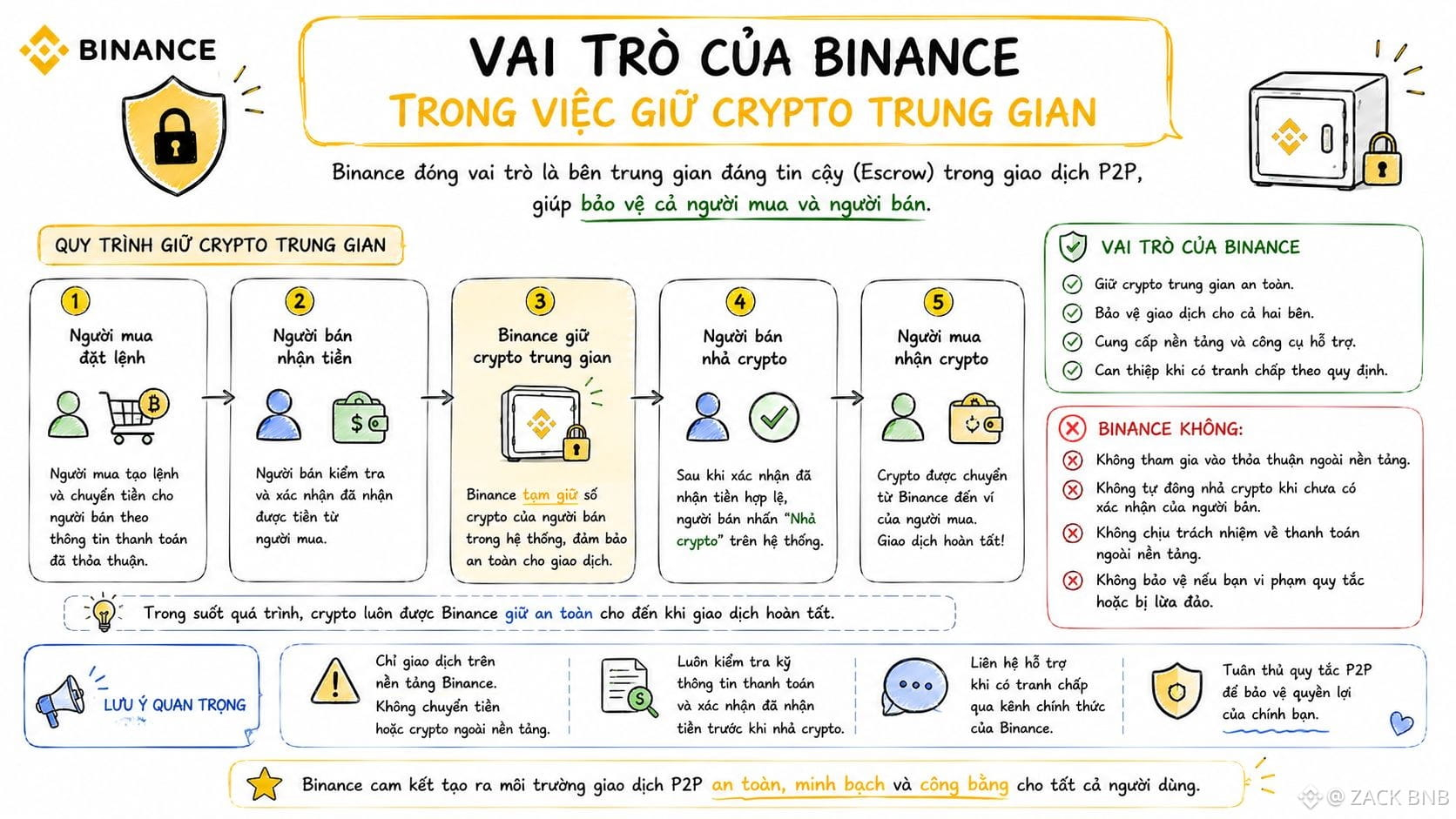
I noticed Binance’s intermediary role in P2P isn’t just a connection platform—it effectively acts as a temporary custodian.
When a trade matches, the seller’s coins are locked into escrow controlled by Binance, so they are no longer in anyone’s personal wallet until the transaction is completed.
The scale I’ve seen is noteworthy: Binance’s mobile P2P segment has grown 22% year over year and currently accounts for up to 59% of all P2P transactions on the entire platform.
Out of over 310 million verified accounts, it supports more than 100 fiat currencies, with nearly fee-free trading in most regions.
In my view, this is precisely why P2P on a major exchange is far safer than spontaneous off-platform deals.
Not because counterparties are more trustworthy, but because the risk is shifted from individual trust to a system with clear dispute-resolution procedures—operated at a large enough scale to standardize into a process.
One point to note: this intermediary role only protects the coins, not the fiat money transferred outside the banking system.
#binancep2pantoan @Binance_Vietnam
I noticed Binance’s intermediary role in P2P isn’t just a connection platform—it effectively acts as a temporary custodian.
When a trade matches, the seller’s coins are locked into escrow controlled by Binance, so they are no longer in anyone’s personal wallet until the transaction is completed.
The scale I’ve seen is noteworthy: Binance’s mobile P2P segment has grown 22% year over year and currently accounts for up to 59% of all P2P transactions on the entire platform.
Out of over 310 million verified accounts, it supports more than 100 fiat currencies, with nearly fee-free trading in most regions.
In my view, this is precisely why P2P on a major exchange is far safer than spontaneous off-platform deals.
Not because counterparties are more trustworthy, but because the risk is shifted from individual trust to a system with clear dispute-resolution procedures—operated at a large enough scale to standardize into a process.
One point to note: this intermediary role only protects the coins, not the fiat money transferred outside the banking system.
#binancep2pantoan @Binance Vietnam
When a trade matches, the seller’s coins are locked into escrow controlled by Binance, so they are no longer in anyone’s personal wallet until the transaction is completed.
The scale I’ve seen is noteworthy: Binance’s mobile P2P segment has grown 22% year over year and currently accounts for up to 59% of all P2P transactions on the entire platform.
Out of over 310 million verified accounts, it supports more than 100 fiat currencies, with nearly fee-free trading in most regions.
In my view, this is precisely why P2P on a major exchange is far safer than spontaneous off-platform deals.
Not because counterparties are more trustworthy, but because the risk is shifted from individual trust to a system with clear dispute-resolution procedures—operated at a large enough scale to standardize into a process.
One point to note: this intermediary role only protects the coins, not the fiat money transferred outside the banking system.
#binancep2pantoan @Binance Vietnam
349
·
--
Bullish
Verified
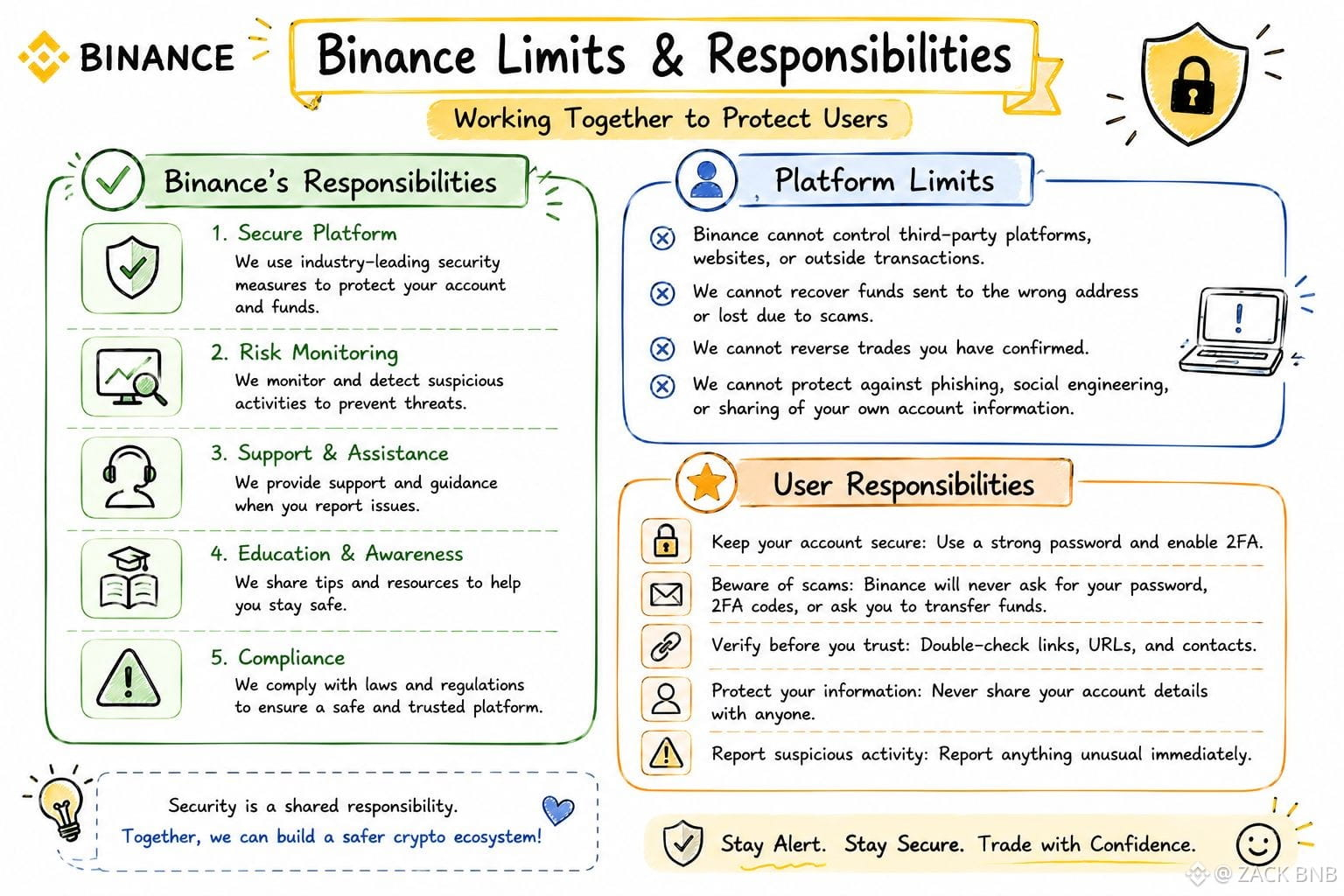
I’ve noticed that the SAFU fund is often described as an absolute guarantee, but reading the updated terms carefully reveals otherwise.
Binance has full discretion to decide what kinds of losses are compensated and at what compensation level—this is a voluntary fund, not a mandatory legal obligation like FDIC insurance.
The figures I just updated: SAFU is currently moving part of its holdings into accumulating Bitcoin, having bought an additional 4,225 BTC in early February 2026.
That raises the total holdings to 10,455 BTC, equivalent to about $734 million—within the $1 billion long-term BTC reserve plan that Binance previously announced.
As I see it, the real limit lies in the liability disclaimer clause.
Binance is not responsible for indirect damages, lost profits, or losses arising outside the scope of direct system faults—meaning the escrow/Safu only protects within the boundaries they define themselves, not an unlimited commitment.
#binancep2pantoan @Binance_Vietnam
I’ve noticed that the SAFU fund is often described as an absolute guarantee, but reading the updated terms carefully reveals otherwise.
Binance has full discretion to decide what kinds of losses are compensated and at what compensation level—this is a voluntary fund, not a mandatory legal obligation like FDIC insurance.
The figures I just updated: SAFU is currently moving part of its holdings into accumulating Bitcoin, having bought an additional 4,225 BTC in early February 2026.
That raises the total holdings to 10,455 BTC, equivalent to about $734 million—within the $1 billion long-term BTC reserve plan that Binance previously announced.
As I see it, the real limit lies in the liability disclaimer clause.
Binance is not responsible for indirect damages, lost profits, or losses arising outside the scope of direct system faults—meaning the escrow/Safu only protects within the boundaries they define themselves, not an unlimited commitment.
#binancep2pantoan @Binance Vietnam
Binance has full discretion to decide what kinds of losses are compensated and at what compensation level—this is a voluntary fund, not a mandatory legal obligation like FDIC insurance.
The figures I just updated: SAFU is currently moving part of its holdings into accumulating Bitcoin, having bought an additional 4,225 BTC in early February 2026.
That raises the total holdings to 10,455 BTC, equivalent to about $734 million—within the $1 billion long-term BTC reserve plan that Binance previously announced.
As I see it, the real limit lies in the liability disclaimer clause.
Binance is not responsible for indirect damages, lost profits, or losses arising outside the scope of direct system faults—meaning the escrow/Safu only protects within the boundaries they define themselves, not an unlimited commitment.
#binancep2pantoan @Binance Vietnam
1
1
439
·
--
Bullish
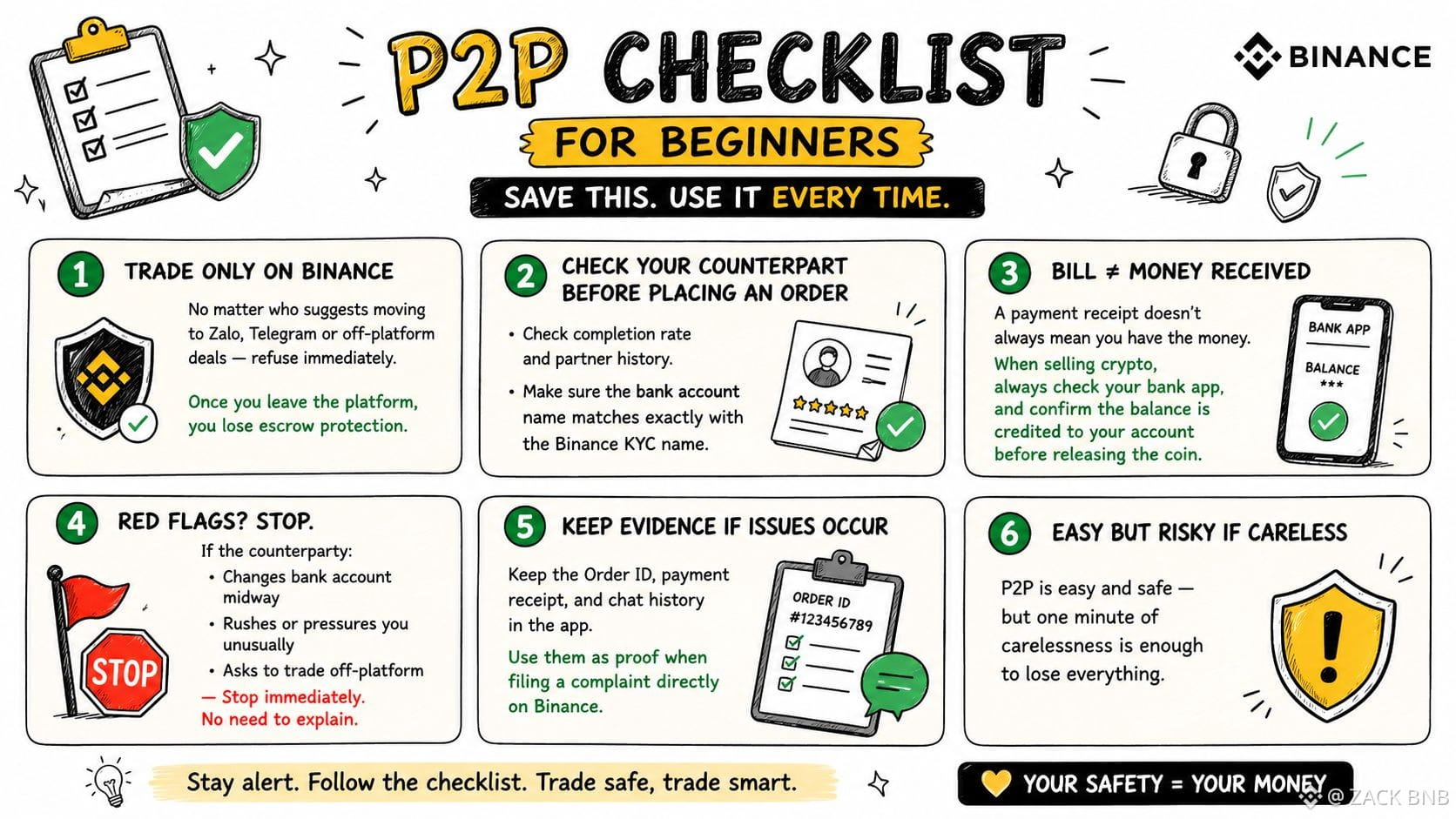
P2P checklist for beginners—save it and use it
Transactions are only carried out on Binance. No matter who suggests moving to Zalo, Telegram, or trading outside the platform, refuse immediately—once you leave the platform, you lose all escrow protection.
Before placing an order, check the counterparty’s completion rate and transaction history. Especially remember: the account holder’s name on the bank transfer must match exactly the KYC name on Binance.
Most important: having a bill doesn’t guarantee there is money. If selling crypto, always check the actually received balance directly in your banking app, and only release the coin after confirming the funds have arrived in your account.
If you notice the other party changes the account number mid-way, urges you unusually, or suggests trading outside the platform, stop immediately—no need to explain.
If something goes wrong, keep the same Order ID, invoice, and chat history in the app as evidence, and open a dispute/complaint directly on Binance.
P2P is easy and safe, but just one moment of carelessness is enough to
lose everything.
#binancep2pantoan @Binance_Vietnam
P2P checklist for beginners—save it and use it
Transactions are only carried out on Binance. No matter who suggests moving to Zalo, Telegram, or trading outside the platform, refuse immediately—once you leave the platform, you lose all escrow protection.
Before placing an order, check the counterparty’s completion rate and transaction history. Especially remember: the account holder’s name on the bank transfer must match exactly the KYC name on Binance.
Most important: having a bill doesn’t guarantee there is money. If selling crypto, always check the actually received balance directly in your banking app, and only release the coin after confirming the funds have arrived in your account.
If you notice the other party changes the account number mid-way, urges you unusually, or suggests trading outside the platform, stop immediately—no need to explain.
If something goes wrong, keep the same Order ID, invoice, and chat history in the app as evidence, and open a dispute/complaint directly on Binance.
P2P is easy and safe, but just one moment of carelessness is enough to
lose everything.
#binancep2pantoan @Binance Vietnam
Transactions are only carried out on Binance. No matter who suggests moving to Zalo, Telegram, or trading outside the platform, refuse immediately—once you leave the platform, you lose all escrow protection.
Before placing an order, check the counterparty’s completion rate and transaction history. Especially remember: the account holder’s name on the bank transfer must match exactly the KYC name on Binance.
Most important: having a bill doesn’t guarantee there is money. If selling crypto, always check the actually received balance directly in your banking app, and only release the coin after confirming the funds have arrived in your account.
If you notice the other party changes the account number mid-way, urges you unusually, or suggests trading outside the platform, stop immediately—no need to explain.
If something goes wrong, keep the same Order ID, invoice, and chat history in the app as evidence, and open a dispute/complaint directly on Binance.
P2P is easy and safe, but just one moment of carelessness is enough to
lose everything.
#binancep2pantoan @Binance Vietnam
1
689
·
--
Bullish
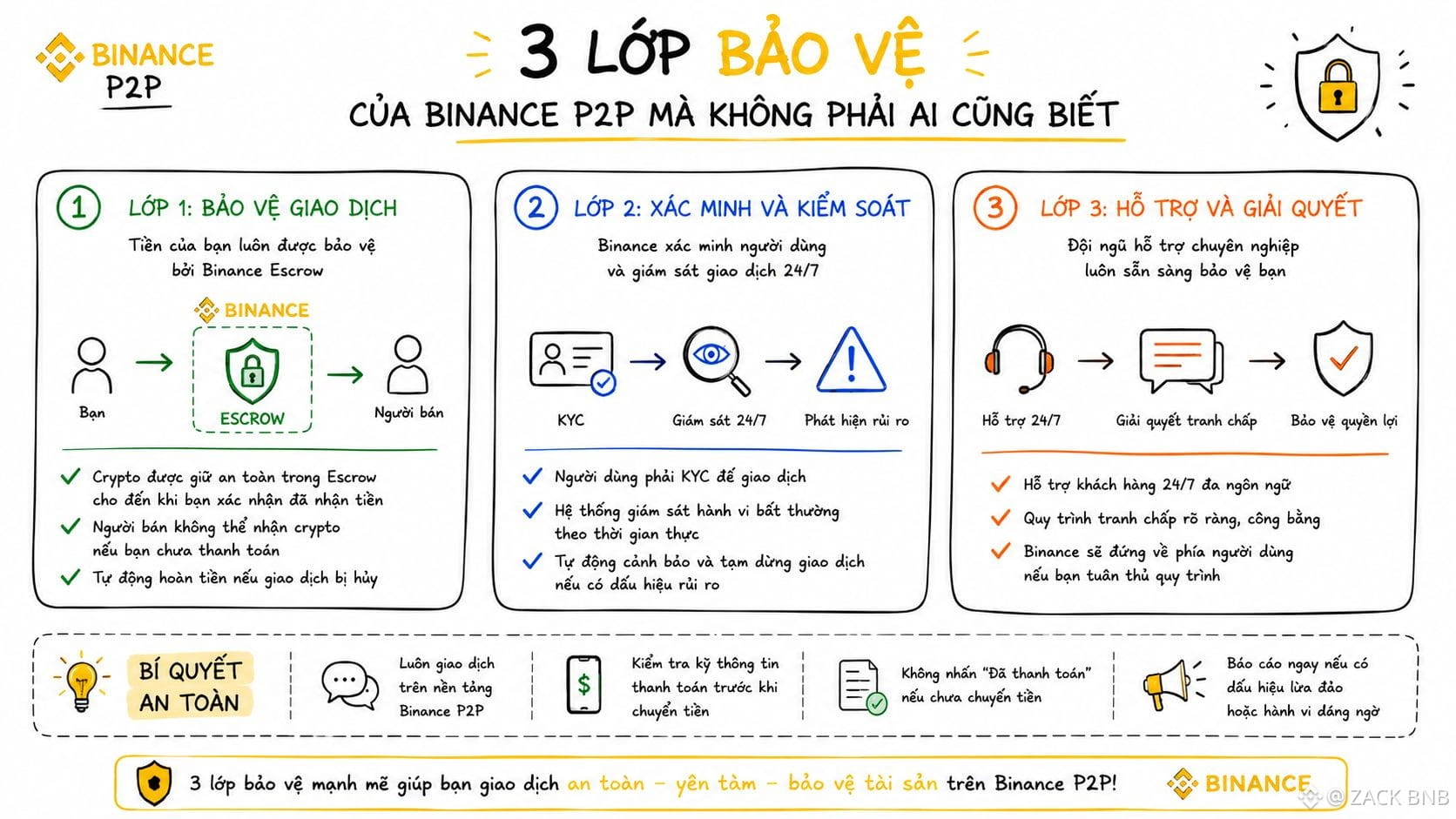
I’ve noticed that beyond escrow, everyone knows about the protections. But there are three layers of defense that fewer people pay attention to—yet they’re just as important.
The first layer is the P2P Shield Merchant Program. It doesn’t only perform standard KYC verification, but also separately filters merchants who have been reported—such as those whose bank accounts have been frozen. In other words, Binance blocks risk at the source rather than waiting for disputes to arise before handling it.
The second layer is the requirement that the name of the account holder of the bank account must match exactly the KYC name on Binance. Many people skip this step of cross-checking, but it’s precisely the basis for winning an appeal if you receive money from an unfamiliar third party.
The third layer, which hardly anyone mentions, is the SAFU fund—around $1 billion—standing behind it as the final backup layer. While it isn’t applied directly to P2P, it still strengthens confidence across the Binance ecosystem as a whole.
#binancep2pantoan @Binance_Vietnam
I’ve noticed that beyond escrow, everyone knows about the protections. But there are three layers of defense that fewer people pay attention to—yet they’re just as important.
The first layer is the P2P Shield Merchant Program. It doesn’t only perform standard KYC verification, but also separately filters merchants who have been reported—such as those whose bank accounts have been frozen. In other words, Binance blocks risk at the source rather than waiting for disputes to arise before handling it.
The second layer is the requirement that the name of the account holder of the bank account must match exactly the KYC name on Binance. Many people skip this step of cross-checking, but it’s precisely the basis for winning an appeal if you receive money from an unfamiliar third party.
The third layer, which hardly anyone mentions, is the SAFU fund—around $1 billion—standing behind it as the final backup layer. While it isn’t applied directly to P2P, it still strengthens confidence across the Binance ecosystem as a whole.
#binancep2pantoan @Binance Vietnam
The first layer is the P2P Shield Merchant Program. It doesn’t only perform standard KYC verification, but also separately filters merchants who have been reported—such as those whose bank accounts have been frozen. In other words, Binance blocks risk at the source rather than waiting for disputes to arise before handling it.
The second layer is the requirement that the name of the account holder of the bank account must match exactly the KYC name on Binance. Many people skip this step of cross-checking, but it’s precisely the basis for winning an appeal if you receive money from an unfamiliar third party.
The third layer, which hardly anyone mentions, is the SAFU fund—around $1 billion—standing behind it as the final backup layer. While it isn’t applied directly to P2P, it still strengthens confidence across the Binance ecosystem as a whole.
#binancep2pantoan @Binance Vietnam
558
·
--
Bullish
I have accumulated 30% BTC.
Why am I accumulating BTC right now, but only 30%?
The reason is simple: the current price zone has started to become advantageous for the long term, but the market is still not clear enough to go all-in. I’m accumulating according to plan, not buying on emotions.
Right now, BTC is stuck in a very important zone. Below is support around 59K–60K, and above is resistance around 67.5K. If BTC breaks above 67.5K, the short-term structure will look better. But if the 59K–60K zone is lost, I still have to prepare for a scenario where BTC may shake down further to 50K–55K.
That’s why I’m only putting in 30% first, while the remaining 70% stays in stablecoins to hedge in case the market drops even deeper.
Why start accumulating anyway? Because some long-term signals are worth noting.
First, the USDT market share shows signs of forming a top divergence. If this signal confirms, defensive capital outflows may gradually decrease, creating an opportunity for BTC to rebound.
Second, BTC’s monthly RSI is around 42–43. In previous cycles, when the monthly RSI fell below the 44 area, BTC often entered the range that led to the formation of a long-term bottom.
But nothing is certain. Calling the bottom is gambling. Allocating capital in areas with an edge is the plan.
$BTC
{future}(BTCUSDT)
I have accumulated 30% BTC.
Why am I accumulating BTC right now, but only 30%?
The reason is simple: the current price zone has started to become advantageous for the long term, but the market is still not clear enough to go all-in. I’m accumulating according to plan, not buying on emotions.
Right now, BTC is stuck in a very important zone. Below is support around 59K–60K, and above is resistance around 67.5K. If BTC breaks above 67.5K, the short-term structure will look better. But if the 59K–60K zone is lost, I still have to prepare for a scenario where BTC may shake down further to 50K–55K.
That’s why I’m only putting in 30% first, while the remaining 70% stays in stablecoins to hedge in case the market drops even deeper.
Why start accumulating anyway? Because some long-term signals are worth noting.
First, the USDT market share shows signs of forming a top divergence. If this signal confirms, defensive capital outflows may gradually decrease, creating an opportunity for BTC to rebound.
Second, BTC’s monthly RSI is around 42–43. In previous cycles, when the monthly RSI fell below the 44 area, BTC often entered the range that led to the formation of a long-term bottom.
But nothing is certain. Calling the bottom is gambling. Allocating capital in areas with an edge is the plan.
$BTC
Why am I accumulating BTC right now, but only 30%?
The reason is simple: the current price zone has started to become advantageous for the long term, but the market is still not clear enough to go all-in. I’m accumulating according to plan, not buying on emotions.
Right now, BTC is stuck in a very important zone. Below is support around 59K–60K, and above is resistance around 67.5K. If BTC breaks above 67.5K, the short-term structure will look better. But if the 59K–60K zone is lost, I still have to prepare for a scenario where BTC may shake down further to 50K–55K.
That’s why I’m only putting in 30% first, while the remaining 70% stays in stablecoins to hedge in case the market drops even deeper.
Why start accumulating anyway? Because some long-term signals are worth noting.
First, the USDT market share shows signs of forming a top divergence. If this signal confirms, defensive capital outflows may gradually decrease, creating an opportunity for BTC to rebound.
Second, BTC’s monthly RSI is around 42–43. In previous cycles, when the monthly RSI fell below the 44 area, BTC often entered the range that led to the formation of a long-term bottom.
But nothing is certain. Calling the bottom is gambling. Allocating capital in areas with an edge is the plan.
$BTC
1
1.1k
·
--
Bullish
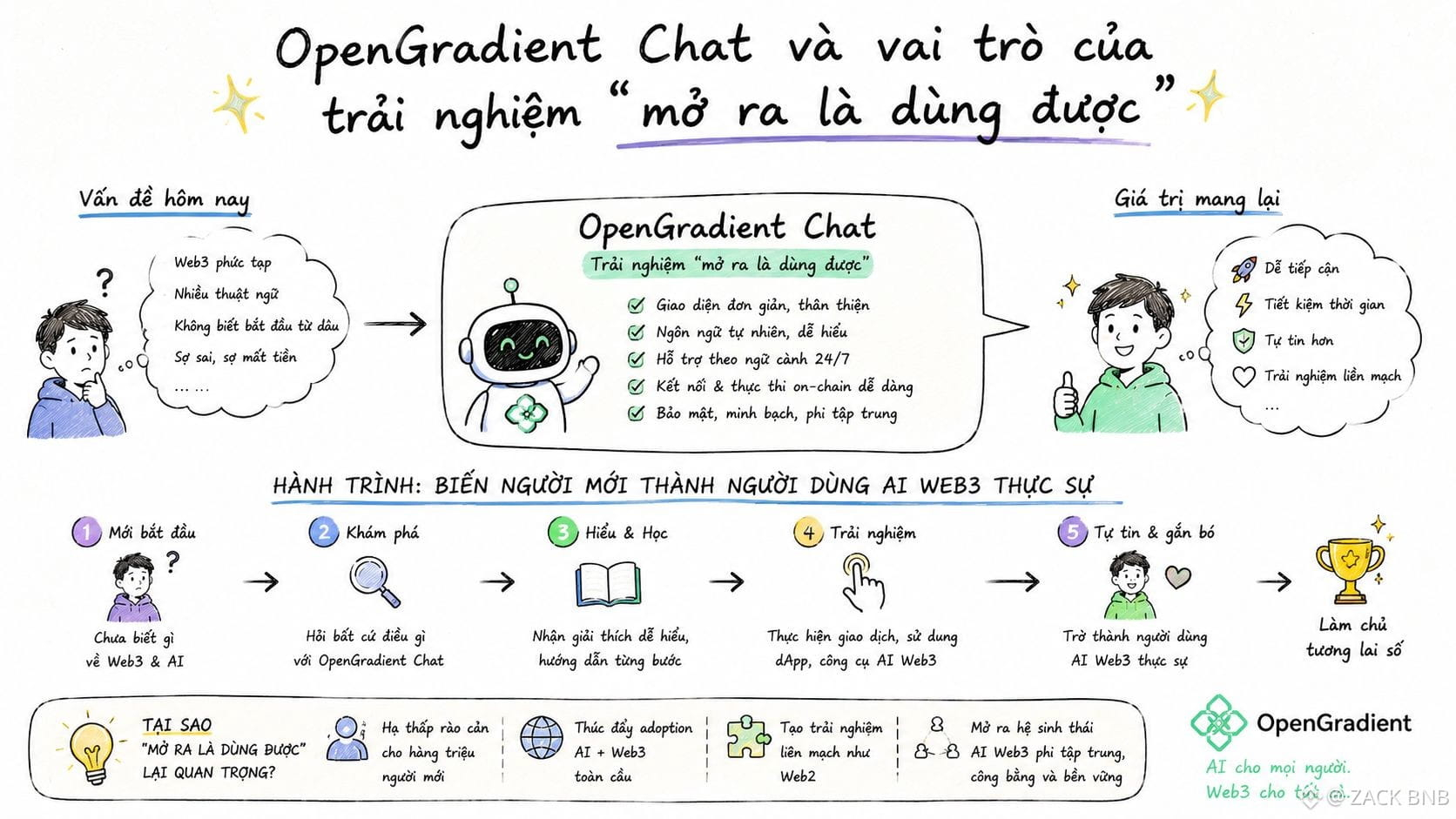
I think learning Web3 isn't like studying a subject with a clear syllabus.
It's more like picking up scattered puzzle pieces along the road.
Today, I get wallets.
Tomorrow, I'll understand gas fees.
Another day, I'll realize why approving transactions can be risky.
Newbies often aren't lacking in effort.
They're just thrown into too many concepts at once.
Maybe OpenGradient Chat can slow that learning process down in a more pleasant way.
No need to start with lengthy docs.
Just a small question.
Then another one.
Behind that chat frame, OpenGradient is still a decentralized AI layer with models, inference, and verification.
But for users, everything starts with clarity.
I'm not sure this is the only way.
But Web3 probably needs more gentle entry points like this.
@OpenGradient #OPG $OPG
I think learning Web3 isn't like studying a subject with a clear syllabus.
It's more like picking up scattered puzzle pieces along the road.
Today, I get wallets.
Tomorrow, I'll understand gas fees.
Another day, I'll realize why approving transactions can be risky.
Newbies often aren't lacking in effort.
They're just thrown into too many concepts at once.
Maybe OpenGradient Chat can slow that learning process down in a more pleasant way.
No need to start with lengthy docs.
Just a small question.
Then another one.
Behind that chat frame, OpenGradient is still a decentralized AI layer with models, inference, and verification.
But for users, everything starts with clarity.
I'm not sure this is the only way.
But Web3 probably needs more gentle entry points like this.
@OpenGradient #OPG $OPG
It's more like picking up scattered puzzle pieces along the road.
Today, I get wallets.
Tomorrow, I'll understand gas fees.
Another day, I'll realize why approving transactions can be risky.
Newbies often aren't lacking in effort.
They're just thrown into too many concepts at once.
Maybe OpenGradient Chat can slow that learning process down in a more pleasant way.
No need to start with lengthy docs.
Just a small question.
Then another one.
Behind that chat frame, OpenGradient is still a decentralized AI layer with models, inference, and verification.
But for users, everything starts with clarity.
I'm not sure this is the only way.
But Web3 probably needs more gentle entry points like this.
@OpenGradient #OPG $OPG
1
226
·
--
Bullish
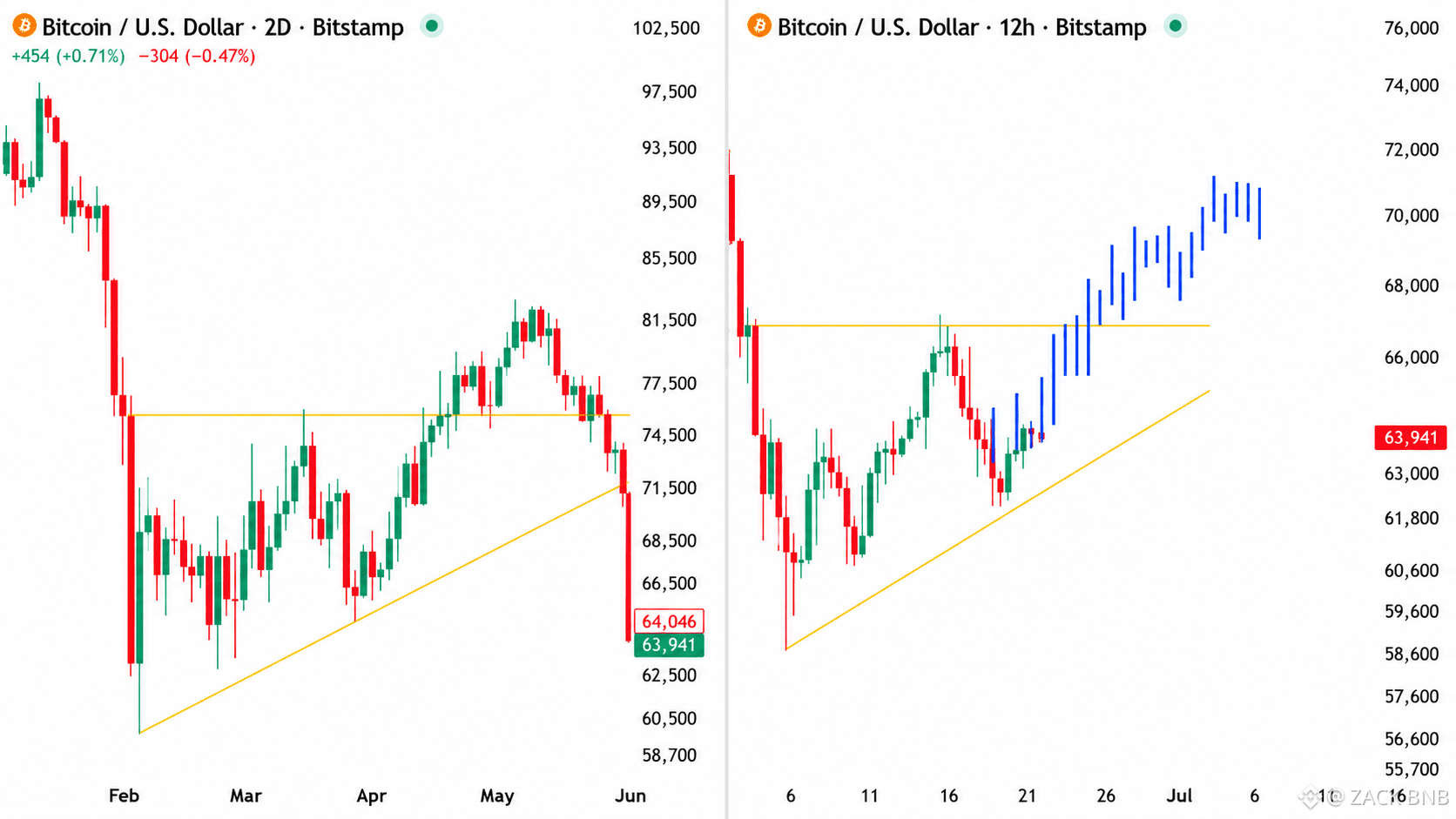
The market is in extreme fear territory; history shows this is usually the bottom or near the bottom of the cycle.
$BTC is testing around $62K-$64K; losing the $62K level could see us drop to $58K-$60K.
Our boy Saylor is also hinting at DCA-ing BTC today; it's almost June already, huh?
This round, I'm focusing on grinding out Web3 plays and hunting for alpha to degen mainly. The market is lacking liquidity, but it's also an opportunity for us to pick up some ships gradually.
Buy and trade
$BTC 👇👇
{future}(BTCUSDT)
The market is in extreme fear territory; history shows this is usually the bottom or near the bottom of the cycle.
$BTC is testing around $62K-$64K; losing the $62K level could see us drop to $58K-$60K.
Our boy Saylor is also hinting at DCA-ing BTC today; it's almost June already, huh?
This round, I'm focusing on grinding out Web3 plays and hunting for alpha to degen mainly. The market is lacking liquidity, but it's also an opportunity for us to pick up some ships gradually.
Buy and trade
$BTC 👇👇
$BTC is testing around $62K-$64K; losing the $62K level could see us drop to $58K-$60K.
Our boy Saylor is also hinting at DCA-ing BTC today; it's almost June already, huh?
This round, I'm focusing on grinding out Web3 plays and hunting for alpha to degen mainly. The market is lacking liquidity, but it's also an opportunity for us to pick up some ships gradually.
Buy and trade
$BTC 👇👇
1
693
·
--
Bullish
I used to think of Web3 like a room with way too many doors.
Wallet.
Seed phrase.
Gas fee.
Bridge.
Smart contract.
Just stepping in is enough to make a newbie feel overwhelmed.
Before they even grasp what they're using, they have to learn how to protect themselves from too many risks.
Maybe that's why OpenGradient Chat is worth considering.
Newbies usually don't start with the infrastructure.
They kick things off with some pretty simple questions.
How do I use this wallet?
What risks are involved in this trade?
What permissions is this DApp asking for?
If OpenGradient Chat can turn the decentralized AI layer behind it into a familiar Q&A interface, Web3 could feel a lot less cold.
I'm not sure a chat product can solve the entire onboarding puzzle.
But sometimes, an easy-to-understand door is exactly what the ecosystem needs most.
@OpenGradient #OPG $OPG
I used to think of Web3 like a room with way too many doors.
Wallet.
Seed phrase.
Gas fee.
Bridge.
Smart contract.
Just stepping in is enough to make a newbie feel overwhelmed.
Before they even grasp what they're using, they have to learn how to protect themselves from too many risks.
Maybe that's why OpenGradient Chat is worth considering.
Newbies usually don't start with the infrastructure.
They kick things off with some pretty simple questions.
How do I use this wallet?
What risks are involved in this trade?
What permissions is this DApp asking for?
If OpenGradient Chat can turn the decentralized AI layer behind it into a familiar Q&A interface, Web3 could feel a lot less cold.
I'm not sure a chat product can solve the entire onboarding puzzle.
But sometimes, an easy-to-understand door is exactly what the ecosystem needs most.
@OpenGradient #OPG $OPG
Wallet.
Seed phrase.
Gas fee.
Bridge.
Smart contract.
Just stepping in is enough to make a newbie feel overwhelmed.
Before they even grasp what they're using, they have to learn how to protect themselves from too many risks.
Maybe that's why OpenGradient Chat is worth considering.
Newbies usually don't start with the infrastructure.
They kick things off with some pretty simple questions.
How do I use this wallet?
What risks are involved in this trade?
What permissions is this DApp asking for?
If OpenGradient Chat can turn the decentralized AI layer behind it into a familiar Q&A interface, Web3 could feel a lot less cold.
I'm not sure a chat product can solve the entire onboarding puzzle.
But sometimes, an easy-to-understand door is exactly what the ecosystem needs most.
@OpenGradient #OPG $OPG

194
·
--
Bullish
I used to think crypto wallets were just a place to hold assets.
Deposit.
Withdraw.
Sign transactions.
Simple enough to exist.
But the more I dive into Web3, the more I realize wallets are carrying a lot more than users truly understand.
A swap transaction.
An approval right.
An interaction with a smart contract.
Sometimes, just one wrong click can create enough risk.
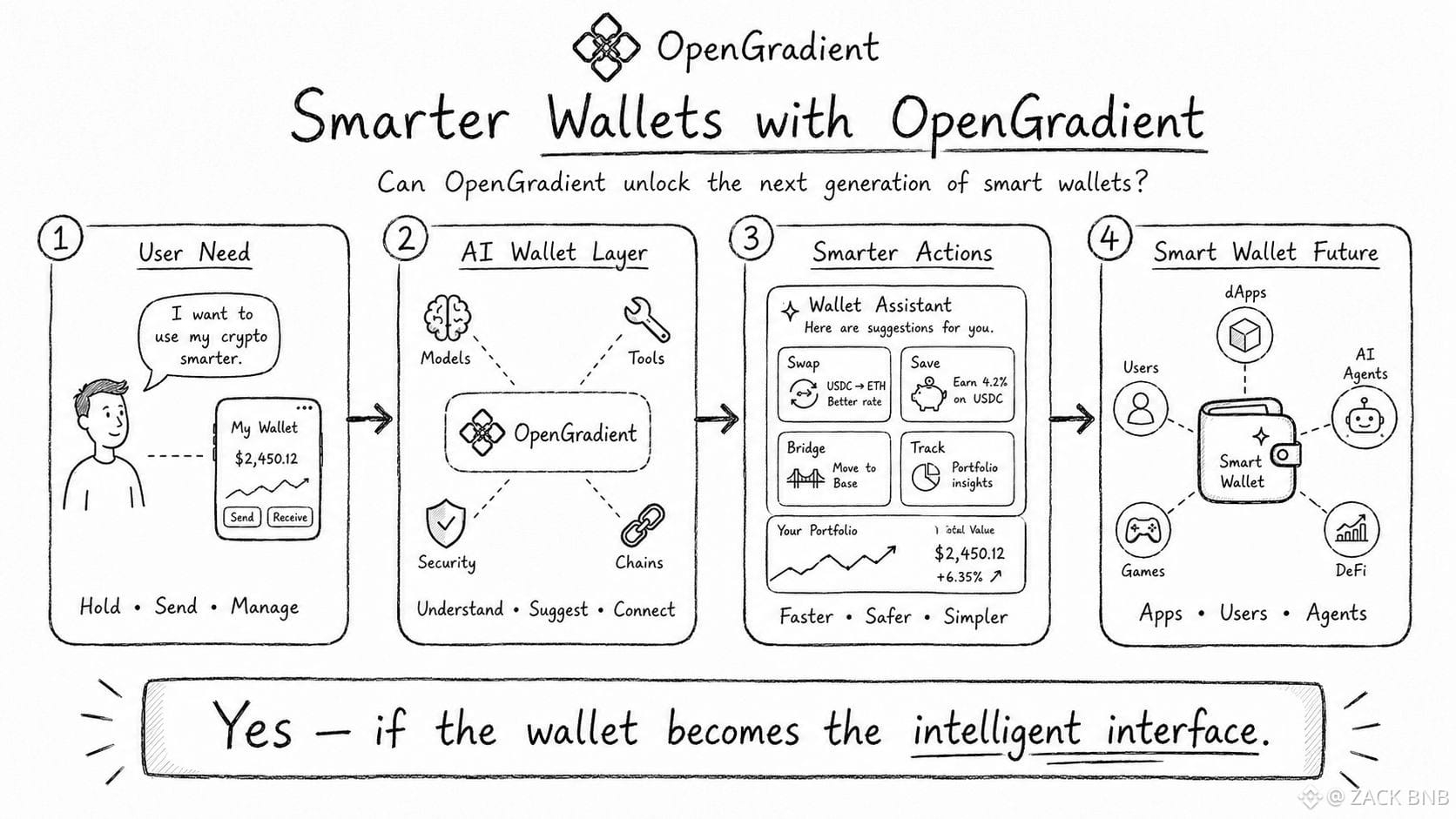
Perhaps the next generation of wallets not only needs to be more secure.
But also smarter.
This is where OpenGradient $OPG got me thinking.
If wallets could call AI inference from an open infrastructure, then verify the results instead of just trusting the answer, the experience could be different.
Wallets shouldn't just display data.
They could explain risks, analyze actions, and assist users in decision-making.
I'm not sure if this will happen quickly.
But smart wallets might just be where AI and Web3 meet most clearly.
@OpenGradient #OPG
I used to think crypto wallets were just a place to hold assets.
Deposit.
Withdraw.
Sign transactions.
Simple enough to exist.
But the more I dive into Web3, the more I realize wallets are carrying a lot more than users truly understand.
A swap transaction.
An approval right.
An interaction with a smart contract.
Sometimes, just one wrong click can create enough risk.
Perhaps the next generation of wallets not only needs to be more secure.
But also smarter.
This is where OpenGradient $OPG got me thinking.
If wallets could call AI inference from an open infrastructure, then verify the results instead of just trusting the answer, the experience could be different.
Wallets shouldn't just display data.
They could explain risks, analyze actions, and assist users in decision-making.
I'm not sure if this will happen quickly.
But smart wallets might just be where AI and Web3 meet most clearly.
@OpenGradient #OPG
Deposit.
Withdraw.
Sign transactions.
Simple enough to exist.
But the more I dive into Web3, the more I realize wallets are carrying a lot more than users truly understand.
A swap transaction.
An approval right.
An interaction with a smart contract.
Sometimes, just one wrong click can create enough risk.
Perhaps the next generation of wallets not only needs to be more secure.
But also smarter.
This is where OpenGradient $OPG got me thinking.
If wallets could call AI inference from an open infrastructure, then verify the results instead of just trusting the answer, the experience could be different.
Wallets shouldn't just display data.
They could explain risks, analyze actions, and assist users in decision-making.
I'm not sure if this will happen quickly.
But smart wallets might just be where AI and Web3 meet most clearly.
@OpenGradient #OPG
1
169
Log in to explore more content
Join global crypto users on Binance Square
⚡️ Get latest and useful information about crypto.
💬 Trusted by the world’s largest crypto exchange.
👍 Discover real insights from verified creators.
Email / Phone number
Trending Topics
DriftHackVictimsBeginClaims
22,515 views
410 Discussing
🚨 $DRIFT HACK VICTIMS CAN NOW START CLAIMING
Victims of the Drift hack are beginning to receive access to the claims process.
After months of uncertainty, affected users finally have a path toward recovering their losses. 💰
If you were impacted, check the official claim details carefully and avoid fake links or scammers. ⚠️
$SOL
#DRIFT #solana #DriftHackVictimsBeginClaims $1000000BOB
Adeem Jutt
·1 Likes
·94 views
SolanaTokenizedStockVolumeTops$4.4BInSeptember
3,705 views
47 Discussing
BitcoinSpotETFsDraw$6.34BInflowsInQ3
14,041 views
162 Discussing