
Sunny909
49 Posts

Sunny909
Long crypto long web3
49 Following
754 Followers
78 Liked
Posts
Why do orders need privacy too?
Anyone who’s traded understands how bad it feels when your orders get seen before you even post them. Small amounts may not matter much, but if an institution is preparing to buy or sell a large chunk of assets, once the intent is exposed, the market may already have people racing to get ahead—and the price can be pushed away before you even enter.
So when I saw Hedger getting ready for a “confidential order book,” my first reaction was: this privacy isn’t about hiding money—it’s about not revealing your cards to the entire market before the fact.
Hedger uses homomorphic encryption and zero-knowledge proofs to protect positions, balances, and transaction amounts. In simple terms, the system can verify whether a transaction is valid without seeing the original numbers, while still preserving auditing capabilities when compliance checks are required.
This isn’t the same focus as ordinary “private transfers.” In regulated markets, it addresses the issues that can arise when an institution’s trading intent becomes public—such as front-running, copy-trading, and market manipulation—rather than merely preventing others from seeing how much money is in a wallet.
That said, note that Dusk’s official statement at the moment is that Hedger is laying the groundwork for an upcoming confidential order book, not that the full order book is already fully live. The technical direction seems solid; in the end, we’ll have to see the actual product and trading experience after the DuskEVM mainnet launch.
If your large orders might impact the market, would you choose full transparency, or “verifiable transactions, but keep your order intent private first”?
#dusk $DUSK @Dusk #全球股票基金净流入186.2亿美元
Anyone who’s traded understands how bad it feels when your orders get seen before you even post them. Small amounts may not matter much, but if an institution is preparing to buy or sell a large chunk of assets, once the intent is exposed, the market may already have people racing to get ahead—and the price can be pushed away before you even enter.
So when I saw Hedger getting ready for a “confidential order book,” my first reaction was: this privacy isn’t about hiding money—it’s about not revealing your cards to the entire market before the fact.
Hedger uses homomorphic encryption and zero-knowledge proofs to protect positions, balances, and transaction amounts. In simple terms, the system can verify whether a transaction is valid without seeing the original numbers, while still preserving auditing capabilities when compliance checks are required.
This isn’t the same focus as ordinary “private transfers.” In regulated markets, it addresses the issues that can arise when an institution’s trading intent becomes public—such as front-running, copy-trading, and market manipulation—rather than merely preventing others from seeing how much money is in a wallet.
That said, note that Dusk’s official statement at the moment is that Hedger is laying the groundwork for an upcoming confidential order book, not that the full order book is already fully live. The technical direction seems solid; in the end, we’ll have to see the actual product and trading experience after the DuskEVM mainnet launch.
If your large orders might impact the market, would you choose full transparency, or “verifiable transactions, but keep your order intent private first”?
#dusk $DUSK @Dusk #全球股票基金净流入186.2亿美元
#SpaceX股价涨至140美元
$SPCX Finally some progress today! hodl 🙏
Do you all have spot holdings in your hands? The one who holds tight and won’t let go is me 😅
$SPCX Finally some progress today! hodl 🙏
Do you all have spot holdings in your hands? The one who holds tight and won’t let go is me 😅

First Time Understanding TermMax: DeFi Lending Interest Rates—You Can Even Lock Them In Early
When I first looked at @TermMaxFi, I thought it was just another DeFi lending platform. What really kept me researching was its focus on “fixed interest rates, fixed terms.” In simple terms, you determine the borrowing cost or expected returns before you take action, rather than leaving everything entirely to fluctuations in market interest rates.
Most traditional DeFi lending uses variable (floating) interest rates. When demand for funds suddenly increases, borrowing costs may rise as well; the high APY lenders see may also drop quickly after deposits. TermMax aims to solve this uncertainty—“you see one number when you enter, but get a different result at the end.”
Its logic is a bit like on-chain zero-coupon bonds: lenders can lock in returns for a certain period, and borrowers can also find out in advance how much they will need to pay. For people with clear funding plans, predictability is sometimes more important than a higher APY that appears in the short term.
Of course, fixed interest rates don’t mean zero risk. You still need to confirm things like the collateralization rate, liquidation conditions, term length, liquidity, and smart contract risks. But as someone just getting to know TermMax, the most worth studying aspect to me isn’t “how high the returns can be,” but that it makes the outcomes of DeFi lending easier to calculate.
If it were you, would you choose a potentially higher floating rate, or a relatively predictable fixed rate?
#TermMax #defi #FixedRate
When I first looked at @TermMaxFi, I thought it was just another DeFi lending platform. What really kept me researching was its focus on “fixed interest rates, fixed terms.” In simple terms, you determine the borrowing cost or expected returns before you take action, rather than leaving everything entirely to fluctuations in market interest rates.
Most traditional DeFi lending uses variable (floating) interest rates. When demand for funds suddenly increases, borrowing costs may rise as well; the high APY lenders see may also drop quickly after deposits. TermMax aims to solve this uncertainty—“you see one number when you enter, but get a different result at the end.”
Its logic is a bit like on-chain zero-coupon bonds: lenders can lock in returns for a certain period, and borrowers can also find out in advance how much they will need to pay. For people with clear funding plans, predictability is sometimes more important than a higher APY that appears in the short term.
Of course, fixed interest rates don’t mean zero risk. You still need to confirm things like the collateralization rate, liquidation conditions, term length, liquidity, and smart contract risks. But as someone just getting to know TermMax, the most worth studying aspect to me isn’t “how high the returns can be,” but that it makes the outcomes of DeFi lending easier to calculate.
If it were you, would you choose a potentially higher floating rate, or a relatively predictable fixed rate?
#TermMax #defi #FixedRate
I used to watch project partnerships and the easiest thing to be fooled by was a long string of logos. Later, I realized that having many partners doesn’t mean anything can actually be implemented. The real questions are: Do they have a license? Do they have real assets? What exactly are they planning to do?
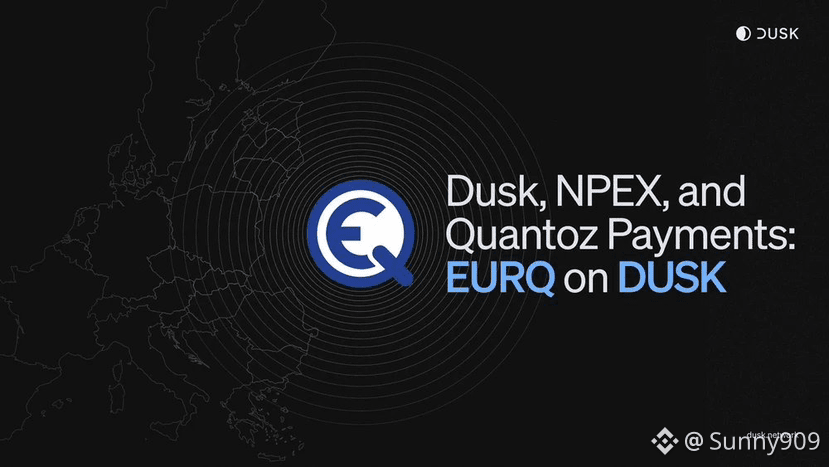
According to Dusk’s official disclosure, NPEX is a trading platform regulated by the Dutch AFM. It holds relevant credentials such as an MTF, a broker, and an ECSP, and plans to bring more than €300 million in assets onto the chain via Dusk. This information is far more concrete than a single line like “jointly推动 RWA development.”
And this time, it’s not just asking traditional institutions to issue a few tokens to “try it out.” NPEX brings the assets and a regulated market scenario. Dusk handles privacy, compliance, and settlement infrastructure. Then, combined with the cross-chain connectivity and market data provided by Chainlink, the pieces at least fit together.
Of course, “plans to go on-chain” doesn’t mean all €300 million in assets have already been moved. The later issuance scale, product types, and actual trading activity still need further observation. But I think this is precisely the right way to judge an RWA project: pay less attention to slogans and more to licenses, assets, and real progress.
If an RWA partnership only shows you logos but doesn’t tell you where the assets come from, who is responsible for trading, or how compliance is handled, I’d probably put a big question mark on it first 🤣
@Dusk $DUSK #dusk
Image suggestion: Use NPEX partnership
According to Dusk’s official disclosure, NPEX is a trading platform regulated by the Dutch AFM. It holds relevant credentials such as an MTF, a broker, and an ECSP, and plans to bring more than €300 million in assets onto the chain via Dusk. This information is far more concrete than a single line like “jointly推动 RWA development.”
And this time, it’s not just asking traditional institutions to issue a few tokens to “try it out.” NPEX brings the assets and a regulated market scenario. Dusk handles privacy, compliance, and settlement infrastructure. Then, combined with the cross-chain connectivity and market data provided by Chainlink, the pieces at least fit together.
Of course, “plans to go on-chain” doesn’t mean all €300 million in assets have already been moved. The later issuance scale, product types, and actual trading activity still need further observation. But I think this is precisely the right way to judge an RWA project: pay less attention to slogans and more to licenses, assets, and real progress.
If an RWA partnership only shows you logos but doesn’t tell you where the assets come from, who is responsible for trading, or how compliance is handled, I’d probably put a big question mark on it first 🤣
@Dusk $DUSK #dusk
Image suggestion: Use NPEX partnership



100分
100%
勉勉强强吧
0%
2 votes • Voting closed
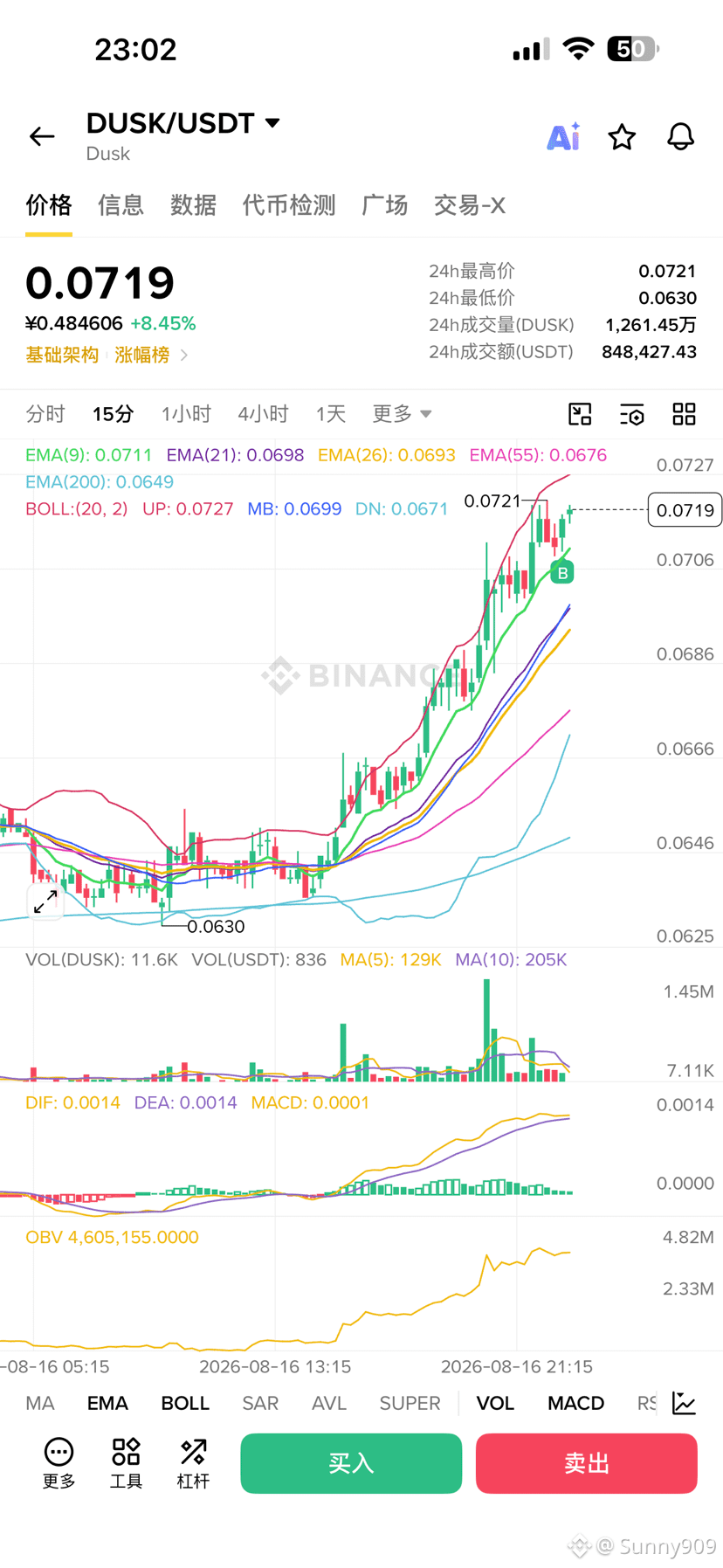
$DUSK Over the past two days, the trend has been really great!
In these two days, I’ve been studying projects in the privacy track. Through various comparisons, I found that Dusk truly has its own unique advantages, and the recent coin price has also been moving beautifully~
One really worth discussing question is: if privacy is better, why does Dusk still keep public trading? At first, I also felt a bit contradictory—since privacy technology is used, wouldn’t it be easier to just hide all information directly?
Later, I realized the financial world isn’t necessarily “better” just because it’s invisible. Some flows of funds need to be publicly verified—for example, exchange deposits, a project treasury, or financial reports. And for some transactions, there’s no need to show both parties’ addresses, amounts, and balances to everyone.
So Dusk designed two transaction modes: Moonlight and Phoenix. Moonlight is like sending a notice in a work group—information is public, making it easy to check. Phoenix is more like private chat: it uses zero-knowledge proofs to complete transfers, so the network can confirm that the transaction is valid, without revealing specific details to onlookers.
What’s interesting about this design isn’t simply striving for “more privacy.” It first asks: who should actually be able to see this transaction? What should be made public should be made public, and what should be protected should be protected—maybe that’s closer to real finance than stuffing all transactions into one uniform mode~
Keep exploring every day with new content~
#Dusk @Dusk $DUSK
In these two days, I’ve been studying projects in the privacy track. Through various comparisons, I found that Dusk truly has its own unique advantages, and the recent coin price has also been moving beautifully~
One really worth discussing question is: if privacy is better, why does Dusk still keep public trading? At first, I also felt a bit contradictory—since privacy technology is used, wouldn’t it be easier to just hide all information directly?
Later, I realized the financial world isn’t necessarily “better” just because it’s invisible. Some flows of funds need to be publicly verified—for example, exchange deposits, a project treasury, or financial reports. And for some transactions, there’s no need to show both parties’ addresses, amounts, and balances to everyone.
So Dusk designed two transaction modes: Moonlight and Phoenix. Moonlight is like sending a notice in a work group—information is public, making it easy to check. Phoenix is more like private chat: it uses zero-knowledge proofs to complete transfers, so the network can confirm that the transaction is valid, without revealing specific details to onlookers.
What’s interesting about this design isn’t simply striving for “more privacy.” It first asks: who should actually be able to see this transaction? What should be made public should be made public, and what should be protected should be protected—maybe that’s closer to real finance than stuffing all transactions into one uniform mode~
Keep exploring every day with new content~
#Dusk @Dusk $DUSK
Which do you prefer more: “full transparency” or “selective disclosure”?
If everyone could watch your bank balance, every transaction record, and even the person you transferred money to, would you still think “full transparency” is a good thing?
This is actually an issue that many public blockchains tend to overlook. On-chain transparency makes verification easy, but in real financial scenarios, too much transparency can become another kind of risk. Individuals may not want to publicly disclose all their assets, and businesses are even less likely to show their holdings, trading volume, and all fund flows to competitors.
Dusk’s approach isn’t to make all information disappear at once, but to separate what “can be verified” from what “must be disclosed.” It uses zero-knowledge proofs and selective disclosure so users can prove they meet specific requirements without having to hand over their entire identity or transaction details.
Here’s a simple example: when entering a regulated investment market, what the platform truly needs to confirm might only be whether you’ve completed the verification and whether you’re eligible to participate. Your specific identity, other assets, and your complete transaction history don’t need to be casually公開 to everyone.
So privacy isn’t necessarily about hiding problems—it may simply be about sharing information with the people who truly have the authority. That’s exactly what Dusk aims to solve: the problem that, after finance goes on-chain, “everyone can verify, but not everyone can watch.”
#Dusk $DUSK @Dusk
If everyone could watch your bank balance, every transaction record, and even the person you transferred money to, would you still think “full transparency” is a good thing?
This is actually an issue that many public blockchains tend to overlook. On-chain transparency makes verification easy, but in real financial scenarios, too much transparency can become another kind of risk. Individuals may not want to publicly disclose all their assets, and businesses are even less likely to show their holdings, trading volume, and all fund flows to competitors.
Dusk’s approach isn’t to make all information disappear at once, but to separate what “can be verified” from what “must be disclosed.” It uses zero-knowledge proofs and selective disclosure so users can prove they meet specific requirements without having to hand over their entire identity or transaction details.
Here’s a simple example: when entering a regulated investment market, what the platform truly needs to confirm might only be whether you’ve completed the verification and whether you’re eligible to participate. Your specific identity, other assets, and your complete transaction history don’t need to be casually公開 to everyone.
So privacy isn’t necessarily about hiding problems—it may simply be about sharing information with the people who truly have the authority. That’s exactly what Dusk aims to solve: the problem that, after finance goes on-chain, “everyone can verify, but not everyone can watch.”
#Dusk $DUSK @Dusk

The other day I was chatting with a friend about BTCFi. He suddenly asked me a question: “BTC doesn’t pay dividends like stocks, and it doesn’t have company profits. So when so many projects say BTC can generate yield, who actually provides that yield?”
This question is actually pretty interesting, because when many people see BTC Staking, their first reaction is to focus on the yield rate—but few ever think about the logic behind the yield. In traditional finance, asset returns usually correspond to real economic activity: lending returns come from the demand for capital, stock returns come from company growth, and bond returns come from interest paid by the issuer. So once BTC enters a staking system, where does its yield come from?
After learning about Babylon, I found that it’s trying to offer a different answer: Bitcoin’s value isn’t only something you hold as an asset—it can also become a form of security resource. In simple terms, a PoS network or application that needs security can pay costs to obtain the security capabilities provided by Bitcoin, while BTC holders earn rewards by contributing that security value.
This is not really the same as what many people understand as “staking BTC to earn yield.” If yield is sustained only through subsidies, there will inevitably be pressure over the long term. But if, in the future, more and more networks and applications are willing to pay for Bitcoin’s security capabilities, then BTC’s role could gradually shift from a simple store of value to a foundational security asset in Web3.
Of course, there’s another question that requires long-term observation: can the market demand for Bitcoin’s security capabilities keep growing? After all, whether a model can truly work isn’t determined by how big the story sounds, but by whether there’s real demand.
So I think when looking at Babylon, we shouldn’t just focus on “whether BTC can generate yield.” We should focus more on whether, in the future, more and more of the ecosystem will be willing to back Bitcoin’s security. If that holds true, BTCFi may only then truly enter the next stage.
$BABY #baby @BabylonLabs_io
This question is actually pretty interesting, because when many people see BTC Staking, their first reaction is to focus on the yield rate—but few ever think about the logic behind the yield. In traditional finance, asset returns usually correspond to real economic activity: lending returns come from the demand for capital, stock returns come from company growth, and bond returns come from interest paid by the issuer. So once BTC enters a staking system, where does its yield come from?
After learning about Babylon, I found that it’s trying to offer a different answer: Bitcoin’s value isn’t only something you hold as an asset—it can also become a form of security resource. In simple terms, a PoS network or application that needs security can pay costs to obtain the security capabilities provided by Bitcoin, while BTC holders earn rewards by contributing that security value.
This is not really the same as what many people understand as “staking BTC to earn yield.” If yield is sustained only through subsidies, there will inevitably be pressure over the long term. But if, in the future, more and more networks and applications are willing to pay for Bitcoin’s security capabilities, then BTC’s role could gradually shift from a simple store of value to a foundational security asset in Web3.
Of course, there’s another question that requires long-term observation: can the market demand for Bitcoin’s security capabilities keep growing? After all, whether a model can truly work isn’t determined by how big the story sounds, but by whether there’s real demand.
So I think when looking at Babylon, we shouldn’t just focus on “whether BTC can generate yield.” We should focus more on whether, in the future, more and more of the ecosystem will be willing to back Bitcoin’s security. If that holds true, BTCFi may only then truly enter the next stage.
$BABY #baby @BabylonLabs_io
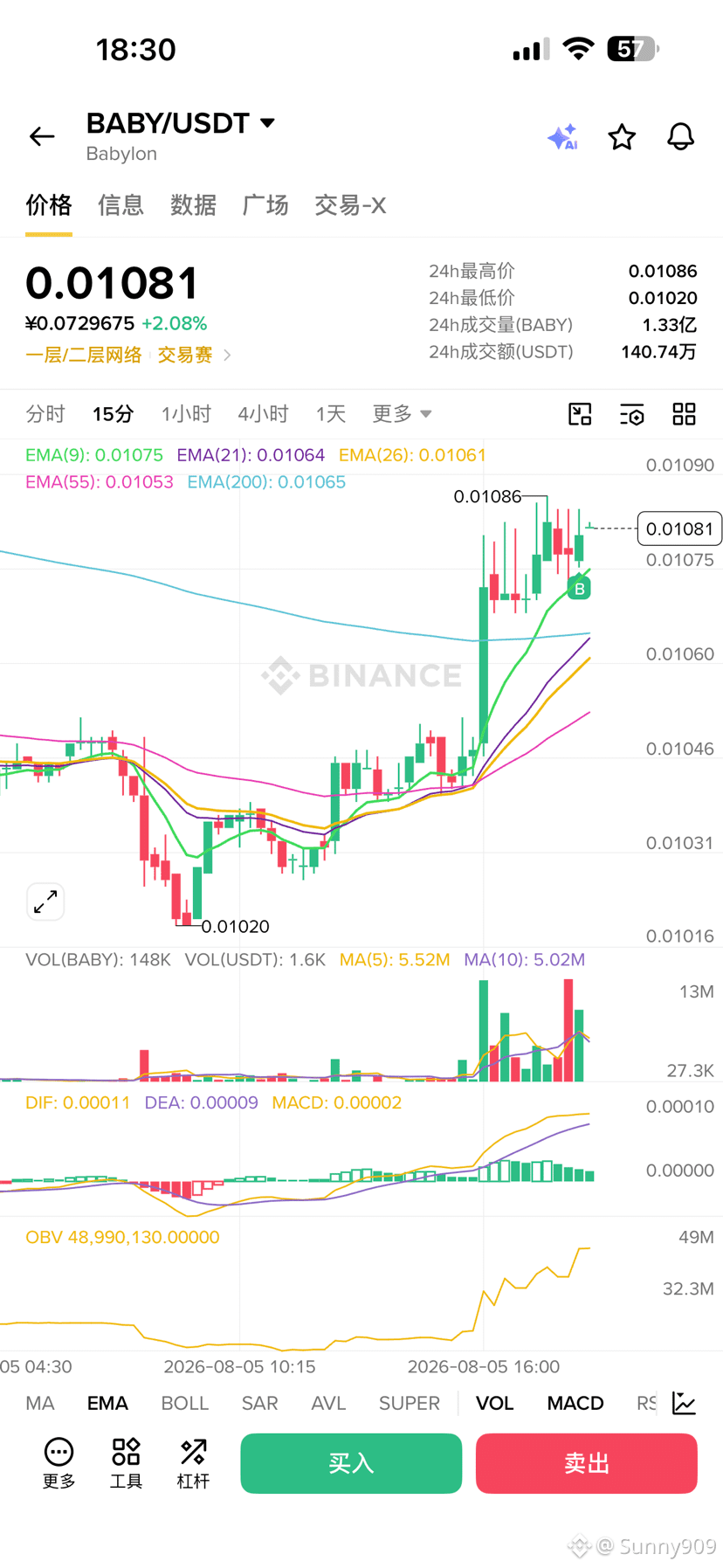
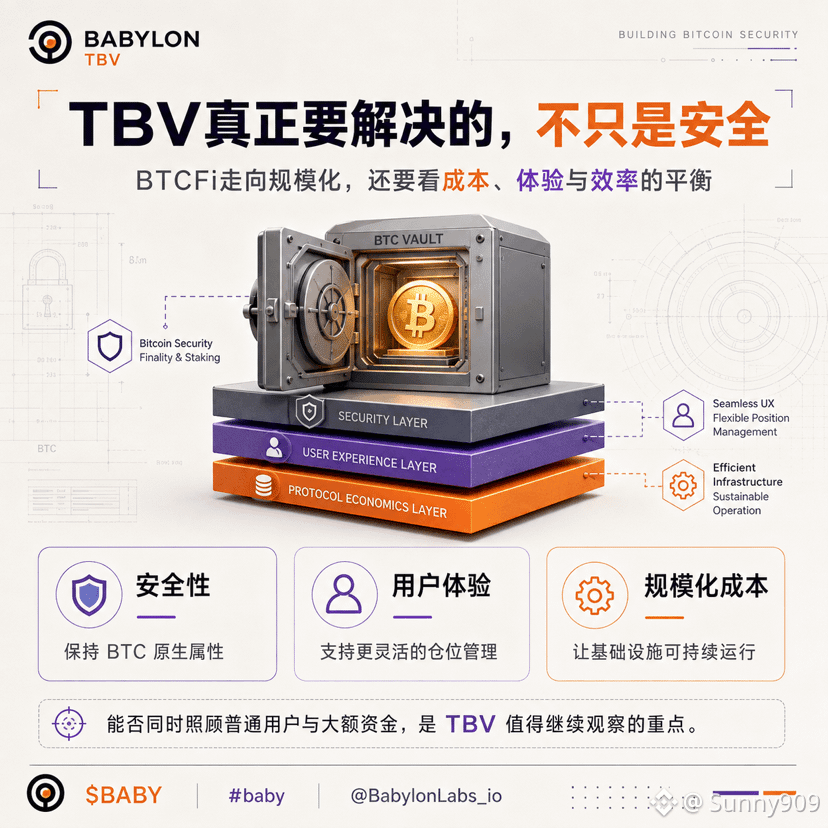
When many people关注 BTCFi, they discuss security, returns, and use cases—but there’s another issue that’s often overlooked: scaling costs.
One design worth paying attention to is Babylon TBV. It aims to keep BTC’s native security while enabling BTC to enter more financial scenarios.
But every innovative solution has trade-offs.
In TBV, each Vault requires its own independent verification and proof process.
This creates an interesting contradiction:
The more granular the Vaults are, the more flexible the user asset management becomes;
but as the number of Vaults increases, the protocol also has to handle more infrastructure costs.
This is similar to traditional finance.
Users want accounts to be more finely controlled and risk isolation to be clearer, but the system behind the scenes must bear more management and maintenance costs.
So for BTCFi to truly move into large-scale adoption, it’s not just about solving “whether BTC can enter DeFi.” It also needs to solve:
How to balance security, user experience, and costs.
If, in the future, BTCFi mainly serves large amounts of capital, then a large-scale Vault setup may be more efficient;
but if the goal is to bring in more ordinary users, small-scale and flexible asset management is equally important.
I think what’s worth watching in Babylon TBV going forward isn’t only technical security, but how it addresses this long-term problem:
How to let users feel confident about splitting risk, while allowing the protocol to run efficiently.
In the end, what determines whether BTCFi becomes mainstream isn’t only the technical ceiling—it’s also whether the infrastructure is suitable enough for real users.
$BABY #baby @BabylonLabs_io
One design worth paying attention to is Babylon TBV. It aims to keep BTC’s native security while enabling BTC to enter more financial scenarios.
But every innovative solution has trade-offs.
In TBV, each Vault requires its own independent verification and proof process.
This creates an interesting contradiction:
The more granular the Vaults are, the more flexible the user asset management becomes;
but as the number of Vaults increases, the protocol also has to handle more infrastructure costs.
This is similar to traditional finance.
Users want accounts to be more finely controlled and risk isolation to be clearer, but the system behind the scenes must bear more management and maintenance costs.
So for BTCFi to truly move into large-scale adoption, it’s not just about solving “whether BTC can enter DeFi.” It also needs to solve:
How to balance security, user experience, and costs.
If, in the future, BTCFi mainly serves large amounts of capital, then a large-scale Vault setup may be more efficient;
but if the goal is to bring in more ordinary users, small-scale and flexible asset management is equally important.
I think what’s worth watching in Babylon TBV going forward isn’t only technical security, but how it addresses this long-term problem:
How to let users feel confident about splitting risk, while allowing the protocol to run efficiently.
In the end, what determines whether BTCFi becomes mainstream isn’t only the technical ceiling—it’s also whether the infrastructure is suitable enough for real users.
$BABY #baby @BabylonLabs_io
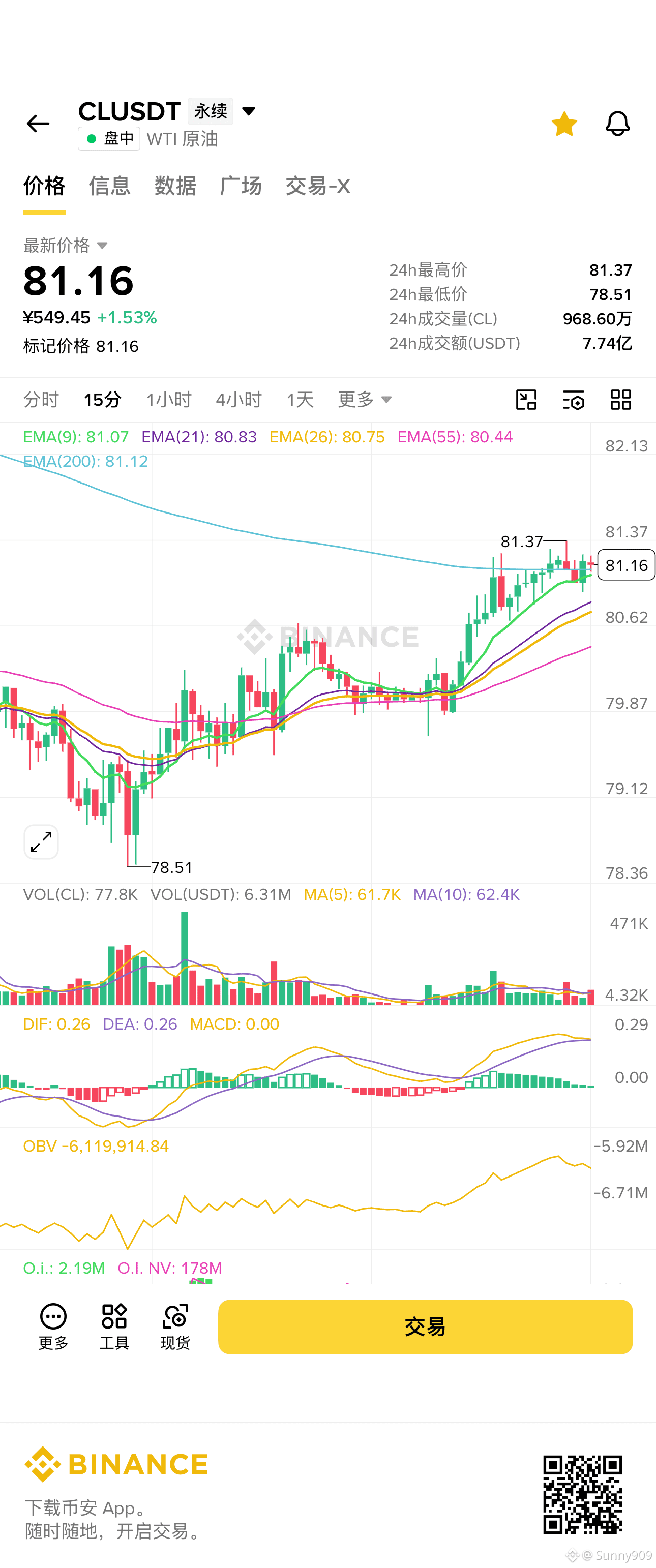
Crude oil short-term volatility is intensifying—what is the market actually trading?🛢️
In recent $CL ’s price action, the key isn’t only changes in supply and demand, but the fact that the market is pricing in several important factors:
First is the risk premium brought by the situation in the Middle East.
The crude oil market has long been highly sensitive to geopolitical conflicts, especially news involving major shipping routes. Once the market worries that supply could be disrupted, capital quickly re-prices, and oil prices often see sharp short-term rallies.
On the other hand, any news about easing tensions or progress in negotiations may also cause the previously accumulated risk premium to unwind rapidly.
So the recent characteristics of crude oil are very clear:
Rallies may come from “risk expectations,” while declines may come from “sentiment correction.”
Besides geopolitical factors, the supply side is also a major focus for the market.
OPEC+ production policy, changes in U.S. crude oil inventories, and global demand expectations will all influence the oil price’s medium- to long-term direction. If supply pressure increases but demand does not show clear improvement, upside room may be limited.
From a trading perspective, crude oil right now behaves more like a news-driven market:
📈 Bullish factors:
* Geopolitical conflict escalates
* Supply and transportation risks increase
* Inventories decline
📉 Bearish factors:
* Tensions ease
* Supply recovers
* Demand weakens
For short-term traders, rather than guessing the direction of news, what matters more is waiting for market confirmation.
The first wave of volatility caused by news is often driven by emotion, while a truly stable trend usually requires price structure and trading volume to align.
There are many opportunities in the crude oil market, but the risks are also very big $CL
DYOR, manage position size, and wait for your own trading opportunity
In recent $CL ’s price action, the key isn’t only changes in supply and demand, but the fact that the market is pricing in several important factors:
First is the risk premium brought by the situation in the Middle East.
The crude oil market has long been highly sensitive to geopolitical conflicts, especially news involving major shipping routes. Once the market worries that supply could be disrupted, capital quickly re-prices, and oil prices often see sharp short-term rallies.
On the other hand, any news about easing tensions or progress in negotiations may also cause the previously accumulated risk premium to unwind rapidly.
So the recent characteristics of crude oil are very clear:
Rallies may come from “risk expectations,” while declines may come from “sentiment correction.”
Besides geopolitical factors, the supply side is also a major focus for the market.
OPEC+ production policy, changes in U.S. crude oil inventories, and global demand expectations will all influence the oil price’s medium- to long-term direction. If supply pressure increases but demand does not show clear improvement, upside room may be limited.
From a trading perspective, crude oil right now behaves more like a news-driven market:
📈 Bullish factors:
* Geopolitical conflict escalates
* Supply and transportation risks increase
* Inventories decline
📉 Bearish factors:
* Tensions ease
* Supply recovers
* Demand weakens
For short-term traders, rather than guessing the direction of news, what matters more is waiting for market confirmation.
The first wave of volatility caused by news is often driven by emotion, while a truly stable trend usually requires price structure and trading volume to align.
There are many opportunities in the crude oil market, but the risks are also very big $CL
DYOR, manage position size, and wait for your own trading opportunity
Sourced by user sharing on Binance
A fairly clear change in this market cycle is that:
People’s discussion about BTC is gradually shifting from “how much more the price can rise” to “what new value BTC can still create.”
After all, it’s the asset with the highest consensus and liquidity. If it’s only passively held, that’s honestly a bit of a waste.
So the BTCFi track has recently come back into many people’s focus as well, and Babylon’s TBV (Trustless Bitcoin Vaults) helped me understand a different BTCFi approach.
Many projects aim to make it easier for BTC to enter various on-chain ecosystems, while Babylon is more focused on:
letting BTC participate in more financial scenarios while preserving BTC’s native security as much as possible.
For example, lending, collateral, and so on.
In simple terms, it’s not about creating a new BTC asset. Instead, it wants BTC to keep its original security properties while gaining more use cases.
Of course, this approach also has its own limitations:
It won’t pursue the maximum liquidity like wrapped BTC does, but what you get in return is less reliance on additional trust.
So I think BTCFi in the future probably won’t have just one way to play.
Some solutions focus on improving BTC’s liquidity efficiency, making it easier to use;
Others focus on exploring the release of BTC’s native value, enabling BTC to enter more financial scenarios without changing its core attributes.
And Babylon TBV represents the latter.
This is also an important question in BTCFi’s development process:
Are we trying to turn BTC into an asset on another chain, or are we trying to make BTC itself a stronger financial infrastructure?
There’s no standard answer yet, but explorations in different directions are all pushing the BTC ecosystem forward.
A bear market is actually a good time to observe infrastructure building.
When the market is hot, everyone focuses on price. But what truly determines the future is still who can find real demand and bring BTC’s value into genuinely new application scenarios.
$BABY #baby @BabylonLabs_io
People’s discussion about BTC is gradually shifting from “how much more the price can rise” to “what new value BTC can still create.”
After all, it’s the asset with the highest consensus and liquidity. If it’s only passively held, that’s honestly a bit of a waste.
So the BTCFi track has recently come back into many people’s focus as well, and Babylon’s TBV (Trustless Bitcoin Vaults) helped me understand a different BTCFi approach.
Many projects aim to make it easier for BTC to enter various on-chain ecosystems, while Babylon is more focused on:
letting BTC participate in more financial scenarios while preserving BTC’s native security as much as possible.
For example, lending, collateral, and so on.
In simple terms, it’s not about creating a new BTC asset. Instead, it wants BTC to keep its original security properties while gaining more use cases.
Of course, this approach also has its own limitations:
It won’t pursue the maximum liquidity like wrapped BTC does, but what you get in return is less reliance on additional trust.
So I think BTCFi in the future probably won’t have just one way to play.
Some solutions focus on improving BTC’s liquidity efficiency, making it easier to use;
Others focus on exploring the release of BTC’s native value, enabling BTC to enter more financial scenarios without changing its core attributes.
And Babylon TBV represents the latter.
This is also an important question in BTCFi’s development process:
Are we trying to turn BTC into an asset on another chain, or are we trying to make BTC itself a stronger financial infrastructure?
There’s no standard answer yet, but explorations in different directions are all pushing the BTC ecosystem forward.
A bear market is actually a good time to observe infrastructure building.
When the market is hot, everyone focuses on price. But what truly determines the future is still who can find real demand and bring BTC’s value into genuinely new application scenarios.
$BABY #baby @BabylonLabs_io
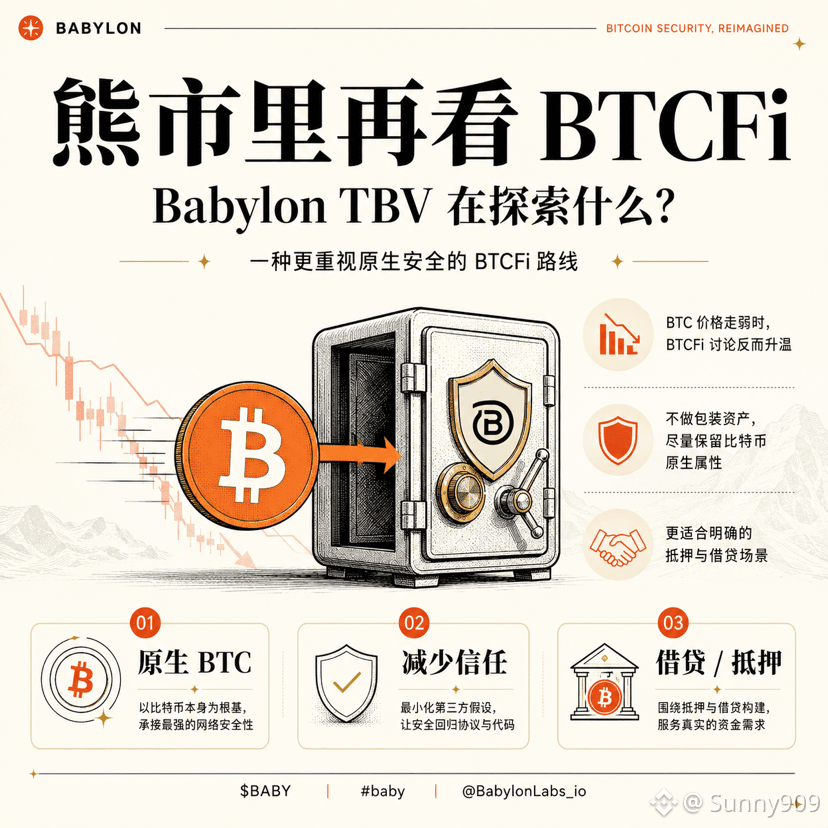
$Babylon TBV: Another Perspective in BTCFi
After many people learn about Babylon Trustless Bitcoin Vaults (TBV), the first question might be: with so many BTC cross-chain and wrapped solutions already in the market, why do we still need TBV?
I think the key isn’t which one has stronger liquidity, but that they solve different problems.
Traditional BTC wrapping solutions focus more on making BTC easier to enter on-chain ecosystems. Assets can move freely, and users can participate in more DeFi scenarios—but at the same time, they also need to assume additional trust assumptions, such as custody, bridge mechanisms, and verification systems.
TBV, however, explores a different path: it doesn’t create a new mapped BTC asset; instead, it enables BTC to be used in clearly defined financial scenarios.
In simple terms, TBV is more like a BTC financial instrument designed for a specific relationship—such as a loan or a collateral agreement. The parties and rules are determined in advance. While it reduces reliance on third parties, it also sacrifices some degree of open liquidity.
So I believe the value of TBV isn’t simply to prove that it’s “safer than bridges,” but to provide a different direction for BTCFi.
Wrapped assets pursue “making BTC flow more freely,” whereas TBV focuses on “using BTC more credibly in specific scenarios.”
In the future, BTCFi likely won’t rely on only one model. Some scenarios need high liquidity, while others require more certainty and clear safety boundaries.
And what Babylon TBV is exploring is how to bring BTC into more trustworthy financial application scenarios while preserving its native properties.
$BABY #baby @BabylonLabs_io
After many people learn about Babylon Trustless Bitcoin Vaults (TBV), the first question might be: with so many BTC cross-chain and wrapped solutions already in the market, why do we still need TBV?
I think the key isn’t which one has stronger liquidity, but that they solve different problems.
Traditional BTC wrapping solutions focus more on making BTC easier to enter on-chain ecosystems. Assets can move freely, and users can participate in more DeFi scenarios—but at the same time, they also need to assume additional trust assumptions, such as custody, bridge mechanisms, and verification systems.
TBV, however, explores a different path: it doesn’t create a new mapped BTC asset; instead, it enables BTC to be used in clearly defined financial scenarios.
In simple terms, TBV is more like a BTC financial instrument designed for a specific relationship—such as a loan or a collateral agreement. The parties and rules are determined in advance. While it reduces reliance on third parties, it also sacrifices some degree of open liquidity.
So I believe the value of TBV isn’t simply to prove that it’s “safer than bridges,” but to provide a different direction for BTCFi.
Wrapped assets pursue “making BTC flow more freely,” whereas TBV focuses on “using BTC more credibly in specific scenarios.”
In the future, BTCFi likely won’t rely on only one model. Some scenarios need high liquidity, while others require more certainty and clear safety boundaries.
And what Babylon TBV is exploring is how to bring BTC into more trustworthy financial application scenarios while preserving its native properties.
$BABY #baby @BabylonLabs_io
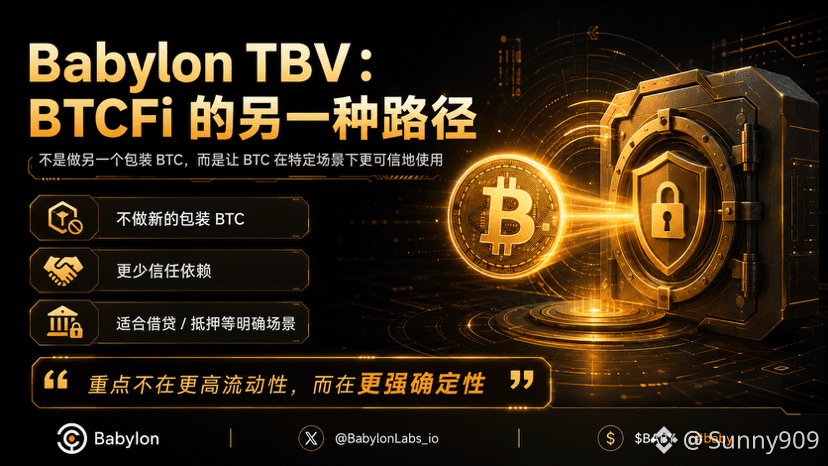
#baby $BABY Why is Babylon consistently regarded as an important foundational infrastructure in the BTCFi sector?
Recently, I’ve seen a lot of discussions about @BabylonLabs_io on Binance Square. Many people are paying attention to it—not just because of $BABY or the buzz around related events, but more importantly because it’s trying to solve a long-standing issue in the Bitcoin ecosystem:
With Bitcoin, which has massive consensus and liquidity, besides simply holding and waiting for price appreciation, can it create more value?
For a long time, BTC has mostly played the role of “digital gold”—secure and decentralized, but with relatively limited on-chain application scenarios. What Babylon wants to do is to let native BTC participate further in Web3’s security and financial systems without changing its core attributes.
In simple terms, Babylon is building Bitcoin Staking infrastructure—using BTC as a security asset to provide security support for other PoS chains and applications.
The most compelling point drawing market attention is that it emphasizes native BTC, non-custodial (non-custodial), and no wrapped assets.
Compared with some solutions that require cross-chain transfers and wrapping BTC, Babylon aims to preserve BTC’s own security model as much as possible. That way, users don’t need to move their BTC into other environments to participate in more on-chain scenarios.
This is also why many people liken Babylon to a “shared security layer” for the BTC ecosystem.
Of course, Babylon’s story doesn’t stop at staking.
As the ecosystem develops, market focus is shifting from “Can BTC be staked?” to a broader question:
Can BTC become a core collateral asset in on-chain finance? Can it enter lending, credit markets, and more DeFi use cases?
If these directions gradually come to fruition, BTC’s role could evolve from a mere store of value into more efficient financial infrastructure.
For Babylon, whether ecosystem applications continue to grow, whether real user demand emerges, and whether protocol value can truly flow into the broader ecosystem.
After all, a good story is just the beginning—the final test is still whether the product and the market can validate it. Babylon has seized a very important direction:
How to unlock the tremendous asset value of Bitcoin, gradually turning BTC from a “dormant asset” into Web3’s deeper, underlying security and financial infrastructure
Recently, I’ve seen a lot of discussions about @BabylonLabs_io on Binance Square. Many people are paying attention to it—not just because of $BABY or the buzz around related events, but more importantly because it’s trying to solve a long-standing issue in the Bitcoin ecosystem:
With Bitcoin, which has massive consensus and liquidity, besides simply holding and waiting for price appreciation, can it create more value?
For a long time, BTC has mostly played the role of “digital gold”—secure and decentralized, but with relatively limited on-chain application scenarios. What Babylon wants to do is to let native BTC participate further in Web3’s security and financial systems without changing its core attributes.
In simple terms, Babylon is building Bitcoin Staking infrastructure—using BTC as a security asset to provide security support for other PoS chains and applications.
The most compelling point drawing market attention is that it emphasizes native BTC, non-custodial (non-custodial), and no wrapped assets.
Compared with some solutions that require cross-chain transfers and wrapping BTC, Babylon aims to preserve BTC’s own security model as much as possible. That way, users don’t need to move their BTC into other environments to participate in more on-chain scenarios.
This is also why many people liken Babylon to a “shared security layer” for the BTC ecosystem.
Of course, Babylon’s story doesn’t stop at staking.
As the ecosystem develops, market focus is shifting from “Can BTC be staked?” to a broader question:
Can BTC become a core collateral asset in on-chain finance? Can it enter lending, credit markets, and more DeFi use cases?
If these directions gradually come to fruition, BTC’s role could evolve from a mere store of value into more efficient financial infrastructure.
For Babylon, whether ecosystem applications continue to grow, whether real user demand emerges, and whether protocol value can truly flow into the broader ecosystem.
After all, a good story is just the beginning—the final test is still whether the product and the market can validate it. Babylon has seized a very important direction:
How to unlock the tremendous asset value of Bitcoin, gradually turning BTC from a “dormant asset” into Web3’s deeper, underlying security and financial infrastructure
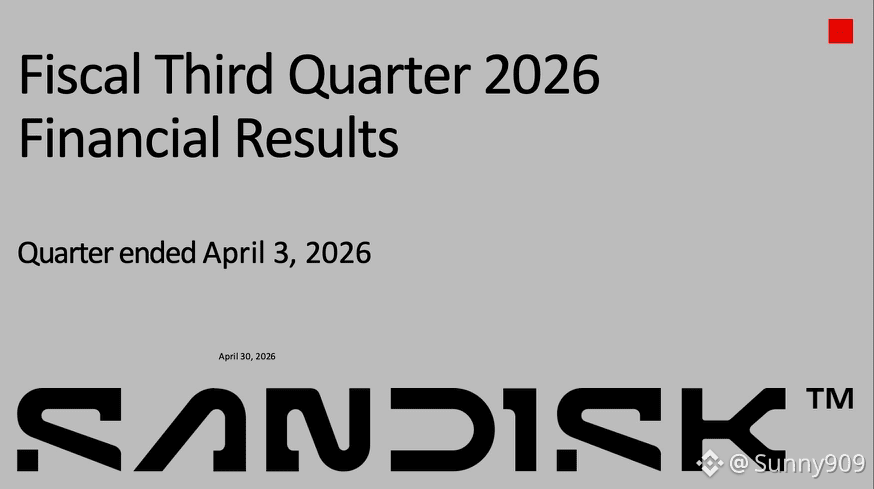
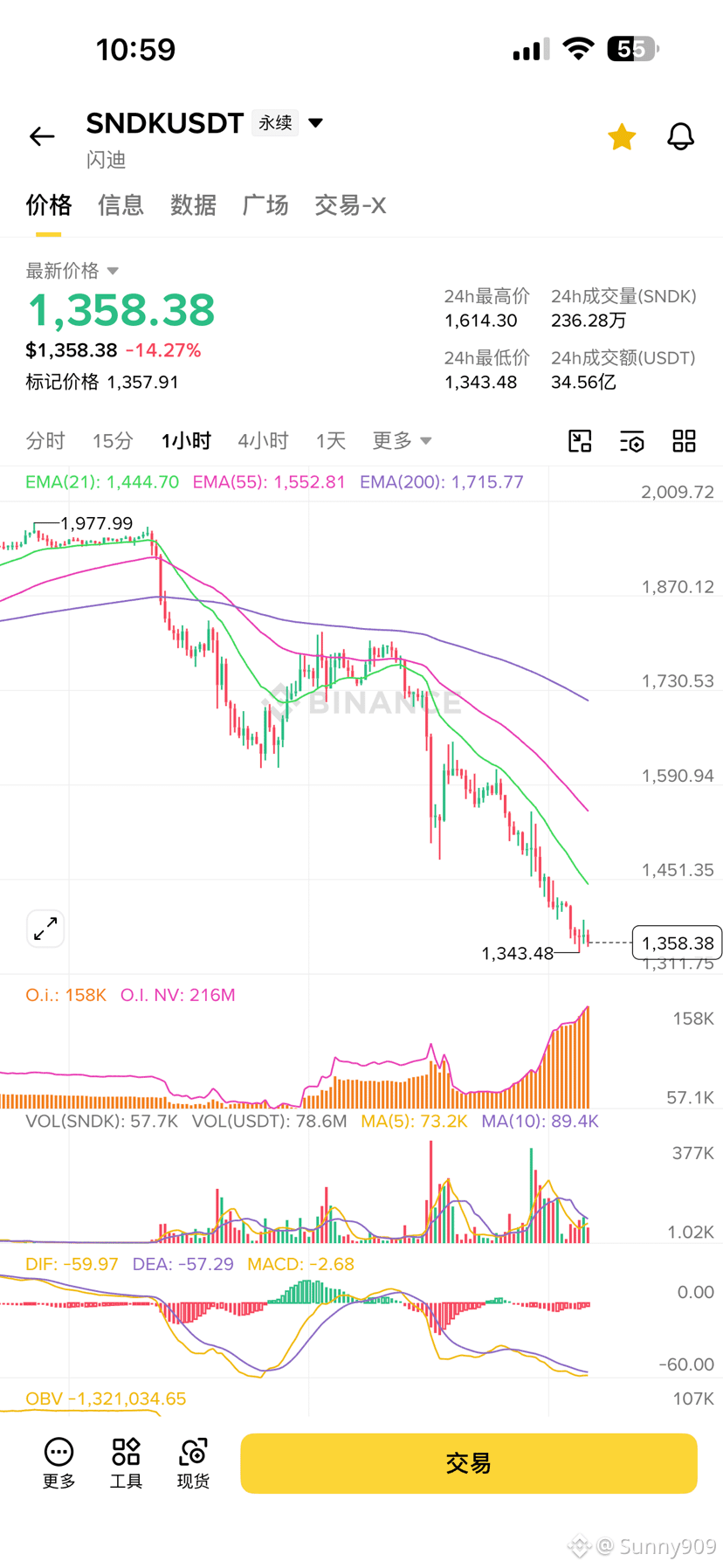
$SNDKB The fundamentals of the company are actually very strong: last quarter revenue was $5.95 billion, non-GAAP earnings per share were $23.41, and gross margin was 78.4%. The guidance for the next quarter also looks very promising; however, it’s a typical high-volatility, strong-cyclical storage stock. After the initial run-up is too large, valuation and sentiment both need to digest.
https://investor.sandisk.com/static-files/8ea78860-f8e5-4f1c-ada3-c554437d6281
https://investor.sandisk.com/static-files/8ea78860-f8e5-4f1c-ada3-c554437d6281
$SNDK really is going downhill all the way; seeing so many people already making money from it, can it still keep dropping, teachers? 🥹

Log in to explore more content