Binance Square
Haotian
203 Posts

Haotian

Square Verified
趋势研究员| Advisor AmberGroup|产业洞察 | Crypto・AI・具身智能・美股代币化・预测市场等|Previously:PeckShield | DMs for Collab
Excellence Award (OnChain)
原创之星
原创之星
30 Following
54.6K+ Followers
2.1K+ Liked
3 Badges
Posts
·
--
I read through Lao Bai’s interview carefully, and the information density and knowledge capacity were severely overloaded. My head was buzzing after I finished. I’ll extract a few viewpoints that resonate with the same frequency and share them: 1)Don’t deny this industry because so many projects have died in the Crypto space. DeFi, GameFi, NFTs, prediction markets, and so on—some projects will die, but there will always be projects that ultimately survive, and it will keep getting better. At its core, the programmable financial kernel behind traits like blockchain decentralization, permissionless access, and censorship resistance has real peer-to-peer value transfer utility that matters, even if not many people pay attention. 2)The failure of tokenomics models has had a bigger impact on the Crypto industry than people imagined. At least in most people’s impression, the coin-world has largely been driven by wealth-building effects supported by continuous “new token issuance” expectations. Without newly issued native assets, relying only on TradFi’s existing assets, the industry will lose its appeal to the Build side—VCs, developers, project teams, and others. Consumer-side retail investors alone can’t sustain it. 3)Crypto has brought stablecoins and perpetual contracts into the traditional finance world, and it has already proven its industry value. Whether it’s the political urgency of dollar-denominated debt or the high efficiency of innovative financial instruments like Perps, these benefits come from Crypto. But before the stablecoin market reaches the scale of trillions and before US stock institutions truly price Perps on-platform, everything is still too early. $HYPE ; 4)The Agentic Economy is definitely going to happen—and it will be the final form presented by the AI + Crypto narrative. But the process of building infra like agent wallets, agent trading, x402, Agent Chain, and the like will be painful. Crypto can only find edge-case differentiated opportunities under the dominant guidance of web2’s traditional institutions—but honestly, that may be enough.
I read through Lao Bai’s interview carefully, and the information density and knowledge capacity were severely overloaded. My head was buzzing after I finished. I’ll extract a few viewpoints that resonate with the same frequency and share them:

1)Don’t deny this industry because so many projects have died in the Crypto space. DeFi, GameFi, NFTs, prediction markets, and so on—some projects will die, but there will always be projects that ultimately survive, and it will keep getting better. At its core, the programmable financial kernel behind traits like blockchain decentralization, permissionless access, and censorship resistance has real peer-to-peer value transfer utility that matters, even if not many people pay attention.

2)The failure of tokenomics models has had a bigger impact on the Crypto industry than people imagined. At least in most people’s impression, the coin-world has largely been driven by wealth-building effects supported by continuous “new token issuance” expectations. Without newly issued native assets, relying only on TradFi’s existing assets, the industry will lose its appeal to the Build side—VCs, developers, project teams, and others. Consumer-side retail investors alone can’t sustain it.

3)Crypto has brought stablecoins and perpetual contracts into the traditional finance world, and it has already proven its industry value. Whether it’s the political urgency of dollar-denominated debt or the high efficiency of innovative financial instruments like Perps, these benefits come from Crypto. But before the stablecoin market reaches the scale of trillions and before US stock institutions truly price Perps on-platform, everything is still too early.
$HYPE
;
4)The Agentic Economy is definitely going to happen—and it will be the final form presented by the AI + Crypto narrative. But the process of building infra like agent wallets, agent trading, x402, Agent Chain, and the like will be painful. Crypto can only find edge-case differentiated opportunities under the dominant guidance of web2’s traditional institutions—but honestly, that may be enough.
2026 Crypto Survival Rules: Value Capture, PMF, and Real ConsensusAfter recent in-depth exchanges with a few long-time on-chain veterans, we reached a high level of consensus on the survival rules of the current cycle. The market has completely shifted from “listening to stories and trading expectations” to “watching cash flow and validating execution.” The following are several trading tips (for reference only): 1)First, prioritize underlying assets with genuine value-capture capability. In a bull market, the market is willing to pay for stories and expectations; in a bear market, it only recognizes real cash flow and buyback-and-burn records. The real “get-out-of-death-card” in this cycle is one where the protocol can continuously generate fees and directly feeds those fees back to token holders through mechanisms such as buybacks, burns, or dividends. For example, the recent rally in launchpad-themed tokens like UNI, PUMP, PONS, etc., as well as HYPE, the buyback king of this cycle;

2026 Crypto Survival Rules: Value Capture, PMF, and Real Consensus

After recent in-depth exchanges with a few long-time on-chain veterans, we reached a high level of consensus on the survival rules of the current cycle. The market has completely shifted from “listening to stories and trading expectations” to “watching cash flow and validating execution.” The following are several trading tips (for reference only):
1)First, prioritize underlying assets with genuine value-capture capability. In a bull market, the market is willing to pay for stories and expectations; in a bear market, it only recognizes real cash flow and buyback-and-burn records. The real “get-out-of-death-card” in this cycle is one where the protocol can continuously generate fees and directly feeds those fees back to token holders through mechanisms such as buybacks, burns, or dividends. For example, the recent rally in launchpad-themed tokens like UNI, PUMP, PONS, etc., as well as HYPE, the buyback king of this cycle;
ai16z is finally dead. With a stack of legal troubles, with many technical goals that were never realized, of course—and with the heartfelt expectations of tens of millions of retail investors. @shawmakesmagic actually claimed that a token was not sold. And because it couldn’t win the case, it ended up handing over all the remaining Treasury funds in a settlement. It’s absurd. If it’s going to die, then let it die—but without even the last shred of dignity. As one of the witnesses, I experienced ai16z’s glory, and watched it decline little by little through repeated struggles and flailing. At this moment, my heart is filled with mixed feelings. One sentence keeps circling in my mind: ai16z may die, but that era of “on-chain innovation” fanaticism—please stop. Come, let’s pull the timeline back to the end of 2024 for a moment and remember: 1) Back then, AI MEMEs like Goat, act, ai16z, Fartcoin—just about any of them—could easily surge to a market cap height of 1B+. So many MEMEs rode the winds of momentum. Every day on-chain brought new opportunities, new wealth passwords, and retail investors partied along with it. 2) Back then, the Eliza framework was open-sourced. A large number of plugins flooded in crazily. Hundreds or even thousands of people chased the GitHub to contribute—endless forks, PRs, and all kinds of innovation experiments. Don’t think it was only gamblers watching candlesticks to make money. Truly, there were developers burning the midnight oil writing code, doing interesting innovation experiments, rushing in to do something for this brand-new narrative at the frontier of AI agents. 3) Back then, web2AI was still in the model performance arms race. GPT-4o and Sonnet 3.5 were still mainstream. There was no MCP, no x402, no A2A, not even OpenClaw or Moltbook. There was also no concept of agent applications—but in the Crypto space, a wave of AI full-stack innovation had already been launched with forward-looking ambition. Experiments one after another: agents building wallets for themselves, agents doing Trading, agents adapting to chains, and even agents constructing social networks. That was truly an on-chain innovation era where if you had a dream, you dared to make it real. ...Enough reminiscing. The more I say, the more it brings tears. Finally, one last emphasis: this is not only a little piece of mourning for ai16z, but I also hope it can rekindle a brand-new spark for those old dreams of on-chain innovation in Crypto. 🔥
ai16z is finally dead.

With a stack of legal troubles, with many technical goals that were never realized, of course—and with the heartfelt expectations of tens of millions of retail investors. @shawmakesmagic actually claimed that a token was not sold. And because it couldn’t win the case, it ended up handing over all the remaining Treasury funds in a settlement. It’s absurd. If it’s going to die, then let it die—but without even the last shred of dignity.

As one of the witnesses, I experienced ai16z’s glory, and watched it decline little by little through repeated struggles and flailing. At this moment, my heart is filled with mixed feelings. One sentence keeps circling in my mind:

ai16z may die, but that era of “on-chain innovation” fanaticism—please stop.

Come, let’s pull the timeline back to the end of 2024 for a moment and remember:

1) Back then, AI MEMEs like Goat, act, ai16z, Fartcoin—just about any of them—could easily surge to a market cap height of 1B+. So many MEMEs rode the winds of momentum. Every day on-chain brought new opportunities, new wealth passwords, and retail investors partied along with it.

2) Back then, the Eliza framework was open-sourced. A large number of plugins flooded in crazily. Hundreds or even thousands of people chased the GitHub to contribute—endless forks, PRs, and all kinds of innovation experiments. Don’t think it was only gamblers watching candlesticks to make money. Truly, there were developers burning the midnight oil writing code, doing interesting innovation experiments, rushing in to do something for this brand-new narrative at the frontier of AI agents.

3) Back then, web2AI was still in the model performance arms race. GPT-4o and Sonnet 3.5 were still mainstream. There was no MCP, no x402, no A2A, not even OpenClaw or Moltbook. There was also no concept of agent applications—but in the Crypto space, a wave of AI full-stack innovation had already been launched with forward-looking ambition. Experiments one after another: agents building wallets for themselves, agents doing Trading, agents adapting to chains, and even agents constructing social networks. That was truly an on-chain innovation era where if you had a dream, you dared to make it real.

...Enough reminiscing. The more I say, the more it brings tears.

Finally, one last emphasis: this is not only a little piece of mourning for ai16z, but I also hope it can rekindle a brand-new spark for those old dreams of on-chain innovation in Crypto.
🔥
Verified
Don’t just stare at the $3.3 trillion myth: three layers of logic that are truly being priced for Changxin TechnologyEveryone is fixated on the myth of Changxin Technology creating a market cap of 3.3 trillion yuan on its first day of listing, but if we dig deeper, the multiple layers of logic behind the frenzy of capital are worth discussing more: 1) What the capital market is truly pricing Changxin Technology on is not simply a “domestic substitution” narrative. Fundamentally, it has broken the decades-long, near-monopoly setup held by Samsung, SK hynix, and Micron, forming the fourth pillar in the global DRAM market. Previously, the three giants combined for a long-term market share of over 90%, with pricing power highly concentrated—so the cycle of price rises and falls was driven almost entirely by their production rhythm and inventory strategies. Meanwhile, Changxin Technology has grown from scratch to a global share of about 7.7%–8% by the first quarter of 2026. And after the three giants shifted their most advanced production capacity at scale to high-margin HBM, the supply of general DRAM (for phones, computers, and standard servers) was systematically squeezed. Changxin has happened to fill this structural gap.

Don’t just stare at the $3.3 trillion myth: three layers of logic that are truly being priced for Changxin Technology

Everyone is fixated on the myth of Changxin Technology creating a market cap of 3.3 trillion yuan on its first day of listing, but if we dig deeper, the multiple layers of logic behind the frenzy of capital are worth discussing more:
1) What the capital market is truly pricing Changxin Technology on is not simply a “domestic substitution” narrative. Fundamentally, it has broken the decades-long, near-monopoly setup held by Samsung, SK hynix, and Micron, forming the fourth pillar in the global DRAM market.
Previously, the three giants combined for a long-term market share of over 90%, with pricing power highly concentrated—so the cycle of price rises and falls was driven almost entirely by their production rhythm and inventory strategies. Meanwhile, Changxin Technology has grown from scratch to a global share of about 7.7%–8% by the first quarter of 2026. And after the three giants shifted their most advanced production capacity at scale to high-margin HBM, the supply of general DRAM (for phones, computers, and standard servers) was systematically squeezed. Changxin has happened to fill this structural gap.
🎙️ R25- Axil Prime Vault Q&A
cover
End
01 h 01 m 51 s
646
6
13
In a moment, I’ll chat with everyone here about some information in the RWA industry—please stay tuned.

Axil2026
·
--
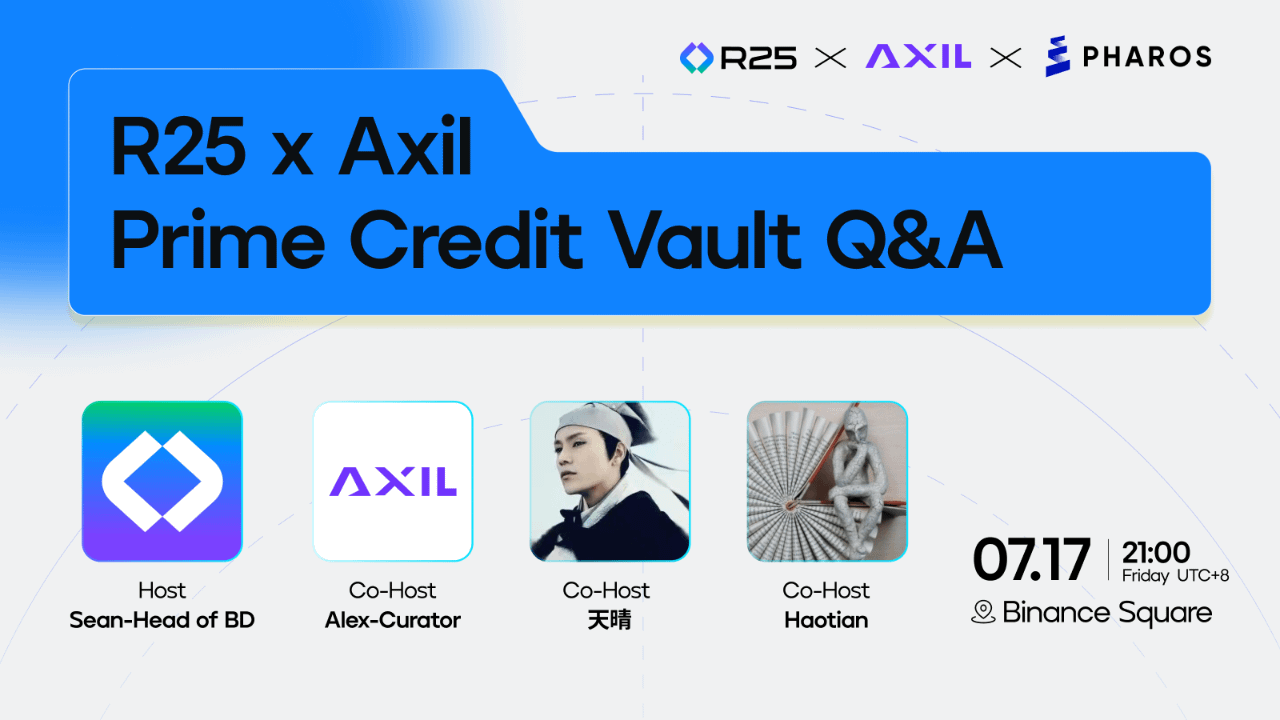
Live Tonight on Binance Square

Join us for the R25- Axil Prime Credit Vault Q&A as we answer the community's most asked questions.

📅9:00 PM (UTC+8) | Friday, July 17
📍 Binance Square

Host
Sean — Head of BD, @@R25Officia l
Co-Hosts
• Alex — Curator, @Official_Axil
• 天晴 — KOL
• Haotian — KOL

Bring your questions and join us live. See you tonight!
If you want to keep eating from the Crypto bowl, you gotta understand these truths: 1) Looking back at past cycles, the crypto industry nearly dies every round before rebirth. It’s normal to see drops of 90%, 80%, or even 70% before a V-shaped recovery takes off. High volatility is definitely part of the game, but don’t forget, the resilience to bounce back is strong; it’s not going anywhere. 2) CEX exchanges have never been the saviors of the crypto space; in some ways, they don’t even belong to the crypto world. The 'fees' taken by trading platforms are eternal, regardless of whether the assets traded are major cryptocurrencies, MEME coins, or even stocks, futures, oil, and precious metals. 3) There are indeed many VC projects in this cycle that seem like 'scams', but ultimately, what will pull the crypto industry out of its slump will be grand narratives. Just like the DeFi boom of 2020, the NFT craze of 2022, the inscriptions of 2023, and the Agents of 2024. The continuity and depth of these narratives determine the strength of the bull market and the difficulty of rebuilding after the bubble bursts. Without 'innovative narratives', the crypto industry simply can't thrive. 4) Twitter CT is overflowing with a lot of FOMO-driven, sharp-tongued, or oppositional voices. This is really just a reflection of the poor secondary market conditions. Just take a look and have a laugh. When the day comes that the crypto industry faces a catastrophic decline, no one will be able to stand alone. As the saying goes, dear 'stock traders', please do respect the road you’ve traveled. 5) Those who have benefited or early OGs, some have retreated into the shadows, others are scheming behind the scenes, while some are still stubbornly preaching the gospel. This isn’t what’s scary; what’s terrifying is that most people choose to remain 'silent'. The cost of silence will inevitably lead to 'bad money driving out good', and the resulting erosion of 'consensus' is what could be most fatal for the industry.
If you want to keep eating from the Crypto bowl, you gotta understand these truths:

1) Looking back at past cycles, the crypto industry nearly dies every round before rebirth. It’s normal to see drops of 90%, 80%, or even 70% before a V-shaped recovery takes off. High volatility is definitely part of the game, but don’t forget, the resilience to bounce back is strong; it’s not going anywhere.

2) CEX exchanges have never been the saviors of the crypto space; in some ways, they don’t even belong to the crypto world. The 'fees' taken by trading platforms are eternal, regardless of whether the assets traded are major cryptocurrencies, MEME coins, or even stocks, futures, oil, and precious metals.

3) There are indeed many VC projects in this cycle that seem like 'scams', but ultimately, what will pull the crypto industry out of its slump will be grand narratives. Just like the DeFi boom of 2020, the NFT craze of 2022, the inscriptions of 2023, and the Agents of 2024. The continuity and depth of these narratives determine the strength of the bull market and the difficulty of rebuilding after the bubble bursts. Without 'innovative narratives', the crypto industry simply can't thrive.

4) Twitter CT is overflowing with a lot of FOMO-driven, sharp-tongued, or oppositional voices. This is really just a reflection of the poor secondary market conditions. Just take a look and have a laugh. When the day comes that the crypto industry faces a catastrophic decline, no one will be able to stand alone. As the saying goes, dear 'stock traders', please do respect the road you’ve traveled.

5) Those who have benefited or early OGs, some have retreated into the shadows, others are scheming behind the scenes, while some are still stubbornly preaching the gospel. This isn’t what’s scary; what’s terrifying is that most people choose to remain 'silent'. The cost of silence will inevitably lead to 'bad money driving out good', and the resulting erosion of 'consensus' is what could be most fatal for the industry.
Verified
$ZEC's current biggest challenge is getting stuck in a 'no clear answer' dilemma: 1) It's unclear whether its Orchard privacy pool has truly suffered a 'hack' over the past four years, and even if it did, there's no proof that this was a meticulously crafted 'infinite mint' backdoor by the team; 2) Assuming it was actually 'attacked', it's unclear how the hacker managed to double-spend ZEC to extract real value from the Orchard pool, because if they could bypass the Turnstile's total supply verification, it means they could only quietly 'consume' a bit at a time, using fake ZEC to slowly purchase real services like merchants, VPNs, gift cards, etc. This kind of hidden damage isn't as obvious as a massive coin theft, but it effectively overdraws the value that all ZEC holders should rightfully enjoy; 3) Even if Shielded Labs is about to roll out a new upgrade that incorporates a new privacy pool and enhanced Turnstile accounting and mathematical proofs, it can only prove that the effective supply of the current Orchard pool is less than the total amount that has entered the pool. It still doesn't clarify whether there will be potential vulnerabilities discovered in the future, because the contradiction between verifiable supply and privacy inherently exists. This will directly erode the trust built over years in the Zcash privacy service market; 'privacy' isn't an issue, but 'verifiable supply' has become ZEC's deadlock.
$ZEC's current biggest challenge is getting stuck in a 'no clear answer' dilemma:

1) It's unclear whether its Orchard privacy pool has truly suffered a 'hack' over the past four years, and even if it did, there's no proof that this was a meticulously crafted 'infinite mint' backdoor by the team;

2) Assuming it was actually 'attacked', it's unclear how the hacker managed to double-spend ZEC to extract real value from the Orchard pool, because if they could bypass the Turnstile's total supply verification, it means they could only quietly 'consume' a bit at a time, using fake ZEC to slowly purchase real services like merchants, VPNs, gift cards, etc. This kind of hidden damage isn't as obvious as a massive coin theft, but it effectively overdraws the value that all ZEC holders should rightfully enjoy;

3) Even if Shielded Labs is about to roll out a new upgrade that incorporates a new privacy pool and enhanced Turnstile accounting and mathematical proofs, it can only prove that the effective supply of the current Orchard pool is less than the total amount that has entered the pool. It still doesn't clarify whether there will be potential vulnerabilities discovered in the future, because the contradiction between verifiable supply and privacy inherently exists. This will directly erode the trust built over years in the Zcash privacy service market; 'privacy' isn't an issue, but 'verifiable supply' has become ZEC's deadlock.
Let's talk about @binance launching tokenized trading for US stocks: 1) Simply defining it as 'daring to be the first in the world' doesn’t really mean much. From Coinbase to Binance, OKX, and a bunch of smaller exchanges, everyone’s got a vision for super financial infrastructure. As investors, diversifying channels is key, and trading stocks, commodities futures, and prediction markets is just a matter of time. So, Binance will have to dive in sooner or later; it’s just a question of how much expectation they can handle. 2) In the short term, anyone with a bit of true crypto spirit isn’t exactly cheering for this, because exchanges bringing in TradFi and other financial assets might seem like it could 'bring in new users'—attracting those who want to trade US stocks but face high barriers. However, it could also drain liquidity from crypto. At least in the current market atmosphere, this is an unavoidable consequence. So, in the short term, the tokenization of US stocks is actually a temporary bearish signal. 3) However, the lack of appeal for native crypto assets and the liquidity drain from US stocks aren't directly related. Exchanges shouldn’t abandon their strategy of building comprehensive trading platforms just to protect on-site liquidity. It’s just that attracting new users and old money could clash with trading models, fee structures, and product experiences, which might not fit well, and importantly, they won’t contribute much to platform revenue. Thus, finding ways to channel new users and funds back into the native crypto industry will likely require a lot of products and innovations, but the overall 'bullish' transmission chain will be pretty long. 4) Even though the transmission chain is long, the upside is that this kind of infrastructure upgrade will stimulate the native crypto ecosystem through TradFi integration. This includes the expansion of stablecoin volumes and the collaborative compatibility with innovative DeFi protocols, especially driving narratives like RWAFi and Agentic Economy. In other words, the fermentation and implementation of pure native crypto narratives won’t be completely disrupted; instead, fresh blood entering the scene will force the breeding of innovation within the ecosystem. After all, exchanges are the most sensitive and proactive when it comes to protecting user loyalty and liquidity lifelines.

Let's talk about @binance launching tokenized trading for US stocks:

1) Simply defining it as 'daring to be the first in the world' doesn’t really mean much. From Coinbase to Binance, OKX, and a bunch of smaller exchanges, everyone’s got a vision for super financial infrastructure. As investors, diversifying channels is key, and trading stocks, commodities futures, and prediction markets is just a matter of time.

So, Binance will have to dive in sooner or later; it’s just a question of how much expectation they can handle.

2) In the short term, anyone with a bit of true crypto spirit isn’t exactly cheering for this, because exchanges bringing in TradFi and other financial assets might seem like it could 'bring in new users'—attracting those who want to trade US stocks but face high barriers. However, it could also drain liquidity from crypto.

At least in the current market atmosphere, this is an unavoidable consequence. So, in the short term, the tokenization of US stocks is actually a temporary bearish signal.

3) However, the lack of appeal for native crypto assets and the liquidity drain from US stocks aren't directly related. Exchanges shouldn’t abandon their strategy of building comprehensive trading platforms just to protect on-site liquidity.

It’s just that attracting new users and old money could clash with trading models, fee structures, and product experiences, which might not fit well, and importantly, they won’t contribute much to platform revenue.

Thus, finding ways to channel new users and funds back into the native crypto industry will likely require a lot of products and innovations, but the overall 'bullish' transmission chain will be pretty long.

4) Even though the transmission chain is long, the upside is that this kind of infrastructure upgrade will stimulate the native crypto ecosystem through TradFi integration. This includes the expansion of stablecoin volumes and the collaborative compatibility with innovative DeFi protocols, especially driving narratives like RWAFi and Agentic Economy.

In other words, the fermentation and implementation of pure native crypto narratives won’t be completely disrupted; instead, fresh blood entering the scene will force the breeding of innovation within the ecosystem. After all, exchanges are the most sensitive and proactive when it comes to protecting user loyalty and liquidity lifelines.
The Narrative Cold War of the Prediction Market: How will Opinion share the pie through 'Expected Assetization' after Polymarket wins Mindshare?Recently, there have been rumors that @Opinion is about to TGE. In fact, everyone knows that before the main narrative of the prediction market, driven by Polymarket, forms a major upward trend, there will definitely be a narrative 'cold war' concerning the prediction market. The key lies in how newcomers will share the pie after Polymarket has pushed Mindshare to its extremes through 'political games.' Today, I want to share a few of my observations regarding @Opinion: 1) Opinion has accumulated enough market volume, not only securing 20 million USD from Hack VC and Jump in Pre-A but also having expectations of becoming the leader in the BSC ecological prediction market, with the potential to achieve over 10 billion USD in trading volume within just 60 days after public testing. The speed of this development actually reflects large funds rallying behind it, indicating market expectations for its early entry into the prediction market.

The Narrative Cold War of the Prediction Market: How will Opinion share the pie through 'Expected Assetization' after Polymarket wins Mindshare?

Recently, there have been rumors that @Opinion is about to TGE. In fact, everyone knows that before the main narrative of the prediction market, driven by Polymarket, forms a major upward trend, there will definitely be a narrative 'cold war' concerning the prediction market.
The key lies in how newcomers will share the pie after Polymarket has pushed Mindshare to its extremes through 'political games.' Today, I want to share a few of my observations regarding @Opinion:
1) Opinion has accumulated enough market volume, not only securing 20 million USD from Hack VC and Jump in Pre-A but also having expectations of becoming the leader in the BSC ecological prediction market, with the potential to achieve over 10 billion USD in trading volume within just 60 days after public testing. The speed of this development actually reflects large funds rallying behind it, indicating market expectations for its early entry into the prediction market.
Verified
Article
If the ZK narrative completely explodes, it will at least ignite three firesIf the ZK narrative completely explodes, it will at least ignite three fires: Privacy → Scaling → General 1) ZK-Privacy, through ZK to achieve transaction anonymity, the core logic is to hide information such as sender, receiver, amount, etc. in transaction details. There is a strong demand in the future for enhanced KYC compliance and protection of AI large model training data. This wave of @Zcash's explosive popularity is due to the interest of institutions like @Grayscale's private placements and the endorsement by Naval Ravikant @naval who regards $ZEC as a Bitcoin insurance, and Zcash's optional privacy features also meet compliance requirements;

If the ZK narrative completely explodes, it will at least ignite three fires

If the ZK narrative completely explodes, it will at least ignite three fires:
Privacy → Scaling → General
1) ZK-Privacy, through ZK to achieve transaction anonymity, the core logic is to hide information such as sender, receiver, amount, etc. in transaction details. There is a strong demand in the future for enhanced KYC compliance and protection of AI large model training data.
This wave of @Zcash's explosive popularity is due to the interest of institutions like @Grayscale's private placements and the endorsement by Naval Ravikant @naval who regards $ZEC as a Bitcoin insurance, and Zcash's optional privacy features also meet compliance requirements;
How to view the collaboration between Flock and Qwen: Is it a true 'breakthrough' for web3 AI?Yesterday, the DeAI training platform Flock.io in the Web3 AI field officially announced a collaboration with Qwen, a large language model under Alibaba Cloud. If I remember correctly, this should be the first time web2 AI has actively initiated an integrated collaboration with web3 AI. Not only has Flock achieved a meaningful breakthrough, but it has also boosted the morale of the web3 AI track, which has been under pressure. Let me elaborate on this: 1) I have explained in the pinned tweet that previously, web3 AI Agents tried to stimulate the landing of Agent applications through tokenomics and engaged in a fast deployment competitive paradigm. However, after a wave of asset issuance FOMO, everyone realized that web3 AI had almost no chance of winning in practicality and innovation compared to web2 AI.

How to view the collaboration between Flock and Qwen: Is it a true 'breakthrough' for web3 AI?

Yesterday, the DeAI training platform Flock.io in the Web3 AI field officially announced a collaboration with Qwen, a large language model under Alibaba Cloud. If I remember correctly, this should be the first time web2 AI has actively initiated an integrated collaboration with web3 AI. Not only has Flock achieved a meaningful breakthrough, but it has also boosted the morale of the web3 AI track, which has been under pressure. Let me elaborate on this:
1) I have explained in the pinned tweet that previously, web3 AI Agents tried to stimulate the landing of Agent applications through tokenomics and engaged in a fast deployment competitive paradigm. However, after a wave of asset issuance FOMO, everyone realized that web3 AI had almost no chance of winning in practicality and innovation compared to web2 AI.
Article
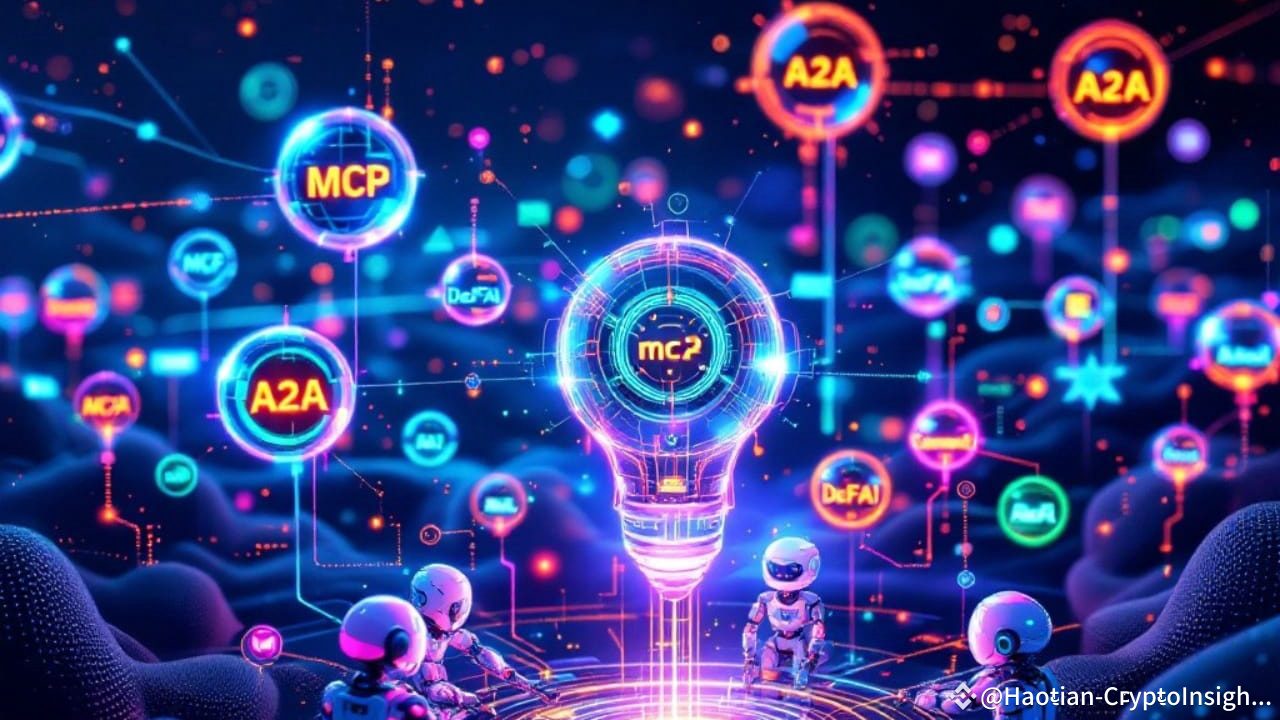
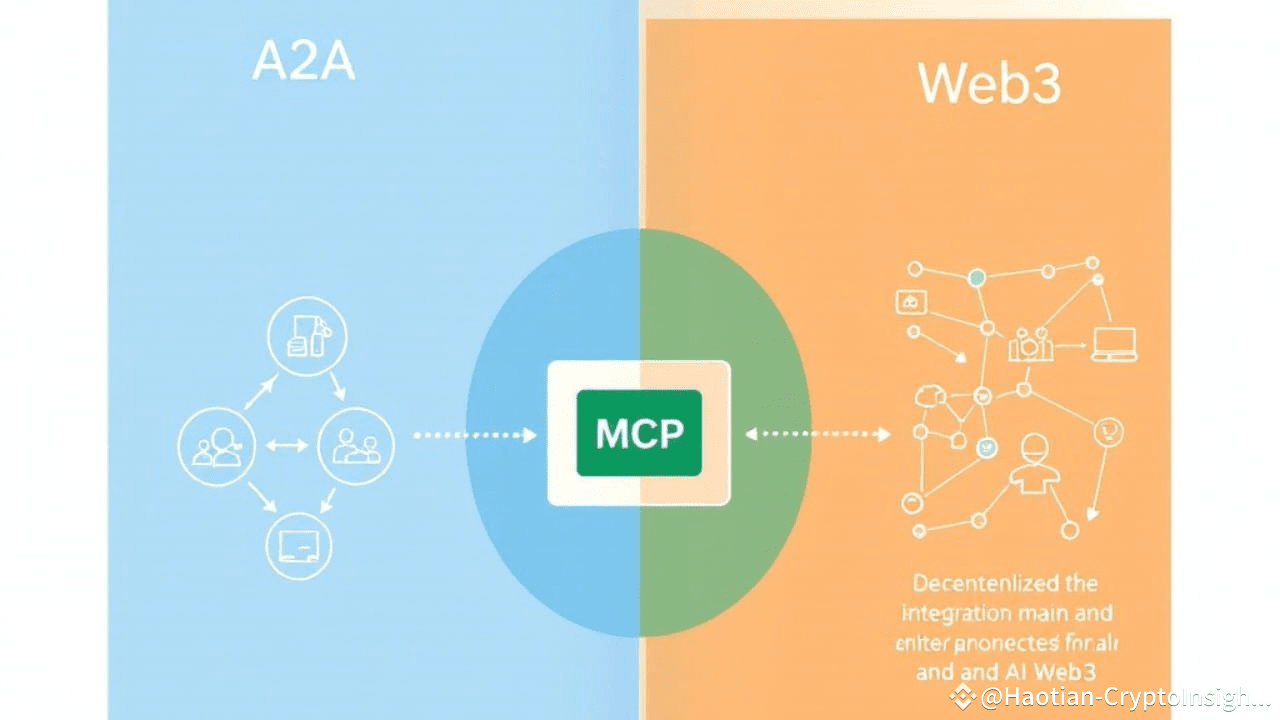
Why do A2A and MCP encounter 'incompatibility' dilemmas when meeting web3 AI Agents?If the A2A and MCP protocols launched by Google and Anthropic become the golden communication standards for the development of web3 AI Agents, what would happen? The intuitive feeling is 'incompatibility.' In my view, there are significant differences between the environments faced by web3 AI Agents and the web2 ecosystem, and the challenges encountered in implementing the core communication protocols are also vastly different. 1) Maturity gap in applications: A2A and MCP have quickly gained popularity in the web2 realm because they serve sufficiently mature application scenarios, essentially acting as 'value amplifiers' rather than value creators. In contrast, most web3 AI Agents remain at the primitive stage of one-click publishing, lacking deep application scenarios (like DeFAI, GameFAI, etc.), making it difficult for these protocols to directly interoperate and realize value.

Why do A2A and MCP encounter 'incompatibility' dilemmas when meeting web3 AI Agents?

If the A2A and MCP protocols launched by Google and Anthropic become the golden communication standards for the development of web3 AI Agents, what would happen? The intuitive feeling is 'incompatibility.' In my view, there are significant differences between the environments faced by web3 AI Agents and the web2 ecosystem, and the challenges encountered in implementing the core communication protocols are also vastly different.
1) Maturity gap in applications: A2A and MCP have quickly gained popularity in the web2 realm because they serve sufficiently mature application scenarios, essentially acting as 'value amplifiers' rather than value creators. In contrast, most web3 AI Agents remain at the primitive stage of one-click publishing, lacking deep application scenarios (like DeFAI, GameFAI, etc.), making it difficult for these protocols to directly interoperate and realize value.
Article
How do you view Vitalik's proposal to transition EVM to RISC-V?A friend asked me how I view @VitalikButerin's radical proposal to replace the Ethereum virtual machine EVM bytecode with the open-source RISC-V instruction set architecture? Essentially, Ethereum is brewing a deep technological transformation led by ZK technology. Let me outline the strategic logic behind it: 1) First of all, Vitalik's proposal to replace the EVM with RISC-V is not actually new. As early as when he proposed the Rollup-Centric expansion strategy, he hinted at similar ideas: allowing eligible layer2s to become the execution layer of the mainnet, while EVM would downgrade from protocol layer to 'in-house' Rollup execution client function layer, becoming one of many AltVMs.

How do you view Vitalik's proposal to transition EVM to RISC-V?

A friend asked me how I view @VitalikButerin's radical proposal to replace the Ethereum virtual machine EVM bytecode with the open-source RISC-V instruction set architecture? Essentially, Ethereum is brewing a deep technological transformation led by ZK technology. Let me outline the strategic logic behind it:
1) First of all, Vitalik's proposal to replace the EVM with RISC-V is not actually new. As early as when he proposed the Rollup-Centric expansion strategy, he hinted at similar ideas: allowing eligible layer2s to become the execution layer of the mainnet, while EVM would downgrade from protocol layer to 'in-house' Rollup execution client function layer, becoming one of many AltVMs.
Article
Will the MCP+A2A standard be the beginning of the second wave of on-chain AI Agent craze?Recently, there seems to be a sign of recovery in the on-chain AI Agent. MCP, A2A, UnifAI and other protocol standards are complementing and connecting to form a new Multi-AI Agent interaction infrastructure, upgrading AI Agent from a pure information push service to an execution application tool service level. The question is, will this be the beginning of the second wave of AI Agent on-chain spring? 1) MCP (Model Context Protocol): An open standard protocol launched by Anthropic, which essentially connects the "nervous system" of AI models and external tools, solving the interoperability problem between agents and external tools. Google DeepMind has expressed its support for it, making MCP quickly become an industry-recognized protocol standard.

Will the MCP+A2A standard be the beginning of the second wave of on-chain AI Agent craze?

Recently, there seems to be a sign of recovery in the on-chain AI Agent. MCP, A2A, UnifAI and other protocol standards are complementing and connecting to form a new Multi-AI Agent interaction infrastructure, upgrading AI Agent from a pure information push service to an execution application tool service level. The question is, will this be the beginning of the second wave of AI Agent on-chain spring?
1) MCP (Model Context Protocol): An open standard protocol launched by Anthropic, which essentially connects the "nervous system" of AI models and external tools, solving the interoperability problem between agents and external tools. Google DeepMind has expressed its support for it, making MCP quickly become an industry-recognized protocol standard.
Article
The Collective Plummet of New Coins: Is it a Rebellion Against the VC Industrialized Coin Creation Path?In recent days, some new coins in the secondary market have collectively declined, seemingly reflecting the market's uprising against the current cycle of 'narrative first, then financing, and finally TGE' as a path of VC industrialized coin creation? It is worth contemplating why retail investors are willing to participate in high-risk PVP schemes on-chain, yet keep their distance from new coins endorsed by VCs? 1) First, it must be acknowledged that the previous round of VC-led industry innovation-driven models has evolved into an 'industrial assembly line' of 'financing, issuing coins, and launching.' For a while now, the glamorous white paper narratives + top-tier luxurious investment lineups + seemingly impressive massive financing numbers + king-level expectations of profit-taking have become liquidity harvesting weapons pushed into the market, severely overdrawing market trust.

The Collective Plummet of New Coins: Is it a Rebellion Against the VC Industrialized Coin Creation Path?

In recent days, some new coins in the secondary market have collectively declined, seemingly reflecting the market's uprising against the current cycle of 'narrative first, then financing, and finally TGE' as a path of VC industrialized coin creation? It is worth contemplating why retail investors are willing to participate in high-risk PVP schemes on-chain, yet keep their distance from new coins endorsed by VCs?
1) First, it must be acknowledged that the previous round of VC-led industry innovation-driven models has evolved into an 'industrial assembly line' of 'financing, issuing coins, and launching.' For a while now, the glamorous white paper narratives + top-tier luxurious investment lineups + seemingly impressive massive financing numbers + king-level expectations of profit-taking have become liquidity harvesting weapons pushed into the market, severely overdrawing market trust.
The market will soon enter a major cycle of 'lowering expectations':The market will soon enter a major cycle of 'lowering expectations': 1) Project builders lower expectations, going from raising tens of millions with valuations in the hundreds of millions to being content with a $100,000 funding round. The mindset is akin to Xiaomi's, where 'survival' becomes the priority; 2) VC investors lower expectations, as the high valuation model driven by FOMO alongside major VCs no longer works. VCs that survive will inevitably return to seeking small yet beautiful innovative technology teams or will engage in Ponzi schemes. Small investments, multiple targets, and quick exits will become mainstream. What? Gathering a group? You need to meet the threshold to do that;

The market will soon enter a major cycle of 'lowering expectations':

The market will soon enter a major cycle of 'lowering expectations':
1) Project builders lower expectations, going from raising tens of millions with valuations in the hundreds of millions to being content with a $100,000 funding round. The mindset is akin to Xiaomi's, where 'survival' becomes the priority;
2) VC investors lower expectations, as the high valuation model driven by FOMO alongside major VCs no longer works. VCs that survive will inevitably return to seeking small yet beautiful innovative technology teams or will engage in Ponzi schemes. Small investments, multiple targets, and quick exits will become mainstream. What? Gathering a group? You need to meet the threshold to do that;
Article
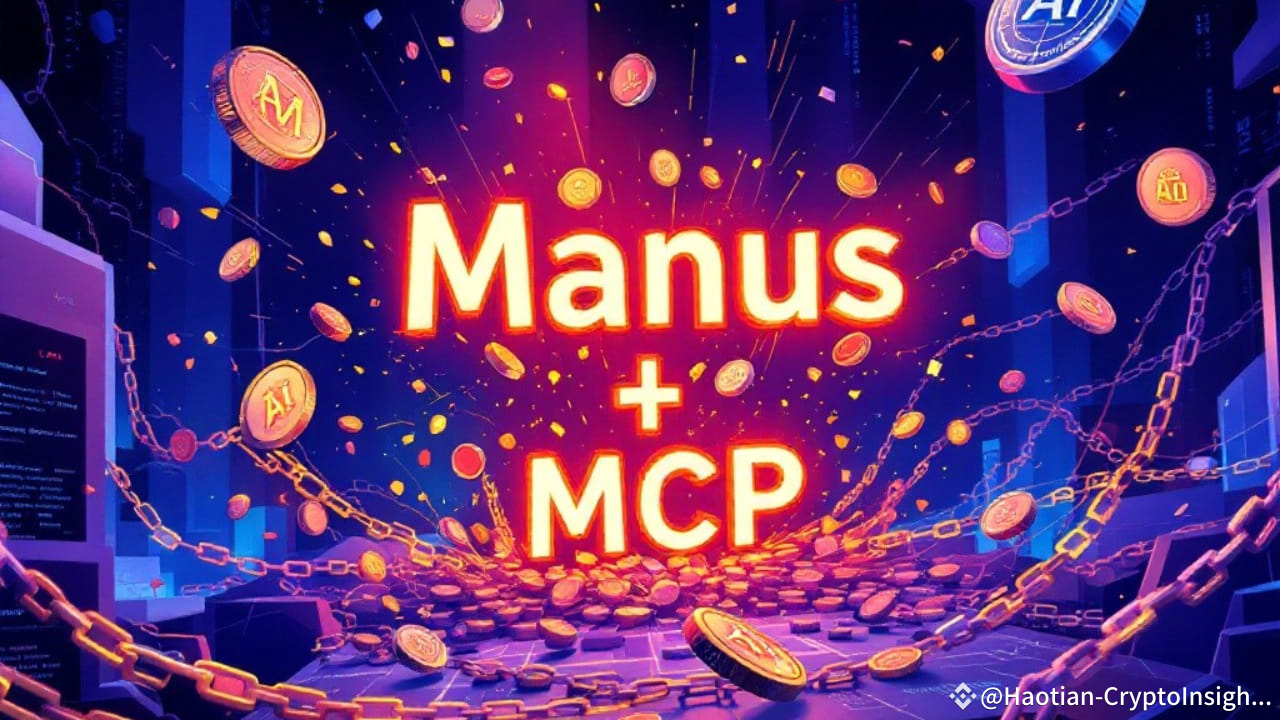
Reflecting on the Truth Behind the Continued Decline of web3 AI Agents: Is Manus + MCP the Last Straw that Broke the Camel's Back?Some friends say that the continued decline of web3 AI Agent targets such as #ai16z and $arc is caused by the recently popular MCP protocol? At first glance, it’s a bit confusing, WTF does it have to do with it? But after thinking about it, there is indeed a certain logic: the valuation and pricing logic of existing web3 AI Agents has changed, and the narrative direction and product landing routes need adjustment. Below, I will share my personal views: 1) MCP (Model Context Protocol) is an open standardized protocol aimed at allowing various AI LLM/Agents to seamlessly connect to various data sources and tools, equivalent to a plug-and-play USB 'universal' interface, replacing the previously end-to-end 'specific' packaging method.

Reflecting on the Truth Behind the Continued Decline of web3 AI Agents: Is Manus + MCP the Last Straw that Broke the Camel's Back?

Some friends say that the continued decline of web3 AI Agent targets such as #ai16z and $arc is caused by the recently popular MCP protocol? At first glance, it’s a bit confusing, WTF does it have to do with it? But after thinking about it, there is indeed a certain logic: the valuation and pricing logic of existing web3 AI Agents has changed, and the narrative direction and product landing routes need adjustment. Below, I will share my personal views:
1) MCP (Model Context Protocol) is an open standardized protocol aimed at allowing various AI LLM/Agents to seamlessly connect to various data sources and tools, equivalent to a plug-and-play USB 'universal' interface, replacing the previously end-to-end 'specific' packaging method.
Technical Interpretation of Reddio: Why Can the Parallel EVM Narrative Integrate AI?I read the latest white paper released by @reddio_com, and it indeed merges automated AI execution into the grand narrative of EVM, effectively filling the gap in the entire Ethereum ecosystem in the AI track. It makes a lot of sense. So, why can the parallel EVM seamlessly connect with AI? What are the underlying logic and technical principles? Let me briefly explain my understanding: 1) The narrative of 'parallel EVM' has always been characterized as a critical battle to bridge the gap between the outdated EVM ecosystem and high-performance chain technologies like Solana and Sui. Therefore, the previous market hype around Sei and the $225 million funding from @monad_xyz have pushed parallel EVM to unprecedented heights.

Technical Interpretation of Reddio: Why Can the Parallel EVM Narrative Integrate AI?

I read the latest white paper released by @reddio_com, and it indeed merges automated AI execution into the grand narrative of EVM, effectively filling the gap in the entire Ethereum ecosystem in the AI track. It makes a lot of sense. So, why can the parallel EVM seamlessly connect with AI? What are the underlying logic and technical principles? Let me briefly explain my understanding:
1) The narrative of 'parallel EVM' has always been characterized as a critical battle to bridge the gap between the outdated EVM ecosystem and high-performance chain technologies like Solana and Sui. Therefore, the previous market hype around Sei and the $225 million funding from @monad_xyz have pushed parallel EVM to unprecedented heights.
Article
A Quick Overview of the Story Ecosystem: What Variables Will the Combination of Korean Wave Culture and AI Agents Bring?Once heavily backed by a16z, Story's token price has performed exceptionally well since TGE, with its FDV soaring to $7 billion, earning it the title of 'web3 Hollywood.' However, many have not considered what variables this combination of Korean Wave power and AI Agents might bring to the Crypto ecosystem. Below, I will share my personal observations. 1. It is evident that Story's TGE launched under a chorus of skepticism, but surprisingly, after its launch, it did not continue the market trend of VC tokens plummeting towards zero. Instead, it became the 'king of market manipulation' for this round of VC new tokens, thus being hailed as 'web3 Hollywood.'

A Quick Overview of the Story Ecosystem: What Variables Will the Combination of Korean Wave Culture and AI Agents Bring?

Once heavily backed by a16z, Story's token price has performed exceptionally well since TGE, with its FDV soaring to $7 billion, earning it the title of 'web3 Hollywood.' However, many have not considered what variables this combination of Korean Wave power and AI Agents might bring to the Crypto ecosystem. Below, I will share my personal observations.
1. It is evident that Story's TGE launched under a chorus of skepticism, but surprisingly, after its launch, it did not continue the market trend of VC tokens plummeting towards zero. Instead, it became the 'king of market manipulation' for this round of VC new tokens, thus being hailed as 'web3 Hollywood.'
Log in to explore more content
Join global crypto users on Binance Square
⚡️ Get latest and useful information about crypto.
💬 Trusted by the world’s largest crypto exchange.
👍 Discover real insights from verified creators.
Email / Phone number
Sitemap
Cookie Preferences
Platform T&Cs