

Ardell Sacchi aPTG
93 Posts

Ardell Sacchi aPTG
Report
Block User
Open Trade
Frequent Trader
7.5 Years
47 Following
14 Followers
21 Liked
Posts
Portfolio
All
Quotes
Videos
Article
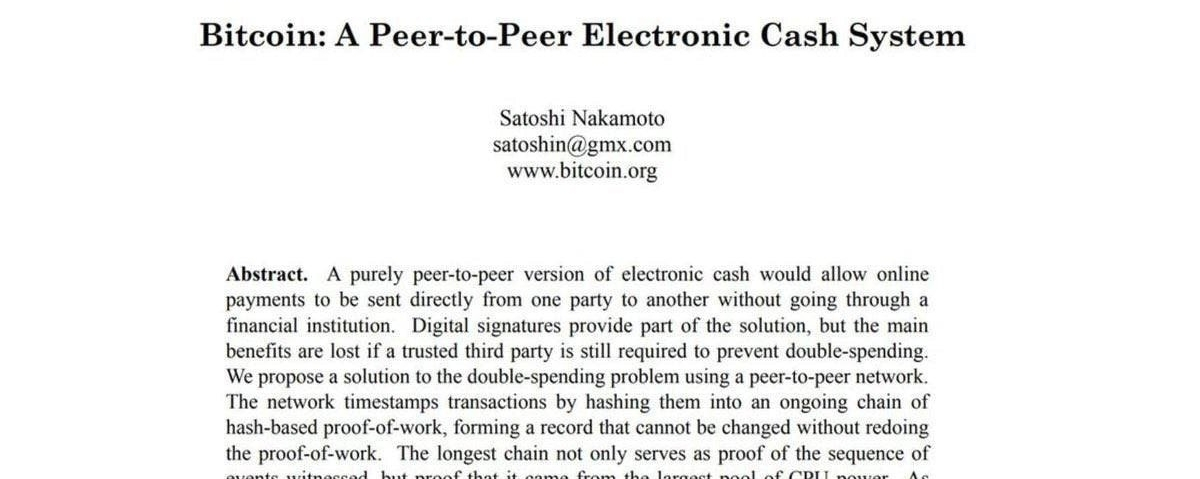
18 Years of Bitcoin: The Document That Changed How We Think About Money🪙 18 Years of Bitcoin: The Document That Changed How We Think About Money
On October 31, 2008, Satoshi Nakamoto published the white paper “Bitcoin: A Peer-to-Peer Electronic Cash System”—a nine-page work that marked the beginning of the first successful decentralized cryptocurrency.
Today marks exactly 18 years since this event.
18 Years of Bitcoin: The Document That Changed How We Think About Money
🪙 18 Years of Bitcoin: The Document That Changed How We Think About Money
On October 31, 2008, Satoshi Nakamoto published the white paper “Bitcoin: A Peer-to-Peer Electronic Cash System”—a nine-page work that marked the beginning of the first successful decentralized cryptocurrency.
Today marks exactly 18 years since this event.
On October 31, 2008, Satoshi Nakamoto published the white paper “Bitcoin: A Peer-to-Peer Electronic Cash System”—a nine-page work that marked the beginning of the first successful decentralized cryptocurrency.
Today marks exactly 18 years since this event.
710
That very dude with a balance of 4$ saw the news about the Binance and Polymarket hack
That very dude with a balance of 4$ saw the news about the Binance and Polymarket hack
54
See translation
☠️ 12 криптопроектов атакованы StepDrainer — кошельки пользователей под угрозой
31 октября злоумышленники скомпрометировали сайты Flap, Kintsu, Pickle Finance, ApeX DeFi и ещё восьми криптопроектов.
⚠️ Как работает атака?
StepDrainer внедряет вредоносные запросы на сайтах. Пользователь подключает кошелёк и подписывает опасное разрешение, после чего злоумышленники могут похищать токены.
🛡 Что делать?
▪️ Не подключать кошельки к пострадавшим сайтам. ▪️ Проверить и отозвать подозрительные разрешения через Revoke.cash. ▪️ Если подписывали опасные транзакции — перевести оставшиеся активы на новый кошелёк с новой seed-фразой. ▪️ Не подписывать неизвестные запросы даже на знакомых платформах.
📌 Подтверждённая сумма ущерба пока неизвестна.
Этот случай напоминает: даже привычный сайт DeFi может стать ловушкой. Защита криптовалют — это не только безопасность блокчейна, но и осторожность самого пользователя.
#CryptoSecurity #DeFi #Binance #Crypto #BTC #ETH
142
See translation
🔐 Братья похитили $8 млн в криптовалюте и получили более 15 лет тюрьмы
В Миннесоте двое братьев из Техаса совершили вооружённое нападение на семью ради криптоактивов.
19 сентября 2025 года Рэймонд и Айзая Гарсия ворвались в дом, связали членов семьи и более девяти часов угрожали оружием, требуя доступ к криптокошелькам.
Когда полученной суммы оказалось недостаточно, хозяина заставили ехать на дачу за дополнительными кошельками.
В итоге преступники похитили более $8 млн в криптовалюте.
После того как сын потерпевших обратился в экстренную службу, братья скрылись, но позднее были задержаны в Техасе.
⚖️ Приговор от 29 октября 2026 года: ▪️ Рэймонд Гарсия — 15 лет тюрьмы. ▪️ Айзая Гарсия — 15 лет и 6 месяцев.
Оба признали вину и обязаны возместить более $8 млн.
📌 Вывод для криптосообщества: защита цифровых активов — это не только пароли и seed-фразы. Публичность крупных криптовалютных состояний может подвергать опасности владельцев и их семьи.
Безопасность человека всегда важнее любых активов.
#Crypto #Bitcoin #Binance #CryptoSecurity #BTC #ETH
336
🚨 Binance expects to resume withdrawals on November 1 at around 08:34 Kyiv time.
Following a major security incident, the exchange continues to restore its services. Binance management previously said it would take around 40 hours to restore the ability to withdraw funds.
Based on when the announcement was published and the time that has passed, the estimated recovery time is the morning of November 1.
What we know so far:
🔹 Deposits have already been restored. 🔹 Withdrawals remain temporarily restricted. 🔹 Specialists are continuing to investigate the incident. 🔹 Binance says it is prepared to cover financial losses using its own reserves and the SAFU fund.
The key question now is whether the exchange can meet its stated timeline and fully restore the system.
Important: 08:34 is an estimated time, not a confirmed guarantee that withdrawals will resume.
We’re following developments.
$BNB $BTC $ETH $USDT
51
💰 $6.34 billion — the price of the attack on Binance.
Following a major security incident, Binance said it was ready to fully cover users’ losses using the SAFU fund and its own funds.
Preliminary estimates put the damage at around $6.3 billion. About $3 billion in affected assets was frozen in cooperation with partners.
But it’s important to understand: this does not mean Binance has already paid out $6.34 billion. This is an estimate of the damage and a commitment to compensate users for their losses.
Now the main question isn’t just about money. How did the attackers manage to breach the infrastructure of the world’s largest crypto exchange and carry out an attack on such a massive scale?
Binance will have to prove that its security can withstand challenges like this.
Would you continue to keep your assets on an exchange after an incident like this?
BNB/USDT · BTC/USDT · ETH/USDT · SOL/USDT
23
🤣 CZ reminded Musk about the $500 million investment!
An interesting exchange took place on X between Elon Musk and Binance founder CZ.
Musk posted the 😬 emoji, after which Changpeng Zhao replied:
“Elon, I have a lot of respect for you, but this isn’t the right time for trolling. Please stop.”
CZ then reminded him that Binance invested $500 million in the deal to acquire Twitter in 2022. According to CZ, the SpaceX (SPCX) shares received through that investment are now valued at more than $1 billion.
Binance co-founder Yi He also said the exchange’s annual revenue is enough to cover the losses, so there will be no need to sell the SpaceX shares.
💰 What does this mean?
The $500 million investment is now valued at more than twice its original amount. However, an asset’s valuation doesn’t mean that the money can be immediately converted into cash.
It’s fascinating to see how the interests of crypto exchanges and the biggest tech companies intersect.
📊 Trading pairs:
₿ "BTC/USDT" (https://www.binance.com/en/trade/BTC_USDT)
Ξ "ETH/USDT" (https://www.binance.com/en/trade/ETH_USDT)
🟡 "BNB/USDT" (https://www.binance.com/en/trade/BNB_USDT)
🤔 Do you think Musk should have supported CZ instead of making fun of him?
#Binance #CZ #Bitcoin #Ethereum #BNB
49
🤣 The crypto market: some sell millions, others are simply trying to protect themselves — and all token holders pay the price.
Amid the major Binance incident, a telling story involving PEPE unfolded.
A suspected attacker sold off 7.77 trillion PEPE worth around $31.9 million, receiving 14,049 ETH in return. According to on-chain analysts, the memecoin’s price fell by 12.33%.
The situation with GRAM is also worth noting: reports emerged that transactions involving the token had been suspended due to maintenance of the TON wallet. However, the claim that Binance’s security restrictions caused GRAM to fall by 12% has not yet been independently confirmed.
The result is an interesting picture:
🔴 PEPE — a large sell-off puts downward pressure on the price.
🟠 GRAM — transaction restrictions may worry holders, but the cause of the specific price drop needs confirmation.
And here’s the paradox of the crypto market: an attacker sells millions, and ordinary holders suffer. An exchange restricts transactions for security reasons, and the market gets nervous again.
In crypto, sometimes a single transaction is all it takes to ruin the mood of thousands of investors.
#PEPE #GRAM #Binance #ETH #TON #Crypto #Bitcoin #CryptoNews
176
🚨 Binance expects to resume cryptocurrency withdrawals within 48 hours.
The investigation into the large-scale incident is ongoing. According to the preliminary theory, the attackers may have gained access to the exchange’s infrastructure through a compromised laptop belonging to a DevOps engineer.
The total damage is estimated at around $6.3 billion, but Binance and its partners have already managed to freeze about $3 billion worth of stolen assets through joint efforts.
The exchange says it has found no signs that wallet private keys were leaked. The company promises to compensate users for all losses using its own funds and the SAFU fund.
Withdrawals remain suspended for now, and the definitive technical causes of the incident are still being determined.
The main question now is not only when withdrawals will resume, but also how effectively Binance will be able to protect its infrastructure from another attack.
#Binance #CryptoSecurity #SAFU #BTC #BNB #Bitcoin
1
1.4k
🦅 Aksakov is confident that Russian crypto exchanges will be safer than foreign ones, thanks to regulation under Russian law and state oversight.
Anatoly Aksakov is the chairman of the State Duma Committee on the Financial Market and one of the contributors to the development of new cryptocurrency legislation.
But there’s one catch: regulation does not mean protection from hacks.
Russian Law No. 282-FZ provides for the licensing of market participants, internal controls, and oversight by the Bank of Russia. However, this does not guarantee protection against hacker attacks, data leaks, employee errors, or the loss of customer funds.
The irony is that the statement came amid the departure from Russia of four major international platforms: Bitget, MEXC, HTX, and KuCoin.
So now, it seems, safety is being judged not only by an exchange’s technology, but also by the laws of the country where it operates.
What matters more to crypto users: government oversight, or independence, transparency, and real guarantees that their assets will be safe?
₿ BTC/USDT | ETH/USDT | BNB/USDT | SOL/USDT
152
🔐 Even a hardware crypto wallet can turn out to be a spying device.
Trezor reported discovering a suspicious implant in a Trezor Safe 5 hardware wallet purchased from the CryptoBilis reseller in August 2026.
According to the device description, it contained an additional board with a cellular module and antenna. It could read information from the screen, including the seed phrase, and transmit it over a mobile network.
⚠️ Important caveat: Trezor has not yet received the device itself for laboratory testing, but considers the report serious enough to warn customers.
The company recommends that anyone who purchased devices from CryptoBilis since March 2026 transfer their funds to a new wallet with a completely new seed phrase. Customers are also being offered a replacement device or a compensation voucher.
A hardware wallet alone does not guarantee security. The weak link may be not the software, but the supply chain and the seller.
It seems the crypto industry will need to rethink how devices are vetted before they reach customers.
In the meantime, keeping your funds safe remains the responsibility of the owner.
865
Article
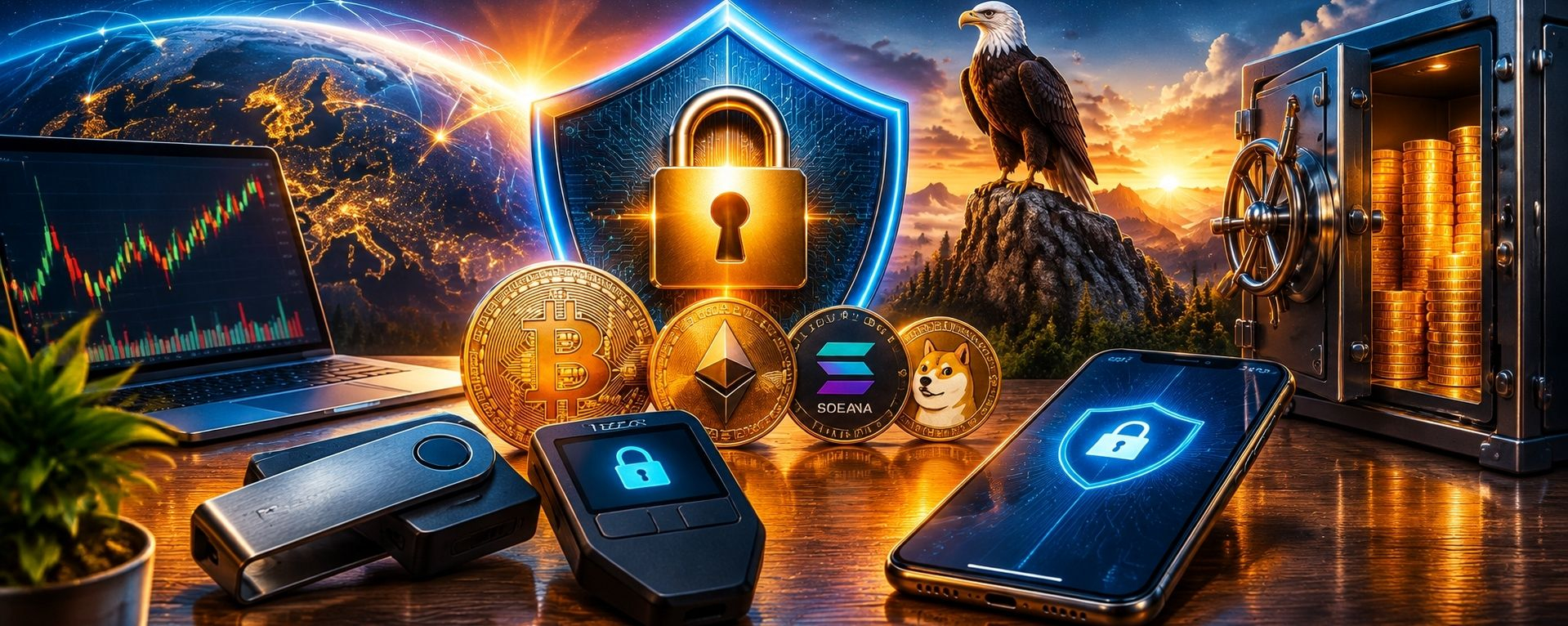
Cryptocurrency Security: How to Protect Your Assets from Hacks and Loss🔐 Cryptocurrency Security: How to Protect Your Assets from Hacks and Loss
The cryptocurrency market offers opportunities, but it also comes with serious risks. Account hacks, phishing websites, fake apps, and private key theft cause people to lose digital assets every year.
Cryptocurrency Security: How to Protect Your Assets from Hacks and Loss
🔐 Cryptocurrency Security: How to Protect Your Assets from Hacks and Loss
The cryptocurrency market offers opportunities, but it also comes with serious risks. Account hacks, phishing websites, fake apps, and private key theft cause people to lose digital assets every year.
The cryptocurrency market offers opportunities, but it also comes with serious risks. Account hacks, phishing websites, fake apps, and private key theft cause people to lose digital assets every year.
713
⚛️ 62 minutes to crack Bitcoin? The quantum threat is getting closer!
French company Alice & Bob published a study suggesting that a hypothetical quantum computer could need just 29,588 physical qubits and about 62 minutes to calculate a Bitcoin private key from its public key.
For comparison: Google’s estimate in March suggested that fewer than 500,000 qubits would be needed. That’s a difference of about 17 times!
But there’s no need to panic yet: quantum computers like that don’t exist. This is a theoretical model based on certain assumptions.
Why does this matter?
Around 6 million BTC are held at addresses with public keys that have already been revealed. These coins could potentially be vulnerable to future quantum attacks.
Google has already urged the crypto industry to prepare for post-quantum cryptography. In October, nine crypto companies joined forces to form the Quantum Alliance.
My takeaway: Bitcoin hasn’t been hacked, but we can’t ignore the quantum threat. Developers need to prepare defenses in advance, rather than wait for a computer capable of putting millions of coins at risk to emerge.
Technology is evolving, and cryptocurrency security must evolve along with it.
🤖 AI sector: TAO/USDT — Bittensor
728
🚨 $6.3 billion in a single attack. When technology becomes a weapon.
According to TRM Labs, losses from the Binance hack totaled $6.36 billion. That’s nearly 96% of the $6.6 billion that, according to one estimate, was stolen in the 118 attacks on centralized exchanges that preceded it, dating back to 2014.
Analysts link the attack to the North Korean group TraderTraitor.
And almost simultaneously, Kim Jong Un declared the development of drones and artificial intelligence for military systems to be priorities for North Korea.
The coincidence gives us pause for thought about the future of technology.
Artificial intelligence can help medicine, science, and the economy. But in the hands of those who use it for destructive purposes, it can become a serious threat.
Playing around with artificial intelligence doesn’t always benefit humanity, especially when such technology falls into the wrong hands.
Technological progress should make the world safer, not create new ways to destroy it.
Is humanity keeping pace with the technologies it creates?
📈 Trading pair: "BNB/USDT" (https://www.binance.com/ru-UA/trade/BNB_USDT)
73
😂 It looks like North Korea's GDP unexpectedly grew by $6.3 billion. Coincidence? I don't think so! 🤣
BNB/USDT 📈
😂 It looks like North Korea's GDP unexpectedly grew by $6.3 billion. Coincidence? I don't think so! 🤣
BNB/USDT 📈
BNB/USDT 📈
8
💪 In the crypto world, what matters isn’t just who falls, but how they get back up.
Even the largest exchanges aren’t immune to mistakes and attacks. But the real test doesn’t come in moments of success—it comes in a crisis.
Binance and other platforms may face serious challenges. The question is whether they can protect users, compensate for losses, and restore trust.
Strength isn’t defined by avoiding setbacks, but by the ability to withstand them and rise again. 🚀
8
🚨 Binance confirmed a large-scale cyberattack on its infrastructure — preliminary losses are estimated at $6.3 billion.
According to initial investigation data, the attackers may have compromised a DevOps engineer’s laptop and used it to gain access to the transaction-signing system. The exchange has not yet found any evidence that private keys were leaked.
On Ethereum, the hackers used the EIP-7702 mechanism, preparing 50 signed authorizations. In one of the operations, a malicious contract gained control of a hot wallet and withdrew 167,464 ETH, 1.615 billion USDT, and dozens of other tokens.
TRM Labs analysts also detected withdrawals from Binance wallets on other blockchains. In their assessment, the attack affected ten networks.
What happens next? Binance said users’ funds are safe and that all losses will be covered by the SAFU reserve fund and the company’s own funds. Around $3 billion in assets has already been frozen.
The main question now is: how did the attackers manage to gain access to the transaction-signing infrastructure across several networks?
This is yet another reminder that even the largest crypto exchanges are not immune to large-scale attacks.
119
Article
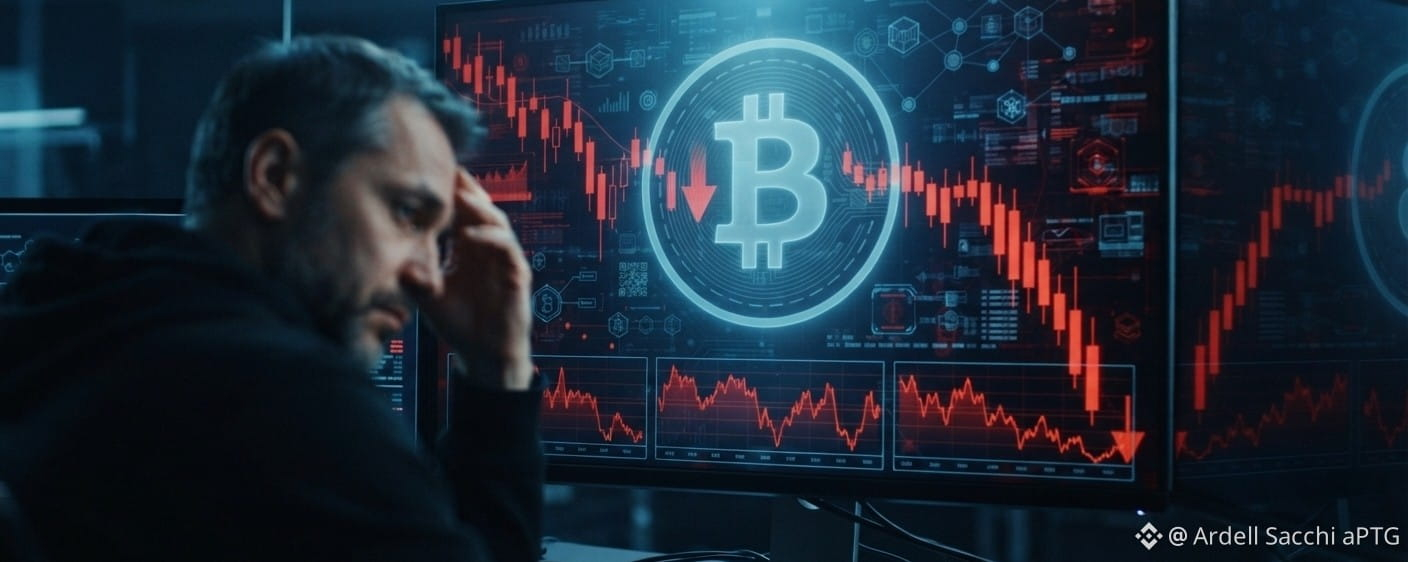
Crypto market under pressure: why Bitcoin and altcoins are falling and what to watch out for nextCrypto market under pressure: why Bitcoin and altcoins are falling and what to watch out for next
October 30, 2026
The cryptocurrency market is going through a difficult period. Bitcoin fell below the $80,000 mark, altcoins saw steeper declines, and news of a potential security incident at Binance gave market participants yet another reason for concern.
Crypto market under pressure: why Bitcoin and altcoins are falling and what to watch out for next
Crypto market under pressure: why Bitcoin and altcoins are falling and what to watch out for next
October 30, 2026
The cryptocurrency market is going through a difficult period. Bitcoin fell below the $80,000 mark, altcoins saw steeper declines, and news of a potential security incident at Binance gave market participants yet another reason for concern.
October 30, 2026
The cryptocurrency market is going through a difficult period. Bitcoin fell below the $80,000 mark, altcoins saw steeper declines, and news of a potential security incident at Binance gave market participants yet another reason for concern.
53
🤣 Finding a crypto exchange or protocol that has never been hacked is almost the stuff of fantasy.
In the crypto industry, the question is no longer just whether a platform will be hacked, but how well it’s prepared for an attack: Are funds protected? Are backup mechanisms in place? And how quickly does the team respond to an incident?
But it’s important to remember: no known hacks doesn’t mean absolute security.
In crypto, trust verifiable security measures, not promises.
#Crypto #CyberSecurity #Blockchain #Cryptocurrency
2
255
🚨 Reports are circulating online of a possible hack targeting Bybit, with preliminary estimates of losses at around $500 million.
However, the exchange has not officially confirmed this information. The amount and the incident itself have not yet been verified.
Amid news of security issues in the crypto industry, reports like these could heighten users’ concerns and affect the market.
While we await official comments from Bybit, it’s best not to jump to conclusions.
#Bybit #Crypto #Security #Cryptocurrency
1
1.7k
Log in to explore more content
Join global crypto users on Binance Square
⚡️ Get latest and useful information about crypto.
💬 Trusted by the world’s largest crypto exchange.
👍 Discover real insights from verified creators.
Email / Phone number
Trending Topics
HeYiSaysWithdrawalsExpectedtoResumeWithin42Hours
48,988 views
887 Discussing
Binance News Update | Yi He: Binance’s Own Crypto Holdings Match Most of the $6.3 Billion in Affected Tokens; Withdrawals Expected Within 42 Hours
Binance News
·169 Likes
·140.1k views
CZSaysCompensationIsinPlaceUsersAreProtected
54,708 views
743 Discussing
RichardTengSaysBinanceWillCoverAllHackedLosseswithCompanyFunds
8,682 views
53 Discussing