
Malik-BTC-01
1.1k Posts

Malik-BTC-01
Report
Block User
Allhumdollilah 🥰 📊 Market Analyst I hunt probability, not hype.Strick risk control.Daily insights on $BTC & alts.
Open Trade
Frequent Trader
8 Months
368 Following
1.7K+ Followers
433 Liked
Posts
Portfolio
All
Quotes
Live
PINNED
·
--

Article
📝 Pixels Feels Open… But $PIXEL Might Be Pricing Speed, Not Access@pixels $PIXEL #pixel
At first, Pixels feels simple.
You log in, play freely, and progress without any obvious barriers 🎮
No paywall. No forced upgrades. No “you must buy this” moment.
It feels like a clean free-to-play system.
But after spending more time inside the game, something starts to feel… uneven 👀
Not blocked. Not restricted.
Just slightly slower.
And that “slightly” begins to matter.
Because two players can do the same actions — same tasks, same effort — but still arrive at different outcomes over time.
One just gets there earlier.
Not dramatically earlier.
Just enough to access better loops, better positioning, and better opportunities before others catch up 📊
That’s where $PIXEL starts to make more sense.
Not just as a utility token… but as something that quietly affects speed.
It doesn’t feel like unlocking content.
It feels like removing friction.
Small delays disappear.
Progress becomes smoother.
Actions feel less “sticky” 🔄
And the important part is — you don’t notice it immediately.
But once you do, it’s hard to ignore.
Because the system isn’t saying “you can’t play without $PIXEL.”
It’s saying “you can… just slower.”
And that’s a very different kind of design.
It doesn’t force decisions.
It shapes them over time.
At first, you don’t care.
You’re still progressing. Still part of the system.
But as competition increases, that small difference in speed starts to compound ⚙️
Early access leads to better loops.
Better loops generate more output.
More output strengthens position.
And suddenly, speed becomes advantage.
This is where $PIXEL shifts from optional… to strategic.
Not required to play —but important if you don’t want to fall behind.
And that creates a subtle pressure.
Not “pay to win”…
but “optimize or lag.”
That grey zone is where systems become interesting — and risky.
Because if the gap becomes too visible, perception changes.
What feels open can start to feel uneven.
And in a growing ecosystem, that balance becomes even harder.
Pixels is expanding — more layers, more experiences, more integrations 🚀
If one shared token influences speed across all of them, then managing fairness becomes complex.
Different games. Different pacing.
But one underlying advantage layer.
And I don’t think the market fully understands this yet.
Most people still treat $Pixel like a standard game token:
More activity = more demand
Less activity = less demand
Simple model.
But this doesn’t feel simple.
It feels like a system where time itself is being distributed unevenly —
and $pixel is the tool that lets you adjust your share of it ⏳
Not in big jumps.
But in small, consistent advantages that compound over time.
And maybe that’s the real shift.
Pixels isn’t deciding who can play.
{future}(PIXELUSDT)
It’s deciding who moves faster once they’re inside 🚀
📝 Pixels Feels Open… But $PIXEL Might Be Pricing Speed, Not Access
@Pixels $PIXEL #pixel
At first, Pixels feels simple.
You log in, play freely, and progress without any obvious barriers 🎮
No paywall. No forced upgrades. No “you must buy this” moment.
It feels like a clean free-to-play system.
But after spending more time inside the game, something starts to feel… uneven 👀
Not blocked. Not restricted.
Just slightly slower.
And that “slightly” begins to matter.
Because two players can do the same actions — same tasks, same effort — but still arrive at different outcomes over time.
One just gets there earlier.
Not dramatically earlier.
Just enough to access better loops, better positioning, and better opportunities before others catch up 📊
That’s where $PIXEL starts to make more sense.
Not just as a utility token… but as something that quietly affects speed.
It doesn’t feel like unlocking content.
It feels like removing friction.
Small delays disappear.
Progress becomes smoother.
Actions feel less “sticky” 🔄
And the important part is — you don’t notice it immediately.
But once you do, it’s hard to ignore.
Because the system isn’t saying “you can’t play without $PIXEL .”
It’s saying “you can… just slower.”
And that’s a very different kind of design.
It doesn’t force decisions.
It shapes them over time.
At first, you don’t care.
You’re still progressing. Still part of the system.
But as competition increases, that small difference in speed starts to compound ⚙️
Early access leads to better loops.
Better loops generate more output.
More output strengthens position.
And suddenly, speed becomes advantage.
This is where $PIXEL shifts from optional… to strategic.
Not required to play —but important if you don’t want to fall behind.
And that creates a subtle pressure.
Not “pay to win”…
but “optimize or lag.”
That grey zone is where systems become interesting — and risky.
Because if the gap becomes too visible, perception changes.
What feels open can start to feel uneven.
And in a growing ecosystem, that balance becomes even harder.
Pixels is expanding — more layers, more experiences, more integrations 🚀
If one shared token influences speed across all of them, then managing fairness becomes complex.
Different games. Different pacing.
But one underlying advantage layer.
And I don’t think the market fully understands this yet.
Most people still treat $Pixel like a standard game token:
More activity = more demand
Less activity = less demand
Simple model.
But this doesn’t feel simple.
It feels like a system where time itself is being distributed unevenly —
and $pixel is the tool that lets you adjust your share of it ⏳
Not in big jumps.
But in small, consistent advantages that compound over time.
And maybe that’s the real shift.
Pixels isn’t deciding who can play.
It’s deciding who moves faster once they’re inside 🚀
At first, Pixels feels simple.
You log in, play freely, and progress without any obvious barriers 🎮
No paywall. No forced upgrades. No “you must buy this” moment.
It feels like a clean free-to-play system.
But after spending more time inside the game, something starts to feel… uneven 👀
Not blocked. Not restricted.
Just slightly slower.
And that “slightly” begins to matter.
Because two players can do the same actions — same tasks, same effort — but still arrive at different outcomes over time.
One just gets there earlier.
Not dramatically earlier.
Just enough to access better loops, better positioning, and better opportunities before others catch up 📊
That’s where $PIXEL starts to make more sense.
Not just as a utility token… but as something that quietly affects speed.
It doesn’t feel like unlocking content.
It feels like removing friction.
Small delays disappear.
Progress becomes smoother.
Actions feel less “sticky” 🔄
And the important part is — you don’t notice it immediately.
But once you do, it’s hard to ignore.
Because the system isn’t saying “you can’t play without $PIXEL .”
It’s saying “you can… just slower.”
And that’s a very different kind of design.
It doesn’t force decisions.
It shapes them over time.
At first, you don’t care.
You’re still progressing. Still part of the system.
But as competition increases, that small difference in speed starts to compound ⚙️
Early access leads to better loops.
Better loops generate more output.
More output strengthens position.
And suddenly, speed becomes advantage.
This is where $PIXEL shifts from optional… to strategic.
Not required to play —but important if you don’t want to fall behind.
And that creates a subtle pressure.
Not “pay to win”…
but “optimize or lag.”
That grey zone is where systems become interesting — and risky.
Because if the gap becomes too visible, perception changes.
What feels open can start to feel uneven.
And in a growing ecosystem, that balance becomes even harder.
Pixels is expanding — more layers, more experiences, more integrations 🚀
If one shared token influences speed across all of them, then managing fairness becomes complex.
Different games. Different pacing.
But one underlying advantage layer.
And I don’t think the market fully understands this yet.
Most people still treat $Pixel like a standard game token:
More activity = more demand
Less activity = less demand
Simple model.
But this doesn’t feel simple.
It feels like a system where time itself is being distributed unevenly —
and $pixel is the tool that lets you adjust your share of it ⏳
Not in big jumps.
But in small, consistent advantages that compound over time.
And maybe that’s the real shift.
Pixels isn’t deciding who can play.
It’s deciding who moves faster once they’re inside 🚀
3
3
48
PINNED
·
--

Article
🔥 PIXEL Campaign Guide – How to Maximize Your Rewards Like a Pro 🔥The crypto space is full of opportunities, but only a few campaigns truly stand out — and the PIXEL campaign is one of them. With a massive reward pool of 7,500,000 PIXEL tokens, this event gives users a real chance to earn big by staying active and strategic.
At its core, the campaign is simple: Follow, Post, and Trade. But don’t underestimate it — the real competition lies in consistency and smart execution.
Let’s start with posting. Many users think one post is enough, and technically it is for qualification — but if your goal is to rank on the global leaderboard, you need to go beyond that. Creating high-quality, original content daily is key. Focus on sharing insights, market trends, or your personal perspective about the PIXEL ecosystem. The more valuable your content, the higher your engagement.
However, there are strict rules. You cannot use giveaway-style posts or Red Packet promotions. Also, reposting or slightly modifying an old viral post can lead to disqualification. The system is designed to reward genuine creators, not shortcuts.
Another important factor is understanding how the leaderboard works. The data is updated with a T+2 delay, meaning your efforts today will only reflect after two days. This can be confusing for beginners, but experienced participants use this to their advantage by staying patient and consistent.
The reward pool is large, and distribution is scheduled by May 20, 2026. This gives you enough time to build momentum and secure your position if you stay focused.
In the end, success in this campaign comes down to three things: discipline, originality, and consistency. Anyone can join, but only those who stay active and play smart will reach the top.
@pixels $PIXEL #pixel #crypto #BinanceSquare
🔥 PIXEL Campaign Guide – How to Maximize Your Rewards Like a Pro 🔥
The crypto space is full of opportunities, but only a few campaigns truly stand out — and the PIXEL campaign is one of them. With a massive reward pool of 7,500,000 PIXEL tokens, this event gives users a real chance to earn big by staying active and strategic.
At its core, the campaign is simple: Follow, Post, and Trade. But don’t underestimate it — the real competition lies in consistency and smart execution.
Let’s start with posting. Many users think one post is enough, and technically it is for qualification — but if your goal is to rank on the global leaderboard, you need to go beyond that. Creating high-quality, original content daily is key. Focus on sharing insights, market trends, or your personal perspective about the PIXEL ecosystem. The more valuable your content, the higher your engagement.
However, there are strict rules. You cannot use giveaway-style posts or Red Packet promotions. Also, reposting or slightly modifying an old viral post can lead to disqualification. The system is designed to reward genuine creators, not shortcuts.
Another important factor is understanding how the leaderboard works. The data is updated with a T+2 delay, meaning your efforts today will only reflect after two days. This can be confusing for beginners, but experienced participants use this to their advantage by staying patient and consistent.
The reward pool is large, and distribution is scheduled by May 20, 2026. This gives you enough time to build momentum and secure your position if you stay focused.
In the end, success in this campaign comes down to three things: discipline, originality, and consistency. Anyone can join, but only those who stay active and play smart will reach the top.
@Pixels $PIXEL #pixel #crypto #BinanceSquare
At its core, the campaign is simple: Follow, Post, and Trade. But don’t underestimate it — the real competition lies in consistency and smart execution.
Let’s start with posting. Many users think one post is enough, and technically it is for qualification — but if your goal is to rank on the global leaderboard, you need to go beyond that. Creating high-quality, original content daily is key. Focus on sharing insights, market trends, or your personal perspective about the PIXEL ecosystem. The more valuable your content, the higher your engagement.
However, there are strict rules. You cannot use giveaway-style posts or Red Packet promotions. Also, reposting or slightly modifying an old viral post can lead to disqualification. The system is designed to reward genuine creators, not shortcuts.
Another important factor is understanding how the leaderboard works. The data is updated with a T+2 delay, meaning your efforts today will only reflect after two days. This can be confusing for beginners, but experienced participants use this to their advantage by staying patient and consistent.
The reward pool is large, and distribution is scheduled by May 20, 2026. This gives you enough time to build momentum and secure your position if you stay focused.
In the end, success in this campaign comes down to three things: discipline, originality, and consistency. Anyone can join, but only those who stay active and play smart will reach the top.
@Pixels $PIXEL #pixel #crypto #BinanceSquare
75
2
71
12.7k
·
--
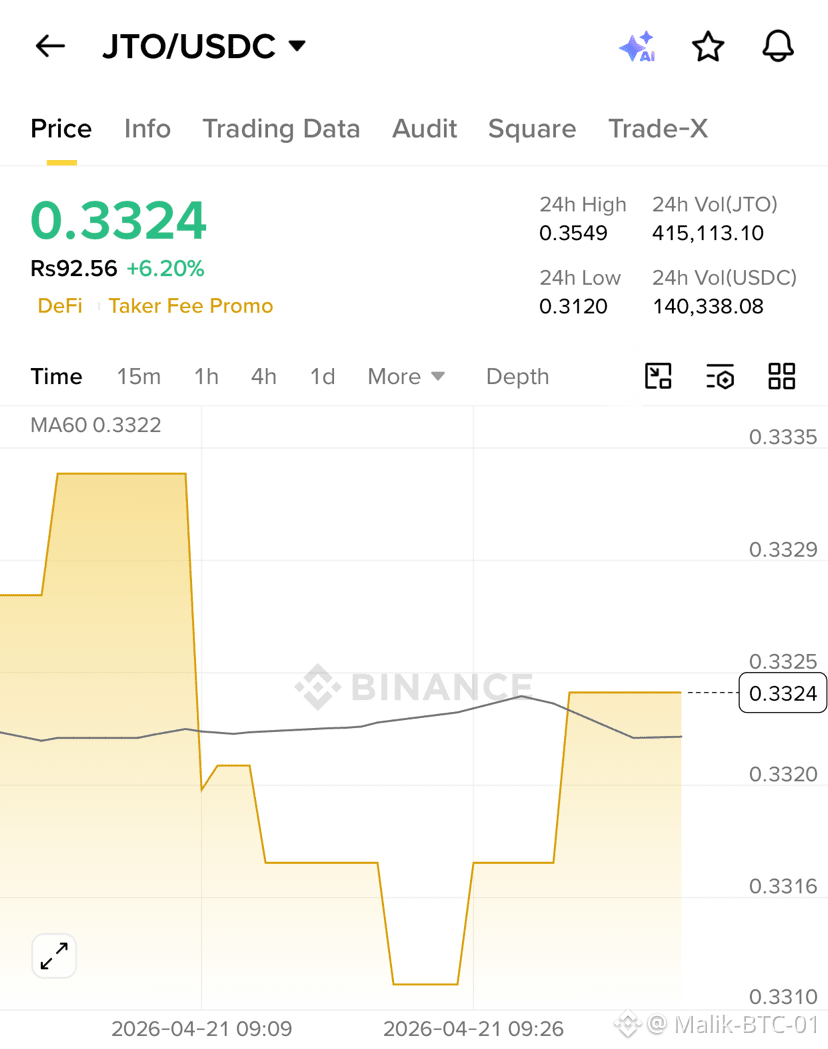
$JTO is approaching a key decision zone after tight consolidation 🔥 momentum building for a possible breakout.”
If buyers step in, we may see a fast impulsive move.
📊 Setup:
Entry: Breakout confirmation above resistance
SL: Below support zone
Targets: +8% / +15% / +25%
Coins: $JTO $BTC $ETH
Breakout ya rejection — what’s your take? 🤔
{future}(JTOUSDT)
{future}(BTCUSDT)
{future}(ETHUSDT)
#CharlesSchwabtoRollOutSpotCryptoTrading #Kalshi’sDisputewithNevada #RheaFinanceReleasesAttackInvestigation #ARKInvestReducedPositionsinCircleandBullish #AltcoinRecoverySignals?
$JTO is approaching a key decision zone after tight consolidation 🔥 momentum building for a possible breakout.”
If buyers step in, we may see a fast impulsive move.
📊 Setup:
Entry: Breakout confirmation above resistance
SL: Below support zone
Targets: +8% / +15% / +25%
Coins: $JTO $BTC $ETH
Breakout ya rejection — what’s your take? 🤔
#CharlesSchwabtoRollOutSpotCryptoTrading #Kalshi’sDisputewithNevada #RheaFinanceReleasesAttackInvestigation #ARKInvestReducedPositionsinCircleandBullish #AltcoinRecoverySignals?
If buyers step in, we may see a fast impulsive move.
📊 Setup:
Entry: Breakout confirmation above resistance
SL: Below support zone
Targets: +8% / +15% / +25%
Coins: $JTO $BTC $ETH
Breakout ya rejection — what’s your take? 🤔
#CharlesSchwabtoRollOutSpotCryptoTrading #Kalshi’sDisputewithNevada #RheaFinanceReleasesAttackInvestigation #ARKInvestReducedPositionsinCircleandBullish #AltcoinRecoverySignals?
83
·
--
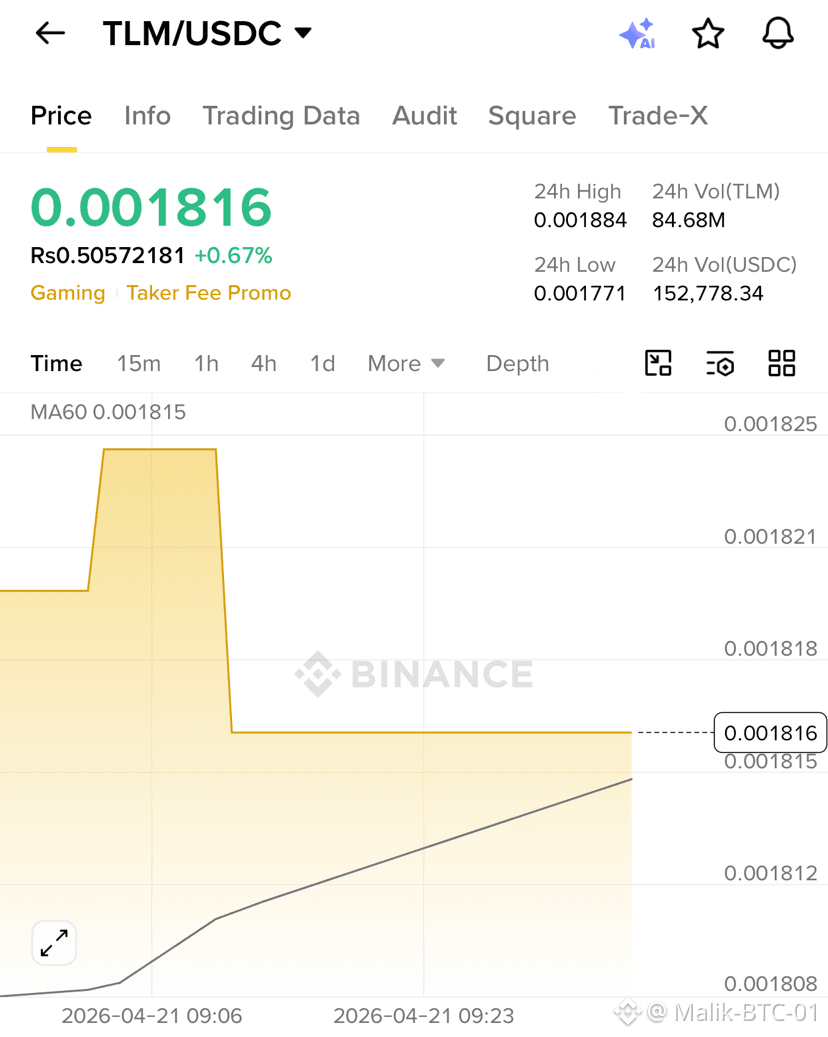
“$TLM is forming a tight consolidation near key resistance 🔥 breakout or rejection coming soon.”
If volume kicks in, momentum move possible.
📊 Setup:
Entry: Breakout confirmation zone
SL: Below support
Targets: +8% / +15% / +20%
Coins: $TLM $BTC $ETH
What’s your view — breakout or fakeout?
{future}(TLMUSDT)
{future}(BTCUSDT)
{future}(ETHUSDT)
#CharlesSchwabtoRollOutSpotCryptoTrading #Kalshi’sDisputewithNevada #RheaFinanceReleasesAttackInvestigation #ARKInvestReducedPositionsinCircleandBullish #AltcoinRecoverySignals?
“$TLM is forming a tight consolidation near key resistance 🔥 breakout or rejection coming soon.”
If volume kicks in, momentum move possible.
📊 Setup:
Entry: Breakout confirmation zone
SL: Below support
Targets: +8% / +15% / +20%
Coins: $TLM $BTC $ETH
What’s your view — breakout or fakeout?
#CharlesSchwabtoRollOutSpotCryptoTrading #Kalshi’sDisputewithNevada #RheaFinanceReleasesAttackInvestigation #ARKInvestReducedPositionsinCircleandBullish #AltcoinRecoverySignals?
If volume kicks in, momentum move possible.
📊 Setup:
Entry: Breakout confirmation zone
SL: Below support
Targets: +8% / +15% / +20%
Coins: $TLM $BTC $ETH
What’s your view — breakout or fakeout?
#CharlesSchwabtoRollOutSpotCryptoTrading #Kalshi’sDisputewithNevada #RheaFinanceReleasesAttackInvestigation #ARKInvestReducedPositionsinCircleandBullish #AltcoinRecoverySignals?
78
·
--
At first I saw $PIXEL like any game token… play, earn, spend — simple loop 🎮
But over time, the structure started to feel different 👀
It’s not just one game loop anymore… it feels like $PIXEL is sitting between multiple loops, routing activity, rewards, and player movement.
That only works if behavior repeats.
If users just earn and sell once, the system stays active… but doesn’t really strengthen 💯
Now I’m watching less for new integrations…
and more for whether Pixel actually gets reused without extra incentives 📊
That’s where real value builds 🚀
@pixels $PIXEL #pixel
{future}(PIXELUSDT)
At first I saw $PIXEL like any game token… play, earn, spend — simple loop 🎮
But over time, the structure started to feel different 👀
It’s not just one game loop anymore… it feels like $PIXEL is sitting between multiple loops, routing activity, rewards, and player movement.
That only works if behavior repeats.
If users just earn and sell once, the system stays active… but doesn’t really strengthen 💯
Now I’m watching less for new integrations…
and more for whether Pixel actually gets reused without extra incentives 📊
That’s where real value builds 🚀
@Pixels $PIXEL #pixel
But over time, the structure started to feel different 👀
It’s not just one game loop anymore… it feels like $PIXEL is sitting between multiple loops, routing activity, rewards, and player movement.
That only works if behavior repeats.
If users just earn and sell once, the system stays active… but doesn’t really strengthen 💯
Now I’m watching less for new integrations…
and more for whether Pixel actually gets reused without extra incentives 📊
That’s where real value builds 🚀
@Pixels $PIXEL #pixel
1
1
29
·
--
📝 Pixels Feels Simple… But $PIXEL Might Be Pricing Behavior, Not Gameplay@pixels $PIXEL #pixel
At first, Pixels feels simple. You log in, run a few loops, and progress feels smooth and natural 🎮
Nothing looks overly engineered. It even feels like older browser-style games — slow, steady, predictable.
But after spending more time inside the system, something starts to feel slightly different 👀
Not wrong… just uneven.
Some players don’t progress faster because they grind more or spend more. Instead, they seem to “stick” inside the system. Their progress feels more continuous, less reset-based.
That’s where an interesting thought starts to form:
What if $PIXEL isn’t just pricing gameplay…
What if it’s indirectly pricing behavior?
In most games, actions are temporary. You complete something, get rewarded, and move on. The system records it, but it doesn’t really reuse how you played.
Pixels feels different.
There’s a subtle sense that certain patterns are not just repeated — they are recognized .
And once recognized, they seem to carry forward.
Not officially. There’s no message explaining it.
But over time, consistency starts to feel like more than just effort… it feels like signal.
That changes how the system behaves.
Instead of treating all activity equally, it begins to distinguish between patterns. Some actions get reinforced. Others simply pass through without long-term impact.
From a system perspective, this makes sense.
Predictable behavior is easier to build around 📊
Stable patterns reduce uncertainty
Consistent players create structure inside the economy
So instead of rewarding just time or effort, the system may be leaning toward reliability.
And that’s where things get interesting.
Because once behavior becomes predictable… it can be reused.
And reuse changes everything.
A one-time action has limited impact.
But a repeated pattern can influence future outcomes — even if that process is not visible.
No hard rules are needed. No strict barriers.
The system simply leans toward what it already understands.
This kind of pattern exists outside gaming too.
Platforms don’t treat all users equally over time. They identify stable behavior and gradually prioritize it — not publicly, but structurally.
Pixels may be moving in a similar direction.
If that’s true, then $PIXEL is not just a reward token.
It becomes part of a filtering layer — deciding which behaviors get reinforced and which remain temporary.
That leads to a different kind of ecosystem.
Growth is no longer just about more players.
It’s about more predictable and reusable behavior.
And that creates a trade-off.
On one side, the system becomes more stable and efficient ⚙️
On the other, it risks reducing exploration.
If players start optimizing only for what “sticks,” experimentation slows down. The system becomes cleaner… but narrower.
There’s also a transparency question.
Right now, most of this is not visible. You feel it, but you can’t clearly measure it. Over time, if outcomes depend on patterns players don’t understand, that can create friction.
So the real question isn’t just about gameplay.
It’s about recognition.
Maybe Pixels is not just play-to-earn…
Not even play-to-own…
Maybe it’s slowly moving toward something else:
Play-to-be-recognized 👀
Where the system rewards not just what you do —
but how consistently you do it.
And if that’s true…
Then the real game isn’t about doing more
It’s about becoming predictable enough…
that the system stops questioning your behavior 🚀
{future}(PIXELUSDT)
📝 Pixels Feels Simple… But $PIXEL Might Be Pricing Behavior, Not Gameplay
@Pixels $PIXEL #pixel
At first, Pixels feels simple. You log in, run a few loops, and progress feels smooth and natural 🎮
Nothing looks overly engineered. It even feels like older browser-style games — slow, steady, predictable.
But after spending more time inside the system, something starts to feel slightly different 👀
Not wrong… just uneven.
Some players don’t progress faster because they grind more or spend more. Instead, they seem to “stick” inside the system. Their progress feels more continuous, less reset-based.
That’s where an interesting thought starts to form:
What if $PIXEL isn’t just pricing gameplay…
What if it’s indirectly pricing behavior?
In most games, actions are temporary. You complete something, get rewarded, and move on. The system records it, but it doesn’t really reuse how you played.
Pixels feels different.
There’s a subtle sense that certain patterns are not just repeated — they are recognized .
And once recognized, they seem to carry forward.
Not officially. There’s no message explaining it.
But over time, consistency starts to feel like more than just effort… it feels like signal.
That changes how the system behaves.
Instead of treating all activity equally, it begins to distinguish between patterns. Some actions get reinforced. Others simply pass through without long-term impact.
From a system perspective, this makes sense.
Predictable behavior is easier to build around 📊
Stable patterns reduce uncertainty
Consistent players create structure inside the economy
So instead of rewarding just time or effort, the system may be leaning toward reliability.
And that’s where things get interesting.
Because once behavior becomes predictable… it can be reused.
And reuse changes everything.
A one-time action has limited impact.
But a repeated pattern can influence future outcomes — even if that process is not visible.
No hard rules are needed. No strict barriers.
The system simply leans toward what it already understands.
This kind of pattern exists outside gaming too.
Platforms don’t treat all users equally over time. They identify stable behavior and gradually prioritize it — not publicly, but structurally.
Pixels may be moving in a similar direction.
If that’s true, then $PIXEL is not just a reward token.
It becomes part of a filtering layer — deciding which behaviors get reinforced and which remain temporary.
That leads to a different kind of ecosystem.
Growth is no longer just about more players.
It’s about more predictable and reusable behavior.
And that creates a trade-off.
On one side, the system becomes more stable and efficient ⚙️
On the other, it risks reducing exploration.
If players start optimizing only for what “sticks,” experimentation slows down. The system becomes cleaner… but narrower.
There’s also a transparency question.
Right now, most of this is not visible. You feel it, but you can’t clearly measure it. Over time, if outcomes depend on patterns players don’t understand, that can create friction.
So the real question isn’t just about gameplay.
It’s about recognition.
Maybe Pixels is not just play-to-earn…
Not even play-to-own…
Maybe it’s slowly moving toward something else:
Play-to-be-recognized 👀
Where the system rewards not just what you do —
but how consistently you do it.
And if that’s true…
Then the real game isn’t about doing more
It’s about becoming predictable enough…
that the system stops questioning your behavior 🚀
At first, Pixels feels simple. You log in, run a few loops, and progress feels smooth and natural 🎮
Nothing looks overly engineered. It even feels like older browser-style games — slow, steady, predictable.
But after spending more time inside the system, something starts to feel slightly different 👀
Not wrong… just uneven.
Some players don’t progress faster because they grind more or spend more. Instead, they seem to “stick” inside the system. Their progress feels more continuous, less reset-based.
That’s where an interesting thought starts to form:
What if $PIXEL isn’t just pricing gameplay…
What if it’s indirectly pricing behavior?
In most games, actions are temporary. You complete something, get rewarded, and move on. The system records it, but it doesn’t really reuse how you played.
Pixels feels different.
There’s a subtle sense that certain patterns are not just repeated — they are recognized .
And once recognized, they seem to carry forward.
Not officially. There’s no message explaining it.
But over time, consistency starts to feel like more than just effort… it feels like signal.
That changes how the system behaves.
Instead of treating all activity equally, it begins to distinguish between patterns. Some actions get reinforced. Others simply pass through without long-term impact.
From a system perspective, this makes sense.
Predictable behavior is easier to build around 📊
Stable patterns reduce uncertainty
Consistent players create structure inside the economy
So instead of rewarding just time or effort, the system may be leaning toward reliability.
And that’s where things get interesting.
Because once behavior becomes predictable… it can be reused.
And reuse changes everything.
A one-time action has limited impact.
But a repeated pattern can influence future outcomes — even if that process is not visible.
No hard rules are needed. No strict barriers.
The system simply leans toward what it already understands.
This kind of pattern exists outside gaming too.
Platforms don’t treat all users equally over time. They identify stable behavior and gradually prioritize it — not publicly, but structurally.
Pixels may be moving in a similar direction.
If that’s true, then $PIXEL is not just a reward token.
It becomes part of a filtering layer — deciding which behaviors get reinforced and which remain temporary.
That leads to a different kind of ecosystem.
Growth is no longer just about more players.
It’s about more predictable and reusable behavior.
And that creates a trade-off.
On one side, the system becomes more stable and efficient ⚙️
On the other, it risks reducing exploration.
If players start optimizing only for what “sticks,” experimentation slows down. The system becomes cleaner… but narrower.
There’s also a transparency question.
Right now, most of this is not visible. You feel it, but you can’t clearly measure it. Over time, if outcomes depend on patterns players don’t understand, that can create friction.
So the real question isn’t just about gameplay.
It’s about recognition.
Maybe Pixels is not just play-to-earn…
Not even play-to-own…
Maybe it’s slowly moving toward something else:
Play-to-be-recognized 👀
Where the system rewards not just what you do —
but how consistently you do it.
And if that’s true…
Then the real game isn’t about doing more
It’s about becoming predictable enough…
that the system stops questioning your behavior 🚀
7
8
42
·
--
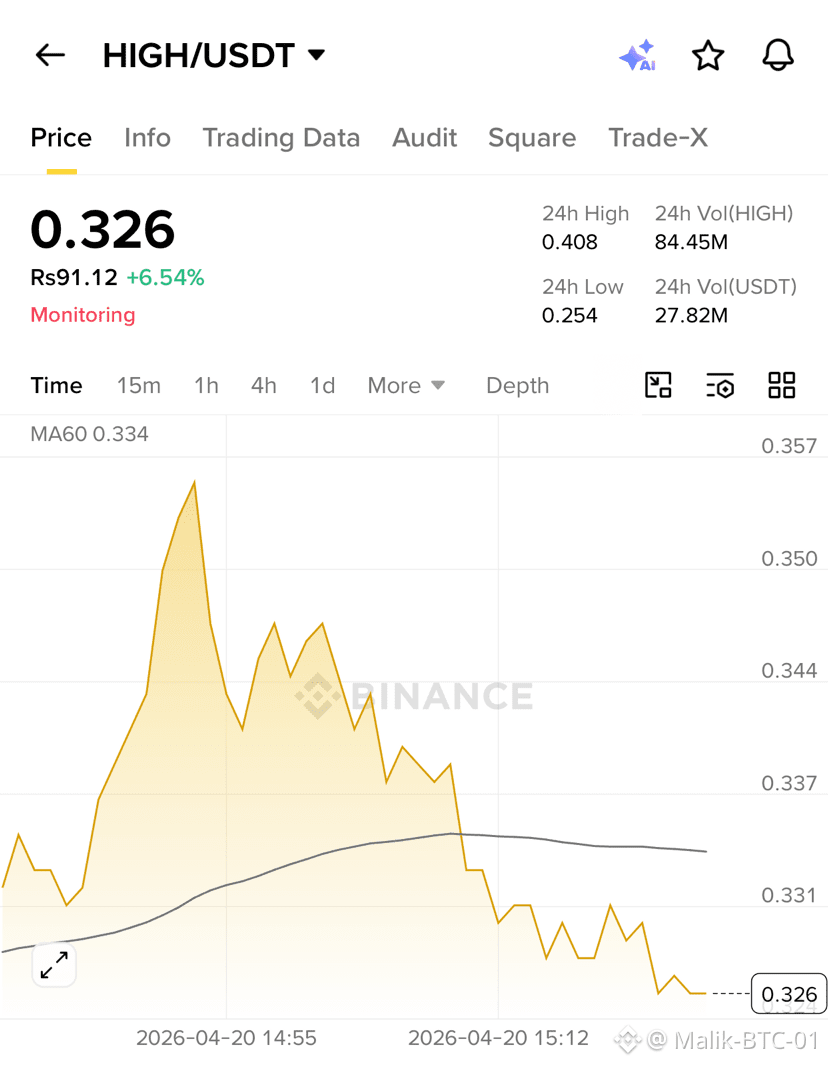
🚀 $HIGH /USDT TRADE SETUP
Signal: LONG (Breakout + Momentum)
Entry Zone: 2.45 – 2.60
Stop Loss: 2.20
Targets:
TP1: 2.85
TP2: 3.10
TP3: 3.60
TP4: 4.20
{future}(HIGHUSDT)
#USInitialJoblessClaimsBelowForecast #AltcoinRecoverySignals? #CharlesSchwabtoRollOutSpotCryptoTrading #WhatNextForUSIranConflict #Kalshi’sDisputewithNevada
🚀 $HIGH /USDT TRADE SETUP
Signal: LONG (Breakout + Momentum)
Entry Zone: 2.45 – 2.60
Stop Loss: 2.20
Targets:
TP1: 2.85
TP2: 3.10
TP3: 3.60
TP4: 4.20
#USInitialJoblessClaimsBelowForecast #AltcoinRecoverySignals? #CharlesSchwabtoRollOutSpotCryptoTrading #WhatNextForUSIranConflict #Kalshi’sDisputewithNevada
Signal: LONG (Breakout + Momentum)
Entry Zone: 2.45 – 2.60
Stop Loss: 2.20
Targets:
TP1: 2.85
TP2: 3.10
TP3: 3.60
TP4: 4.20
#USInitialJoblessClaimsBelowForecast #AltcoinRecoverySignals? #CharlesSchwabtoRollOutSpotCryptoTrading #WhatNextForUSIranConflict #Kalshi’sDisputewithNevada
21
·
--
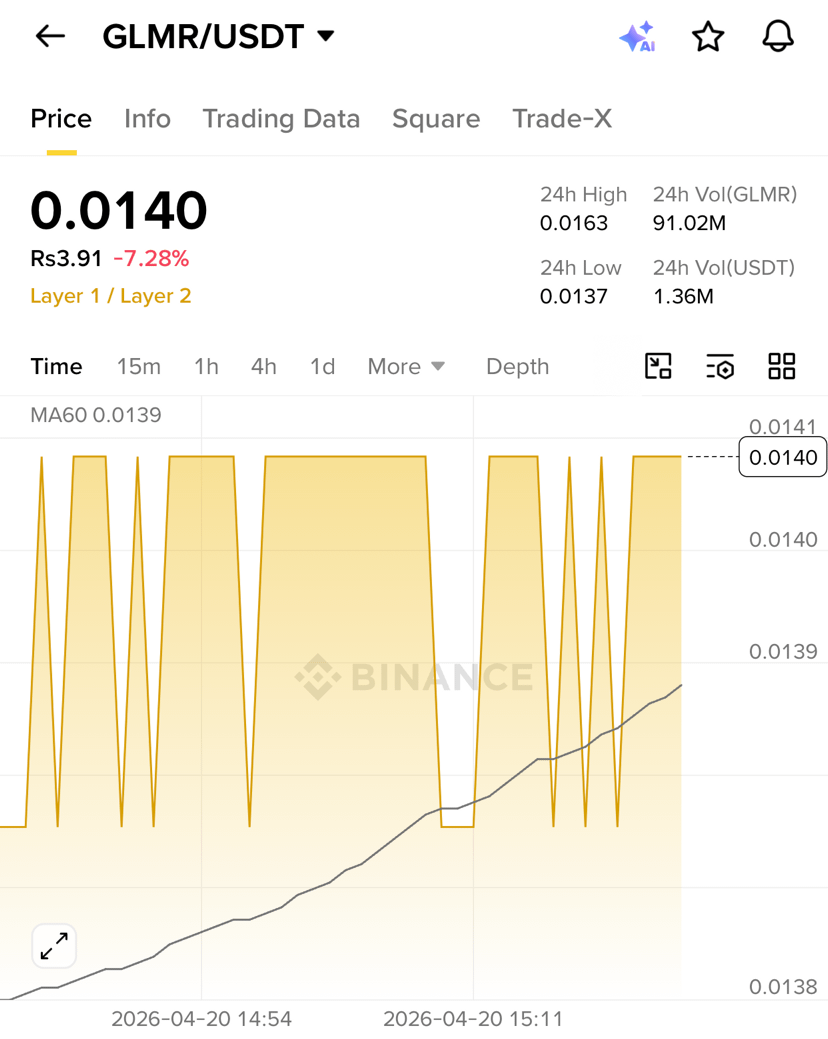
🌙 $GLMR /USDT Trade Setup
Signal: LONG
Entry Zone: 0.28 – 0.31
Stop Loss: 0.25
Targets:
TP1: 0.34
TP2: 0.38
TP3: 0.45
{spot}(GLMRUSDT)
#USInitialJoblessClaimsBelowForecast #CharlesSchwabtoRollOutSpotCryptoTrading #AltcoinRecoverySignals? #Kalshi’sDisputewithNevada #RheaFinanceReleasesAttackInvestigation
🌙 $GLMR /USDT Trade Setup
Signal: LONG
Entry Zone: 0.28 – 0.31
Stop Loss: 0.25
Targets:
TP1: 0.34
TP2: 0.38
TP3: 0.45
#USInitialJoblessClaimsBelowForecast #CharlesSchwabtoRollOutSpotCryptoTrading #AltcoinRecoverySignals? #Kalshi’sDisputewithNevada #RheaFinanceReleasesAttackInvestigation
Signal: LONG
Entry Zone: 0.28 – 0.31
Stop Loss: 0.25
Targets:
TP1: 0.34
TP2: 0.38
TP3: 0.45
#USInitialJoblessClaimsBelowForecast #CharlesSchwabtoRollOutSpotCryptoTrading #AltcoinRecoverySignals? #Kalshi’sDisputewithNevada #RheaFinanceReleasesAttackInvestigation
1
25
·
--
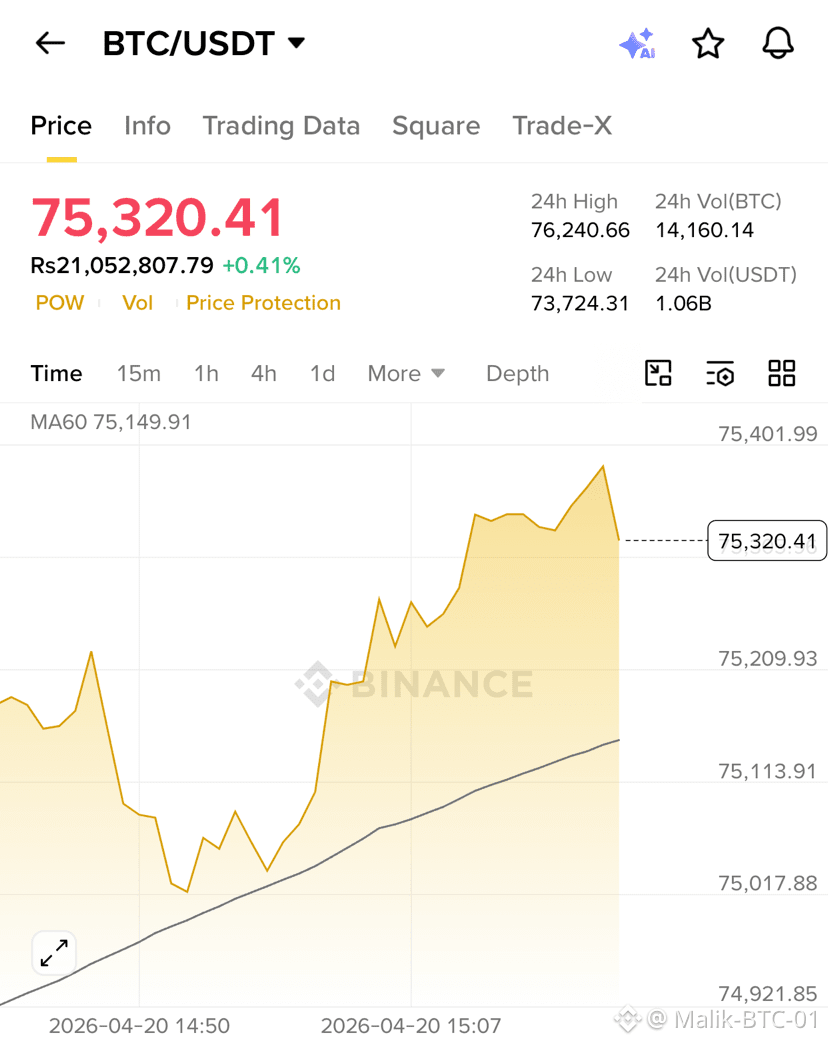
🟠 $BTC /USDT Trade Setup
Signal: LONG
Entry Zone: 63,800 – 64,500
Stop Loss: 61,900
Targets:
TP1: 66,500
TP2: 68,800
TP3: 72,000
{future}(BTCUSDT)
#BitcoinPriceTrends #USInitialJoblessClaimsBelowForecast #CharlesSchwabtoRollOutSpotCryptoTrading #AltcoinRecoverySignals? #AltcoinRecoverySignals?
🟠 $BTC /USDT Trade Setup
Signal: LONG
Entry Zone: 63,800 – 64,500
Stop Loss: 61,900
Targets:
TP1: 66,500
TP2: 68,800
TP3: 72,000
#BitcoinPriceTrends #USInitialJoblessClaimsBelowForecast #CharlesSchwabtoRollOutSpotCryptoTrading #AltcoinRecoverySignals? #AltcoinRecoverySignals?
Signal: LONG
Entry Zone: 63,800 – 64,500
Stop Loss: 61,900
Targets:
TP1: 66,500
TP2: 68,800
TP3: 72,000
#BitcoinPriceTrends #USInitialJoblessClaimsBelowForecast #CharlesSchwabtoRollOutSpotCryptoTrading #AltcoinRecoverySignals? #AltcoinRecoverySignals?
2
·
--
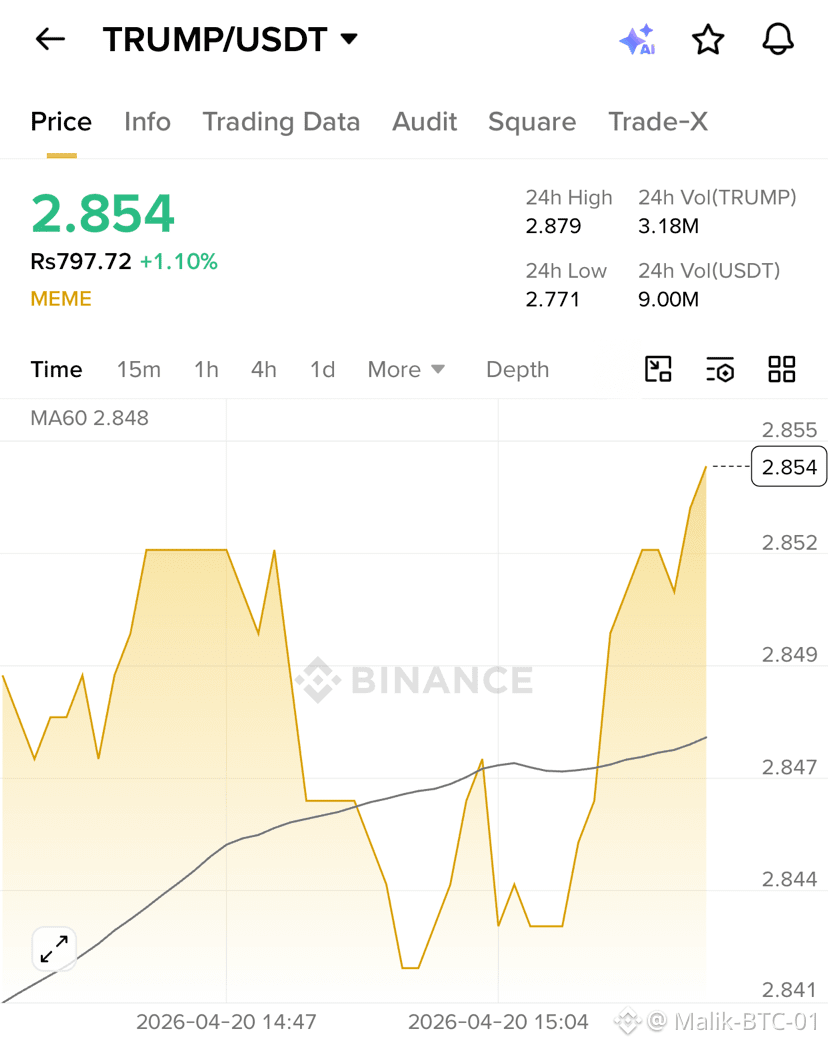
🪙 $TRUMP /MAGA Coin Trade Setup
Signal: LONG (News/Hype Based)
Entry Zone: 0.00085 – 0.00092
Stop Loss: 0.00072
Targets:
TP1: 0.00105
TP2: 0.00130
TP3: 0.00170
{future}(TRUMPUSDT)
#AltcoinRecoverySignals? #WhatNextForUSIranConflict #RAVEWildMoves #Kalshi’sDisputewithNevada #CharlesSchwabtoRollOutSpotCryptoTrading
🪙 $TRUMP /MAGA Coin Trade Setup
Signal: LONG (News/Hype Based)
Entry Zone: 0.00085 – 0.00092
Stop Loss: 0.00072
Targets:
TP1: 0.00105
TP2: 0.00130
TP3: 0.00170
#AltcoinRecoverySignals? #WhatNextForUSIranConflict #RAVEWildMoves #Kalshi’sDisputewithNevada #CharlesSchwabtoRollOutSpotCryptoTrading
Signal: LONG (News/Hype Based)
Entry Zone: 0.00085 – 0.00092
Stop Loss: 0.00072
Targets:
TP1: 0.00105
TP2: 0.00130
TP3: 0.00170
#AltcoinRecoverySignals? #WhatNextForUSIranConflict #RAVEWildMoves #Kalshi’sDisputewithNevada #CharlesSchwabtoRollOutSpotCryptoTrading
199
·
--
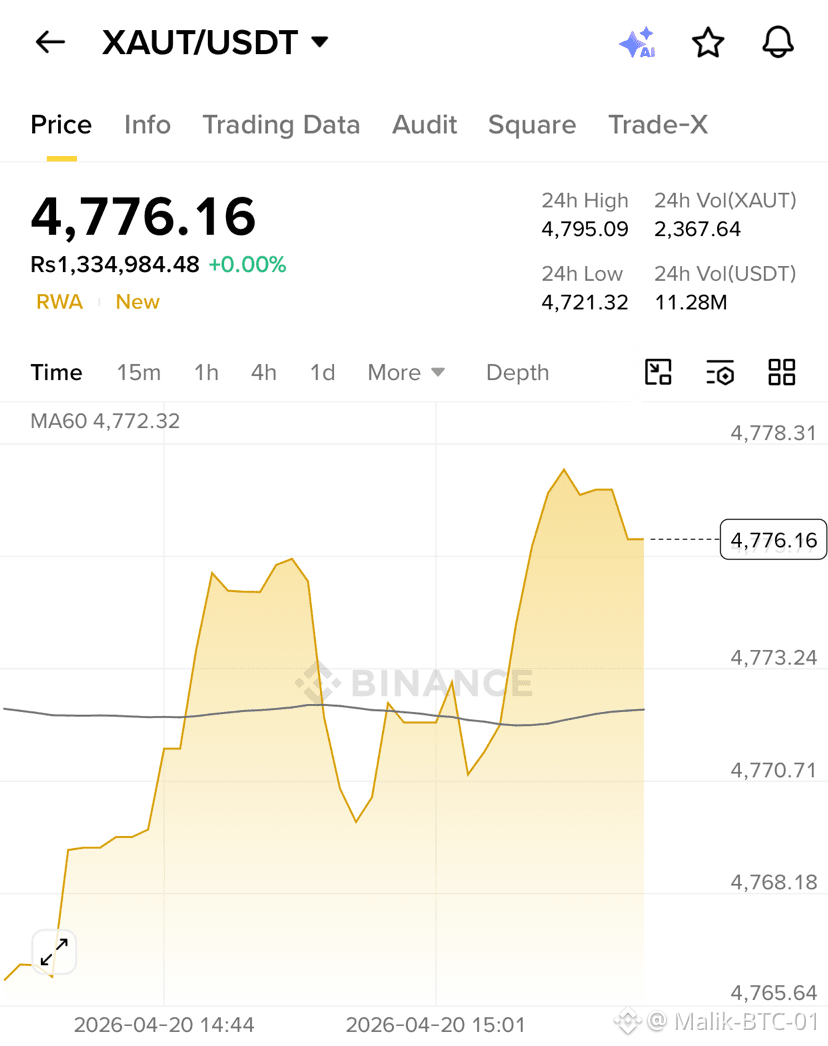
🟡 $XAUT /USDT Trade Setup
Signal: LONG
Entry Zone: 4780 – 4820
Stop Loss: 4680
Targets:
TP1: 4900
TP2: 5000
TP3: 5150
{future}(XAUTUSDT)
🟡 $XAUT /USDT Trade Setup
Signal: LONG
Entry Zone: 4780 – 4820
Stop Loss: 4680
Targets:
TP1: 4900
TP2: 5000
TP3: 5150
Signal: LONG
Entry Zone: 4780 – 4820
Stop Loss: 4680
Targets:
TP1: 4900
TP2: 5000
TP3: 5150
·
--
@pixels $PIXEL #pixel
I keep thinking I’m just inside one loop in Pixels… my land, crops, routes, repeating cycles, energy draining and refilling, crafting queues stacking. Everything feels smooth and self-contained like it’s all happening inside one system 🌱
But when I step back, it starts to feel different… like this loop is not the center, just the visible layer 👀
Because while I’m inside Pixels doing off-chain actions — planting, harvesting, running NPC loops, circulating Coins — there seems to be another layer moving in the background that I don’t directly see.
Staking contracts, validator pools, ecosystem routing… value being locked not just into gameplay, but into different parts of the system 🔄
So the question becomes… what am I actually sitting inside?
It doesn’t feel like a single economy anymore. It feels like multiple systems sharing the same token, connected through a deeper structure underneath. Factory contracts, game layers, staking decisions — all influencing where value flows, while I’m still focused on the farm.
And those other experiences — partner games, new layers, expanding ecosystems — they don’t just grow from players alone. They are supported through allocation, staking, and system-level direction that is not visible from inside the gameplay loop.
That’s the strange part.
Everything I do in the visible layer feels meaningful… but it might only be one small input into a much larger structure that decides where value moves next 📊
I can optimize farming, timing, and efficiency inside the game… but that doesn’t necessarily mean I’m close to where actual decisions about ecosystem direction are being made.
And still, from inside, it feels like this is the main system.
But maybe it’s just one entry point into something much bigger — something that distributes value across multiple layers while staying mostly invisible from the surface.
And that changes how the whole experience feels… not disconnected, just not centered on what I see directly 👀
{future}(PIXELUSDT)
@Pixels $PIXEL #pixel
I keep thinking I’m just inside one loop in Pixels… my land, crops, routes, repeating cycles, energy draining and refilling, crafting queues stacking. Everything feels smooth and self-contained like it’s all happening inside one system 🌱
But when I step back, it starts to feel different… like this loop is not the center, just the visible layer 👀
Because while I’m inside Pixels doing off-chain actions — planting, harvesting, running NPC loops, circulating Coins — there seems to be another layer moving in the background that I don’t directly see.
Staking contracts, validator pools, ecosystem routing… value being locked not just into gameplay, but into different parts of the system 🔄
So the question becomes… what am I actually sitting inside?
It doesn’t feel like a single economy anymore. It feels like multiple systems sharing the same token, connected through a deeper structure underneath. Factory contracts, game layers, staking decisions — all influencing where value flows, while I’m still focused on the farm.
And those other experiences — partner games, new layers, expanding ecosystems — they don’t just grow from players alone. They are supported through allocation, staking, and system-level direction that is not visible from inside the gameplay loop.
That’s the strange part.
Everything I do in the visible layer feels meaningful… but it might only be one small input into a much larger structure that decides where value moves next 📊
I can optimize farming, timing, and efficiency inside the game… but that doesn’t necessarily mean I’m close to where actual decisions about ecosystem direction are being made.
And still, from inside, it feels like this is the main system.
But maybe it’s just one entry point into something much bigger — something that distributes value across multiple layers while staying mostly invisible from the surface.
And that changes how the whole experience feels… not disconnected, just not centered on what I see directly 👀
I keep thinking I’m just inside one loop in Pixels… my land, crops, routes, repeating cycles, energy draining and refilling, crafting queues stacking. Everything feels smooth and self-contained like it’s all happening inside one system 🌱
But when I step back, it starts to feel different… like this loop is not the center, just the visible layer 👀
Because while I’m inside Pixels doing off-chain actions — planting, harvesting, running NPC loops, circulating Coins — there seems to be another layer moving in the background that I don’t directly see.
Staking contracts, validator pools, ecosystem routing… value being locked not just into gameplay, but into different parts of the system 🔄
So the question becomes… what am I actually sitting inside?
It doesn’t feel like a single economy anymore. It feels like multiple systems sharing the same token, connected through a deeper structure underneath. Factory contracts, game layers, staking decisions — all influencing where value flows, while I’m still focused on the farm.
And those other experiences — partner games, new layers, expanding ecosystems — they don’t just grow from players alone. They are supported through allocation, staking, and system-level direction that is not visible from inside the gameplay loop.
That’s the strange part.
Everything I do in the visible layer feels meaningful… but it might only be one small input into a much larger structure that decides where value moves next 📊
I can optimize farming, timing, and efficiency inside the game… but that doesn’t necessarily mean I’m close to where actual decisions about ecosystem direction are being made.
And still, from inside, it feels like this is the main system.
But maybe it’s just one entry point into something much bigger — something that distributes value across multiple layers while staying mostly invisible from the surface.
And that changes how the whole experience feels… not disconnected, just not centered on what I see directly 👀
1
23
·
--
📝 Pixels Didn’t Restrict You — It Quietly Redefined What Matters@pixels $PIXEL #pixel
{future}(PIXELUSDT)
When most people first enter Pixels, the experience feels open in a very natural way 🌍. There is no immediate pressure to optimize, no strict direction forcing efficiency, and no obvious system telling you what you should focus on.
You can move freely across the map, try different actions, experiment with farming and crafting, and spend energy without thinking too much about outcomes 👀. In that early phase, everything feels flexible — almost like nothing really matters yet.
But that phase doesn’t stay the same.
As more time is spent inside the system, a shift begins to take place 🔄. It is not sudden, and it is not forced. There are no warnings or instructions telling you to change your behavior.
Instead, the change comes from observation.
You start noticing that not every action produces the same kind of result 📊. Some activities seem to connect to value more consistently, while others remain inside the system without ever translating into anything meaningful.
At first, this difference feels random. But over time, it starts to feel consistent.
This is where the structure begins to reveal itself.
The Task Board slowly becomes the focal point of interaction 🎯. Not because it is mandatory, but because it acts as the main pathway through which in-game activity is recognized and converted into value.
If something does not appear within that structure, it rarely contributes to measurable progress.
Once that pattern becomes clear, behavior starts to adjust naturally.
You don’t immediately stop experimenting, but your decisions begin to change. You start paying more attention to what gets repeated, what returns in cycles, and what disappears after a short period.
This creates a quiet feedback loop 🔁
Actions that are consistently acknowledged become familiar and repeated. Actions that are ignored begin to feel unnecessary, even if they are still available.
Importantly, nothing is removed.
You can still plant anything, craft anything, and follow any loop you want 🌱. The system does not block these choices.
But it does not treat them equally either.
Only a limited set of actions actually move forward into value conversion 💰. The rest remain within internal circulation — inside Coins, storage, and activity cycles that do not extend beyond the game environment.
That distinction changes how players think.
The question slowly shifts from:
“What can I do?” → “What actually matters?” 🤔
And once that question becomes central, exploration begins to fade.
Not because it is discouraged directly, but because it no longer feels effective. Actions that do not lead to outcomes are naturally avoided.
This is how alignment forms.
Not through control, but through repetition.
Players begin to operate within a narrower range of actions — not because they are forced to, but because those actions are the only ones that continue to produce visible value 📈.
From the outside, this still looks like freedom.
But from inside the system, it feels different.
Some paths lead forward.
Most do not.
Over time, players adapt to that reality without needing explicit instructions.
That learning process is what stabilizes the system.
It prevents uncontrolled extraction, reduces randomness, and creates consistency across player behavior ⚙️.
But this stability comes with a trade-off.
As players align with what the system recognizes, they gradually move away from exploration 🚶♂️.
The game shifts from an open experience into a structured environment where efficiency replaces curiosity.
And this raises an important question.
If players eventually stop choosing actions that are not recognized…
were those choices ever truly equal?
Pixels does not answer this directly.
Instead, it allows players to discover it over time — through patterns, repetition, and gradual realization.
In the end, nothing is explicitly restricted
But everything is filtered.
And that filter is what defines how the game is actually played 🚀
📝 Pixels Didn’t Restrict You — It Quietly Redefined What Matters
@Pixels $PIXEL #pixel
When most people first enter Pixels, the experience feels open in a very natural way 🌍. There is no immediate pressure to optimize, no strict direction forcing efficiency, and no obvious system telling you what you should focus on.
You can move freely across the map, try different actions, experiment with farming and crafting, and spend energy without thinking too much about outcomes 👀. In that early phase, everything feels flexible — almost like nothing really matters yet.
But that phase doesn’t stay the same.
As more time is spent inside the system, a shift begins to take place 🔄. It is not sudden, and it is not forced. There are no warnings or instructions telling you to change your behavior.
Instead, the change comes from observation.
You start noticing that not every action produces the same kind of result 📊. Some activities seem to connect to value more consistently, while others remain inside the system without ever translating into anything meaningful.
At first, this difference feels random. But over time, it starts to feel consistent.
This is where the structure begins to reveal itself.
The Task Board slowly becomes the focal point of interaction 🎯. Not because it is mandatory, but because it acts as the main pathway through which in-game activity is recognized and converted into value.
If something does not appear within that structure, it rarely contributes to measurable progress.
Once that pattern becomes clear, behavior starts to adjust naturally.
You don’t immediately stop experimenting, but your decisions begin to change. You start paying more attention to what gets repeated, what returns in cycles, and what disappears after a short period.
This creates a quiet feedback loop 🔁
Actions that are consistently acknowledged become familiar and repeated. Actions that are ignored begin to feel unnecessary, even if they are still available.
Importantly, nothing is removed.
You can still plant anything, craft anything, and follow any loop you want 🌱. The system does not block these choices.
But it does not treat them equally either.
Only a limited set of actions actually move forward into value conversion 💰. The rest remain within internal circulation — inside Coins, storage, and activity cycles that do not extend beyond the game environment.
That distinction changes how players think.
The question slowly shifts from:
“What can I do?” → “What actually matters?” 🤔
And once that question becomes central, exploration begins to fade.
Not because it is discouraged directly, but because it no longer feels effective. Actions that do not lead to outcomes are naturally avoided.
This is how alignment forms.
Not through control, but through repetition.
Players begin to operate within a narrower range of actions — not because they are forced to, but because those actions are the only ones that continue to produce visible value 📈.
From the outside, this still looks like freedom.
But from inside the system, it feels different.
Some paths lead forward.
Most do not.
Over time, players adapt to that reality without needing explicit instructions.
That learning process is what stabilizes the system.
It prevents uncontrolled extraction, reduces randomness, and creates consistency across player behavior ⚙️.
But this stability comes with a trade-off.
As players align with what the system recognizes, they gradually move away from exploration 🚶♂️.
The game shifts from an open experience into a structured environment where efficiency replaces curiosity.
And this raises an important question.
If players eventually stop choosing actions that are not recognized…
were those choices ever truly equal?
Pixels does not answer this directly.
Instead, it allows players to discover it over time — through patterns, repetition, and gradual realization.
In the end, nothing is explicitly restricted
But everything is filtered.
And that filter is what defines how the game is actually played 🚀
When most people first enter Pixels, the experience feels open in a very natural way 🌍. There is no immediate pressure to optimize, no strict direction forcing efficiency, and no obvious system telling you what you should focus on.
You can move freely across the map, try different actions, experiment with farming and crafting, and spend energy without thinking too much about outcomes 👀. In that early phase, everything feels flexible — almost like nothing really matters yet.
But that phase doesn’t stay the same.
As more time is spent inside the system, a shift begins to take place 🔄. It is not sudden, and it is not forced. There are no warnings or instructions telling you to change your behavior.
Instead, the change comes from observation.
You start noticing that not every action produces the same kind of result 📊. Some activities seem to connect to value more consistently, while others remain inside the system without ever translating into anything meaningful.
At first, this difference feels random. But over time, it starts to feel consistent.
This is where the structure begins to reveal itself.
The Task Board slowly becomes the focal point of interaction 🎯. Not because it is mandatory, but because it acts as the main pathway through which in-game activity is recognized and converted into value.
If something does not appear within that structure, it rarely contributes to measurable progress.
Once that pattern becomes clear, behavior starts to adjust naturally.
You don’t immediately stop experimenting, but your decisions begin to change. You start paying more attention to what gets repeated, what returns in cycles, and what disappears after a short period.
This creates a quiet feedback loop 🔁
Actions that are consistently acknowledged become familiar and repeated. Actions that are ignored begin to feel unnecessary, even if they are still available.
Importantly, nothing is removed.
You can still plant anything, craft anything, and follow any loop you want 🌱. The system does not block these choices.
But it does not treat them equally either.
Only a limited set of actions actually move forward into value conversion 💰. The rest remain within internal circulation — inside Coins, storage, and activity cycles that do not extend beyond the game environment.
That distinction changes how players think.
The question slowly shifts from:
“What can I do?” → “What actually matters?” 🤔
And once that question becomes central, exploration begins to fade.
Not because it is discouraged directly, but because it no longer feels effective. Actions that do not lead to outcomes are naturally avoided.
This is how alignment forms.
Not through control, but through repetition.
Players begin to operate within a narrower range of actions — not because they are forced to, but because those actions are the only ones that continue to produce visible value 📈.
From the outside, this still looks like freedom.
But from inside the system, it feels different.
Some paths lead forward.
Most do not.
Over time, players adapt to that reality without needing explicit instructions.
That learning process is what stabilizes the system.
It prevents uncontrolled extraction, reduces randomness, and creates consistency across player behavior ⚙️.
But this stability comes with a trade-off.
As players align with what the system recognizes, they gradually move away from exploration 🚶♂️.
The game shifts from an open experience into a structured environment where efficiency replaces curiosity.
And this raises an important question.
If players eventually stop choosing actions that are not recognized…
were those choices ever truly equal?
Pixels does not answer this directly.
Instead, it allows players to discover it over time — through patterns, repetition, and gradual realization.
In the end, nothing is explicitly restricted
But everything is filtered.
And that filter is what defines how the game is actually played 🚀
1
96
·
--
I used to open Pixels thinking it was just one place… one loop… farm, crops finishing, Coins ticking, crafting queues running quietly in the background 👀
But over time, that feeling started to change.
The more I stayed inside Pixels, the less it felt like a single game… and more like a surface layer sitting on top of something much bigger 🚀
Everything inside the game moves fast — farming, crafting, movement, Coins flowing continuously. It feels smooth, almost frictionless, like it’s designed to keep users engaged inside the loop 💯
But $PIXEL itself doesn’t behave the same way.
It exists outside that loop — tied to staking, assets, and ecosystem-level activity that moves slower and feels more intentional 👀
That’s where things start to get interesting.
Because this suggests Pixels might not just be one game… but part of a larger system where value is distributed beyond what we see inside the farm 🔥
If staking and ecosystem mechanics are influencing where activity flows, then it’s possible that different experiences or “sub-systems” are being supported at different levels 📊
That changes the perspective completely.
Instead of a simple play loop, it becomes a structured environment where participation, consistency, and positioning matter over time 🚀
We’ve seen earlier play-to-earn models struggle because value wasn’t controlled or directed. But this feels different… more structured, more filtered, more intentional 👀
Which leads to a bigger question:
Are we just interacting with the surface of Pixels… or are we part of a deeper system that decides how value moves across the ecosystem?
Maybe what we see as a game is only one layer… while the real system is operating somewhere beyond it 💯
@pixels $PIXEL #pixel
{future}(PIXELUSDT)
I used to open Pixels thinking it was just one place… one loop… farm, crops finishing, Coins ticking, crafting queues running quietly in the background 👀
But over time, that feeling started to change.
The more I stayed inside Pixels, the less it felt like a single game… and more like a surface layer sitting on top of something much bigger 🚀
Everything inside the game moves fast — farming, crafting, movement, Coins flowing continuously. It feels smooth, almost frictionless, like it’s designed to keep users engaged inside the loop 💯
But $PIXEL itself doesn’t behave the same way.
It exists outside that loop — tied to staking, assets, and ecosystem-level activity that moves slower and feels more intentional 👀
That’s where things start to get interesting.
Because this suggests Pixels might not just be one game… but part of a larger system where value is distributed beyond what we see inside the farm 🔥
If staking and ecosystem mechanics are influencing where activity flows, then it’s possible that different experiences or “sub-systems” are being supported at different levels 📊
That changes the perspective completely.
Instead of a simple play loop, it becomes a structured environment where participation, consistency, and positioning matter over time 🚀
We’ve seen earlier play-to-earn models struggle because value wasn’t controlled or directed. But this feels different… more structured, more filtered, more intentional 👀
Which leads to a bigger question:
Are we just interacting with the surface of Pixels… or are we part of a deeper system that decides how value moves across the ecosystem?
Maybe what we see as a game is only one layer… while the real system is operating somewhere beyond it 💯
@Pixels $PIXEL #pixel
But over time, that feeling started to change.
The more I stayed inside Pixels, the less it felt like a single game… and more like a surface layer sitting on top of something much bigger 🚀
Everything inside the game moves fast — farming, crafting, movement, Coins flowing continuously. It feels smooth, almost frictionless, like it’s designed to keep users engaged inside the loop 💯
But $PIXEL itself doesn’t behave the same way.
It exists outside that loop — tied to staking, assets, and ecosystem-level activity that moves slower and feels more intentional 👀
That’s where things start to get interesting.
Because this suggests Pixels might not just be one game… but part of a larger system where value is distributed beyond what we see inside the farm 🔥
If staking and ecosystem mechanics are influencing where activity flows, then it’s possible that different experiences or “sub-systems” are being supported at different levels 📊
That changes the perspective completely.
Instead of a simple play loop, it becomes a structured environment where participation, consistency, and positioning matter over time 🚀
We’ve seen earlier play-to-earn models struggle because value wasn’t controlled or directed. But this feels different… more structured, more filtered, more intentional 👀
Which leads to a bigger question:
Are we just interacting with the surface of Pixels… or are we part of a deeper system that decides how value moves across the ecosystem?
Maybe what we see as a game is only one layer… while the real system is operating somewhere beyond it 💯
@Pixels $PIXEL #pixel
22
·
--
🎮 $PIXEL – When a Game Doesn’t Limit You… But Quietly Teaches You What Not to DoThere was a time when logging into $PIXEL felt open.
Not optimized.
Not structured.
Just… open.
I would move around without a plan. Try random loops, craft things that didn’t make sense, even explore side ideas I picked up from other ecosystems like $MOVR or $SIREN. It didn’t matter if they worked — the point was experimenting.
But something changed — slowly, quietly.
Now when I log in, I don’t wander first.
I go straight to the Task Board.
Not because I decided to… but because over time, it started to feel like that’s where the “real” game exists.
💡 Nothing in Pixels actually stops you from exploring.
You can still do everything.
But not everything matters.
Only certain actions connect to $PIXEL rewards.
And if something doesn’t show up there… it slowly loses meaning.
📊 At first, it feels random.
Some tasks appear, others disappear.
Some loops work, others fade out.
But after a while, patterns form.
You start noticing:
what gets recognizedwhat never returnswhat stays locked inside Coins
And without realizing it, your behavior changes.
You stop doing things that don’t get picked.
Not because you want to optimize…
But because the system quietly stops acknowledging them.
🚀 That’s the shift.
The game doesn’t restrict you.
It just makes some choices irrelevant over time.
And eventually… you stop choosing them.
What feels like “learning” is actually adaptation.
⚡ This creates stability —
but it also narrows freedom.
You can still do anything…
but only a small part of it carries value.
📊 Most actions stay inside:
Coinsstorageloops that never convert
Only a fraction reaches $PIXEL.
And once you see that, your mindset changes:
👉 Not “what can I do?”
👉 But “what is being recognized today?”
🔥 That’s where it gets deeper.
Because now you’re not just playing —
you’re operating inside a system that shaped your behavior.
And the strange part?
It doesn’t feel forced.
It feels like improvement.
But in reality… you adapted to what the system kept selecting.
@pixels $PIXEL #pixel
🎮 $PIXEL – When a Game Doesn’t Limit You… But Quietly Teaches You What Not to Do
There was a time when logging into $PIXEL felt open.
Not optimized.
Not structured.
Just… open.
I would move around without a plan. Try random loops, craft things that didn’t make sense, even explore side ideas I picked up from other ecosystems like $MOVR or $SIREN. It didn’t matter if they worked — the point was experimenting.
But something changed — slowly, quietly.
Now when I log in, I don’t wander first.
I go straight to the Task Board.
Not because I decided to… but because over time, it started to feel like that’s where the “real” game exists.
💡 Nothing in Pixels actually stops you from exploring.
You can still do everything.
But not everything matters.
Only certain actions connect to $PIXEL rewards.
And if something doesn’t show up there… it slowly loses meaning.
📊 At first, it feels random.
Some tasks appear, others disappear.
Some loops work, others fade out.
But after a while, patterns form.
You start noticing:
what gets recognizedwhat never returnswhat stays locked inside Coins
And without realizing it, your behavior changes.
You stop doing things that don’t get picked.
Not because you want to optimize…
But because the system quietly stops acknowledging them.
🚀 That’s the shift.
The game doesn’t restrict you.
It just makes some choices irrelevant over time.
And eventually… you stop choosing them.
What feels like “learning” is actually adaptation.
⚡ This creates stability —
but it also narrows freedom.
You can still do anything…
but only a small part of it carries value.
📊 Most actions stay inside:
Coinsstorageloops that never convert
Only a fraction reaches $PIXEL .
And once you see that, your mindset changes:
👉 Not “what can I do?”
👉 But “what is being recognized today?”
🔥 That’s where it gets deeper.
Because now you’re not just playing —
you’re operating inside a system that shaped your behavior.
And the strange part?
It doesn’t feel forced.
It feels like improvement.
But in reality… you adapted to what the system kept selecting.
@Pixels $PIXEL #pixel
Not optimized.
Not structured.
Just… open.
I would move around without a plan. Try random loops, craft things that didn’t make sense, even explore side ideas I picked up from other ecosystems like $MOVR or $SIREN. It didn’t matter if they worked — the point was experimenting.
But something changed — slowly, quietly.
Now when I log in, I don’t wander first.
I go straight to the Task Board.
Not because I decided to… but because over time, it started to feel like that’s where the “real” game exists.
💡 Nothing in Pixels actually stops you from exploring.
You can still do everything.
But not everything matters.
Only certain actions connect to $PIXEL rewards.
And if something doesn’t show up there… it slowly loses meaning.
📊 At first, it feels random.
Some tasks appear, others disappear.
Some loops work, others fade out.
But after a while, patterns form.
You start noticing:
what gets recognizedwhat never returnswhat stays locked inside Coins
And without realizing it, your behavior changes.
You stop doing things that don’t get picked.
Not because you want to optimize…
But because the system quietly stops acknowledging them.
🚀 That’s the shift.
The game doesn’t restrict you.
It just makes some choices irrelevant over time.
And eventually… you stop choosing them.
What feels like “learning” is actually adaptation.
⚡ This creates stability —
but it also narrows freedom.
You can still do anything…
but only a small part of it carries value.
📊 Most actions stay inside:
Coinsstorageloops that never convert
Only a fraction reaches $PIXEL .
And once you see that, your mindset changes:
👉 Not “what can I do?”
👉 But “what is being recognized today?”
🔥 That’s where it gets deeper.
Because now you’re not just playing —
you’re operating inside a system that shaped your behavior.
And the strange part?
It doesn’t feel forced.
It feels like improvement.
But in reality… you adapted to what the system kept selecting.
@Pixels $PIXEL #pixel
10
6
299
·
--
Bearish
Habibies, the real problem in Web3 gaming wasn’t rewards — it was who those rewards were going to.
For a long time, systems rewarded activity, not real players. Bots scaled, farmers optimized, and genuine users slowly lost their place.
💡 That’s why retention dropped — the system wasn’t built for real engagement.
Now with $PIXEL , the shift is clear:
reward behavior, not volume.
If that holds, this isn’t just an upgrade…
it’s a reset for the entire ecosystem.
@pixels $PIXEL #pixel 🚀
{future}(PIXELUSDT)
Habibies, the real problem in Web3 gaming wasn’t rewards — it was who those rewards were going to.
For a long time, systems rewarded activity, not real players. Bots scaled, farmers optimized, and genuine users slowly lost their place.
💡 That’s why retention dropped — the system wasn’t built for real engagement.
Now with $PIXEL , the shift is clear:
reward behavior, not volume.
If that holds, this isn’t just an upgrade…
it’s a reset for the entire ecosystem.
@Pixels $PIXEL #pixel 🚀
For a long time, systems rewarded activity, not real players. Bots scaled, farmers optimized, and genuine users slowly lost their place.
💡 That’s why retention dropped — the system wasn’t built for real engagement.
Now with $PIXEL , the shift is clear:
reward behavior, not volume.
If that holds, this isn’t just an upgrade…
it’s a reset for the entire ecosystem.
@Pixels $PIXEL #pixel 🚀
28
·
--
🎮 $PIXEL – When Rewards Stop Driving Extraction and Start Building Real GamesI didn’t fully understand what was broken in Web3 gaming until something subtle started happening.
Players were still logging in.
Transactions were still happening.
Rewards were still being distributed.
But the energy was gone.
It wasn’t gaming anymore — it was extraction.
That shift explains more about the failure of early play-to-earn models than any market crash ever could.
At the surface, those systems looked successful. User numbers were high, activity looked strong, and rewards were flowing consistently. But underneath, there was a deeper problem — the system couldn’t tell the difference between a real player and someone farming tokens.
And when that happens, incentives break.
💡 Rewards started attracting behavior, not engagement.
Instead of playing for enjoyment or competition, users optimized for earning. The goal wasn’t to win the game — it was to extract value as efficiently as possible. Bots scaled this even further, turning participation into automation.
📊 On paper, it looked like growth.
In reality, it was dilution.
This is where most Web3 games failed. Not because of the market, but because their reward systems were leaking value faster than they could create it.
Once rewards become predictable and easy to exploit, the system enters a dangerous loop:
More rewards → more farmersMore farmers → less real playersLess real players → weaker ecosystem
And eventually, everything collapses under its own structure.
🚀 This is where $PIXEL starts to feel different.
Instead of increasing rewards, the focus is shifting toward precision and targeting. The idea is simple but powerful — not every action should be rewarded equally, and not every participant should be treated the same.
That changes everything.
When rewards are tied to meaningful behavior, the system begins to filter itself. Real players benefit more, while low-effort participation becomes less profitable. Over time, this creates a healthier balance between engagement and incentives.
Another key shift is adaptability.
Traditional reward systems were static. They distributed tokens regardless of what was happening inside the ecosystem. But dynamic systems — like the one being explored around Stacked — introduce the ability to adjust.
If engagement drops → incentives shift.
If inflation rises → rewards adjust.
💡 This creates something Web3 gaming has lacked for a long time: feedback loops.
Instead of guessing what works, the system learns and evolves.
But even this approach isn’t perfect.
There’s always a risk that rewards, no matter how optimized, can still distort gameplay. If players start focusing more on optimization than enjoyment, the same cycle can repeat — just in a more advanced form.
So the real question isn’t whether the system is smarter.
It’s whether the game remains fun without the rewards.
📊 Because in the end, no economy can survive without real engagement.
Rewards can attract users.
They can guide behavior.
They can even extend retention.
But they cannot replace the core experience.
That’s the lesson most early projects learned too late.
🔥 The future of $PIXEL — and Web3 gaming as a whole — depends on one key balance:
Rewards should support the game, not become the game.
If that balance holds, we don’t just get better economies.
We get better games.
@pixels
{future}(PIXELUSDT)
$PIXEL #pixel
🎮 $PIXEL – When Rewards Stop Driving Extraction and Start Building Real Games
I didn’t fully understand what was broken in Web3 gaming until something subtle started happening.
Players were still logging in.
Transactions were still happening.
Rewards were still being distributed.
But the energy was gone.
It wasn’t gaming anymore — it was extraction.
That shift explains more about the failure of early play-to-earn models than any market crash ever could.
At the surface, those systems looked successful. User numbers were high, activity looked strong, and rewards were flowing consistently. But underneath, there was a deeper problem — the system couldn’t tell the difference between a real player and someone farming tokens.
And when that happens, incentives break.
💡 Rewards started attracting behavior, not engagement.
Instead of playing for enjoyment or competition, users optimized for earning. The goal wasn’t to win the game — it was to extract value as efficiently as possible. Bots scaled this even further, turning participation into automation.
📊 On paper, it looked like growth.
In reality, it was dilution.
This is where most Web3 games failed. Not because of the market, but because their reward systems were leaking value faster than they could create it.
Once rewards become predictable and easy to exploit, the system enters a dangerous loop:
More rewards → more farmersMore farmers → less real playersLess real players → weaker ecosystem
And eventually, everything collapses under its own structure.
🚀 This is where $PIXEL starts to feel different.
Instead of increasing rewards, the focus is shifting toward precision and targeting. The idea is simple but powerful — not every action should be rewarded equally, and not every participant should be treated the same.
That changes everything.
When rewards are tied to meaningful behavior, the system begins to filter itself. Real players benefit more, while low-effort participation becomes less profitable. Over time, this creates a healthier balance between engagement and incentives.
Another key shift is adaptability.
Traditional reward systems were static. They distributed tokens regardless of what was happening inside the ecosystem. But dynamic systems — like the one being explored around Stacked — introduce the ability to adjust.
If engagement drops → incentives shift.
If inflation rises → rewards adjust.
💡 This creates something Web3 gaming has lacked for a long time: feedback loops.
Instead of guessing what works, the system learns and evolves.
But even this approach isn’t perfect.
There’s always a risk that rewards, no matter how optimized, can still distort gameplay. If players start focusing more on optimization than enjoyment, the same cycle can repeat — just in a more advanced form.
So the real question isn’t whether the system is smarter.
It’s whether the game remains fun without the rewards.
📊 Because in the end, no economy can survive without real engagement.
Rewards can attract users.
They can guide behavior.
They can even extend retention.
But they cannot replace the core experience.
That’s the lesson most early projects learned too late.
🔥 The future of $PIXEL — and Web3 gaming as a whole — depends on one key balance:
Rewards should support the game, not become the game.
If that balance holds, we don’t just get better economies.
We get better games.
@Pixels
$PIXEL #pixel
Players were still logging in.
Transactions were still happening.
Rewards were still being distributed.
But the energy was gone.
It wasn’t gaming anymore — it was extraction.
That shift explains more about the failure of early play-to-earn models than any market crash ever could.
At the surface, those systems looked successful. User numbers were high, activity looked strong, and rewards were flowing consistently. But underneath, there was a deeper problem — the system couldn’t tell the difference between a real player and someone farming tokens.
And when that happens, incentives break.
💡 Rewards started attracting behavior, not engagement.
Instead of playing for enjoyment or competition, users optimized for earning. The goal wasn’t to win the game — it was to extract value as efficiently as possible. Bots scaled this even further, turning participation into automation.
📊 On paper, it looked like growth.
In reality, it was dilution.
This is where most Web3 games failed. Not because of the market, but because their reward systems were leaking value faster than they could create it.
Once rewards become predictable and easy to exploit, the system enters a dangerous loop:
More rewards → more farmersMore farmers → less real playersLess real players → weaker ecosystem
And eventually, everything collapses under its own structure.
🚀 This is where $PIXEL starts to feel different.
Instead of increasing rewards, the focus is shifting toward precision and targeting. The idea is simple but powerful — not every action should be rewarded equally, and not every participant should be treated the same.
That changes everything.
When rewards are tied to meaningful behavior, the system begins to filter itself. Real players benefit more, while low-effort participation becomes less profitable. Over time, this creates a healthier balance between engagement and incentives.
Another key shift is adaptability.
Traditional reward systems were static. They distributed tokens regardless of what was happening inside the ecosystem. But dynamic systems — like the one being explored around Stacked — introduce the ability to adjust.
If engagement drops → incentives shift.
If inflation rises → rewards adjust.
💡 This creates something Web3 gaming has lacked for a long time: feedback loops.
Instead of guessing what works, the system learns and evolves.
But even this approach isn’t perfect.
There’s always a risk that rewards, no matter how optimized, can still distort gameplay. If players start focusing more on optimization than enjoyment, the same cycle can repeat — just in a more advanced form.
So the real question isn’t whether the system is smarter.
It’s whether the game remains fun without the rewards.
📊 Because in the end, no economy can survive without real engagement.
Rewards can attract users.
They can guide behavior.
They can even extend retention.
But they cannot replace the core experience.
That’s the lesson most early projects learned too late.
🔥 The future of $PIXEL — and Web3 gaming as a whole — depends on one key balance:
Rewards should support the game, not become the game.
If that balance holds, we don’t just get better economies.
We get better games.
@Pixels
$PIXEL #pixel
11
4
93
·
--
🚀 $PIXEL – Building Long-Term Value Through Consistency in the Stacked EcosystemThe $PIXEL ecosystem is not just another token-driven campaign — it represents a structured environment where user behavior, consistency, and meaningful participation directly influence long-term value. Unlike traditional reward systems that focus on short bursts of activity, the Stacked ecosystem emphasizes sustained engagement and disciplined contribution.
At its core, this system is designed to reward users who understand the importance of consistency. Many participants enter with high energy, but only a small percentage maintain that effort over time. This is where the real opportunity lies. The system quietly tracks patterns — not just isolated actions — meaning those who show up daily with purpose will always have an advantage.
💡 One of the most important aspects of the $PIXEL ecosystem is originality.
The platform is built to identify and reward genuine creators who bring fresh perspectives, insights, and value-driven content. Reposting, slightly modifying old viral content, or creating low-effort posts does not contribute to long-term growth. Instead, it can reduce visibility and limit overall performance.
📊 Another key factor is understanding how the system processes results.
With the T+2 leaderboard delay, today’s effort may not reflect immediately. This often confuses participants who expect instant feedback. However, those who understand this mechanism can use it as an advantage. They remain consistent and patient while others lose motivation due to delayed results.
⚡ The Stacked ecosystem also highlights the importance of balanced participation.
Posting regularly is essential, but quality matters more than quantity. Engaging with the community, maintaining authenticity, and contributing meaningful insights create a stronger overall presence. This is not a system where spam wins — it is a system where structured effort compounds over time.
Another underrated factor is discipline in execution. Whether it’s content creation or participation in platform activities, controlled and thoughtful actions outperform impulsive behavior. Users who maintain focus, avoid shortcuts, and follow a clear strategy gradually build momentum that becomes difficult to compete with.
In the end, the ecosystem is not testing who can move the fastest — it is testing who can remain consistent, original, and disciplined under pressure. Those who understand this early will position themselves ahead of the majority.
The journey may seem slow in the beginning, but over time, consistent effort turns into visible results. And when that happens, the difference between those who stayed committed and those who gave up becomes clear.
🚀 Stay consistent. Stay original. Build long-term value.
@pixels $PIXEL #pixel
🚀 $PIXEL – Building Long-Term Value Through Consistency in the Stacked Ecosystem
The $PIXEL ecosystem is not just another token-driven campaign — it represents a structured environment where user behavior, consistency, and meaningful participation directly influence long-term value. Unlike traditional reward systems that focus on short bursts of activity, the Stacked ecosystem emphasizes sustained engagement and disciplined contribution.
At its core, this system is designed to reward users who understand the importance of consistency. Many participants enter with high energy, but only a small percentage maintain that effort over time. This is where the real opportunity lies. The system quietly tracks patterns — not just isolated actions — meaning those who show up daily with purpose will always have an advantage.
💡 One of the most important aspects of the $PIXEL ecosystem is originality.
The platform is built to identify and reward genuine creators who bring fresh perspectives, insights, and value-driven content. Reposting, slightly modifying old viral content, or creating low-effort posts does not contribute to long-term growth. Instead, it can reduce visibility and limit overall performance.
📊 Another key factor is understanding how the system processes results.
With the T+2 leaderboard delay, today’s effort may not reflect immediately. This often confuses participants who expect instant feedback. However, those who understand this mechanism can use it as an advantage. They remain consistent and patient while others lose motivation due to delayed results.
⚡ The Stacked ecosystem also highlights the importance of balanced participation.
Posting regularly is essential, but quality matters more than quantity. Engaging with the community, maintaining authenticity, and contributing meaningful insights create a stronger overall presence. This is not a system where spam wins — it is a system where structured effort compounds over time.
Another underrated factor is discipline in execution. Whether it’s content creation or participation in platform activities, controlled and thoughtful actions outperform impulsive behavior. Users who maintain focus, avoid shortcuts, and follow a clear strategy gradually build momentum that becomes difficult to compete with.
In the end, the ecosystem is not testing who can move the fastest — it is testing who can remain consistent, original, and disciplined under pressure. Those who understand this early will position themselves ahead of the majority.
The journey may seem slow in the beginning, but over time, consistent effort turns into visible results. And when that happens, the difference between those who stayed committed and those who gave up becomes clear.
🚀 Stay consistent. Stay original. Build long-term value.
@Pixels $PIXEL #pixel
At its core, this system is designed to reward users who understand the importance of consistency. Many participants enter with high energy, but only a small percentage maintain that effort over time. This is where the real opportunity lies. The system quietly tracks patterns — not just isolated actions — meaning those who show up daily with purpose will always have an advantage.
💡 One of the most important aspects of the $PIXEL ecosystem is originality.
The platform is built to identify and reward genuine creators who bring fresh perspectives, insights, and value-driven content. Reposting, slightly modifying old viral content, or creating low-effort posts does not contribute to long-term growth. Instead, it can reduce visibility and limit overall performance.
📊 Another key factor is understanding how the system processes results.
With the T+2 leaderboard delay, today’s effort may not reflect immediately. This often confuses participants who expect instant feedback. However, those who understand this mechanism can use it as an advantage. They remain consistent and patient while others lose motivation due to delayed results.
⚡ The Stacked ecosystem also highlights the importance of balanced participation.
Posting regularly is essential, but quality matters more than quantity. Engaging with the community, maintaining authenticity, and contributing meaningful insights create a stronger overall presence. This is not a system where spam wins — it is a system where structured effort compounds over time.
Another underrated factor is discipline in execution. Whether it’s content creation or participation in platform activities, controlled and thoughtful actions outperform impulsive behavior. Users who maintain focus, avoid shortcuts, and follow a clear strategy gradually build momentum that becomes difficult to compete with.
In the end, the ecosystem is not testing who can move the fastest — it is testing who can remain consistent, original, and disciplined under pressure. Those who understand this early will position themselves ahead of the majority.
The journey may seem slow in the beginning, but over time, consistent effort turns into visible results. And when that happens, the difference between those who stayed committed and those who gave up becomes clear.
🚀 Stay consistent. Stay original. Build long-term value.
@Pixels $PIXEL #pixel
13
10
85
·
--
🚀 Where Most People Start Slowing Down 🔥
This is where the real game begins.
Most users join with high energy at the start…
Stay active for a short time…
But then consistency starts to break.
And that’s exactly the opportunity.
Because in campaigns like this, you don’t win by starting strong — you win by staying consistent when others slow down. That’s the real edge.
In $PIXEL it’s not just about completing tasks. It’s about showing up daily, staying active, and building momentum over time. The system rewards participation, but it really rewards consistency.
Right now, I’m not focused on instant results. I know the leaderboard has a delay, and I trust the process. Every post, every interaction, every trade adds up — even if it’s not visible immediately.
This is the phase where habits are built.
Some will stop here.
Some will lose focus.
But a few will keep going.
And those few… will move up.
Still consistent. Still locked in.
@pixels $PIXEL 🔥 #pixel #crypto #BinanceSquare
{future}(PIXELUSDT)
🚀 Where Most People Start Slowing Down 🔥
This is where the real game begins.
Most users join with high energy at the start…
Stay active for a short time…
But then consistency starts to break.
And that’s exactly the opportunity.
Because in campaigns like this, you don’t win by starting strong — you win by staying consistent when others slow down. That’s the real edge.
In $PIXEL it’s not just about completing tasks. It’s about showing up daily, staying active, and building momentum over time. The system rewards participation, but it really rewards consistency.
Right now, I’m not focused on instant results. I know the leaderboard has a delay, and I trust the process. Every post, every interaction, every trade adds up — even if it’s not visible immediately.
This is the phase where habits are built.
Some will stop here.
Some will lose focus.
But a few will keep going.
And those few… will move up.
Still consistent. Still locked in.
@Pixels $PIXEL 🔥 #pixel #crypto #BinanceSquare
This is where the real game begins.
Most users join with high energy at the start…
Stay active for a short time…
But then consistency starts to break.
And that’s exactly the opportunity.
Because in campaigns like this, you don’t win by starting strong — you win by staying consistent when others slow down. That’s the real edge.
In $PIXEL it’s not just about completing tasks. It’s about showing up daily, staying active, and building momentum over time. The system rewards participation, but it really rewards consistency.
Right now, I’m not focused on instant results. I know the leaderboard has a delay, and I trust the process. Every post, every interaction, every trade adds up — even if it’s not visible immediately.
This is the phase where habits are built.
Some will stop here.
Some will lose focus.
But a few will keep going.
And those few… will move up.
Still consistent. Still locked in.
@Pixels $PIXEL 🔥 #pixel #crypto #BinanceSquare

6
5
68
·
--
🚀 The $PIXEL ecosystem is becoming more interesting as it evolves around staking and long-term participation rather than short-term speculation. The idea of linking rewards and progression to active engagement inside the ecosystem makes the model more sustainable and player-driven.
Instead of focusing only on trading activity, the system encourages users to stay involved, contribute, and grow within the ecosystem over time. This shift toward a staked and engagement-based structure could help build stronger alignment between users and the platform.
@pixels is developing a model where value is not just extracted but also created through participation, consistency, and ecosystem activity. If this approach continues to expand, it could redefine how Web3 gaming economies function.
$PIXEL 🔥 #pixel #Web3 #Write2Earn
🚀 The $PIXEL ecosystem is becoming more interesting as it evolves around staking and long-term participation rather than short-term speculation. The idea of linking rewards and progression to active engagement inside the ecosystem makes the model more sustainable and player-driven.
Instead of focusing only on trading activity, the system encourages users to stay involved, contribute, and grow within the ecosystem over time. This shift toward a staked and engagement-based structure could help build stronger alignment between users and the platform.
@Pixels is developing a model where value is not just extracted but also created through participation, consistency, and ecosystem activity. If this approach continues to expand, it could redefine how Web3 gaming economies function.
$PIXEL 🔥 #pixel #Web3 #Write2Earn
Instead of focusing only on trading activity, the system encourages users to stay involved, contribute, and grow within the ecosystem over time. This shift toward a staked and engagement-based structure could help build stronger alignment between users and the platform.
@Pixels is developing a model where value is not just extracted but also created through participation, consistency, and ecosystem activity. If this approach continues to expand, it could redefine how Web3 gaming economies function.
$PIXEL 🔥 #pixel #Web3 #Write2Earn

3
3
35
Log in to explore more content
Join global crypto users on Binance Square
⚡️ Get latest and useful information about crypto.
💬 Trusted by the world’s largest crypto exchange.
👍 Discover real insights from verified creators.
Email / Phone number
Trending Topics
BitcoinReboundsTo$79K
188 views
25 Discussing
🚨 $BTC is pushing higher.
Bitcoin is trading around $78,804, up roughly 1.9%, after reclaiming the $78K area. The next level to watch is the intraday high near $78,905.
A clean break above that level could open the way toward $79K–$80K. If BTC gets rejected, support sits around $78,300, then $77,975.
Bulls have momentum, but BTC needs to hold above $78K.
#Bitcoin #BTC #CryptoTrading #CryptoMarket #CryptoAnalysis
PulseON
·2 Likes
·753 views
FedHikeOddsRiseTo89%
44,602 views
800 Discussing
RLUSDSupplyHitsRecord$2.442B
1,924 views
37 Discussing