

Marwa on chain
195 Posts

Marwa on chain
Report
Block User
BP-F1295CDFA8B4
26 Following
3.7K+ Followers
960 Liked
Posts
All
Quotes
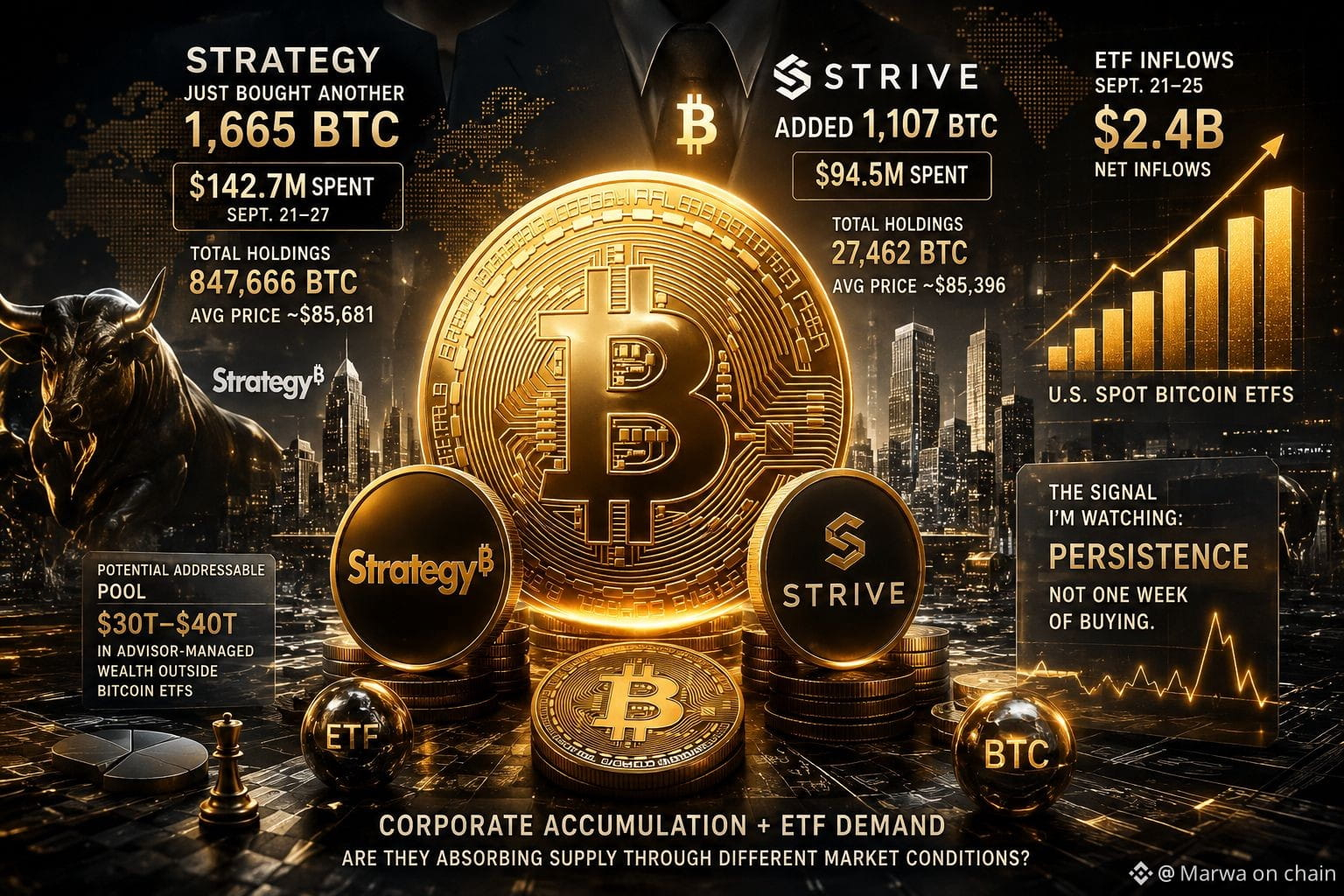
Strategy already bought 1,665 BTC for about $142.7M between September 21 and 27, bringing its total holdings to 847,666 BTC, at an average purchase price of roughly $85,681 per Bitcoin. �
Strive added 1,107 BTC for about $94.5M, bringing its balance to 27,462 BTC, at an average of roughly $85,396.
U.S. spot Bitcoin fund flows totaled about $2.4B during September 21–25; this was already a major push, and it was enough to bring net flows for 2026 back into positive territory according to data published by Farside.
The most important part of your analysis is distinguishing between "flow" and "structural demand." Corporate buying is not necessarily a brand-new demand similar to ETF flows; for example, Strategy partly funds its operations by issuing shares, while Strive relies heavily on its preferred instruments.
Therefore, instead of concluding that these purchases automatically mean higher BTC prices, the key indicator is what you mentioned: does absorption continue over several weeks and across different market conditions? If ETF funds and companies keep buying even during pullbacks, the hypothesis of structural demand becomes more testable.
As for the $30–40T figure of advisers' wealth, it’s best in the post to describe it as a potential addressable pool rather than money waiting to enter Bitcoin; because some of it may not be allocated to digital assets in the first place.
Strategy already bought 1,665 BTC for about $142.7M between September 21 and 27, bringing its total holdings to 847,666 BTC, at an average purchase price of roughly $85,681 per Bitcoin. �
Strive added 1,107 BTC for about $94.5M, bringing its balance to 27,462 BTC, at an average of roughly $85,396.
U.S. spot Bitcoin fund flows totaled about $2.4B during September 21–25; this was already a major push, and it was enough to bring net flows for 2026 back into positive territory according to data published by Farside.
The most important part of your analysis is distinguishing between "flow" and "structural demand." Corporate buying is not necessarily a brand-new demand similar to ETF flows; for example, Strategy partly funds its operations by issuing shares, while Strive relies heavily on its preferred instruments.
Therefore, instead of concluding that these purchases automatically mean higher BTC prices, the key indicator is what you mentioned: does absorption continue over several weeks and across different market conditions? If ETF funds and companies keep buying even during pullbacks, the hypothesis of structural demand becomes more testable.
As for the $30–40T figure of advisers' wealth, it’s best in the post to describe it as a potential addressable pool rather than money waiting to enter Bitcoin; because some of it may not be allocated to digital assets in the first place.
Strive added 1,107 BTC for about $94.5M, bringing its balance to 27,462 BTC, at an average of roughly $85,396.
U.S. spot Bitcoin fund flows totaled about $2.4B during September 21–25; this was already a major push, and it was enough to bring net flows for 2026 back into positive territory according to data published by Farside.
The most important part of your analysis is distinguishing between "flow" and "structural demand." Corporate buying is not necessarily a brand-new demand similar to ETF flows; for example, Strategy partly funds its operations by issuing shares, while Strive relies heavily on its preferred instruments.
Therefore, instead of concluding that these purchases automatically mean higher BTC prices, the key indicator is what you mentioned: does absorption continue over several weeks and across different market conditions? If ETF funds and companies keep buying even during pullbacks, the hypothesis of structural demand becomes more testable.
As for the $30–40T figure of advisers' wealth, it’s best in the post to describe it as a potential addressable pool rather than money waiting to enter Bitcoin; because some of it may not be allocated to digital assets in the first place.
158
Bitget: $388 Million Breach Exploited a Vulnerability at a Third PartyThe CEO of Bitget, Gracei Chen, revealed that the $388 million breach affecting the platform was not the result of a direct compromise of its core infrastructure. Instead, it began through a security vulnerability in a third-party product, which allowed the attacker to gain access to “high-level internal credentials.”
According to Chen, these permissions were used to issue fraudulent withdrawal orders, while she emphasized that the private keys were not compromised and that the cold wallets were not affected by the incident.
Bitget: $388 Million Breach Exploited a Vulnerability at a Third Party
The CEO of Bitget, Gracei Chen, revealed that the $388 million breach affecting the platform was not the result of a direct compromise of its core infrastructure. Instead, it began through a security vulnerability in a third-party product, which allowed the attacker to gain access to “high-level internal credentials.”
According to Chen, these permissions were used to issue fraudulent withdrawal orders, while she emphasized that the private keys were not compromised and that the cold wallets were not affected by the incident.
According to Chen, these permissions were used to issue fraudulent withdrawal orders, while she emphasized that the private keys were not compromised and that the cold wallets were not affected by the incident.
105
South Korea reviews market maker restrictions after JPYC’s 4x peg jump on UpbitSouth Korea is set to reconsider restrictions imposed on market makers,
following a sharp jump by the JPYC yen-pegged stablecoin on the Upbit platform, which rose to more than four times its peg within a short period after its listing.
The South Korean Financial Services Commission said it is considering introducing a market-maker regime for digital assets, in a step that reflects a broader review of how to balance preventing market manipulation and providing liquidity for orderly trading.
South Korea reviews market maker restrictions after JPYC’s 4x peg jump on Upbit
South Korea is set to reconsider restrictions imposed on market makers,
following a sharp jump by the JPYC yen-pegged stablecoin on the Upbit platform, which rose to more than four times its peg within a short period after its listing.
The South Korean Financial Services Commission said it is considering introducing a market-maker regime for digital assets, in a step that reflects a broader review of how to balance preventing market manipulation and providing liquidity for orderly trading.
following a sharp jump by the JPYC yen-pegged stablecoin on the Upbit platform, which rose to more than four times its peg within a short period after its listing.
The South Korean Financial Services Commission said it is considering introducing a market-maker regime for digital assets, in a step that reflects a broader review of how to balance preventing market manipulation and providing liquidity for orderly trading.
36
With changes in the structure of Bitcoin (BTC) price movement, many now assume that the price will continue its direct rise from this point.
But that’s not what is meant by “structure change.”
A structure change simply means that the previous bearish trend has been broken; it tells us that Bitcoin is no longer following the same pattern of the bearish market. And this doesn’t necessarily mean that the price must immediately surge upward to mark a new all-time high. See the previous cycles in 2022: after the Bitcoin price structure changed, price action moved sideways around that area for approximately 203 days on the weekly timeframe. In the 2018–2019 cycle, after the bearish market structure break, Bitcoin continued to trade within a defined range for nearly 400 days. Of course, there were many price moves and pullbacks on shorter timeframes, but the overall structure on higher timeframes remained confined to a sideways range. So, yes, Bitcoin may rise immediately this time, but it’s not necessary. What matters is that the structure has changed.
This should change how you approach the market, not push you to invest all of your capital at once, expecting a straight-line rise. Instead, ask yourself: where do I want to buy Bitcoin? Do I want to build an investment position (holding the coin) at current prices? Do I want to wait for price pullbacks?
#BTC🔥🔥🔥🔥🔥
With changes in the structure of Bitcoin (BTC) price movement, many now assume that the price will continue its direct rise from this point.
But that’s not what is meant by “structure change.”
A structure change simply means that the previous bearish trend has been broken; it tells us that Bitcoin is no longer following the same pattern of the bearish market. And this doesn’t necessarily mean that the price must immediately surge upward to mark a new all-time high. See the previous cycles in 2022: after the Bitcoin price structure changed, price action moved sideways around that area for approximately 203 days on the weekly timeframe. In the 2018–2019 cycle, after the bearish market structure break, Bitcoin continued to trade within a defined range for nearly 400 days. Of course, there were many price moves and pullbacks on shorter timeframes, but the overall structure on higher timeframes remained confined to a sideways range. So, yes, Bitcoin may rise immediately this time, but it’s not necessary. What matters is that the structure has changed.
This should change how you approach the market, not push you to invest all of your capital at once, expecting a straight-line rise. Instead, ask yourself: where do I want to buy Bitcoin? Do I want to build an investment position (holding the coin) at current prices? Do I want to wait for price pullbacks?
#BTC🔥🔥🔥🔥🔥
But that’s not what is meant by “structure change.”
A structure change simply means that the previous bearish trend has been broken; it tells us that Bitcoin is no longer following the same pattern of the bearish market. And this doesn’t necessarily mean that the price must immediately surge upward to mark a new all-time high. See the previous cycles in 2022: after the Bitcoin price structure changed, price action moved sideways around that area for approximately 203 days on the weekly timeframe. In the 2018–2019 cycle, after the bearish market structure break, Bitcoin continued to trade within a defined range for nearly 400 days. Of course, there were many price moves and pullbacks on shorter timeframes, but the overall structure on higher timeframes remained confined to a sideways range. So, yes, Bitcoin may rise immediately this time, but it’s not necessary. What matters is that the structure has changed.
This should change how you approach the market, not push you to invest all of your capital at once, expecting a straight-line rise. Instead, ask yourself: where do I want to buy Bitcoin? Do I want to build an investment position (holding the coin) at current prices? Do I want to wait for price pullbacks?
#BTC🔥🔥🔥🔥🔥
116
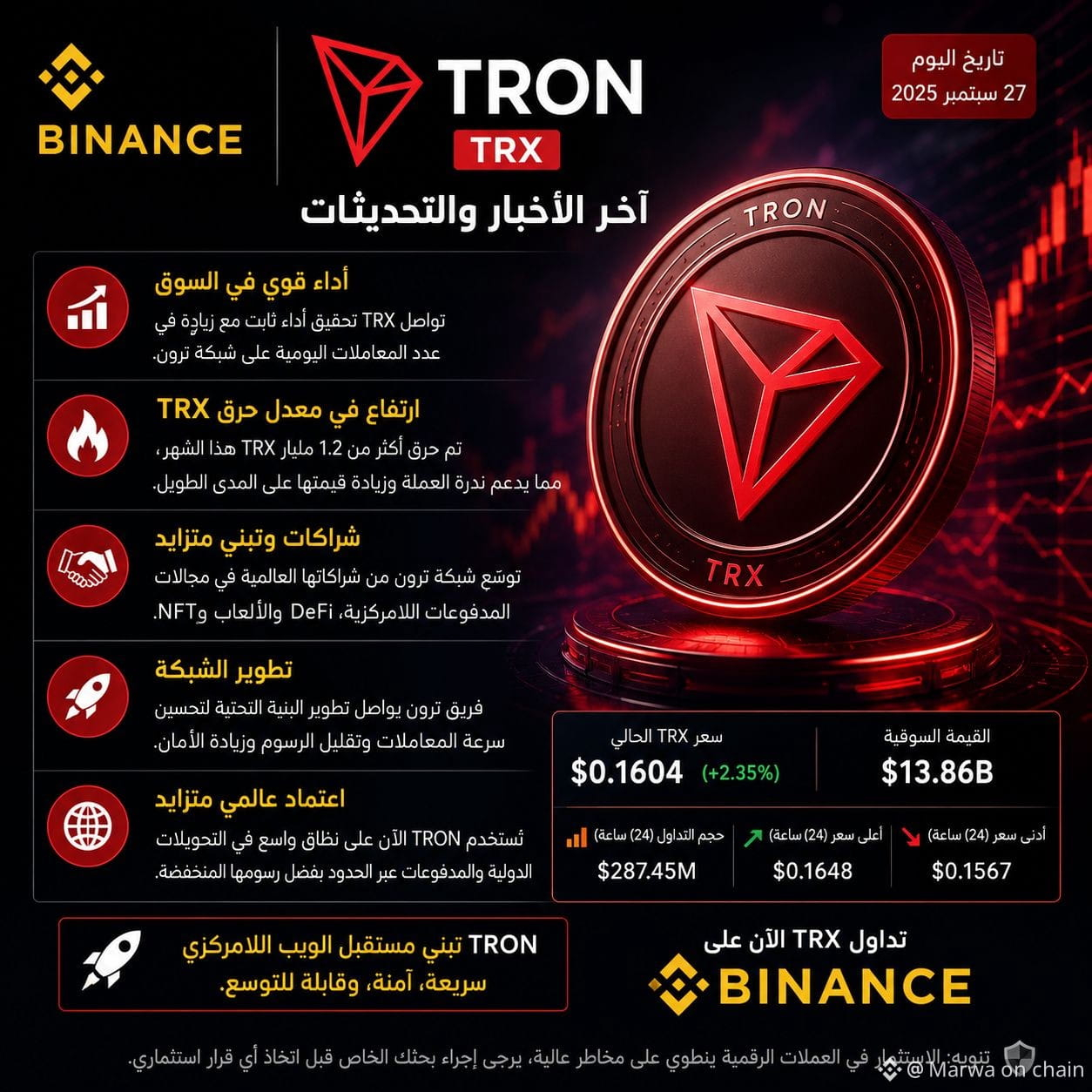
TRON ($TRX) — Comprehensive look at the networkOf course. Since the image contains a lot of information, it’s best for the post to provide a comprehensive explanation of the image but with up-to-date information, because some of the numbers shown in the design may be outdated or need more precise wording.
💎 TRON ($TRX) — Comprehensive look at the network
🚀 TRON is not just a cryptocurrency, but a complete blockchain network
TRON is an open-source, decentralized blockchain network. It relies on the Delegated Proof of Stake (DPoS) mechanism, and focuses on transaction speed, scalability, and supporting decentralized applications and smart contracts. �
TRON ($TRX) — Comprehensive look at the network
Of course. Since the image contains a lot of information, it’s best for the post to provide a comprehensive explanation of the image but with up-to-date information, because some of the numbers shown in the design may be outdated or need more precise wording.
💎 TRON ($TRX) — Comprehensive look at the network
🚀 TRON is not just a cryptocurrency, but a complete blockchain network
TRON is an open-source, decentralized blockchain network. It relies on the Delegated Proof of Stake (DPoS) mechanism, and focuses on transaction speed, scalability, and supporting decentralized applications and smart contracts. �
💎 TRON ($TRX) — Comprehensive look at the network
🚀 TRON is not just a cryptocurrency, but a complete blockchain network
TRON is an open-source, decentralized blockchain network. It relies on the Delegated Proof of Stake (DPoS) mechanism, and focuses on transaction speed, scalability, and supporting decentralized applications and smart contracts. �
58

Article
Important information about the Tron network recentlyImportant information about TRON and TRX
TRON is a Layer 1 blockchain network that uses the Delegated Proof of Stake (DPoS) mechanism and supports smart contracts compatible with EVM. �
TRON Developer Hub
TRX is the native token of the network. It is used for network resources such as Bandwidth and Energy, as well as for storage and voting for network representatives. �
TRON Developer Hub
One of the most prominent uses of TRON currently is transfers and payments using stablecoins, especially USDT. And according to TRON’s announcement on September 24, 2026, the total transaction volume on the network exceeded $30 trillion, with more than $94 billion worth of USDT on the network. �
Important information about the Tron network recently
Important information about TRON and TRX
TRON is a Layer 1 blockchain network that uses the Delegated Proof of Stake (DPoS) mechanism and supports smart contracts compatible with EVM. �
TRON Developer Hub
TRX is the native token of the network. It is used for network resources such as Bandwidth and Energy, as well as for storage and voting for network representatives. �
TRON Developer Hub
One of the most prominent uses of TRON currently is transfers and payments using stablecoins, especially USDT. And according to TRON’s announcement on September 24, 2026, the total transaction volume on the network exceeded $30 trillion, with more than $94 billion worth of USDT on the network. �
TRON is a Layer 1 blockchain network that uses the Delegated Proof of Stake (DPoS) mechanism and supports smart contracts compatible with EVM. �
TRON Developer Hub
TRX is the native token of the network. It is used for network resources such as Bandwidth and Energy, as well as for storage and voting for network representatives. �
TRON Developer Hub
One of the most prominent uses of TRON currently is transfers and payments using stablecoins, especially USDT. And according to TRON’s announcement on September 24, 2026, the total transaction volume on the network exceeded $30 trillion, with more than $94 billion worth of USDT on the network. �
131
The TRX coin continues to capture attention within the cryptocurrency market, as the TRON network keeps evolving and its use expands in digital payments and transfers.
📌 Key points: 🔹 Growth and development of the TRON network
🔹 Increased use of TRX in transfers and payments
🔹 Ongoing activity within the TRON ecosystem
🔹 Trading TRX on major platforms like Binance
🔹 Growing interest in Web3 and DeFi technologies
💡 TRX is not just a coin, but part of a blockchain ecosystem aimed at building a fast, decentralized, and scalable infrastructure.
📊 Follow price movement, trading volume, and new news before making any decision.
⚠️ Warning: Cryptocurrencies are high-risk assets, and the information provided is not a recommendation to buy or sell.
#TRX #TRON #Cryptocurrency #Blockchain #Web3 #DeFi #TRONNetwork #TRXNews
The TRX coin continues to capture attention within the cryptocurrency market, as the TRON network keeps evolving and its use expands in digital payments and transfers.
📌 Key points: 🔹 Growth and development of the TRON network
🔹 Increased use of TRX in transfers and payments
🔹 Ongoing activity within the TRON ecosystem
🔹 Trading TRX on major platforms like Binance
🔹 Growing interest in Web3 and DeFi technologies
💡 TRX is not just a coin, but part of a blockchain ecosystem aimed at building a fast, decentralized, and scalable infrastructure.
📊 Follow price movement, trading volume, and new news before making any decision.
⚠️ Warning: Cryptocurrencies are high-risk assets, and the information provided is not a recommendation to buy or sell.
#TRX #TRON #Cryptocurrency #Blockchain #Web3 #DeFi #TRONNetwork #TRXNews
📌 Key points: 🔹 Growth and development of the TRON network
🔹 Increased use of TRX in transfers and payments
🔹 Ongoing activity within the TRON ecosystem
🔹 Trading TRX on major platforms like Binance
🔹 Growing interest in Web3 and DeFi technologies
💡 TRX is not just a coin, but part of a blockchain ecosystem aimed at building a fast, decentralized, and scalable infrastructure.
📊 Follow price movement, trading volume, and new news before making any decision.
⚠️ Warning: Cryptocurrencies are high-risk assets, and the information provided is not a recommendation to buy or sell.
#TRX #TRON #Cryptocurrency #Blockchain #Web3 #DeFi #TRONNetwork #TRXNews
47
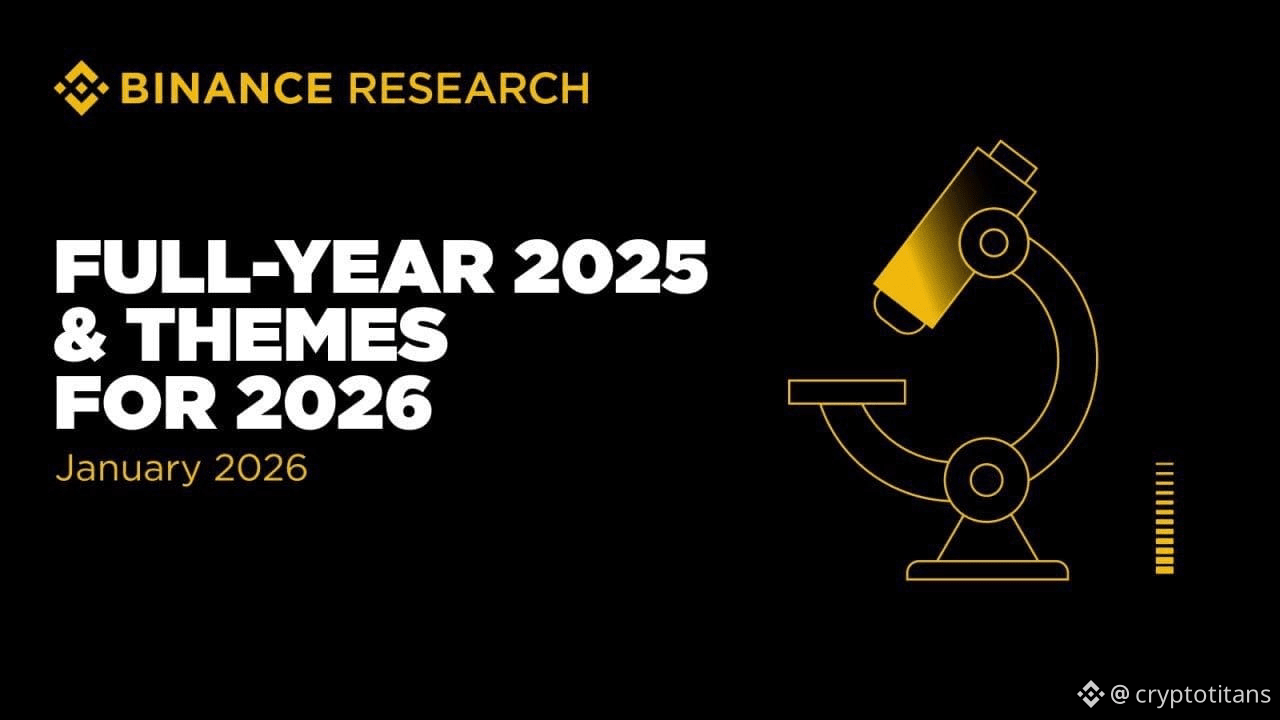
This is a Binance Research report, grounded entirely in 2025 data, outlines what comes next in 2026 based on real usage and market behavior. The report is 133 pages, the KOL brief summarizes the key findings.
🔸 What we want to communicate
✅ Looking ahead:
Based on real 2025 usage, Binance Research expects 2026 to be an adoption-led year for crypto.
✅ The Great Decoupling
Bitcoin price strengthened signaling crypto’s maturation into a macro asset class.
✅ Sustainable Cash Flow
Leading DeFi platforms now generate revenues comparable to major TradFi institutions.
🔸 Messaging points:
- Stablecoin annual transaction volume reached $33 trillion, nearly double Visa’s volume
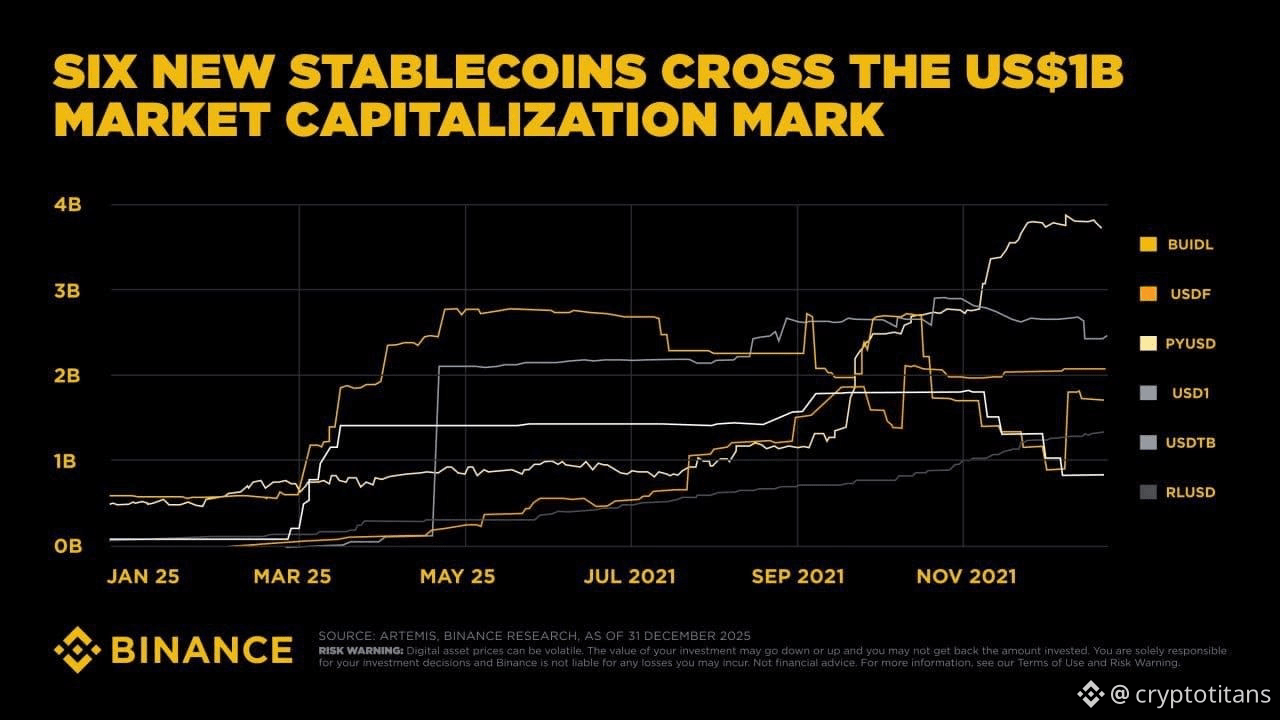
- The total stablecoin market cap exceeded $300B in 2025, ending the year up 49%
- In 2025, top DeFi protocols generated $16.2B in revenue, surpassing the combined annual earnings of Nasdaq ($7.4B) and CME Group ($6.1B)
- BNB recorded 15–18 million daily transactions, highlighting real-world usage at scale
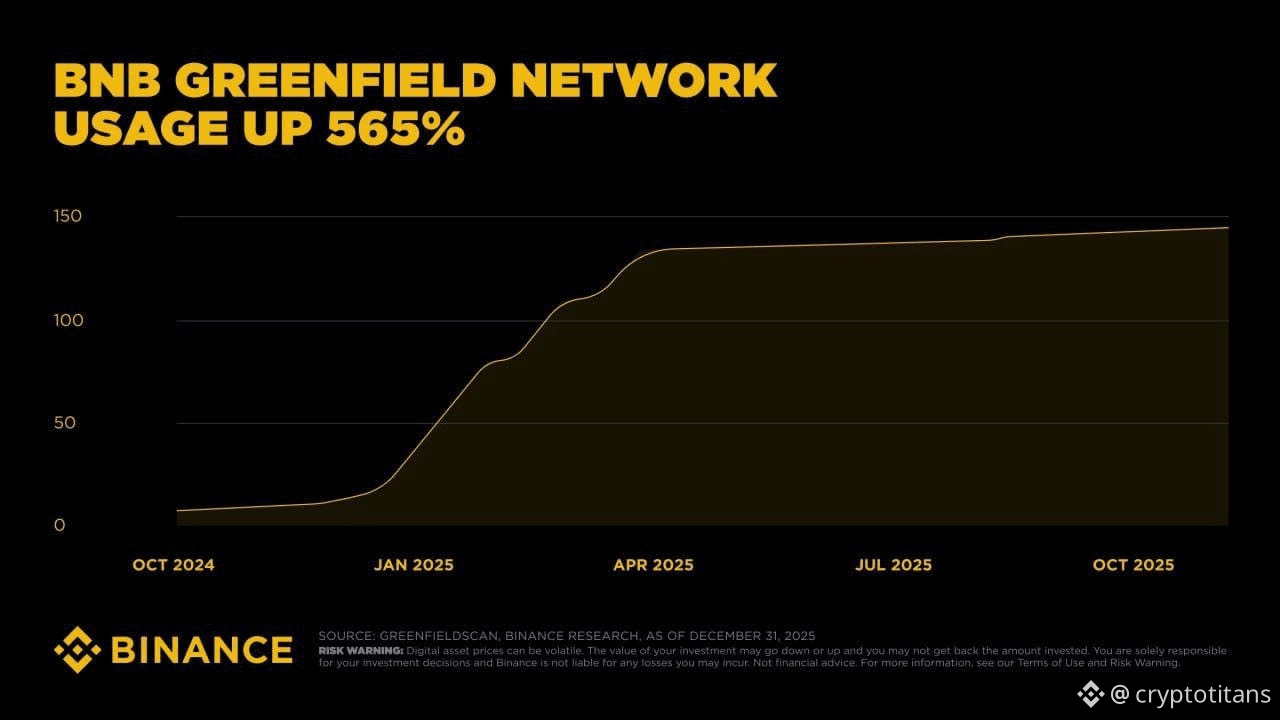
- BNB Greenfield network usage increased by 565% in 2025,
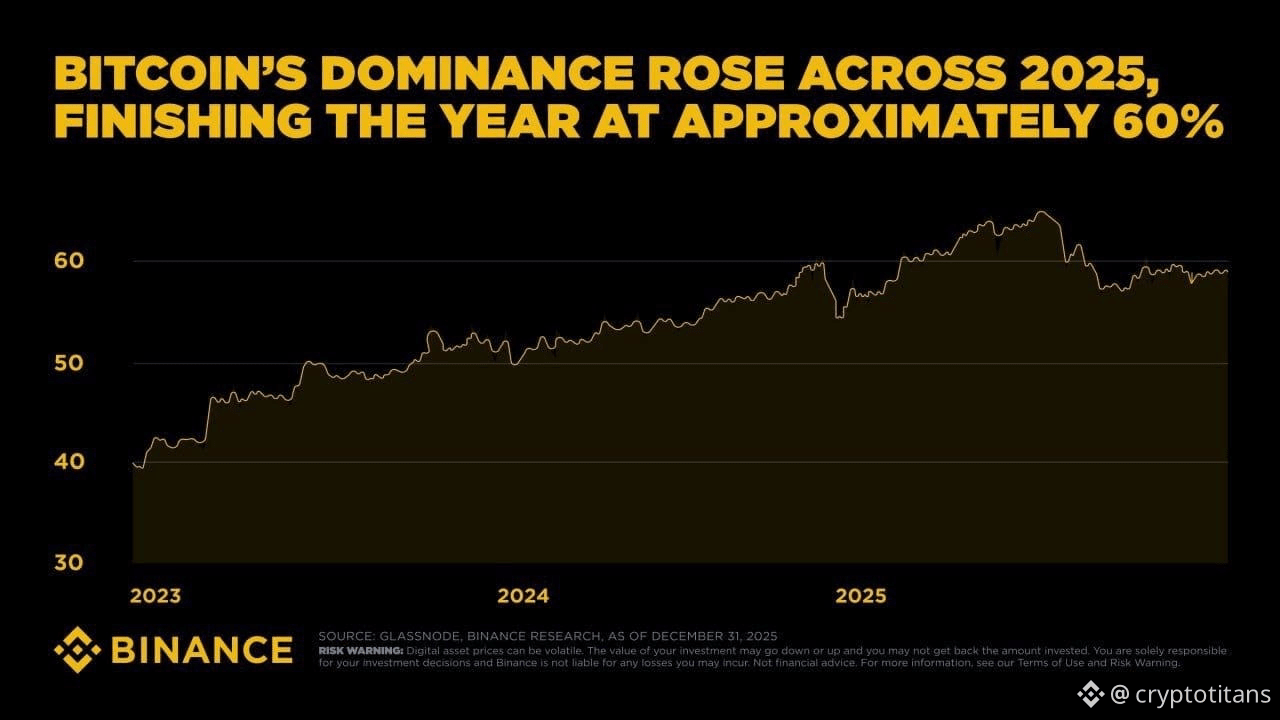
- Bitcoin dominance ended the year at ~60%, reflecting capital concentration into BTC amid macro uncertainty
Full Binance Research report - https://www.binance.com/en/research/analysis/full-year-2025-and-themes-for-2026/
This is a Binance Research report, grounded entirely in 2025 data, outlines what comes next in 2026 based on real usage and market behavior. The report is 133 pages, the KOL brief summarizes the key findings.
🔸 What we want to communicate
✅ Looking ahead:
Based on real 2025 usage, Binance Research expects 2026 to be an adoption-led year for crypto.
✅ The Great Decoupling
Bitcoin price strengthened signaling crypto’s maturation into a macro asset class.
✅ Sustainable Cash Flow
Leading DeFi platforms now generate revenues comparable to major TradFi institutions.
🔸 Messaging points:
- Stablecoin annual transaction volume reached $33 trillion, nearly double Visa’s volume
- The total stablecoin market cap exceeded $300B in 2025, ending the year up 49%
- In 2025, top DeFi protocols generated $16.2B in revenue, surpassing the combined annual earnings of Nasdaq ($7.4B) and CME Group ($6.1B)
- BNB recorded 15–18 million daily transactions, highlighting real-world usage at scale
- BNB Greenfield network usage increased by 565% in 2025,
- Bitcoin dominance ended the year at ~60%, reflecting capital concentration into BTC amid macro uncertainty
Full Binance Research report - https://www.binance.com/en/research/analysis/full-year-2025-and-themes-for-2026/
🔸 What we want to communicate
✅ Looking ahead:
Based on real 2025 usage, Binance Research expects 2026 to be an adoption-led year for crypto.
✅ The Great Decoupling
Bitcoin price strengthened signaling crypto’s maturation into a macro asset class.
✅ Sustainable Cash Flow
Leading DeFi platforms now generate revenues comparable to major TradFi institutions.
🔸 Messaging points:
- Stablecoin annual transaction volume reached $33 trillion, nearly double Visa’s volume
- The total stablecoin market cap exceeded $300B in 2025, ending the year up 49%
- In 2025, top DeFi protocols generated $16.2B in revenue, surpassing the combined annual earnings of Nasdaq ($7.4B) and CME Group ($6.1B)
- BNB recorded 15–18 million daily transactions, highlighting real-world usage at scale
- BNB Greenfield network usage increased by 565% in 2025,
- Bitcoin dominance ended the year at ~60%, reflecting capital concentration into BTC amid macro uncertainty
Full Binance Research report - https://www.binance.com/en/research/analysis/full-year-2025-and-themes-for-2026/
1
9
2.6k
This is a Binance Research report, grounded entirely in 2025 data, outlines what comes next in 2026 based on real usage and market behavior. The report is 133 pages, the KOL brief summarizes the key findings.
🔸 What we want to communicate
✅ Looking ahead:
Based on real 2025 usage, Binance Research expects 2026 to be an adoption-led year for crypto.
✅ The Great Decoupling
Bitcoin price strengthened signaling crypto’s maturation into a macro asset class.
✅ Sustainable Cash Flow
Leading DeFi platforms now generate revenues comparable to major TradFi institutions.
🔸 Messaging points:
- Stablecoin annual transaction volume reached $33 trillion, nearly double Visa’s volume
- The total stablecoin market cap exceeded $300B in 2025, ending the year up 49%
- In 2025, top DeFi protocols generated $16.2B in revenue, surpassing the combined annual earnings of Nasdaq ($7.4B) and CME Group ($6.1B)
- BNB recorded 15–18 million daily transactions, highlighting real-world usage at scale
- BNB Greenfield network usage increased by 565% in 2025,
- Bitcoin dominance ended the year at ~60%, reflecting capital concentration into BTC amid macro uncertainty
Full Binance Research report - https://www.binance.com/en/research/analysis/full-year-2025-and-themes-for-2026/
This is a Binance Research report, grounded entirely in 2025 data, outlines what comes next in 2026 based on real usage and market behavior. The report is 133 pages, the KOL brief summarizes the key findings.
🔸 What we want to communicate
✅ Looking ahead:
Based on real 2025 usage, Binance Research expects 2026 to be an adoption-led year for crypto.
✅ The Great Decoupling
Bitcoin price strengthened signaling crypto’s maturation into a macro asset class.
✅ Sustainable Cash Flow
Leading DeFi platforms now generate revenues comparable to major TradFi institutions.
🔸 Messaging points:
- Stablecoin annual transaction volume reached $33 trillion, nearly double Visa’s volume
- The total stablecoin market cap exceeded $300B in 2025, ending the year up 49%
- In 2025, top DeFi protocols generated $16.2B in revenue, surpassing the combined annual earnings of Nasdaq ($7.4B) and CME Group ($6.1B)
- BNB recorded 15–18 million daily transactions, highlighting real-world usage at scale
- BNB Greenfield network usage increased by 565% in 2025,
- Bitcoin dominance ended the year at ~60%, reflecting capital concentration into BTC amid macro uncertainty
Full Binance Research report - https://www.binance.com/en/research/analysis/full-year-2025-and-themes-for-2026/
🔸 What we want to communicate
✅ Looking ahead:
Based on real 2025 usage, Binance Research expects 2026 to be an adoption-led year for crypto.
✅ The Great Decoupling
Bitcoin price strengthened signaling crypto’s maturation into a macro asset class.
✅ Sustainable Cash Flow
Leading DeFi platforms now generate revenues comparable to major TradFi institutions.
🔸 Messaging points:
- Stablecoin annual transaction volume reached $33 trillion, nearly double Visa’s volume
- The total stablecoin market cap exceeded $300B in 2025, ending the year up 49%
- In 2025, top DeFi protocols generated $16.2B in revenue, surpassing the combined annual earnings of Nasdaq ($7.4B) and CME Group ($6.1B)
- BNB recorded 15–18 million daily transactions, highlighting real-world usage at scale
- BNB Greenfield network usage increased by 565% in 2025,
- Bitcoin dominance ended the year at ~60%, reflecting capital concentration into BTC amid macro uncertainty
Full Binance Research report - https://www.binance.com/en/research/analysis/full-year-2025-and-themes-for-2026/
5
2.6k
Why is DogeCoin's price rising significantly right now? Will DogeCoin sustain its gains, or is this just another media hype?DogeCoin has returned to the spotlight once again, capturing attention as its price surges amid a broader bullish wave in cryptocurrency markets. DogeCoin originally started as a lighthearted experiment, but evolved into one of the most well-known cryptocurrencies, capable of rapid gains when market optimism prevails. With growing excitement, many investors are wondering whether DogeCoin's current movement reflects a sustainable trend or just another short-term media frenzy. Understanding the underlying factors driving DogeCoin's rise helps place its price movements in proper context.
Why is DogeCoin's price rising significantly right now? Will DogeCoin sustain its gains, or is this just another media hype?
DogeCoin has returned to the spotlight once again, capturing attention as its price surges amid a broader bullish wave in cryptocurrency markets. DogeCoin originally started as a lighthearted experiment, but evolved into one of the most well-known cryptocurrencies, capable of rapid gains when market optimism prevails. With growing excitement, many investors are wondering whether DogeCoin's current movement reflects a sustainable trend or just another short-term media frenzy. Understanding the underlying factors driving DogeCoin's rise helps place its price movements in proper context.
1
1
5
3.3k
What should cryptocurrency investors pay attention to in the first quarter of 2026?What should cryptocurrency investors pay attention to in the first quarter of 2026—and why is price volatility at the beginning of the year considered normal
The first quarter of each year is a critical period for financial markets, and the beginning of 2026 holds particular significance for the cryptocurrency sector. At the start of the year, investors witness a complex interplay among institutional repositioning, regulatory developments, and shifts in the broader economic landscape. While mainstream headlines often focus on rapid price fluctuations, experienced market participants understand that these early-year volatilities are not indicators of failure, but rather a natural characteristic of a mature market.
What should cryptocurrency investors pay attention to in the first quarter of 2026?
What should cryptocurrency investors pay attention to in the first quarter of 2026—and why is price volatility at the beginning of the year considered normal
The first quarter of each year is a critical period for financial markets, and the beginning of 2026 holds particular significance for the cryptocurrency sector. At the start of the year, investors witness a complex interplay among institutional repositioning, regulatory developments, and shifts in the broader economic landscape. While mainstream headlines often focus on rapid price fluctuations, experienced market participants understand that these early-year volatilities are not indicators of failure, but rather a natural characteristic of a mature market.
The first quarter of each year is a critical period for financial markets, and the beginning of 2026 holds particular significance for the cryptocurrency sector. At the start of the year, investors witness a complex interplay among institutional repositioning, regulatory developments, and shifts in the broader economic landscape. While mainstream headlines often focus on rapid price fluctuations, experienced market participants understand that these early-year volatilities are not indicators of failure, but rather a natural characteristic of a mature market.
3
3
2
4.5k
Why does trading activity on Binance platform usually increase at the beginning of the year?Why does trading activity on Binance platform usually surge at the beginning of the year?
For years, the cryptocurrency market followed a predictable, regular cycle. Bitcoin dominated the scene, achieving record highs and capturing the largest share of global liquidity. During the "Bitcoin dominance" phase, other cryptocurrencies besides Bitcoin remained stagnant or even declined, as traders sold their holdings in pursuit of Bitcoin gains. Only after Bitcoin stabilized in a sideways consolidation phase did capital return to the broader market, thus igniting the legendary "altcoin season".
Why does trading activity on Binance platform usually increase at the beginning of the year?
Why does trading activity on Binance platform usually surge at the beginning of the year?
For years, the cryptocurrency market followed a predictable, regular cycle. Bitcoin dominated the scene, achieving record highs and capturing the largest share of global liquidity. During the "Bitcoin dominance" phase, other cryptocurrencies besides Bitcoin remained stagnant or even declined, as traders sold their holdings in pursuit of Bitcoin gains. Only after Bitcoin stabilized in a sideways consolidation phase did capital return to the broader market, thus igniting the legendary "altcoin season".
For years, the cryptocurrency market followed a predictable, regular cycle. Bitcoin dominated the scene, achieving record highs and capturing the largest share of global liquidity. During the "Bitcoin dominance" phase, other cryptocurrencies besides Bitcoin remained stagnant or even declined, as traders sold their holdings in pursuit of Bitcoin gains. Only after Bitcoin stabilized in a sideways consolidation phase did capital return to the broader market, thus igniting the legendary "altcoin season".
1
5
4.2k
Will XRP's price continue rising in early 2026? Key factors to watch.XRP has returned to the spotlight once again, as momentum shifts back toward large-cap altcoins in the cryptocurrency market. After a prolonged period of volatility and uncertainty, XRP has shown renewed strength, attracting both traders and long-term investors. As 2026 begins, many are asking an important question: Will XRP continue its upward trend, or is this movement merely a short-term reaction to broader market conditions?
Will XRP's price continue rising in early 2026? Key factors to watch.
XRP has returned to the spotlight once again, as momentum shifts back toward large-cap altcoins in the cryptocurrency market. After a prolonged period of volatility and uncertainty, XRP has shown renewed strength, attracting both traders and long-term investors. As 2026 begins, many are asking an important question: Will XRP continue its upward trend, or is this movement merely a short-term reaction to broader market conditions?
1
1
13
11.4k
How to Build a Simple Cryptocurrency Strategy Without OvertradingCryptocurrency markets are exciting, fast-changing, and often confusing, especially for beginners. Prices can surge or plummet sharply within hours, social media is filled with hype about the next big coin, and trading apps make buying and selling cryptocurrencies effortless. In this environment, many new investors fall into the trap of overtrading by making numerous decisions, chasing short-term movements, and reacting emotionally to every price fluctuation.
How to Build a Simple Cryptocurrency Strategy Without Overtrading
Cryptocurrency markets are exciting, fast-changing, and often confusing, especially for beginners. Prices can surge or plummet sharply within hours, social media is filled with hype about the next big coin, and trading apps make buying and selling cryptocurrencies effortless. In this environment, many new investors fall into the trap of overtrading by making numerous decisions, chasing short-term movements, and reacting emotionally to every price fluctuation.
1
11
5.6k
Alternative coins are rising in parallel with Bitcoin - here's why this cycle is different.For most of cryptocurrency history, market cycles have followed a predictable rhythm. Bitcoin tends to move first, capturing most of the attention and capital. Only after Bitcoin slows down or enters a consolidation phase do alternative coins begin to rise. This pattern gave rise to the idea of an "alternative coin season" as a separate, later phase of the market cycle. However, the current market environment challenges this long-held assumption.
Alternative coins are rising in parallel with Bitcoin - here's why this cycle is different.
For most of cryptocurrency history, market cycles have followed a predictable rhythm. Bitcoin tends to move first, capturing most of the attention and capital. Only after Bitcoin slows down or enters a consolidation phase do alternative coins begin to rise. This pattern gave rise to the idea of an "alternative coin season" as a separate, later phase of the market cycle. However, the current market environment challenges this long-held assumption.
6
4.7k
Three main reasons that could drive Bitcoin's price to $100,000 in January.Bitcoin has returned to the center of attention in global financial markets. After months of steady recovery and renewed investor interest, the world's largest cryptocurrency is now on the verge of one of its most important psychological barriers: $100,000. Although this level has been discussed for years, the current market structure appears significantly different from previous cycles. It combines strong real-world demand, increasing activity in futures contracts, and a broad resurgence of risk sentiment in cryptocurrency markets, creating conditions that could push Bitcoin to test this level as early as January.
Three main reasons that could drive Bitcoin's price to $100,000 in January.
Bitcoin has returned to the center of attention in global financial markets. After months of steady recovery and renewed investor interest, the world's largest cryptocurrency is now on the verge of one of its most important psychological barriers: $100,000. Although this level has been discussed for years, the current market structure appears significantly different from previous cycles. It combines strong real-world demand, increasing activity in futures contracts, and a broad resurgence of risk sentiment in cryptocurrency markets, creating conditions that could push Bitcoin to test this level as early as January.
4
4.1k


Alternative coin trading season: 5 low market cap cryptocurrencies purchased by Arab investors to achieve profitsLow market cap cryptocurrencies purchased by Arab investors to achieve profits during the holiday season
Alternative coin rotation season: 5 low market cap cryptocurrencies purchased by Arab investors to achieve profits during the holidays:
1. VIRTUAL (AI/Compute Altcoin): Benefits from the strong narrative of decentralized artificial intelligence.
Alternative coin trading season: 5 low market cap cryptocurrencies purchased by Arab investors to achieve profits
Low market cap cryptocurrencies purchased by Arab investors to achieve profits during the holiday season
Alternative coin rotation season: 5 low market cap cryptocurrencies purchased by Arab investors to achieve profits during the holidays:
1. VIRTUAL (AI/Compute Altcoin): Benefits from the strong narrative of decentralized artificial intelligence.
Alternative coin rotation season: 5 low market cap cryptocurrencies purchased by Arab investors to achieve profits during the holidays:
1. VIRTUAL (AI/Compute Altcoin): Benefits from the strong narrative of decentralized artificial intelligence.
5
3.2k
The top 5 cryptocurrencies to buy now (besides Bitcoin): Ethereum, Sol, and othersThe top 5 cryptocurrencies to buy now (besides Bitcoin): Ethereum, Sol, and more.
With the stability of the cryptocurrency market in late 2025, investor interest is shifting from survival to positioning. Bitcoin remains the cornerstone of the digital asset market, but history shows that once volatility recedes and confidence returns, capital begins to flow towards high-quality altcoins. As we approach 2026, this shift is increasingly driven by fundamentals rather than media hype. Network usage, developer activity, scalability advancements, and real economic viability are all factors more important than speculation.
The top 5 cryptocurrencies to buy now (besides Bitcoin): Ethereum, Sol, and others
The top 5 cryptocurrencies to buy now (besides Bitcoin): Ethereum, Sol, and more.
With the stability of the cryptocurrency market in late 2025, investor interest is shifting from survival to positioning. Bitcoin remains the cornerstone of the digital asset market, but history shows that once volatility recedes and confidence returns, capital begins to flow towards high-quality altcoins. As we approach 2026, this shift is increasingly driven by fundamentals rather than media hype. Network usage, developer activity, scalability advancements, and real economic viability are all factors more important than speculation.
With the stability of the cryptocurrency market in late 2025, investor interest is shifting from survival to positioning. Bitcoin remains the cornerstone of the digital asset market, but history shows that once volatility recedes and confidence returns, capital begins to flow towards high-quality altcoins. As we approach 2026, this shift is increasingly driven by fundamentals rather than media hype. Network usage, developer activity, scalability advancements, and real economic viability are all factors more important than speculation.
7
4.2k
Cryptocurrencies in 2026: Key Trends and Predictions That Could Spark the Next Bull MarketAfter the stabilization of 2025, why is 2026 expected to be a pivotal year in the history of cryptocurrencies? A detailed analysis
The calm before the storm
Veteran participants in the cryptocurrency market recognize a basic truth: markets rarely move in straight lines. Every sharp rise is usually preceded by a phase of doubt, exhaustion, and consolidation. The period following the Bitcoin halving in 2024 reflects this pattern perfectly.
Cryptocurrencies in 2026: Key Trends and Predictions That Could Spark the Next Bull Market
After the stabilization of 2025, why is 2026 expected to be a pivotal year in the history of cryptocurrencies? A detailed analysis
The calm before the storm
Veteran participants in the cryptocurrency market recognize a basic truth: markets rarely move in straight lines. Every sharp rise is usually preceded by a phase of doubt, exhaustion, and consolidation. The period following the Bitcoin halving in 2024 reflects this pattern perfectly.
The calm before the storm
Veteran participants in the cryptocurrency market recognize a basic truth: markets rarely move in straight lines. Every sharp rise is usually preceded by a phase of doubt, exhaustion, and consolidation. The period following the Bitcoin halving in 2024 reflects this pattern perfectly.
4
3.8k
Log in to explore more content
Join global crypto users on Binance Square
⚡️ Get latest and useful information about crypto.
💬 Trusted by the world’s largest crypto exchange.
👍 Discover real insights from verified creators.
Email / Phone number