
Nix
839 Posts
Nix
Report
Block User
FACTS: The money in your bank is not yours. if you can't handle this, learn or leave. #Bitcoin ain't for tourists.
227 Following
445 Followers
902 Liked
Posts
All
Quotes
Videos
PINNED

·
--
Every single USDT token in existence is under Tether’s centralized control can permanently delete at any address on earth at any time.
Tether as a company retains administrative control over the token's smart contract.
Key ways Tether controls your tokens:
Address Blacklisting & Freezing: Tether’s smart contracts on networks like Ethereum and Tron contain a built-in function that allows them to blacklist specific wallet addresses. If your address is blacklisted, your USDT balance remains visible, but you cannot transfer, trade, or send it anywhere.
Token Destruction/Reissuance: In certain enforcement cases—such as court orders or major exchange hacks—Tether can burn (destroy) the USDT sitting in a frozen address and reissue equivalent funds to law enforcement or victims.
Fiat Redemption Control: Tether controls the ultimate exchange mechanism between USDT and real U.S. Dollars. They have strict Know-Your-Customer (KYC) and Anti-Money Laundering (AML) policies, meaning they can reject direct redemptions for fiat currency.
Through their smart contracts, Tether possesses a function called destroyBlackFunds. They do not just freeze funds; they have full administrative capability to erase (burn) tokens from a specific address.
· While you might physically hold USDT in your own personal crypto wallet (where only you have the private key), the smart contract code that powers USDT on blockchains like Ethereum, Tron, and Solana remains owned and managed by Tether.
Global Power over the Token Contract: Because Tether owns the master administrative keys to the USDT smart contracts, they have the technical ability to freeze or delete USDT at any address on earth at any time.
Cumulative Track Record: Tether has already blacklisted over 9,000 wallet addresses and frozen billions of dollars’ worth of USDT
How to protect yourself
If complete financial censorship resistance is your goal, native cryptocurrency like Bitcoin do not have central entities that can freeze your address at the token level.
878
·
--
$BTC When you introduce a mathematically fixed supply, you aren't just solving an economic equation—you are engineering sovereignty and freedom from institutional control.
Money is fundamentally a claim on human time and energy. How that money is structured determines who holds the power. Across the financial spectrum, different assets offer vastly different degrees of freedom:
1. Fiat Currencies: Designed for Control
Fiat money is permissioned money.
The Control Mechanism: Because it is infinitely printable, central banks can dilute your purchasing power at will through inflation (a hidden tax without representation).
The Surveillance & Censorship: Commercial banks act as gatekeepers. They can freeze accounts, deny transactions, enforce capital controls, and comply with state surveillance mandates. You do not truly own fiat; you rent the right to use it within a closed perimeter managed by authorities.
2. Gold: Physical Sovereignty (With Physical Limitations)
Gold has served as humanity's historical escape hatch from fiat debasement because no government can print it. It offers counterparty independence. Furthermore, history shows that when governments feel threatened, they target physical gold—such as the U.S. government issuing Executive Order 6102 in 1933, making private gold ownership illegal and forcing citizens to hand it over to the Federal Reserve.
3. Bitcoin & Cryptography: Absolute Digital Sovereignty
Bitcoin merges a fixed mathematical supply with public-key cryptography, creating a new paradigm of freedom that has never existed before in human history.
Self-Custody: Through private keys, you hold absolute ownership. Your wealth is secured entirely by mathematics, not by trust in a bank, a corporation, or a sovereign state.
Censorship Resistance: No court order, government edict, or corporate policy can prevent a transaction or freeze a self-custodied wallet. It is entirely permissionless.
Portability: You can memorize a 12-word seed phrase and carry millions of dollars across international borders in your head, completely bypassing physical
169
·
--
$BTC In the entire global financial ecosystem, Bitcoin is the only major asset with a mathematically absolute, immutable fixed supply.
The Hard Cap: Its source code enforces a strict, hard-coded limit of 21 million bitcoins that will ever exist.
Inelasticity Beyond Physics: Unlike gold, where a massive price surge could theoretically prompt a gold-mining operation on an asteroid or deep-sea trench decades from now, Bitcoin's supply cap cannot be altered by higher prices. If the price goes to $1 million or $10 million per coin, the protocol will still only issue the exact same scheduled amount. The code is law.
Supply Halving: Rather than responding to demand by increasing production, Bitcoin’s issuance rate automatically cuts in half every four years (the halving), making its supply schedule completely independent of human desire, market demand, or central bank policy.
Summary
Physical Commodities: Flexible supply (driven by price and extraction economics).
Fiat Currencies: Infinite supply (expanded at the whim of central banks).
Bitcoin: Strictly fixed supply (governed by math and cryptography).
135
·
--
Here’s a comparison of approximate banknote printing costs for major currencies
Cheapest per note: Low-denomination US and Indian notes are among the lowest in absolute cost.
• Euro notes: Average around 10 euro cents, higher than the US $1 but still very low relative to face value.
US $1/$2
4.1 cents
US $100
11.3 cents
Indian 500
$2.29 (~2.7 US cents*)
Recent
Indian $200
2.37
Euro (average)
~10 euro cents
Euro €5
~5 cents
Euro €100-€200
12-16 cents
Higher
UK £5 / £10 / £20
(polymer)
~7-8 pence
Bank o
Australian (average)
~32 Australian cents
Note P
Canadian polymer notes
~23-27 Canadian cents
78
·
--
$XAUT China-related factors have contributed to the gold price decline in 2026
Gold peaked near $5,500–$5,600/oz in late January 2026 and has since fallen roughly 25–28%, trading around $4,050–$4,070/oz as of late July 2026.
Cooling retail and investment demand: China’s gold market, a major pillar of the earlier multi-year rally, cooled markedly. Shanghai Gold Exchange (SGE) withdrawals (a proxy for wholesale/physical demand) hit multi-year or decade lows in periods such as May 2026 (around 63–64 tonnes). Jewelry demand weakened due to high prices hurting affordability, and investment interest faded amid volatility and a shift toward equities.
Large gold ETF outflows: Chinese gold ETFs saw significant or record outflows (e.g., about US$2.91 billion in June 2026 alone). Investors took profits and rotated into stocks as risk appetite improved and the yuan strengthened (which amplified local gold price weakness in RMB terms).
Restrictions and shutdown of retail paper/leveraged gold trading: Major Chinese banks (including ICBC) ended or restricted individual “paper gold” products linked to the SGE, with a key deadline around July 24, 2026. This followed sharp price swings (gold dropped ~30% from the January peak),
In short, weaker Chinese retail/investment demand, ETF outflows, speculative unwinding, and the paper-trading restrictions have been meaningful contributors to the pullback, alongside global macro factors. Prices have shown some stabilization near $4,000 levels recently
179
·
--
Partly True
$ZEC ZEC Falls to $516 as Russia Bars Professionals From Privacy Coins
Zcash is trading at $516.54 as of July 22, 2026, down 5.43% over the past 24 hours and down 6.54% over the past week, pulling back sharply from highs near $573-600 seen earlier in July. The drop follows news that Russia’s State Duma has moved to bar professional investors from buying privacy coins like ZEC as part of a broader crypto law set to take effect September 1, 2026 — a headwind for the sector just as Zcash approaches its most important technical event of the year, the Ironwood network upgrade, targeted for activation on July 28.
Zcash is trading at $516.54 as of July 22, 2026, down 5.43% over the past 24 hours and down 6.54% over the past week, pulling back sharply from highs near $573-600 seen earlier in July. The drop follows news that Russia’s State Duma has moved to bar professional investors from buying privacy coins like ZEC as part of a broader crypto law set to take effect September 1, 2026 — a headwind for the sector just as Zcash approaches its most important technical event of the year, the Ironwood network upgrade, targeted for activation on July 28.
1
1
722
·
--
Ostium loses $18M to its own oracle
Ostium is a perp DEX on Arbitrum, offering real-world assets, up to 200x leverage on S&P futures, and gold. It has over $50 billion in volume, raised $27.8 million from investors like General Catalyst, Jump Crypto, Coinbase Ventures, Wintermute, and GSR, and has multiple audits.
On July 15, an attacker drained roughly $18 million in USDC from its liquidity vault. That's around 28% of the vault's $63 million TVL, gone in one session.
The attacker compromised an Oracle signer private key, used a registered PriceUpKeep forwarder for future-dated price reports, and executed about 20 tied trades via delegated actions, creating artificial profits and cashing them out without market exposure or risk.
121
·
--
Partly True
$XAUT "Gold and silver just lost around $700B in market value in a single day. A brutal reminder that even traditional safe-haven assets can get hit hard when liquidity disappears,"
$XAUT "Gold and silver just lost around $700B in market value in a single day. A brutal reminder that even traditional safe-haven assets can get hit hard when liquidity disappears,"
1
1
1.8k

·
--
Bearish
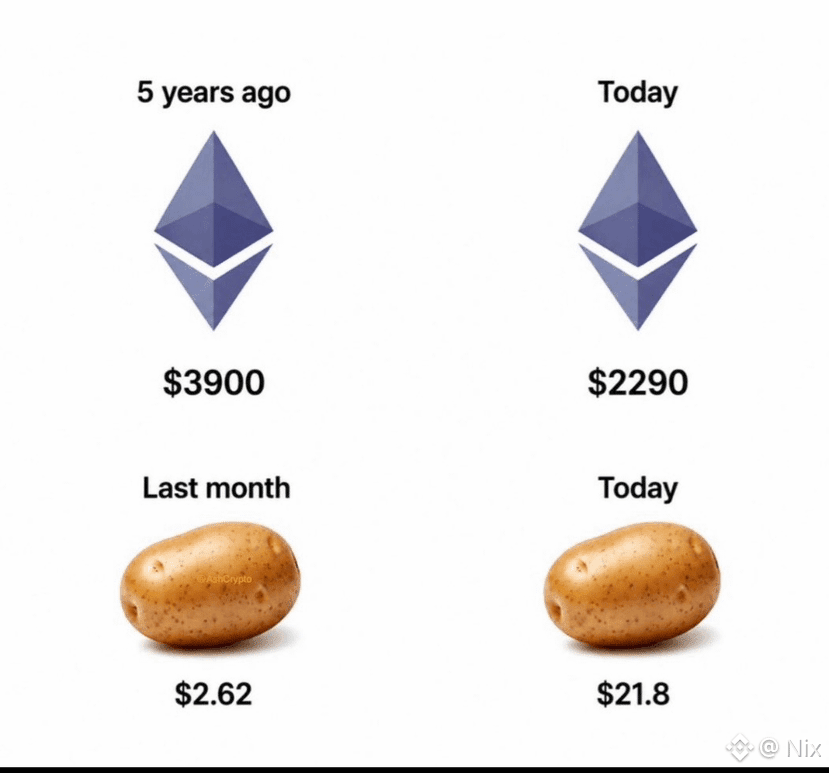
$ETH $125,000 invested in $ETH 5 years ago is now worth $73,400.
$125,000 invested in Potatoes 1 month ago is now worth $1,000,000.
ETH is getting outperformed by Potatoes.
$ETH $125,000 invested in $ETH 5 years ago is now worth $73,400.
$125,000 invested in Potatoes 1 month ago is now worth $1,000,000.
ETH is getting outperformed by Potatoes.
$125,000 invested in Potatoes 1 month ago is now worth $1,000,000.
ETH is getting outperformed by Potatoes.
78
·
--
$BTC These are the 3 $BTC levels large traders are betting on by Q3 2026:
$100,000: $287,000,000 in call notional value
$60,000: $266,000,000 in put notional value
$50,000: $252,000,000 in put notional value
Where do you think Bitcoin will go first?
$BTC These are the 3 $BTC levels large traders are betting on by Q3 2026:
$100,000: $287,000,000 in call notional value
$60,000: $266,000,000 in put notional value
$50,000: $252,000,000 in put notional value
Where do you think Bitcoin will go first?
$100,000: $287,000,000 in call notional value
$60,000: $266,000,000 in put notional value
$50,000: $252,000,000 in put notional value
Where do you think Bitcoin will go first?
95
·
--
$XRP Ripple CTO Reveals He Sold 26 Million XRP For Bitcoin, Only Holds Ripple Stock To 'Sleep Better At Night'
David Schwartz of Ripple said he sold 26 million of the company's crypto token for Bitcoin to cut direct crypto exposure and manage risk.
He said he prefers a conservative strategy, accepting the risk of missing upside to
"sleep better at night."
4 This comes as Ripple unlocked its 1 billion tokens from escrow last week.
137
·
--
Sell in May and go away” is a classic stock market adage. Here’s what it means and why traders follow it:
The Phrase’s Origin
The full saying is: “Sell in May and go away, come back on St. Leger Day” (a British horse racing event in September). It suggests selling stocks in May and staying out of the market during summer months, then returning in the fall.
Historical Basis
The concept is based on observed seasonal patterns:
• Summer weakness: Historically, stock markets have shown weaker performance from May through September in the Northern Hemisphere
Seasonal trading volume: Lower trading volume during summer vacation periods can lead to thinner markets and increased volatility
• Post-earnings season: Much of the earnings season ends by May, reducing catalysts for upward movement
• Weather and psychology: Summer holidays reduce institutional trading activity and investor engagement
2
143
·
--
$BTC $BTC liquidation clusters are building up into the FOMC tomorrow
$2,770,000,000 in long liquidation at $75K level
$4,000,000,000 in short liquidation at $80K level
Where will Bitcoin go or will it grab both?
$BTC $BTC liquidation clusters are building up into the FOMC tomorrow
$2,770,000,000 in long liquidation at $75K level
$4,000,000,000 in short liquidation at $80K level
Where will Bitcoin go or will it grab both?
$2,770,000,000 in long liquidation at $75K level
$4,000,000,000 in short liquidation at $80K level
Where will Bitcoin go or will it grab both?
1
1
112
·
--
$6,140,000,000 in long liquidation at $73K BTC.
Do you think this liquidity will get grabbed in 2026?
Interesting how the degens are so careless about profit taking.
Bull trap incoming?
3 of 5 elements of the fractal are already in place:
1 - Price trading within an ascending channel ✔️
2 - Break of structure ✔️
3 - Rejection at daily FVG ✔️
4 - Reintegration below broken structure⏳
5 - Potential channel breakdown⏳
213
·
--
$BTC just tapped $78,000.
81,898 traders were liquidated, the total liquidations came in at $171.52 million.
The liquidity map is loaded on both sides.
There are 2.5 billion dollars in long liquidations sitting below down to 75,000.
There are 1.54 billion dollars in short liquidations stacked above up to 82,000.
Which side does the market maker decide to harvest next?
324
·
--
Bullish
113
·
--
$TAO Bittensor Co-Founder Apologizes as Covenant AI Exit Sends $TAO Crashing
Steeves addressed $TAO holders directly, acknowledging the financial and emotional damage caused by the crisis. He described the events as deeply personal, calling Dare a former trusted colleague and friend. His statement was candid and notably free of corporate deflection.
Steeves addressed $TAO holders directly, acknowledging the financial and emotional damage caused by the crisis. He described the events as deeply personal, calling Dare a former trusted colleague and friend. His statement was candid and notably free of corporate deflection.
174
Log in to explore more content
Join global crypto users on Binance Square
⚡️ Get latest and useful information about crypto.
💬 Trusted by the world’s largest crypto exchange.
👍 Discover real insights from verified creators.
Email / Phone number
Trending Topics
HuangExitNvidiaStrategyInFocus
1,294 views
124 Discussing
STOCKS | Nvidia’s Jensen Huang Resigns, Colette Kress Named as Interim CEO
Binance News
·1 Likes
·4.4k views
ChipStocksExtendLossesAfterNvidiaCEOChange
119 views
63 Discussing
AnthropicRejectsIPODelayValuationinQuestion
554,694 views
4,564 Discussing