

CoinVoice
110.6k Posts

CoinVoice
 Square Verified+
Report
Block User
关注金融科技新变量
3 Following
4.4K+ Followers
11.0K+ Liked
1 Badges
Posts
·
--
A Cross-Chain Comparison of US Stock Tokens on Four Chains: BNB Chain, Robinhood Chain, Base, and SolanaBy: Biteye
The US stock Meme narrative led by Robinhood has been hype for more than a month now, but the development of US stock Memes differs from chain to chain.
Why are US stock Memes on the Robinhood chain being traded with such fervor, while US stock Memes on Base seem to have been sent into cold storage?
Why did BNB Chain give birth to phenomenon-level Memes like Bull (牛牛) and Marscoin, while Solana just sits there like it’s babbling?
The editor went researching with questions into the compliance pathways for US stock tokens on Robinhood, BNB Chain, Base, and Solana—covering both issuance and ecosystem infrastructure. This article starts with how US stock tokens are issued on each of these four chains, and analyzes why the same round of US stock Meme can ultimately produce completely different outcomes.
A Cross-Chain Comparison of US Stock Tokens on Four Chains: BNB Chain, Robinhood Chain, Base, and Solana
By: Biteye
The US stock Meme narrative led by Robinhood has been hype for more than a month now, but the development of US stock Memes differs from chain to chain.
Why are US stock Memes on the Robinhood chain being traded with such fervor, while US stock Memes on Base seem to have been sent into cold storage?
Why did BNB Chain give birth to phenomenon-level Memes like Bull (牛牛) and Marscoin, while Solana just sits there like it’s babbling?
The editor went researching with questions into the compliance pathways for US stock tokens on Robinhood, BNB Chain, Base, and Solana—covering both issuance and ecosystem infrastructure. This article starts with how US stock tokens are issued on each of these four chains, and analyzes why the same round of US stock Meme can ultimately produce completely different outcomes.
The US stock Meme narrative led by Robinhood has been hype for more than a month now, but the development of US stock Memes differs from chain to chain.
Why are US stock Memes on the Robinhood chain being traded with such fervor, while US stock Memes on Base seem to have been sent into cold storage?
Why did BNB Chain give birth to phenomenon-level Memes like Bull (牛牛) and Marscoin, while Solana just sits there like it’s babbling?
The editor went researching with questions into the compliance pathways for US stock tokens on Robinhood, BNB Chain, Base, and Solana—covering both issuance and ecosystem infrastructure. This article starts with how US stock tokens are issued on each of these four chains, and analyzes why the same round of US stock Meme can ultimately produce completely different outcomes.
64
·
--

Article
JPM Research Interpretation: AI bond issuance of $266 billion—investing booms rarely end in a mild outcomeWritten by: Rita
From 2026 to date, the issuance volume of high-grade dollar bonds related to AI capital expenditures has reached $266 billion. Of this, mega-scale issuers accounted for $182 billion, data centers for $42 billion, and semiconductor companies for $42 billion. This figure exceeds the $139 billion for all of 2025 and is more than nine times the $29 billion for all of 2024. In a strategy report released by JPMorgan on September 9, 2026, it noted that financing needs for AI capital expenditures are changing the structure of the U.S. credit market and also altering the way macroeconomic risks are transmitted.
JPM Research Interpretation: AI bond issuance of $266 billion—investing booms rarely end in a mild outcome
Written by: Rita
From 2026 to date, the issuance volume of high-grade dollar bonds related to AI capital expenditures has reached $266 billion. Of this, mega-scale issuers accounted for $182 billion, data centers for $42 billion, and semiconductor companies for $42 billion. This figure exceeds the $139 billion for all of 2025 and is more than nine times the $29 billion for all of 2024. In a strategy report released by JPMorgan on September 9, 2026, it noted that financing needs for AI capital expenditures are changing the structure of the U.S. credit market and also altering the way macroeconomic risks are transmitted.
From 2026 to date, the issuance volume of high-grade dollar bonds related to AI capital expenditures has reached $266 billion. Of this, mega-scale issuers accounted for $182 billion, data centers for $42 billion, and semiconductor companies for $42 billion. This figure exceeds the $139 billion for all of 2025 and is more than nine times the $29 billion for all of 2024. In a strategy report released by JPMorgan on September 9, 2026, it noted that financing needs for AI capital expenditures are changing the structure of the U.S. credit market and also altering the way macroeconomic risks are transmitted.
120
·
--
Analyst: The probability of further Fed rate hikes remains uncertain, and inflation data is the key variableCoinVoice learned: On September 11, analyst Brandon Brown said that after the release of a strong nonfarm payrolls report, the market is currently pricing about a 15-basis-point rate hike for the Federal Reserve’s September meeting. Given that Fed Governor Waller emphasized that the next round of inflation data will determine his voting stance, it is reasonable that before the inflation data is released, the market’s expectations for a September rate hike are close to 50/50.
We believe the Federal Reserve will likely see another split among its policymakers, especially if inflation data comes in moderately and the Fed again decides to hold rates steady. Based on the pass-through effects from PPI and CPI to core PCE inflation, the threshold for whether holding rates unchanged would still support a rate hike may hinge on the month-on-month increase in core PCE reaching around 0.25%. Looking at the long end of the yield curve, the market expects total hikes of slightly more than 60 basis points by mid-2027. But we think that even if the data is strong, the number of hikes in the near term is unlikely to exceed 3. (Jin Ten)
Analyst: The probability of further Fed rate hikes remains uncertain, and inflation data is the key variable
CoinVoice learned: On September 11, analyst Brandon Brown said that after the release of a strong nonfarm payrolls report, the market is currently pricing about a 15-basis-point rate hike for the Federal Reserve’s September meeting. Given that Fed Governor Waller emphasized that the next round of inflation data will determine his voting stance, it is reasonable that before the inflation data is released, the market’s expectations for a September rate hike are close to 50/50.
We believe the Federal Reserve will likely see another split among its policymakers, especially if inflation data comes in moderately and the Fed again decides to hold rates steady. Based on the pass-through effects from PPI and CPI to core PCE inflation, the threshold for whether holding rates unchanged would still support a rate hike may hinge on the month-on-month increase in core PCE reaching around 0.25%. Looking at the long end of the yield curve, the market expects total hikes of slightly more than 60 basis points by mid-2027. But we think that even if the data is strong, the number of hikes in the near term is unlikely to exceed 3. (Jin Ten)
We believe the Federal Reserve will likely see another split among its policymakers, especially if inflation data comes in moderately and the Fed again decides to hold rates steady. Based on the pass-through effects from PPI and CPI to core PCE inflation, the threshold for whether holding rates unchanged would still support a rate hike may hinge on the month-on-month increase in core PCE reaching around 0.25%. Looking at the long end of the yield curve, the market expects total hikes of slightly more than 60 basis points by mid-2027. But we think that even if the data is strong, the number of hikes in the near term is unlikely to exceed 3. (Jin Ten)
153
·
--
CoinVoice learned: According to Token Terminal data, the tokenized U.S. Treasury product USYC (by Circle) saw its market cap increase by $2 billion over the past year, ranking first among similar assets; iBENJI and USDY followed closely, rising by $1.7 billion and $1.5 billion, respectively. BlackRock’s BUIDL grew by $552.5 million during the same period, ranking fifth.
Source
CoinVoice learned: According to Token Terminal data, the tokenized U.S. Treasury product USYC (by Circle) saw its market cap increase by $2 billion over the past year, ranking first among similar assets; iBENJI and USDY followed closely, rising by $1.7 billion and $1.5 billion, respectively. BlackRock’s BUIDL grew by $552.5 million during the same period, ranking fifth.
Source
Source
114
·
--
CoinVoice learned: According to monitoring by SlowMist, the BSC chain project BeatXswap suffered a price manipulation attack, resulting in a loss of about 2.985 million BTX (approximately $77,500).
The attacker borrowed 6 million BTX via a flash loan and sold it into the Uniswap V3 pool to depress the price. Then, they exploited a vulnerability in that contract that uses only the V3 pool’s instantaneous price as the sole pricing reference (no TWAP protection, no deviation limits). In two rounds, they deposited USDT to trigger liquidity minting and withdrew the BTX from the LP positions.
Source
CoinVoice learned: According to monitoring by SlowMist, the BSC chain project BeatXswap suffered a price manipulation attack, resulting in a loss of about 2.985 million BTX (approximately $77,500).
The attacker borrowed 6 million BTX via a flash loan and sold it into the Uniswap V3 pool to depress the price. Then, they exploited a vulnerability in that contract that uses only the V3 pool’s instantaneous price as the sole pricing reference (no TWAP protection, no deviation limits). In two rounds, they deposited USDT to trigger liquidity minting and withdrew the BTX from the LP positions.
Source
The attacker borrowed 6 million BTX via a flash loan and sold it into the Uniswap V3 pool to depress the price. Then, they exploited a vulnerability in that contract that uses only the V3 pool’s instantaneous price as the sole pricing reference (no TWAP protection, no deviation limits). In two rounds, they deposited USDT to trigger liquidity minting and withdrew the BTX from the LP positions.
Source
123
·
--
Researcher claims that 6TB of relay-station data he purchased could be used to breach 19 companies such as Huawei and XiaomiCoinVoice learned: security researcher Su Chaobiang said he just bought about 6TB of Fable model call data from a China top-tier large-model relay station. Sensitive credentials such as SSH keys, VPN configuration, Alibaba Cloud keys, and GitLab tokens appeared in the data. He said that the keys in this dataset would allow him to access servers or internal systems of 19 China top-tier enterprises and 7 organizations related to the governments of China and the Commonwealth of Independent States, including Huawei, Xiaomi, NIO, and MiniMax.
In the large-model relay station (middleman), it sits between users and models like Claude. Requests and replies go through it first, so it can see the full plaintext. If a developer puts SSH keys, API keys, VPN configurations, and other secrets into the agent’s context, and if the relay station stores and even sells those records, the company’s system keys will leak out as well. This is not the first time Su Chaobiang has warned about the risks of relay stations. In a paper test conducted in April that he participated in, he tested 428 LLM relay stations and found that 9 would actively inject malicious code, 17 would actually use those AWS credentials after seeing AWS test keys intentionally placed by the researchers, and 1 directly siphoned ETH from the researchers’ test wallet.
Researcher claims that 6TB of relay-station data he purchased could be used to breach 19 companies such as Huawei and Xiaomi
CoinVoice learned: security researcher Su Chaobiang said he just bought about 6TB of Fable model call data from a China top-tier large-model relay station. Sensitive credentials such as SSH keys, VPN configuration, Alibaba Cloud keys, and GitLab tokens appeared in the data. He said that the keys in this dataset would allow him to access servers or internal systems of 19 China top-tier enterprises and 7 organizations related to the governments of China and the Commonwealth of Independent States, including Huawei, Xiaomi, NIO, and MiniMax.
In the large-model relay station (middleman), it sits between users and models like Claude. Requests and replies go through it first, so it can see the full plaintext. If a developer puts SSH keys, API keys, VPN configurations, and other secrets into the agent’s context, and if the relay station stores and even sells those records, the company’s system keys will leak out as well. This is not the first time Su Chaobiang has warned about the risks of relay stations. In a paper test conducted in April that he participated in, he tested 428 LLM relay stations and found that 9 would actively inject malicious code, 17 would actually use those AWS credentials after seeing AWS test keys intentionally placed by the researchers, and 1 directly siphoned ETH from the researchers’ test wallet.
In the large-model relay station (middleman), it sits between users and models like Claude. Requests and replies go through it first, so it can see the full plaintext. If a developer puts SSH keys, API keys, VPN configurations, and other secrets into the agent’s context, and if the relay station stores and even sells those records, the company’s system keys will leak out as well. This is not the first time Su Chaobiang has warned about the risks of relay stations. In a paper test conducted in April that he participated in, he tested 428 LLM relay stations and found that 9 would actively inject malicious code, 17 would actually use those AWS credentials after seeing AWS test keys intentionally placed by the researchers, and 1 directly siphoned ETH from the researchers’ test wallet.
129
·
--
A $150 Million Emotional Frenzy in Fast-Forward: AMC Short Squeeze, Five Years LaterAt the close of U.S. stock trading on Thursday, AMC Entertainment closed at $2.54. The country’s largest movie theater chain had a market cap of $2.27 billion and 893 million shares outstanding. There was no news at all that day.
Half an hour after the close, a new trading pair appeared on Robinhood’s blockchain: AMC/MEME. The new coin’s full name is "A Meme Coin," and its abbreviation happens to be AMC: MEME.
Then things started to spiral out of control.
Over the course of five hours, the MEME coin surged more than a thousandfold, with its market cap starting at about $3 million and climbing past $30 million and $50 million, approaching $150 million. At the same time, AMC’s own quote moved too, rising more than 14% in after-hours trading at one point, then widening to 18% to 20% in premarket trading.
A $150 Million Emotional Frenzy in Fast-Forward: AMC Short Squeeze, Five Years Later
At the close of U.S. stock trading on Thursday, AMC Entertainment closed at $2.54. The country’s largest movie theater chain had a market cap of $2.27 billion and 893 million shares outstanding. There was no news at all that day.
Half an hour after the close, a new trading pair appeared on Robinhood’s blockchain: AMC/MEME. The new coin’s full name is "A Meme Coin," and its abbreviation happens to be AMC: MEME.
Then things started to spiral out of control.
Over the course of five hours, the MEME coin surged more than a thousandfold, with its market cap starting at about $3 million and climbing past $30 million and $50 million, approaching $150 million. At the same time, AMC’s own quote moved too, rising more than 14% in after-hours trading at one point, then widening to 18% to 20% in premarket trading.
Half an hour after the close, a new trading pair appeared on Robinhood’s blockchain: AMC/MEME. The new coin’s full name is "A Meme Coin," and its abbreviation happens to be AMC: MEME.
Then things started to spiral out of control.
Over the course of five hours, the MEME coin surged more than a thousandfold, with its market cap starting at about $3 million and climbing past $30 million and $50 million, approaching $150 million. At the same time, AMC’s own quote moved too, rising more than 14% in after-hours trading at one point, then widening to 18% to 20% in premarket trading.
101
·
--
CoinVoice learned: On September 6, according to official data, Hyperliquid bought and burned 9,730 HYPE at an average price of $85.27 over the past 24 hours, worth approximately $829,500.
As of now, Hyperliquid has cumulatively burned 48.42 million HYPE, worth approximately $4.14 billion at current prices, accounting for about 4.84% of the maximum supply.
AI
CoinVoice learned: On September 6, according to official data, Hyperliquid bought and burned 9,730 HYPE at an average price of $85.27 over the past 24 hours, worth approximately $829,500.
As of now, Hyperliquid has cumulatively burned 48.42 million HYPE, worth approximately $4.14 billion at current prices, accounting for about 4.84% of the maximum supply.
AI
As of now, Hyperliquid has cumulatively burned 48.42 million HYPE, worth approximately $4.14 billion at current prices, accounting for about 4.84% of the maximum supply.
AI
89
·
--
Article
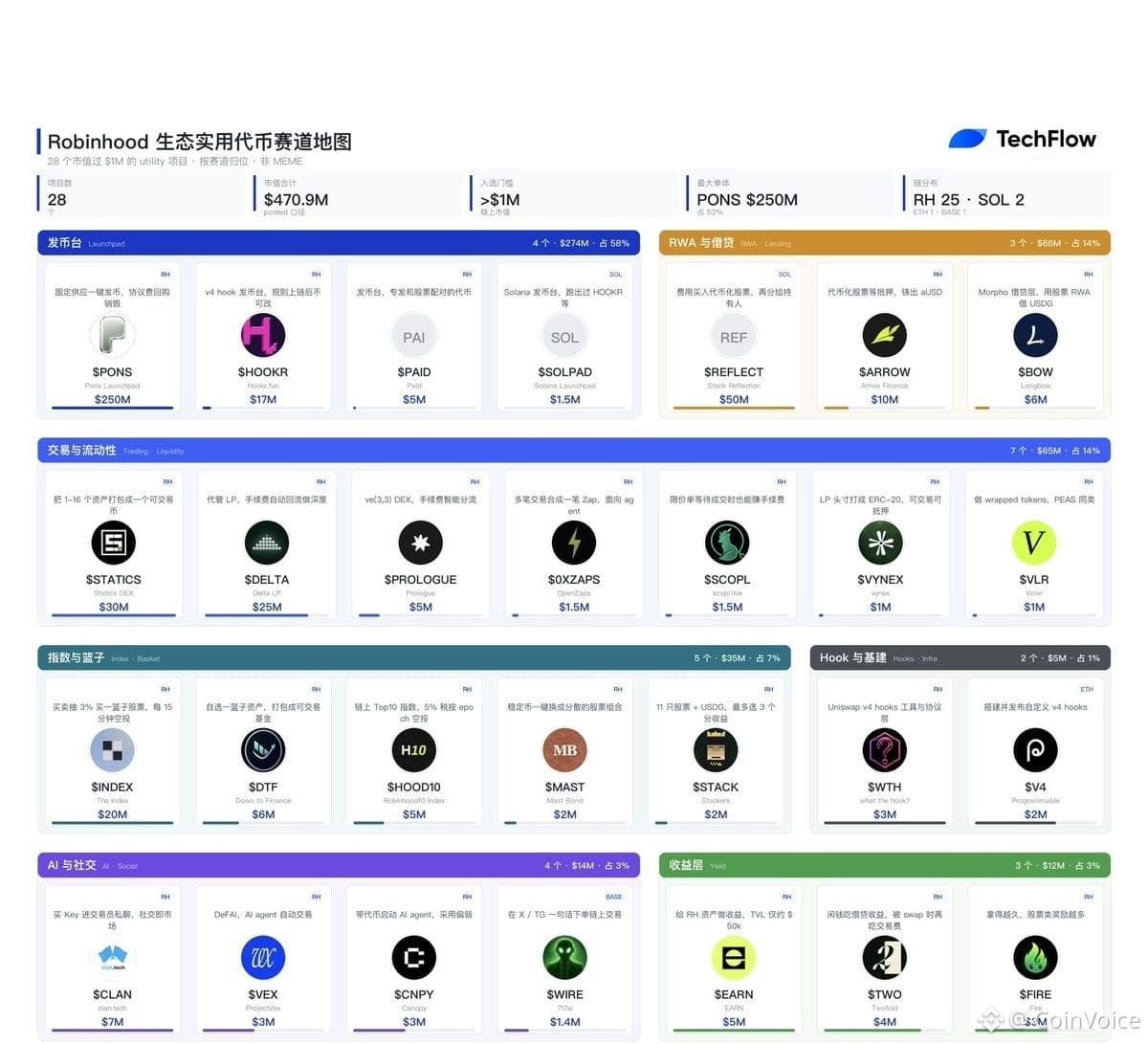
Wall Street Stocks Are Becoming Meme Liquidity: A Full Breakdown of Robinhood Chain’s "Stock Meme"Written by: BITWU.ETH
Today, Robinhood Chain’s token issuance platform Long.xyz launched a paired trading feature for Nvidia 3x leveraged tokens; Robinhood Chain has become the main battleground for Memes, with $PONS, $AI, and $BONER all hitting all-time highs. Weekly gains of dozens of times are common, and once again many people are rapidly accumulating wealth.
Below, I break down this sector from several angles — underlying assets, trading mechanisms, recent data, and participation opportunities — to see where the real opportunities lie.
1. First, let’s start with a basic definition:
Stock Memes are not “buying a Meme equals buying a stock”; rather, they turn stock tokens into the pricing currency, liquidity asset, and narrative collateral for Memes.
Wall Street Stocks Are Becoming Meme Liquidity: A Full Breakdown of Robinhood Chain’s "Stock Meme"
Written by: BITWU.ETH
Today, Robinhood Chain’s token issuance platform Long.xyz launched a paired trading feature for Nvidia 3x leveraged tokens; Robinhood Chain has become the main battleground for Memes, with $PONS, $AI, and $BONER all hitting all-time highs. Weekly gains of dozens of times are common, and once again many people are rapidly accumulating wealth.
Below, I break down this sector from several angles — underlying assets, trading mechanisms, recent data, and participation opportunities — to see where the real opportunities lie.
1. First, let’s start with a basic definition:
Stock Memes are not “buying a Meme equals buying a stock”; rather, they turn stock tokens into the pricing currency, liquidity asset, and narrative collateral for Memes.
Today, Robinhood Chain’s token issuance platform Long.xyz launched a paired trading feature for Nvidia 3x leveraged tokens; Robinhood Chain has become the main battleground for Memes, with $PONS, $AI, and $BONER all hitting all-time highs. Weekly gains of dozens of times are common, and once again many people are rapidly accumulating wealth.
Below, I break down this sector from several angles — underlying assets, trading mechanisms, recent data, and participation opportunities — to see where the real opportunities lie.
1. First, let’s start with a basic definition:
Stock Memes are not “buying a Meme equals buying a stock”; rather, they turn stock tokens into the pricing currency, liquidity asset, and narrative collateral for Memes.
53
·
--
CoinVoice learned: According to on-chain analyst Ember’s monitoring, the suspected a16z whale with the largest HYPE holdings continued buying HYPE today. The institution previously spent 66.4 million USDC at an average price of 81.3 dollars a week ago to purchase 816,000 HYPE; 8 hours ago, it also transferred 13.05 million USDC to Hyperliquid and bought HYPE via TWAP.
At present, the institution has bought and staked 5.201 million HYPE, worth about 445 million dollars, with an average purchase price of about 67.2 dollars, and current unrealized gains of about 95.18 million dollars.
Source
CoinVoice learned: According to on-chain analyst Ember’s monitoring, the suspected a16z whale with the largest HYPE holdings continued buying HYPE today. The institution previously spent 66.4 million USDC at an average price of 81.3 dollars a week ago to purchase 816,000 HYPE; 8 hours ago, it also transferred 13.05 million USDC to Hyperliquid and bought HYPE via TWAP.
At present, the institution has bought and staked 5.201 million HYPE, worth about 445 million dollars, with an average purchase price of about 67.2 dollars, and current unrealized gains of about 95.18 million dollars.
Source
At present, the institution has bought and staked 5.201 million HYPE, worth about 445 million dollars, with an average purchase price of about 67.2 dollars, and current unrealized gains of about 95.18 million dollars.
Source
103
·
--
Crypto market rebounds, total crypto market capitalization rises to $2.781 trillion, Bitcoin breaks above $80,000CoinVoice learned: According to Gate market data, cryptocurrency prices rebounded slightly on Sunday, with the total cryptocurrency market capitalization rising to $2.781 trillion. Bitcoin broke above $80,000 and Ethereum broke above $2,500.
Driven by the hot trading in the BNB Chain ecosystem, BNB surged above $780 and is now at $764. SOL is now at $104, and HYPE is now at $85.8. ZEC continued to show strength, rising more than 5% again and now at $1,070.
ARB led the gainers list, surging 48.8% in a single day, now at $0.197. SUSHI rose more than 40% in 24 hours, breaking above $0.267. Some tokens in the BNB Chain ecosystem were among the top gainers, including MARSCOIN, 1000CAT, TUT, and CAKE.
Crypto market rebounds, total crypto market capitalization rises to $2.781 trillion, Bitcoin breaks above $80,000
CoinVoice learned: According to Gate market data, cryptocurrency prices rebounded slightly on Sunday, with the total cryptocurrency market capitalization rising to $2.781 trillion. Bitcoin broke above $80,000 and Ethereum broke above $2,500.
Driven by the hot trading in the BNB Chain ecosystem, BNB surged above $780 and is now at $764. SOL is now at $104, and HYPE is now at $85.8. ZEC continued to show strength, rising more than 5% again and now at $1,070.
ARB led the gainers list, surging 48.8% in a single day, now at $0.197. SUSHI rose more than 40% in 24 hours, breaking above $0.267. Some tokens in the BNB Chain ecosystem were among the top gainers, including MARSCOIN, 1000CAT, TUT, and CAKE.
Driven by the hot trading in the BNB Chain ecosystem, BNB surged above $780 and is now at $764. SOL is now at $104, and HYPE is now at $85.8. ZEC continued to show strength, rising more than 5% again and now at $1,070.
ARB led the gainers list, surging 48.8% in a single day, now at $0.197. SUSHI rose more than 40% in 24 hours, breaking above $0.267. Some tokens in the BNB Chain ecosystem were among the top gainers, including MARSCOIN, 1000CAT, TUT, and CAKE.
83
·
--
Crypto market rebounds, total crypto market capitalization rises to $2.781 trillion, Bitcoin breaks above $80,000CoinVoice learned: According to Gate market data, the crypto market saw a slight rebound on Sunday, with the total cryptocurrency market capitalization rising to $2.781 trillion. Bitcoin broke above $80,000, and Ethereum broke above $2,500.
Driven by the strong trading activity in the BNB Chain ecosystem, BNB surged past $780 and is now reported at $764. SOL is currently at $104, and HYPE is at $85.8. ZEC remains strong, rising more than 5% again and is now reported at $1,070.
ARB led the gainers, jumping 48.8% in a single day and is now reported at $0.197. SUSHI rose more than 40% in 24 hours, breaking above $0.267. Some tokens in the BNB Chain ecosystem ranked among the top gainers, including MARSCOIN, 1000CAT, TUT, CAKE, and others.
Crypto market rebounds, total crypto market capitalization rises to $2.781 trillion, Bitcoin breaks above $80,000
CoinVoice learned: According to Gate market data, the crypto market saw a slight rebound on Sunday, with the total cryptocurrency market capitalization rising to $2.781 trillion. Bitcoin broke above $80,000, and Ethereum broke above $2,500.
Driven by the strong trading activity in the BNB Chain ecosystem, BNB surged past $780 and is now reported at $764. SOL is currently at $104, and HYPE is at $85.8. ZEC remains strong, rising more than 5% again and is now reported at $1,070.
ARB led the gainers, jumping 48.8% in a single day and is now reported at $0.197. SUSHI rose more than 40% in 24 hours, breaking above $0.267. Some tokens in the BNB Chain ecosystem ranked among the top gainers, including MARSCOIN, 1000CAT, TUT, CAKE, and others.
Driven by the strong trading activity in the BNB Chain ecosystem, BNB surged past $780 and is now reported at $764. SOL is currently at $104, and HYPE is at $85.8. ZEC remains strong, rising more than 5% again and is now reported at $1,070.
ARB led the gainers, jumping 48.8% in a single day and is now reported at $0.197. SUSHI rose more than 40% in 24 hours, breaking above $0.267. Some tokens in the BNB Chain ecosystem ranked among the top gainers, including MARSCOIN, 1000CAT, TUT, CAKE, and others.
109
·
--
Arbitrum and Solana Co-founder Clash Over Robinhood Chain Fee Model and Base Network ChoiceCoinVoice reported: Arbitrum founder Steven Goldfeder and Solana co-founder Toly are debating the fee model of Robinhood Chain. Toly said that the 10% revenue share paid by Robinhood Chain to Arbitrum is enough to cover 4 times Solana’s on-chain transaction fees, implying that if it were deployed on Solana, user gas fees could be significantly reduced. In response, Goldfeder said that under Arbitrum’s architecture, Robinhood can retain about 90% of gas revenue, so choosing Arbitrum is about “being the landlord, not the tenant.”
Toly countered that Robinhood could charge fees at the application frontend while using a lower-cost underlying network; Goldfeder said that a large amount of on-chain activity does not go through Robinhood’s frontend, and if Robinhood were merely a “tenant” of the underlying network, it would be unable to obtain revenue from those peripheral activities.
Arbitrum and Solana Co-founder Clash Over Robinhood Chain Fee Model and Base Network Choice
CoinVoice reported: Arbitrum founder Steven Goldfeder and Solana co-founder Toly are debating the fee model of Robinhood Chain. Toly said that the 10% revenue share paid by Robinhood Chain to Arbitrum is enough to cover 4 times Solana’s on-chain transaction fees, implying that if it were deployed on Solana, user gas fees could be significantly reduced. In response, Goldfeder said that under Arbitrum’s architecture, Robinhood can retain about 90% of gas revenue, so choosing Arbitrum is about “being the landlord, not the tenant.”
Toly countered that Robinhood could charge fees at the application frontend while using a lower-cost underlying network; Goldfeder said that a large amount of on-chain activity does not go through Robinhood’s frontend, and if Robinhood were merely a “tenant” of the underlying network, it would be unable to obtain revenue from those peripheral activities.
Toly countered that Robinhood could charge fees at the application frontend while using a lower-cost underlying network; Goldfeder said that a large amount of on-chain activity does not go through Robinhood’s frontend, and if Robinhood were merely a “tenant” of the underlying network, it would be unable to obtain revenue from those peripheral activities.
111
·
--
The battle over AMC tokenized shares spreads, sparking intense debate over three issuance models in the industryCoinVoice has learned: According to The Defiant, the dispute between AMC Entertainment CEO Adam Aron and Robinhood over tokenized AMC shares has expanded into a debate among tokenized stock issuers about which model should become the industry standard.
Dinari co-founder Gabriel Otte criticized Robinhood and Ondo’s synthetic tokens as “worse than ordinary stocks for end investors,” while Uniswap founder Hayden Adams compared them to early stablecoins, saying they meet users’ needs for programmability and 24/7 trading.
At present, three models are competing in the $2.91 billion tokenized stock market: Robinhood’s stock tokens are debt securities issued by a Jersey entity and are available only to non-U.S. persons; Ondo, xStocks, and Dinari hold the underlying shares through regulated intermediaries and pass through economic benefits; Securitize and Superstate put directly on-chain company-registered shares. The U.S. SEC Division of Corporation Finance gave legal definitions for the three models on January 28. rwa.xyz data shows that the total market size of tokenized stocks has reached $2.91 billion, up 14.4% over the past 30 days, with Ondo leading at $869.6 million.
The battle over AMC tokenized shares spreads, sparking intense debate over three issuance models in the industry
CoinVoice has learned: According to The Defiant, the dispute between AMC Entertainment CEO Adam Aron and Robinhood over tokenized AMC shares has expanded into a debate among tokenized stock issuers about which model should become the industry standard.
Dinari co-founder Gabriel Otte criticized Robinhood and Ondo’s synthetic tokens as “worse than ordinary stocks for end investors,” while Uniswap founder Hayden Adams compared them to early stablecoins, saying they meet users’ needs for programmability and 24/7 trading.
At present, three models are competing in the $2.91 billion tokenized stock market: Robinhood’s stock tokens are debt securities issued by a Jersey entity and are available only to non-U.S. persons; Ondo, xStocks, and Dinari hold the underlying shares through regulated intermediaries and pass through economic benefits; Securitize and Superstate put directly on-chain company-registered shares. The U.S. SEC Division of Corporation Finance gave legal definitions for the three models on January 28. rwa.xyz data shows that the total market size of tokenized stocks has reached $2.91 billion, up 14.4% over the past 30 days, with Ondo leading at $869.6 million.
Dinari co-founder Gabriel Otte criticized Robinhood and Ondo’s synthetic tokens as “worse than ordinary stocks for end investors,” while Uniswap founder Hayden Adams compared them to early stablecoins, saying they meet users’ needs for programmability and 24/7 trading.
At present, three models are competing in the $2.91 billion tokenized stock market: Robinhood’s stock tokens are debt securities issued by a Jersey entity and are available only to non-U.S. persons; Ondo, xStocks, and Dinari hold the underlying shares through regulated intermediaries and pass through economic benefits; Securitize and Superstate put directly on-chain company-registered shares. The U.S. SEC Division of Corporation Finance gave legal definitions for the three models on January 28. rwa.xyz data shows that the total market size of tokenized stocks has reached $2.91 billion, up 14.4% over the past 30 days, with Ondo leading at $869.6 million.
145
·
--
Trump names Hyperliquid for entry into the U.S.—DeFi’s “co-option” momentBy: Deep Tide TechFlow
On August 19, at a crypto-industry conference at the White House, Trump said something that made the entire crypto market hold its breath: CFTC Chairman Mike Selig is working to get Hyperliquid into the U.S. market in a “fully compliant, legal” way. The HYPE token then surged, climbing by about 19% at its intraday high to $69.6, with its market cap reaching $17.6 billion. Hyperliquid Strategies (PURR), which is listed on Nasdaq, saw its stock price jump more than 30% that day.
But Trump didn’t outline any specific path. The CFTC also hasn’t approved Hyperliquid to operate in the U.S. From a remark spoken by the president to a compliance license, what stands between them may be more than just time—it may be a fundamental question that the DeFi industry has never truly answered.
Trump names Hyperliquid for entry into the U.S.—DeFi’s “co-option” moment
By: Deep Tide TechFlow
On August 19, at a crypto-industry conference at the White House, Trump said something that made the entire crypto market hold its breath: CFTC Chairman Mike Selig is working to get Hyperliquid into the U.S. market in a “fully compliant, legal” way. The HYPE token then surged, climbing by about 19% at its intraday high to $69.6, with its market cap reaching $17.6 billion. Hyperliquid Strategies (PURR), which is listed on Nasdaq, saw its stock price jump more than 30% that day.
But Trump didn’t outline any specific path. The CFTC also hasn’t approved Hyperliquid to operate in the U.S. From a remark spoken by the president to a compliance license, what stands between them may be more than just time—it may be a fundamental question that the DeFi industry has never truly answered.
On August 19, at a crypto-industry conference at the White House, Trump said something that made the entire crypto market hold its breath: CFTC Chairman Mike Selig is working to get Hyperliquid into the U.S. market in a “fully compliant, legal” way. The HYPE token then surged, climbing by about 19% at its intraday high to $69.6, with its market cap reaching $17.6 billion. Hyperliquid Strategies (PURR), which is listed on Nasdaq, saw its stock price jump more than 30% that day.
But Trump didn’t outline any specific path. The CFTC also hasn’t approved Hyperliquid to operate in the U.S. From a remark spoken by the president to a compliance license, what stands between them may be more than just time—it may be a fundamental question that the DeFi industry has never truly answered.
205
·
--
CoinVoice learned: US President Trump said that the impact of artificial intelligence (AI) may exceed that of the internet—surpassing anything people have ever seen—and called for strengthening regulation while avoiding restrictions on the development of the AI industry. Trump said the United States is currently leading the world in the AI field, and that the government should promote AI infrastructure development, including accelerating the construction of data centers and related power facilities.
He said AI companies are building new power-generation facilities to supply electricity to data centers, rather than relying on outdated power grids. Trump also urged state governments and local officials to support AI data center projects, saying they will bring substantial jobs, tax revenue, and investment. However, he also acknowledged that the AI industry faces pressure on its public image, and that in some areas opposition is growing due to the power consumption of data centers, the use of water resources, and environmental impacts.
Source
CoinVoice learned: US President Trump said that the impact of artificial intelligence (AI) may exceed that of the internet—surpassing anything people have ever seen—and called for strengthening regulation while avoiding restrictions on the development of the AI industry. Trump said the United States is currently leading the world in the AI field, and that the government should promote AI infrastructure development, including accelerating the construction of data centers and related power facilities.
He said AI companies are building new power-generation facilities to supply electricity to data centers, rather than relying on outdated power grids. Trump also urged state governments and local officials to support AI data center projects, saying they will bring substantial jobs, tax revenue, and investment. However, he also acknowledged that the AI industry faces pressure on its public image, and that in some areas opposition is growing due to the power consumption of data centers, the use of water resources, and environmental impacts.
Source
He said AI companies are building new power-generation facilities to supply electricity to data centers, rather than relying on outdated power grids. Trump also urged state governments and local officials to support AI data center projects, saying they will bring substantial jobs, tax revenue, and investment. However, he also acknowledged that the AI industry faces pressure on its public image, and that in some areas opposition is growing due to the power consumption of data centers, the use of water resources, and environmental impacts.
Source
149
·
--
CoinVoice latest update: According to Coinglass data, on the Hyperliquid platform, whales currently hold positions totaling $5.517 billion, with long positions of $2.727 billion, representing 49.42% of holdings; short positions of $2.79 billion, representing 50.58% of holdings. Long positions have unrealized profit and loss of $203 million, while short positions have unrealized profit and loss of -$253 million.
Among them, whale address 0x082e..88, at a price of $38.6755, is using 5x full collateral to go long HYPE. Its current unrealized profit and loss is $42.4411 million.
Source
CoinVoice latest update: According to Coinglass data, on the Hyperliquid platform, whales currently hold positions totaling $5.517 billion, with long positions of $2.727 billion, representing 49.42% of holdings; short positions of $2.79 billion, representing 50.58% of holdings. Long positions have unrealized profit and loss of $203 million, while short positions have unrealized profit and loss of -$253 million.
Among them, whale address 0x082e..88, at a price of $38.6755, is using 5x full collateral to go long HYPE. Its current unrealized profit and loss is $42.4411 million.
Source
Among them, whale address 0x082e..88, at a price of $38.6755, is using 5x full collateral to go long HYPE. Its current unrealized profit and loss is $42.4411 million.
Source
149
·
--
CoinVoice latest update: According to on-chain analyst Ai Yi’s monitoring, the whale @Jason60704294, who “set 10 big targets first,” has closed their long position and switched to short, holding 1,894.784 BTC short positions (about $132 million). The logic is that when the overall market rapidly rises 5% to 10% without any extreme news, they open a short; the stop-loss price is $70,400, and the take-profit range is $66,500 to $68,000.
Source
CoinVoice latest update: According to on-chain analyst Ai Yi’s monitoring, the whale @Jason60704294, who “set 10 big targets first,” has closed their long position and switched to short, holding 1,894.784 BTC short positions (about $132 million). The logic is that when the overall market rapidly rises 5% to 10% without any extreme news, they open a short; the stop-loss price is $70,400, and the take-profit range is $66,500 to $68,000.
Source
Source
207
·
--
Crypto executives including Coinbase and Ripple meet with U.S. commerce secretary to discuss pushing the Clarity ActCoinVoice has learned the latest: According to crypto reporter Eleanor Terrett, sources said that before President Trump and crypto industry leaders spoke at the White House, Coinbase CEO Brian Armstrong, a16z’s Chris Dixon, Ripple CEO Brad Garlinghouse, and Kraken co-founder Arjun Sethi, among other crypto executives, met with U.S. Secretary of Commerce Howard Lutnick. The discussion focused on the importance of passing the (Clarity Act) and its significance for U.S. jobs, economic growth, and attracting crypto businesses to return to the United States.
Attendees also discussed the remaining obstacles the bill faces for passage, including issues related to moral provisions, and how the White House could help pave the way toward bipartisan consensus.
Crypto executives including Coinbase and Ripple meet with U.S. commerce secretary to discuss pushing the Clarity Act
CoinVoice has learned the latest: According to crypto reporter Eleanor Terrett, sources said that before President Trump and crypto industry leaders spoke at the White House, Coinbase CEO Brian Armstrong, a16z’s Chris Dixon, Ripple CEO Brad Garlinghouse, and Kraken co-founder Arjun Sethi, among other crypto executives, met with U.S. Secretary of Commerce Howard Lutnick. The discussion focused on the importance of passing the (Clarity Act) and its significance for U.S. jobs, economic growth, and attracting crypto businesses to return to the United States.
Attendees also discussed the remaining obstacles the bill faces for passage, including issues related to moral provisions, and how the White House could help pave the way toward bipartisan consensus.
Attendees also discussed the remaining obstacles the bill faces for passage, including issues related to moral provisions, and how the White House could help pave the way toward bipartisan consensus.
224
·
--
Glassnode: US stocks and gold rise together—why is Bitcoin “playing dead”?Author: Glassnode
Compiled by: AididiaoJP, Foresight News
Global markets keep hitting new highs, yet Bitcoin remains motionless. This report focuses on this “stillness”: a near-sleeping theft in the market, bottom-signal accumulation through surrender driven by boredom rather than panic, and an options market priced as “won’t move” that is nonetheless hypersensitive to any hint of change in sentiment.
Summary
Stocks and gold surge, crude oil sees a major repricing downward, and Bitcoin barely moves.
594 BTC stolen; dormant coins resurge at a scale 200 times the stolen amount; prices show no reaction to either.
Glassnode: US stocks and gold rise together—why is Bitcoin “playing dead”?
Author: Glassnode
Compiled by: AididiaoJP, Foresight News
Global markets keep hitting new highs, yet Bitcoin remains motionless. This report focuses on this “stillness”: a near-sleeping theft in the market, bottom-signal accumulation through surrender driven by boredom rather than panic, and an options market priced as “won’t move” that is nonetheless hypersensitive to any hint of change in sentiment.
Summary
Stocks and gold surge, crude oil sees a major repricing downward, and Bitcoin barely moves.
594 BTC stolen; dormant coins resurge at a scale 200 times the stolen amount; prices show no reaction to either.
Compiled by: AididiaoJP, Foresight News
Global markets keep hitting new highs, yet Bitcoin remains motionless. This report focuses on this “stillness”: a near-sleeping theft in the market, bottom-signal accumulation through surrender driven by boredom rather than panic, and an options market priced as “won’t move” that is nonetheless hypersensitive to any hint of change in sentiment.
Summary
Stocks and gold surge, crude oil sees a major repricing downward, and Bitcoin barely moves.
594 BTC stolen; dormant coins resurge at a scale 200 times the stolen amount; prices show no reaction to either.
81
Log in to explore more content
Join global crypto users on Binance Square
⚡️ Get latest and useful information about crypto.
💬 Trusted by the world’s largest crypto exchange.
👍 Discover real insights from verified creators.
Email / Phone number
Trending Topics
EthereumDropsBelow$2300
1,641 views
72 Discussing
#EthereumDropsBelow$2300 📉 Ethereum Tests Key Support as Price Dips Below $2,300
The second-largest cryptocurrency by market cap has reached a critical technical juncture. Here’s what this recent price movement means for the broader Ethereum ecosystem and digital asset markets.
📰 Core News
Ethereum (ETH) has recently slipped below the $2,300 price level. This movement reflects a combination of broader market volatility, routine profit-taking, and shifting macroeconomic sentiment that continues to influence digital asset valuations.
📊 Market Impact
• Altcoin Sentiment As a primary market leader, ETH’s price action often sets the tone for the broader altcoin market, including Layer 2 scaling solutions and decentralized finance (DeFi) tokens.
•Technical Levels The $2,300 mark serves as a key psychological and historical support zone. Market participants are closely monitoring whether this level holds or if further consolidation occurs in the near term.
• Network Fundamentals Despite short-term price fluctuations, Ethereum’s underlying on-chain metrics, such as staking participation, validator growth, and ongoing network development, continue to progress independently of daily market charts.
💬 Join the Discussion
How do you view this current price level for Ethereum? Do you see it as a critical support zone to watch, or are you expecting further market consolidation? Share your analytical thoughts below! 👇
#Ethereum #ETH #CryptoMarket #DeFi #Web3
This is for educational purposes only. Not Financial Advice (NFA). Always Do Your Own Research (DYOR).
$HUMA $BANK $ETH
User-4d6a0d2
·0 Likes
·54 views
BitcoinSlipsBelow$80KAgain
3,040 views
41 Discussing
ThailandLaunchesWORPTStablecoinToQRPaymentApp
5,100 views
125 Discussing