
加密胖东来
531 Posts

加密胖东来
 Square Verified+
Report
Block User
我想静静 X @zhangtingt5977
Open Trade

BSB Holder
Frequent Trader
2.7 Years
765 Following
30.5K+ Followers
10.4K+ Liked
Posts
Portfolio
All
Quotes
Videos
Live
·
--
ByteDance really is a “cancerous” company.
Douyin is responsible for wasting Chinese people’s time,
TikTok is responsible for wasting the world’s time,
and Red Fruit mini-dramas have people across the entire Chinese-speaking world completely hooked, each one unable to tear themselves away from these addictive feel-good dramas.
Back in the WeChat and Taobao era, people could still get some real things done and get some benefit out of it.
In the Douyin era, people really can’t get anything worthwhile done. Once you get hooked, you’re done for.
For fuck’s sake, you start scrolling Douyin and an hour is gone before you know it. And if you’re unlucky enough to stumble across Red Fruit, you can end up watching for half a day.
Isn’t this just the new era’s electronic drug?
16
43
15.4k
·
--
The Day the Client Asked for Three Visual Concepts, I Renewed My AI Design Membership with BiyaPayThe client was hounding me relentlessly. Messages kept popping up one after another: Come up with two more directions for the key visual, make the color palette a little cooler, and check the Logo clear space one more time. I stared at the progress bar—only one free image-generation attempt left. The coffee on my desk had gone cold, and the proposal file was still named “v3_final_really_final.” Outside, the sky was starting to turn gray. The chat window kept flashing, and I knew the truth: it wasn’t that I couldn’t do the work; there simply wasn’t time to create three concepts from scratch by hand. In moments like that, you realize: a subscription isn’t a treat for yourself—it’s insurance for getting the job done.
The Day the Client Asked for Three Visual Concepts, I Renewed My AI Design Membership with BiyaPay
The client was hounding me relentlessly. Messages kept popping up one after another: Come up with two more directions for the key visual, make the color palette a little cooler, and check the Logo clear space one more time. I stared at the progress bar—only one free image-generation attempt left. The coffee on my desk had gone cold, and the proposal file was still named “v3_final_really_final.” Outside, the sky was starting to turn gray. The chat window kept flashing, and I knew the truth: it wasn’t that I couldn’t do the work; there simply wasn’t time to create three concepts from scratch by hand. In moments like that, you realize: a subscription isn’t a treat for yourself—it’s insurance for getting the job done.
145
·
--
The Night I Ran Out of Quota, I Finally Figured Out How to Top Up Claude with BiyaPayAt 2:17 a.m. on Tuesday, I was still sitting at my desk. The desk lamp cast a yellowish light, the same song was on repeat in my headphones, and an unfinished branch lingered in the lower-left corner of the screen. The authentication logic was stuck on the fourth version of the prompt, the context had already grown long, and then the page suddenly said I’d run out of quota. The pause was very real: it wasn’t that I’d run out of ideas—the tool had raised its hand first. I watched the progress bar spin idly for about half a minute before realizing that if I kept pushing through tonight, I’d pay for it with both my sleep and my mood. The free tier isn’t unusable; it just happens to stop exactly where you least want it to. That night, I didn’t force myself to keep going. For the first time, I treated a subscription as part of my workflow, rather than an optional membership badge.
The Night I Ran Out of Quota, I Finally Figured Out How to Top Up Claude with BiyaPay
At 2:17 a.m. on Tuesday, I was still sitting at my desk. The desk lamp cast a yellowish light, the same song was on repeat in my headphones, and an unfinished branch lingered in the lower-left corner of the screen. The authentication logic was stuck on the fourth version of the prompt, the context had already grown long, and then the page suddenly said I’d run out of quota. The pause was very real: it wasn’t that I’d run out of ideas—the tool had raised its hand first. I watched the progress bar spin idly for about half a minute before realizing that if I kept pushing through tonight, I’d pay for it with both my sleep and my mood. The free tier isn’t unusable; it just happens to stop exactly where you least want it to. That night, I didn’t force myself to keep going. For the first time, I treated a subscription as part of my workflow, rather than an optional membership badge.
179
·
--
When my quota ran out on delivery night, I used only USDT to sort out funding for my AI subscriptions|BiyaPayTwo tests still to go, and the indicator in the top right has turned gray: today’s limit has been reached.
It was Thursday night. The client needed a runnable version by Friday morning, so I dropped my half-finished repository into a coding-focused assistant (something like Codex), then switched to a model that’s more reliable for conversation, like Claude, to add edge-case tests and tidy up the naming. The free plan was enough during the day; once I needed a long context window and back-and-forth edits across multiple files, I ran into queues and truncation. The delivery deadline wouldn’t wait, and the subscription went from “nice to have” to a renewal I had to time just right.
When I consider paying for a subscription, there’s only one question left for me: can I get the work done tonight? Paid plans usually offer higher usage limits and longer context windows, making them useful when you need to include an error stack and snippets from a repository all at once. Check each product’s official pricing page for the exact benefits. I’ll keep comparing tools; the real bottleneck is on the funding side: subscriptions are usually billed through overseas websites, while my balance is in USDT. I only convert currency at the last minute, and the transactions are scattered, so by the end of the month I can’t tell how much I’ve spent on “this tool.”
When my quota ran out on delivery night, I used only USDT to sort out funding for my AI subscriptions|BiyaPay
Two tests still to go, and the indicator in the top right has turned gray: today’s limit has been reached.
It was Thursday night. The client needed a runnable version by Friday morning, so I dropped my half-finished repository into a coding-focused assistant (something like Codex), then switched to a model that’s more reliable for conversation, like Claude, to add edge-case tests and tidy up the naming. The free plan was enough during the day; once I needed a long context window and back-and-forth edits across multiple files, I ran into queues and truncation. The delivery deadline wouldn’t wait, and the subscription went from “nice to have” to a renewal I had to time just right.
When I consider paying for a subscription, there’s only one question left for me: can I get the work done tonight? Paid plans usually offer higher usage limits and longer context windows, making them useful when you need to include an error stack and snippets from a repository all at once. Check each product’s official pricing page for the exact benefits. I’ll keep comparing tools; the real bottleneck is on the funding side: subscriptions are usually billed through overseas websites, while my balance is in USDT. I only convert currency at the last minute, and the transactions are scattered, so by the end of the month I can’t tell how much I’ve spent on “this tool.”
179
·
--
My Membership Lapsed When a Client Asked for Three Mood Board Options, So I Bundled AI Renewals and Budgeting into One Task | BiyaPayThe mood board is on its second draft, and the image-generation page says I’m out of credits. The client’s WeChat messages keep popping up: “Can we settle on a style tonight?”
The longer you work in design, the more you realize that what holds up a project isn’t always a lack of inspiration—it might be an expired membership. Once you’re generating images from text, editing images, and creating consistent character designs more often, free trials of tools like Midjourney and conversational AI for polishing work are only enough for a few samples. Three style options, consistent characters, images by tonight—and once the credits run out, your schedule gets thrown into disarray. “Should I subscribe?” becomes a fixed cost in the delivery process, so it needs to be budgeted in advance.
My Membership Lapsed When a Client Asked for Three Mood Board Options, So I Bundled AI Renewals and Budgeting into One Task | BiyaPay
The mood board is on its second draft, and the image-generation page says I’m out of credits. The client’s WeChat messages keep popping up: “Can we settle on a style tonight?”
The longer you work in design, the more you realize that what holds up a project isn’t always a lack of inspiration—it might be an expired membership. Once you’re generating images from text, editing images, and creating consistent character designs more often, free trials of tools like Midjourney and conversational AI for polishing work are only enough for a few samples. Three style options, consistent characters, images by tonight—and once the credits run out, your schedule gets thrown into disarray. “Should I subscribe?” becomes a fixed cost in the delivery process, so it needs to be budgeted in advance.
The longer you work in design, the more you realize that what holds up a project isn’t always a lack of inspiration—it might be an expired membership. Once you’re generating images from text, editing images, and creating consistent character designs more often, free trials of tools like Midjourney and conversational AI for polishing work are only enough for a few samples. Three style options, consistent characters, images by tonight—and once the credits run out, your schedule gets thrown into disarray. “Should I subscribe?” becomes a fixed cost in the delivery process, so it needs to be budgeted in advance.
197
·
--
A Page That Looked Normal, a Weekend Rewritten in Fifty-Two Minutes|The Security Hygiene I Put Together After the Polymarket Incident|BiyaPayAt night, I closed my browser tabs one by one, leaving only a blank notebook. Public reports said that on October 29, the international site of prediction market platform Polymarket experienced an incident: a script from third-party performance monitoring service DebugBear had been replaced with malicious code. For about fifty-two minutes, attackers used users’ already logged-in sessions and the page’s own trading capabilities to transfer positions and funds. Public estimates most often put the losses at around $2.7 million, affecting hundreds of wallets. The platform subsequently paused trading, removed the script, and said it would compensate affected users. The figures may be revised as the investigation proceeds; I’m only writing down what can be verified in the timeline: turning “frontend supply chain” from a headline back into an everyday action.
A Page That Looked Normal, a Weekend Rewritten in Fifty-Two Minutes|The Security Hygiene I Put Together After the Polymarket Incident|BiyaPay
At night, I closed my browser tabs one by one, leaving only a blank notebook. Public reports said that on October 29, the international site of prediction market platform Polymarket experienced an incident: a script from third-party performance monitoring service DebugBear had been replaced with malicious code. For about fifty-two minutes, attackers used users’ already logged-in sessions and the page’s own trading capabilities to transfer positions and funds. Public estimates most often put the losses at around $2.7 million, affecting hundreds of wallets. The platform subsequently paused trading, removed the script, and said it would compensate affected users. The figures may be revised as the investigation proceeds; I’m only writing down what can be verified in the timeline: turning “frontend supply chain” from a headline back into an everyday action.
833
·
--
ETF fund flows and around $78,000: After the weekend, I’m just organizing three columns of public notes | BiyaPayAt dawn, I turn the lights down to their dimmest setting. I don’t open the market app with its flashing red and green just yet; instead, I lay out my notebook in three columns: one for public fund flows, one for price structure, and one for the regulatory calendar. The crypto scene gets noisy around the weekend, and headlines like to stoke emotions. I’d rather first line up the figures that can be verified, then decide whether to change any plans.
According to public data, last Friday (October 30, U.S. Eastern Time), U.S. spot Bitcoin ETFs saw net outflows of about $643 million in a single day, one of the larger outflows in nearly four months. Spot Ethereum ETFs also recorded net outflows of about $156 million that day. U.S. stock markets were closed over the weekend, so there was no new ETF trading day, but the discussion didn’t stop—some saw it as a sign of cooling risk appetite, while others emphasized that it was still a fluctuation that could be checked against the overall fund size. Meanwhile, public quotes showed Bitcoin returning to around the $78,000 level around November 1, with a modest intraday recovery of about 1%. Put the two columns side by side: fund flows were cautious, while the price structure didn’t simultaneously turn into a collapse narrative. That divergence is more worth reading slowly than any slogan.
ETF fund flows and around $78,000: After the weekend, I’m just organizing three columns of public notes | BiyaPay
At dawn, I turn the lights down to their dimmest setting. I don’t open the market app with its flashing red and green just yet; instead, I lay out my notebook in three columns: one for public fund flows, one for price structure, and one for the regulatory calendar. The crypto scene gets noisy around the weekend, and headlines like to stoke emotions. I’d rather first line up the figures that can be verified, then decide whether to change any plans.
According to public data, last Friday (October 30, U.S. Eastern Time), U.S. spot Bitcoin ETFs saw net outflows of about $643 million in a single day, one of the larger outflows in nearly four months. Spot Ethereum ETFs also recorded net outflows of about $156 million that day. U.S. stock markets were closed over the weekend, so there was no new ETF trading day, but the discussion didn’t stop—some saw it as a sign of cooling risk appetite, while others emphasized that it was still a fluctuation that could be checked against the overall fund size. Meanwhile, public quotes showed Bitcoin returning to around the $78,000 level around November 1, with a modest intraday recovery of about 1%. Put the two columns side by side: fund flows were cautious, while the price structure didn’t simultaneously turn into a collapse narrative. That divergence is more worth reading slowly than any slogan.
According to public data, last Friday (October 30, U.S. Eastern Time), U.S. spot Bitcoin ETFs saw net outflows of about $643 million in a single day, one of the larger outflows in nearly four months. Spot Ethereum ETFs also recorded net outflows of about $156 million that day. U.S. stock markets were closed over the weekend, so there was no new ETF trading day, but the discussion didn’t stop—some saw it as a sign of cooling risk appetite, while others emphasized that it was still a fluctuation that could be checked against the overall fund size. Meanwhile, public quotes showed Bitcoin returning to around the $78,000 level around November 1, with a modest intraday recovery of about 1%. Put the two columns side by side: fund flows were cautious, while the price structure didn’t simultaneously turn into a collapse narrative. That divergence is more worth reading slowly than any slogan.
1
349
·
--
Business is all about talent.
A buddy of mine took out a 600,000-yuan loan, bought a long-wheelbase Porsche Panamera, and started driving for Didi in Shanghai.
After expenses and loan payments, he still has 15,000 yuan left each month.
Every now and then, he even gets to sleep with
some big boss’s high-class mistress,
a college girl just starting out in the real world,
or a frustrated young office worker.
His wallet’s happy, and so is his little buddy.
1
5
2.3k
·
--
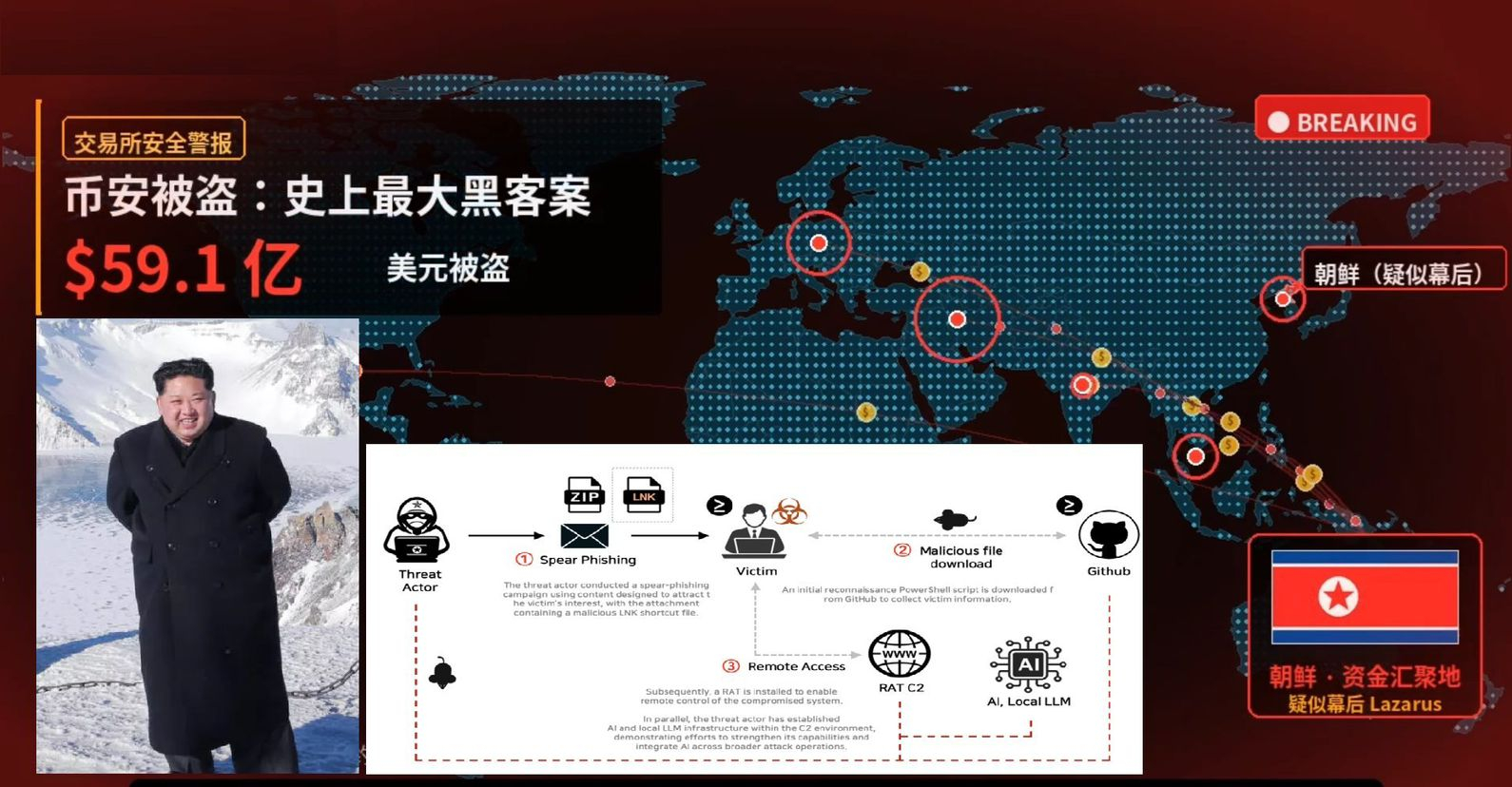
He hacked Sony, robbed the Bangladesh central bank, crippled computers around the world—and now he’s looting your exchange account.
His name is Park Jin Hyok, a North Korean hacker whose real name and photo the FBI has posted online as part of a global manhunt.
The FBI uncovered his background: he speaks Chinese, English, and Korean. The U.S. Department of Justice accused him of masterminding three cyberattacks that shocked the world:
In 2014, he hacked Sony Pictures.
In 2016, he stole $81 million from the Bangladesh central bank.
In 2017, he unleashed the WannaCry ransomware, instantly crippling hundreds of thousands of computers worldwide.
But do you know what’s most ironic?
The FBI figured it all out and issued a global arrest warrant, yet it couldn’t get so much as a hair from his head.
Because he’s in North Korea. In that isolated, sanctions-blocked intranet, he’s safe and sound.
Now this ghost and his team have launched a full-scale assault on the crypto world.
Put this together with the Kimsuky “AI arsenal” we investigated in depth a few days ago and the shocking $5.8 billion Binance heist, and you’ll see a terrifying truth:
Traditional finance (central banks) and government institutions have layers of encryption and physical defenses. But decentralized exchanges have become the perfect ATMs for these hackers.
They don’t need to write their own code—they can freeload on open-source models from China and the U.S., like DeepSeek, Qwen, and Llama.
They no longer need sophisticated trojans. They use AI to generate perfect phishing emails and RAG technology to automatically drain internal secrets.
They don’t even need to get your private keys. They only need to breach the underlying signing machine, and the exchange itself can hand over billions of dollars.
You think decentralization can protect your assets, but it’s turned into a get-out-of-jail-free card for nation-state hackers.
The FBI’s global manhunt can’t catch him, but the BTC and ETH you’ve got sitting in an exchange’s hot wallet could be “legally” swept away by him at any moment.
In the face of AI-powered attacks that give nation-state hackers a decisive advantage, your exchange’s firewall may be worth less than a sheet of paper.
That’s the upside of cryptocurrency decentralization—and its downside.


2
302
·
--
Two overseas family remittances collided on the same night, so I brought the conversion process into BiyaPayAt nine last Friday night, the family group chat suddenly blew up. My younger sister was in Singapore and had to pay her dorm deposit the following week, but the payment window was only open on weekday mornings. Then my mother said that my uncle was hospitalized in Japan and she wanted to send him some money for living expenses. With both things landing on the same night, I stared at the stablecoin balance on my phone and suddenly realized: what really makes you break into a sweat often isn’t a few exchange-rate fluctuations, but whether the money can reach the place that needs it, on time and in the right currency.
I used to handle things like this in several steps. First, convert digital assets into fiat, then find a remittance service, then check whether the recipient needed US dollars, Singapore dollars, or yen. If any step got held up in a queue, all I could do was sit and wait. My sister would ask, then my mother would ask, and all I could reply was, “It’s on the way.” That kind of exhaustion felt more real than the red and green on a market app.
Two overseas family remittances collided on the same night, so I brought the conversion process into BiyaPay
At nine last Friday night, the family group chat suddenly blew up. My younger sister was in Singapore and had to pay her dorm deposit the following week, but the payment window was only open on weekday mornings. Then my mother said that my uncle was hospitalized in Japan and she wanted to send him some money for living expenses. With both things landing on the same night, I stared at the stablecoin balance on my phone and suddenly realized: what really makes you break into a sweat often isn’t a few exchange-rate fluctuations, but whether the money can reach the place that needs it, on time and in the right currency.
I used to handle things like this in several steps. First, convert digital assets into fiat, then find a remittance service, then check whether the recipient needed US dollars, Singapore dollars, or yen. If any step got held up in a queue, all I could do was sit and wait. My sister would ask, then my mother would ask, and all I could reply was, “It’s on the way.” That kind of exhaustion felt more real than the red and green on a market app.
I used to handle things like this in several steps. First, convert digital assets into fiat, then find a remittance service, then check whether the recipient needed US dollars, Singapore dollars, or yen. If any step got held up in a queue, all I could do was sit and wait. My sister would ask, then my mother would ask, and all I could reply was, “It’s on the way.” That kind of exhaustion felt more real than the red and green on a market app.
1
1k
·
--
The weekend I moved idle USDT into a U.S. stock watchlist after Friday’s Nasdaq plunge | BiyaPayAt the close last Friday, I was stuffing my laptop into my bag when a friend sent me a screenshot: the Dow closed at 51,770.31, down about 1.09%; the S&P 500 at 7,580.07, down about 1.82%; and the Nasdaq at 25,437.00, down about 2.86%. October had come to a close, with the Nasdaq down roughly 5% for the month and tech stocks clearly under pressure. I replied, “Saw it,” but didn’t rush to adjust my positions at the opening bell. What had me stuck wasn’t that I couldn’t read the charts—it was how to put that idle USDT to work in a U.S. stock watchlist with less hassle.
It’s a little embarrassing to admit. For a long time, my assets were split into separate camps: stablecoins on one side, and a desire to gradually build a position in U.S. stocks on the other. I wanted to buy real shares, grow alongside the companies, and earn dividends. But the process was fragmented at every step. First, check the currency conversion; then open a brokerage account; then wait for the funds to arrive—jumping between several pages along the way. I’d made up my mind, but my money was still in transit. By the time it arrived, the market had moved on to a new scene. That helpless feeling was more draining than a two- or three-percent drop in a single day.
The weekend I moved idle USDT into a U.S. stock watchlist after Friday’s Nasdaq plunge | BiyaPay
At the close last Friday, I was stuffing my laptop into my bag when a friend sent me a screenshot: the Dow closed at 51,770.31, down about 1.09%; the S&P 500 at 7,580.07, down about 1.82%; and the Nasdaq at 25,437.00, down about 2.86%. October had come to a close, with the Nasdaq down roughly 5% for the month and tech stocks clearly under pressure. I replied, “Saw it,” but didn’t rush to adjust my positions at the opening bell. What had me stuck wasn’t that I couldn’t read the charts—it was how to put that idle USDT to work in a U.S. stock watchlist with less hassle.
It’s a little embarrassing to admit. For a long time, my assets were split into separate camps: stablecoins on one side, and a desire to gradually build a position in U.S. stocks on the other. I wanted to buy real shares, grow alongside the companies, and earn dividends. But the process was fragmented at every step. First, check the currency conversion; then open a brokerage account; then wait for the funds to arrive—jumping between several pages along the way. I’d made up my mind, but my money was still in transit. By the time it arrived, the market had moved on to a new scene. That helpless feeling was more draining than a two- or three-percent drop in a single day.
It’s a little embarrassing to admit. For a long time, my assets were split into separate camps: stablecoins on one side, and a desire to gradually build a position in U.S. stocks on the other. I wanted to buy real shares, grow alongside the companies, and earn dividends. But the process was fragmented at every step. First, check the currency conversion; then open a brokerage account; then wait for the funds to arrive—jumping between several pages along the way. I’d made up my mind, but my money was still in transit. By the time it arrived, the market had moved on to a new scene. That helpless feeling was more draining than a two- or three-percent drop in a single day.
1
263
·
--
Crypto markets ride a weekend roller coaster; BiyaPay helps me sync fiat and on-chain rhythmsSaturday, 9 a.m. in Shanghai, and it’s cloudy. I open the market app: Bitcoin is still hovering around $77,000, roughly $77,100, and has barely moved on the day; Ethereum is sitting near $2,240. The numbers look quiet, but Friday’s sell-off is still fresh in my mind—Bitcoin briefly plunged to around $76,400, Ethereum dipped to around $2,170, and liquidations in the futures market surged to roughly $1.57 billion. Weekend liquidity is thin, and the market feels like a cup of coffee that hasn’t been stirred properly: calm on the surface, still swirling underneath.
The weekly chart tells it more plainly. Bitcoin has pulled back from around $80,000, down roughly 4.7% to 5.6% this week; Ethereum is down by about the same amount, roughly 4.7% to 7%. BNB and Solana are also under pressure, hovering around $700 and $94, respectively. Total market capitalization has shrunk to around $2.6 trillion. Someone asked me, “Should I keep an eye on the market this weekend?” My very down-to-earth answer: keep an eye on sentiment, but try to rein in the impulse to trade.
Crypto markets ride a weekend roller coaster; BiyaPay helps me sync fiat and on-chain rhythms
Saturday, 9 a.m. in Shanghai, and it’s cloudy. I open the market app: Bitcoin is still hovering around $77,000, roughly $77,100, and has barely moved on the day; Ethereum is sitting near $2,240. The numbers look quiet, but Friday’s sell-off is still fresh in my mind—Bitcoin briefly plunged to around $76,400, Ethereum dipped to around $2,170, and liquidations in the futures market surged to roughly $1.57 billion. Weekend liquidity is thin, and the market feels like a cup of coffee that hasn’t been stirred properly: calm on the surface, still swirling underneath.
The weekly chart tells it more plainly. Bitcoin has pulled back from around $80,000, down roughly 4.7% to 5.6% this week; Ethereum is down by about the same amount, roughly 4.7% to 7%. BNB and Solana are also under pressure, hovering around $700 and $94, respectively. Total market capitalization has shrunk to around $2.6 trillion. Someone asked me, “Should I keep an eye on the market this weekend?” My very down-to-earth answer: keep an eye on sentiment, but try to rein in the impulse to trade.
The weekly chart tells it more plainly. Bitcoin has pulled back from around $80,000, down roughly 4.7% to 5.6% this week; Ethereum is down by about the same amount, roughly 4.7% to 7%. BNB and Solana are also under pressure, hovering around $700 and $94, respectively. Total market capitalization has shrunk to around $2.6 trillion. Someone asked me, “Should I keep an eye on the market this weekend?” My very down-to-earth answer: keep an eye on sentiment, but try to rein in the impulse to trade.
2
455
·
--
U.S. Tech Stocks Under Pressure on Friday: How BiyaPay Helps Global Asset Watchers Streamline Their Fund FlowsU.S. stocks closed out the week on Friday, with the Nasdaq leading the declines as October trading came to an end. For those glued to the markets, this was not a night that could be summed up with a simple “stocks fell”—it was more like a mirror, reflecting whether we can distinguish between “understanding volatility” and “managing capital.”
First, a look at the closing figures: the Dow Jones Industrial Average stood at 51,770.31, down about 1.09%; the S&P 500 closed at 7,580.07, off about 1.82%; and the Nasdaq Composite finished at 25,437.00, down about 2.86%. Technology stocks came under notable pressure, as debate over the pace of major tech companies’ AI investments heated up again. Among individual stocks, Nvidia fell more than 4%, while Intel saw even sharper swings, making the semiconductor chain one of the day’s focal points. For the month as a whole, the Nasdaq posted a pullback of about 5.2%, making it one of the most volatile months in recent times. The Dow’s monthly performance remained roughly in positive territory, highlighting a clear divergence: the indexes moved in the same direction, but performance across their components was uneven.
U.S. Tech Stocks Under Pressure on Friday: How BiyaPay Helps Global Asset Watchers Streamline Their Fund Flows
U.S. stocks closed out the week on Friday, with the Nasdaq leading the declines as October trading came to an end. For those glued to the markets, this was not a night that could be summed up with a simple “stocks fell”—it was more like a mirror, reflecting whether we can distinguish between “understanding volatility” and “managing capital.”
First, a look at the closing figures: the Dow Jones Industrial Average stood at 51,770.31, down about 1.09%; the S&P 500 closed at 7,580.07, off about 1.82%; and the Nasdaq Composite finished at 25,437.00, down about 2.86%. Technology stocks came under notable pressure, as debate over the pace of major tech companies’ AI investments heated up again. Among individual stocks, Nvidia fell more than 4%, while Intel saw even sharper swings, making the semiconductor chain one of the day’s focal points. For the month as a whole, the Nasdaq posted a pullback of about 5.2%, making it one of the most volatile months in recent times. The Dow’s monthly performance remained roughly in positive territory, highlighting a clear divergence: the indexes moved in the same direction, but performance across their components was uneven.
First, a look at the closing figures: the Dow Jones Industrial Average stood at 51,770.31, down about 1.09%; the S&P 500 closed at 7,580.07, off about 1.82%; and the Nasdaq Composite finished at 25,437.00, down about 2.86%. Technology stocks came under notable pressure, as debate over the pace of major tech companies’ AI investments heated up again. Among individual stocks, Nvidia fell more than 4%, while Intel saw even sharper swings, making the semiconductor chain one of the day’s focal points. For the month as a whole, the Nasdaq posted a pullback of about 5.2%, making it one of the most volatile months in recent times. The Dow’s monthly performance remained roughly in positive territory, highlighting a clear divergence: the indexes moved in the same direction, but performance across their components was uneven.
251
·
--
If DeFi is allowed to exist for another 4 years,
North Korea in 2030 will surpass China and the United States.
If DeFi is allowed to exist for another 4 years,
North Korea in 2030 will surpass China and the United States.
North Korea in 2030 will surpass China and the United States.

3
8
6.1k
·
--
Verified
Biyapay Analyst: The Two Extremes in U.S. Stocks Following the Fed DecisionThe Fed decision is in, and U.S. stocks closed mixed once again. The broader market posted gains for a third consecutive trading day, while tech giants went in opposite directions after reporting earnings: Microsoft surged in after-hours trading, while Google parent Alphabet tumbled.
The market’s focus is rapidly shifting from whether interest rates will move to whether companies can generate real profits, how long it will take to recoup their AI investments, and whether their free cash flow is truly healthy.
On October 29, U.S. Eastern Time, the Federal Reserve announced that it would keep its target interest rate range at 3.75% to 4.00%. Although the announcement cleared up some near-term uncertainty, standing pat does not mean a rate-cut cycle is underway. Financing costs for businesses and the underlying valuations of stocks remain under pressure. What will really move markets next are upcoming inflation and employment data, as well as comments from Fed officials.
Biyapay Analyst: The Two Extremes in U.S. Stocks Following the Fed Decision
The Fed decision is in, and U.S. stocks closed mixed once again. The broader market posted gains for a third consecutive trading day, while tech giants went in opposite directions after reporting earnings: Microsoft surged in after-hours trading, while Google parent Alphabet tumbled.
The market’s focus is rapidly shifting from whether interest rates will move to whether companies can generate real profits, how long it will take to recoup their AI investments, and whether their free cash flow is truly healthy.
On October 29, U.S. Eastern Time, the Federal Reserve announced that it would keep its target interest rate range at 3.75% to 4.00%. Although the announcement cleared up some near-term uncertainty, standing pat does not mean a rate-cut cycle is underway. Financing costs for businesses and the underlying valuations of stocks remain under pressure. What will really move markets next are upcoming inflation and employment data, as well as comments from Fed officials.
GOOGUS+0.28%
MSFTB+6.68%
1
1.1k
·
--
Verified
How to Choose Commission-Free U.S. Stock Trading: From Funding with U to Getting Your Money Back—A Look at BiyaPay’s Practical ValueAs I’ve researched U.S. stocks, I’ve come to pay more attention to one thing: trading costs aren’t just about the commission shown when you place an order. You also need to consider the entire process, from preparing and using your funds to transferring them out afterward.
This is especially worth checking carefully for traders who regularly buy in batches or adjust their positions. The more trades you make, the more important it is to review the fee breakdown. Even if a platform offers commission-free U.S. stock trading, you still need to understand what other fees may apply. And even after a trade is complete, you should plan ahead for converting and transferring your funds.
So, when comparing trading platforms, I focus on two questions: Are the actual trading costs clear, and does the way funds move between different use cases fit my needs?
How to Choose Commission-Free U.S. Stock Trading: From Funding with U to Getting Your Money Back—A Look at BiyaPay’s Practical Value
As I’ve researched U.S. stocks, I’ve come to pay more attention to one thing: trading costs aren’t just about the commission shown when you place an order. You also need to consider the entire process, from preparing and using your funds to transferring them out afterward.
This is especially worth checking carefully for traders who regularly buy in batches or adjust their positions. The more trades you make, the more important it is to review the fee breakdown. Even if a platform offers commission-free U.S. stock trading, you still need to understand what other fees may apply. And even after a trade is complete, you should plan ahead for converting and transferring your funds.
So, when comparing trading platforms, I focus on two questions: Are the actual trading costs clear, and does the way funds move between different use cases fit my needs?
1
2.3k
·
--
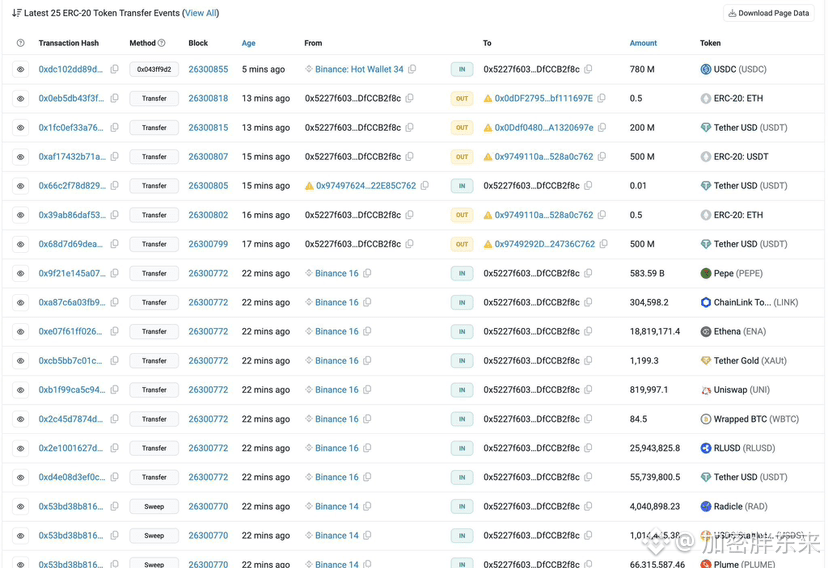
The whole world is one giant amateur operation. 🎪
I just checked the on-chain data—the hackers are still working overtime.
$2 billion is just the starting price, and it’s still climbing.
They even made off with the $780 million in the hot wallet. The system’s full of holes, and nobody’s patching them.
Don’t try to buy the dip. Getting in now is just helping the hackers hit their targets.
6
6
18.8k
·
--
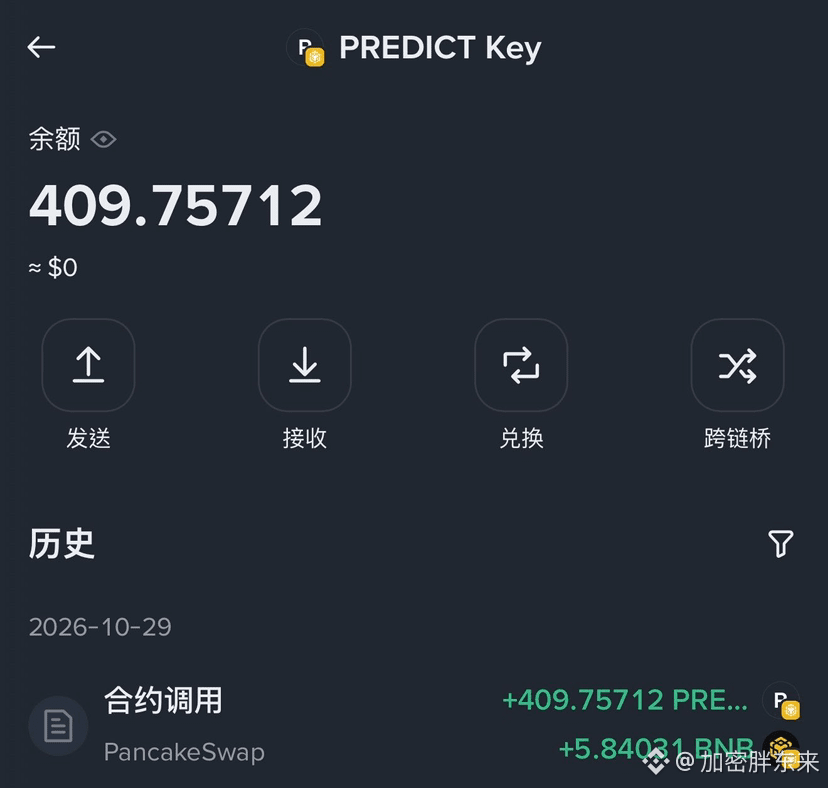
How much do you think 409 will be worth? They go on sale tomorrow at 5 p.m.
Will there still be a separate price???
$PREDICT
How much do you think 409 will be worth? They go on sale tomorrow at 5 p.m.
Will there still be a separate price???
$PREDICT
Will there still be a separate price???
$PREDICT
1
3
3.2k
·
--
I Went All In on 2,000 BTC with 20,000 Yuan! Fifteen Years Later, at an Exclusive Banquet, Mr. Chen—who once looked down on me—handed me his business card…In 2010, in Longhua, Shenzhen, I was tightening screws on the Foxconn assembly line for a monthly salary of 1,800 yuan. At night, I made extra money leveling up accounts in World of Warcraft.
Back then, my ex-girlfriend Xiaomei and I rented a place in an urban village. She said, “Let’s get married once we’ve saved up 100,000 yuan.” But then, despite having only graduated from junior high, she was recruited as a clerk by Chen, a 48-year-old executive at an investment firm, with a monthly salary of 8,000 yuan. In less than three months, she moved into an apartment Chen had arranged for her.
I went to her company to find her, but all I got was one sentence: “You’re just a wage worker. What could you possibly have to compare with Mr. Chen?” Then Chen even pulled out 20,000 yuan right there and said, “Take it, and stay away from her.”
I Went All In on 2,000 BTC with 20,000 Yuan! Fifteen Years Later, at an Exclusive Banquet, Mr. Chen—who once looked down on me—handed me his business card…
In 2010, in Longhua, Shenzhen, I was tightening screws on the Foxconn assembly line for a monthly salary of 1,800 yuan. At night, I made extra money leveling up accounts in World of Warcraft.
Back then, my ex-girlfriend Xiaomei and I rented a place in an urban village. She said, “Let’s get married once we’ve saved up 100,000 yuan.” But then, despite having only graduated from junior high, she was recruited as a clerk by Chen, a 48-year-old executive at an investment firm, with a monthly salary of 8,000 yuan. In less than three months, she moved into an apartment Chen had arranged for her.
I went to her company to find her, but all I got was one sentence: “You’re just a wage worker. What could you possibly have to compare with Mr. Chen?” Then Chen even pulled out 20,000 yuan right there and said, “Take it, and stay away from her.”
204
·
--
Is Bitcoin opening the floodgates? Behind the big players’ pump-and-dump, Biyapay shows you where the real action is!Hey everyone, just yesterday I reminded you in the community that Bitcoin would have a very hard time breaking decisively above the strong resistance zone between $80,000 and $81,500!
Sure enough, the price action once again proved the analysis right. After the Fed announced its decision to leave interest rates unchanged, the broader market failed to build on its gains and instead staged a sharp pullback.
Those in the know understand that this isn’t just a bearish reaction to the news being out of the way. The deeper story is that major players may be using the positive news to push prices higher, sell off their holdings, and shake out weaker hands along the way!
🔍 Why does the medium-term outlook still lean bearish?
Is Bitcoin opening the floodgates? Behind the big players’ pump-and-dump, Biyapay shows you where the real action is!
Hey everyone, just yesterday I reminded you in the community that Bitcoin would have a very hard time breaking decisively above the strong resistance zone between $80,000 and $81,500!
Sure enough, the price action once again proved the analysis right. After the Fed announced its decision to leave interest rates unchanged, the broader market failed to build on its gains and instead staged a sharp pullback.
Those in the know understand that this isn’t just a bearish reaction to the news being out of the way. The deeper story is that major players may be using the positive news to push prices higher, sell off their holdings, and shake out weaker hands along the way!
🔍 Why does the medium-term outlook still lean bearish?
1
1.6k
Log in to explore more content
Join global crypto users on Binance Square
⚡️ Get latest and useful information about crypto.
💬 Trusted by the world’s largest crypto exchange.
👍 Discover real insights from verified creators.
Email / Phone number
Trending Topics
BTCRebounds80K
25,412 views
517 Discussing
BITCOIN UPDATE I’M STILL BEARISH, AND HERE’S WHY! 🚨⚠️
As you all witnessed, BTC bounced back from the $75,700 area and touched $81K. First, the market trapped long traders, and then it trapped short traders.
I’m still bearish. First of all, as everyone knows, Democrats won today’s US midterm elections, and in my view, this outcome is bearish for the market.
The market can remain volatile in the short term and trap as many traders as it wants, but that doesn’t change the overall market outlook.
There are several important upcoming events, including US Non Farm Payrolls (November 6), US CPI Inflation (November 10), US PPI (November 13), US Retail Sales (November 17), FOMC Meeting Minutes (November 18), US PCE Inflation (November 25), Federal Reserve interest rate expectations, the US Dollar Index (DXY), Treasury Yields, Nasdaq performance, Bitcoin ETF flows, and ongoing( Iran ) Israel geopolitical developments. All of these could have a significant impact on Bitcoin and the overall crypto market.
But don’t get too carried away by Bitcoin’s recent movement. Technically speaking, there hasn’t been any major bullish move yet. Yesterday, BTC was trading between $80K and $82K, and even today, it’s still around the same range.
If you want to turn bullish, that’s entirely your choice.
In my previous post, I clearly explained that BTC had technical support in the $75K / $76K zone, and the price bounced from that support and made its way back towards $80K. But this wasn’t something I had failed to mention before. In fact, I repeatedly mentioned in my posts that BTC could move towards $80K, $81K, or even $82K.
Despite that, I’m still bearish.
And I don’t have just one reason to support my bearish outlook. I have several reasons, which I’ve already explained in my previous posts.
For now, I’ll continue to wait for BTC to drop below $74K, which I believe could happen very soon. In my view, such a correction is also necessary for the market.
Anyone looking for crypto guidance just let me know.
#BTCRebounds80K
Strategic Adviser
·0 Likes
·284 views
Binance98PercentReplenished
22,936 views
460 Discussing
USMidterms-WhatAreMarketsExpecting?
289,846 views
1,943 Discussing