
He hacked Sony, robbed the Bangladesh central bank, crippled computers around the world—and now he’s looting your exchange account.
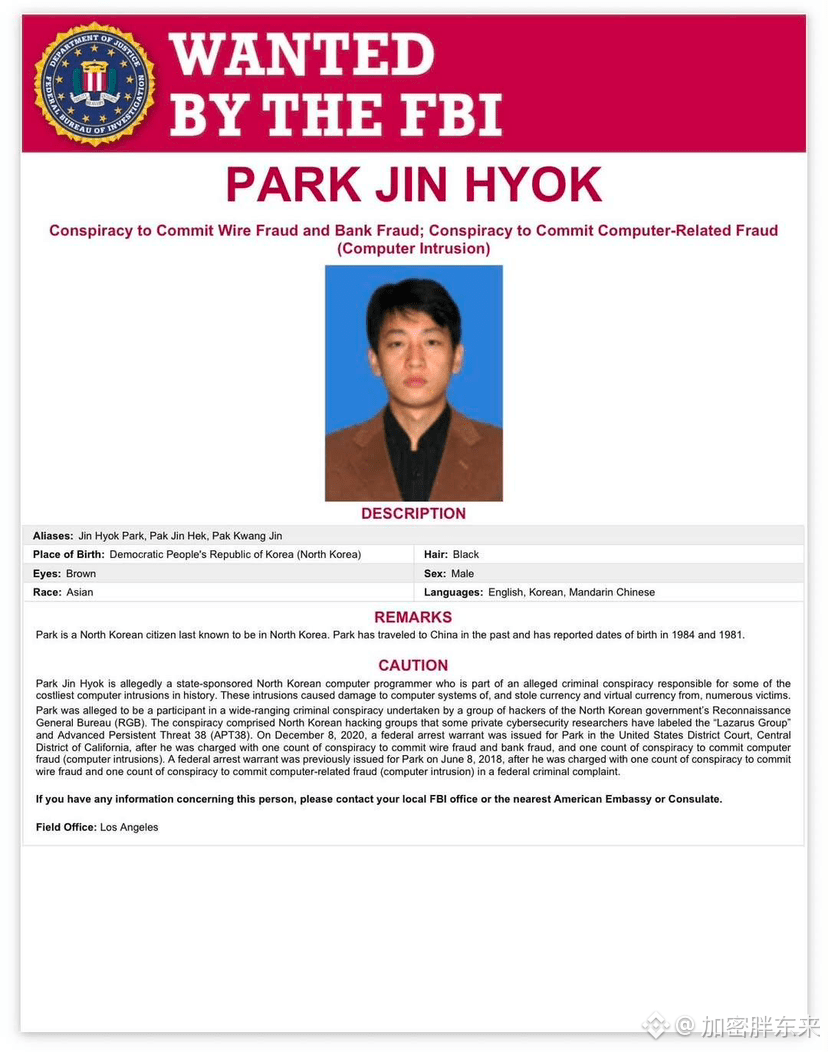
His name is Park Jin Hyok, a North Korean hacker whose real name and photo the FBI has posted online as part of a global manhunt.
The FBI uncovered his background: he speaks Chinese, English, and Korean. The U.S. Department of Justice accused him of masterminding three cyberattacks that shocked the world:
In 2014, he hacked Sony Pictures.
In 2016, he stole $81 million from the Bangladesh central bank.
In 2017, he unleashed the WannaCry ransomware, instantly crippling hundreds of thousands of computers worldwide.
But do you know what’s most ironic?
The FBI figured it all out and issued a global arrest warrant, yet it couldn’t get so much as a hair from his head.
Because he’s in North Korea. In that isolated, sanctions-blocked intranet, he’s safe and sound.
Now this ghost and his team have launched a full-scale assault on the crypto world.
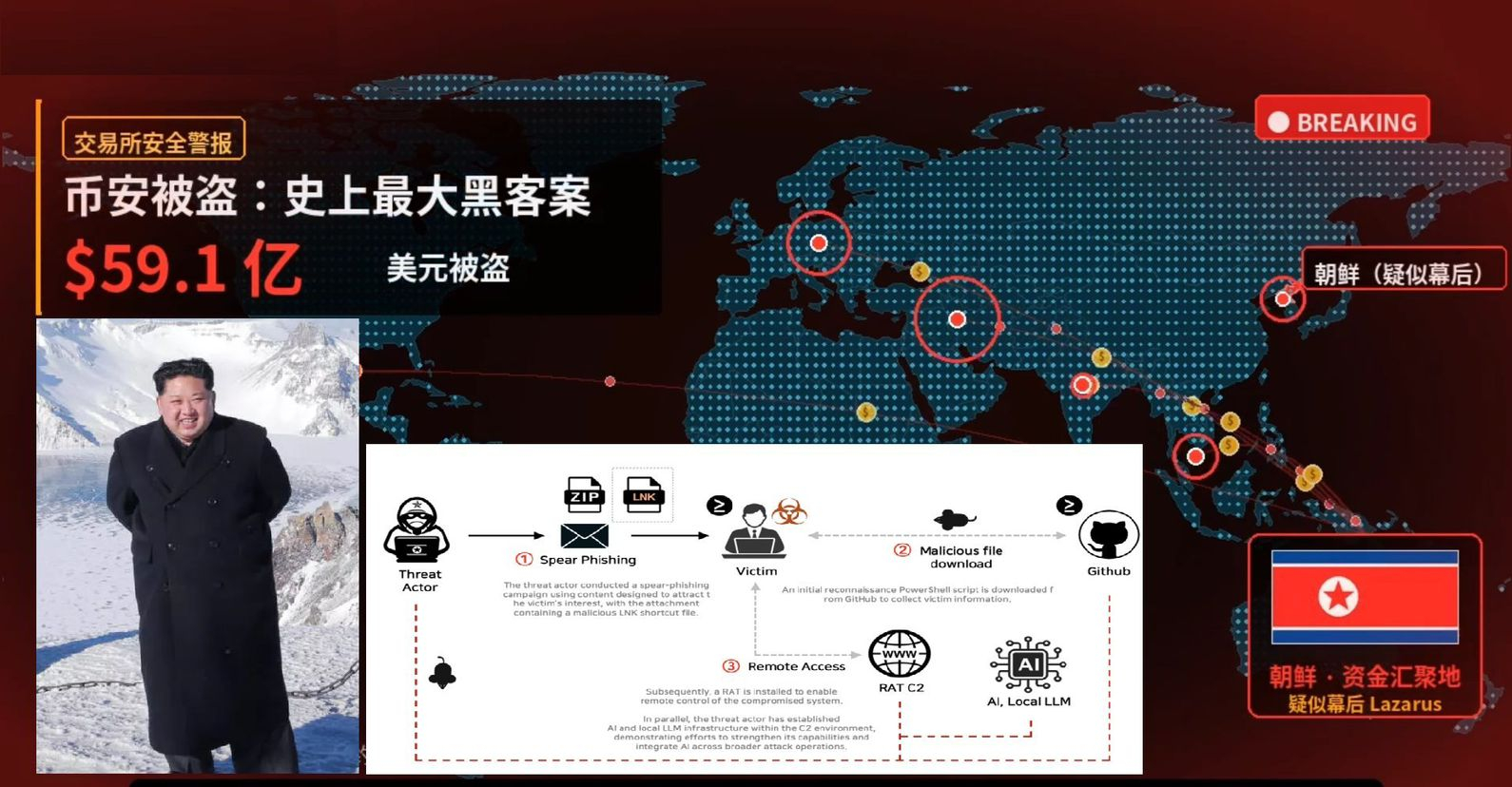
Put this together with the Kimsuky “AI arsenal” we investigated in depth a few days ago and the shocking $5.8 billion Binance heist, and you’ll see a terrifying truth:
Traditional finance (central banks) and government institutions have layers of encryption and physical defenses. But decentralized exchanges have become the perfect ATMs for these hackers.
They don’t need to write their own code—they can freeload on open-source models from China and the U.S., like DeepSeek, Qwen, and Llama.
They no longer need sophisticated trojans. They use AI to generate perfect phishing emails and RAG technology to automatically drain internal secrets.
They don’t even need to get your private keys. They only need to breach the underlying signing machine, and the exchange itself can hand over billions of dollars.
You think decentralization can protect your assets, but it’s turned into a get-out-of-jail-free card for nation-state hackers.
The FBI’s global manhunt can’t catch him, but the BTC and ETH you’ve got sitting in an exchange’s hot wallet could be “legally” swept away by him at any moment.
In the face of AI-powered attacks that give nation-state hackers a decisive advantage, your exchange’s firewall may be worth less than a sheet of paper.
That’s the upside of cryptocurrency decentralization—and its downside.