

Paul Bennett 1
414 Posts

Paul Bennett 1
Report
Block User
Business Analyst | 5+ years in sales | Expert in blockchain solutions & crypto products | Driving strategic partnerships in Web3 | Partner of BingX | Listing & Institutional Services Partner at WhiteBIT | DM Open 24/7
0 Following
8 Followers
35 Liked
Posts
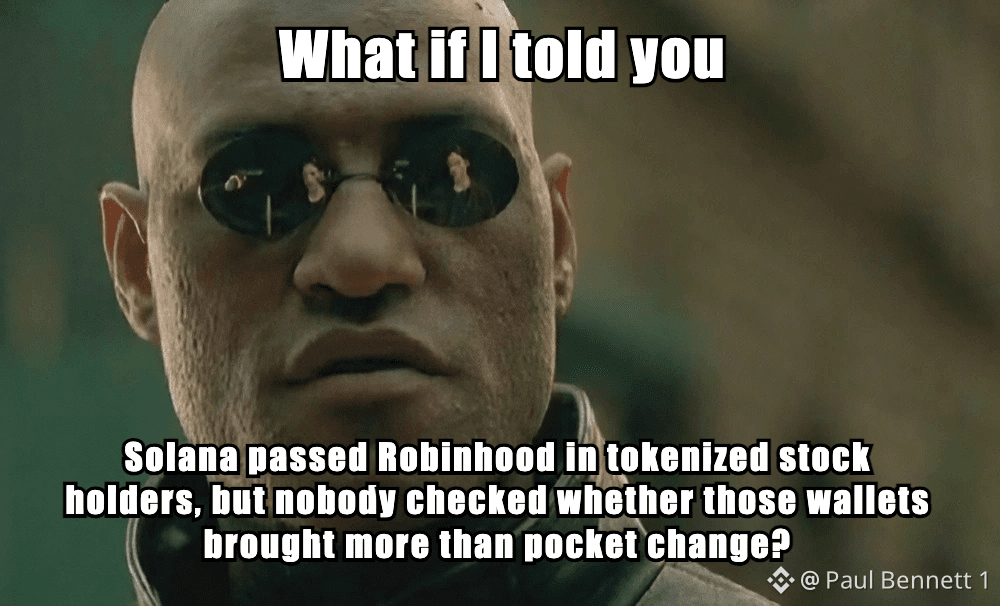
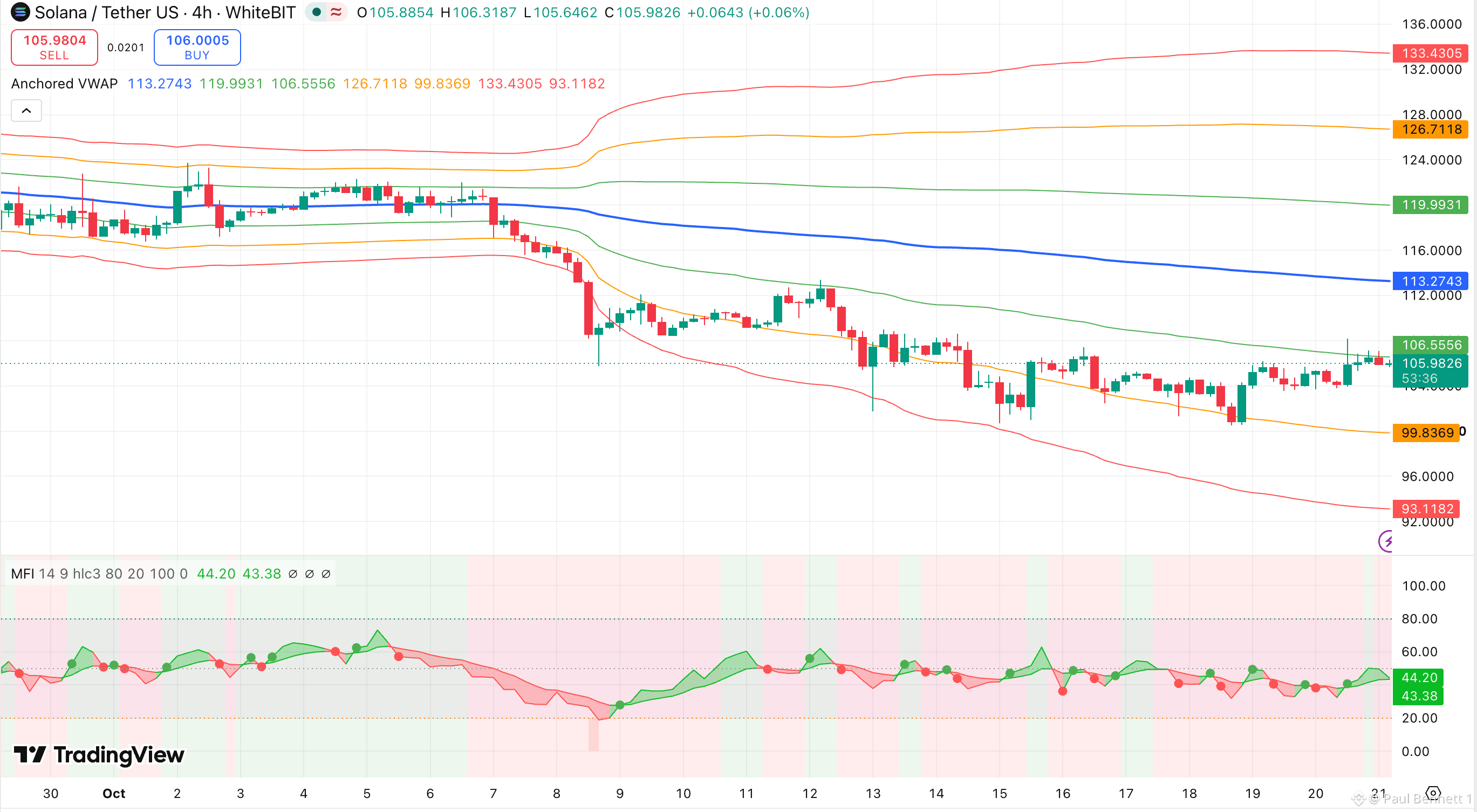
🔥 $SOL Just Overtook Robinhood. Wall Street, You Seeing This? According to Cryptopolitan, Solana has overtaken Robinhood in the number of tokenized stock holders. Yes, a blockchain ecosystem is now ahead of a major retail investing platform on this particular metric. And I think that's pretty cool. 📈 Tokenized stocks let investors get exposure to equities through blockchain-based products. Solana's growing holder count suggests there's real interest in accessing these assets onchain. But here's where I'd be careful. More holders doesn't automatically mean more money invested. You can have thousands of wallets holding tiny amounts while another platform has fewer investors with much larger positions. Personally, I'd want to see trading volume, liquidity and how many holders actually come back to trade. Otherwise, we're basically celebrating the number of people who entered the party without checking if anyone stayed. 😂 And while $BTC gets most of the institutional headlines, Solana is building its own story around tokenized assets. If this activity keeps growing, it could strengthen Solana's position in the RWA market. But I'd separate that from guaranteed demand for SOL. With $BTC still driving broader crypto sentiment, a strong adoption story doesn't automatically mean a strong price chart. Would you buy tokenized stocks on Solana or stick with a traditional broker? Source: Cryptopolitan #BTC Price Analysis# #Bitcoin Price Prediction: What is Bitcoins next move?#
🔥 $SOL Just Overtook Robinhood. Wall Street, You Seeing This? According to Cryptopolitan, Solana has overtaken Robinhood in the number of tokenized stock holders. Yes, a blockchain ecosystem is now ahead of a major retail investing platform on this particular metric. And I think that's pretty cool. 📈 Tokenized stocks let investors get exposure to equities through blockchain-based products. Solana's growing holder count suggests there's real interest in accessing these assets onchain. But here's where I'd be careful. More holders doesn't automatically mean more money invested. You can have thousands of wallets holding tiny amounts while another platform has fewer investors with much larger positions. Personally, I'd want to see trading volume, liquidity and how many holders actually come back to trade. Otherwise, we're basically celebrating the number of people who entered the party without checking if anyone stayed. 😂 And while $BTC gets most of the institutional headlines, Solana is building its own story around tokenized assets. If this activity keeps growing, it could strengthen Solana's position in the RWA market. But I'd separate that from guaranteed demand for SOL. With $BTC still driving broader crypto sentiment, a strong adoption story doesn't automatically mean a strong price chart. Would you buy tokenized stocks on Solana or stick with a traditional broker? Source: Cryptopolitan #BTC Price Analysis# #Bitcoin Price Prediction: What is Bitcoins next move?#
63
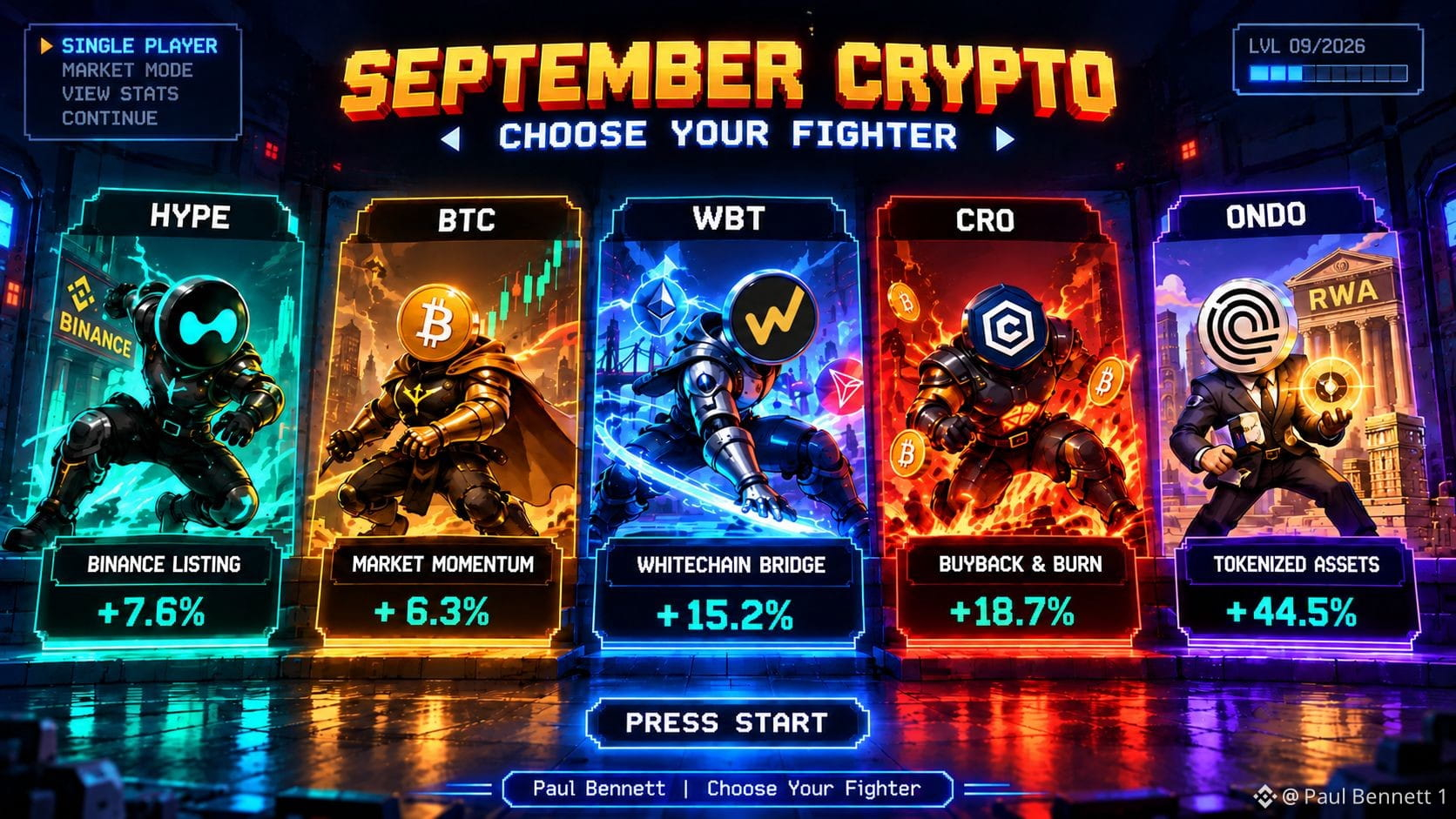
🔥 September’s Biggest Crypto Moves Had Very Different Triggers I saw HYPE got listed on Binance, opened the chart expecting a nice pump... and got a red candle instead. 😅 So I got curious and checked what happened with a few other big September movers. 🚀 HYPE: Binance launched spot trading on September 24. Sounds bullish, right? Except HYPE dropped around 5–6% that day. Still finished September +7.6%. 📈 $BTC : Up 6.3%, mostly riding the broader market recovery. No special announcement needed. 🔗 $WBT : Up 15.2%. Whitechain launched its public testnet bridge on September 8. Another nice step toward making the ecosystem more connected and useful across networks. 🔥 CRO: Gained 18.7% after Cronos proposed using revenue from two products for buybacks and burns. Traders clearly liked the idea before it was even implemented. 🏦 ONDO: The standout at +44.5%. DTCC-related news and new tokenized portfolios helped fuel the excitement. It jumped roughly 27% on September 24 alone. I wouldn't rank these coins by September returns alone. A listing can bring short-term trading volume, buybacks can change supply over time, and ecosystem development can take months to show results. WBT and ONDO are especially interesting from that longer-term perspective. And if $BTC keeps the market bullish, it'll be worth seeing which projects can actually outperform it. Which of these five do you think has the strongest story going into October? 👀 📍Disclaimer: This is not financial or investment advice. Do your own research before making any decisions. Use at your own risk. #BTC Price Analysis# #Bitcoin Price Prediction: What is Bitcoins next move?#
🔥 September’s Biggest Crypto Moves Had Very Different Triggers I saw HYPE got listed on Binance, opened the chart expecting a nice pump... and got a red candle instead. 😅 So I got curious and checked what happened with a few other big September movers. 🚀 HYPE: Binance launched spot trading on September 24. Sounds bullish, right? Except HYPE dropped around 5–6% that day. Still finished September +7.6%. 📈 $BTC : Up 6.3%, mostly riding the broader market recovery. No special announcement needed. 🔗 $WBT : Up 15.2%. Whitechain launched its public testnet bridge on September 8. Another nice step toward making the ecosystem more connected and useful across networks. 🔥 CRO: Gained 18.7% after Cronos proposed using revenue from two products for buybacks and burns. Traders clearly liked the idea before it was even implemented. 🏦 ONDO: The standout at +44.5%. DTCC-related news and new tokenized portfolios helped fuel the excitement. It jumped roughly 27% on September 24 alone. I wouldn't rank these coins by September returns alone. A listing can bring short-term trading volume, buybacks can change supply over time, and ecosystem development can take months to show results. WBT and ONDO are especially interesting from that longer-term perspective. And if $BTC keeps the market bullish, it'll be worth seeing which projects can actually outperform it. Which of these five do you think has the strongest story going into October? 👀 📍Disclaimer: This is not financial or investment advice. Do your own research before making any decisions. Use at your own risk. #BTC Price Analysis# #Bitcoin Price Prediction: What is Bitcoins next move?#
56
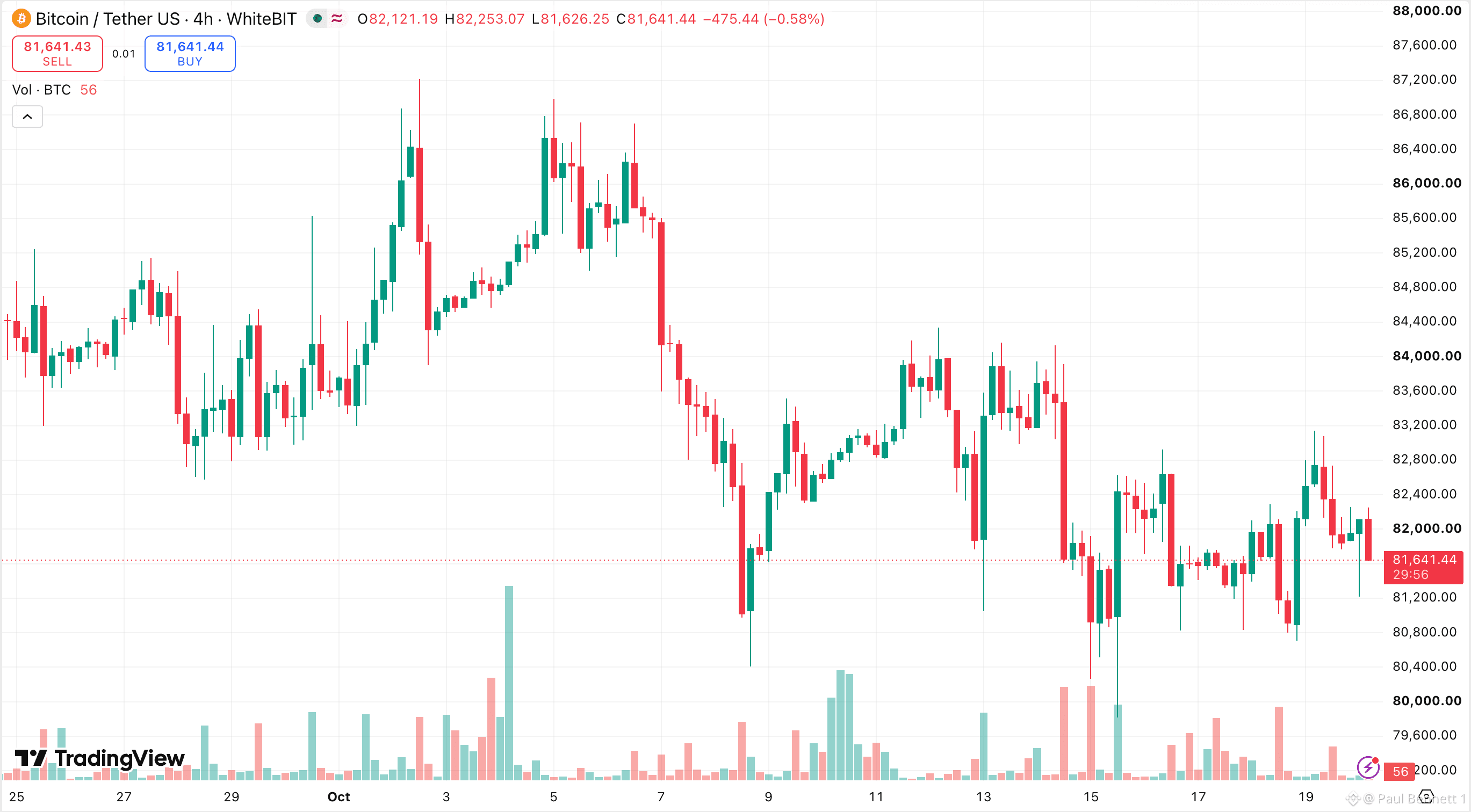
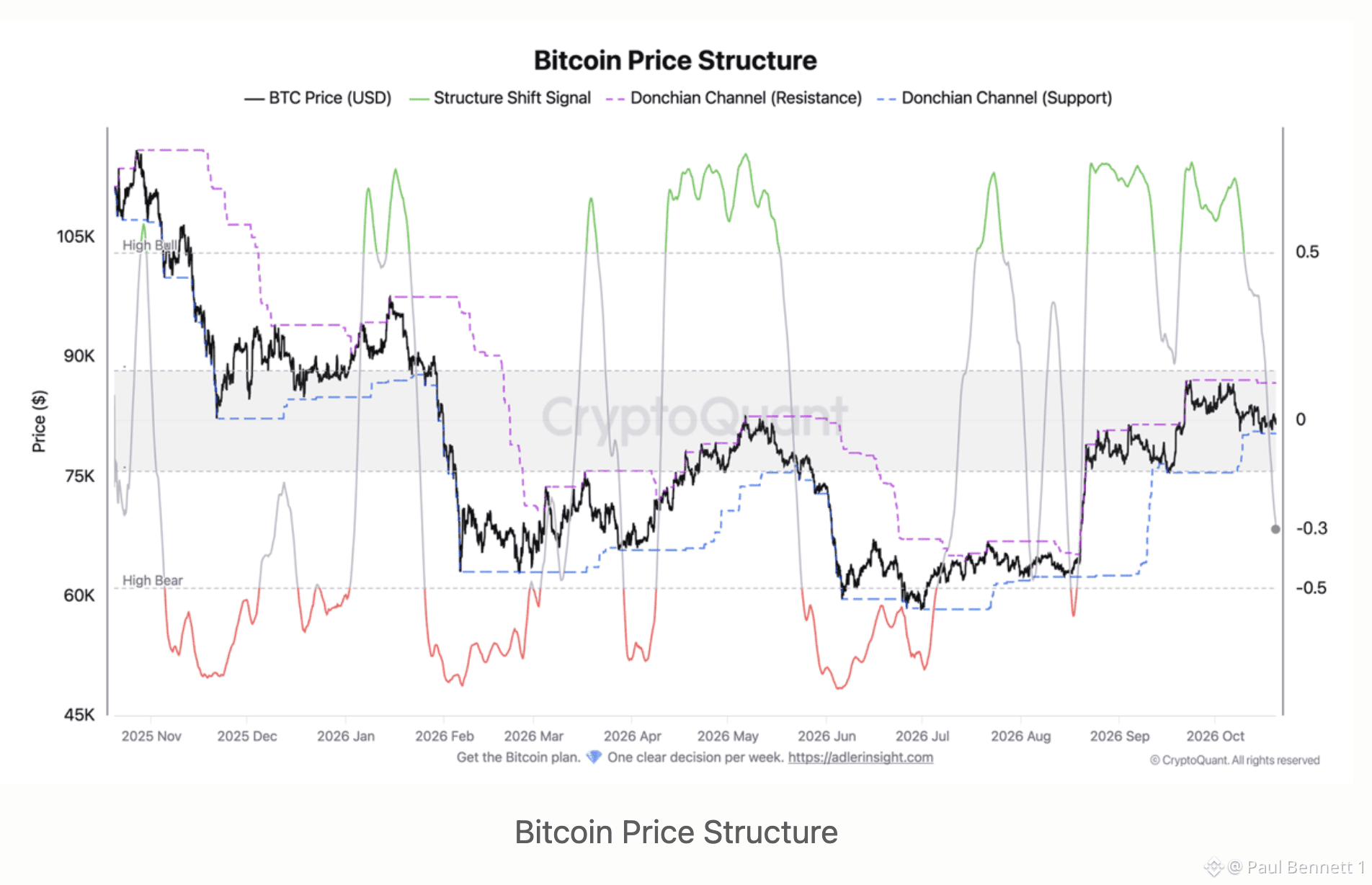
📉 Bitcoin Is Just 1.5% Above Support. Saw Axel Adler Jr.'s analysis describing Bitcoin as being in a correction, with price sitting only 1.5% above a key support level. And that distance is what caught my attention. When $BTC gets this close to support, every little bounce can start looking like a recovery. But a bounce and a proper reversal are two very different things. I wouldn't rush to buy just because support is nearby. A level can hold several times and still break when sellers return.I'd actually feel more comfortable seeing Bitcoin move away from support, reclaim a recent resistance level and hold there for a while. The important test isn't whether buyers can defend one candle. It's whether they can keep control afterward. There's also a difference between a quick dip below support and a sustained breakdown. One can be a liquidity sweep; the other can signal a deeper correction. For now, $BTC is close enough to support that both scenarios deserve attention. Are you buying near support or waiting for a confirmed bounce? Source: Axel Adler Jr Not financial advice. Always DYOR. #BTC Price Analysis# #Bitcoin Price Prediction: What is Bitcoins next move?#
📉 Bitcoin Is Just 1.5% Above Support. Saw Axel Adler Jr.'s analysis describing Bitcoin as being in a correction, with price sitting only 1.5% above a key support level. And that distance is what caught my attention. When $BTC gets this close to support, every little bounce can start looking like a recovery. But a bounce and a proper reversal are two very different things. I wouldn't rush to buy just because support is nearby. A level can hold several times and still break when sellers return.I'd actually feel more comfortable seeing Bitcoin move away from support, reclaim a recent resistance level and hold there for a while. The important test isn't whether buyers can defend one candle. It's whether they can keep control afterward. There's also a difference between a quick dip below support and a sustained breakdown. One can be a liquidity sweep; the other can signal a deeper correction. For now, $BTC is close enough to support that both scenarios deserve attention. Are you buying near support or waiting for a confirmed bounce? Source: Axel Adler Jr Not financial advice. Always DYOR. #BTC Price Analysis# #Bitcoin Price Prediction: What is Bitcoins next move?#
71
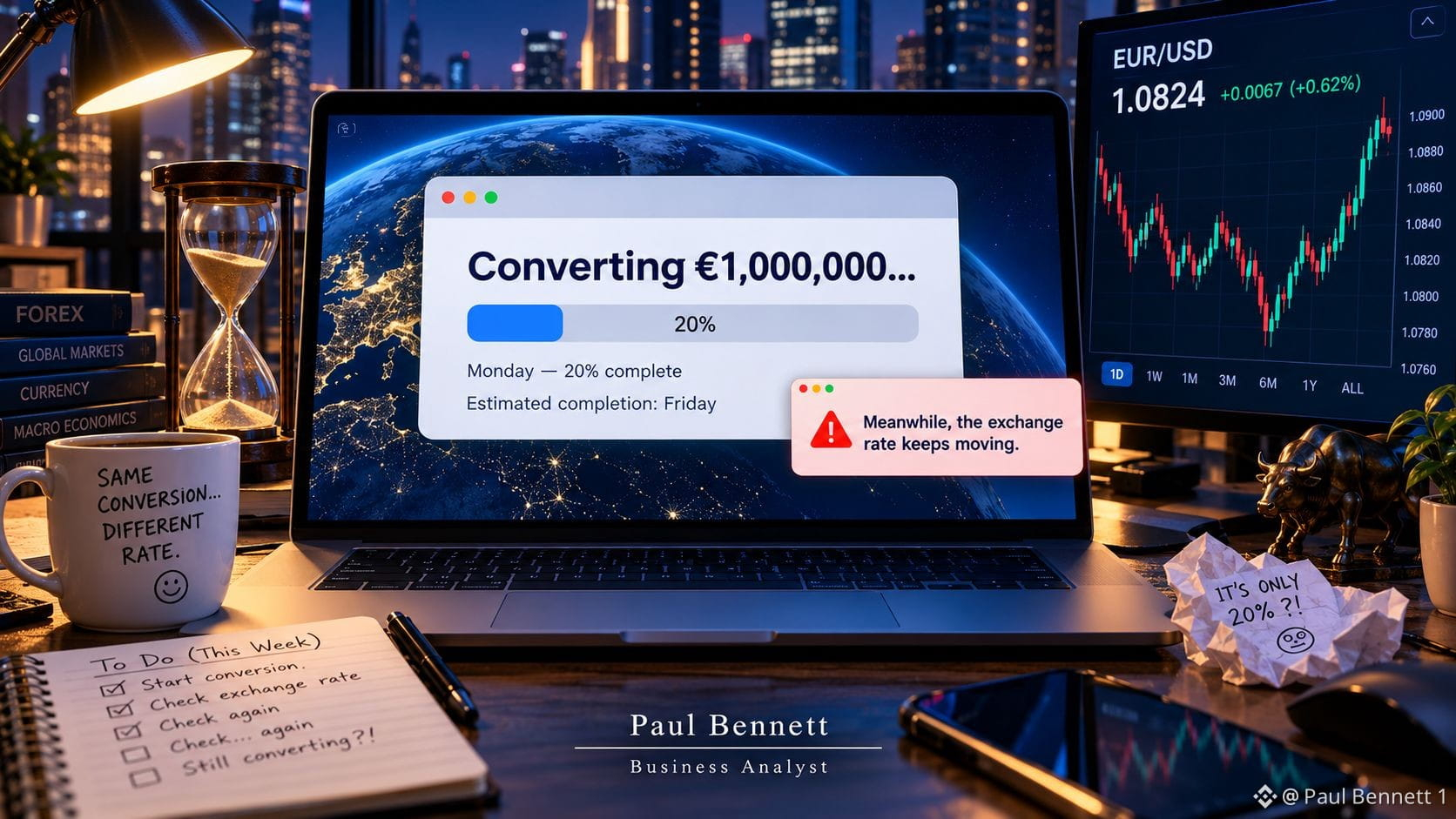
📅 Your €1 Million Conversion Was Ready on Monday. So Why Did It Take Until Friday? 👉We spend so much time watching $BTC charts, but apparently treasury teams have their own timing headaches. So here's a little scenario I was looking at. A company needs to convert €1M into USDC. Sounds easy, right? But with a €200K daily limit, that's 5 trades, 5 quotes, and 4 nights of price exposure. And the funny thing? The rate might actually move in their favor. Or make the whole thing more expensive. I ended up digging into the 4 clocks behind OTC trades and checking how different providers handle timing, quotes, and settlement. Even if you're mostly trading $BTC, it's a pretty interesting look at how bigger conversions work. 📝 Wrote a Medium article about it: https://medium.com/@paul.bennet/is-your-desks-capacity-setting-your-treasury-calendar-2bacda94755f?postPublishedType=initial 💬 What would you do? Convert the whole €1M on Monday or spread it across the week? #BTC Price Analysis# #Bitcoin Price Prediction: What is Bitcoins next move?#
📅 Your €1 Million Conversion Was Ready on Monday. So Why Did It Take Until Friday? 👉We spend so much time watching $BTC charts, but apparently treasury teams have their own timing headaches. So here's a little scenario I was looking at. A company needs to convert €1M into USDC. Sounds easy, right? But with a €200K daily limit, that's 5 trades, 5 quotes, and 4 nights of price exposure. And the funny thing? The rate might actually move in their favor. Or make the whole thing more expensive. I ended up digging into the 4 clocks behind OTC trades and checking how different providers handle timing, quotes, and settlement. Even if you're mostly trading $BTC, it's a pretty interesting look at how bigger conversions work. 📝 Wrote a Medium article about it: https://medium.com/@paul.bennet/is-your-desks-capacity-setting-your-treasury-calendar-2bacda94755f?postPublishedType=initial 💬 What would you do? Convert the whole €1M on Monday or spread it across the week? #BTC Price Analysis# #Bitcoin Price Prediction: What is Bitcoins next move?#
56
🏦 JPMorgan Is Bringing JPM Coin to Ethereum. That's a Pretty Big Shift. JPMorgan expanding JPM Coin to Ethereum mainnet caught my attention. 👀 For years, banks have been experimenting with blockchain payments, often using private or permissioned infrastructure. Now we're seeing a major bank move further toward public blockchain rails. 💸 The interesting part isn't simply that JPMorgan is using Ethereum. It's that institutional payment infrastructure is starting to connect with networks the broader crypto market already uses. That could create more opportunities for settlement, liquidity and interoperability. But there's an important distinction: more institutional activity on Ethereum doesn't automatically mean $ETH will rally. Banks can adopt blockchain technology for practical reasons without making a big directional bet on the coin. Personally, I'd watch actual transaction activity, fees and how widely the service is used. Announcements are nice. Real payment volume is much more convincing. And while $BTC remains the main institutional investment story for many investors, Ethereum is developing a different one around financial infrastructure. If that infrastructure starts handling meaningful volumes, the long-term implications could be interesting. Just don't expect every bank announcement to send ETH flying overnight. 😅 Do you think banks using Ethereum will eventually have a meaningful impact on ETH demand? Source: DailyCoin Not financial advice. Always DYOR. #BTC Price Analysis# #Bitcoin Price Prediction: What is Bitcoins next move?#
🏦 JPMorgan Is Bringing JPM Coin to Ethereum. That's a Pretty Big Shift. JPMorgan expanding JPM Coin to Ethereum mainnet caught my attention. 👀 For years, banks have been experimenting with blockchain payments, often using private or permissioned infrastructure. Now we're seeing a major bank move further toward public blockchain rails. 💸 The interesting part isn't simply that JPMorgan is using Ethereum. It's that institutional payment infrastructure is starting to connect with networks the broader crypto market already uses. That could create more opportunities for settlement, liquidity and interoperability. But there's an important distinction: more institutional activity on Ethereum doesn't automatically mean $ETH will rally. Banks can adopt blockchain technology for practical reasons without making a big directional bet on the coin. Personally, I'd watch actual transaction activity, fees and how widely the service is used. Announcements are nice. Real payment volume is much more convincing. And while $BTC remains the main institutional investment story for many investors, Ethereum is developing a different one around financial infrastructure. If that infrastructure starts handling meaningful volumes, the long-term implications could be interesting. Just don't expect every bank announcement to send ETH flying overnight. 😅 Do you think banks using Ethereum will eventually have a meaningful impact on ETH demand? Source: DailyCoin Not financial advice. Always DYOR. #BTC Price Analysis# #Bitcoin Price Prediction: What is Bitcoins next move?#

73
💳 Mastercard × BVNK: 5 Things This Stablecoin Deal Means Mastercard and BVNK are launching a platform to bring fiat and stablecoins together. Here's why I think it's worth watching. 💰 One platform, two types of money. Businesses will be able to hold, convert and spend fiat currencies and stablecoins. 🔄 Easier conversions. Companies could move between traditional money and stablecoins without managing separate providers for every step. 🌍 Better cross-border payments. Stablecoins could help businesses move money internationally with fewer intermediaries. 🏦 Traditional finance gets closer to crypto. Mastercard is bringing stablecoin functionality into familiar financial infrastructure. 📈 A bigger opportunity for BVNK. Working with Mastercard could help BVNK reach more businesses looking for stablecoin payment solutions. 💭 What I think: This is the kind of adoption I like seeing. Businesses care about costs, settlement speed and reliability. If the platform delivers on those, it could make stablecoins genuinely useful at scale. And while $BTC attracts most of the headlines, payment infrastructure is developing its own market. I wouldn't expect this deal to move $BTC directly, but it shows how traditional finance is integrating blockchain-based payments. Would your business actually use stablecoins if they worked alongside regular bank payments? Source: Blockhead Not financial advice. Always DYOR. #BTC Price Analysis# #Bitcoin Price Prediction: What is Bitcoins next move?#
💳 Mastercard × BVNK: 5 Things This Stablecoin Deal Means Mastercard and BVNK are launching a platform to bring fiat and stablecoins together. Here's why I think it's worth watching. 💰 One platform, two types of money. Businesses will be able to hold, convert and spend fiat currencies and stablecoins. 🔄 Easier conversions. Companies could move between traditional money and stablecoins without managing separate providers for every step. 🌍 Better cross-border payments. Stablecoins could help businesses move money internationally with fewer intermediaries. 🏦 Traditional finance gets closer to crypto. Mastercard is bringing stablecoin functionality into familiar financial infrastructure. 📈 A bigger opportunity for BVNK. Working with Mastercard could help BVNK reach more businesses looking for stablecoin payment solutions. 💭 What I think: This is the kind of adoption I like seeing. Businesses care about costs, settlement speed and reliability. If the platform delivers on those, it could make stablecoins genuinely useful at scale. And while $BTC attracts most of the headlines, payment infrastructure is developing its own market. I wouldn't expect this deal to move $BTC directly, but it shows how traditional finance is integrating blockchain-based payments. Would your business actually use stablecoins if they worked alongside regular bank payments? Source: Blockhead Not financial advice. Always DYOR. #BTC Price Analysis# #Bitcoin Price Prediction: What is Bitcoins next move?#
72
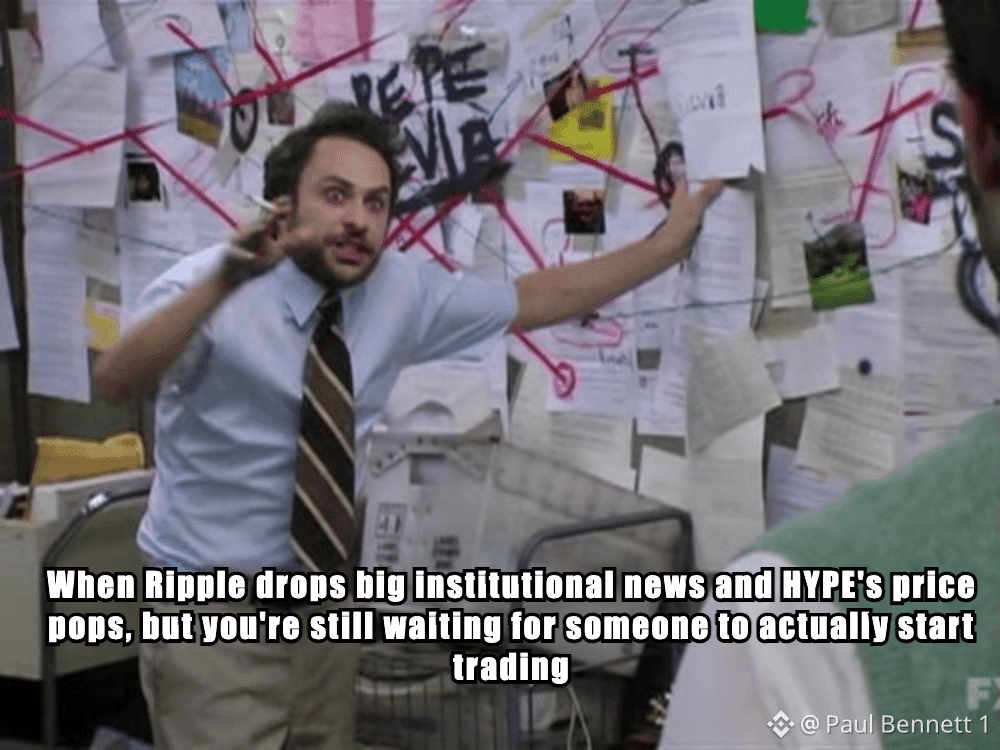
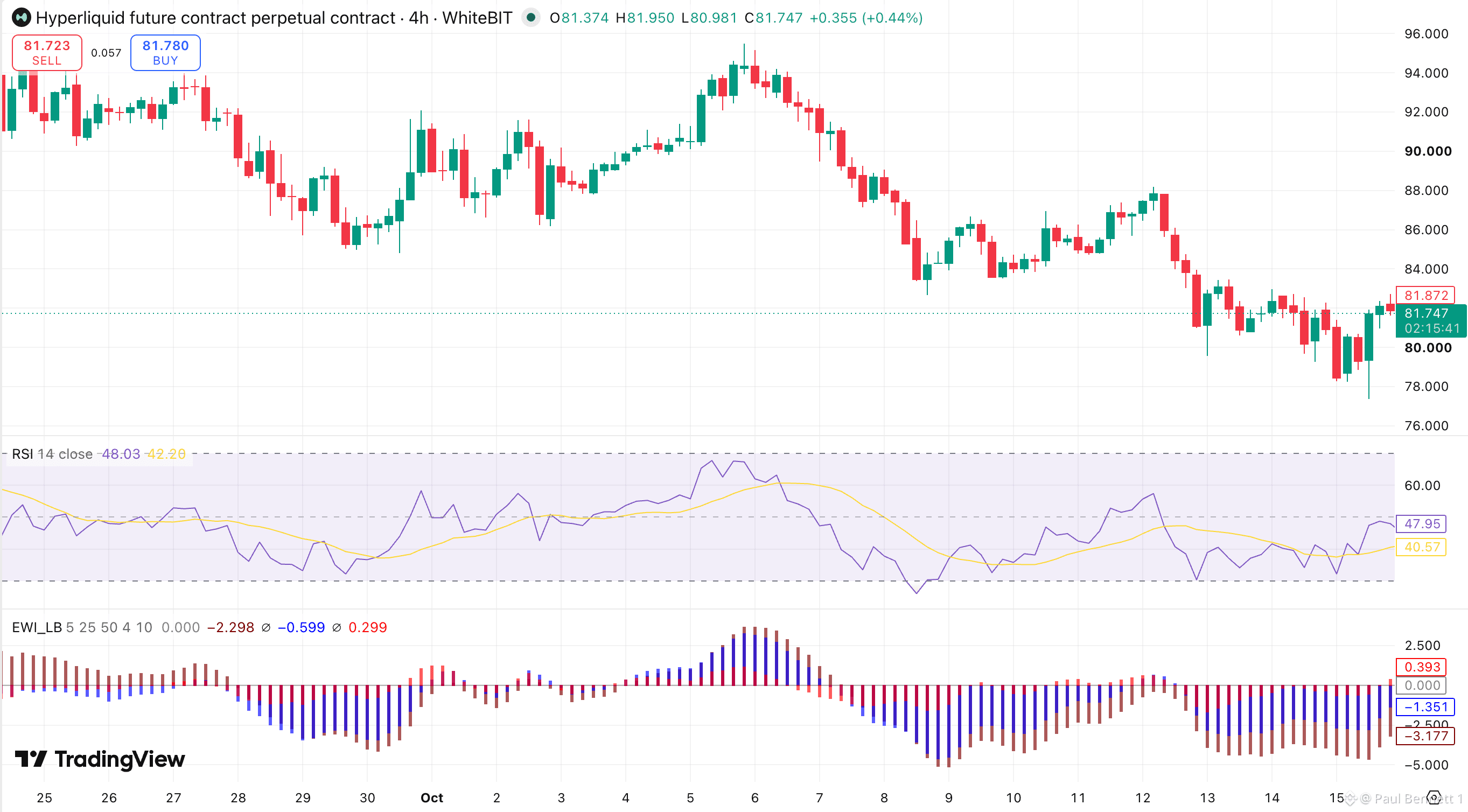
🚀 $HYPE Rebounds Toward $82. Ripple Just Gave Traders Something to Talk About Okay, this is an interesting combination: institutional news and a price rebound happening around the same time. 🤝 First, the news. Ripple Prime is expanding institutional access to Hyperliquid markets. That could make it easier for professional trading firms to access Hyperliquid through infrastructure they're already familiar with. 📈 Now, the chart. CoinJournal reports that HYPE has rebounded toward $82. I like seeing a price recovery alongside positive ecosystem news, but I wouldn't automatically assume the Ripple announcement caused the entire move. 💭 Here's what I'm thinking. Getting institutional access is great. Getting institutions to actually trade is what matters. If Hyperliquid attracts more professional traders, we could eventually see deeper liquidity and more consistent trading activity. But that won't happen just because two companies announced an expansion. I'd watch whether HYPE can hold its recent gains and whether trading volume supports the rebound. And there's another thing: even if $BTC stabilizes, HYPE still needs its own buyers to keep pushing higher. Personally, I'd rather see HYPE hold a higher low after this bounce than chase one big green candle. 😅 With $BTC still influencing overall market sentiment, a strong-looking altcoin setup can change pretty quickly. Source: CoinJournal Not financial advice. Always DYOR. #BTC Price Analysis# #Bitcoin Price Prediction: What is Bitcoins next move?#
🚀 $HYPE Rebounds Toward $82. Ripple Just Gave Traders Something to Talk About Okay, this is an interesting combination: institutional news and a price rebound happening around the same time. 🤝 First, the news. Ripple Prime is expanding institutional access to Hyperliquid markets. That could make it easier for professional trading firms to access Hyperliquid through infrastructure they're already familiar with. 📈 Now, the chart. CoinJournal reports that HYPE has rebounded toward $82. I like seeing a price recovery alongside positive ecosystem news, but I wouldn't automatically assume the Ripple announcement caused the entire move. 💭 Here's what I'm thinking. Getting institutional access is great. Getting institutions to actually trade is what matters. If Hyperliquid attracts more professional traders, we could eventually see deeper liquidity and more consistent trading activity. But that won't happen just because two companies announced an expansion. I'd watch whether HYPE can hold its recent gains and whether trading volume supports the rebound. And there's another thing: even if $BTC stabilizes, HYPE still needs its own buyers to keep pushing higher. Personally, I'd rather see HYPE hold a higher low after this bounce than chase one big green candle. 😅 With $BTC still influencing overall market sentiment, a strong-looking altcoin setup can change pretty quickly. Source: CoinJournal Not financial advice. Always DYOR. #BTC Price Analysis# #Bitcoin Price Prediction: What is Bitcoins next move?#
56
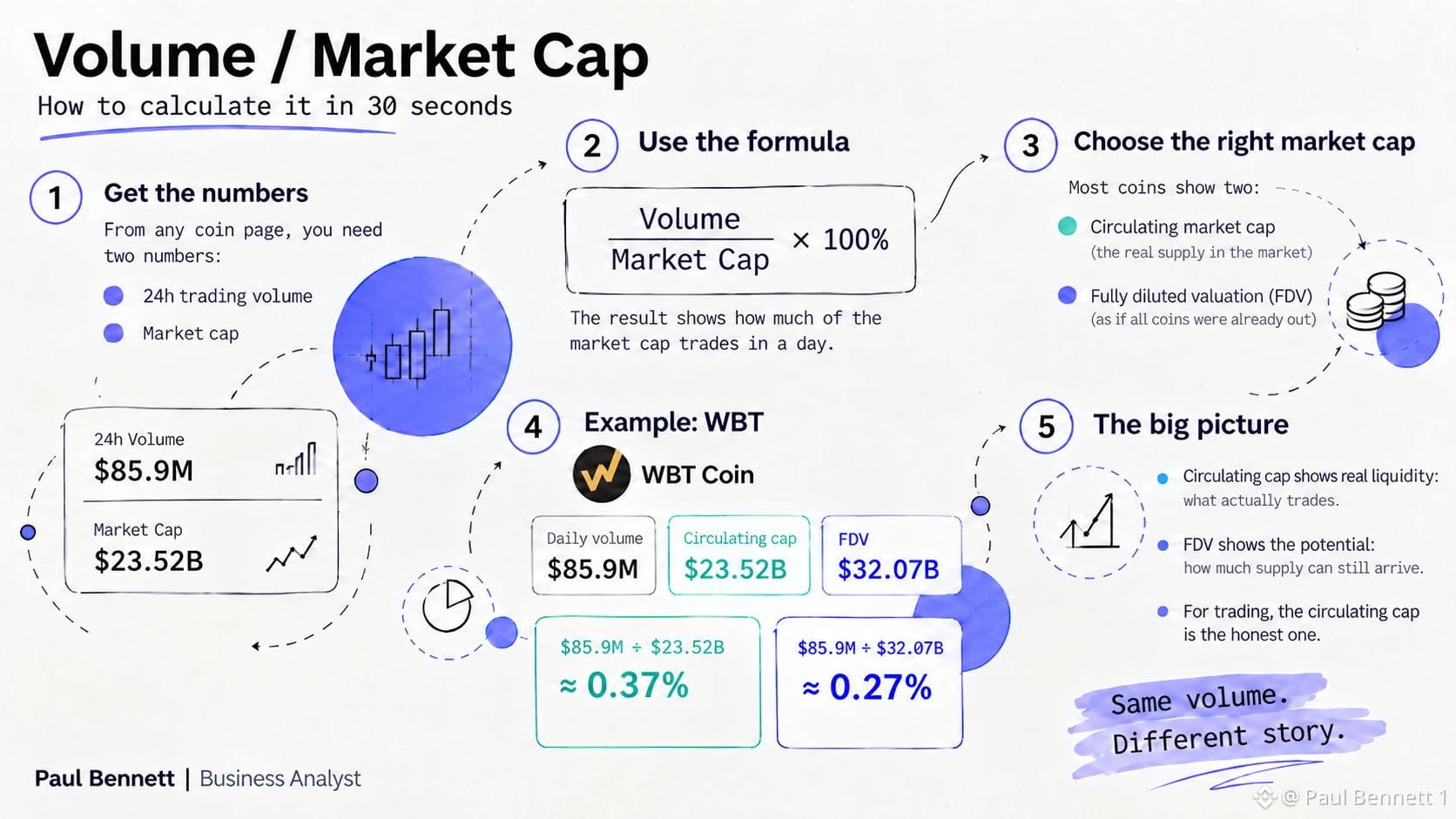
🧮How to Calculate Volume / Market Cap in 30 Seconds Want to know if a coin is popular with traders right now? Volume / MCap is a simple way to see how actively a coin is being traded. You need two numbers from any coin page: 1️⃣ 24h trading volume 2️⃣ Market cap Divide the first by the second and done. That's your Volume / MCap. Example: $BTC traded around 28B in a day on a ~$1.66T cap → ~1.7%. 🪤 Now the crucial part: WHICH market cap? Most coins show two: circulating market cap and fully diluted valuation (FDV, as if every coin ever were already out). Let's take a live example. Watch what happens with $WBT Coin using today's CoinDesk data: 💰 Daily volume → ~$85.9M 🟢 Market cap → ~$23.52B 🔵 Fully diluted value → ~$32.07B Now divide: 🟢 $85.9M ÷ $23.52B → ~0.37%. That's how much of the coins already on the market actually moved today. 🔵 $85.9M ÷ $32.07B → ~0.27%. Same volume, just a ~1.4x bigger number underneath. From this, we can draw the verdict that on the supply that actually trades, WBT Coin sees steady activity, with ~$86M changing hands in a day. The FDV number mostly measures the ~107M coins that are still waiting backstage. For $BTC trading, the circulating cap is the honest one: that's what's actually on the market. FDV answers a different question: how much supply can still arrive. Don't mix them 😉 Disclaimer: This is not financial or investment advice. Do your own research before making any decisions. #BTC Price Analysis# #Bitcoin Price Prediction: What is Bitcoins next move?#
🧮How to Calculate Volume / Market Cap in 30 Seconds Want to know if a coin is popular with traders right now? Volume / MCap is a simple way to see how actively a coin is being traded. You need two numbers from any coin page: 1️⃣ 24h trading volume 2️⃣ Market cap Divide the first by the second and done. That's your Volume / MCap. Example: $BTC traded around 28B in a day on a ~$1.66T cap → ~1.7%. 🪤 Now the crucial part: WHICH market cap? Most coins show two: circulating market cap and fully diluted valuation (FDV, as if every coin ever were already out). Let's take a live example. Watch what happens with $WBT Coin using today's CoinDesk data: 💰 Daily volume → ~$85.9M 🟢 Market cap → ~$23.52B 🔵 Fully diluted value → ~$32.07B Now divide: 🟢 $85.9M ÷ $23.52B → ~0.37%. That's how much of the coins already on the market actually moved today. 🔵 $85.9M ÷ $32.07B → ~0.27%. Same volume, just a ~1.4x bigger number underneath. From this, we can draw the verdict that on the supply that actually trades, WBT Coin sees steady activity, with ~$86M changing hands in a day. The FDV number mostly measures the ~107M coins that are still waiting backstage. For $BTC trading, the circulating cap is the honest one: that's what's actually on the market. FDV answers a different question: how much supply can still arrive. Don't mix them 😉 Disclaimer: This is not financial or investment advice. Do your own research before making any decisions. #BTC Price Analysis# #Bitcoin Price Prediction: What is Bitcoins next move?#
59
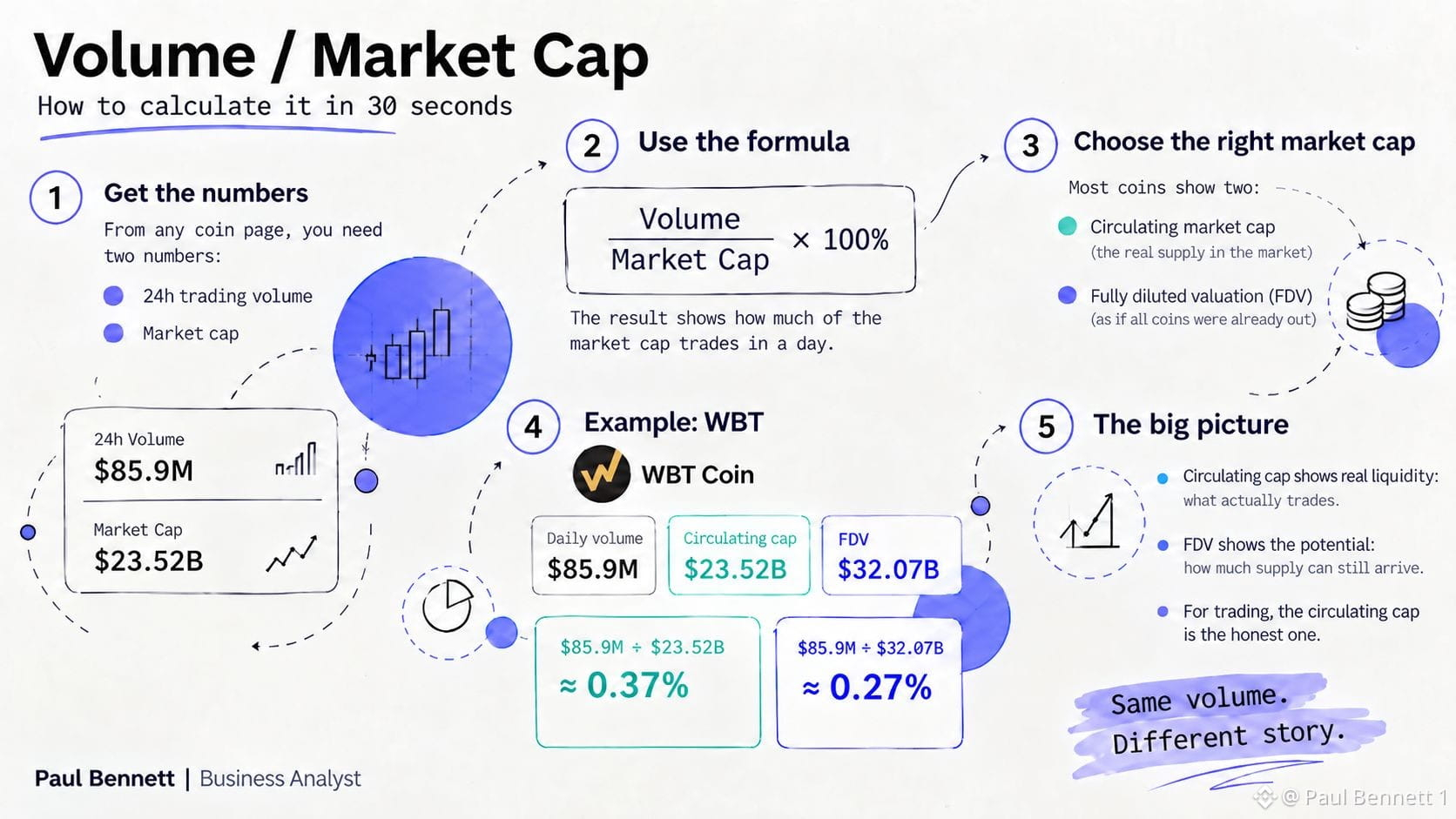
🧮 Volume / Market Cap: How to Calculate It in 30 Seconds Want to know if a coin is popular with traders right now? Volume / MCap is a simple way to see how actively a coin is being traded. You need two numbers from any coin page: 1️⃣ 24h trading volume 2️⃣ Market cap Divide the first by the second and done. That's your Volume / MCap. Example: $BTC traded around 28B in a day on a ~$1.66T cap → ~1.7%. 🪤 Now the crucial part: WHICH market cap? Most coins show two: circulating market cap and fully diluted valuation (FDV, as if every coin ever were already out). Let's take a live example. Watch what happens with $WBT Coin using today's CoinDesk data: 💰 Daily volume → ~$85.9M 🟢 Market cap → ~$23.52B 🔵 Fully diluted value → ~$32.07B Now divide: 🟢 $85.9M ÷ $23.52B → ~0.37%. That's how much of the coins already on the market actually moved today. 🔵 $85.9M ÷ $32.07B → ~0.27%. Same volume, just a ~1.4x bigger number underneath. From this, we can draw the verdict that on the supply that actually trades, WBT Coin sees steady activity, with ~$86M changing hands in a day. The FDV number mostly measures the ~107M coins that are still waiting backstage. For trading, the circulating cap is the honest one: that's what's actually on the market. FDV answers a different question: how much supply can still arrive. Don't mix them 😉 Disclaimer: This is not financial or investment advice. Do your own research before making any decisions. #BTC Price Analysis# #Bitcoin Price Prediction: What is Bitcoins next move?#
🧮 Volume / Market Cap: How to Calculate It in 30 Seconds Want to know if a coin is popular with traders right now? Volume / MCap is a simple way to see how actively a coin is being traded. You need two numbers from any coin page: 1️⃣ 24h trading volume 2️⃣ Market cap Divide the first by the second and done. That's your Volume / MCap. Example: $BTC traded around 28B in a day on a ~$1.66T cap → ~1.7%. 🪤 Now the crucial part: WHICH market cap? Most coins show two: circulating market cap and fully diluted valuation (FDV, as if every coin ever were already out). Let's take a live example. Watch what happens with $WBT Coin using today's CoinDesk data: 💰 Daily volume → ~$85.9M 🟢 Market cap → ~$23.52B 🔵 Fully diluted value → ~$32.07B Now divide: 🟢 $85.9M ÷ $23.52B → ~0.37%. That's how much of the coins already on the market actually moved today. 🔵 $85.9M ÷ $32.07B → ~0.27%. Same volume, just a ~1.4x bigger number underneath. From this, we can draw the verdict that on the supply that actually trades, WBT Coin sees steady activity, with ~$86M changing hands in a day. The FDV number mostly measures the ~107M coins that are still waiting backstage. For trading, the circulating cap is the honest one: that's what's actually on the market. FDV answers a different question: how much supply can still arrive. Don't mix them 😉 Disclaimer: This is not financial or investment advice. Do your own research before making any decisions. #BTC Price Analysis# #Bitcoin Price Prediction: What is Bitcoins next move?#
60
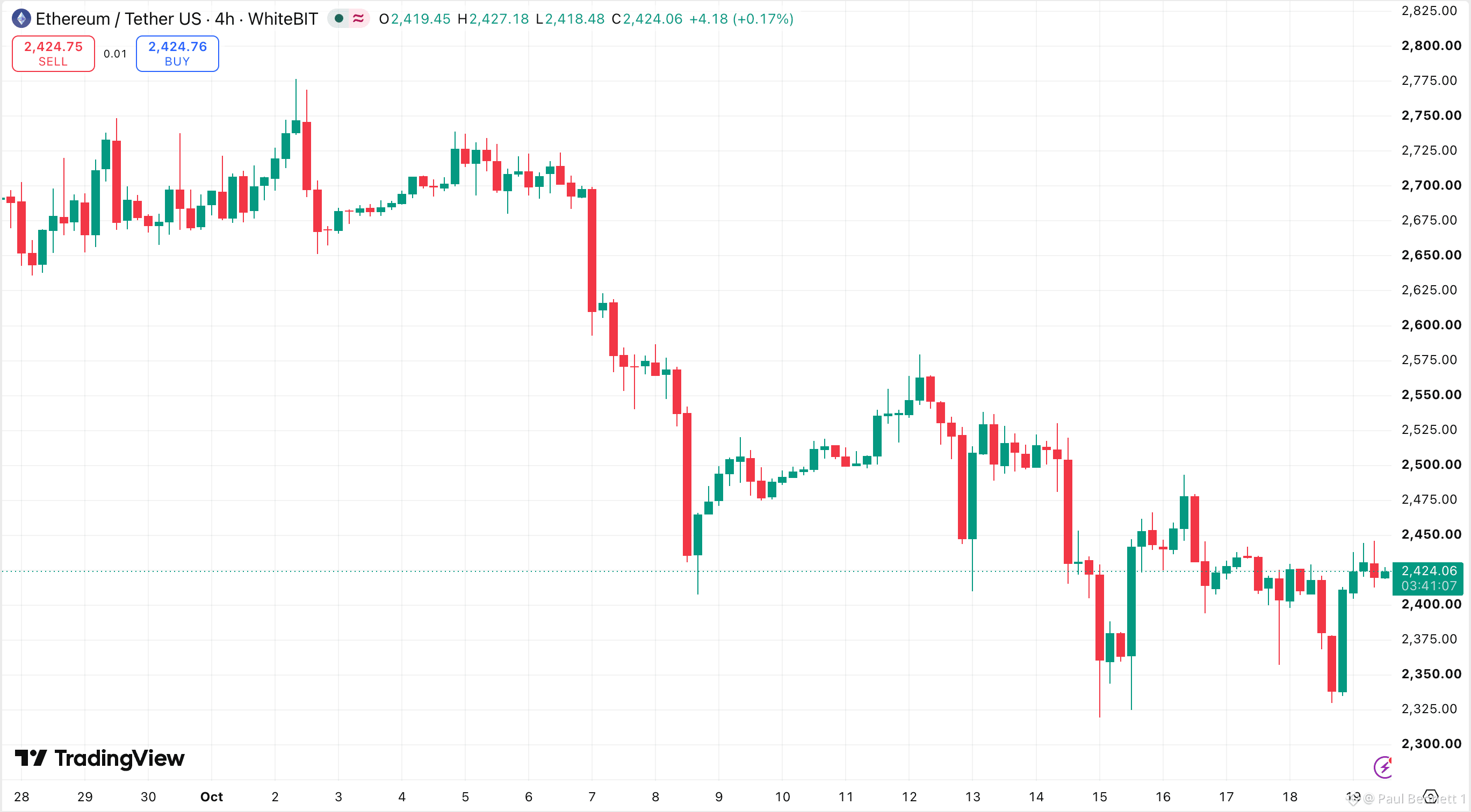
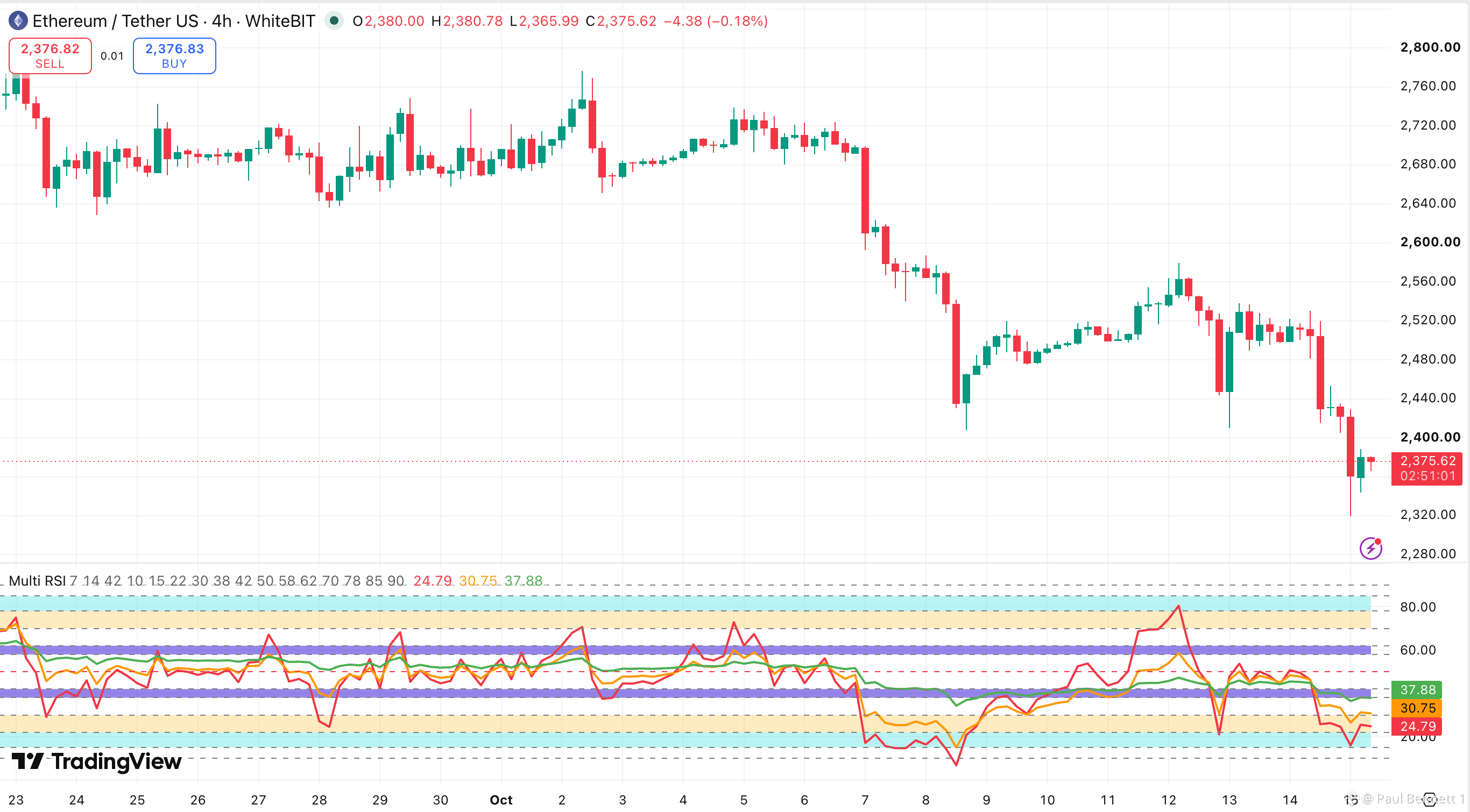
📉 $ETH Hits a Two-Month Low. Is Wintermute Making Things Worse? CryptoPotato reports that Ethereum has fallen to a two-month low, with Wintermute's short positions adding another layer of concern. Here's what stands out to me: 1️⃣ ETH is under pressure. A two-month low shows that buyers haven't been strong enough to defend recent price levels. 2️⃣ Wintermute is in the spotlight. Its reported short activity is attracting attention, but a large short position alone doesn't prove that one firm caused the decline. 3️⃣ Market sentiment matters. When traders are already nervous, reports of institutional shorting can make the selloff feel even more threatening. 4️⃣ Watch spot demand. I'd pay more attention to whether buyers return and trading volume supports a recovery than to one firm's positions. 5️⃣ A short squeeze is possible, not guaranteed. If ETH rebounds sharply, bearish positions could add fuel to the move. But that requires actual buying pressure. I wouldn't rush to call this the bottom. ETH needs to show that buyers can hold a recovery, especially while $BTC continues to influence broader market sentiment. And if $BTC stabilizes while ETH keeps making new lows, that relative weakness would worry me more than the Wintermute headlines. Not financial advice. Always DYOR. #BTC Price Analysis# #ETH #Bitcoin Price Prediction: What is Bitcoins next move?#
📉 $ETH Hits a Two-Month Low. Is Wintermute Making Things Worse? CryptoPotato reports that Ethereum has fallen to a two-month low, with Wintermute's short positions adding another layer of concern. Here's what stands out to me: 1️⃣ ETH is under pressure. A two-month low shows that buyers haven't been strong enough to defend recent price levels. 2️⃣ Wintermute is in the spotlight. Its reported short activity is attracting attention, but a large short position alone doesn't prove that one firm caused the decline. 3️⃣ Market sentiment matters. When traders are already nervous, reports of institutional shorting can make the selloff feel even more threatening. 4️⃣ Watch spot demand. I'd pay more attention to whether buyers return and trading volume supports a recovery than to one firm's positions. 5️⃣ A short squeeze is possible, not guaranteed. If ETH rebounds sharply, bearish positions could add fuel to the move. But that requires actual buying pressure. I wouldn't rush to call this the bottom. ETH needs to show that buyers can hold a recovery, especially while $BTC continues to influence broader market sentiment. And if $BTC stabilizes while ETH keeps making new lows, that relative weakness would worry me more than the Wintermute headlines. Not financial advice. Always DYOR. #BTC Price Analysis# #ETH #Bitcoin Price Prediction: What is Bitcoins next move?#
82
🇰🇷 Ripple Expands Into South Korea - Here's What the Meritz Deal Means Ripple has added Meritz Securities as its first Korean securities partner, according to Coinpedia. And I think the institutional angle here deserves some attention. 👀 Here's the partnership in five quick points: 1️⃣ The partner: Meritz Securities is an established South Korean financial services firm, giving Ripple a connection to the country's traditional securities market. 2️⃣ The focus: The partnership is aimed at exploring blockchain-based financial infrastructure and digital asset opportunities. 3️⃣ The opportunity: Securities firms could eventually use blockchain technology for more efficient asset issuance, transfers and settlement. 4️⃣ The $XRP question: A Ripple partnership doesn't automatically mean XRP will be used for every transaction. I'd want to see actual product details before assuming direct token demand. 5️⃣ The bigger picture: Ripple is building more relationships with traditional financial institutions, which could support wider adoption of blockchain-based financial services. 💭 I like the direction. South Korea has an active digital asset market, and partnerships with established financial firms are worth following. But I'd separate Ripple's business expansion from XRP's price potential. We've seen with $BTC that institutional adoption can develop over years, while markets react to headlines in minutes. For now, I'd watch for concrete launches, transaction volumes and confirmation of whether XRP is involved. And with $BTC still influencing broader crypto sentiment, I'd be careful about expecting an immediate price reaction. Not financial advice. Always DYOR. #BTC Price Analysis# #XRP #Bitcoin Price Prediction: What is Bitcoins next move?#
🇰🇷 Ripple Expands Into South Korea - Here's What the Meritz Deal Means Ripple has added Meritz Securities as its first Korean securities partner, according to Coinpedia. And I think the institutional angle here deserves some attention. 👀 Here's the partnership in five quick points: 1️⃣ The partner: Meritz Securities is an established South Korean financial services firm, giving Ripple a connection to the country's traditional securities market. 2️⃣ The focus: The partnership is aimed at exploring blockchain-based financial infrastructure and digital asset opportunities. 3️⃣ The opportunity: Securities firms could eventually use blockchain technology for more efficient asset issuance, transfers and settlement. 4️⃣ The $XRP question: A Ripple partnership doesn't automatically mean XRP will be used for every transaction. I'd want to see actual product details before assuming direct token demand. 5️⃣ The bigger picture: Ripple is building more relationships with traditional financial institutions, which could support wider adoption of blockchain-based financial services. 💭 I like the direction. South Korea has an active digital asset market, and partnerships with established financial firms are worth following. But I'd separate Ripple's business expansion from XRP's price potential. We've seen with $BTC that institutional adoption can develop over years, while markets react to headlines in minutes. For now, I'd watch for concrete launches, transaction volumes and confirmation of whether XRP is involved. And with $BTC still influencing broader crypto sentiment, I'd be careful about expecting an immediate price reaction. Not financial advice. Always DYOR. #BTC Price Analysis# #XRP #Bitcoin Price Prediction: What is Bitcoins next move?#

73
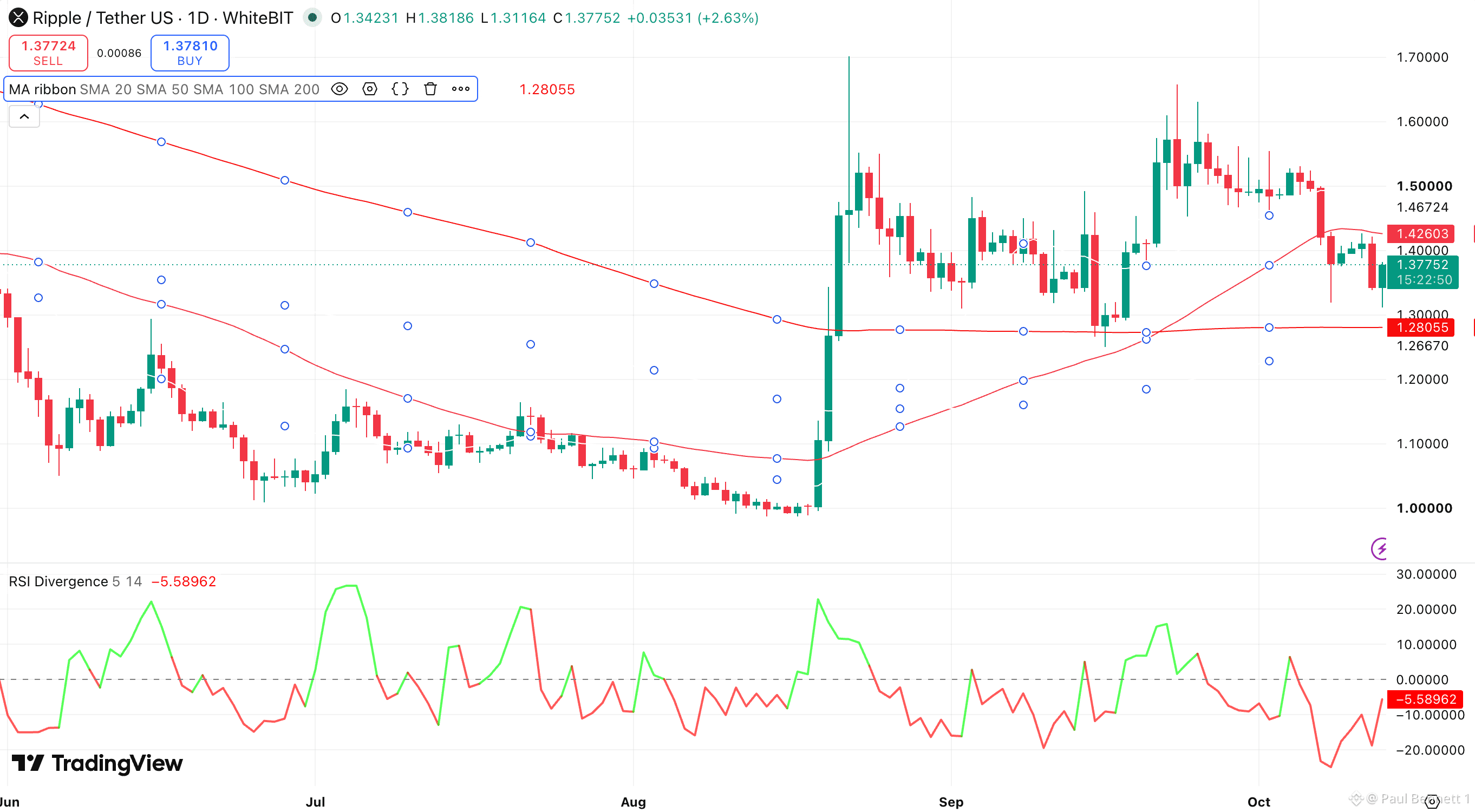
👀 $XRP Got Two Bullish Signals. So Where’s the Rally? XRP just flashed a golden cross, and Evernorth made its Nasdaq debut with a massive XRP treasury. Sounds like a pretty good week, right? 😅 Well, XRP is still struggling with $1.43 and even underperformed $BTC after the news. So I wrote a new article and dug a little deeper: → Is the golden cross actually bullish? → Why didn't the Nasdaq debut move XRP higher? → What would make me more confident about the next move? I also looked at what XRP needs to show against $BTC before I'd get too excited. What do you guys think? Is XRP getting ready for a breakout, or are we getting ahead of ourselves? 🔗 Check out my article here https://medium.com/@paul.bennet/i-like-the-xrp-story-im-not-sold-on-this-chart-f913df0b30e5?postPublishedType=initial and let's discuss it in the comments ! 👇 #BTC Price Analysis# #Bitcoin Price Prediction: What is Bitcoins next move?# #XRP
👀 $XRP Got Two Bullish Signals. So Where’s the Rally? XRP just flashed a golden cross, and Evernorth made its Nasdaq debut with a massive XRP treasury. Sounds like a pretty good week, right? 😅 Well, XRP is still struggling with $1.43 and even underperformed $BTC after the news. So I wrote a new article and dug a little deeper: → Is the golden cross actually bullish? → Why didn't the Nasdaq debut move XRP higher? → What would make me more confident about the next move? I also looked at what XRP needs to show against $BTC before I'd get too excited. What do you guys think? Is XRP getting ready for a breakout, or are we getting ahead of ourselves? 🔗 Check out my article here https://medium.com/@paul.bennet/i-like-the-xrp-story-im-not-sold-on-this-chart-f913df0b30e5?postPublishedType=initial and let's discuss it in the comments ! 👇 #BTC Price Analysis# #Bitcoin Price Prediction: What is Bitcoins next move?# #XRP
85
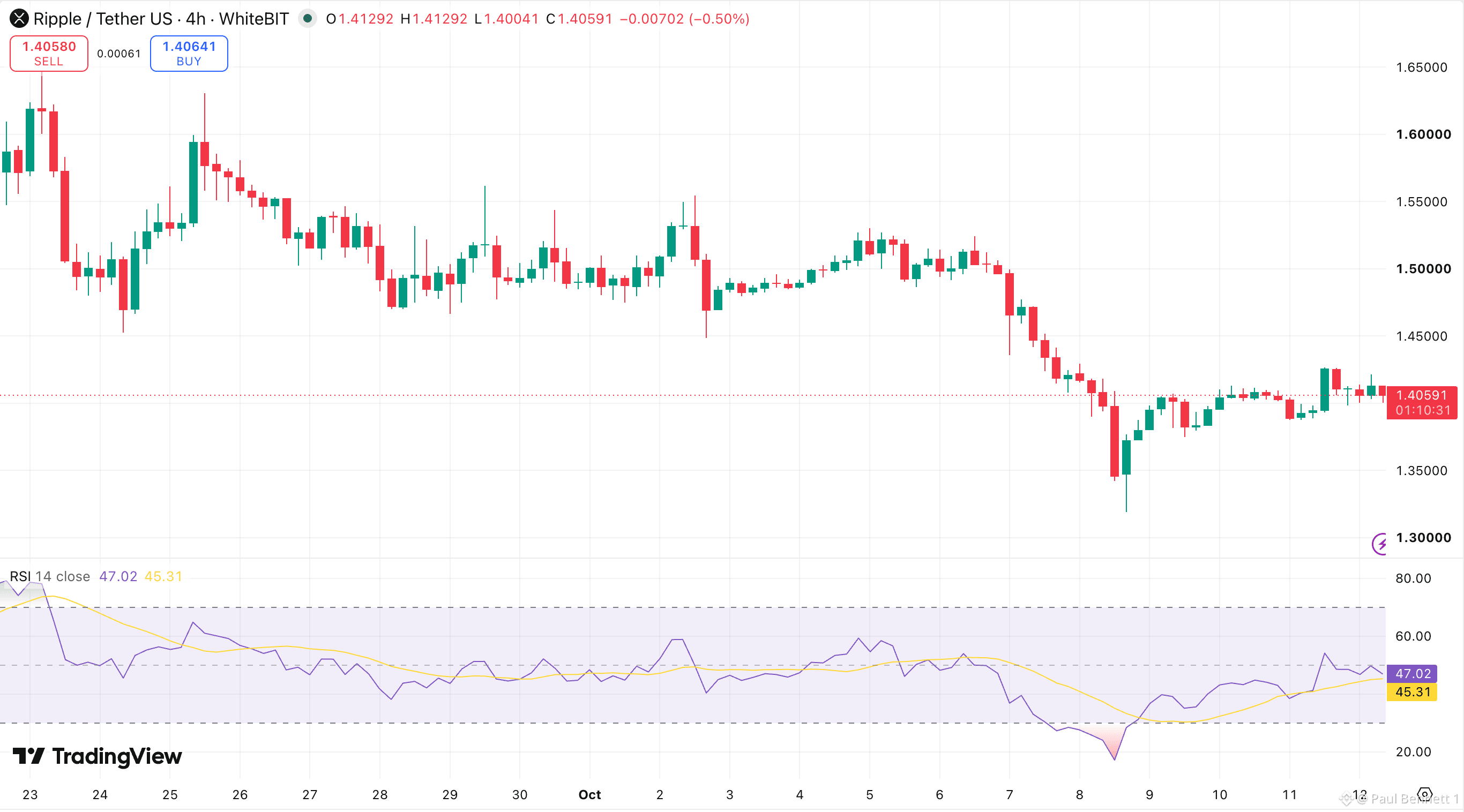
📊 $XRP Could Be Setting Up for a Bigger Move - But Something Is Missing ZyCrypto's latest analysis highlights an interesting situation: XRP is showing signs of a potential breakout, while large holders aren't rushing to buy. And that makes me a little cautious about the bullish predictions. Here's how I see it. 1️⃣ The chart looks promising, but whale demand is weak. A technical setup can look great on paper. But if large wallets aren't accumulating, who's going to provide the buying pressure needed to sustain a breakout? 2️⃣ A breakout needs participation. I'd be watching spot volume, exchange flows and open interest together. If XRP rises while open interest jumps but spot demand stays flat, that could mean leverage is driving the move. Those rallies can reverse quickly. 3️⃣ The broader market still matters. Even if XRP develops its own bullish setup, a sudden move in $BTC could easily change the picture. I'm not bearish on XRP here. I just don't see enough evidence to get excited about a major rally yet. I'd become more interested if whale accumulation starts picking up alongside spot buying. And if $BTC stays stable, XRP would have a better chance of sustaining a breakout. Until then, I'd rather watch how the market behaves than try to guess the next big candle. 😄 Not financial advice. Always DYOR. #BTC Price Analysis# #XRP #Bitcoin Price Prediction: What is Bitcoins next move?#
📊 $XRP Could Be Setting Up for a Bigger Move - But Something Is Missing ZyCrypto's latest analysis highlights an interesting situation: XRP is showing signs of a potential breakout, while large holders aren't rushing to buy. And that makes me a little cautious about the bullish predictions. Here's how I see it. 1️⃣ The chart looks promising, but whale demand is weak. A technical setup can look great on paper. But if large wallets aren't accumulating, who's going to provide the buying pressure needed to sustain a breakout? 2️⃣ A breakout needs participation. I'd be watching spot volume, exchange flows and open interest together. If XRP rises while open interest jumps but spot demand stays flat, that could mean leverage is driving the move. Those rallies can reverse quickly. 3️⃣ The broader market still matters. Even if XRP develops its own bullish setup, a sudden move in $BTC could easily change the picture. I'm not bearish on XRP here. I just don't see enough evidence to get excited about a major rally yet. I'd become more interested if whale accumulation starts picking up alongside spot buying. And if $BTC stays stable, XRP would have a better chance of sustaining a breakout. Until then, I'd rather watch how the market behaves than try to guess the next big candle. 😄 Not financial advice. Always DYOR. #BTC Price Analysis# #XRP #Bitcoin Price Prediction: What is Bitcoins next move?#

86
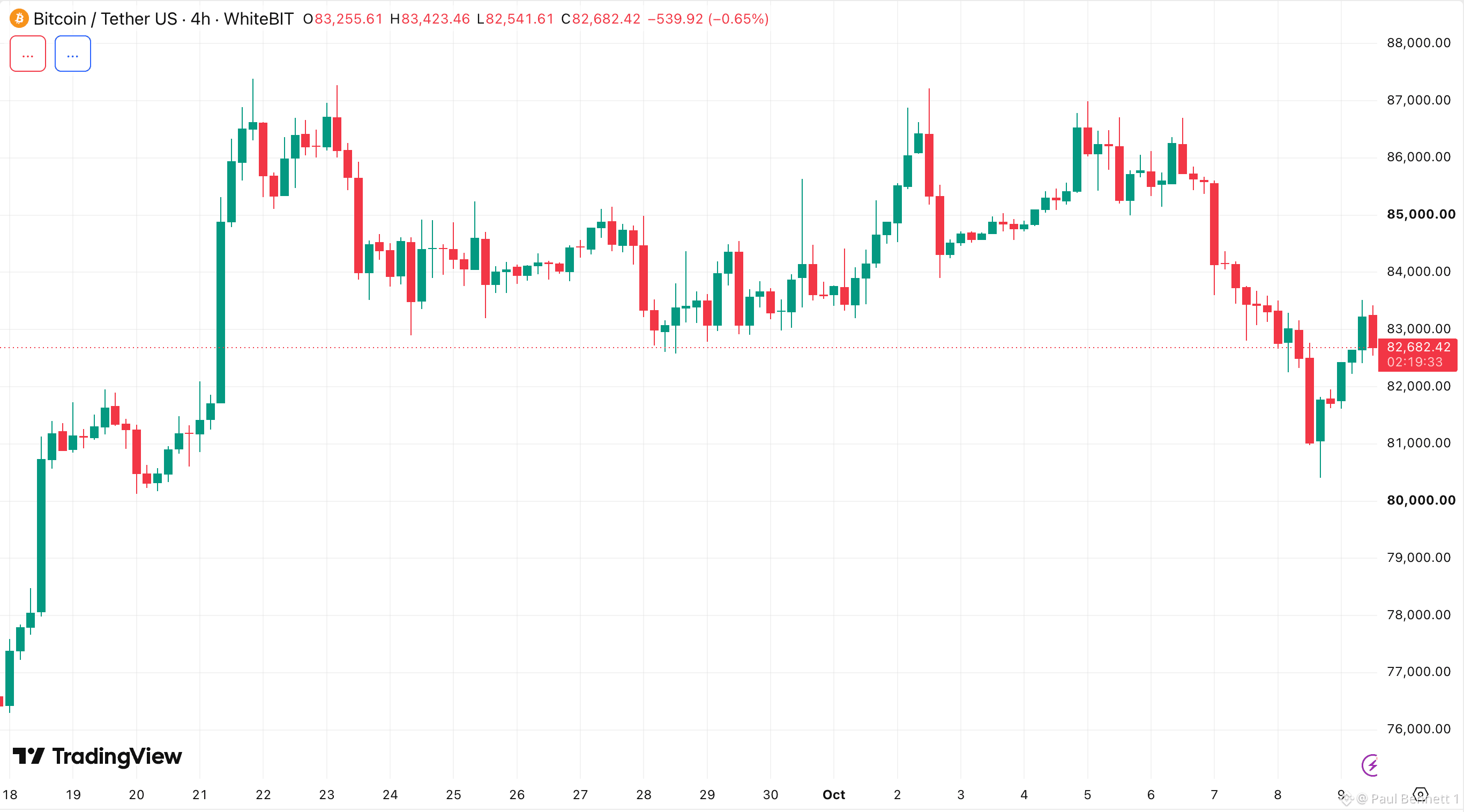
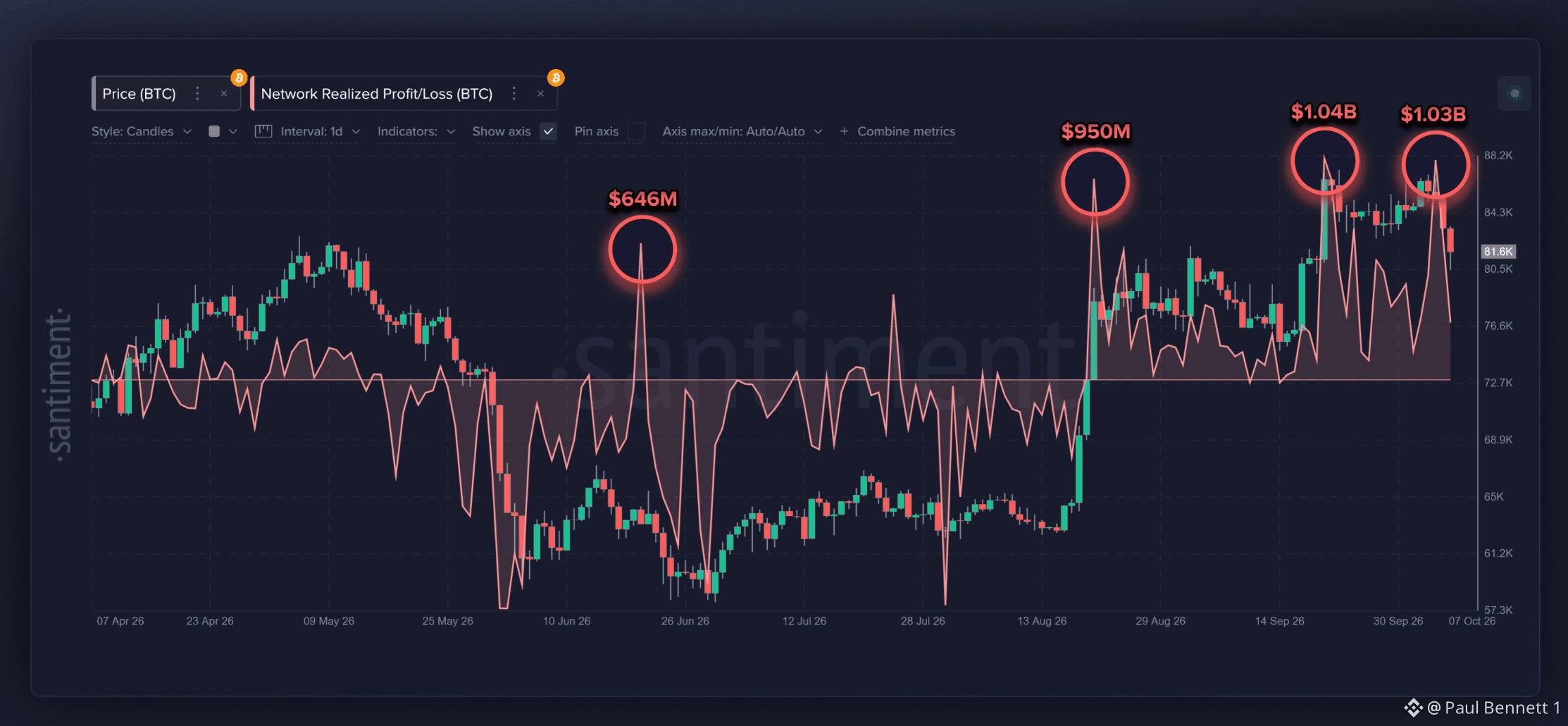
💰 Bitcoin Drops 5% - And Profit-Taking Is Near a 2026 Record Looks like some Bitcoin holders decided it was time to cash in. 😅 $BTC fell around 5% as realized profit-taking reached its second-highest level of 2026, DailyCoin reports. That's an interesting combination. It suggests the market isn't dealing with selling pressure alone - some investors are actively locking in gains. 📊 Here's how I'd read it: → High realized profits: Coins are moving onchain at prices above their previous acquisition costs. → Price falling: Buyers aren't absorbing all that selling pressure at current levels. → The next few sessions: If profit-taking cools while price stabilizes, that could be an early sign of sellers losing momentum. But there's a catch: realized profits don't tell us exactly how much Bitcoin was sold on exchanges. Onchain transfers can have different purposes. 👀 I'd be watching spot trading volume and exchange inflows alongside this metric. If $BTC starts holding support even with elevated realized profits, that would be a much more useful signal than the 5% drop itself. Not financial advice. Always DYOR. #BTC Price Analysis# #Bitcoin Price Prediction: What is Bitcoins next move?#
💰 Bitcoin Drops 5% - And Profit-Taking Is Near a 2026 Record Looks like some Bitcoin holders decided it was time to cash in. 😅 $BTC fell around 5% as realized profit-taking reached its second-highest level of 2026, DailyCoin reports. That's an interesting combination. It suggests the market isn't dealing with selling pressure alone - some investors are actively locking in gains. 📊 Here's how I'd read it: → High realized profits: Coins are moving onchain at prices above their previous acquisition costs. → Price falling: Buyers aren't absorbing all that selling pressure at current levels. → The next few sessions: If profit-taking cools while price stabilizes, that could be an early sign of sellers losing momentum. But there's a catch: realized profits don't tell us exactly how much Bitcoin was sold on exchanges. Onchain transfers can have different purposes. 👀 I'd be watching spot trading volume and exchange inflows alongside this metric. If $BTC starts holding support even with elevated realized profits, that would be a much more useful signal than the 5% drop itself. Not financial advice. Always DYOR. #BTC Price Analysis# #Bitcoin Price Prediction: What is Bitcoins next move?#
64
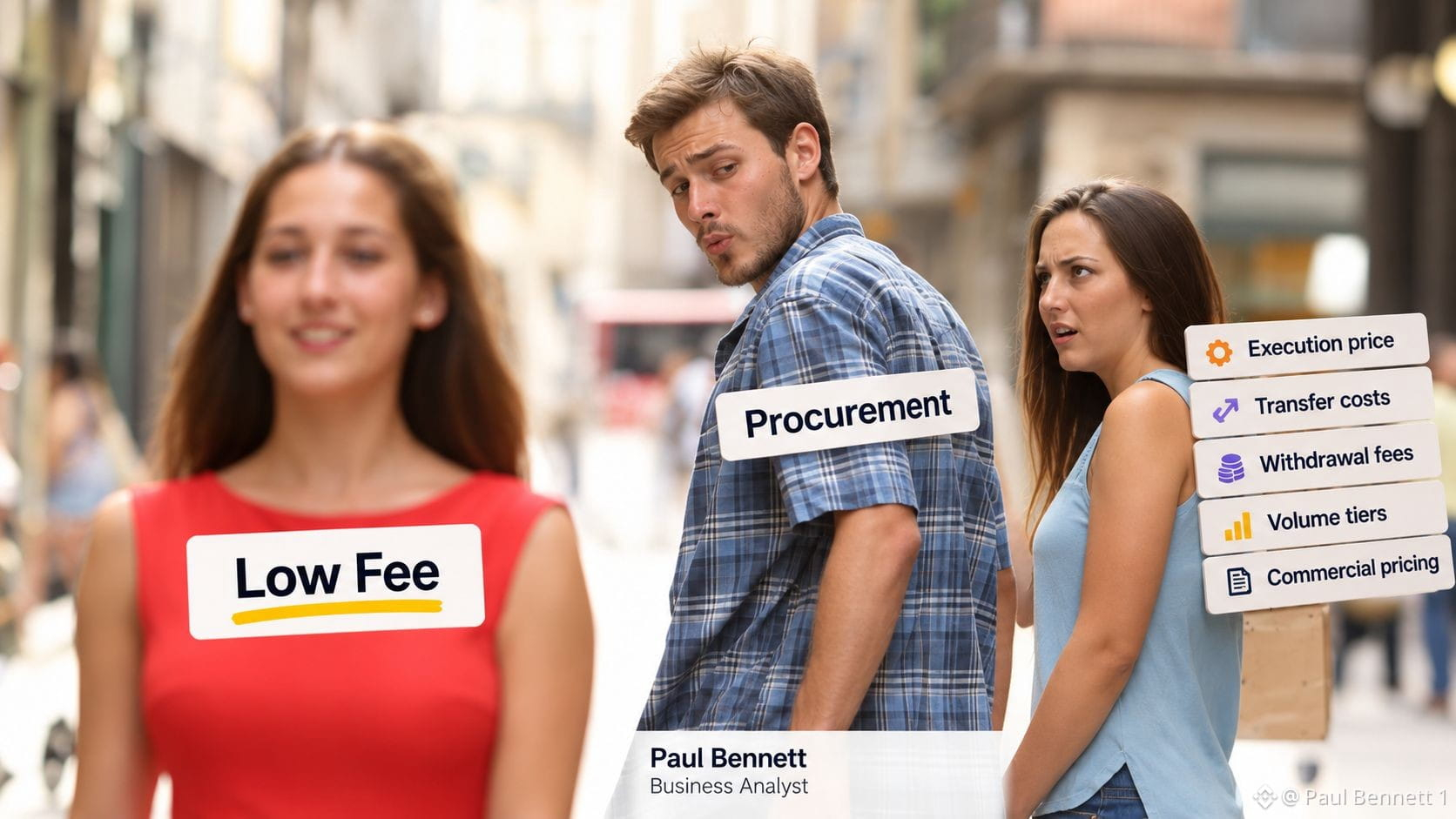
💵 USD In, Crypto Out… What Did It Cost? 🤯Stablecoins already made up 60% of crypto on-ramp value in Mercuryo’s H1 2026 data, while stablecoin off-ramp transactions jumped 446% YoY. Strong sign that the rails between fiat and crypto are becoming a much bigger part of the market. So I decided to dig into the practical side a bit and wrote a fresh article about how to actually compare USD on/off-ramp providers. One provider shows a conversion fee. Another uses commercial pricing. Another talks more about liquidity and execution. So I broke the whole thing into a simpler framework: → conversion → transfer → execution → exit back to USD ✅There’s also a practical checklist at the end with the questions I’d ask before signing anything. $BTC gets the headlines, but all this infrastructure is what actually helps money move between banks and crypto in the first place. Article is here: https://medium.com/@paul.bennet/three-usd-ramp-proposals-one-procurement-framework-c03585ddf0f7?postPublishedType=initial And with more capital moving in and out of crypto around assets like $BTC , I think understanding the rails matters more than it used to. How does this approach look to you? 👇 #BTC Price Analysis# #Bitcoin Price Prediction: What is Bitcoins next move?#
💵 USD In, Crypto Out… What Did It Cost? 🤯Stablecoins already made up 60% of crypto on-ramp value in Mercuryo’s H1 2026 data, while stablecoin off-ramp transactions jumped 446% YoY. Strong sign that the rails between fiat and crypto are becoming a much bigger part of the market. So I decided to dig into the practical side a bit and wrote a fresh article about how to actually compare USD on/off-ramp providers. One provider shows a conversion fee. Another uses commercial pricing. Another talks more about liquidity and execution. So I broke the whole thing into a simpler framework: → conversion → transfer → execution → exit back to USD ✅There’s also a practical checklist at the end with the questions I’d ask before signing anything. $BTC gets the headlines, but all this infrastructure is what actually helps money move between banks and crypto in the first place. Article is here: https://medium.com/@paul.bennet/three-usd-ramp-proposals-one-procurement-framework-c03585ddf0f7?postPublishedType=initial And with more capital moving in and out of crypto around assets like $BTC , I think understanding the rails matters more than it used to. How does this approach look to you? 👇 #BTC Price Analysis# #Bitcoin Price Prediction: What is Bitcoins next move?#
64
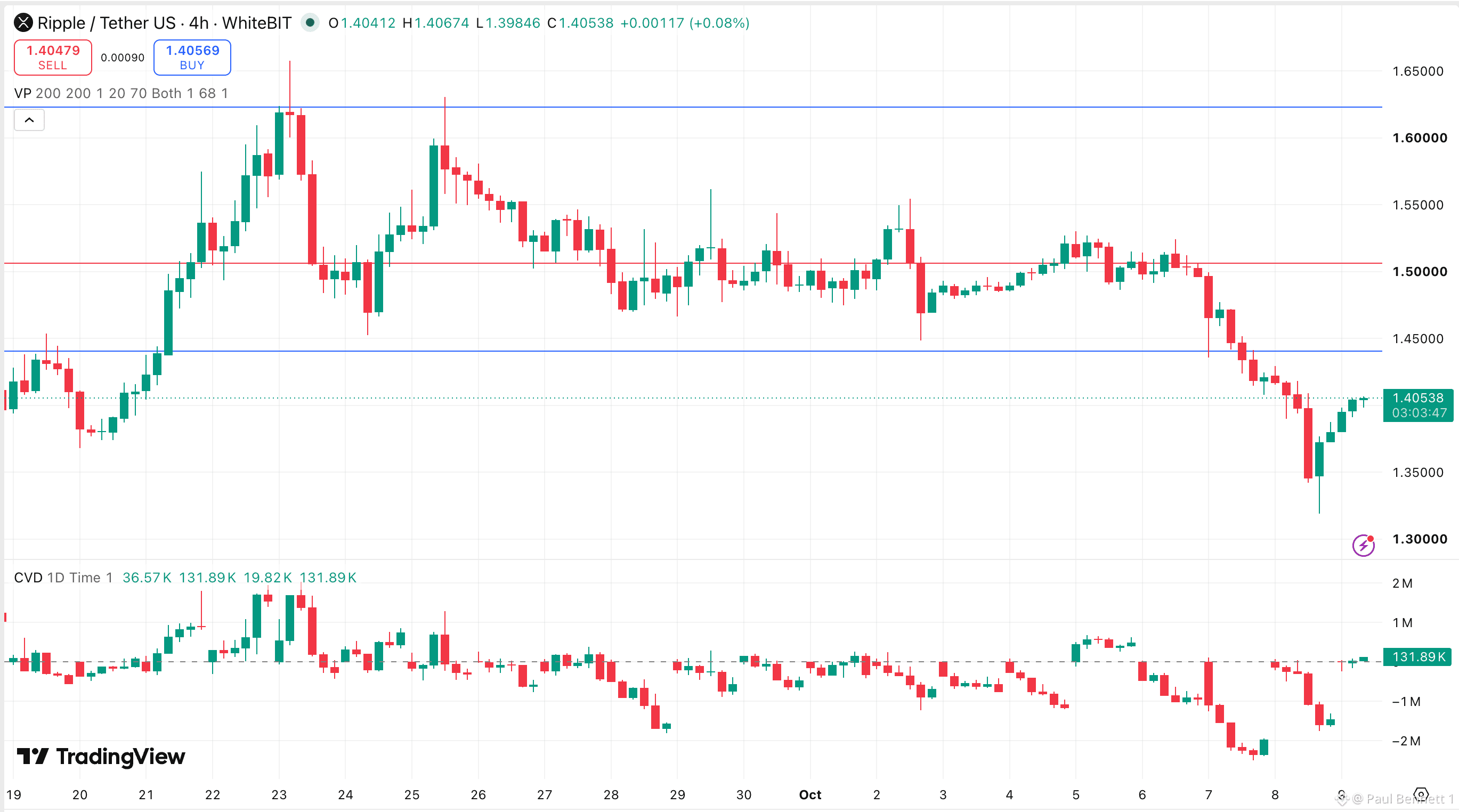
📊 $XRP Is Testing a Key Support Zone - But ETF Demand Tells Another Story XRP has an interesting problem right now: institutional money is still coming in, but the price isn't following. 👀 After losing momentum around $1.50, XRP slipped toward $1.40, with $1.32 emerging as an important lower support level. And the ETF numbers make this more interesting: 💰 $1.79B - cumulative XRP ETF inflows. 📉 $3.14M - net inflows on October 6, despite stronger buying in some individual funds. 📍 $1.32 - the deeper support level traders are watching. The market is basically asking whether ETF buying can absorb enough selling pressure to stabilize XRP. We've seen similar situations with $BTC : positive institutional flows don't automatically mean an immediate price recovery. I'd watch $1.40 first. If XRP can't reclaim it, $1.37 and $1.32 become much more relevant. A move back above $1.45 would be a better sign that buyers are returning. And with $BTC still sensitive to the broader macro environment, I wouldn't ignore the market backdrop either. Source: CoinJournal Not financial advice. Always DYOR. #BTC Price Analysis# #Bitcoin Price Prediction: What is Bitcoins next move?# #XRP
📊 $XRP Is Testing a Key Support Zone - But ETF Demand Tells Another Story XRP has an interesting problem right now: institutional money is still coming in, but the price isn't following. 👀 After losing momentum around $1.50, XRP slipped toward $1.40, with $1.32 emerging as an important lower support level. And the ETF numbers make this more interesting: 💰 $1.79B - cumulative XRP ETF inflows. 📉 $3.14M - net inflows on October 6, despite stronger buying in some individual funds. 📍 $1.32 - the deeper support level traders are watching. The market is basically asking whether ETF buying can absorb enough selling pressure to stabilize XRP. We've seen similar situations with $BTC : positive institutional flows don't automatically mean an immediate price recovery. I'd watch $1.40 first. If XRP can't reclaim it, $1.37 and $1.32 become much more relevant. A move back above $1.45 would be a better sign that buyers are returning. And with $BTC still sensitive to the broader macro environment, I wouldn't ignore the market backdrop either. Source: CoinJournal Not financial advice. Always DYOR. #BTC Price Analysis# #Bitcoin Price Prediction: What is Bitcoins next move?# #XRP
64
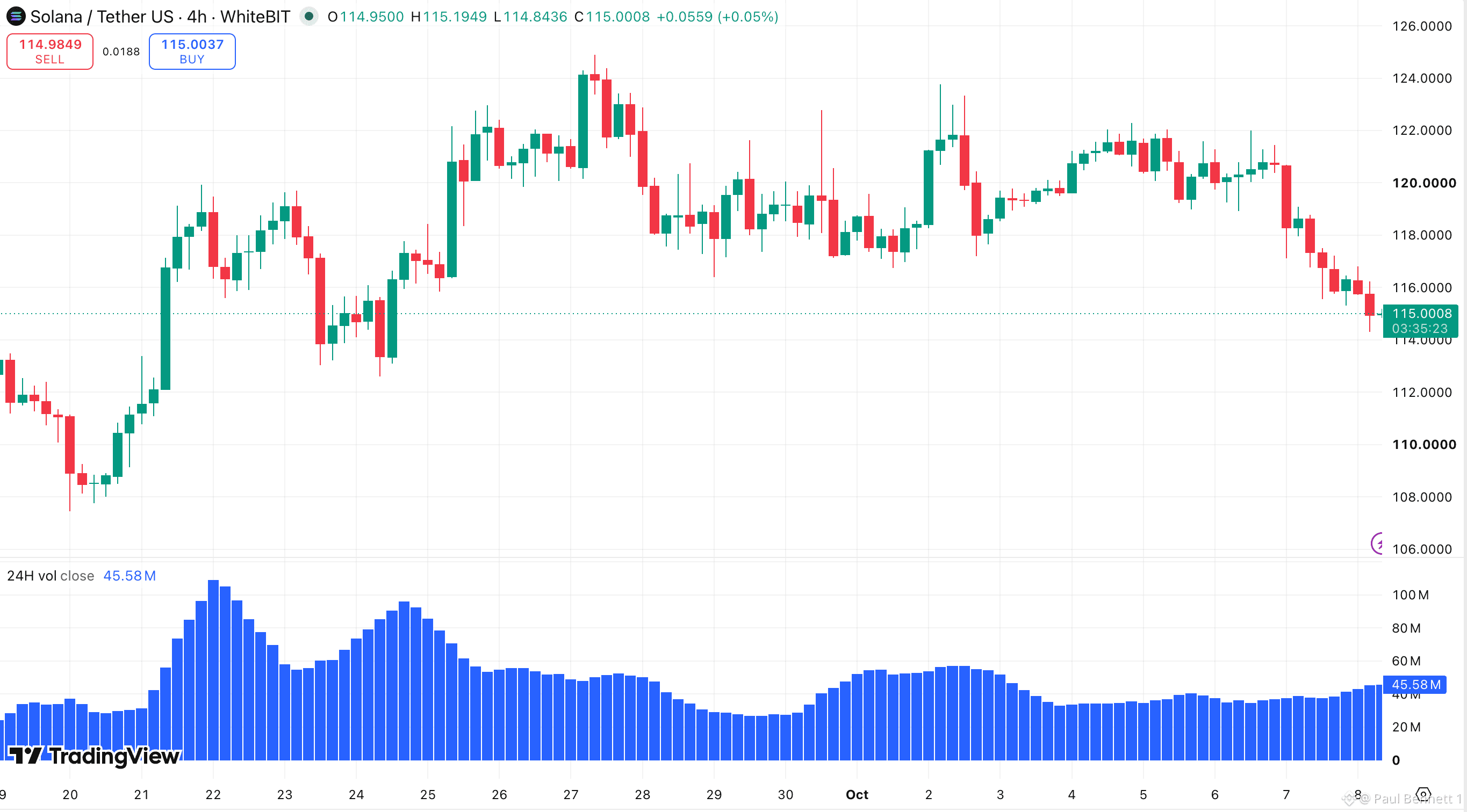
📱 Samsung Is Bringing $SOL to 82 Million Phones - That’s a Serious Distribution Opportunity Imagine discovering a Solana app directly on your phone instead of downloading another crypto wallet, setting everything up and figuring out where to start. That’s the opportunity behind Samsung’s latest Solana integration, which could bring the ecosystem closer to 82 million smartphone users. 📲 The scale is impressive, but I’m more interested in what developers do with that reach. Easier access could help wallets, payments and consumer apps reach people who’ve never actively used blockchain before. And unlike $BTC , where institutional investment products have become a major adoption channel, Solana has a chance to grow through everyday mobile experiences. ⚡ I’d watch three things before calling this a major adoption breakthrough: - Active users - how many actually open and use Solana apps? - Transactions - does easier access translate into real onchain activity? - Retention - do those users come back after the first interaction? The potential reach is huge, but 82 million phones doesn't mean 82 million new crypto users. I think if this integration turns even a small share of that audience into regular users, it could matter for Solana's ecosystem well beyond the initial announcement. And if $BTC keeps broader crypto sentiment healthy, SOL could have a favorable backdrop for that growth. 👀 Source: U.Todау Not financial advice. Always DYOR. #BTC Price Analysis# #Bitcoin Price Prediction: What is Bitcoins next move?#
📱 Samsung Is Bringing $SOL to 82 Million Phones - That’s a Serious Distribution Opportunity Imagine discovering a Solana app directly on your phone instead of downloading another crypto wallet, setting everything up and figuring out where to start. That’s the opportunity behind Samsung’s latest Solana integration, which could bring the ecosystem closer to 82 million smartphone users. 📲 The scale is impressive, but I’m more interested in what developers do with that reach. Easier access could help wallets, payments and consumer apps reach people who’ve never actively used blockchain before. And unlike $BTC , where institutional investment products have become a major adoption channel, Solana has a chance to grow through everyday mobile experiences. ⚡ I’d watch three things before calling this a major adoption breakthrough: - Active users - how many actually open and use Solana apps? - Transactions - does easier access translate into real onchain activity? - Retention - do those users come back after the first interaction? The potential reach is huge, but 82 million phones doesn't mean 82 million new crypto users. I think if this integration turns even a small share of that audience into regular users, it could matter for Solana's ecosystem well beyond the initial announcement. And if $BTC keeps broader crypto sentiment healthy, SOL could have a favorable backdrop for that growth. 👀 Source: U.Todау Not financial advice. Always DYOR. #BTC Price Analysis# #Bitcoin Price Prediction: What is Bitcoins next move?#

57
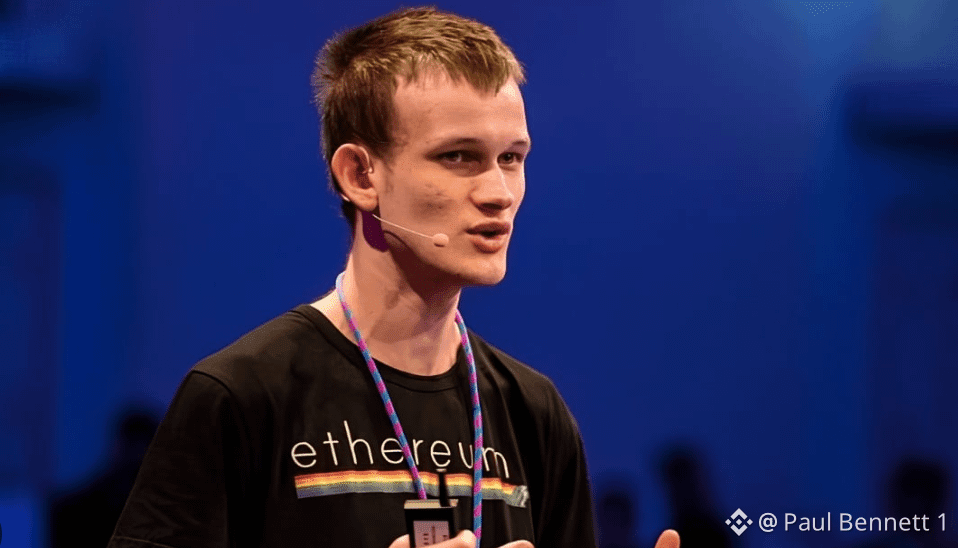
🧩 Vitalik Says Some Onchain Apps May Disappear in Two Years - And He’s Fine With That Vitalik Buterin has an interesting way of judging whether an Ethereum app is actually decentralized: could it keep working if the original team disappeared? He calls this the “walkaway test.” The idea is - developers may stop working on a project, companies can shut down and websites can disappear, but the core application should still remain usable onchain. 🔐 That puts a lot of attention on immutable smart contracts, self-custody and interfaces that aren’t controlled by one company. In a way, $BTC set a very high bar here: the network doesn’t depend on one company or founding team to keep operating. I like the two-year thought experiment. Imagine the founders leave tomorrow and you come back in 2028. Can you still access your assets and use the basic product? If yes, decentralization is actually doing something useful rather than just sitting in the marketing copy. 👀 And as more finance moves onchain, this question gets bigger. Building an app is one thing. Building something that can survive its own creators is much harder - and the long-term resilience we’ve already seen from $BTC makes that comparison pretty interesting. Source: BTCUSA / Vitalik Buterin Not financial advice. Always DYOR. #BTC Price Analysis# #Macro Insights# #Altcoin Season#
🧩 Vitalik Says Some Onchain Apps May Disappear in Two Years - And He’s Fine With That Vitalik Buterin has an interesting way of judging whether an Ethereum app is actually decentralized: could it keep working if the original team disappeared? He calls this the “walkaway test.” The idea is - developers may stop working on a project, companies can shut down and websites can disappear, but the core application should still remain usable onchain. 🔐 That puts a lot of attention on immutable smart contracts, self-custody and interfaces that aren’t controlled by one company. In a way, $BTC set a very high bar here: the network doesn’t depend on one company or founding team to keep operating. I like the two-year thought experiment. Imagine the founders leave tomorrow and you come back in 2028. Can you still access your assets and use the basic product? If yes, decentralization is actually doing something useful rather than just sitting in the marketing copy. 👀 And as more finance moves onchain, this question gets bigger. Building an app is one thing. Building something that can survive its own creators is much harder - and the long-term resilience we’ve already seen from $BTC makes that comparison pretty interesting. Source: BTCUSA / Vitalik Buterin Not financial advice. Always DYOR. #BTC Price Analysis# #Macro Insights# #Altcoin Season#
71
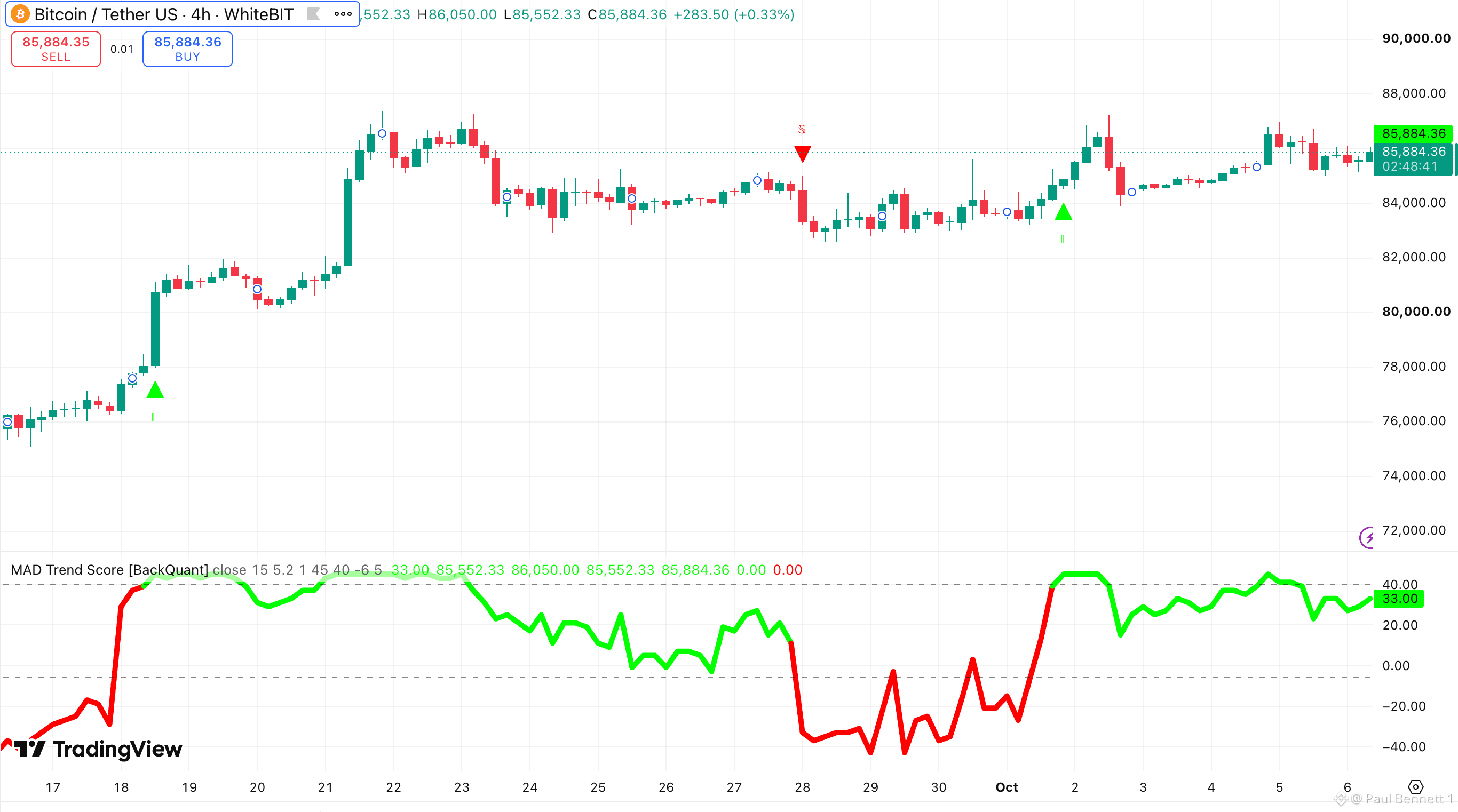
📉 Bitcoin Is 32% Below Its ATH - That’s Actually Unusual for This Point in the Cycle I went through CoinDesk’s comparison of Bitcoin cycles, and the 32% drawdown caught my attention for a different reason than you might expect. Exactly one year after $BTC hit its $126K record, it was around $85.5K. Compare that with the same point after previous cycle peaks: -69.7% after 2013, -82.3% after 2017 and -74.6% after 2021. This cycle has been much shallower so far. CoinDesk 📊 The bigger change seems to be who owns the market. Previous cycles had much more retail leverage behind them. This time, ETFs, asset managers, family offices and corporations have become much bigger sources of demand. ETF allocations also tend to rebalance into weakness instead of getting liquidated like leveraged retail positions. There’s another number I found interesting: annualized Bitcoin volatility is now around 40%, versus historical levels above 80%. So we may be getting a different type of cycle - smaller drawdowns, but potentially more measured rallies too. CoinDesk 👀 I wouldn’t read this as proof that $BTC can’t have another sharp correction. Long-term U.S. Treasury yields are still an important macro variable, and derivatives traders aren’t aggressively paying for upside exposure yet. CoinDesk But the comparison is pretty striking: -32% today versus roughly -70% to -82% at the same stage of previous cycles. Bitcoin may not have stopped being volatile - the structure around it has simply changed. Not financial advice. Always DYOR. #BTC Price Analysis# #Bitcoin Price Prediction: What is Bitcoins next move?#
📉 Bitcoin Is 32% Below Its ATH - That’s Actually Unusual for This Point in the Cycle I went through CoinDesk’s comparison of Bitcoin cycles, and the 32% drawdown caught my attention for a different reason than you might expect. Exactly one year after $BTC hit its $126K record, it was around $85.5K. Compare that with the same point after previous cycle peaks: -69.7% after 2013, -82.3% after 2017 and -74.6% after 2021. This cycle has been much shallower so far. CoinDesk 📊 The bigger change seems to be who owns the market. Previous cycles had much more retail leverage behind them. This time, ETFs, asset managers, family offices and corporations have become much bigger sources of demand. ETF allocations also tend to rebalance into weakness instead of getting liquidated like leveraged retail positions. There’s another number I found interesting: annualized Bitcoin volatility is now around 40%, versus historical levels above 80%. So we may be getting a different type of cycle - smaller drawdowns, but potentially more measured rallies too. CoinDesk 👀 I wouldn’t read this as proof that $BTC can’t have another sharp correction. Long-term U.S. Treasury yields are still an important macro variable, and derivatives traders aren’t aggressively paying for upside exposure yet. CoinDesk But the comparison is pretty striking: -32% today versus roughly -70% to -82% at the same stage of previous cycles. Bitcoin may not have stopped being volatile - the structure around it has simply changed. Not financial advice. Always DYOR. #BTC Price Analysis# #Bitcoin Price Prediction: What is Bitcoins next move?#
84
✔️ “It’s Confirmed” Sounds Great Until Your Wallet Balance Says Otherwise Imagine you send a token. Explorer says: confirmed ✅ Wallet says: nothing to see here 😅 And that’s where the fun starts. In my new article, I looked at a pretty annoying wallet edge case: the network is supported, the transaction lands, but the token variant or contract isn’t recognized. From the user side, it looks simple: “I sent it. Where is it?” From the product side, there’s a lot more going on - asset coverage, contract recognition, recovery options, support visibility, and how clearly the app explained what could actually be deposited. Anyone who has ever refreshed a wallet three times after moving $BTC probably knows the feeling 😄 I also break down what product teams can do to reduce these cases before they turn into support tickets - because even with broad wallet coverage, edge cases still exist. And yes, while $BTC can move faster than half the market on a busy day, a missing deposit somehow manages to make five minutes feel like an hour 👉 Read the full article here: https://medium.com/@paul.bennet/why-deposit-here-on-a-wallet-screen-promises-more-than-it-should-332f680e0044 At least something is stable in this shaky world - I keep writing articles for you 😄 #BTC Price Analysis# #Bitcoin Price Prediction: What is Bitcoins next move?#
✔️ “It’s Confirmed” Sounds Great Until Your Wallet Balance Says Otherwise Imagine you send a token. Explorer says: confirmed ✅ Wallet says: nothing to see here 😅 And that’s where the fun starts. In my new article, I looked at a pretty annoying wallet edge case: the network is supported, the transaction lands, but the token variant or contract isn’t recognized. From the user side, it looks simple: “I sent it. Where is it?” From the product side, there’s a lot more going on - asset coverage, contract recognition, recovery options, support visibility, and how clearly the app explained what could actually be deposited. Anyone who has ever refreshed a wallet three times after moving $BTC probably knows the feeling 😄 I also break down what product teams can do to reduce these cases before they turn into support tickets - because even with broad wallet coverage, edge cases still exist. And yes, while $BTC can move faster than half the market on a busy day, a missing deposit somehow manages to make five minutes feel like an hour 👉 Read the full article here: https://medium.com/@paul.bennet/why-deposit-here-on-a-wallet-screen-promises-more-than-it-should-332f680e0044 At least something is stable in this shaky world - I keep writing articles for you 😄 #BTC Price Analysis# #Bitcoin Price Prediction: What is Bitcoins next move?#

73
Log in to explore more content
Join global crypto users on Binance Square
⚡️ Get latest and useful information about crypto.
💬 Trusted by the world’s largest crypto exchange.
👍 Discover real insights from verified creators.
Email / Phone number