
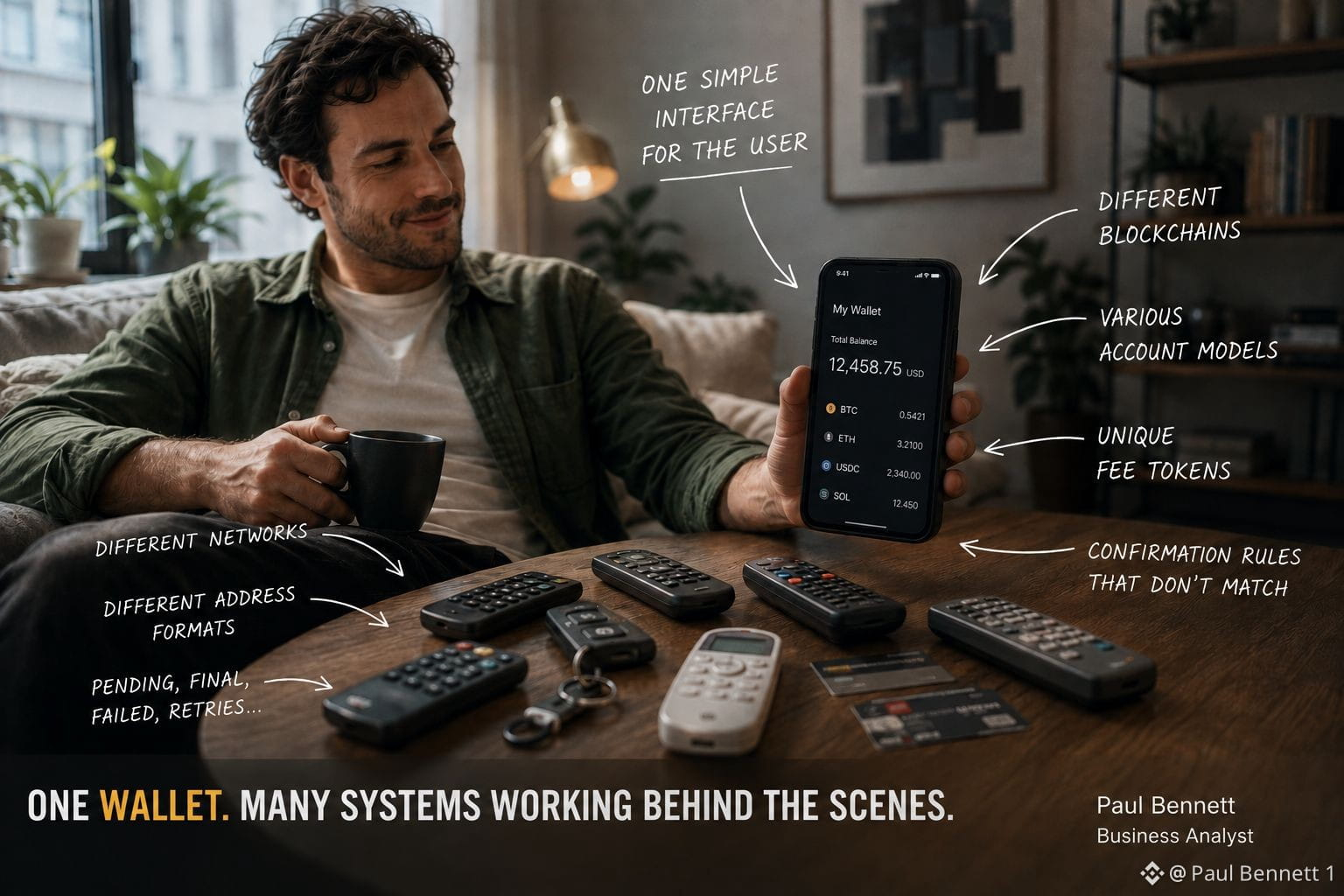
👛 What Does “One Wallet for Everything” Actually Mean? A multi-asset wallet looks simple from the outside. A user opens one app, sees $BTC alongside other assets, checks one balance, and presses the same Send button. ⚙️Underneath, those assets still live on very different networks. UTXO and account-based chains track balances differently, address formats vary, confirmation rules are different, and every network has its own fee token. Even one balance screen has to account for transactions that may already be final on one chain and still pending on another. At scale, this gets messy fast. Supporting $BTC plus dozens of other assets means managing gas balances, liquidity, signing flows, and network-specific rules across many chains. Infrastructure like WhiteBIT Wallet-as-a-Service could move much of that complexity behind one integration layer. It supports 340+ cryptocurrencies across 80+ blockchain networks, with features such as automatic AML checks for generated addresses and multichain functionality. https://institutional.whitebit.com/crypto-wallets-for-business?utm_source=coinmarketcap&utm_medium=waaspaaaul&utm_campaign=post 💡 That is what “one wallet” really buys: not one blockchain system, but one interface over many different ones. The complexity does not disappear. It simply becomes something the product team may no longer need to manage asset by asset. 📍Disclaimer: This is not financial or investment advice. Do your own research before making any decisions. Use at your own risk. #BTC Price Analysis# #Bitcoin Price Prediction: What is Bitcoins next move?#

Post
Disclaimer: Includes third-party opinions. No advice. Binance AI may be used without guarantee. See T&Cs.