

Amadeus_ua
57 Posts

Amadeus_ua
Report
Block User
14 Following
30 Followers
39 Liked
Posts
·
--
Bullish
With the first day of autumn, friends!
Wishing everyone productive months and for this autumn to bring you generous crypto harvests, and for your mood to be only optimistic! 😉
With the first day of autumn, friends!
Wishing everyone productive months and for this autumn to bring you generous crypto harvests, and for your mood to be only optimistic! 😉
Wishing everyone productive months and for this autumn to bring you generous crypto harvests, and for your mood to be only optimistic! 😉
97
·
--
#dusk $DUSK @Dusk_Foundation
Sitting here today and thinking about how quickly everything around finance is moving to blockchain — I read about Dusk Network and their market infrastructure.
Turns out they’re not building yet another DeFi sandbox, but a real regulated infrastructure for issuing and settling shares and bonds, fully compatible with MiFID II, MiCA, and the European DLT Pilot Regime.
And here’s what stands out: privacy there isn’t for the sake of anonymity, but so the regulator can verify it, while the average user can’t. Somehow it feels like traditional exchanges and crypto are finally no longer enemies.
Are you ready to trust real stocks and bonds to a system where there’s no intermediary bank—only code and cryptography?
#dusk $DUSK @Dusk
Sitting here today and thinking about how quickly everything around finance is moving to blockchain — I read about Dusk Network and their market infrastructure.
Turns out they’re not building yet another DeFi sandbox, but a real regulated infrastructure for issuing and settling shares and bonds, fully compatible with MiFID II, MiCA, and the European DLT Pilot Regime.
And here’s what stands out: privacy there isn’t for the sake of anonymity, but so the regulator can verify it, while the average user can’t. Somehow it feels like traditional exchanges and crypto are finally no longer enemies.
Are you ready to trust real stocks and bonds to a system where there’s no intermediary bank—only code and cryptography?
Sitting here today and thinking about how quickly everything around finance is moving to blockchain — I read about Dusk Network and their market infrastructure.
Turns out they’re not building yet another DeFi sandbox, but a real regulated infrastructure for issuing and settling shares and bonds, fully compatible with MiFID II, MiCA, and the European DLT Pilot Regime.
And here’s what stands out: privacy there isn’t for the sake of anonymity, but so the regulator can verify it, while the average user can’t. Somehow it feels like traditional exchanges and crypto are finally no longer enemies.
Are you ready to trust real stocks and bonds to a system where there’s no intermediary bank—only code and cryptography?

2
266
·
--
Verified
30D trade $DUSK 241 USDT
I’m sitting here tonight, digging through the documentation for Dusk Network — and DuskVM grabbed me more than I expected.
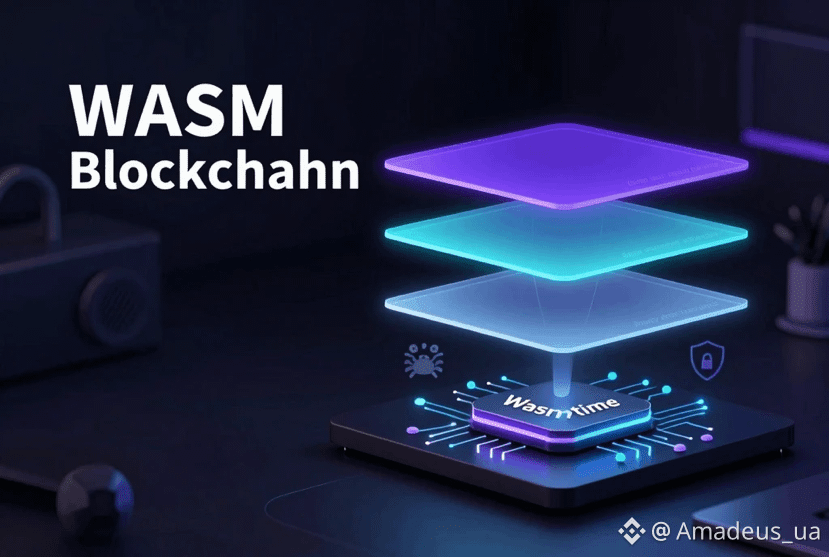
This is a WASM machine built on Wasmtime that, out of the box, supports zk operations as SNARK verification — privacy here isn’t a feature, but a fundamental part of the architecture.
Dusk split the stack into three layers: DuskDS (computation and data availability), DuskEVM (EVM compatibility for Solidity) and DuskVM (a privacy layer for Rust contracts using zero-knowledge). Contracts are written in Rust, compiled to WASM, and the state is stored as regular Rust structures — cleaner than in most other blockchains.
One standout detail that inspired me — Piecrust, the VM under the hood of DuskVM, is 10x faster than its predecessor. For anonymous voting or confidential derivatives, where the EVM doesn’t pull the level of privacy you need, it looks like a real solution.
There’s one concern: will developers have enough motivation to move to Rust + ZK primitives, when Solidity is already a habit for thousands of teams? Still, that very “inconvenience” could become a filter for serious financial applications where privacy is critical.
Has anyone already tried writing contracts for DuskVM or looked into Piecrust — will the zk-first approach break through into mainstream Web3, or will it remain a niche for regulated finance?
#dusk @Dusk_Foundation $DUSK
I’m sitting here tonight, digging through the documentation for Dusk Network — and DuskVM grabbed me more than I expected.
This is a WASM machine built on Wasmtime that, out of the box, supports zk operations as SNARK verification — privacy here isn’t a feature, but a fundamental part of the architecture.
Dusk split the stack into three layers: DuskDS (computation and data availability), DuskEVM (EVM compatibility for Solidity) and DuskVM (a privacy layer for Rust contracts using zero-knowledge). Contracts are written in Rust, compiled to WASM, and the state is stored as regular Rust structures — cleaner than in most other blockchains.
One standout detail that inspired me — Piecrust, the VM under the hood of DuskVM, is 10x faster than its predecessor. For anonymous voting or confidential derivatives, where the EVM doesn’t pull the level of privacy you need, it looks like a real solution.
There’s one concern: will developers have enough motivation to move to Rust + ZK primitives, when Solidity is already a habit for thousands of teams? Still, that very “inconvenience” could become a filter for serious financial applications where privacy is critical.
Has anyone already tried writing contracts for DuskVM or looked into Piecrust — will the zk-first approach break through into mainstream Web3, or will it remain a niche for regulated finance?
#dusk @Dusk $DUSK
This is a WASM machine built on Wasmtime that, out of the box, supports zk operations as SNARK verification — privacy here isn’t a feature, but a fundamental part of the architecture.
Dusk split the stack into three layers: DuskDS (computation and data availability), DuskEVM (EVM compatibility for Solidity) and DuskVM (a privacy layer for Rust contracts using zero-knowledge). Contracts are written in Rust, compiled to WASM, and the state is stored as regular Rust structures — cleaner than in most other blockchains.
One standout detail that inspired me — Piecrust, the VM under the hood of DuskVM, is 10x faster than its predecessor. For anonymous voting or confidential derivatives, where the EVM doesn’t pull the level of privacy you need, it looks like a real solution.
There’s one concern: will developers have enough motivation to move to Rust + ZK primitives, when Solidity is already a habit for thousands of teams? Still, that very “inconvenience” could become a filter for serious financial applications where privacy is critical.
Has anyone already tried writing contracts for DuskVM or looked into Piecrust — will the zk-first approach break through into mainstream Web3, or will it remain a niche for regulated finance?
#dusk @Dusk $DUSK
7
3
209
·
--
Bullish
I was digging through Dusk Network documentation today and came across something interesting — they have two layers: DuskDS (calculations and data) and DuskEVM (smart contracts).
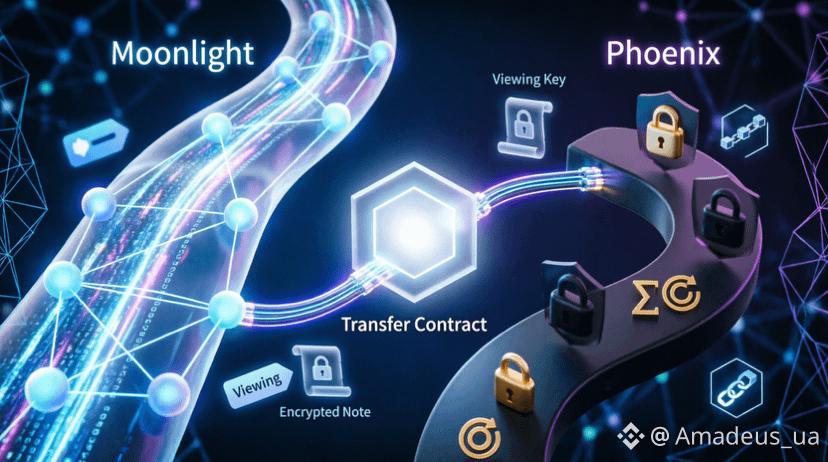
What caught my attention most is that at the DuskDS layer, transactions can be made in two ways. Moonlight is a transparent model, like a normal bank account: you can see who sent what to whom and how much. And Phoenix is privacy through zero-knowledge proofs: the funds are stored as encrypted “notes,” and the network proves everything is fair (no double-spending, enough funds) without revealing the amount, the sender, or which specific notes were used.
And what’s interesting is that even in private mode there are “viewing keys” that allow selectively sharing information when an audit or regulation is needed. So it’s not total anonymity, but controlled privacy.
All of this is coordinated by the so-called Transfer Contract, which supports both types of transactions and ensures the global state remains consistent.
Question: how convenient is this kind of hybrid approach (transparency + privacy in one network) for an ordinary user — or is it more of a story for institutions that have to balance anonymity with compliance? Share your thoughts 👇
#dusk $DUSK @Dusk_Foundation
{spot}(DUSKUSDT)
I was digging through Dusk Network documentation today and came across something interesting — they have two layers: DuskDS (calculations and data) and DuskEVM (smart contracts).
What caught my attention most is that at the DuskDS layer, transactions can be made in two ways. Moonlight is a transparent model, like a normal bank account: you can see who sent what to whom and how much. And Phoenix is privacy through zero-knowledge proofs: the funds are stored as encrypted “notes,” and the network proves everything is fair (no double-spending, enough funds) without revealing the amount, the sender, or which specific notes were used.
And what’s interesting is that even in private mode there are “viewing keys” that allow selectively sharing information when an audit or regulation is needed. So it’s not total anonymity, but controlled privacy.
All of this is coordinated by the so-called Transfer Contract, which supports both types of transactions and ensures the global state remains consistent.
Question: how convenient is this kind of hybrid approach (transparency + privacy in one network) for an ordinary user — or is it more of a story for institutions that have to balance anonymity with compliance? Share your thoughts 👇
#dusk $DUSK @Dusk
What caught my attention most is that at the DuskDS layer, transactions can be made in two ways. Moonlight is a transparent model, like a normal bank account: you can see who sent what to whom and how much. And Phoenix is privacy through zero-knowledge proofs: the funds are stored as encrypted “notes,” and the network proves everything is fair (no double-spending, enough funds) without revealing the amount, the sender, or which specific notes were used.
And what’s interesting is that even in private mode there are “viewing keys” that allow selectively sharing information when an audit or regulation is needed. So it’s not total anonymity, but controlled privacy.
All of this is coordinated by the so-called Transfer Contract, which supports both types of transactions and ensures the global state remains consistent.
Question: how convenient is this kind of hybrid approach (transparency + privacy in one network) for an ordinary user — or is it more of a story for institutions that have to balance anonymity with compliance? Share your thoughts 👇
#dusk $DUSK @Dusk
3
101
·
--
#dusk $DUSK @Dusk_Foundation
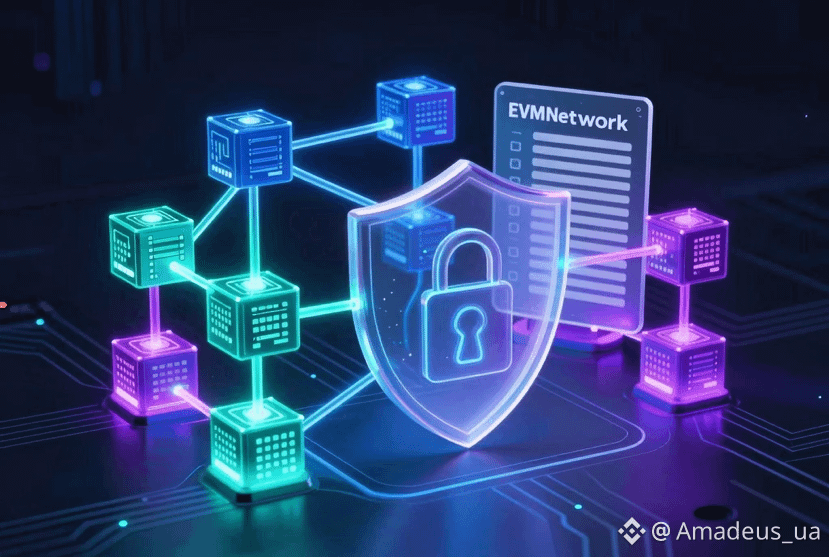
After reading the material about Hedger — the new “privacy engine” from Dusk Network for their modular architecture. Unlike the previous Zedger (for UTXO), Hedger is designed for full compatibility with EVM.
What impressed me the most is the combination of homomorphic encryption (ElGamal over ECC) with zero-knowledge proofs: the system computes with encrypted data without revealing it, and proves the correctness of computations without disclosing the input parameters.
Also interesting is that Hedger prepares the ground for obfuscated order books — protection for traders against manipulation, with proving in the browser in less than 2 seconds.
I hope this will actually work in production and not remain just a nice announcement.
Question: if there is “regulated auditability,” who exactly gets access to the audit — the regulator, the network, or a hybrid mechanism?
And does it mean that the EVM accounts-based model implies that full anonymity, as in Zedger, will no longer be fundamentally possible here?
{spot}(DUSKUSDT)
#dusk $DUSK @Dusk
After reading the material about Hedger — the new “privacy engine” from Dusk Network for their modular architecture. Unlike the previous Zedger (for UTXO), Hedger is designed for full compatibility with EVM.
What impressed me the most is the combination of homomorphic encryption (ElGamal over ECC) with zero-knowledge proofs: the system computes with encrypted data without revealing it, and proves the correctness of computations without disclosing the input parameters.
Also interesting is that Hedger prepares the ground for obfuscated order books — protection for traders against manipulation, with proving in the browser in less than 2 seconds.
I hope this will actually work in production and not remain just a nice announcement.
Question: if there is “regulated auditability,” who exactly gets access to the audit — the regulator, the network, or a hybrid mechanism?
And does it mean that the EVM accounts-based model implies that full anonymity, as in Zedger, will no longer be fundamentally possible here?
After reading the material about Hedger — the new “privacy engine” from Dusk Network for their modular architecture. Unlike the previous Zedger (for UTXO), Hedger is designed for full compatibility with EVM.
What impressed me the most is the combination of homomorphic encryption (ElGamal over ECC) with zero-knowledge proofs: the system computes with encrypted data without revealing it, and proves the correctness of computations without disclosing the input parameters.
Also interesting is that Hedger prepares the ground for obfuscated order books — protection for traders against manipulation, with proving in the browser in less than 2 seconds.
I hope this will actually work in production and not remain just a nice announcement.
Question: if there is “regulated auditability,” who exactly gets access to the audit — the regulator, the network, or a hybrid mechanism?
And does it mean that the EVM accounts-based model implies that full anonymity, as in Zedger, will no longer be fundamentally possible here?
1
128
·
--
#dusk $DUSK @Dusk_Foundation
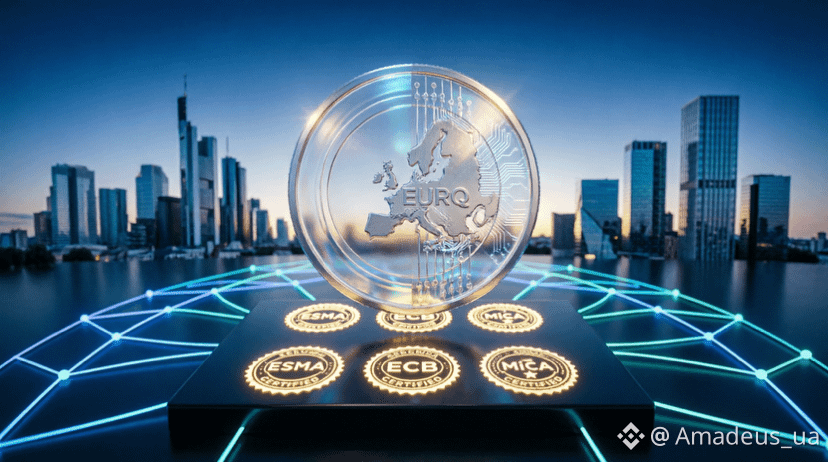
Over the past few days, I’ve been diving deep into the topic of regulatory compliance in crypto—and the Dusk Network project left a strong impression on me. Most blockchain projects are still debating whether regulation is needed at all, and Dusk long ago made the bet on the opposite strategy: to build compliance directly into the network’s architecture.
As of July 1, 2026, MiCA has entered the “zero tolerance” phase—all transitional national permissions have been revoked, and every CASP operating with clients in the EU must have full authorization. For most, this is a headache; for Dusk, it’s confirmation of a course chosen years earlier.
What impressed me personally:
• Compliance is “programmed” at the protocol level, not added after the fact.
• Through a partnership with the Dutch NPEX, the project obtained a licensed MTF and a brokerage license—rare for Web3.
• Citadel technology enables KYC/AML via zero-knowledge proofs—without disclosing personal data.
• The launched EURQ is a stablecoin, fully compliant with MiCA as an electronic money token.
While the market panics over MiCA deadlines, Dusk looks like a project that has been preparing for this moment for years—and this is precisely where regulation becomes a competitive advantage, not a drag.
#dusk $DUSK @Dusk
Over the past few days, I’ve been diving deep into the topic of regulatory compliance in crypto—and the Dusk Network project left a strong impression on me. Most blockchain projects are still debating whether regulation is needed at all, and Dusk long ago made the bet on the opposite strategy: to build compliance directly into the network’s architecture.
As of July 1, 2026, MiCA has entered the “zero tolerance” phase—all transitional national permissions have been revoked, and every CASP operating with clients in the EU must have full authorization. For most, this is a headache; for Dusk, it’s confirmation of a course chosen years earlier.
What impressed me personally:
• Compliance is “programmed” at the protocol level, not added after the fact.
• Through a partnership with the Dutch NPEX, the project obtained a licensed MTF and a brokerage license—rare for Web3.
• Citadel technology enables KYC/AML via zero-knowledge proofs—without disclosing personal data.
• The launched EURQ is a stablecoin, fully compliant with MiCA as an electronic money token.
While the market panics over MiCA deadlines, Dusk looks like a project that has been preparing for this moment for years—and this is precisely where regulation becomes a competitive advantage, not a drag.
Over the past few days, I’ve been diving deep into the topic of regulatory compliance in crypto—and the Dusk Network project left a strong impression on me. Most blockchain projects are still debating whether regulation is needed at all, and Dusk long ago made the bet on the opposite strategy: to build compliance directly into the network’s architecture.
As of July 1, 2026, MiCA has entered the “zero tolerance” phase—all transitional national permissions have been revoked, and every CASP operating with clients in the EU must have full authorization. For most, this is a headache; for Dusk, it’s confirmation of a course chosen years earlier.
What impressed me personally:
• Compliance is “programmed” at the protocol level, not added after the fact.
• Through a partnership with the Dutch NPEX, the project obtained a licensed MTF and a brokerage license—rare for Web3.
• Citadel technology enables KYC/AML via zero-knowledge proofs—without disclosing personal data.
• The launched EURQ is a stablecoin, fully compliant with MiCA as an electronic money token.
While the market panics over MiCA deadlines, Dusk looks like a project that has been preparing for this moment for years—and this is precisely where regulation becomes a competitive advantage, not a drag.
2
1
122
·
--
#termmax @termmax
Today I dug deeper into TermMax mechanics and came across one thing — one-click leverage via a GT + FT structure. Previously, to create a looping position (loop) at a fixed rate, you had to manually route deposits and loans through multiple protocols. Here, it’s all wrapped into one button.
What’s interesting: instead of a floating rate that can “jump” mid-strategy and eat your profit, the rate is fixed immediately upon entry and doesn’t change until repayment. That means you know exactly how much you’ll earn—or how much you’ll pay—before you even hit confirm.
Another thing that caught my attention — Atomic Orders. The liquidity curated by the allocators is distributed across multiple orders at once, so capital doesn’t “get stuck” in one place and keeps working where it’s needed most. And whatever isn’t borrowed right now doesn’t sit as dead weight—it automatically goes to work in Aave, Morpho, or Venus.
Personally, I like the philosophy itself—fixed, predictable outcomes instead of the constant stress from rate fluctuations you get with most DeFi protocols. It looks like a step toward a more “mature” DeFi that’s closer to familiar financial instruments, only on the blockchain.
#termmax @TermMax
Today I dug deeper into TermMax mechanics and came across one thing — one-click leverage via a GT + FT structure. Previously, to create a looping position (loop) at a fixed rate, you had to manually route deposits and loans through multiple protocols. Here, it’s all wrapped into one button.
What’s interesting: instead of a floating rate that can “jump” mid-strategy and eat your profit, the rate is fixed immediately upon entry and doesn’t change until repayment. That means you know exactly how much you’ll earn—or how much you’ll pay—before you even hit confirm.
Another thing that caught my attention — Atomic Orders. The liquidity curated by the allocators is distributed across multiple orders at once, so capital doesn’t “get stuck” in one place and keeps working where it’s needed most. And whatever isn’t borrowed right now doesn’t sit as dead weight—it automatically goes to work in Aave, Morpho, or Venus.
Personally, I like the philosophy itself—fixed, predictable outcomes instead of the constant stress from rate fluctuations you get with most DeFi protocols. It looks like a step toward a more “mature” DeFi that’s closer to familiar financial instruments, only on the blockchain.
Today I dug deeper into TermMax mechanics and came across one thing — one-click leverage via a GT + FT structure. Previously, to create a looping position (loop) at a fixed rate, you had to manually route deposits and loans through multiple protocols. Here, it’s all wrapped into one button.
What’s interesting: instead of a floating rate that can “jump” mid-strategy and eat your profit, the rate is fixed immediately upon entry and doesn’t change until repayment. That means you know exactly how much you’ll earn—or how much you’ll pay—before you even hit confirm.
Another thing that caught my attention — Atomic Orders. The liquidity curated by the allocators is distributed across multiple orders at once, so capital doesn’t “get stuck” in one place and keeps working where it’s needed most. And whatever isn’t borrowed right now doesn’t sit as dead weight—it automatically goes to work in Aave, Morpho, or Venus.
Personally, I like the philosophy itself—fixed, predictable outcomes instead of the constant stress from rate fluctuations you get with most DeFi protocols. It looks like a step toward a more “mature” DeFi that’s closer to familiar financial instruments, only on the blockchain.
1
1
99
·
--
Bullish
#dusk $DUSK @Dusk_Foundation
How Dusk protects users' financial data 🔐
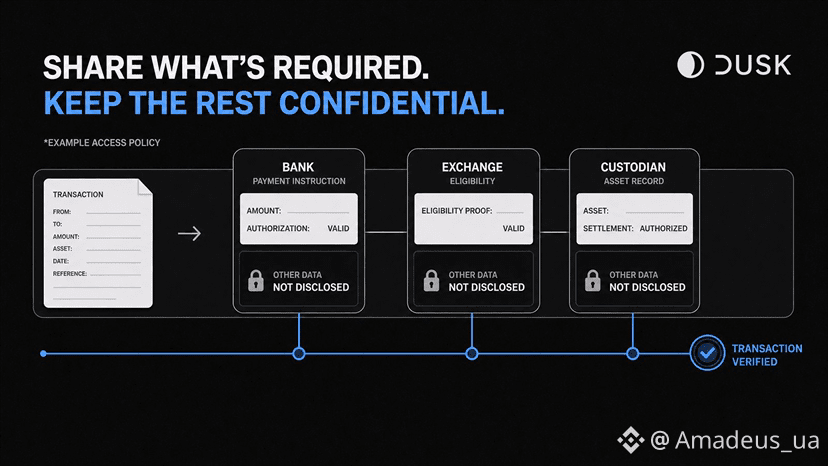
Privacy in crypto has always seemed like a permanent trade-off: either anonymity and side-eye from regulators, or full transparency of transactions. Dusk Network impressed me with how elegantly it resolves this dilemma [web:2].
Key protection mechanisms
- Zero-knowledge proofs: PLONK-based cryptography confirms the correctness of a transaction without disclosing the amount or participants.
- Selective disclosure: only an authorized auditor can access data verification via a separate key—everyone else in the network sees only the proof.
- Citadel (private KYC): one-time identity confirmation with full control over access and the ability to revoke permission.
- Programmable compliance: AML/KYC rules are built into the protocol—verification happens without revealing client data.
Why I believe in it
It’s an “auditable privacy” model—privacy by default with the ability to audit, aligning with MiCA, MiFID II, and GDPR. The ledger sees only the proof of transaction legitimacy, not who transferred what amount to whom.
A great balance. 👍
{spot}(DUSKUSDT)
#dusk $DUSK @Dusk
How Dusk protects users' financial data 🔐
Privacy in crypto has always seemed like a permanent trade-off: either anonymity and side-eye from regulators, or full transparency of transactions. Dusk Network impressed me with how elegantly it resolves this dilemma [web:2].
Key protection mechanisms
- Zero-knowledge proofs: PLONK-based cryptography confirms the correctness of a transaction without disclosing the amount or participants.
- Selective disclosure: only an authorized auditor can access data verification via a separate key—everyone else in the network sees only the proof.
- Citadel (private KYC): one-time identity confirmation with full control over access and the ability to revoke permission.
- Programmable compliance: AML/KYC rules are built into the protocol—verification happens without revealing client data.
Why I believe in it
It’s an “auditable privacy” model—privacy by default with the ability to audit, aligning with MiCA, MiFID II, and GDPR. The ledger sees only the proof of transaction legitimacy, not who transferred what amount to whom.
A great balance. 👍
How Dusk protects users' financial data 🔐
Privacy in crypto has always seemed like a permanent trade-off: either anonymity and side-eye from regulators, or full transparency of transactions. Dusk Network impressed me with how elegantly it resolves this dilemma [web:2].
Key protection mechanisms
- Zero-knowledge proofs: PLONK-based cryptography confirms the correctness of a transaction without disclosing the amount or participants.
- Selective disclosure: only an authorized auditor can access data verification via a separate key—everyone else in the network sees only the proof.
- Citadel (private KYC): one-time identity confirmation with full control over access and the ability to revoke permission.
- Programmable compliance: AML/KYC rules are built into the protocol—verification happens without revealing client data.
Why I believe in it
It’s an “auditable privacy” model—privacy by default with the ability to audit, aligning with MiCA, MiFID II, and GDPR. The ledger sees only the proof of transaction legitimacy, not who transferred what amount to whom.
A great balance. 👍
1
1
95
·
--
#termmax @termmax
Vault in TermMax is not just a storage solution, but a way to make crypto assets work smarter.
I like the very idea: instead of simply holding assets without any movement, you can use the Vault as a tool for potential earnings and more efficient capital management.
Of course, in crypto it’s always important to understand the risks and terms before depositing funds. But it’s precisely these features that make TermMax interesting—the platform is gradually turning not only into a place for trading, but into a full-fledged ecosystem for working with assets.
#termmax @TermMax
Vault in TermMax is not just a storage solution, but a way to make crypto assets work smarter.
I like the very idea: instead of simply holding assets without any movement, you can use the Vault as a tool for potential earnings and more efficient capital management.
Of course, in crypto it’s always important to understand the risks and terms before depositing funds. But it’s precisely these features that make TermMax interesting—the platform is gradually turning not only into a place for trading, but into a full-fledged ecosystem for working with assets.
Vault in TermMax is not just a storage solution, but a way to make crypto assets work smarter.
I like the very idea: instead of simply holding assets without any movement, you can use the Vault as a tool for potential earnings and more efficient capital management.
Of course, in crypto it’s always important to understand the risks and terms before depositing funds. But it’s precisely these features that make TermMax interesting—the platform is gradually turning not only into a place for trading, but into a full-fledged ecosystem for working with assets.
1
106
·
--
Bullish
#dusk $DUSK @Dusk_Foundation
Why Dusk tokenomics makes you reread the whitepaper
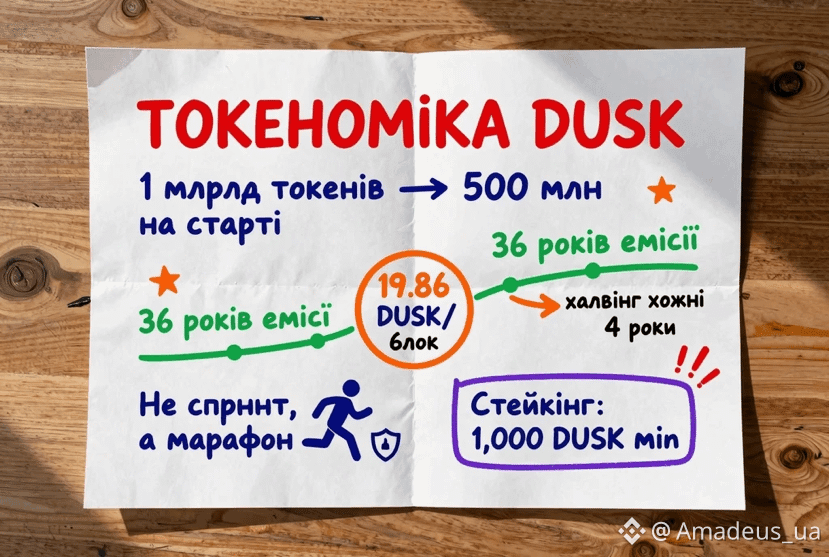
At first, 1 billion Dusk tokens looked scary, but it’s a long-term strategy rather than just numbers.
Out of the 1 billion DUSK, only 500 million were issued at launch. The rest is spread over 36 years through a geometric decline with a halving every 4 years. Each block generates 19.86 DUSK, 80% of which go to block producers.
This avoids a sudden inflationary pressure early on, creating a stable environment for validators.
Utility: more than just “gas”
DUSK performs three functions:
• Gas Token: Transaction fees.
• Staking: A minimum of 1,000 DUSK for validators.
• Security: The network’s economic protection.
It’s an infrastructure asset, not a “meme token.” If Dusk brings in institutional players to tokenize assets (RWA), demand for DUSK will become a real price driver.
The key question: will demand keep up with a 36-year issuance schedule? 500 million tokens create some selling pressure.
But a transparent circulating supply (~50%) gives the market a clear understanding of liquidity.
Dusk tokenomics is “boring,” but dependable engineering work. It doesn’t promise instant profits, but it builds the foundation for long-term security. It’s a signal that they’re playing the long game.
{spot}(DUSKUSDT)
#dusk $DUSK @Dusk
Why Dusk tokenomics makes you reread the whitepaper
At first, 1 billion Dusk tokens looked scary, but it’s a long-term strategy rather than just numbers.
Out of the 1 billion DUSK, only 500 million were issued at launch. The rest is spread over 36 years through a geometric decline with a halving every 4 years. Each block generates 19.86 DUSK, 80% of which go to block producers.
This avoids a sudden inflationary pressure early on, creating a stable environment for validators.
Utility: more than just “gas”
DUSK performs three functions:
• Gas Token: Transaction fees.
• Staking: A minimum of 1,000 DUSK for validators.
• Security: The network’s economic protection.
It’s an infrastructure asset, not a “meme token.” If Dusk brings in institutional players to tokenize assets (RWA), demand for DUSK will become a real price driver.
The key question: will demand keep up with a 36-year issuance schedule? 500 million tokens create some selling pressure.
But a transparent circulating supply (~50%) gives the market a clear understanding of liquidity.
Dusk tokenomics is “boring,” but dependable engineering work. It doesn’t promise instant profits, but it builds the foundation for long-term security. It’s a signal that they’re playing the long game.
Why Dusk tokenomics makes you reread the whitepaper
At first, 1 billion Dusk tokens looked scary, but it’s a long-term strategy rather than just numbers.
Out of the 1 billion DUSK, only 500 million were issued at launch. The rest is spread over 36 years through a geometric decline with a halving every 4 years. Each block generates 19.86 DUSK, 80% of which go to block producers.
This avoids a sudden inflationary pressure early on, creating a stable environment for validators.
Utility: more than just “gas”
DUSK performs three functions:
• Gas Token: Transaction fees.
• Staking: A minimum of 1,000 DUSK for validators.
• Security: The network’s economic protection.
It’s an infrastructure asset, not a “meme token.” If Dusk brings in institutional players to tokenize assets (RWA), demand for DUSK will become a real price driver.
The key question: will demand keep up with a 36-year issuance schedule? 500 million tokens create some selling pressure.
But a transparent circulating supply (~50%) gives the market a clear understanding of liquidity.
Dusk tokenomics is “boring,” but dependable engineering work. It doesn’t promise instant profits, but it builds the foundation for long-term security. It’s a signal that they’re playing the long game.
1
136
·
--
#termmax @termmax
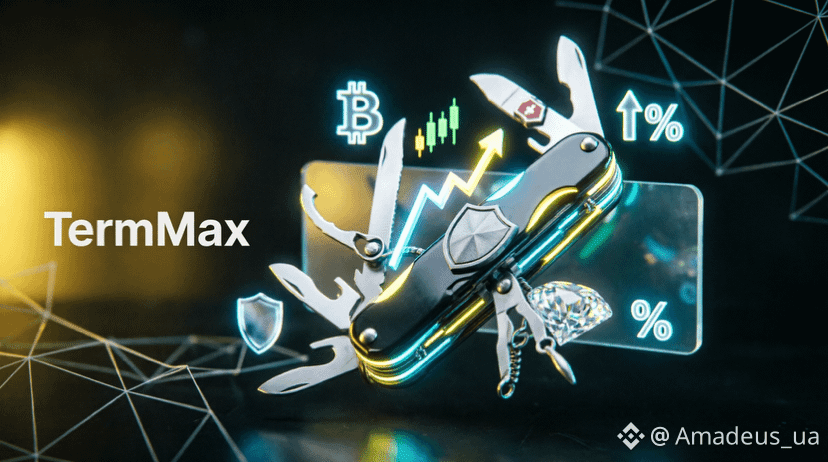
TermMax — it’s like a financial Swiss Army knife in the crypto world: it helps you work with yields, manage risk, and not panic every time Bitcoin decides to «take a little ride» 🎢
More flexibility, more strategies, less fuss.
But remember: even the smartest protocol doesn’t отменить the «DYOR» rule 😉
#termmax @TermMax
TermMax — it’s like a financial Swiss Army knife in the crypto world: it helps you work with yields, manage risk, and not panic every time Bitcoin decides to «take a little ride» 🎢
More flexibility, more strategies, less fuss.
But remember: even the smartest protocol doesn’t отменить the «DYOR» rule 😉
TermMax — it’s like a financial Swiss Army knife in the crypto world: it helps you work with yields, manage risk, and not panic every time Bitcoin decides to «take a little ride» 🎢
More flexibility, more strategies, less fuss.
But remember: even the smartest protocol doesn’t отменить the «DYOR» rule 😉
1
1
87
·
--
#dusk $DUSK @Dusk_Foundation
We bring on-chain financial markets together with licensed EU institutions
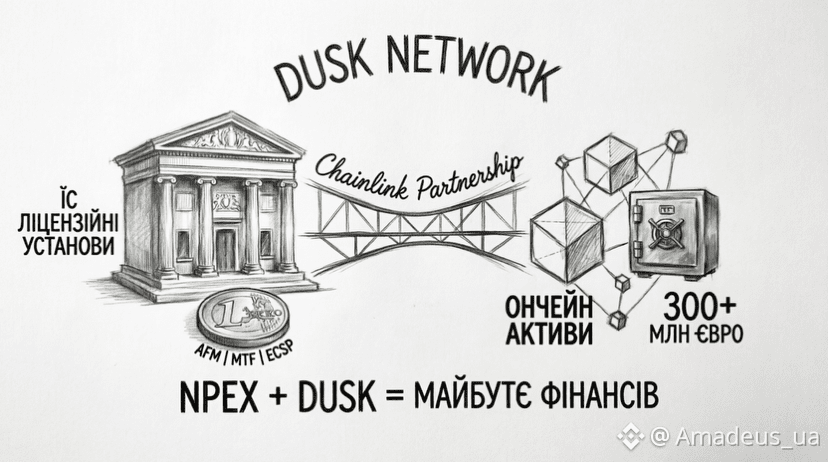
What I would like to emphasize is that Dusk creates infrastructure to move regulated financial markets to the blockchain.
In partnership with Chainlink and other licensed EU institutions, the network provides transparent, efficient, and regulator-compliant access to real assets.
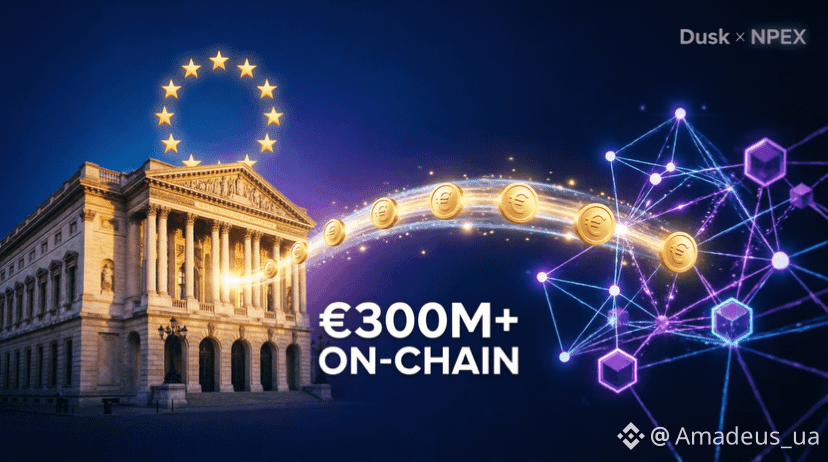
One of the key partners is NPEX, an exchange supervised by the AFM, licensed as an MTF, broker, and ECSP. Through Dusk, NPEX plans to transfer on-chain assets worth over €300 million.
This is not just a technological upgrade, but a step toward combining traditional finance with blockchain infrastructure built with regulatory certainty, privacy, and the needs of institutional investors in mind.
#dusk $DUSK @Dusk
We bring on-chain financial markets together with licensed EU institutions
What I would like to emphasize is that Dusk creates infrastructure to move regulated financial markets to the blockchain.
In partnership with Chainlink and other licensed EU institutions, the network provides transparent, efficient, and regulator-compliant access to real assets.
One of the key partners is NPEX, an exchange supervised by the AFM, licensed as an MTF, broker, and ECSP. Through Dusk, NPEX plans to transfer on-chain assets worth over €300 million.
This is not just a technological upgrade, but a step toward combining traditional finance with blockchain infrastructure built with regulatory certainty, privacy, and the needs of institutional investors in mind.
We bring on-chain financial markets together with licensed EU institutions
What I would like to emphasize is that Dusk creates infrastructure to move regulated financial markets to the blockchain.
In partnership with Chainlink and other licensed EU institutions, the network provides transparent, efficient, and regulator-compliant access to real assets.
One of the key partners is NPEX, an exchange supervised by the AFM, licensed as an MTF, broker, and ECSP. Through Dusk, NPEX plans to transfer on-chain assets worth over €300 million.
This is not just a technological upgrade, but a step toward combining traditional finance with blockchain infrastructure built with regulatory certainty, privacy, and the needs of institutional investors in mind.
1
1
139
·
--
#termmax @termmax
TermMax is when your crypto assets finally decide not just to lie around, but to “go to work.”
While some coins sadly stare at the chart and wait for the next pump, TermMax tries to turn DeFi into a financial gym: assets work, profitability trains, and risks stand nearby saying, “Don’t forget about me.”
It sounds simple: borrow, lend, earn. But in crypto even the word “simple” has fine print—three risk models and a mysterious smart contract that’s better read not at 3 a.m. after two energy drinks.
#TermMax — for those who want their tokens not only to HODL, but also to pretend they’re serious financial instruments.
The main rule:
Don’t invest more than you’re willing to explain to your cat why the portfolio suddenly got smaller.
DYOR, check the terms, risks, and smart contracts. In crypto, profit loves speed, and losses love unexpected surprises.
#termmax @TermMax
TermMax is when your crypto assets finally decide not just to lie around, but to “go to work.”
While some coins sadly stare at the chart and wait for the next pump, TermMax tries to turn DeFi into a financial gym: assets work, profitability trains, and risks stand nearby saying, “Don’t forget about me.”
It sounds simple: borrow, lend, earn. But in crypto even the word “simple” has fine print—three risk models and a mysterious smart contract that’s better read not at 3 a.m. after two energy drinks.
#TermMax — for those who want their tokens not only to HODL, but also to pretend they’re serious financial instruments.
The main rule:
Don’t invest more than you’re willing to explain to your cat why the portfolio suddenly got smaller.
DYOR, check the terms, risks, and smart contracts. In crypto, profit loves speed, and losses love unexpected surprises.
TermMax is when your crypto assets finally decide not just to lie around, but to “go to work.”
While some coins sadly stare at the chart and wait for the next pump, TermMax tries to turn DeFi into a financial gym: assets work, profitability trains, and risks stand nearby saying, “Don’t forget about me.”
It sounds simple: borrow, lend, earn. But in crypto even the word “simple” has fine print—three risk models and a mysterious smart contract that’s better read not at 3 a.m. after two energy drinks.
#TermMax — for those who want their tokens not only to HODL, but also to pretend they’re serious financial instruments.
The main rule:
Don’t invest more than you’re willing to explain to your cat why the portfolio suddenly got smaller.
DYOR, check the terms, risks, and smart contracts. In crypto, profit loves speed, and losses love unexpected surprises.

51
·
--
#dusk $DUSK @Dusk_Foundation
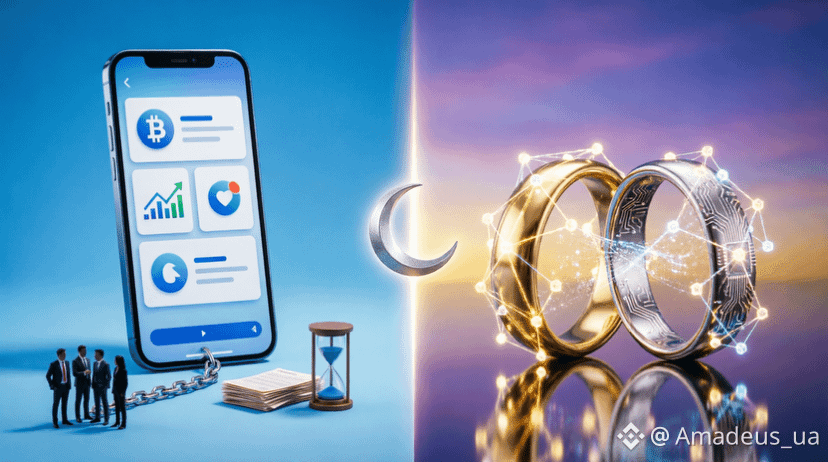
🚀 Tokenization vs Native Issuance: Why is it like Tinder vs Marriage?
Tokenization is like Tinder for finance.
It looks cool, you can “swipe” a slice of a stock, but under the hood — it’s the same old system with intermediaries, delays, and “oops, you need to confirm something else.” 😅
Native Issuance is a real blockchain-based marriage. Everything lives onchain, with no need to constantly match against a “paper version” stored somewhere. Fast, transparent, and without unnecessary “witnesses.” 💍
Why Dusk? 🌙
Because Dusk doesn’t just “tokenize” — it builds a complete financial infrastructure where regulated securities can live onchain from issuance to maturity. Without the CSD, without extra intermediaries, compliant with GDPR, and with speed <10 seconds.
Other blockchains: “We’re sharing tokens!”
Dusk: “We’re sharing why tokens make sense in a regulated world.” 😎
#dusk $DUSK @Dusk
🚀 Tokenization vs Native Issuance: Why is it like Tinder vs Marriage?
Tokenization is like Tinder for finance.
It looks cool, you can “swipe” a slice of a stock, but under the hood — it’s the same old system with intermediaries, delays, and “oops, you need to confirm something else.” 😅
Native Issuance is a real blockchain-based marriage. Everything lives onchain, with no need to constantly match against a “paper version” stored somewhere. Fast, transparent, and without unnecessary “witnesses.” 💍
Why Dusk? 🌙
Because Dusk doesn’t just “tokenize” — it builds a complete financial infrastructure where regulated securities can live onchain from issuance to maturity. Without the CSD, without extra intermediaries, compliant with GDPR, and with speed <10 seconds.
Other blockchains: “We’re sharing tokens!”
Dusk: “We’re sharing why tokens make sense in a regulated world.” 😎
🚀 Tokenization vs Native Issuance: Why is it like Tinder vs Marriage?
Tokenization is like Tinder for finance.
It looks cool, you can “swipe” a slice of a stock, but under the hood — it’s the same old system with intermediaries, delays, and “oops, you need to confirm something else.” 😅
Native Issuance is a real blockchain-based marriage. Everything lives onchain, with no need to constantly match against a “paper version” stored somewhere. Fast, transparent, and without unnecessary “witnesses.” 💍
Why Dusk? 🌙
Because Dusk doesn’t just “tokenize” — it builds a complete financial infrastructure where regulated securities can live onchain from issuance to maturity. Without the CSD, without extra intermediaries, compliant with GDPR, and with speed <10 seconds.
Other blockchains: “We’re sharing tokens!”
Dusk: “We’re sharing why tokens make sense in a regulated world.” 😎
59
·
--
#bstockscis @BinanceCIS
A new-generation “gateway” in Margin Trading 🎯🔗
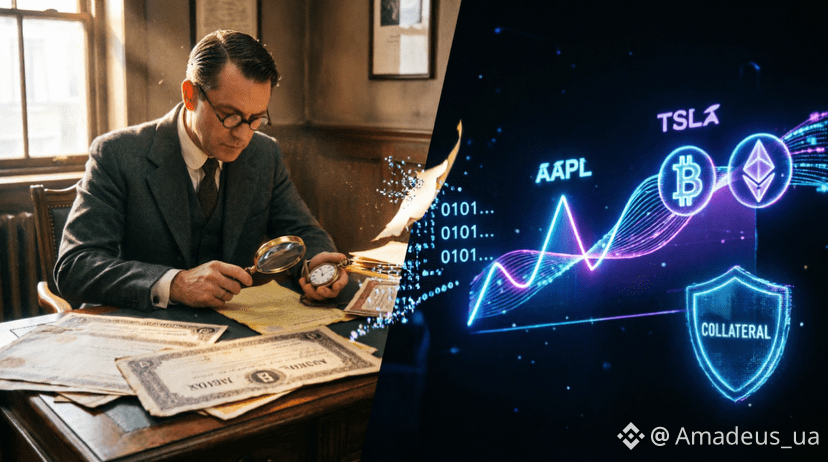
Well, of course I didn’t “take” one 😁, but back in the days of the “Great Depression,” anything could be used as collateral for a loan—from gold watches to railroad receipts—but the appraisal process took weeks. 🕵️♂️⏳
In today’s crypto ecosystem, everything is decided by code. 💻⚡
You can use your tokenized stocks as margin collateral (collateral) to open positions in crypto assets. 🛡️
Collateral valuation is calculated automatically using a special Index Price that precisely reflects market dynamics. 📊
Your long-term investments in tech companies aren’t just sitting there as dead weight—they back up your current trading strategies. 🎯🚀
$SPCXB
#bstockscis @BinanceCIS
A new-generation “gateway” in Margin Trading 🎯🔗
Well, of course I didn’t “take” one 😁, but back in the days of the “Great Depression,” anything could be used as collateral for a loan—from gold watches to railroad receipts—but the appraisal process took weeks. 🕵️♂️⏳
In today’s crypto ecosystem, everything is decided by code. 💻⚡
You can use your tokenized stocks as margin collateral (collateral) to open positions in crypto assets. 🛡️
Collateral valuation is calculated automatically using a special Index Price that precisely reflects market dynamics. 📊
Your long-term investments in tech companies aren’t just sitting there as dead weight—they back up your current trading strategies. 🎯🚀
$SPCXB
A new-generation “gateway” in Margin Trading 🎯🔗
Well, of course I didn’t “take” one 😁, but back in the days of the “Great Depression,” anything could be used as collateral for a loan—from gold watches to railroad receipts—but the appraisal process took weeks. 🕵️♂️⏳
In today’s crypto ecosystem, everything is decided by code. 💻⚡
You can use your tokenized stocks as margin collateral (collateral) to open positions in crypto assets. 🛡️
Collateral valuation is calculated automatically using a special Index Price that precisely reflects market dynamics. 📊
Your long-term investments in tech companies aren’t just sitting there as dead weight—they back up your current trading strategies. 🎯🚀
$SPCXB
2
81
·
--
#dusk $DUSK @Dusk_Foundation
Dusk Trade — is an infrastructure layer of the Dusk network (Application Layer). It is focused on trading digital securities, bonds, and financial instruments while complying with regulatory requirements (e.g., MiCA requirements in Europe).
Key features of Dusk in cryptocurrency:
What I especially like about Dusk:
Privacy and compliance: Dusk uses zero-knowledge proofs (Zero-Knowledge Proofs / ZK-proofs), which makes it possible to verify the legality of transactions and compliance with KYC/AML requirements without disclosing private information of participants.
DUSK token: The network’s native token, used to pay transaction fees (Gas) and for staking. The token is traded on many cryptocurrency exchanges.
RWA tokenization: The platform enables traditional financial institutions to issue and trade shares, bonds, and other assets directly on the blockchain.
{spot}(DUSKUSDT)
#dusk $DUSK @Dusk
Dusk Trade — is an infrastructure layer of the Dusk network (Application Layer). It is focused on trading digital securities, bonds, and financial instruments while complying with regulatory requirements (e.g., MiCA requirements in Europe).
Key features of Dusk in cryptocurrency:
What I especially like about Dusk:
Privacy and compliance: Dusk uses zero-knowledge proofs (Zero-Knowledge Proofs / ZK-proofs), which makes it possible to verify the legality of transactions and compliance with KYC/AML requirements without disclosing private information of participants.
DUSK token: The network’s native token, used to pay transaction fees (Gas) and for staking. The token is traded on many cryptocurrency exchanges.
RWA tokenization: The platform enables traditional financial institutions to issue and trade shares, bonds, and other assets directly on the blockchain.
Dusk Trade — is an infrastructure layer of the Dusk network (Application Layer). It is focused on trading digital securities, bonds, and financial instruments while complying with regulatory requirements (e.g., MiCA requirements in Europe).
Key features of Dusk in cryptocurrency:
What I especially like about Dusk:
Privacy and compliance: Dusk uses zero-knowledge proofs (Zero-Knowledge Proofs / ZK-proofs), which makes it possible to verify the legality of transactions and compliance with KYC/AML requirements without disclosing private information of participants.
DUSK token: The network’s native token, used to pay transaction fees (Gas) and for staking. The token is traded on many cryptocurrency exchanges.
RWA tokenization: The platform enables traditional financial institutions to issue and trade shares, bonds, and other assets directly on the blockchain.
44
·
--
#bstockscis @BinanceCIS
Liquidity over the weekend: Arbitrage magic ⛳🔮
I discovered something a bit interesting today.
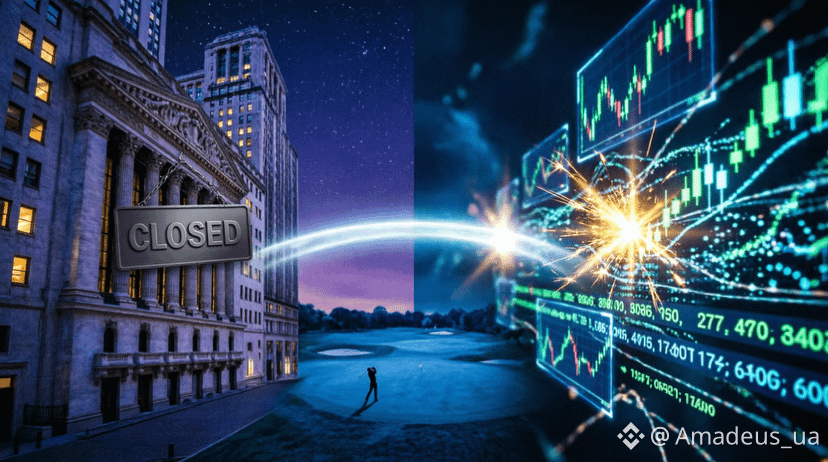
On Saturday evening, the traditional exchanges are dead: brokers are playing golf 🏌️♂️, and the servers are turned off. 🔌 But global events don’t stop on weekends. 🌍
What happens to bStocks when Wall Street is off? 😴
Spot trading continues! 🔄
Weekend pricing is based on Friday’s closing prices and the local balance of supply and demand among crypto traders. 📊
That creates unique conditions for analysis and arbitrage right before the start of Monday’s session in New York, when the traditional market is only just waking up. For me personally, this is a very interesting moment to analyze in more depth.
⏰⚡$NVDAB $SPCXB
#bstockscis @BinanceCIS
Liquidity over the weekend: Arbitrage magic ⛳🔮
I discovered something a bit interesting today.
On Saturday evening, the traditional exchanges are dead: brokers are playing golf 🏌️♂️, and the servers are turned off. 🔌 But global events don’t stop on weekends. 🌍
What happens to bStocks when Wall Street is off? 😴
Spot trading continues! 🔄
Weekend pricing is based on Friday’s closing prices and the local balance of supply and demand among crypto traders. 📊
That creates unique conditions for analysis and arbitrage right before the start of Monday’s session in New York, when the traditional market is only just waking up. For me personally, this is a very interesting moment to analyze in more depth.
⏰⚡$NVDAB $SPCXB
Liquidity over the weekend: Arbitrage magic ⛳🔮
I discovered something a bit interesting today.
On Saturday evening, the traditional exchanges are dead: brokers are playing golf 🏌️♂️, and the servers are turned off. 🔌 But global events don’t stop on weekends. 🌍
What happens to bStocks when Wall Street is off? 😴
Spot trading continues! 🔄
Weekend pricing is based on Friday’s closing prices and the local balance of supply and demand among crypto traders. 📊
That creates unique conditions for analysis and arbitrage right before the start of Monday’s session in New York, when the traditional market is only just waking up. For me personally, this is a very interesting moment to analyze in more depth.
⏰⚡$NVDAB $SPCXB
119
·
--
#termmax @termmax
Did you hear about TermMax? I’ve heard about it today and want to share with you.
TermMax is building a more predictable layer for DeFi with **fixed-rate, fixed-term lending and borrowing**. Instead of relying solely on variable rates, users can lock in borrowing costs or secure a defined yield until a stated maturity date—bringing some of the structure of traditional fixed-income markets on-chain. The protocol also supports leveraged yield strategies, customizable markets, and curator-managed vaults designed to improve capital efficiency and risk management.
The project has expanded across multiple EVM networks and says it now supports 10 chains, including Ethereum, BNB Chain, Arbitrum, Base, Berachain, X Layer, Pharos, B2, HyperEVM, and Robinhood Chain. TermMax’s official channels recently highlighted more than $90 million in TVL and over 1.5 million registered wallets, although on-chain metrics can vary by dashboard and should be checked independently.
A major upcoming milestone is the **$TMX Token Generation Event on August 25, 2026**. According to TermMax, TMX will have a fixed total supply of 1 billion tokens and serve governance and utility functions across the ecosystem, including staking, market creation, curator participation, and governance over risk parameters and curator whitelisting.
TermMax’s broader ambition is to make fixed-rate DeFi more composable and accessible—from lending and borrowing to tokenized-asset financing and institutional use cases. The opportunity is significant, but users should still evaluate smart-contract risk, liquidity at maturity, collateral volatility, liquidation mechanics, token allocation, and vesting details before participating. This is not financial advice.
#termmax @TermMax
Did you hear about TermMax? I’ve heard about it today and want to share with you.
TermMax is building a more predictable layer for DeFi with **fixed-rate, fixed-term lending and borrowing**. Instead of relying solely on variable rates, users can lock in borrowing costs or secure a defined yield until a stated maturity date—bringing some of the structure of traditional fixed-income markets on-chain. The protocol also supports leveraged yield strategies, customizable markets, and curator-managed vaults designed to improve capital efficiency and risk management.
The project has expanded across multiple EVM networks and says it now supports 10 chains, including Ethereum, BNB Chain, Arbitrum, Base, Berachain, X Layer, Pharos, B2, HyperEVM, and Robinhood Chain. TermMax’s official channels recently highlighted more than $90 million in TVL and over 1.5 million registered wallets, although on-chain metrics can vary by dashboard and should be checked independently.
A major upcoming milestone is the **$TMX Token Generation Event on August 25, 2026**. According to TermMax, TMX will have a fixed total supply of 1 billion tokens and serve governance and utility functions across the ecosystem, including staking, market creation, curator participation, and governance over risk parameters and curator whitelisting.
TermMax’s broader ambition is to make fixed-rate DeFi more composable and accessible—from lending and borrowing to tokenized-asset financing and institutional use cases. The opportunity is significant, but users should still evaluate smart-contract risk, liquidity at maturity, collateral volatility, liquidation mechanics, token allocation, and vesting details before participating. This is not financial advice.
Did you hear about TermMax? I’ve heard about it today and want to share with you.
TermMax is building a more predictable layer for DeFi with **fixed-rate, fixed-term lending and borrowing**. Instead of relying solely on variable rates, users can lock in borrowing costs or secure a defined yield until a stated maturity date—bringing some of the structure of traditional fixed-income markets on-chain. The protocol also supports leveraged yield strategies, customizable markets, and curator-managed vaults designed to improve capital efficiency and risk management.
The project has expanded across multiple EVM networks and says it now supports 10 chains, including Ethereum, BNB Chain, Arbitrum, Base, Berachain, X Layer, Pharos, B2, HyperEVM, and Robinhood Chain. TermMax’s official channels recently highlighted more than $90 million in TVL and over 1.5 million registered wallets, although on-chain metrics can vary by dashboard and should be checked independently.
A major upcoming milestone is the **$TMX Token Generation Event on August 25, 2026**. According to TermMax, TMX will have a fixed total supply of 1 billion tokens and serve governance and utility functions across the ecosystem, including staking, market creation, curator participation, and governance over risk parameters and curator whitelisting.
TermMax’s broader ambition is to make fixed-rate DeFi more composable and accessible—from lending and borrowing to tokenized-asset financing and institutional use cases. The opportunity is significant, but users should still evaluate smart-contract risk, liquidity at maturity, collateral volatility, liquidation mechanics, token allocation, and vesting details before participating. This is not financial advice.
67
·
--
#dusk $DUSK @Dusk_Foundation
🌍 Traditional finance is going on-chain!
Dusk Network is erasing the boundaries between classic markets and Web3. With strategic partnerships with Chainlink and leading European institutions, Dusk is building a secure and compliant environment for institutional capital.
🚀 A major step forward: NPEX — a Dutch AFM-regulated exchange (with MTF, Broker, and ECSP licenses) — plans to move over €300 million in real assets on-chain specifically through the Dusk network!
This is a strong signal: traditional finance (TradFi) is ready to integrate with blockchain when there is clear European regulation, reliable infrastructure, and data oracles. The future of finance is being built right now! 🏛️⛓️
#dusk $DUSK @Dusk
🌍 Traditional finance is going on-chain!
Dusk Network is erasing the boundaries between classic markets and Web3. With strategic partnerships with Chainlink and leading European institutions, Dusk is building a secure and compliant environment for institutional capital.
🚀 A major step forward: NPEX — a Dutch AFM-regulated exchange (with MTF, Broker, and ECSP licenses) — plans to move over €300 million in real assets on-chain specifically through the Dusk network!
This is a strong signal: traditional finance (TradFi) is ready to integrate with blockchain when there is clear European regulation, reliable infrastructure, and data oracles. The future of finance is being built right now! 🏛️⛓️
🌍 Traditional finance is going on-chain!
Dusk Network is erasing the boundaries between classic markets and Web3. With strategic partnerships with Chainlink and leading European institutions, Dusk is building a secure and compliant environment for institutional capital.
🚀 A major step forward: NPEX — a Dutch AFM-regulated exchange (with MTF, Broker, and ECSP licenses) — plans to move over €300 million in real assets on-chain specifically through the Dusk network!
This is a strong signal: traditional finance (TradFi) is ready to integrate with blockchain when there is clear European regulation, reliable infrastructure, and data oracles. The future of finance is being built right now! 🏛️⛓️
·
--
#bstockscis @BinanceCIS
What happens during a Stock Split?
When Apple or Tesla announced a stock split back in 2020, it sometimes caused a temporary collapse at traditional brokers: freezing trading, delays in displaying the new shares in accounts, and confusion in reports.
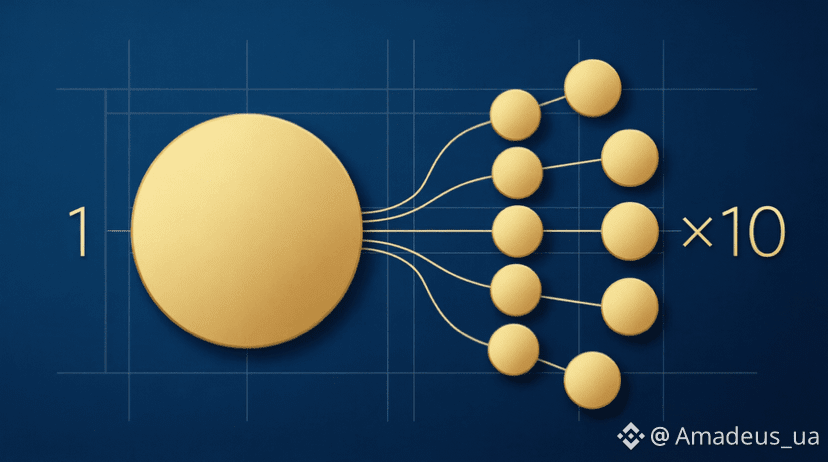
In the bStocks world, during a split (e.g., 10-for-1), you don’t need to wait for databases to refresh.
Smart contract and the smart-rebasing algorithm via the Multiplier automatically increase the number of tokens on your balance by 10x, while adjusting the price at the same time. Everything happens seamlessly, without stopping trading and without paperwork hassles.
#bstocksCIS
$SPCXB $NVDAB
{spot}(SPCXBUSDT)
#bstockscis @BinanceCIS
What happens during a Stock Split?
When Apple or Tesla announced a stock split back in 2020, it sometimes caused a temporary collapse at traditional brokers: freezing trading, delays in displaying the new shares in accounts, and confusion in reports.
In the bStocks world, during a split (e.g., 10-for-1), you don’t need to wait for databases to refresh.
Smart contract and the smart-rebasing algorithm via the Multiplier automatically increase the number of tokens on your balance by 10x, while adjusting the price at the same time. Everything happens seamlessly, without stopping trading and without paperwork hassles.
#bstocksCIS
$SPCXB $NVDAB
What happens during a Stock Split?
When Apple or Tesla announced a stock split back in 2020, it sometimes caused a temporary collapse at traditional brokers: freezing trading, delays in displaying the new shares in accounts, and confusion in reports.
In the bStocks world, during a split (e.g., 10-for-1), you don’t need to wait for databases to refresh.
Smart contract and the smart-rebasing algorithm via the Multiplier automatically increase the number of tokens on your balance by 10x, while adjusting the price at the same time. Everything happens seamlessly, without stopping trading and without paperwork hassles.
#bstocksCIS
$SPCXB $NVDAB
1
1
93
Log in to explore more content
Join global crypto users on Binance Square
⚡️ Get latest and useful information about crypto.
💬 Trusted by the world’s largest crypto exchange.
👍 Discover real insights from verified creators.
Email / Phone number
Trending Topics
QNTRises39%
34,700 views
1,068 Discussing
🚨 QNT IS SURGING! 📈
$QNT is making a huge move today, climbing nearly 40% as buying pressure accelerates.
The rally has put Quant firmly back in the spotlight, with traders watching to see whether this momentum can continue or if a pullback comes next.
🔥 Key things to watch:
• Strong trading volume
• Momentum above recent highs
• The $100 psychological level
• Whether buyers can maintain control
Big moves bring big volatility. Stay alert and manage risk.
Are you watching $QNT? 👀
#QNT #altcoins #CryptoNews
#qntrises39% $QNT
The07
·4 Likes
·4k views
EthereumBreaksAbove$2700
3,120 views
106 Discussing
BitgetBreachForgedRequestsNotStolenKeys
32,339 views
841 Discussing