
Bitcoin Newbie
24.3k Posts

Bitcoin Newbie
Report
Block User
35 Following
10.9K+ Followers
11.1K+ Liked
Posts
All
Quotes
Videos
Live
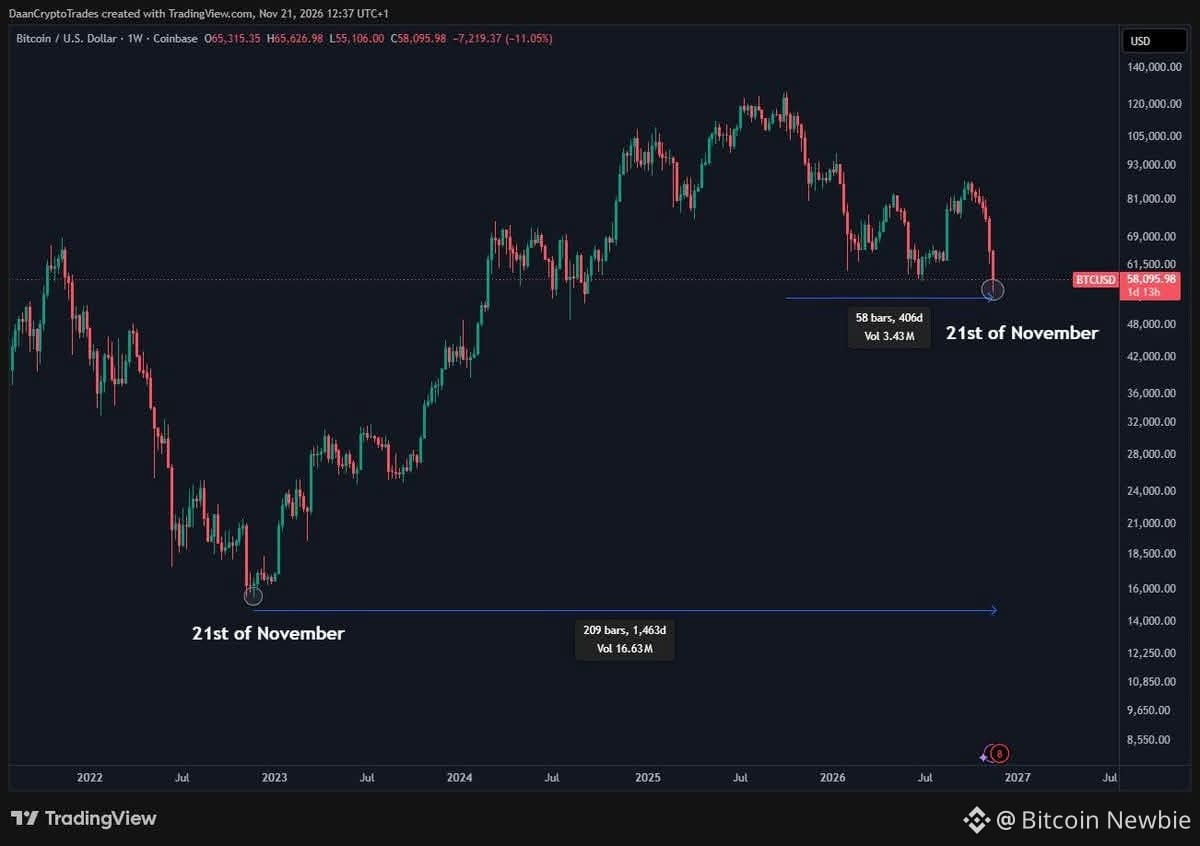
$BTC In 2022, the market bottomed on the 21st of November so this is exactly 4 years ago now.
News lows made, putting the total bear market duration at 400+ days now.
4 Cycle theory has always been a strong guideline for this market and it has proven itself pretty accurate yet again.
But while the dates line up pretty well, the percentages and moves have not. 2025 closed red and this year likely will too. Never before has Bitcoin closed 2 consecutive years in the red.
This would also be the smallest bear market drawdown by far if it were to bottom in the $50K region. But that is a trend we've already been seeing a long time. Both the ups and the downs are getting smaller with every cycle.#BitcoinCorePatchesAIDiscoveredVulnerability #CanBTCReboundAfterFallingBelow60K? #GlobalStocksFaceLongestLosingStreakSince2023 #TwentyOneCapitalAdds172.25BTC #AnthropicPlungesTowardIPOPriceonDay2
$BTC
{spot}(BTCUSDT)
$ETH
{spot}(ETHUSDT)
$BTC In 2022, the market bottomed on the 21st of November so this is exactly 4 years ago now.
News lows made, putting the total bear market duration at 400+ days now.
4 Cycle theory has always been a strong guideline for this market and it has proven itself pretty accurate yet again.
But while the dates line up pretty well, the percentages and moves have not. 2025 closed red and this year likely will too. Never before has Bitcoin closed 2 consecutive years in the red.
This would also be the smallest bear market drawdown by far if it were to bottom in the $50K region. But that is a trend we've already been seeing a long time. Both the ups and the downs are getting smaller with every cycle.#BitcoinCorePatchesAIDiscoveredVulnerability #CanBTCReboundAfterFallingBelow60K? #GlobalStocksFaceLongestLosingStreakSince2023 #TwentyOneCapitalAdds172.25BTC #AnthropicPlungesTowardIPOPriceonDay2
$BTC
$ETH
168
🚨 $2 TRILLION AI GIANT ENTERS THE CRYPTO WORLD!
CZ just brought tokenized Anthropic exposure to the BNB Chain as Anthropic made its historic stock market debut.
🔥 Anthropic briefly hit a $2 TRILLION market valuation.
🌐 Tokenized Anthropic exposure went live on BNB Chain.
💰 Binance Wallet's IPO subscription campaign reached its $500 MILLION cap.
⚡ Investors can access tokenized exposure through blockchain.
The line between traditional finance and crypto is getting thinner every day.
IS TOKENIZED STOCKS THE NEXT BIG THING IN CRYPTO? 👀
#GlobalStocksFaceLongestLosingStreakSince2023 #AnthropicPlungesTowardIPOPriceonDay2 #CZ #Anthropic #CanBTCReboundAfterFallingBelow60K?
$BTC
{spot}(BTCUSDT)
$BNB
{spot}(BNBUSDT)
$XRP
{spot}(XRPUSDT)
🚨 $2 TRILLION AI GIANT ENTERS THE CRYPTO WORLD!
CZ just brought tokenized Anthropic exposure to the BNB Chain as Anthropic made its historic stock market debut.
🔥 Anthropic briefly hit a $2 TRILLION market valuation.
🌐 Tokenized Anthropic exposure went live on BNB Chain.
💰 Binance Wallet's IPO subscription campaign reached its $500 MILLION cap.
⚡ Investors can access tokenized exposure through blockchain.
The line between traditional finance and crypto is getting thinner every day.
IS TOKENIZED STOCKS THE NEXT BIG THING IN CRYPTO? 👀
#GlobalStocksFaceLongestLosingStreakSince2023 #AnthropicPlungesTowardIPOPriceonDay2 #CZ #Anthropic #CanBTCReboundAfterFallingBelow60K?
$BTC
$BNB
$XRP

73
⚡️ TODAY: #CZ says inflation will follow #Anthropic’s #IPO and hints that holding limited-supply assets might be wise.
#CanGTA6'sLaunchLiftTTWOShares? #NvidiaBoardReportedlySplitOverHuang’sReturn #BTCRemainsUnderPressureAfterHawkishFOMCMinutes #13FInstitutionsBitcoinSpotETPHoldingsHitRecord
$BTC
{spot}(BTCUSDT)
$ETH
{spot}(ETHUSDT)
$BNB
{spot}(BNBUSDT)
⚡️ TODAY: #CZ says inflation will follow #Anthropic’s #IPO and hints that holding limited-supply assets might be wise.
#CanGTA6'sLaunchLiftTTWOShares? #NvidiaBoardReportedlySplitOverHuang’sReturn #BTCRemainsUnderPressureAfterHawkishFOMCMinutes #13FInstitutionsBitcoinSpotETPHoldingsHitRecord
$BTC
$ETH
$BNB
#CanGTA6'sLaunchLiftTTWOShares? #NvidiaBoardReportedlySplitOverHuang’sReturn #BTCRemainsUnderPressureAfterHawkishFOMCMinutes #13FInstitutionsBitcoinSpotETPHoldingsHitRecord
$BTC
$ETH
$BNB


1
72
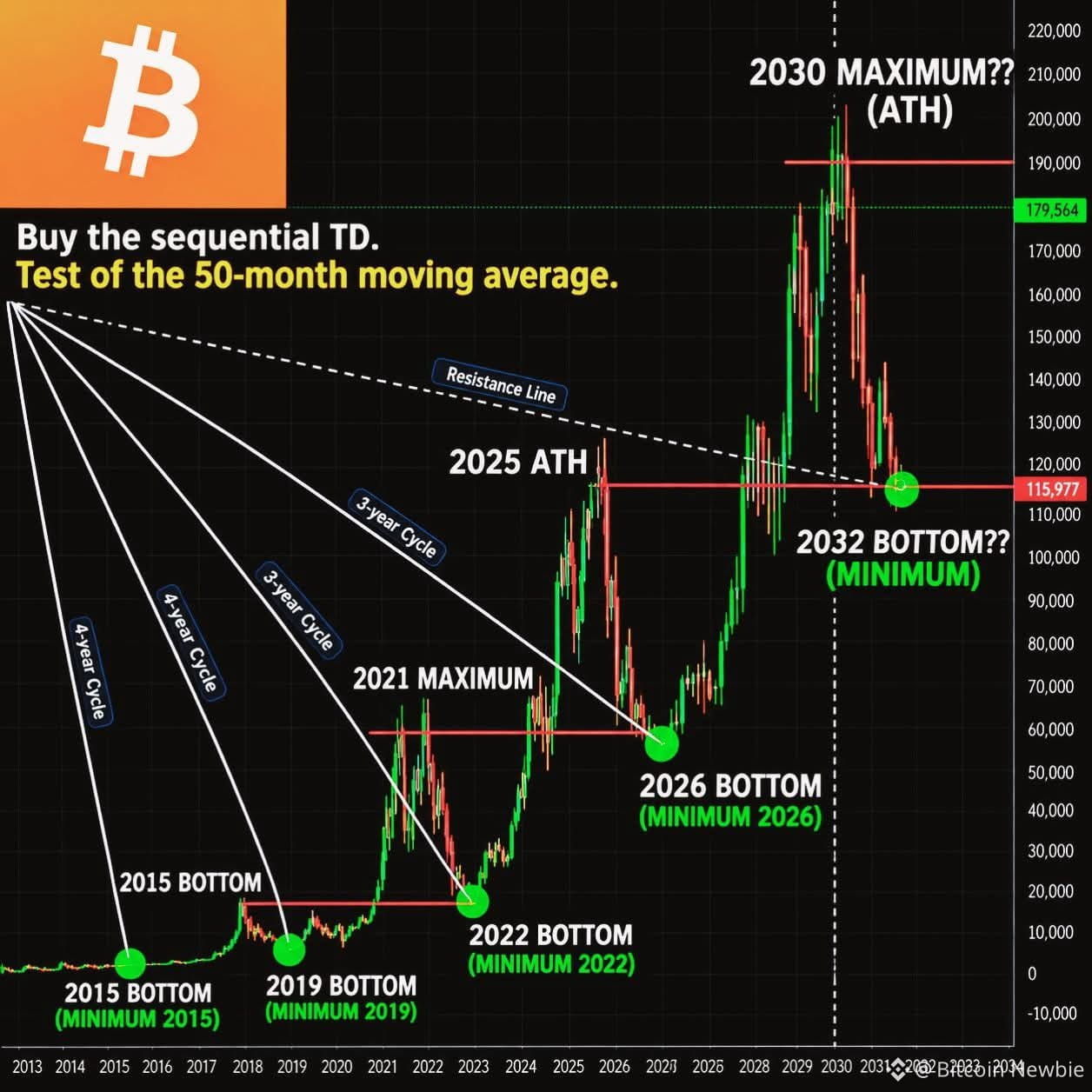
📊 BITCOIN: $200K BY 2030… OR A MAJOR BEAR MARKET FIRST?
What if Bitcoin's next major opportunity isn't at the top… but at the bottom?
This chart raises some fascinating questions about Bitcoin's historical 4-year cycles, the 50-month moving average, and what could potentially lie ahead.
According to this projection:
🔸 2030 could mark the next major ATH.
🔸 2032 could potentially become the next major cycle bottom.
🔸 The 50-month moving average may offer an important signal to watch.
But here's the real debate:
Are Bitcoin's traditional 4-year cycles still relevant, or has institutional adoption fundamentally changed the game?
👇 I want your honest opinion:
1️⃣ $200K+ BTC by 2030 — Bullish scenario. 2️⃣ A major correction before the next ATH — Bearish scenario. 3️⃣ The 4-year cycle is dead — This time is different.
Pick your scenario and explain WHY.
Let's see which side has the stronger argument. 🚀
This is a long-term market projection, not a guaranteed prediction or financial advice.
#bitcoin #CryptoMarketAnalysis #13FInstitutionsBitcoinSpotETPHoldingsHitRecord #CanGTA6'sLaunchLiftTTWOShares? #NvidiaBoardReportedlySplitOverHuang’sReturn
$BTC
{spot}(BTCUSDT)
$ETH
{spot}(ETHUSDT)
$XRP
{spot}(XRPUSDT)
📊 BITCOIN: $200K BY 2030… OR A MAJOR BEAR MARKET FIRST?
What if Bitcoin's next major opportunity isn't at the top… but at the bottom?
This chart raises some fascinating questions about Bitcoin's historical 4-year cycles, the 50-month moving average, and what could potentially lie ahead.
According to this projection:
🔸 2030 could mark the next major ATH.
🔸 2032 could potentially become the next major cycle bottom.
🔸 The 50-month moving average may offer an important signal to watch.
But here's the real debate:
Are Bitcoin's traditional 4-year cycles still relevant, or has institutional adoption fundamentally changed the game?
👇 I want your honest opinion:
1️⃣ $200K+ BTC by 2030 — Bullish scenario. 2️⃣ A major correction before the next ATH — Bearish scenario. 3️⃣ The 4-year cycle is dead — This time is different.
Pick your scenario and explain WHY.
Let's see which side has the stronger argument. 🚀
This is a long-term market projection, not a guaranteed prediction or financial advice.
#bitcoin #CryptoMarketAnalysis #13FInstitutionsBitcoinSpotETPHoldingsHitRecord #CanGTA6'sLaunchLiftTTWOShares? #NvidiaBoardReportedlySplitOverHuang’sReturn
$BTC
$ETH
$XRP
39
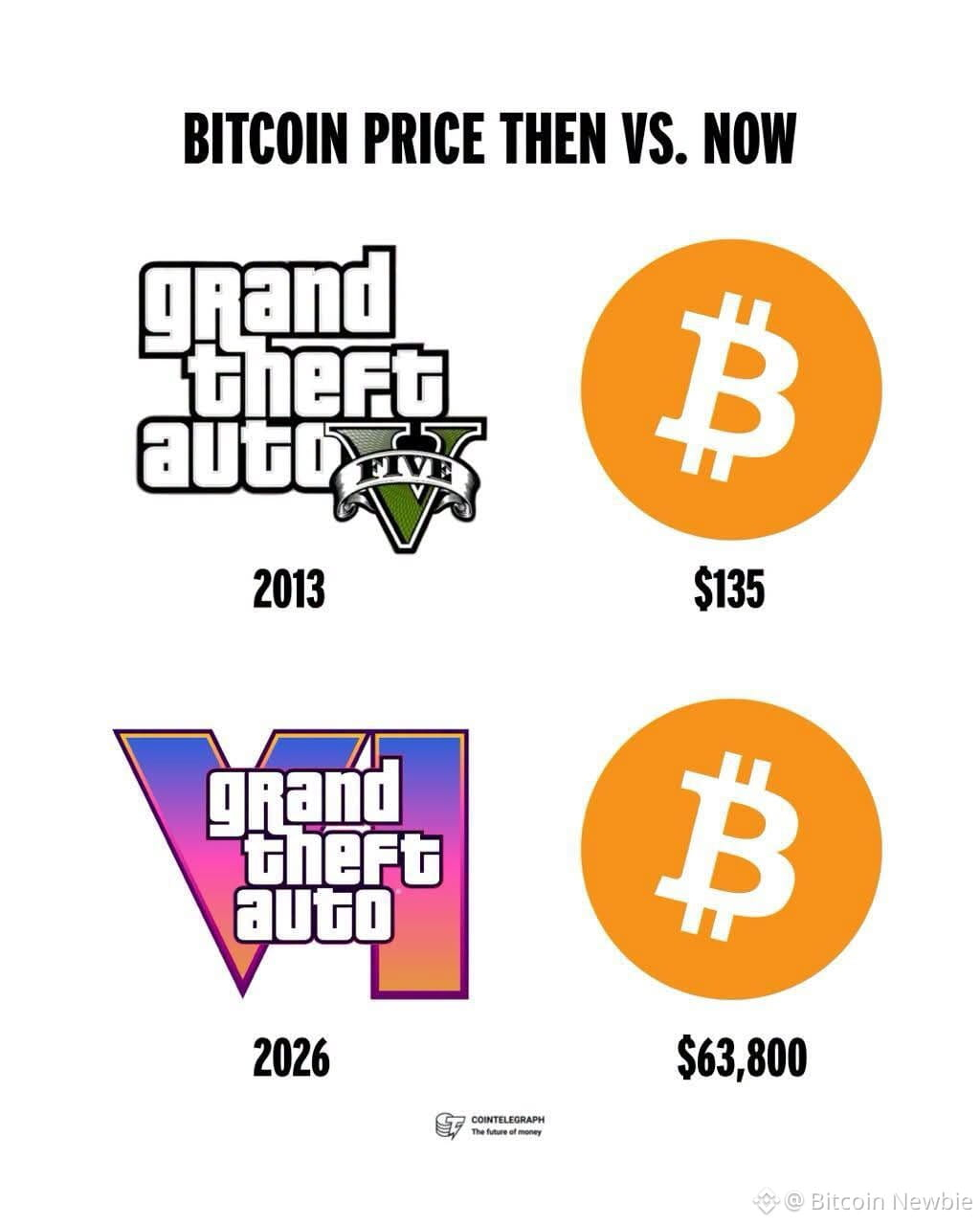
⚡️️️️ INTERESTING: When GTA V launched in 2013, the game cost $59.99 and Bitcoin was trading at just $135.
Fast forward to 2026, GTA VI is priced at $79.99, while Bitcoin has surged to $63,800.
#CanGTA6'sLaunchLiftTTWOShares? #NvidiaBoardReportedlySplitOverHuang’sReturn #bitcoin #13FInstitutionsBitcoinSpotETPHoldingsHitRecord #BTCRemainsUnderPressureAfterHawkishFOMCMinutes
$BTC
{spot}(BTCUSDT)
$ETH
{spot}(ETHUSDT)
$ZEC
{spot}(ZECUSDT)
⚡️️️️ INTERESTING: When GTA V launched in 2013, the game cost $59.99 and Bitcoin was trading at just $135.
Fast forward to 2026, GTA VI is priced at $79.99, while Bitcoin has surged to $63,800.
#CanGTA6'sLaunchLiftTTWOShares? #NvidiaBoardReportedlySplitOverHuang’sReturn #bitcoin #13FInstitutionsBitcoinSpotETPHoldingsHitRecord #BTCRemainsUnderPressureAfterHawkishFOMCMinutes
$BTC
$ETH
$ZEC
Fast forward to 2026, GTA VI is priced at $79.99, while Bitcoin has surged to $63,800.
#CanGTA6'sLaunchLiftTTWOShares? #NvidiaBoardReportedlySplitOverHuang’sReturn #bitcoin #13FInstitutionsBitcoinSpotETPHoldingsHitRecord #BTCRemainsUnderPressureAfterHawkishFOMCMinutes
$BTC
$ETH
$ZEC
44
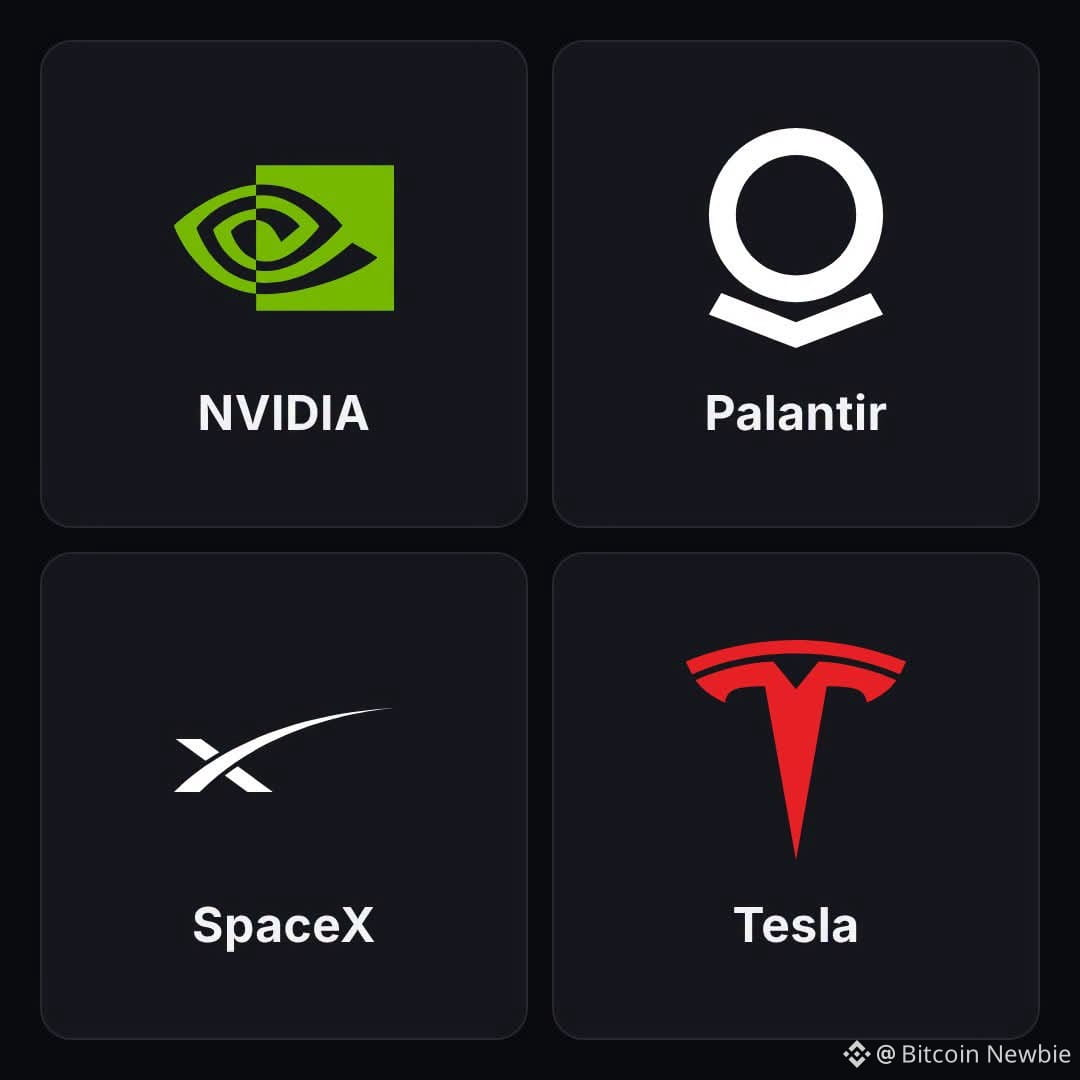
NEW FILING: President Trump's account made 751 stock trades in just ONE month, worth up to $148 million. 🔥
The September buys include Nvidia, Palantir, SpaceX and Tesla, all companies tied to major government deals and policy decisions.
The White House says third-party managers run the account and Trump doesn't direct the trades. 👀
#NvidiaBoardReportedlySplitOverHuang’sReturn #CanGTA6'sLaunchLiftTTWOShares? #LedgerProbesTamperedWalletsInBerlinAndDubai #13FInstitutionsBitcoinSpotETPHoldingsHitRecord #BTCRemainsUnderPressureAfterHawkishFOMCMinutes
$NVDA
{future}(NVDAUSDT)
$SPCX
{future}(SPCXUSDT)
$AAPL
{future}(AAPLUSDT)
NEW FILING: President Trump's account made 751 stock trades in just ONE month, worth up to $148 million. 🔥
The September buys include Nvidia, Palantir, SpaceX and Tesla, all companies tied to major government deals and policy decisions.
The White House says third-party managers run the account and Trump doesn't direct the trades. 👀
#NvidiaBoardReportedlySplitOverHuang’sReturn #CanGTA6'sLaunchLiftTTWOShares? #LedgerProbesTamperedWalletsInBerlinAndDubai #13FInstitutionsBitcoinSpotETPHoldingsHitRecord #BTCRemainsUnderPressureAfterHawkishFOMCMinutes
$NVDA
$SPCX
$AAPL
227
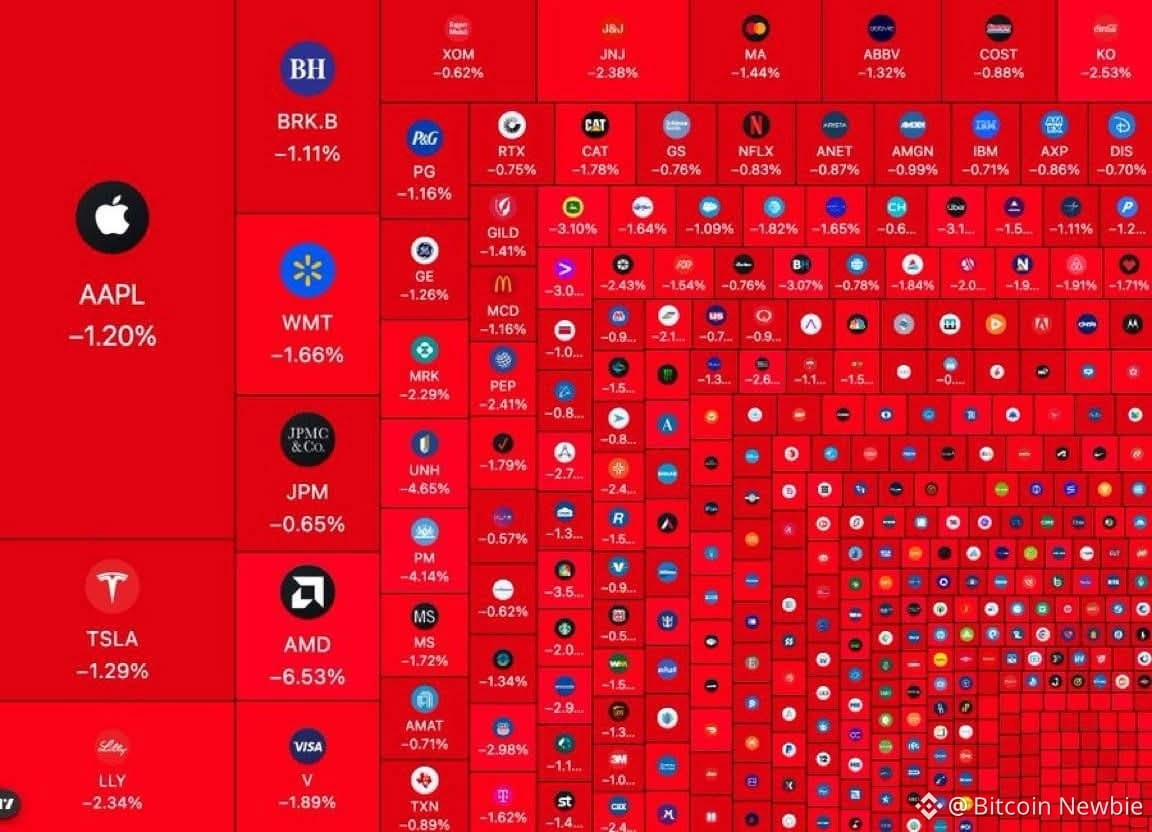
🚨 MASSIVE CRASH IN THE US STOCK MARKET! 🇺🇸📉
💥 $1.16 TRILLION in market value wiped out in just 60 MINUTES!
Panic is spreading across financial markets. Is this the beginning of a much bigger correction?
⚠️ Stay alert. Protect your capital and manage your risk!
#stockmarket #MarketCrash #USStocks #NvidiaBoardReportedlySplitOverHuang’sReturn #CanGTA6'sLaunchLiftTTWOShares?
$AAPL
{future}(AAPLUSDT)
$TSLA
{future}(TSLAUSDT)
$NVDA
{future}(NVDAUSDT)
🚨 MASSIVE CRASH IN THE US STOCK MARKET! 🇺🇸📉
💥 $1.16 TRILLION in market value wiped out in just 60 MINUTES!
Panic is spreading across financial markets. Is this the beginning of a much bigger correction?
⚠️ Stay alert. Protect your capital and manage your risk!
#stockmarket #MarketCrash #USStocks #NvidiaBoardReportedlySplitOverHuang’sReturn #CanGTA6'sLaunchLiftTTWOShares?
$AAPL
$TSLA
$NVDA
78
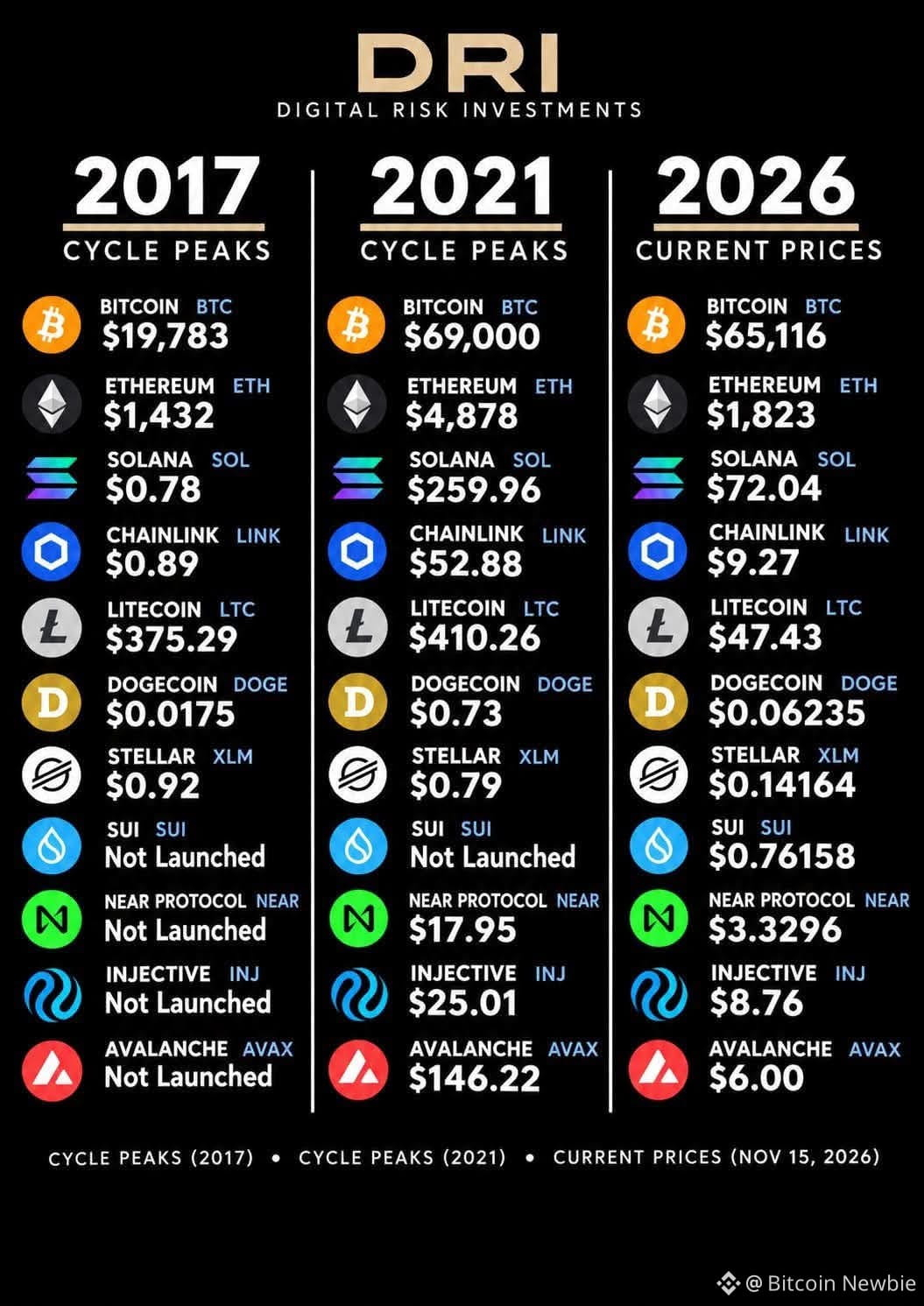
Crypto has been called a scam for nearly a decade, yet somehow every cycle brings more investors, more institutions, and more capital into the market.
In 2017, Bitcoin reaching $20,000 seemed impossible. In 2021, people were begging for another chance to buy at those prices. Now in 2026, many of those same investors are convinced crypto is finished again.
Look at the difference between previous cycle peaks and today’s prices. Some altcoins are sitting 70–95% below their former highs, and suddenly nobody wants them.
The irony? Everyone wants to buy the bottom until the market actually starts looking like one.
Are we watching another generational accumulation opportunity, or is this the cycle where the skeptics finally get it right?
#bitcoin #BTCRemainsUnderPressureAfterHawkishFOMCMinutes #CapitalGroupAdds1264500StrategyShares #CanGTA6'sLaunchLiftTTWOShares? #NvidiaBoardReportedlySplitOverHuang’sReturn
$BTC
{spot}(BTCUSDT)
$ETH
{spot}(ETHUSDT)
$XRP
{spot}(XRPUSDT)
Crypto has been called a scam for nearly a decade, yet somehow every cycle brings more investors, more institutions, and more capital into the market.
In 2017, Bitcoin reaching $20,000 seemed impossible. In 2021, people were begging for another chance to buy at those prices. Now in 2026, many of those same investors are convinced crypto is finished again.
Look at the difference between previous cycle peaks and today’s prices. Some altcoins are sitting 70–95% below their former highs, and suddenly nobody wants them.
The irony? Everyone wants to buy the bottom until the market actually starts looking like one.
Are we watching another generational accumulation opportunity, or is this the cycle where the skeptics finally get it right?
#bitcoin #BTCRemainsUnderPressureAfterHawkishFOMCMinutes #CapitalGroupAdds1264500StrategyShares #CanGTA6'sLaunchLiftTTWOShares? #NvidiaBoardReportedlySplitOverHuang’sReturn
$BTC
$ETH
$XRP
118
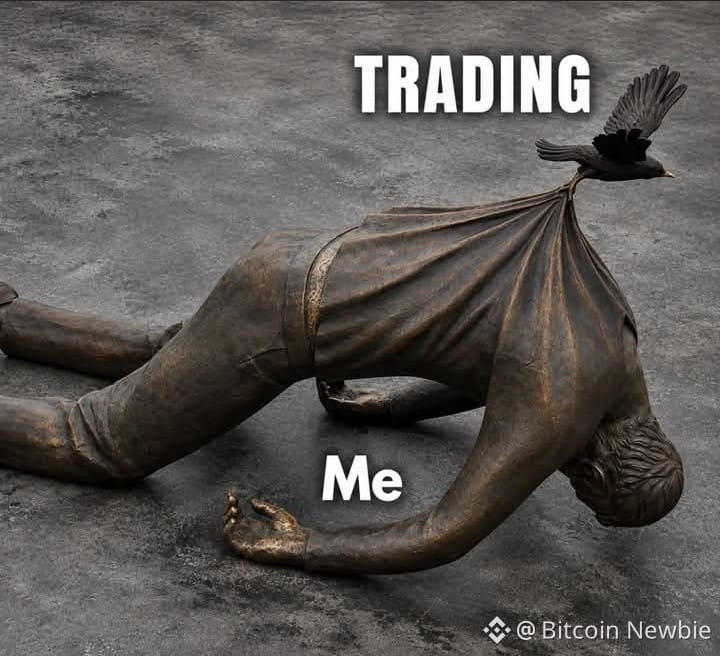
Why is this so relatable…?🤣
When market Bull Run 🤔?
#BTCRemainsUnderPressureAfterHawkishFOMCMinutes #NvidiaBoardReportedlySplitOverHuang’sReturn #CanGTA6'sLaunchLiftTTWOShares? #FOMCMinutesHighlightAIDebtRisks #SouthKoreaPlansToLet3500ListedFirmsBuyBitcoin
$BTC
{spot}(BTCUSDT)
$ETH
{spot}(ETHUSDT)
$ZEC
{spot}(ZECUSDT)
Why is this so relatable…?🤣
When market Bull Run 🤔?
#BTCRemainsUnderPressureAfterHawkishFOMCMinutes #NvidiaBoardReportedlySplitOverHuang’sReturn #CanGTA6'sLaunchLiftTTWOShares? #FOMCMinutesHighlightAIDebtRisks #SouthKoreaPlansToLet3500ListedFirmsBuyBitcoin
$BTC
$ETH
$ZEC
When market Bull Run 🤔?
#BTCRemainsUnderPressureAfterHawkishFOMCMinutes #NvidiaBoardReportedlySplitOverHuang’sReturn #CanGTA6'sLaunchLiftTTWOShares? #FOMCMinutesHighlightAIDebtRisks #SouthKoreaPlansToLet3500ListedFirmsBuyBitcoin
$BTC
$ETH
$ZEC
186
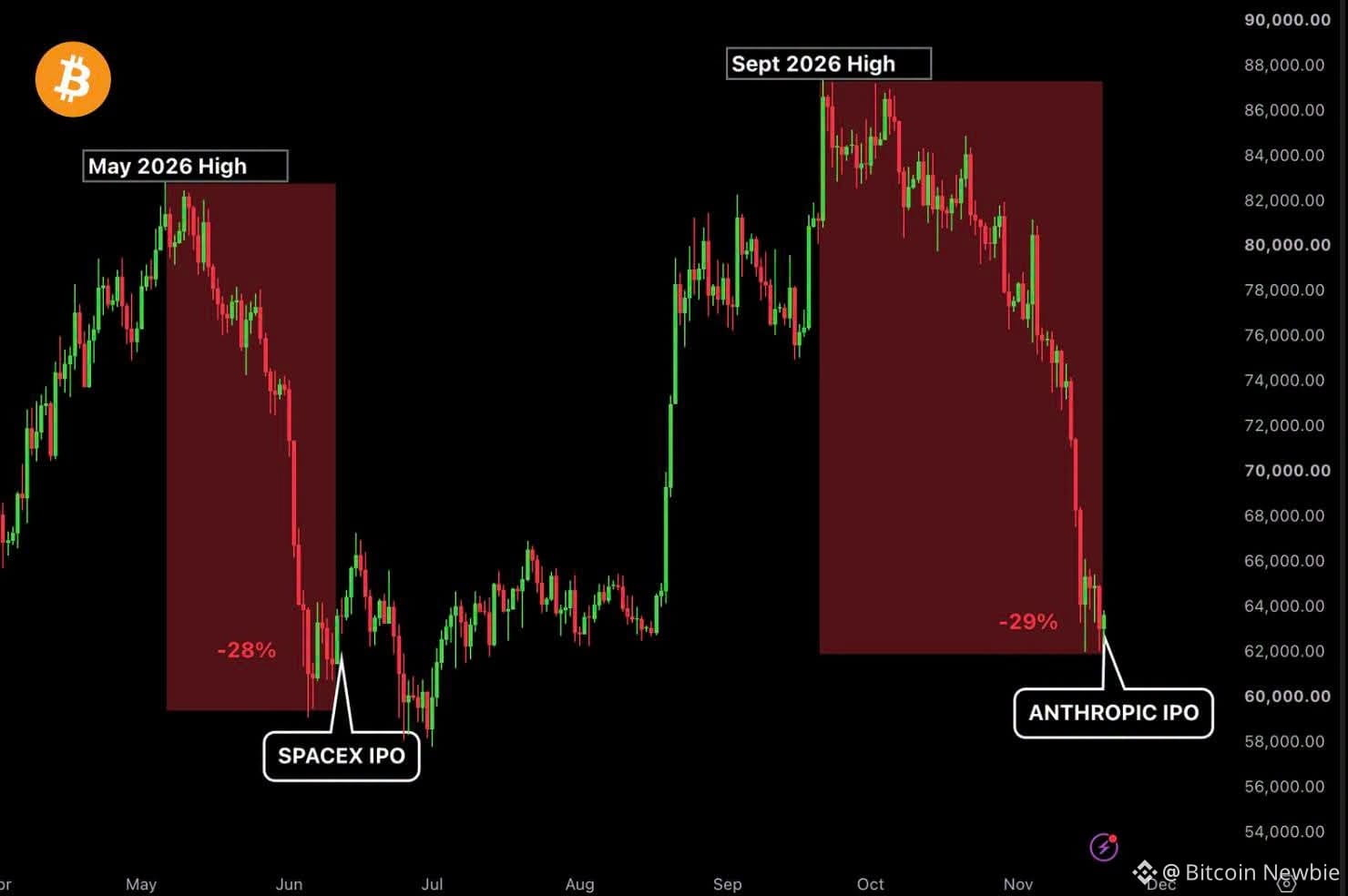
BITCOIN IS REPEATING ITS SPACEX IPO DIP AHEAD OF ANTHROPIC
-BTC was trading around $62K during the SpaceX IPO period.
-Bitcoin fell 25% in 36 days leading up to the $75B SpaceX IPO.
-Ahead of today's Anthropic IPO, BTC has dropped 29% over 56 days, now trading around $62K.
Will Bitcoin recover after the Anthropic IPO, just like it did after SpaceX?
#bitcoin #BTCRemainsUnderPressureAfterHawkishFOMCMinutes #SouthKoreaPlansToLet3500ListedFirmsBuyBitcoin #CanGTA6'sLaunchLiftTTWOShares? #FOMCMinutesHighlightAIDebtRisks
$BTC
{spot}(BTCUSDT)
$ETH
{spot}(ETHUSDT)
$XRP
{spot}(XRPUSDT)
BITCOIN IS REPEATING ITS SPACEX IPO DIP AHEAD OF ANTHROPIC
-BTC was trading around $62K during the SpaceX IPO period.
-Bitcoin fell 25% in 36 days leading up to the $75B SpaceX IPO.
-Ahead of today's Anthropic IPO, BTC has dropped 29% over 56 days, now trading around $62K.
Will Bitcoin recover after the Anthropic IPO, just like it did after SpaceX?
#bitcoin #BTCRemainsUnderPressureAfterHawkishFOMCMinutes #SouthKoreaPlansToLet3500ListedFirmsBuyBitcoin #CanGTA6'sLaunchLiftTTWOShares? #FOMCMinutesHighlightAIDebtRisks
$BTC
$ETH
$XRP
97
🚨 LATEST: Nvidia has approached Arm CEO Rene Haas as a potential successor to Jensen Huang, Bloomberg reports.
#NvidiaBoardReportedlySplitOverHuang’sReturn #BTCRemainsUnderPressureAfterHawkishFOMCMinutes #CanGTA6'sLaunchLiftTTWOShares? #FOMCMinutesHighlightAIDebtRisks #SouthKoreaPlansToLet3500ListedFirmsBuyBitcoin
$BTC
{future}(BTCUSDT)
$ZEC
{future}(ZECUSDT)
$NVDA
{future}(NVDAUSDT)
🚨 LATEST: Nvidia has approached Arm CEO Rene Haas as a potential successor to Jensen Huang, Bloomberg reports.
#NvidiaBoardReportedlySplitOverHuang’sReturn #BTCRemainsUnderPressureAfterHawkishFOMCMinutes #CanGTA6'sLaunchLiftTTWOShares? #FOMCMinutesHighlightAIDebtRisks #SouthKoreaPlansToLet3500ListedFirmsBuyBitcoin
$BTC
$ZEC
$NVDA
#NvidiaBoardReportedlySplitOverHuang’sReturn #BTCRemainsUnderPressureAfterHawkishFOMCMinutes #CanGTA6'sLaunchLiftTTWOShares? #FOMCMinutesHighlightAIDebtRisks #SouthKoreaPlansToLet3500ListedFirmsBuyBitcoin
$BTC
$ZEC
$NVDA


380
Article
They Were Competing to Buy More Crypto. Now They're Competing With Billions in Paper Losses.They Were Competing to Buy More Crypto. Now They're Competing With Billions in Paper Losses.
Michael Saylor and Tom Lee have become two of the most closely watched names in the corporate crypto investment world.
One is building an enormous Bitcoin treasury.
The other is accumulating Ethereum on a massive scale.
But the recent market decline has changed the conversation.
The numbers circulating online show:
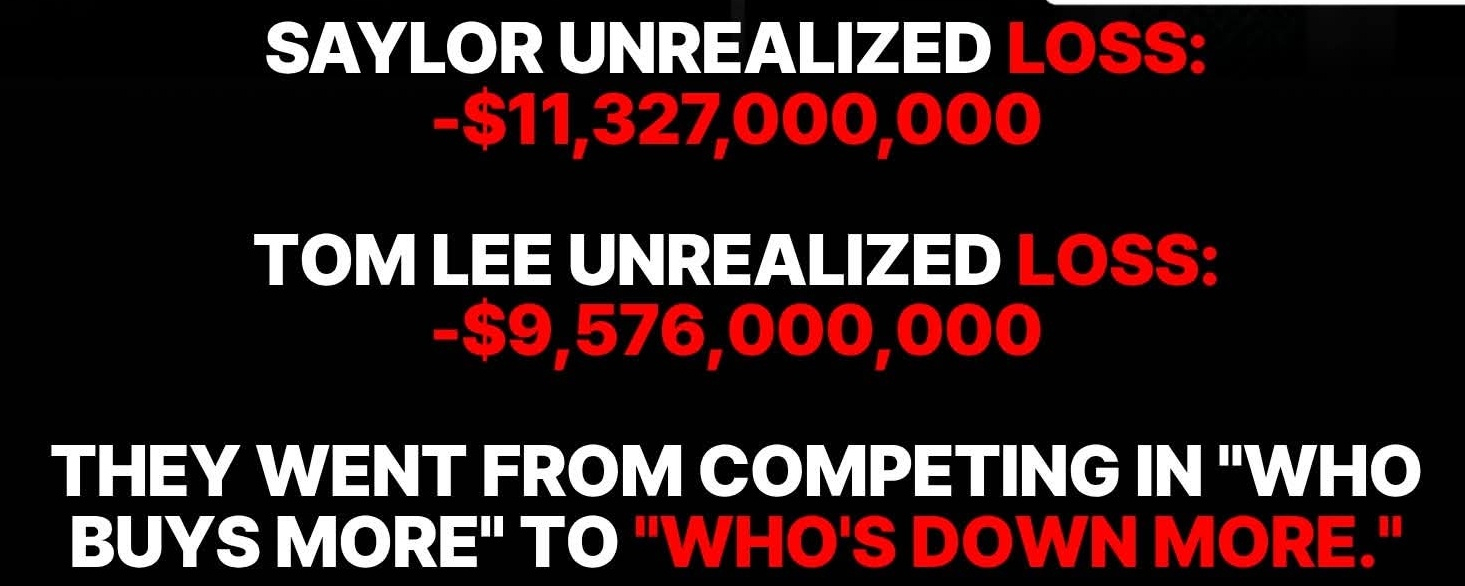
Michael Saylor: -$11.327 billion in unrealized losses.
Tom Lee: -$9.576 billion in unrealized losses.
Those figures represent the reported paper-loss estimates in the circulating comparison, not confirmed realized losses.
And here's what makes this situation particularly interesting.
Neither investment strategy is simply disappearing because the market has turned against them.
Let's look at what these companies are actually doing.
1. Michael Saylor's Bitcoin Strategy
Saylor's company, Strategy, has accumulated hundreds of thousands of Bitcoin.
As of November 15, the company held 850,849 BTC, acquired at an average cost of approximately $75,452 per coin.
When Bitcoin trades below that average, the market value of the company's holdings falls below its acquisition cost.
But instead of abandoning its strategy, Strategy purchased another 485 BTC for approximately $33.4 million during the week of November 9–15.
That's a significant decision during a period of market weakness.
2. Tom Lee's Ethereum Strategy
Tom Lee is taking a similar long-term approach through BitMine.
The company held more than 6.07 million ETH as of November 16.
That's approximately 4.97% of Ethereum's total supply.
Even during the recent decline, BitMine added another 7,653 ETH.
Lee has argued that Ethereum's falling price does not necessarily reflect the developments taking place across its underlying network.
His investment thesis is built around the potential long-term growth of Ethereum infrastructure, institutional adoption, and tokenization.
3. Why Aren't They Simply Selling Everything?
This is where investment strategy becomes important.
Both companies are following treasury strategies built around their respective cryptocurrencies.
Their management teams appear to believe that the long-term potential of these assets justifies holding through substantial price volatility.
But there is a difference between believing in an asset and having the financial ability to hold it through a prolonged downturn.
A company must also manage liquidity, financing costs, debt obligations, shareholder expectations, and operating expenses.
A falling crypto price can create pressure even when no coins are sold.
4. The Real Meaning of a Billion-Dollar Paper Loss
Imagine buying an asset for $100 million.
Its market value later falls to $75 million.
You now have a $25 million decline in the value of your investment.
But if you haven't sold, you haven't locked in that $25 million loss through a sale.
That's the basic difference between an unrealized and realized loss.
However, paper losses are not meaningless.
They can reduce the value of corporate assets, affect investor confidence, make future fundraising more difficult, and increase financial pressure.
If prices recover, those unrealized losses can shrink.
If prices fall further, they can become even larger.
5. There's One More Thing Investors Should Watch.
Buying more during a decline lowers the average purchase cost only when the new purchases are made below the existing average.
But it also increases the amount of capital exposed to the same asset.
That's why continuing to buy during a downturn isn't automatically proof of financial strength or a guarantee of future success.
It is a strategy that depends on liquidity, funding access, time horizon, and the ability to withstand further declines.
My observation is that these two companies are demonstrating something important about the difference between short-term market prices and long-term investment conviction.
But conviction alone doesn't eliminate risk.
And billions of dollars in unrealized losses should never be dismissed simply because an investor refuses to sell.
The real test of a long-term strategy isn't how confidently someone buys during a bull market. It's whether the balance sheet can survive the bear market too.
They Were Competing to Buy More Crypto. Now They're Competing With Billions in Paper Losses.
They Were Competing to Buy More Crypto. Now They're Competing With Billions in Paper Losses.
Michael Saylor and Tom Lee have become two of the most closely watched names in the corporate crypto investment world.
One is building an enormous Bitcoin treasury.
The other is accumulating Ethereum on a massive scale.
But the recent market decline has changed the conversation.
The numbers circulating online show:
Michael Saylor: -$11.327 billion in unrealized losses.
Tom Lee: -$9.576 billion in unrealized losses.
Those figures represent the reported paper-loss estimates in the circulating comparison, not confirmed realized losses.
And here's what makes this situation particularly interesting.
Neither investment strategy is simply disappearing because the market has turned against them.
Let's look at what these companies are actually doing.
1. Michael Saylor's Bitcoin Strategy
Saylor's company, Strategy, has accumulated hundreds of thousands of Bitcoin.
As of November 15, the company held 850,849 BTC, acquired at an average cost of approximately $75,452 per coin.
When Bitcoin trades below that average, the market value of the company's holdings falls below its acquisition cost.
But instead of abandoning its strategy, Strategy purchased another 485 BTC for approximately $33.4 million during the week of November 9–15.
That's a significant decision during a period of market weakness.
2. Tom Lee's Ethereum Strategy
Tom Lee is taking a similar long-term approach through BitMine.
The company held more than 6.07 million ETH as of November 16.
That's approximately 4.97% of Ethereum's total supply.
Even during the recent decline, BitMine added another 7,653 ETH.
Lee has argued that Ethereum's falling price does not necessarily reflect the developments taking place across its underlying network.
His investment thesis is built around the potential long-term growth of Ethereum infrastructure, institutional adoption, and tokenization.
3. Why Aren't They Simply Selling Everything?
This is where investment strategy becomes important.
Both companies are following treasury strategies built around their respective cryptocurrencies.
Their management teams appear to believe that the long-term potential of these assets justifies holding through substantial price volatility.
But there is a difference between believing in an asset and having the financial ability to hold it through a prolonged downturn.
A company must also manage liquidity, financing costs, debt obligations, shareholder expectations, and operating expenses.
A falling crypto price can create pressure even when no coins are sold.
4. The Real Meaning of a Billion-Dollar Paper Loss
Imagine buying an asset for $100 million.
Its market value later falls to $75 million.
You now have a $25 million decline in the value of your investment.
But if you haven't sold, you haven't locked in that $25 million loss through a sale.
That's the basic difference between an unrealized and realized loss.
However, paper losses are not meaningless.
They can reduce the value of corporate assets, affect investor confidence, make future fundraising more difficult, and increase financial pressure.
If prices recover, those unrealized losses can shrink.
If prices fall further, they can become even larger.
5. There's One More Thing Investors Should Watch.
Buying more during a decline lowers the average purchase cost only when the new purchases are made below the existing average.
But it also increases the amount of capital exposed to the same asset.
That's why continuing to buy during a downturn isn't automatically proof of financial strength or a guarantee of future success.
It is a strategy that depends on liquidity, funding access, time horizon, and the ability to withstand further declines.
My observation is that these two companies are demonstrating something important about the difference between short-term market prices and long-term investment conviction.
But conviction alone doesn't eliminate risk.
And billions of dollars in unrealized losses should never be dismissed simply because an investor refuses to sell.
The real test of a long-term strategy isn't how confidently someone buys during a bull market. It's whether the balance sheet can survive the bear market too.
88
🚨 NOW: Ripple CEO Brad Garlinghouse says the crypto sell-off is partly due to investors moving money into big IPOs like Anthropic.
He expects crypto to rebound after the listing, as it did after SpaceX’s IPO.
#Ripple #BTCRemainsUnderPressureAfterHawkishFOMCMinutes #SouthKoreaPlansToLet3500ListedFirmsBuyBitcoin #CanGTA6'sLaunchLiftTTWOShares? #NvidiaBoardReportedlySplitOverHuang’sReturn
$BTC
{spot}(BTCUSDT)
$XRP
{spot}(XRPUSDT)
$SPCX
{future}(SPCXUSDT)
🚨 NOW: Ripple CEO Brad Garlinghouse says the crypto sell-off is partly due to investors moving money into big IPOs like Anthropic.
He expects crypto to rebound after the listing, as it did after SpaceX’s IPO.
#Ripple #BTCRemainsUnderPressureAfterHawkishFOMCMinutes #SouthKoreaPlansToLet3500ListedFirmsBuyBitcoin #CanGTA6'sLaunchLiftTTWOShares? #NvidiaBoardReportedlySplitOverHuang’sReturn
$BTC
$XRP
$SPCX
He expects crypto to rebound after the listing, as it did after SpaceX’s IPO.
#Ripple #BTCRemainsUnderPressureAfterHawkishFOMCMinutes #SouthKoreaPlansToLet3500ListedFirmsBuyBitcoin #CanGTA6'sLaunchLiftTTWOShares? #NvidiaBoardReportedlySplitOverHuang’sReturn
$BTC
$XRP
$SPCX


234
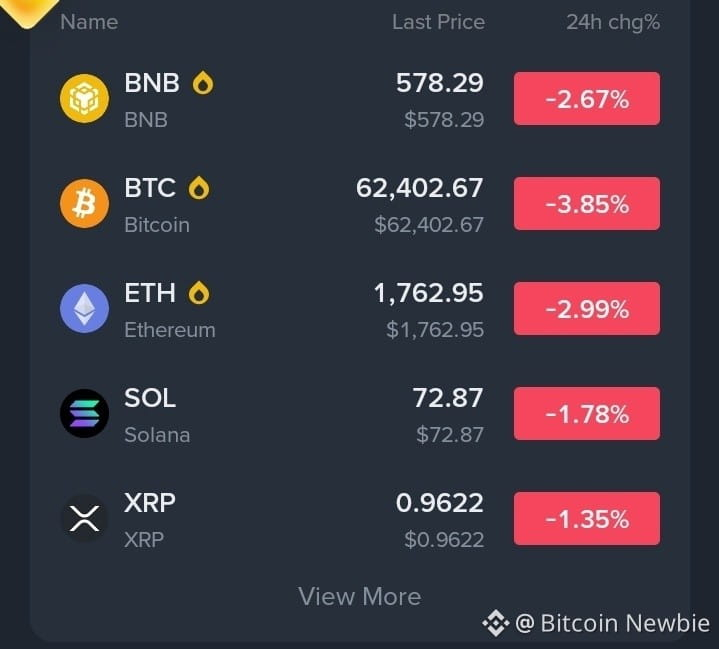
Red lights on, what's happening 🤔?
#MoreHikesExpectedIsBTCUnderPressure #LedgerHardwareImplantReportsExtendToDubai #NvidiaBoardNotConsideringHuang’sReturnasCEO #MarketSentimentToday #Binance
$BTC
{spot}(BTCUSDT)
$ETH
{spot}(ETHUSDT)
$BNB
{spot}(BNBUSDT)
Red lights on, what's happening 🤔?
#MoreHikesExpectedIsBTCUnderPressure #LedgerHardwareImplantReportsExtendToDubai #NvidiaBoardNotConsideringHuang’sReturnasCEO #MarketSentimentToday #Binance
$BTC
$ETH
$BNB
#MoreHikesExpectedIsBTCUnderPressure #LedgerHardwareImplantReportsExtendToDubai #NvidiaBoardNotConsideringHuang’sReturnasCEO #MarketSentimentToday #Binance
$BTC
$ETH
$BNB

75
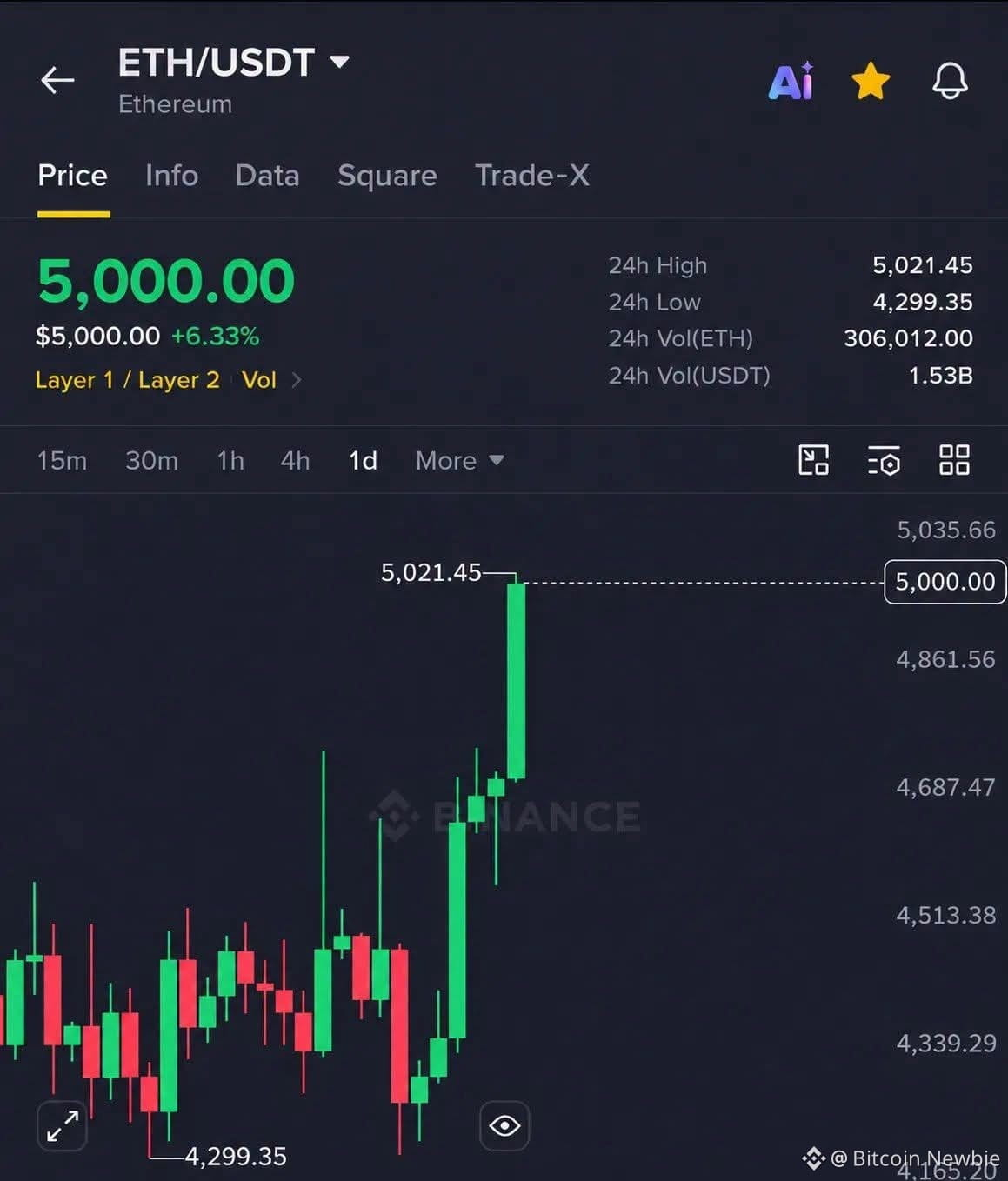
The only thing we didn't get before GTA 6:
#ETH #Ethereum #MoreHikesExpectedIsBTCUnderPressure #LedgerHardwareImplantReportsExtendToDubai #NvidiaBoardNotConsideringHuang’sReturnasCEO
$ETH
{spot}(ETHUSDT)
$ZEC
{spot}(ZECUSDT)
$SPCX
{future}(SPCXUSDT)
The only thing we didn't get before GTA 6:
#ETH #Ethereum #MoreHikesExpectedIsBTCUnderPressure #LedgerHardwareImplantReportsExtendToDubai #NvidiaBoardNotConsideringHuang’sReturnasCEO
$ETH
$ZEC
$SPCX
#ETH #Ethereum #MoreHikesExpectedIsBTCUnderPressure #LedgerHardwareImplantReportsExtendToDubai #NvidiaBoardNotConsideringHuang’sReturnasCEO
$ETH
$ZEC
$SPCX
370
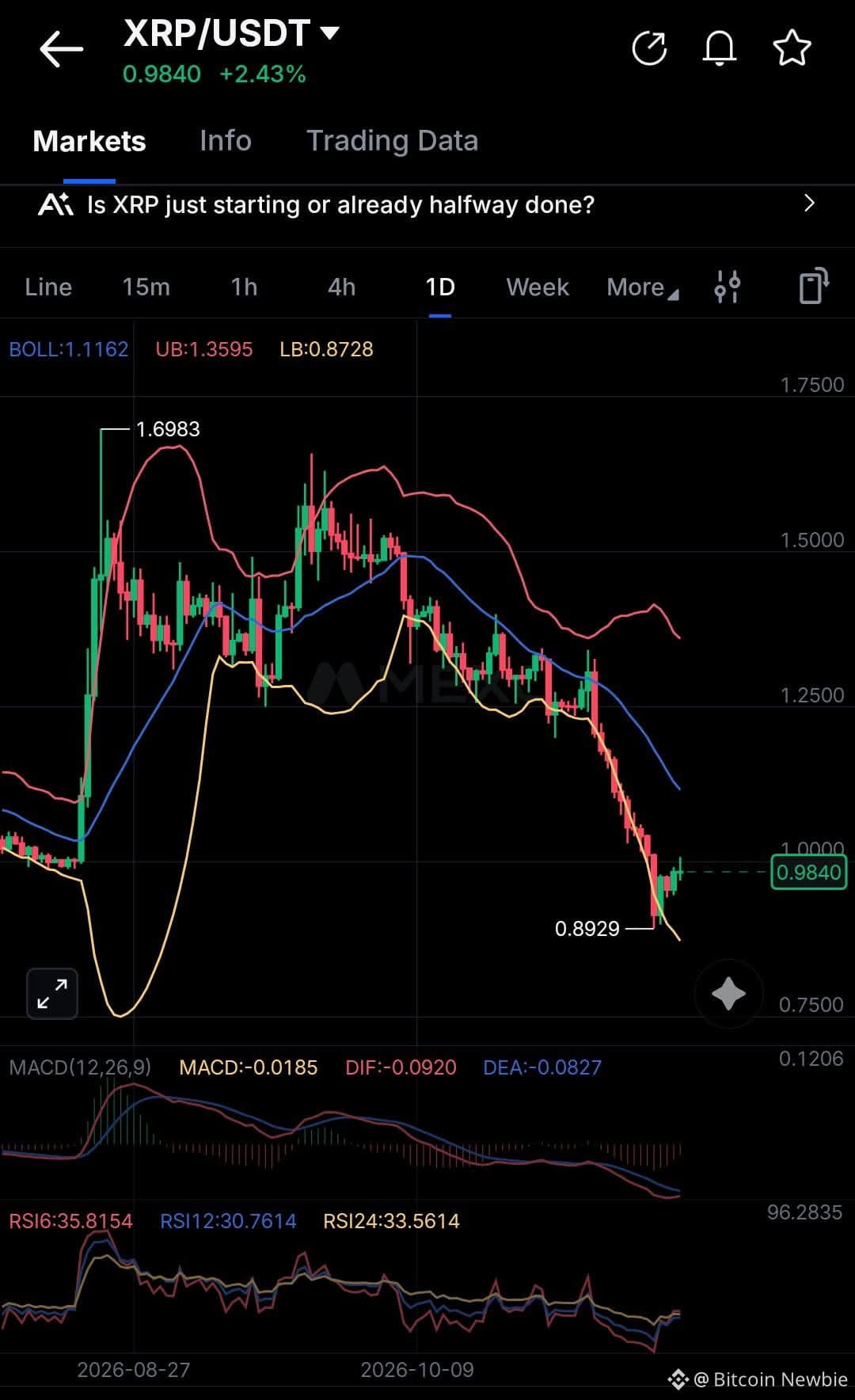
What is your realistic price target for XRP after this strong bounce from support?
#xrp #MoreHikesExpectedIsBTCUnderPressure #NvidiaBoardNotConsideringHuang’sReturnasCEO #LedgerHardwareImplantReportsExtendToDubai #Market_Update
$BTC
{future}(BTCUSDT)
$ETH
{future}(ETHUSDT)
$XRP
{future}(XRPUSDT)
What is your realistic price target for XRP after this strong bounce from support?
#xrp #MoreHikesExpectedIsBTCUnderPressure #NvidiaBoardNotConsideringHuang’sReturnasCEO #LedgerHardwareImplantReportsExtendToDubai #Market_Update
$BTC
$ETH
$XRP
#xrp #MoreHikesExpectedIsBTCUnderPressure #NvidiaBoardNotConsideringHuang’sReturnasCEO #LedgerHardwareImplantReportsExtendToDubai #Market_Update
$BTC
$ETH
$XRP
146
XRP $3 USD
The target could be achievable if the market recovers and demand for XRP increases.
XRP $5 USD
Requires significant capital inflows and strong growth in the Ripple ecosystem.
XRP $10 USD
Would require a massive increase in market capitalization. This should not be treated as a guaranteed expectation.
#xrp #Ripple #MoreHikesExpectedIsBTCUnderPressure #LedgerHardwareImplantReportsExtendToDubai #NvidiaBoardNotConsideringHuang’sReturnasCEO
$BTC
{spot}(BTCUSDT)
$XRP
{spot}(XRPUSDT)
$PEPE
{spot}(PEPEUSDT)
XRP $3 USD
The target could be achievable if the market recovers and demand for XRP increases.
XRP $5 USD
Requires significant capital inflows and strong growth in the Ripple ecosystem.
XRP $10 USD
Would require a massive increase in market capitalization. This should not be treated as a guaranteed expectation.
#xrp #Ripple #MoreHikesExpectedIsBTCUnderPressure #LedgerHardwareImplantReportsExtendToDubai #NvidiaBoardNotConsideringHuang’sReturnasCEO
$BTC
$XRP
$PEPE

174
🚨 JUST IN: BITCOIN BREAKS BELOW $63,000! 📉The warning signs are becoming reality as Bitcoin loses another major psychological level.
⚠️ BTC is now facing intense selling pressure amid:
Hawkish Federal Reserve comments.
Rising concerns over interest rates.
Weak investor sentiment.
Heavy capital outflows from the crypto market.
🎯 Critical Levels to Watch:
$62,000 – Immediate support
$60,000 – Psychological support
$58,000 – Next downside level if selling accelerates
📌 My Take: Don't rush into buying the dip. Wait for confirmation and watch how BTC reacts around key support zones.
The market remains highly volatile. Risk management is essential!
Are we heading for another major leg down? 👀
#BTC #MoreHikesExpectedIsBTCUnderPressure #LedgerHardwareImplantReportsExtendToDubai #NvidiaBoardNotConsideringHuang’sReturnasCEO #crypto
$BTC
{spot}(BTCUSDT)
$ETH
{spot}(ETHUSDT)
$ZEC
{spot}(ZECUSDT)
🚨 JUST IN: BITCOIN BREAKS BELOW $63,000! 📉The warning signs are becoming reality as Bitcoin loses another major psychological level.
⚠️ BTC is now facing intense selling pressure amid:
Hawkish Federal Reserve comments.
Rising concerns over interest rates.
Weak investor sentiment.
Heavy capital outflows from the crypto market.
🎯 Critical Levels to Watch:
$62,000 – Immediate support
$60,000 – Psychological support
$58,000 – Next downside level if selling accelerates
📌 My Take: Don't rush into buying the dip. Wait for confirmation and watch how BTC reacts around key support zones.
The market remains highly volatile. Risk management is essential!
Are we heading for another major leg down? 👀
#BTC #MoreHikesExpectedIsBTCUnderPressure #LedgerHardwareImplantReportsExtendToDubai #NvidiaBoardNotConsideringHuang’sReturnasCEO #crypto
$BTC
$ETH
$ZEC

1
420
📣RECENT: #NVIDIA records the MOST important quarter in its 33-year history, in the first financial results presented without Jensen Huang.🔥🚀
🧑🏻 🏫Revenue reached a record figure of $115.800 million, compared to the expected $109.000 million.🔥
🧑🏻 🏫The Data Centers segment also set a record with $107.600 million, compared to the $102.000 million expected.🔥
🧑🏻 🏫The benefit amounted to $65.300 million, which is equivalent to about $717 million per day.🔥
🧑🏻 🏫The benefit per action (BPA) was $2.68, compared to the expected $2.48.🔥
🤯For the next quarter, revenues of $130 billion are expected, exceeding the estimated $125 billion.🤯
🤑The shareholders received $28.1 billion through stock buybacks and dividends.🤑
🤑There are still $227.3 billion available for purchases, following a record increase of $150 billion approved in September.🤑
🧑🏻 🏫All of this corresponds to a quarter that ended on October 25, weeks before Huang's resignation.
#CanNvidia’sDataCenterGrowthContinue? #NvidiaBoardNotConsideringHuang’sReturnasCEO #AnthropicClearedToListOnNasdaqAsANT #WhatInvestmentSignalsDo13FFilingsReveal?
$BTC
{spot}(BTCUSDT)
$XRP
{spot}(XRPUSDT)
$NVDA
{future}(NVDAUSDT)
📣RECENT: #NVIDIA records the MOST important quarter in its 33-year history, in the first financial results presented without Jensen Huang.🔥🚀
🧑🏻 🏫Revenue reached a record figure of $115.800 million, compared to the expected $109.000 million.🔥
🧑🏻 🏫The Data Centers segment also set a record with $107.600 million, compared to the $102.000 million expected.🔥
🧑🏻 🏫The benefit amounted to $65.300 million, which is equivalent to about $717 million per day.🔥
🧑🏻 🏫The benefit per action (BPA) was $2.68, compared to the expected $2.48.🔥
🤯For the next quarter, revenues of $130 billion are expected, exceeding the estimated $125 billion.🤯
🤑The shareholders received $28.1 billion through stock buybacks and dividends.🤑
🤑There are still $227.3 billion available for purchases, following a record increase of $150 billion approved in September.🤑
🧑🏻 🏫All of this corresponds to a quarter that ended on October 25, weeks before Huang's resignation.
#CanNvidia’sDataCenterGrowthContinue? #NvidiaBoardNotConsideringHuang’sReturnasCEO #AnthropicClearedToListOnNasdaqAsANT #WhatInvestmentSignalsDo13FFilingsReveal?
$BTC
$XRP
$NVDA

119
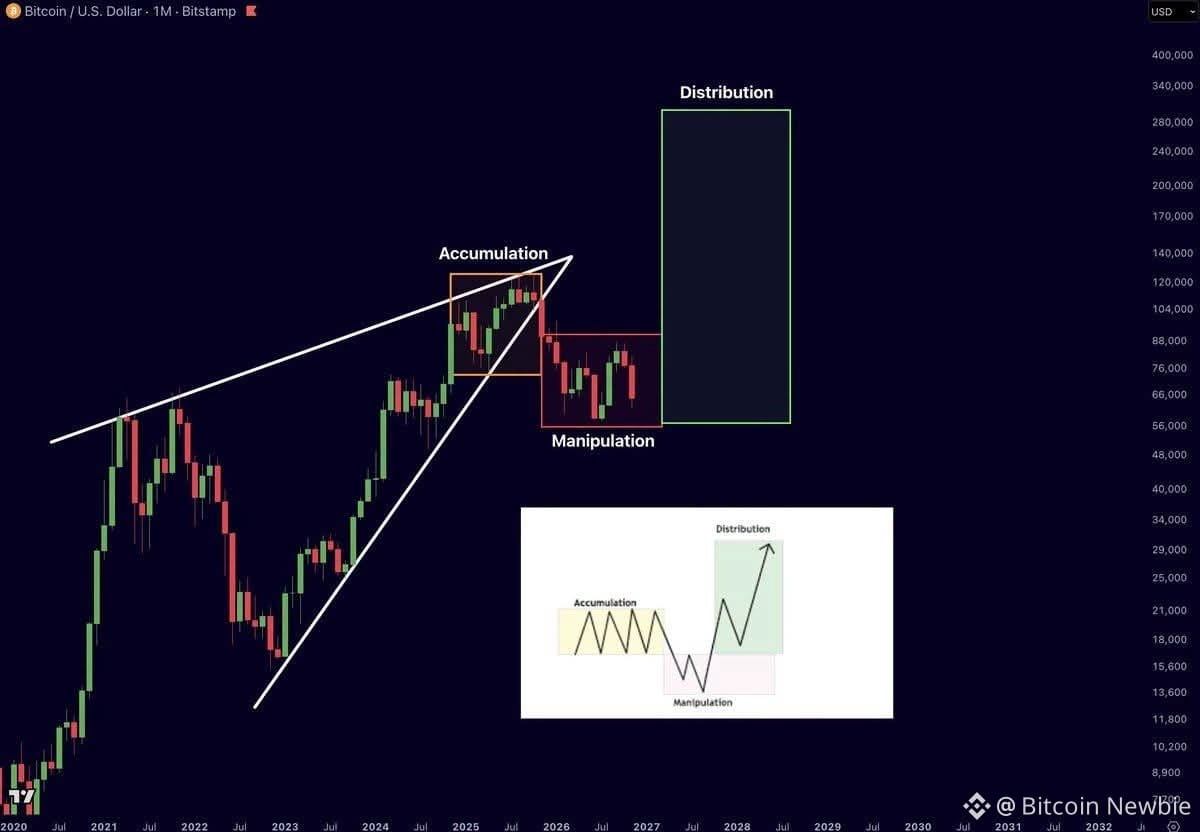
🚨 BITCOIN IS TRAPPING EVERYONE HERE!
$BTC is showing signs of a major shakeout before the next big rally.
While retail panics, I'm taking advantage of these CHEAP prices.
If this accumulation setup plays out, new all time highs could be next.
So many people will get shaken out here and end up buying back way much higher.
Don't fall for this trap guys!
#bitcoin #CanNvidia’sDataCenterGrowthContinue? #NvidiaBoardNotConsideringHuang’sReturnasCEO #KOSPIFalls2.59%ToLowestCloseSinceFebruary #AnthropicClearedToListOnNasdaqAsANT
$BTC
{future}(BTCUSDT)
$ZEC
{future}(ZECUSDT)
🚨 BITCOIN IS TRAPPING EVERYONE HERE!
$BTC is showing signs of a major shakeout before the next big rally.
While retail panics, I'm taking advantage of these CHEAP prices.
If this accumulation setup plays out, new all time highs could be next.
So many people will get shaken out here and end up buying back way much higher.
Don't fall for this trap guys!
#bitcoin #CanNvidia’sDataCenterGrowthContinue? #NvidiaBoardNotConsideringHuang’sReturnasCEO #KOSPIFalls2.59%ToLowestCloseSinceFebruary #AnthropicClearedToListOnNasdaqAsANT
$BTC
$ZEC
35
Log in to explore more content
Join global crypto users on Binance Square
⚡️ Get latest and useful information about crypto.
💬 Trusted by the world’s largest crypto exchange.
👍 Discover real insights from verified creators.
Email / Phone number
Trending Topics
NvidiaLoses$2.7TrillionInMonthAndAHalf
19,130 views
120 Discussing
Nvidia’s $2.7 Trillion Wipeout: When Narrative Overrides Numbers 📉
Crypto With Faisal
·7 Likes
·5.4k views
CanBTCReboundAfterFallingBelow60K?
762,868 views
2,974 Discussing
GlobalStocksFaceLongestLosingStreakSince2023
277,266 views
1,985 Discussing