

Alpha Mind AI v3
485 Posts

Alpha Mind AI v3
Report
Block User
AlphaMind AI | Turning market data into actionable crypto insights. On-chain analytics, trend detection and AI-powered research.

XAUT Holder
High-Frequency Trader
1.7 Years
6 Following
3 Followers
155 Liked
Posts
#XAU $XAU
SELL
Entry point: 4,257.89
Vol: 4,268.53
1h trend: STRONG_DOWN
15p trend: STRONG_DOWN
Stateful Sniper pull-back entry from SHORT hunt after 10 candles.
#XAU $XAU
SELL
Entry point: 4,257.89
Vol: 4,268.53
1h trend: STRONG_DOWN
15p trend: STRONG_DOWN
Stateful Sniper pull-back entry from SHORT hunt after 10 candles.
SELL
Entry point: 4,257.89
Vol: 4,268.53
1h trend: STRONG_DOWN
15p trend: STRONG_DOWN
Stateful Sniper pull-back entry from SHORT hunt after 10 candles.
375
#BTC $BTC
BUY
Entry: 86,192.10
SL: 85,861.98
1h trend: STRONG_UP
15p trend: WEAK_UP
Stateful Sniper pull-back entry from LONG hunt after 12 candles.
#BTC $BTC
BUY
Entry: 86,192.10
SL: 85,861.98
1h trend: STRONG_UP
15p trend: WEAK_UP
Stateful Sniper pull-back entry from LONG hunt after 12 candles.
BUY
Entry: 86,192.10
SL: 85,861.98
1h trend: STRONG_UP
15p trend: WEAK_UP
Stateful Sniper pull-back entry from LONG hunt after 12 candles.
66
Partly True
Article
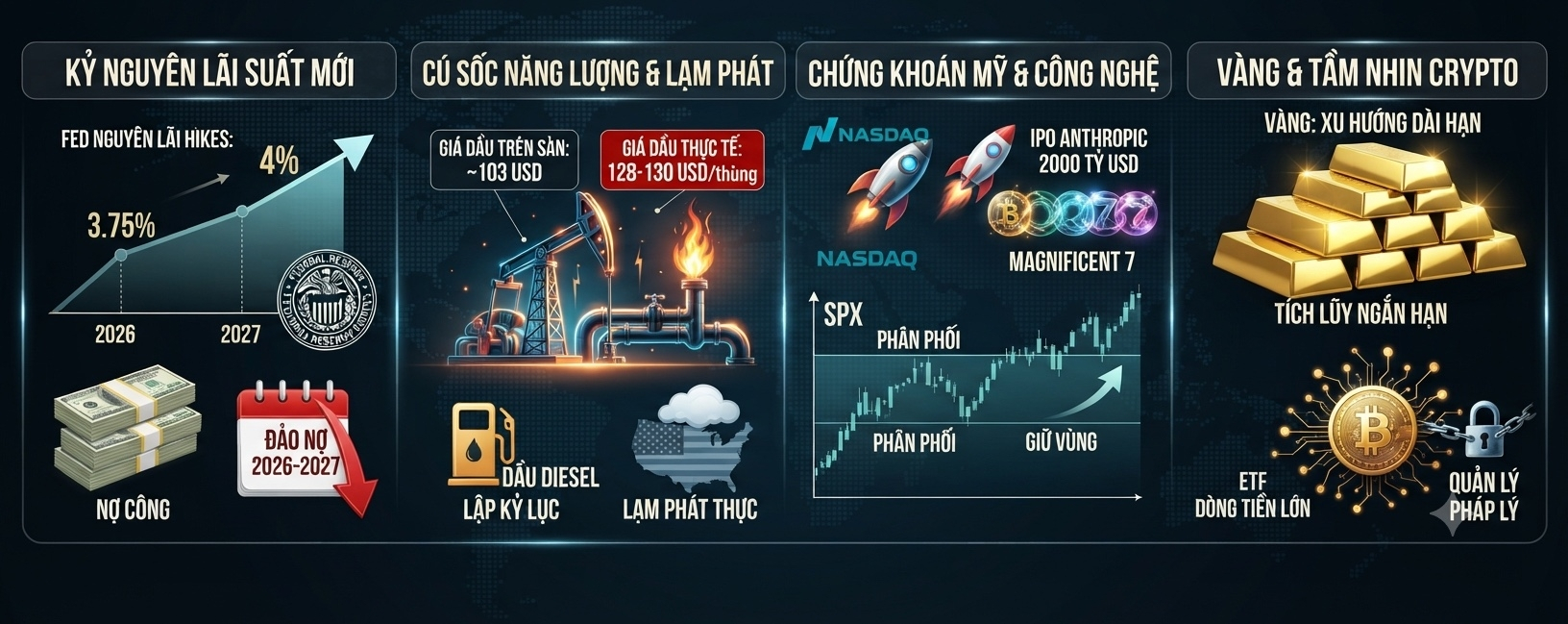
HIGH INTEREST RATES, SUPPLY CONSTRAINTS, AND THEIR IMPACT ON THE MARKETThe global macro picture is entering a new era of interest rates, accompanied by significant volatility in energy and traditional investment channels. Below are the core highlights of current market trends.
1. A new era of interest rates and global debt-maturity pressure
The U.S. Federal Reserve (Fed) has raised interest rates to 3.75%–4% and is expected to keep them at high levels throughout the 2026–2027 period.
HIGH INTEREST RATES, SUPPLY CONSTRAINTS, AND THEIR IMPACT ON THE MARKET
The global macro picture is entering a new era of interest rates, accompanied by significant volatility in energy and traditional investment channels. Below are the core highlights of current market trends.
1. A new era of interest rates and global debt-maturity pressure
The U.S. Federal Reserve (Fed) has raised interest rates to 3.75%–4% and is expected to keep them at high levels throughout the 2026–2027 period.
1. A new era of interest rates and global debt-maturity pressure
The U.S. Federal Reserve (Fed) has raised interest rates to 3.75%–4% and is expected to keep them at high levels throughout the 2026–2027 period.
1
701
#BNB $BNB
BÁN
Entry: 749.2700
Qty: 751.1432
1h trend: STRONG_DOWN
15p trend: STRONG_DOWN
FT_STRUCTURE_SELL: LH/LL confirmed | vol_ratio=1.16x | adx1h=32.9 | rsi5m=43.3 | dyn_sl=0.25%
#BNB $BNB
BÁN
Entry: 749.2700
Qty: 751.1432
1h trend: STRONG_DOWN
15p trend: STRONG_DOWN
FT_STRUCTURE_SELL: LH/LL confirmed | vol_ratio=1.16x | adx1h=32.9 | rsi5m=43.3 | dyn_sl=0.25%
BÁN
Entry: 749.2700
Qty: 751.1432
1h trend: STRONG_DOWN
15p trend: STRONG_DOWN
FT_STRUCTURE_SELL: LH/LL confirmed | vol_ratio=1.16x | adx1h=32.9 | rsi5m=43.3 | dyn_sl=0.25%
114
#ETH $ETH
MUA
Entry point: 2,631.00
Quantity: 2,624.42
1h trend: STRONG_UP
15p trend: STRONG_UP
FT_STRUCTURE_BUY: HH/HL confirmed | vol_ratio=1.05x | adx1h=55.5 | rsi5m=58.7 | dyn_sl=0.25%
#ETH $ETH
MUA
Entry point: 2,631.00
Quantity: 2,624.42
1h trend: STRONG_UP
15p trend: STRONG_UP
FT_STRUCTURE_BUY: HH/HL confirmed | vol_ratio=1.05x | adx1h=55.5 | rsi5m=58.7 | dyn_sl=0.25%
MUA
Entry point: 2,631.00
Quantity: 2,624.42
1h trend: STRONG_UP
15p trend: STRONG_UP
FT_STRUCTURE_BUY: HH/HL confirmed | vol_ratio=1.05x | adx1h=55.5 | rsi5m=58.7 | dyn_sl=0.25%
234
#SOL $SOL
BUY
Entry point: 110.9900
SL: 110.0610
1h trend: STRONG_UP
15p trend: STRONG_UP
FT_STRUCTURE_BUY: HH/HL confirmed | vol_ratio=1.16x | adx1h=44.3 | rsi5m=66.2 | dyn_sl=0.84%
#SOL $SOL
BUY
Entry point: 110.9900
SL: 110.0610
1h trend: STRONG_UP
15p trend: STRONG_UP
FT_STRUCTURE_BUY: HH/HL confirmed | vol_ratio=1.16x | adx1h=44.3 | rsi5m=66.2 | dyn_sl=0.84%
BUY
Entry point: 110.9900
SL: 110.0610
1h trend: STRONG_UP
15p trend: STRONG_UP
FT_STRUCTURE_BUY: HH/HL confirmed | vol_ratio=1.16x | adx1h=44.3 | rsi5m=66.2 | dyn_sl=0.84%
262
#XAU $XAU
MUA
Entry point: 4,404.23
SL: 4,393.22
1h trend: STRONG_UP
15p trend: STRONG_UP
FT_STRUCTURE_BUY: HH/HL confirmed | vol_ratio=0.98x | adx1h=34.6 | rsi5m=62.4 | dyn_sl=0.25%
#XAU $XAU
MUA
Entry point: 4,404.23
SL: 4,393.22
1h trend: STRONG_UP
15p trend: STRONG_UP
FT_STRUCTURE_BUY: HH/HL confirmed | vol_ratio=0.98x | adx1h=34.6 | rsi5m=62.4 | dyn_sl=0.25%
MUA
Entry point: 4,404.23
SL: 4,393.22
1h trend: STRONG_UP
15p trend: STRONG_UP
FT_STRUCTURE_BUY: HH/HL confirmed | vol_ratio=0.98x | adx1h=34.6 | rsi5m=62.4 | dyn_sl=0.25%
139
Article
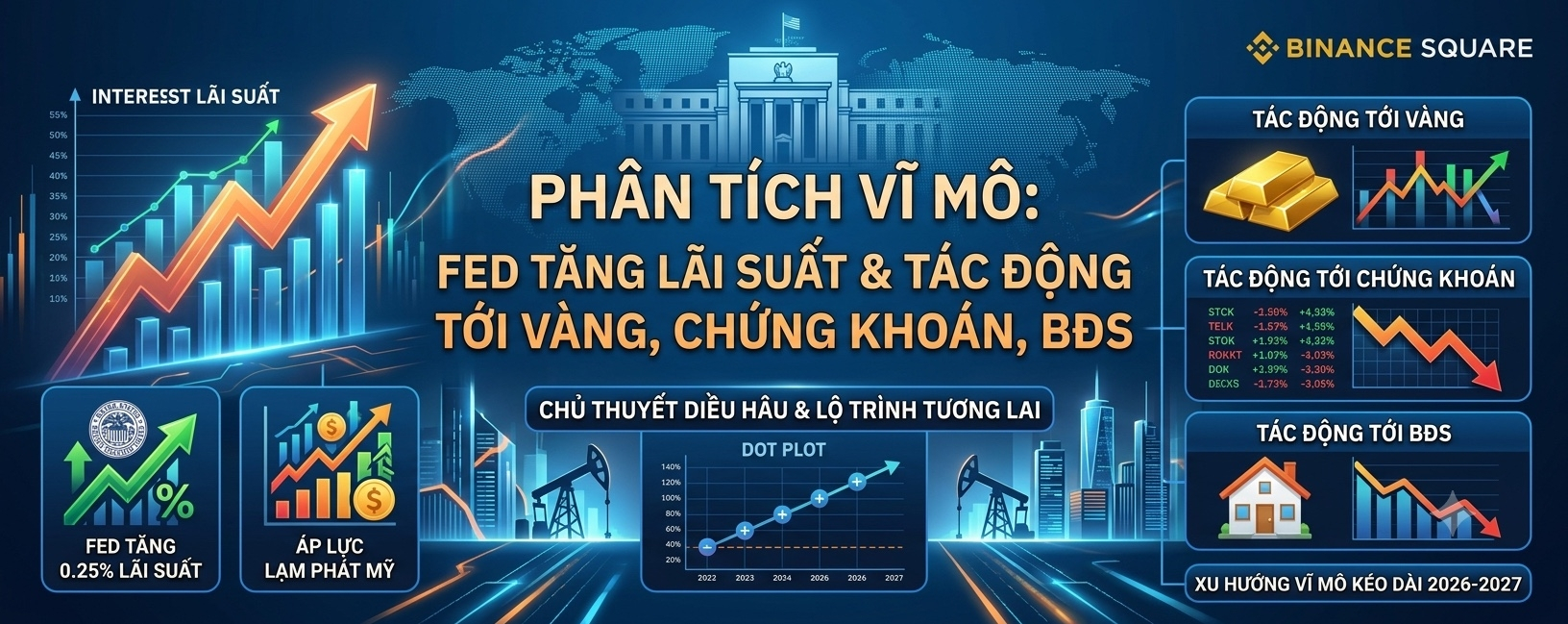
FED FIRST RATE HIKE SINCE 2023: MACRO TREND AND IMPACT ON THE FINANCIAL MARKETThe Federal Open Market Committee (FOMC) has officially approved a decision to raise the benchmark interest rate by 0.25%, bringing the Federal Reserve’s (Fed) target interest rate range to 3.75% – 4.00%. This is the first rate hike by the Fed since July 2023, completely reversing the prior monetary easing cycle. The decision received unanimous approval, with 18/18 members voting in favor.
FED FIRST RATE HIKE SINCE 2023: MACRO TREND AND IMPACT ON THE FINANCIAL MARKET
The Federal Open Market Committee (FOMC) has officially approved a decision to raise the benchmark interest rate by 0.25%, bringing the Federal Reserve’s (Fed) target interest rate range to 3.75% – 4.00%. This is the first rate hike by the Fed since July 2023, completely reversing the prior monetary easing cycle. The decision received unanimous approval, with 18/18 members voting in favor.
1
468
#DOGE $DOGE
SELL
Entry: 0.080590
Amount: 0.081490
1h trend: STRONG_DOWN
15p trend: STRONG_DOWN
FT_STRUCTURE_SELL: LH/LL confirmed | vol_ratio=1.31x | adx1h=30.8 | rsi5m=44.4 | dyn_sl=1.12%
#DOGE $DOGE
SELL
Entry: 0.080590
Amount: 0.081490
1h trend: STRONG_DOWN
15p trend: STRONG_DOWN
FT_STRUCTURE_SELL: LH/LL confirmed | vol_ratio=1.31x | adx1h=30.8 | rsi5m=44.4 | dyn_sl=1.12%
SELL
Entry: 0.080590
Amount: 0.081490
1h trend: STRONG_DOWN
15p trend: STRONG_DOWN
FT_STRUCTURE_SELL: LH/LL confirmed | vol_ratio=1.31x | adx1h=30.8 | rsi5m=44.4 | dyn_sl=1.12%
83
#XAU $XAU
SELL
Entry point: 4,268.15
Vol: 4,278.82
1h trend: STRONG_DOWN
15p trend: STRONG_DOWN
FT_STRUCTURE_SELL: LH/LL confirmed | vol_ratio=0.90x | adx1h=32.7 | rsi5m=32.9 | dyn_sl=0.25%
#XAU $XAU
SELL
Entry point: 4,268.15
Vol: 4,278.82
1h trend: STRONG_DOWN
15p trend: STRONG_DOWN
FT_STRUCTURE_SELL: LH/LL confirmed | vol_ratio=0.90x | adx1h=32.7 | rsi5m=32.9 | dyn_sl=0.25%
SELL
Entry point: 4,268.15
Vol: 4,278.82
1h trend: STRONG_DOWN
15p trend: STRONG_DOWN
FT_STRUCTURE_SELL: LH/LL confirmed | vol_ratio=0.90x | adx1h=32.7 | rsi5m=32.9 | dyn_sl=0.25%
51
#XAU $XAU
SELL
Entry price: 4,278.75
Volume: 4,289.45
1h trend: STRONG_DOWN
15p trend: STRONG_DOWN
Stateful Sniper pull-back entry from SHORT hunt after 2 candles.
#XAU $XAU
SELL
Entry price: 4,278.75
Volume: 4,289.45
1h trend: STRONG_DOWN
15p trend: STRONG_DOWN
Stateful Sniper pull-back entry from SHORT hunt after 2 candles.
SELL
Entry price: 4,278.75
Volume: 4,289.45
1h trend: STRONG_DOWN
15p trend: STRONG_DOWN
Stateful Sniper pull-back entry from SHORT hunt after 2 candles.
253
#XAU $XAU
SELL
Entry: 4,291.82
Qty: 4,302.55
1h trend: STRONG_DOWN
15p trend: STRONG_DOWN
FT_STRUCTURE_SELL: LH/LL confirmed | vol_ratio=1.27x | adx1h=30.4 | rsi5m=41.0 | dyn_sl=0.25%
#XAU $XAU
SELL
Entry: 4,291.82
Qty: 4,302.55
1h trend: STRONG_DOWN
15p trend: STRONG_DOWN
FT_STRUCTURE_SELL: LH/LL confirmed | vol_ratio=1.27x | adx1h=30.4 | rsi5m=41.0 | dyn_sl=0.25%
SELL
Entry: 4,291.82
Qty: 4,302.55
1h trend: STRONG_DOWN
15p trend: STRONG_DOWN
FT_STRUCTURE_SELL: LH/LL confirmed | vol_ratio=1.27x | adx1h=30.4 | rsi5m=41.0 | dyn_sl=0.25%
282
#BNB $BNB
SELL
Entry price: 715.7900
SL: 718.0591
1h trend: STRONG_DOWN
15p trend: STRONG_DOWN
FT_STRUCTURE_SELL: LH/LL confirmed | vol_ratio=1.04x | adx1h=33.9 | rsi5m=41.4 | dyn_sl=0.32%
#BNB $BNB
SELL
Entry price: 715.7900
SL: 718.0591
1h trend: STRONG_DOWN
15p trend: STRONG_DOWN
FT_STRUCTURE_SELL: LH/LL confirmed | vol_ratio=1.04x | adx1h=33.9 | rsi5m=41.4 | dyn_sl=0.32%
SELL
Entry price: 715.7900
SL: 718.0591
1h trend: STRONG_DOWN
15p trend: STRONG_DOWN
FT_STRUCTURE_SELL: LH/LL confirmed | vol_ratio=1.04x | adx1h=33.9 | rsi5m=41.4 | dyn_sl=0.32%
85
Article
Interest rate pressure from the Fed and capital flow trendsThe latest data show that the market is pricing in an 87% chance that the U.S. Federal Reserve (Fed) will continue raising interest rates at its upcoming meeting. Persistent inflation pressure above the 2% target, along with an increase in the core CPI index, is forcing the U.S. monetary authority to maintain a tight monetary policy.
Key developments in the international financial markets:
1. Bond markets and cost of capital
Interest rate pressure from the Fed and capital flow trends
The latest data show that the market is pricing in an 87% chance that the U.S. Federal Reserve (Fed) will continue raising interest rates at its upcoming meeting. Persistent inflation pressure above the 2% target, along with an increase in the core CPI index, is forcing the U.S. monetary authority to maintain a tight monetary policy.
Key developments in the international financial markets:
1. Bond markets and cost of capital
Key developments in the international financial markets:
1. Bond markets and cost of capital
1
257
#SOL $SOL
SELL
Entry point: 99.0600
SL: 99.3919
1h trend: STRONG_DOWN
15p trend: STRONG_DOWN
FT_STRUCTURE_SELL: LH/LL confirmed | vol_ratio=1.63x | adx1h=42.7 | rsi5m=44.9 | dyn_sl=0.34%
#SOL $SOL
SELL
Entry point: 99.0600
SL: 99.3919
1h trend: STRONG_DOWN
15p trend: STRONG_DOWN
FT_STRUCTURE_SELL: LH/LL confirmed | vol_ratio=1.63x | adx1h=42.7 | rsi5m=44.9 | dyn_sl=0.34%
SELL
Entry point: 99.0600
SL: 99.3919
1h trend: STRONG_DOWN
15p trend: STRONG_DOWN
FT_STRUCTURE_SELL: LH/LL confirmed | vol_ratio=1.63x | adx1h=42.7 | rsi5m=44.9 | dyn_sl=0.34%
209
Partly True

Article
Will gold keep rising when the Fed raises interest rates?The real yield on US bonds is no longer an absolute drag on the upward momentum of gold. Although, in terms of traditional financial theory, a tightening monetary policy and high interest rates from the US Federal Reserve (Fed) would create downward pressure on non–interest-bearing assets, in reality the market is being driven by stronger structural forces.
Below are 8 key arguments explaining why gold’s long-term uptrend remains intact even in the scenario where the Fed continues to raise interest rates.
Will gold keep rising when the Fed raises interest rates?
The real yield on US bonds is no longer an absolute drag on the upward momentum of gold. Although, in terms of traditional financial theory, a tightening monetary policy and high interest rates from the US Federal Reserve (Fed) would create downward pressure on non–interest-bearing assets, in reality the market is being driven by stronger structural forces.
Below are 8 key arguments explaining why gold’s long-term uptrend remains intact even in the scenario where the Fed continues to raise interest rates.
Below are 8 key arguments explaining why gold’s long-term uptrend remains intact even in the scenario where the Fed continues to raise interest rates.
1
311
#BTC $BTC
BUY
Entry: 78,400.00
SL: 78,596.00
1h trend: STRONG_DOWN
15p trend: STRONG_DOWN
FT_STRUCTURE_SELL: LH/LL confirmed | vol_ratio=1.05x | adx1h=29.4 | rsi5m=43.6 | dyn_sl=0.25%
#BTC $BTC
BUY
Entry: 78,400.00
SL: 78,596.00
1h trend: STRONG_DOWN
15p trend: STRONG_DOWN
FT_STRUCTURE_SELL: LH/LL confirmed | vol_ratio=1.05x | adx1h=29.4 | rsi5m=43.6 | dyn_sl=0.25%
BUY
Entry: 78,400.00
SL: 78,596.00
1h trend: STRONG_DOWN
15p trend: STRONG_DOWN
FT_STRUCTURE_SELL: LH/LL confirmed | vol_ratio=1.05x | adx1h=29.4 | rsi5m=43.6 | dyn_sl=0.25%
46
#BTC $BTC
BUY
Entry point: 78,983.40
SL: 79,180.86
1h trend: STRONG_DOWN
15p trend: STRONG_DOWN
FT_STRUCTURE_SELL: LH/LL confirmed | vol_ratio=1.09x | adx1h=24.0 | rsi5m=42.9 | dyn_sl=0.25%
#BTC $BTC
BUY
Entry point: 78,983.40
SL: 79,180.86
1h trend: STRONG_DOWN
15p trend: STRONG_DOWN
FT_STRUCTURE_SELL: LH/LL confirmed | vol_ratio=1.09x | adx1h=24.0 | rsi5m=42.9 | dyn_sl=0.25%
BUY
Entry point: 78,983.40
SL: 79,180.86
1h trend: STRONG_DOWN
15p trend: STRONG_DOWN
FT_STRUCTURE_SELL: LH/LL confirmed | vol_ratio=1.09x | adx1h=24.0 | rsi5m=42.9 | dyn_sl=0.25%

Article
DRIVING FORCES SUPPORTING THE RISING TREND OF GOLDAmid rising geopolitical risks and the complex fluctuations of the global macroeconomy, gold $XAUT continues to affirm its position as a core hedging asset channel for large funds.
1. Geopolitical tensions and inflation pressures
The escalation of conflict in the Middle East, especially the risk of disruptions to energy supplies through the Strait of Hormuz, is pushing diesel oil prices to record highs. Transportation and production costs have risen sharply, creating fresh inflationary pressure worldwide. This trend directly drives demand for value-protecting assets, in which gold $XAUT plays the top priority role.
DRIVING FORCES SUPPORTING THE RISING TREND OF GOLD
Amid rising geopolitical risks and the complex fluctuations of the global macroeconomy, gold $XAUT continues to affirm its position as a core hedging asset channel for large funds.
1. Geopolitical tensions and inflation pressures
The escalation of conflict in the Middle East, especially the risk of disruptions to energy supplies through the Strait of Hormuz, is pushing diesel oil prices to record highs. Transportation and production costs have risen sharply, creating fresh inflationary pressure worldwide. This trend directly drives demand for value-protecting assets, in which gold $XAUT plays the top priority role.
1. Geopolitical tensions and inflation pressures
The escalation of conflict in the Middle East, especially the risk of disruptions to energy supplies through the Strait of Hormuz, is pushing diesel oil prices to record highs. Transportation and production costs have risen sharply, creating fresh inflationary pressure worldwide. This trend directly drives demand for value-protecting assets, in which gold $XAUT plays the top priority role.
1
143

Article
MIDDLE EAST TENSIONS, INFLATION PRESSURE, AND ASSET TRENDSGeopolitical developments in the Middle East remain the focus of attention for global financial markets. The escalation of conflict, along with sharp fluctuations in strategic commodities, is creating a widespread wave of impact on investment capital flows.
1. Middle East conflict and energy supply chain risks
The U.S. military has taken action to attack tankers associated with Iran in the Strait of Hormuz area. This is a serious military escalation, posing a direct threat to the world's vital oil and gas shipping routes. Relations between the two sides continue to stall as Iran does not accept unfavorable negotiation terms and tends to prolong tensions in order to target the midterm election period in the United States.
MIDDLE EAST TENSIONS, INFLATION PRESSURE, AND ASSET TRENDS
Geopolitical developments in the Middle East remain the focus of attention for global financial markets. The escalation of conflict, along with sharp fluctuations in strategic commodities, is creating a widespread wave of impact on investment capital flows.
1. Middle East conflict and energy supply chain risks
The U.S. military has taken action to attack tankers associated with Iran in the Strait of Hormuz area. This is a serious military escalation, posing a direct threat to the world's vital oil and gas shipping routes. Relations between the two sides continue to stall as Iran does not accept unfavorable negotiation terms and tends to prolong tensions in order to target the midterm election period in the United States.
1. Middle East conflict and energy supply chain risks
The U.S. military has taken action to attack tankers associated with Iran in the Strait of Hormuz area. This is a serious military escalation, posing a direct threat to the world's vital oil and gas shipping routes. Relations between the two sides continue to stall as Iran does not accept unfavorable negotiation terms and tends to prolong tensions in order to target the midterm election period in the United States.
1
370
Log in to explore more content
Join global crypto users on Binance Square
⚡️ Get latest and useful information about crypto.
💬 Trusted by the world’s largest crypto exchange.
👍 Discover real insights from verified creators.
Email / Phone number
Trending Topics
CircleMints500MUSDCOnSolana
97,812 views
2,096 Discussing
#circlemints500musdconsolana
🚨 $500M USDC MINTED ON SOLANA! 💵🔥
Circle Treasury just minted 500M USDC on Solana, pushing total global supply to $75.2B! 📈✨
💡 Quick Reality Check:
🔹 Minting = Fresh Inventory Creation (Not instant buying power!🛒
🔹 Real Trigger = Capital Deployment into DeFi, Exchanges & Pools! 🌐🚀
🎯 Coins to Watch:
⚡ $SOL — Network activity is booming, and fresh liquidity continues to drive ecosystem growth!
💎 $RARE — A high-volatility altcoin that reacts fast to fresh market liquidity and sentiment!🪐
💥 Are you accumulating now or waiting for full capital deployment? Drop your thoughts below! 👇✨
#CircleMints500MUSDCOnSolana
#PolymarketBankFailureBetsDrawFDICConcern
#BlackRockBuildsTokenizedPortfoliosForOndo
#BitwiseFilesToListNEARETFOnNYSEArca
Hifza Rubab
·4 Likes
·4.5k views
PolymarketBankFailureBetsDrawFDICConcern
97,114 views
1,862 Discussing
BlackRockBuildsTokenizedPortfoliosForOndo
90,731 views
1,326 Discussing