

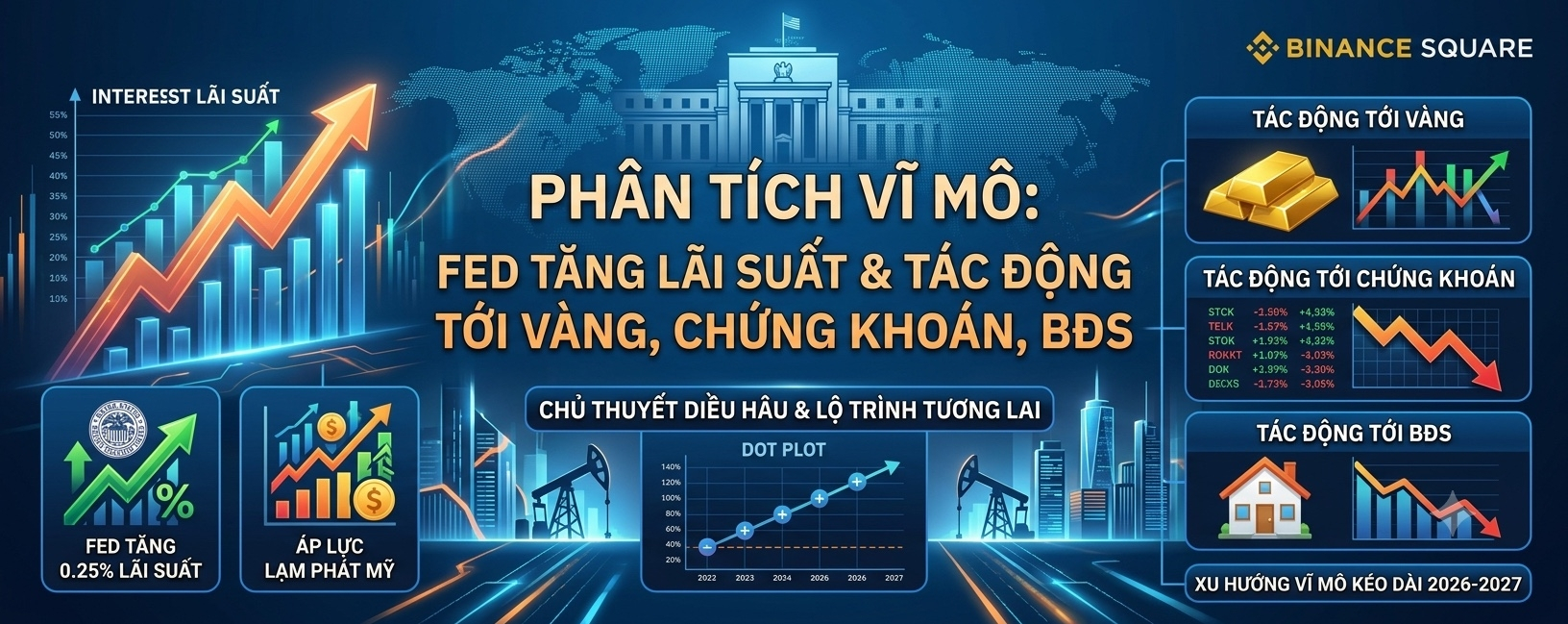

The Federal Open Market Committee (FOMC) has officially approved a decision to raise the benchmark interest rate by 0.25%, bringing the Federal Reserve’s (Fed) target interest rate range to 3.75% – 4.00%. This is the first rate hike by the Fed since July 2023, completely reversing the prior monetary easing cycle. The decision received unanimous approval, with 18/18 members voting in favor.
The Fed’s hawkish stance and forecasts for the future path
The latest Dot Plot chart shows that 16 out of 18 FOMC members support at least one more rate increase in the year. The timing for the next tightening is expected to fall in the meeting at the end of October or in December.
Fed Chair Kevin Warsh stated that the baseline inflation standard, which is close to the 2% target, has not yet been achieved sustainably. Inflation in the U.S. has remained above the target continuously for five years, directly threatening the credibility of the Central Bank. The Fed said it will not adjust policy based on short-term volatile data during the summer, and will instead focus on the longer-term inflation decline trend.
The biggest obstacle to the Fed’s effort to reduce inflation does not come from consumer demand, but from an energy supply shock crisis. U.S. Diesel oil prices have hit record highs (California above $9 per gallon, nationwide average nearing $7 per gallon) due to prolonged supply chain disruptions from conflicts in the Middle East and Ukraine. Raising interest rates cannot expand refining capacity or increase extraction output, causing transportation cost pressure and input commodity prices to remain elevated.
Detailed impact on each asset class
Bond Yields and the Real Estate Market
U.S. government bond yields for the 10-year and 30-year maturities continue to rise to new peaks, staying at record high levels above 5% (the 30-year reaches 5.36%). This pushes fixed-rate 30-year mortgage rates in the U.S. up to 7.15%. High cost of capital forces global real estate markets into a slow-liquidity state, increasing pressure to cut losses on assets that do not generate direct cash flow.
International Stock Market
A prolonged high-interest-rate environment directly increases the discount rate, weighing on the valuation of growth and high-tech stock groups, especially the AI sector. The index’s attempt to hold at current high price zones is mainly aimed at maintaining market sentiment ahead of the initial public offering (IPO) of major technology conglomerates such as Anthropic. From a technical standpoint, key indices like the Dow Jones and S&P 500 have begun to confirm distribution and adjustment patterns around long-term price moving averages.
Cryptocurrency Market
The crypto market currently relies heavily on capital flows and legal infrastructure from the U.S. In the context of the Clarity bill not being passed within the year and financial regulatory rules (the Genius Act) tightening further, speculative risk capital inflows are being restricted significantly. Bitcoin’s short-term trend faces pressure from renewed tests of key technical support zones around $69,000–$70,000.
Precious Metals Market (Gold & Silver)
Gold continues to hold its position as a strategic accumulation asset in the next 5-year macro cycle. Although Fed rate-hike pressure may create short-term technical pullback episodes into lower price zones (forecast around the $4,150/oz area), these are assessed as opportunities to rebuild well. Silver prices will continue to move in sync with the gold price trend, but with additional support from demand tied to semiconductor and AI industrial production.