
多撸毛少去赌
428 Posts

多撸毛少去赌
Report
Block User
撸毛还贷

MUon Holder
High-Frequency Trader
3.2 Years
42 Following
152 Followers
726 Liked
Posts
All
Quotes
·
--
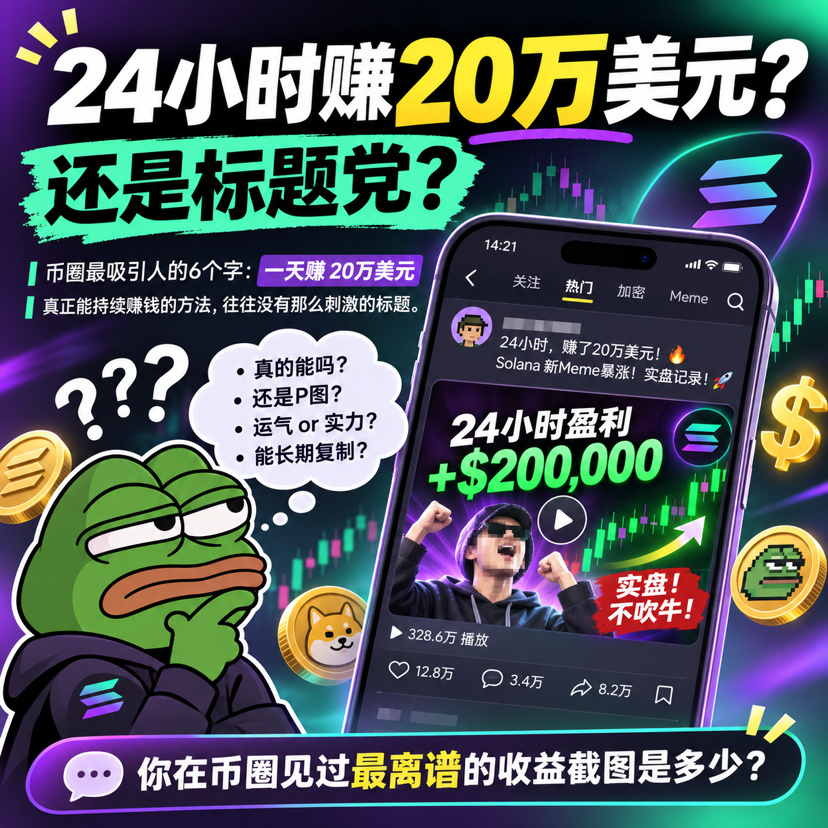
The 6 most enticing words in crypto: Make $200,000 in one day 😂
A blogger on X recently posted a video with a title that roughly said: How I made $200,000 in 24 hours.
That kind of title really knows how to tap into crypto’s formula for going viral.
The post has already attracted tens of thousands of views and hundreds of replies. A roundup of trending topics by a third party showed that the creator’s later explanation of the title also sparked a discussion about clickbait.
There is currently no independent evidence to verify the earnings claimed in the video title, so it’s better viewed as an example of viral marketing than as a guide to making money.
I’ve noticed a particularly interesting phenomenon in crypto:
When the market is doing well, people show off their gains; when it’s doing poorly, people teach you how to make gains.
The methods that can actually help people make money consistently usually don’t come with such exciting titles.
#Solana #MemeCoin #CryptoFunFacts #Crypto
163
·
--
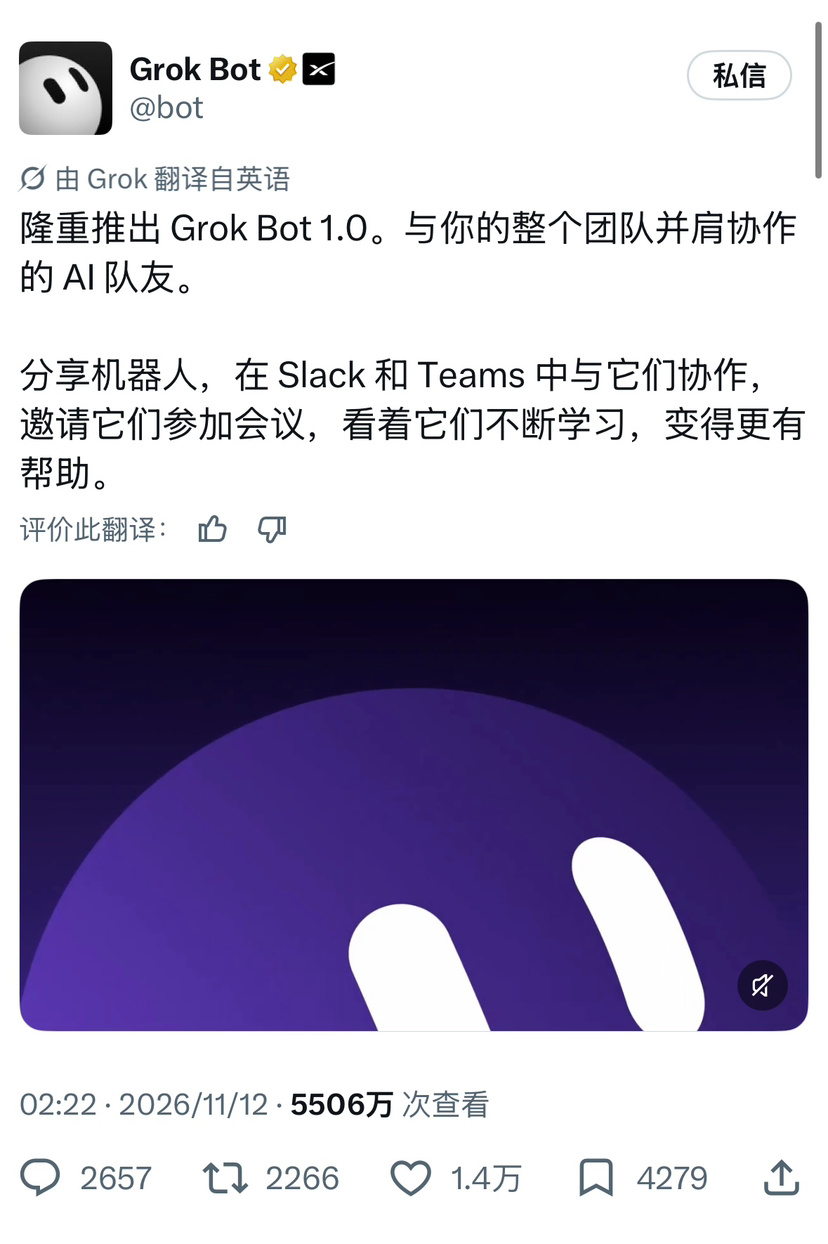
🚨 AI agents have officially entered the era of teamwork.
xAI just released Grok Bot 1.0.
The biggest change this time isn’t that the model is smarter—it’s that one bot can become an AI colleague shared by an entire team.
It can join Slack, Teams, and video meetings, understand what different colleagues are working on, remember project decisions, proactively follow up on unfinished tasks, and even suggest which tasks it could take on.
Of course, this doesn’t mean AI can already handle every role independently. People still need to be responsible for permissions, approvals, and reviewing results, and some features are only available with specific paid plans.
I think the focus of competition among agents will shift from “who can complete a single task” to “who can participate in a team’s work over the long term.”
The first truly digital AI employees may appear in the collaboration software we use every day.
#AI #GrokBot #AIAgents
74
·
--
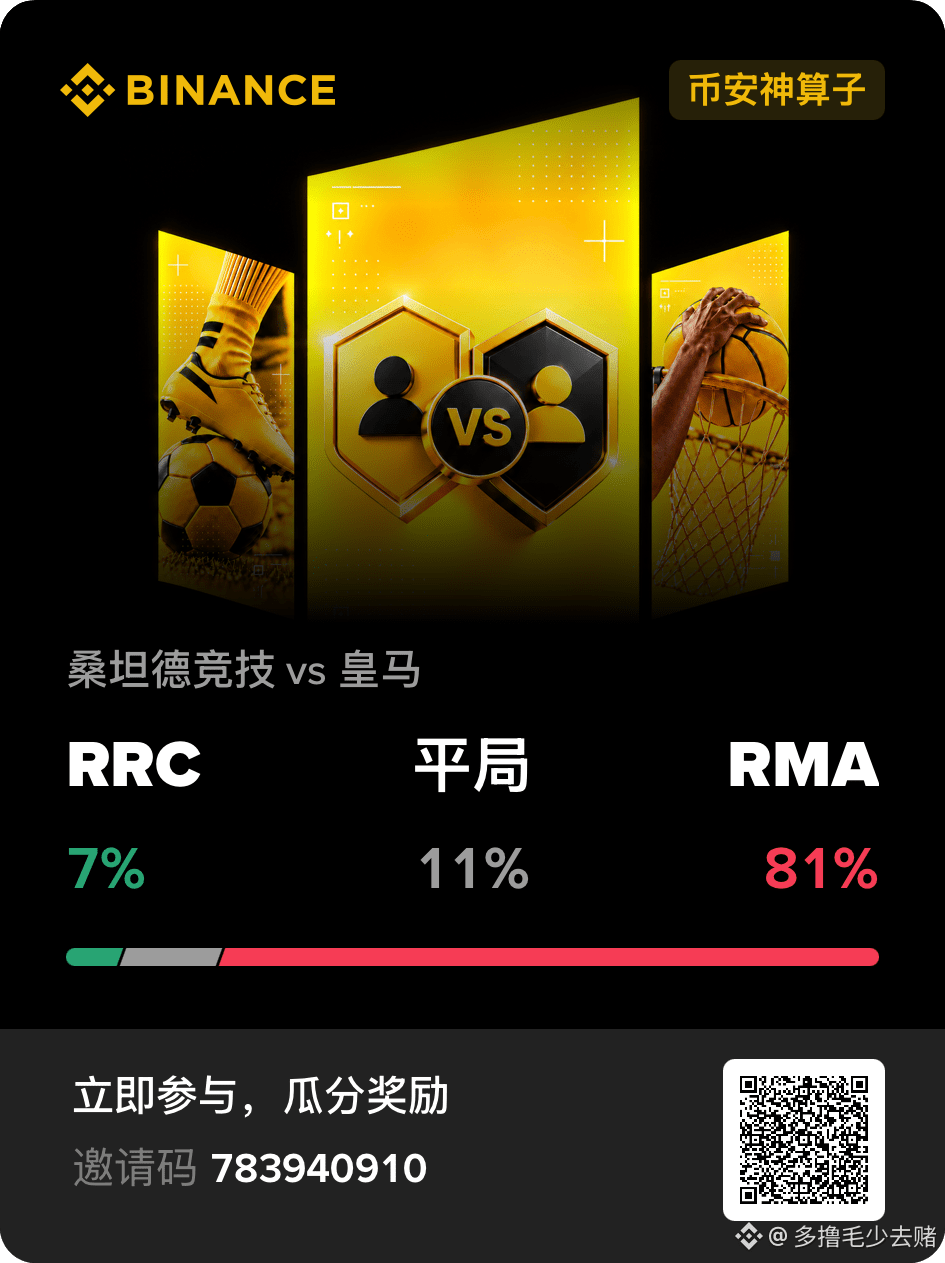
#币安神算子 🏛️【Cryptocurrency Museum】Opens Today!
Visitors, please follow your guide to see four precious exhibits.
🖼️ Exhibit No. 1: “The Missing Secret to Wealth”
A note reading “This coin is definitely going 100x,” unearthed in a trader’s 2021 chat history.
🗿 Exhibit No. 2: “The Eternal Diamond Hands”
A statue of an investor, phone clutched in their right hand, with “HODL” forever displayed on the screen.
📜 Exhibit No. 3: “The Family-Heirloom Technical Analysis Chart”
Covered in trend lines, support levels, and resistance levels, yet to this day nobody knows what the artist was trying to say. 😂
🔮 Exhibit No. 4: “A Prophecy Yet to Be Born”
An empty glass display case, with a sign beside it:
“This space is reserved for the classic call by Binance’s next great fortune-teller!”
The guide smiles and says:
“The first three exhibits record the past. The last one awaits the future.”
The market makes history every day, and those who make predictions leave behind a record of their calls, too.
👀 If you could donate an exhibit to the crypto museum, what would you donate?
#币安神算子 #Binance #Web3 #CryptoMarket
12
·
--
#币安神算子 📱【The Crypto Family That Loves Each Other】
🐂 BTC: Guys, I’m planning to break through today!
🐸 ETH: Big bro, you go first. I’ll watch and see.
🐶 DOGE: Did anyone post a tweet? Give me a shout if they did!
🪙 Stablecoins: Take your time. I’ll keep my cool.
🐋 Whale: You’re all having quite a lively chat. I’m just going to move some coins first.
🐂 BTC: ??? What are you planning to do?
🐸 ETH: Wait, why am I suddenly getting volatile?
🐶 DOGE: Whatever, let’s charge ahead and see what happens!
Just then, a new member suddenly joined the group…
🔮 Binance Oracle: Quiet down! You’ve got one minute to guess what happens next!
Everyone fell silent in an instant. 😂
Turns out, the hardest thing in crypto isn’t joining the discussion—it’s making your own call at a crucial moment.
If you were in this group, who would you most want to @ to predict the next market move?
#币安神算子 #Binance #BTC #ETH
14
·
--
#币安神算子 📢 【Urgent Crypto Hiring】Seeking Our Next Oracle!
Position: Binance Chief Oracle 🔮
Responsibilities:
✅ Study the market’s mysterious movements
✅ Find answers amid bullish and bearish disagreements
✅ Put your predictions to the test every time
✅ Prove with your skills that you’re not a contrarian indicator
Requirements:
No degree or experience required. Crypto experts of all kinds are welcome!
Special note: Candidates who claim a 100% win rate, please explain your trading history first. 😂
I recently joined Binance’s Oracle Challenge and suddenly realized that prediction markets can be this much fun.
So here’s the question: If you were applying to be Chief Oracle, how would you rate your prediction skills?
#币安神算子 #Binance #Crypto
85
·
--
🤖 If AI Agents took part in Binance Oracle, could they beat humans?
Imagine giving an AI Agent access to real-time market data, on-chain data, fund flows, and market sentiment, then letting it independently analyze every prediction question. What would happen?
AI excels at processing data, while humans are good at drawing on experience to understand the market.
But here’s the interesting part: AI might miss sudden changes by relying too heavily on historical data, while humans might make poor decisions because of their emotions.
What I’m even more excited about is a new way to play in the future:
Humans propose a hypothesis, AI Agents look for evidence, and together they make a prediction.
When human intuition meets machine logic, who’s the real oracle?
#币安神算子 #AI Agent #Binance
127
·
--
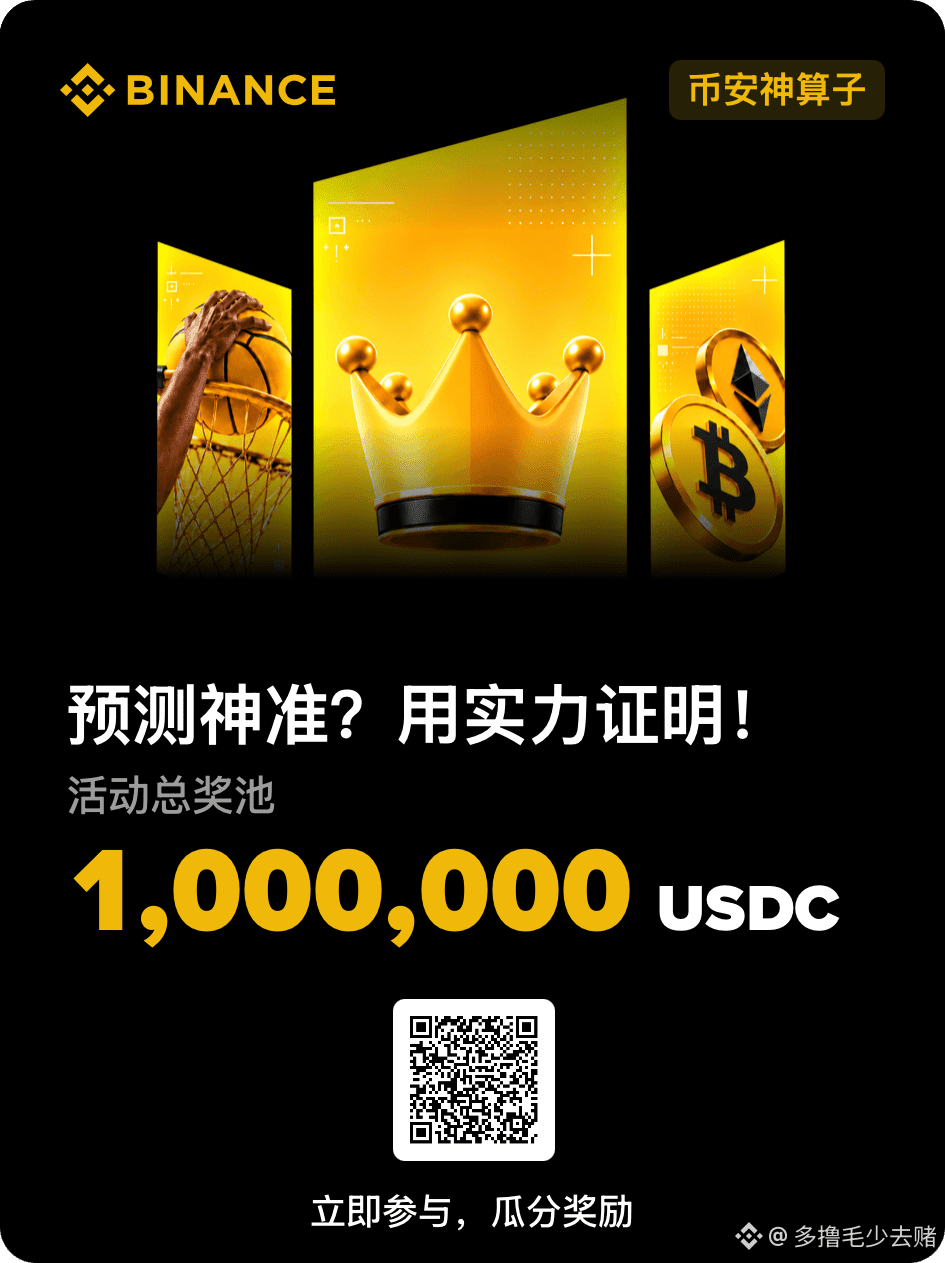
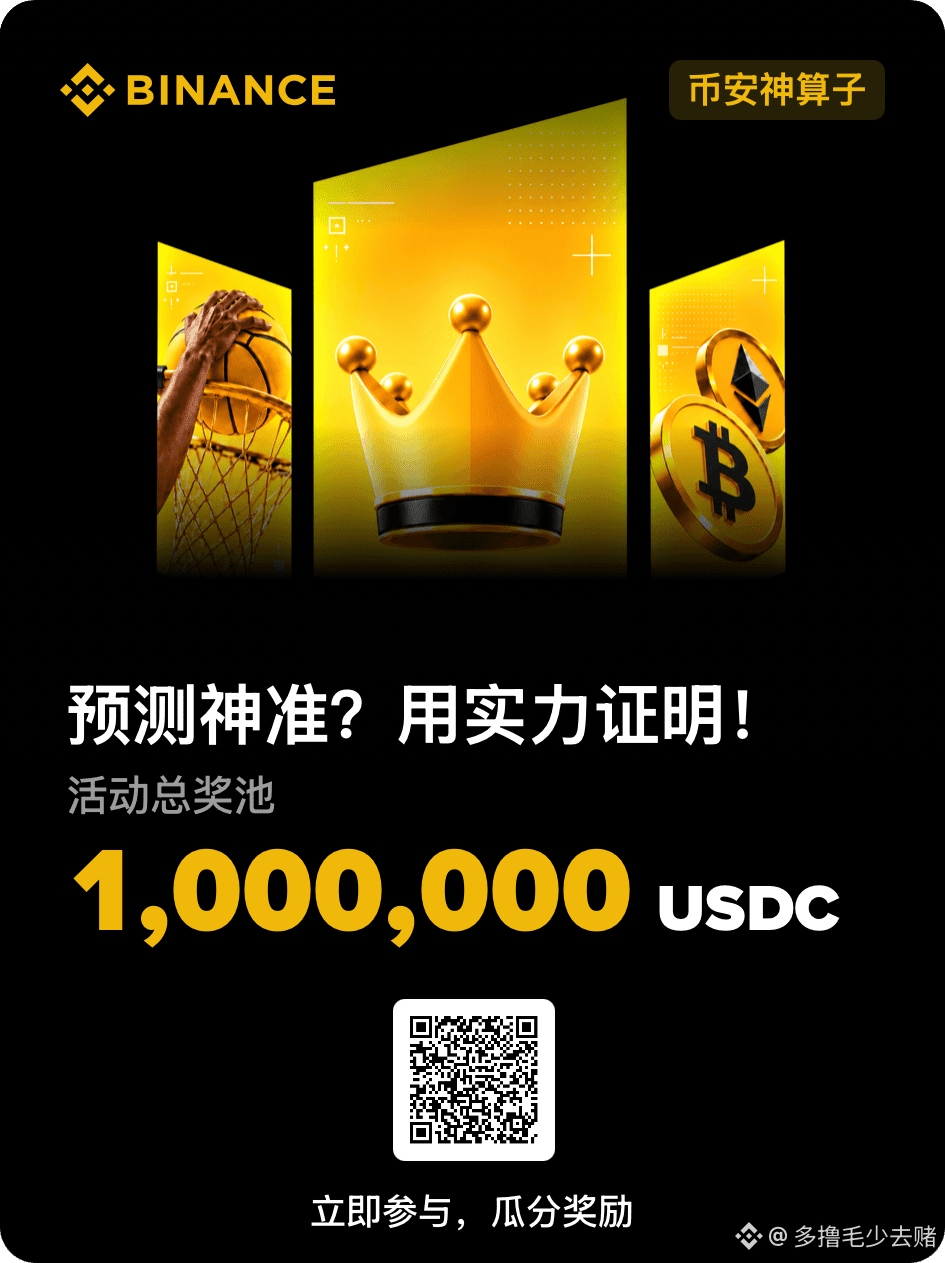
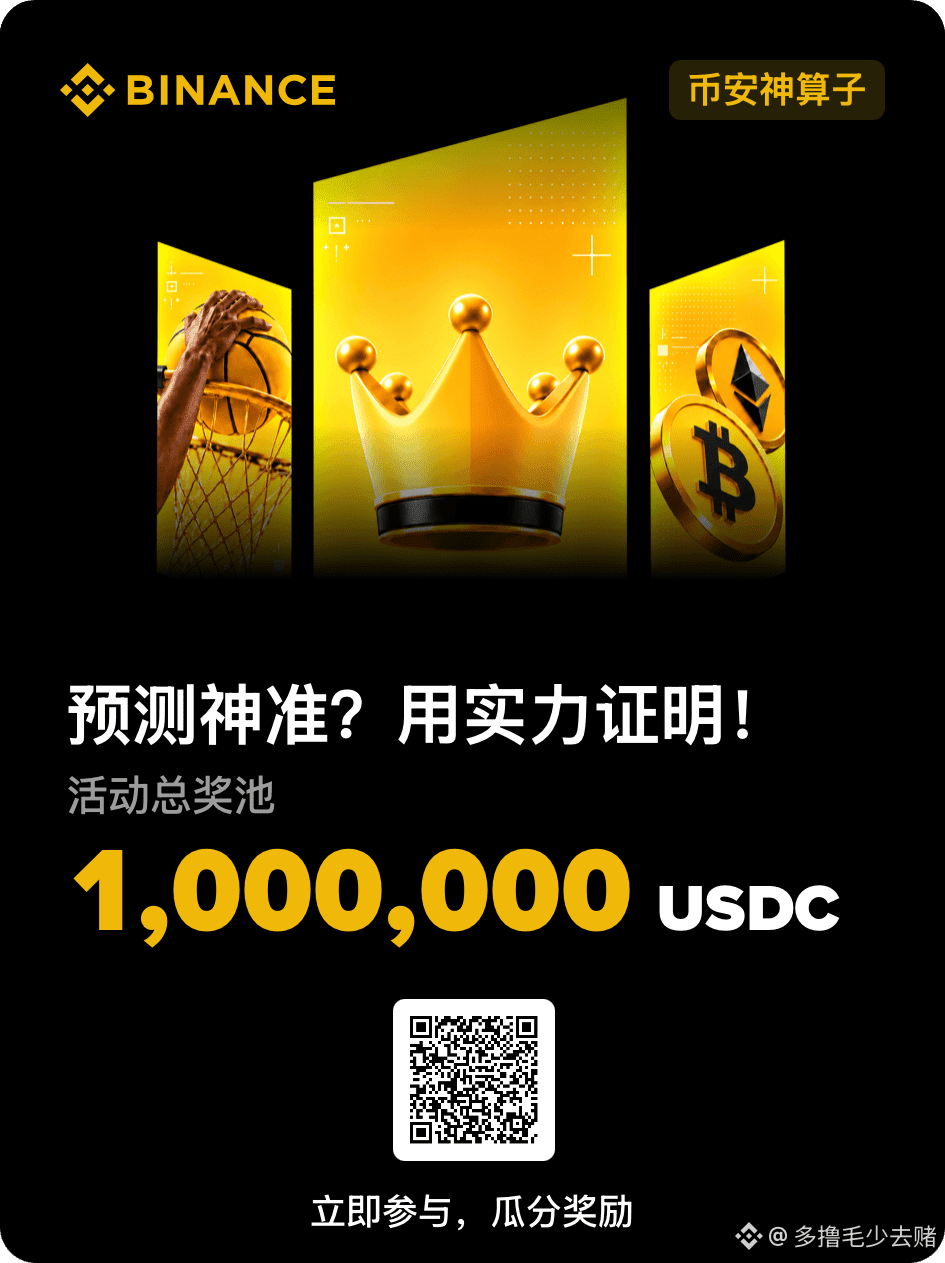
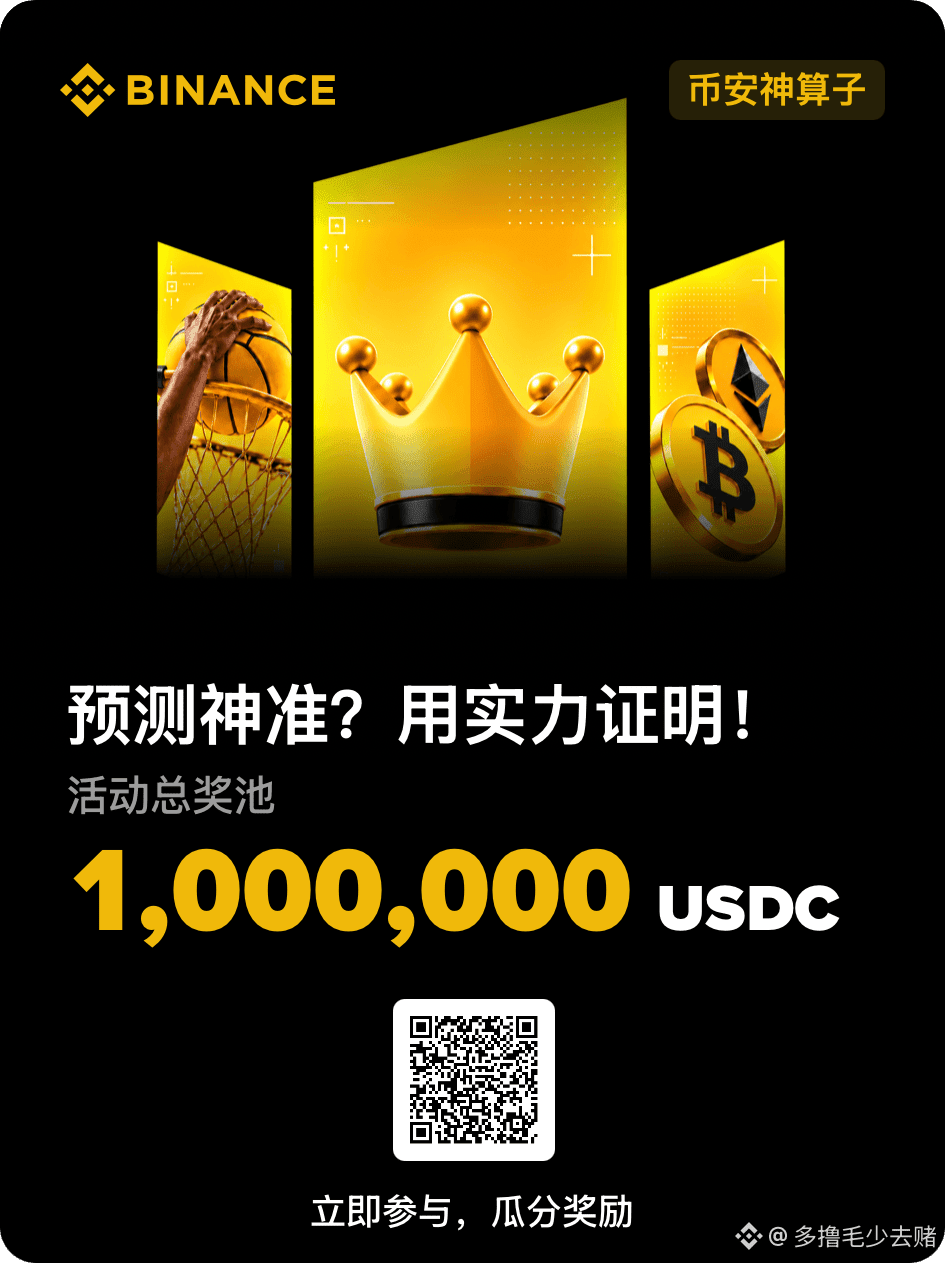
#币安神算子 🔥 Binance Predictor is officially live! With a prize pool of up to 1 million USDC, are you ready to climb the leaderboard?
This event has an interesting format. It’s not just about checking in—you can earn points by completing daily tasks, then use them to make market predictions. Get your predictions right, and you could earn even more points!
The event runs from October 21 to November 16. Rewards include seasonal and weekly leaderboard prizes, as well as participation rewards.
I think the points-based prediction system is the most interesting part. You don’t need to risk real money to make predictions, but if you want to make it onto the leaderboard, you’ll still need to make thoughtful calls on the market’s direction.
Do you think it’s better to play it safe and steady, or make predictions more actively to improve your chances of a high ranking?
#币安神算子
101
·
--
$DOS , what a pal—after letting me break even, it dropped 😂
$DOS , what a pal—after letting me break even, it dropped 😂
132
·
--
Holding $DOS 260.8 USDT
$DOS , you got me into Alpha at the top back then. Can you help me break even at 0.32?
$DOS , you got me into Alpha at the top back then. Can you help me break even at 0.32?
2
2
565
·
--
Bullish
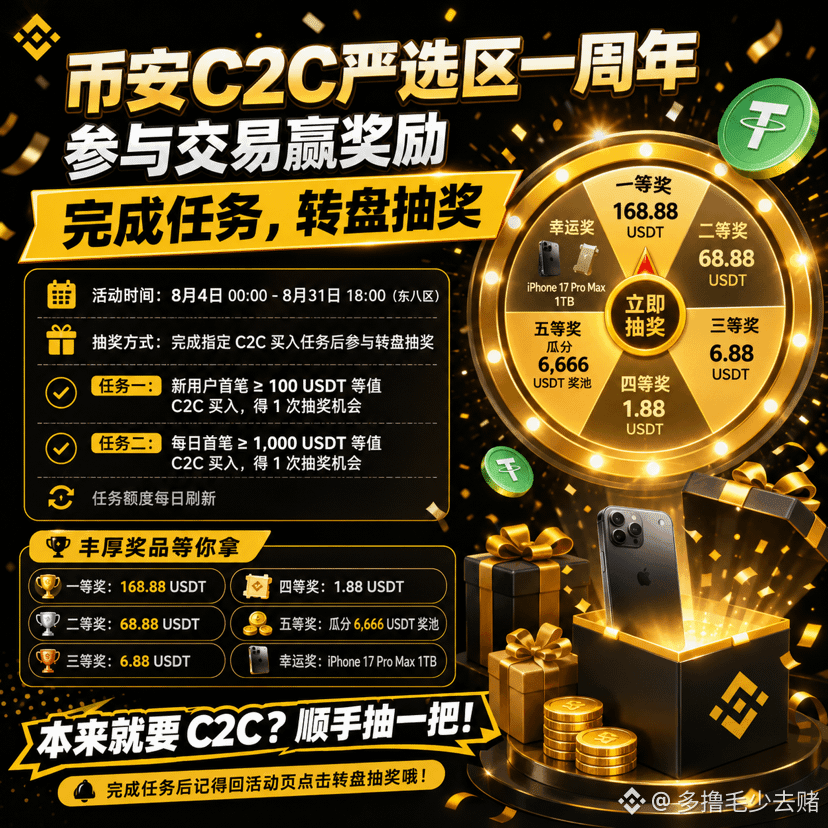
Just took a look—Binance C2C Premium Selection’s one-year anniversary promotion is almost over. It ends at 18:00 on August 31 (UTC+8).
The rules aren’t complicated: complete the specified C2C purchase tasks to get an entry for the spin-wheel drawing, and the tasks will refresh every day.
For those who already need to buy crypto, it’s like getting an extra convenient chance to win, in addition to normal trading.
The prize pool includes:
* 168.88 USDT
* 68.88 USDT
* 6.88 USDT
* 1.88 USDT
* 6,666 USDT pool-sharing slots
* iPhone 17 Pro Max 1TB
If you happen to be planning to go through C2C recently, you can join in as a bonus.
Don’t forget: finishing the tasks isn’t the end—you still need to go back to the event page and click the spin wheel, or else you’ll waste your attempts. That would be a pity 👀
104
·
--
Bullish
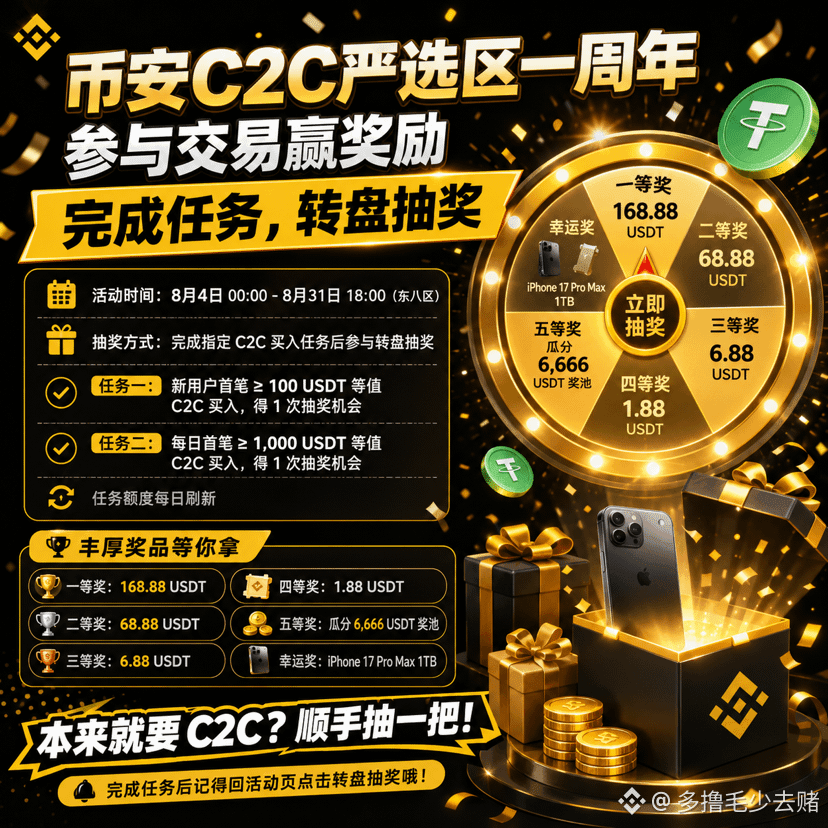
Binance C2C Featured Area’s 1st Anniversary campaign is almost over—there are still a couple of days left to keep participating.
This event is especially suitable for people who already have a C2C purchase need: after completing the required purchase tasks, you’ll get a chance to spin the prize wheel. Also, the tasks refresh every day, so it’s not limited to just one spin.
The prize pool includes 1.88, 6.88, 68.88, and 168.88 USDT, as well as qualification to share a 6,666 USDT prize pool. In addition, there are physical prizes like an iPhone 17 Pro Max 1TB.
The campaign ends at 18:00 on August 31 (UTC+8).
If you didn’t notice it in the first few days, it’s still not too late—participate now. After finishing that day’s tasks, remember to return to the campaign page and spin the wheel. Don’t wait until the campaign ends and then realize you still had remaining spins.
The biggest advantage of events like this is that you don’t need to do anything overly complicated. If you were going to trade anyway, you might as well get an extra chance to win.
In the last two days, spin as many times as you can—leave the rest to luck 👀
132
·
--
Binance C2C Premium Anniversary Event is now in its countdown—these last few days you can still continue to participate.
The gameplay isn’t complicated. Complete the corresponding C2C buy tasks to get a chance to spin the prize wheel, and the task quota refreshes every day.
This time, the prize pool includes both USDT and physical rewards:
168.88 USDT
68.88 USDT
6.88 USDT
1.88 USDT
6,666 USDT prize pool qualification tickets to be shared
iPhone 17 Pro Max 1TB
The event ends at 18:00 on August 31 (UTC+8).
If you already have plans to make a C2C purchase, there’s basically no need to change your trading rhythm—just complete the tasks and then go ahead and take a spin.
There are only a few days left. If you didn’t notice this event before, check whether you meet the participation requirements.
Trading is your actual need, and the lottery is just an extra bonus—what if you really hit it? 👀
1
150
·
--
Binance C2C Premium Zone’s 1st anniversary event—this is the kind of promotion I think is best suited for people who already have a buy-in need.
By completing the specified C2C purchase tasks, you’ll get one spin of the wheel, and the tasks refresh every day. In other words, you don’t need to go out of your way just for the event—if you were going to buy anyway, you can just get an extra chance to spin.
The prize pool isn’t small either:
168.88 USDT
68.88 USDT
6.88 USDT
1.88 USDT
6,666 USDT prize pool participation slots
Plus an iPhone 17 Pro Max 1TB
The event runs until **August 31 at 18:00**.
This kind of event is most likely to lead to one situation: you finish the tasks, but then forget to go back and spin the wheel 😂
So after you complete the tasks, remember to go back to the event page and click the wheel.
Anyway, the chances have already been given. Whether you can win depends on luck—but if you don’t spin, you definitely get nothing 👀
91
·
--
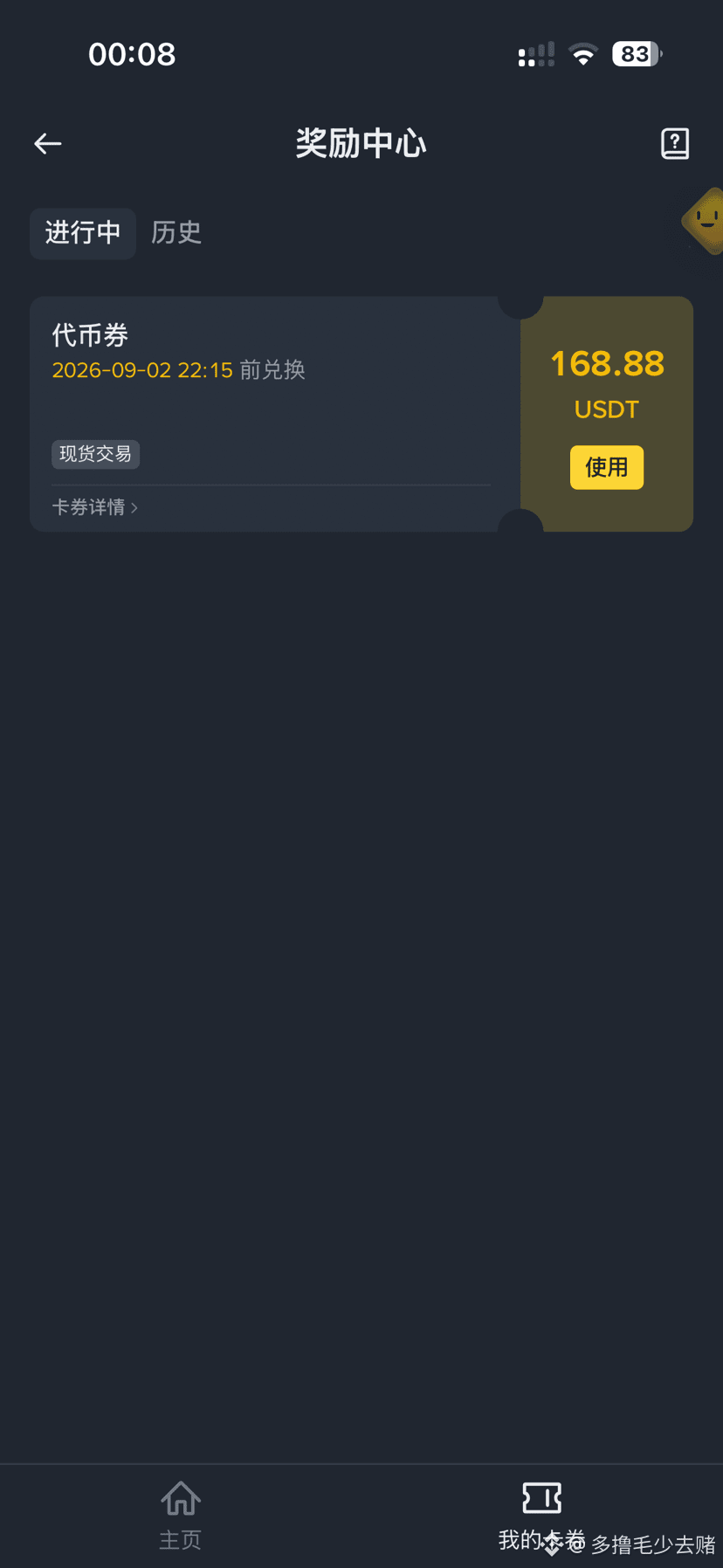
The 168.88 USDT first prize I pulled yesterday has already been credited to the Rewards Center today 👀
When I joined Binance C2C’s 1st Anniversary event in the Premium Selection area, I was only planning to “just spin whenever I had a task.” Turns out not only did I really win, but the reward payout speed was also pretty fast.
For this event, in addition to the 168.88 USDT token coupon, there are also 68.88, 6.88, and 1.88 USDT, plus entries to split the 6,666 USDT prize pool, and an iPhone 17 Pro Max (1TB).
During the event, complete the specified C2C purchase tasks to get a chance to win a prize, and the tasks refresh every day.
I basically verified it myself this time: you really can win, and the rewards really do get sent.
If you already have C2C trading needs, you can participate as a convenient extra. After you finish the tasks, don’t forget to return to the event page and spin the prize wheel—who knows, maybe the next first prize will be you 😂
2
1
139
·
--
Bullish
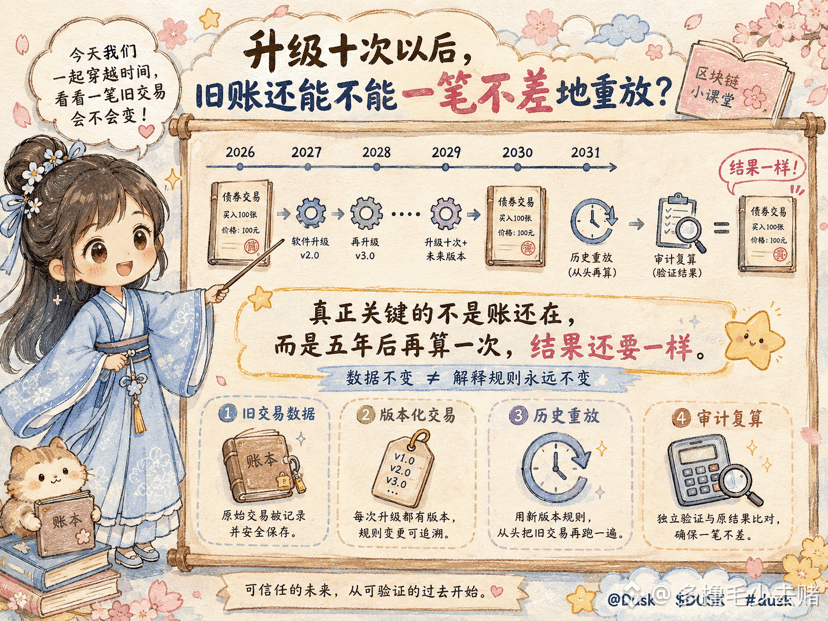
I used to think that blockchain’s so-called “immutability” meant that as long as the old blocks are still there and the hashes haven’t changed, that’s enough. When I was reading the Boreas upgrade documentation for block @Dusk_Foundation recently, I realized I was only getting half the picture: data staying the same doesn’t mean that, years later, new-version nodes will still interpret it according to the rules from back then. For ordinary transfers, this is engineering detail—but in financial audits, it’s a different story.
Suppose a bond completes an on-chain transfer in 2026. By the time of an audit in 2031, the network has already gone through multiple upgrades: the transaction format, Gas rules, and virtual machine behavior have all changed. What the audit truly needs to confirm isn’t just that the transaction still exists, but whether today’s replay and re-execution can reproduce the exact same ledger state as it was then. It’s like checking a 2026 tax return—you can’t redo the calculation using the 2031 rules and then tell you, “The data didn’t change.”
Boreas went live on the Dusk mainnet on June 10 this year alongside Rusk 1.7.0. It specifically separated the format submitted by the client, the canonical transaction inside nodes, and the final write to the ledger—while still keeping the historical decoders for pre-Aegis and pre-Boreas. The official reasoning is very engineering-oriented: you can’t allow the mempool, block production, consensus verification, and historical replay to produce different interpretations for the same set of transaction data.
That’s when it hit me: what financial ledgers fear may not be programs failing outright, but several systems all operating normally while each computes a different answer. Boreas also distinguishes VM execution and Gas rules by hard-fork version—fundamentally, it’s the same issue: you can’t take today’s rules and go back to recompute yesterday’s transactions.
But I won’t just label Dusk as mature financial infrastructure because these designs are now live. The protocol’s consideration of historical replay is one thing; after five years and multiple forks, being able to consistently re-compute old books is another. Compatibility replay tests, long-term synchronization via archive/indexer, cross-version node consistency, and audit replays after high-value assets actually enter the system—these are the data to look at next.
So when I look at network upgrades behind $DUSK in the future, I’ll actually focus on these otherwise “boring” metrics: after upgrading ten times, can old records still be replayed exactly, down to every detail. For financial infrastructure, computing correctly today isn’t enough—five years from now, it has to produce the same answer again, otherwise it doesn’t count.
#dusk $DUSK @Dusk
I used to think that blockchain’s so-called “immutability” meant that as long as the old blocks are still there and the hashes haven’t changed, that’s enough. When I was reading the Boreas upgrade documentation for block @Dusk recently, I realized I was only getting half the picture: data staying the same doesn’t mean that, years later, new-version nodes will still interpret it according to the rules from back then. For ordinary transfers, this is engineering detail—but in financial audits, it’s a different story.
Suppose a bond completes an on-chain transfer in 2026. By the time of an audit in 2031, the network has already gone through multiple upgrades: the transaction format, Gas rules, and virtual machine behavior have all changed. What the audit truly needs to confirm isn’t just that the transaction still exists, but whether today’s replay and re-execution can reproduce the exact same ledger state as it was then. It’s like checking a 2026 tax return—you can’t redo the calculation using the 2031 rules and then tell you, “The data didn’t change.”
Boreas went live on the Dusk mainnet on June 10 this year alongside Rusk 1.7.0. It specifically separated the format submitted by the client, the canonical transaction inside nodes, and the final write to the ledger—while still keeping the historical decoders for pre-Aegis and pre-Boreas. The official reasoning is very engineering-oriented: you can’t allow the mempool, block production, consensus verification, and historical replay to produce different interpretations for the same set of transaction data.
That’s when it hit me: what financial ledgers fear may not be programs failing outright, but several systems all operating normally while each computes a different answer. Boreas also distinguishes VM execution and Gas rules by hard-fork version—fundamentally, it’s the same issue: you can’t take today’s rules and go back to recompute yesterday’s transactions.
But I won’t just label Dusk as mature financial infrastructure because these designs are now live. The protocol’s consideration of historical replay is one thing; after five years and multiple forks, being able to consistently re-compute old books is another. Compatibility replay tests, long-term synchronization via archive/indexer, cross-version node consistency, and audit replays after high-value assets actually enter the system—these are the data to look at next.
So when I look at network upgrades behind $DUSK in the future, I’ll actually focus on these otherwise “boring” metrics: after upgrading ten times, can old records still be replayed exactly, down to every detail. For financial infrastructure, computing correctly today isn’t enough—five years from now, it has to produce the same answer again, otherwise it doesn’t count.
#dusk $DUSK @Dusk
1
83
·
--
Bullish
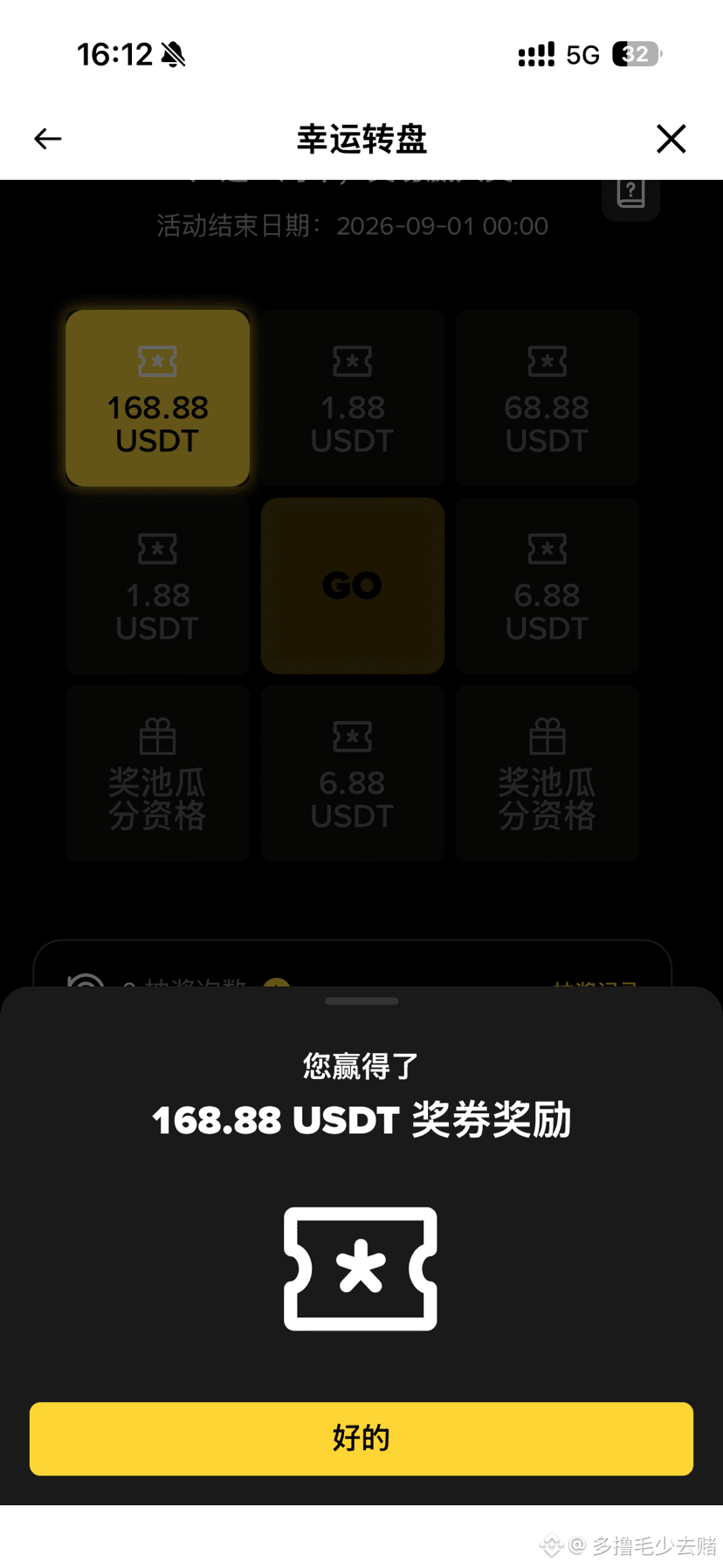
I actually got drawn today! 😂
I only joined the Binance C2C Curated Selection area’s 1st anniversary event on a whim, but today the roulette wheel directly landed me the First Prize: 168.88 USDT token voucher. This is how I personally verified it— the prize pool is definitely not just for show 👀
The event is still ongoing until August 31 at 18:00 (Eastern 8th time zone). During the event, complete the specified C2C purchase tasks to get a chance to spin the roulette wheel, and the task quota refreshes daily.
Besides the 168.88 USDT First Prize I got, the prize pool also includes:
👉 68.88 / 6.88 / 1.88 USDT token vouchers
👉 eligibility to split the 6,666 USDT prize pool
👉 iPhone 17 Pro Max (1TB)
I’d say I used up my luck early today 🤣
If you’ve got C2C trading needs, bro, you can join too—just don’t forget to go to the event page and spin the roulette after completing the tasks.
No guarantee of winning, but my 168.88U is already on the way.
2
2
132
·
--
Bullish
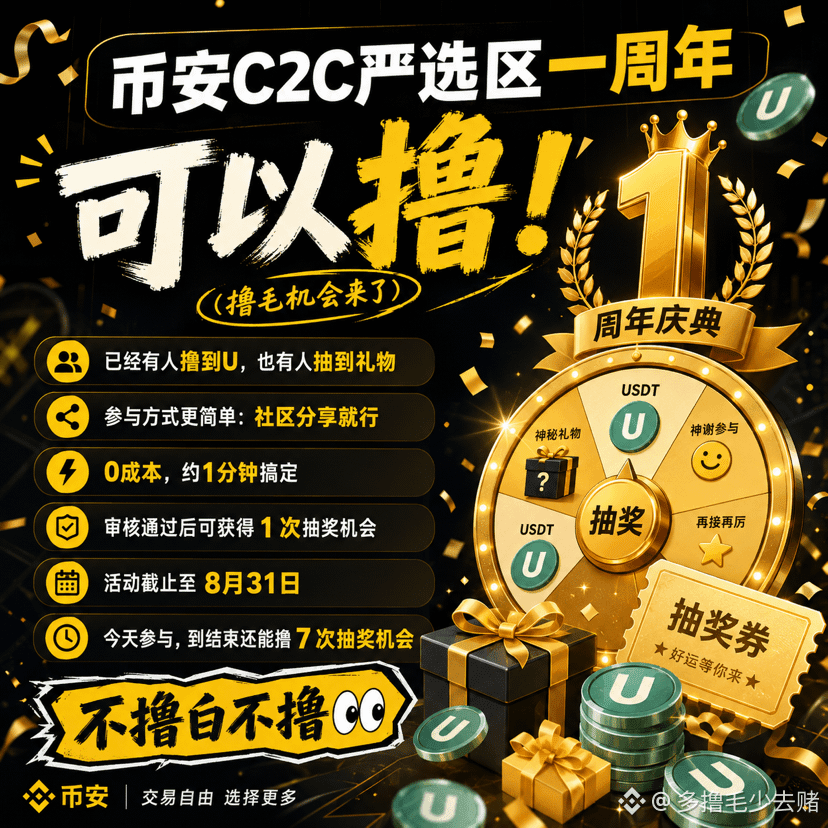
Only then did I realize that the Binance C2C Featured Zone’s one-year anniversary event—there’s no need to participate in C2C to get involved
Some people have already won $U , and others have drawn gifts—if you don’t join, it’s not worth it; go for it
The way to participate is even simpler: just share in the community—0 cost, and it takes about 1 minute. After the review is approved, you’ll get 1 drawing opportunity. The deadline is August 31
Participate today. From now until the end, you can still get 7 drawing opportunities
2
3
77
·
--
Bullish
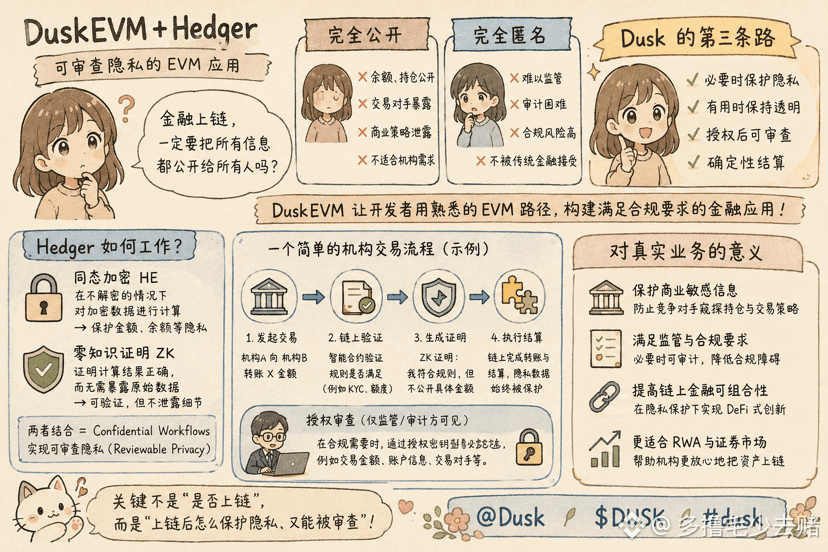
When I reread the Native Issuance document for @Dusk_Foundation , I noticed that the phrase “asset tokenization/on-chain” easily blurs two things together: a token on-chain that represents an asset doesn’t mean the asset has already completed issuance and management on-chain. Tokenization ≠ native issuance—the distinction is more worth looking at than “how many RWA tokens there are.”
Typical tokenization often creates a mapping or credential on-chain first, but the underlying asset, the register, custodial arrangements, and parts of the settlement process may still remain in traditional systems. So after the token on-chain gets moved once, the backend has to confirm again: whether the on-chain holders have already been synchronized to the holders in the legal or business systems. From the outside, assets seem composable, but the real trouble—reconciliation—doesn’t go away.
Native issuance takes a different route: from issuance onward, the asset is designed around an on-chain ledger, and subsequent transfers, servicing, and settlement proceed within the same set of states. What is truly reduced here isn’t “the token-issuing step,” but the burden of maintaining two separate authoritative records for the same asset—along with the resulting reconciliation, manual handoffs, and state inconsistencies.
But this is also where marketing narratives are most likely to go too far. Native issuance doesn’t automatically mean legal, custodial, and regulatory roles disappear. Dusk’s official materials also emphasize that how much can be reduced at the external custody or registration layers still depends on the asset’s legal structure, institutional authorization, and product design. A blockchain can unify state, but it doesn’t replace all institutional relationships and regulatory constructs.
This becomes especially critical in securities business. After a transfer, who is qualified to hold, who has the rights, whether settlement has actually completed, and who should be contacted for later dividends or corporate actions—none of that can be answered by a single transferable token alone. #dusk therefore embeds access control, selective disclosure, settlement, and servicing into the same asset lifecycle, rather than leaving compliance to be patched outside the chain.
So going forward, when I assess whether an RWA is truly “on-chain,” I won’t start by looking at how many tokens were issued. I’ll look at which ledger is the authoritative record, and how many steps in the asset lifecycle still must be confirmed off-chain. Whether @Dusk_Foundation can run native issuance as a daily, regulated-market process is what I’m really interested in observing; and whether $DUSK ’s demand for gas and staking assets can ultimately be validated will still depend on real network activity.
When I reread the Native Issuance document for @Dusk , I noticed that the phrase “asset tokenization/on-chain” easily blurs two things together: a token on-chain that represents an asset doesn’t mean the asset has already completed issuance and management on-chain. Tokenization ≠ native issuance—the distinction is more worth looking at than “how many RWA tokens there are.”
Typical tokenization often creates a mapping or credential on-chain first, but the underlying asset, the register, custodial arrangements, and parts of the settlement process may still remain in traditional systems. So after the token on-chain gets moved once, the backend has to confirm again: whether the on-chain holders have already been synchronized to the holders in the legal or business systems. From the outside, assets seem composable, but the real trouble—reconciliation—doesn’t go away.
Native issuance takes a different route: from issuance onward, the asset is designed around an on-chain ledger, and subsequent transfers, servicing, and settlement proceed within the same set of states. What is truly reduced here isn’t “the token-issuing step,” but the burden of maintaining two separate authoritative records for the same asset—along with the resulting reconciliation, manual handoffs, and state inconsistencies.
But this is also where marketing narratives are most likely to go too far. Native issuance doesn’t automatically mean legal, custodial, and regulatory roles disappear. Dusk’s official materials also emphasize that how much can be reduced at the external custody or registration layers still depends on the asset’s legal structure, institutional authorization, and product design. A blockchain can unify state, but it doesn’t replace all institutional relationships and regulatory constructs.
This becomes especially critical in securities business. After a transfer, who is qualified to hold, who has the rights, whether settlement has actually completed, and who should be contacted for later dividends or corporate actions—none of that can be answered by a single transferable token alone. #dusk therefore embeds access control, selective disclosure, settlement, and servicing into the same asset lifecycle, rather than leaving compliance to be patched outside the chain.
So going forward, when I assess whether an RWA is truly “on-chain,” I won’t start by looking at how many tokens were issued. I’ll look at which ledger is the authoritative record, and how many steps in the asset lifecycle still must be confirmed off-chain. Whether @Dusk can run native issuance as a daily, regulated-market process is what I’m really interested in observing; and whether $DUSK ’s demand for gas and staking assets can ultimately be validated will still depend on real network activity.
1
76
·
--
Bullish
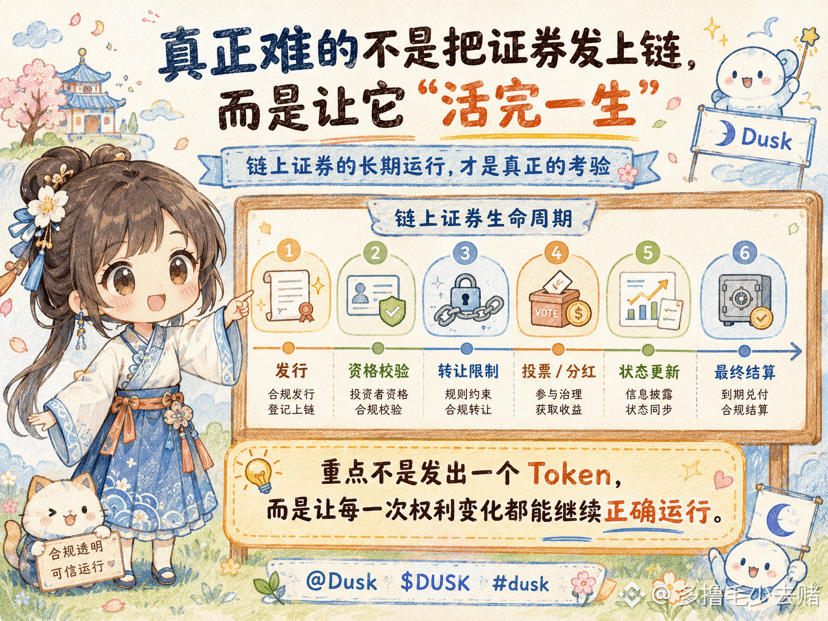
I used to look at RWA, and the first question I always asked was: when will it be issued, and can it be traded? Recently, when I kept breaking down the asset flow for @Dusk_Foundation , I realized I’d missed the more troublesome half—issuance is only day one. What happens after day two?
Suppose a company natively issues securities onto the chain. A year later, there will be dividends and shareholder voting. Meanwhile, due to a change in eligibility, a certain account can no longer keep receiving that security. If all of these things ultimately still depend on a broker’s backend systems, Excel, and manual re-verification, then “putting it on-chain” only completes the easiest step. Tokens can be transferred—that only proves the asset has been digitized. Whether the rules can run alongside the asset for the long term determines whether it truly functions as a market on the chain.
Now Dusk’s Docs place these issues directly into a regulated asset workflow: define eligibility and lifecycle rules at issuance; check eligibility and restrictions during transfers; and handle corporate actions like dividend, coupon, burn, split, and other state changes. The Mainnet docs also clearly list shareholder registries and on-chain voting. Citadel’s job is to prove whether “this address meets the requirements,” without having to lay out the entire set of identity information. And after the asset rules execute, the resulting state still needs to be finally settled as an outcome that all participants jointly recognize.
Here’s a clear cognitive reversal I’ve had. I used to think the most core data of a tokenized security was the balance. After splitting it out, I found that the balance might actually be the simplest part. What’s really hard is: who does this balance belong to? Can they still hold it now? Do they have eligibility to vote this time? Does the next distribution count for them? After the rules change, can it still be transferred to another address?
So I don’t evaluate any single Dusk module in isolation anymore. Identity, asset rules, state changes, and settlement must work together continuously. If any layer breaks, the rules simply revert back to off-chain.
Of course, just because the Docs can design it doesn’t mean it can remain stable years from now. Complex permissions, identity upgrades, regulatory changes, and long-term mainnet stability all need to keep being validated. Going forward, when I look at RWA, I’ll ask one more question: five years from now, can this security still vote normally on-chain, make distributions, transfer, update eligibility, and complete settlement? This is a better test of whether a chain is real financial infrastructure than simply asking how many tokens were issued today.
#dusk $DUSK @Dusk
I used to look at RWA, and the first question I always asked was: when will it be issued, and can it be traded? Recently, when I kept breaking down the asset flow for @Dusk , I realized I’d missed the more troublesome half—issuance is only day one. What happens after day two?
Suppose a company natively issues securities onto the chain. A year later, there will be dividends and shareholder voting. Meanwhile, due to a change in eligibility, a certain account can no longer keep receiving that security. If all of these things ultimately still depend on a broker’s backend systems, Excel, and manual re-verification, then “putting it on-chain” only completes the easiest step. Tokens can be transferred—that only proves the asset has been digitized. Whether the rules can run alongside the asset for the long term determines whether it truly functions as a market on the chain.
Now Dusk’s Docs place these issues directly into a regulated asset workflow: define eligibility and lifecycle rules at issuance; check eligibility and restrictions during transfers; and handle corporate actions like dividend, coupon, burn, split, and other state changes. The Mainnet docs also clearly list shareholder registries and on-chain voting. Citadel’s job is to prove whether “this address meets the requirements,” without having to lay out the entire set of identity information. And after the asset rules execute, the resulting state still needs to be finally settled as an outcome that all participants jointly recognize.
Here’s a clear cognitive reversal I’ve had. I used to think the most core data of a tokenized security was the balance. After splitting it out, I found that the balance might actually be the simplest part. What’s really hard is: who does this balance belong to? Can they still hold it now? Do they have eligibility to vote this time? Does the next distribution count for them? After the rules change, can it still be transferred to another address?
So I don’t evaluate any single Dusk module in isolation anymore. Identity, asset rules, state changes, and settlement must work together continuously. If any layer breaks, the rules simply revert back to off-chain.
Of course, just because the Docs can design it doesn’t mean it can remain stable years from now. Complex permissions, identity upgrades, regulatory changes, and long-term mainnet stability all need to keep being validated. Going forward, when I look at RWA, I’ll ask one more question: five years from now, can this security still vote normally on-chain, make distributions, transfer, update eligibility, and complete settlement? This is a better test of whether a chain is real financial infrastructure than simply asking how many tokens were issued today.
#dusk $DUSK @Dusk
2
98
Log in to explore more content
Join global crypto users on Binance Square
⚡️ Get latest and useful information about crypto.
💬 Trusted by the world’s largest crypto exchange.
👍 Discover real insights from verified creators.
Email / Phone number
Trending Topics
WhatWillDriveCryptoandStocks’NextRebound?
73,208 views
1,012 Discussing
Bitcoin Slips Below $70,000 as Dollar Index Hits 19-Month High
Binance News
·19 Likes
·39.2k views
BitcoinBreaksBelow200WeekMovingAverage
1,854 views
84 Discussing
SpaceXTeslaMergerTalksWouldCombine30220BTC
104 views
20 Discussing