

Md Adil Mia
4 Posts

Md Adil Mia
Report
Block User
Open Trade
Occasional Trader
2.1 Years
1 Following
0 Followers
0 Liked
Posts
Portfolio
·
--
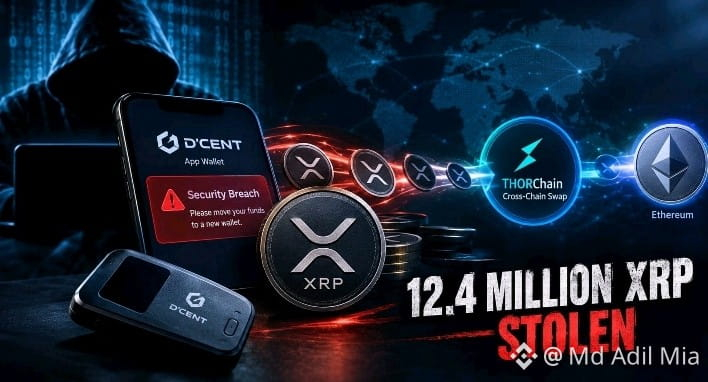
🚨 D’CENT WALLET BREACH: 12.4M XRP LOST
More than 7,300 crypto wallets were reportedly drained of around 12.4 million XRP, worth roughly $18–20M.
The key detail: the XRP Ledger itself was not hacked. Attackers gained access to compromised private keys and used valid signatures to move the funds.
Even after security warnings were issued, additional XRP was reportedly stolen. Some of the funds later moved through THORChain, making recovery more difficult.
🔐 The lesson: Blockchain security can remain intact while individual wallets are still vulnerable.
D’CENT has advised affected users to generate new recovery phrases and move their assets immediately.
Stay alert. Protect your keys. 🛡️
#xrp #CryptoSecurity #DCENT #BlockchainNews #BinanceSquare
$ETH
{spot}(ETHUSDT)
$XRP
{spot}(XRPUSDT)
🚨 D’CENT WALLET BREACH: 12.4M XRP LOST
More than 7,300 crypto wallets were reportedly drained of around 12.4 million XRP, worth roughly $18–20M.
The key detail: the XRP Ledger itself was not hacked. Attackers gained access to compromised private keys and used valid signatures to move the funds.
Even after security warnings were issued, additional XRP was reportedly stolen. Some of the funds later moved through THORChain, making recovery more difficult.
🔐 The lesson: Blockchain security can remain intact while individual wallets are still vulnerable.
D’CENT has advised affected users to generate new recovery phrases and move their assets immediately.
Stay alert. Protect your keys. 🛡️
#xrp #CryptoSecurity #DCENT #BlockchainNews #BinanceSquare
$ETH
$XRP
More than 7,300 crypto wallets were reportedly drained of around 12.4 million XRP, worth roughly $18–20M.
The key detail: the XRP Ledger itself was not hacked. Attackers gained access to compromised private keys and used valid signatures to move the funds.
Even after security warnings were issued, additional XRP was reportedly stolen. Some of the funds later moved through THORChain, making recovery more difficult.
🔐 The lesson: Blockchain security can remain intact while individual wallets are still vulnerable.
D’CENT has advised affected users to generate new recovery phrases and move their assets immediately.
Stay alert. Protect your keys. 🛡️
#xrp #CryptoSecurity #DCENT #BlockchainNews #BinanceSquare
$ETH
$XRP
111
·
--
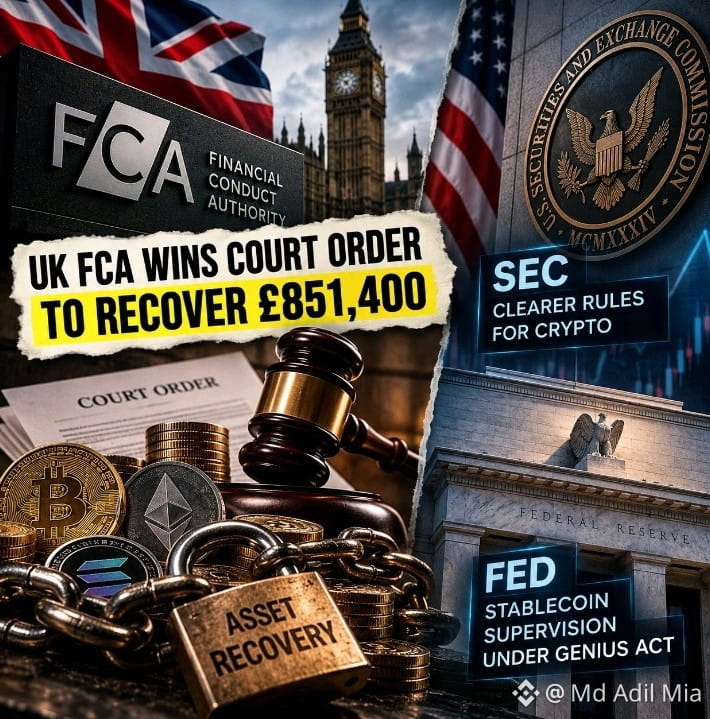
🚨 CRYPTO REGULATION JUST ENTERED A NEW ERA
Something important is happening across the global crypto industry.
Regulators are no longer focused only on writing rules — enforcement and asset recovery are becoming a bigger part of the picture.
🇬🇧 UK FCA → stronger enforcement + court-backed asset recovery
🇺🇸 SEC → evolving regulatory framework for crypto assets
🇺🇸 U.S. regulators → increasing oversight of stablecoins and digital-asset activity
So what does this mean for crypto?
The conversation is shifting from:
“Should crypto be regulated?”
to:
“Who can operate, what rules apply, and what happens when those rules are broken?”
📌 Regulation is becoming a major part of crypto’s next chapter.
For projects, exchanges, businesses, and users, compliance, transparency, and regulatory clarity could become increasingly important.
💬 Do you think stronger regulation will help crypto grow, or create more barriers for the industry?
$BTC
{spot}(BTCUSDT)
$COIN
{future}(COINUSDT)
#UKFCAWinsCourtOrderToRecover851400Pounds
#crypto #BinanceSquare #CryptoRegulation #DigitalAssets
🚨 CRYPTO REGULATION JUST ENTERED A NEW ERA
Something important is happening across the global crypto industry.
Regulators are no longer focused only on writing rules — enforcement and asset recovery are becoming a bigger part of the picture.
🇬🇧 UK FCA → stronger enforcement + court-backed asset recovery
🇺🇸 SEC → evolving regulatory framework for crypto assets
🇺🇸 U.S. regulators → increasing oversight of stablecoins and digital-asset activity
So what does this mean for crypto?
The conversation is shifting from:
“Should crypto be regulated?”
to:
“Who can operate, what rules apply, and what happens when those rules are broken?”
📌 Regulation is becoming a major part of crypto’s next chapter.
For projects, exchanges, businesses, and users, compliance, transparency, and regulatory clarity could become increasingly important.
💬 Do you think stronger regulation will help crypto grow, or create more barriers for the industry?
$BTC
$COIN
#UKFCAWinsCourtOrderToRecover851400Pounds
#crypto #BinanceSquare #CryptoRegulation #DigitalAssets
Something important is happening across the global crypto industry.
Regulators are no longer focused only on writing rules — enforcement and asset recovery are becoming a bigger part of the picture.
🇬🇧 UK FCA → stronger enforcement + court-backed asset recovery
🇺🇸 SEC → evolving regulatory framework for crypto assets
🇺🇸 U.S. regulators → increasing oversight of stablecoins and digital-asset activity
So what does this mean for crypto?
The conversation is shifting from:
“Should crypto be regulated?”
to:
“Who can operate, what rules apply, and what happens when those rules are broken?”
📌 Regulation is becoming a major part of crypto’s next chapter.
For projects, exchanges, businesses, and users, compliance, transparency, and regulatory clarity could become increasingly important.
💬 Do you think stronger regulation will help crypto grow, or create more barriers for the industry?
$BTC
$COIN
#UKFCAWinsCourtOrderToRecover851400Pounds
#crypto #BinanceSquare #CryptoRegulation #DigitalAssets
61
·
--
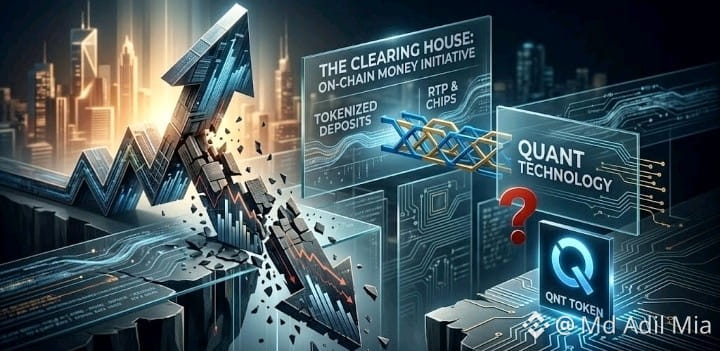
🚨 QNT JUST MADE A MASSIVE MOVE — BUT HERE’S THE PART THE MARKET MAY BE MISSING
Quant (QNT) exploded from around $70 to nearly $360 after The Clearing House selected Quant’s technology for its On-Chain Money Initiative.
Sounds huge, right? 👀
And yes — the institutional development is significant.
But there’s an important distinction:
The Clearing House selected Quant’s TECHNOLOGY.
The announcement does not say that participating banks must buy, hold, or use QNT tokens.
That creates two very different narratives:
Institutional adoption → Quant technology ✅
Quant adoption → QNT token demand ❓
The second connection still needs evidence.
Meanwhile, the massive price move attracted leverage, momentum traders, and speculation — turning a real institutional development into a much larger market trade.
Then came the reversal.
📉 QNT has now given back more than 40% from the morning high.
So the real question isn't simply:
“Did Quant receive institutional validation?”
It did.
The bigger question is:
🔥 Will institutional use of Quant’s technology actually create sustainable demand for QNT?
That’s the link the market needs to watch.
Technology adoption and token utility are not automatically the same thing.
DYOR. Not financial advice.
$QNT
{spot}(QNTUSDT)
#Tokenization #blockchain #CryptoNews #BİNANCESQUARE #InstitutionalCrypto"
🚨 QNT JUST MADE A MASSIVE MOVE — BUT HERE’S THE PART THE MARKET MAY BE MISSING
Quant (QNT) exploded from around $70 to nearly $360 after The Clearing House selected Quant’s technology for its On-Chain Money Initiative.
Sounds huge, right? 👀
And yes — the institutional development is significant.
But there’s an important distinction:
The Clearing House selected Quant’s TECHNOLOGY.
The announcement does not say that participating banks must buy, hold, or use QNT tokens.
That creates two very different narratives:
Institutional adoption → Quant technology ✅
Quant adoption → QNT token demand ❓
The second connection still needs evidence.
Meanwhile, the massive price move attracted leverage, momentum traders, and speculation — turning a real institutional development into a much larger market trade.
Then came the reversal.
📉 QNT has now given back more than 40% from the morning high.
So the real question isn't simply:
“Did Quant receive institutional validation?”
It did.
The bigger question is:
🔥 Will institutional use of Quant’s technology actually create sustainable demand for QNT?
That’s the link the market needs to watch.
Technology adoption and token utility are not automatically the same thing.
DYOR. Not financial advice.
$QNT
#Tokenization #blockchain #CryptoNews #BİNANCESQUARE #InstitutionalCrypto"
Quant (QNT) exploded from around $70 to nearly $360 after The Clearing House selected Quant’s technology for its On-Chain Money Initiative.
Sounds huge, right? 👀
And yes — the institutional development is significant.
But there’s an important distinction:
The Clearing House selected Quant’s TECHNOLOGY.
The announcement does not say that participating banks must buy, hold, or use QNT tokens.
That creates two very different narratives:
Institutional adoption → Quant technology ✅
Quant adoption → QNT token demand ❓
The second connection still needs evidence.
Meanwhile, the massive price move attracted leverage, momentum traders, and speculation — turning a real institutional development into a much larger market trade.
Then came the reversal.
📉 QNT has now given back more than 40% from the morning high.
So the real question isn't simply:
“Did Quant receive institutional validation?”
It did.
The bigger question is:
🔥 Will institutional use of Quant’s technology actually create sustainable demand for QNT?
That’s the link the market needs to watch.
Technology adoption and token utility are not automatically the same thing.
DYOR. Not financial advice.
$QNT
#Tokenization #blockchain #CryptoNews #BİNANCESQUARE #InstitutionalCrypto"
1
272
·
--
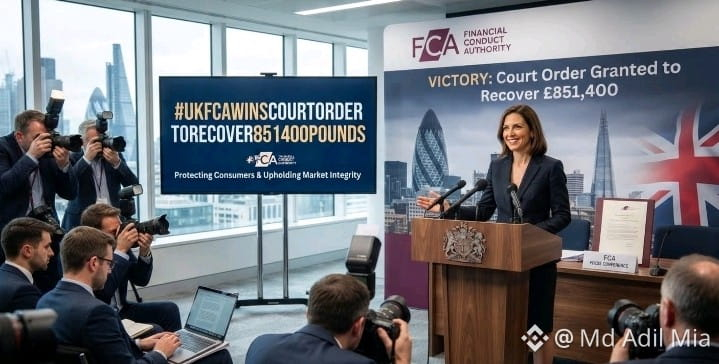
⚖️ A Strong Step Toward Financial Justice
The UK Financial Conduct Authority (FCA) has secured a court order to recover £851,400 linked to financial fraud.
This is an important reminder that financial crime can have serious consequences—and that recovering stolen assets is a crucial part of protecting victims and strengthening trust in the financial system.
🔎 Stay alert before investing:
• Check whether a financial firm is properly authorized
• Verify information through official regulatory sources
• Be cautious of unrealistic returns and high-pressure offers
• Never invest money you cannot afford to lose
Strong enforcement and effective asset recovery can help make financial markets safer and more transparent for everyone.
💬 Do you think stronger asset-recovery laws could further protect investors and victims of financial fraud?
#FinancialJustice #FCA #AssetRecovery #InvestorProtection #BinanceSquare $BTC
{spot}(BTCUSDT)
$XRP
{spot}(XRPUSDT)
$SOL
{spot}(SOLUSDT)
⚖️ A Strong Step Toward Financial Justice
The UK Financial Conduct Authority (FCA) has secured a court order to recover £851,400 linked to financial fraud.
This is an important reminder that financial crime can have serious consequences—and that recovering stolen assets is a crucial part of protecting victims and strengthening trust in the financial system.
🔎 Stay alert before investing:
• Check whether a financial firm is properly authorized
• Verify information through official regulatory sources
• Be cautious of unrealistic returns and high-pressure offers
• Never invest money you cannot afford to lose
Strong enforcement and effective asset recovery can help make financial markets safer and more transparent for everyone.
💬 Do you think stronger asset-recovery laws could further protect investors and victims of financial fraud?
#FinancialJustice #FCA #AssetRecovery #InvestorProtection #BinanceSquare $BTC
$XRP
$SOL
The UK Financial Conduct Authority (FCA) has secured a court order to recover £851,400 linked to financial fraud.
This is an important reminder that financial crime can have serious consequences—and that recovering stolen assets is a crucial part of protecting victims and strengthening trust in the financial system.
🔎 Stay alert before investing:
• Check whether a financial firm is properly authorized
• Verify information through official regulatory sources
• Be cautious of unrealistic returns and high-pressure offers
• Never invest money you cannot afford to lose
Strong enforcement and effective asset recovery can help make financial markets safer and more transparent for everyone.
💬 Do you think stronger asset-recovery laws could further protect investors and victims of financial fraud?
#FinancialJustice #FCA #AssetRecovery #InvestorProtection #BinanceSquare $BTC
$XRP
$SOL
80
Log in to explore more content
Join global crypto users on Binance Square
⚡️ Get latest and useful information about crypto.
💬 Trusted by the world’s largest crypto exchange.
👍 Discover real insights from verified creators.
Email / Phone number