
Abu-Hamza
156 Posts

Abu-Hamza
Report
Block User
صانع محتوى في مجال الكريبتو أشرح خدمات بينانس بأسلوب مبسط وعملي، أقدم محتوى مشابه لما أقدمه عبر منصة "قدس كريبتو" التعليمية.

Binance Square Creator Awards

XRP Holder
Occasional Trader
5.3 Years
22 Following
9.8K+ Followers
1.8K+ Liked
1 Badges
Posts
All
Videos
·
--
The Eighth Educational Post
#For_Beginners_Only
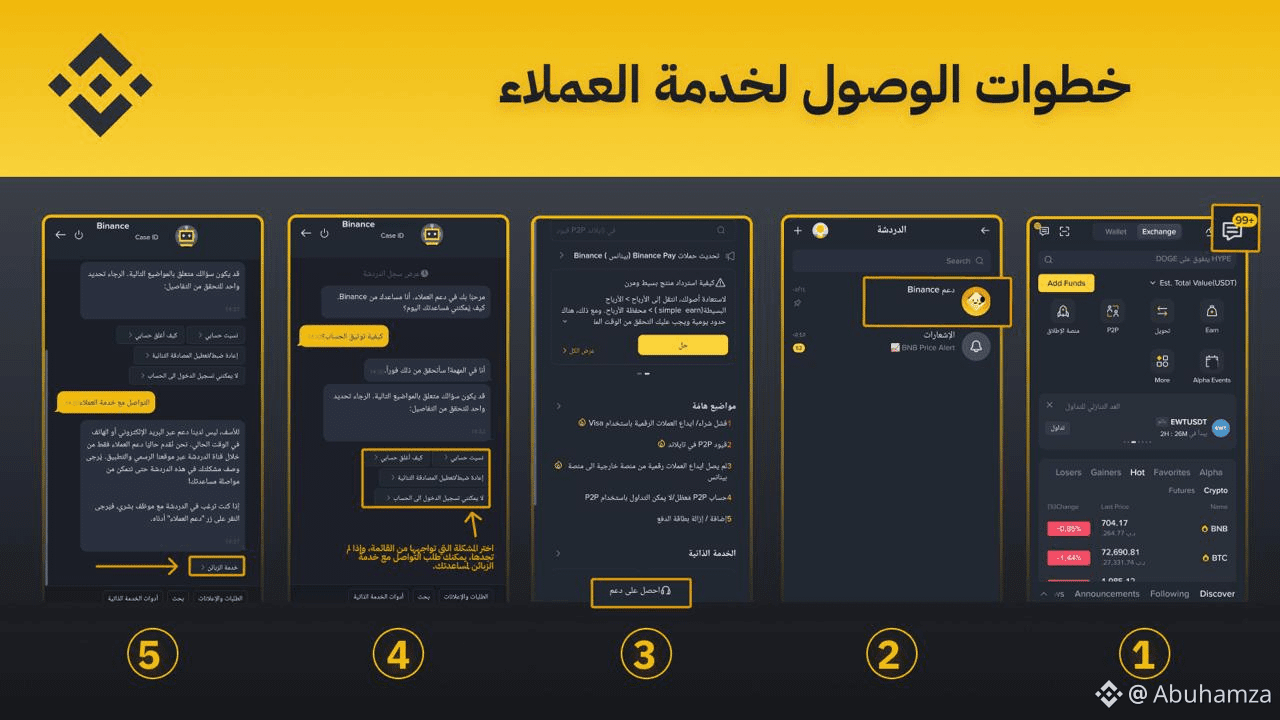
How to Contact Binance Platform Support
The most important point in this post is that there is no support outside the platform—neither on Telegram nor Twitter nor WhatsApp, nor any website other than this method
Anyone who contacts you as if they are support is a scammer trying to steal your money
Also, support will not ask you for security codes or verification
The Eighth Educational Post
#For_Beginners_Only
How to Contact Binance Platform Support
The most important point in this post is that there is no support outside the platform—neither on Telegram nor Twitter nor WhatsApp, nor any website other than this method
Anyone who contacts you as if they are support is a scammer trying to steal your money
Also, support will not ask you for security codes or verification
#For_Beginners_Only
How to Contact Binance Platform Support
The most important point in this post is that there is no support outside the platform—neither on Telegram nor Twitter nor WhatsApp, nor any website other than this method
Anyone who contacts you as if they are support is a scammer trying to steal your money
Also, support will not ask you for security codes or verification
1
205
·
--
🔰 Seventh Educational Post
#For_Beginners_Only
#Japanese_Candlesticks
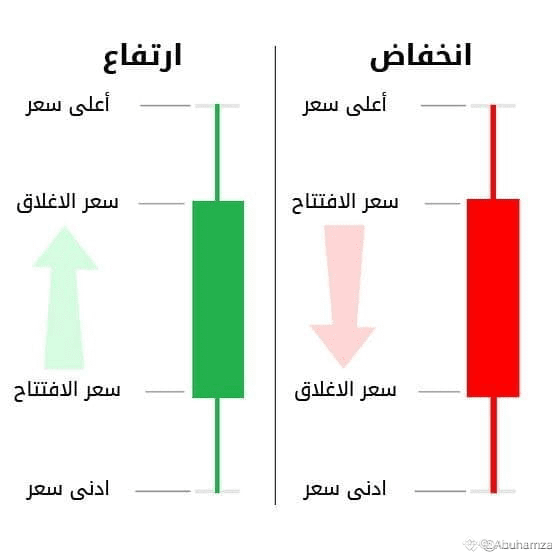
❇️ Japanese candlesticks are traders’ language to understand price movement. They help you read past and current chart data, and predict future trends with high efficiency.
🔰 Importance of the Close: The candlestick close depends on the selected timeframe (from one minute to a full month). It is a key element in technical analysis.
📌 Most important closes according to Mecca time (+3 GMT):
1️⃣ 1h candlestick → at the top of every hour
2️⃣ 4h candlestick → every four hours (3am – 7am – 11am – 3pm – 7pm – 11pm)
3️⃣ 1D candlestick → end of the day at 3am
4️⃣ 1W candlestick → end of the week with Sunday’s close
5️⃣ 1M candlestick → end of the month at 3am, on the first day of the new month
💡 Learn to read candlesticks accurately—they are the key to understanding the market and making the right decision.
🔰 Seventh Educational Post
#For_Beginners_Only
#Japanese_Candlesticks
❇️ Japanese candlesticks are traders’ language to understand price movement. They help you read past and current chart data, and predict future trends with high efficiency.
🔰 Importance of the Close: The candlestick close depends on the selected timeframe (from one minute to a full month). It is a key element in technical analysis.
📌 Most important closes according to Mecca time (+3 GMT):
1️⃣ 1h candlestick → at the top of every hour
2️⃣ 4h candlestick → every four hours (3am – 7am – 11am – 3pm – 7pm – 11pm)
3️⃣ 1D candlestick → end of the day at 3am
4️⃣ 1W candlestick → end of the week with Sunday’s close
5️⃣ 1M candlestick → end of the month at 3am, on the first day of the new month
💡 Learn to read candlesticks accurately—they are the key to understanding the market and making the right decision.
#For_Beginners_Only
#Japanese_Candlesticks
❇️ Japanese candlesticks are traders’ language to understand price movement. They help you read past and current chart data, and predict future trends with high efficiency.
🔰 Importance of the Close: The candlestick close depends on the selected timeframe (from one minute to a full month). It is a key element in technical analysis.
📌 Most important closes according to Mecca time (+3 GMT):
1️⃣ 1h candlestick → at the top of every hour
2️⃣ 4h candlestick → every four hours (3am – 7am – 11am – 3pm – 7pm – 11pm)
3️⃣ 1D candlestick → end of the day at 3am
4️⃣ 1W candlestick → end of the week with Sunday’s close
5️⃣ 1M candlestick → end of the month at 3am, on the first day of the new month
💡 Learn to read candlesticks accurately—they are the key to understanding the market and making the right decision.
4
328
·
--
🔰 Sixth educational post
#ForBeginners_Only
#StopLoss
❇️ What is a Stop Loss?
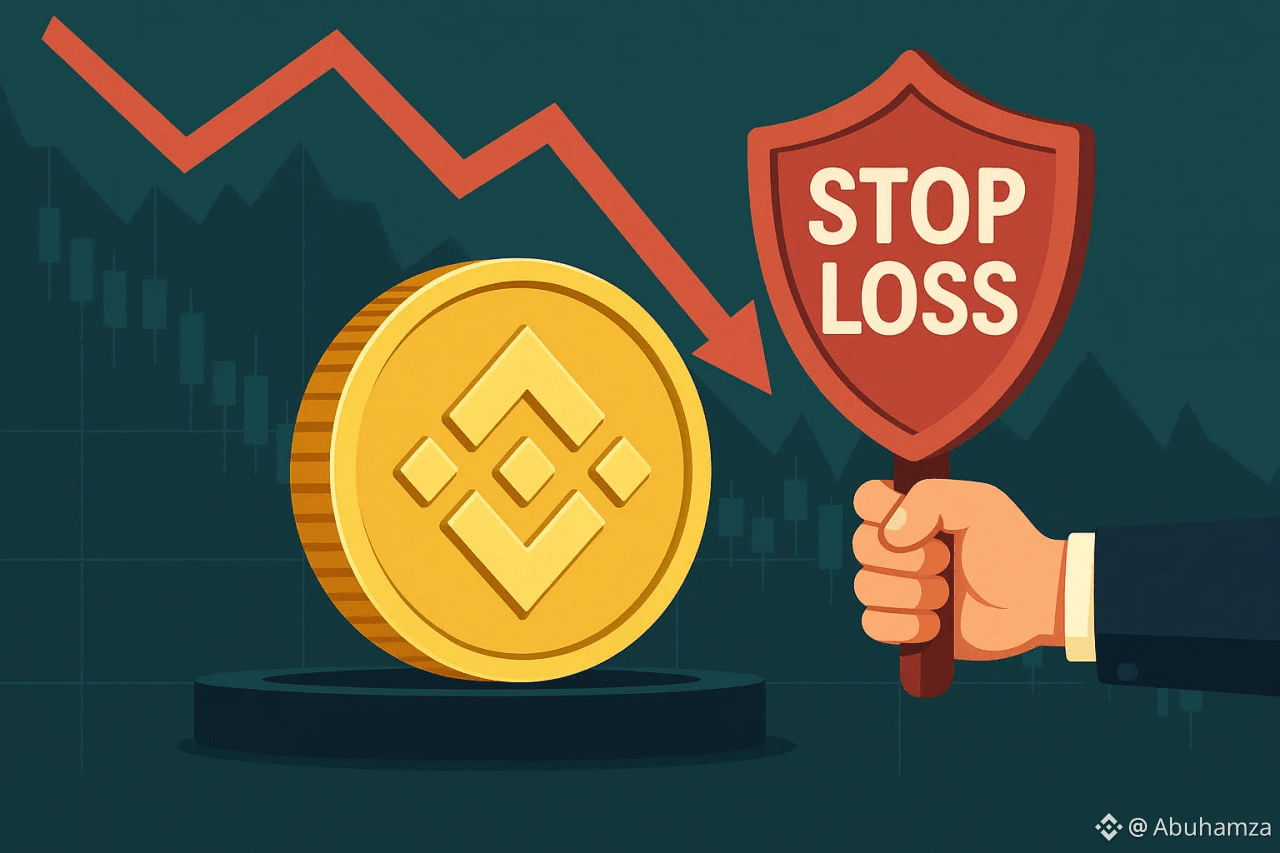
💠 A stop loss is the level you set in advance to close a trade when the loss reaches a point that is unacceptable to you.
🔰 Key points when setting a stop loss:
🔹 Every trader has their own strategy, so don’t rely on what others do—even if they are professionals.
🔹 Always stick to your stop-loss decision and don’t hesitate to execute it.
🔹 The right strategy ensures your success, so place a stop-loss order in every trade you make.
🔹 After buying any coin, set a stop-loss order to avoid large losses if the market drops.
🔹 The purpose of a stop loss is not to completely prevent losses, but to reduce them and protect your capital.
🔹 Don’t set your stop loss too close to the buy price so the trade doesn’t get closed quickly due to normal market fluctuations.
🔰 Sixth educational post
#ForBeginners_Only
#StopLoss
❇️ What is a Stop Loss?
💠 A stop loss is the level you set in advance to close a trade when the loss reaches a point that is unacceptable to you.
🔰 Key points when setting a stop loss:
🔹 Every trader has their own strategy, so don’t rely on what others do—even if they are professionals.
🔹 Always stick to your stop-loss decision and don’t hesitate to execute it.
🔹 The right strategy ensures your success, so place a stop-loss order in every trade you make.
🔹 After buying any coin, set a stop-loss order to avoid large losses if the market drops.
🔹 The purpose of a stop loss is not to completely prevent losses, but to reduce them and protect your capital.
🔹 Don’t set your stop loss too close to the buy price so the trade doesn’t get closed quickly due to normal market fluctuations.
#ForBeginners_Only
#StopLoss
❇️ What is a Stop Loss?
💠 A stop loss is the level you set in advance to close a trade when the loss reaches a point that is unacceptable to you.
🔰 Key points when setting a stop loss:
🔹 Every trader has their own strategy, so don’t rely on what others do—even if they are professionals.
🔹 Always stick to your stop-loss decision and don’t hesitate to execute it.
🔹 The right strategy ensures your success, so place a stop-loss order in every trade you make.
🔹 After buying any coin, set a stop-loss order to avoid large losses if the market drops.
🔹 The purpose of a stop loss is not to completely prevent losses, but to reduce them and protect your capital.
🔹 Don’t set your stop loss too close to the buy price so the trade doesn’t get closed quickly due to normal market fluctuations.
1
516
·
--
Fifth Educational Post
#ForBeginnersOnly
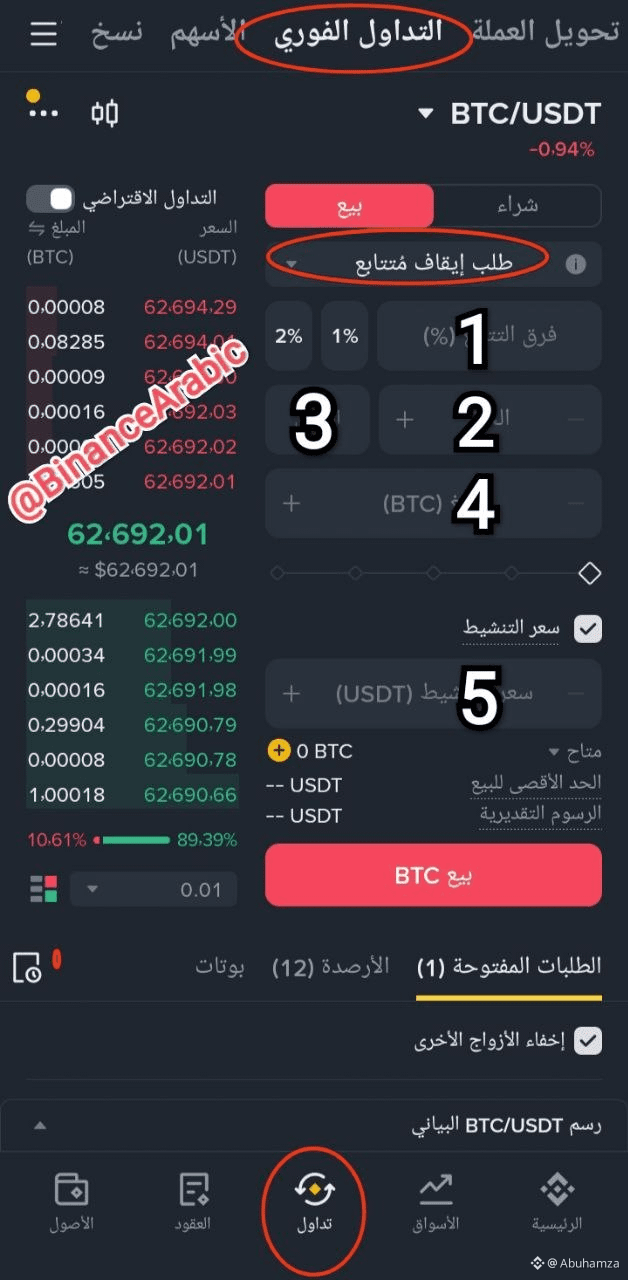
Request for Trailing Stop
It is a sell or buy order that automatically moves with the market direction in your favor. If the market reverses against you by a certain percentage (the trailing distance), the position is sold or bought to protect profits or reduce losses.
1- Trailing distance: The allowed percentage or value for the price to move against you before the order triggers.
2,3- Sell price: A limit order price if you disable the market button, or the market price immediately if you enable it.
4- Quantity: Determines the amount of BTC to be sold.
5- Activation price: An additional condition. If you don’t set it, the system relies only on the trailing distance.
⚠️ Difference between a Limit Stop and a Trailing Stop:
- The limit stop is fixed at a specific price.
- The trailing stop moves with the market and closes the trade when the price reverses by a certain percentage.
🔹 Practical example: If you have 1 BTC and the market price is $60,000, and you set a trailing distance of 5%, the price first rises to $63,000, causing the stop to move to $59,850. Then the price rises to $66,000, moving the stop to $62,700. After that, the price reverses to $62,500, breaking the stop, and the trade is immediately sold at the market price.
In simple terms, the trailing stop makes the stop “climb” with the price, and when the reversal reaches the trailing distance, the trade is sold at the last recorded stop.
Fifth Educational Post
#ForBeginnersOnly
Request for Trailing Stop
It is a sell or buy order that automatically moves with the market direction in your favor. If the market reverses against you by a certain percentage (the trailing distance), the position is sold or bought to protect profits or reduce losses.
1- Trailing distance: The allowed percentage or value for the price to move against you before the order triggers.
2,3- Sell price: A limit order price if you disable the market button, or the market price immediately if you enable it.
4- Quantity: Determines the amount of BTC to be sold.
5- Activation price: An additional condition. If you don’t set it, the system relies only on the trailing distance.
⚠️ Difference between a Limit Stop and a Trailing Stop:
- The limit stop is fixed at a specific price.
- The trailing stop moves with the market and closes the trade when the price reverses by a certain percentage.
🔹 Practical example: If you have 1 BTC and the market price is $60,000, and you set a trailing distance of 5%, the price first rises to $63,000, causing the stop to move to $59,850. Then the price rises to $66,000, moving the stop to $62,700. After that, the price reverses to $62,500, breaking the stop, and the trade is immediately sold at the market price.
In simple terms, the trailing stop makes the stop “climb” with the price, and when the reversal reaches the trailing distance, the trade is sold at the last recorded stop.
#ForBeginnersOnly
Request for Trailing Stop
It is a sell or buy order that automatically moves with the market direction in your favor. If the market reverses against you by a certain percentage (the trailing distance), the position is sold or bought to protect profits or reduce losses.
1- Trailing distance: The allowed percentage or value for the price to move against you before the order triggers.
2,3- Sell price: A limit order price if you disable the market button, or the market price immediately if you enable it.
4- Quantity: Determines the amount of BTC to be sold.
5- Activation price: An additional condition. If you don’t set it, the system relies only on the trailing distance.
⚠️ Difference between a Limit Stop and a Trailing Stop:
- The limit stop is fixed at a specific price.
- The trailing stop moves with the market and closes the trade when the price reverses by a certain percentage.
🔹 Practical example: If you have 1 BTC and the market price is $60,000, and you set a trailing distance of 5%, the price first rises to $63,000, causing the stop to move to $59,850. Then the price rises to $66,000, moving the stop to $62,700. After that, the price reverses to $62,500, breaking the stop, and the trade is immediately sold at the market price.
In simple terms, the trailing stop makes the stop “climb” with the price, and when the reversal reaches the trailing distance, the trade is sold at the last recorded stop.
1
147
·
--
Fourth educational post
#For_beginners_only
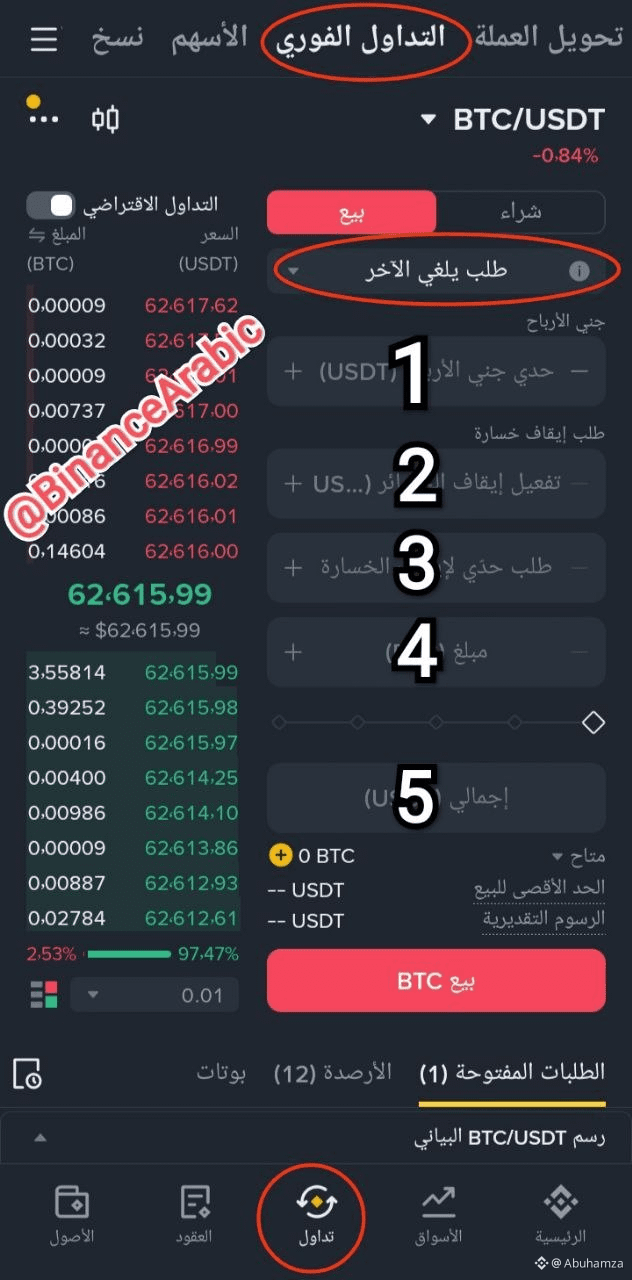
OCO order feature
In brief, this feature is a combination between a limit order where you set your target price, and a stop order where you set your stop-loss price. Whichever of the two prices the market touches first will be executed first.
1- Set the target (higher than the current price)
2- Set the stop condition (lower than the current price, preferably near the closest support area or below the previous 1h candle)
3- Set the stop price, which is the price at which you will sell
- If it’s set lower than the condition, the sale will be executed
- If it’s set higher than the condition price, a sell order will be opened and it won’t execute until the market retraces back to that price.
4 or 5- Determine the quantity you want to sell using this feature: either set the asset amount in 4, or set the dollar amount in 5.
Click Sell
Fourth educational post
#For_beginners_only
OCO order feature
In brief, this feature is a combination between a limit order where you set your target price, and a stop order where you set your stop-loss price. Whichever of the two prices the market touches first will be executed first.
1- Set the target (higher than the current price)
2- Set the stop condition (lower than the current price, preferably near the closest support area or below the previous 1h candle)
3- Set the stop price, which is the price at which you will sell
- If it’s set lower than the condition, the sale will be executed
- If it’s set higher than the condition price, a sell order will be opened and it won’t execute until the market retraces back to that price.
4 or 5- Determine the quantity you want to sell using this feature: either set the asset amount in 4, or set the dollar amount in 5.
Click Sell
#For_beginners_only
OCO order feature
In brief, this feature is a combination between a limit order where you set your target price, and a stop order where you set your stop-loss price. Whichever of the two prices the market touches first will be executed first.
1- Set the target (higher than the current price)
2- Set the stop condition (lower than the current price, preferably near the closest support area or below the previous 1h candle)
3- Set the stop price, which is the price at which you will sell
- If it’s set lower than the condition, the sale will be executed
- If it’s set higher than the condition price, a sell order will be opened and it won’t execute until the market retraces back to that price.
4 or 5- Determine the quantity you want to sell using this feature: either set the asset amount in 4, or set the dollar amount in 5.
Click Sell
1
236
·
--
Third educational post
#For_beginners_only
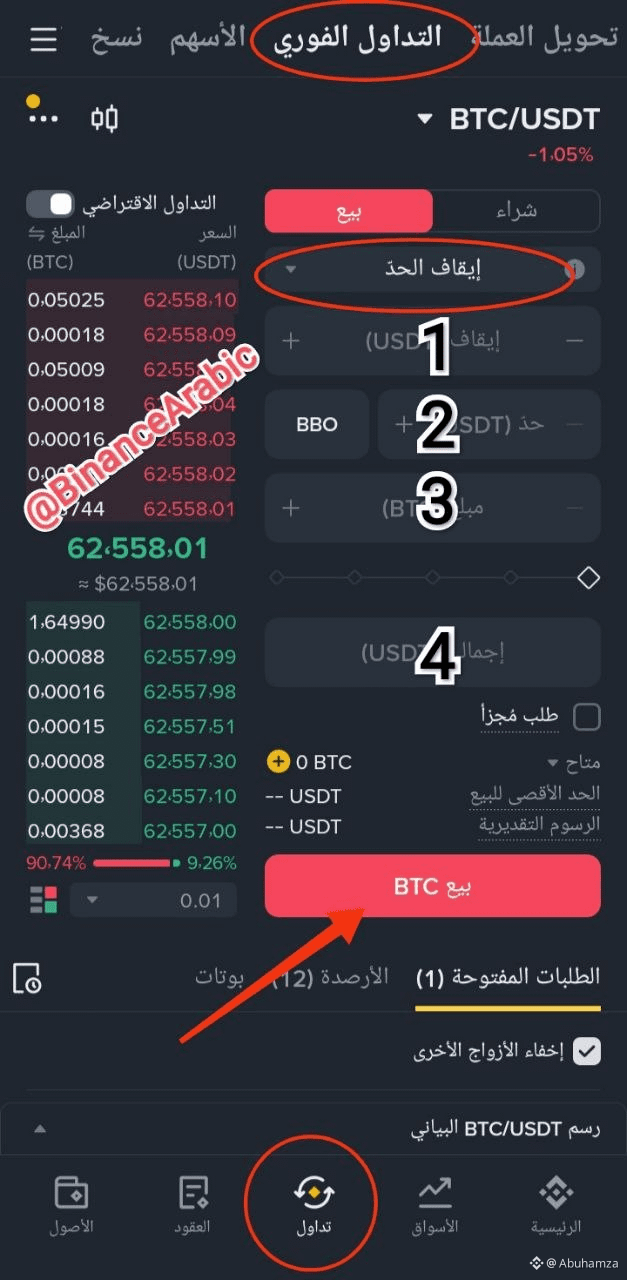
Stop Limit feature
This feature is used to stop loss or lock in profits, by placing it at the support area.
1- Set the stop condition (lower than the current price, preferably at the closest support area or below the previous 1h candle)
2- Set the stop price — the price at which the sell will be executed
- If it’s set lower than the condition, the sell will trigger
- If it’s set higher than the condition price, a sell order will be opened and it will only execute when it rebounds to this price.
3 or 4- Choose the quantity you want to sell with this feature: either specify the coin amount in 3 or the dollar amount in 4
Press Sell
Third educational post
#For_beginners_only
Stop Limit feature
This feature is used to stop loss or lock in profits, by placing it at the support area.
1- Set the stop condition (lower than the current price, preferably at the closest support area or below the previous 1h candle)
2- Set the stop price — the price at which the sell will be executed
- If it’s set lower than the condition, the sell will trigger
- If it’s set higher than the condition price, a sell order will be opened and it will only execute when it rebounds to this price.
3 or 4- Choose the quantity you want to sell with this feature: either specify the coin amount in 3 or the dollar amount in 4
Press Sell
#For_beginners_only
Stop Limit feature
This feature is used to stop loss or lock in profits, by placing it at the support area.
1- Set the stop condition (lower than the current price, preferably at the closest support area or below the previous 1h candle)
2- Set the stop price — the price at which the sell will be executed
- If it’s set lower than the condition, the sell will trigger
- If it’s set higher than the condition price, a sell order will be opened and it will only execute when it rebounds to this price.
3 or 4- Choose the quantity you want to sell with this feature: either specify the coin amount in 3 or the dollar amount in 4
Press Sell
1
367
·
--
Second Educational Post
#ForBeginnersOnly
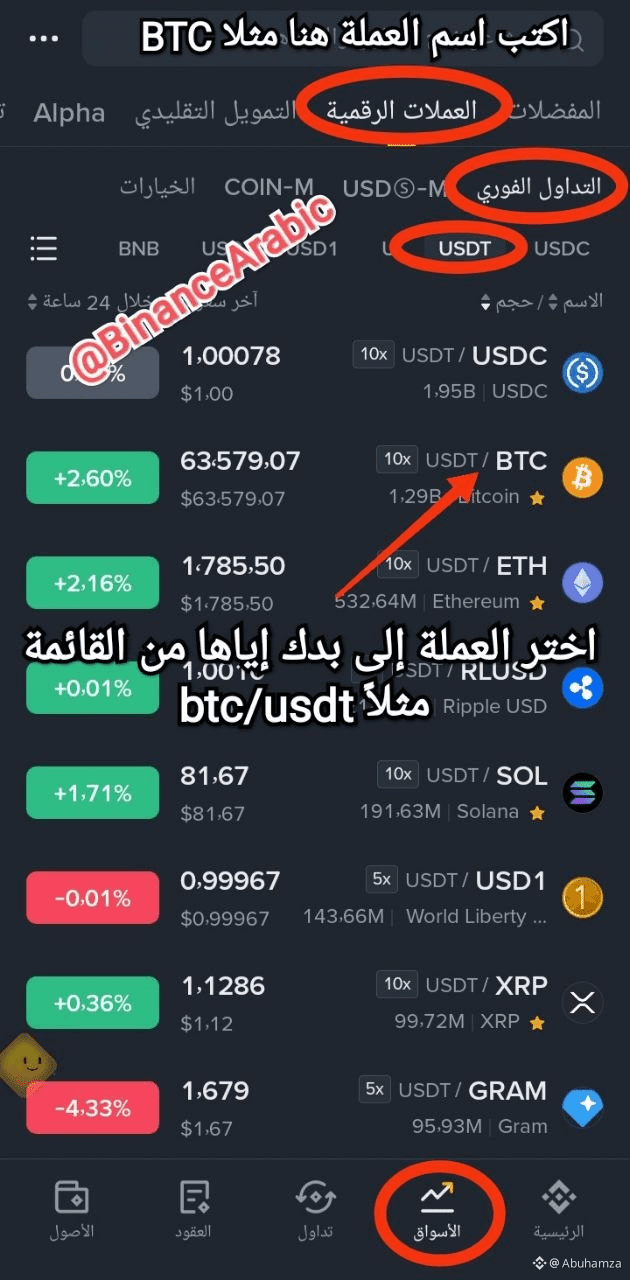
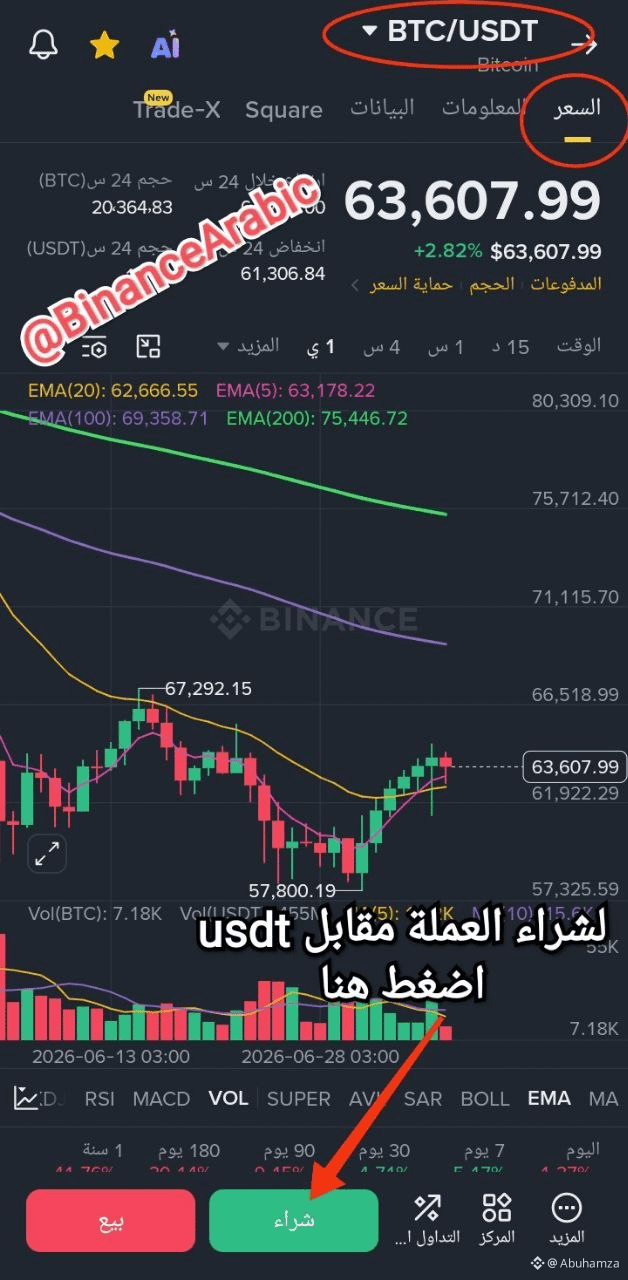
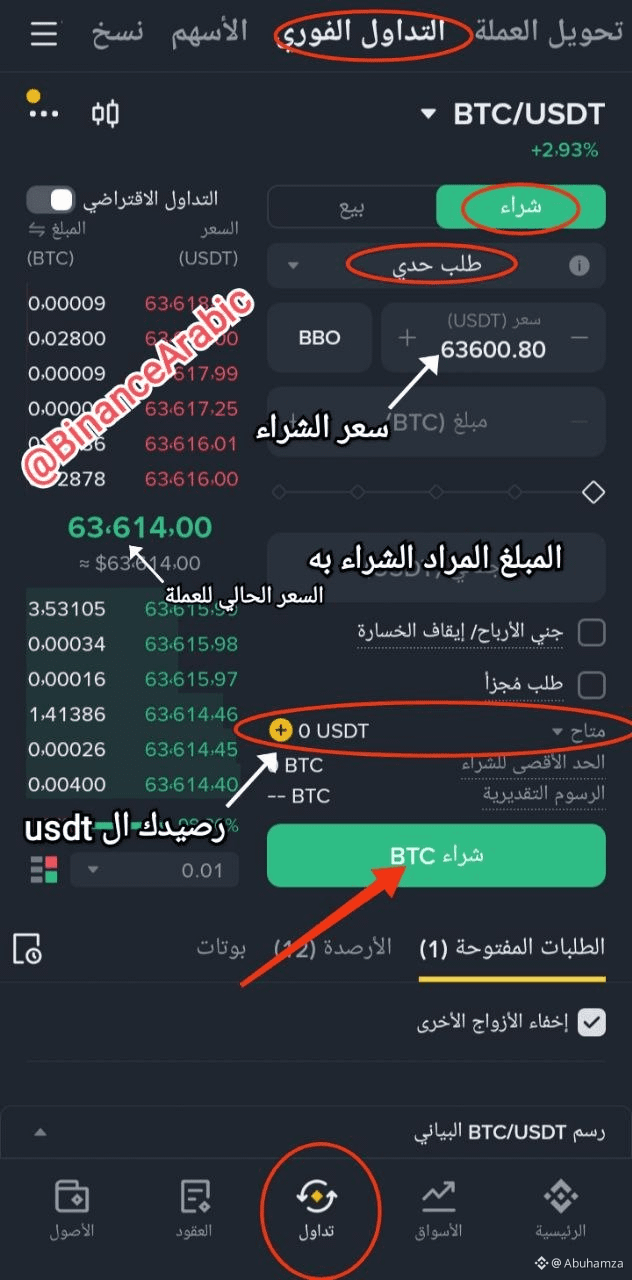
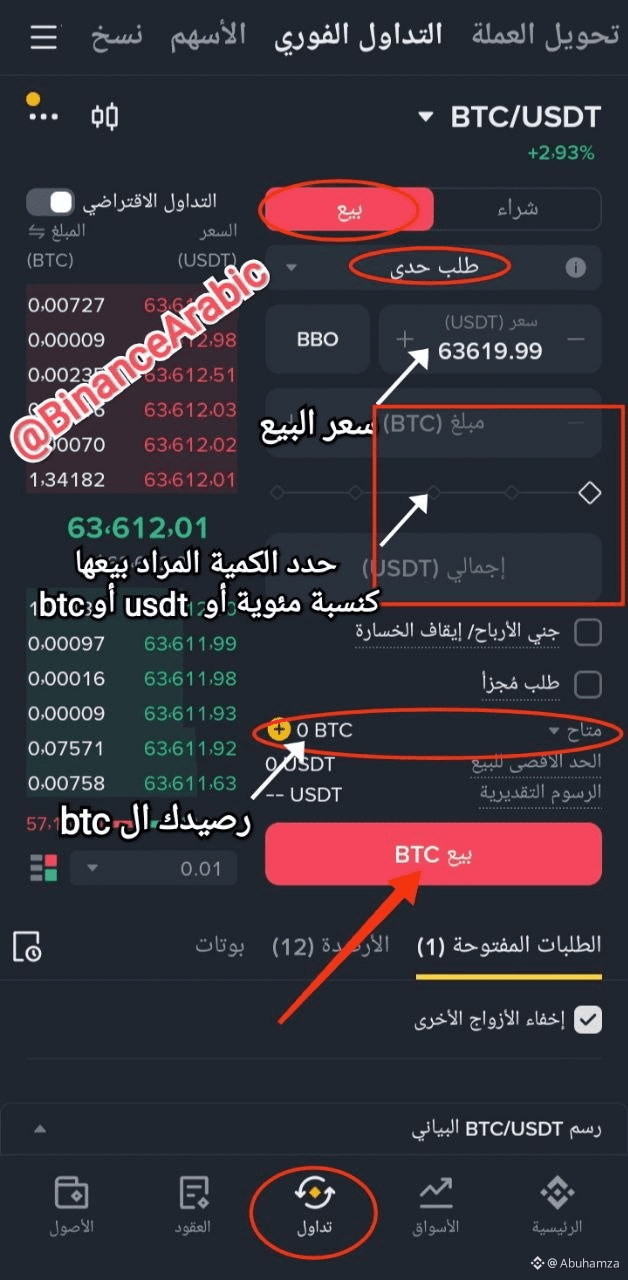
How to Buy and Sell Through the Binance Platform
Second Educational Post
#ForBeginnersOnly
How to Buy and Sell Through the Binance Platform
#ForBeginnersOnly
How to Buy and Sell Through the Binance Platform
1
2
321
·
--
The First Educational Post
#For_Beginners_Only
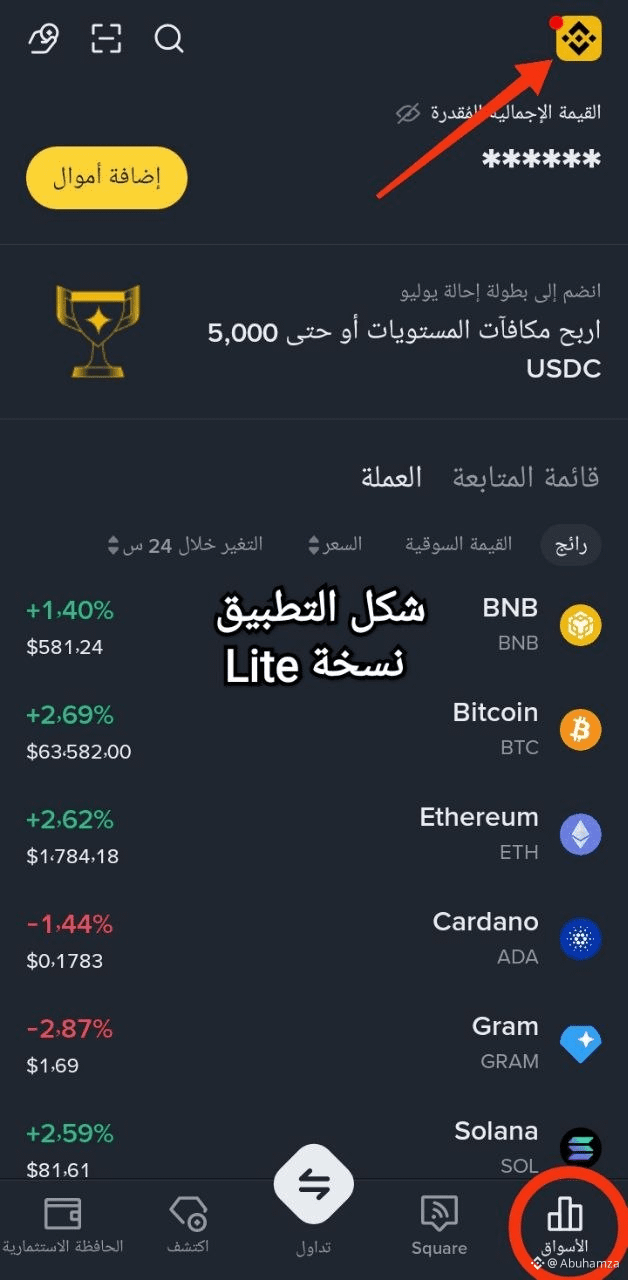
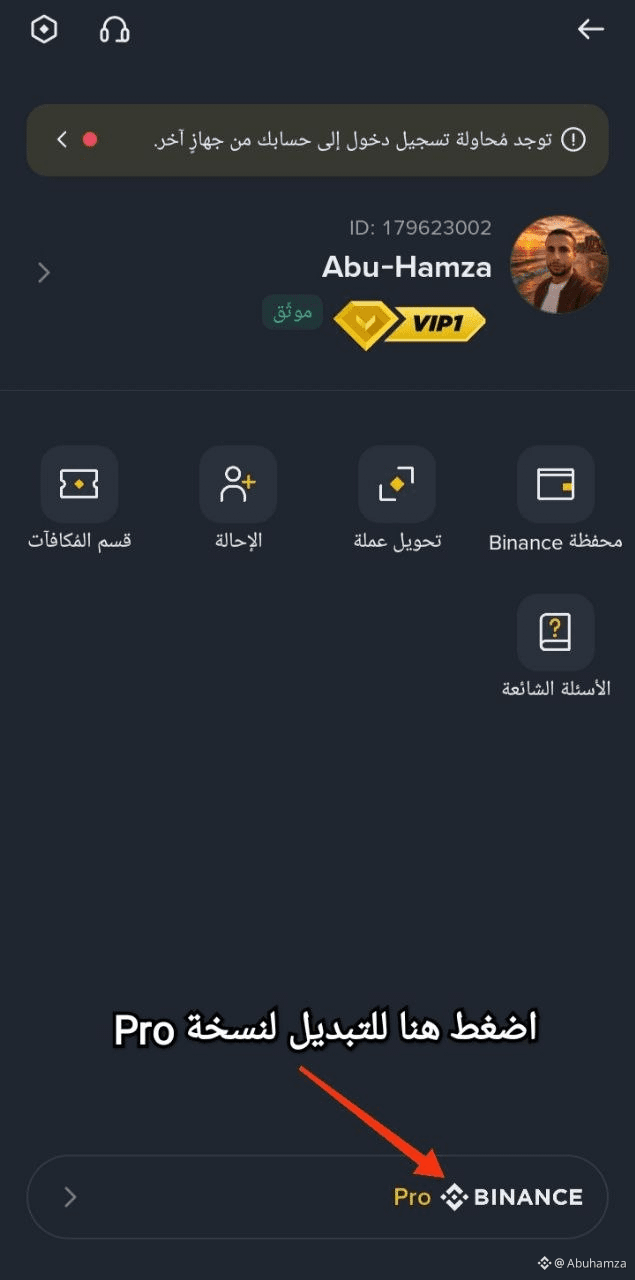
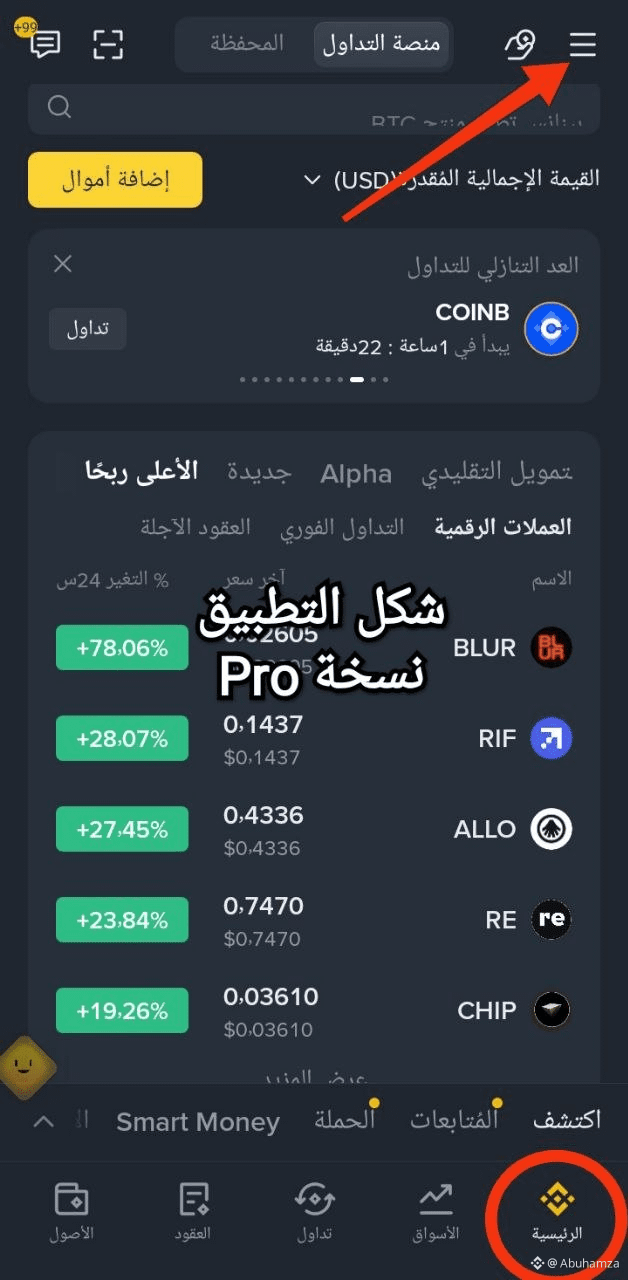
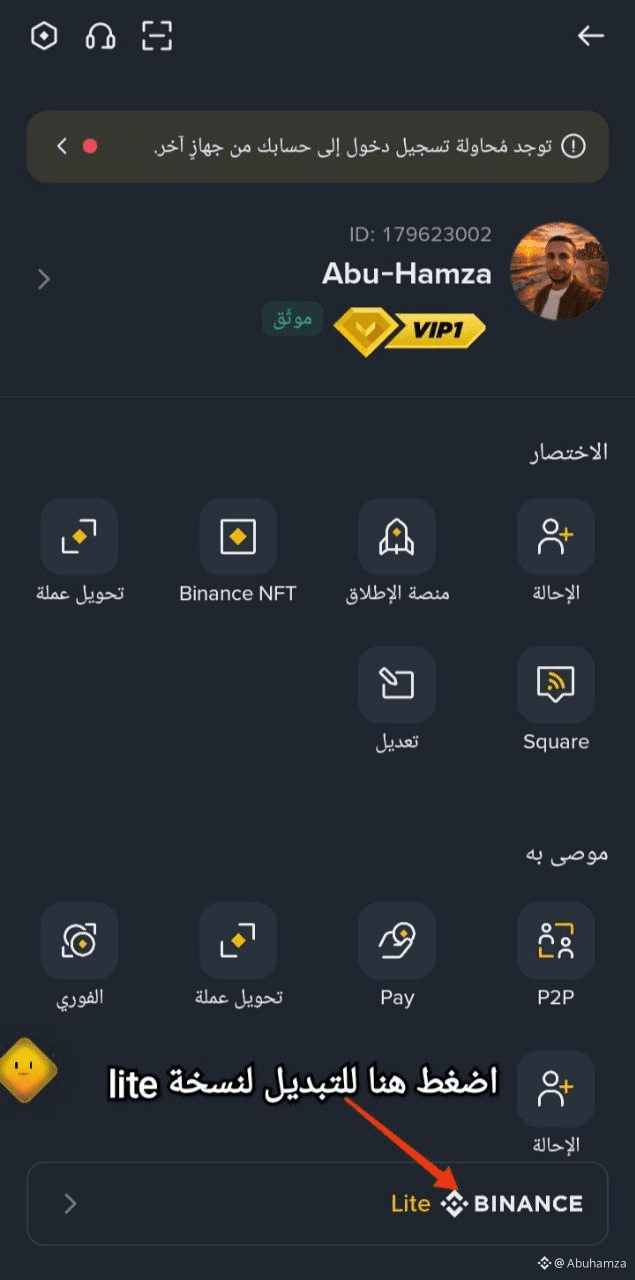
How to Convert an App Version from pro to lite and vice versa
The pro version is the professional version that includes all app features, and I used it for the illustrated explanation.
The lite version is the simplified version for beginners and does not include all features. When you download the app, it will be the lite version.
I recommend that you start by learning on the pro version so you can get used to it.
The First Educational Post
#For_Beginners_Only
How to Convert an App Version from pro to lite and vice versa
The pro version is the professional version that includes all app features, and I used it for the illustrated explanation.
The lite version is the simplified version for beginners and does not include all features. When you download the app, it will be the lite version.
I recommend that you start by learning on the pro version so you can get used to it.
#For_Beginners_Only
How to Convert an App Version from pro to lite and vice versa
The pro version is the professional version that includes all app features, and I used it for the illustrated explanation.
The lite version is the simplified version for beginners and does not include all features. When you download the app, it will be the lite version.
I recommend that you start by learning on the pro version so you can get used to it.
1
205
·
--
🚀 7 Steps Before You Enter Any Crypto Project
Not every trend is an opportunity, and not every project has a future!
In the world of crypto, information is the real capital... not money. 💰
📍Before you enter any coin, consider a few things:
✅ Read the white paper... what does this project really do?
✅ Look at the team... do they have a track record? Or just nice pictures?
✅ Is the roadmap clear? Or is it all promises and nothing else?
✅ Check the tokenomics... is the distribution fair? Or does the team and big investors hold most of the coin?
✅ See if there's an audit... is the code reviewed by reputable companies? Or is it still unverified?
✅ Does the market really need the solution they're offering?
✅ And what are people saying about it? Follow social media... listen to the gossip!
🚫 Be aware of:
❌ "Guaranteed quick profits"... rushing in crypto can be costly.
❌ False trends... not everything viral is gold.
❌ Ambiguity? If you feel the project is vague and lacks transparency... walk away.
💡 The phrase that is always said and we never get tired of: DYOR
It means: Learn, understand, and then decide for yourself.
Your money... your decisions. 🫡#StrategyBTCPurchase #BNBBreaksATH #SECReviewsCryptoETFS #AITokensRally #TrumpVsMusk
🚀 7 Steps Before You Enter Any Crypto Project
Not every trend is an opportunity, and not every project has a future!
In the world of crypto, information is the real capital... not money. 💰
📍Before you enter any coin, consider a few things:
✅ Read the white paper... what does this project really do?
✅ Look at the team... do they have a track record? Or just nice pictures?
✅ Is the roadmap clear? Or is it all promises and nothing else?
✅ Check the tokenomics... is the distribution fair? Or does the team and big investors hold most of the coin?
✅ See if there's an audit... is the code reviewed by reputable companies? Or is it still unverified?
✅ Does the market really need the solution they're offering?
✅ And what are people saying about it? Follow social media... listen to the gossip!
🚫 Be aware of:
❌ "Guaranteed quick profits"... rushing in crypto can be costly.
❌ False trends... not everything viral is gold.
❌ Ambiguity? If you feel the project is vague and lacks transparency... walk away.
💡 The phrase that is always said and we never get tired of: DYOR
It means: Learn, understand, and then decide for yourself.
Your money... your decisions. 🫡#StrategyBTCPurchase #BNBBreaksATH #SECReviewsCryptoETFS #AITokensRally #TrumpVsMusk
Not every trend is an opportunity, and not every project has a future!
In the world of crypto, information is the real capital... not money. 💰
📍Before you enter any coin, consider a few things:
✅ Read the white paper... what does this project really do?
✅ Look at the team... do they have a track record? Or just nice pictures?
✅ Is the roadmap clear? Or is it all promises and nothing else?
✅ Check the tokenomics... is the distribution fair? Or does the team and big investors hold most of the coin?
✅ See if there's an audit... is the code reviewed by reputable companies? Or is it still unverified?
✅ Does the market really need the solution they're offering?
✅ And what are people saying about it? Follow social media... listen to the gossip!
🚫 Be aware of:
❌ "Guaranteed quick profits"... rushing in crypto can be costly.
❌ False trends... not everything viral is gold.
❌ Ambiguity? If you feel the project is vague and lacks transparency... walk away.
💡 The phrase that is always said and we never get tired of: DYOR
It means: Learn, understand, and then decide for yourself.
Your money... your decisions. 🫡#StrategyBTCPurchase #BNBBreaksATH #SECReviewsCryptoETFS #AITokensRally #TrumpVsMusk
1
1
4
1.3k
·
--
📈 Quick summary of the trading in the zone book – Mark Douglas
Success in trading does not rely solely on news or analysis, but on your mind and emotions.
🔥 Key ideas:
The market reflects your mindset: fear and greed destroy decisions.
Every trade is an opportunity within a long series; do not trust yourself or your identity based on a single outcome.
Think in probabilities, not certainties.
Be disciplined and mentally like a professional trader, not a gambler.
✅ The ultimate goal: to reach a state of "the zone," where emotions disappear and decisions become clear and calm.
💡 In summary: controlling yourself is more important than controlling the market.
Done.
#BNBBreaksATH #MarketRebound #BinanceHODLerHOLO #AITokensRally #ETHWhaleWatch
📈 Quick summary of the trading in the zone book – Mark Douglas
Success in trading does not rely solely on news or analysis, but on your mind and emotions.
🔥 Key ideas:
The market reflects your mindset: fear and greed destroy decisions.
Every trade is an opportunity within a long series; do not trust yourself or your identity based on a single outcome.
Think in probabilities, not certainties.
Be disciplined and mentally like a professional trader, not a gambler.
✅ The ultimate goal: to reach a state of "the zone," where emotions disappear and decisions become clear and calm.
💡 In summary: controlling yourself is more important than controlling the market.
Done.
#BNBBreaksATH #MarketRebound #BinanceHODLerHOLO #AITokensRally #ETHWhaleWatch
Success in trading does not rely solely on news or analysis, but on your mind and emotions.
🔥 Key ideas:
The market reflects your mindset: fear and greed destroy decisions.
Every trade is an opportunity within a long series; do not trust yourself or your identity based on a single outcome.
Think in probabilities, not certainties.
Be disciplined and mentally like a professional trader, not a gambler.
✅ The ultimate goal: to reach a state of "the zone," where emotions disappear and decisions become clear and calm.
💡 In summary: controlling yourself is more important than controlling the market.
Done.
#BNBBreaksATH #MarketRebound #BinanceHODLerHOLO #AITokensRally #ETHWhaleWatch
4
685
·
--
Explanation of Chapter Nine and the Final Chapter – Accessing the "Zone" – from the book Trading in the Zone by Mark Douglas:
"The Zone" is the ideal mental state for a trader, where the mind becomes calm and completely objective.
In this state, the trade is viewed as an abstract opportunity, without emotional attachment or personal expectations.
A trader in "The Zone" is characterized by:
The ability to make decisions quickly and clearly.
Acceptance that loss is a natural part of the trading process.
Focus on accurately applying the strategy rather than on the individual outcome.
Accessing "The Zone" requires:
Mental discipline and emotional management.
Adopting probabilistic thinking.
Continuous training on adhering to the rules and analyzing performance.
✅ In "The Zone", the trader becomes like a neutral observer of the market, seeing every movement as it is without projecting their beliefs or desires onto it.
In summary: entering "The Zone" is the key to achieving sustainable success in trading, where decisions become more consistent and profitable in the long run.
Continued...
#BinanceAlphaAlert #MetaplanetBTCPurchase #USNonFarmPayrollReport #CryptoMarket4T #AltcoinMarketRecovery
Explanation of Chapter Nine and the Final Chapter – Accessing the "Zone" – from the book Trading in the Zone by Mark Douglas:
"The Zone" is the ideal mental state for a trader, where the mind becomes calm and completely objective.
In this state, the trade is viewed as an abstract opportunity, without emotional attachment or personal expectations.
A trader in "The Zone" is characterized by:
The ability to make decisions quickly and clearly.
Acceptance that loss is a natural part of the trading process.
Focus on accurately applying the strategy rather than on the individual outcome.
Accessing "The Zone" requires:
Mental discipline and emotional management.
Adopting probabilistic thinking.
Continuous training on adhering to the rules and analyzing performance.
✅ In "The Zone", the trader becomes like a neutral observer of the market, seeing every movement as it is without projecting their beliefs or desires onto it.
In summary: entering "The Zone" is the key to achieving sustainable success in trading, where decisions become more consistent and profitable in the long run.
Continued...
#BinanceAlphaAlert #MetaplanetBTCPurchase #USNonFarmPayrollReport #CryptoMarket4T #AltcoinMarketRecovery
"The Zone" is the ideal mental state for a trader, where the mind becomes calm and completely objective.
In this state, the trade is viewed as an abstract opportunity, without emotional attachment or personal expectations.
A trader in "The Zone" is characterized by:
The ability to make decisions quickly and clearly.
Acceptance that loss is a natural part of the trading process.
Focus on accurately applying the strategy rather than on the individual outcome.
Accessing "The Zone" requires:
Mental discipline and emotional management.
Adopting probabilistic thinking.
Continuous training on adhering to the rules and analyzing performance.
✅ In "The Zone", the trader becomes like a neutral observer of the market, seeing every movement as it is without projecting their beliefs or desires onto it.
In summary: entering "The Zone" is the key to achieving sustainable success in trading, where decisions become more consistent and profitable in the long run.
Continued...
#BinanceAlphaAlert #MetaplanetBTCPurchase #USNonFarmPayrollReport #CryptoMarket4T #AltcoinMarketRecovery
3
389
·
--
Explanation of Chapter Eight – Psychological Discipline in Trading – from the book "Trading in the Zone" by Mark Douglas:
Psychological discipline is the foundation of every successful trade, determining whether the trader will continue to succeed in the long term.
Discipline means:
Following the trading plan precisely.
Respecting entry and exit rules without emotional exceptions.
Managing capital rigorously to avoid significant risks.
The absence of discipline leads to impulsive decisions, which often result in repeated losses.
✅ The disciplined trader treats each trade as an independent opportunity, not as a battle to prove oneself.
Psychological discipline allows the trader to reach the "zone" state more quickly and consistently.
💡 Key tools for discipline:
Writing a clear trading plan.
Committing to the strategy regardless of short-term results.
Recording and reviewing performance to correct mistakes without emotional reaction.
In summary: Psychological discipline transforms trading from emotional gambling into a professional endeavor based on probabilities.
Continues....#USNonFarmPayrollReport #MarketPullback #BTCvsETH #RedSeptember #AltcoinBreakout
Explanation of Chapter Eight – Psychological Discipline in Trading – from the book "Trading in the Zone" by Mark Douglas:
Psychological discipline is the foundation of every successful trade, determining whether the trader will continue to succeed in the long term.
Discipline means:
Following the trading plan precisely.
Respecting entry and exit rules without emotional exceptions.
Managing capital rigorously to avoid significant risks.
The absence of discipline leads to impulsive decisions, which often result in repeated losses.
✅ The disciplined trader treats each trade as an independent opportunity, not as a battle to prove oneself.
Psychological discipline allows the trader to reach the "zone" state more quickly and consistently.
💡 Key tools for discipline:
Writing a clear trading plan.
Committing to the strategy regardless of short-term results.
Recording and reviewing performance to correct mistakes without emotional reaction.
In summary: Psychological discipline transforms trading from emotional gambling into a professional endeavor based on probabilities.
Continues....#USNonFarmPayrollReport #MarketPullback #BTCvsETH #RedSeptember #AltcoinBreakout
Psychological discipline is the foundation of every successful trade, determining whether the trader will continue to succeed in the long term.
Discipline means:
Following the trading plan precisely.
Respecting entry and exit rules without emotional exceptions.
Managing capital rigorously to avoid significant risks.
The absence of discipline leads to impulsive decisions, which often result in repeated losses.
✅ The disciplined trader treats each trade as an independent opportunity, not as a battle to prove oneself.
Psychological discipline allows the trader to reach the "zone" state more quickly and consistently.
💡 Key tools for discipline:
Writing a clear trading plan.
Committing to the strategy regardless of short-term results.
Recording and reviewing performance to correct mistakes without emotional reaction.
In summary: Psychological discipline transforms trading from emotional gambling into a professional endeavor based on probabilities.
Continues....#USNonFarmPayrollReport #MarketPullback #BTCvsETH #RedSeptember #AltcoinBreakout
3
374
·
--
Explanation of Chapter Seven – Managing Emotions in Trading – from the book Trading in the Zone by Mark Douglas:
Emotions are the main reason for the failure of most traders, especially fear and greed.
Fear leads to:
Hesitation in entering good trades.
Closing the trade early before achieving full profits.
Greed leads to:
Holding onto losing trades for too long.
Taking uncalculated risks.
Controlling emotions requires:
Developing strict mental discipline.
Committing to a pre-defined trading plan.
Accepting that losses are a natural part of the trading process.
✅ The goal is to reach a mental state called "the zone," where emotional influences fade away and decisions become calm and calculated.
In summary: Controlling emotions does not mean eliminating them entirely, but managing their impact on decisions and ensuring that the mind makes the decision, not the momentary feeling.
Continues.....
#USNonFarmPayrollReport #MarketPullback #BTCvsETH #ListedCompaniesAltcoinTreasury #RedSeptember
Explanation of Chapter Seven – Managing Emotions in Trading – from the book Trading in the Zone by Mark Douglas:
Emotions are the main reason for the failure of most traders, especially fear and greed.
Fear leads to:
Hesitation in entering good trades.
Closing the trade early before achieving full profits.
Greed leads to:
Holding onto losing trades for too long.
Taking uncalculated risks.
Controlling emotions requires:
Developing strict mental discipline.
Committing to a pre-defined trading plan.
Accepting that losses are a natural part of the trading process.
✅ The goal is to reach a mental state called "the zone," where emotional influences fade away and decisions become calm and calculated.
In summary: Controlling emotions does not mean eliminating them entirely, but managing their impact on decisions and ensuring that the mind makes the decision, not the momentary feeling.
Continues.....
#USNonFarmPayrollReport #MarketPullback #BTCvsETH #ListedCompaniesAltcoinTreasury #RedSeptember
Emotions are the main reason for the failure of most traders, especially fear and greed.
Fear leads to:
Hesitation in entering good trades.
Closing the trade early before achieving full profits.
Greed leads to:
Holding onto losing trades for too long.
Taking uncalculated risks.
Controlling emotions requires:
Developing strict mental discipline.
Committing to a pre-defined trading plan.
Accepting that losses are a natural part of the trading process.
✅ The goal is to reach a mental state called "the zone," where emotional influences fade away and decisions become calm and calculated.
In summary: Controlling emotions does not mean eliminating them entirely, but managing their impact on decisions and ensuring that the mind makes the decision, not the momentary feeling.
Continues.....
#USNonFarmPayrollReport #MarketPullback #BTCvsETH #ListedCompaniesAltcoinTreasury #RedSeptember
3
316
·
--
Explanation of Chapter Six – Thinking Like a Trader – from the book "Trading in the Zone" by Mark Douglas:
Most traders think like gamblers, while successful ones think like professional traders.
Thinking like a trader means:
Treating trading as a disciplined business rather than an adventure.
Focusing on the process and not just the outcome.
Accepting that losses are a natural part of the game, just like any other business cost.
A trade is not a proof of your intelligence or worth; it is merely one opportunity in a repeated series.
A successful trader has a clear plan that includes:
Rules for entering and exiting trades.
Strict capital management.
Discipline to execute the rules without emotion.
✅ The most important skill is the ability to remain neutral and not get swept away by fear or greed.
Success does not come from accurately predicting the market, but from consistency and discipline over a large number of trades.
In summary: Think like a professional trader, focus on discipline and risk management, and let the market move as it wishes.
To be continued....
#RedSeptember #USNonFarmPayrollReport #SaylorBTCPurchase #DogeCoinTreasury #TrumpTariffs
Explanation of Chapter Six – Thinking Like a Trader – from the book "Trading in the Zone" by Mark Douglas:
Most traders think like gamblers, while successful ones think like professional traders.
Thinking like a trader means:
Treating trading as a disciplined business rather than an adventure.
Focusing on the process and not just the outcome.
Accepting that losses are a natural part of the game, just like any other business cost.
A trade is not a proof of your intelligence or worth; it is merely one opportunity in a repeated series.
A successful trader has a clear plan that includes:
Rules for entering and exiting trades.
Strict capital management.
Discipline to execute the rules without emotion.
✅ The most important skill is the ability to remain neutral and not get swept away by fear or greed.
Success does not come from accurately predicting the market, but from consistency and discipline over a large number of trades.
In summary: Think like a professional trader, focus on discipline and risk management, and let the market move as it wishes.
To be continued....
#RedSeptember #USNonFarmPayrollReport #SaylorBTCPurchase #DogeCoinTreasury #TrumpTariffs
Most traders think like gamblers, while successful ones think like professional traders.
Thinking like a trader means:
Treating trading as a disciplined business rather than an adventure.
Focusing on the process and not just the outcome.
Accepting that losses are a natural part of the game, just like any other business cost.
A trade is not a proof of your intelligence or worth; it is merely one opportunity in a repeated series.
A successful trader has a clear plan that includes:
Rules for entering and exiting trades.
Strict capital management.
Discipline to execute the rules without emotion.
✅ The most important skill is the ability to remain neutral and not get swept away by fear or greed.
Success does not come from accurately predicting the market, but from consistency and discipline over a large number of trades.
In summary: Think like a professional trader, focus on discipline and risk management, and let the market move as it wishes.
To be continued....
#RedSeptember #USNonFarmPayrollReport #SaylorBTCPurchase #DogeCoinTreasury #TrumpTariffs
5
559
·
--
Explanation of Chapter Five – The Probability Perspective – from the book Trading in the Zone by Mark Douglas:
The biggest shift a trader needs is moving from seeking certainty to adopting a probability mindset.
There is no trade guaranteed 100%, even the strongest signals can fail.
Each trade is just one in a long series, and the final outcome appears through the large number of trades.
Like the casino: it does not know the result of a single game, but it always wins in the long run due to the odds advantage.
✅ A successful trader thinks the same way:
- Does not care about the outcome of the individual trade.
Focuses on applying their strategy consistently.
- Knows that profits come from repeating the process with discipline.
- The fear of loss dissipates when you understand that losing is not failure, but a natural part of a probability series.
In conclusion: probabilistic thinking frees you from attachment to the outcome of a single trade, and makes you focus on the bigger picture of success.
To be continued..
#SaylorBTCPurchase #TrumpTariffs #NewHighOfProfitableBTCWallets #DogeCoinTreasury #RedSeptember
Explanation of Chapter Five – The Probability Perspective – from the book Trading in the Zone by Mark Douglas:
The biggest shift a trader needs is moving from seeking certainty to adopting a probability mindset.
There is no trade guaranteed 100%, even the strongest signals can fail.
Each trade is just one in a long series, and the final outcome appears through the large number of trades.
Like the casino: it does not know the result of a single game, but it always wins in the long run due to the odds advantage.
✅ A successful trader thinks the same way:
- Does not care about the outcome of the individual trade.
Focuses on applying their strategy consistently.
- Knows that profits come from repeating the process with discipline.
- The fear of loss dissipates when you understand that losing is not failure, but a natural part of a probability series.
In conclusion: probabilistic thinking frees you from attachment to the outcome of a single trade, and makes you focus on the bigger picture of success.
To be continued..
#SaylorBTCPurchase #TrumpTariffs #NewHighOfProfitableBTCWallets #DogeCoinTreasury #RedSeptember
The biggest shift a trader needs is moving from seeking certainty to adopting a probability mindset.
There is no trade guaranteed 100%, even the strongest signals can fail.
Each trade is just one in a long series, and the final outcome appears through the large number of trades.
Like the casino: it does not know the result of a single game, but it always wins in the long run due to the odds advantage.
✅ A successful trader thinks the same way:
- Does not care about the outcome of the individual trade.
Focuses on applying their strategy consistently.
- Knows that profits come from repeating the process with discipline.
- The fear of loss dissipates when you understand that losing is not failure, but a natural part of a probability series.
In conclusion: probabilistic thinking frees you from attachment to the outcome of a single trade, and makes you focus on the bigger picture of success.
To be continued..
#SaylorBTCPurchase #TrumpTariffs #NewHighOfProfitableBTCWallets #DogeCoinTreasury #RedSeptember
2
6
979
·
--
Explanation of Chapter Four - Consistency: A Mindset - From the book "Trading in the Zone" by Mark Douglas.
* Continuous success in trading does not come from market analysis, but from having the right mindset.
* The problem is not with the market, but with the trader's way of thinking and psychological reactions (such as fear and greed).
* You need to learn to think in probabilities, not certainties. Don’t try to predict what will happen, but prepare for anything.
* To achieve this, you must adopt five fundamental truths about the market:
* Anything can happen.
* You do not need to know what will happen next to make money.
* There is a random distribution between profit and loss for any strategy.
* An edge is simply a higher probability of one outcome over another.
* Every moment in the market is unique.
* When you fully accept risk, you neutralize the negative emotions associated with loss, allowing you to execute your trades objectively.
* The goal is to reach "the zone," a mental state where you trade instinctively and without hesitation, executing your strategy with confidence.
In short, Chapter Four calls for shifting the focus from trying to control the market (which is impossible) to controlling oneself and developing the mindset of a professional and objective trader.#MarketPullback #TrumpTariffs #DogeCoinTreasury #PCEMarketWatch #NewHighOfProfitableBTCWallets
Explanation of Chapter Four - Consistency: A Mindset - From the book "Trading in the Zone" by Mark Douglas.
* Continuous success in trading does not come from market analysis, but from having the right mindset.
* The problem is not with the market, but with the trader's way of thinking and psychological reactions (such as fear and greed).
* You need to learn to think in probabilities, not certainties. Don’t try to predict what will happen, but prepare for anything.
* To achieve this, you must adopt five fundamental truths about the market:
* Anything can happen.
* You do not need to know what will happen next to make money.
* There is a random distribution between profit and loss for any strategy.
* An edge is simply a higher probability of one outcome over another.
* Every moment in the market is unique.
* When you fully accept risk, you neutralize the negative emotions associated with loss, allowing you to execute your trades objectively.
* The goal is to reach "the zone," a mental state where you trade instinctively and without hesitation, executing your strategy with confidence.
In short, Chapter Four calls for shifting the focus from trying to control the market (which is impossible) to controlling oneself and developing the mindset of a professional and objective trader.#MarketPullback #TrumpTariffs #DogeCoinTreasury #PCEMarketWatch #NewHighOfProfitableBTCWallets
* Continuous success in trading does not come from market analysis, but from having the right mindset.
* The problem is not with the market, but with the trader's way of thinking and psychological reactions (such as fear and greed).
* You need to learn to think in probabilities, not certainties. Don’t try to predict what will happen, but prepare for anything.
* To achieve this, you must adopt five fundamental truths about the market:
* Anything can happen.
* You do not need to know what will happen next to make money.
* There is a random distribution between profit and loss for any strategy.
* An edge is simply a higher probability of one outcome over another.
* Every moment in the market is unique.
* When you fully accept risk, you neutralize the negative emotions associated with loss, allowing you to execute your trades objectively.
* The goal is to reach "the zone," a mental state where you trade instinctively and without hesitation, executing your strategy with confidence.
In short, Chapter Four calls for shifting the focus from trying to control the market (which is impossible) to controlling oneself and developing the mindset of a professional and objective trader.#MarketPullback #TrumpTariffs #DogeCoinTreasury #PCEMarketWatch #NewHighOfProfitableBTCWallets
1
1
6
669
·
--
Explanation of Chapter Three - Dynamic Forces of the Market - from the book Trading in the Zone by Mark Douglas:
The market consists of millions of participants, each with different expectations and interests.
This interaction between buyers and sellers is what constantly creates price movement.
No one can fully control the market; even large institutions do not have absolute control.
Every price movement reflects a momentary balance between supply and demand forces.
Since these forces are constantly changing, the market is always in a state of uncertainty and probability.
Thinking that the market "must" move in a certain direction is a mistake; the market does not "owe" anything to anyone.
✅ A successful trader accepts that anything can happen and approaches the market with a mindset of probabilities.
In summary: the market is neither an enemy nor a friend; it is merely a neutral environment that moves according to the balance of supply and demand forces.
To be continued....
#FedDovishNow #BTCWhalesMoveToETH #PCEMarketWatch #BinanceHODLerDOLO
Explanation of Chapter Three - Dynamic Forces of the Market - from the book Trading in the Zone by Mark Douglas:
The market consists of millions of participants, each with different expectations and interests.
This interaction between buyers and sellers is what constantly creates price movement.
No one can fully control the market; even large institutions do not have absolute control.
Every price movement reflects a momentary balance between supply and demand forces.
Since these forces are constantly changing, the market is always in a state of uncertainty and probability.
Thinking that the market "must" move in a certain direction is a mistake; the market does not "owe" anything to anyone.
✅ A successful trader accepts that anything can happen and approaches the market with a mindset of probabilities.
In summary: the market is neither an enemy nor a friend; it is merely a neutral environment that moves according to the balance of supply and demand forces.
To be continued....
#FedDovishNow #BTCWhalesMoveToETH #PCEMarketWatch #BinanceHODLerDOLO
The market consists of millions of participants, each with different expectations and interests.
This interaction between buyers and sellers is what constantly creates price movement.
No one can fully control the market; even large institutions do not have absolute control.
Every price movement reflects a momentary balance between supply and demand forces.
Since these forces are constantly changing, the market is always in a state of uncertainty and probability.
Thinking that the market "must" move in a certain direction is a mistake; the market does not "owe" anything to anyone.
✅ A successful trader accepts that anything can happen and approaches the market with a mindset of probabilities.
In summary: the market is neither an enemy nor a friend; it is merely a neutral environment that moves according to the balance of supply and demand forces.
To be continued....
#FedDovishNow #BTCWhalesMoveToETH #PCEMarketWatch #BinanceHODLerDOLO
4
714
·
--
Explanation of Chapter Two - The Perception Trap - from the book Trading in the Zone by Mark Douglas:
Every trader sees the market from their own perspective based on their beliefs and past experiences.
This means that the same chart or news can be seen by one trader as an "opportunity" and by another as a "danger".
Our perception of the market is not entirely objective; it is distorted by our fears, hopes, and expectations.
The problem is that these expectations make us ignore clear signals from the market because they do not align with what we want to see.
The fear of loss drives some to close the trade early or hesitate to enter even when the signal is clear.
Greed, on the other hand, leads to holding onto a trade longer than necessary even after opposing signals appear.
✅ The solution: A successful trader needs to be like a "neutral observer," seeing the market as it is without projecting their beliefs onto it.
In summary: What determines your success is not what happens in the market, but how you perceive and interpret what happens.
To be continued...
#BNBATH900 #TrumpFiresFedGovernorCook #FedDovishNow #BTCWhalesMoveToETH #BinanceHODLerDOLO
Explanation of Chapter Two - The Perception Trap - from the book Trading in the Zone by Mark Douglas:
Every trader sees the market from their own perspective based on their beliefs and past experiences.
This means that the same chart or news can be seen by one trader as an "opportunity" and by another as a "danger".
Our perception of the market is not entirely objective; it is distorted by our fears, hopes, and expectations.
The problem is that these expectations make us ignore clear signals from the market because they do not align with what we want to see.
The fear of loss drives some to close the trade early or hesitate to enter even when the signal is clear.
Greed, on the other hand, leads to holding onto a trade longer than necessary even after opposing signals appear.
✅ The solution: A successful trader needs to be like a "neutral observer," seeing the market as it is without projecting their beliefs onto it.
In summary: What determines your success is not what happens in the market, but how you perceive and interpret what happens.
To be continued...
#BNBATH900 #TrumpFiresFedGovernorCook #FedDovishNow #BTCWhalesMoveToETH #BinanceHODLerDOLO
Every trader sees the market from their own perspective based on their beliefs and past experiences.
This means that the same chart or news can be seen by one trader as an "opportunity" and by another as a "danger".
Our perception of the market is not entirely objective; it is distorted by our fears, hopes, and expectations.
The problem is that these expectations make us ignore clear signals from the market because they do not align with what we want to see.
The fear of loss drives some to close the trade early or hesitate to enter even when the signal is clear.
Greed, on the other hand, leads to holding onto a trade longer than necessary even after opposing signals appear.
✅ The solution: A successful trader needs to be like a "neutral observer," seeing the market as it is without projecting their beliefs onto it.
In summary: What determines your success is not what happens in the market, but how you perceive and interpret what happens.
To be continued...
#BNBATH900 #TrumpFiresFedGovernorCook #FedDovishNow #BTCWhalesMoveToETH #BinanceHODLerDOLO
3
427
·
--
Explanation of Chapter One - Fundamental Analysis vs. Technical Analysis - from the book Trading in the Zone by Mark Douglas:
Most traders begin their journey relying on fundamental analysis (news, economic reports, corporate earnings…).
Fundamental analysis explains why the market moves, but it does not tell you exactly when the movement will occur.
For this reason, many traders have turned to technical analysis, as it focuses on when to enter and exit.
Technical analysis shows the behavior of market participants through charts and patterns.
The problem: even the best analysis tools (fundamental or technical) are not enough if the trader is not psychologically prepared to make decisions.
Many believe that success depends on finding the perfect system, but the truth is that the market is constantly changing, and there is no system that wins all the time.
The critical factor is how the trader deals with information and how they manage their emotions during execution.
In summary: analysis is an important tool, but it is not a guarantee of success; mindset and psychological discipline are the foundation.
To be continued..
#FamilyOfficeCrypto #ETHBreaksATH #HEMIBinanceTGE #BNBATH900
Explanation of Chapter One - Fundamental Analysis vs. Technical Analysis - from the book Trading in the Zone by Mark Douglas:
Most traders begin their journey relying on fundamental analysis (news, economic reports, corporate earnings…).
Fundamental analysis explains why the market moves, but it does not tell you exactly when the movement will occur.
For this reason, many traders have turned to technical analysis, as it focuses on when to enter and exit.
Technical analysis shows the behavior of market participants through charts and patterns.
The problem: even the best analysis tools (fundamental or technical) are not enough if the trader is not psychologically prepared to make decisions.
Many believe that success depends on finding the perfect system, but the truth is that the market is constantly changing, and there is no system that wins all the time.
The critical factor is how the trader deals with information and how they manage their emotions during execution.
In summary: analysis is an important tool, but it is not a guarantee of success; mindset and psychological discipline are the foundation.
To be continued..
#FamilyOfficeCrypto #ETHBreaksATH #HEMIBinanceTGE #BNBATH900
Most traders begin their journey relying on fundamental analysis (news, economic reports, corporate earnings…).
Fundamental analysis explains why the market moves, but it does not tell you exactly when the movement will occur.
For this reason, many traders have turned to technical analysis, as it focuses on when to enter and exit.
Technical analysis shows the behavior of market participants through charts and patterns.
The problem: even the best analysis tools (fundamental or technical) are not enough if the trader is not psychologically prepared to make decisions.
Many believe that success depends on finding the perfect system, but the truth is that the market is constantly changing, and there is no system that wins all the time.
The critical factor is how the trader deals with information and how they manage their emotions during execution.
In summary: analysis is an important tool, but it is not a guarantee of success; mindset and psychological discipline are the foundation.
To be continued..
#FamilyOfficeCrypto #ETHBreaksATH #HEMIBinanceTGE #BNBATH900
4
337
·
--
Series Explaining the Book Trading in the Zone – Mark Douglas
Introduction:
The main problem for traders is not the lack of information or tools, but rather the mindset and emotions during trading.
The market offers endless opportunities, but taking advantage of them requires a calm and open mindset.
The market acts as a mirror to the trader's psychology; fear, greed, and false beliefs directly reflect on decisions.
A common mistake: tying confidence and personal identity to the outcome of a single trade.
What is required is a shift from a "I want to be right" mentality to a "probabilistic thinking" mentality.
Each trade is just an opportunity within a series of opportunities, not a battle for self-proving.
Success in trading does not solely rely on technical analysis or news, but is fundamentally based on psychological discipline and self-control.
The ultimate goal is to reach a state of "the zone": an ideal mental state that allows for objective market viewing and making successful repeated decisions.
#MarketPullback #BTCWhalesMoveToETH #BNBATH900 #HEMIBinanceTGE #FamilyOfficeCrypto
Series Explaining the Book Trading in the Zone – Mark Douglas
Introduction:
The main problem for traders is not the lack of information or tools, but rather the mindset and emotions during trading.
The market offers endless opportunities, but taking advantage of them requires a calm and open mindset.
The market acts as a mirror to the trader's psychology; fear, greed, and false beliefs directly reflect on decisions.
A common mistake: tying confidence and personal identity to the outcome of a single trade.
What is required is a shift from a "I want to be right" mentality to a "probabilistic thinking" mentality.
Each trade is just an opportunity within a series of opportunities, not a battle for self-proving.
Success in trading does not solely rely on technical analysis or news, but is fundamentally based on psychological discipline and self-control.
The ultimate goal is to reach a state of "the zone": an ideal mental state that allows for objective market viewing and making successful repeated decisions.
#MarketPullback #BTCWhalesMoveToETH #BNBATH900 #HEMIBinanceTGE #FamilyOfficeCrypto
Introduction:
The main problem for traders is not the lack of information or tools, but rather the mindset and emotions during trading.
The market offers endless opportunities, but taking advantage of them requires a calm and open mindset.
The market acts as a mirror to the trader's psychology; fear, greed, and false beliefs directly reflect on decisions.
A common mistake: tying confidence and personal identity to the outcome of a single trade.
What is required is a shift from a "I want to be right" mentality to a "probabilistic thinking" mentality.
Each trade is just an opportunity within a series of opportunities, not a battle for self-proving.
Success in trading does not solely rely on technical analysis or news, but is fundamentally based on psychological discipline and self-control.
The ultimate goal is to reach a state of "the zone": an ideal mental state that allows for objective market viewing and making successful repeated decisions.
#MarketPullback #BTCWhalesMoveToETH #BNBATH900 #HEMIBinanceTGE #FamilyOfficeCrypto
1
1
5
516
Log in to explore more content
Join global crypto users on Binance Square
⚡️ Get latest and useful information about crypto.
💬 Trusted by the world’s largest crypto exchange.
👍 Discover real insights from verified creators.
Email / Phone number
Trending Topics
AIStocksWhatNext
928,190 views
6,807 Discussing
Share & Win Traffic Reward in our Trending Hashtag Campaign
✨Topic: What Other Investment Opportunities Remain as AI Stocks Keep Rising?
👉How to Join:
Publish a short post or article with hashtag #AIStocksWhatNext
Share whether you’re bullish or bearish, and post your AI stock holdings or trade — using the trade widget may improve your eligibility.
You can also strengthen your post by sharing data or charts, and avoiding AI-generated images.
✍️Create content based on the below angles:
- Nvidia says chip sales will double next year, and top AI companies keep hitting record revenue, the compute spend behind it is just as staggering. Is AI demand really taking off? And how long can it last? AI stocks are up across the board. Is this a real breakout, or just a short-term bounce?
- Industry leaders are calling to slow down AI development, while Trump plans to build an “AI Force”, claiming AI could account for 25% of U.S. GDP in the future. Whose side are you on? Will state-level backing be a long-term win for AI stocks?
- Are you buying AI stocks? Share your AI-related trade/holdings with our trade sharing widget.
⏰Campaign Period:
- 2026-09-22 7:00 - 2026-09-24 4:00 UTC
🎁Reward:
- Qualified posts that comply with the above guidelines and contain more than 100 words will be reviewed and may receive a random traffic boost of 500 to 3,000 views. You will receive a notification from your feed secretary if your post is selected.
- Get a chance to have your article featured on Binance Square Official
Need ideas for your post? Visit the topic page #AIStocksWhatNext or the Square Guide on How to Post for Better Reach.
Binance Square Official
·598 Likes
·1.7M views
BitcoinRejectedAt$87,300Twice
0 views
0 Discussing
BCHJumps28%OnCMEFuturesListing
15,791 views
596 Discussing