
MaggieLee
192 Posts

MaggieLee
Report
Block User
8 Following
49 Followers
85 Liked
Posts
·
--
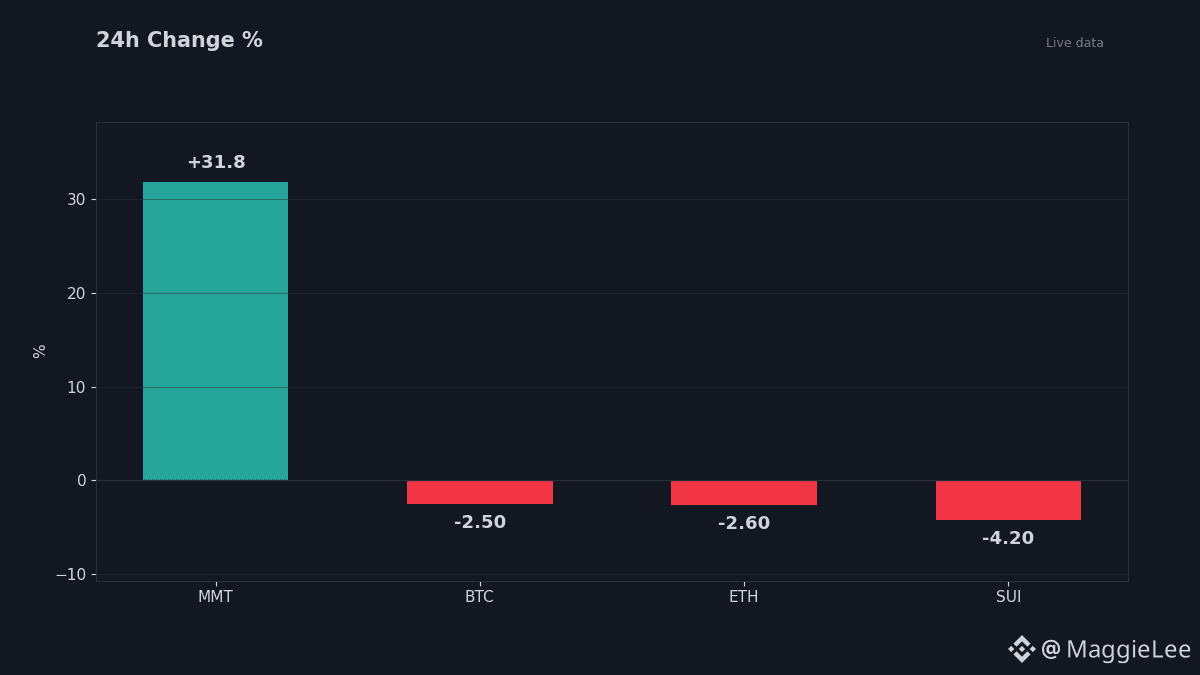
The whole market is falling, but this one more than doubled in seven days—I thought I must be seeing things.
Bitcoin is down 2.5%, Ethereum is down 2.6%, and even SUI is down 4.2%. Meanwhile, MMT is up 32% in the past 24 hours, trading around $0.26. It did $50 million in volume on Binance spot in a single day. It surged to an intraday high of $0.3177 and fell to a low of $0.1951—a swing of more than 60%. This kind of volatility isn't retail traders at work.
Zoom out, and it's even more extreme: MMT closed at just $0.116 on November 13, then gained more than 120% over the next seven days. From its November 14 low of $0.0945 to yesterday's high of $0.3177, it more than tripled in six days. Yesterday was the real breakout: it opened at $0.229, surged to $0.3177, and closed at $0.2678. Today it opened at $0.2679, dipped to $0.2364, and is now hovering around $0.26. After yesterday's huge run-up, today is purely a day of consolidation.
There is some news behind it, too: Momentum's Ignition incentive program, with a total of 100 million MMT, has reached the token-locking and reward-claiming stage. Huobi also just listed it yesterday. But honestly, the news alone can't explain a threefold gain in six days. It's more a rotation fueled by sentiment and money flowing in together, and this is the leading DEX in the Sui ecosystem, with a relatively small float.
First, the risks: only 204 million tokens are circulating out of a total supply of 1 billion—just over 20%. The next unlock is on December 4, allocated to the ecosystem. The current price is still 94% below its all-time high, and its market cap is only a little over $50 million. Technically, the hourly, four-hour, and daily charts are all in bullish structures right now. A break below $0.1924 on the hourly chart would signal a bearish reversal, while today's low of $0.2364 is the nearest key level.
My take: with a token that has tripled in six days, chasing the price means taking the bags from those who bought in yesterday. First, see if it can hold $0.2364. If it can't, it'll likely end up back where it started, so don't rush to jump in.
$MMT $SUI
#Momentum #Sui #Altcoins
Personal research only; not investment advice
466
·
--
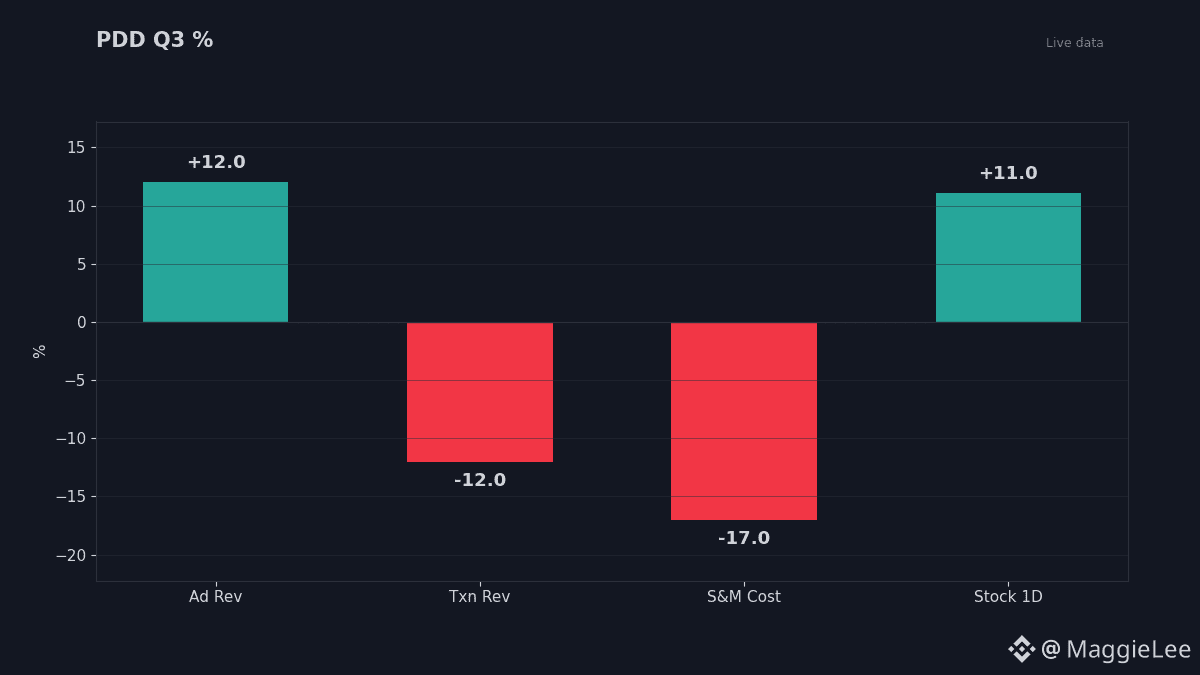
Revenue didn’t increase by a single cent, so why did the stock jump by more than 10% in a day? I read Pinduoduo’s earnings report three times, and the answer isn’t in the revenue line, it’s in the cost-saving line.
It closed at $86 last night, up by more than 10%; it opened at $82.52, hit an intraday high of $87.39, and trading volume was more than triple the previous day’s. After hours, it pulled back to $85.55.
The report itself looked pretty ordinary: total revenue was RMB 108.3 billion, exactly flat year over year, while analysts were looking for RMB 115.2 billion, so it missed. Transaction service revenue even fell by 12% to RMB 48.5 billion. In normal times, a report like this would get hammered.
But the market was focused on the other side: online marketing services revenue rose 12% to RMB 59.8 billion, sales expenses were cut by 17% to just RMB 24.9 billion, operating profit jumped by more than 20% to RMB 31.2 billion, and adjusted earnings per share came in at RMB 21.04 versus expectations of only RMB 18.54. The profit didn’t come from selling more goods, it came from spending less.
On the same day, Alibaba fell after earnings, while Pinduoduo surged. The difference is right there: one company’s cloud revenue rose 53% but it was still burning cash, while the other’s revenue was flat and profits came back first.
My take: saving money can rescue profits, but it can’t rescue growth. Revenue is standing still, and transaction services are still shrinking. This rally looks more like a valuation rebound after being oversold. The stock is still down 24% year to date, and it’s not far from the June 30 low of 71.94. Analysts have a target price above $93, but that has to be built on transaction services stabilizing first. Tonight, the first thing to watch is whether $86 can hold; if it can’t, then it’s just back to where it started. Binance Futures already has PDDUSDT perpetuals listed, launched at the end of August, with up to 20x leverage and 24/7 trading, so anyone who wants to ride this earnings move doesn’t have to wait for the U.S. market to open. Personal research, not investment advice.
$PDD $PDDUSDT
#拼多多 #美股 #earnings
391
·
--
Cloud grew 53%, but the stock closed even lower than yesterday—after reading Alibaba’s earnings report, the market voted with its feet.
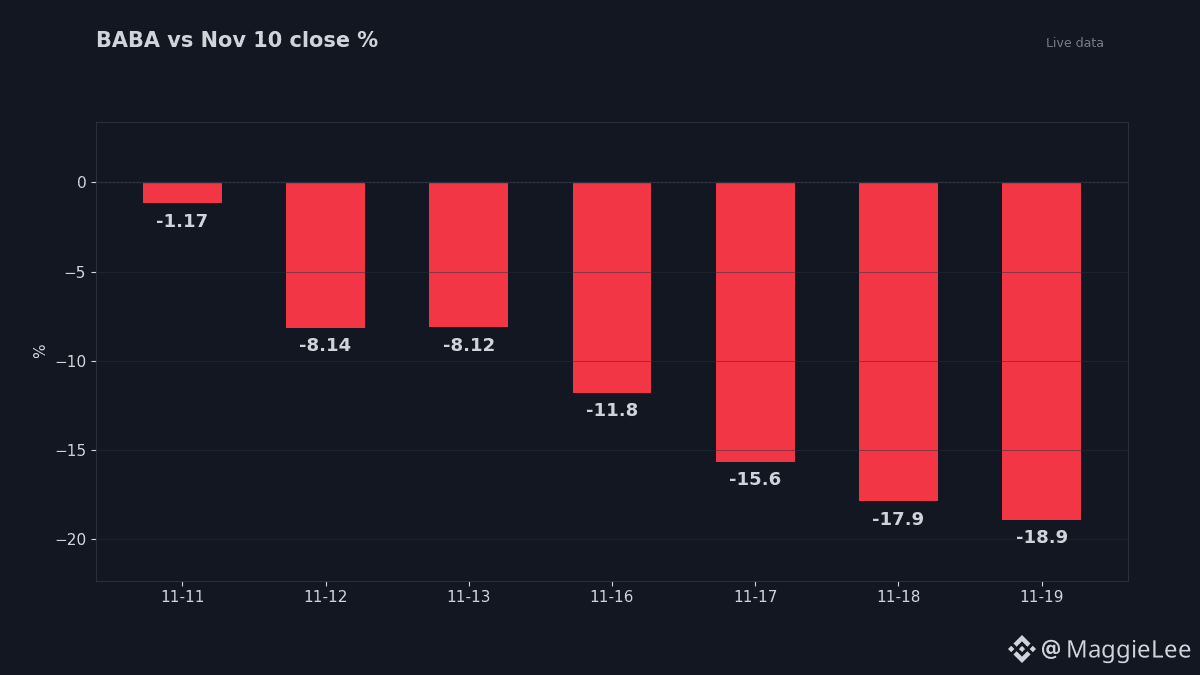
The earnings report came out before the market opened last night. The stock first surged to 88.20 yuan, nearly 4% above the previous day’s close. I thought the good news had finally paid off, but it closed at 83.31 yuan, near the day’s low, and slid further to 83.03 yuan after hours. The report itself wasn’t bad: total revenue was 271.5 billion yuan, up 10%; AI cloud revenue grew 53% to 61 billion yuan; recurring revenue from external customers rose 67%; AI-related products have posted triple-digit growth for 13 consecutive quarters; and cloud’s profit margin rose to 1.45%. The problem was on the other side: adjusted earnings per share came in at just 1.21 yuan, versus expectations of 1.65 yuan—a miss of nearly 30%. Free cash flow saw a net outflow of more than 34.4 billion yuan, as spending on AI computing power outpaced what it brought in. Put simply, the cloud business is making real money, but spending is growing faster than earnings. The market did the math right away. What stings even more is the timing: before this report came out, the stock had already fallen for six straight trading days from 102.72 yuan on November 10 to 84.37 yuan. The post-earnings pop didn’t even last half a day. Institutions are still talking bullish, with price targets of 170 to 180 yuan being thrown around, but the stock is already down 43% year to date. My take: don’t focus only on whether cloud growth can hold at 53%. What will really determine the stock’s next move is when the pace of spending slows and when free cash flow turns positive. Until then, every post-earnings rally could be an opportunity to sell into the good news. Tonight, first watch whether it can hold 83 yuan; if not, don’t rush to buy. BABAUSDT perpetuals on Binance trade 24/7, with up to 10x leverage. If you want to follow along, just don’t chase the rally on earnings night. Personal research, not investment advice.
$BABA $BABAUSDT
#阿里巴巴 #美股 #Earnings
147
·
--
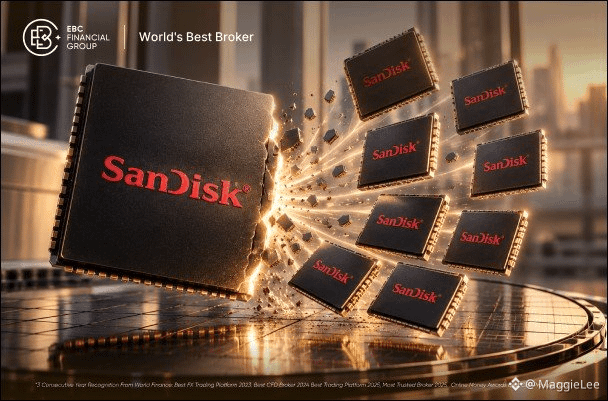
Have you ever seen an $800 stock turn into one worth just over $90 overnight? That’s what SanDisk is doing at the U.S. market open tonight: an 8-for-1 split. It closed yesterday at $755.16; the post-split reference price is $94.40. The number of shares in your account is multiplied by eight, while the total value stays exactly the same. The split itself is neither good nor bad. What really stands out is that the stock has already fallen nearly 45% in a month, sliding all the way down from its late-October high. Spot prices for flash memory have reversed, and whether AI spending can keep going is now the big question. Micron has been dragged lower too. My take: the split just changes the share price’s denomination. Whether a price in the $90s is worth it still depends on whether the data-center business can hold up next quarter. For tonight, first see whether the post-split stock can stay above $90. If it can’t, don’t rush in.
$SNDK $SNDKUSDT
#闪迪 #美股 #StockSplit
$SNDK $SNDKUSDT
#闪迪 #美股 #StockSplit
SNDKUS+2.68%
328
·
--
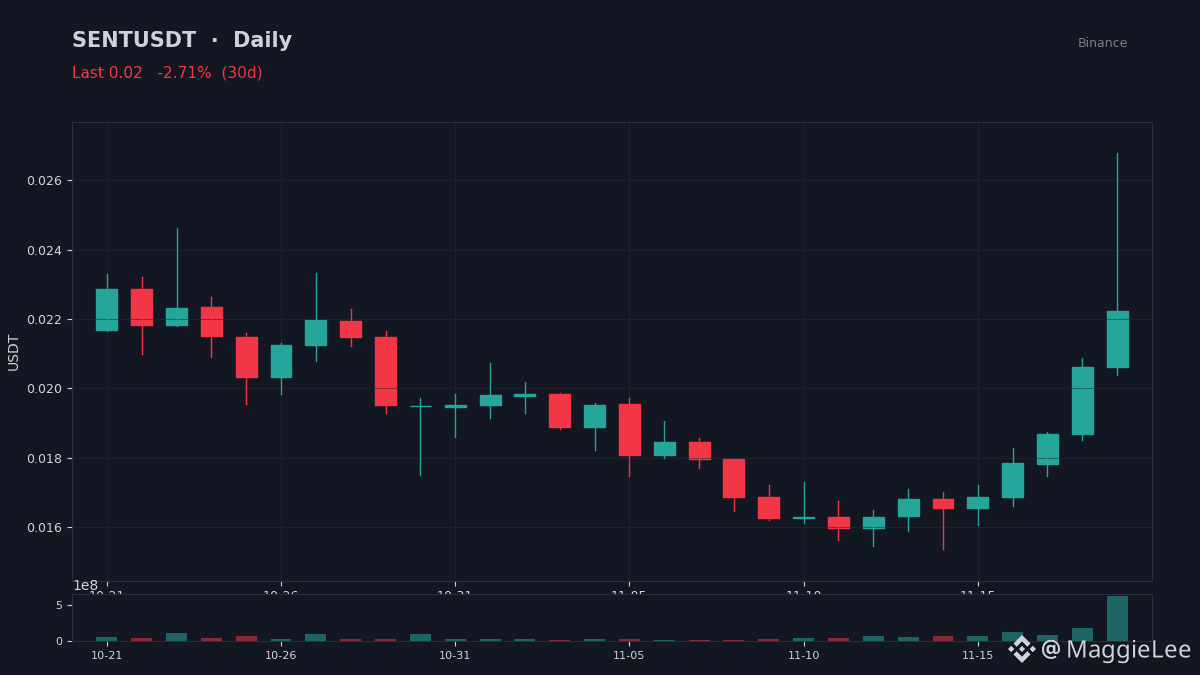
A coin with no new announcements to be found after searching high and low has risen nearly 40% in seven days. Would you dare to chase it?
Today, SENT is up more than 14% in 24 hours, trading around $0.022. It hit an intraday high of $0.0268, with roughly $16 million in spot trading volume on Binance over the past day. Meanwhile, Bitcoin is down about half a percent, and Ethereum has barely moved. So while the broader market is flat, SENT is charging ahead on its own. From the November 12 close, it’s up more than 36% in seven days, including a 10% gain on November 18 alone.
SENT is Sentient, which is building an open-source AI development platform. I searched around but couldn’t find any new announcements or partnership news from the project today. The reason for the rise isn’t the project itself—it’s the sector. The AI sector is up about 4% today, and NEAR is up 1.5%, so the whole AI theme is moving, with SENT leading the charge. Rather than calling this a fundamental turnaround, it looks more like sector rotation has brought SENT into the spotlight.
The risks need to be stated upfront, too. SENT peaked at $0.048 on February 1, and the current price is still more than 50% below that high. There are 7.2 billion tokens in circulation out of a total supply of 34.3 billion, meaning only a little over 20% is out so far. The remaining 80% will eventually enter circulation. At today’s volume, it’s hard to tell how much is genuine buying and how much is people piling in to follow the trend.
My take is that this rally is being driven by rotation into the AI sector, not by some major positive development from the project itself. If you really want to see whether it has staying power, first watch whether it can hold above $0.02. If it can’t, it’ll be right back where it started.
This is personal research and does not constitute investment advice.
$SENT $NEAR
#Sentient #AI #Altcoins
163
·
--
Verified
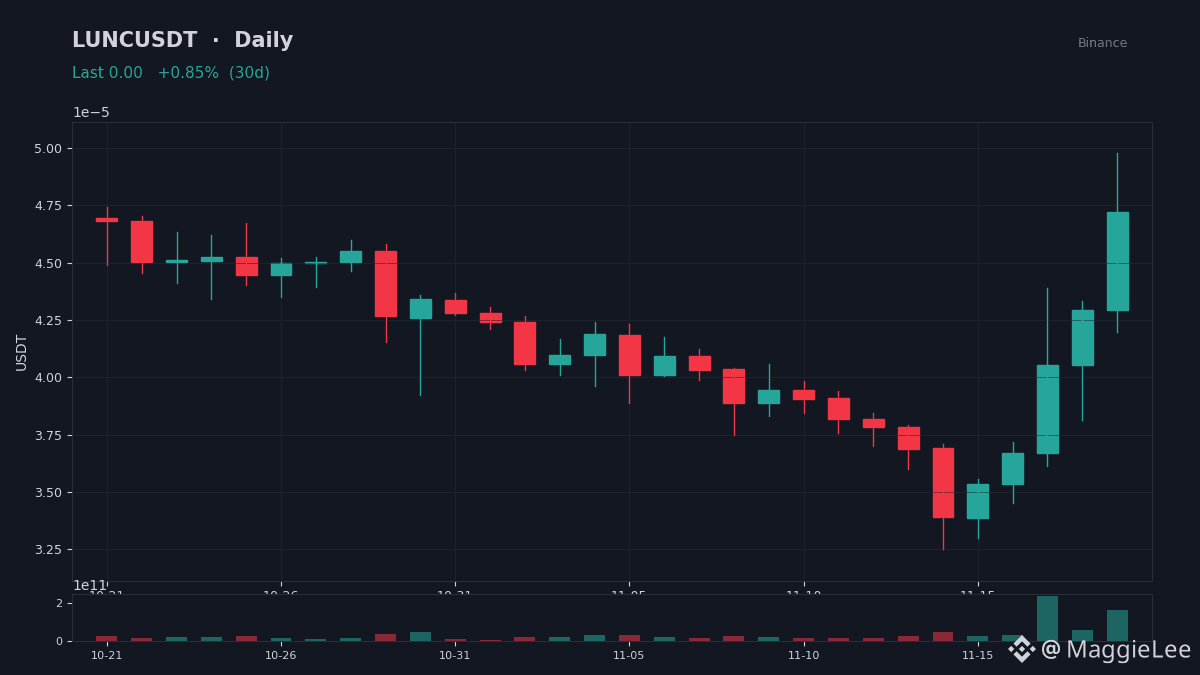
The whole market is sliding, and the biggest gainer is actually a coin that died once four years ago.
LUNC rose about 20% over the past 24 hours, peaking near $0.000050 during the day. Binance spot trading volume came to about $8.9 million. Bitcoin, meanwhile, fell a little over 1% that same day. The whole market was in the red, and LUNC was the only one charging upward. It’s up about 15% over seven days, and about 53% in five days from its November 14 low. USTC also rose 11% today.
There’s some interesting news. The community has resubmitted an $85,200 proposal for a SolidProof security audit, and staking yields are still above 2.8% annually. But on the other hand, Binance’s November burn hasn’t appeared yet—the first time it’s been missed since 2023. Burns have long been part of LUNC’s story: Binance uses half of its spot and margin trading fees to burn tokens, and more than 65 billion have been burned so far. When a burn is missed, the market can’t help but wonder what’s going on.
Let’s get the risks out of the way first. LUNC has a circulating supply of more than 5.4 trillion, yet a market cap of only a little over $200 million. Its price has four zeros after the decimal point, so even a modest amount of capital can push it up 20%. Trading volume isn’t particularly high either: Binance spot volume was under $9 million for the day. Calling this kind of rise a trend would be a stretch; it looks more like sentiment.
My take is that this is a countertrend bounce, not a reversal. To see whether it has any staying power, first watch whether it can hold above $0.000040. If it can’t, it’ll be back where it started.
For personal research only. This is not investment advice.
$LUNC $USTC
#LUNC #TerraClassic #Altcoin
1
807
·
--
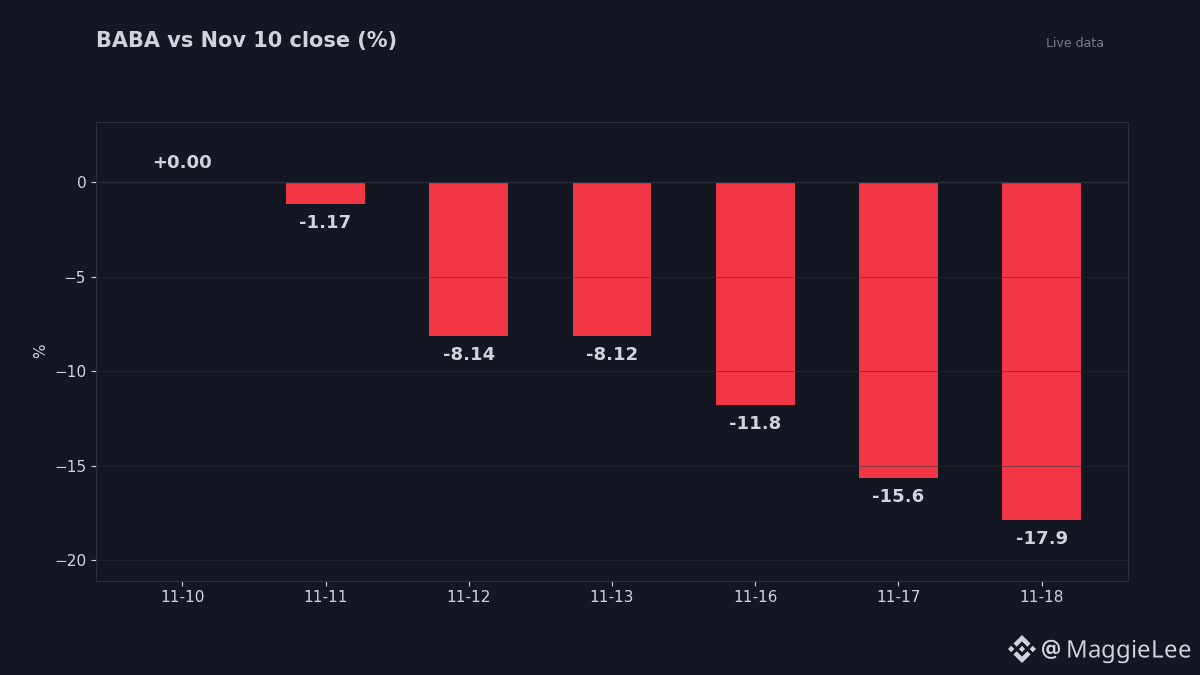
Alibaba's earnings report comes out tonight, but the stock has already fallen nearly 20% in advance. Over in Hong Kong, it dropped almost 5% in a single day on Tuesday. The report hasn't even been released yet, and the bears have already taken their positions.
The table I have in hand tracks it down from the Nov. 10 close of $102.72: Nov. 11 at $101.52, Nov. 12 plunging straight to $94.36, more than a 7% drop in one day. After that it drifted lower each day, and by yesterday's close it was down to just $84.37. In six trading days it lost 17.86%, only managing a mild bounce to $85.33 after hours.
The trigger was the new chip export control rules announced on Nov. 16. Advanced chips heading to data centers in certain countries now need a license, and overseas computing infrastructure is included too. Alibaba's Hong Kong shares fell 4.9% the next day, Baidu dropped 6.8%, and the whole China concept chip chain got hit.
Tonight, the September quarter earnings report comes out before the open, with the call at 8 p.m. Beijing time. The market expects earnings of $1.62 per share and revenue of $40.23 billion. Options are pricing in a move of plus or minus 5%, or about $4.36. Pinduoduo is also reporting tonight, so China concept consumer and cloud names are being compared side by side.
What I'm watching isn't just whether revenue beats expectations. Last quarter, cloud revenue rose 45% to 48.44 billion yuan, AI-related product revenue posted triple-digit growth for the 12th straight quarter, and the story sounded great. But capital expenditure jumped 75% to 67.68 billion yuan, free cash flow was a net outflow of 44.67 billion yuan, and e-commerce customer management revenue still fell 7%. The pace of burning cash is faster than the pace of making it. Where the stock goes after earnings will depend half on how management talks about computing power on the call, whether cloud growth can stay near 45%, and whether losses in instant retail have narrowed.
Institutions are still pretty upbeat on paper: Aletheia just raised its target price to $190 and kept a Buy rating; Goldman Sachs has $177, Bank of America $178, and JPMorgan cut it in October from $210 to $200 but still has Overweight. The target prices are more than double the current level, yet the stock has already fallen nearly 20%. That contrast itself shows the market doesn't believe the story right now, only the cash flow.
The risks are right there too: tighter chip controls, cloud growth lagging, and continued spending in instant retail. If any one of those plays out, post-earnings volatility won't be small.
On Binance Futures there is a BABAUSDT perpetual contract, listed on April 20, with up to 10x leverage, settled in USDT, and tradable 24 hours a day, so you don't have to wait for the U.S. market open to trade this earnings move.
Personal research only, not investment advice.
$BABA $BABAUSDT
#阿里巴巴 #美股 #earnings
490
·
--
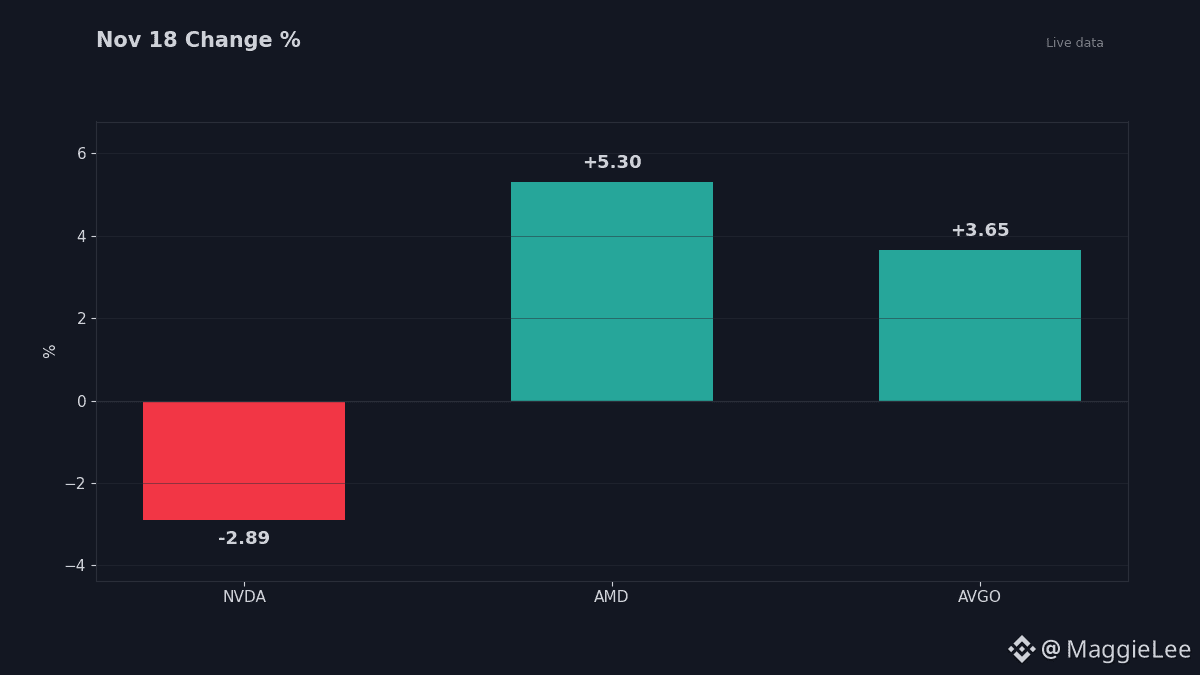
Earnings more than doubled, guidance beat expectations too, yet the stock promptly fell nearly 3%. Have you ever seen an earnings night this contradictory?
Nvidia closed at $150.96 yesterday, down 2.89%. It briefly surged to $159.70 intraday, then gave it all back. The earnings boost lasted barely half a morning. Third-quarter revenue came in at $115.8 billion, more than double year over year, with earnings of $2.68 per share. Next-quarter guidance was $130 billion—beating expectations across the board. Data center revenue reached $107.6 billion, up 110% year over year, and the company added $150 billion in buybacks. There’s not a thing wrong with the numbers on paper.
It’s not the performance that’s falling short—it’s people. Huang resigned on November 12, and the board immediately said it wouldn’t ask him to return. Interim CEO Colette Kress held an all-hands meeting yesterday, urging everyone to “look ahead,” and moved pay raises and equity awards up to December. The more they try to reassure people, the clearer it is that confidence hasn’t recovered. The market’s vote is brutally honest: AMD rose 5.3% the same day, and Broadcom gained 3.65%. Money hasn’t left AI chips; it’s just moved from Nvidia to its neighbors.
After five straight sessions of losses, the stock has fallen nearly 38% from its October 6 high of $243.37. It shed $549 billion in market value in five days, leaving it just a step above its 52-week low of $148.80. Goldman Sachs is still rating it Buy with a $220 price target, but the market isn’t buying price targets right now—it wants to know who’s taking the helm.
My take: the earnings leg hasn’t broken; what’s broken is the faith premium in “Huang is at the helm.” Earnings can’t fix a drop like this. The market needs to see a new CEO appointed, or get past Huang’s congressional testimony on December 1. The risks are clear: if $148.80 breaks, there’s little meaningful support below; if the Fed raises rates again in December, high-valuation growth stocks will take another beating; and if the new CEO appointment keeps dragging on, institutions will only keep cutting their positions. Tonight, first watch whether it can hold around $151 after hours. If it can’t, don’t rush to catch a falling knife.
NVDAUSDT perpetuals on Binance trade 24/7, so there’s no need to wait for the U.S. market to open. They offer up to 10x leverage, and the ANT and NVDA Perpetual Carnival runs from November 17 to 30.
Personal research; not investment advice.
$NVDA $NVDAUSDT
#英伟达 #美股 #AI chips
292
·
--
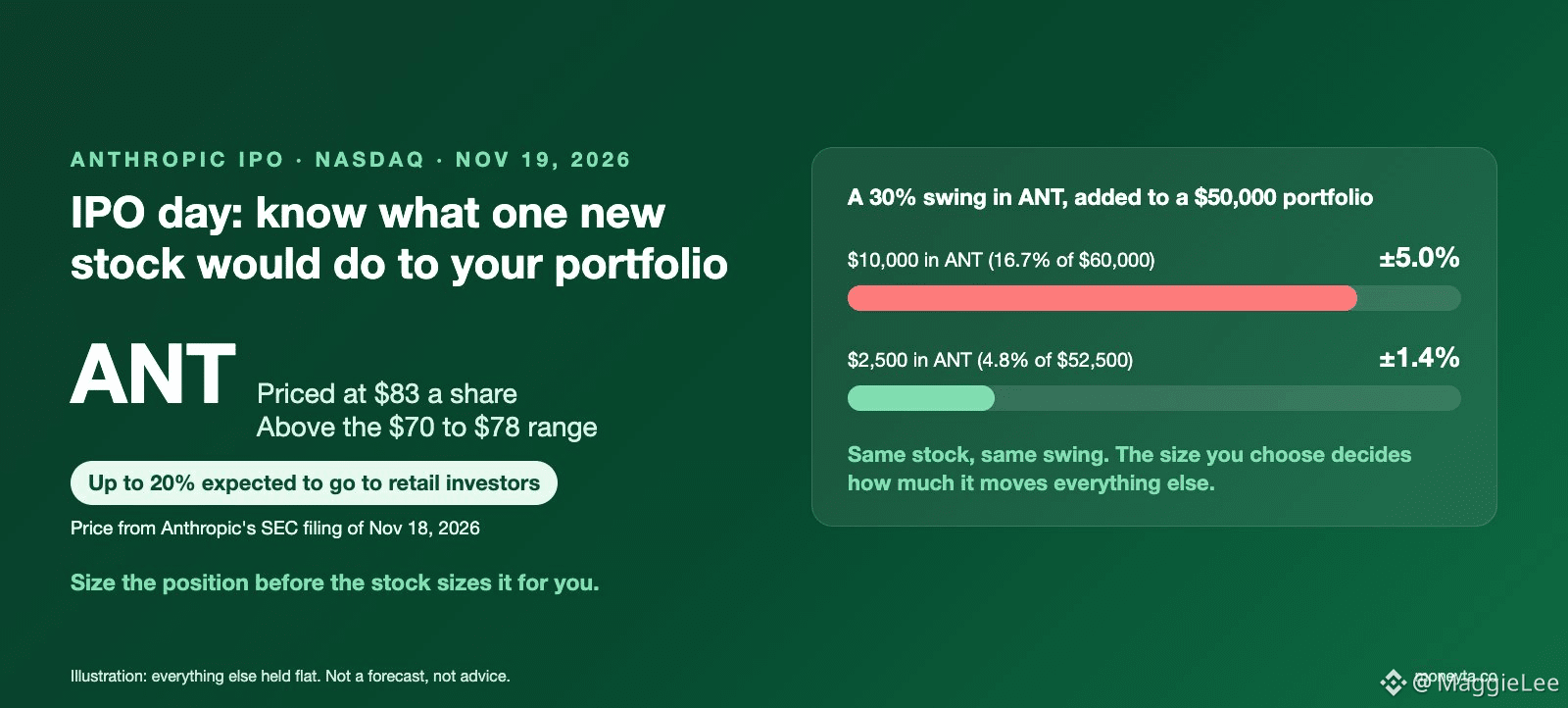
The offer price is set above even the top of the range they gave themselves—Anthropic lists on Nasdaq tonight under ticker ANT, at $83 a share, versus a range that topped out at just $78, raising about $81 billion. Even more striking in the prospectus: revenue for the first nine months was $33.2 billion, up from just $2.5 billion in the same period last year. Of its $10.4 billion net loss, $9.4 billion was from mark-to-market revaluations; operating losses were only $1.3 billion. Amazon and Google still own nearly 30% combined, and seven companies including Google and Nvidia will subscribe for another $26 billion at the offer price. The $500 million allocation for ANTx subscriptions in Binance wallets filled up in just a few hours. My take: don’t chase the opening price tonight—wait for the closing price. The real test comes next May, when the lockup expires: will the market be able to absorb more than 15 billion shares?
$AMZN $GOOGL
#Anthropic #人工智能 #USStocks
$AMZN $GOOGL
#Anthropic #人工智能 #USStocks
104
·
--
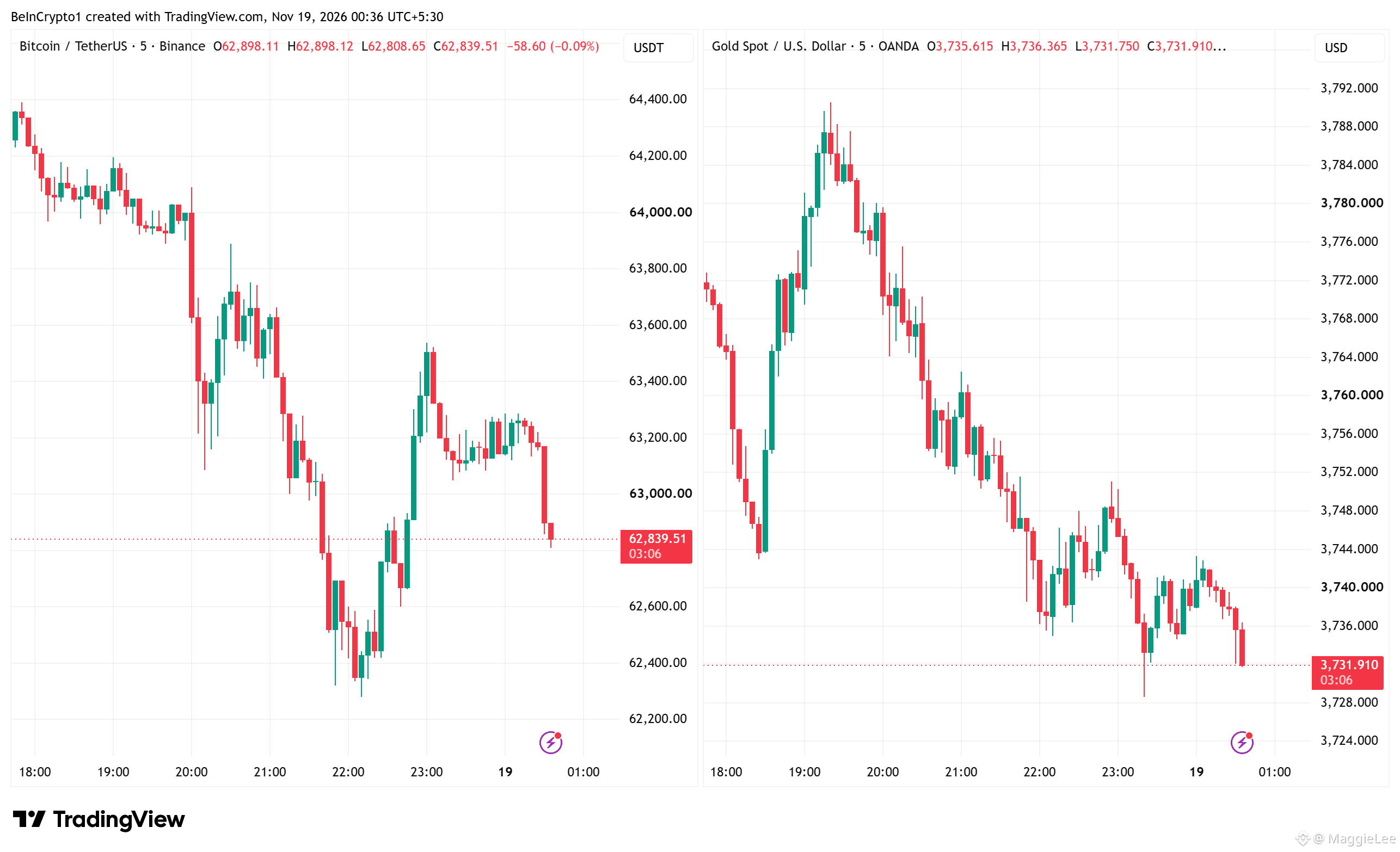
The Fed has only paused rate cuts for three weeks, and people are already talking about a 50-basis-point hike in December in the minutes—this plot is moving faster than crypto.
At the October meeting, the vote was 10–2 to hold rates steady, but two voting members wanted to hike right then and there. Nearly everyone in the minutes thought more hikes would be needed, and Waller came right out yesterday calling for 50 basis points. The market is now pricing in a 95% chance of a December hike, and the dollar index has hit a one-and-a-half-year high.
Bitcoin responded by dropping below 63,000, while gold fell more than 3% in a day. My take: this isn’t just hawkish talk meant to scare people—the inflation data really hasn’t cooled. Don’t rush to buy the dip before December 9; let’s see how the jobs and inflation data come in first.
$BTC $PAXG
#美联储 #比特币 #黄金 #BinanceOracle
·
--
With the whole market sliding, a small-cap coin worth just over $50 million has more than doubled in a day.
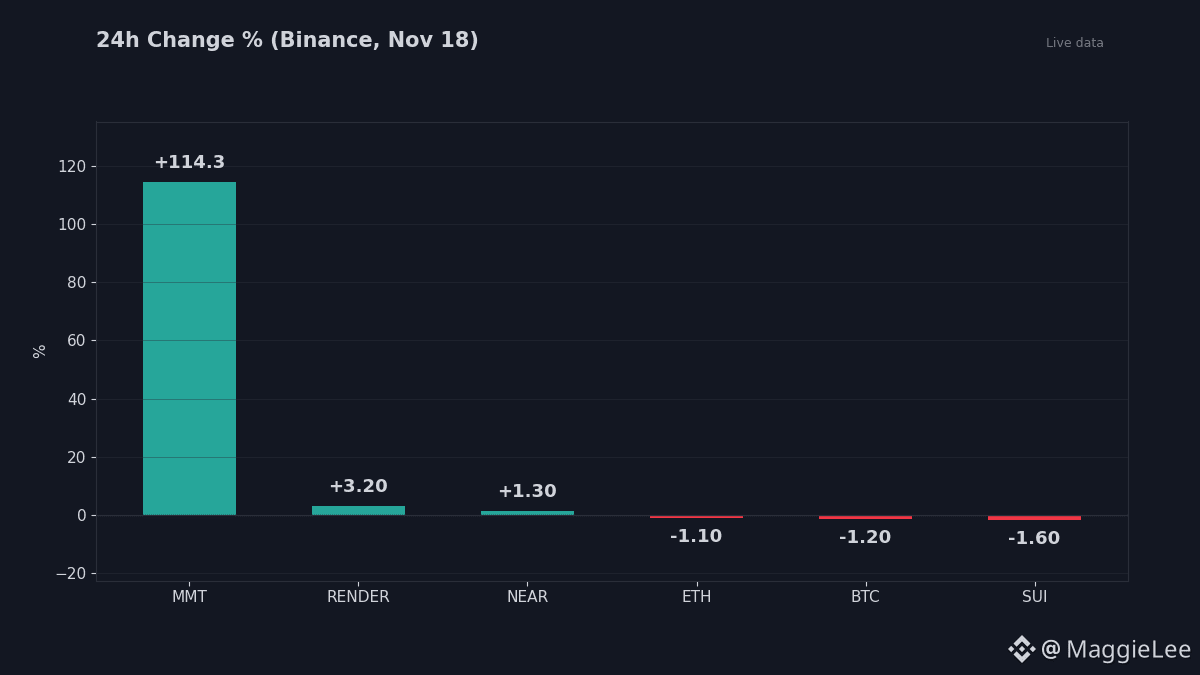
MMT is trading around $0.26 today, up more than 100% in 24 hours. It hit an intraday high of $0.266 and a low of just $0.1129. Binance spot trading alone saw 195 million tokens change hands in a day, worth $36 million. Total trading volume across the market was about $1.57 billion—several times its market cap of just over $50 million. On the same day, Bitcoin fell by more than 1%, Ethereum was down 1%, and Sui itself dropped 1.6%. It was practically the only coin charging upward.
The token is Momentum, a concentrated-liquidity DEX on the Sui chain. When it launched last November, it briefly reached $4.20; at today’s price, it’s still more than 94% below that peak. On November 14, it closed at $0.098. In four days, it’s gained more than 160%—climbing back from the floor.
I couldn’t find any new announcements or partnership news behind this rally, and after looking around, I didn’t see any confirmed positive catalysts. But the market signals are pretty clear: open interest in perpetual futures is over 200 million tokens, and the funding rate is negative. That means shorts are paying longs, suggesting the short side is very crowded. Some of the rise is likely being driven by shorts forced to buy back their positions.
The risks need to be clear, too. MMT has a total supply of one billion tokens, but only a little over 200 million are in circulation—around 20%. The remaining 80% will eventually enter the market. According to the previously disclosed schedule, investor unlocks are due around November. With volume like today’s, it’s impossible to tell how much comes from genuine buying and how much from trading activity pumped up to climb the rankings.
My take: this is a classic short-squeeze rally in a low-cap altcoin. The broader market is still falling, while this coin has doubled. Chasing a move like this is a bet on the next candlestick, not a way to participate in a trend. If you want to see whether it has staying power, first watch whether it can hold $0.20. If it can’t, it’ll be right back where it started.
Personal research; not investment advice.
$MMT $SUI
#Momentum #Sui #Altcoins
499
·
--
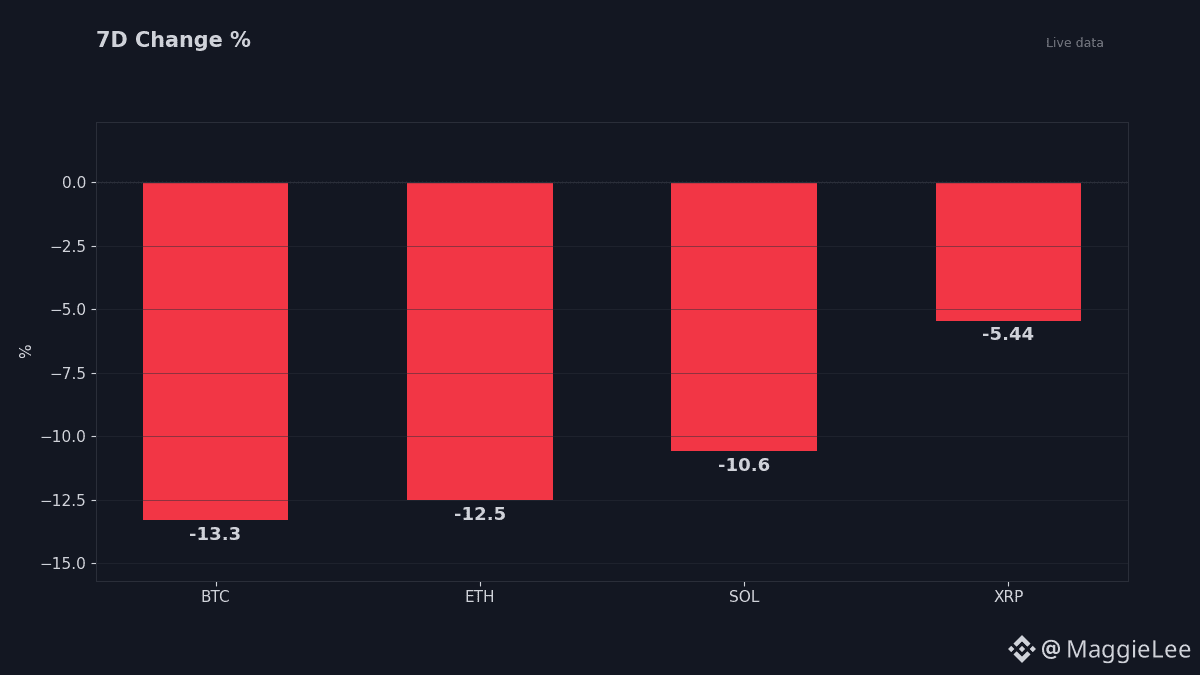
After a week of carnage, XRP was surprisingly the least affected—is this coin genuinely holding up, or are whales giving it one last push before dumping?
Bitcoin fell more than 13% over the past seven days, Ethereum dropped more than 12%, and Solana was down over 10%. XRP fell just over 5%, the smallest decline among the four major coins. Today, it reclaimed $1, reaching an intraday high of $1.007. It gained about 4% in 24 hours and has now rebounded 11% from last week’s low of $0.89.
There’s some interesting on-chain activity. Since last week, whales have withdrawn a net total of over $127 million worth of XRP from Binance. On Tuesday afternoon, a single transfer moved 140 million XRP, worth about $136 million, to two unidentified wallets. Binance is also distributing 600,000 XRP to RLUSD holders. Withdrawals don’t mean an immediate rally, but when big holders move coins off exchanges, it at least suggests they aren’t in a hurry to sell right now.
Don’t overlook the opposing signals. XRP closed last week at around $0.97, its lowest weekly close in two years, and remains 72% below last July’s high of $3.65. Spot ETFs saw net outflows of about $19.1 million last week and roughly $19.66 million in November so far; on Monday, net inflows were zero. Since going public, Evernorth has transferred out 346.5 million XRP, and its financial report also recorded a net loss of over $280 million.
Technically, there’s resistance all the way up: the moving averages are all above $1.13, and the RSI has only just recovered from around 27 to slightly above 33. On the downside, $0.90–$0.94 is support; if that breaks, $0.85 is next. To the upside, $1 is just the starting point—only if it holds can we look toward $1.05–$1.10.
My take: this XRP move is a weak rebound, supported by its relative resilience and whale withdrawals—not a reversal. In a market gripped by extreme fear, the first coin to reclaim a round-number level is the one most likely to attract chasers. But buying in means betting that the sentiment will continue, so size your position carefully.
This is personal research and not investment advice.
$XRP $SOL
#XRP #瑞波 #Altcoins
289
·
--
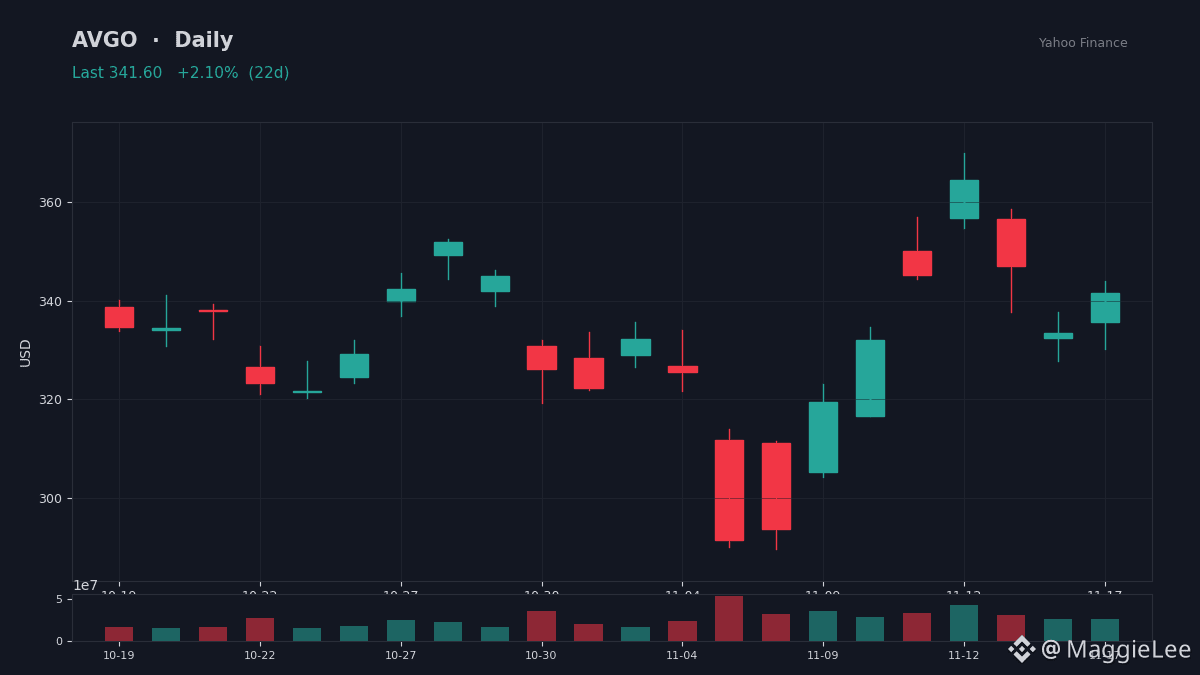
The day the broader market fell for four straight days, Broadcom—somehow the chip stock with the biggest gains—had just hit a 52-week low the week before.
On Tuesday, the Dow fell 1.6%, the S&P 500 dropped 1%, and the Nasdaq was down 0.7%. Microsoft fell 2.3%, while Salesforce plunged 9.5%. Chip stocks AMD, Micron, and Intel were all down, but Broadcom rose 2.5%, closing at $341.60. After Nvidia's earnings came out, Broadcom gained another 2.9% in after-hours trading, reaching $351.50.
What’s interesting is that Broadcom had plunged to $289.77 intraday on November 6, a 52-week low. In just seven trading days, it bounced nearly 18% from there. It’s also in a different business from Nvidia: Nvidia sells GPUs, while Broadcom sells custom AI chips and networking equipment. Google’s TPUs are made by Broadcom, and its switching chips connect the racks in AI data centers. So when the market slashed AI capital spending, Broadcom fell harder than almost anyone; when the rebound came, it was also one of the first to turn higher.
My take is that this move should initially be viewed as an oversold bounce combined with sector rotation—not as a reversal just yet. The stock is still 7% below its 200-day moving average, more than 30% off its June high of $495, and the prospect of lower AI spending hasn’t gone away. The real test will be Broadcom’s own earnings report on December 9. That’s when we’ll see whether orders for custom chips have actually been cut. For tonight, the first thing to watch is whether it can hold the after-hours price of $351. If not, this is still just a bounce within a choppy market.
AVGOUSDT perpetual futures on Binance can be traded 24 hours a day, so there’s no need to wait for the U.S. market to open. Leverage of up to 10x is available.
Personal research only; not investment advice.
$AVGO $AVGOUSDT
#博通 #美股 #AI芯片
91
·
--
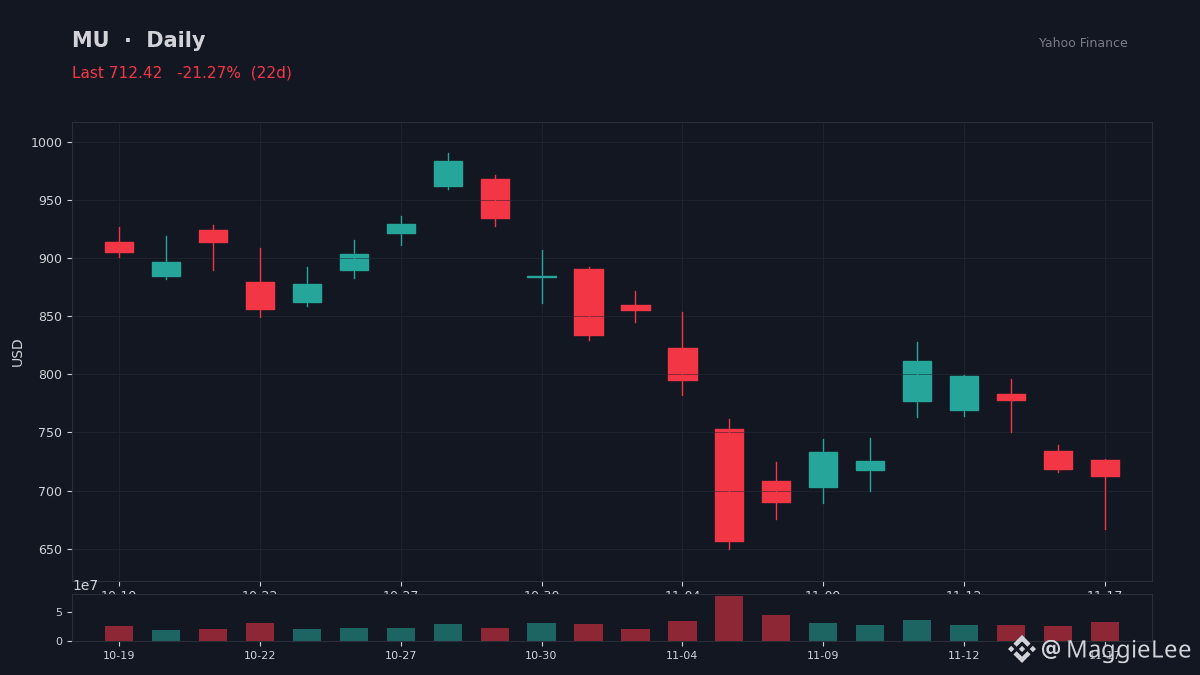
On Monday, I said Micron needed to hold $716. On Tuesday, it plunged intraday to $667 and never got back above that level by the close. Then Nvidia’s earnings came out, and Micron rebounded to $746 after hours—a breakdown followed by a turnaround in a single day. That’s the kind of heart-pounding action you get in the memory sector.
Micron fell 7.6% on Monday, closing at $719. On Tuesday, it initially climbed to $727 before sliding all the way to an intraday low of $667. It closed at $712, a decline of less than 1% on the surface, but during the session it broke nearly $50 below Monday’s low. The selloff was driven by the same two factors: over the weekend, SemiAnalysis cut its AI capital expenditure forecast by nearly 30%, and NAND spot prices had fallen 20% since mid-to-late October. The market was still digesting the news on Tuesday, and nobody wanted to be the first to step in.
Nvidia was what turned things around. Revenue came in at $115.8 billion, more than double last year’s figure. Earnings per share were $2.68, and its guidance for next quarter was $130 billion—all well above expectations. The earnings call also revealed a key figure: Nvidia’s future supply commitments rose from $279 billion to $390 billion, much of it tied to multiyear memory purchases. Micron is a major supplier of high-bandwidth memory to Nvidia, so those comments amounted to a direct vote of confidence in the memory sector. After the earnings release, Micron rose 4.7% to $746 after hours, while SanDisk and AMD gained 4% to 5%. Wall Street’s average price target is still as high as $1,624, with 28 Buy ratings and 1 Hold.
My take is that this rally isn’t because Micron itself has gotten better; Nvidia has lifted the entire sector out of the water. NAND spot prices are still falling, and the fundamentals for general-purpose memory haven’t changed. The 4.7% after-hours gain is a sentiment rebound, not confirmation of a reversal. Tonight, the first thing to watch at the open is whether the stock can hold above $740. If it does, then we can talk about whether it was oversold; if not, it’s still range-bound. The risks are worth spelling out too: further declines in NAND prices, SemiAnalysis’s downward revision coming to pass, or Micron’s own mid-December earnings missing expectations could all erase the rebound in a hurry.
MUUSDT perpetuals on Binance trade 24 hours a day, so you don’t have to wait for the U.S. market to open.
This is personal research and does not constitute investment advice.
$MU $MUUSDT
#美光 #美股 #Memory chips
460
·
--
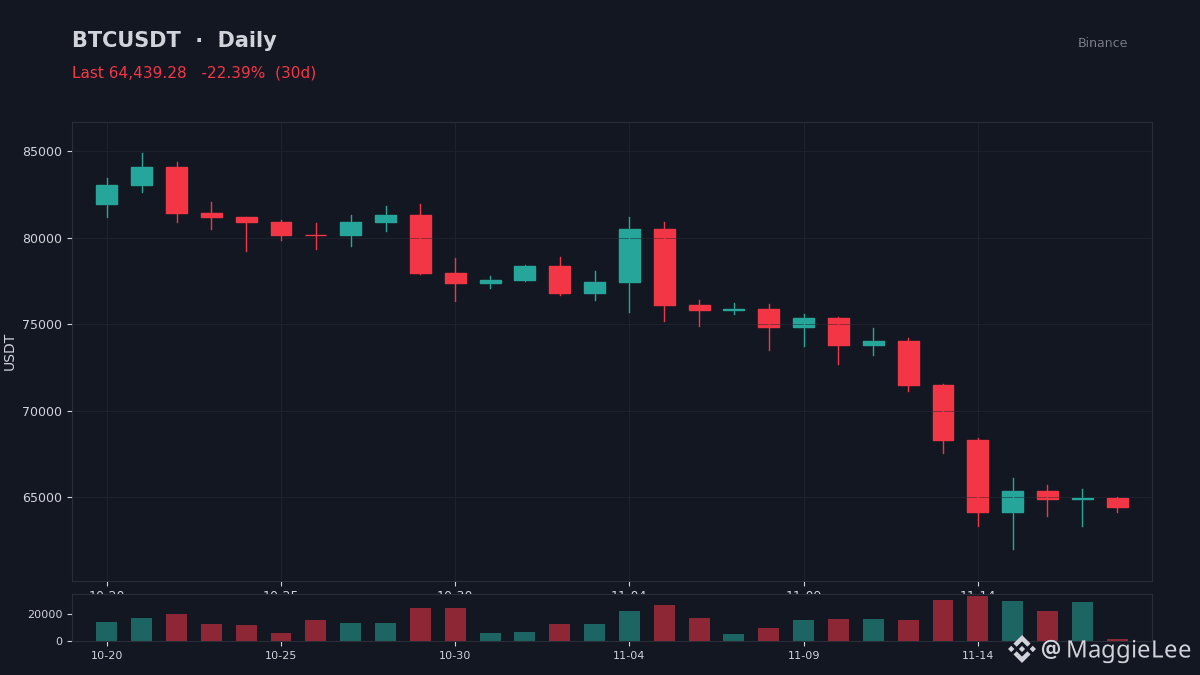
The Fear & Greed Index is down to 12, and ETFs have seen $1.9 billion in outflows over seven days, yet BTC still hasn’t made a new low. After dropping to $62,000 on Sunday, it closed at $64,947 yesterday and is still hovering around $64,469 today. Six straight weeks of declines have filled the air with talk of capitulation, but selling pressure at this level is clearly weaker than before. Yesterday’s long lower wick shows buyers stepped in around $63,000. I’m not trying to call the bottom. The October FOMC meeting minutes come out early tomorrow morning: if they’re hawkish, we could see more downside; if they’re dovish, the market may get some breathing room. My plan is to sit tight until the minutes are released and let the market pick a direction first.
$BTC $ETH
#比特币 #美联储 #cryptocurrency
$BTC $ETH
#比特币 #美联储 #cryptocurrency
221
·
--
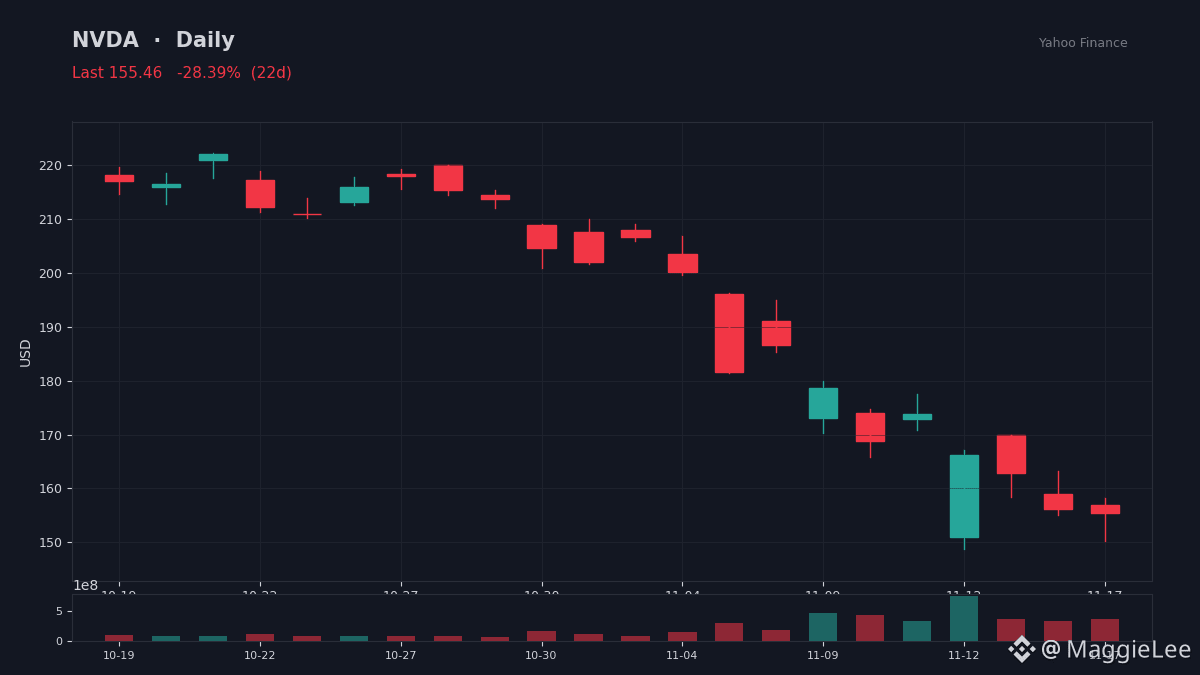
Earnings beat across the board, yet the stock rose only three points after hours—the market isn’t really looking at Nvidia’s results.
Third-quarter revenue was $115.8 billion, more than double last year’s, and earnings per share came in at $2.68. Both beat expectations, and guidance for next quarter was $130 billion. But gross margin guidance fell to just over 70%. At the start of the conference call, they said they wouldn’t discuss Jensen Huang’s resignation, and the board isn’t planning to ask him to come back.
My take: there’s nothing wrong with the results; the problem is sentiment. The market isn’t worried about how much Nvidia earned this quarter, but whether it can keep earning at this rate next quarter without Jensen. First, let’s see if the stock can hold above $160 at tonight’s open. If it can’t, it’ll remain range-bound.
$NVDA $TSM
#英伟达 #美股 #财报 #BinanceOracle
1
·
--
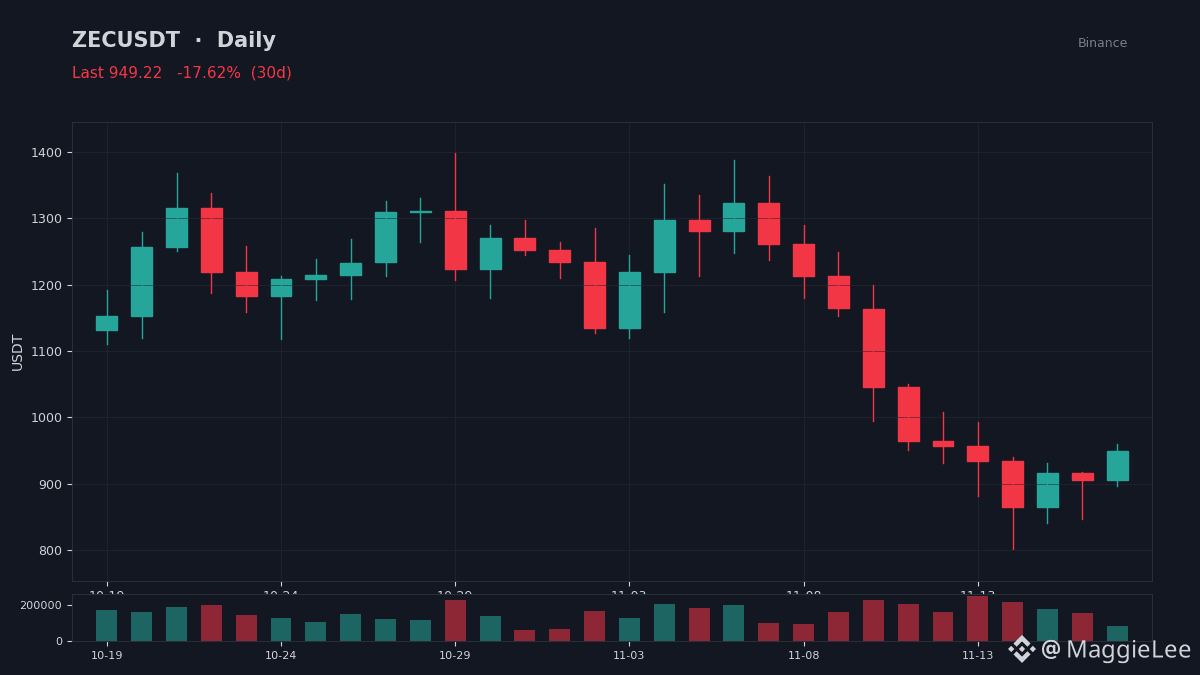
A coin that was still at 1,700 at the end of September fell to just over 800. What made it rally nearly 10% against the trend today?
Zcash rose about 9% on Binance today, touching around $950. But looking back, this sell-off was brutal: it had just surged to around $1,700 at the end of September, then touched $1,380 on the day of its November 6 upgrade. It fell for eight straight days after that, hitting a low of $808 last Saturday—down nearly 20% in a month.
The trigger for today's green candle was Arthur Hayes updating his holdings list on X in the early hours of the morning. He grouped Zcash, Ethereum, NEAR, and Venice's VVV together as the new Four Horsemen, set a $1,800 target for Zcash, and went out of his way to add that he wouldn't take a large position. The market bought into it: privacy coins moved higher, and Monero gained a few percentage points today too.
But I wouldn't be too quick to treat this rebound as a reversal. Grayscale's Zcash ETF saw $15 million in outflows in a single day on November 11. The community is also arguing over the development fund, with voting not set to end until November 30. One proposal would even move 50,000 ZEC out of the community grant treasury. For the bulls to truly turn things around, they first need to reclaim the $1,000 mark. The 200-day moving average is around $800; if that breaks, prices may have to search for lower support.
My view is that one comment from Hayes can spark a rally, but it can't set a trend alight. The overall crypto Fear and Greed Index is only at 12. The privacy narrative is still there, but the money hasn't returned: the ETF is seeing outflows, and the community is arguing. Buying in at this level is a bet on whether the sentiment can continue—not on a turnaround in the fundamentals.
This is personal research and does not constitute investment advice.
$ZEC $ETH
#Zcash #隐私币 #Altcoins
257
·
--
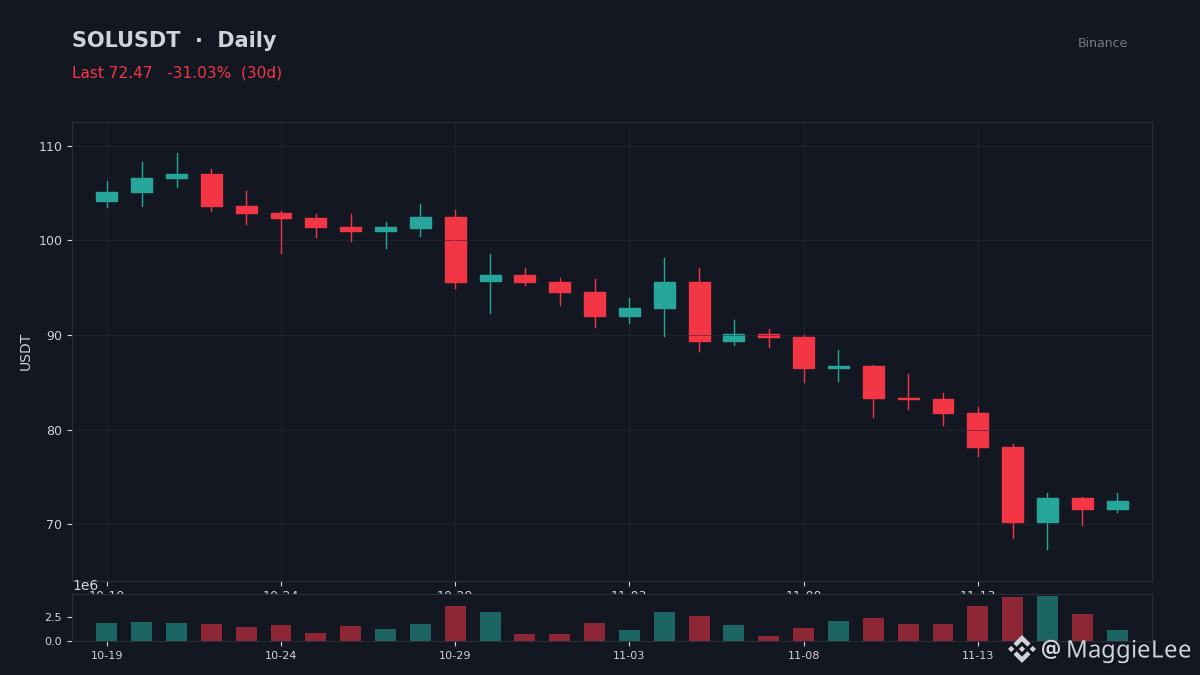
SOL is down 16% in a week, yet bullish news piled up on the very same day. The contrast has me pretty baffled.
Yesterday at Breakpoint in London, the Solana Foundation officially retired the “mainnet beta” label it had carried for more than six years, renaming it Solana 1.0. The name change itself won’t make trading faster, but it reflects real upgrades: Alpenglow, which went live in October, cut finality from more than 12 seconds to around 150 milliseconds, and Jump’s Firedancer also launched on mainnet last December. At the same event, Zelle announced that its own U.S. dollar stablecoin, ZelleUSD, will run on Solana for cross-border transfers. It will be issued by Anchorage Digital Bank, with India as the first corridor and a launch planned before year-end. They also demonstrated a confidential transfer of $1.25 million at the event. A few days earlier, the U.S. Depository Trust & Clearing Corporation (DTCC) had also said it would bring its tokenized securities services to Solana in the second half of 2027.
But the market isn’t buying it at all. SOL is now just above $72, up a little over 1% in 24 hours, down 16% in a week, and down just over 30% in a month. On-chain TVL has shrunk too: $4.7 billion on November 16, compared with $5.9 billion in mid-October. Put simply, the market is focused only on that Fear & Greed Index reading of 12. In extreme fear, nobody listens to anyone’s story, and all the good news is falling on deaf ears.
My take is that all these positive developments are about laying the groundwork: DTCC’s plans won’t take effect until the second half of 2027, Zelle’s transfer demo was still on testnet, and there are only around 138,000 of the stablecoins on-chain. There’s still no clear timeline for when consumers will be able to use it. Building the infrastructure is genuinely positive, but when the money will flow in depends on whether Bitcoin can hold above the $63,000 level. For SOL in the short term, I’m watching the $70 mark. If it breaks below that, it could keep falling; if it holds, then we can talk about a rebound.
For personal research only; this is not investment advice.
$SOL $JUP
#Solana #山寨币 #Stablecoin
96
·
--
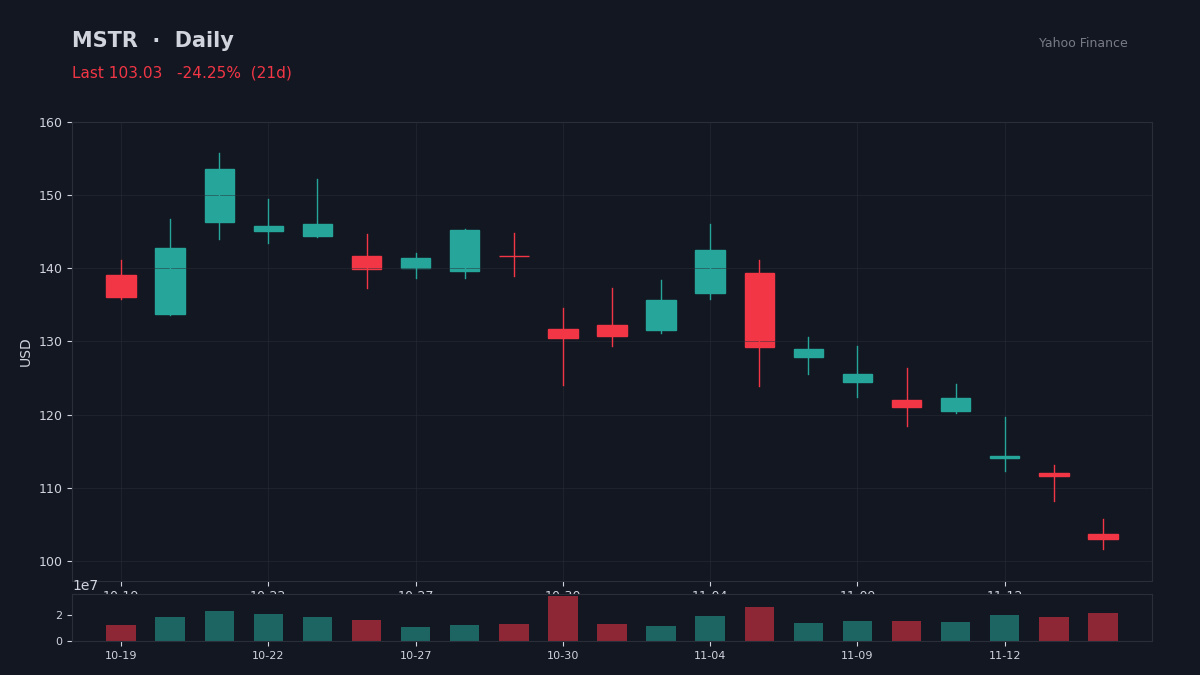
A company is sitting on 850,000 bitcoins, yet its stock has fallen by a quarter in a month. So tell me: is it cheap now, or still expensive?
Strategy closed Monday at $103.03, down another 7.7%, and is down about 24% over the past month. Meanwhile, it keeps accumulating more coins: it bought another 485 last week, bringing its total to 850,849, at an average cost of $75,456 each. But Bitcoin briefly fell below $62,000 over the weekend and was hovering around $64,000 on Monday. At market prices, the company is sitting on an unrealized loss of roughly $7 billion on its holdings; Bitcoin would need to rise more than 12% just to get back to their cost basis.
What stings even more is the index news: MSCI confirmed on November 11 that it would remove MSTR from its global indexes after the market close on November 30. Index-tracking funds will then have to sell their shares. Strategy estimates the selling at $1.6 billion; JPMorgan puts it at $2.8 billion. The market used to value the company at a 3.4x premium to its net asset value. Now that’s down to just 1.08x—the premium has all but evaporated. In its third-quarter results, the company reported earnings per share of $44.75 on the back of unrealized Bitcoin gains, yet the stock still fell 7.8% the next day. The market simply doesn’t buy into paper riches.
My take is that MSTR is now basically a leveraged proxy for Bitcoin: when Bitcoin falls, it falls harder; when Bitcoin rises, MSTR may not even keep up. And there’s forced selling hanging over it at the end of the month. If you’re watching, first keep an eye on whether Bitcoin can hold above $63,000, then see how heavy the selling pressure is on November 30. The risks are plain to see: if Bitcoin falls further, the unrealized losses will grow, and the CFO has just resigned, effective November 5, leaving management looking shaky too.
BTCUSDT trades 24 hours a day on Binance. MSTR itself is a Nasdaq-listed stock, and its price moves with Bitcoin.
This is my personal research and does not constitute investment advice.
$MSTR $BTCUSDT
#MSTR #美股 #Bitcoin
71
·
--
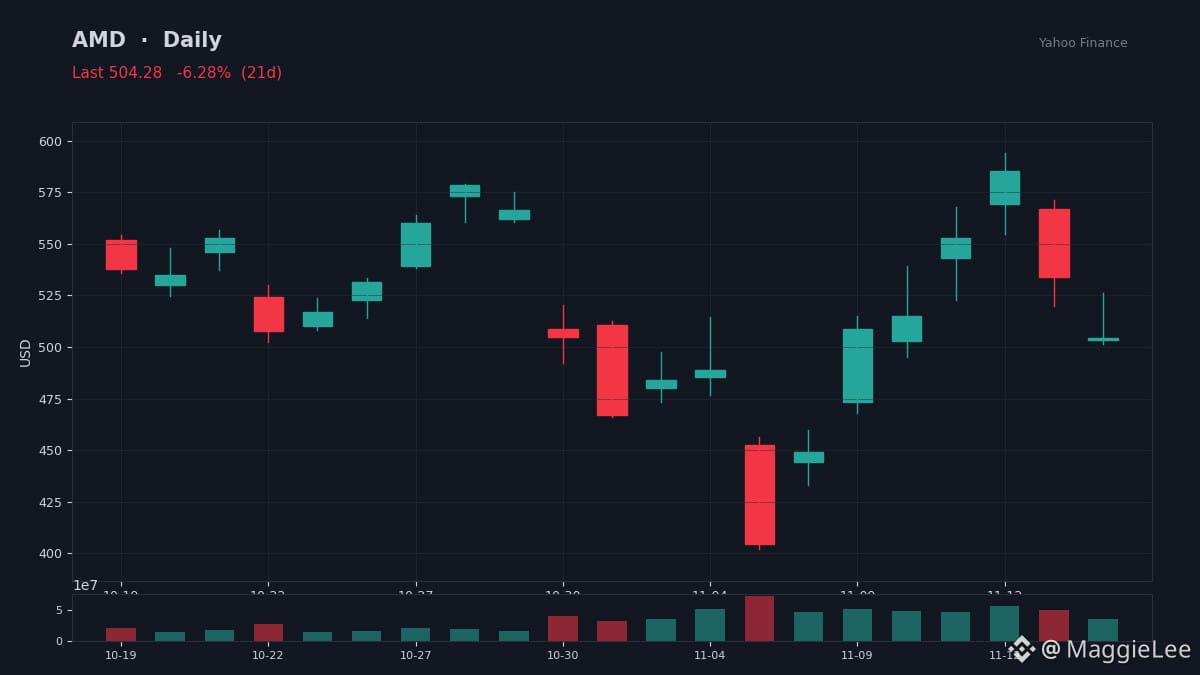
AMD hasn’t had any bad news of its own over the past two days, yet its stock has fallen nearly 15%.
It dropped 8.8% on Friday, then closed at $504.28 on Monday, down another 5.6%. Those two big bearish candles erased much of its early-November gains. None of the factors weighing on the stock had anything to do with AMD itself: on November 15, the U.S. Department of Commerce issued an interim rule requiring licenses for advanced AI chips re-exported through countries including Brazil, Singapore, Indonesia, Malaysia, and Thailand—effectively shutting off a route for Chinese companies to rent computing power indirectly. Meanwhile, the aftershocks of Nvidia’s leadership change continue, and the entire AI chip sector is being sold ahead of Nvidia’s earnings tonight.
But AMD’s fundamentals have actually been improving in recent days: its sixth-generation EPYC has just launched broadly, Helios racks and MI400 accelerators are shipping faster than expected, and Anthropic, Meta, Microsoft, OpenAI, and Oracle are all deploying them. Server CPU revenue is expected to more than double next year, and the acquisition of World Labs has just closed. The stock also more than doubled over the past year, so rather than signaling trouble at the company, the recent drop looks more like sector sentiment taking the lead.
My view is that this selloff tests patience, not the underlying thesis. If export controls take effect, AMD’s overseas data center business will be affected too. And if Nvidia’s earnings tonight cause a stir, AMD will likely move along with it. Those watching should keep an eye on whether the stock can hold the $500 level. If it can’t, don’t rush to catch a falling knife; if it holds, then we can talk about whether the stock has been unfairly punished. The risks are clear: a P/E ratio of 114 isn’t cheap, and tighter controls or disappointing earnings could trigger another selloff.
AMDUSDT perpetuals are available to trade on Binance around the clock, so you don’t have to wait for the U.S. market to open.
Personal research; not investment advice.
$AMD $AMDUSDT
#AMD #美股 #AI Chips
61
Log in to explore more content
Join global crypto users on Binance Square
⚡️ Get latest and useful information about crypto.
💬 Trusted by the world’s largest crypto exchange.
👍 Discover real insights from verified creators.
Email / Phone number
Trending Topics
CanBTCReboundAfterFallingBelow60K?
88,137 views
455 Discussing
Bitcoin News | Bitcoin Falls Below $60,000 for the First Time Since July as IBIT Posts Record $541 Million Outflow
Binance News
·38 Likes
·65.9k views
GlobalStocksFaceLongestLosingStreakSince2023
43,509 views
468 Discussing
AnthropicPlungesTowardIPOPriceonDay2
12,329 views
175 Discussing